WIDE Edizioni
Versilia
Pietrasanta, Tuscany
Photographs by William
From the mountains to the sea
Between the Apuan Alps and the Tyrrhenian Sea, Versilia is a narrow strip of plain: marble peaks on one side, a long pale beach on the other.
Pietrasanta is its artistic heart. They call it Little Athens: marble and bronze have been worked here for centuries, and sculptors from all over the world come to make their pieces in the town’s workshops and foundries.
Further down, Marina di Pietrasanta lines up its bathing establishments in front of an ancient pine wood. These pages follow the same road: the beach, the gardens, the pine wood, the town, the hills, the sunset.
I
The beach
Marina di Pietrasanta covers about five kilometres of coast, divided into four localities: Fiumetto, Tonfano, Motrone and Focette.
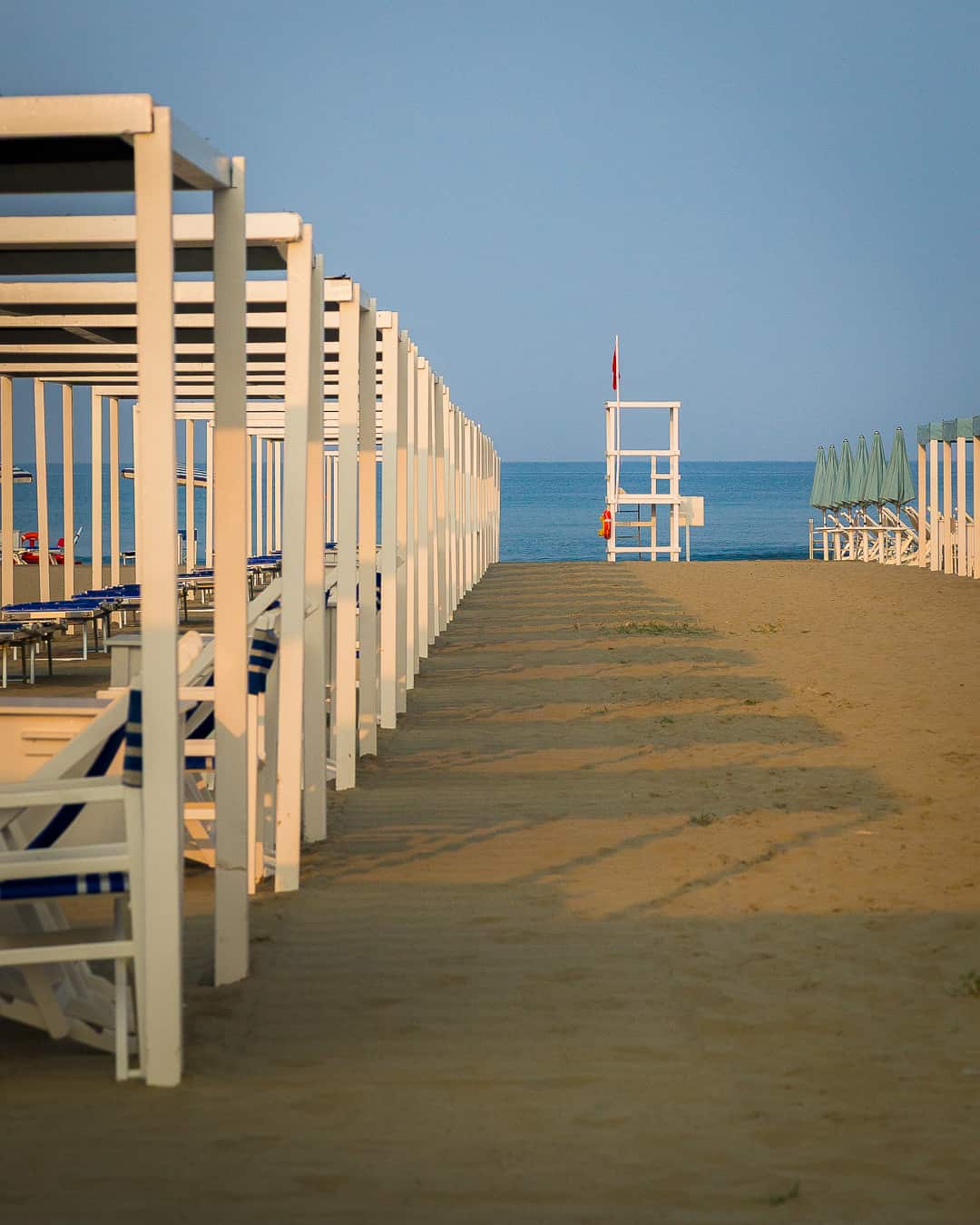
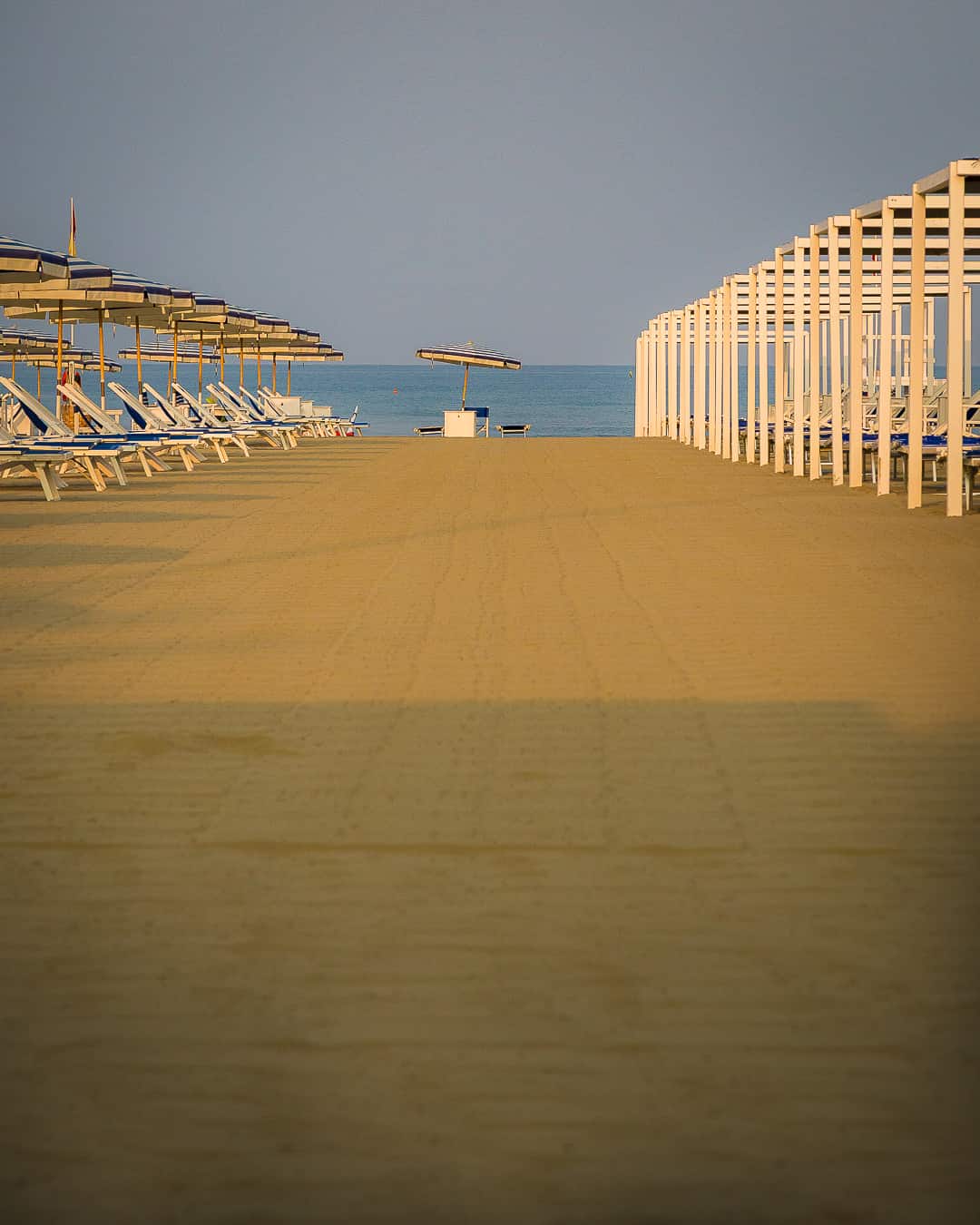
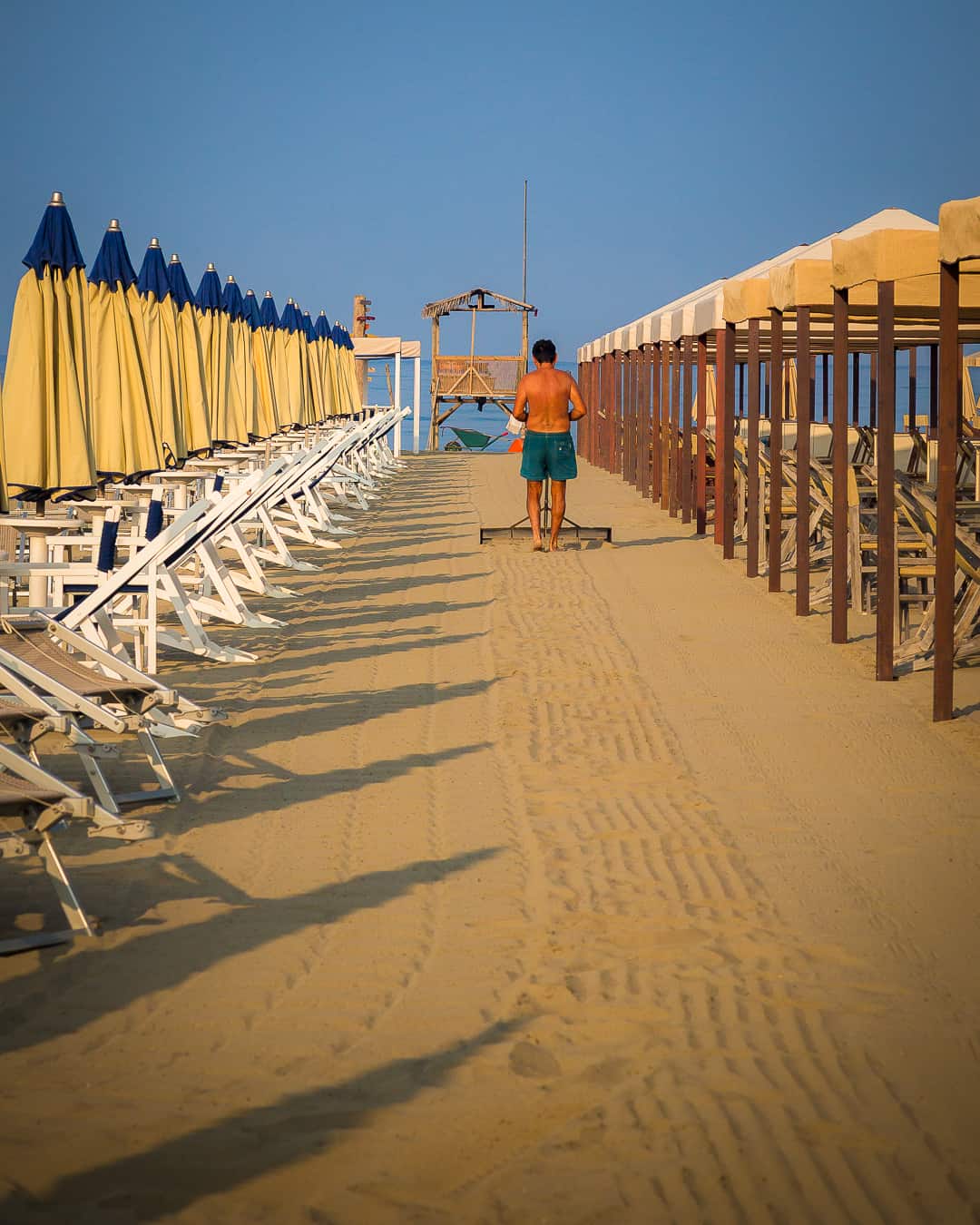
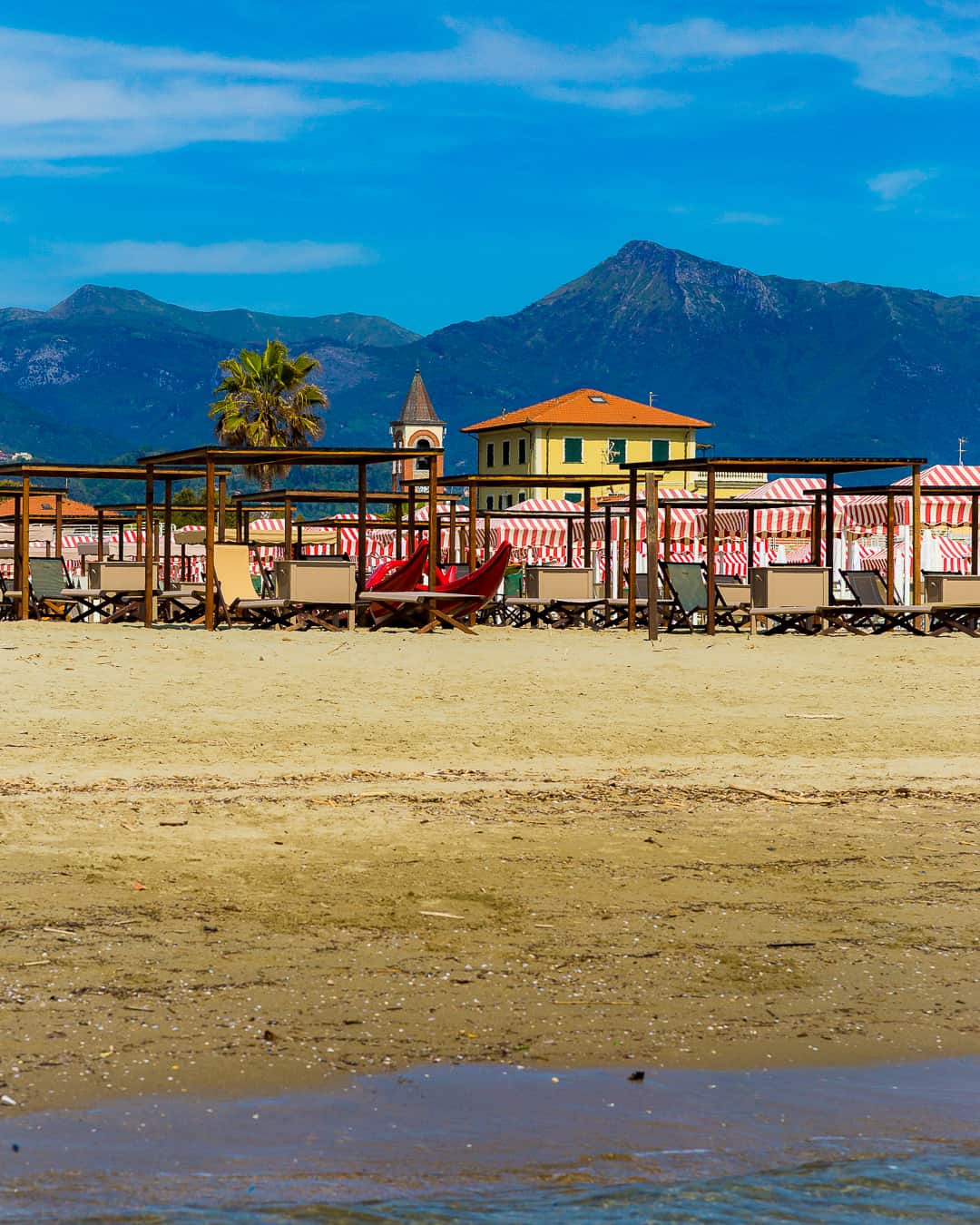
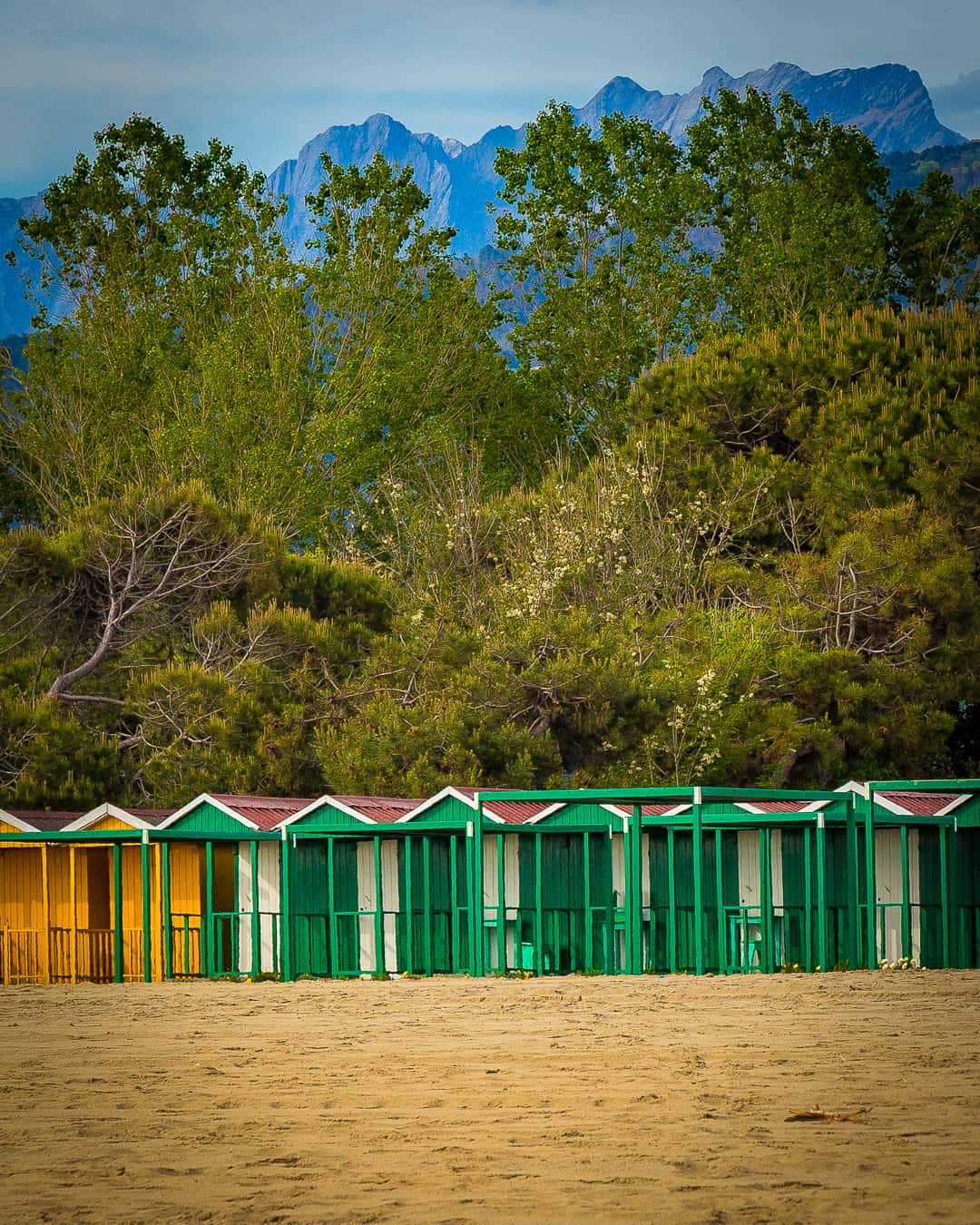
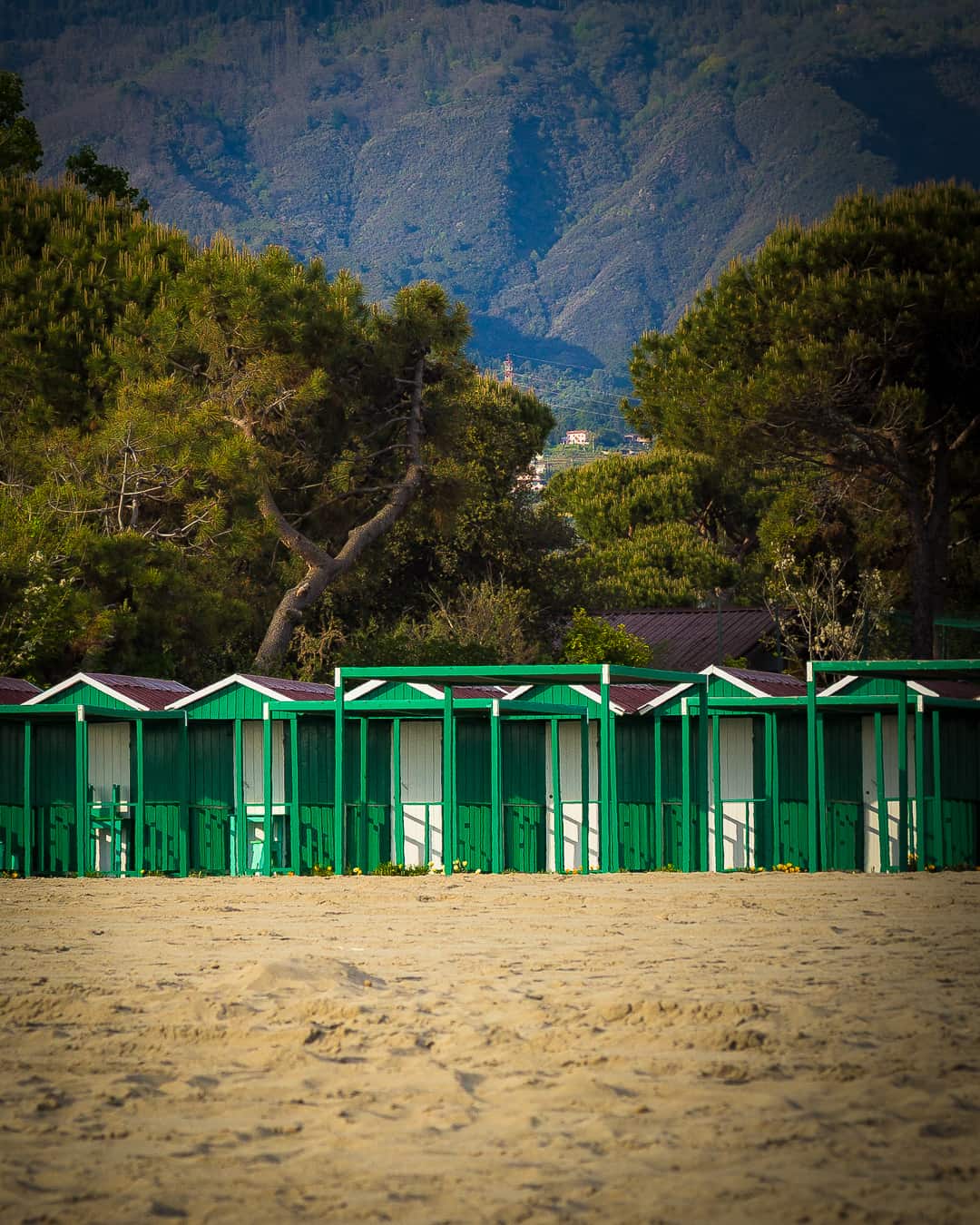
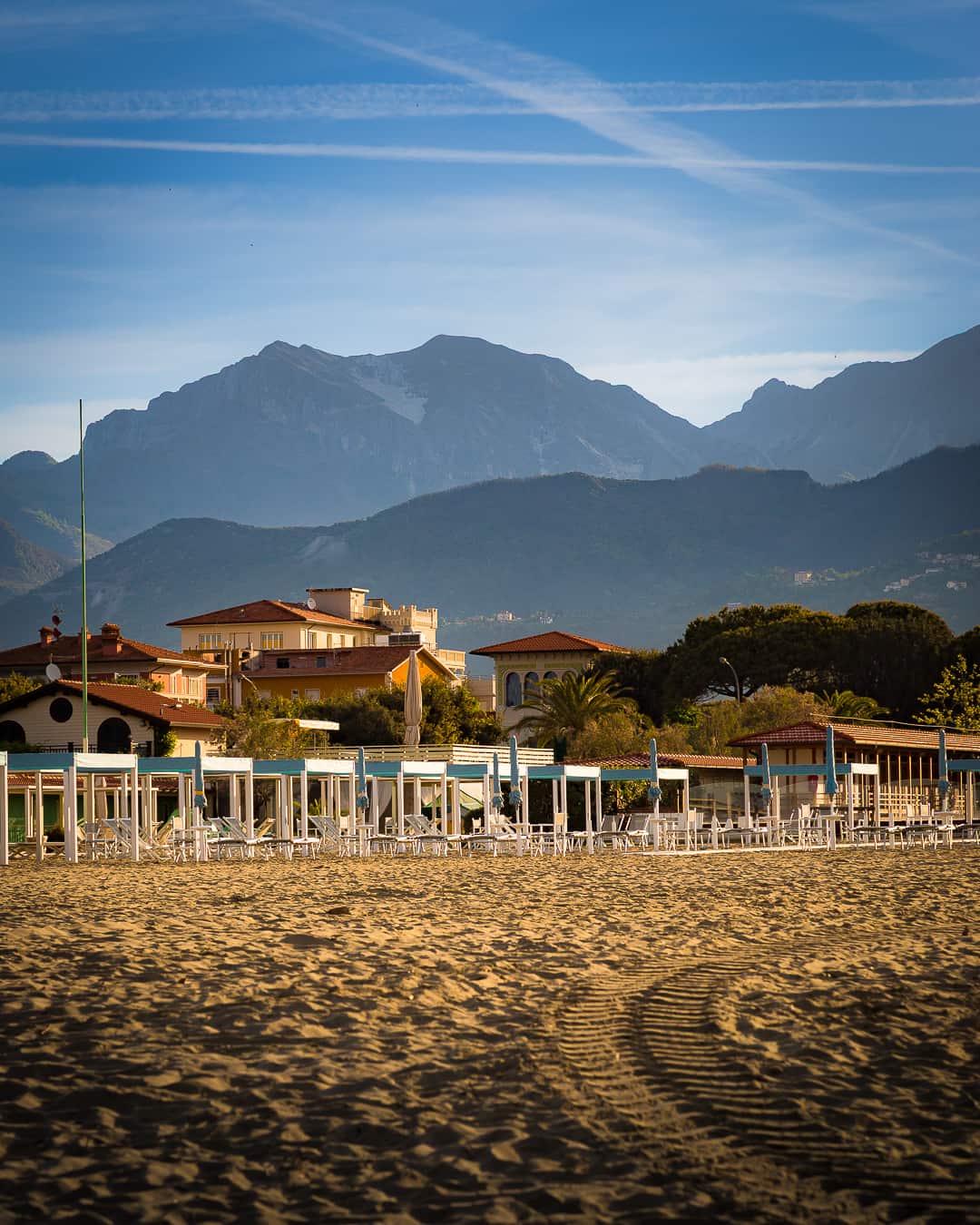
The beach is wide and sandy, organised into bathing establishments: rows of cabins, lined-up umbrellas, boardwalks leading straight to the sea.
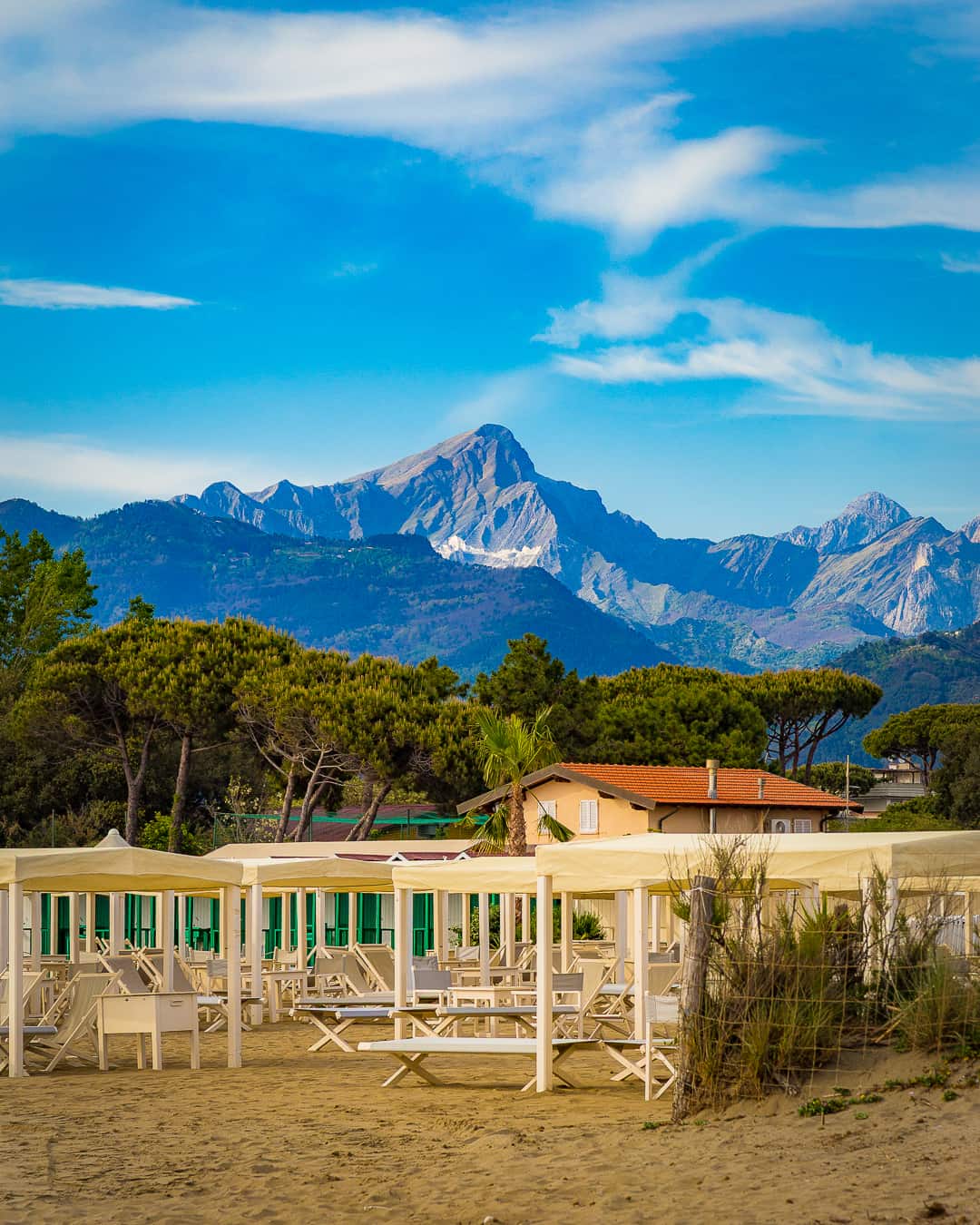
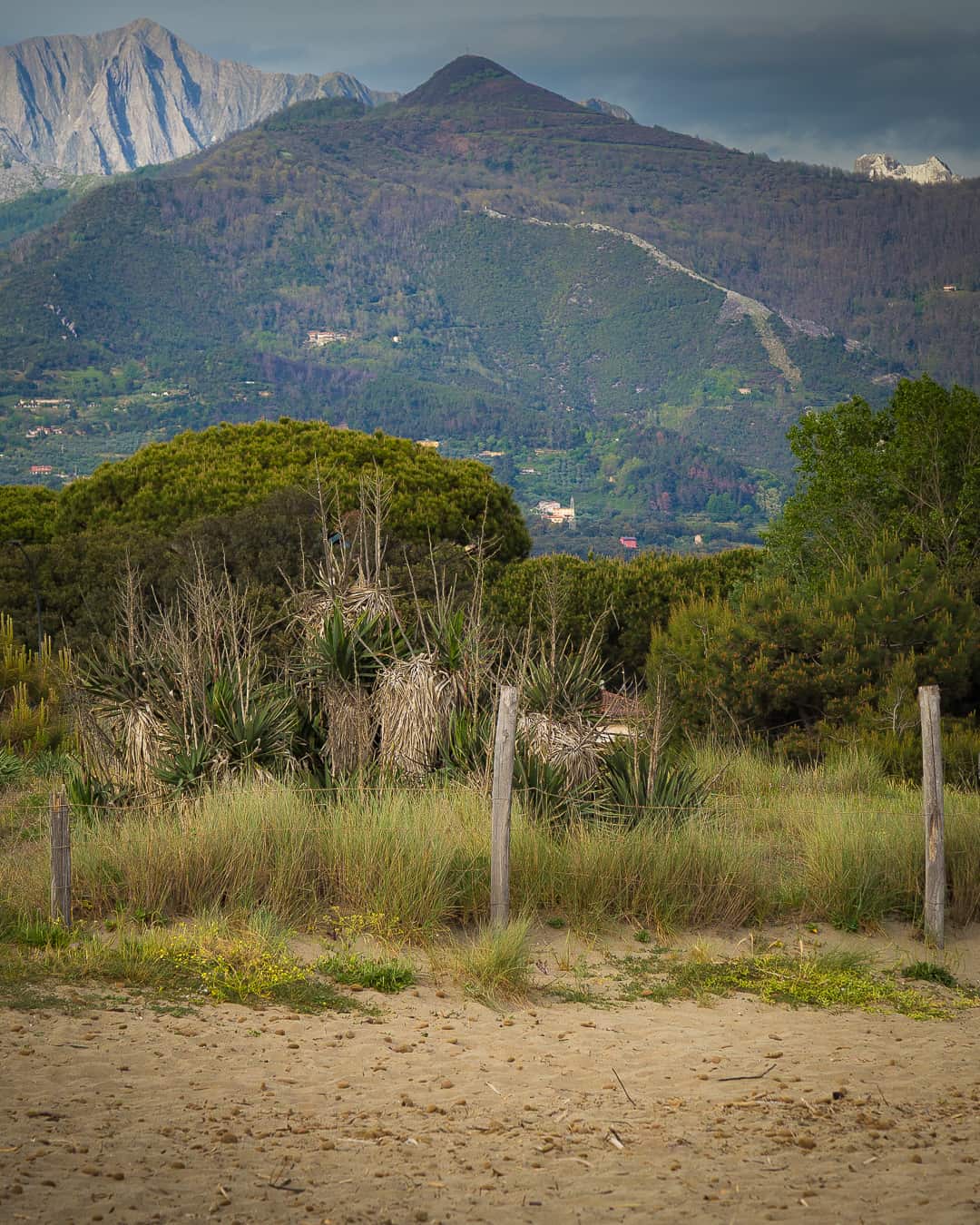
Behind it rise the Apuan Alps. On clear days you can make out the quarries, white patches on the mountainsides.
The boardwalk
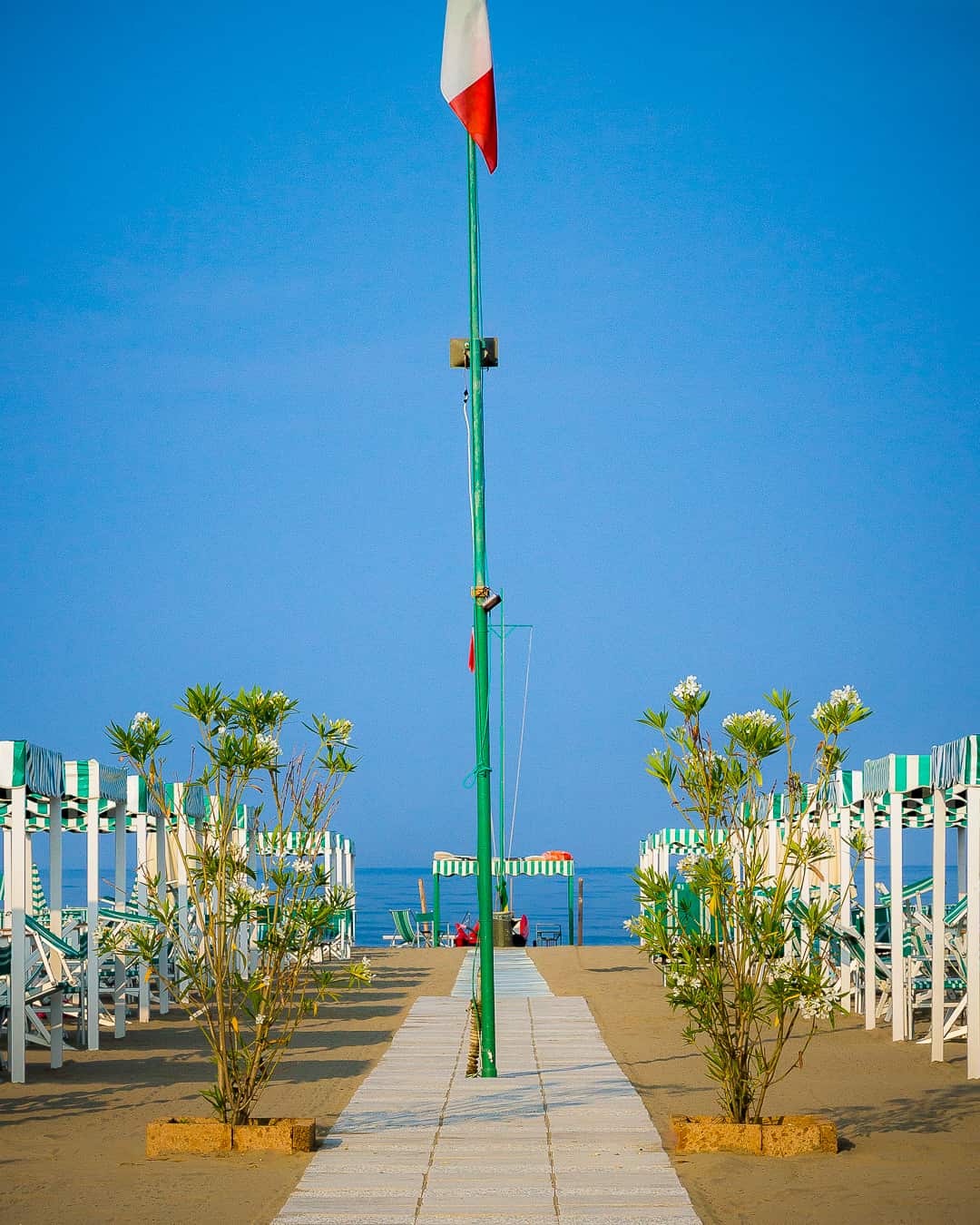
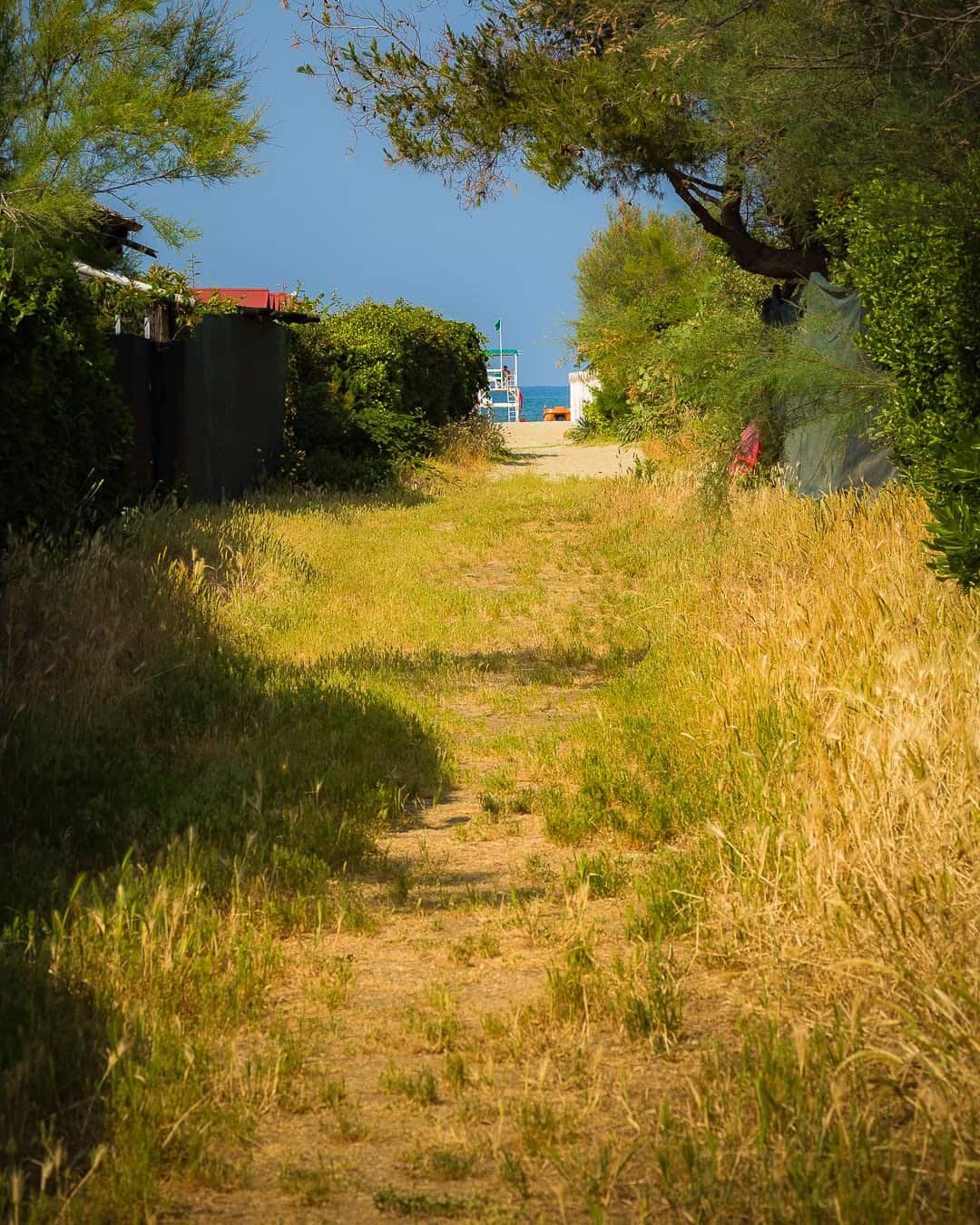
A straight boardwalk between the cabins, the flagpole, potted oleanders, and the sea at the end. In Versilia the bathing establishment is an institution: each bagno has its own name, its own colours and often regulars who have been coming back for years.
The agave
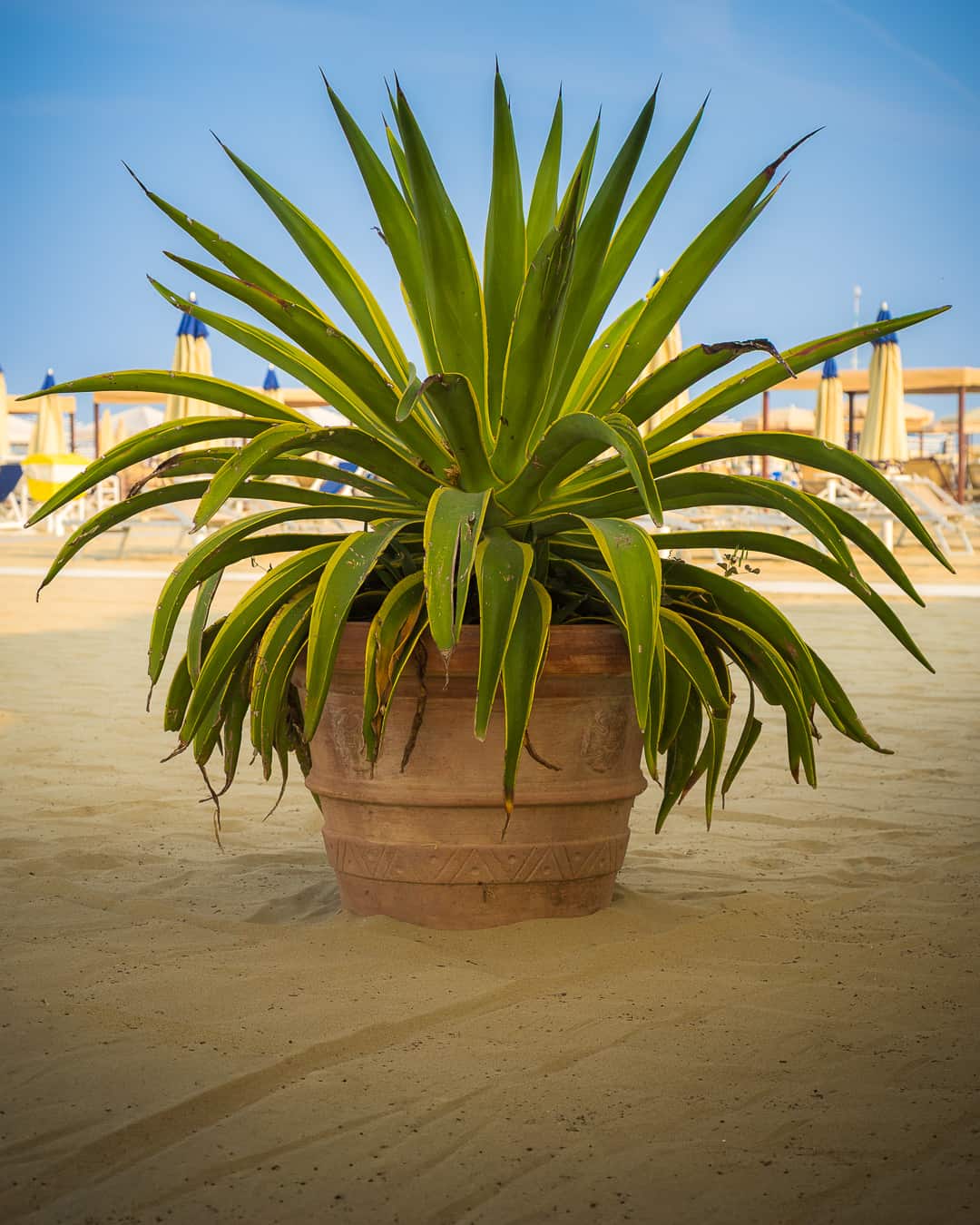
An agave in a large terracotta pot, set in the sand among closed umbrellas. Early in the morning the beach looks like this: tidy, silent, still waiting to fill up.
In the shade
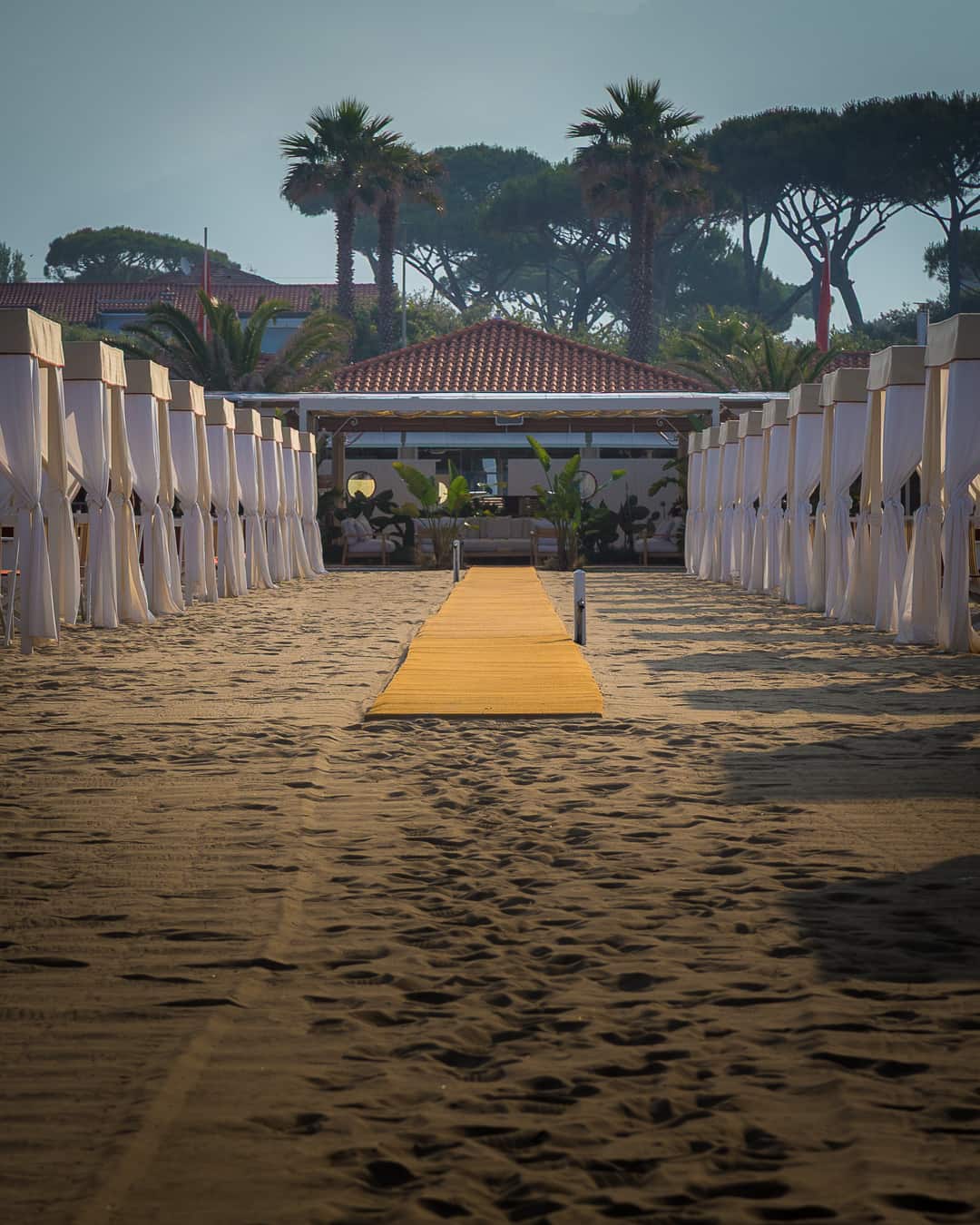
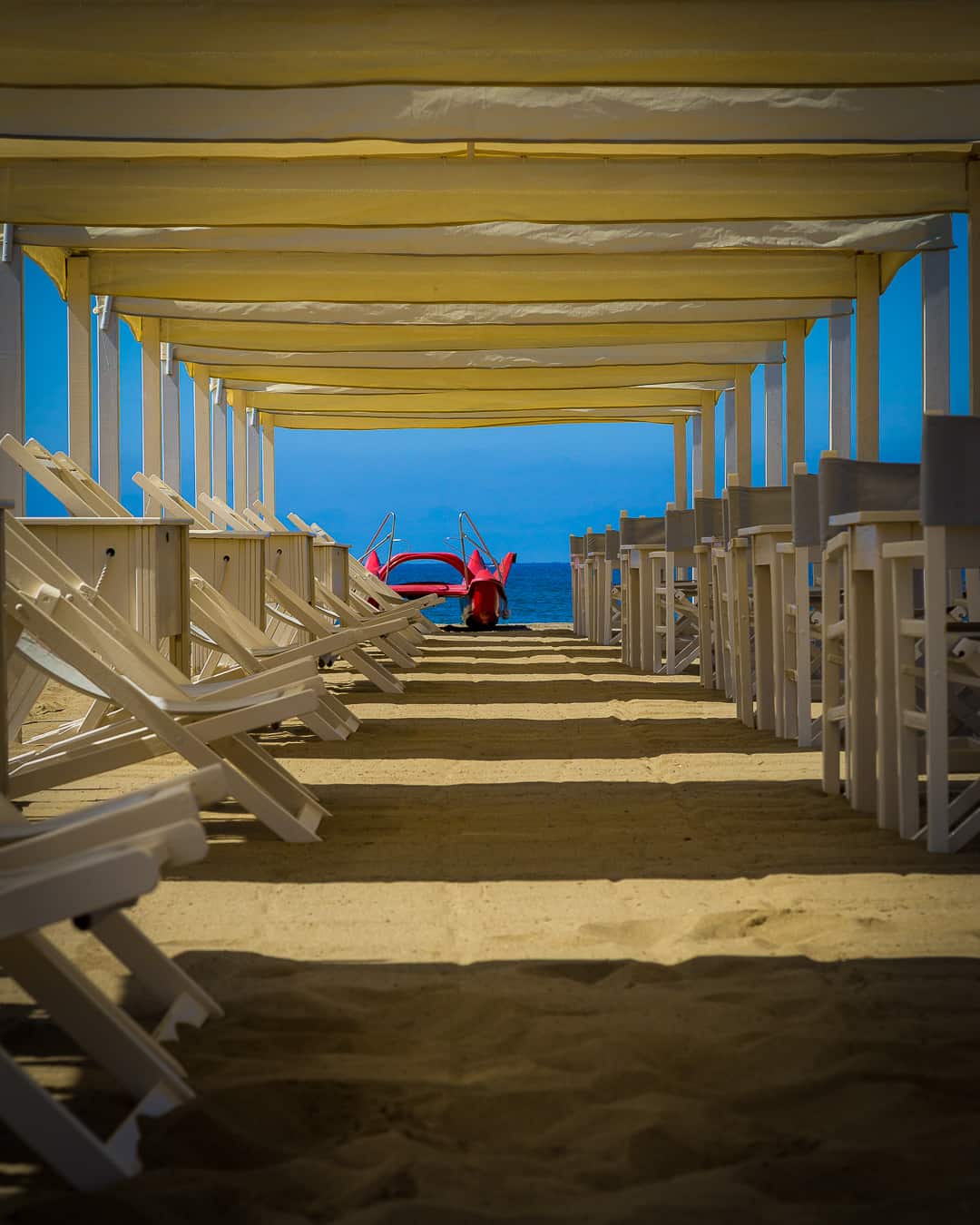
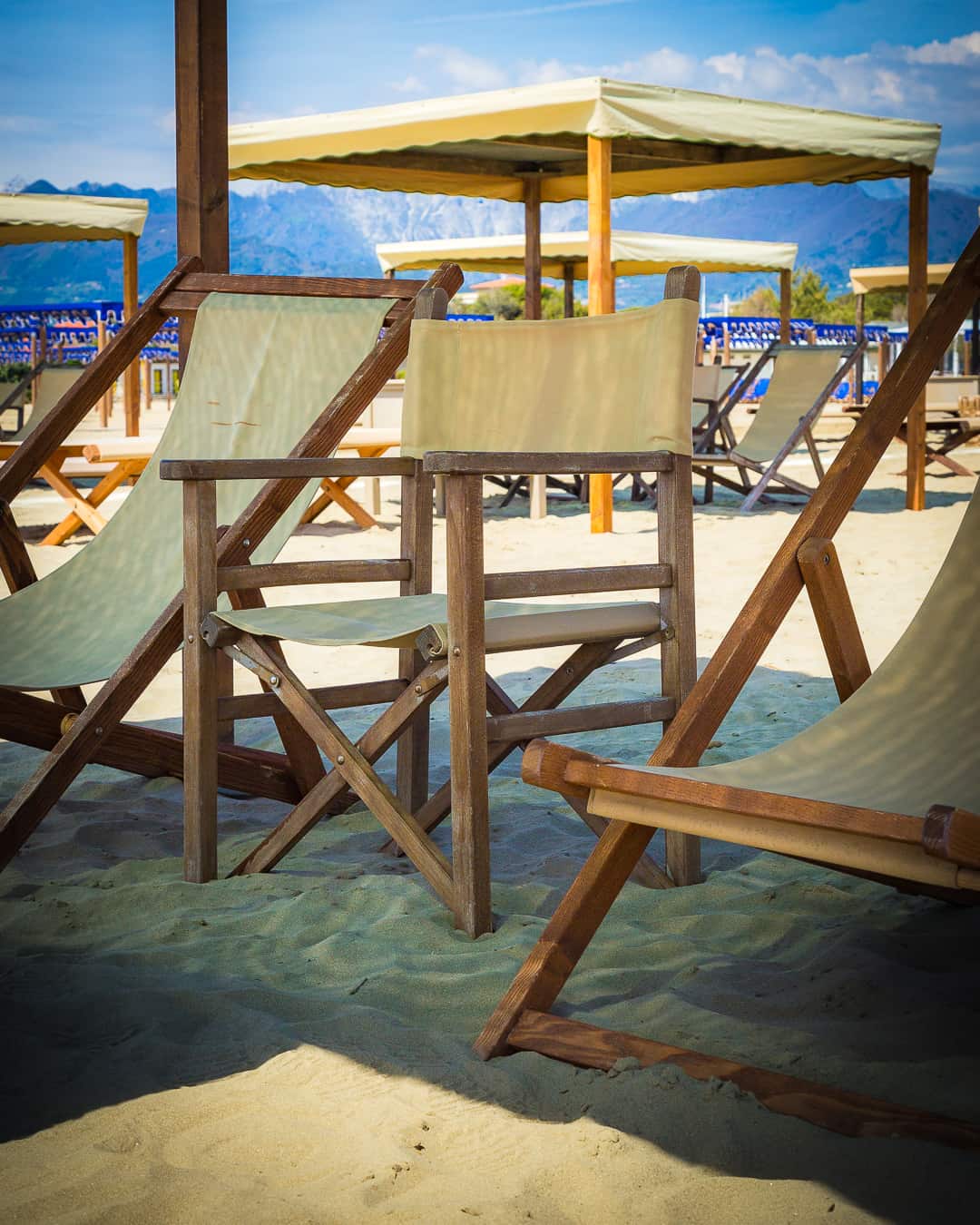
Canvas and wood chairs under an awning, loungers in a row, the sea beyond. Here shade is architecture: awnings, tents and umbrellas shape the day.
Mountains behind
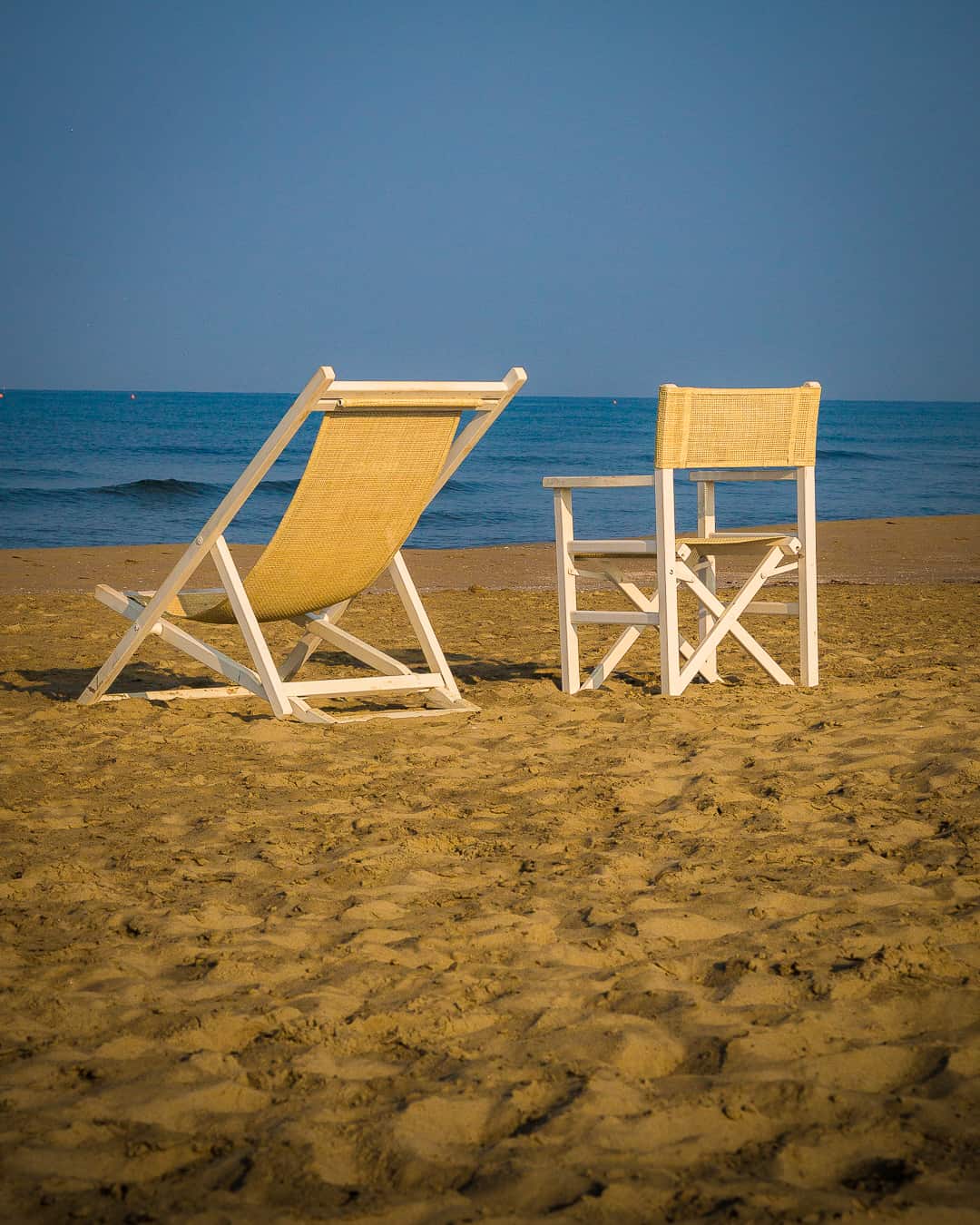
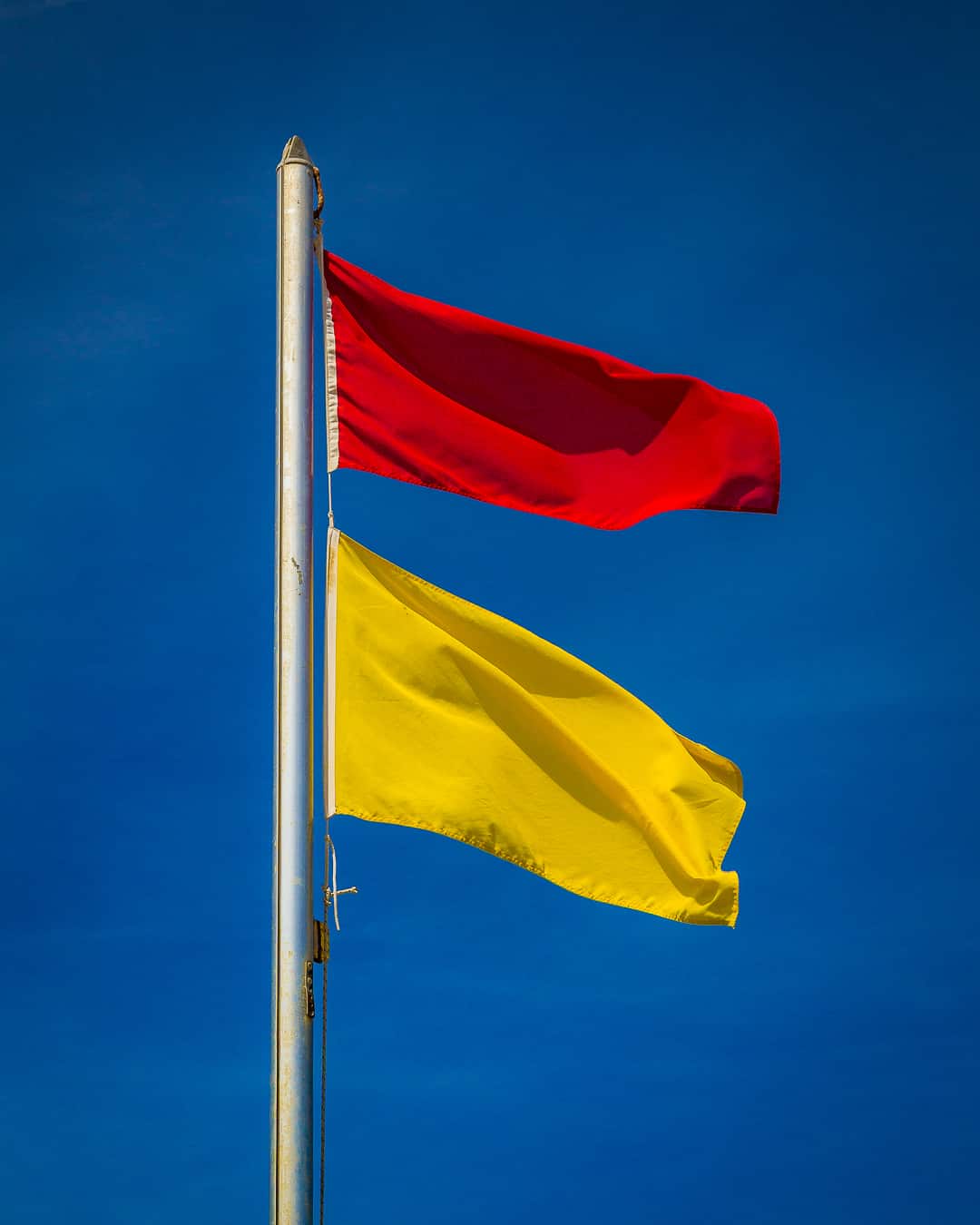
The beach, the establishments, and behind them the Apuan Alps. In Versilia the mountains are only a few kilometres from the sea: you swim looking up at the peaks.
II
Behind the beach
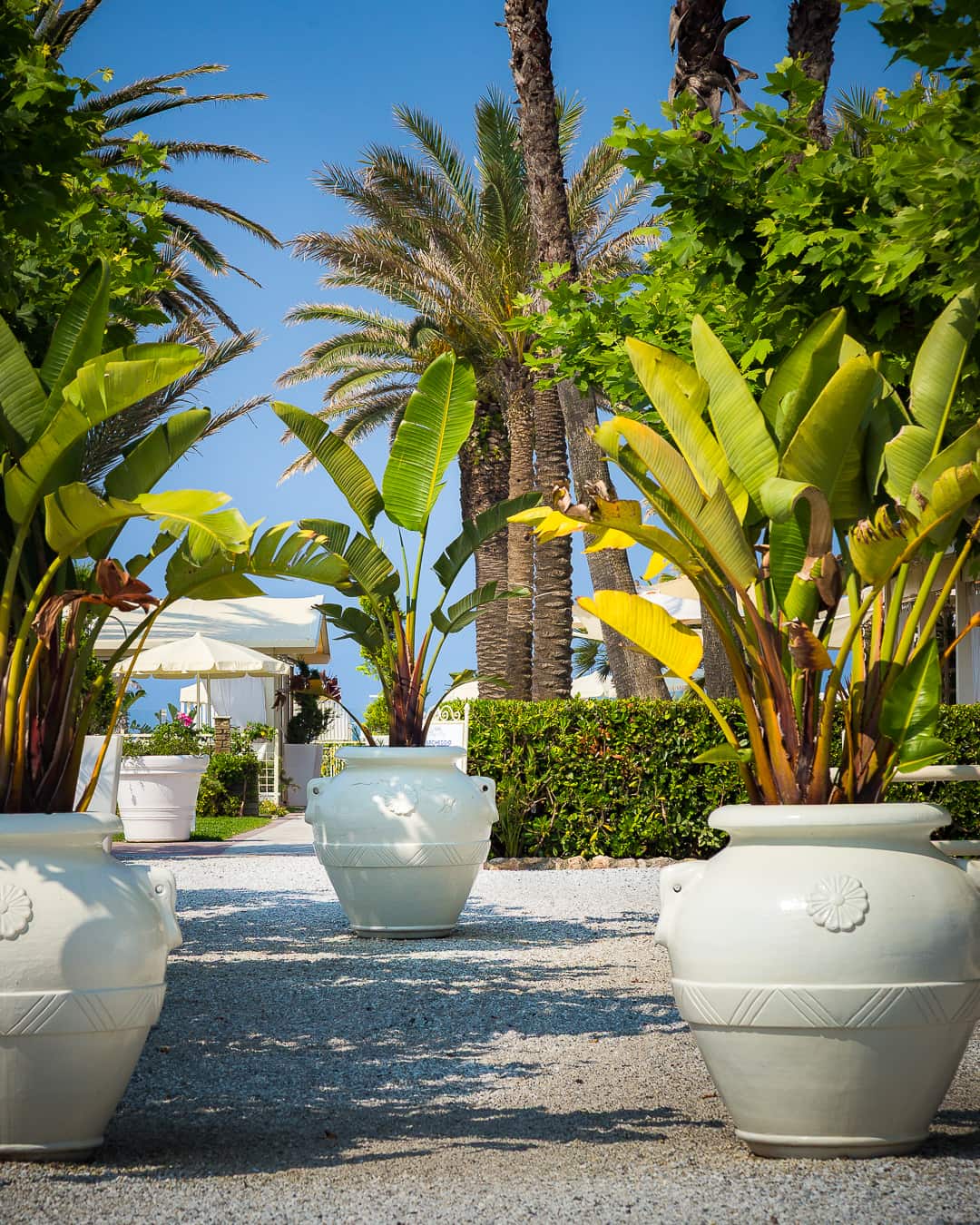
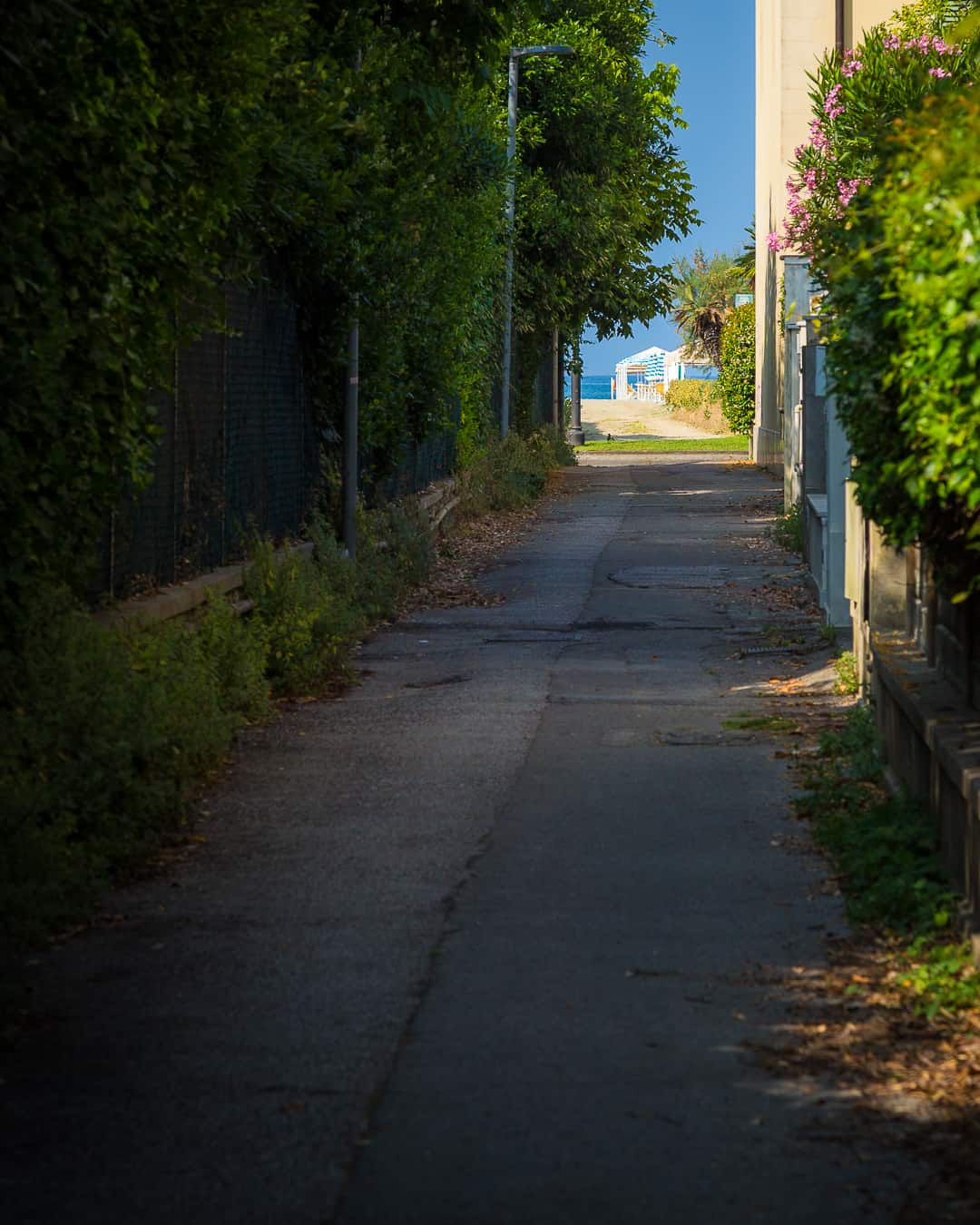
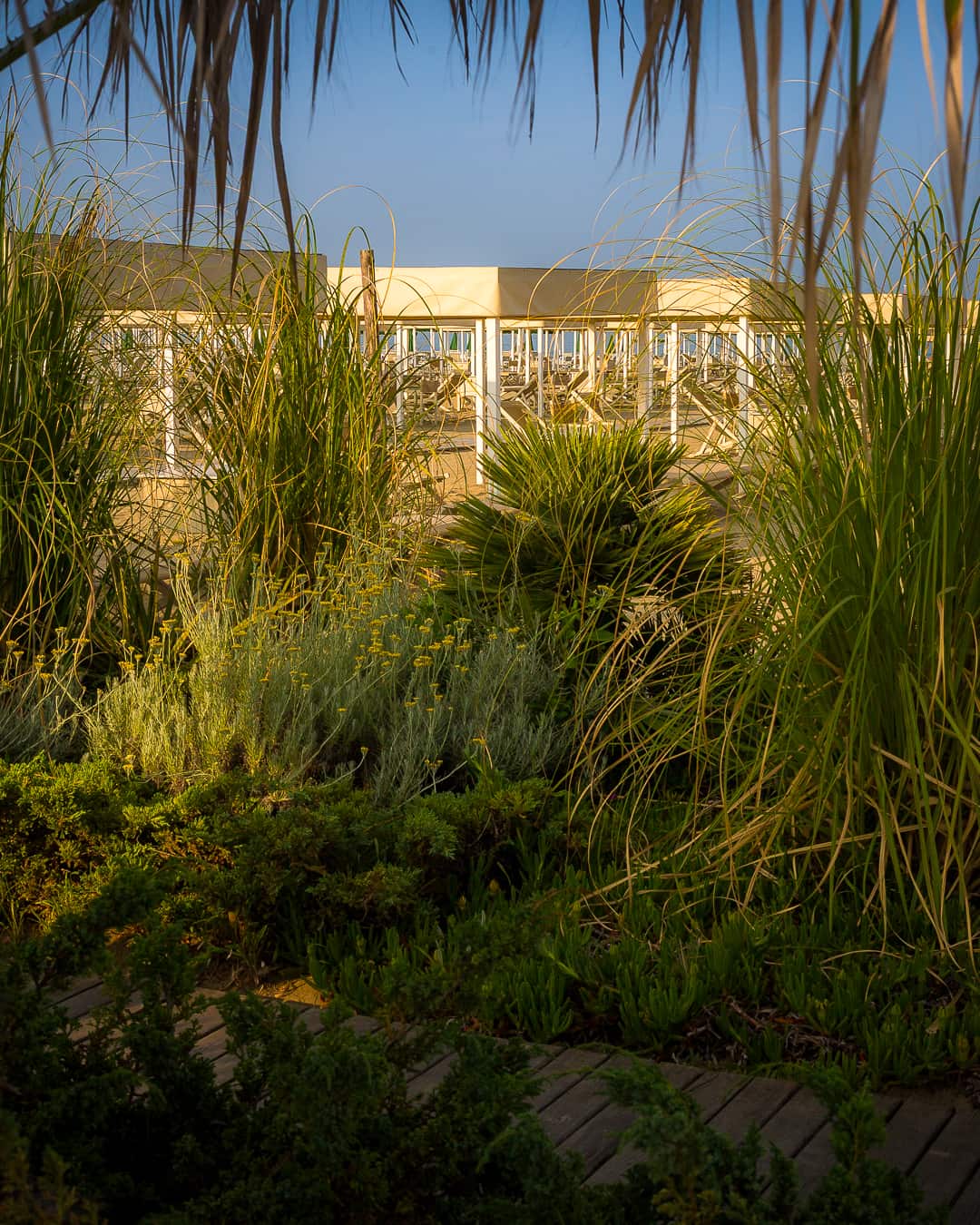
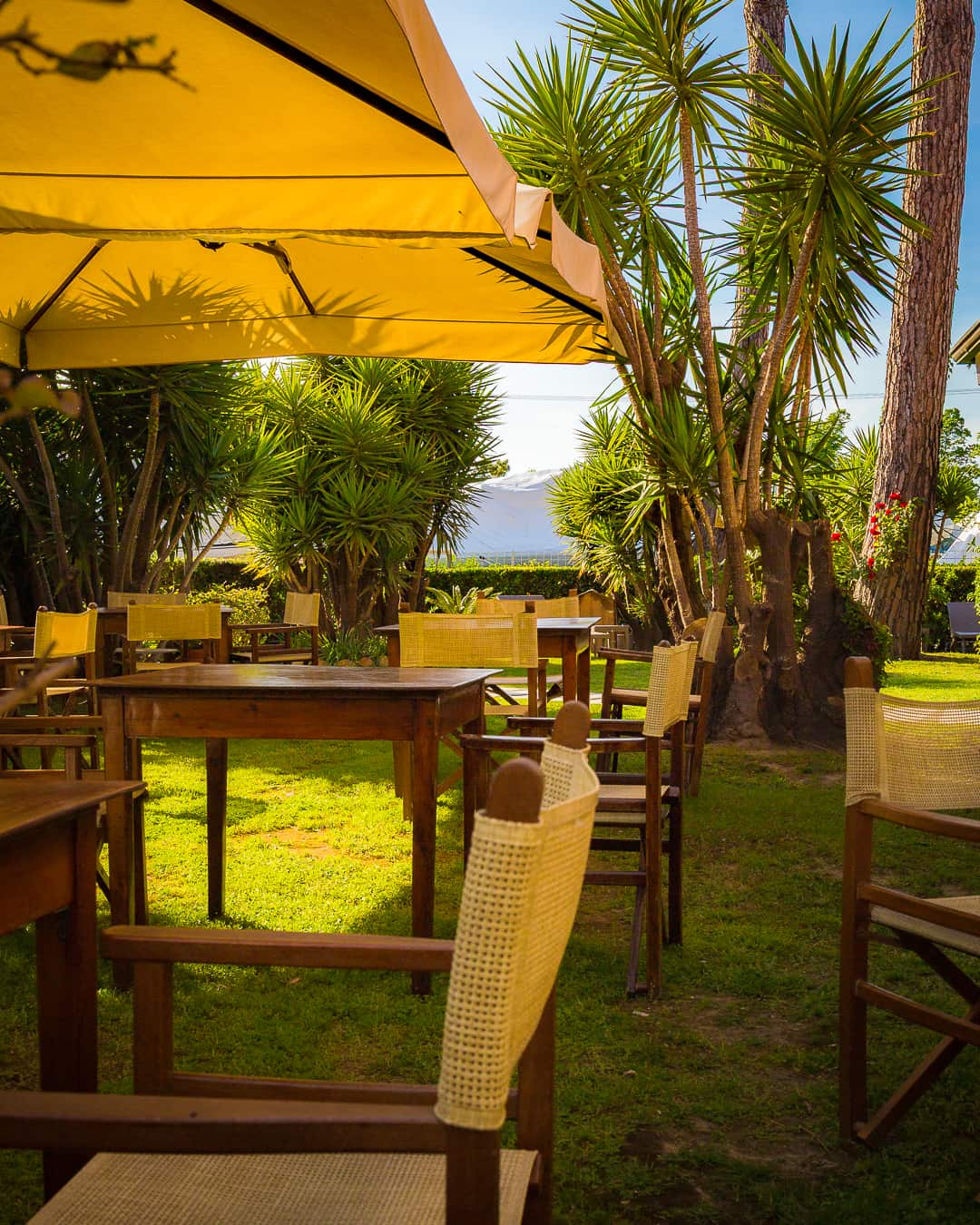
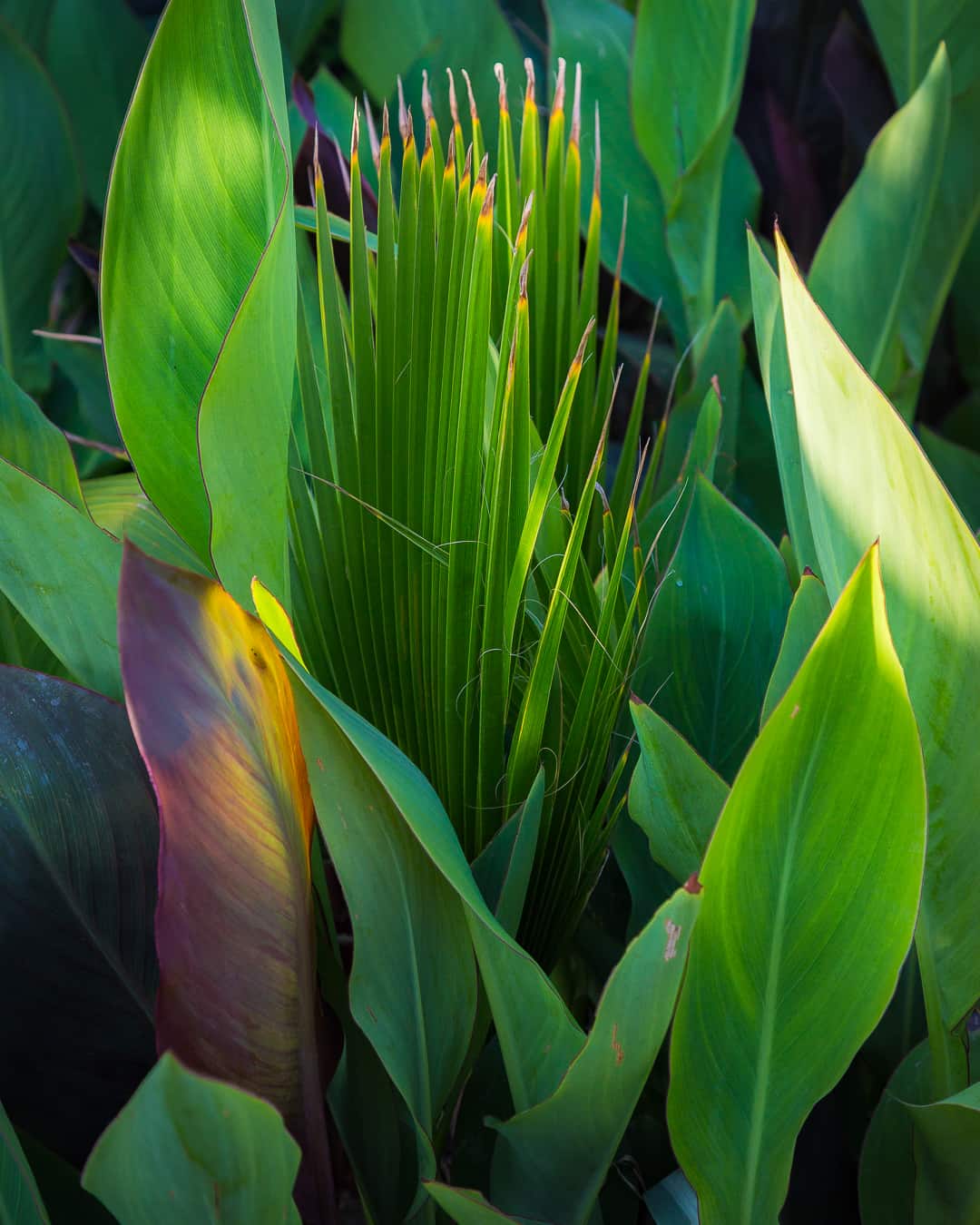
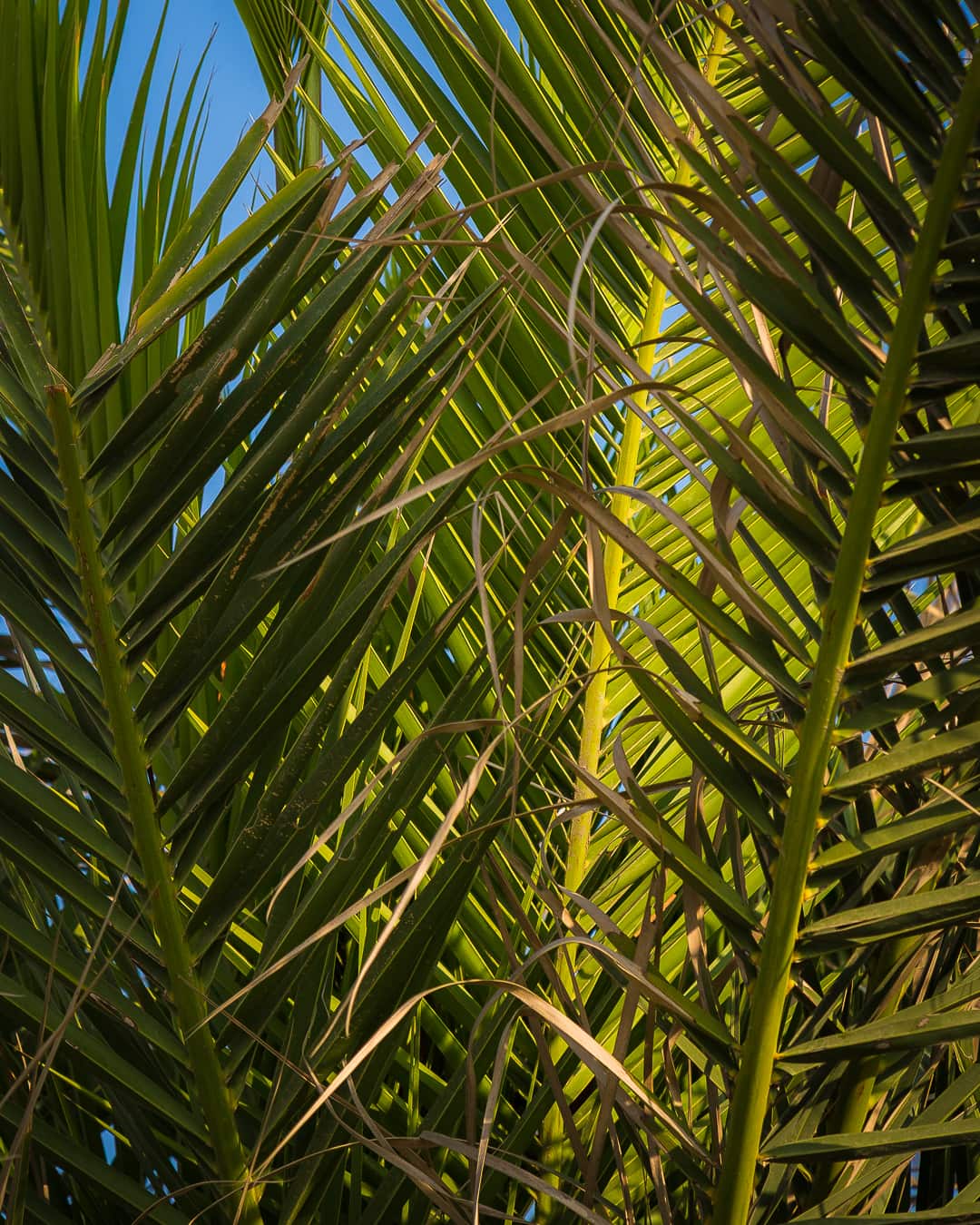
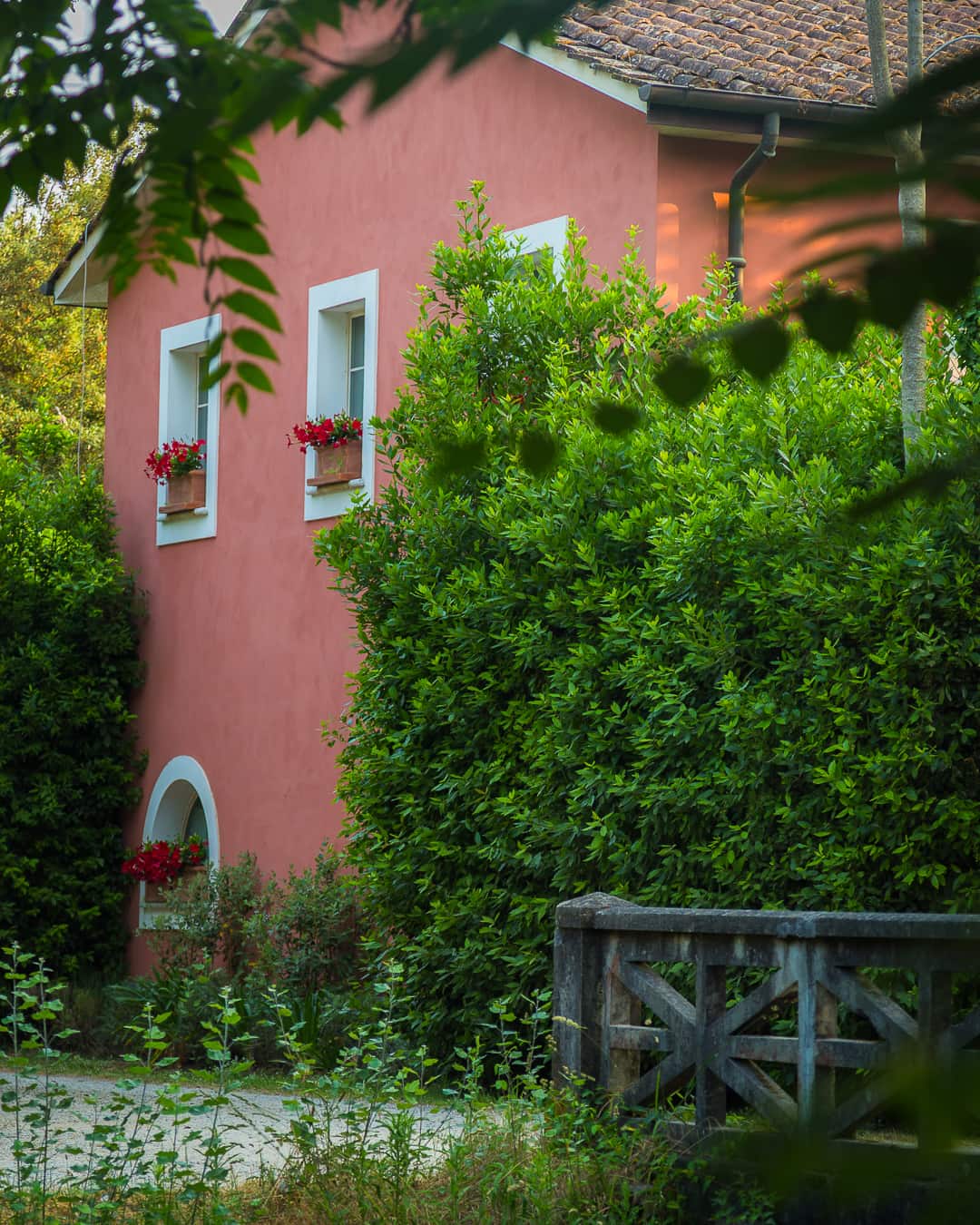
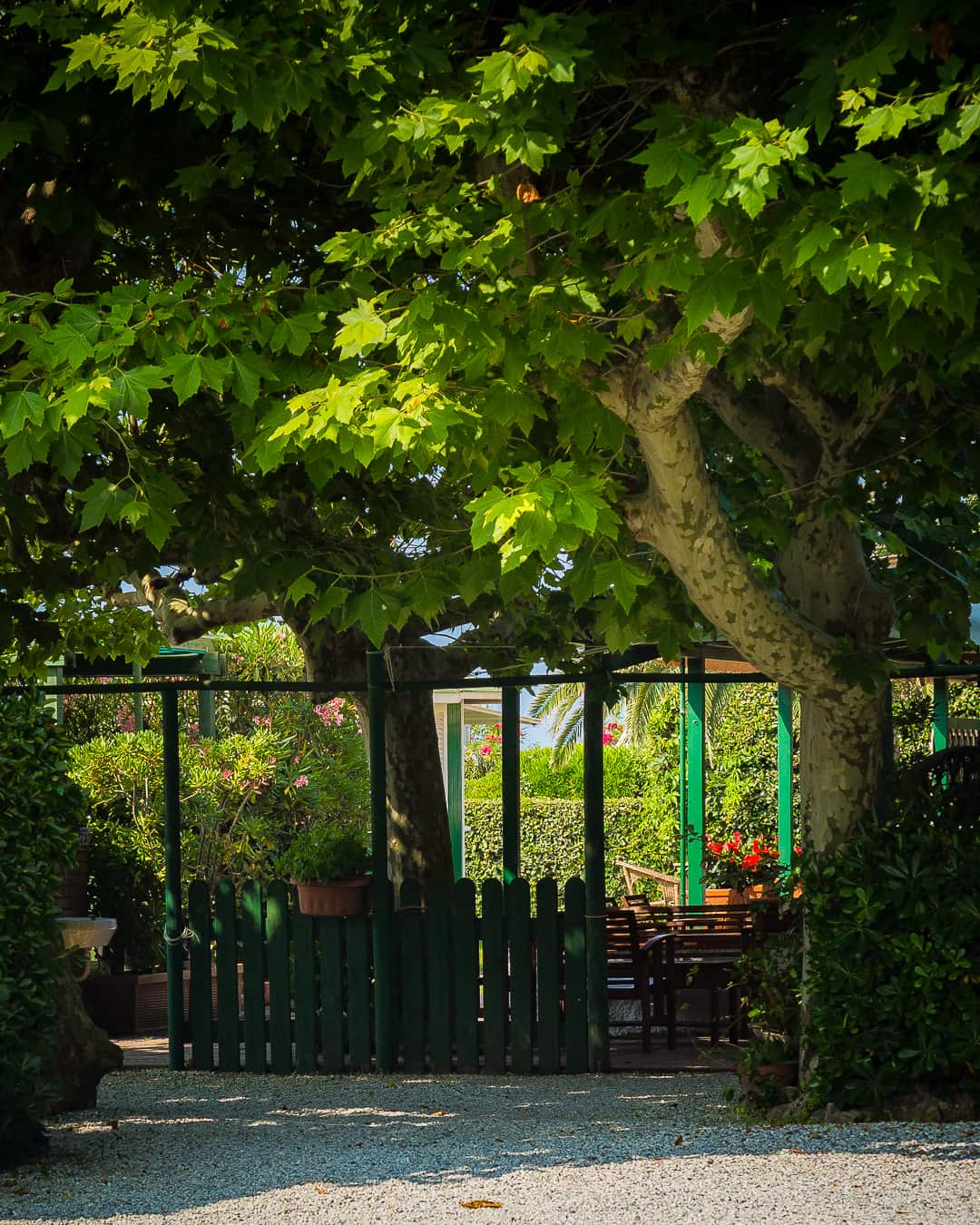
Between the sand and the road, every establishment has its own little world: paths, gardens, palms, terracotta pots, shady lounges.
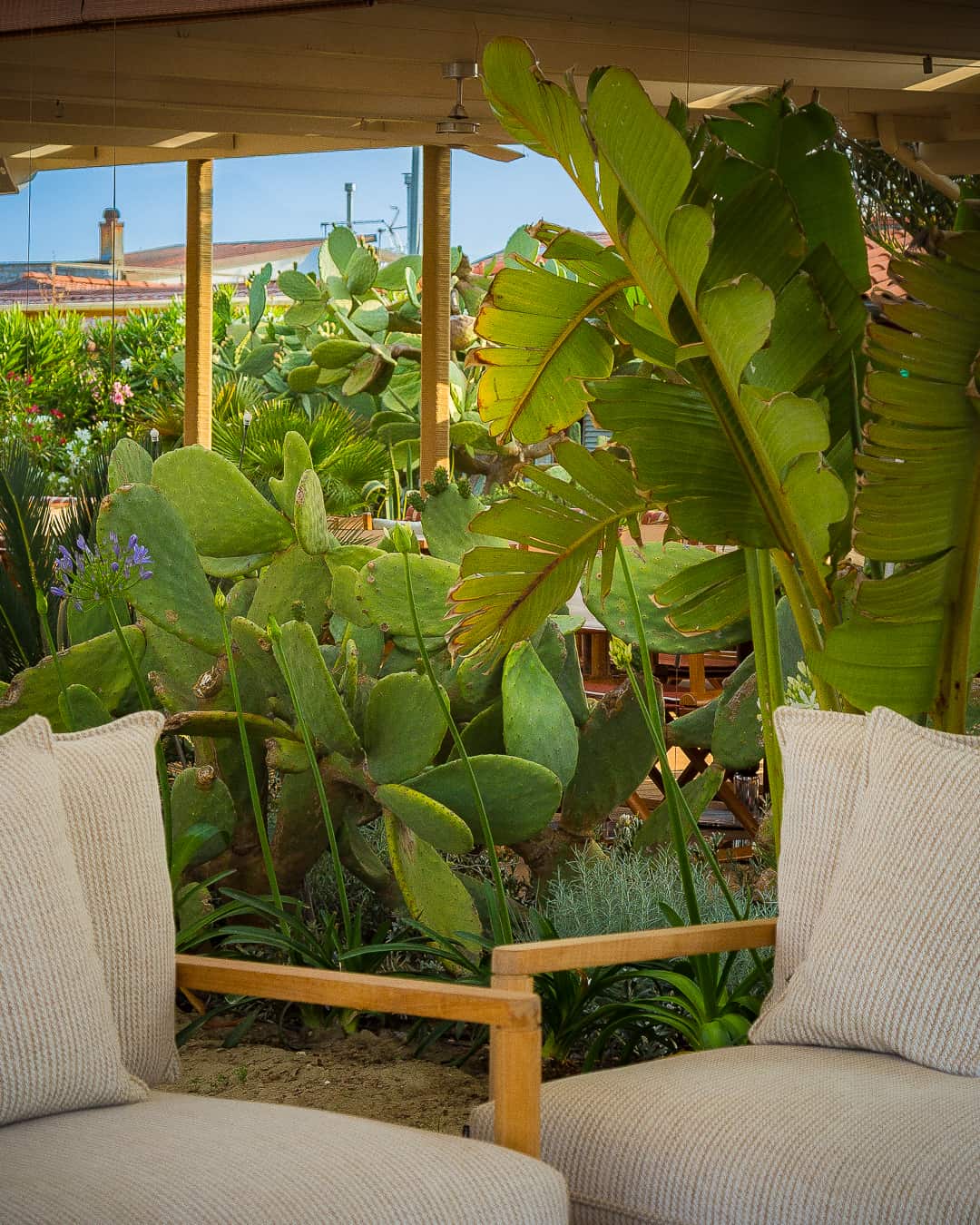
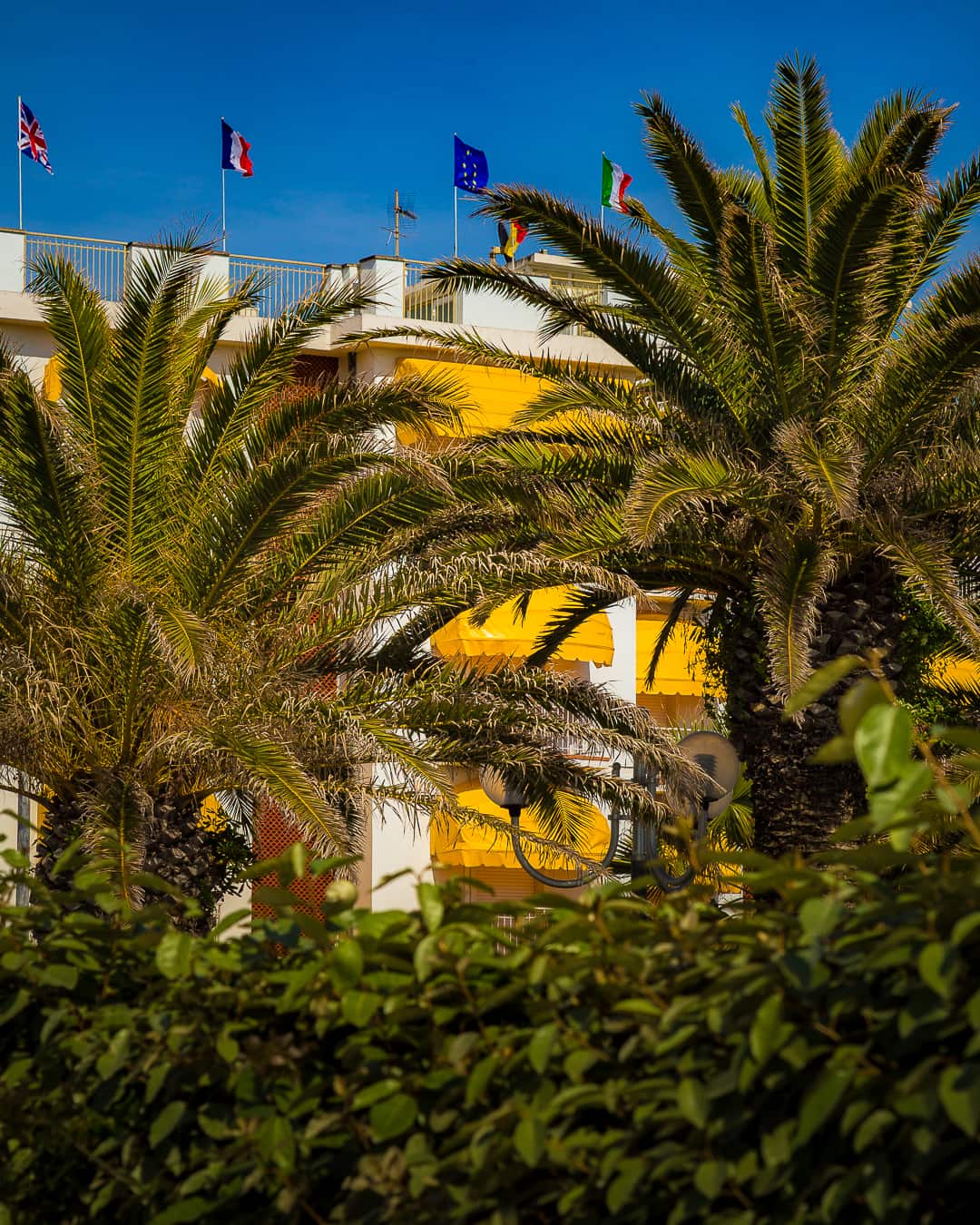
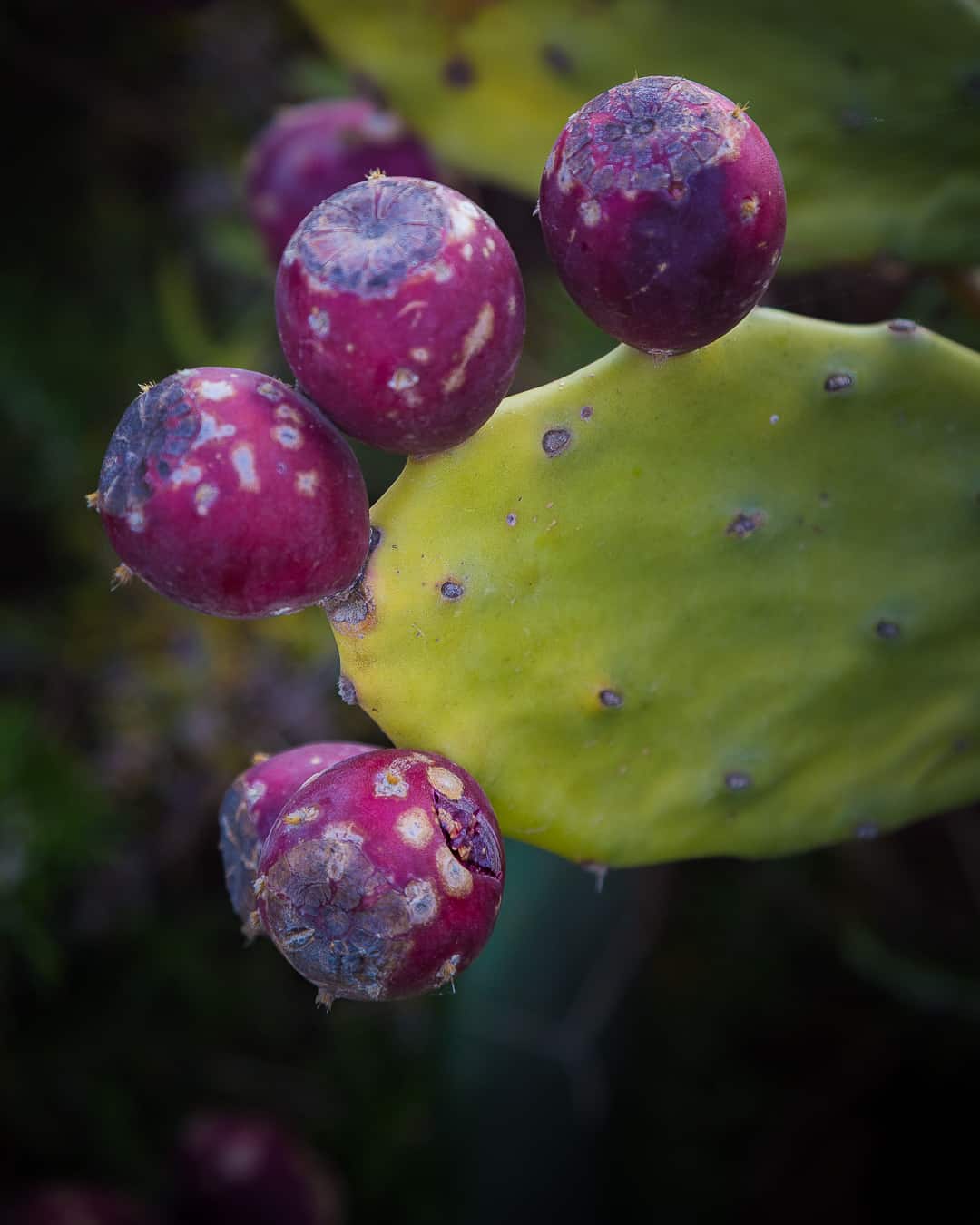
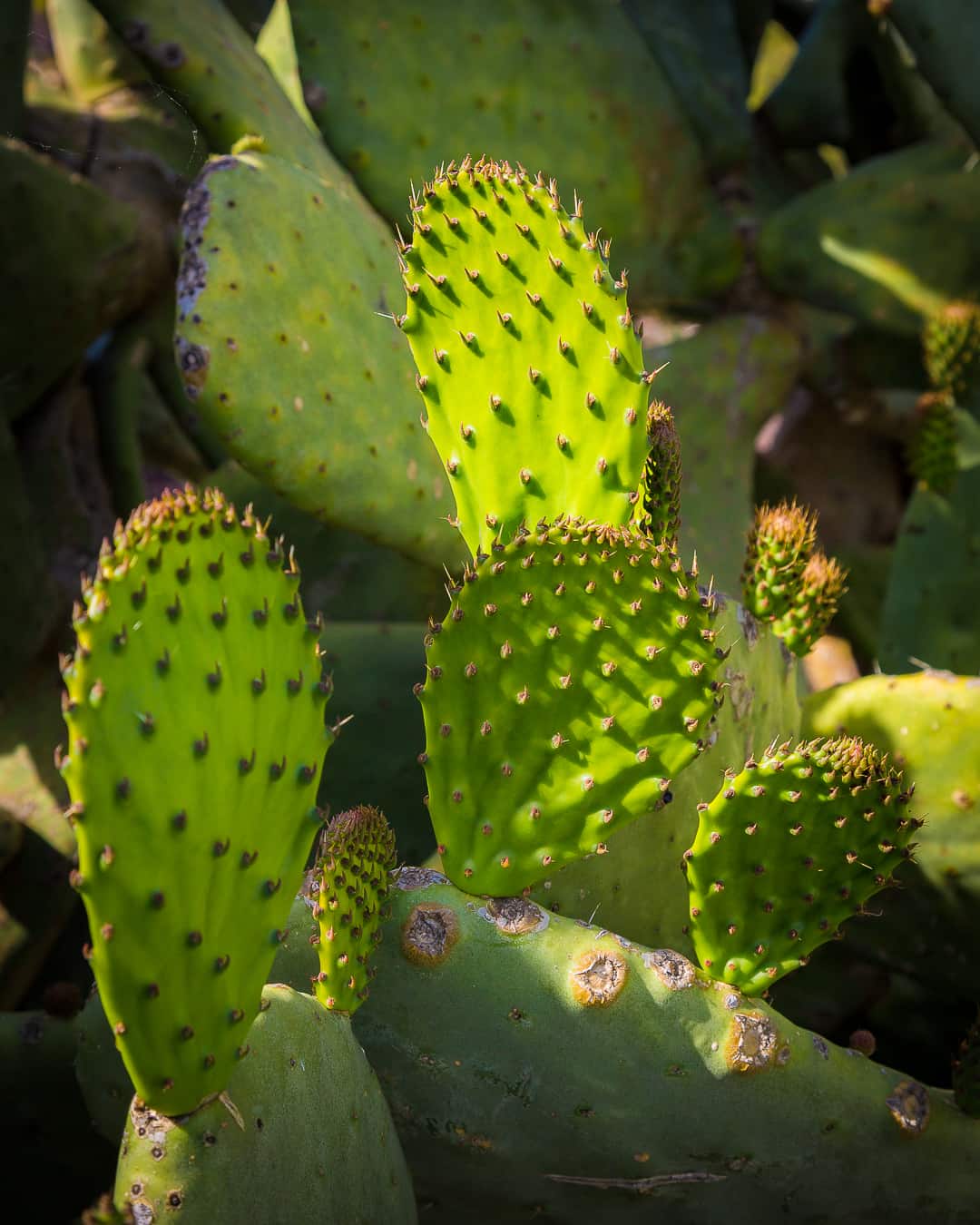
Prickly pears, agaves, oleanders: plants that sun and sea wind do not frighten.
Oleanders
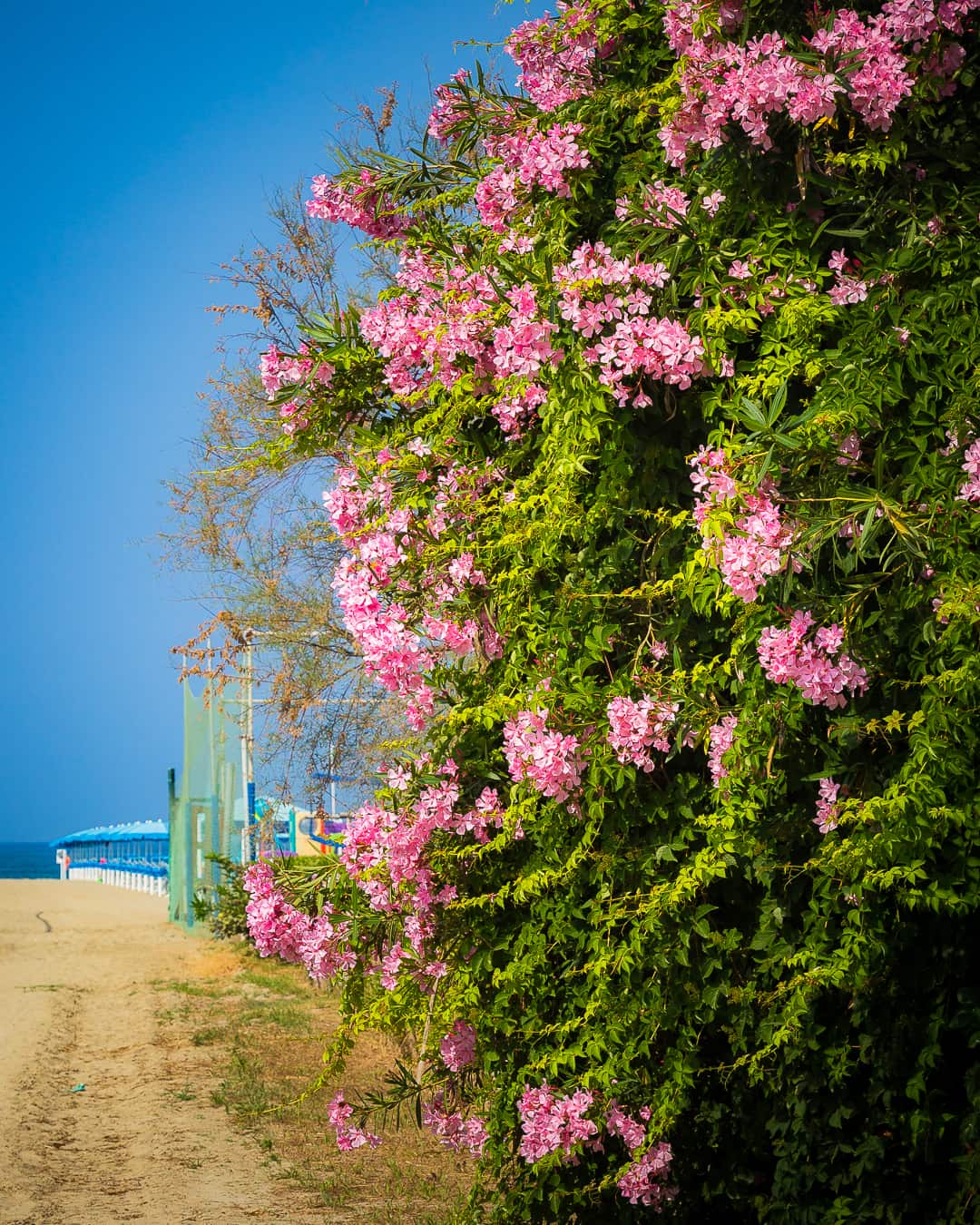
Oleanders in full bloom, pink against the sky, and the beach beyond the hedge. They flower all summer and stand up to sun and sea wind, which is why you find them all along the coast.
The lounge
White sofas, huge leaves, a wooden awning. Behind the beach, the establishments have lounges and gardens for the hottest hours, a few steps from the sand.
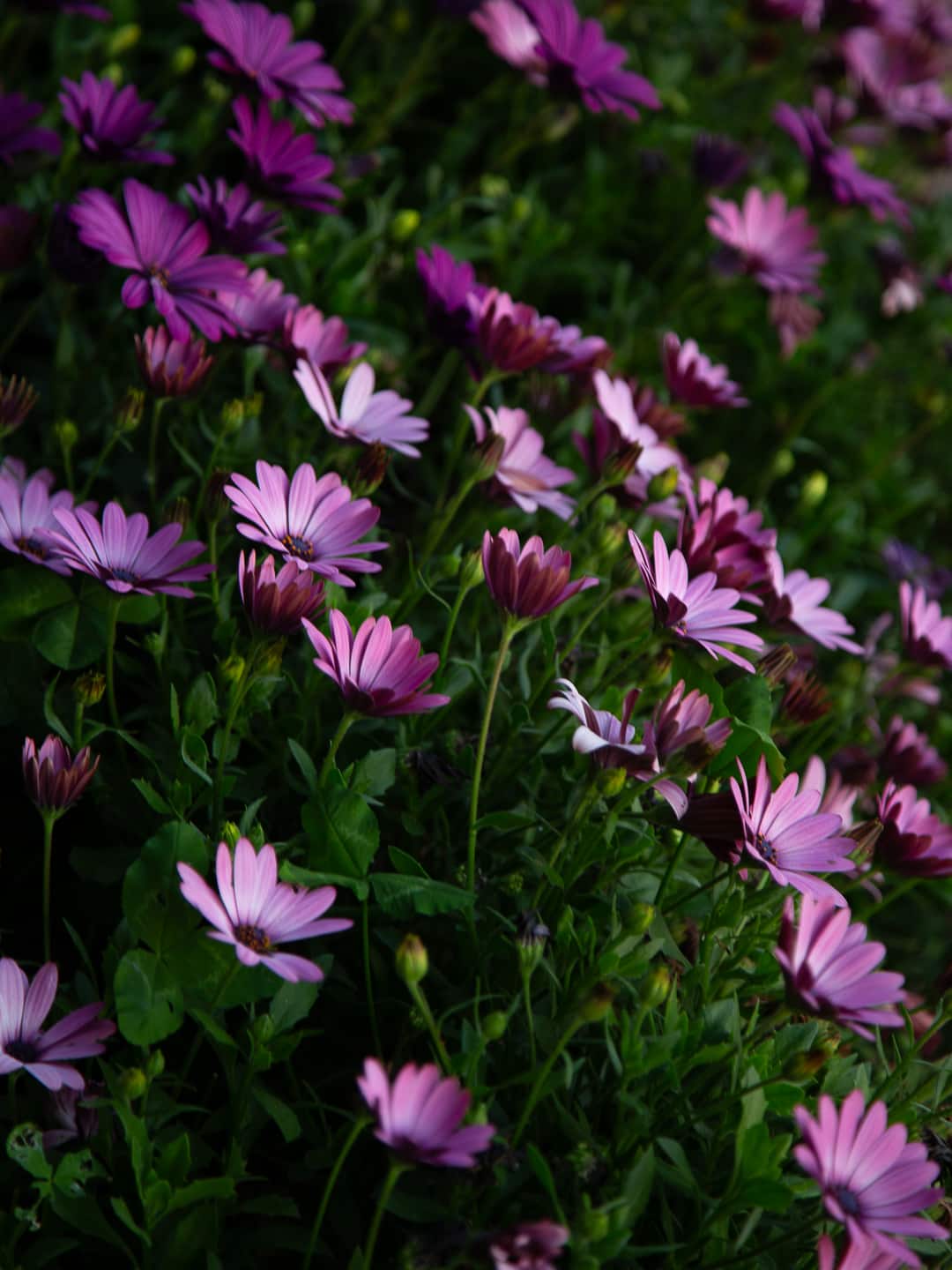
African daisies
Purple African daisies, wide open to the sun. They close in the evening and when the sky clouds over: to see them like this, come by in daylight.
III
The pine wood
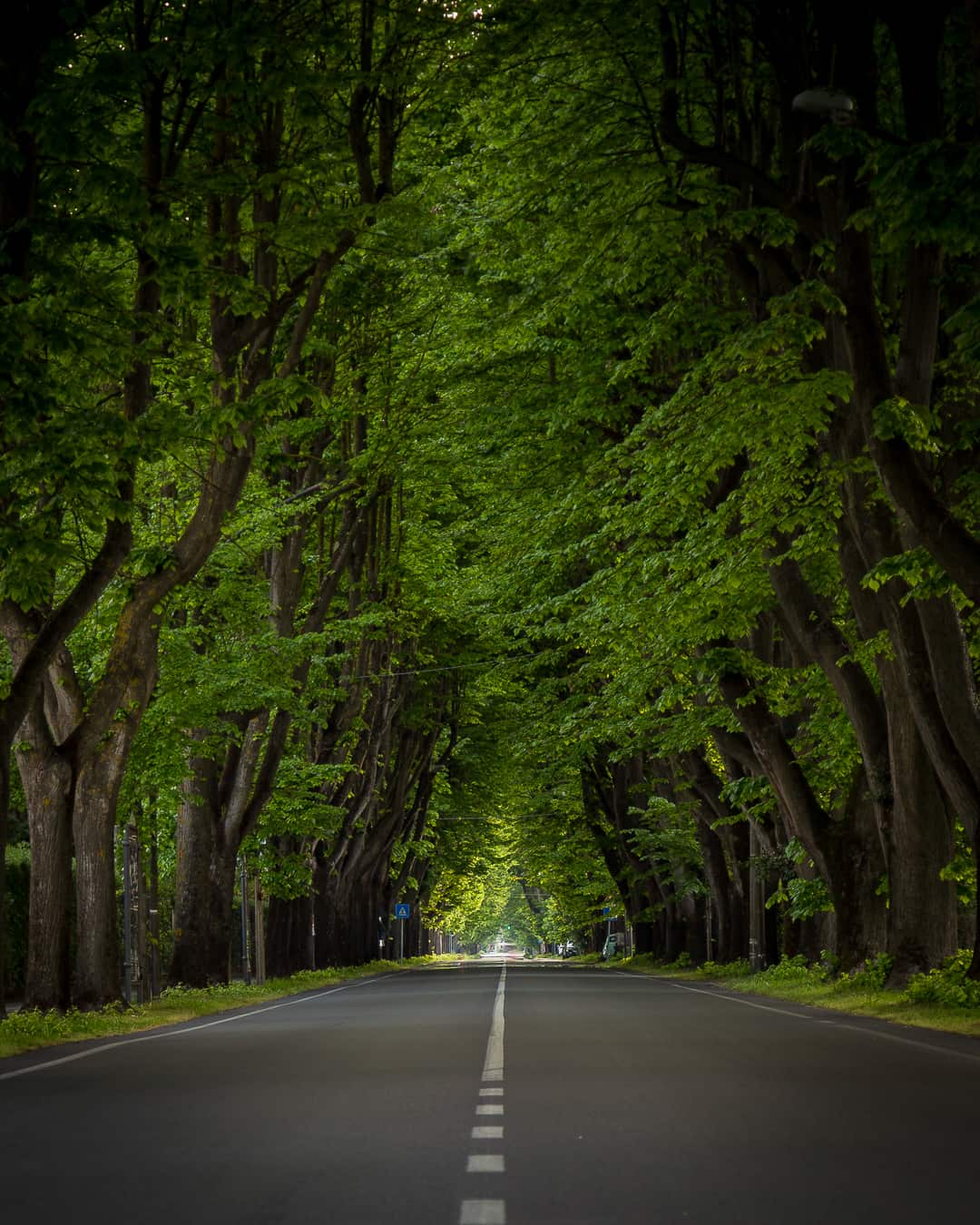
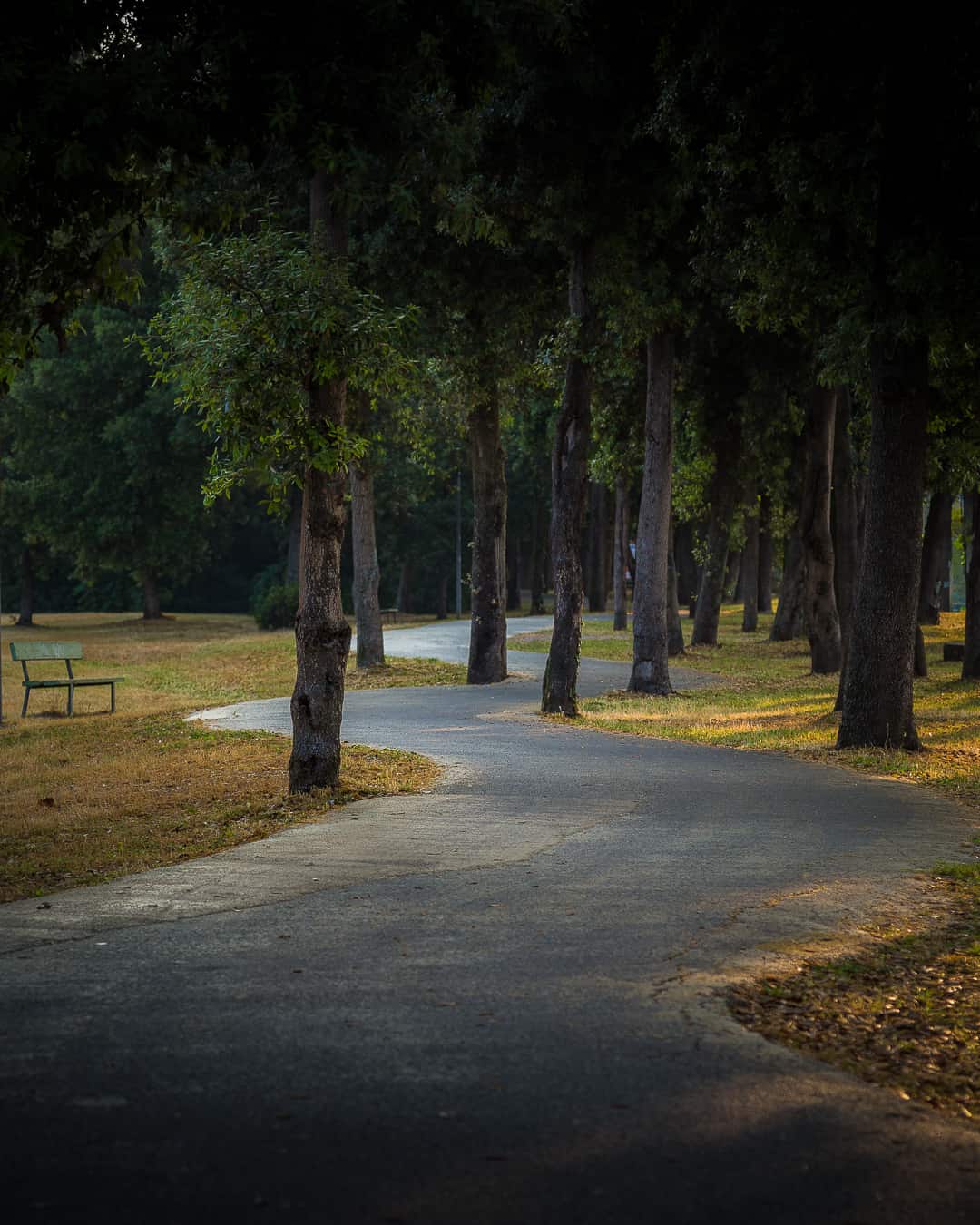
Between Marina di Pietrasanta and Forte dei Marmi, the Versiliana park covers about 80 hectares of old woodland, with more than a kilometre of seafront.
It is what remains of the Macchia di Marina, the ancient wood that once covered the coast. Gabriele D’Annunzio stayed in the nineteenth-century villa inside it, and tradition links the pine wood to his poem La pioggia nel pineto.
The park’s best-known bridge is the Ponte del Principe, named after Grand Duke Leopold II. In summer, sculpture exhibitions and the La Versiliana festival take place among the trees.
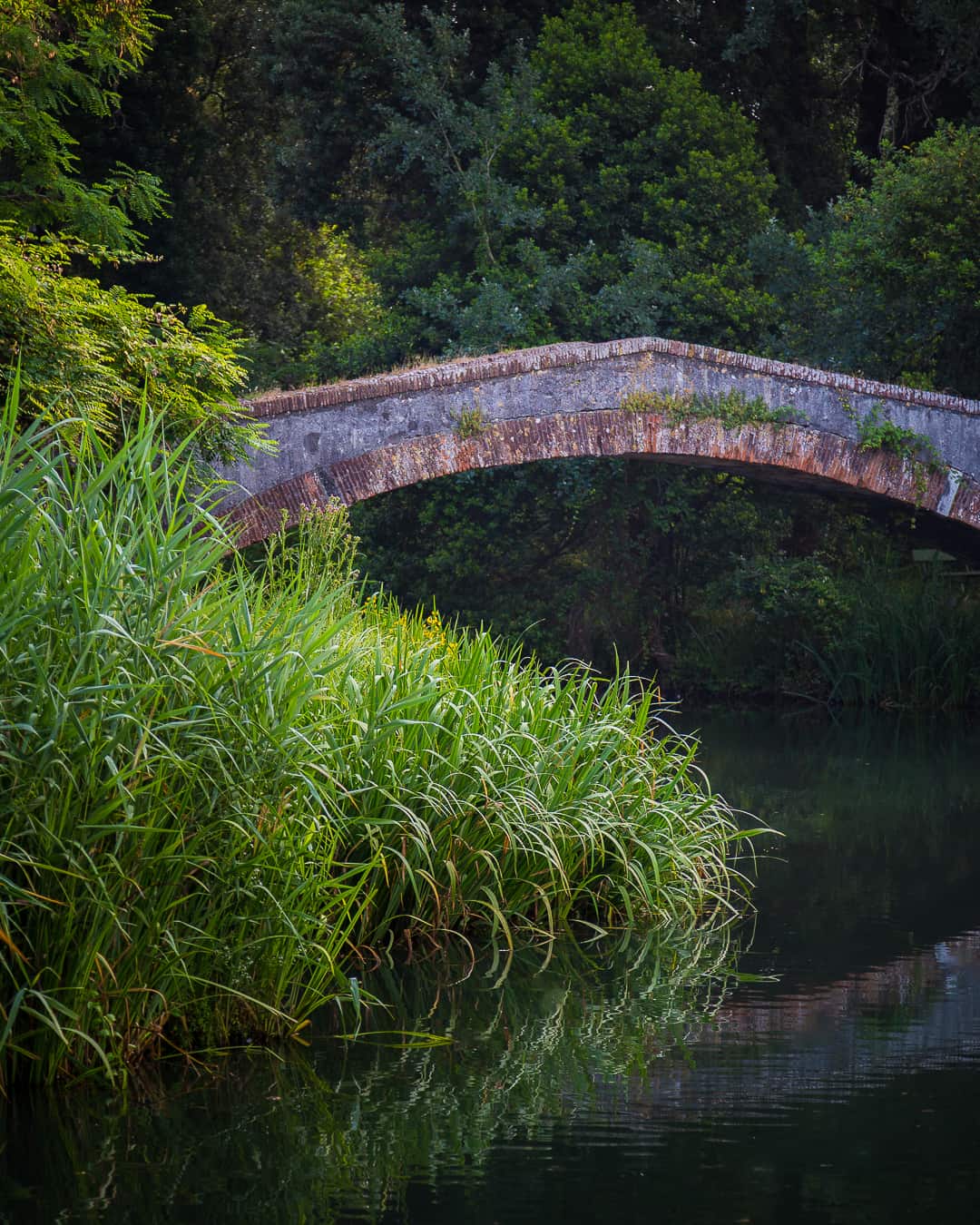
The little bridge
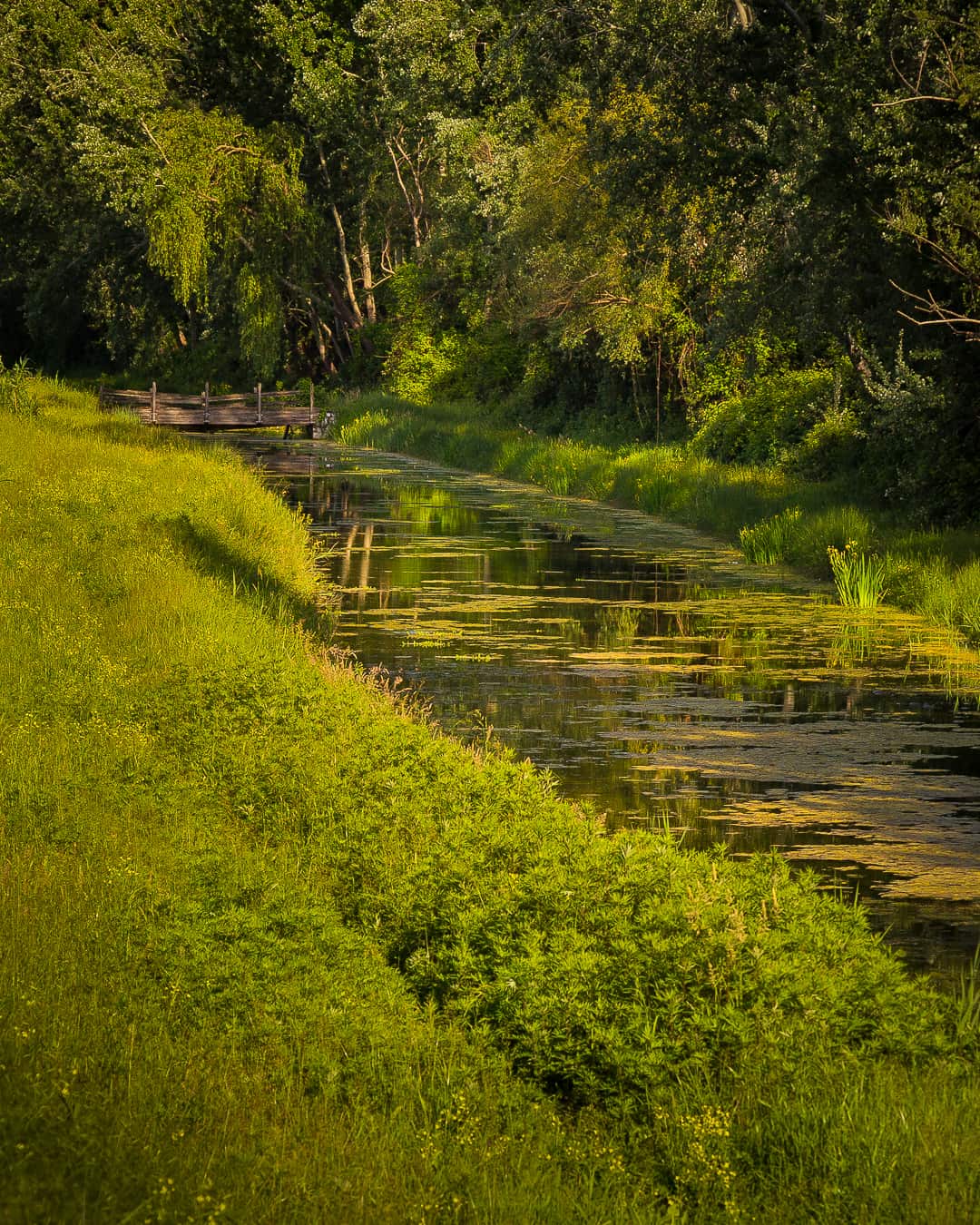
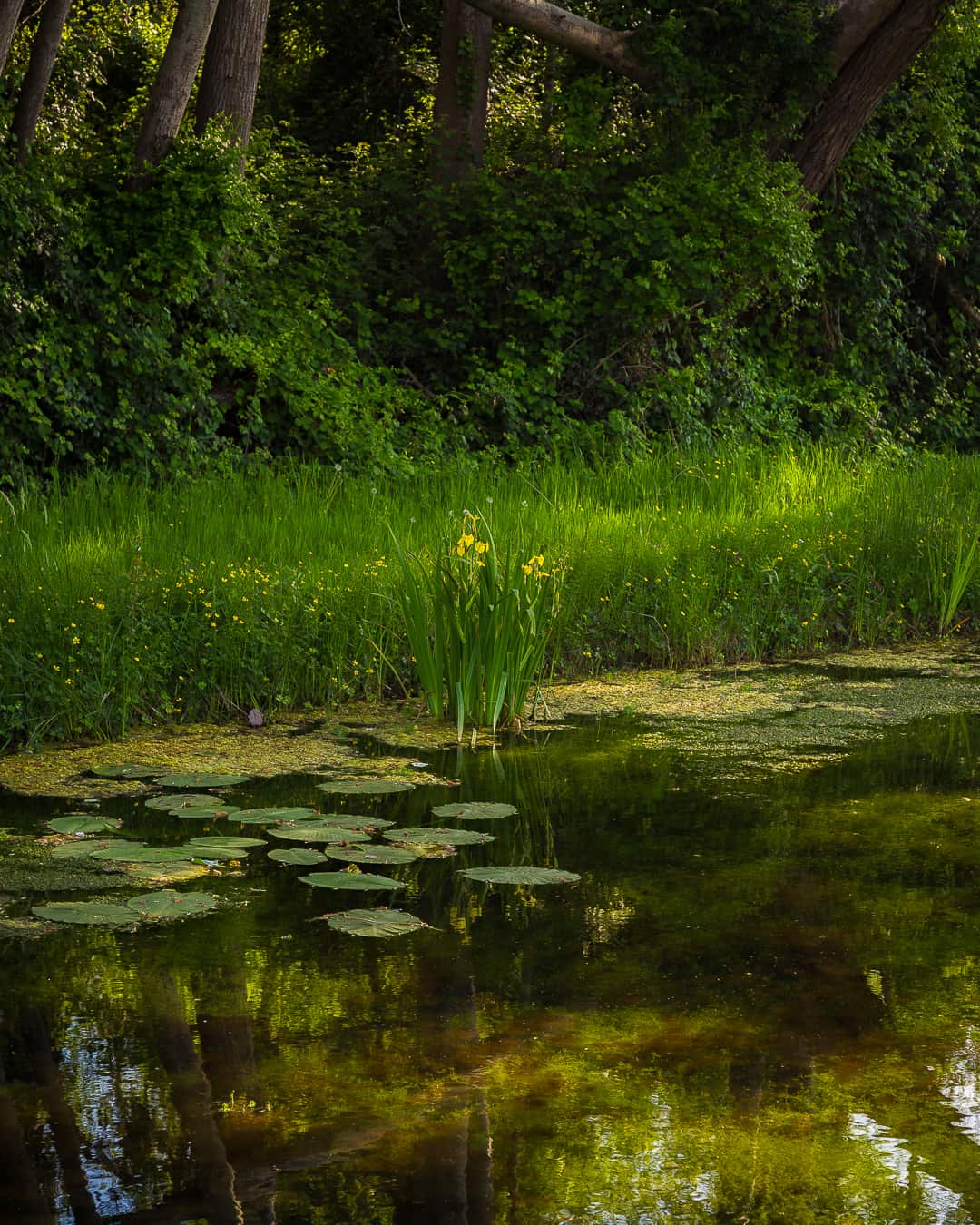
An arched brick bridge over still water, tall reeds on the bank. Ditches, canals and ponds are a reminder of how much water shaped this plain, long before the beach clubs and villas.
IV
Pietrasanta
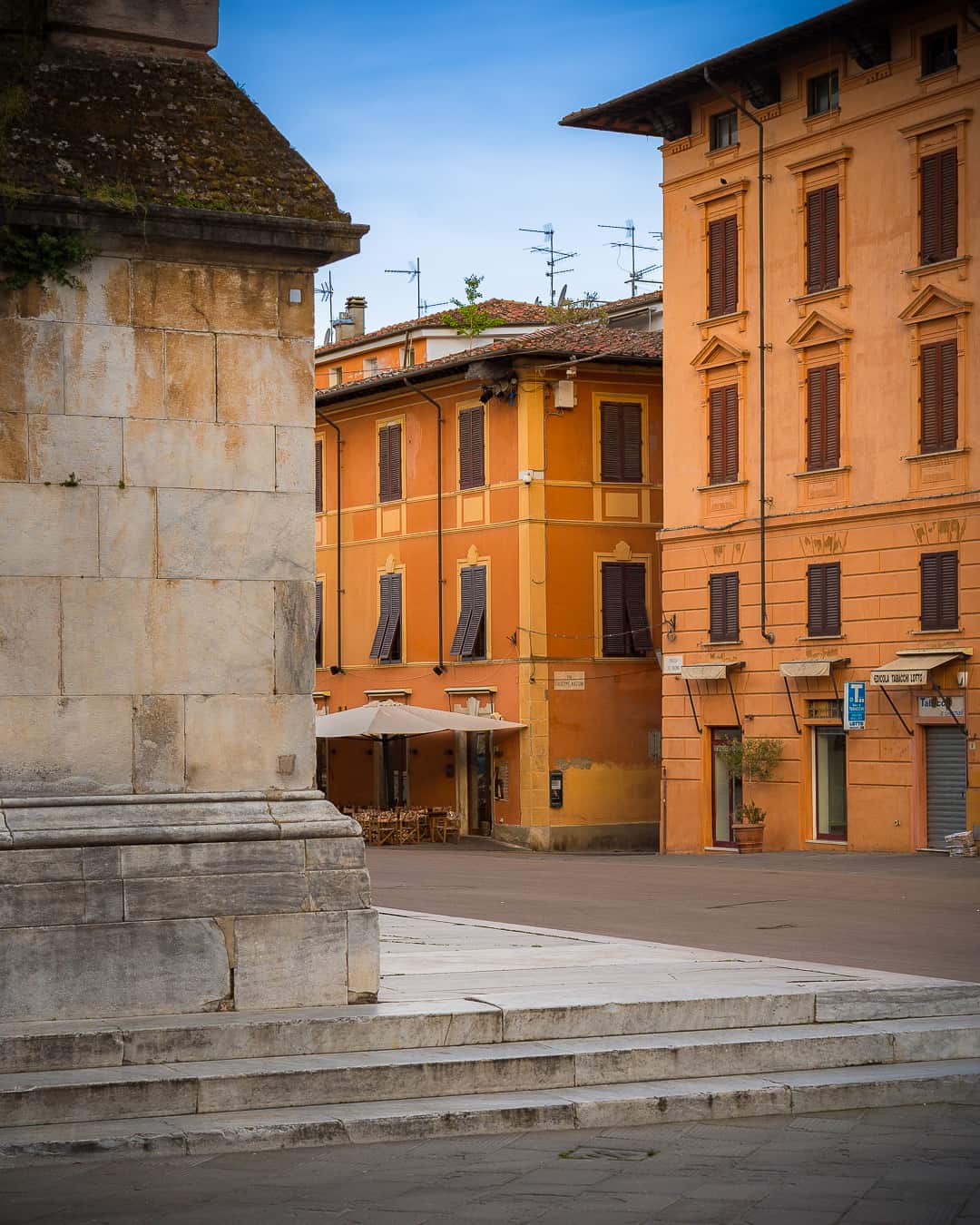
Pietrasanta is the town of marble. You find it everywhere: in the steps, the columns, the façade of the Duomo di San Martino overlooking the main square.
In 1518, at the wish of Pope Leo X, Michelangelo came to these mountains to find marble for the façade of San Lorenzo in Florence, and had a road opened from the Monte Altissimo quarries down to the sea.
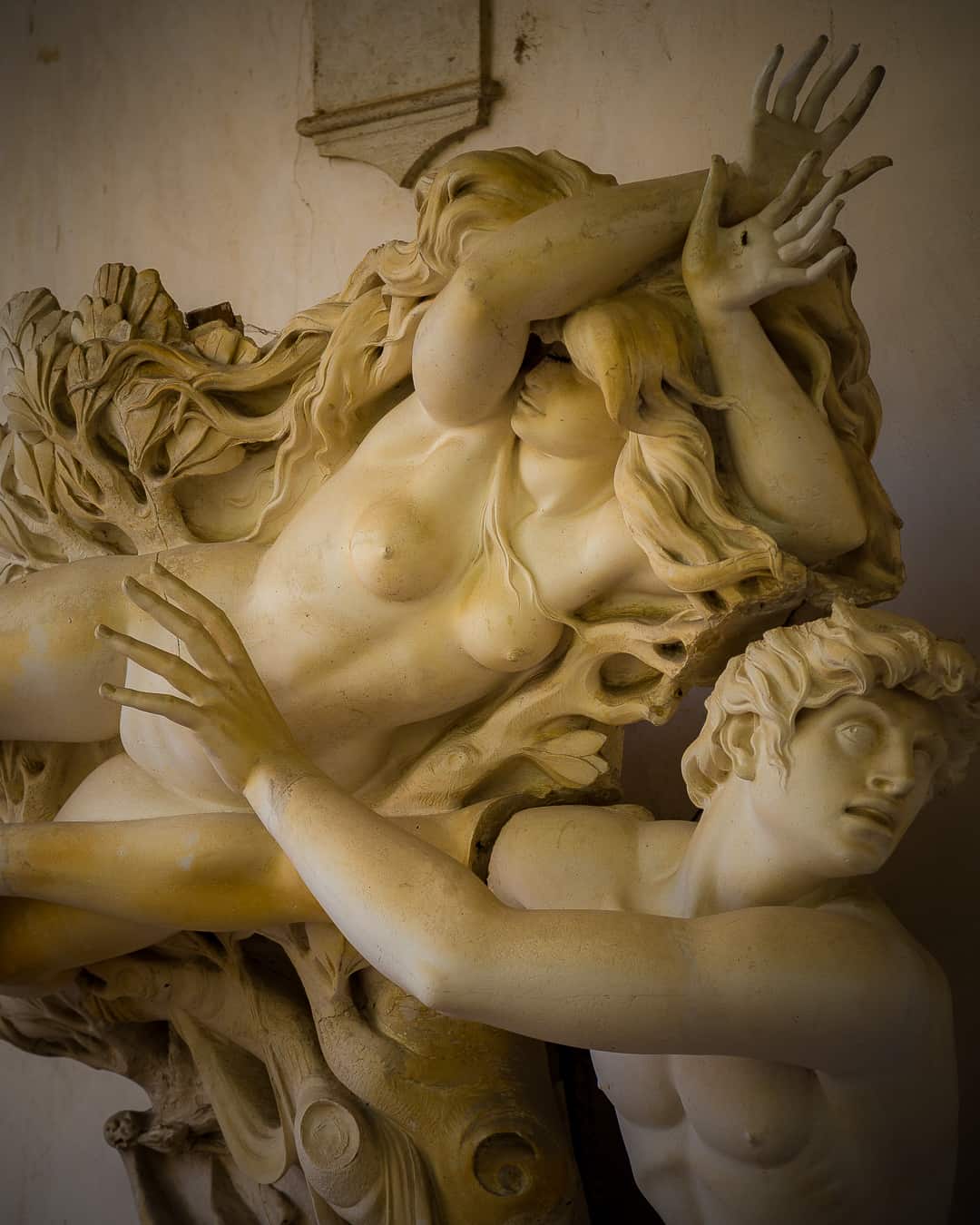
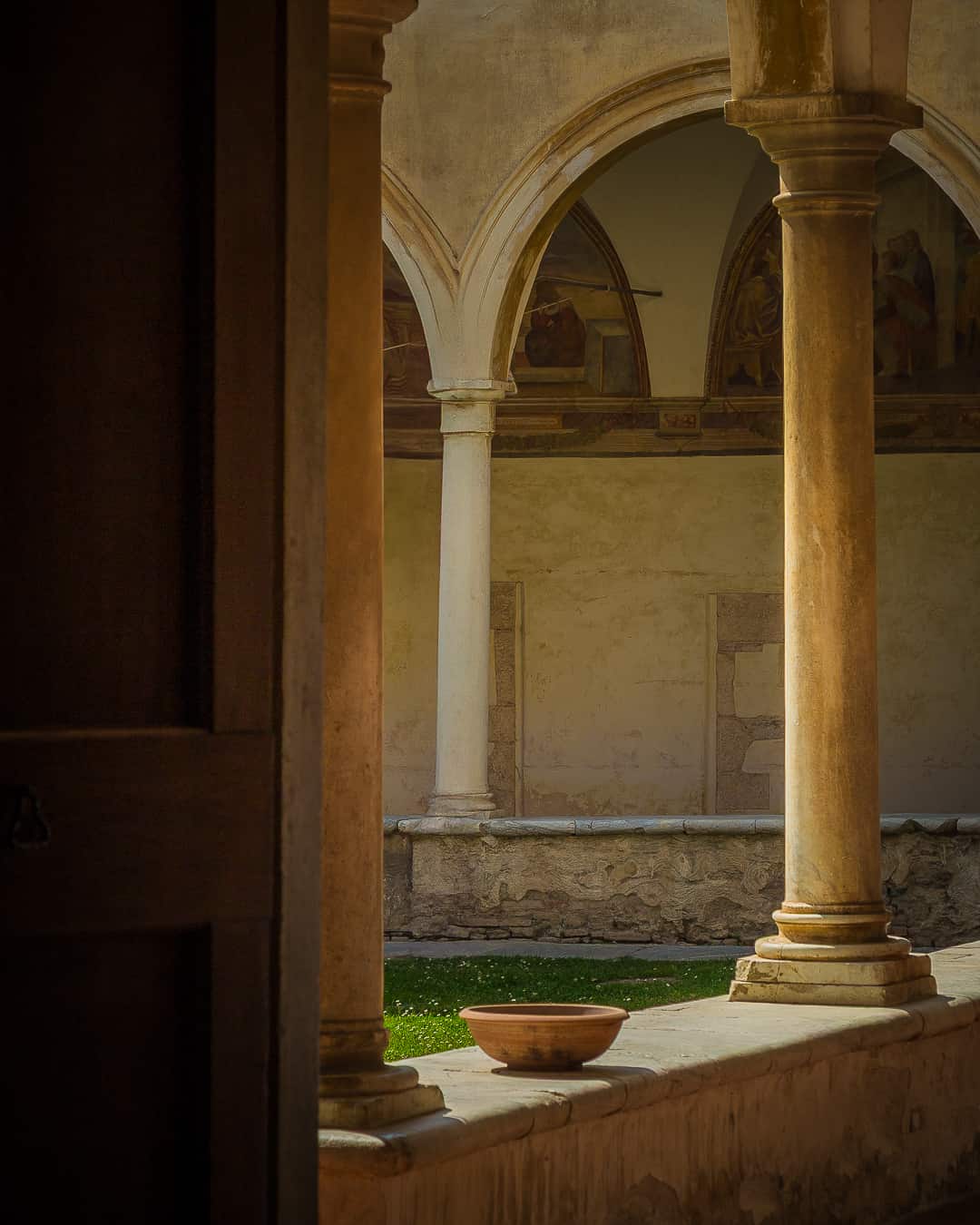
The tradition has never stopped. Today workshops and foundries work for artists from all over the world, the Museo dei Bozzetti keeps their models in the former convent of Sant’Agostino, and in summer the cathedral square becomes an open-air gallery.
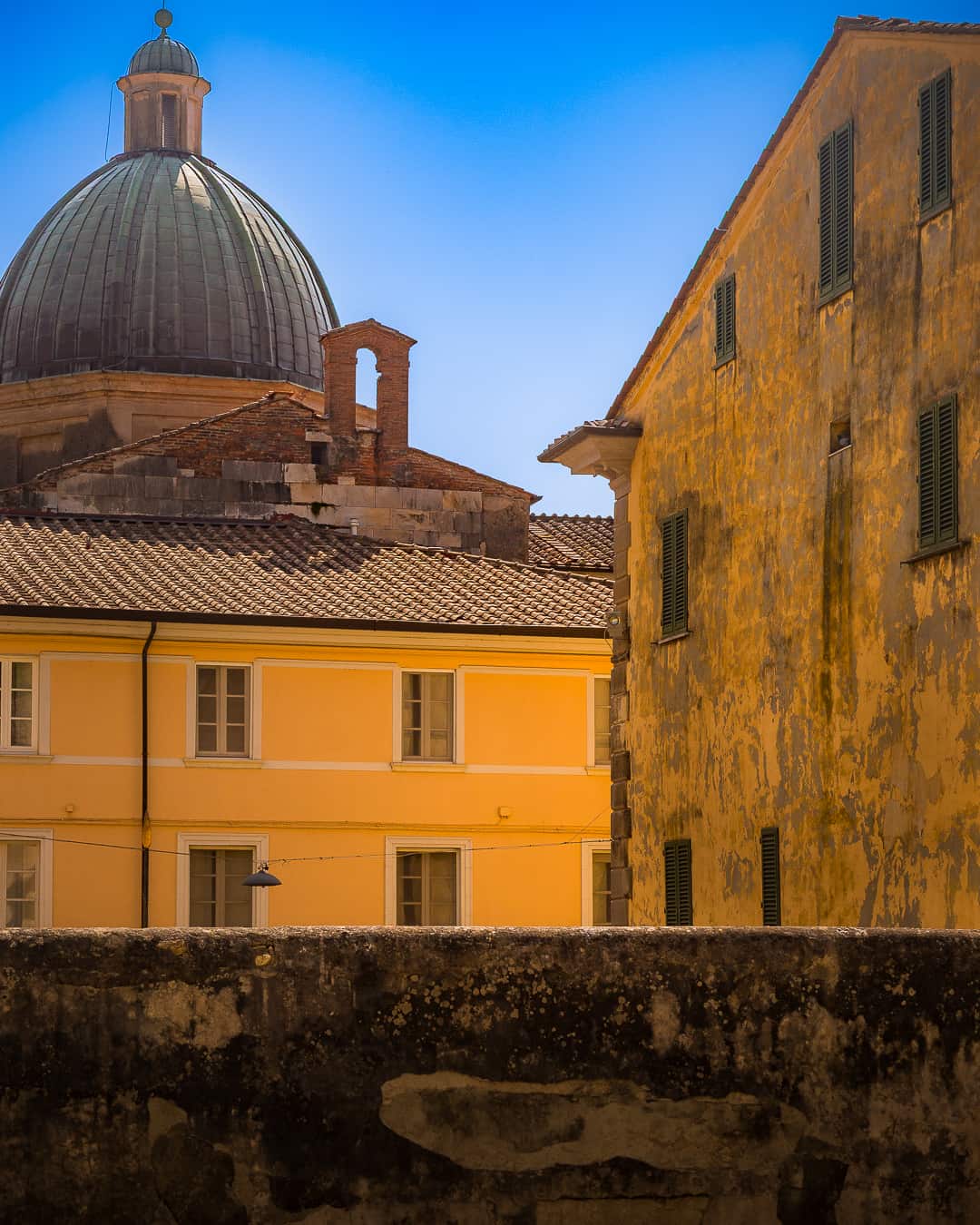
The dome
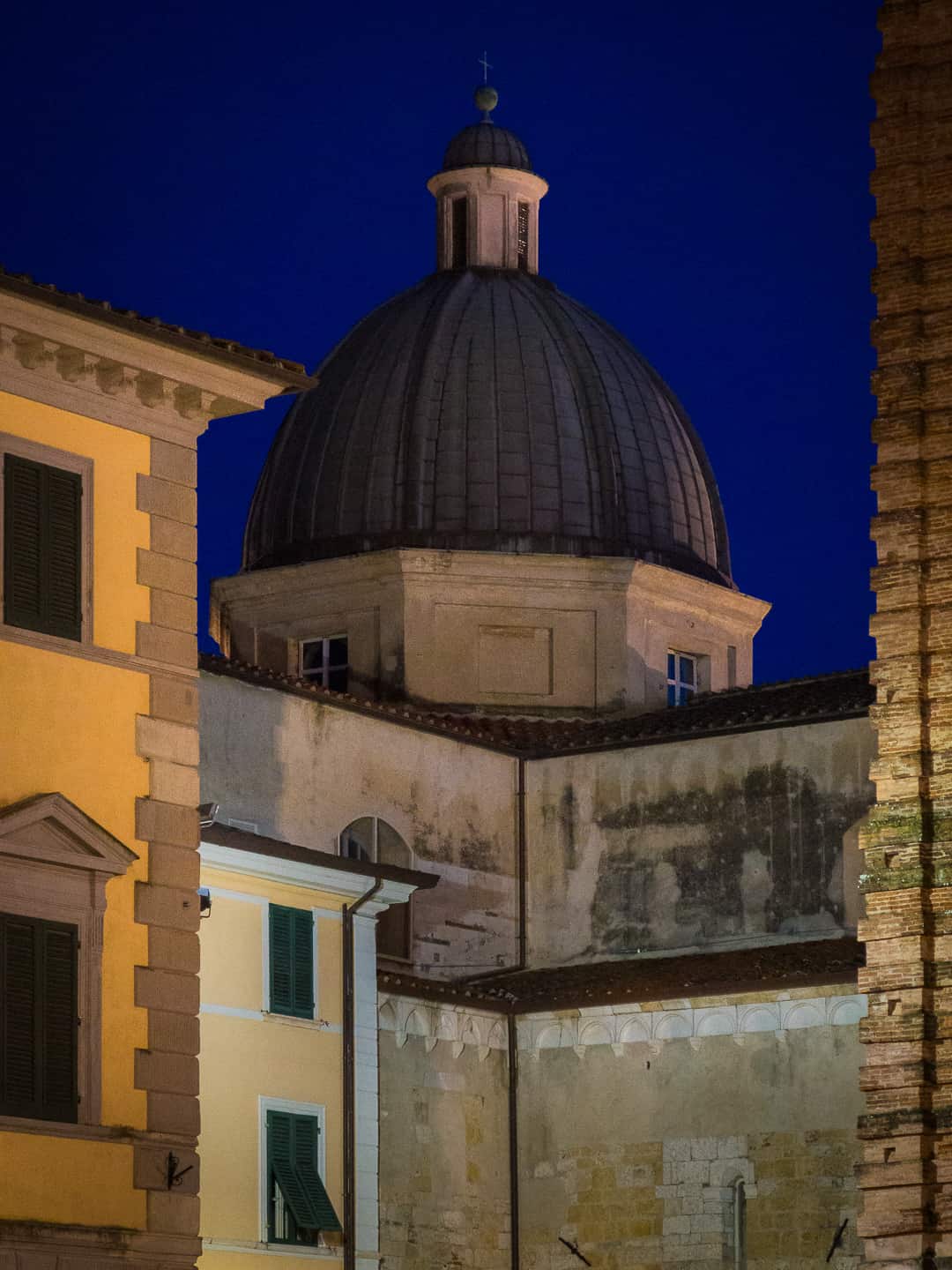
A dome above the rooftops, walls warm with sun. The centre of Pietrasanta is compact: you can walk across it in minutes, but every street opens a new view.
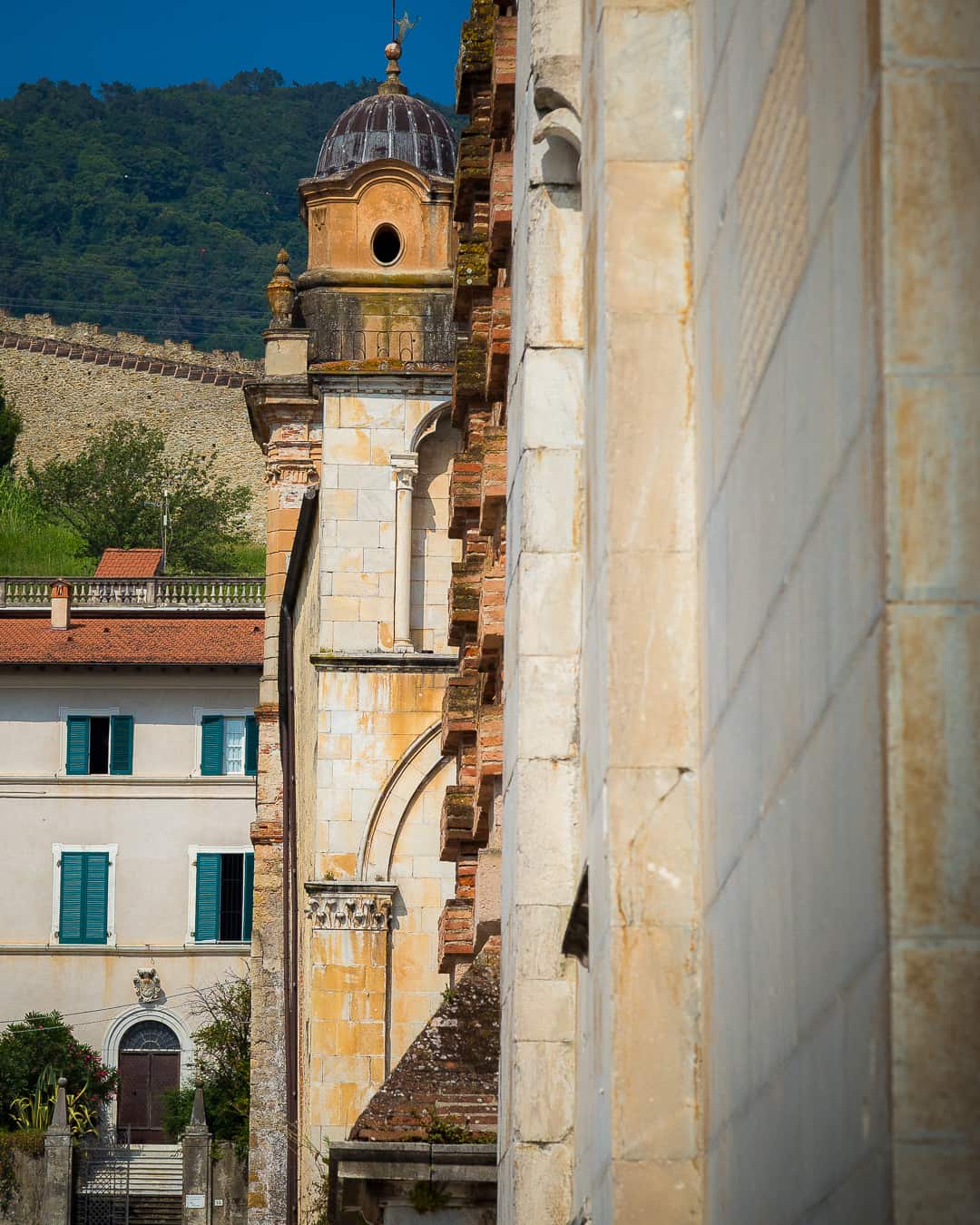
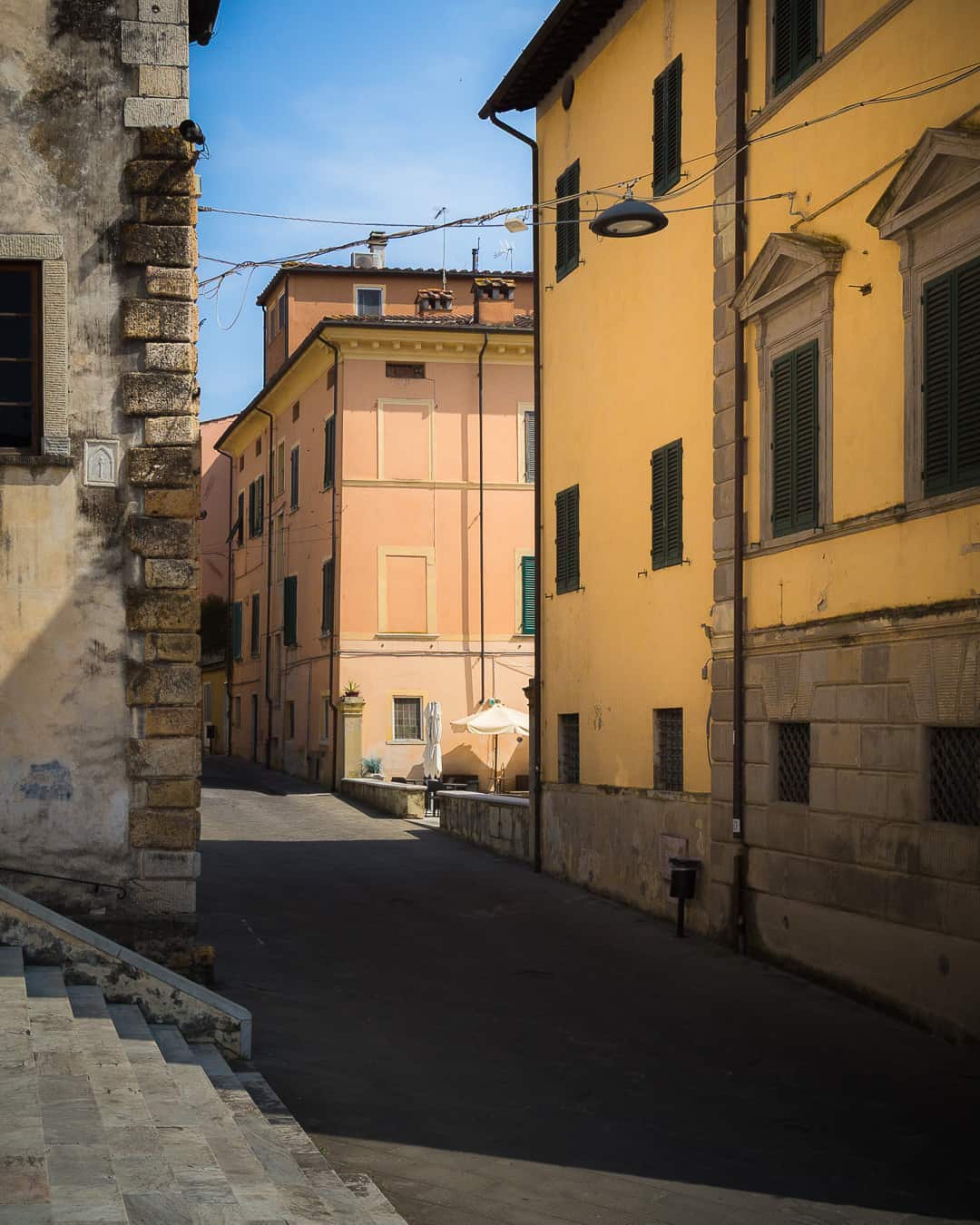
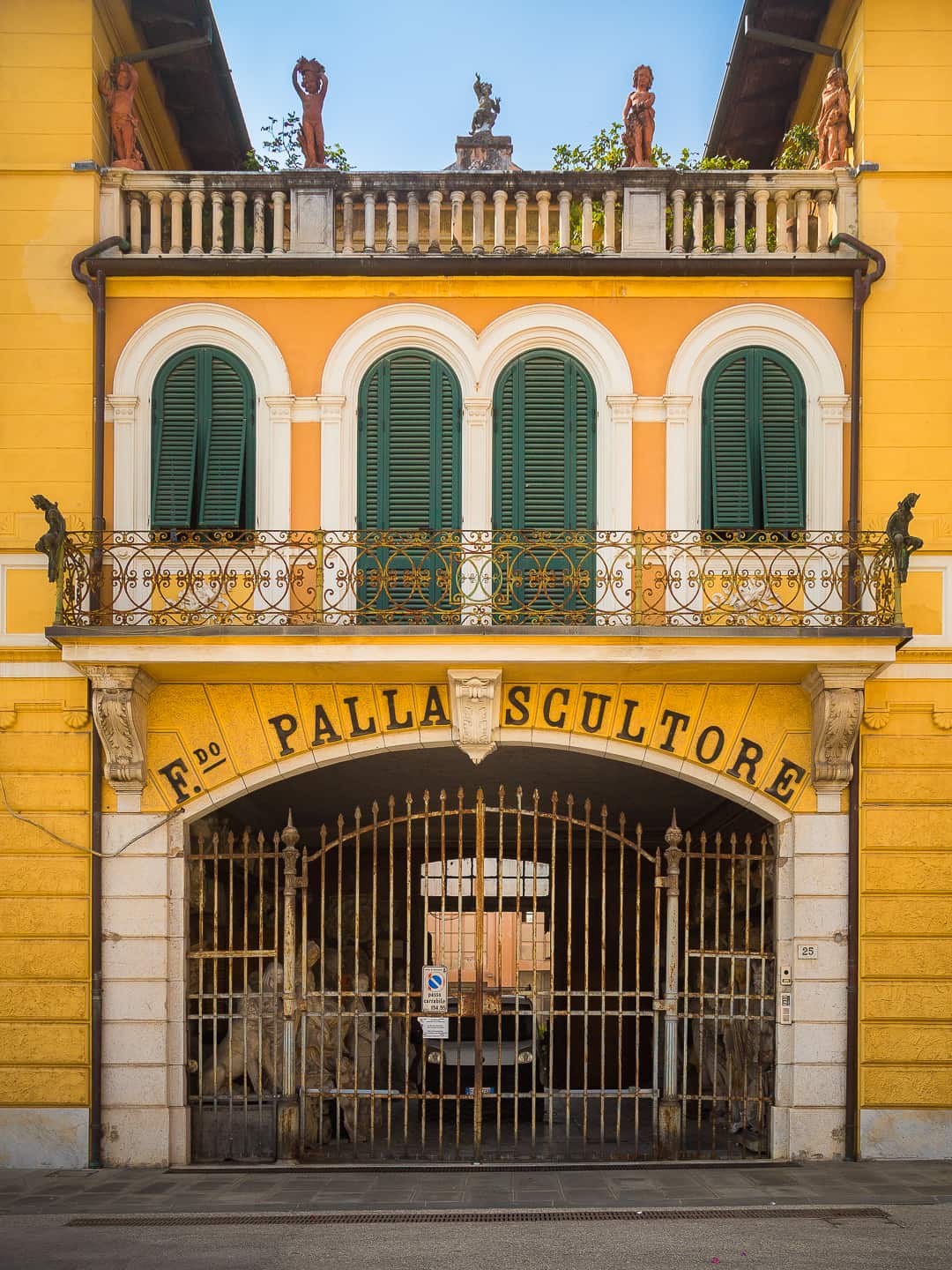
The workshop
On the yellow façade, in large letters: “F.do Palla Scultore”. Studies of sculpture in Versilia name Ferdinando Palla’s workshop among those at the origins of Little Athens.
The staircase
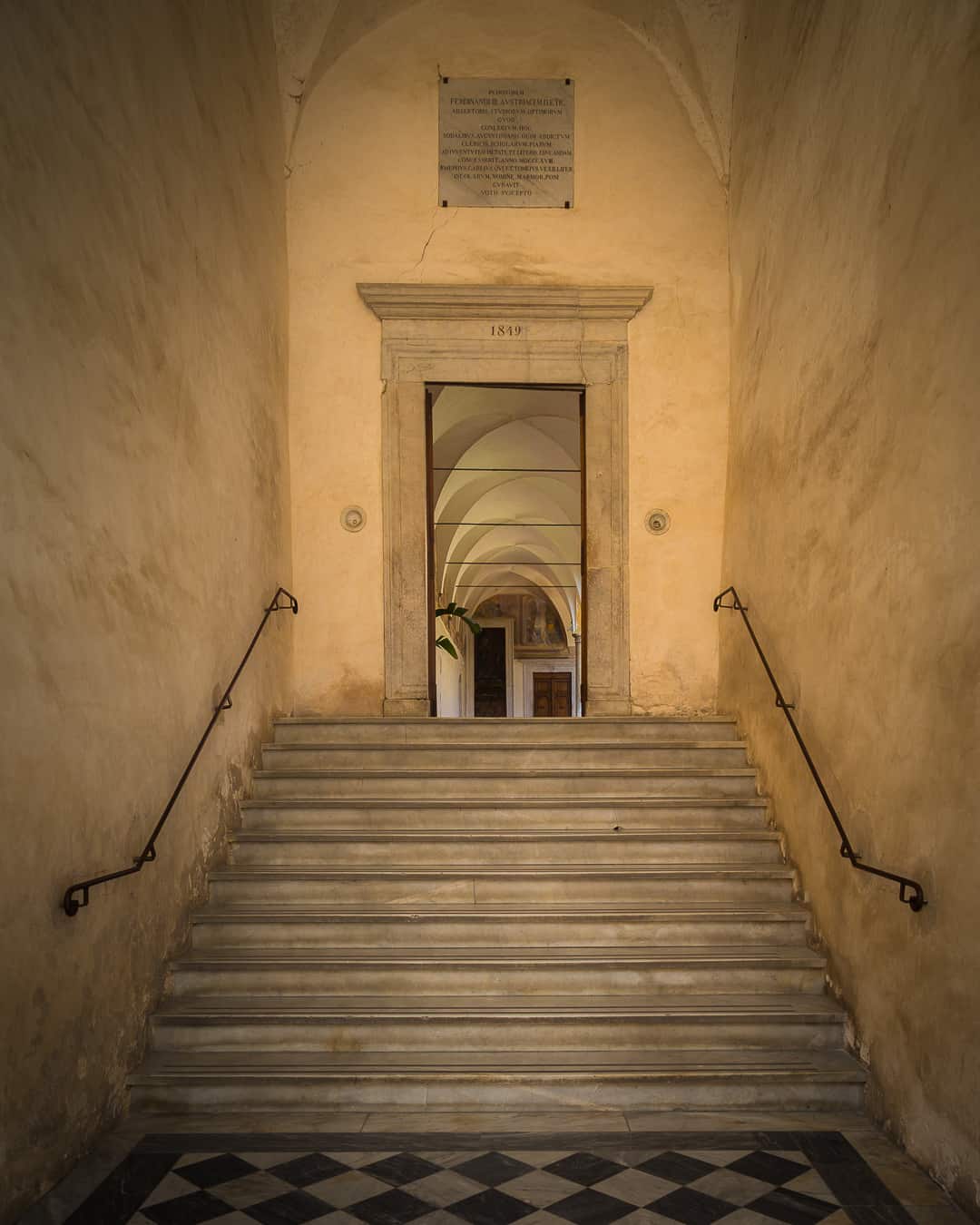
Marble steps, a chequered floor, a door open to the light. In Pietrasanta marble is no luxury: it is the everyday material of stairs, thresholds and windowsills.
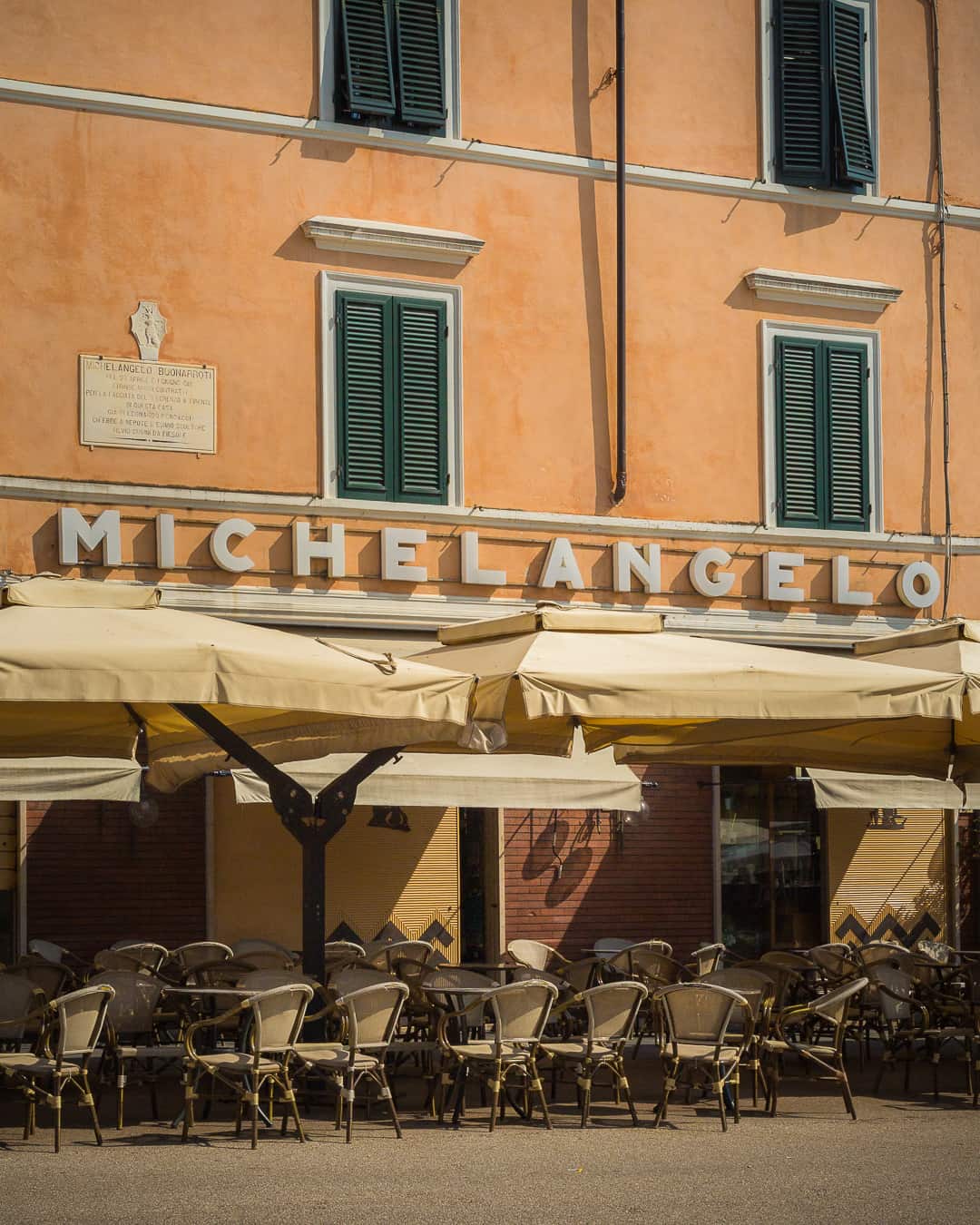
The café
Outdoor tables, pale umbrellas, a sign in large letters. The cathedral square is the town’s living room: you sit and watch people go by and, in summer, the sculptures of the exhibitions.
V
The streets
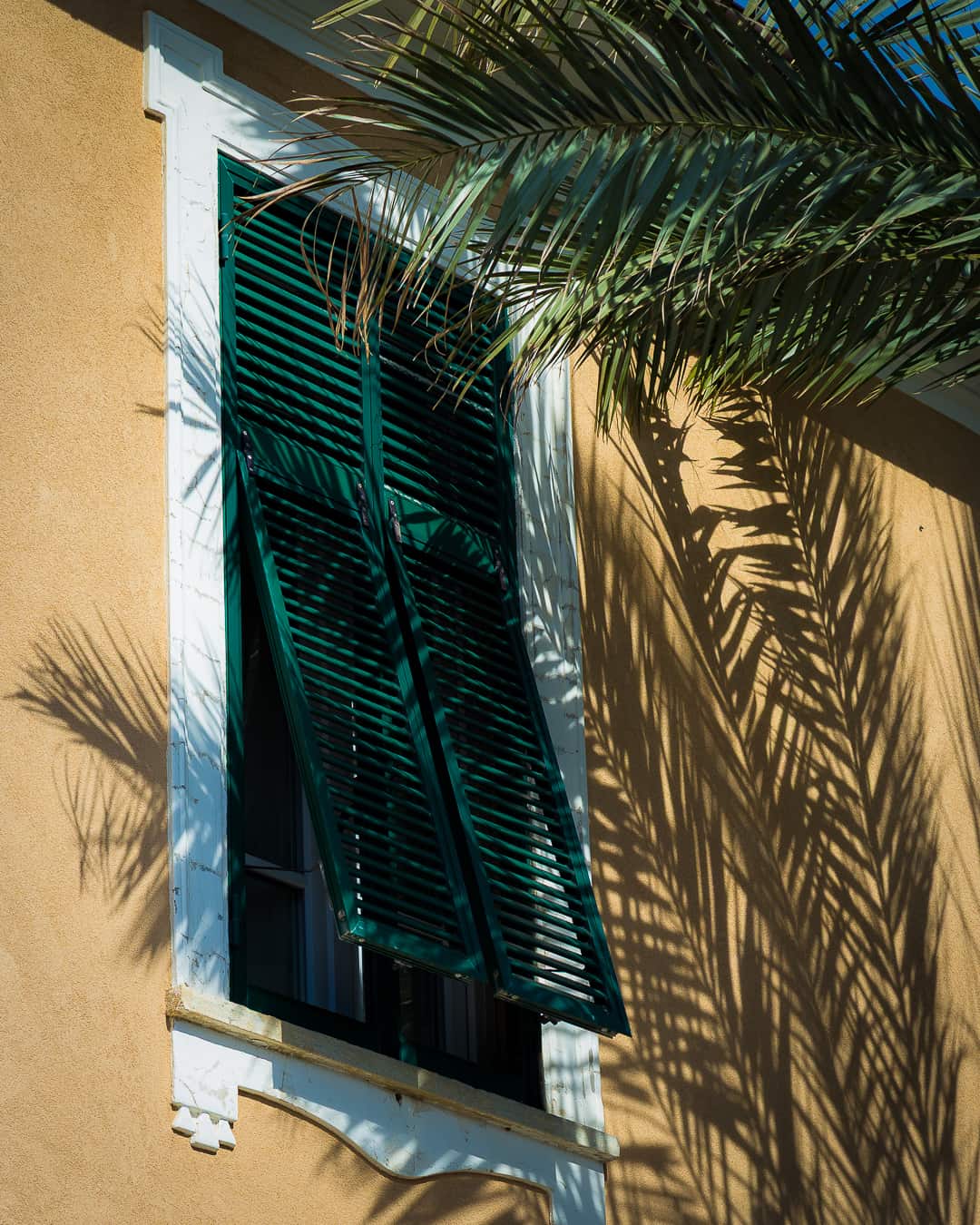
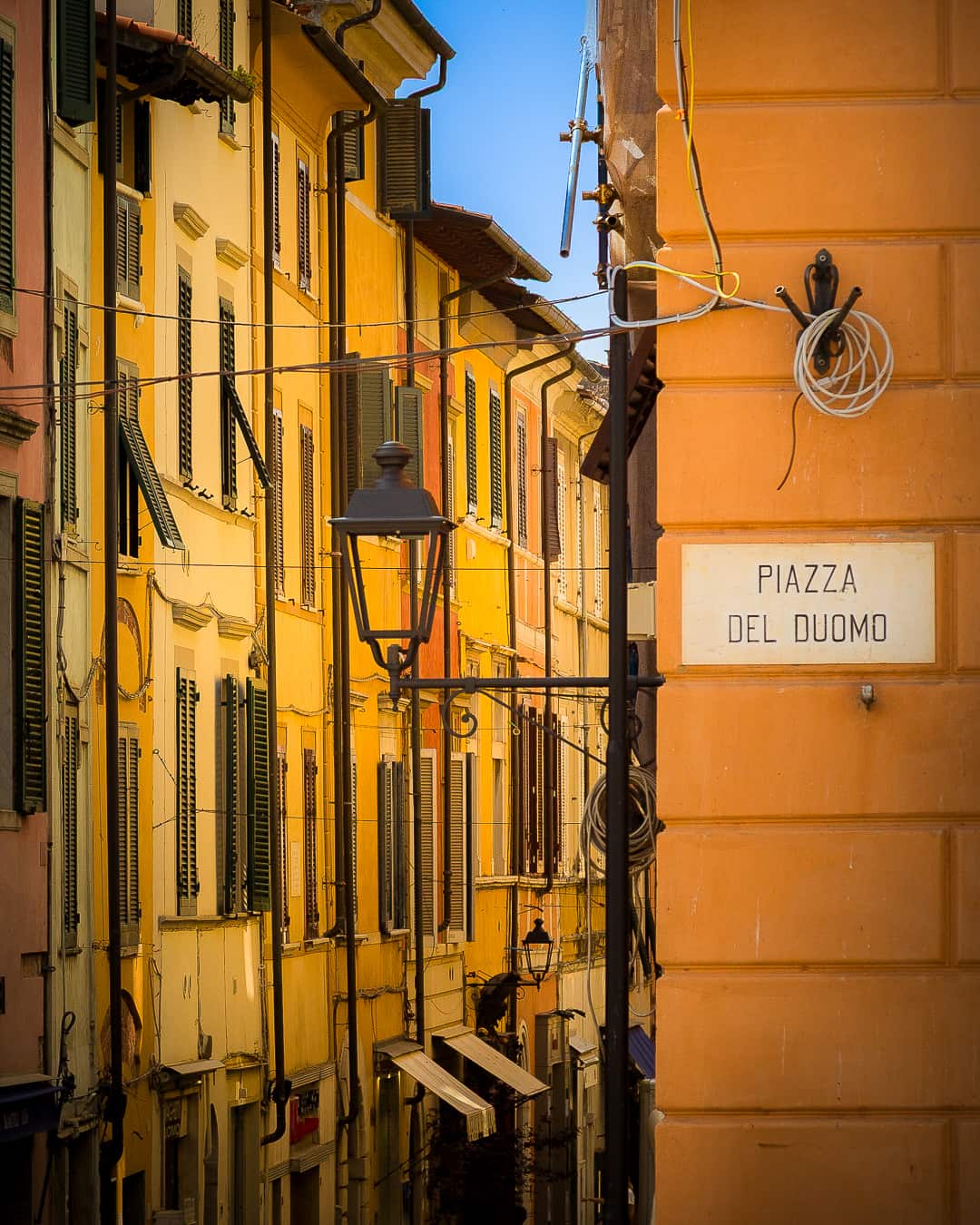
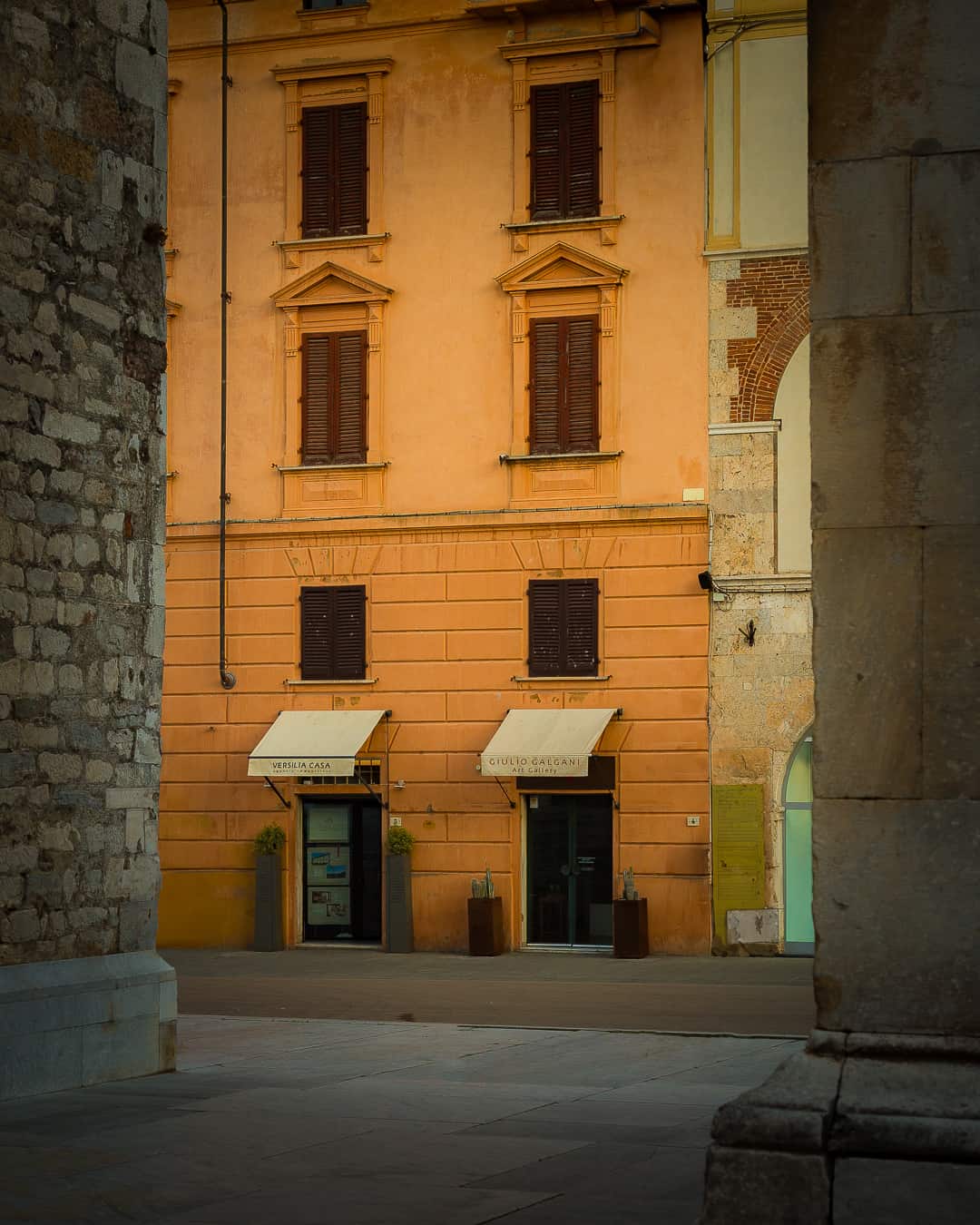
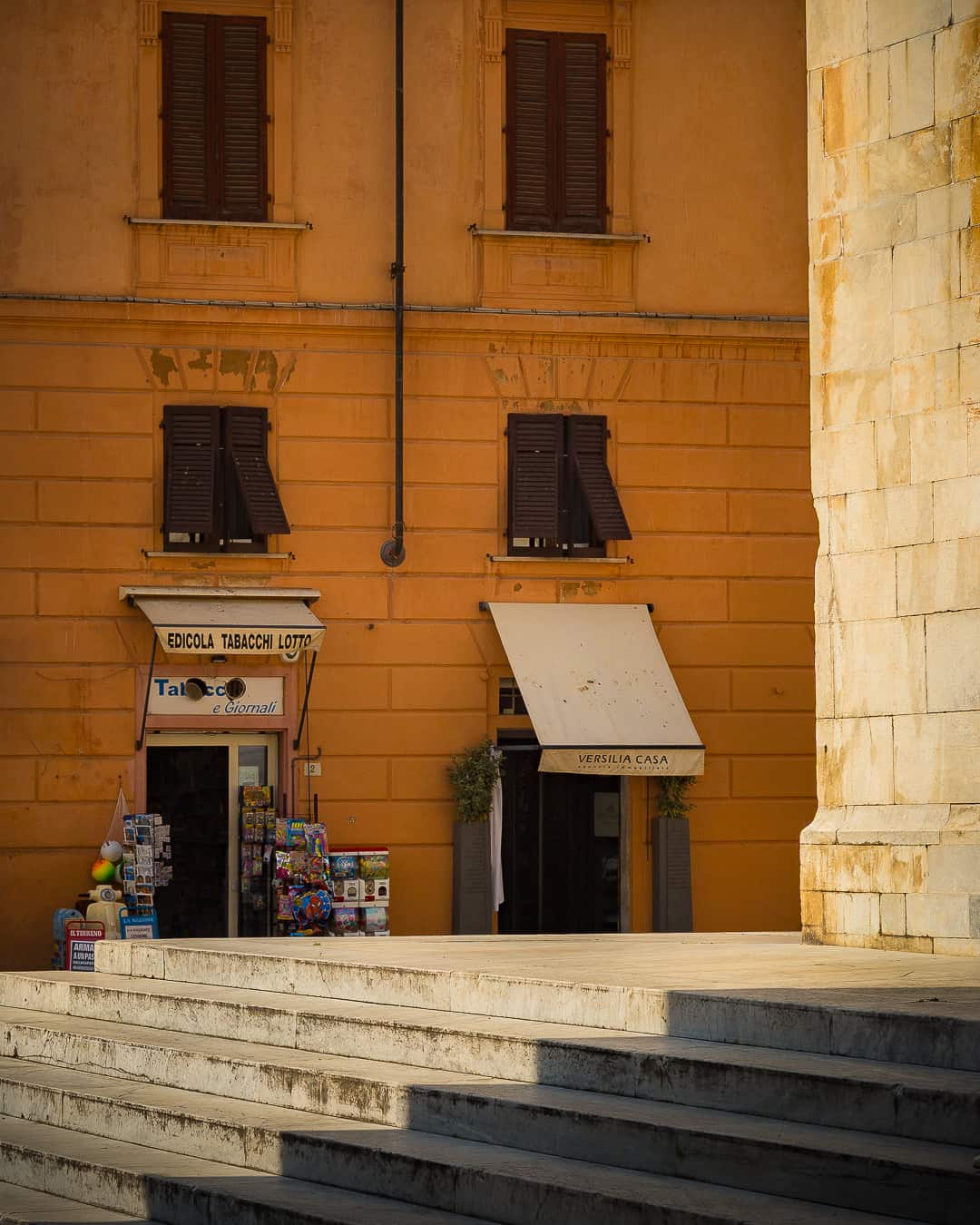
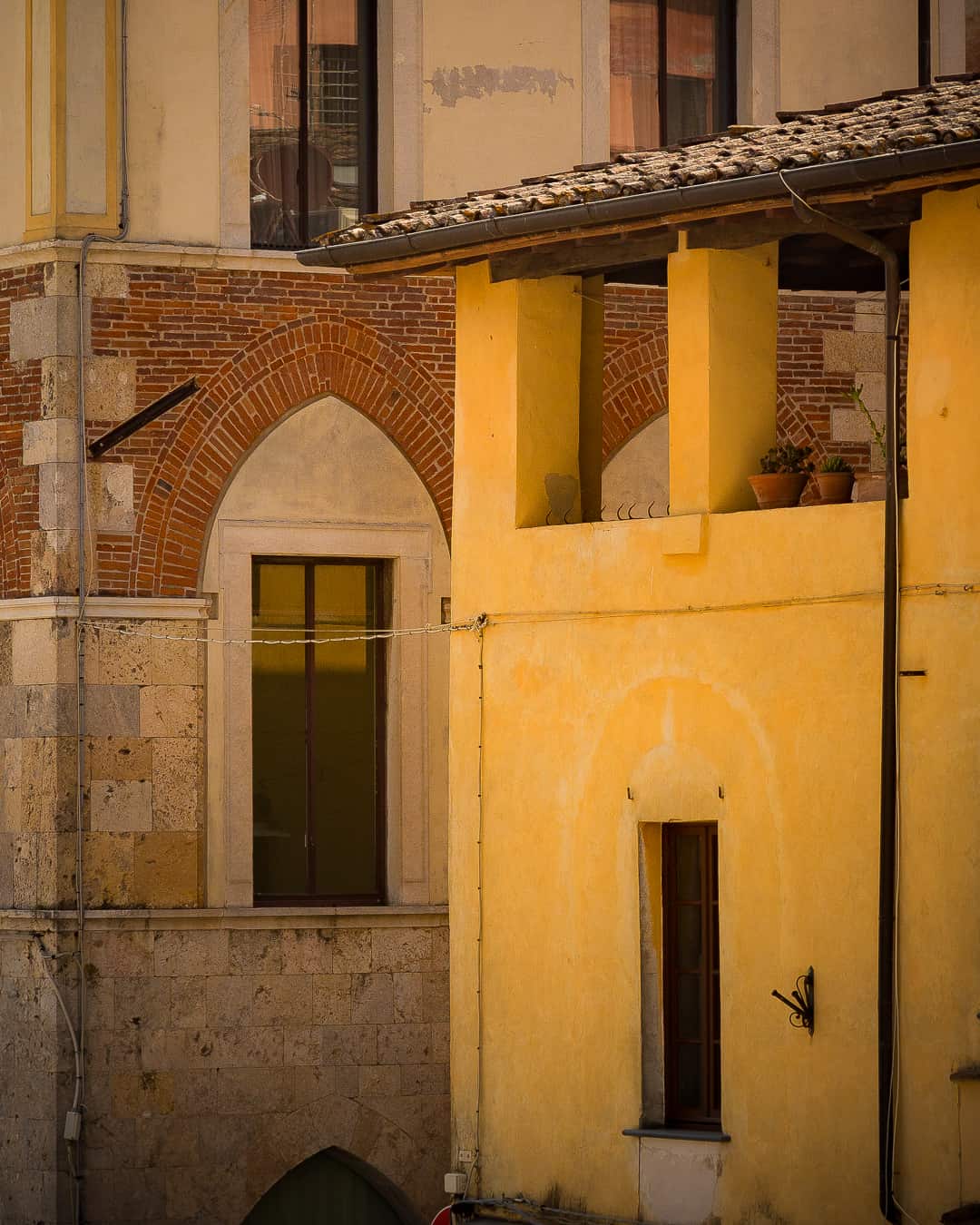
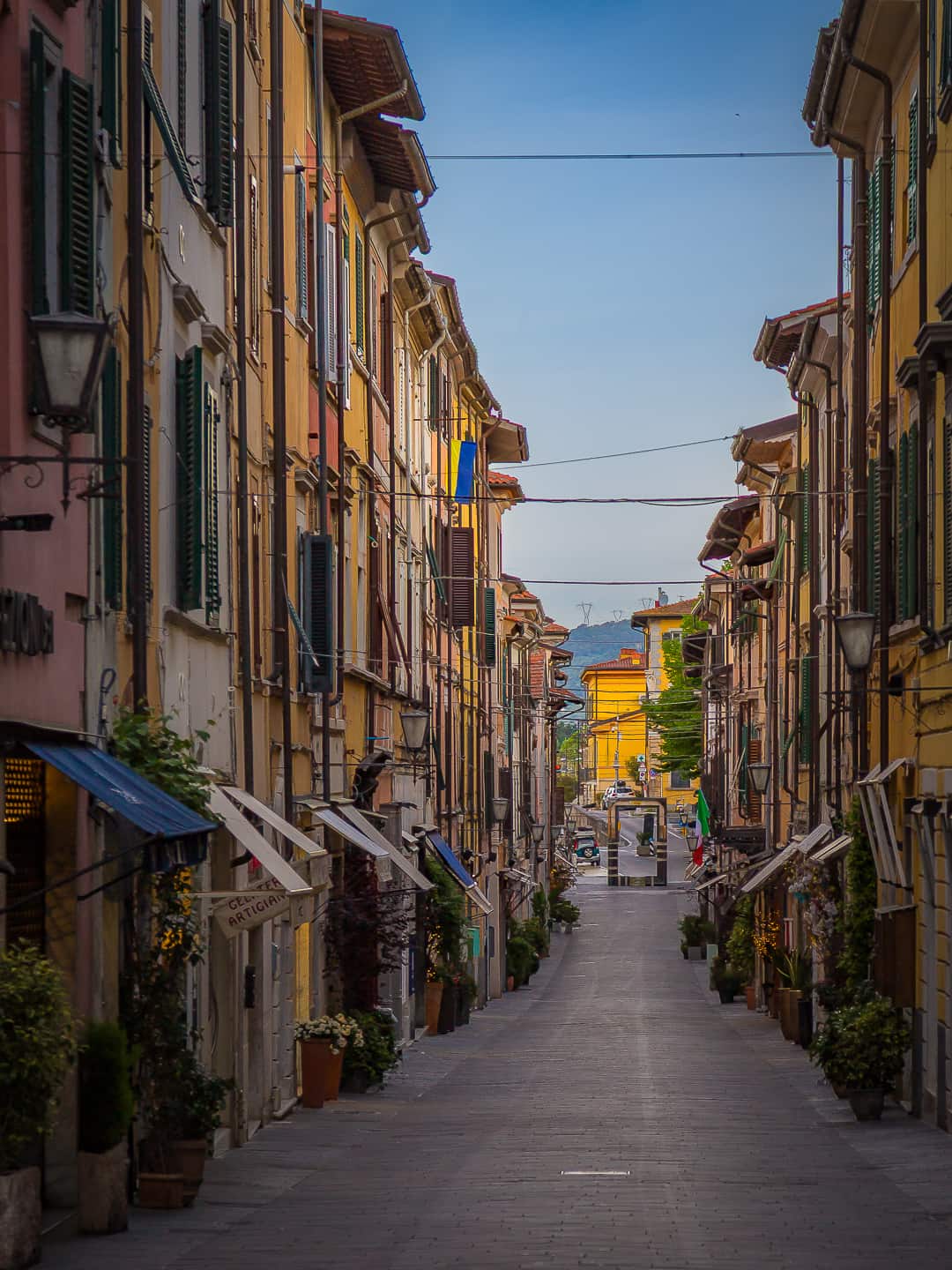
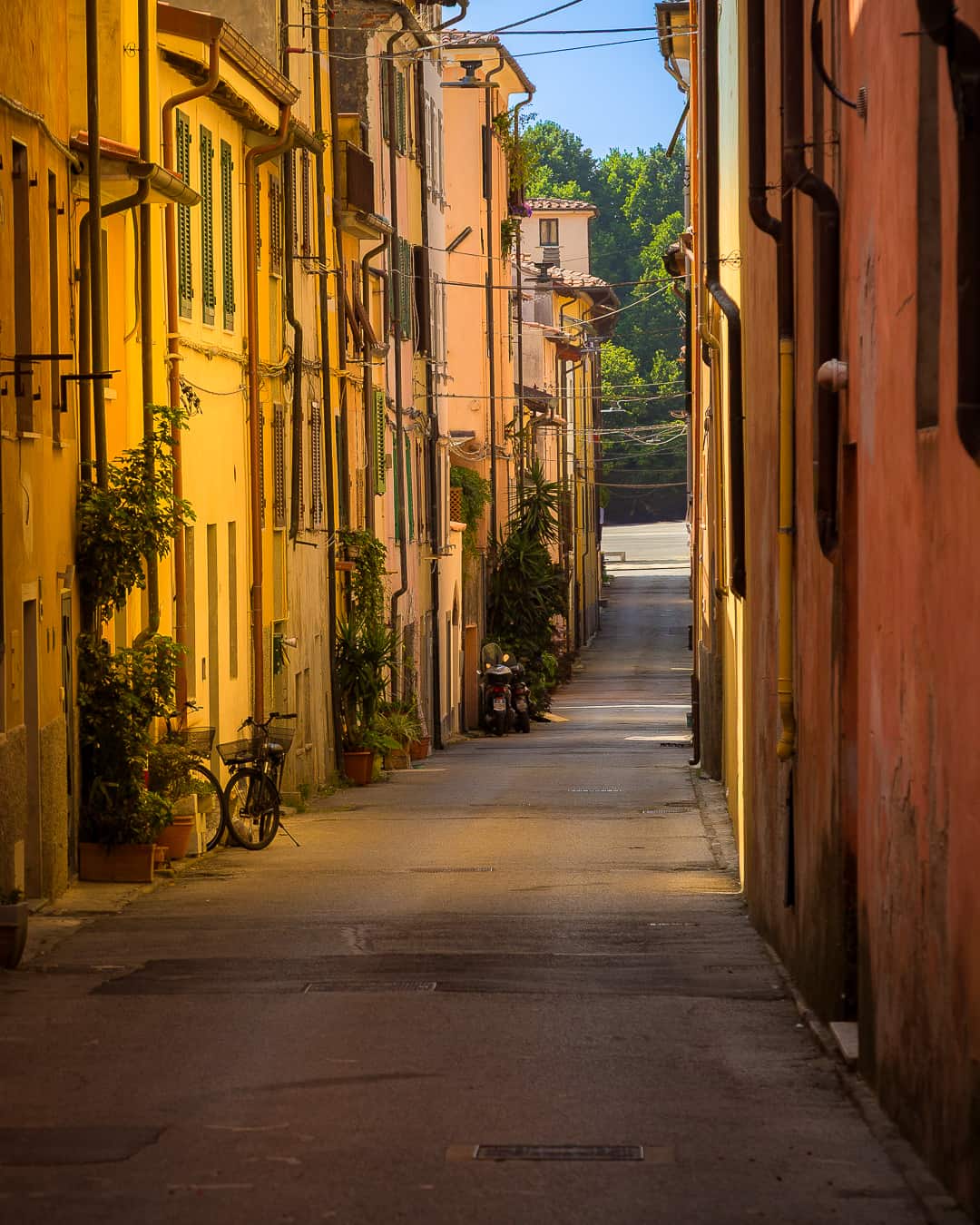
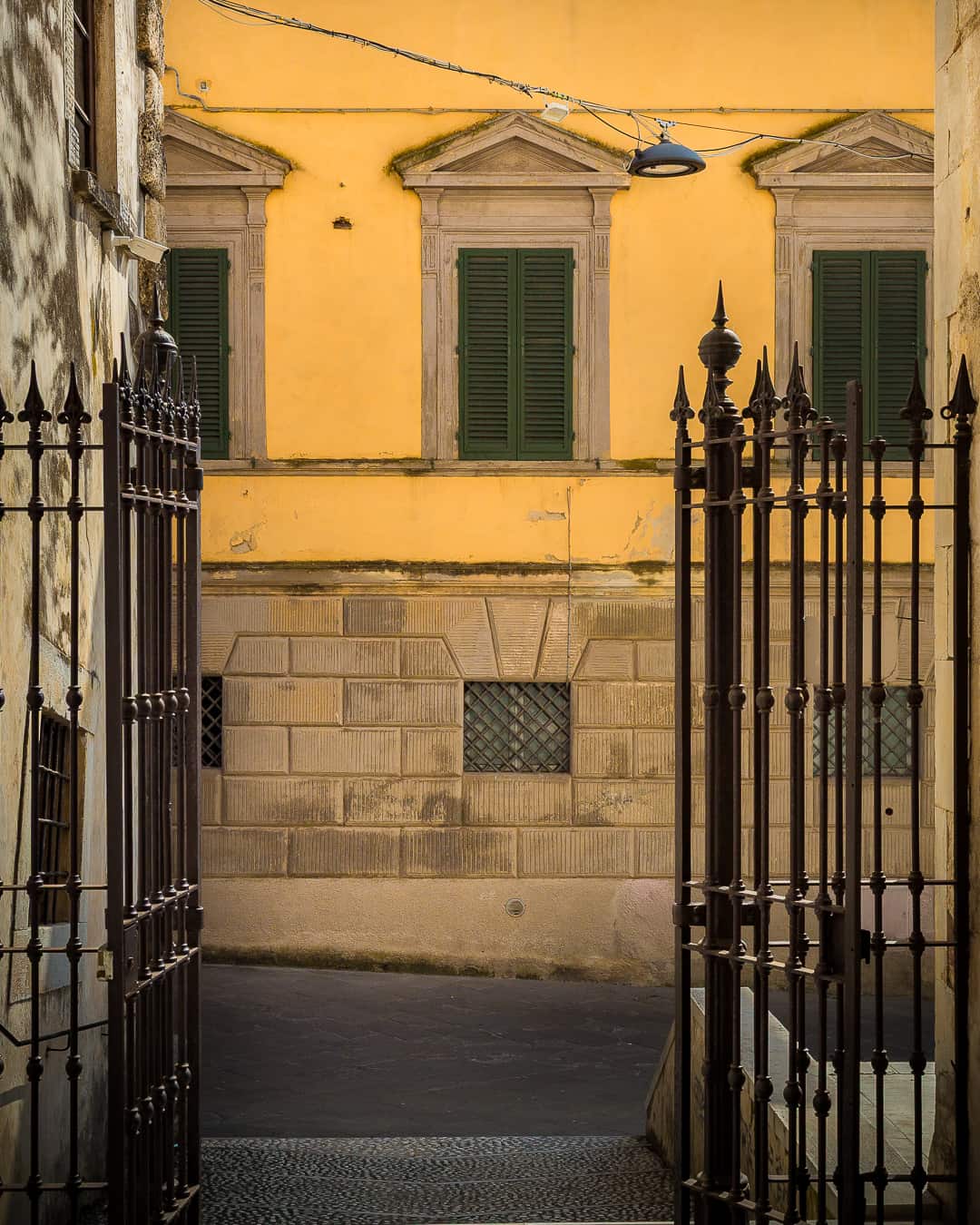
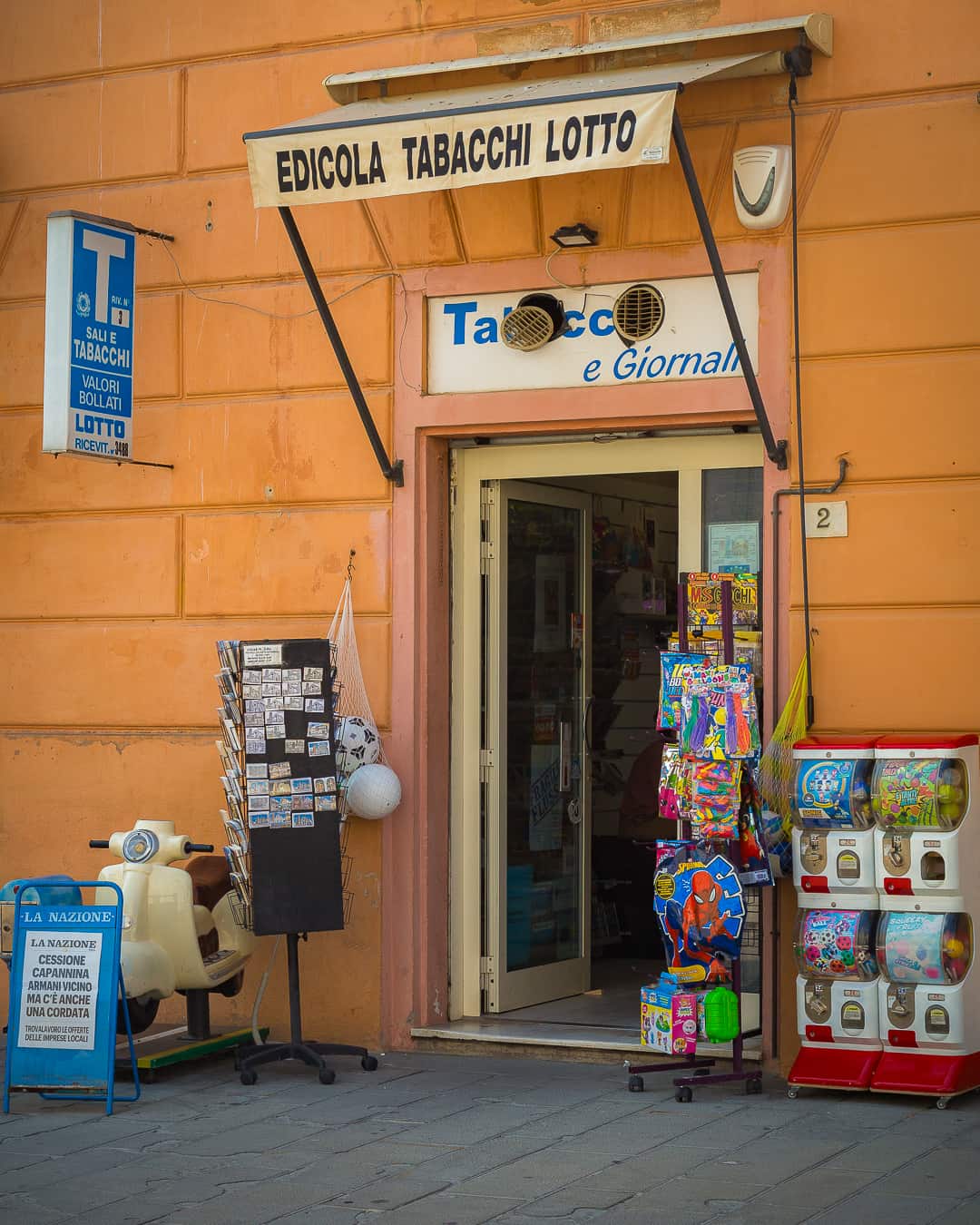
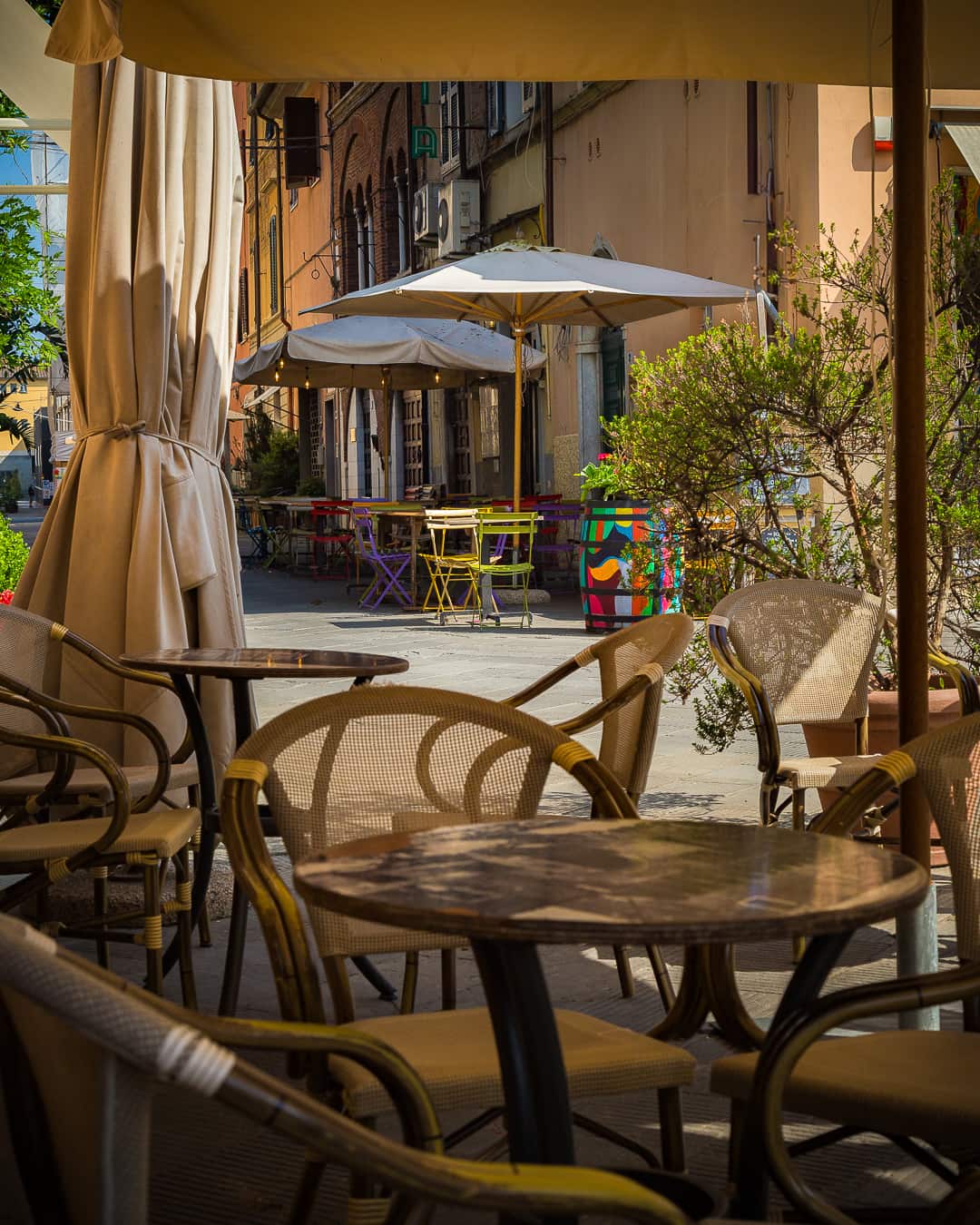
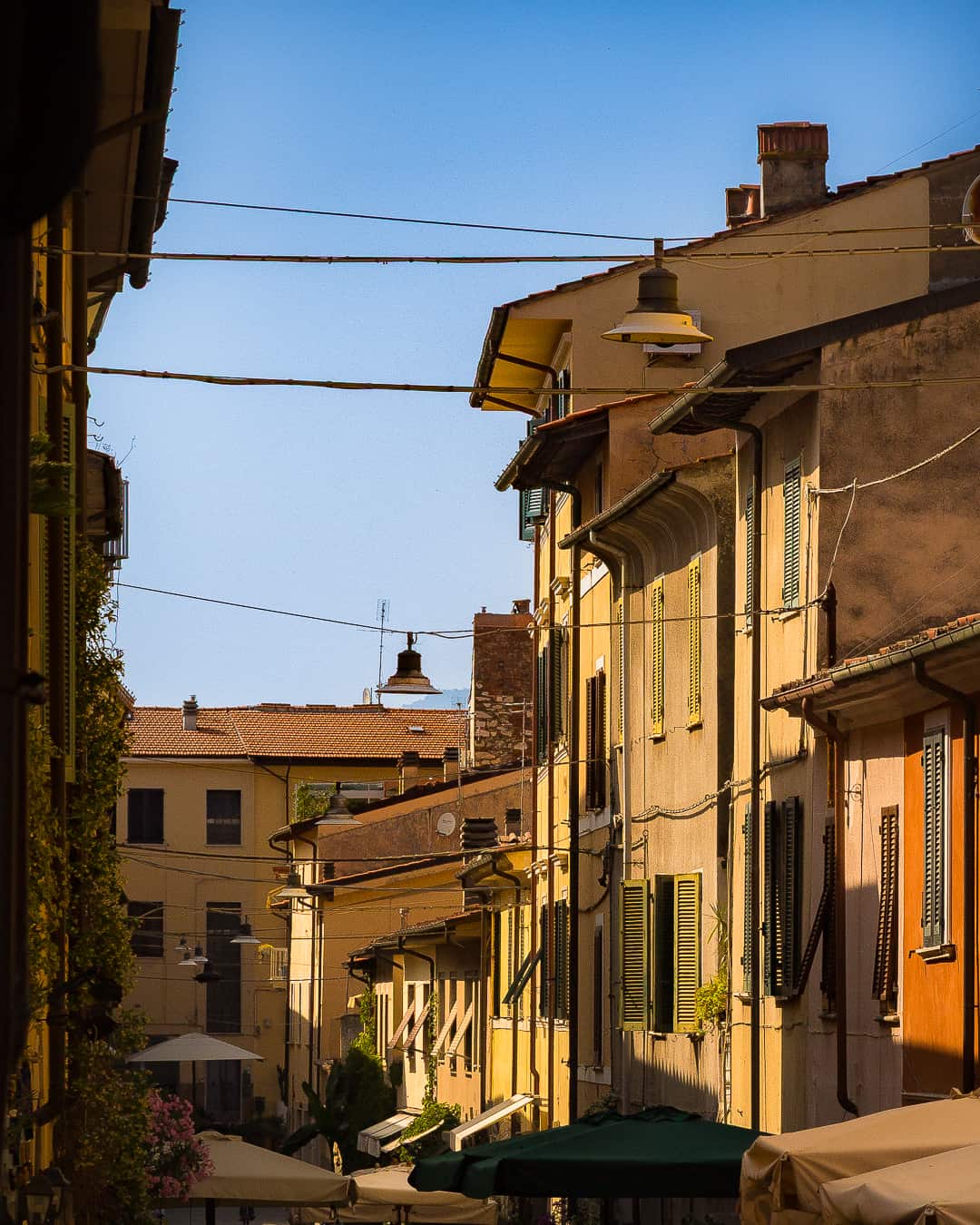
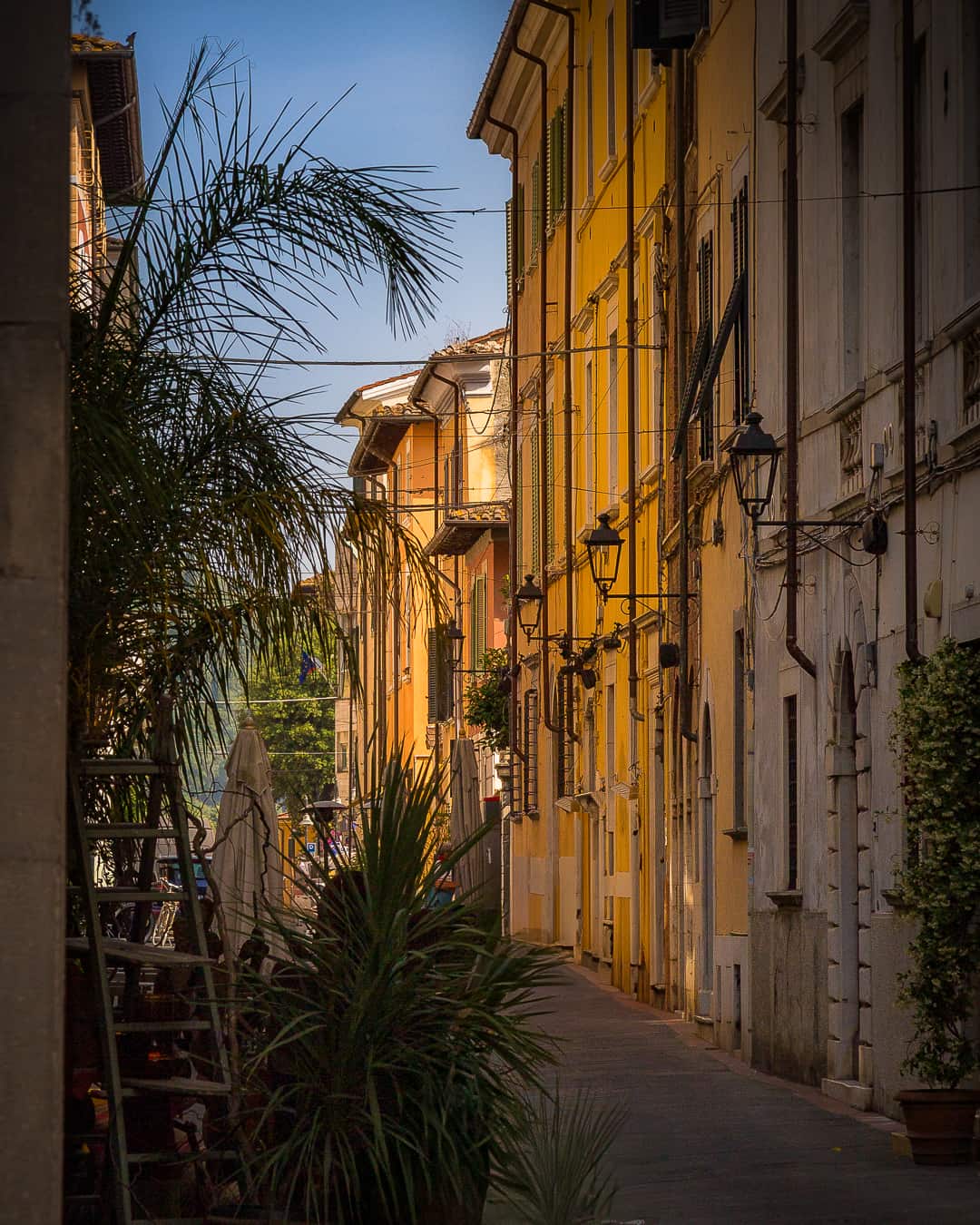
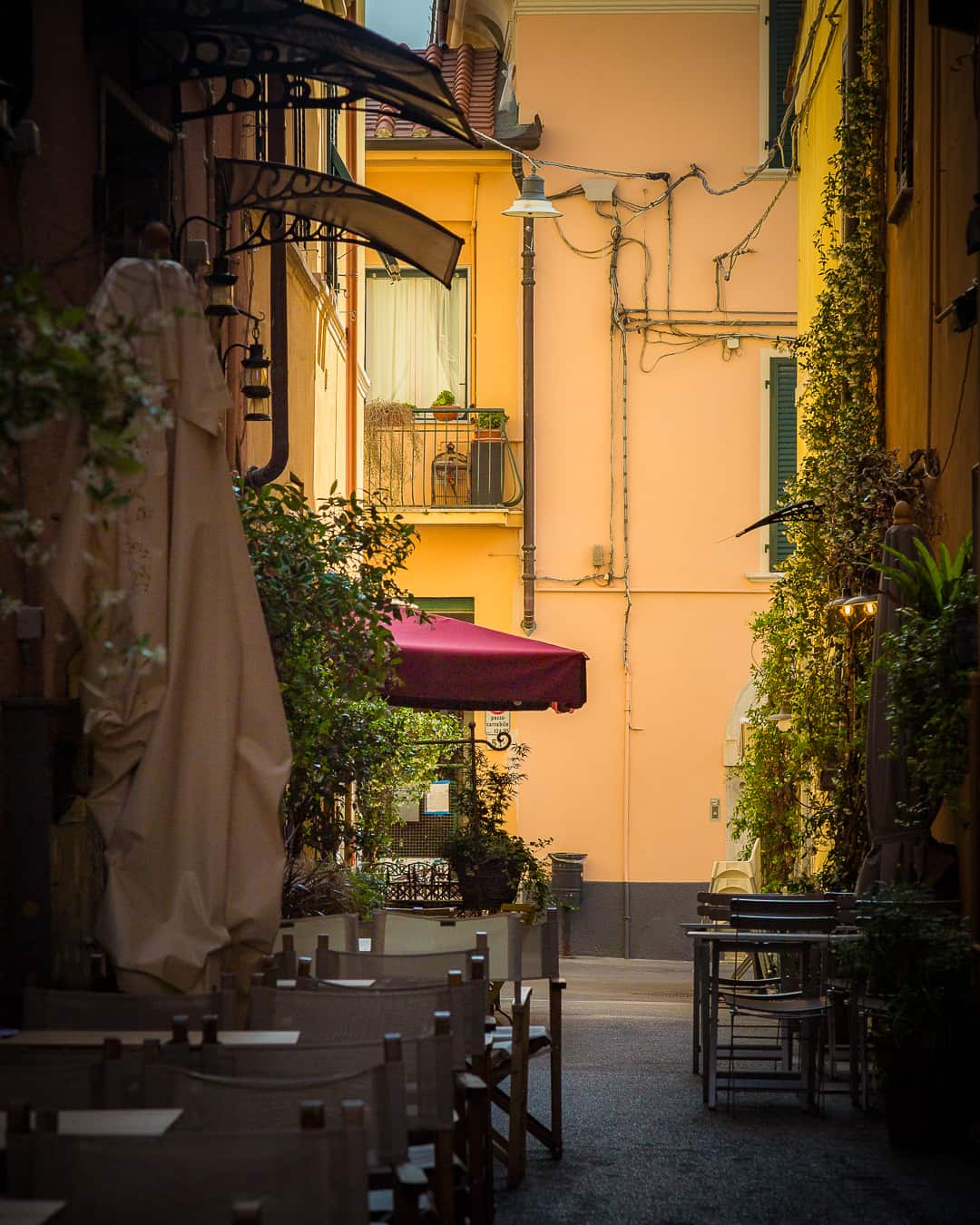
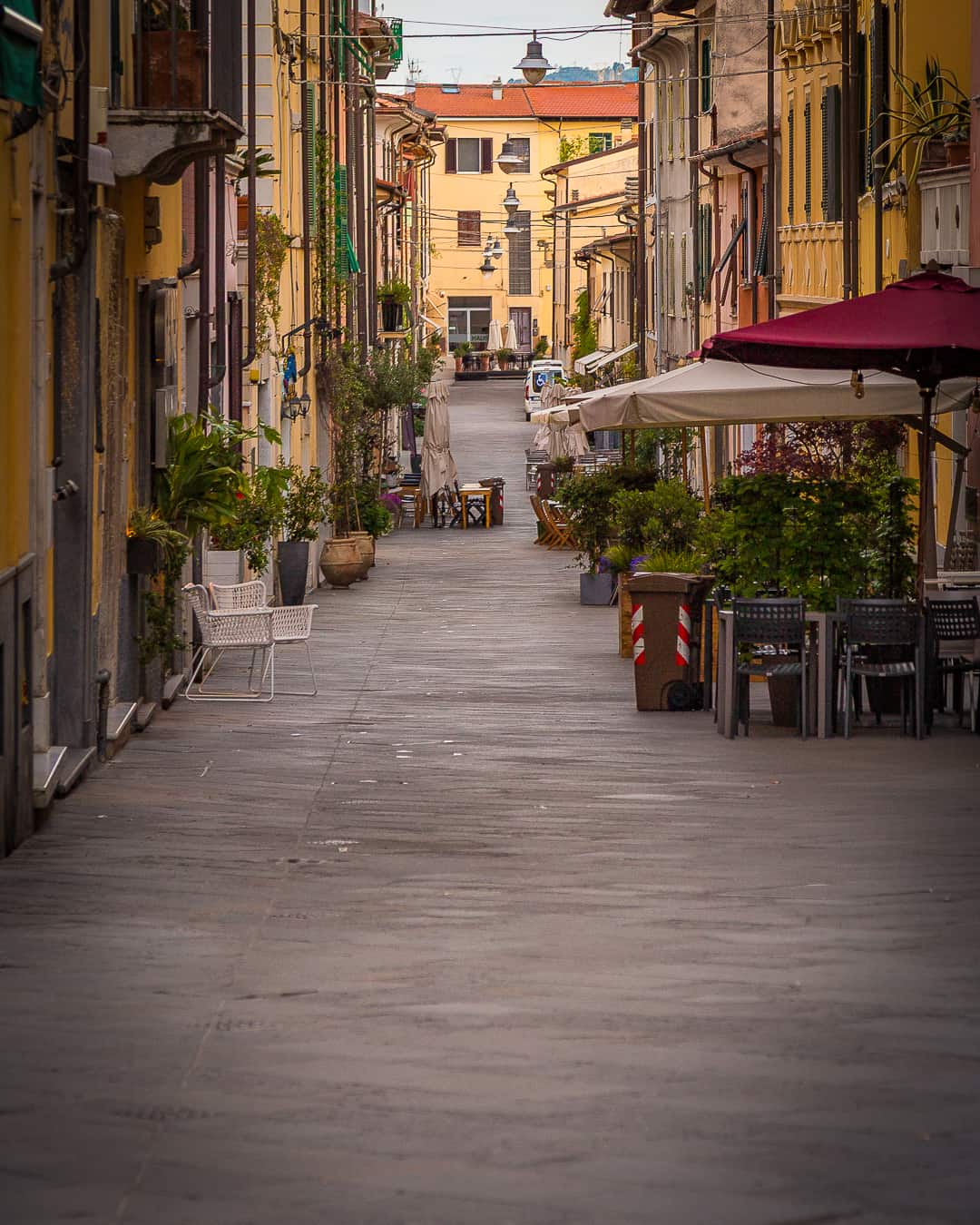
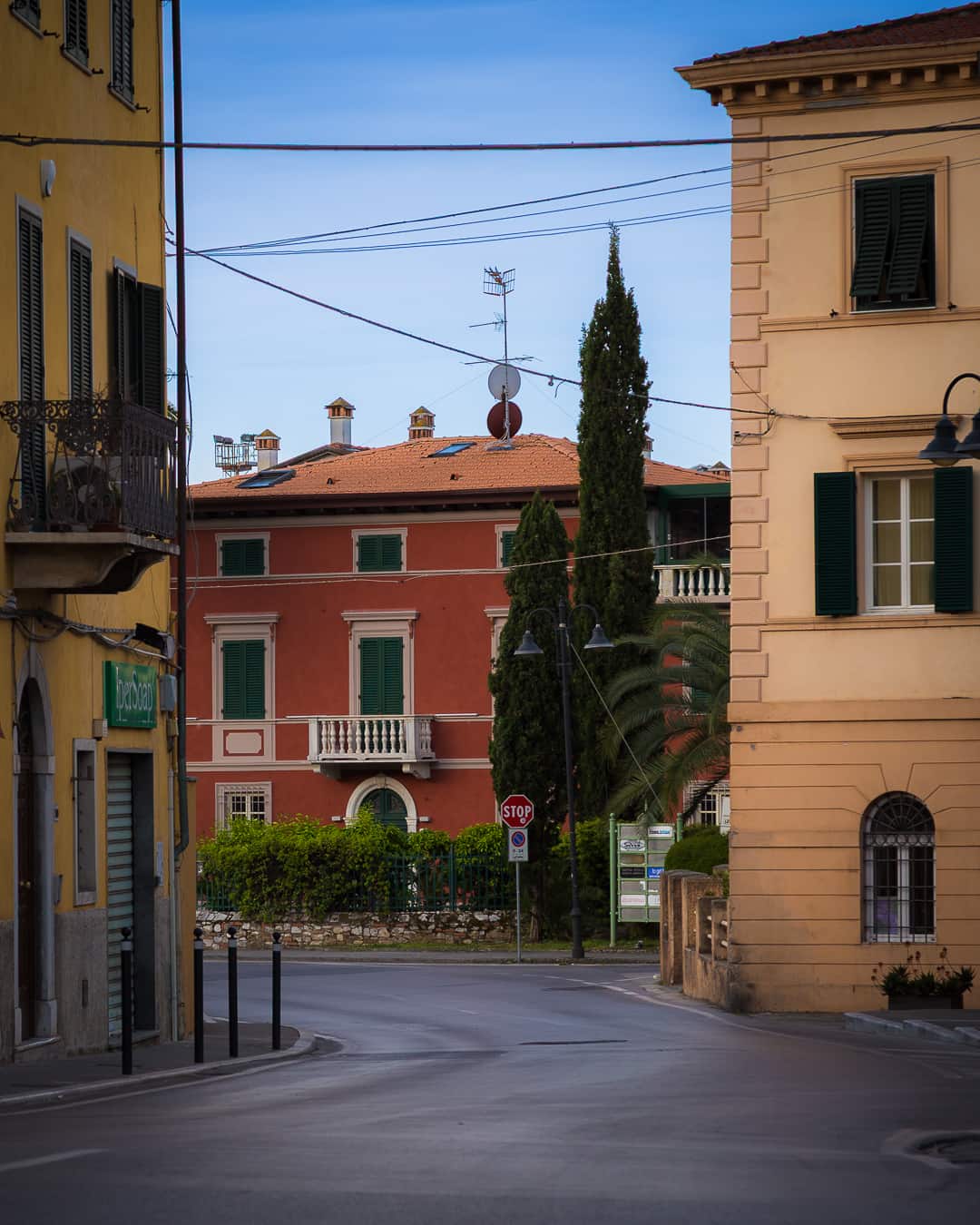
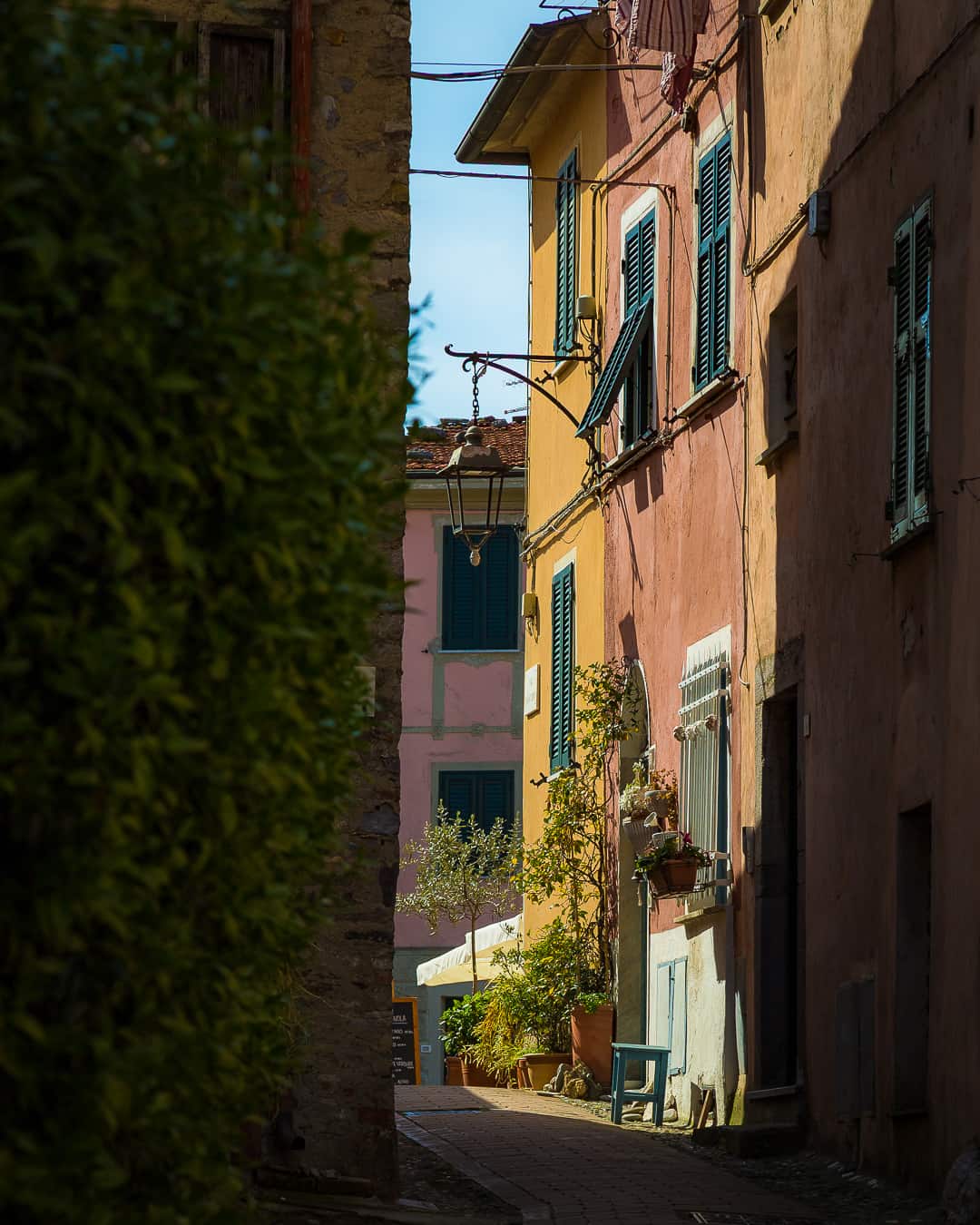
The old town is made of long straight streets, ochre, orange and pink houses, green shutters.
At street level, art galleries, shops and cafés with tables outside. At the end of every street, the mountains.
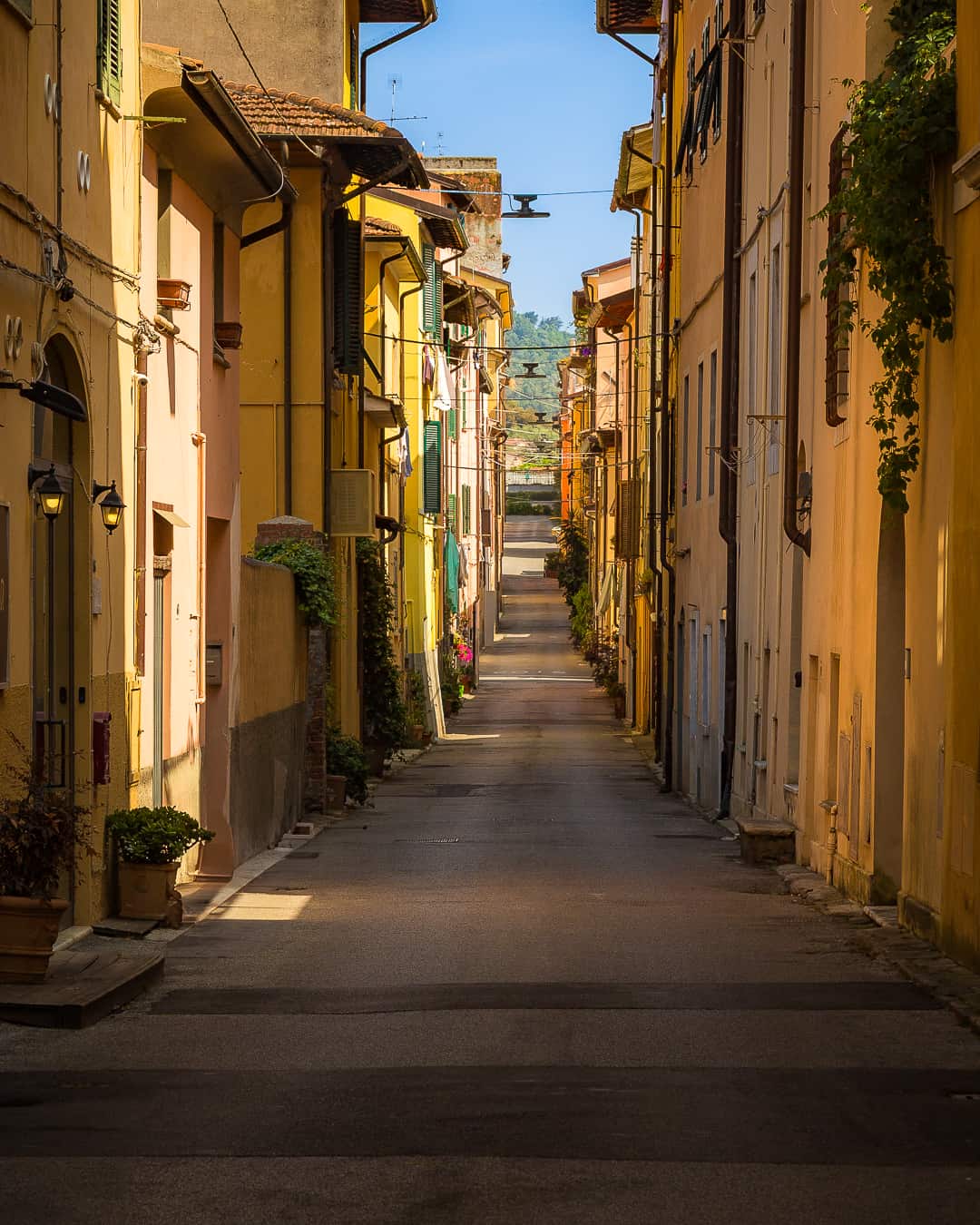
The street
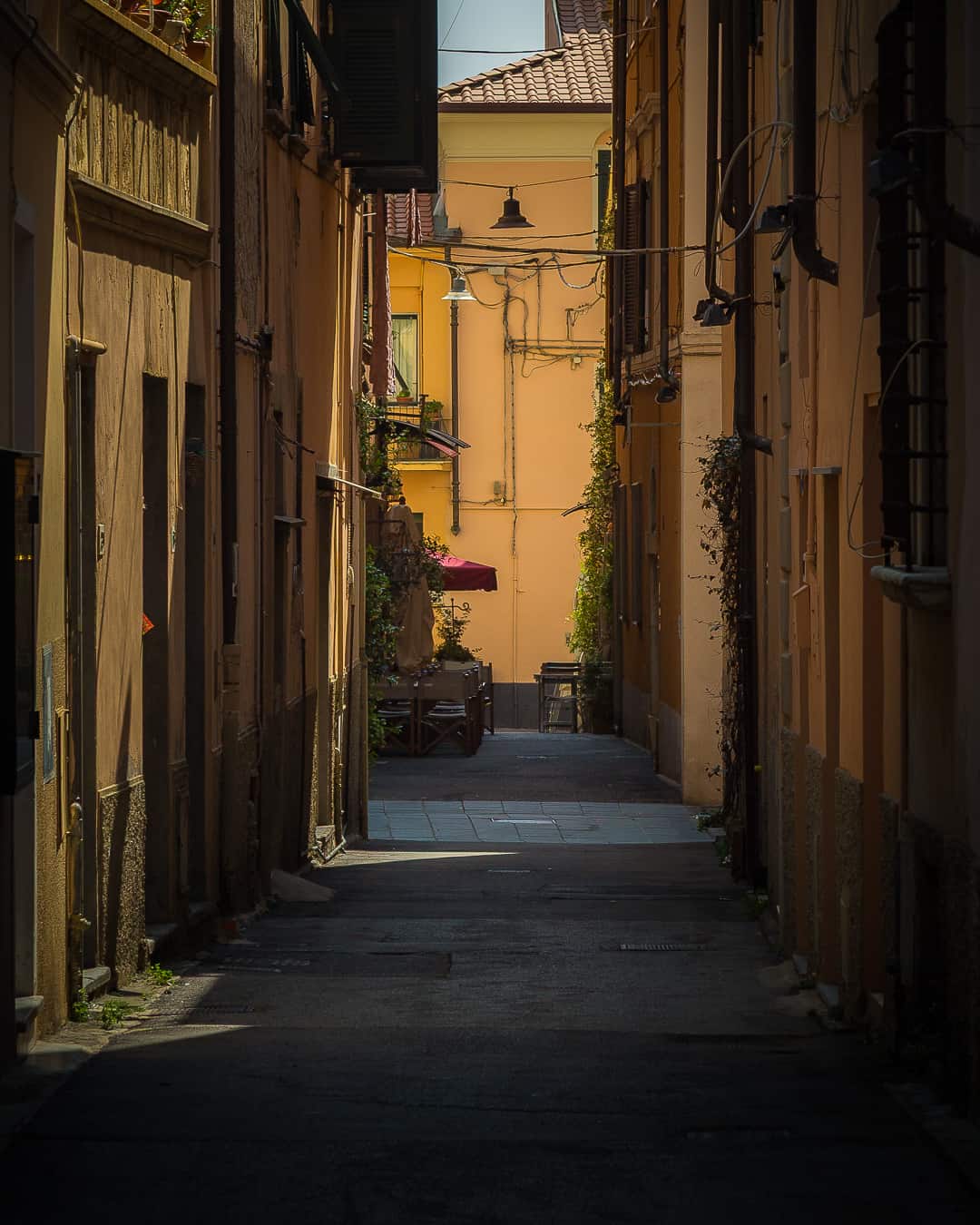
A straight street between ochre houses, and light at the end. The streets of the centre are long and regular: every crossroads opens another perspective.
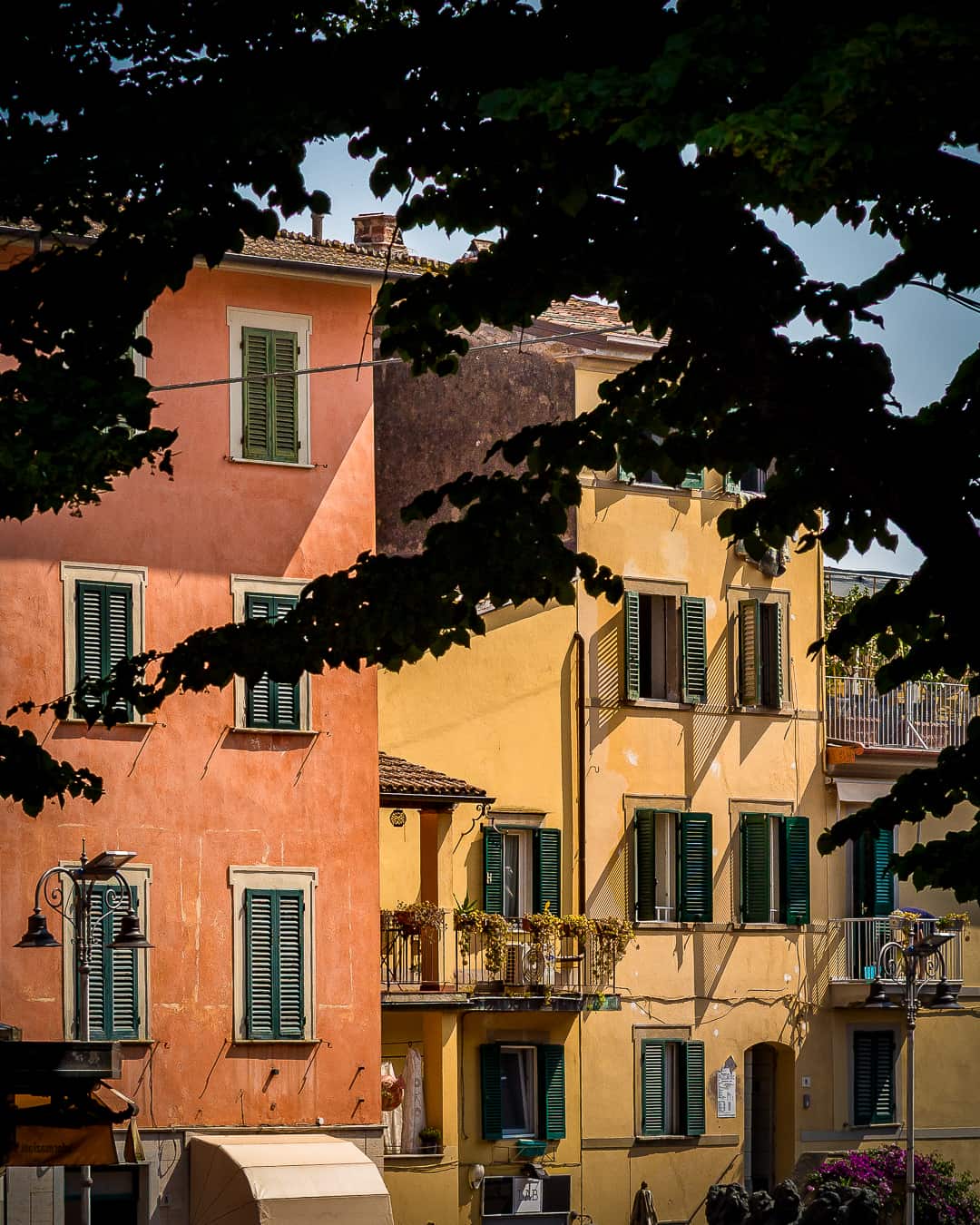
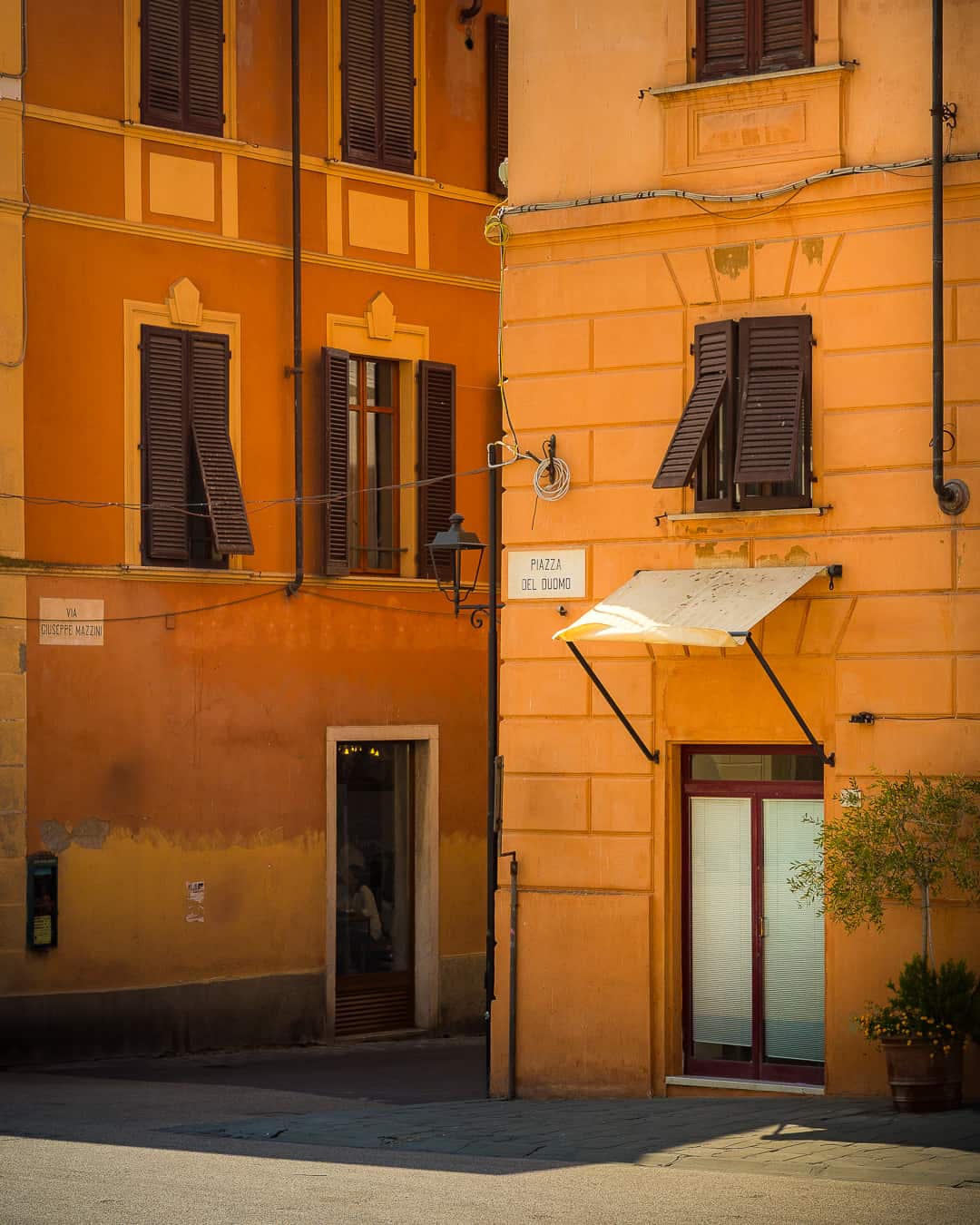
Flowers
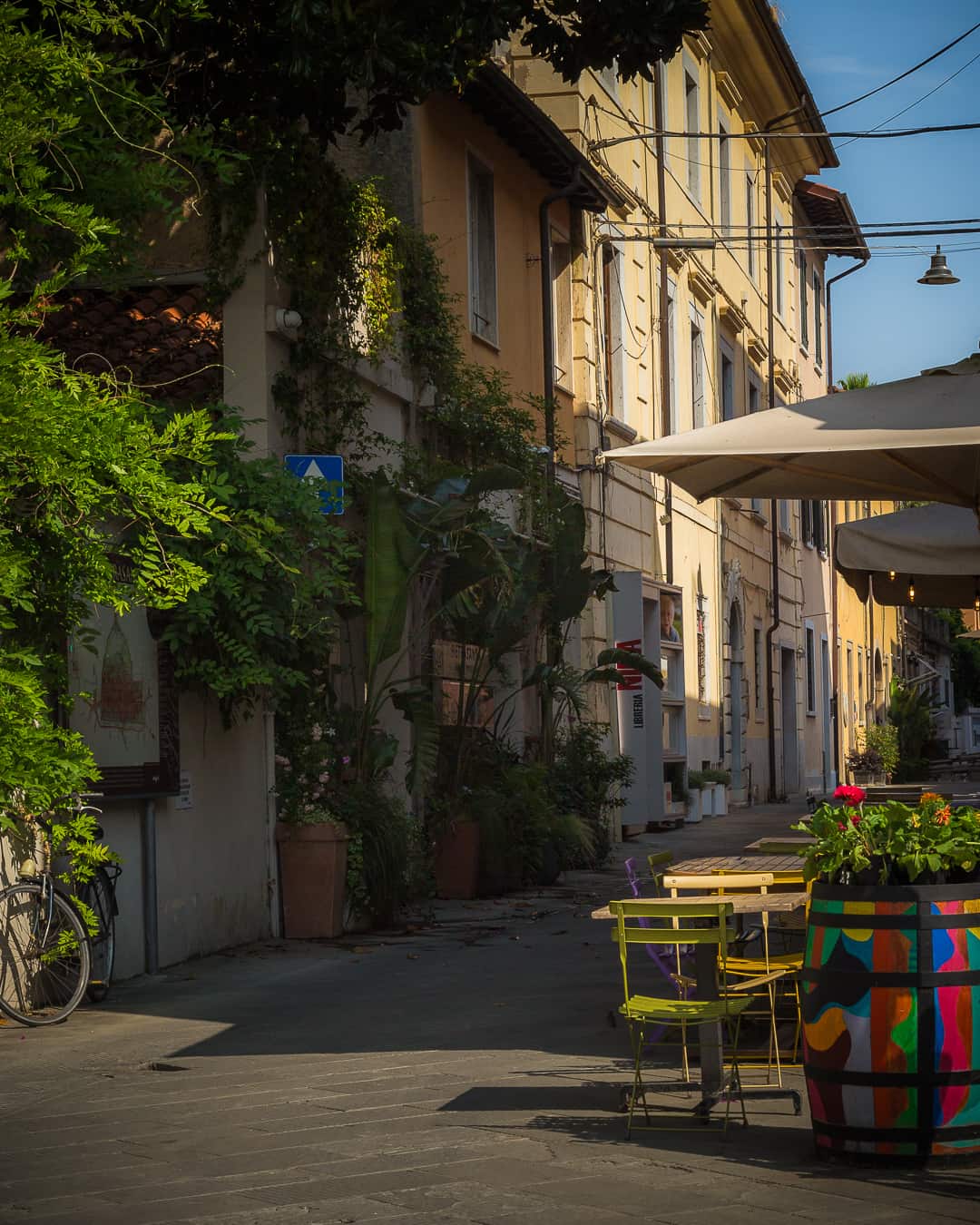
Climbing plants on the walls, pots by the doors, a painted barrel. In the streets of the centre, every shop has its own little garden on the pavement.
The shop window
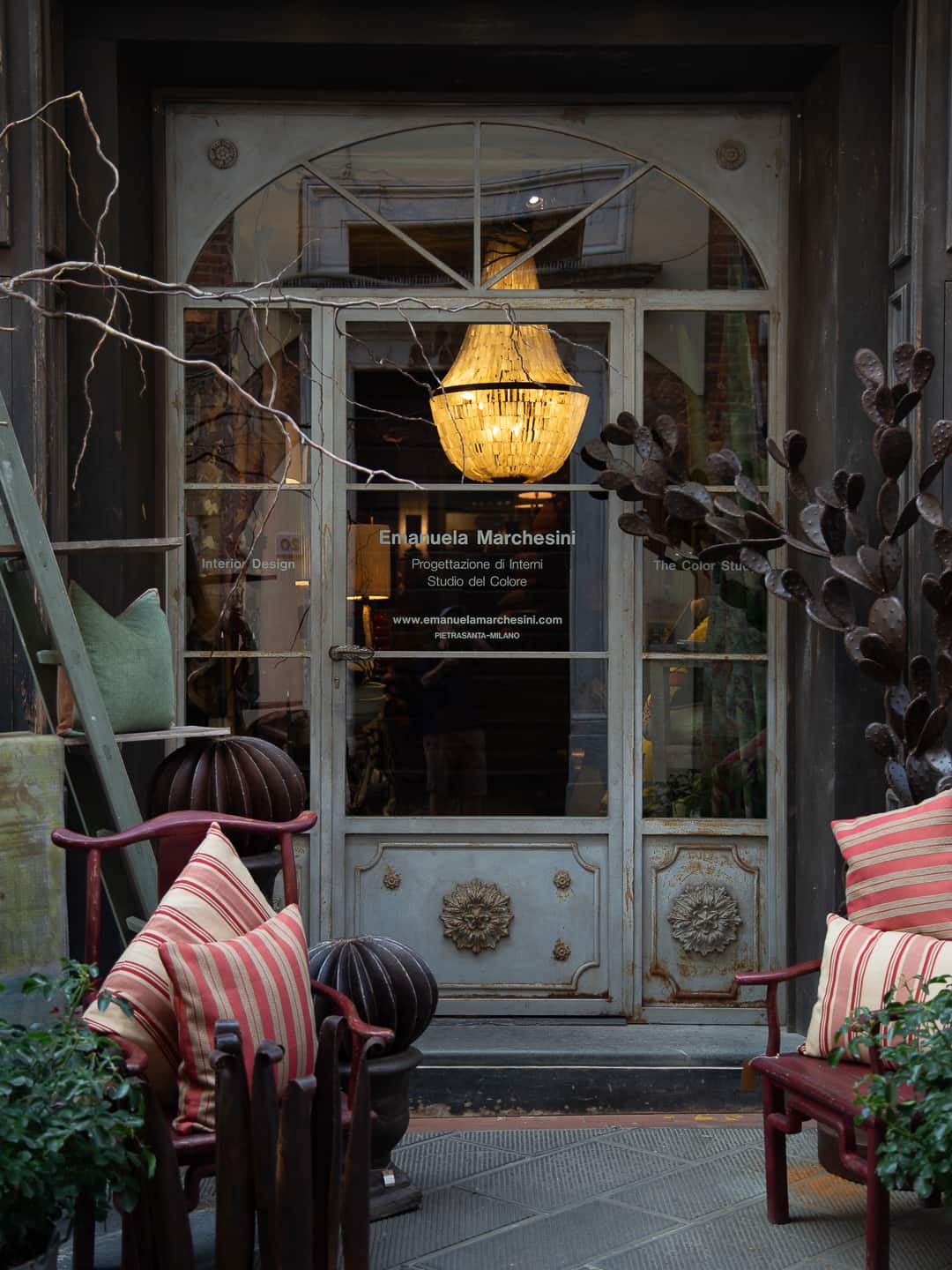
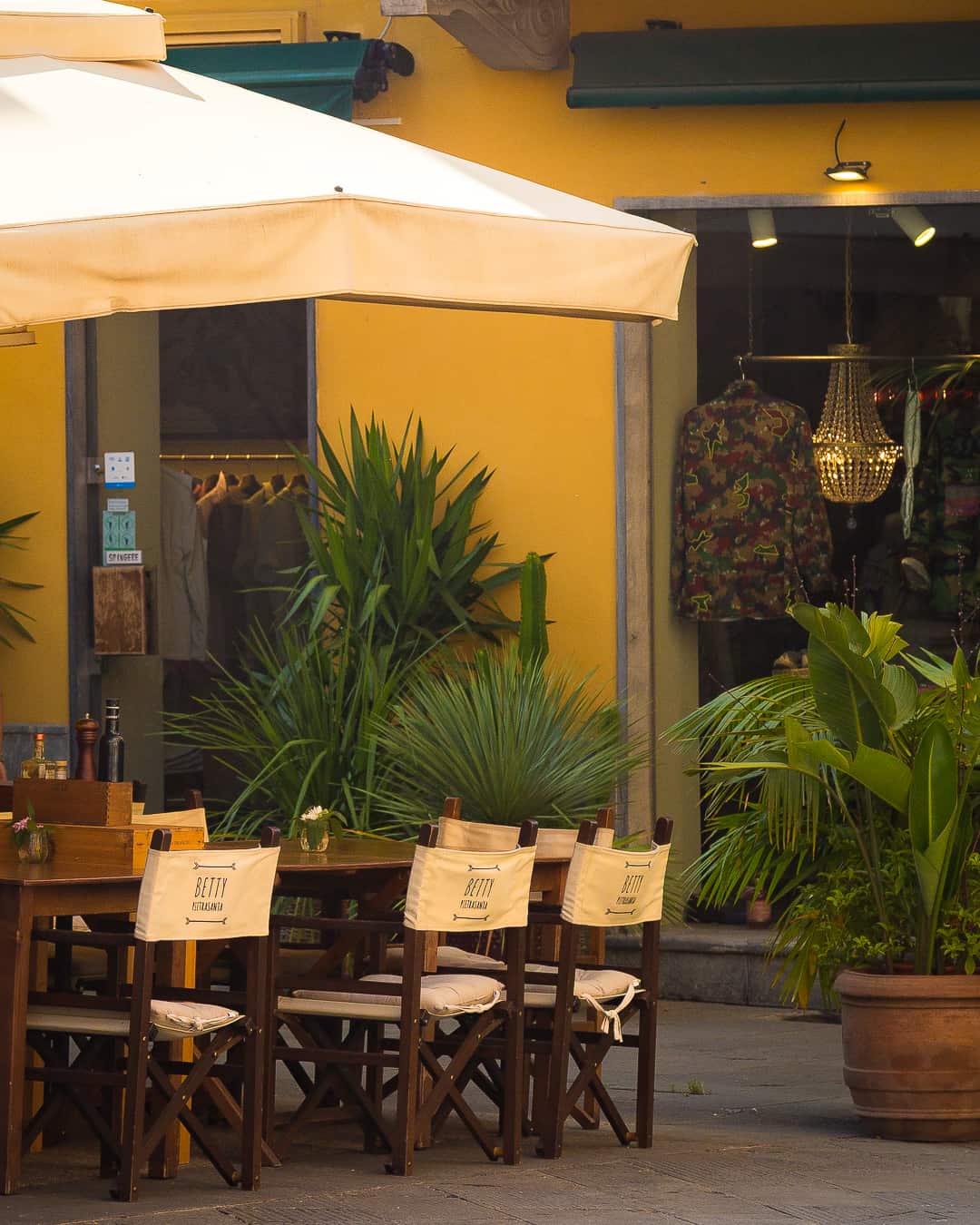
A glass door, a lit chandelier, striped cushions on the benches. Among the galleries and shops of the centre, every window is a small stage set.
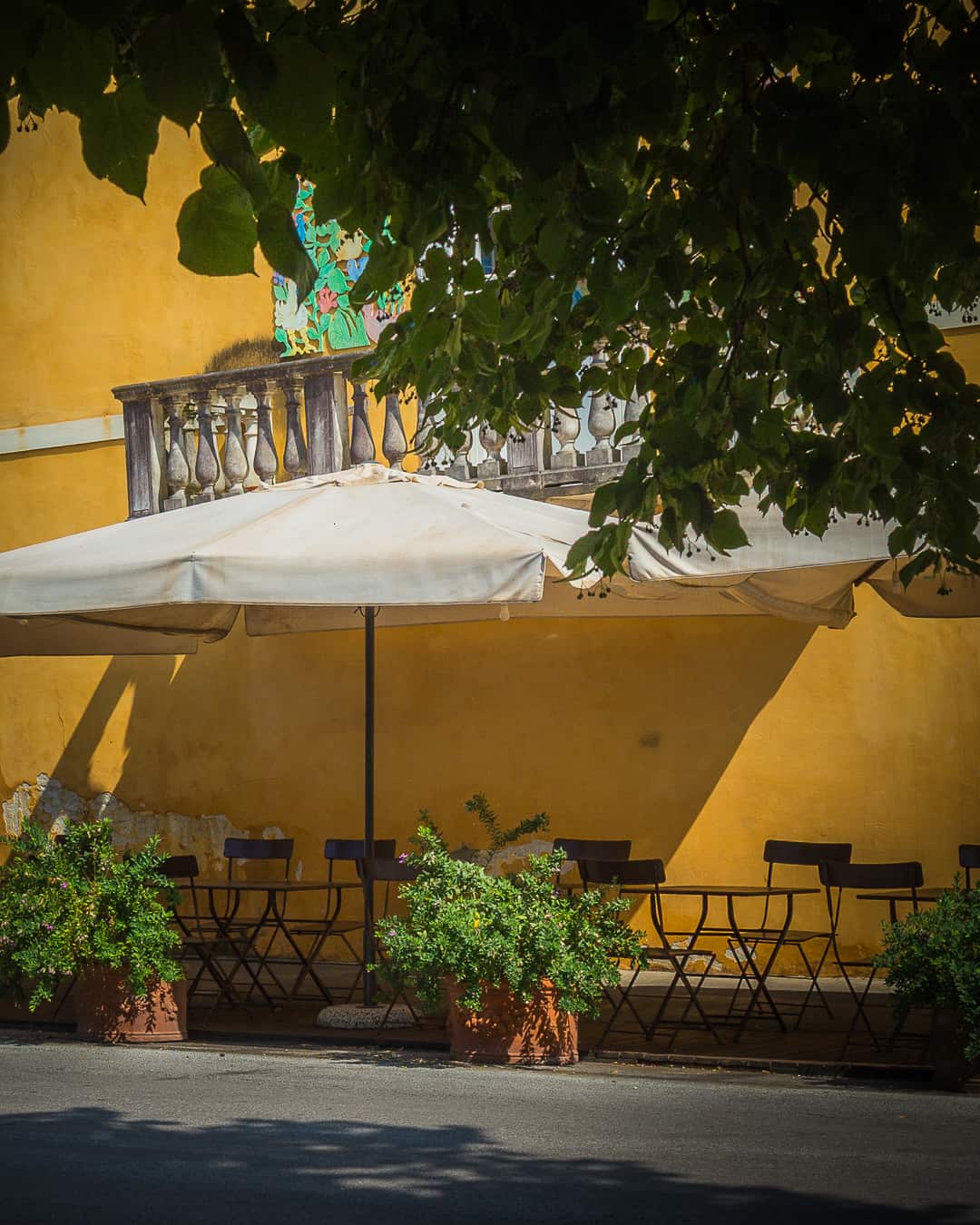
Towards evening
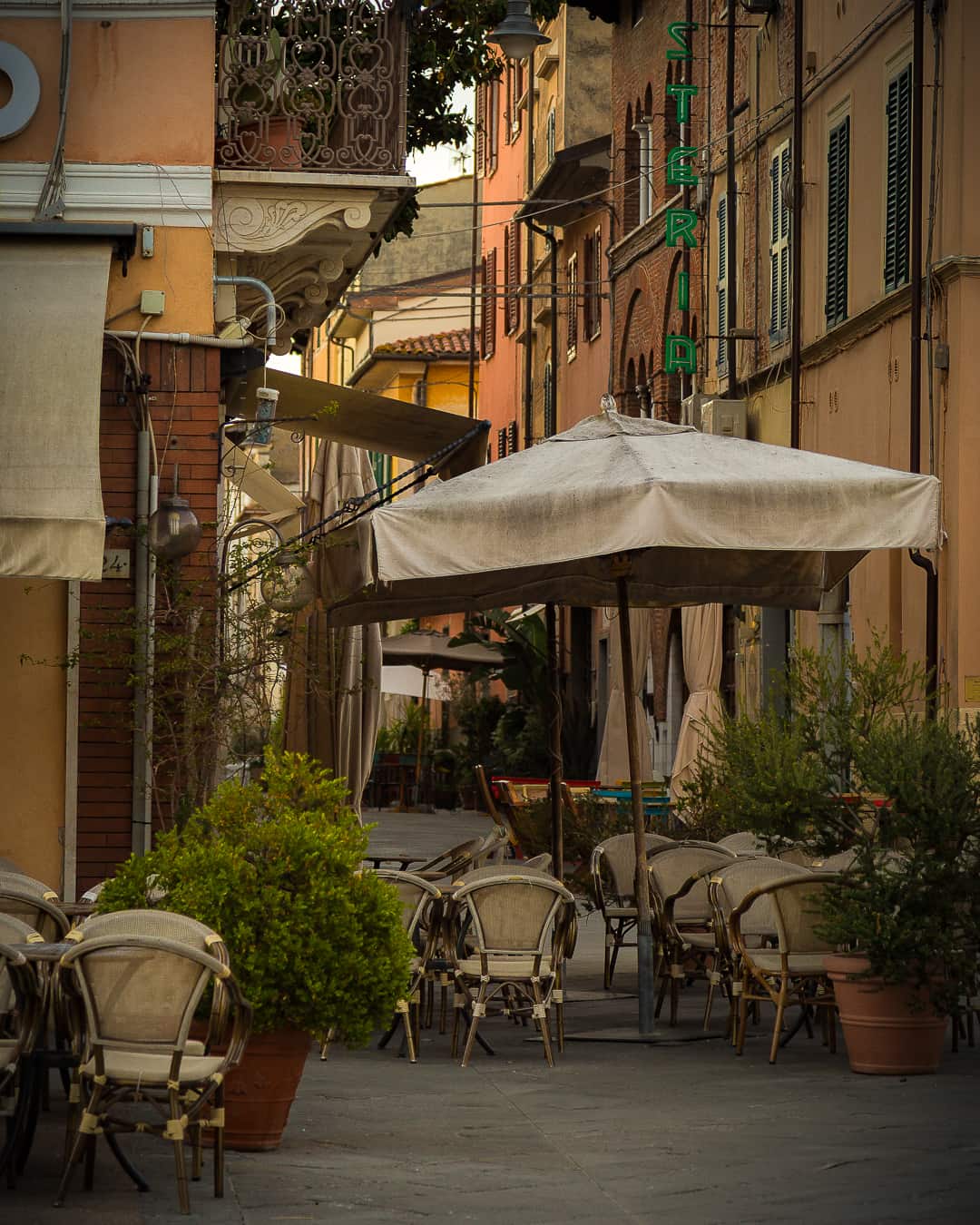
Pale umbrellas, wicker chairs, potted plants. Towards evening the tables fill up: the best hour to wander around the centre.
VI
The hills
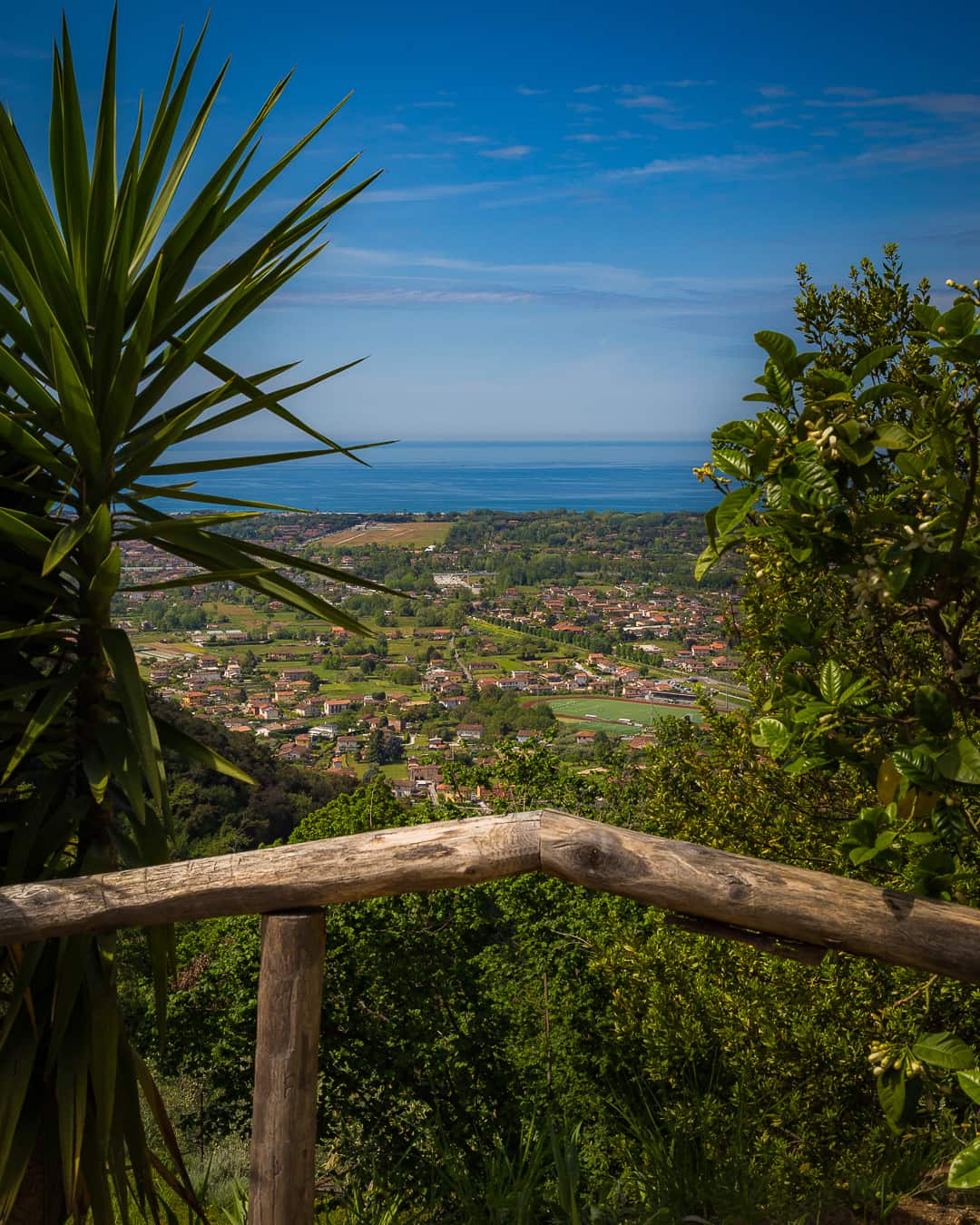
Behind the coast the hills rise: olive groves, vegetable gardens, houses scattered among the woods.
From up here the plain runs down to the sea, and on clear days your eye travels far along the coast.
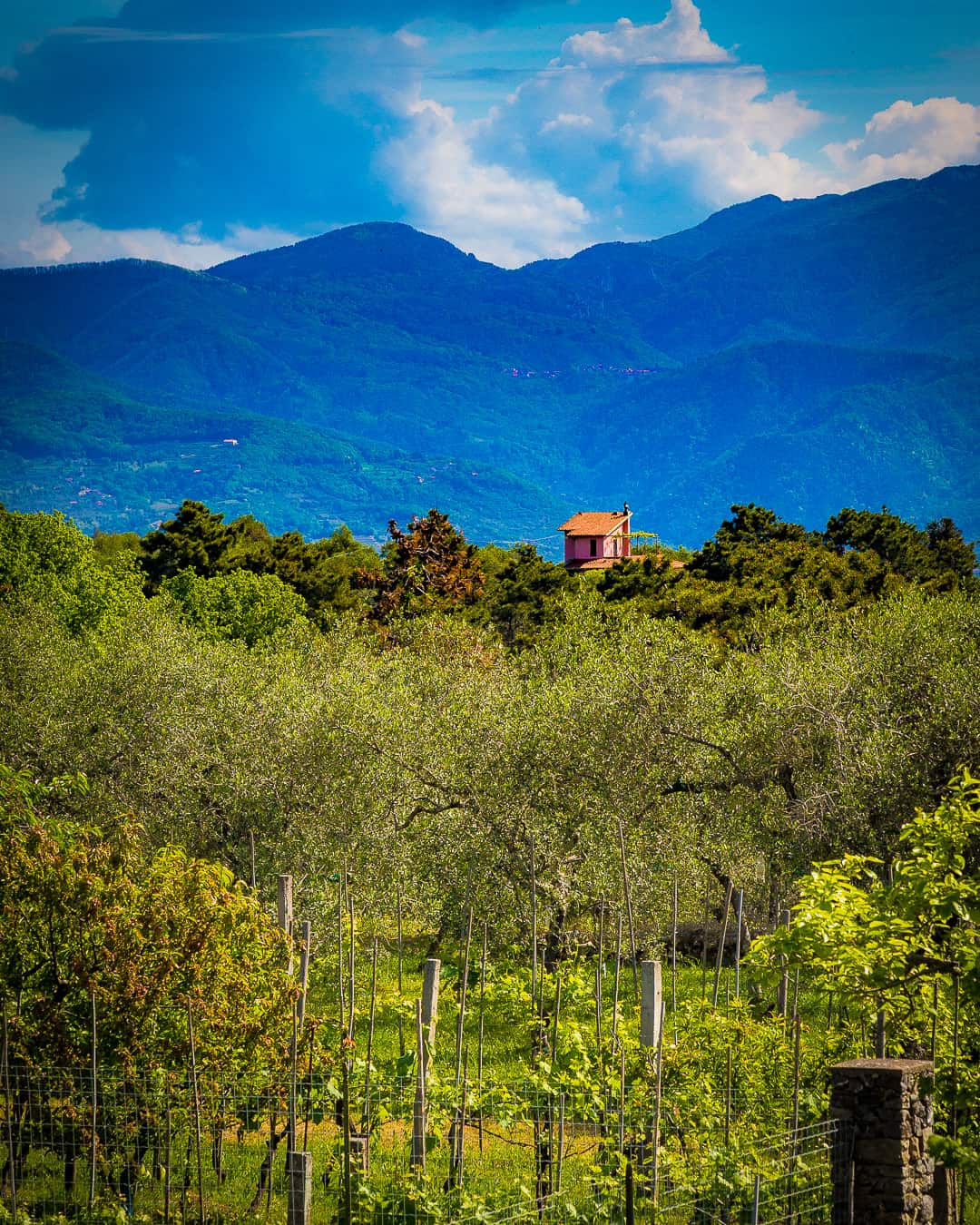
Olive trees
Olive groves, rows of vines, a farmhouse in the green, and blue mountains behind. On the hills, the olive tree shares the land with the vineyard and the vegetable plot.
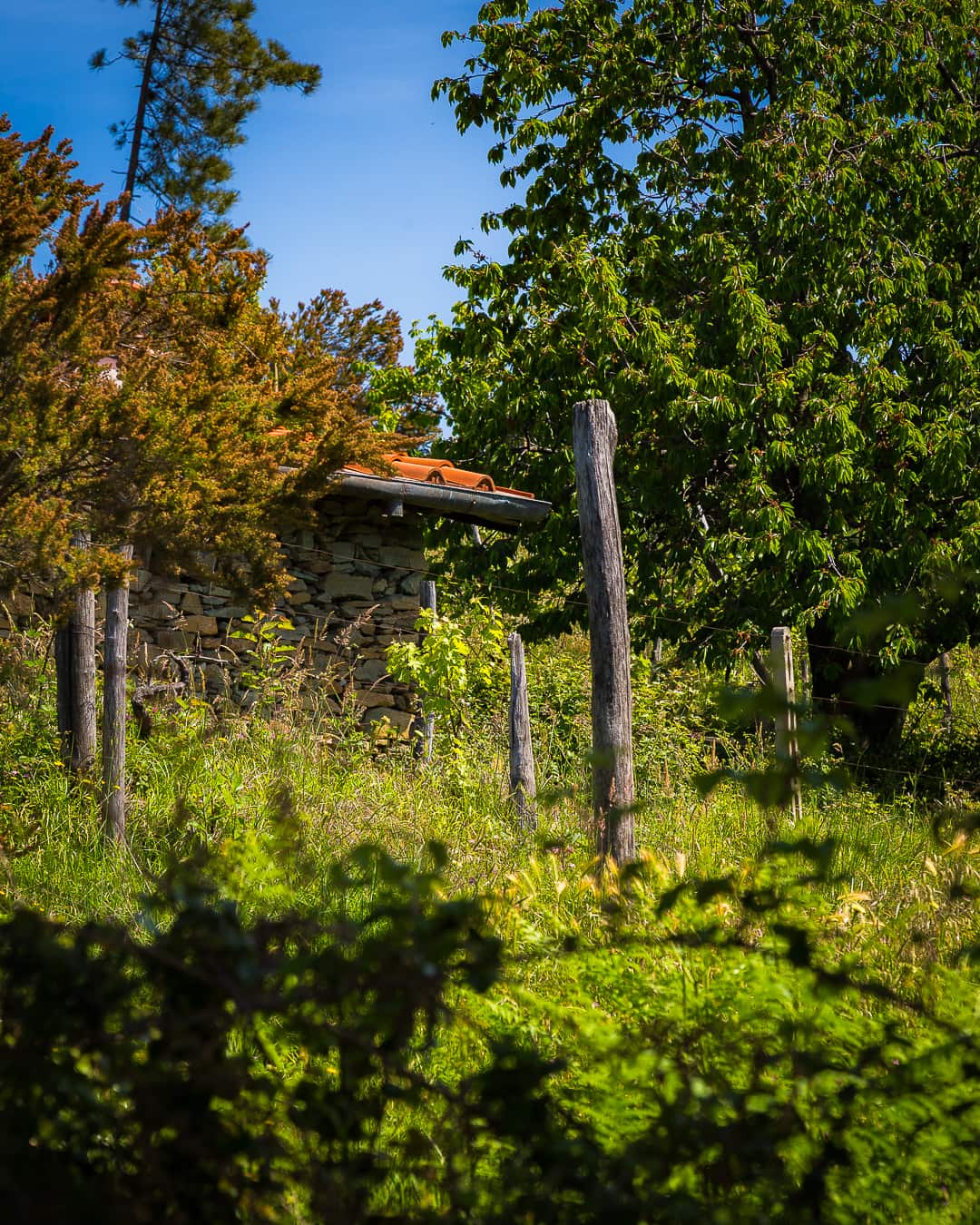
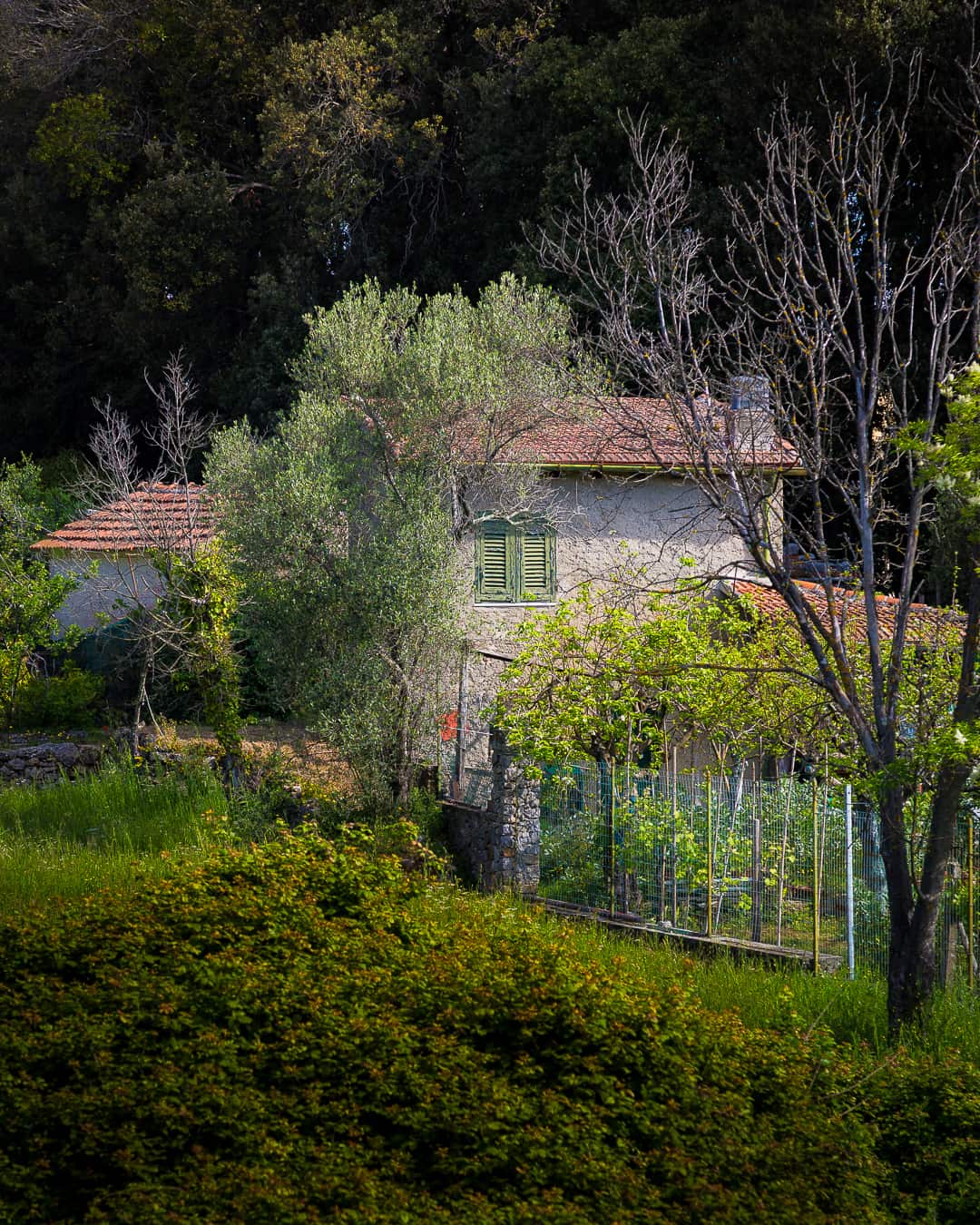
The distant gulf
A house among the olive trees, the woods, and far below a gulf with a village on the shore. From the hills, the coast reads like a map.
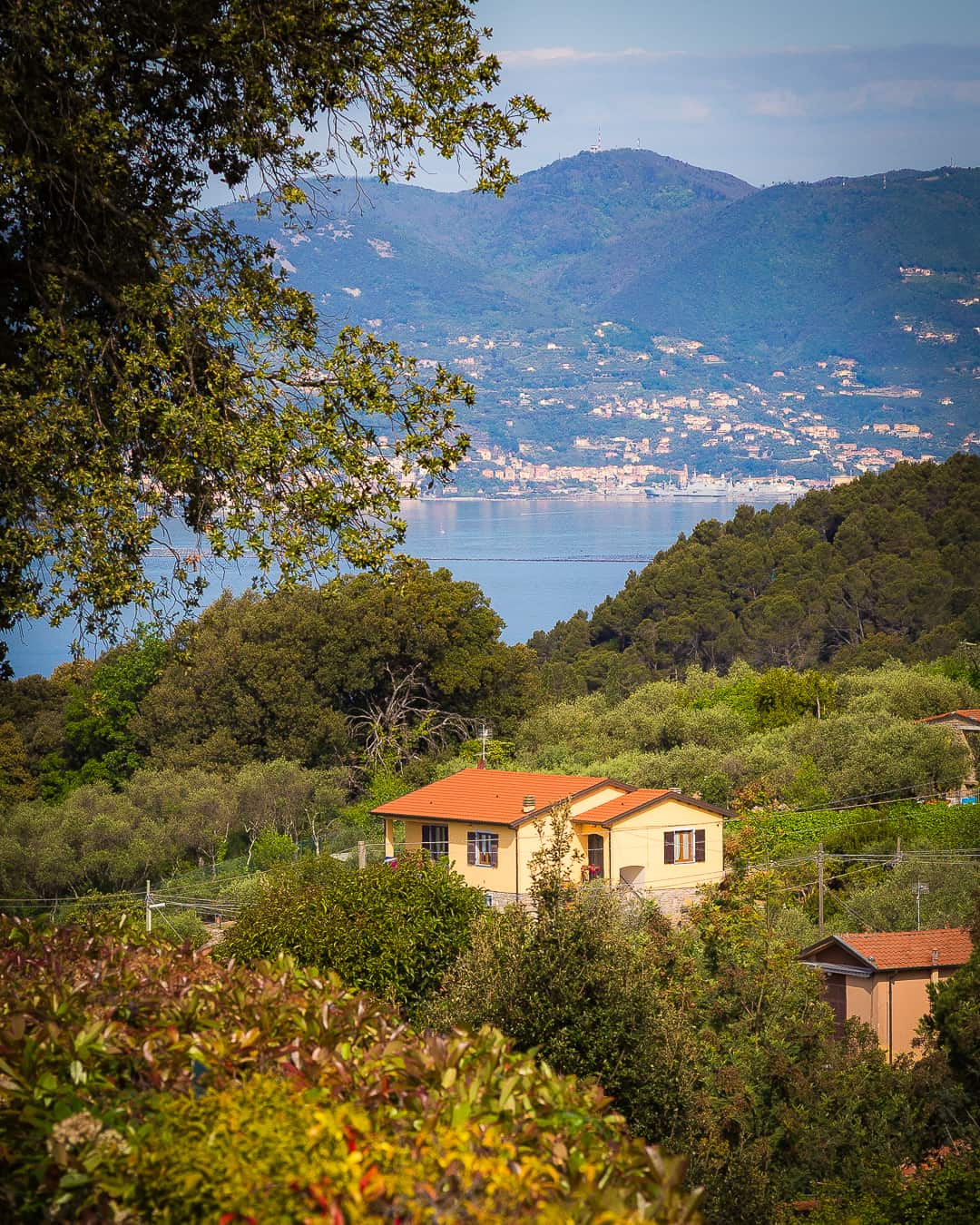
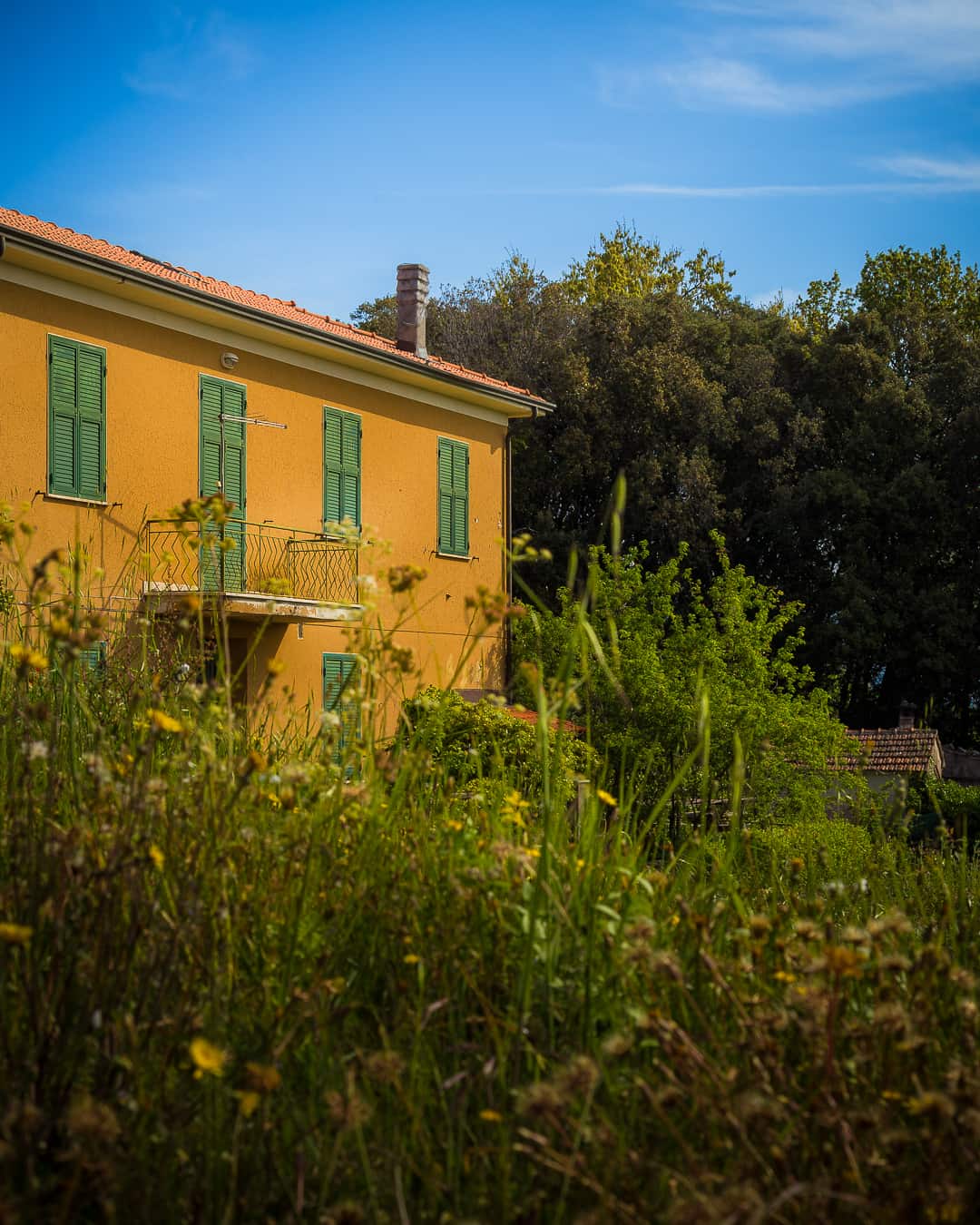
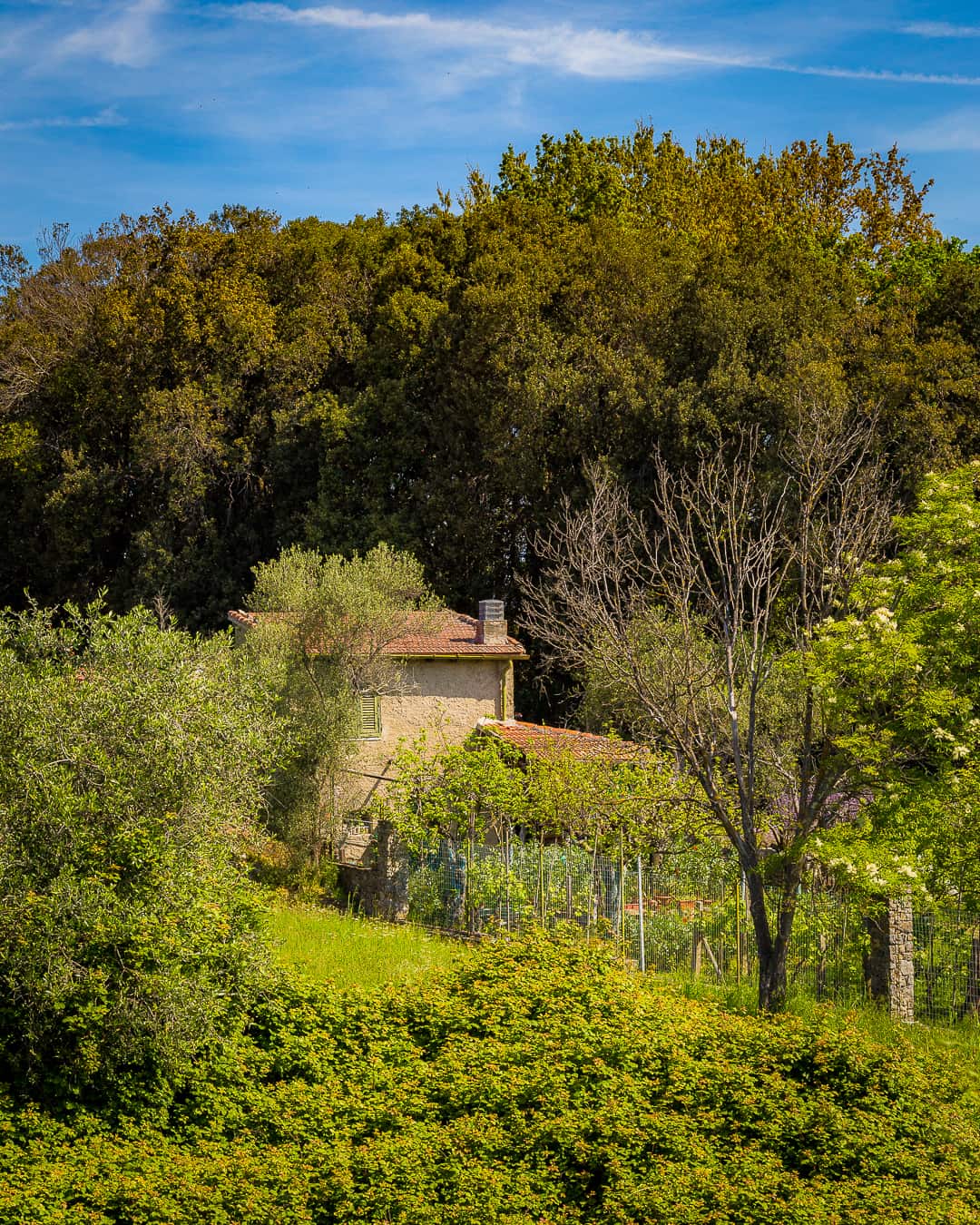
House on the gulf
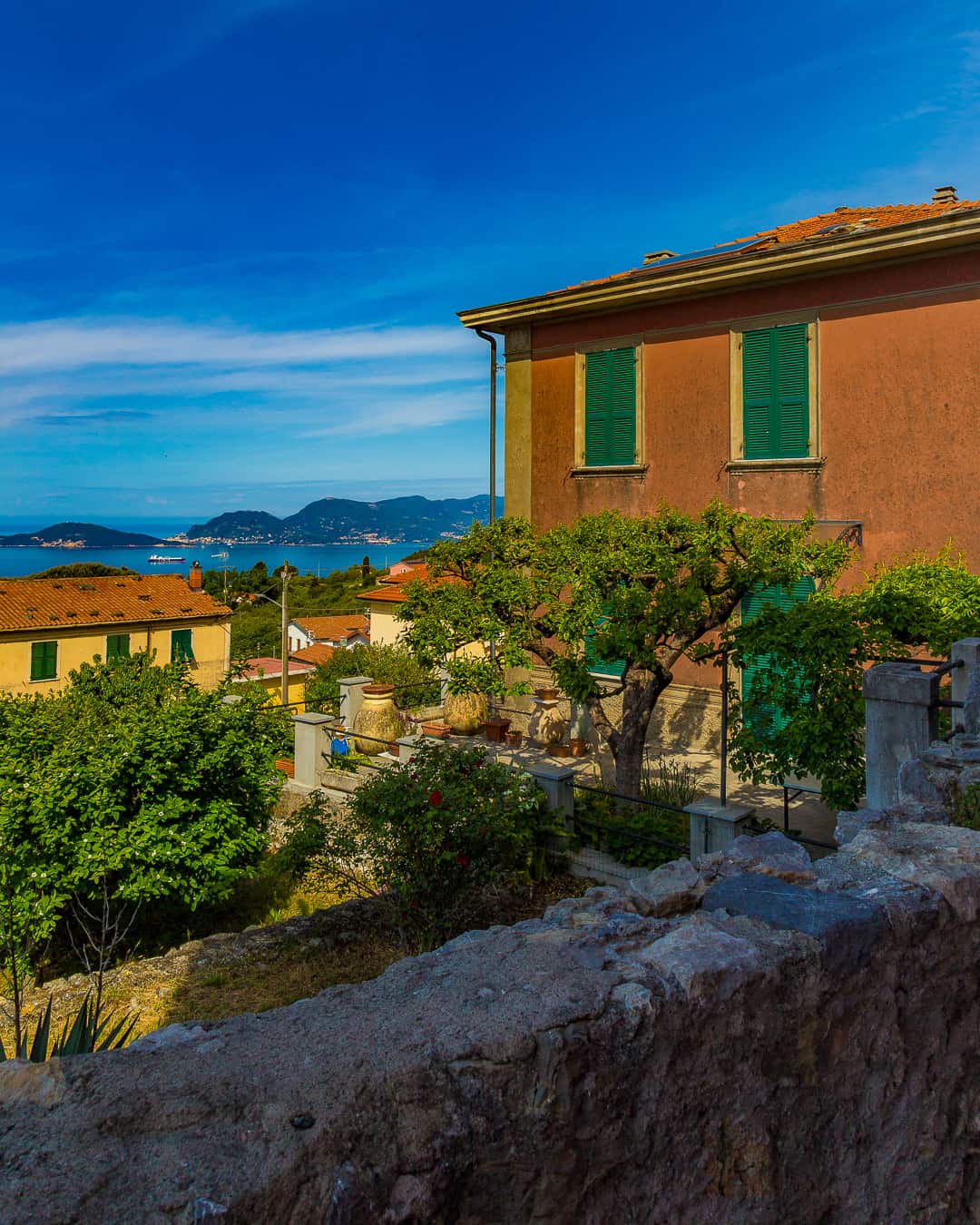
An orange house with green shutters, a low stone wall, and the sea with its islands beyond. The shutters close in the hot hours and open again in the evening, when the sea air arrives.
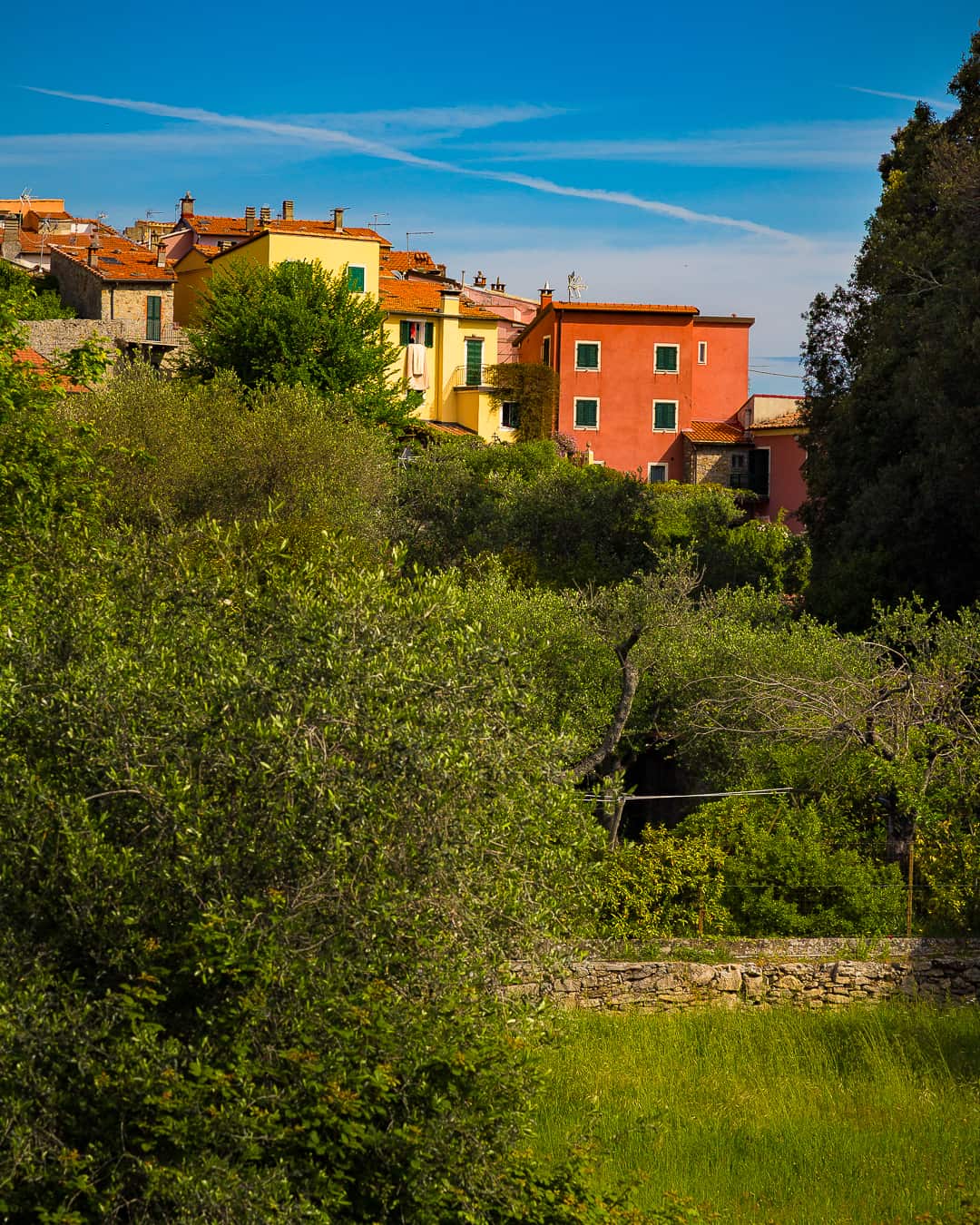
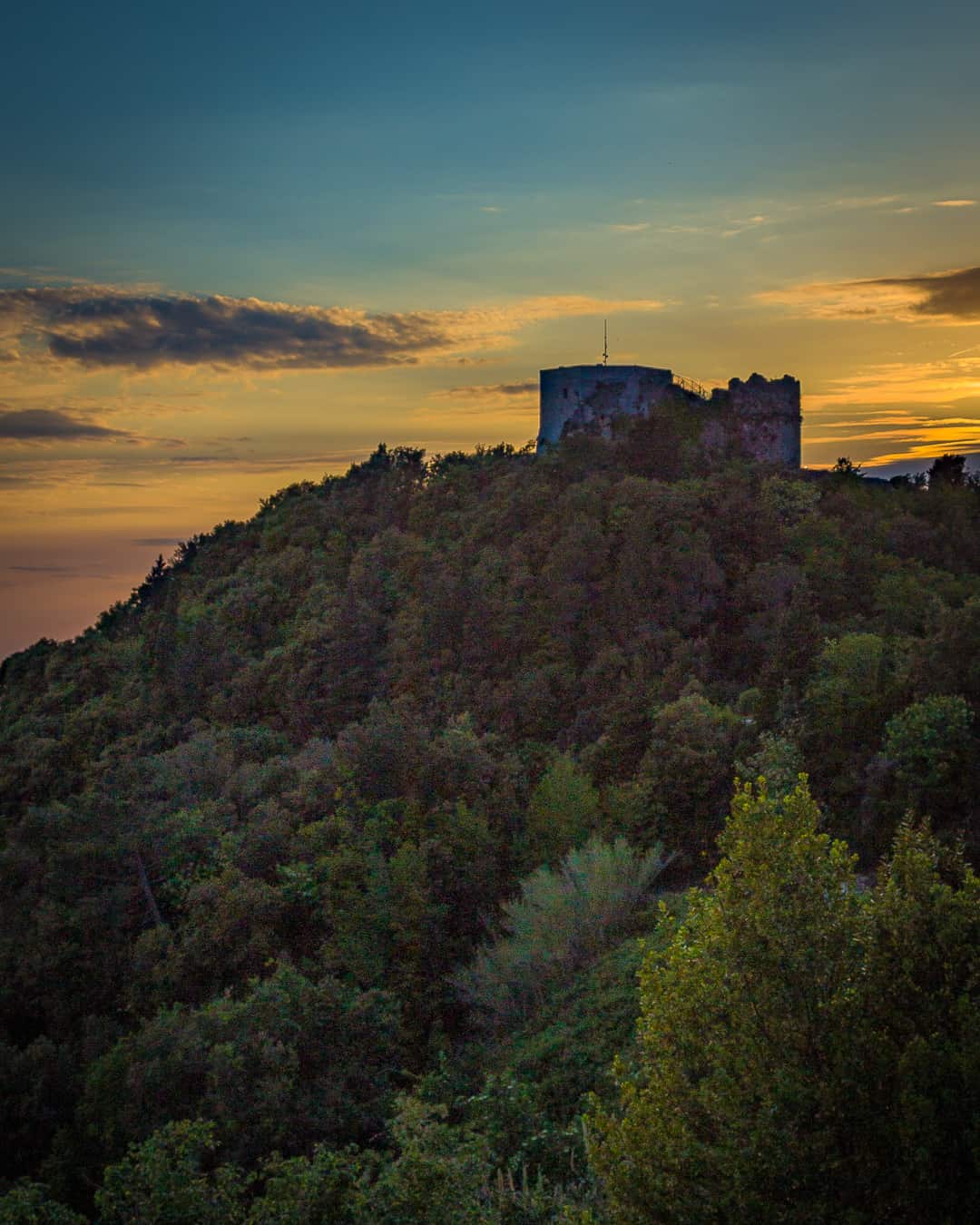
The fortress
A ruined fortress on the summit, dark woods, a sky catching fire. On the heights overlooking the coast, towers and castles recall the days when the sea had to be watched.
VII
Sunset
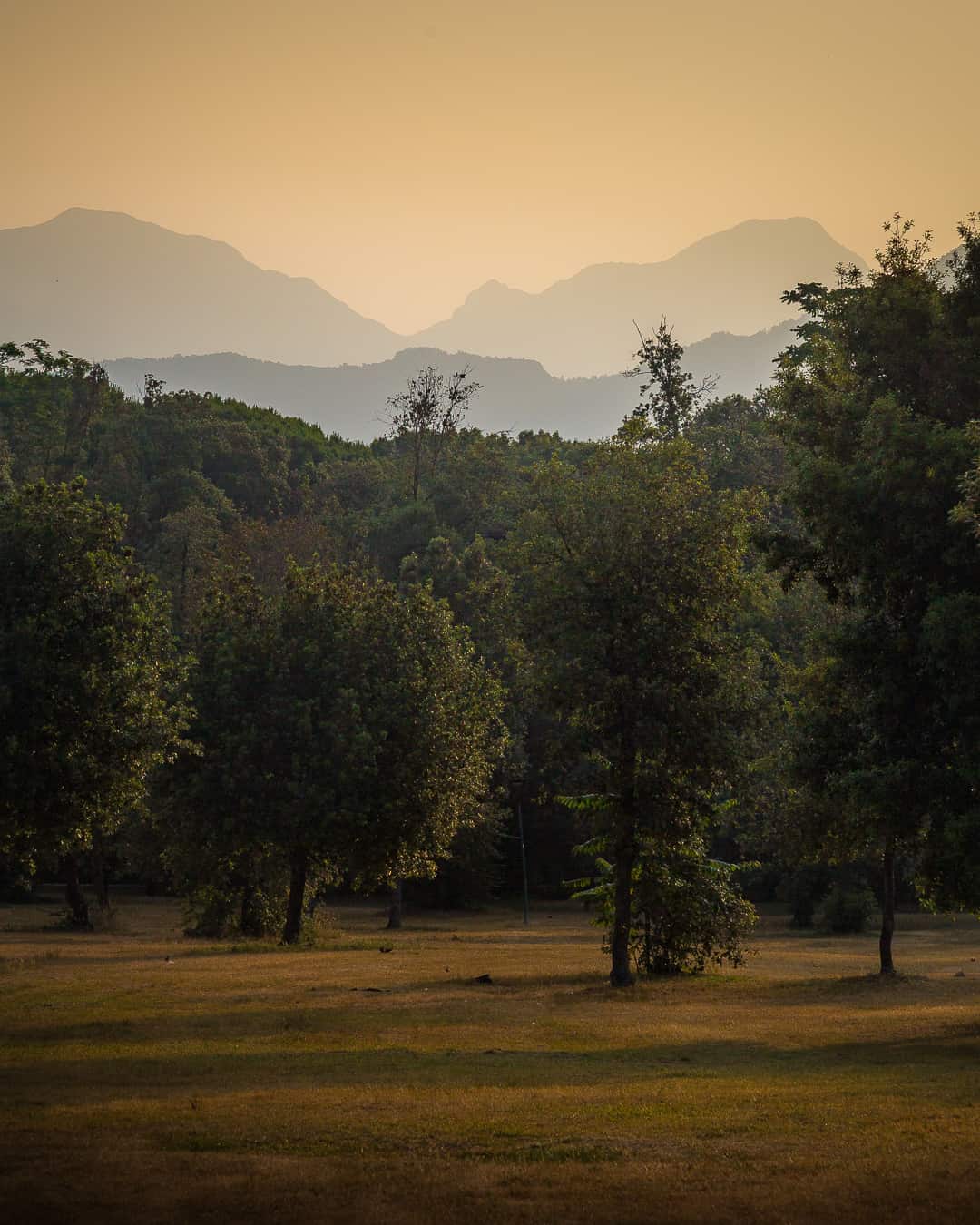
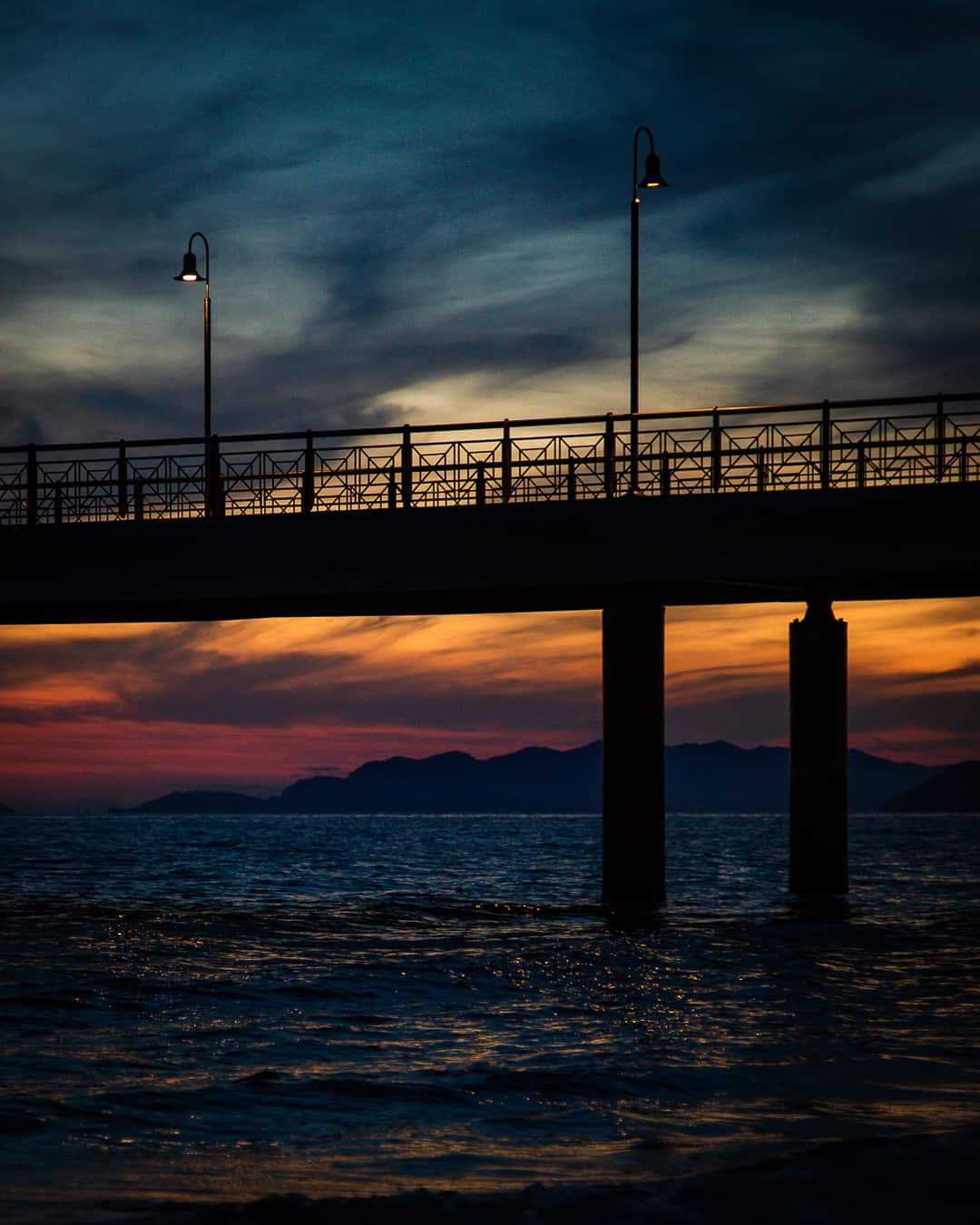
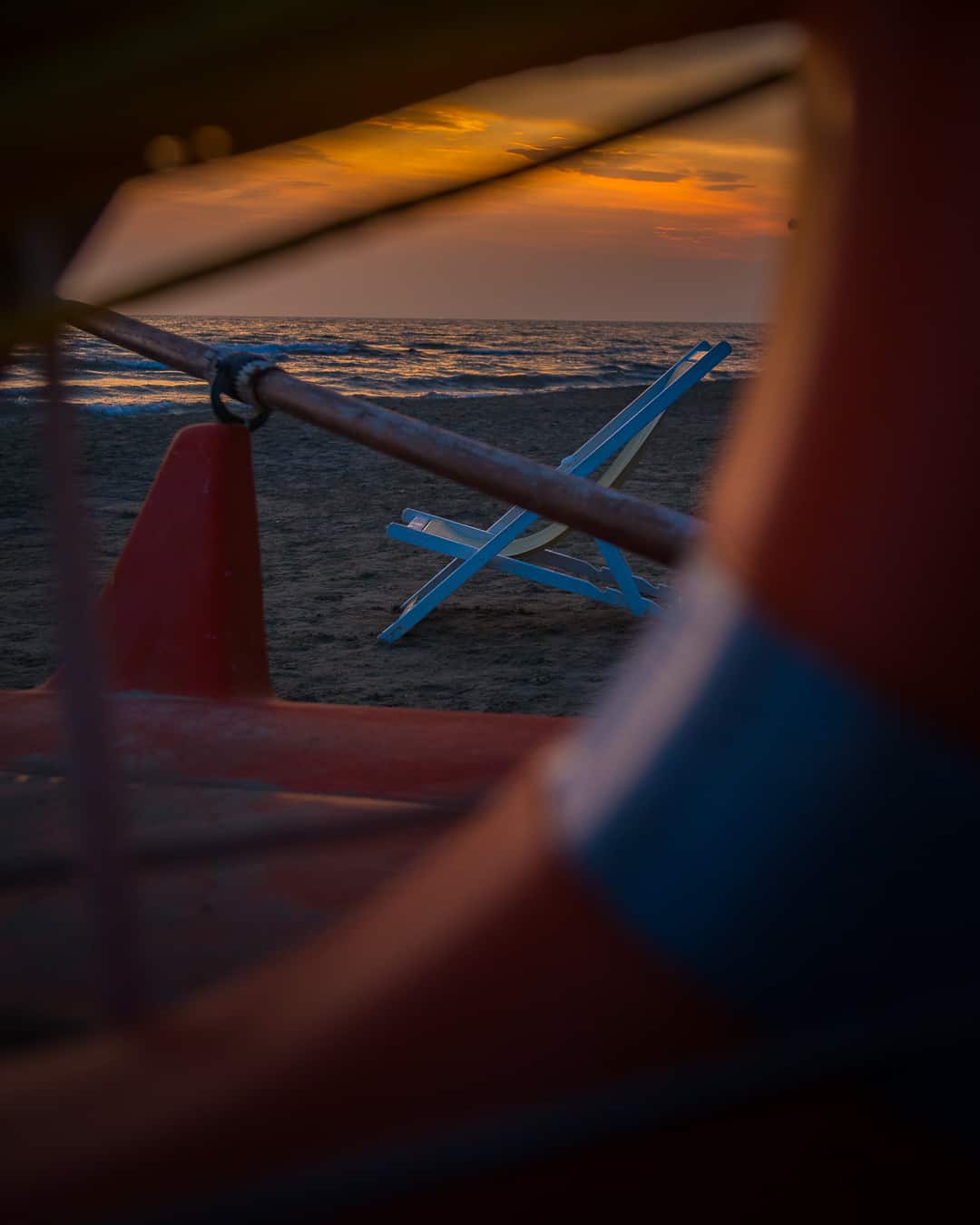
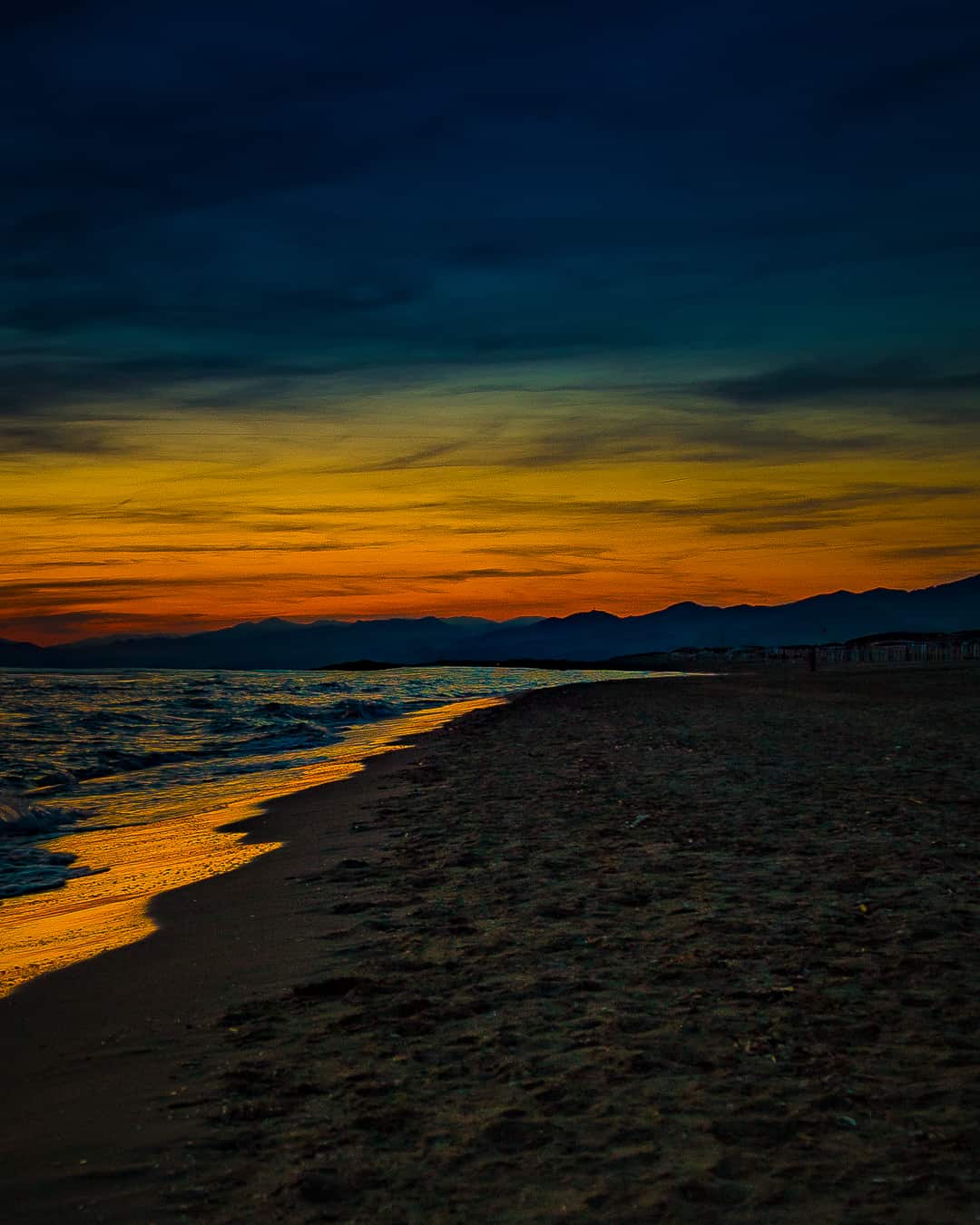
In the evening the sun sinks into the sea and the beach empties.
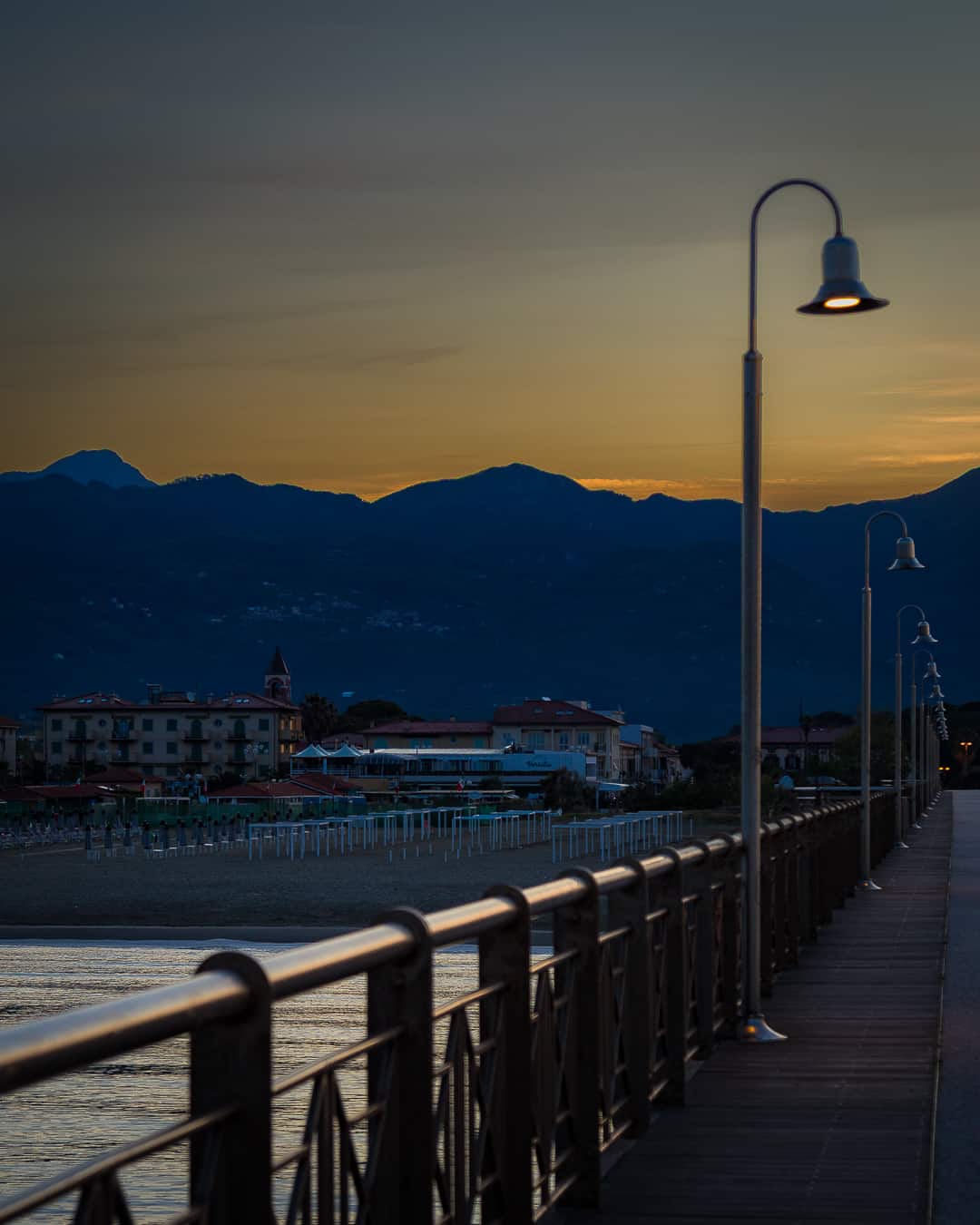
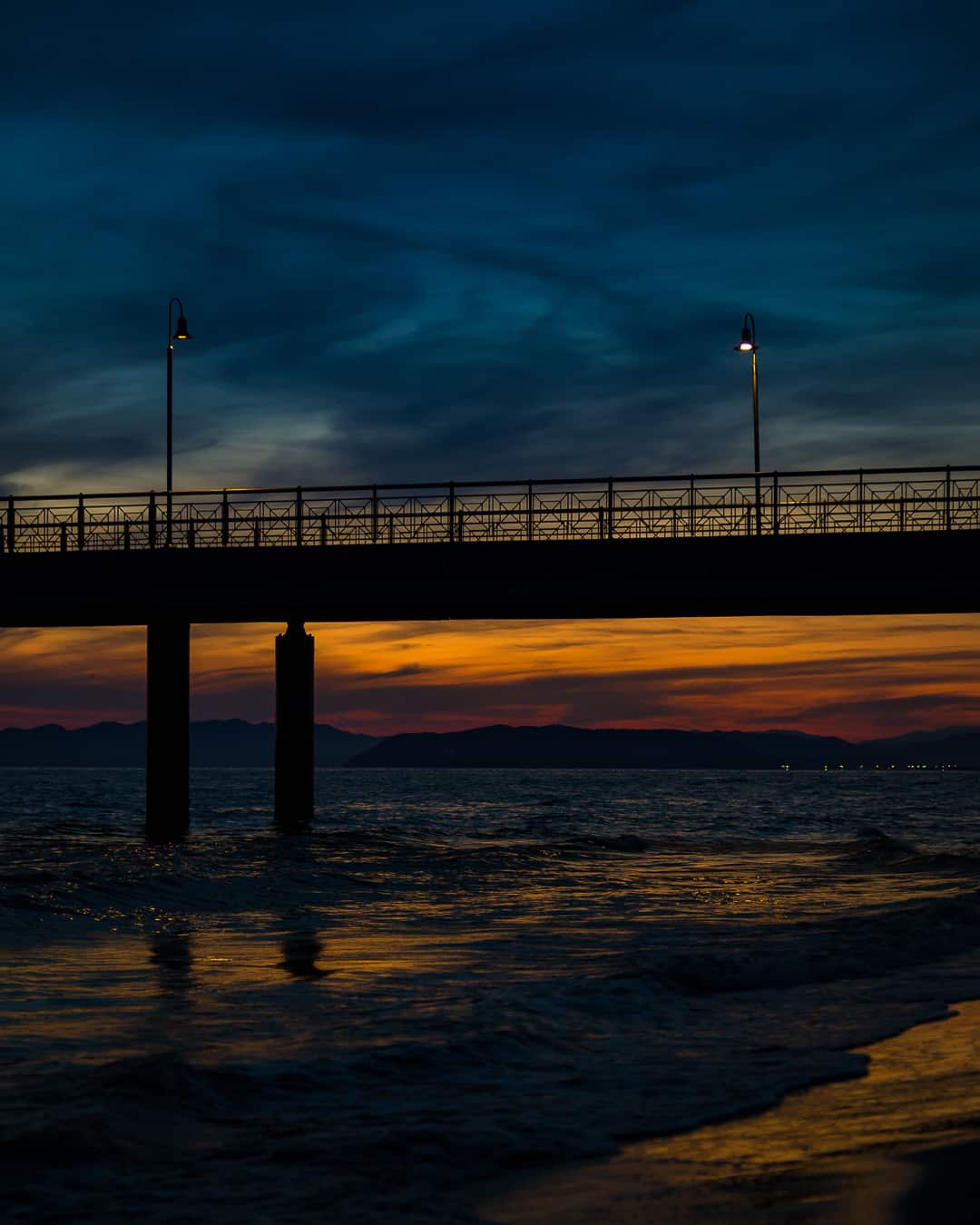
At Tonfano the pier reaches out over the water: the right place to watch the light go.
The pier
The pier at the blue hour: lamp posts, railings, dark mountains on the horizon. Once the sun has set, the light lingers on the sea for a few more minutes.
Night on the sea
The pier in the dark, its lamps lit, the water turning black. The beach is empty; tomorrow morning the cabins will open again one by one.
Getting there
- Where
- Pietrasanta (Lucca), between the Apuan Alps and the sea. On the coast, Marina di Pietrasanta includes Fiumetto, Tonfano, Motrone and Focette.
- La Versiliana
- A public park of about 80 hectares between Marina di Pietrasanta and Forte dei Marmi. The summer festival programme changes every year, so check it on the festival website.
- In Pietrasanta
- The cathedral square with San Martino and its bell tower, the church of Sant’Agostino, the Museo dei Bozzetti and Botero’s Warrior in Piazza Matteotti.
- The workshops
- They are working places: visits are usually by appointment.
- Our advice
- Early morning on the beach, afternoon in Pietrasanta, evening on the Tonfano pier.
Information checked on 21 November 2026.
Sources
- Pietrasanta — Visit Tuscany
- A spasso tra i laboratori artistici di Pietrasanta — Visit Tuscany
- One day in Pietrasanta — Visit Tuscany
- Guida di Pietrasanta 2023 — Comune di Pietrasanta
- Il marmo unico di Pietrasanta — Internazionale, 1 ottobre 2026
- Pietrasanta — Wikipedia
- I laboratori Ferdinando Palla e Martino Barsanti — Marmora et Lapidea, Fondazione Franzoni, 2020
- Michelangelo’s marble route in Apuan Alps — Stone News
- Seravezza, la via del marmo di Michelangelo — Toscana Ovunque Bella
- Parco della Versiliana — Italia.it
- Parco della Versiliana — Visit Tuscany
- Villa La Versiliana — Regione Toscana
- Marina di Pietrasanta — Touring Club Italiano
- Marina di Pietrasanta — Versilia.org
- Gabriele D’Annunzio in Toscana — Visit Tuscany
Note
Photographs by William, also published on Instagram as @guglielmo.foto.
Texts and layout: WIDE Edizioni, Rho. Historical and practical information is checked against the sources on the previous page.
© 2026 WIDE Edizioni
A book for your place
We photograph villas, museums, villages and landscapes in natural light, and turn them into images ready for your website, print and social media. Or into pages to leaf through, like these.