WIDE Edizioni
Venice
Veneto
Photographs by William
The other Venice
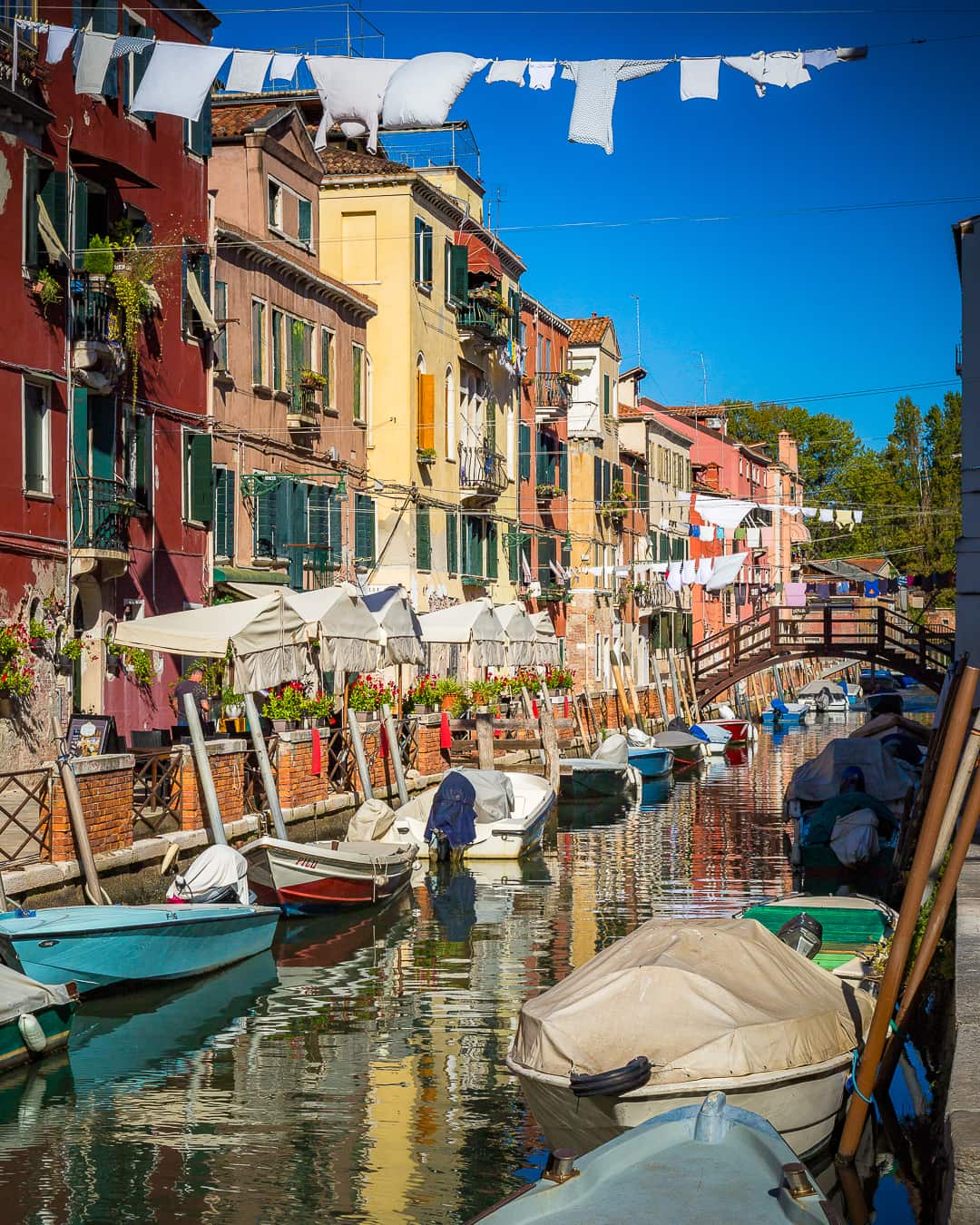
People usually look at Venice from St Mark’s Square. These pages look at it from behind: from the calli where washing hangs out to dry, from the campi and their wells, from the rii where boats are moored outside the front door.
This is the city where people live: the Giudecca, the campi and rii of the sestieri, the tree-lined avenues of Castello, and on to the island of Sant’Elena at the eastern tip.
A city with words of its own: calli, campi, rii, fondamenta. You will meet them one by one.
I
The water
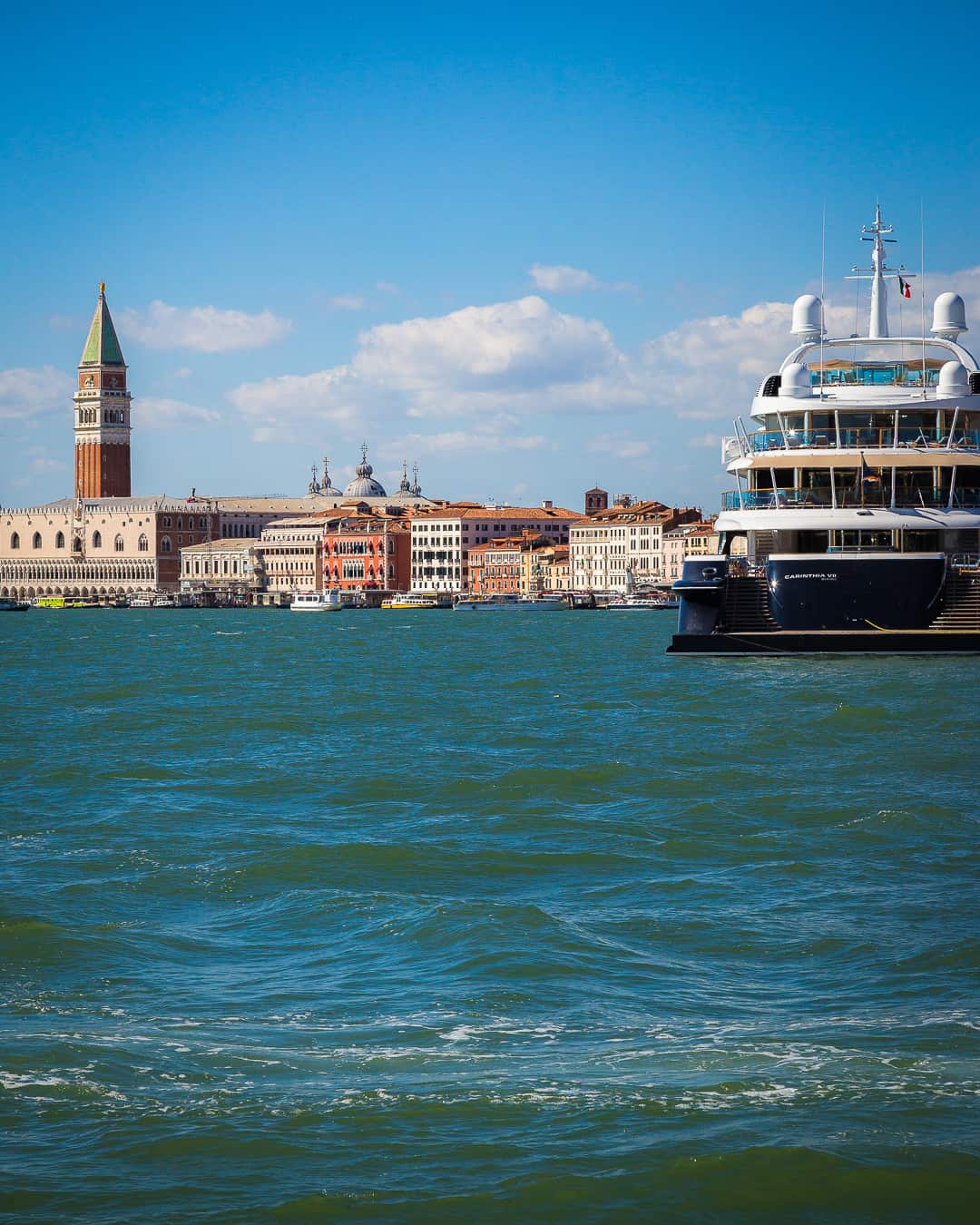
In Venice the water is the main street: people take a boat the way others take a car.
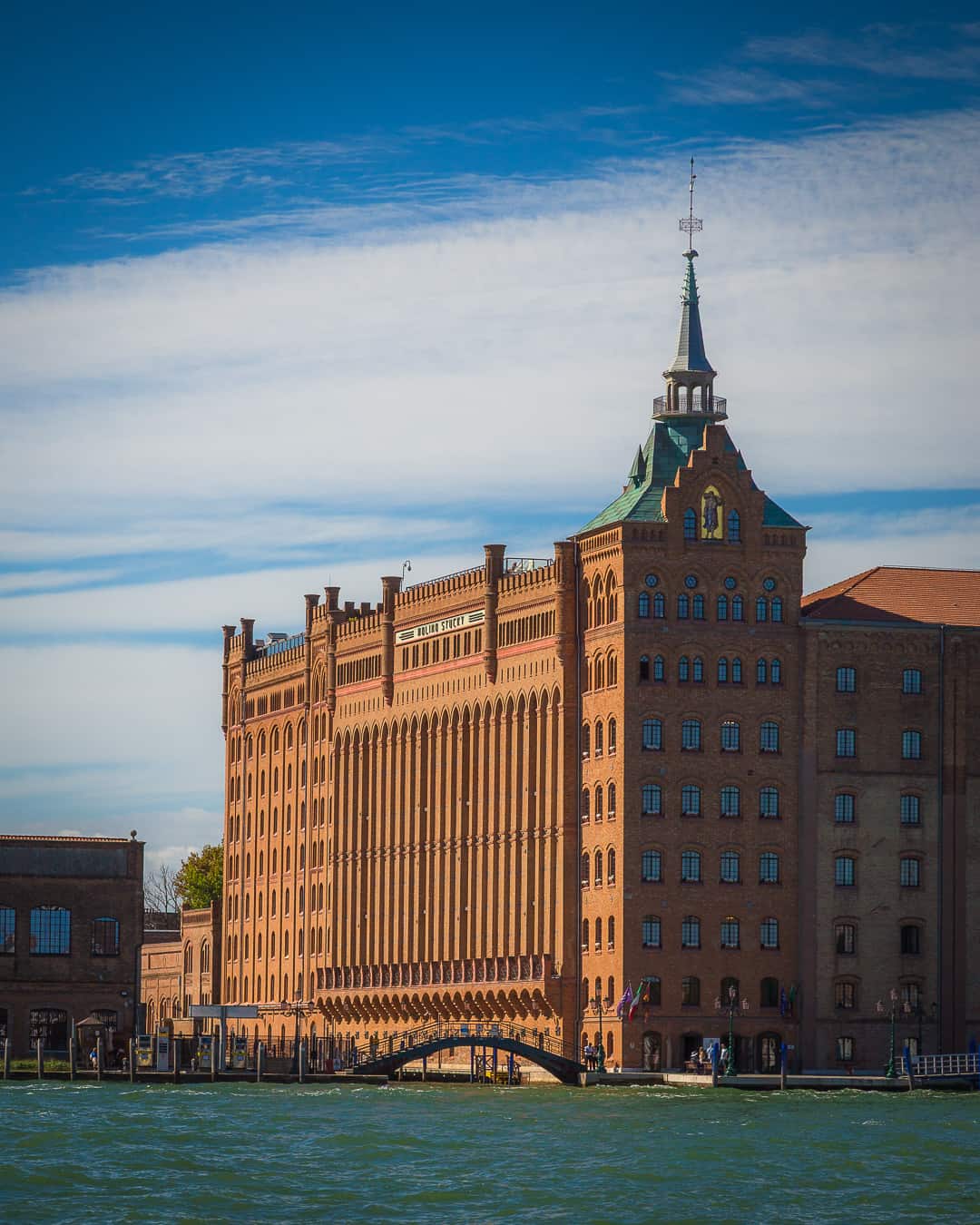
On the Giudecca, the Molino Stucky recalls an industrial Venice. Built between 1884 and 1895 for the entrepreneur Giovanni Stucky to a design by the architect Ernst Wullekopf, it was one of the largest mills in Europe; today it is a hotel.
In Dorsoduro, the squero of San Trovaso has been building and repairing gondolas since the seventeenth century.
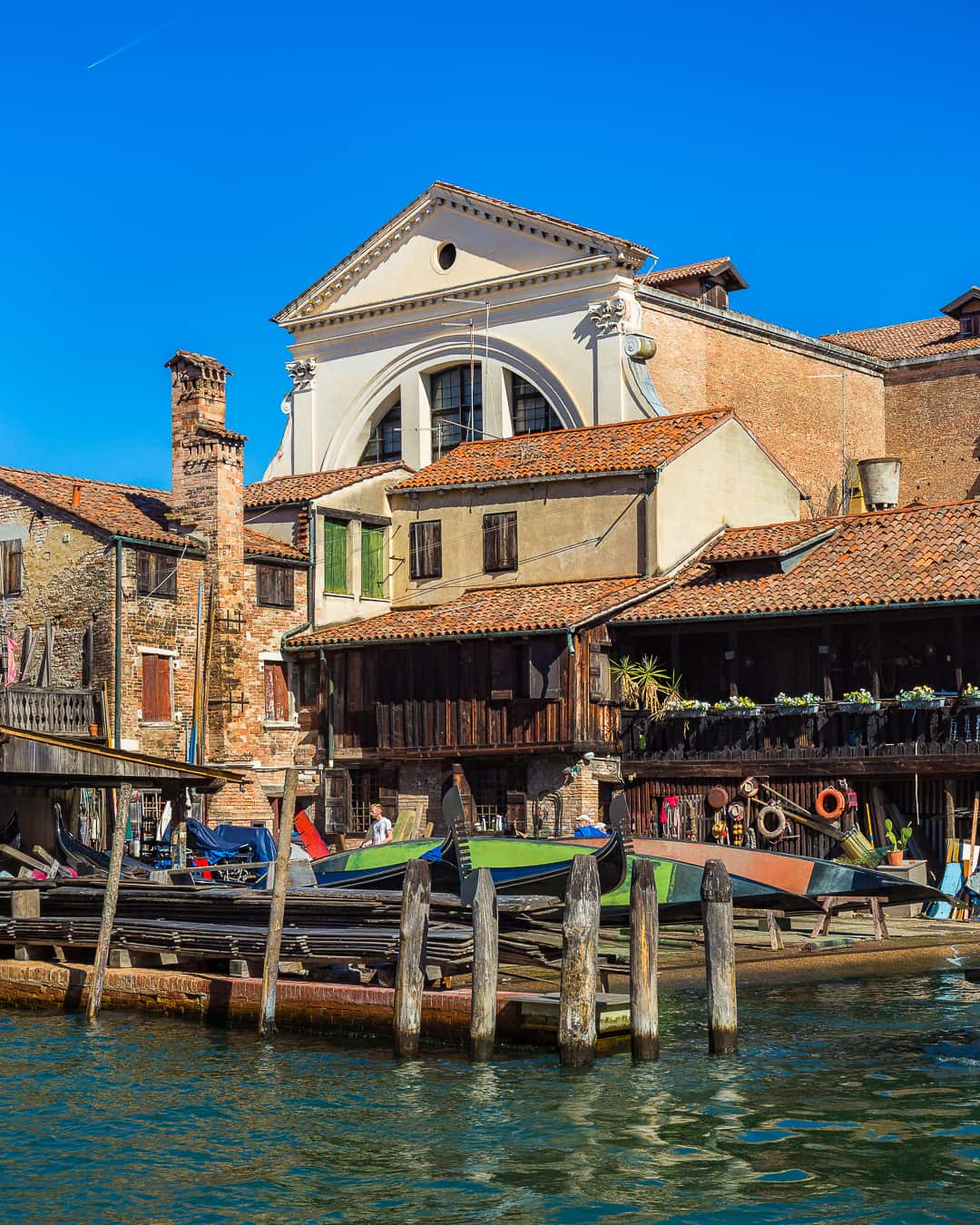
The squero
Small wooden houses, gondolas hauled out of the water, a slipway running into the rio. The squero of San Trovaso is one of the last yards where gondolas are still built and repaired. Its wooden houses recall the mountains: the story goes that the boatbuilders came from Cadore.
The bridge
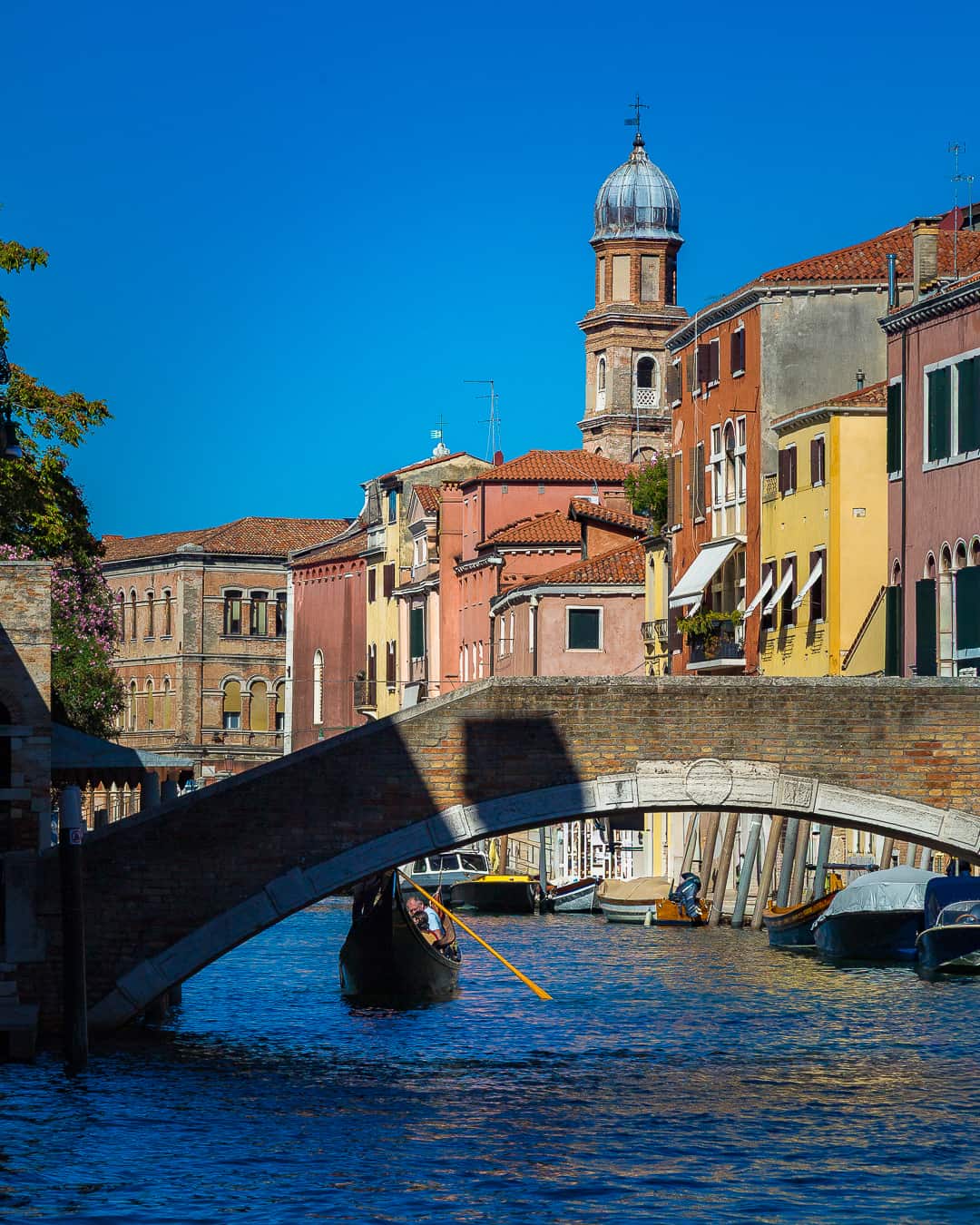
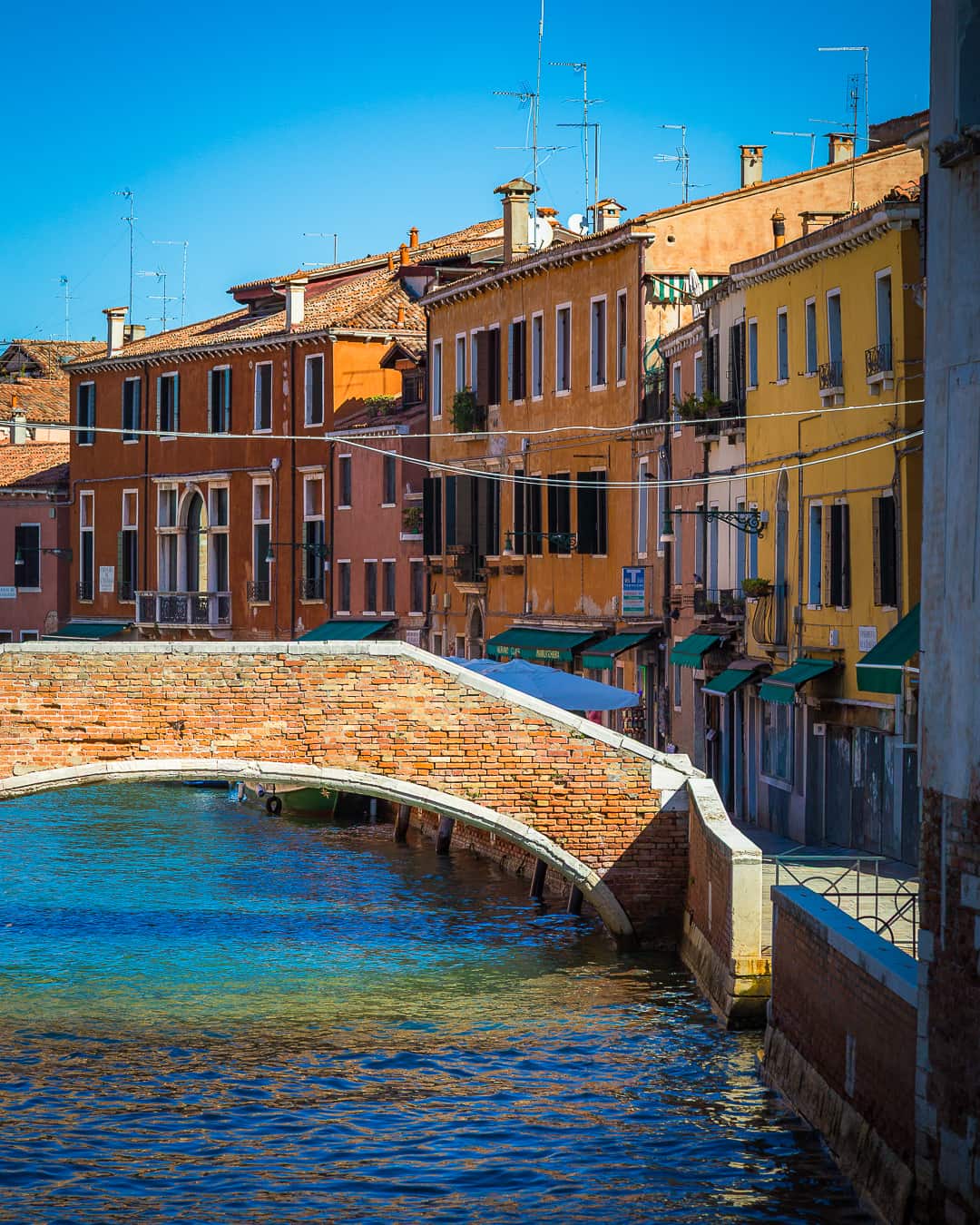
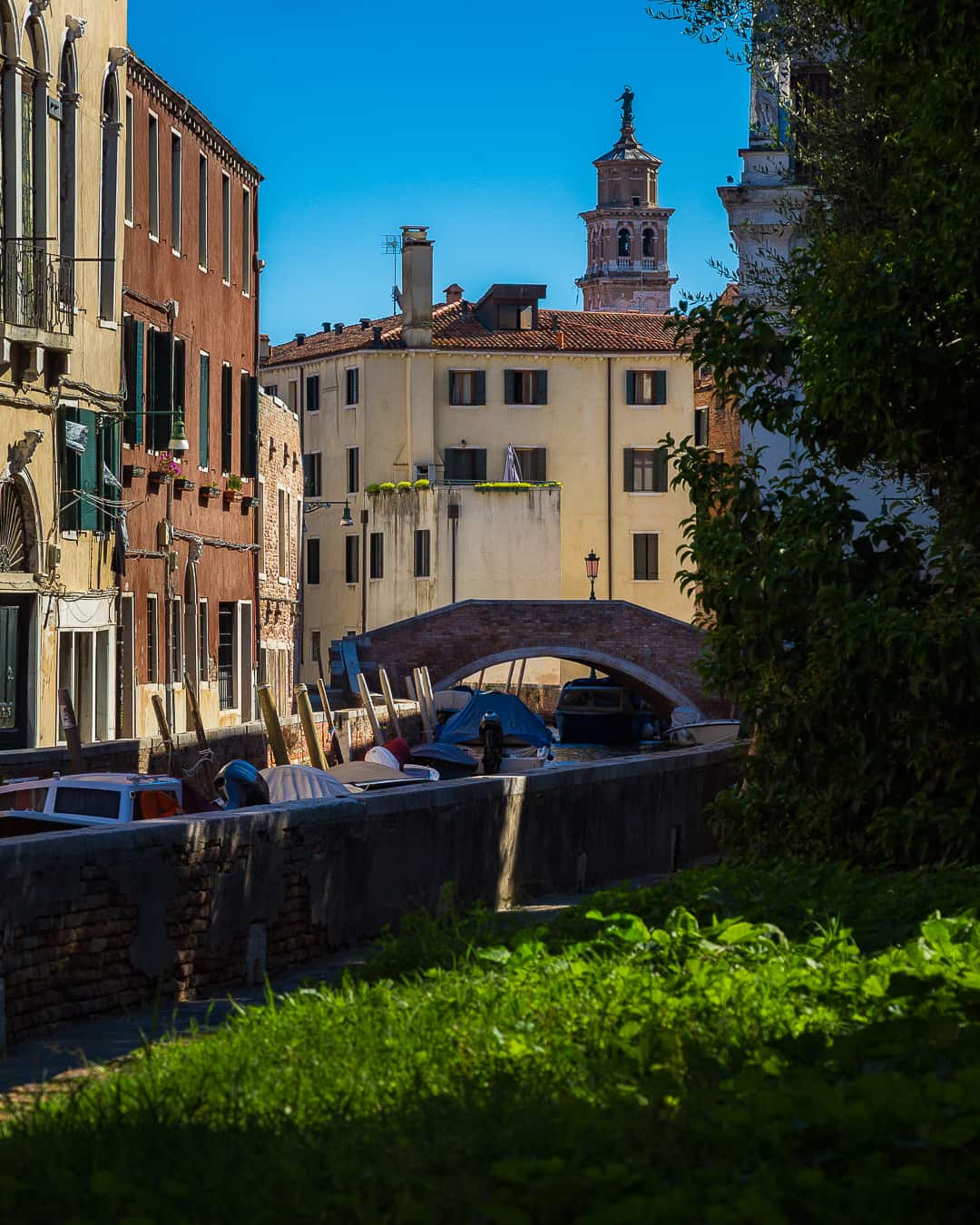
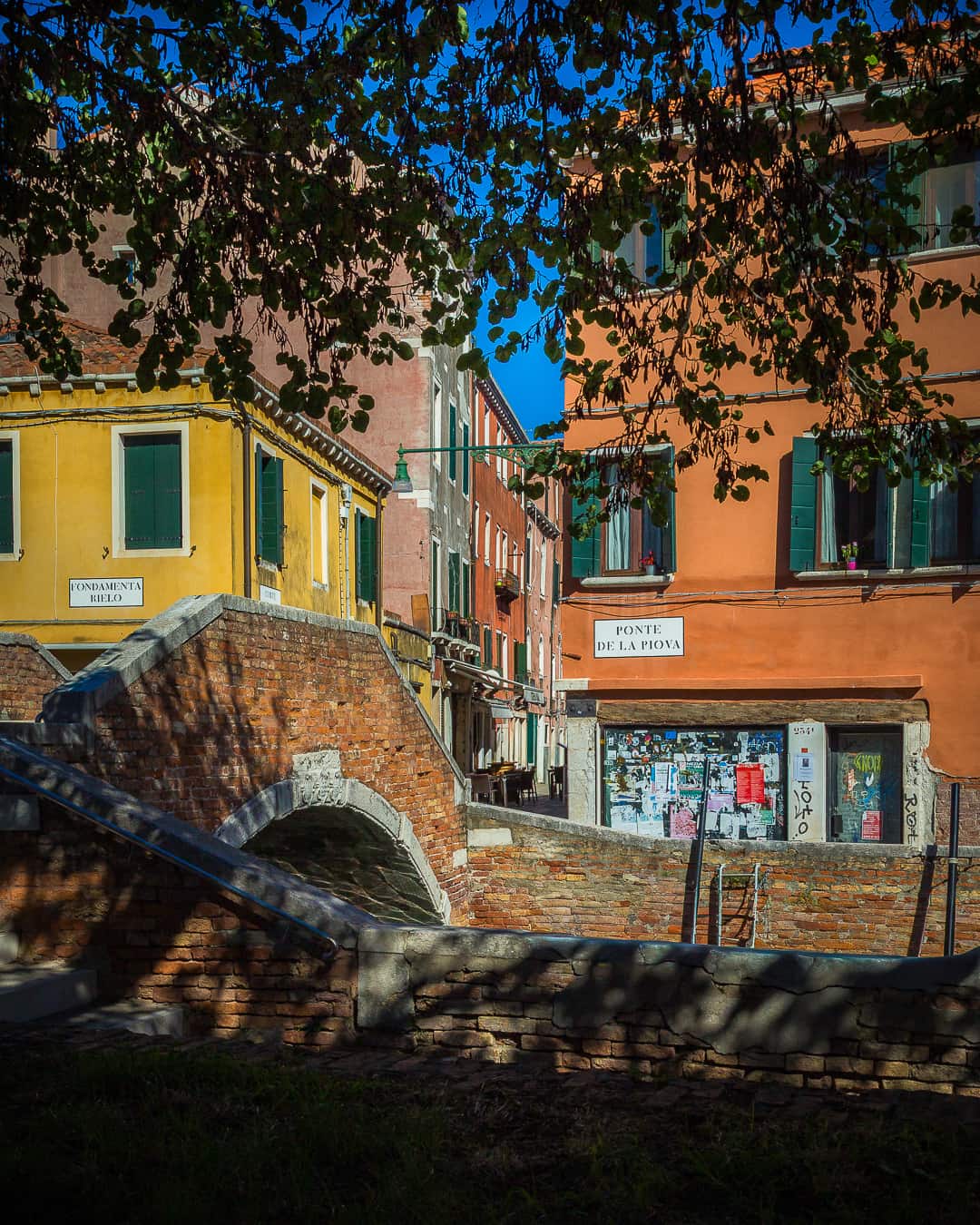
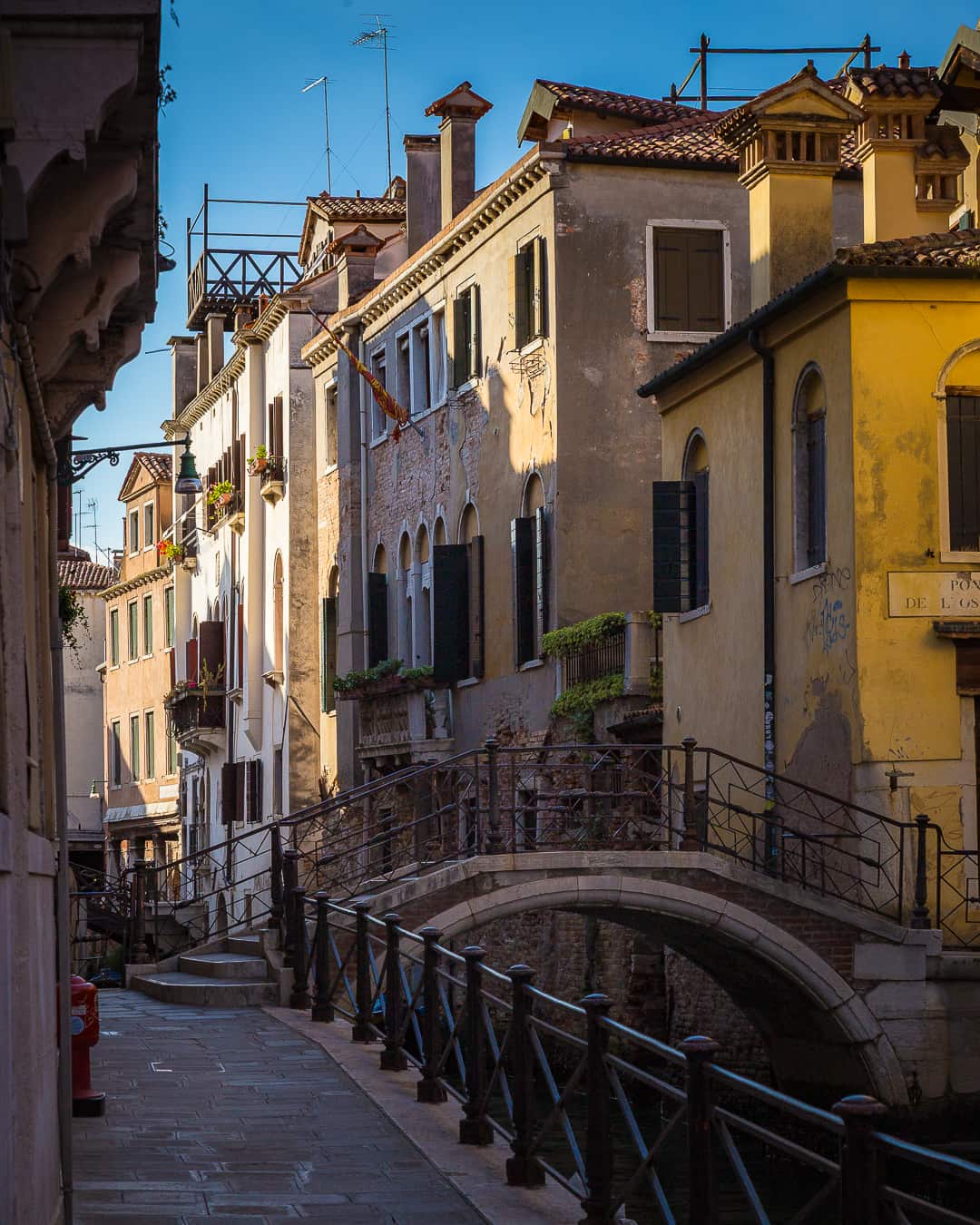
A stone bridge, a gondola passing under it, a domed bell tower at the end. Almost every bridge in Venice has steps: you cross the city going up and down.
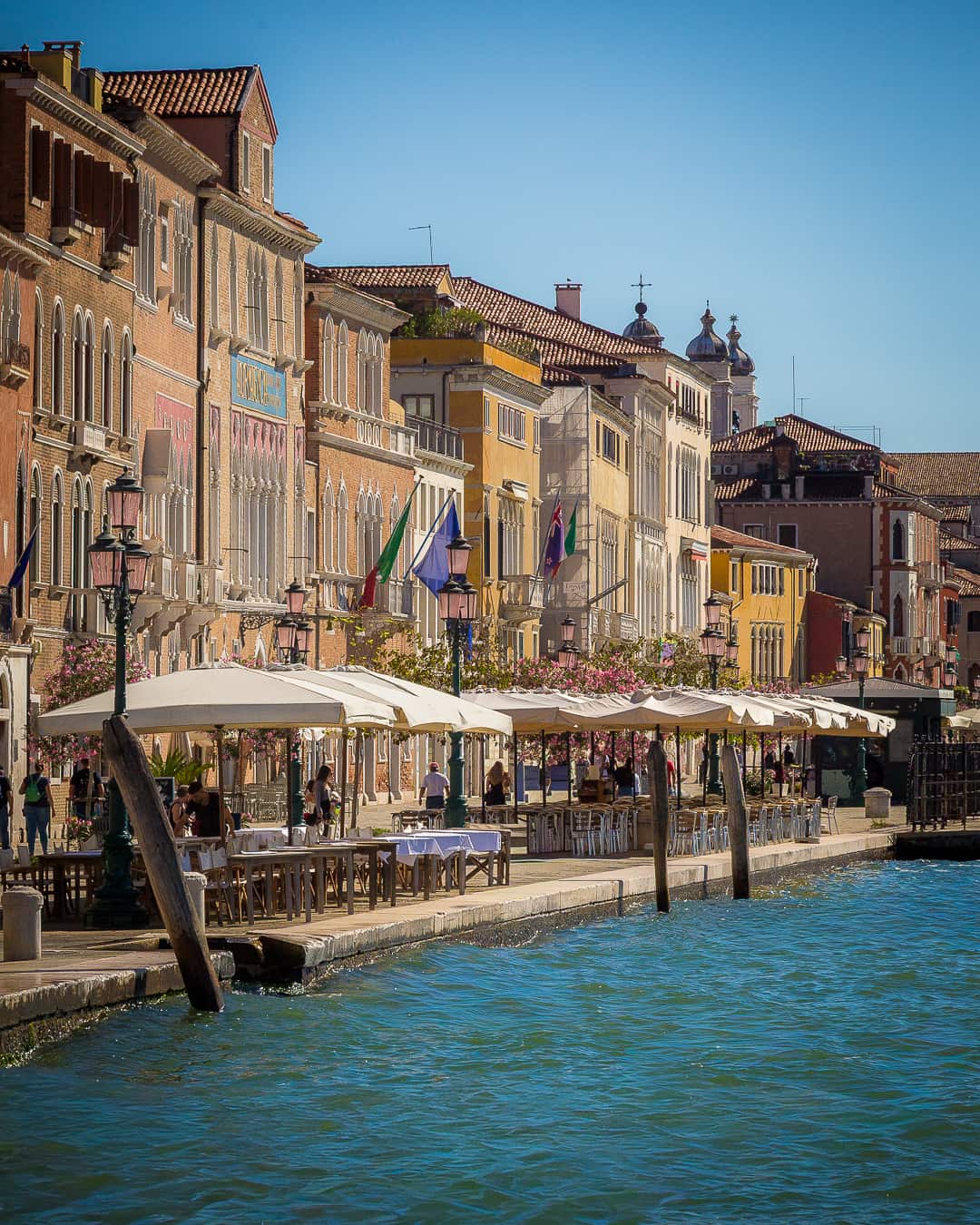
The water door
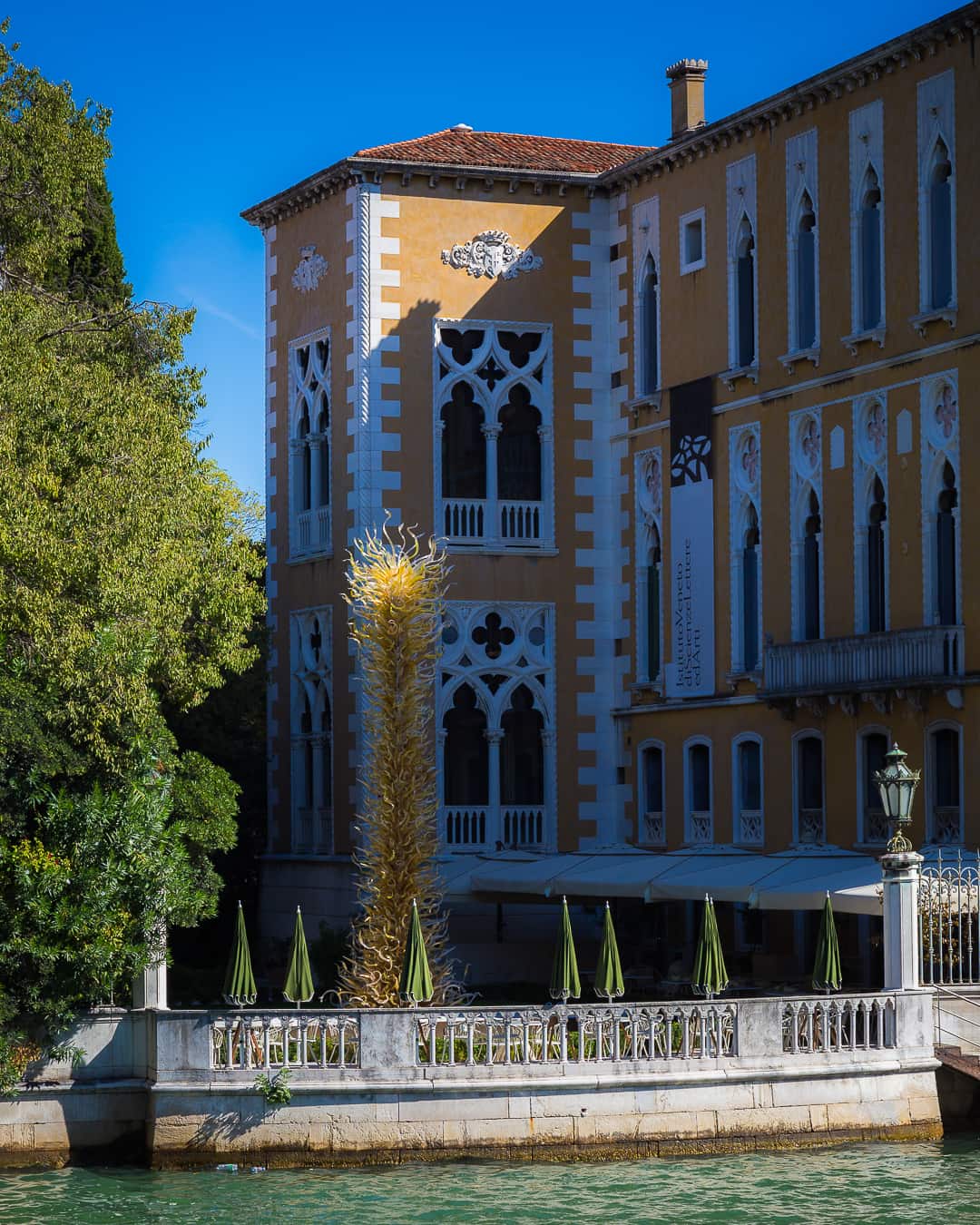
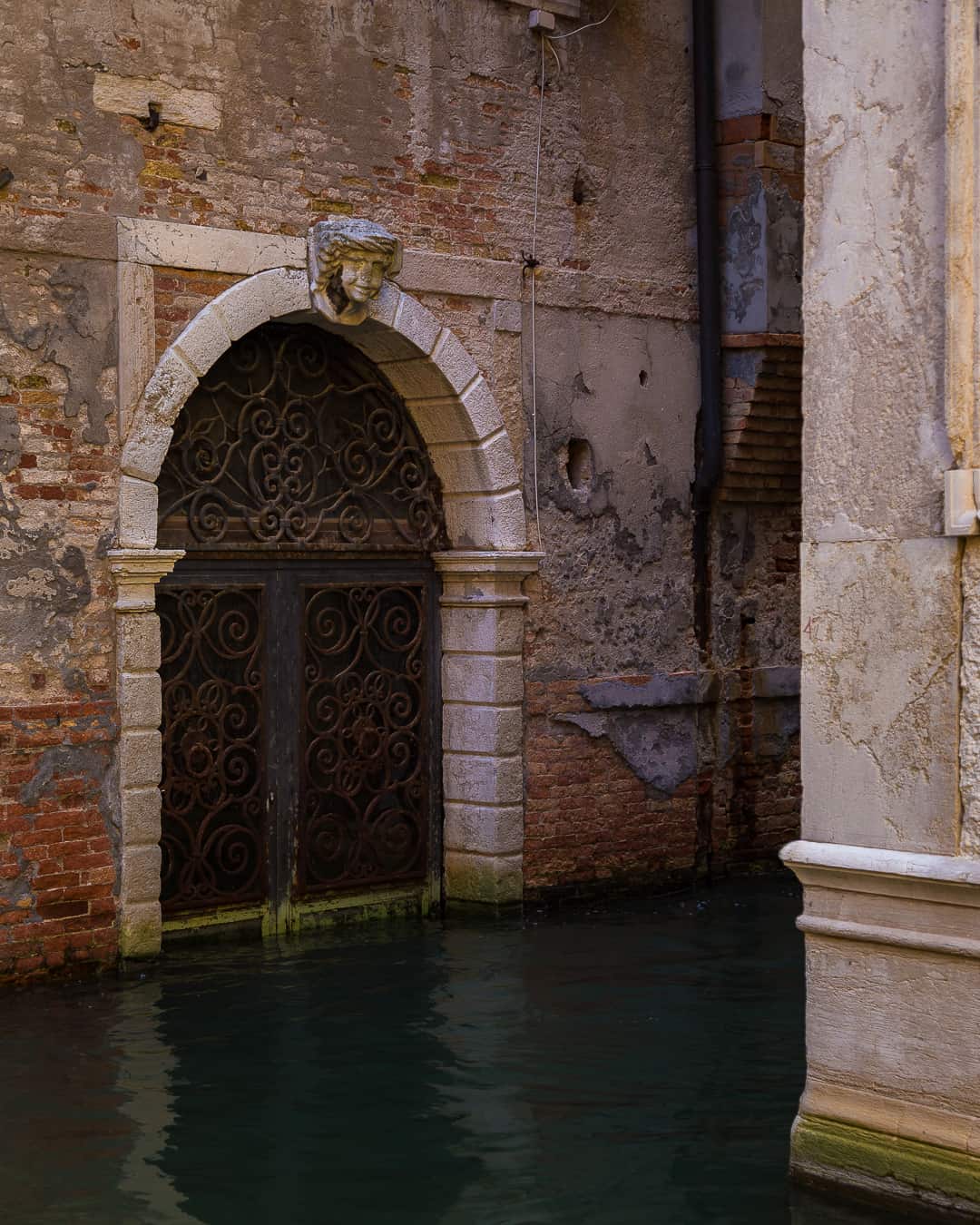
A stone doorway opening straight onto the canal. For centuries the main entrance of a palazzo was the one on the water: you stepped from the boat into the house.
II
The calli
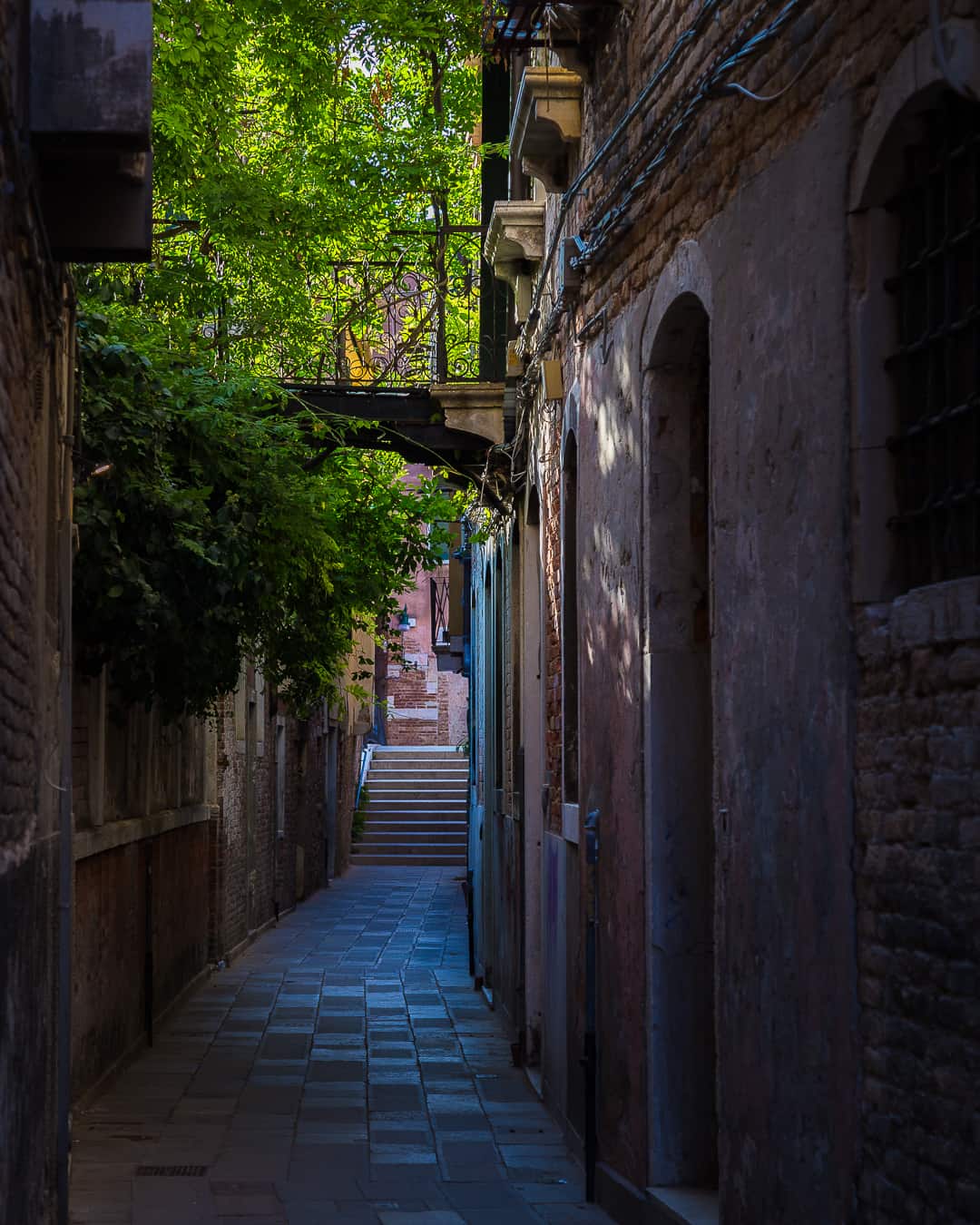
The streets of Venice are called calli, from the Latin callis, a path.
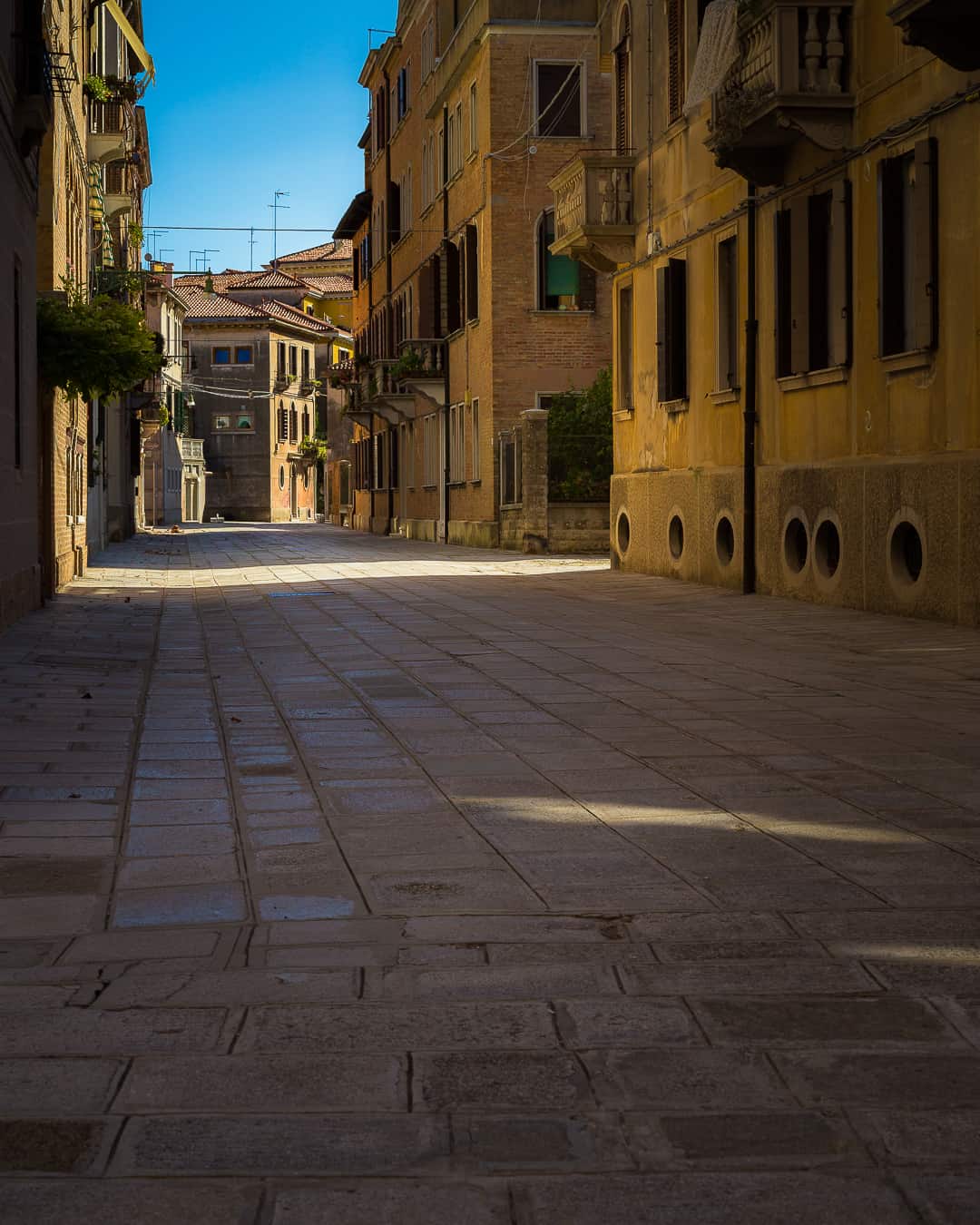
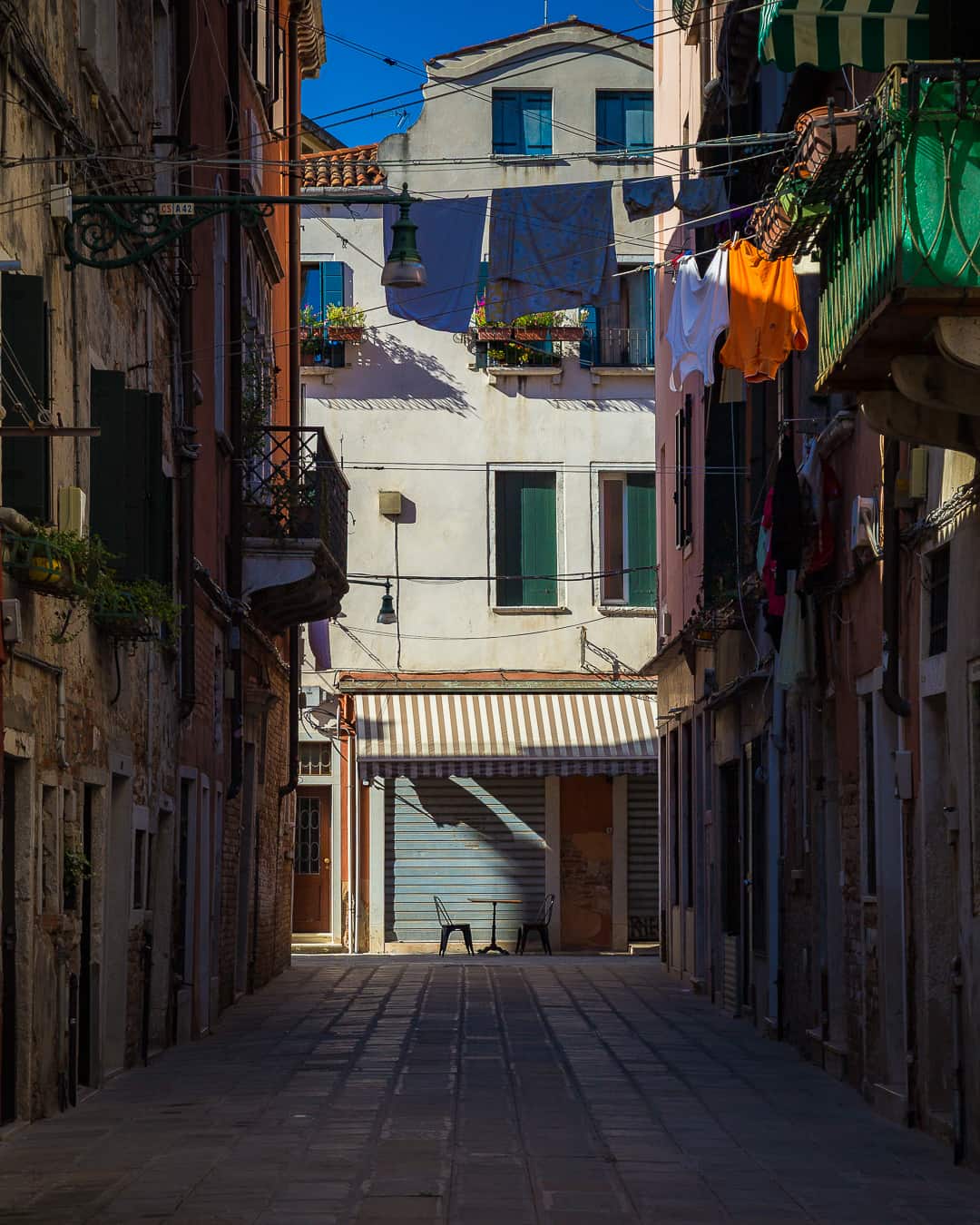
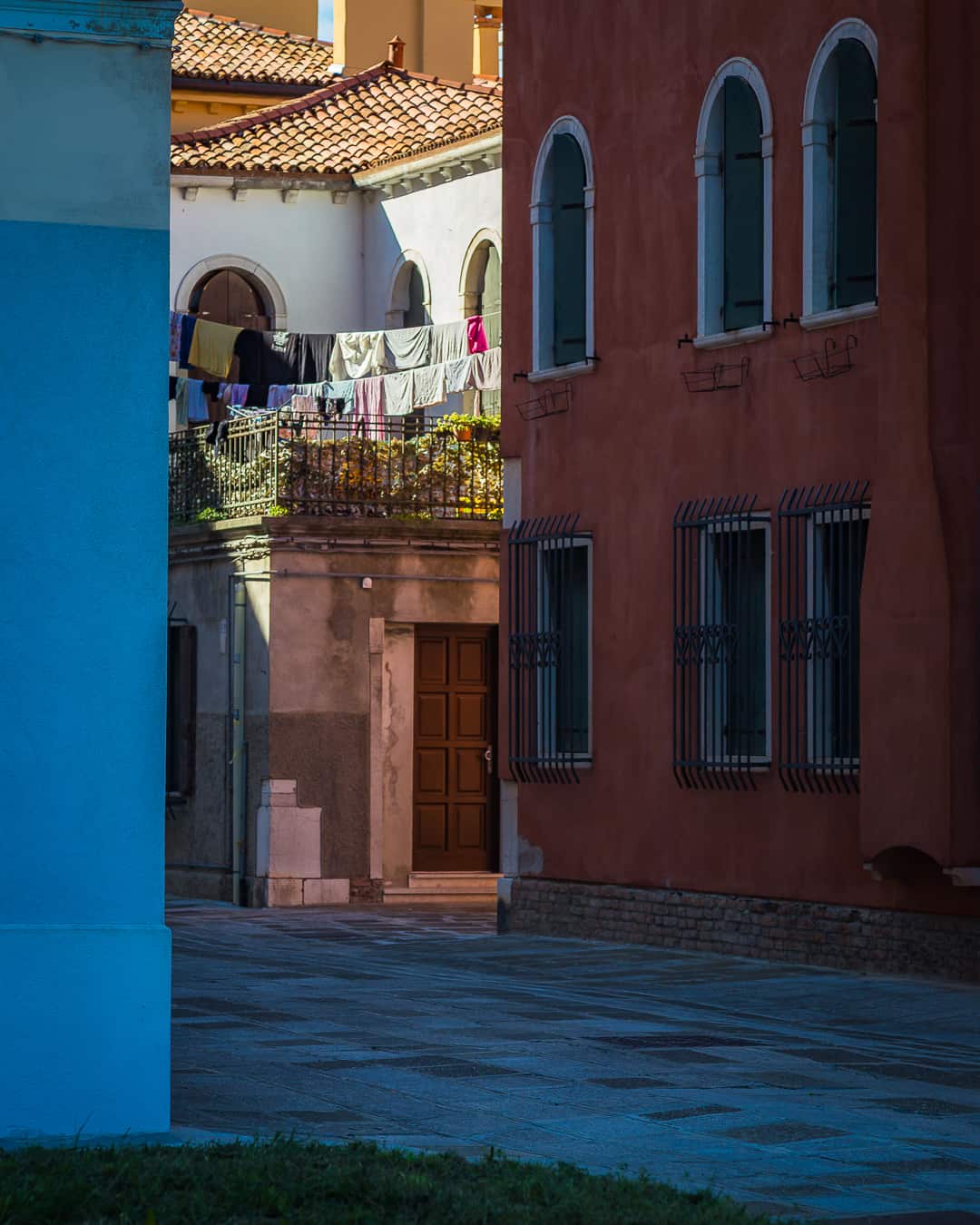
They are narrow, sometimes very narrow, and turn without warning. Washing lines run from one window to the next.
You get lost, and that is as it should be: sooner or later a calle opens onto the water or into a campo.
Washing
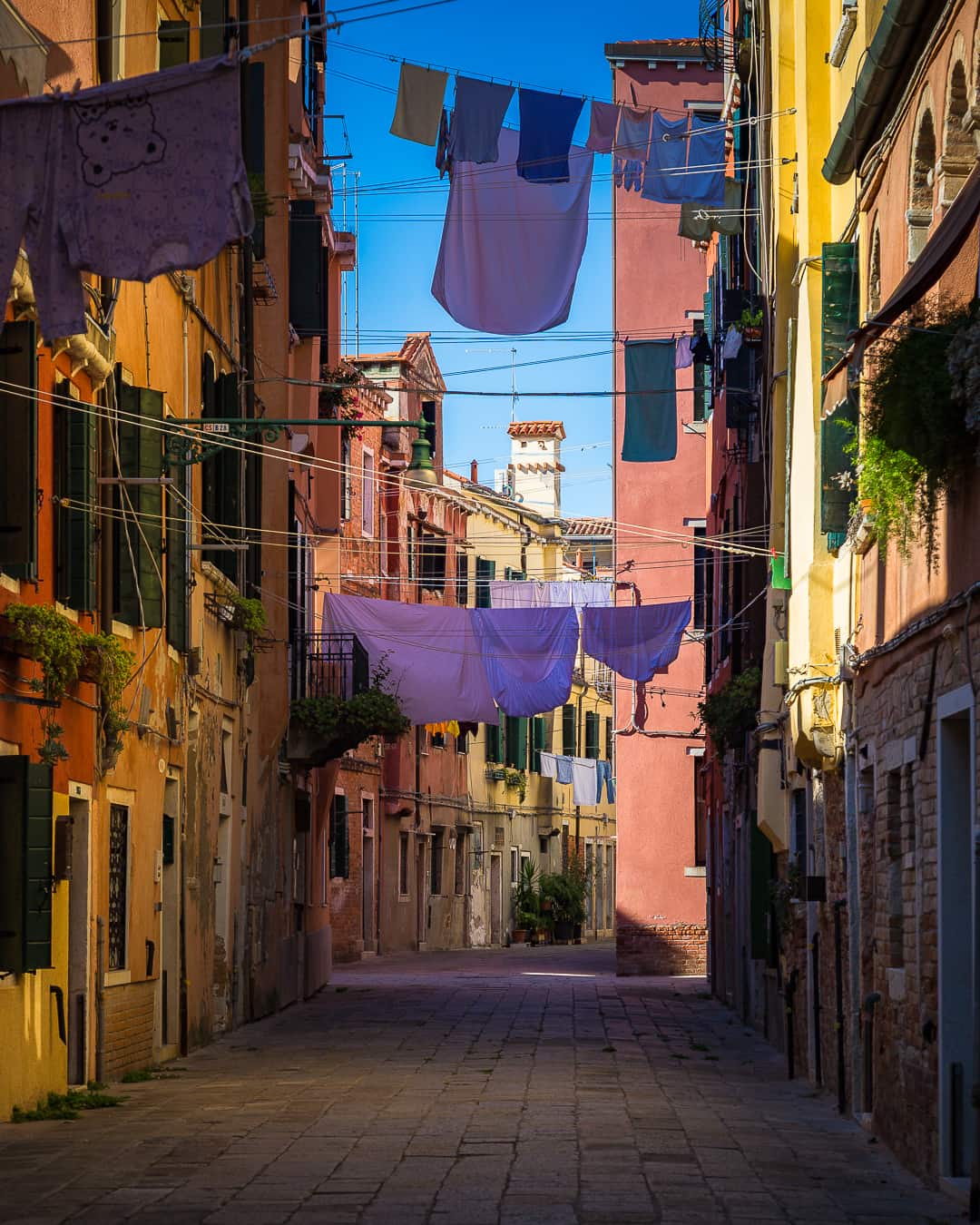
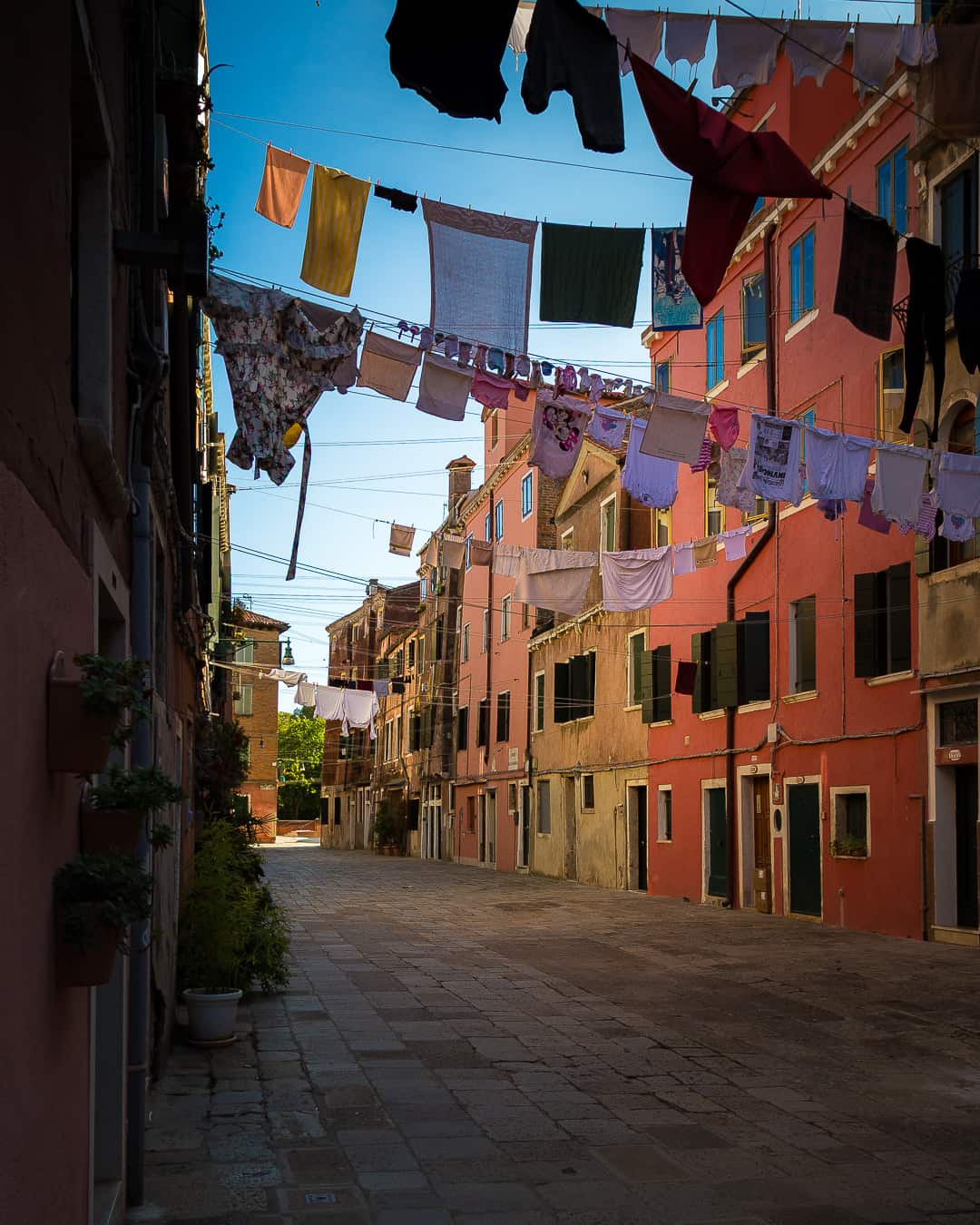
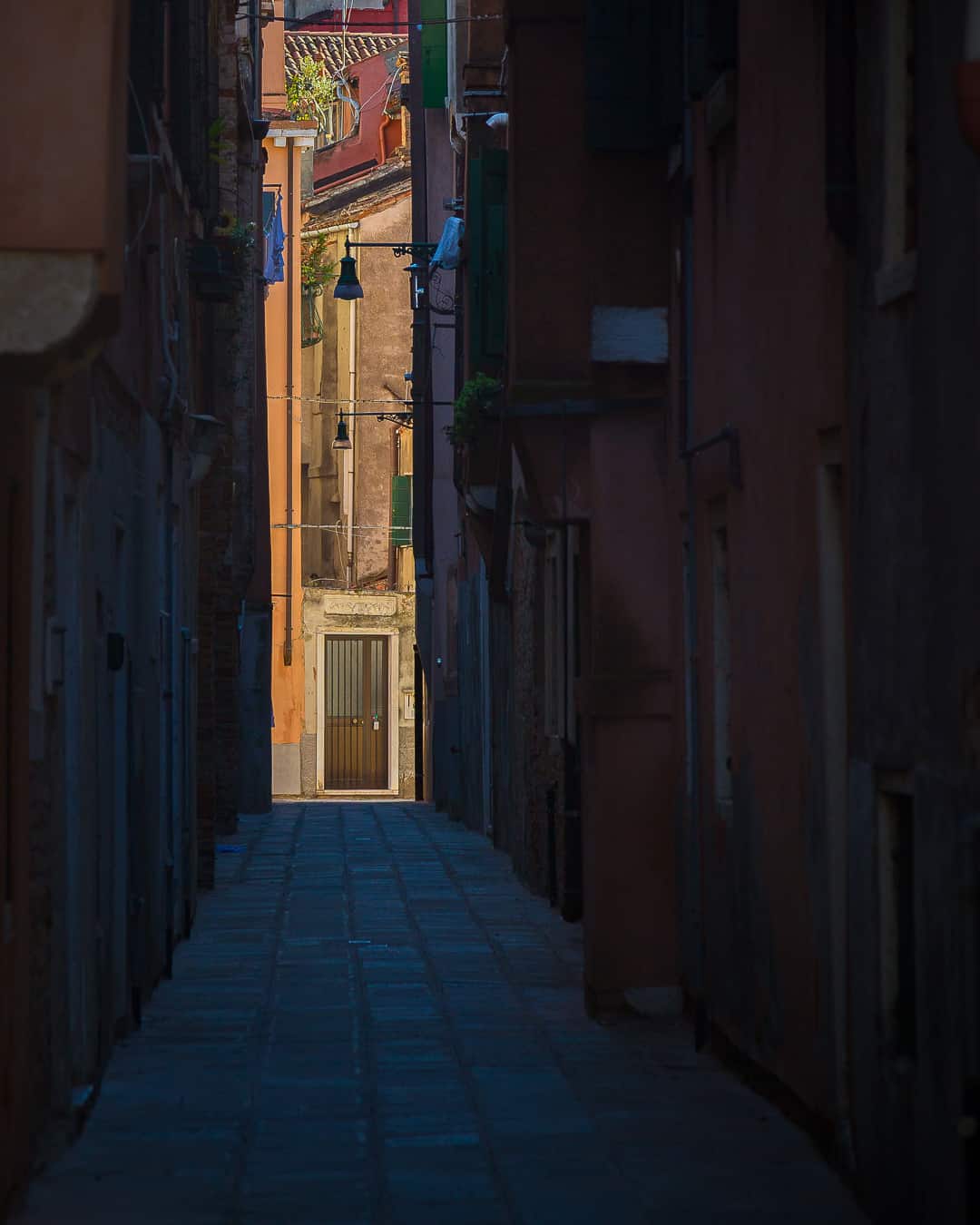
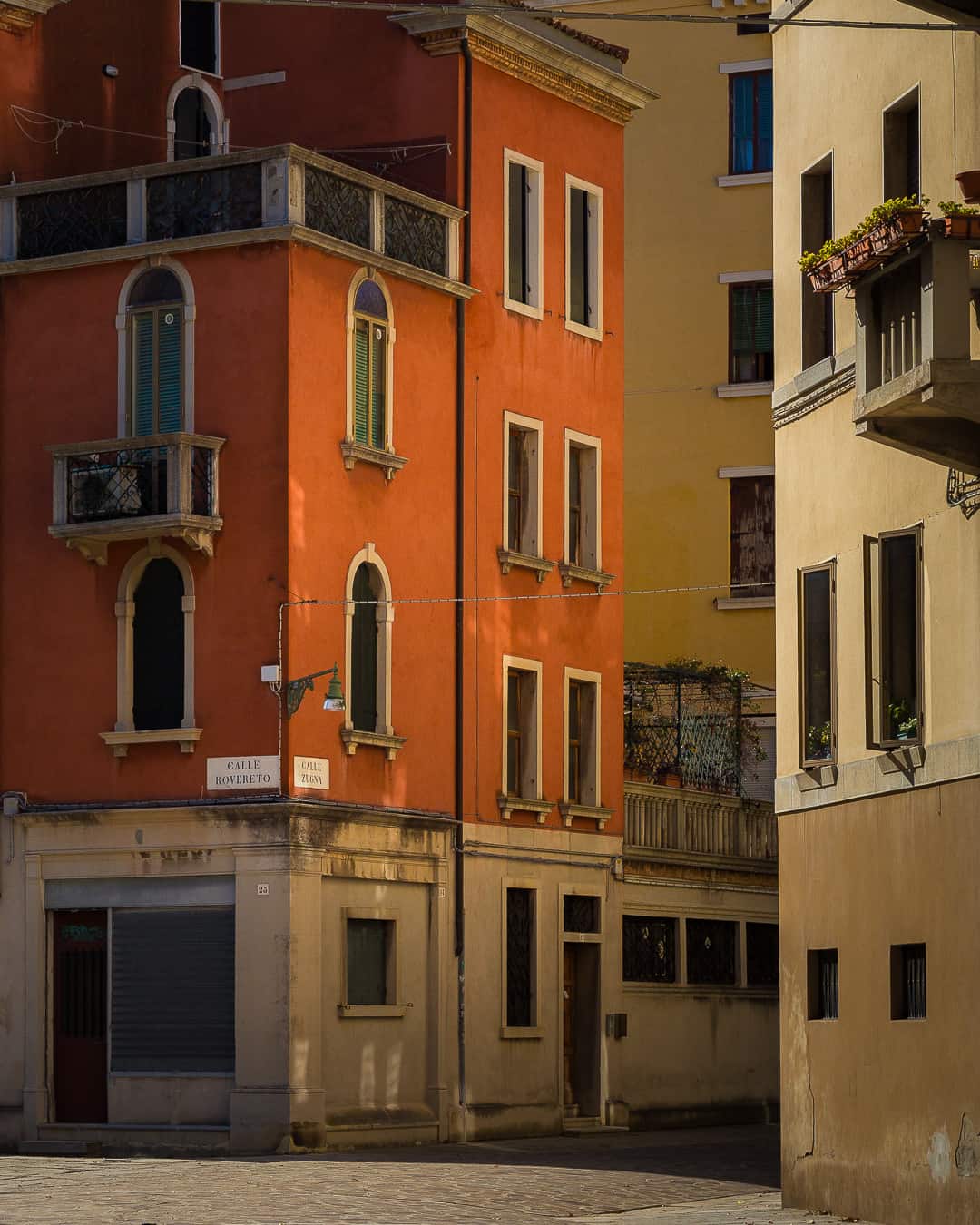
Washing hung high, an orange house at the end of the calle. In Venice washing goes outside, above the street, from one window to the next: there is little space, but plenty of wind.
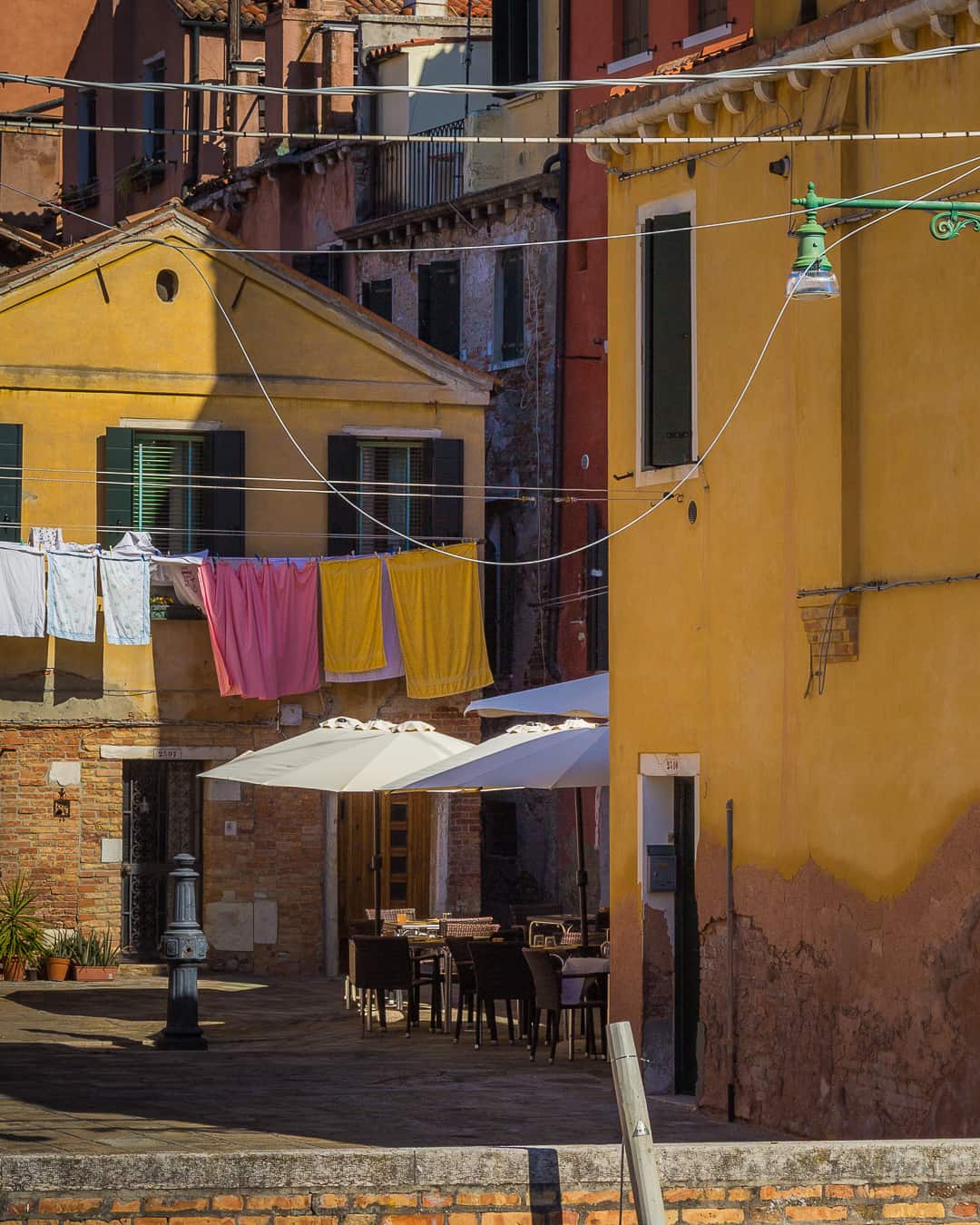
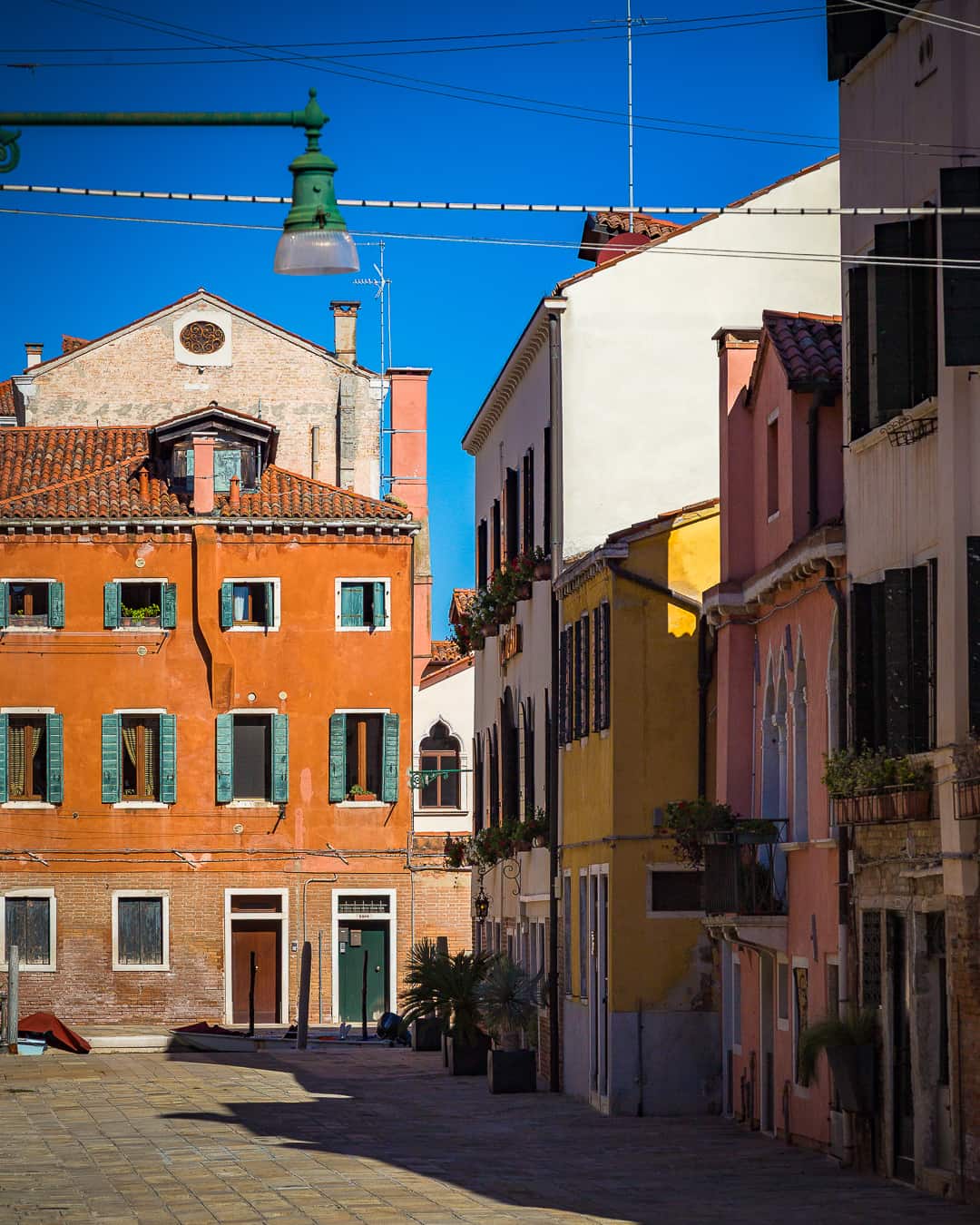
Between the houses
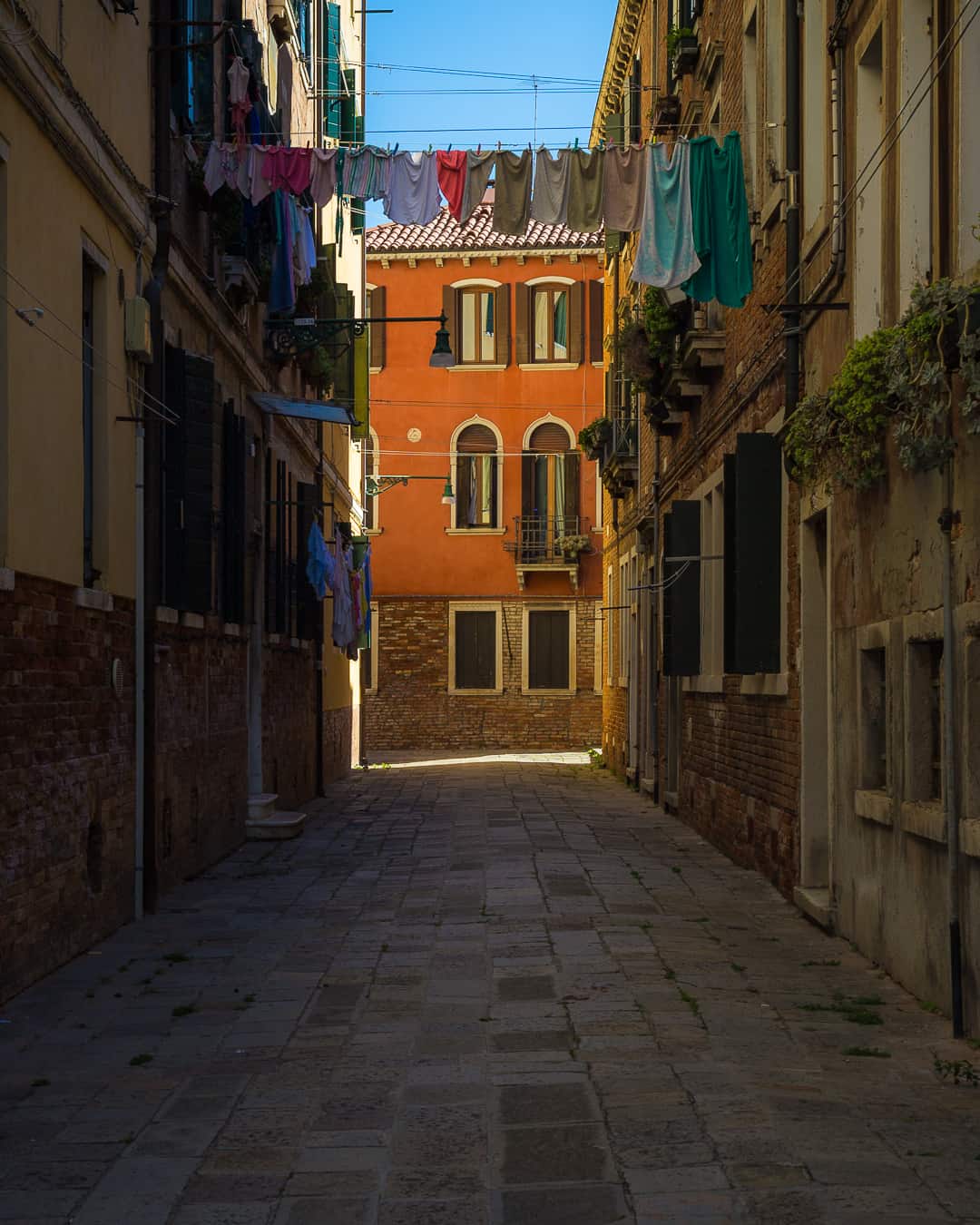
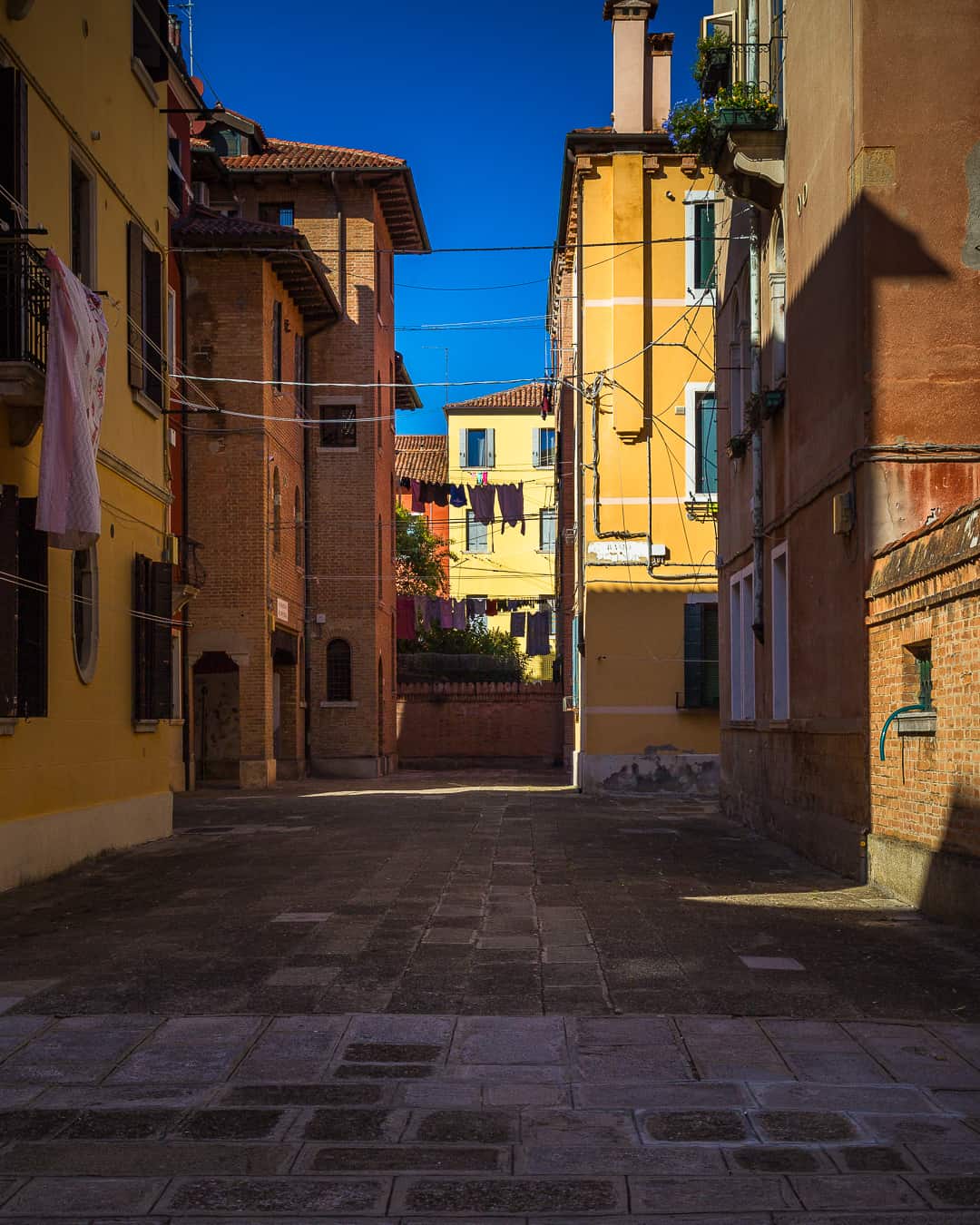
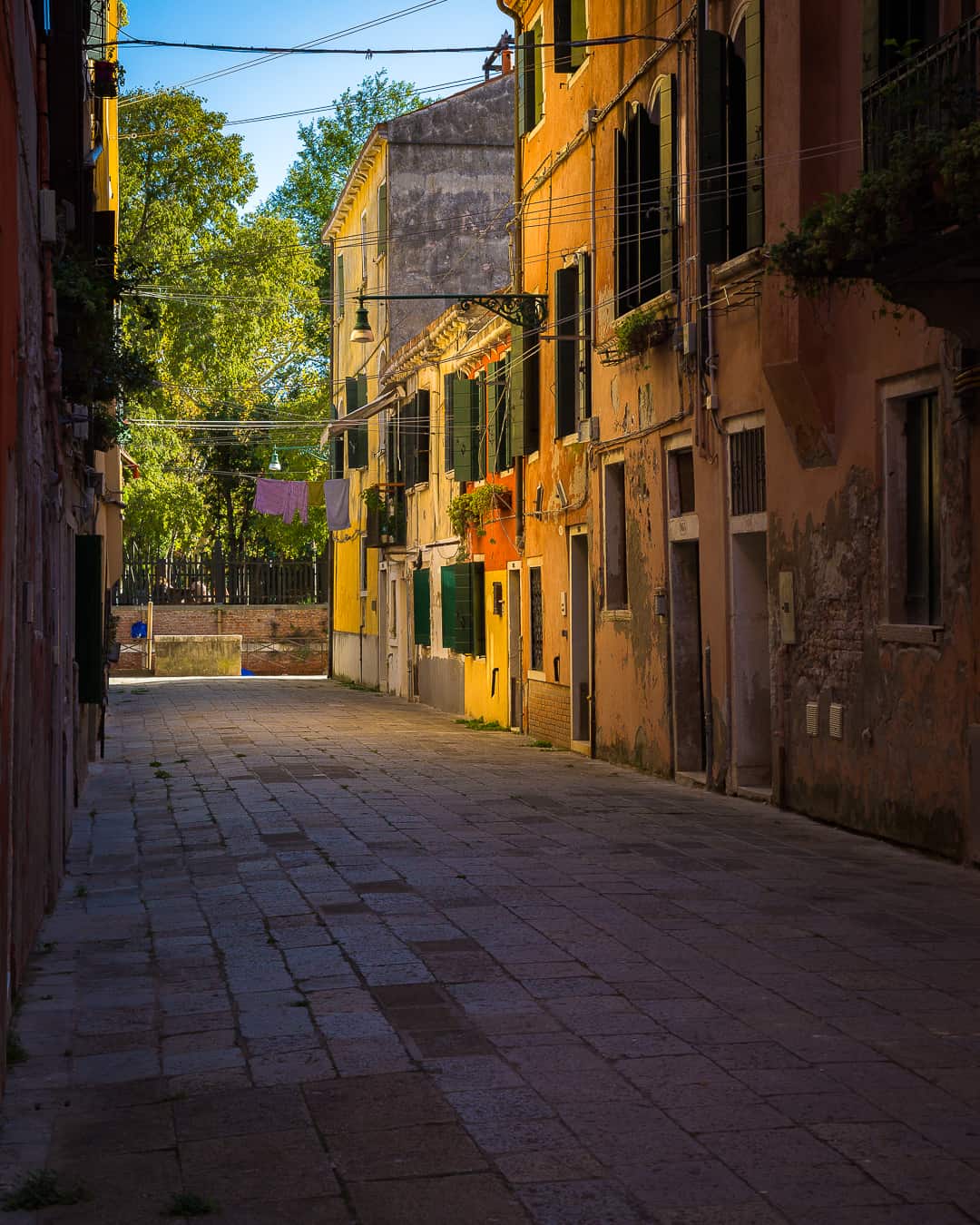
Dark and red washing, peeling walls, a potted plant. Away from the visitors’ routes, Venice is a city like any other: people work, hang out the washing, chat from the window.
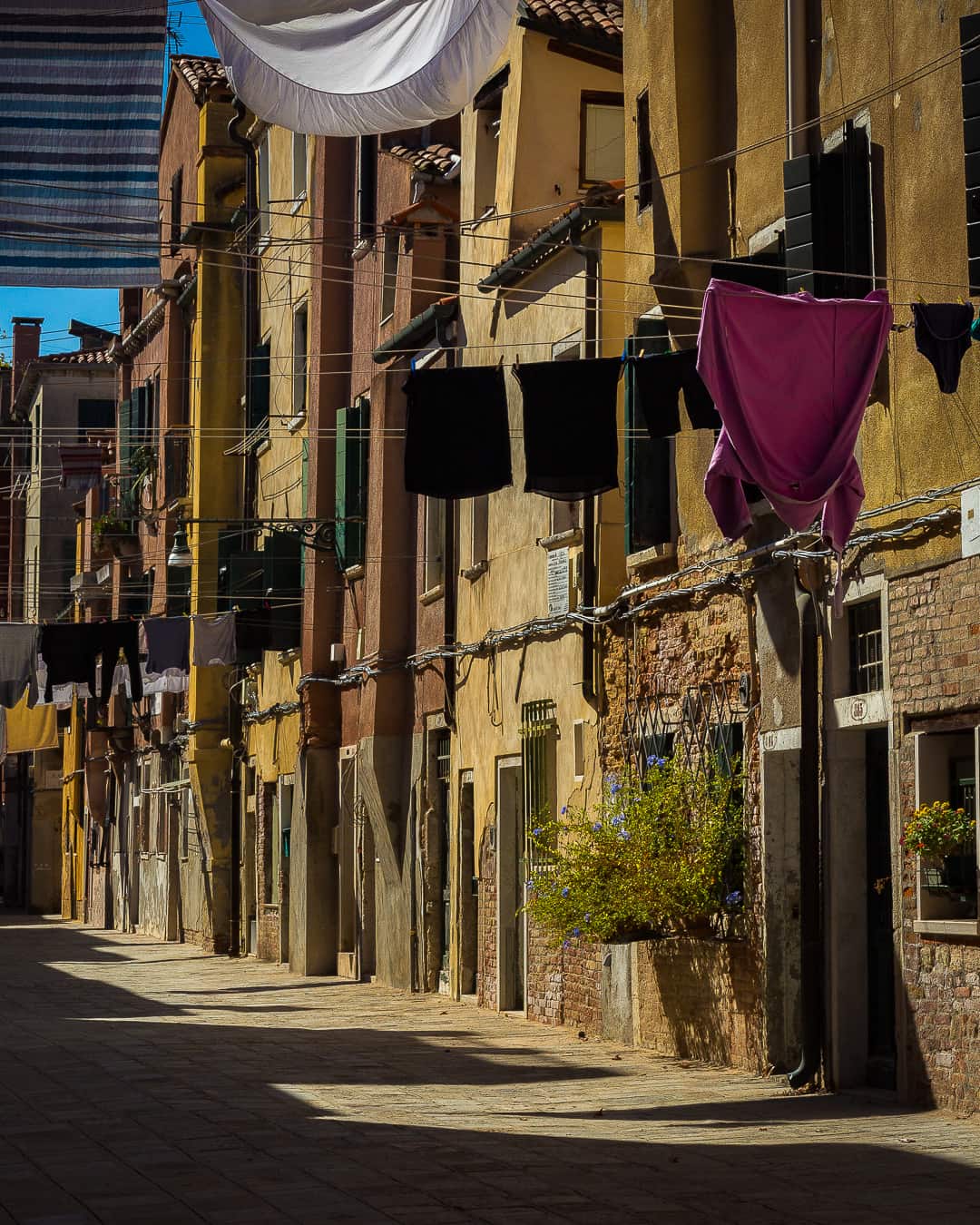
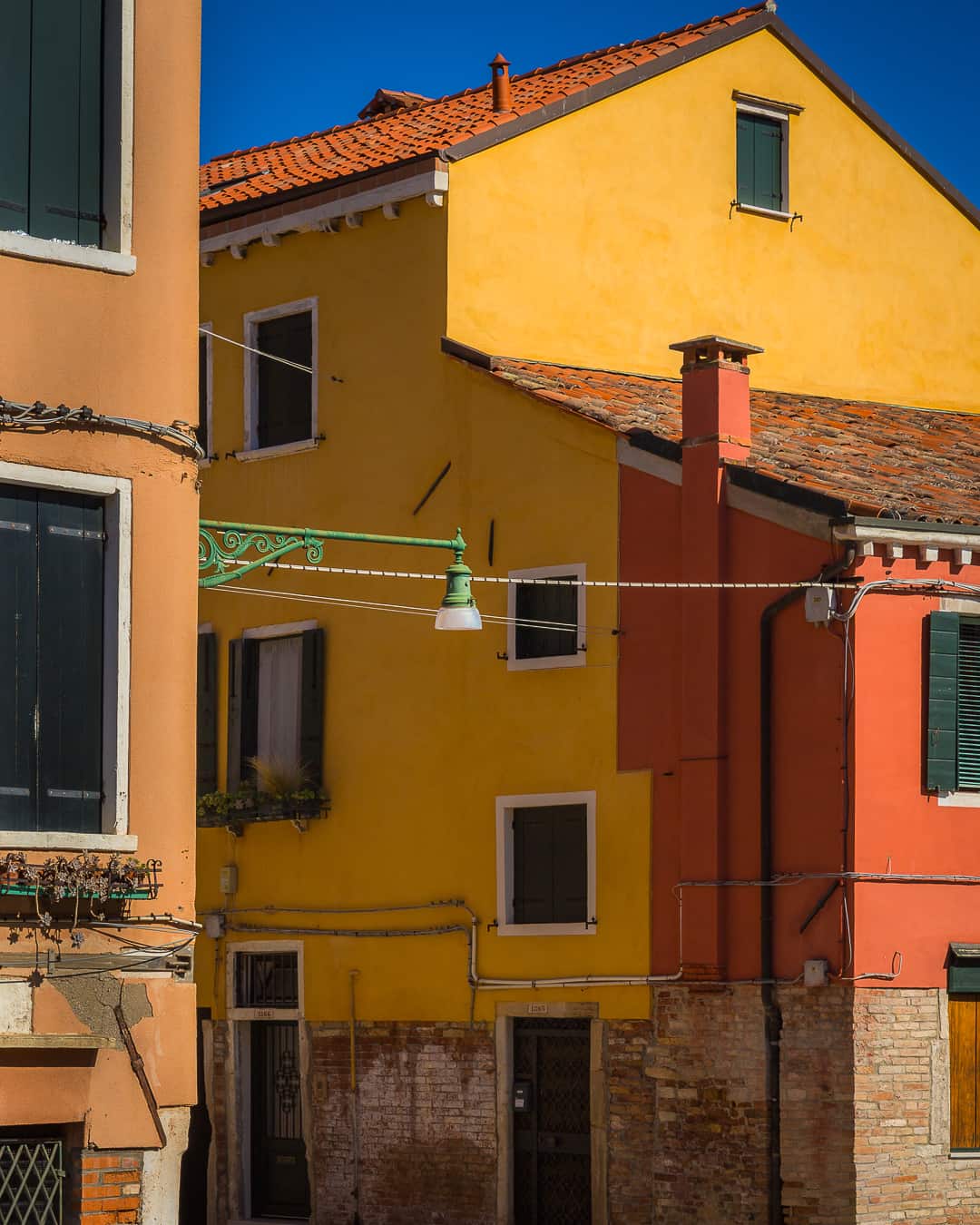
Sheets
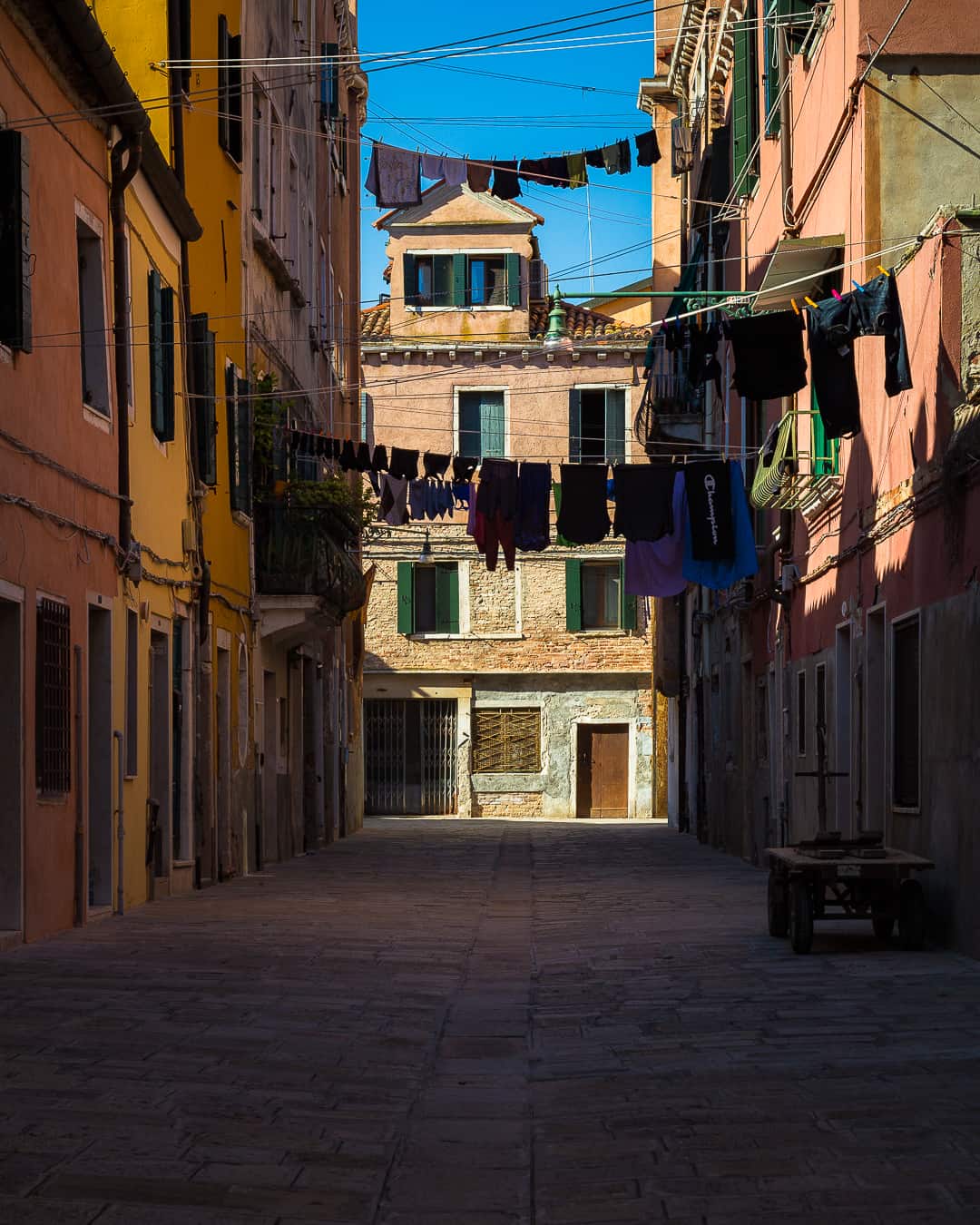
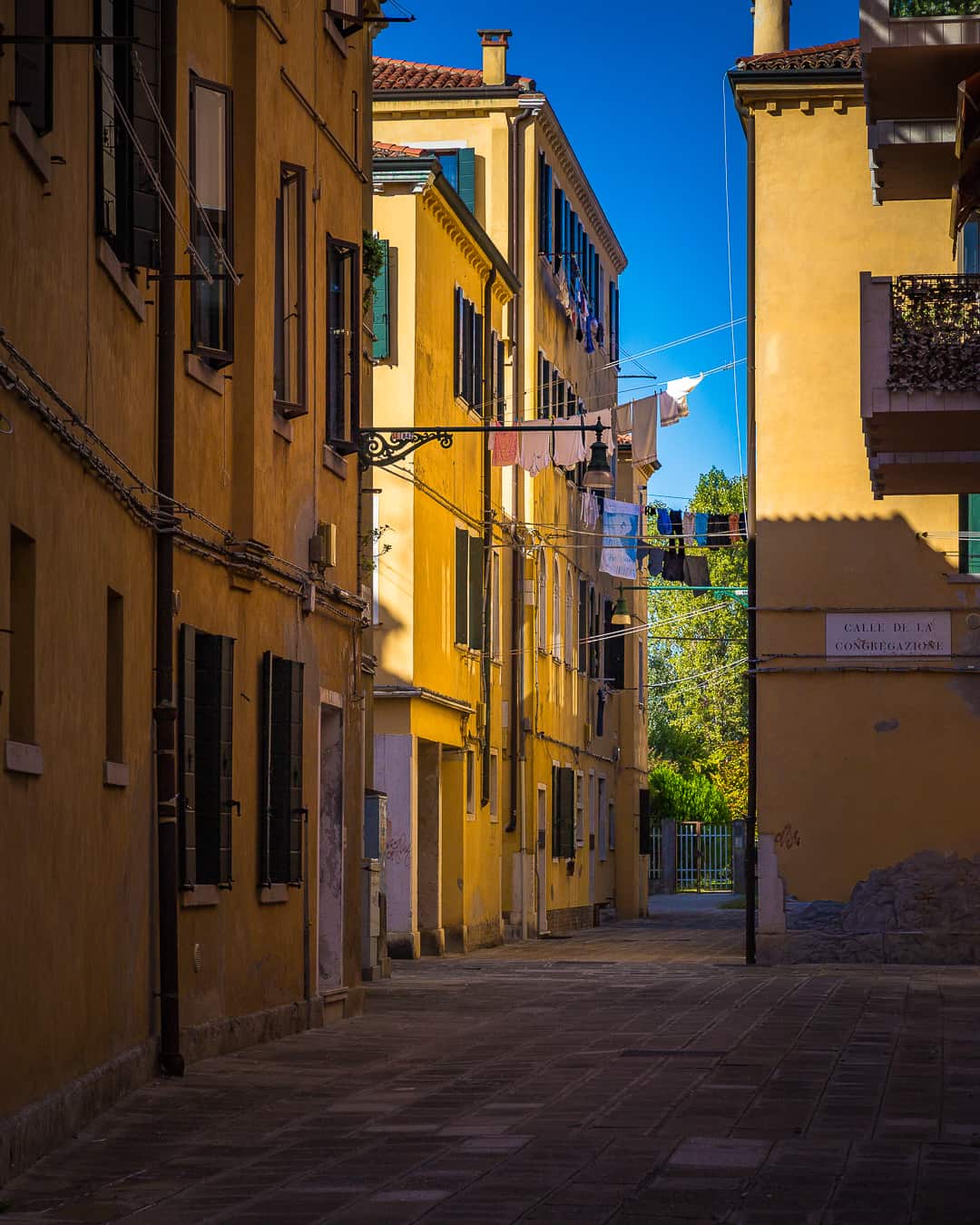
Sheets and shirts above the calle, light falling from above. In some calli the sun only reaches the ground at noon, and the washing waits up there, as high as it can go.
Flags
Washing as bright as flags, red and pink houses, a calle opening to the sky. You do not need to look for this Venice: just step away from the busiest streets.
III
The campi
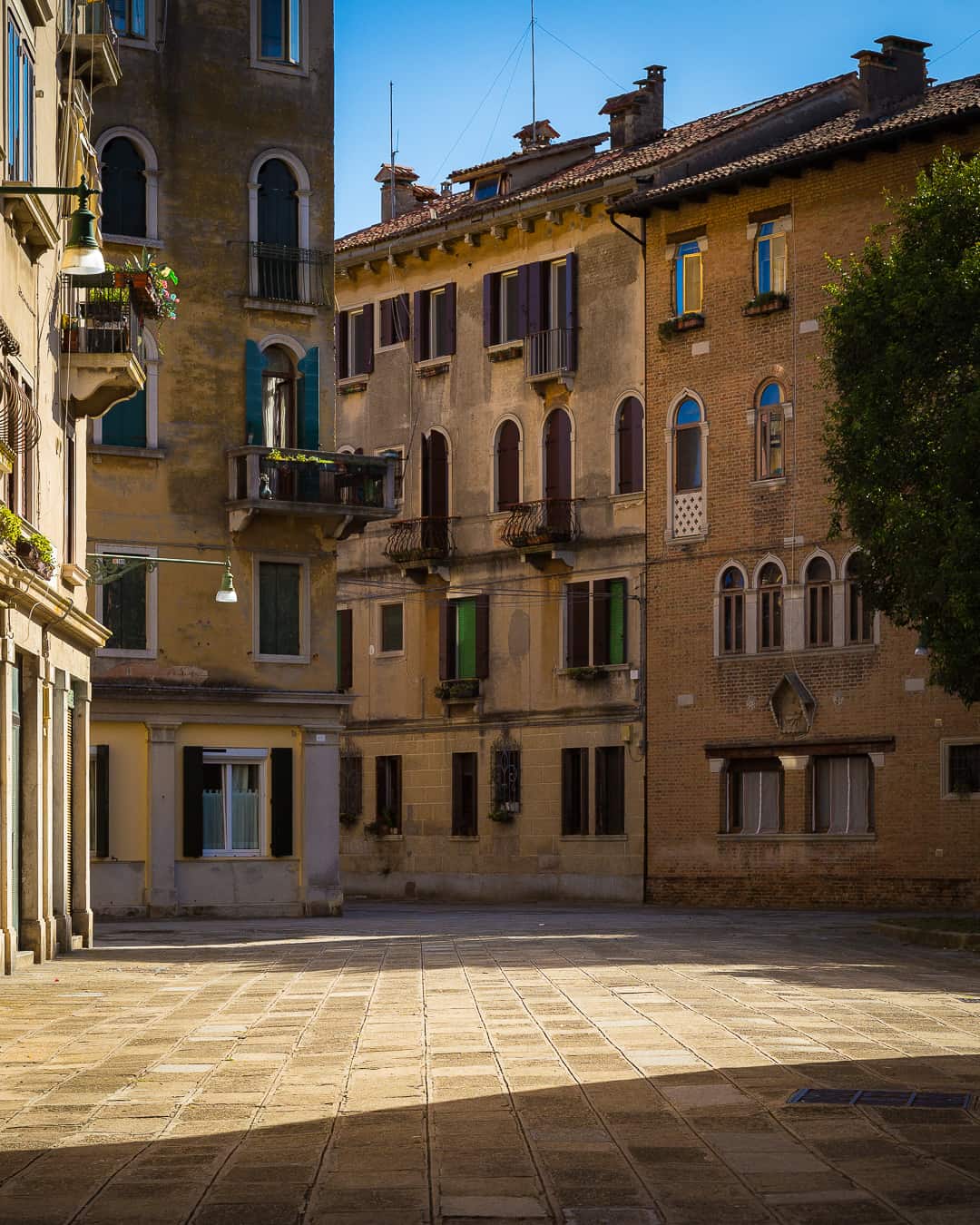
They say Venice has only one piazza, St Mark’s: all the other squares are called campi. They were once meadows and vegetable plots, hence the name.
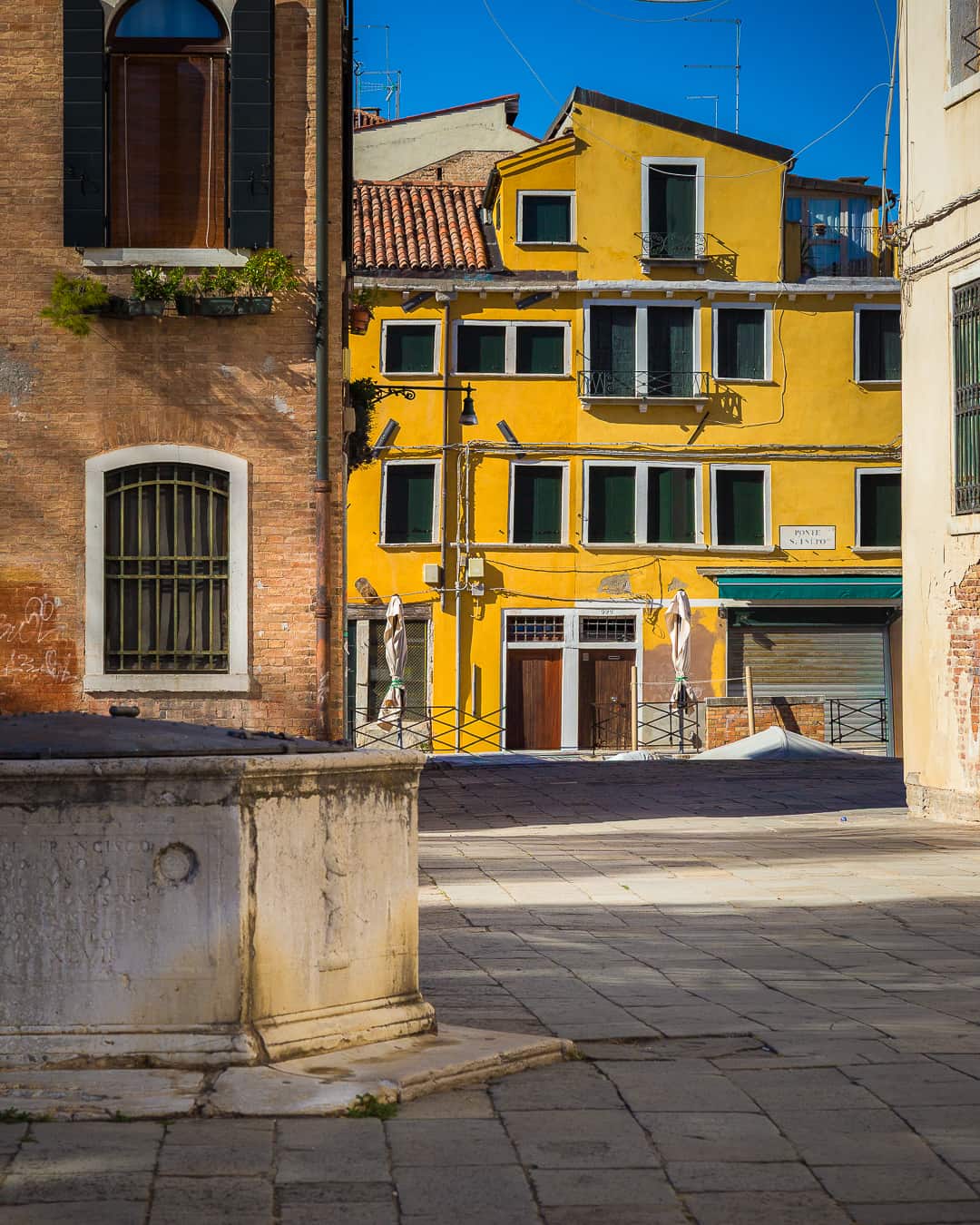
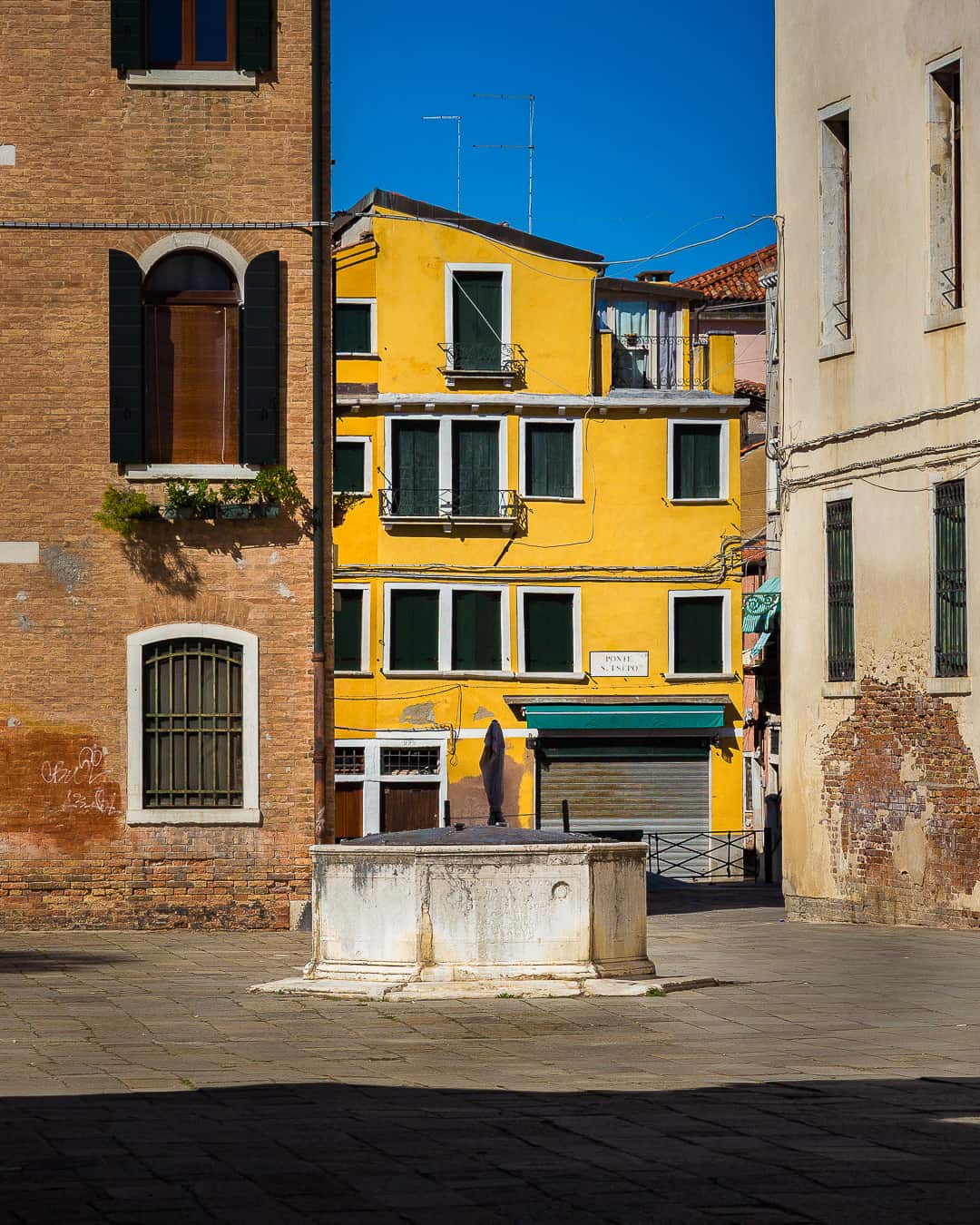
In the middle there is often a wellhead. Beneath the paving, a cistern collected and filtered rainwater: surrounded by water, Venice had no water to drink.
The well
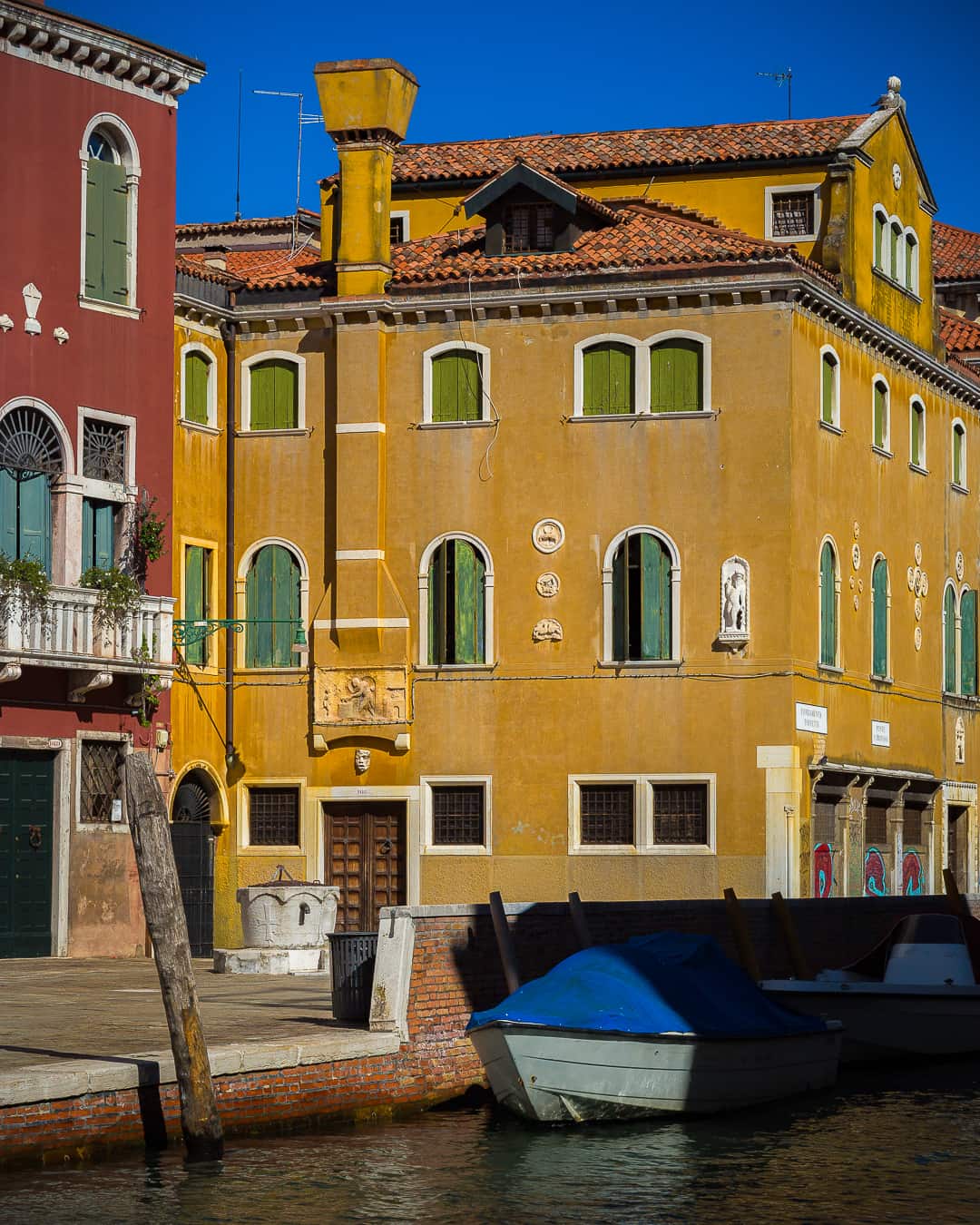
A stone wellhead, a yellow house, a sunny campo. Beneath the well lies a large sand-filled cistern: rain came in through drains called gatoi, was filtered, and collected at the bottom.
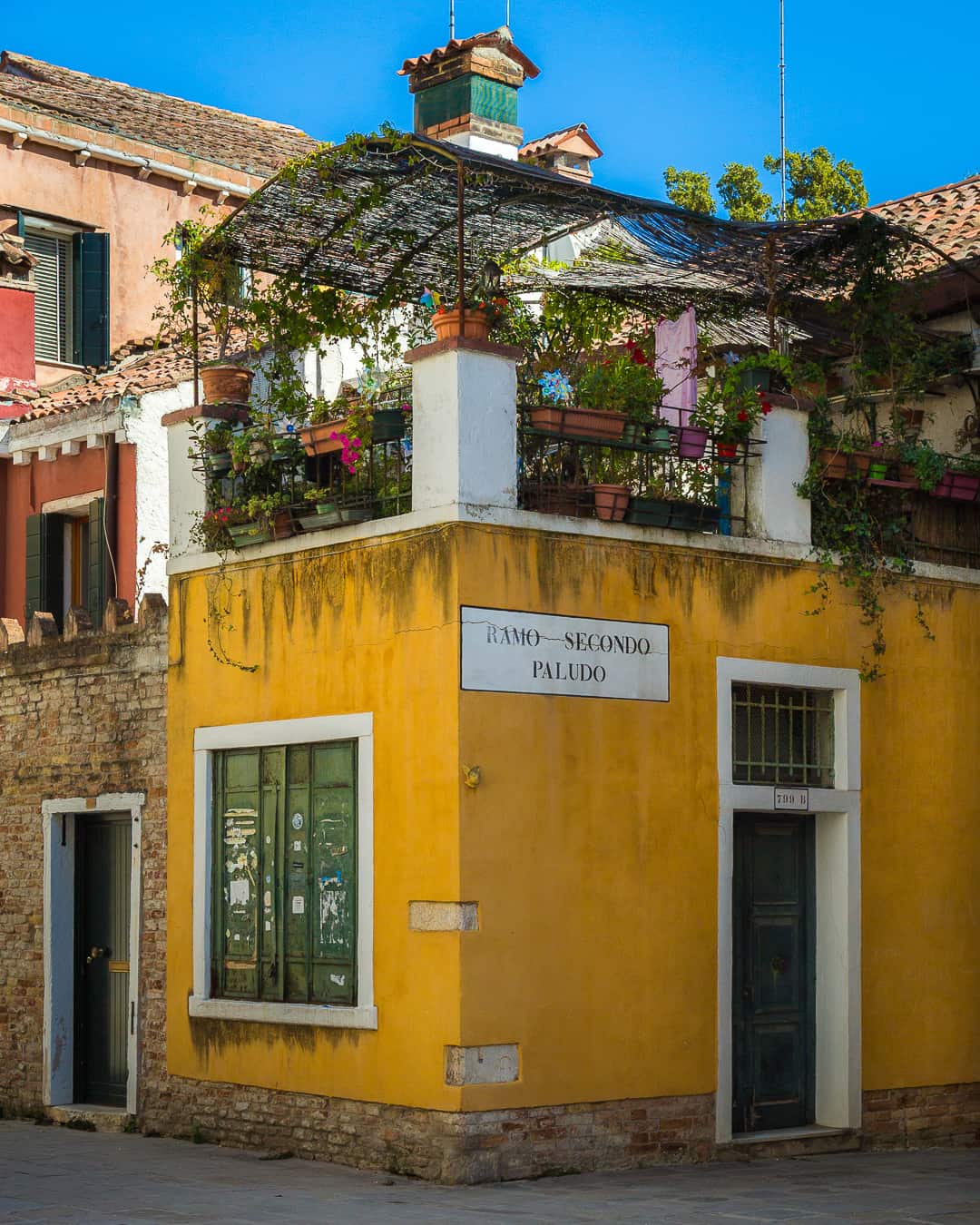
The palazzo on the campo
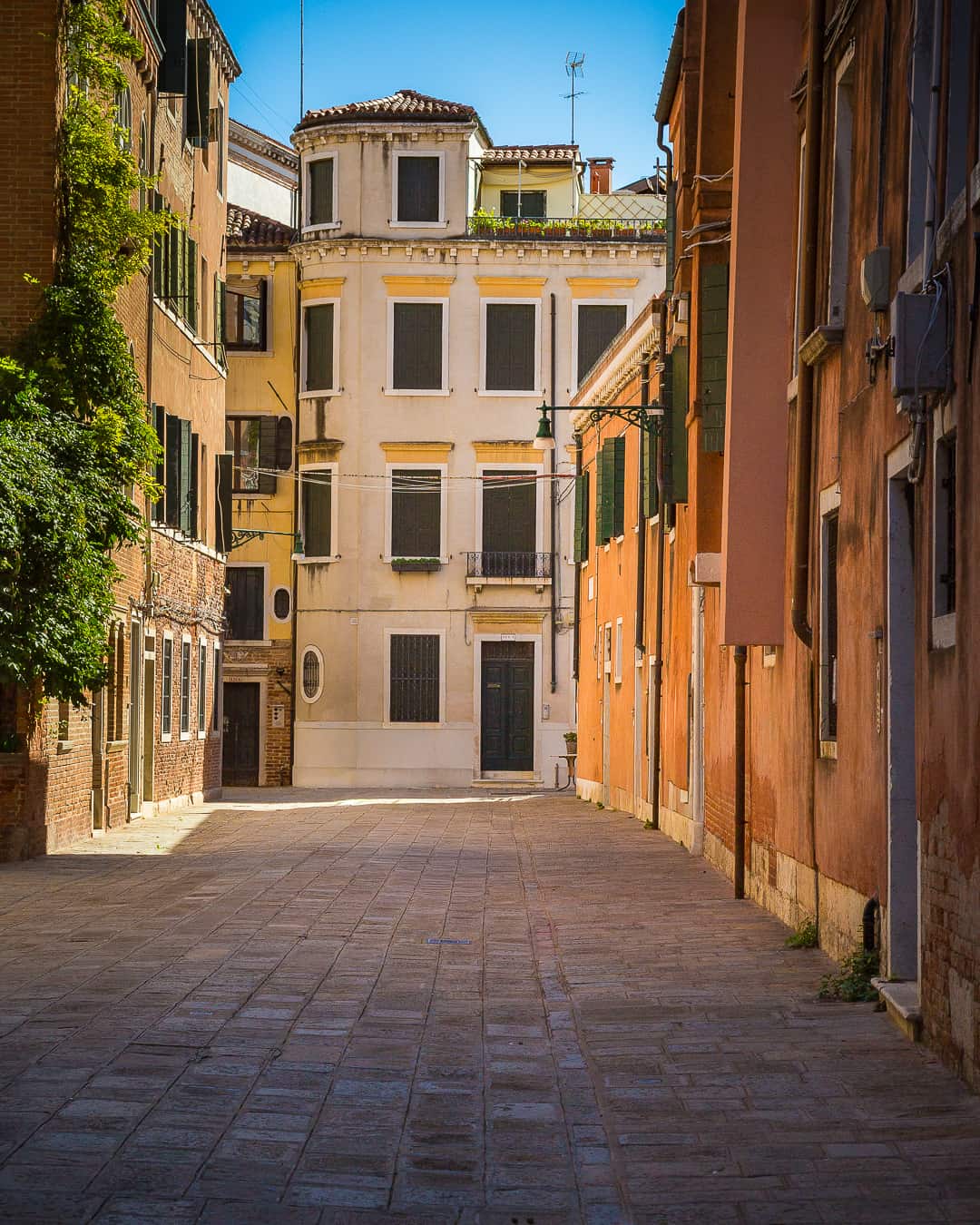
A yellow façade with arched windows, an empty campo in the early morning. Palazzi and houses, churches and shops all face onto the campi: they are each neighbourhood’s living room.
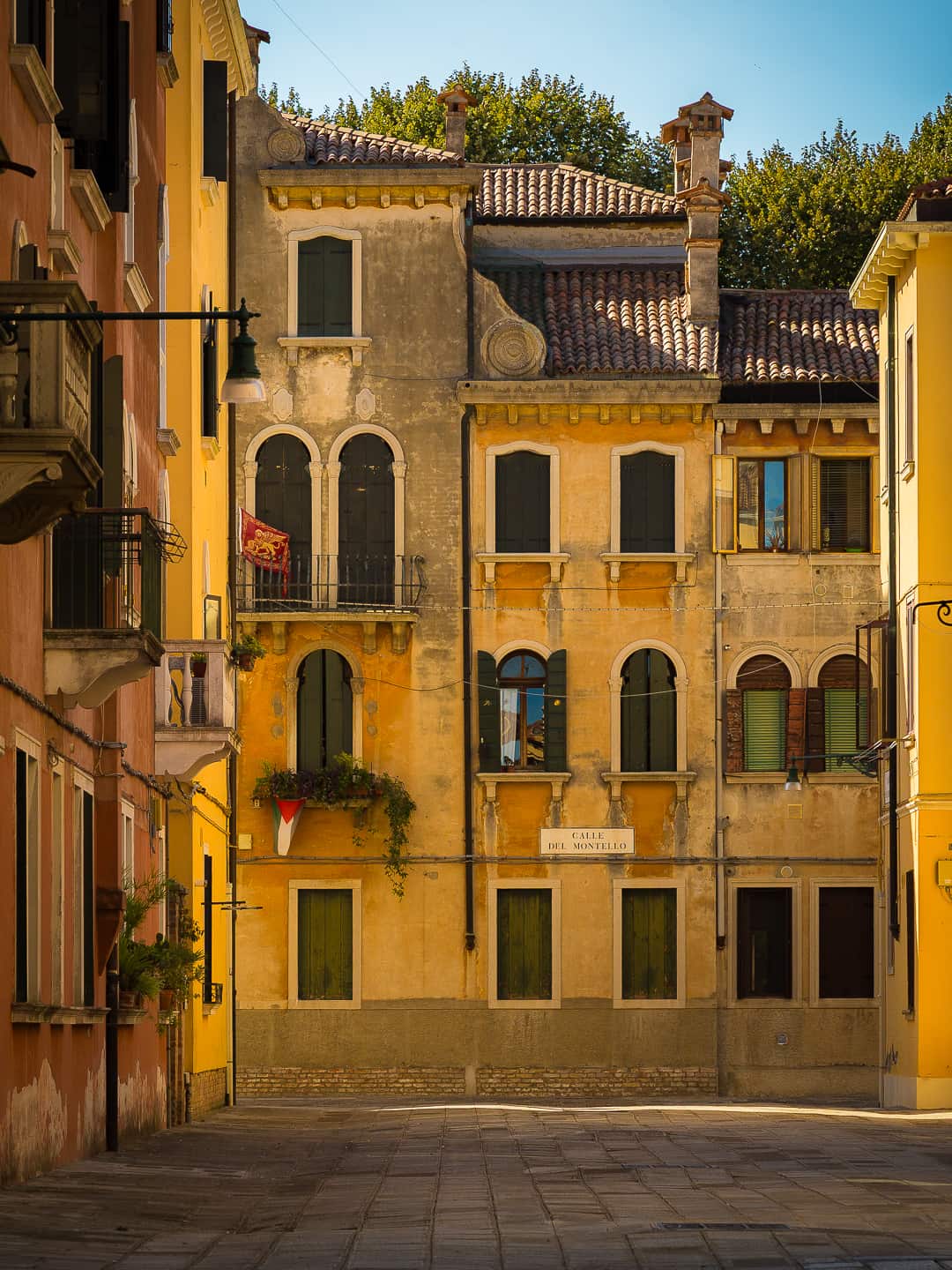
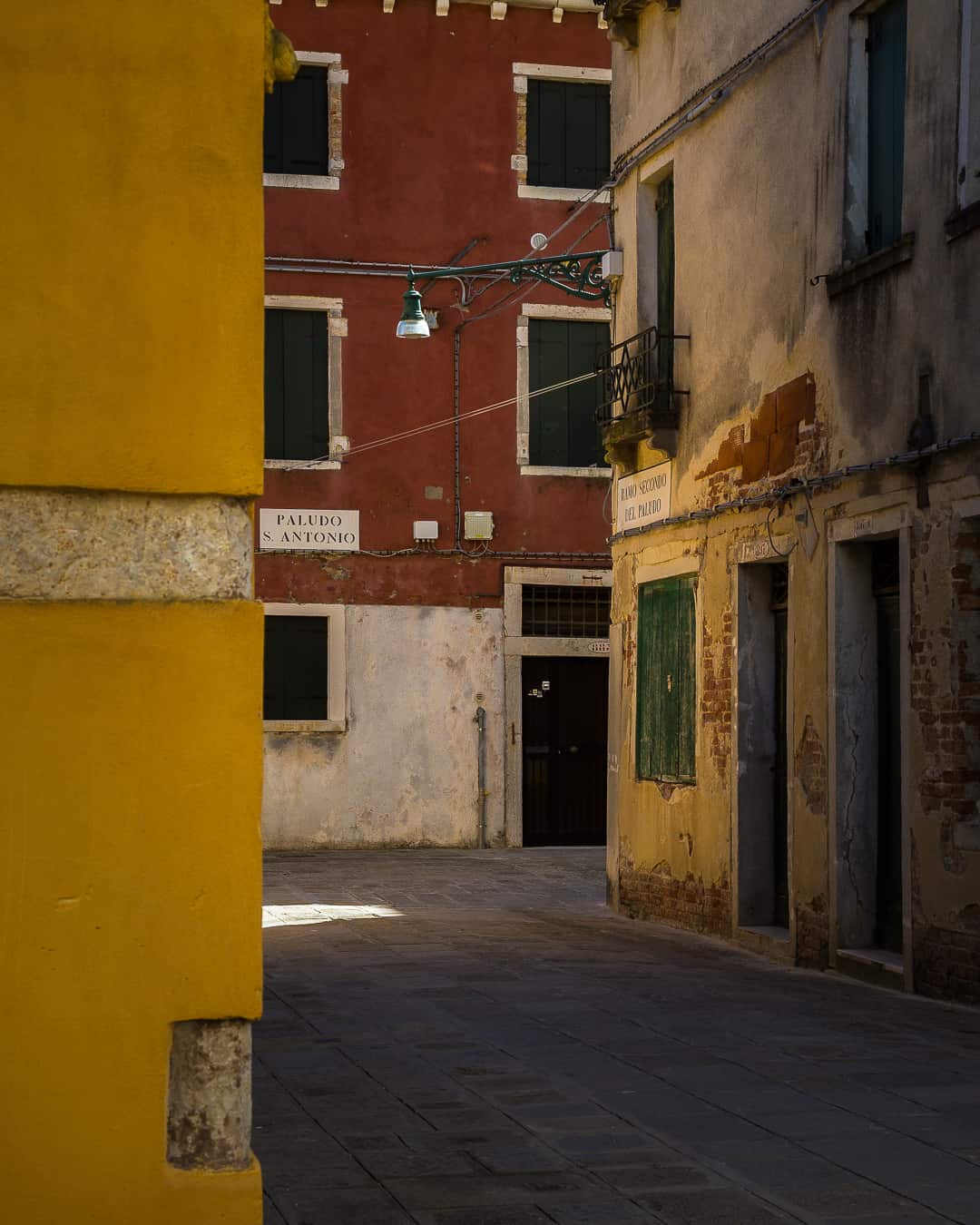
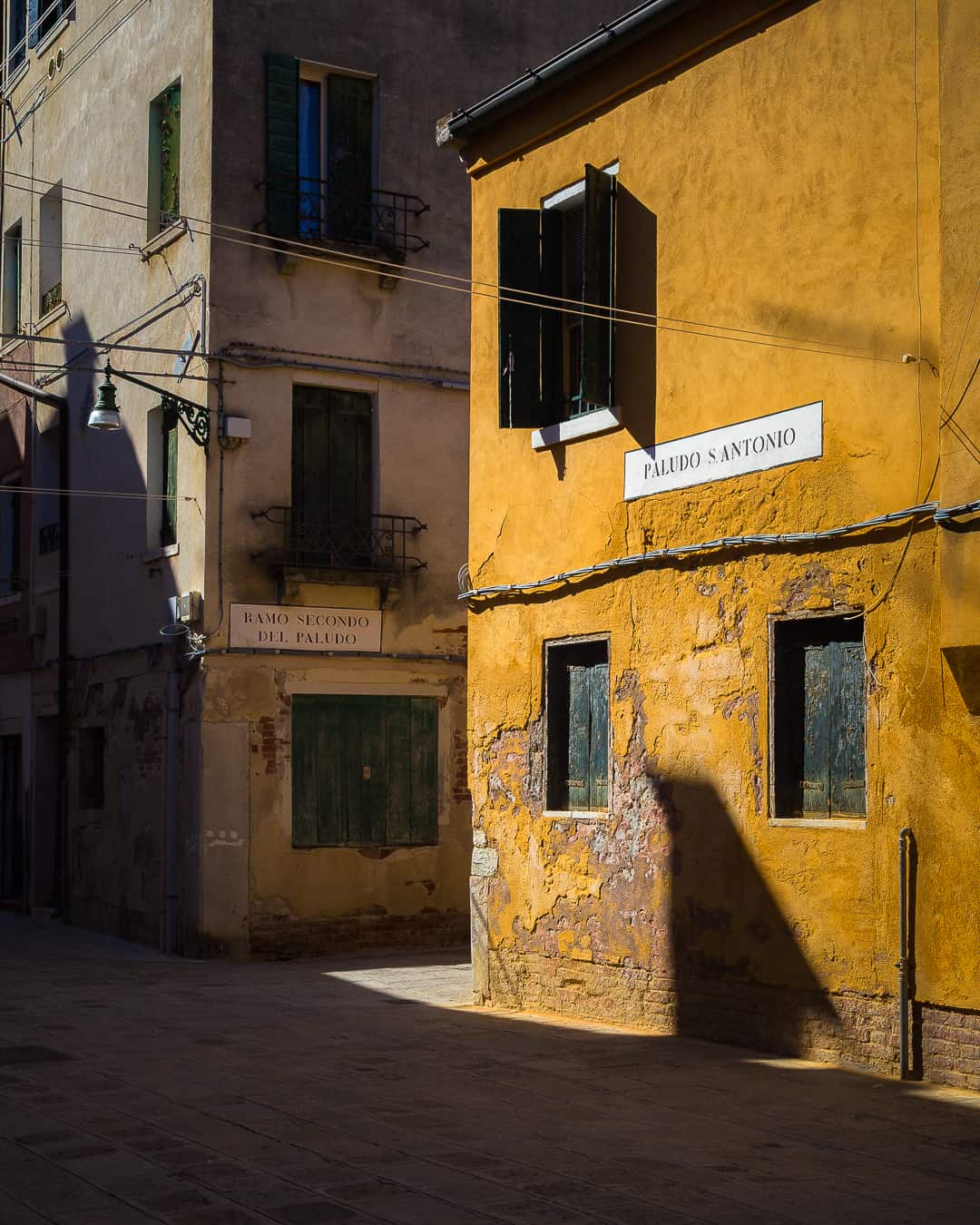
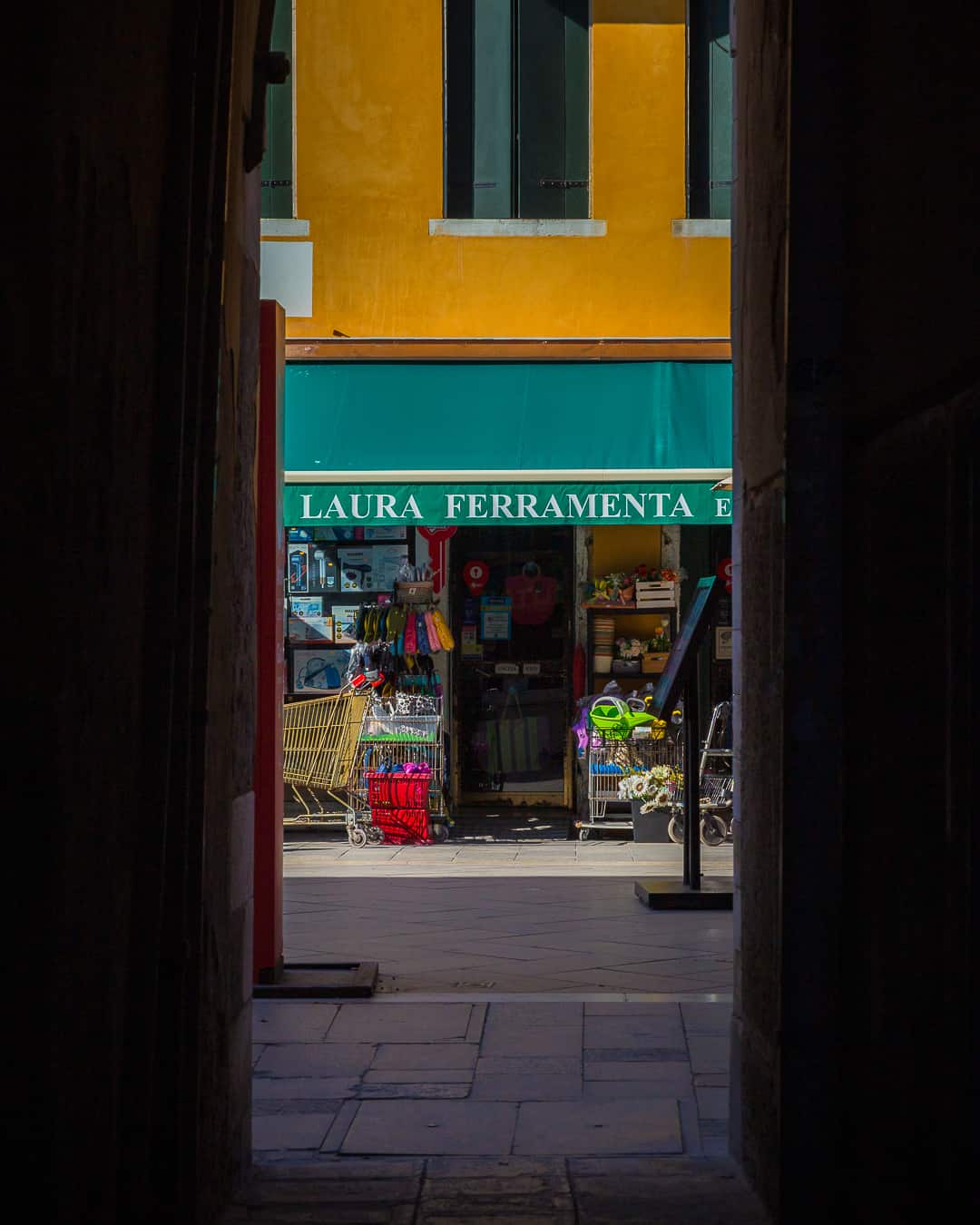
The hardware shop
Beyond a dark passage, the window of a hardware shop crammed with things. Venice needs nails, buckets and brooms too: shops like this tell the story of the people who live here.
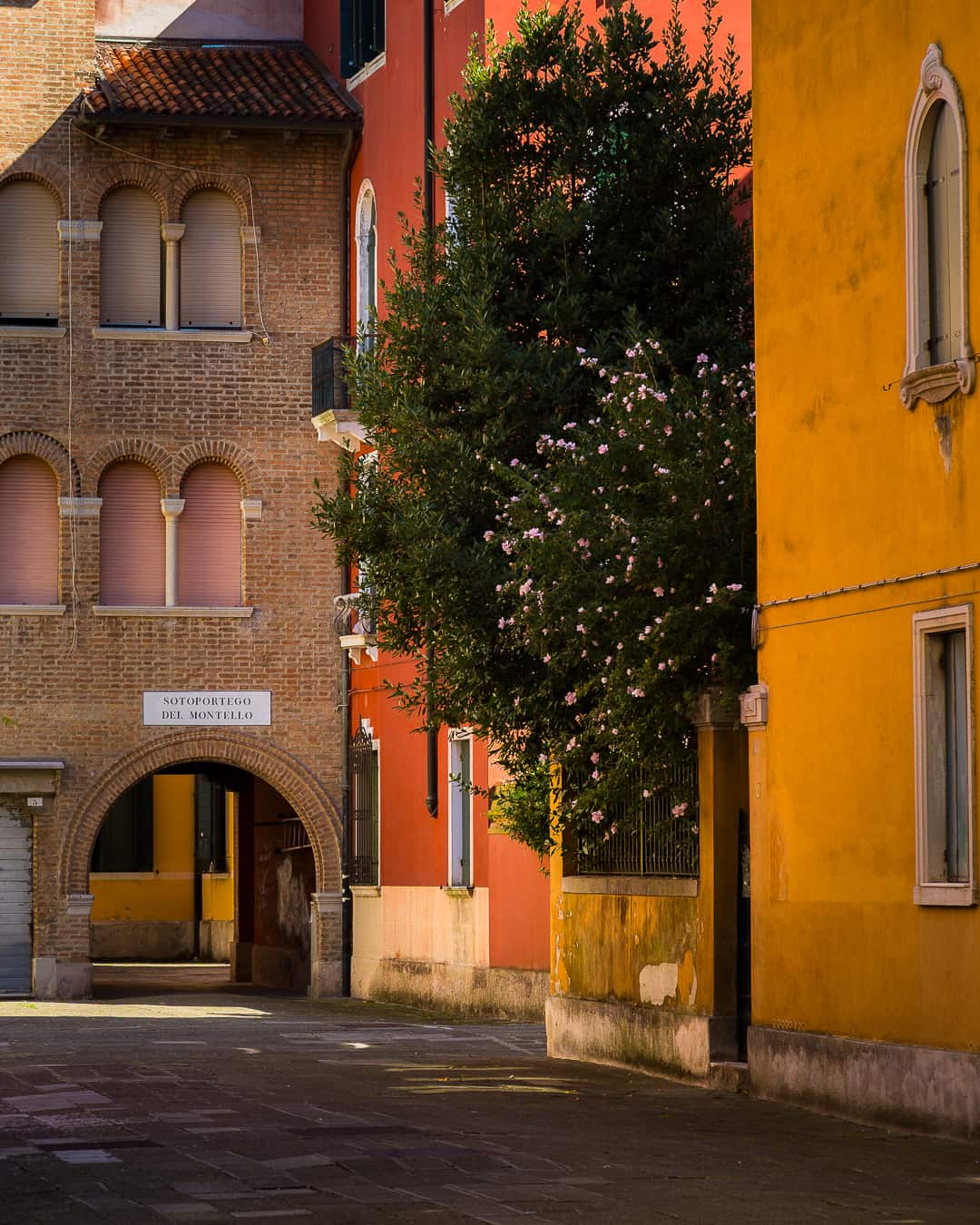
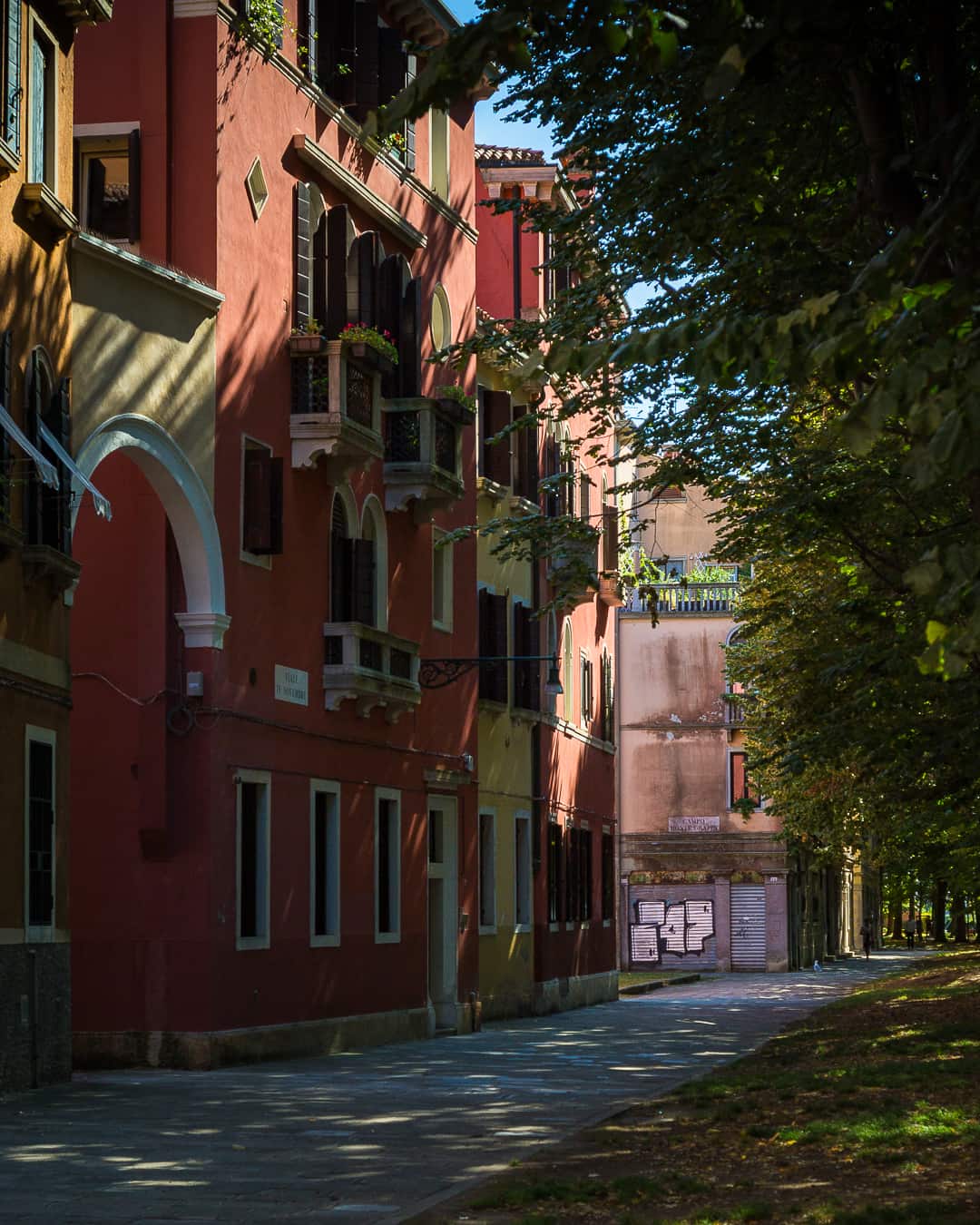
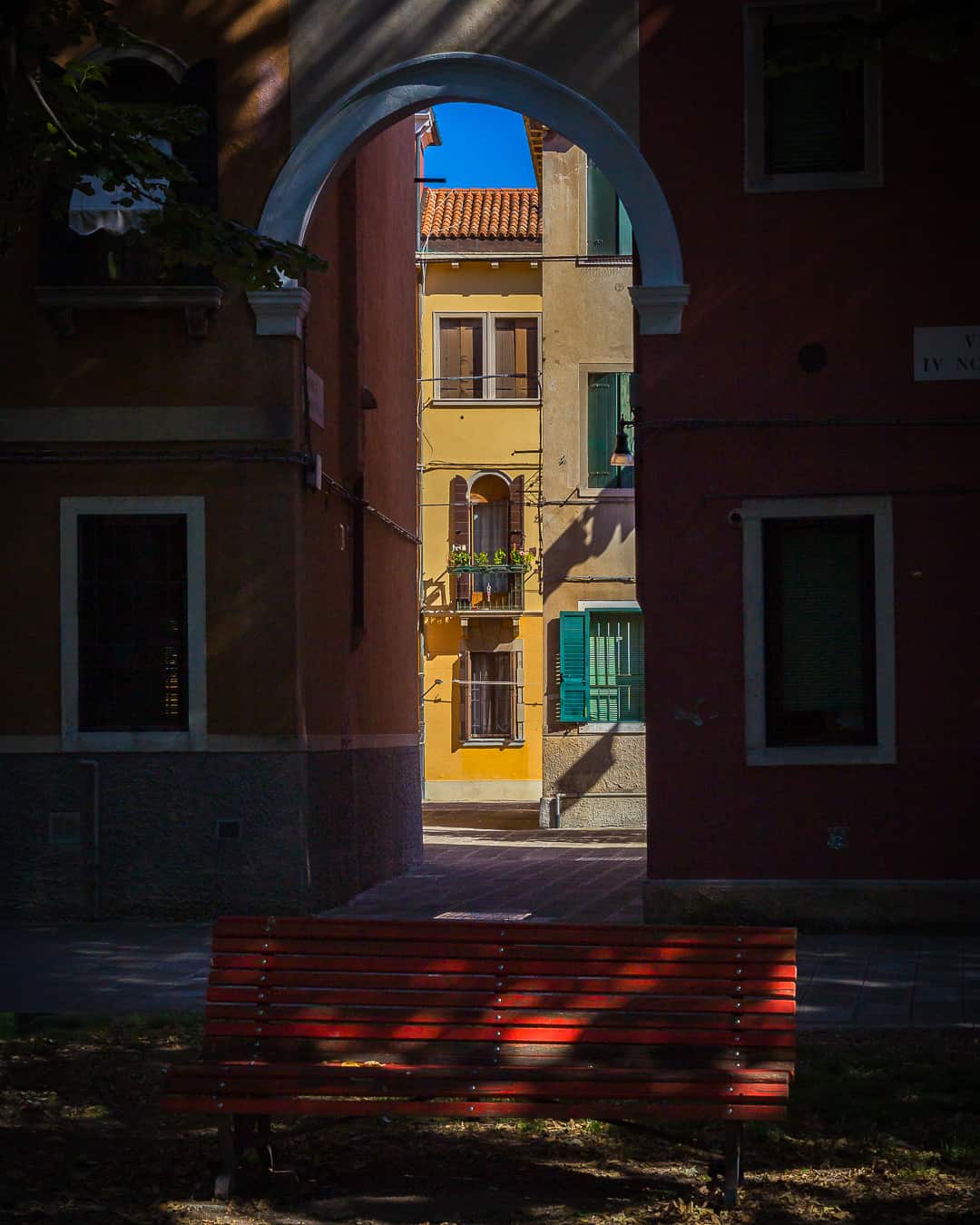
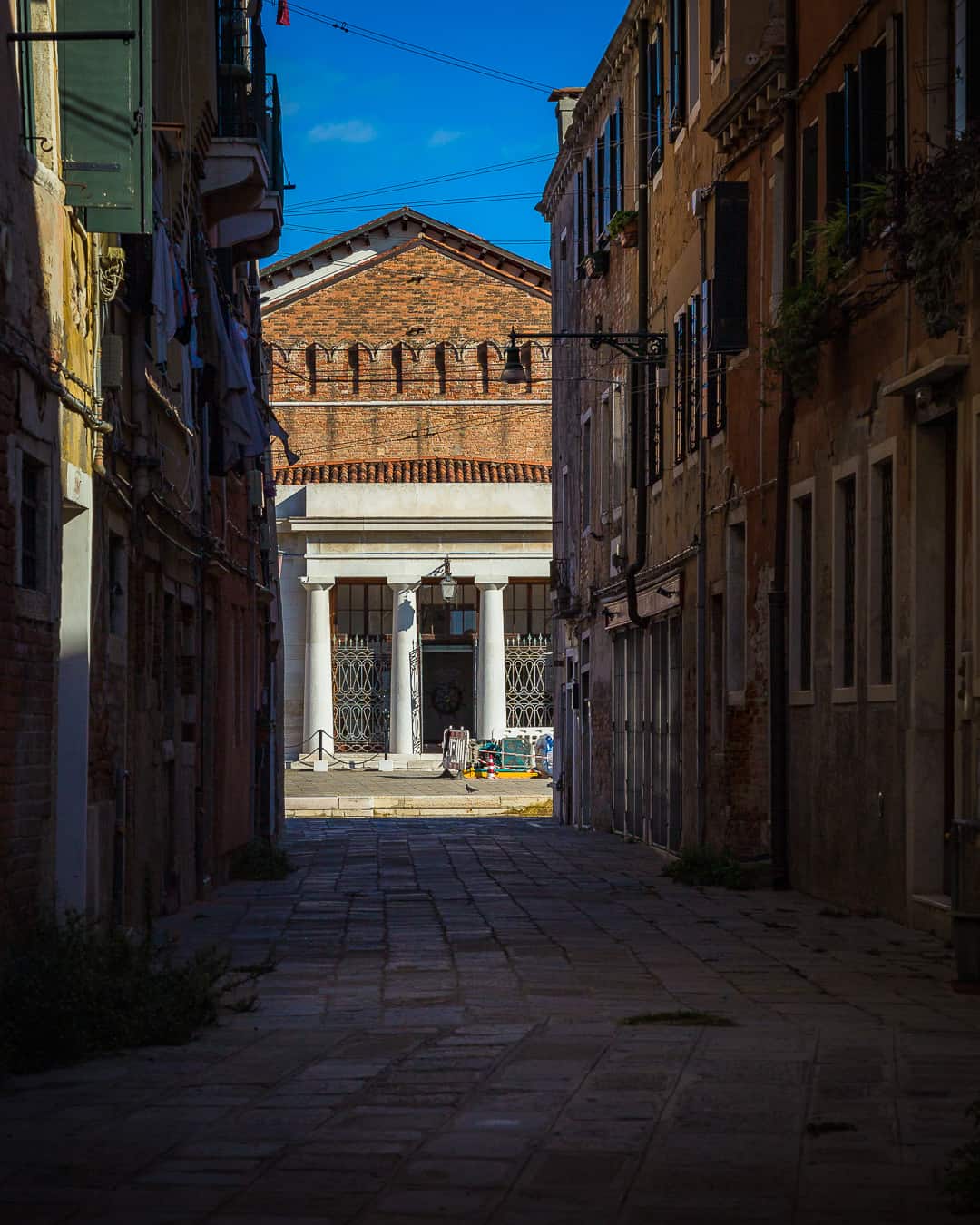
The church at the end
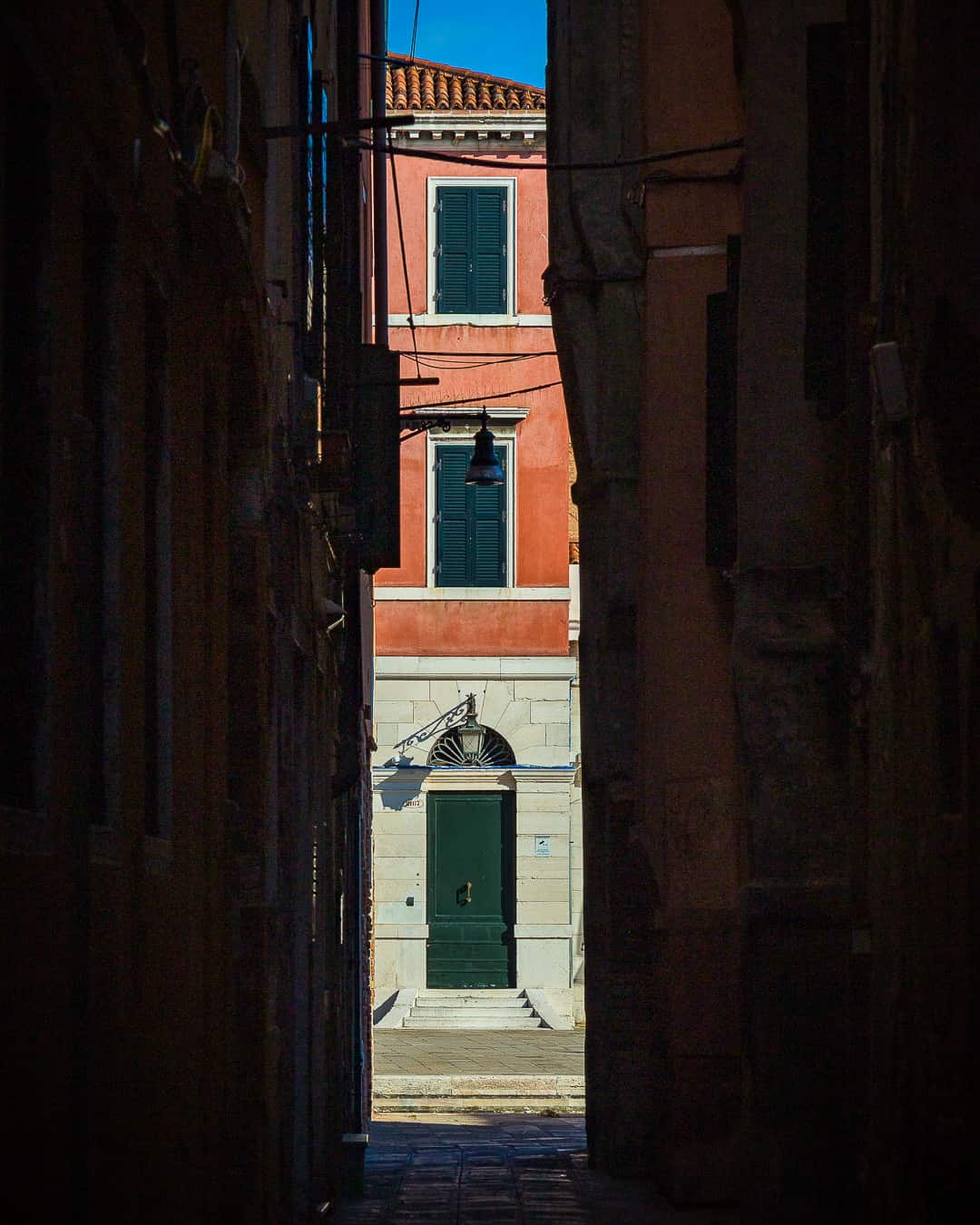
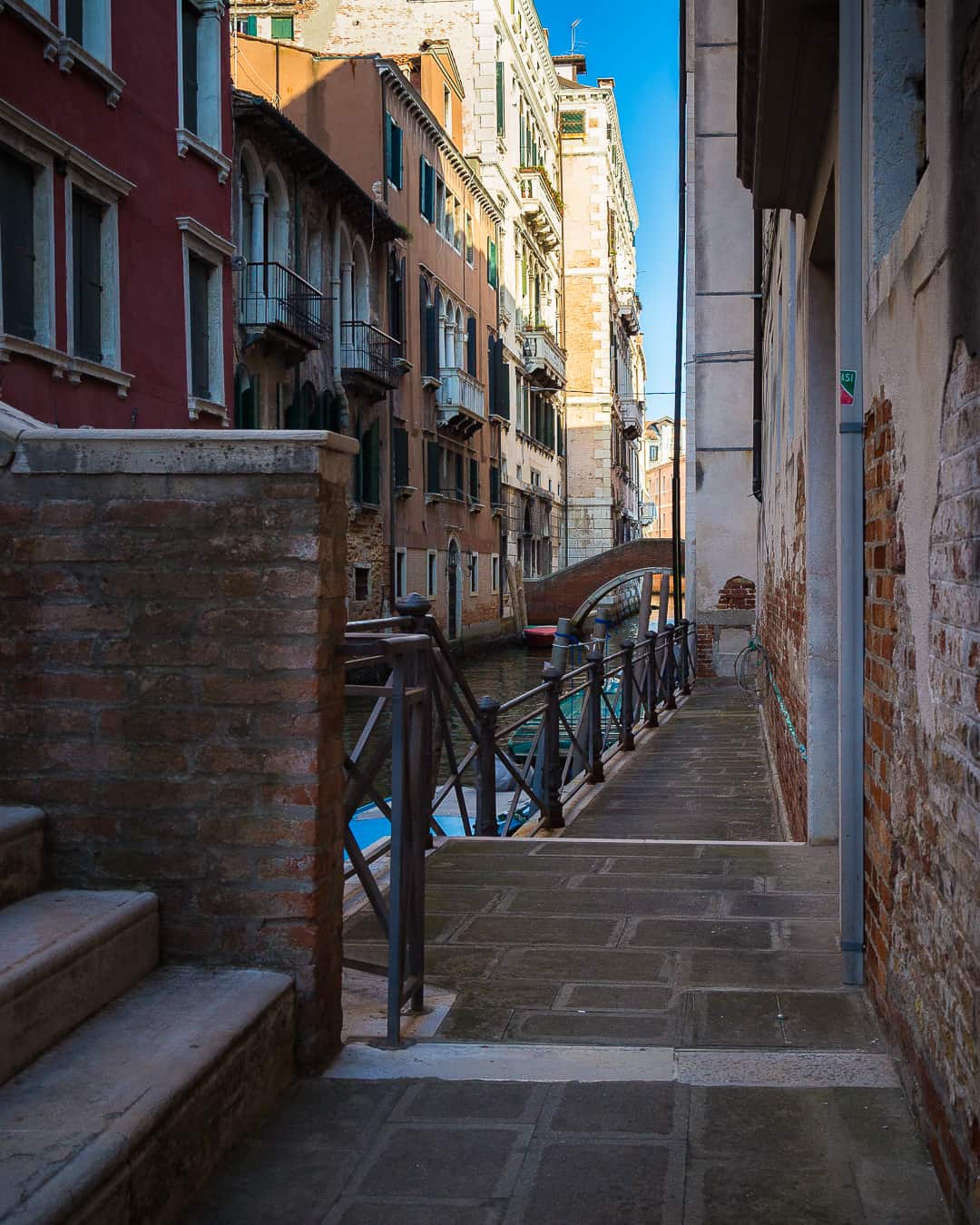
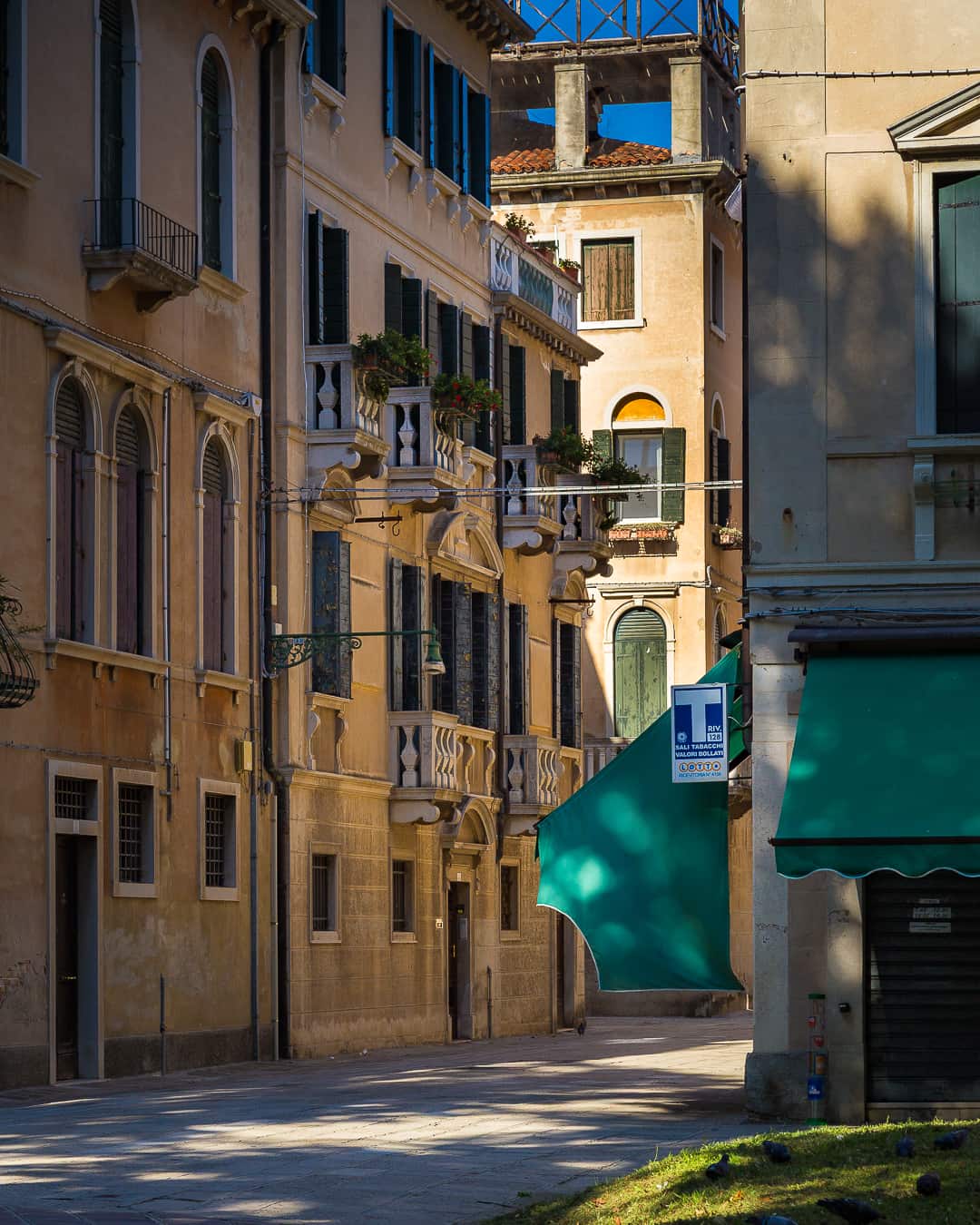
A shaded calle ending at a church with white columns. This is how you walk in Venice, from one vista to the next, until the calle opens into a campo.
IV
The rii
The smallest canals are called rii. Along their banks run the fondamenta, the stone quays the houses face onto.
Boats are moored outside the front door, the way cars are elsewhere.
The city stands on wooden piles driven into the mud of the lagoon: over time, some bell towers have started to lean.
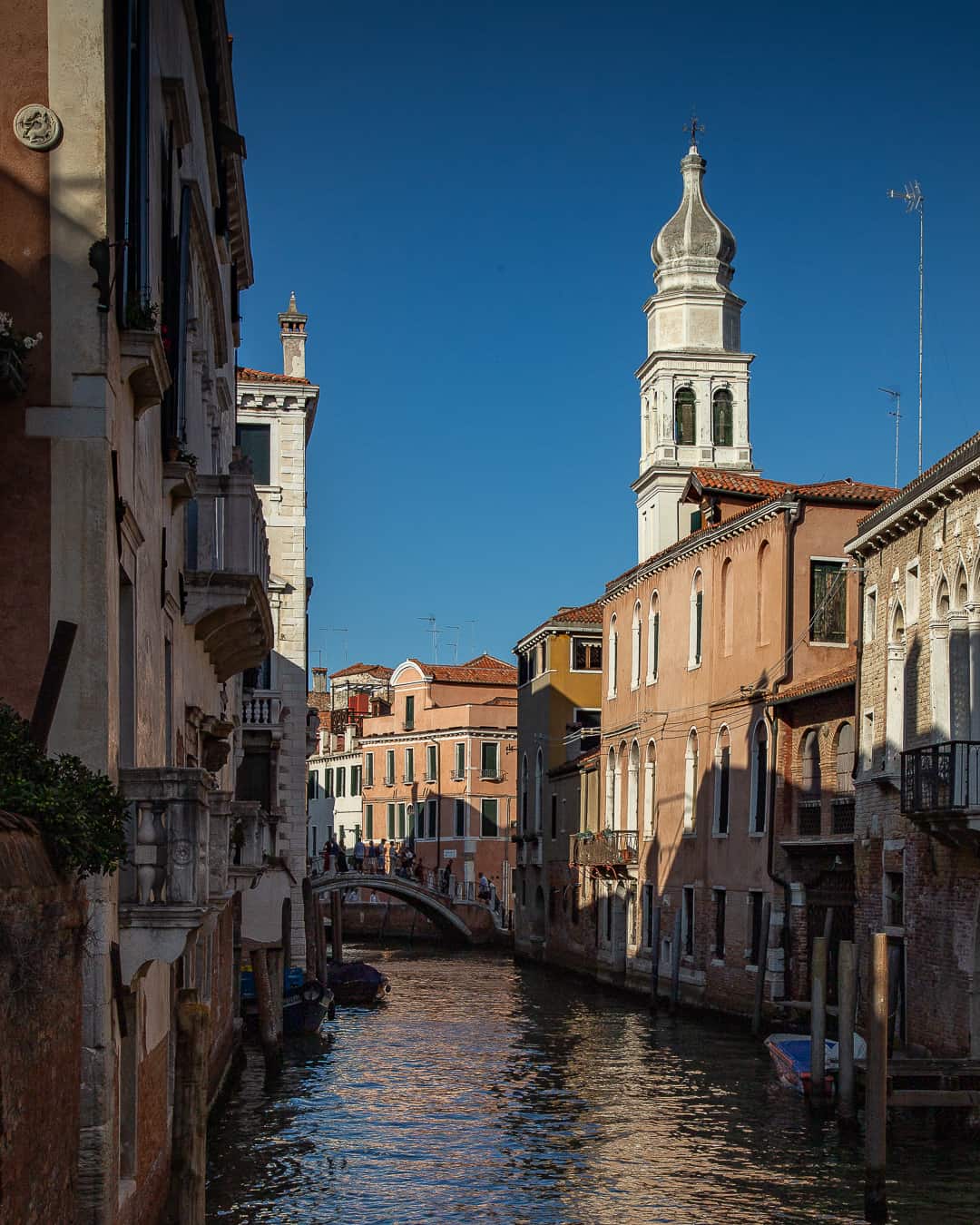
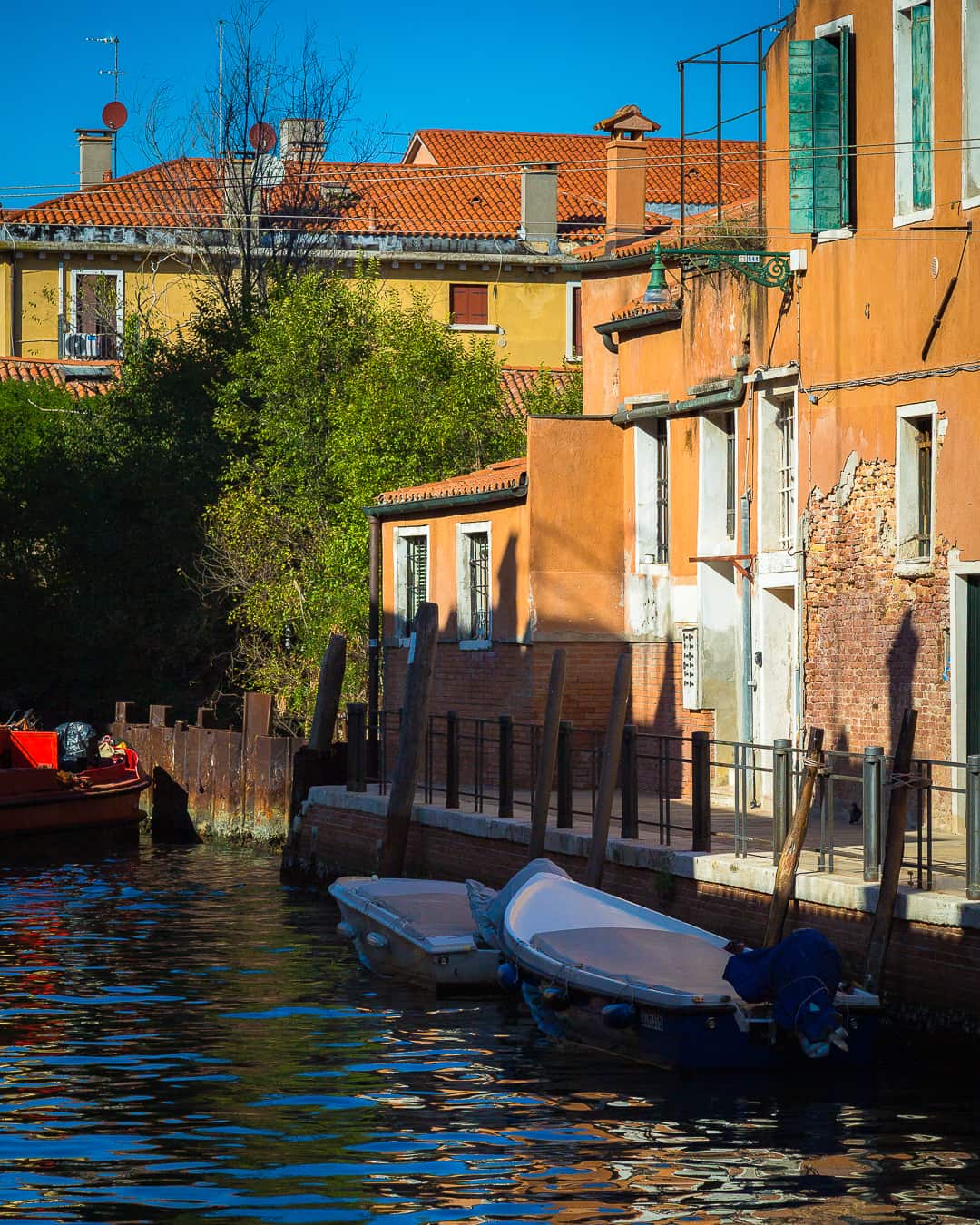
Boats at the door
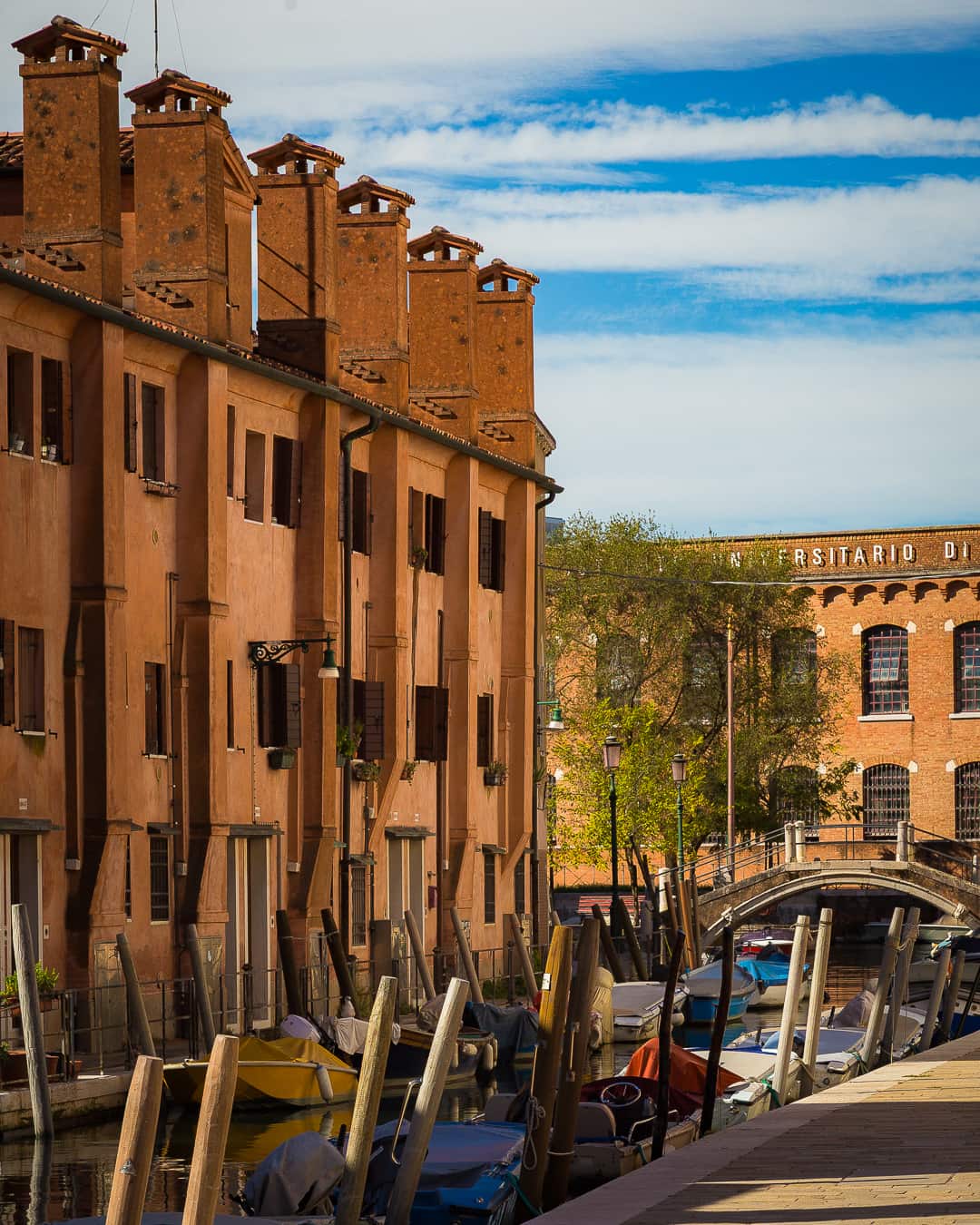
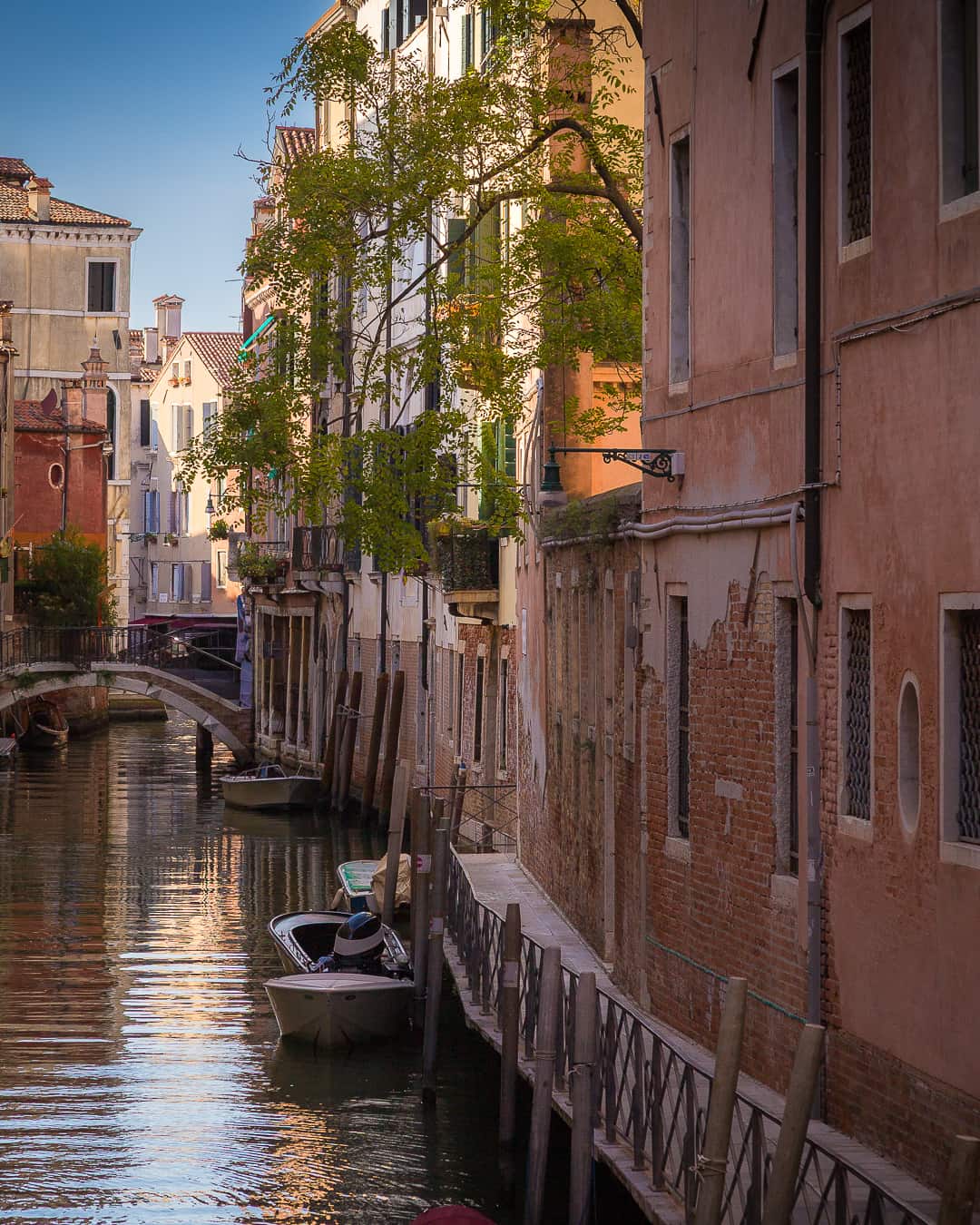
White boats moored along the rio, orange houses, a tree over the wall. Here the boat is the family car: you park it outside and leave by the side door.
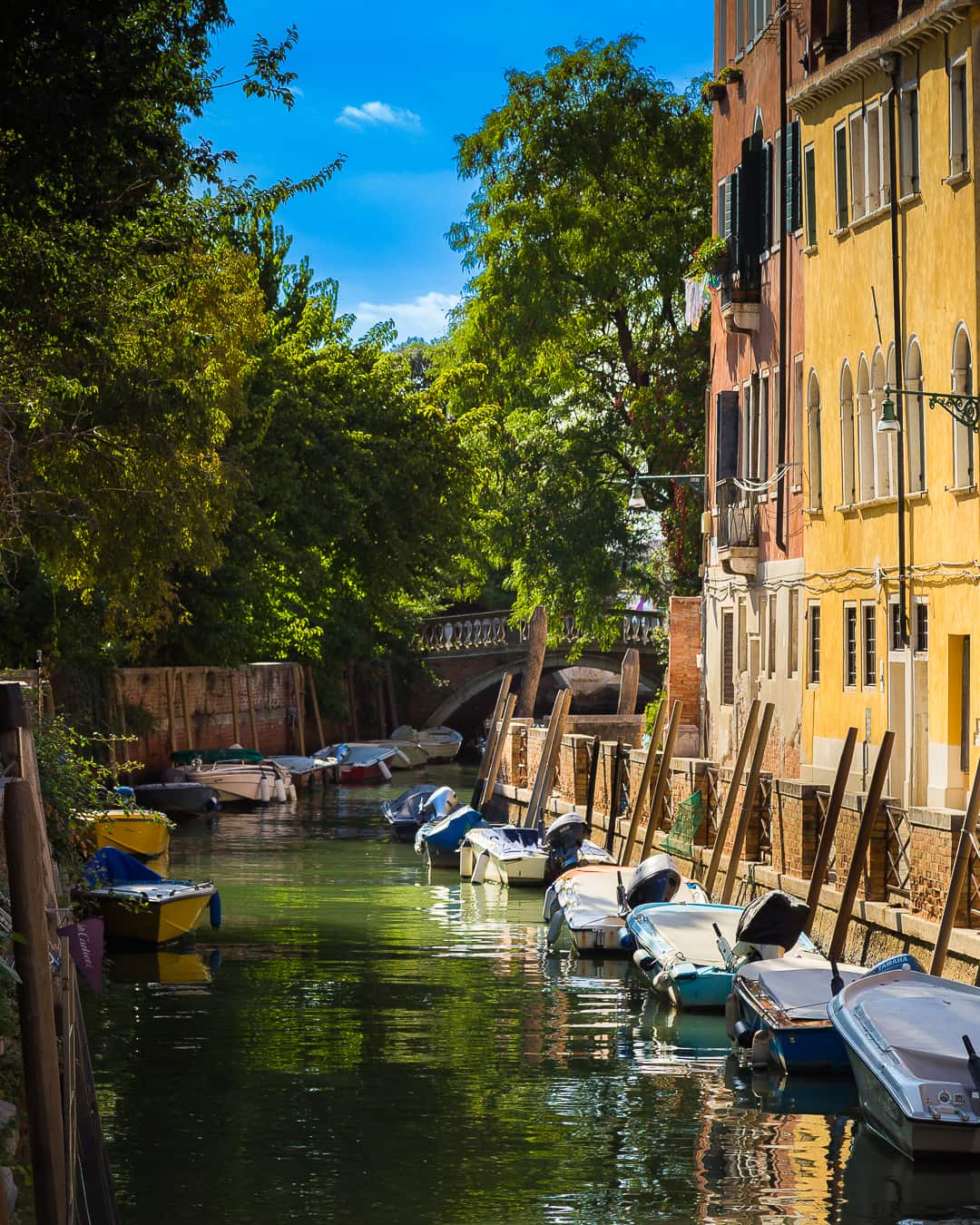
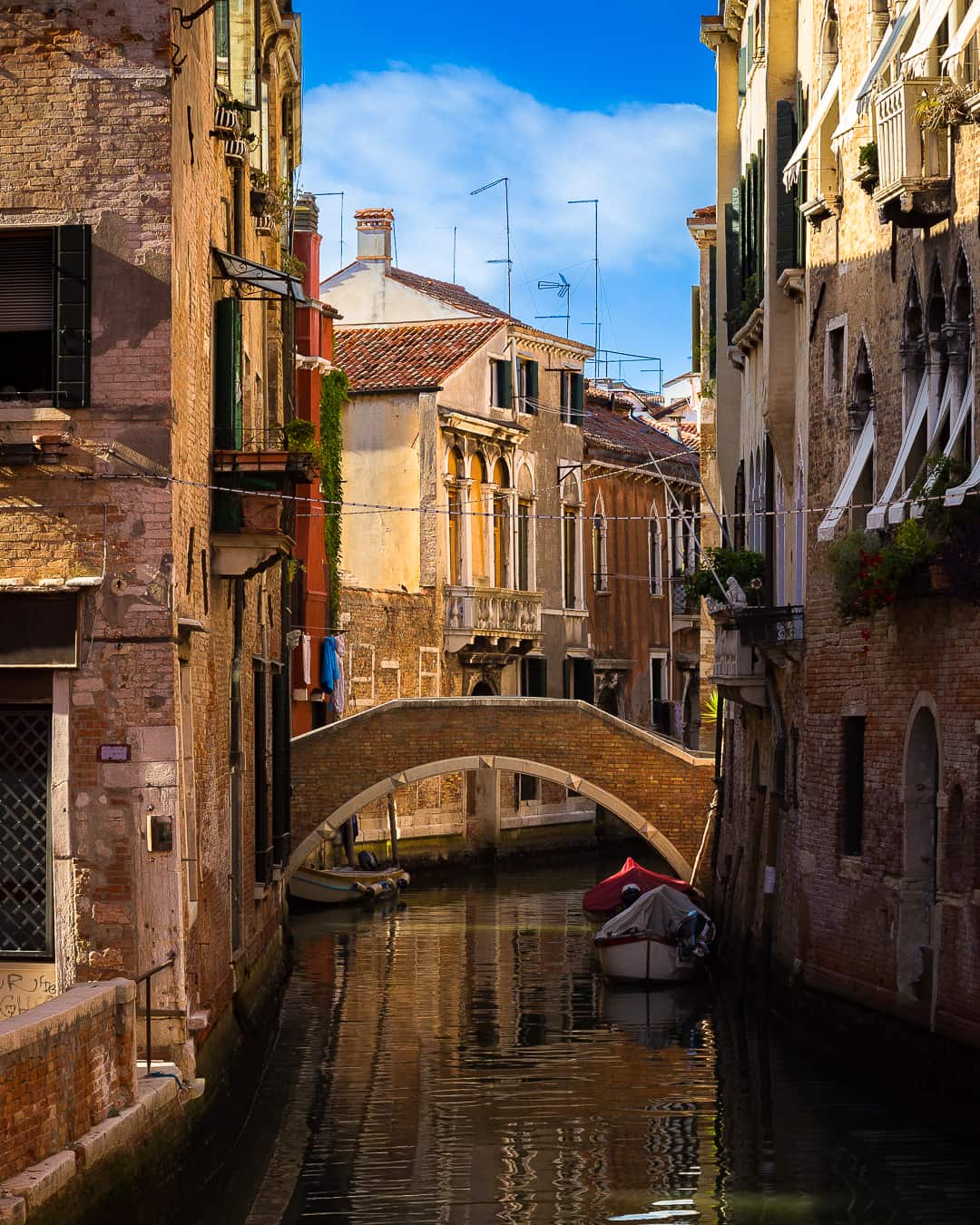
The rio
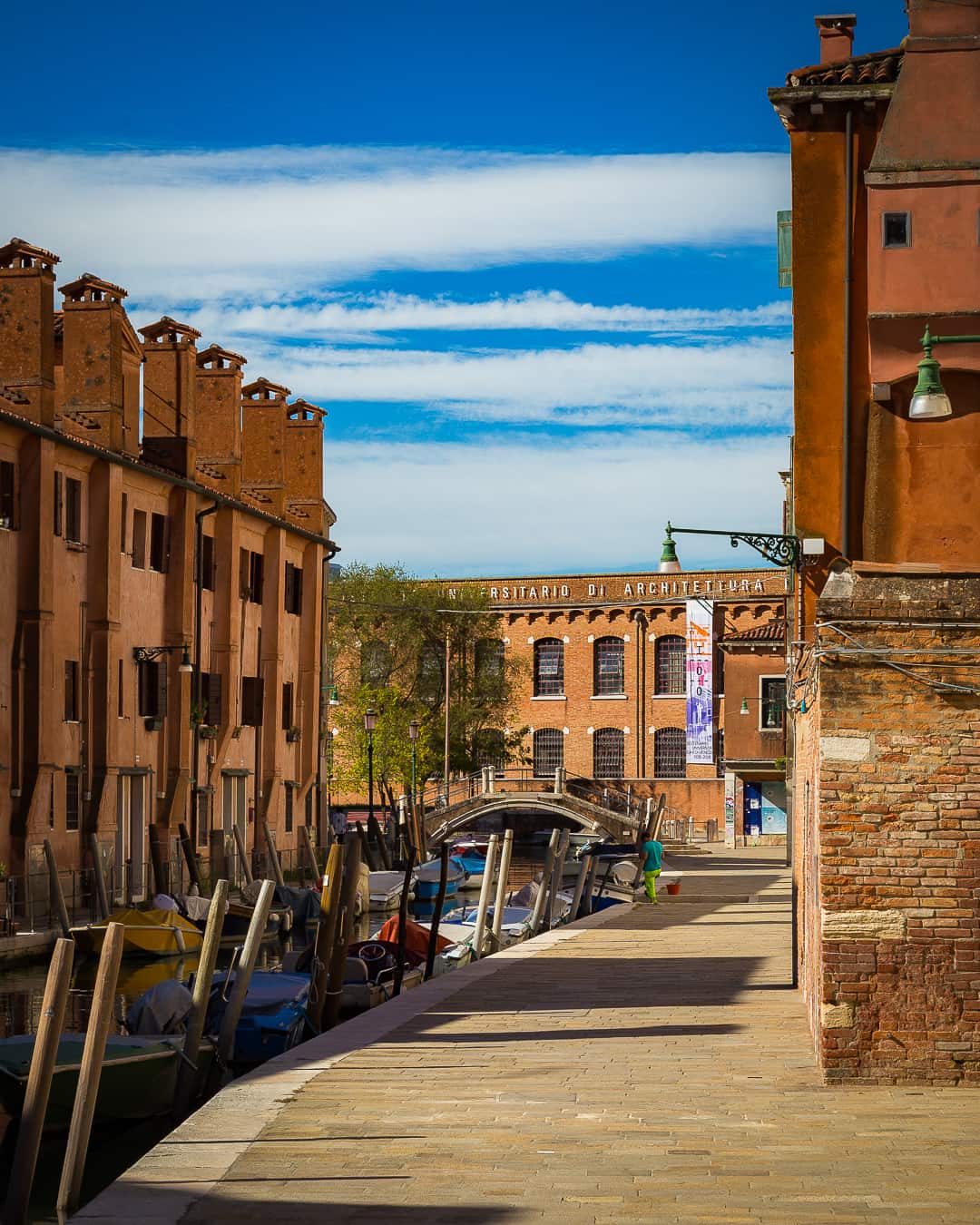
Still water, a small bridge at the end, a moored boat. On the smallest rii the traffic is slow and quiet: you can hear footsteps on the fondamenta.
The pergola
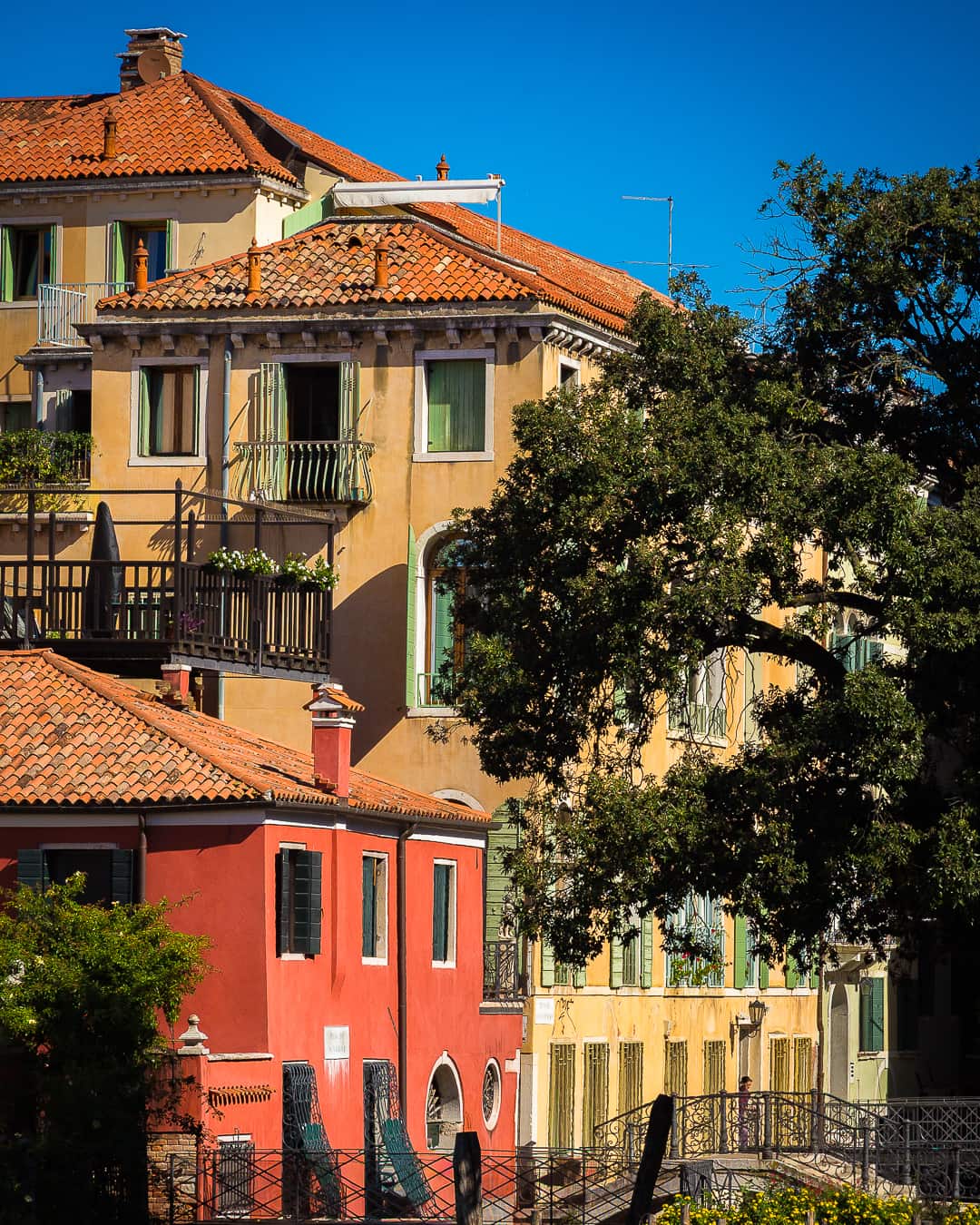
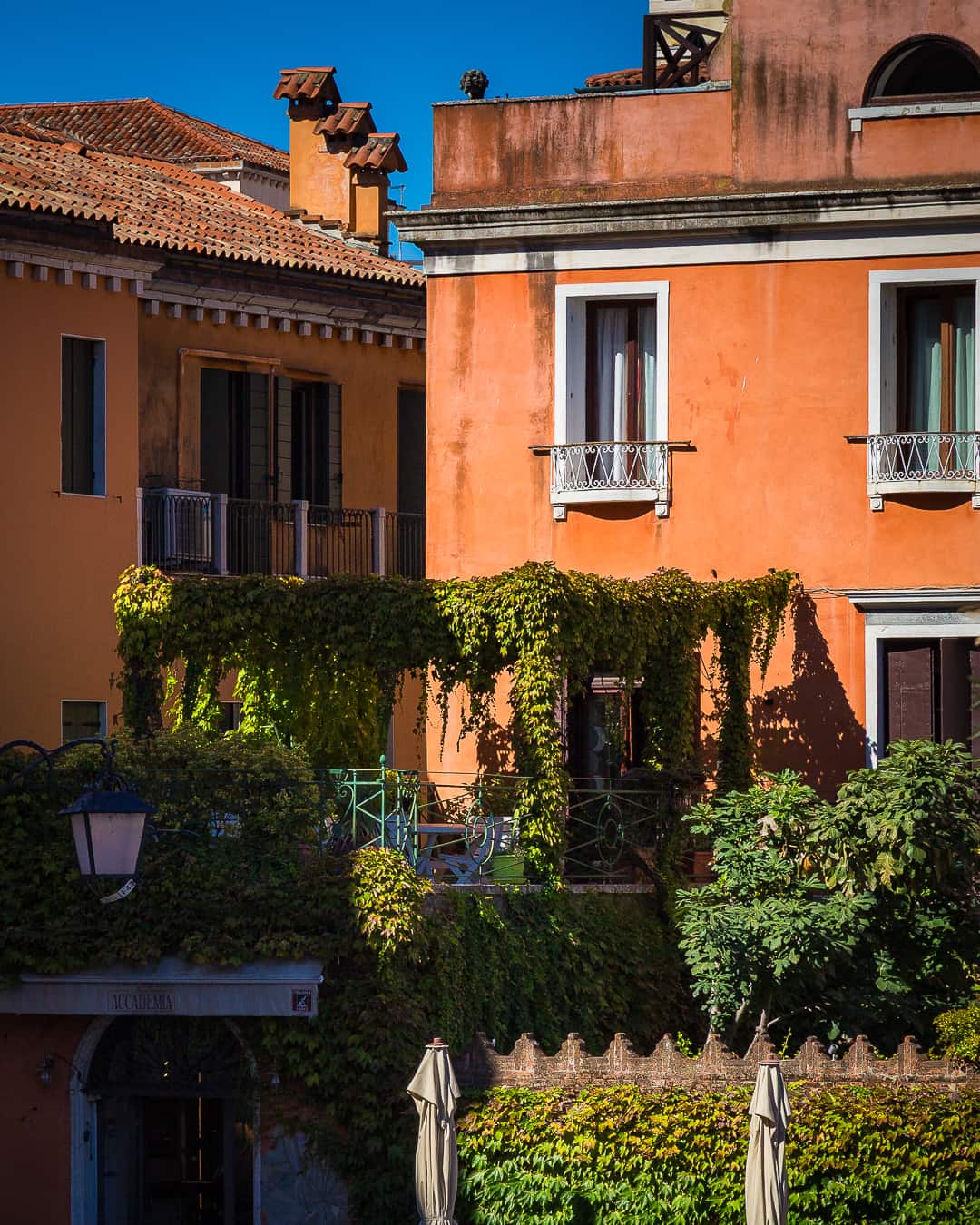
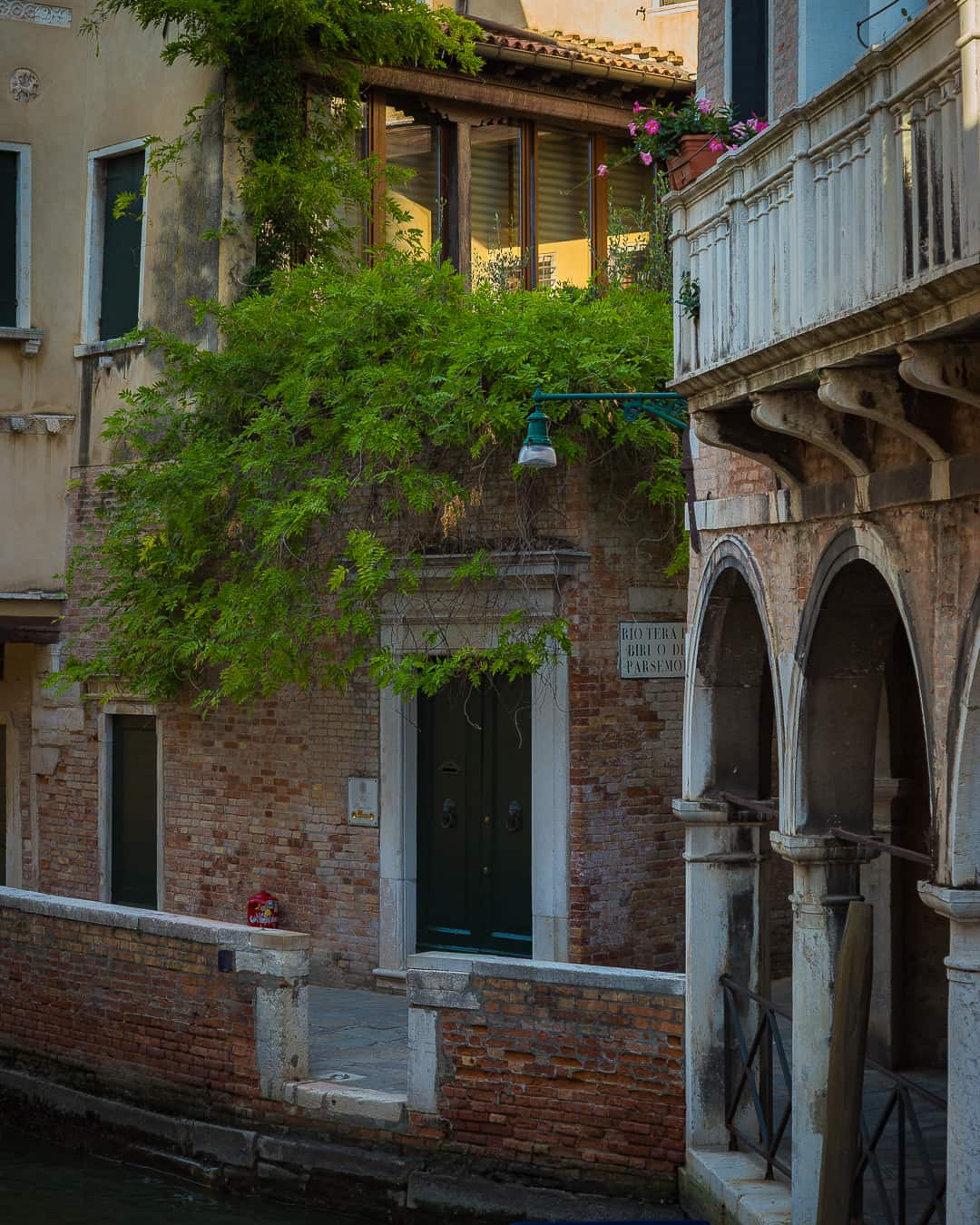
A bridge, a green pergola over the rio, stone arches. Venice has few visible gardens: the green spills over walls, roof terraces and pergolas above the water.
V
The greenhouse and the gardens
Towards the eastern tip, in the sestiere of Castello, Venice turns green. The Giardini were ordered by Napoleon in 1807 and designed by Giannantonio Selva; since 1895 they have hosted the Biennale.
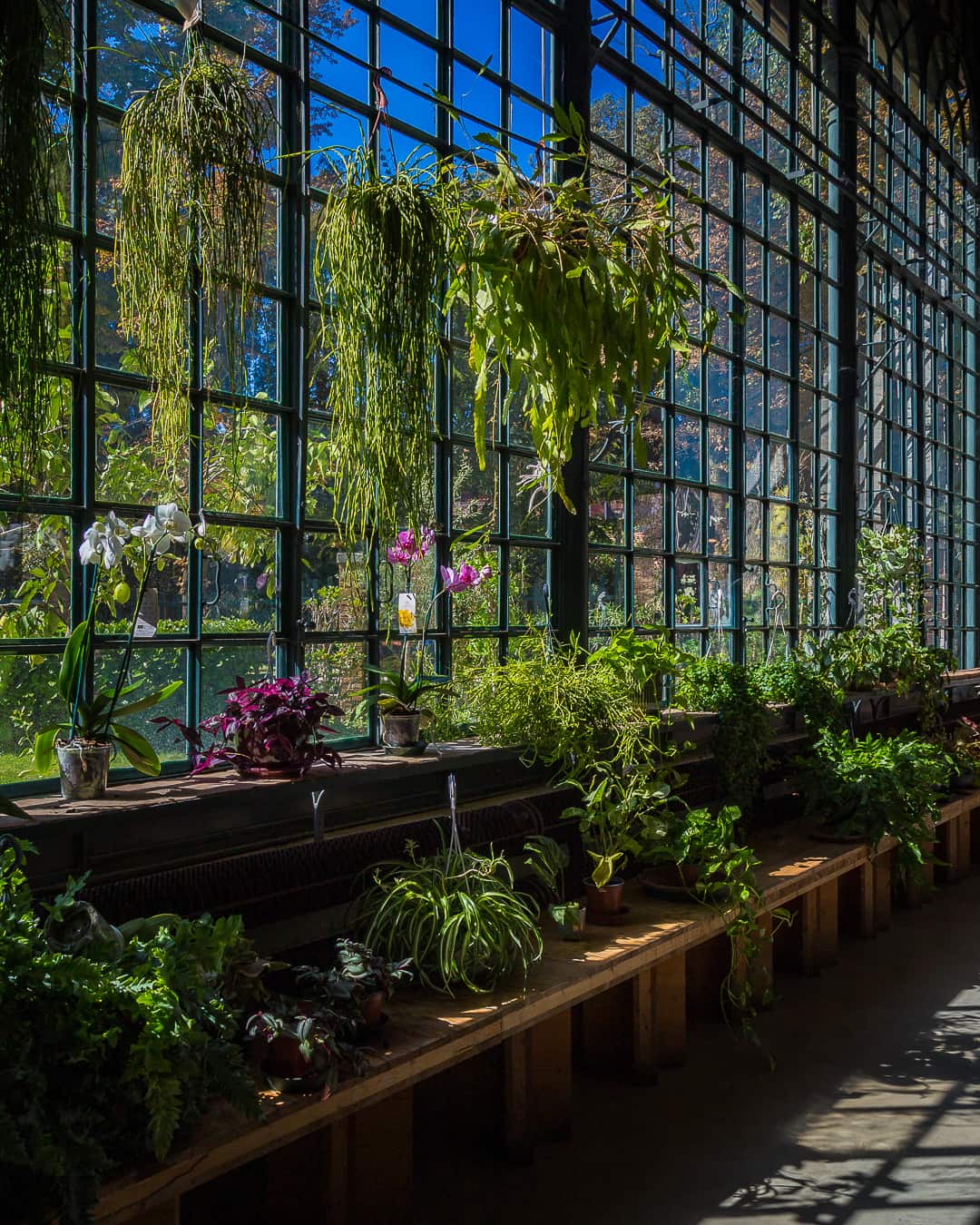
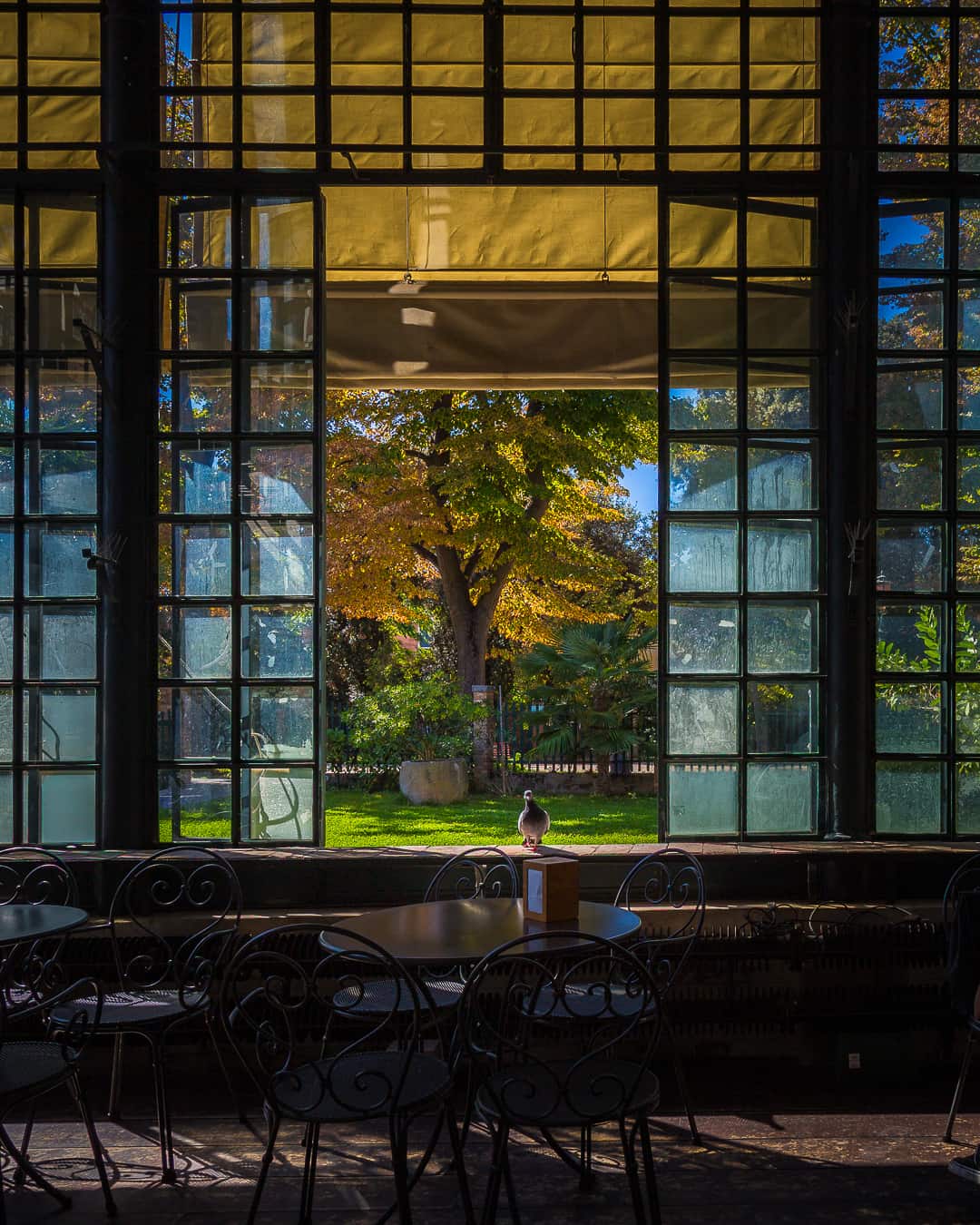
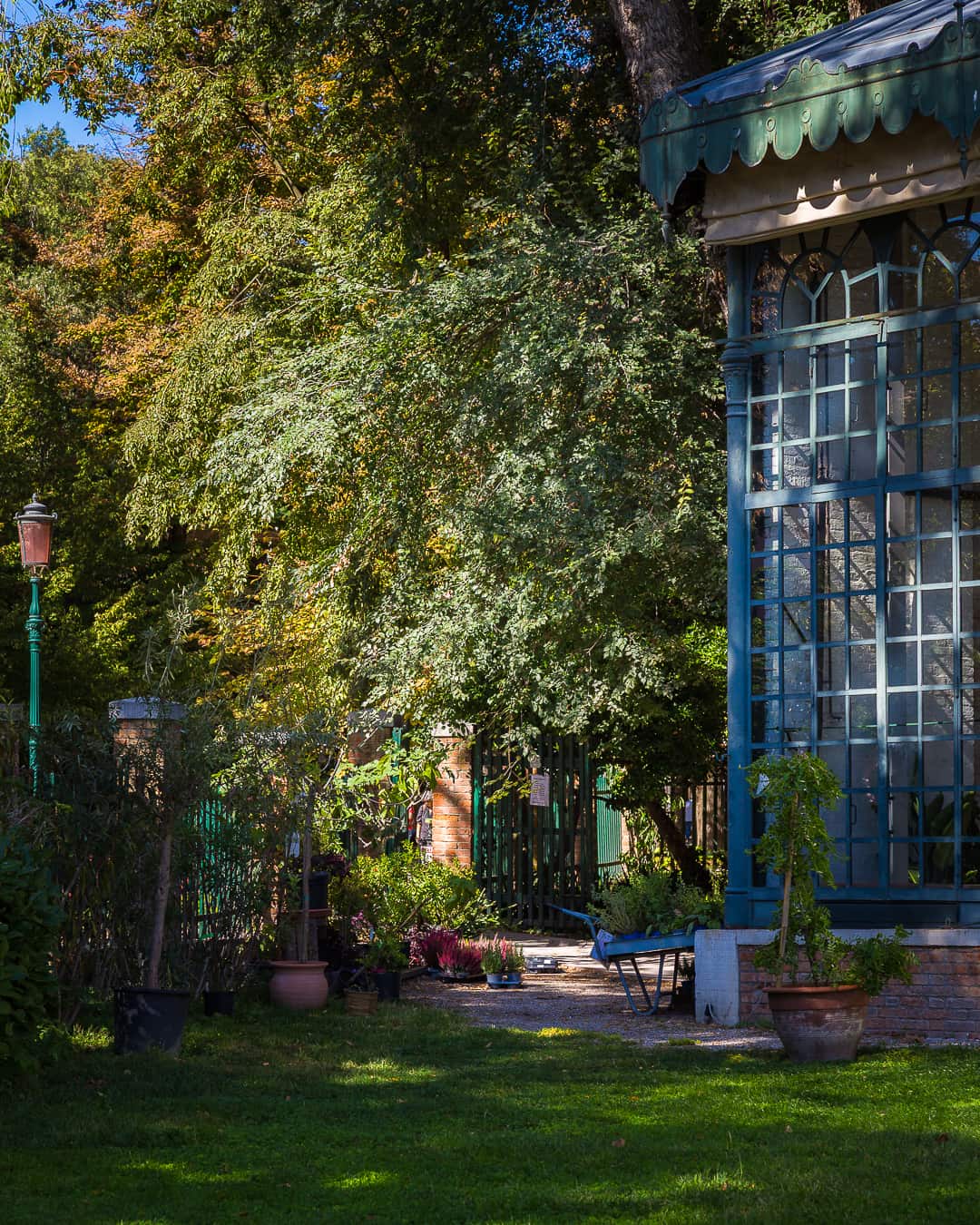
Along the Viale Garibaldi, the Serra dei Giardini was built in 1894 to shelter palms and exotic plants in winter. Today it is a meeting place, with flowers, plants and a small café.
Inside the greenhouse
Glass and iron, tables, and the garden outside. Under glass the light stays soft even at noon, and time seems to pass more slowly.
The lagoon through the trees
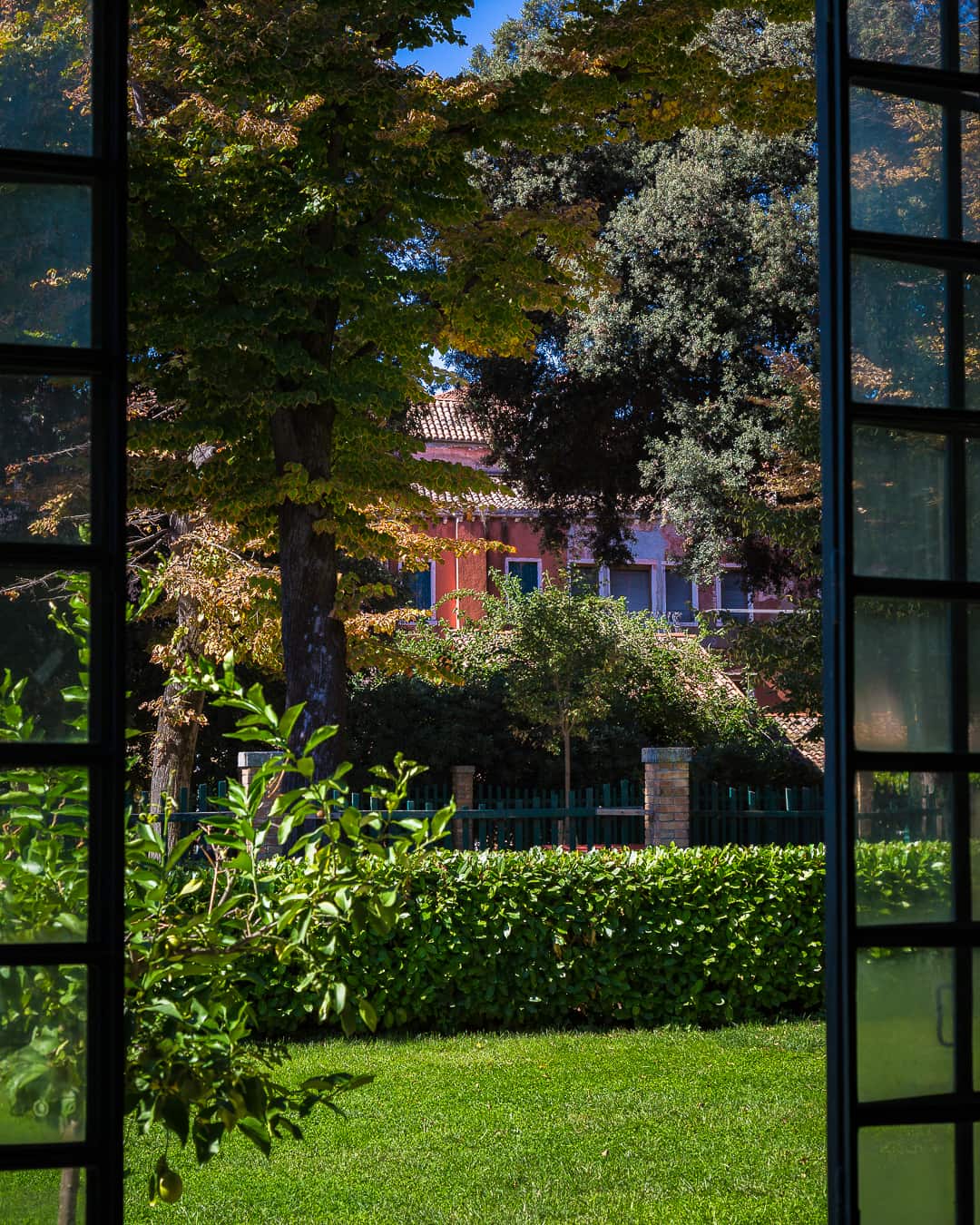
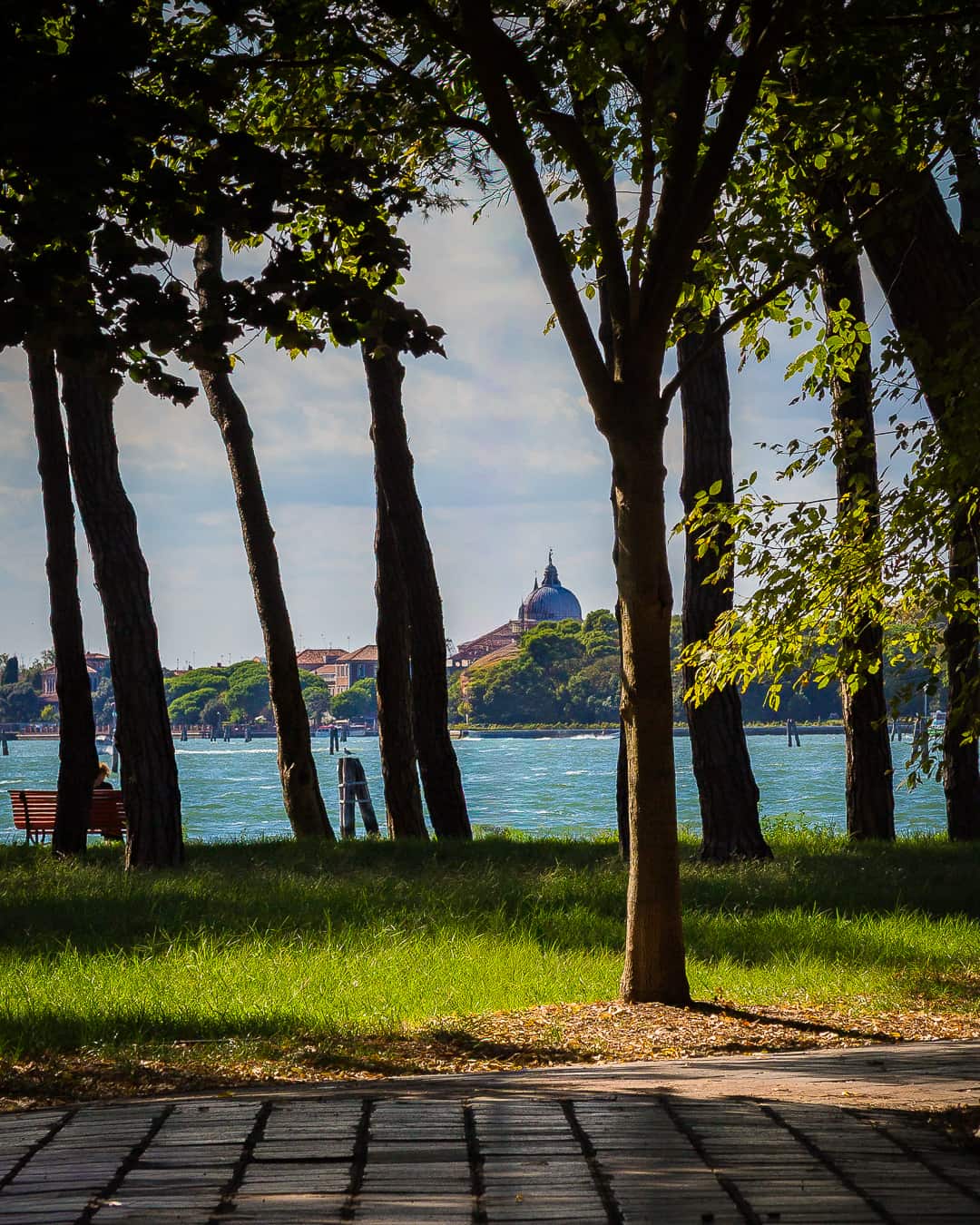
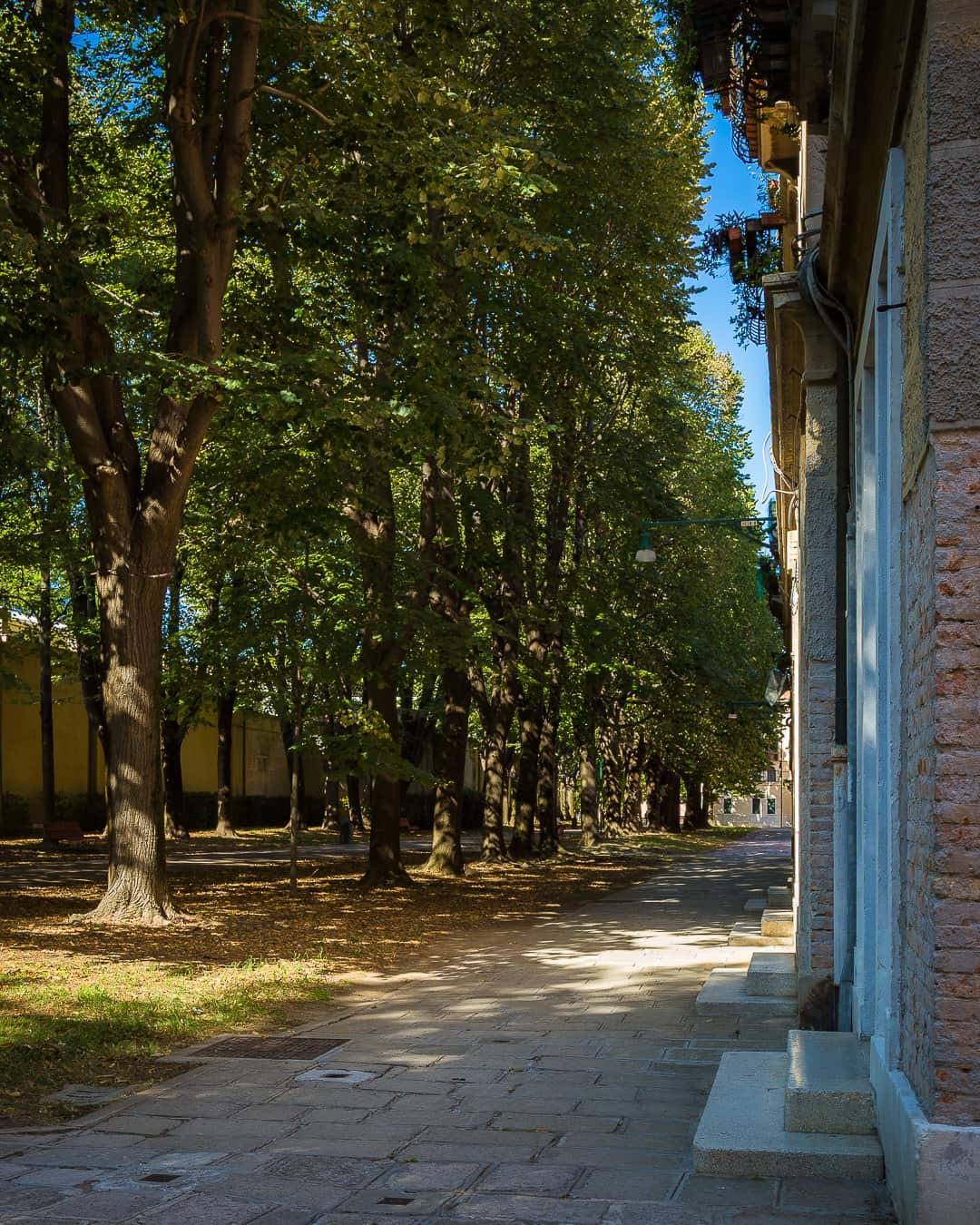
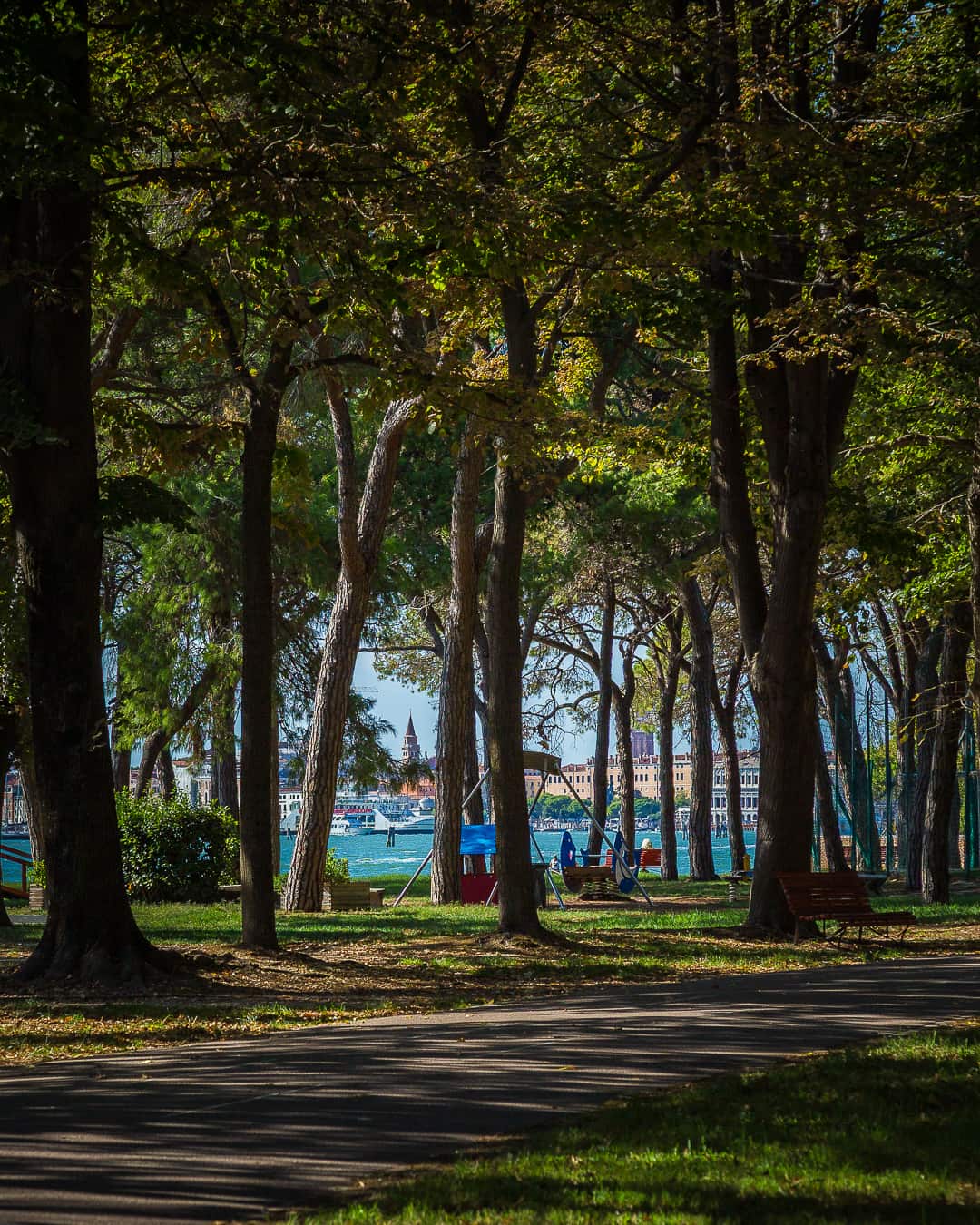
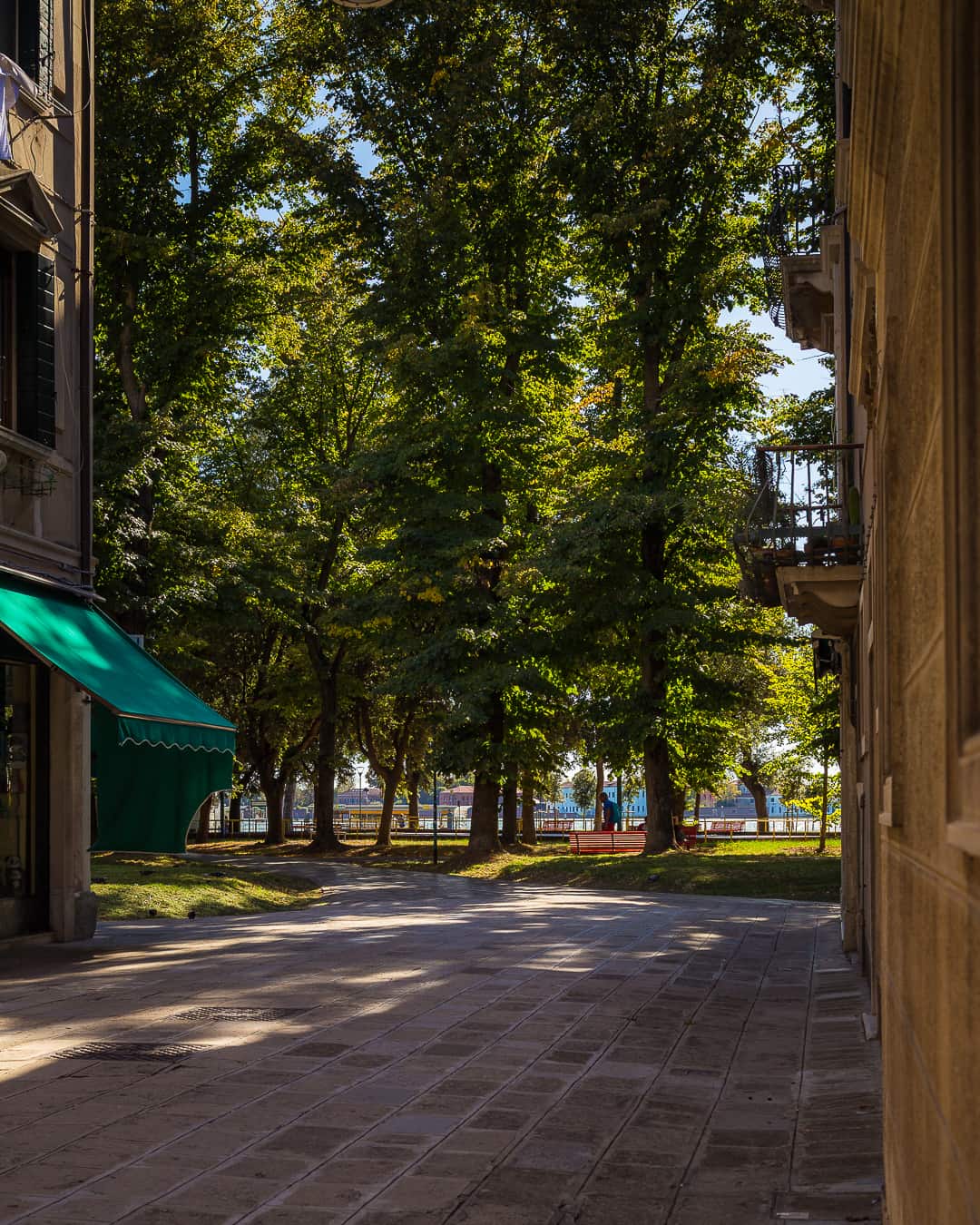
Tall trunks, a lawn, and a distant dome across the water. In this part of the city you see the lagoon through the trees, as from a park by the sea.
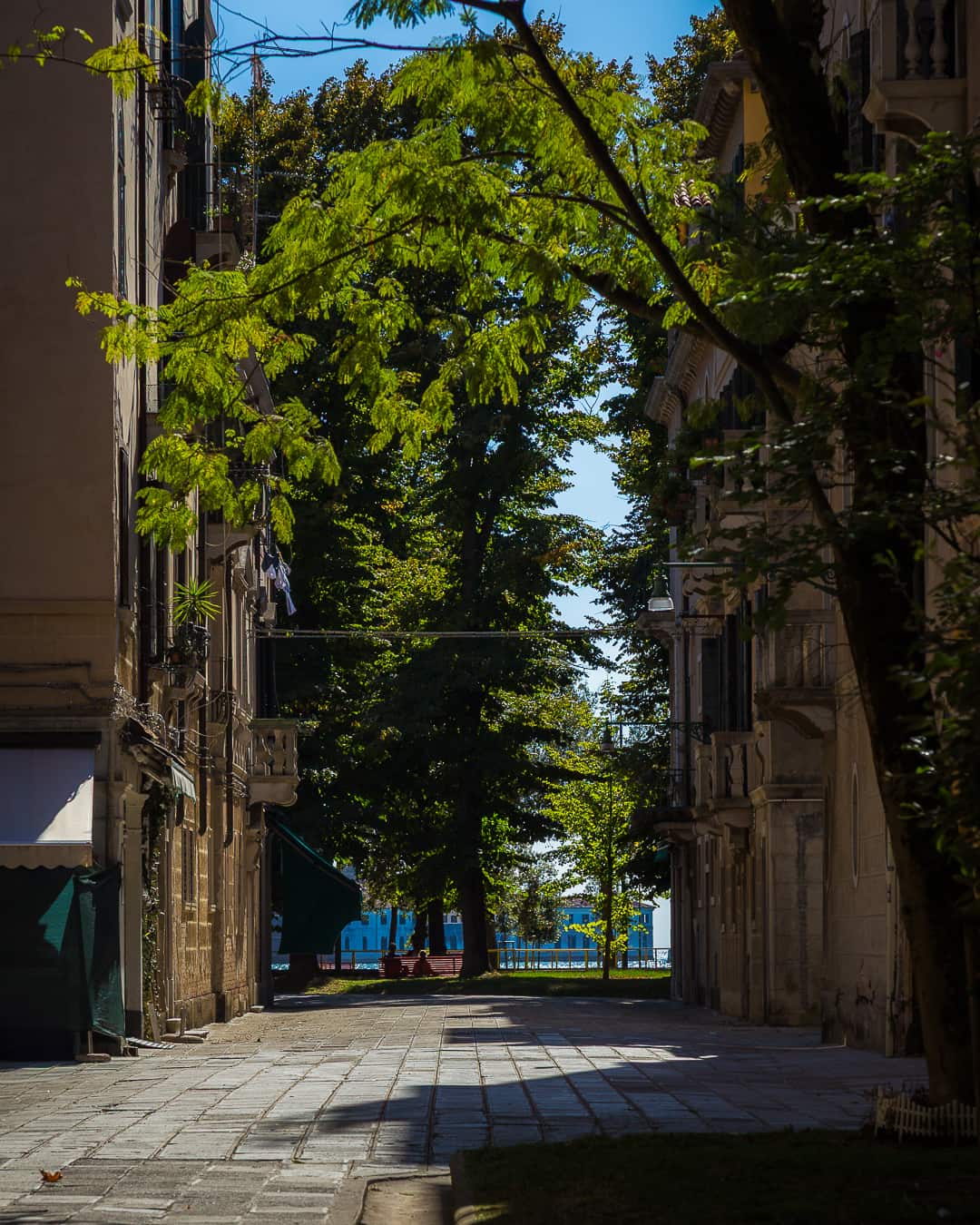
The avenue
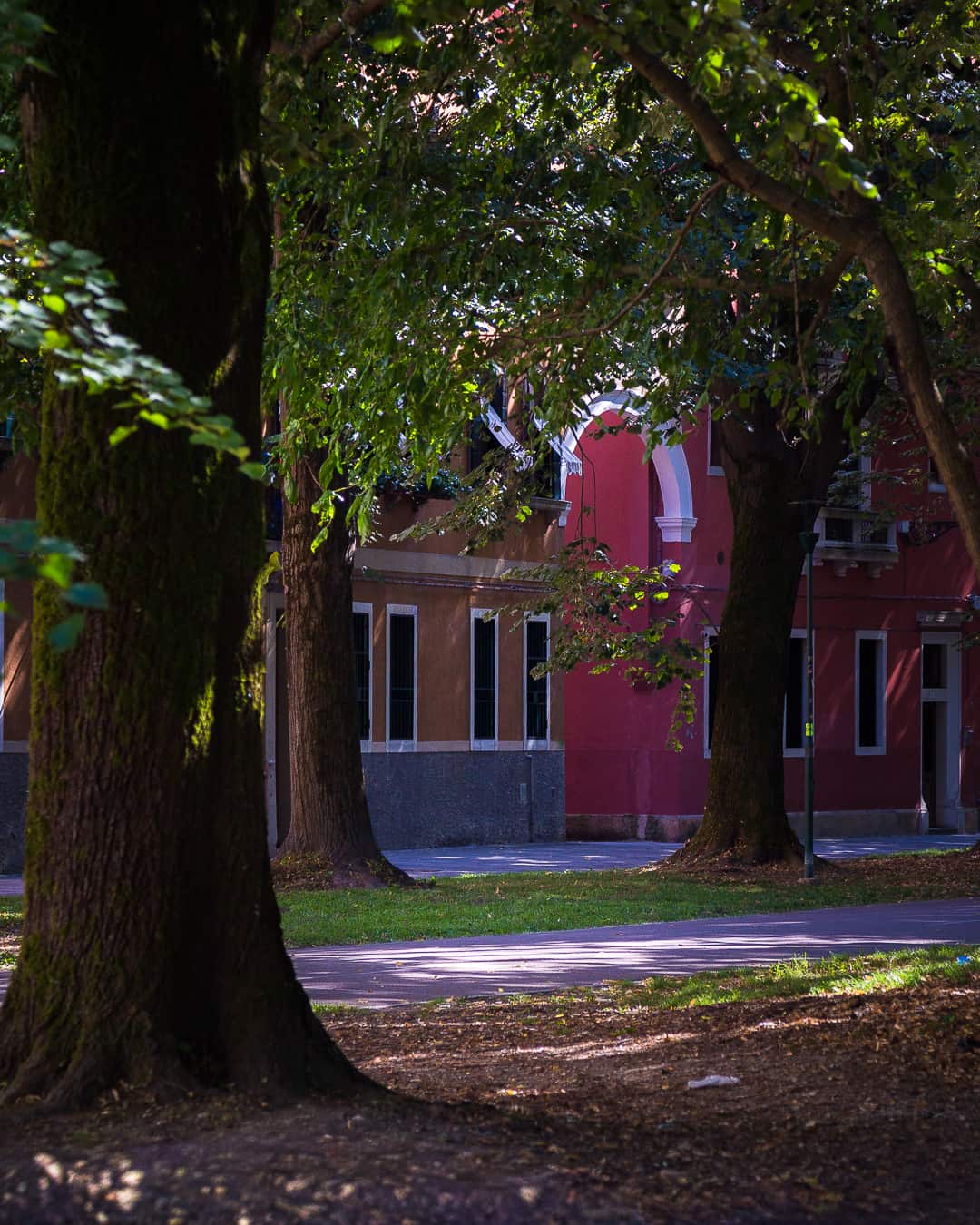
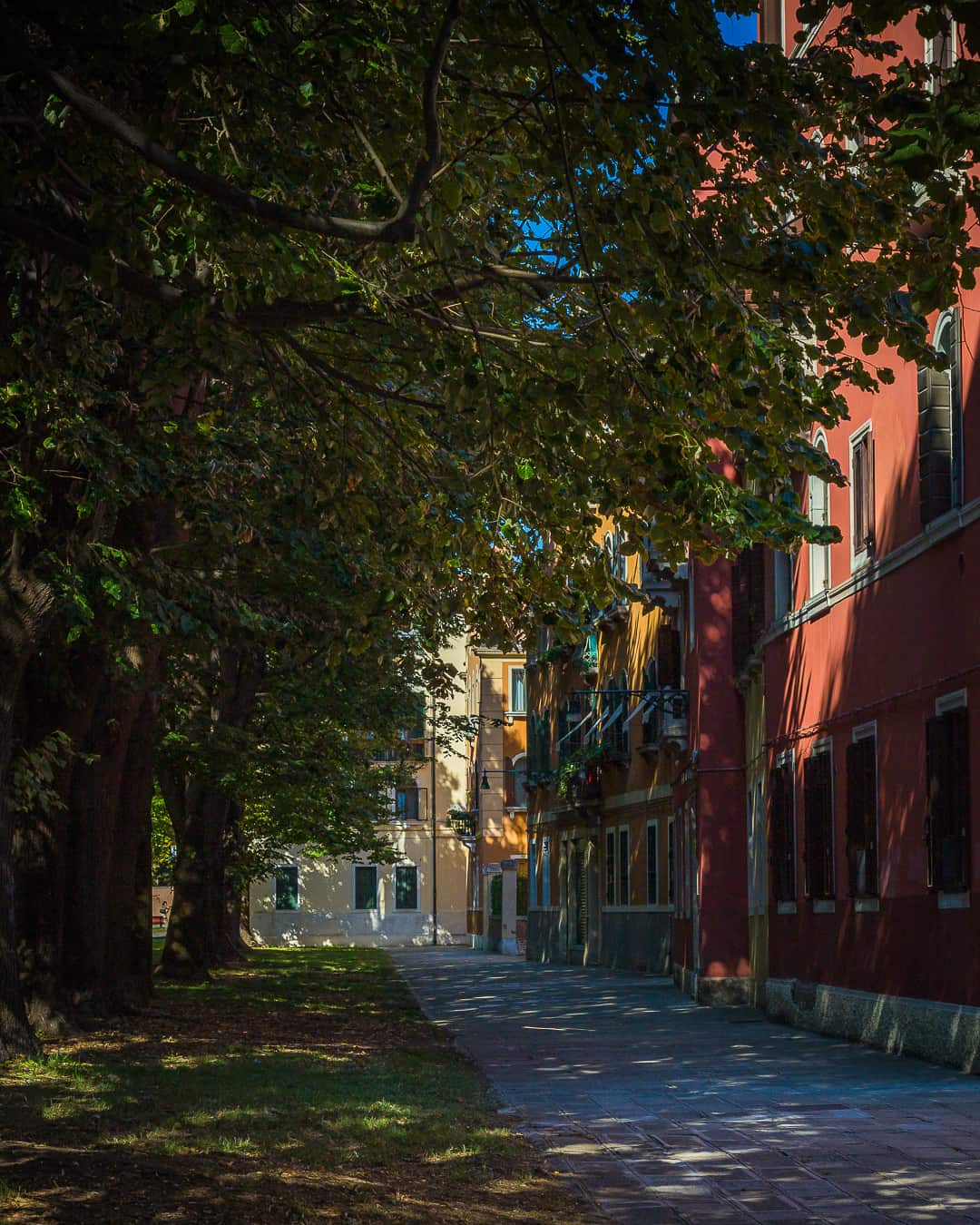
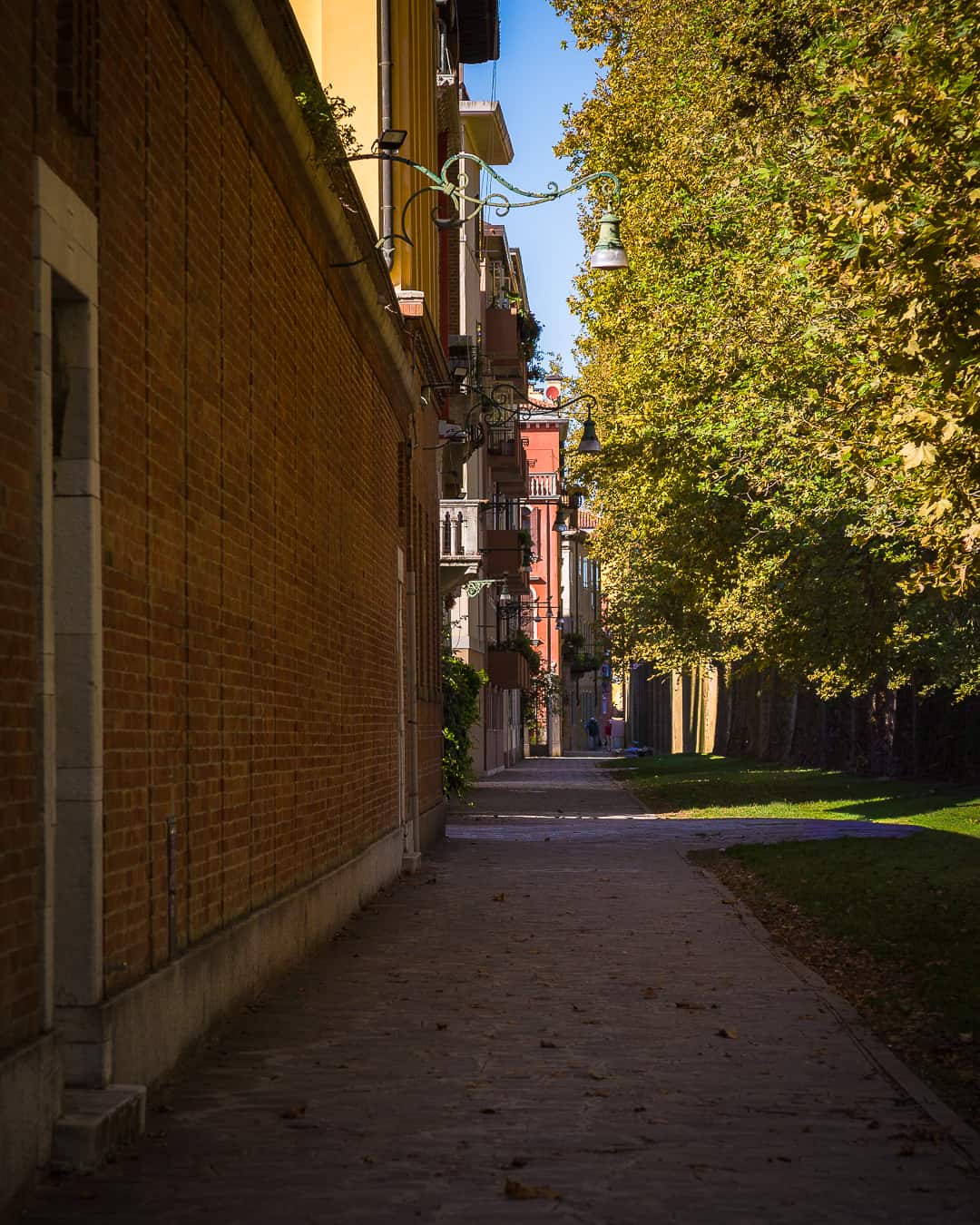
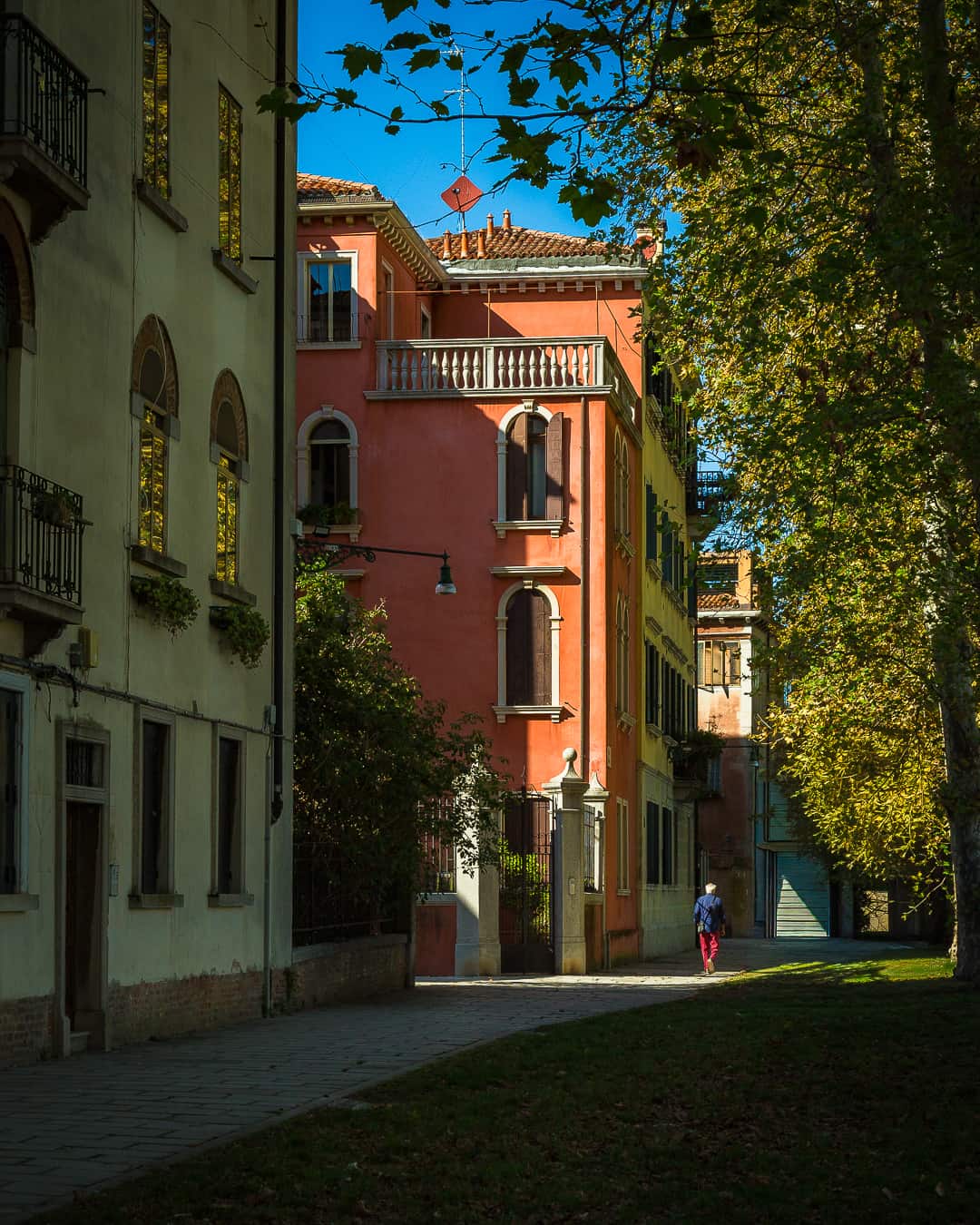
A tree-lined avenue, deep shade, a façade at the end. Few people picture Venice like this: trees, shade, lawns.
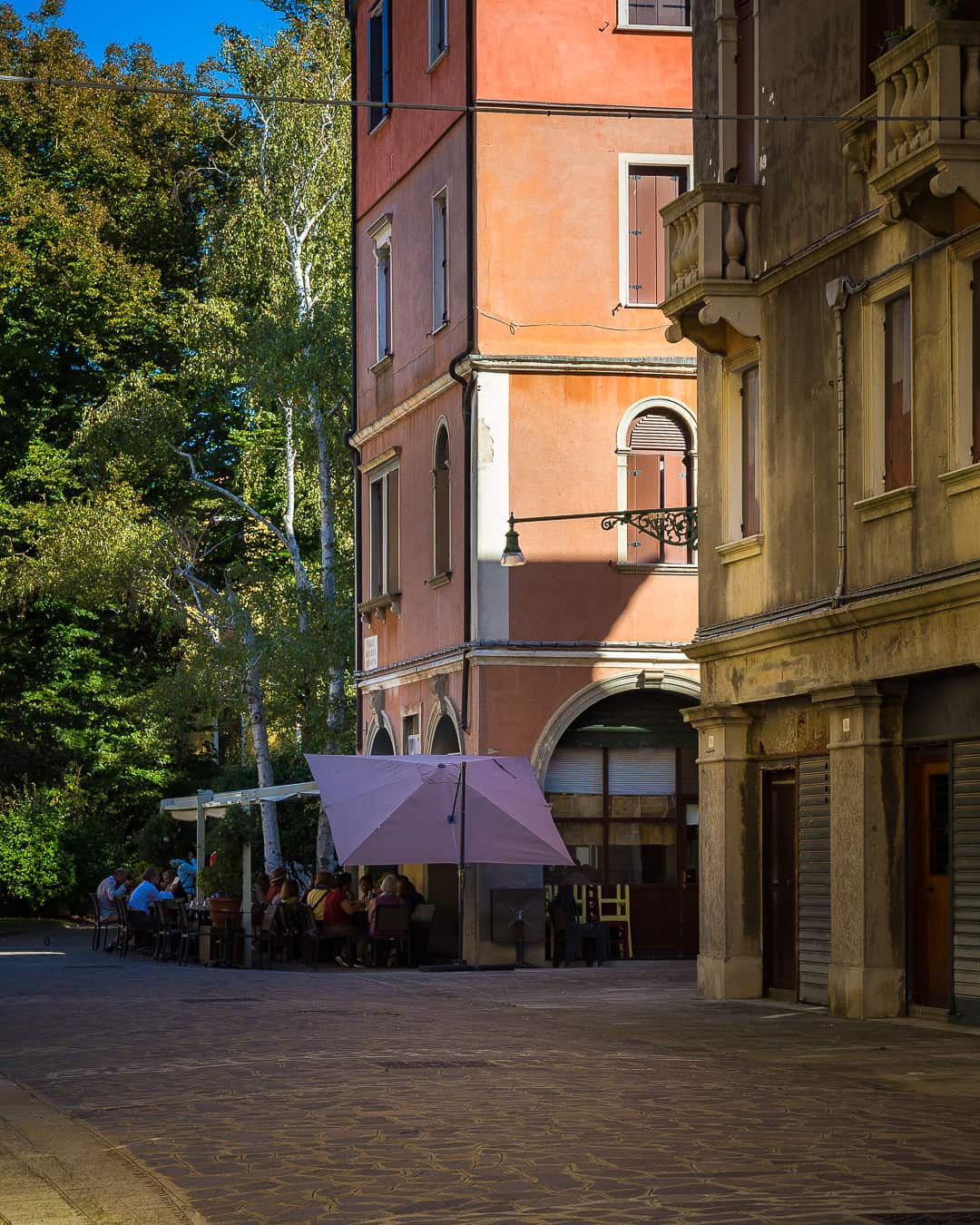
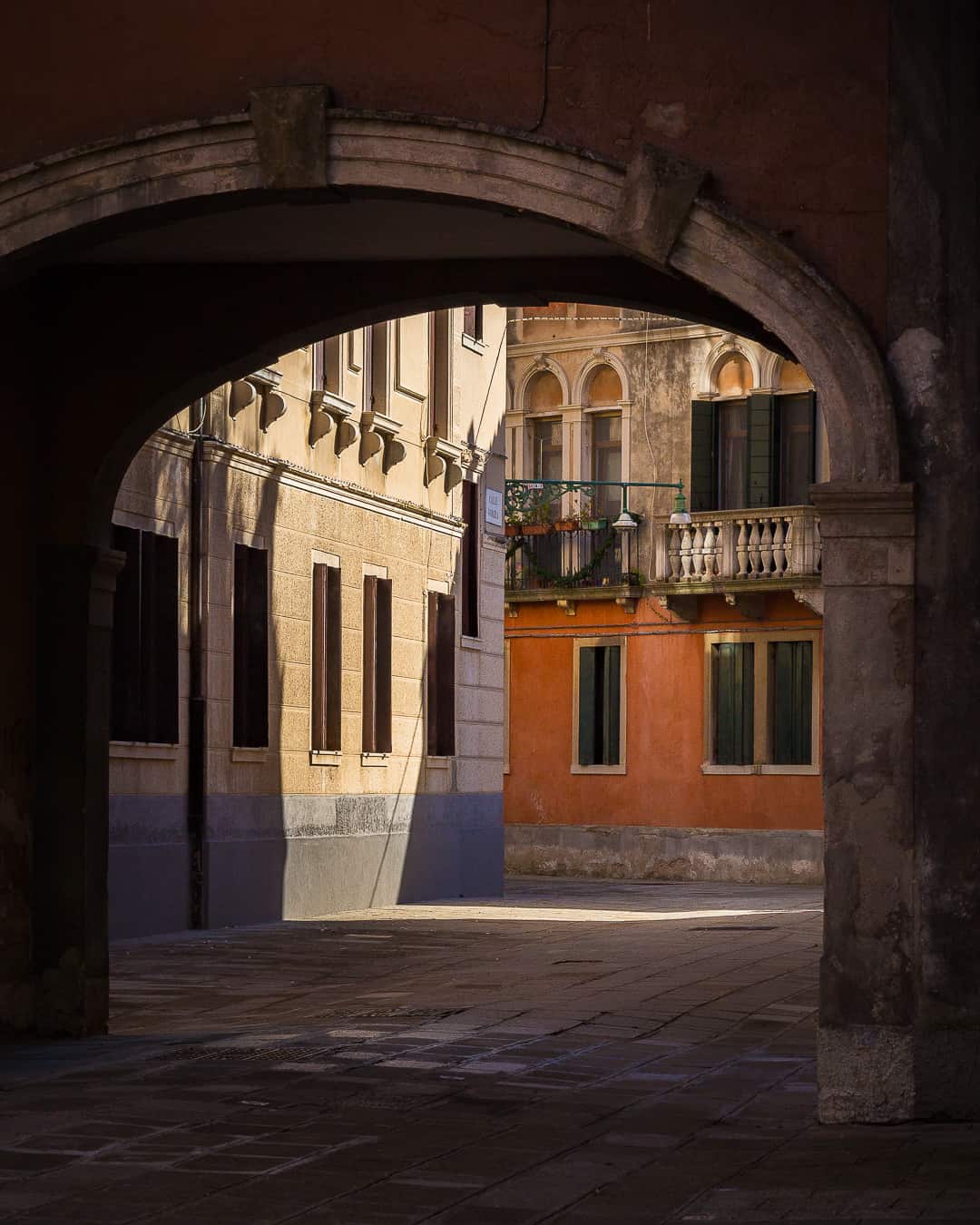
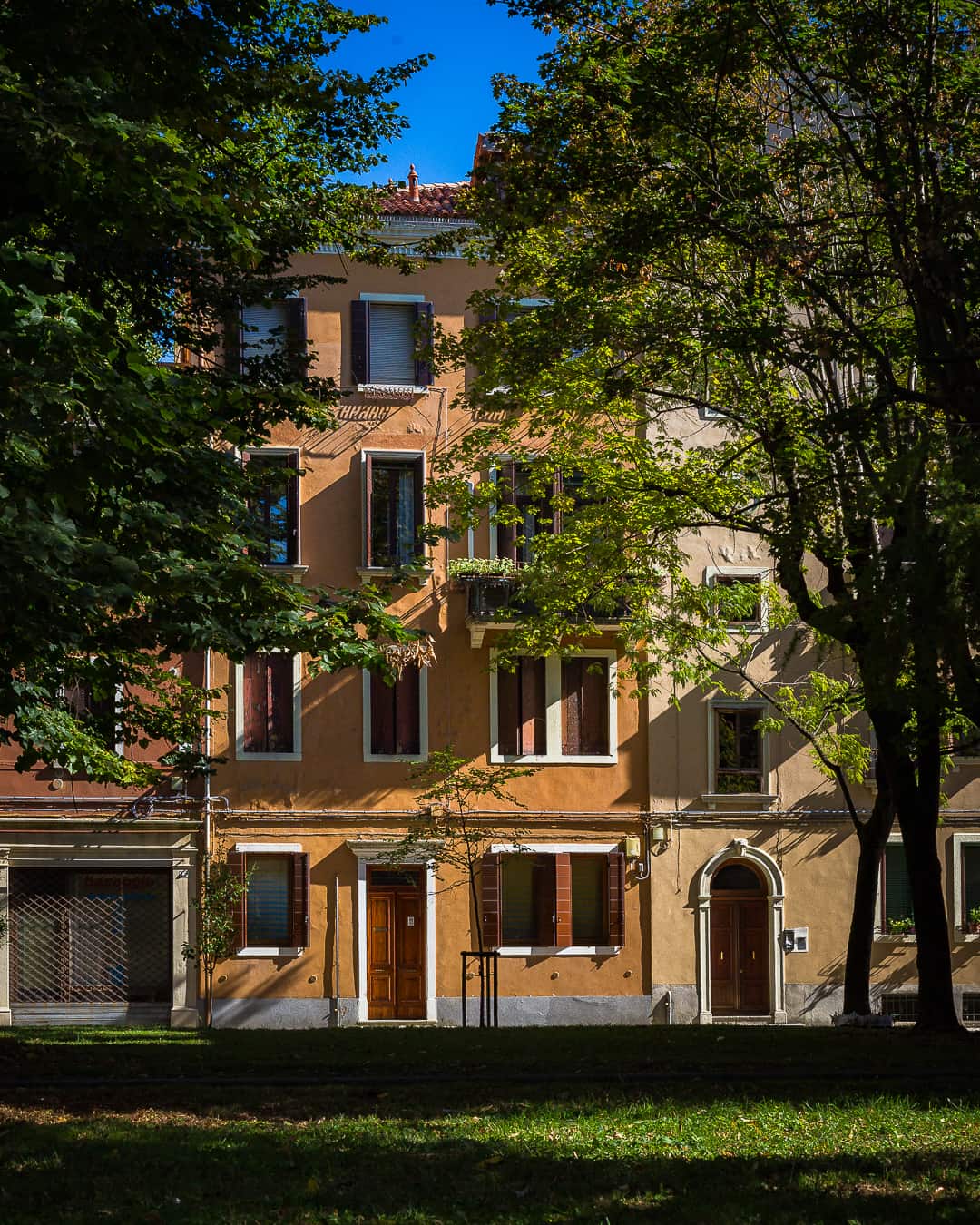
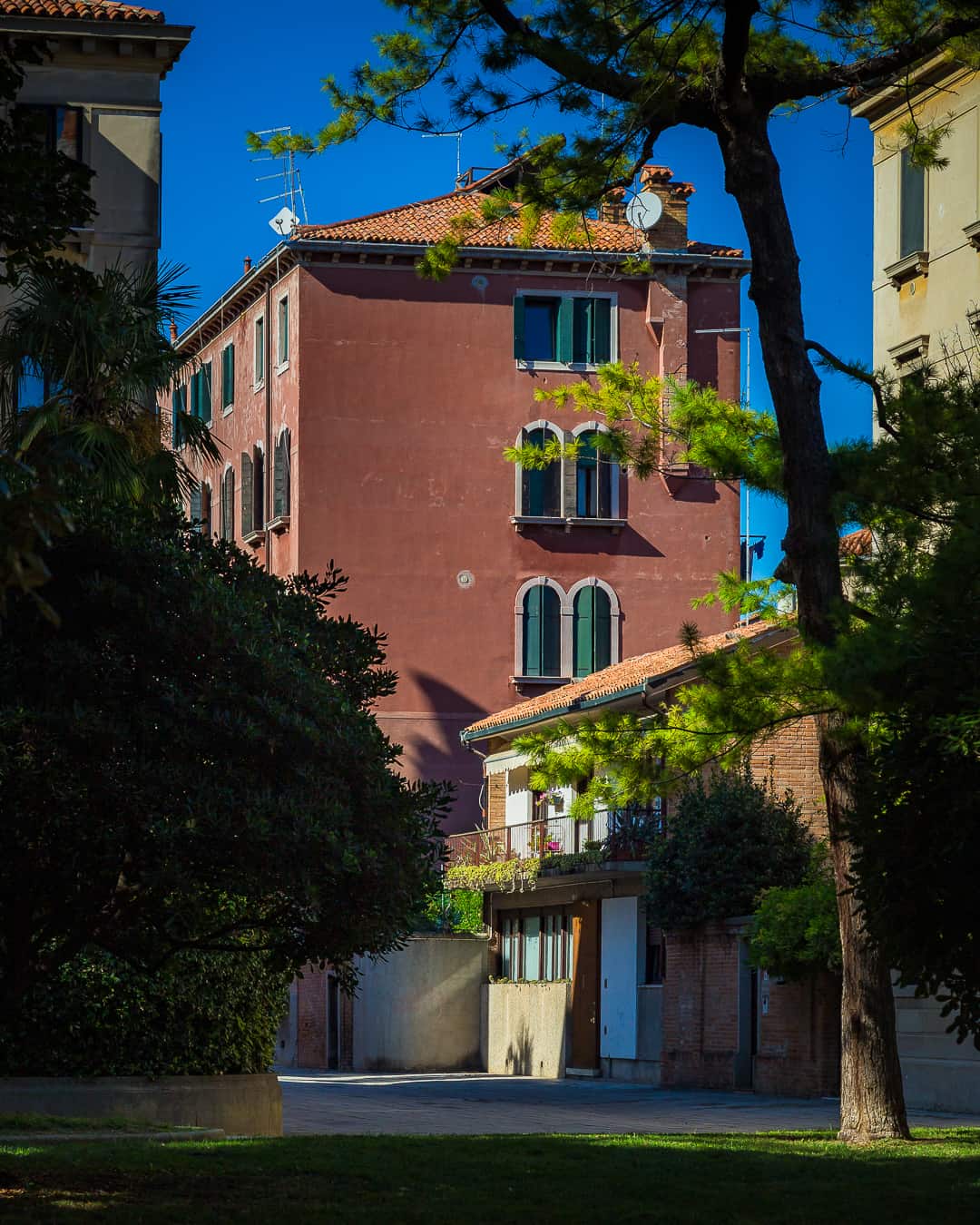
The pink house
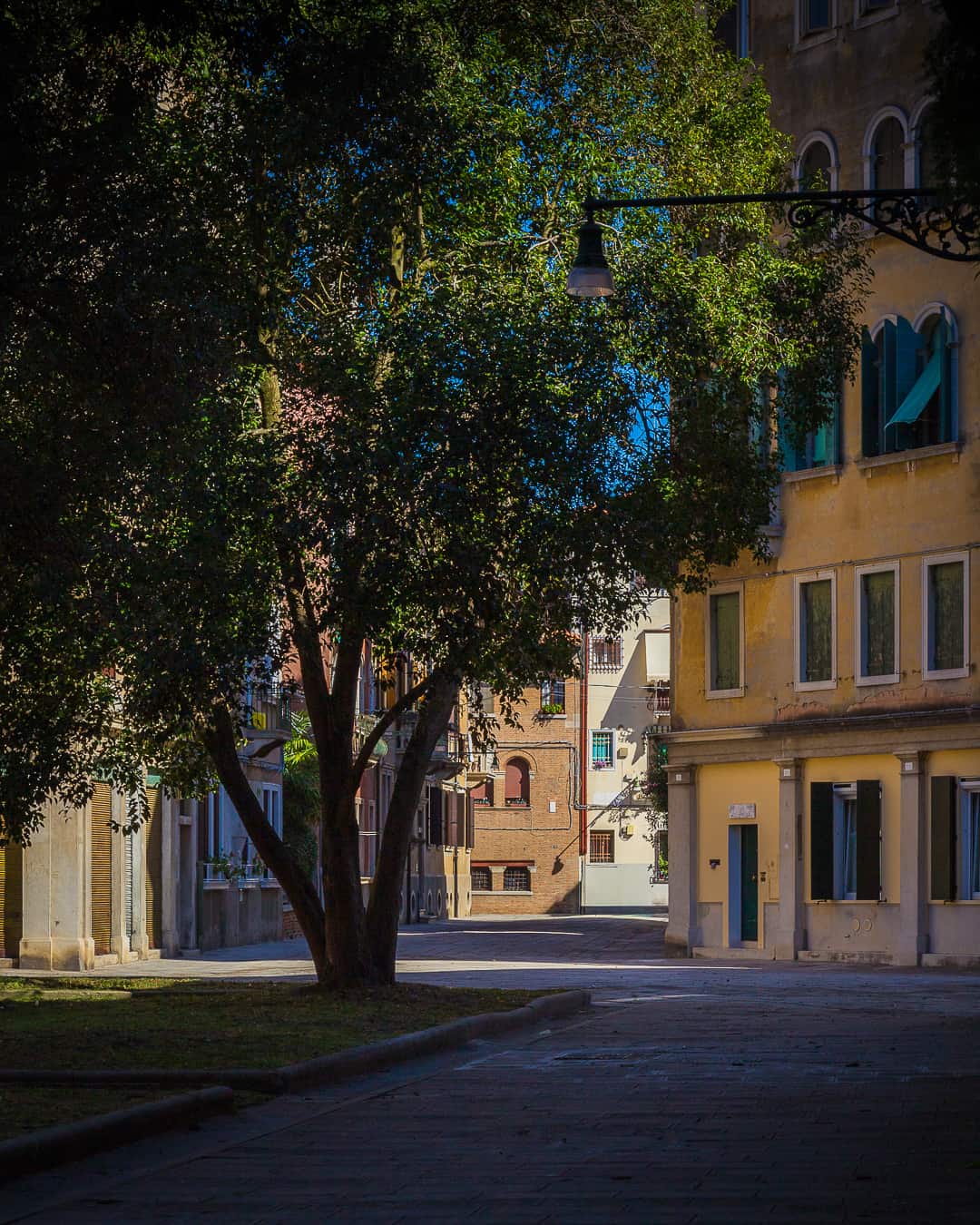
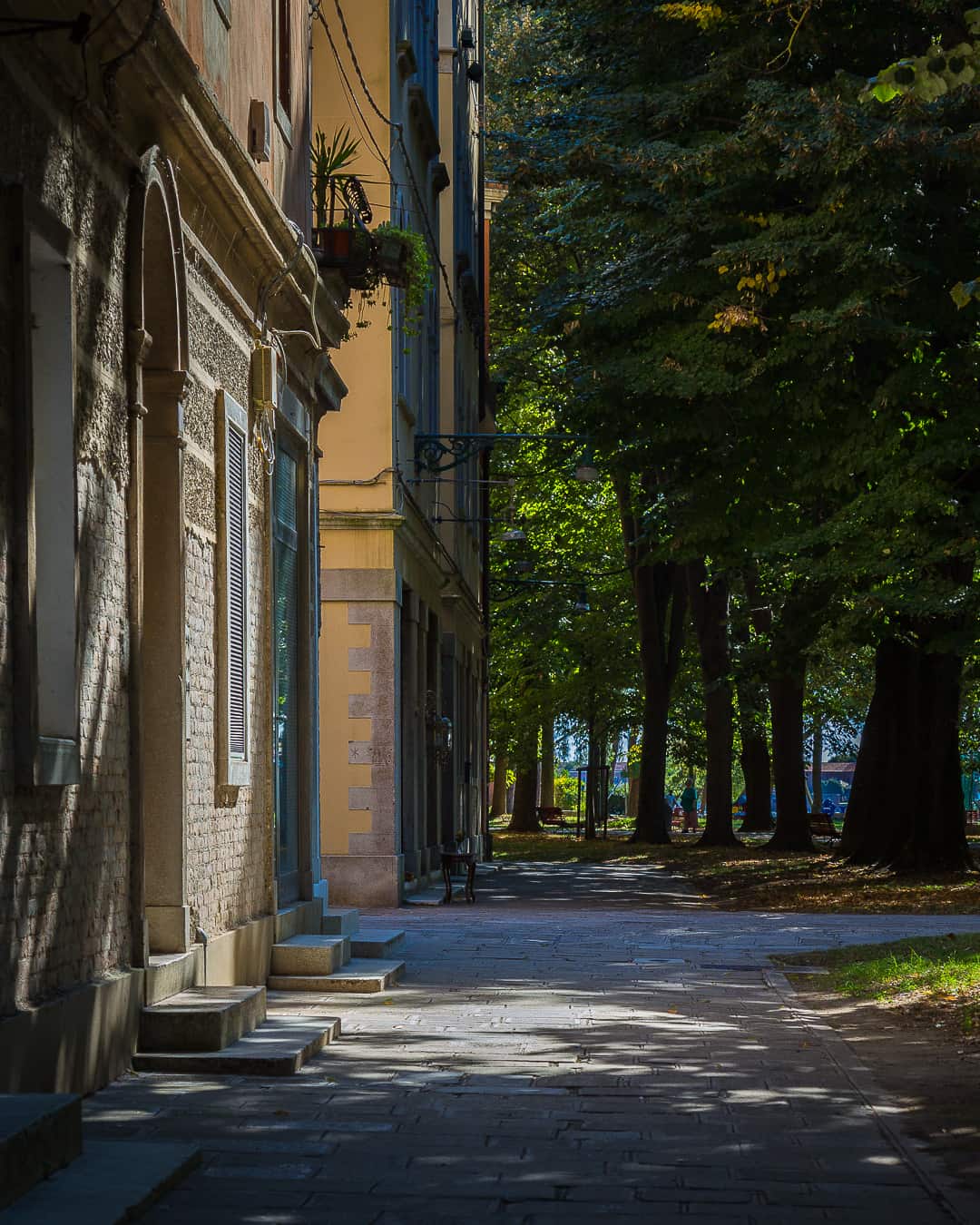
A pink façade with arched windows, trees in front. The houses here are Venetian too, arches, balconies, colours, but they look onto green rather than water.
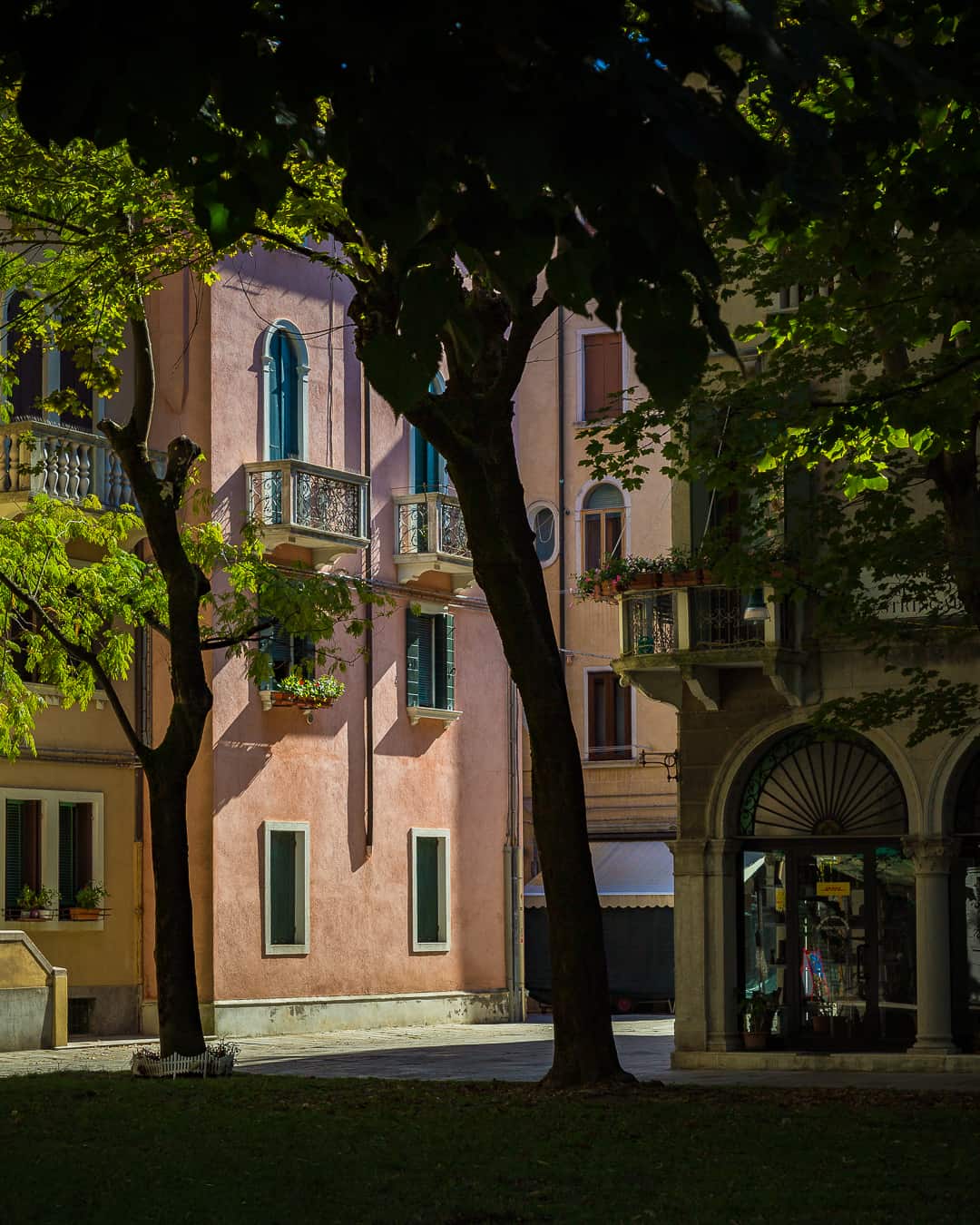
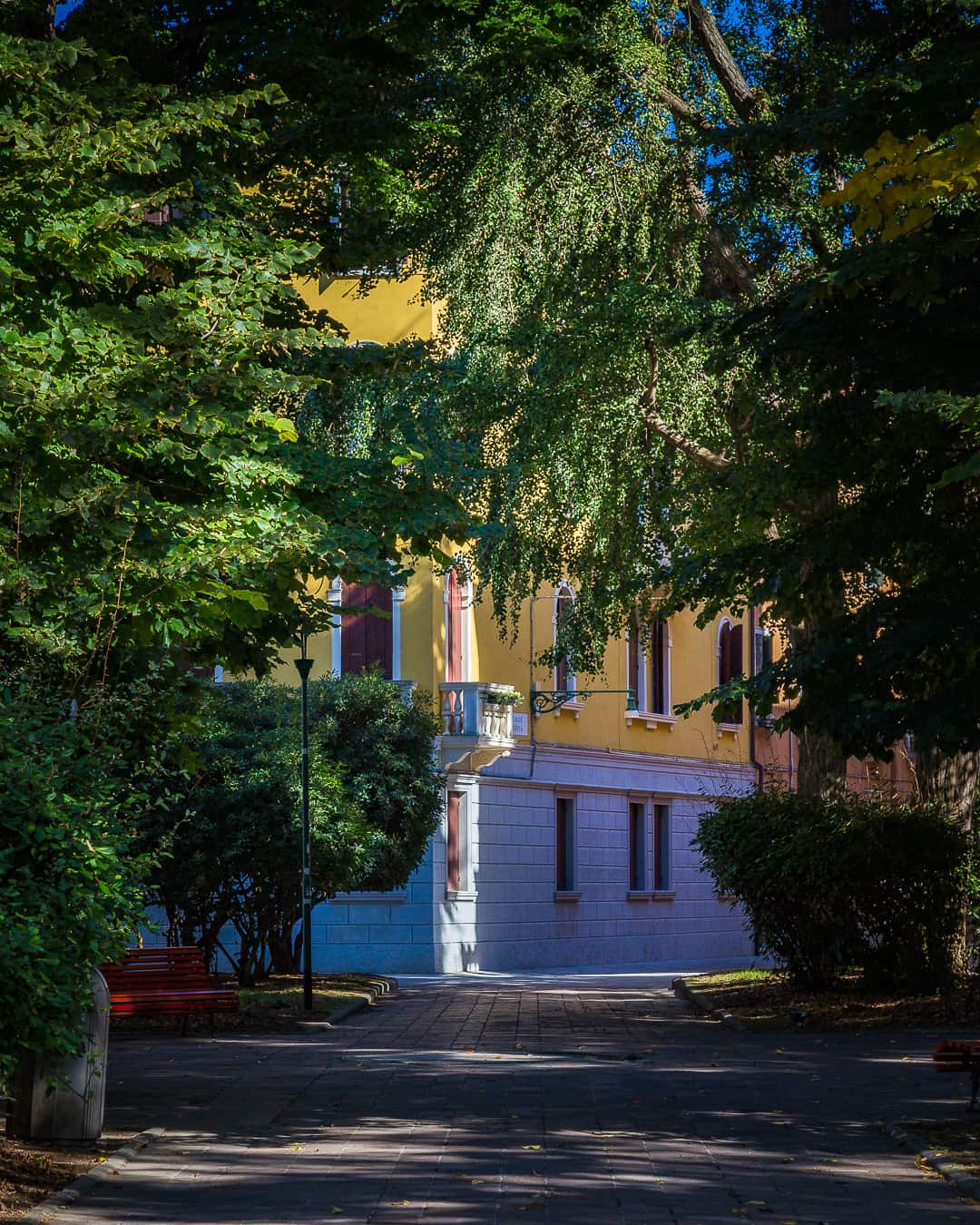
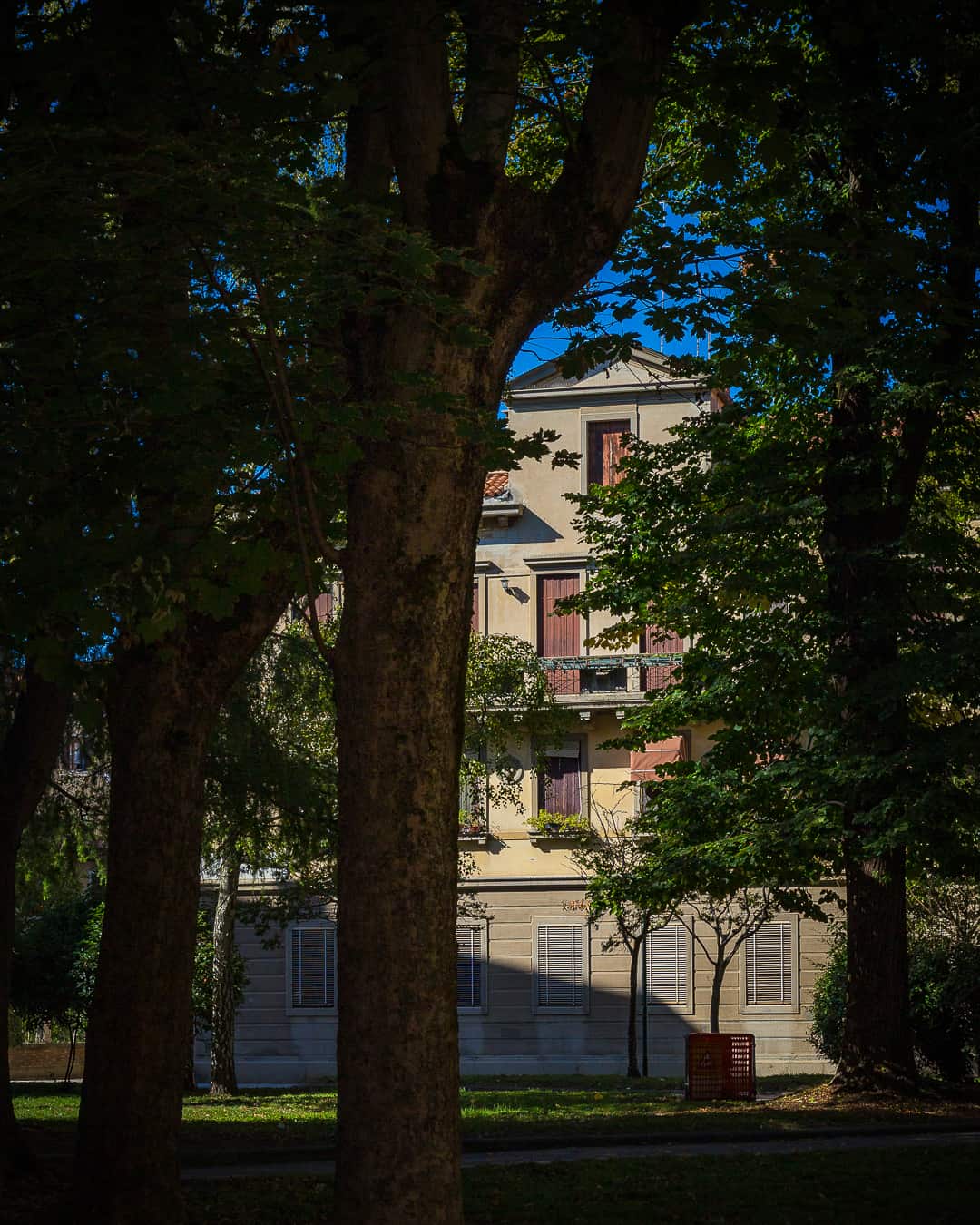
Among the trunks
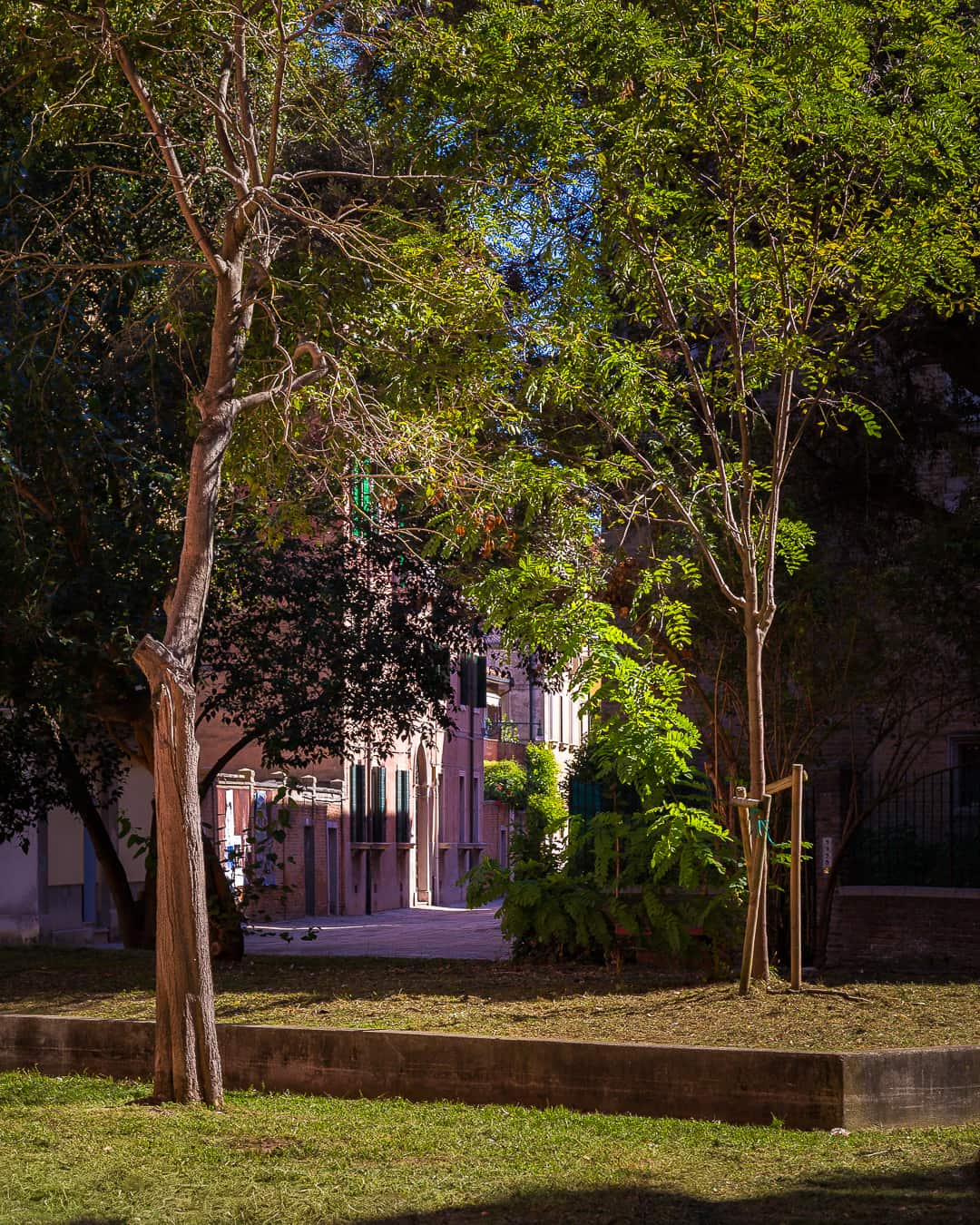
Dark trunks against the light, a pale house behind. In the early afternoon these avenues are the coolest rooms in the city.
VI
Houses among the trees
Further on, the island of Sant’Elena is one of the greenest corners of Venice: a quiet neighbourhood, lawns, and a large pine wood on the lagoon, created in the early decades of the twentieth century.
Here the city is lived without hurry: benches in the shade, children playing, windows open onto the green.
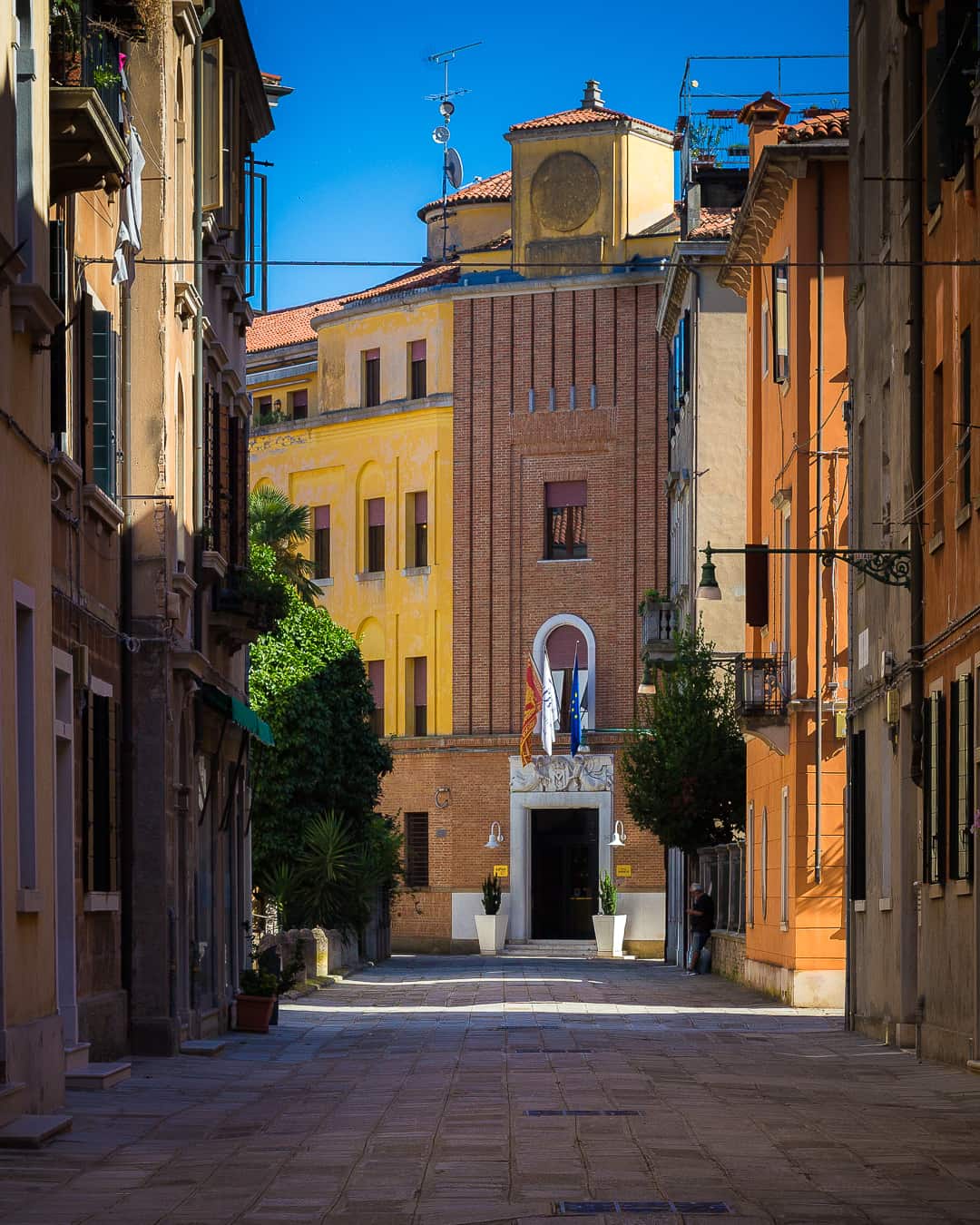
The clock tower
A wide straight street, a clock tower at the end. Venice has avenues too: you find them at the eastern end, where the city has more room.
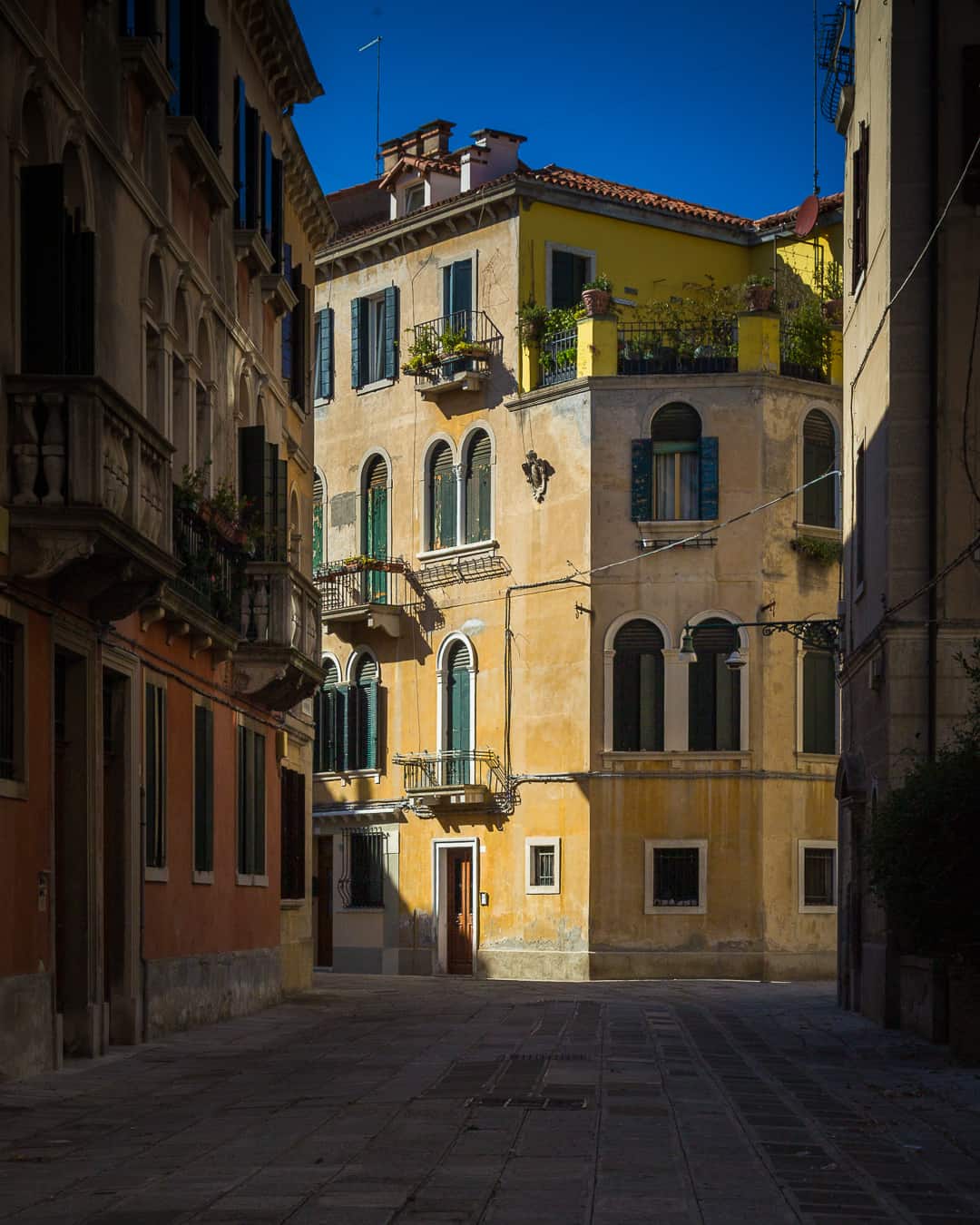
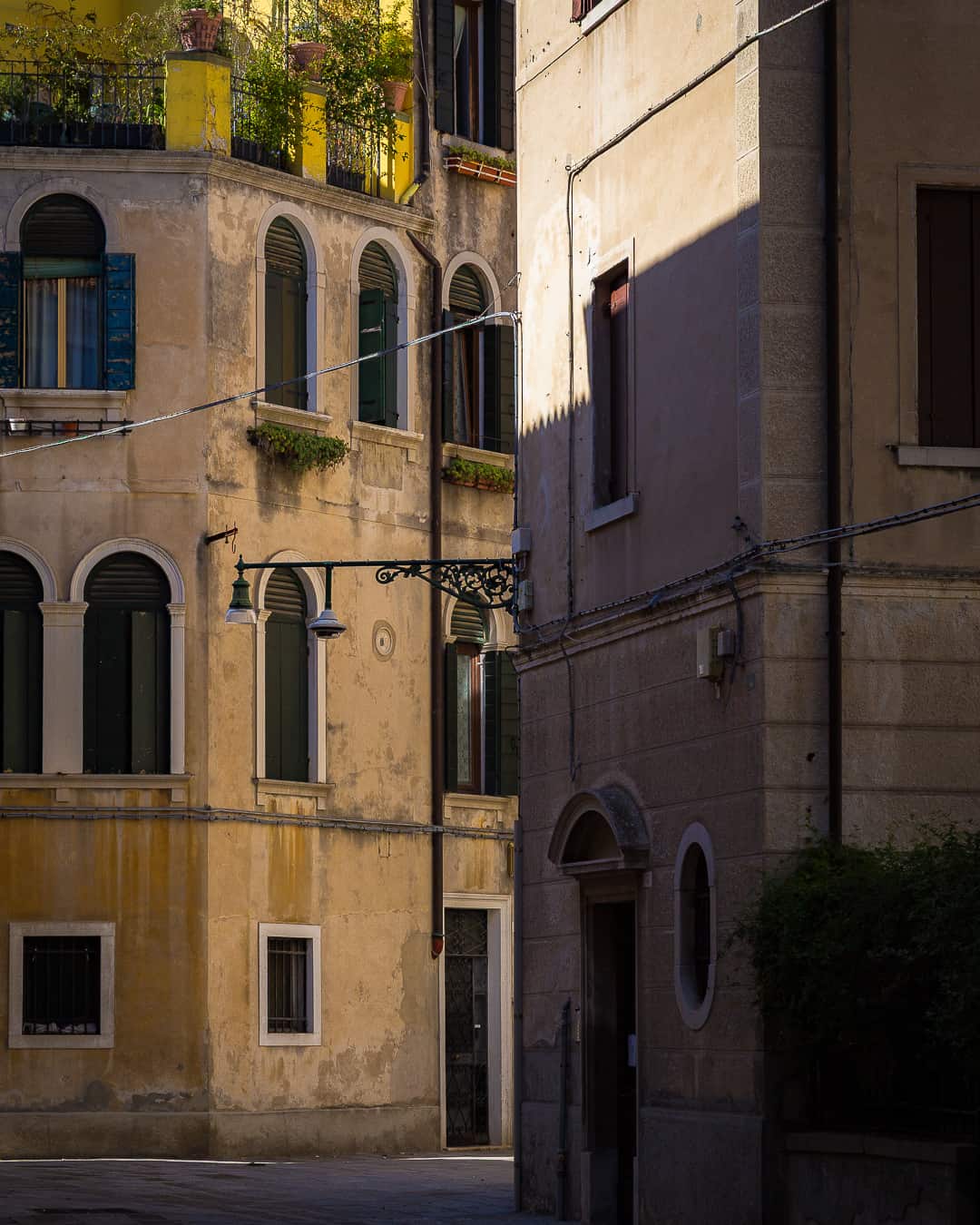
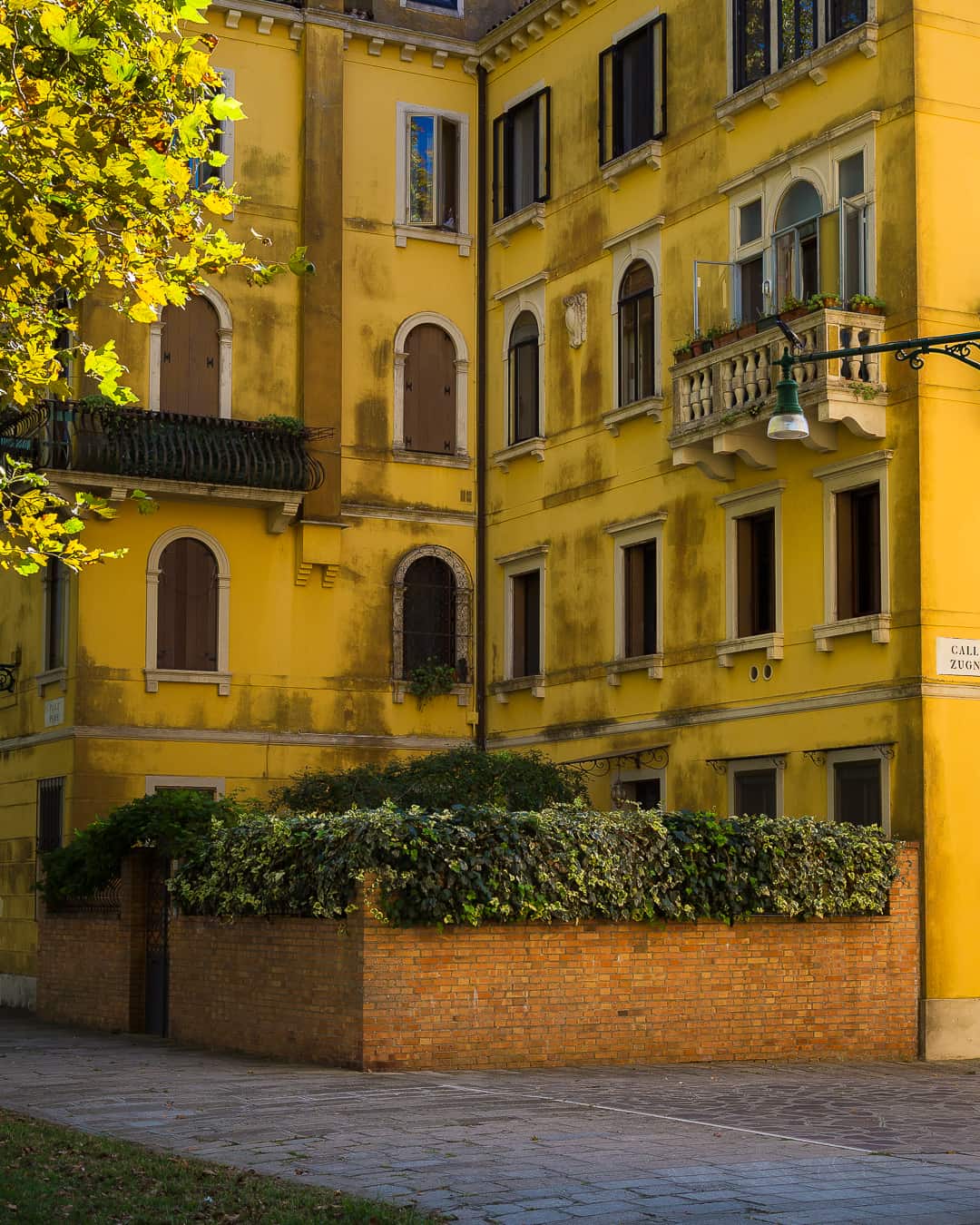
Yellow
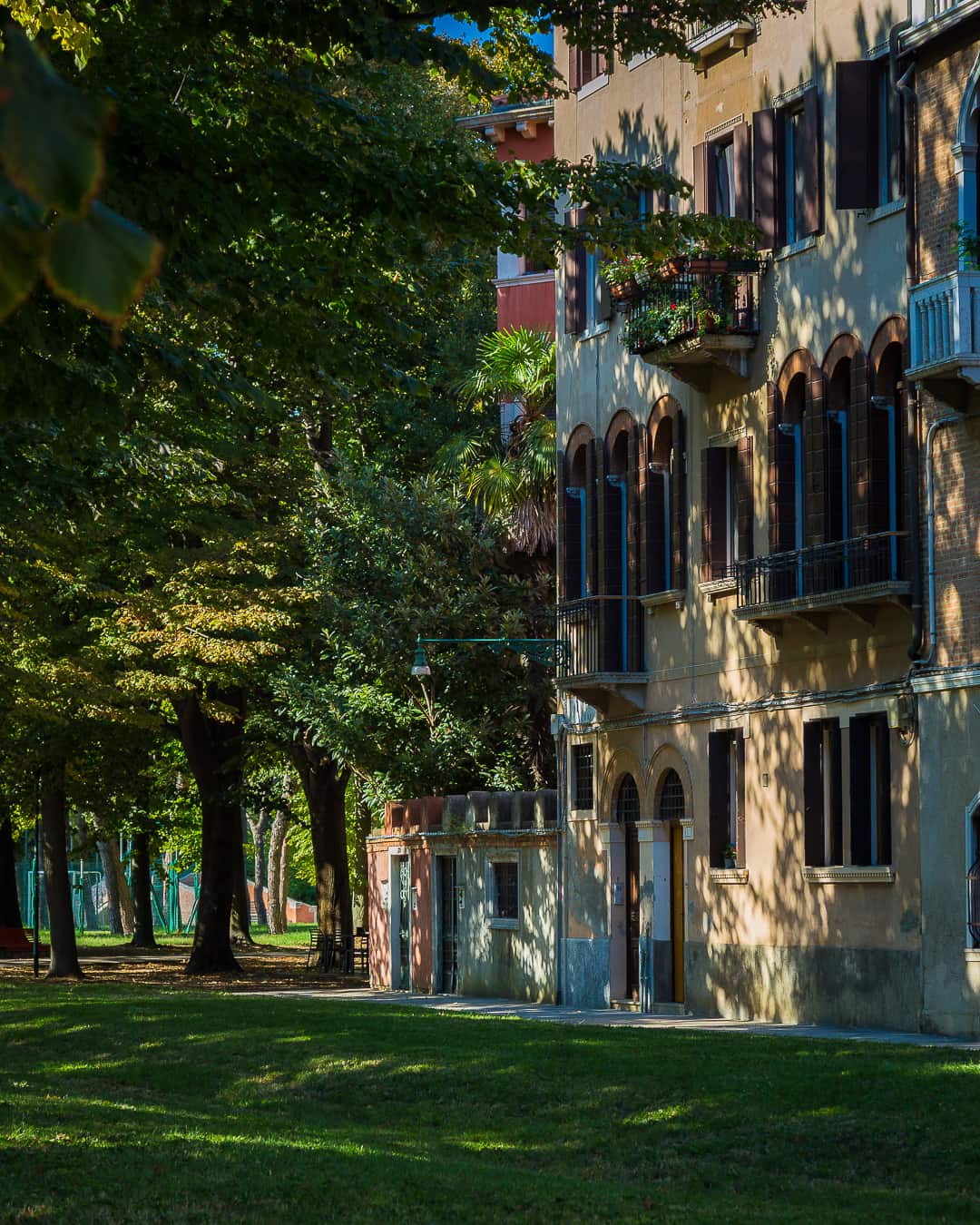
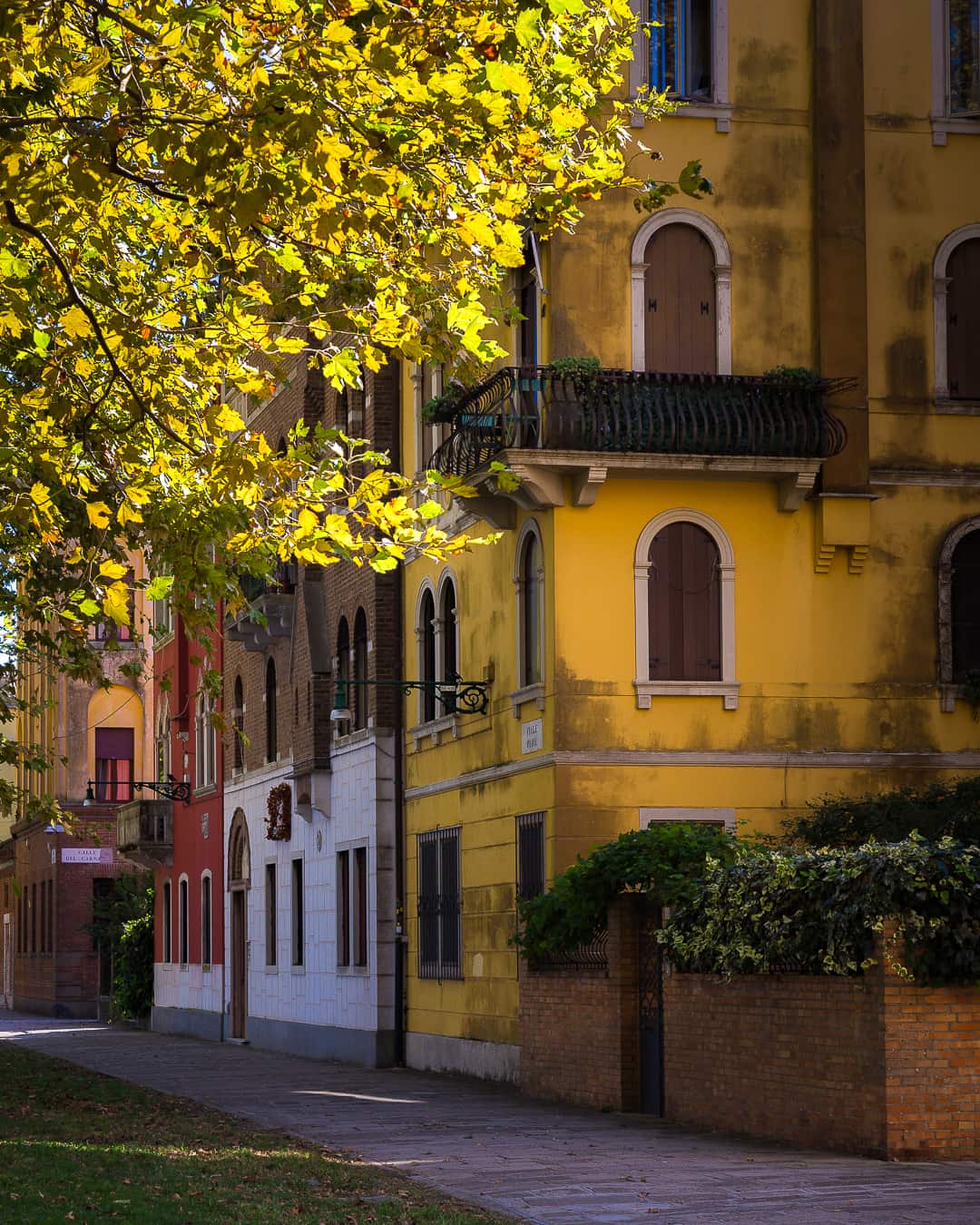
A yellow palazzo, a hedge, the first trees turning yellow. In autumn this part of the city glows with warm colours.
The doorway
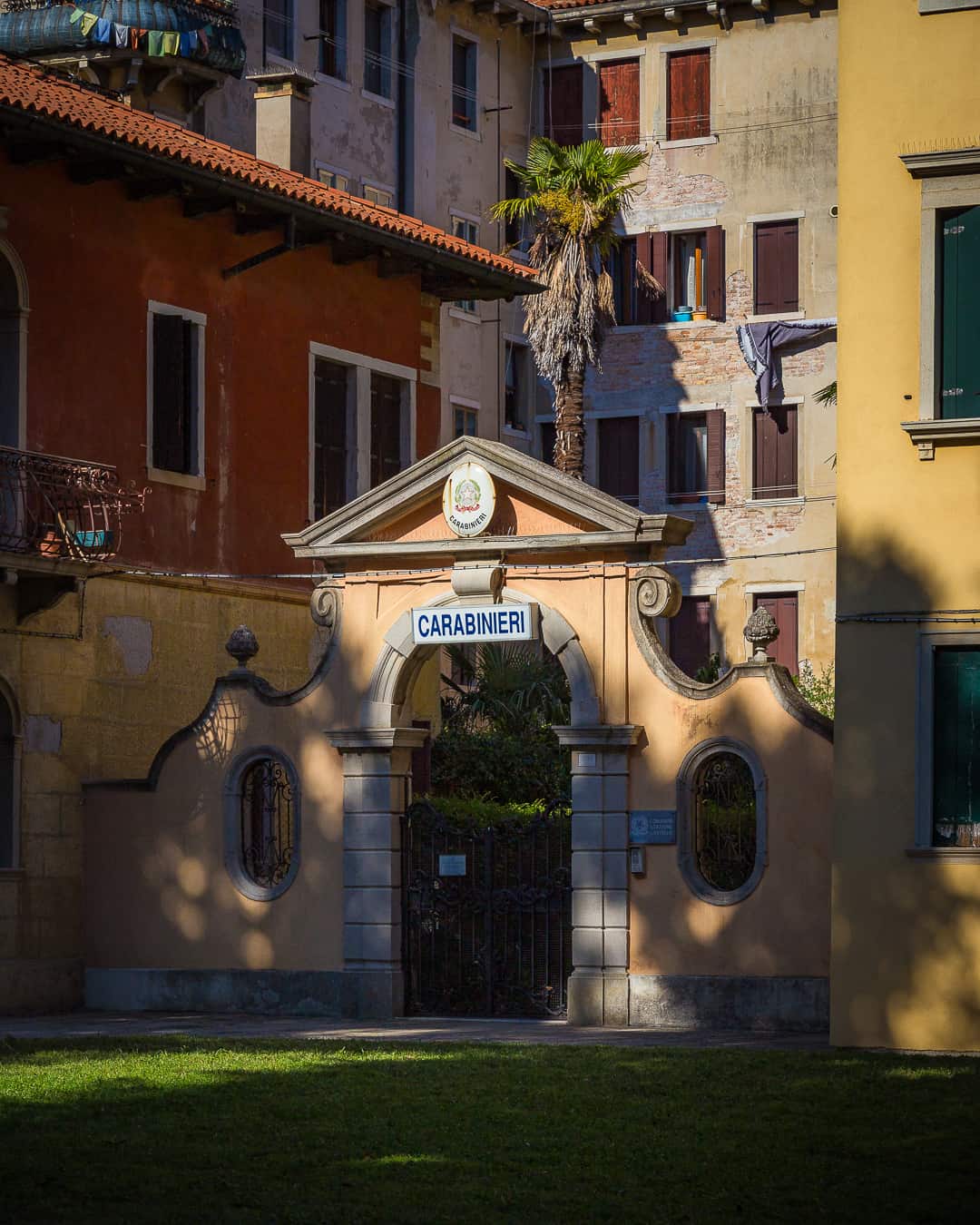
A doorway with a pediment, an inscription, coloured houses around it. Coats of arms, dates and inscriptions over the doors tell who lived here, century after century.
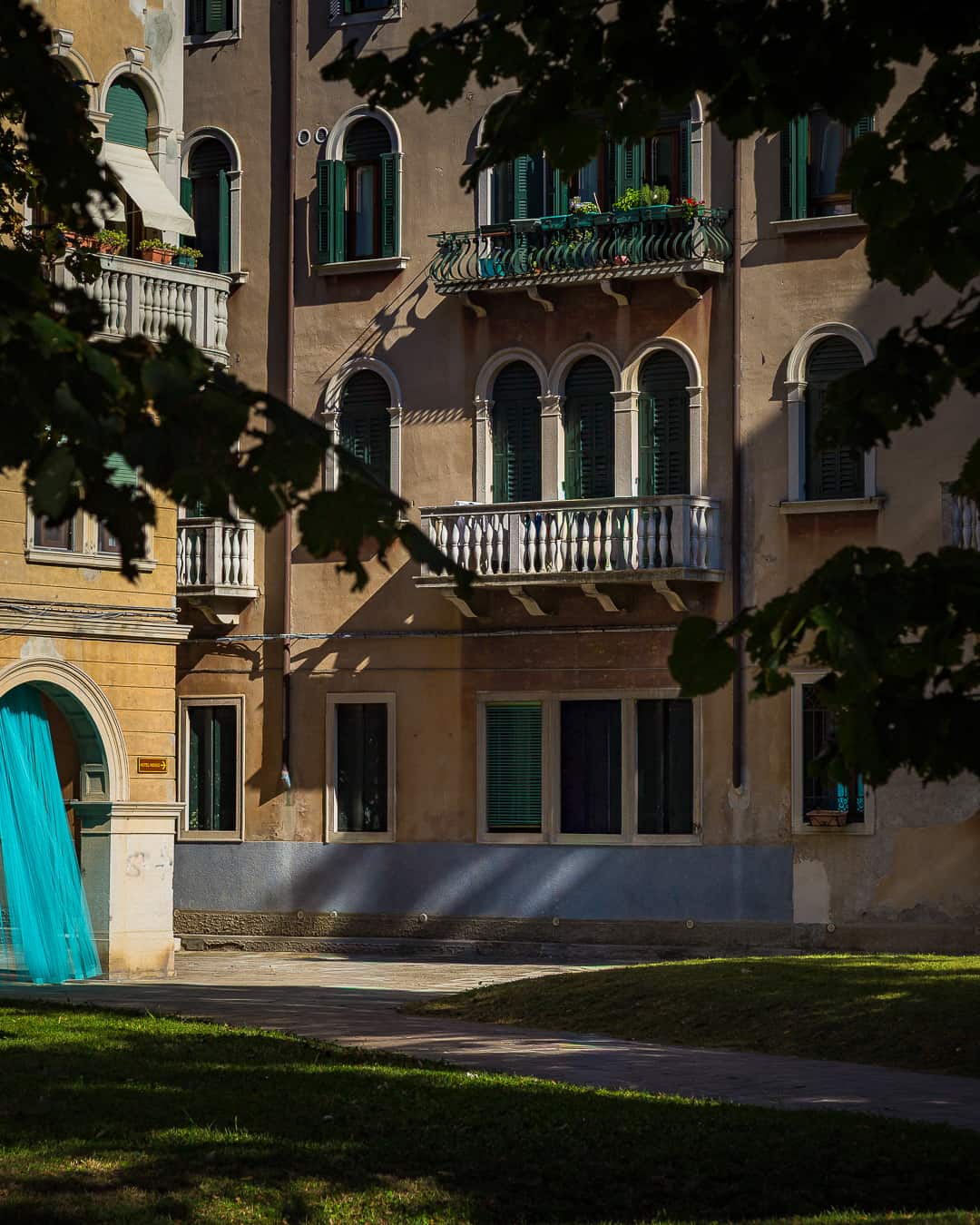
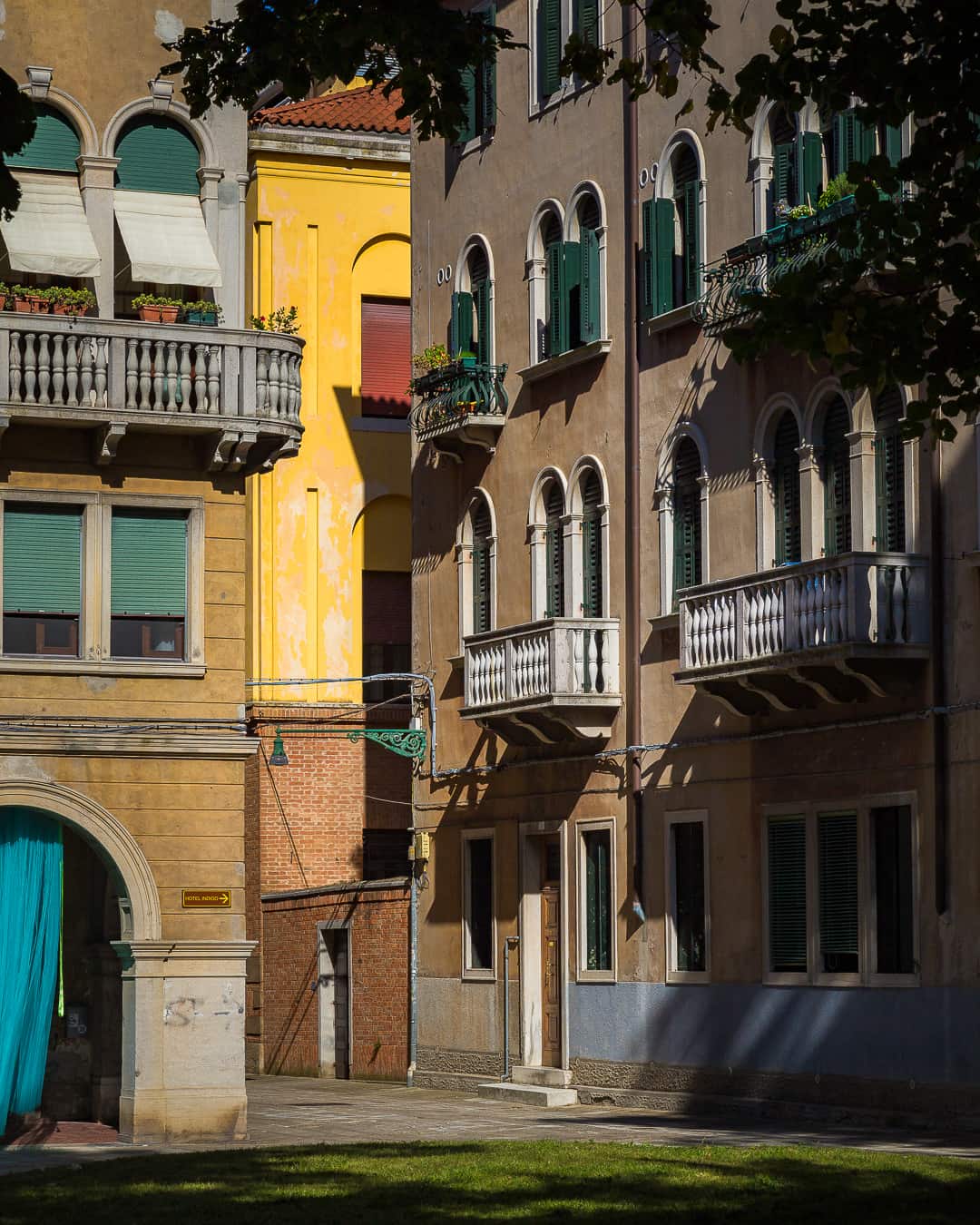
Through the leaves
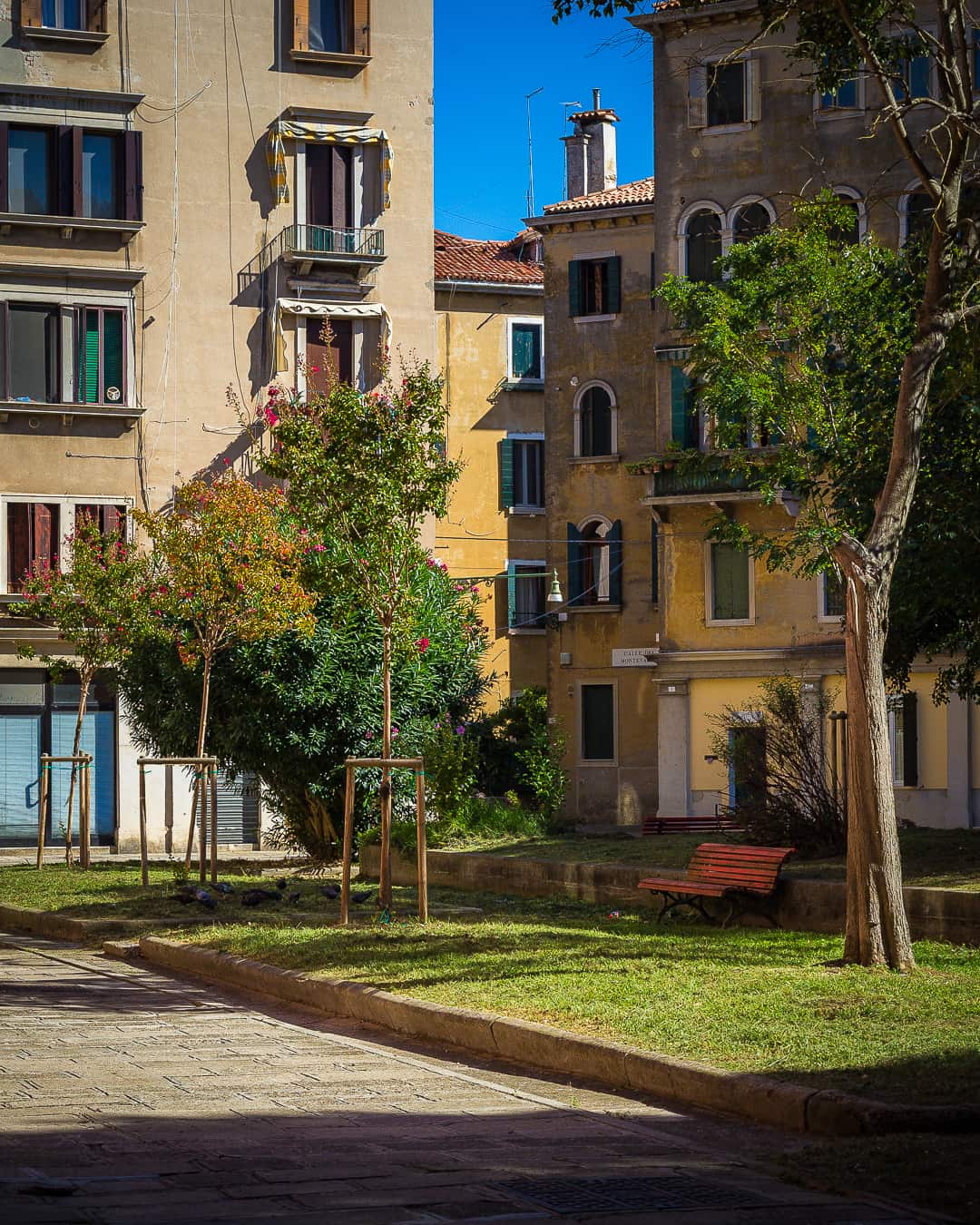
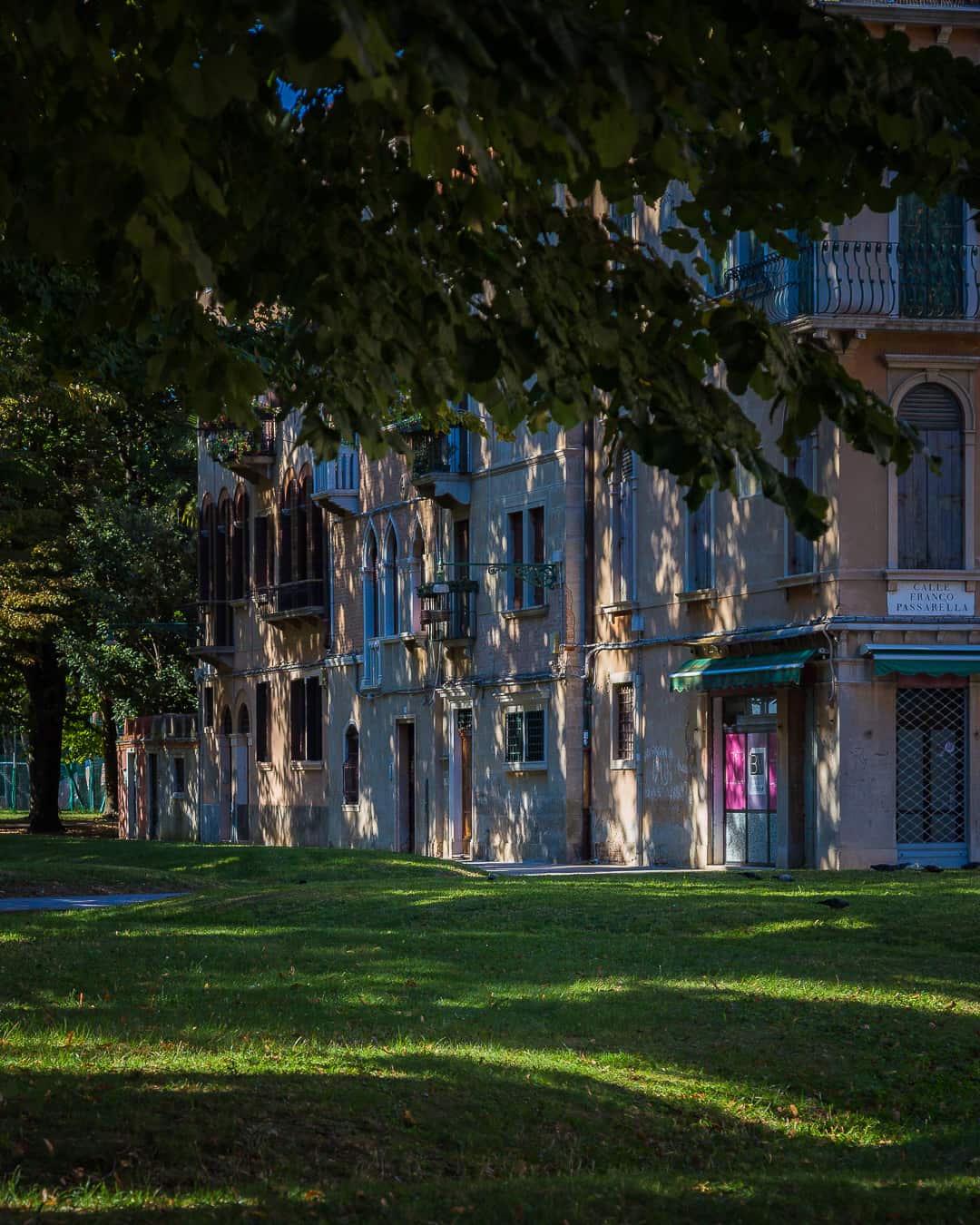
Balconies, blue windows, a yellow façade behind the leaves. Here the green works as a curtain: it filters the sun in summer and lets it through in winter.
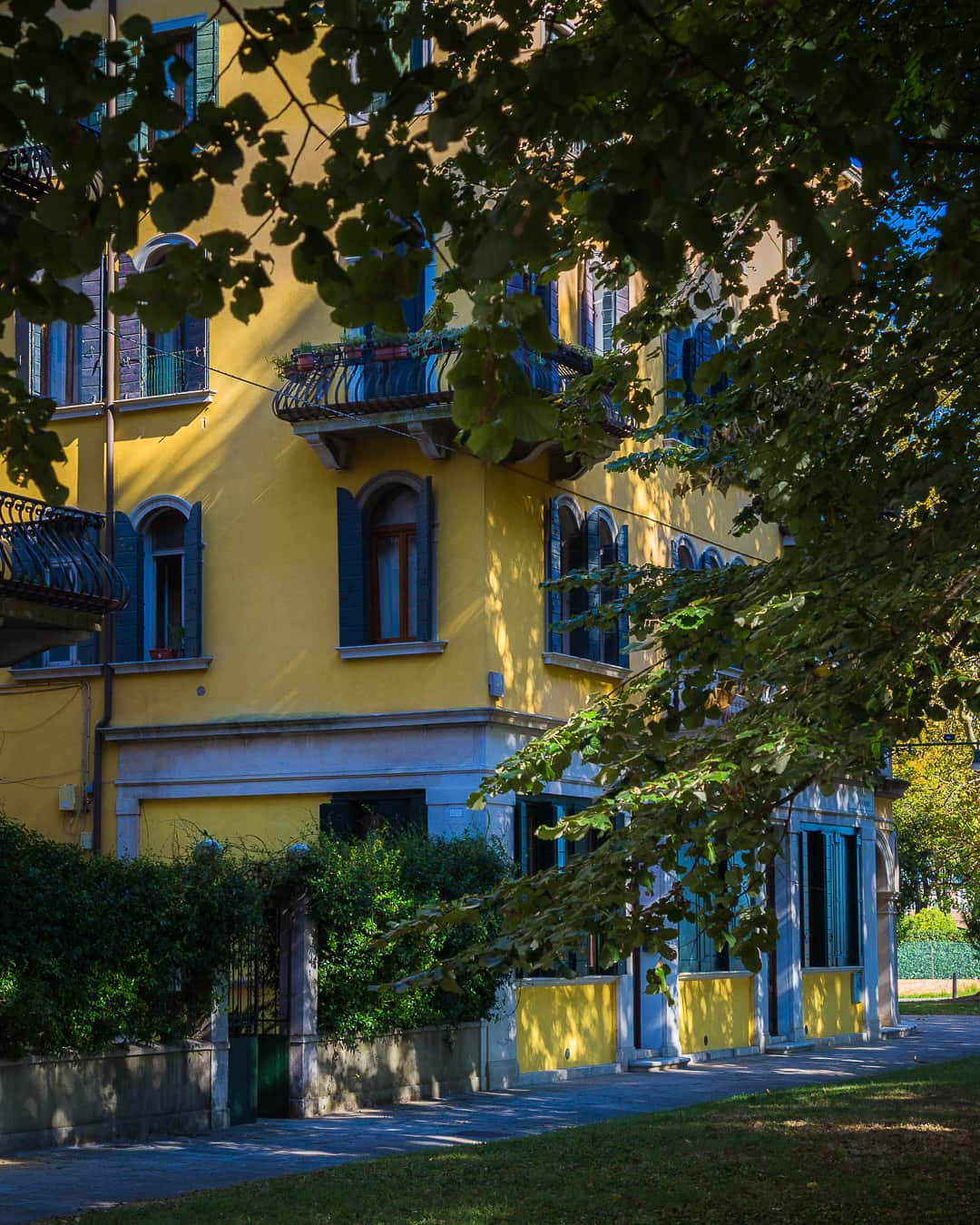
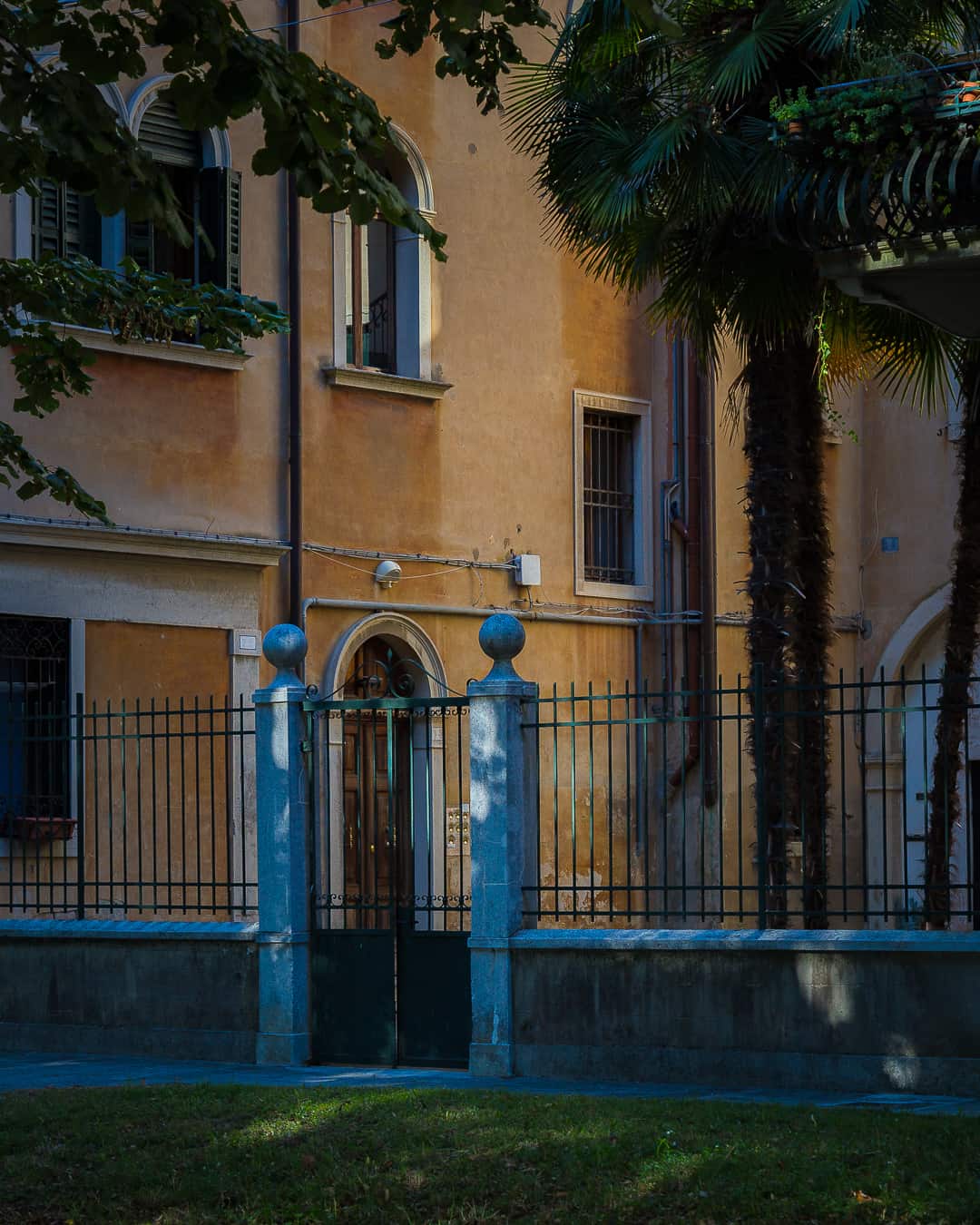
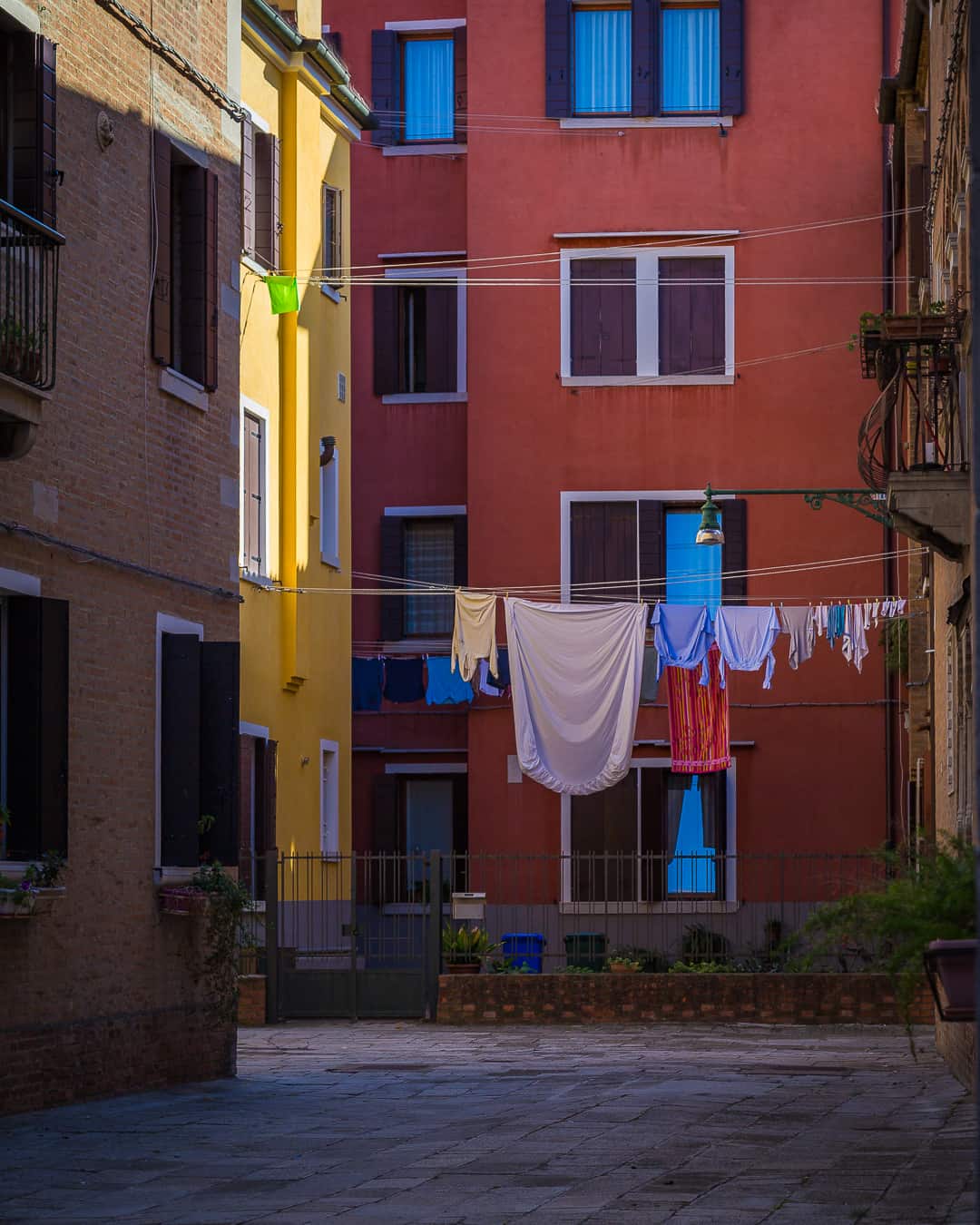
Washing over the campo
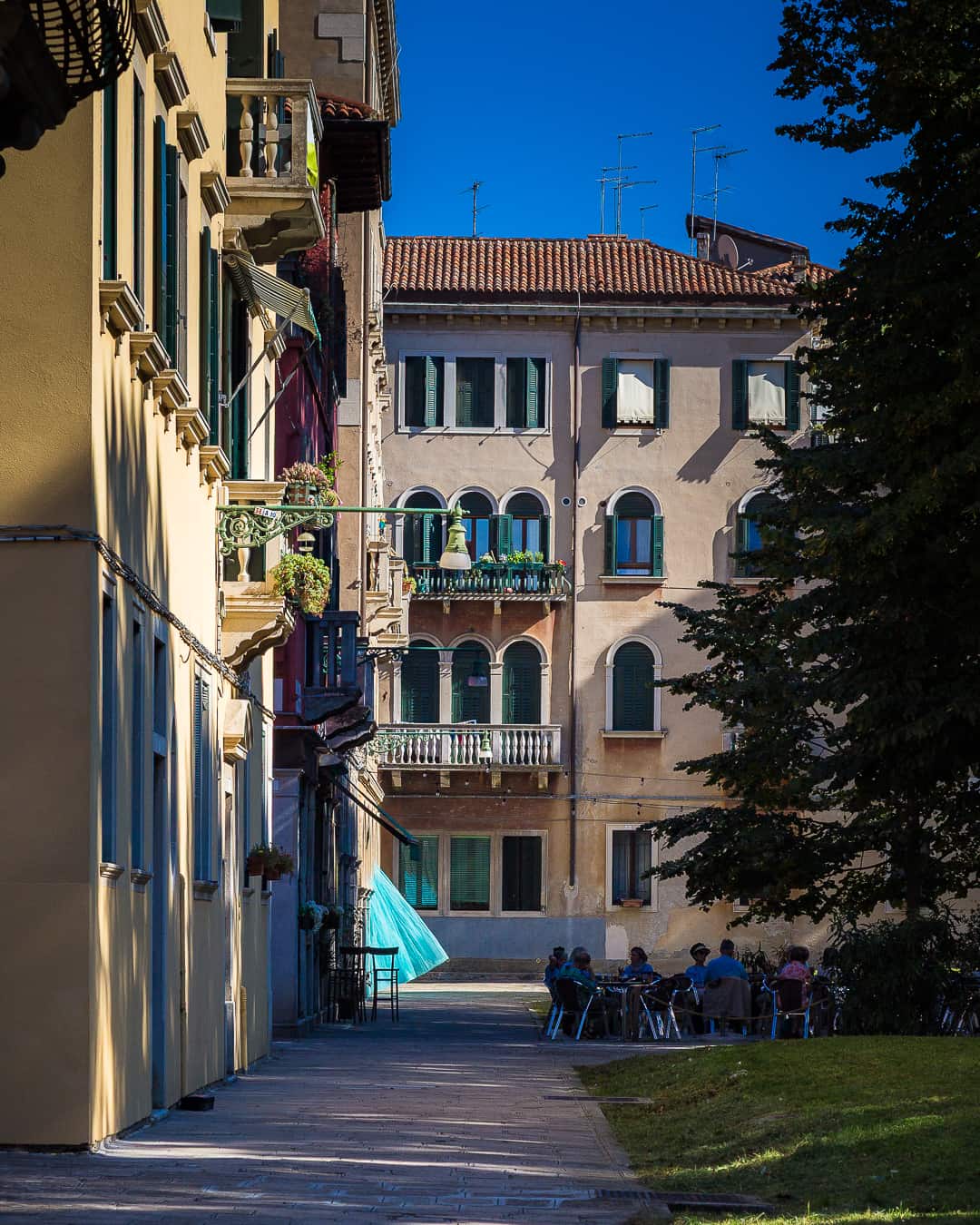
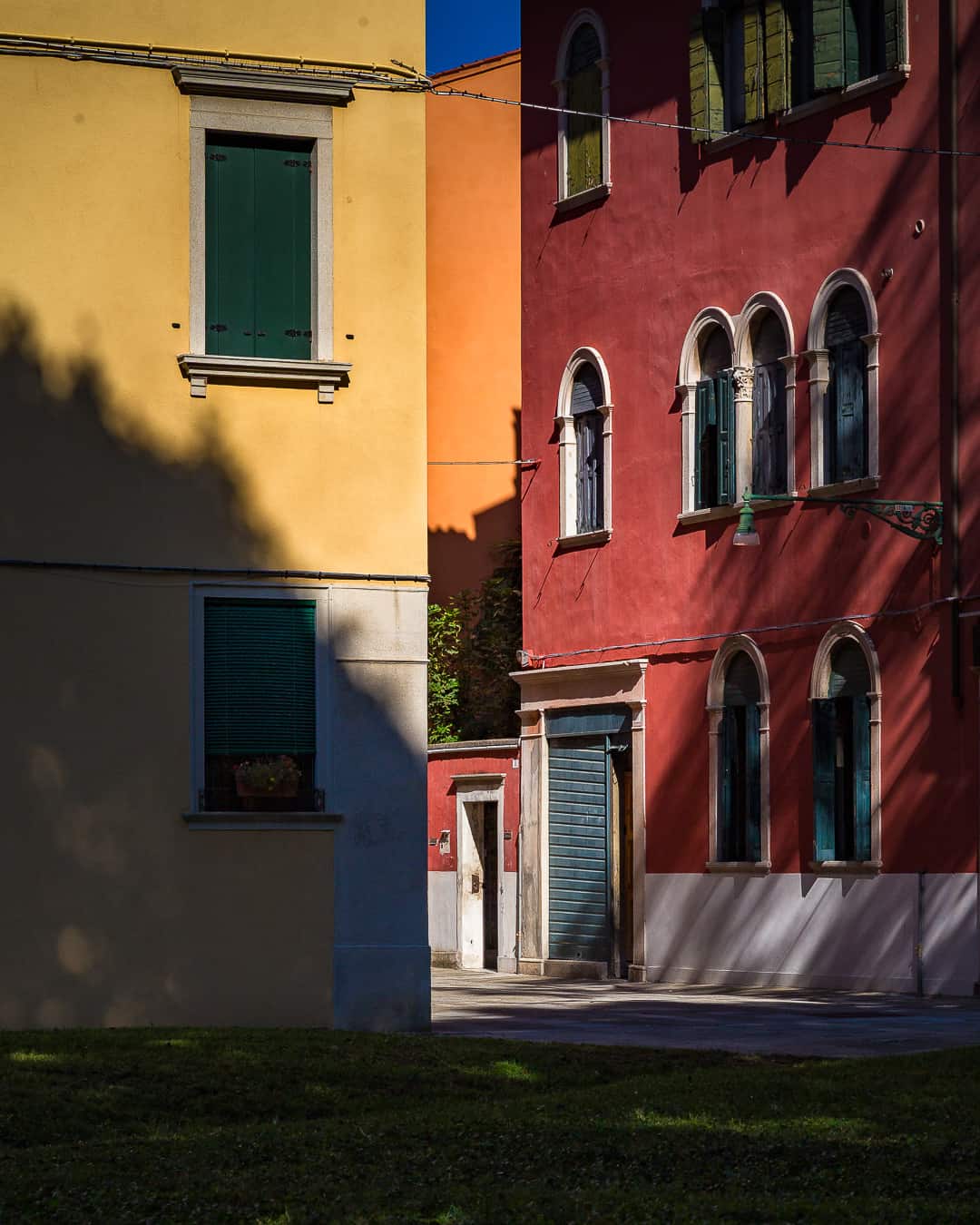
White sheets and coloured washing between two red houses. Even far from the narrow calli, washing remains the flag of Venice.
Getting there
- Where
- Venice, in the Venetian lagoon: six sestieri, with the island of the Giudecca opposite.
- Getting around
- On foot and by vaporetto. Take a map, but let yourself get lost too.
- The gardens
- The Giardini and the Serra along the Viale Garibaldi, in Castello; further on, the Sant’Elena pine wood.
- The squero
- The squero of San Trovaso is a working yard: watch it from the quay opposite.
- Our advice
- Go out early, before eight: the calli are empty and the light is low.
Information checked on 21 November 2026.
Sources
- Molino Stucky — Wikipedia
- Hilton Molino Stucky Venice, history — Historic Hotels Worldwide
- La Giudecca tra arte, storia e archeologia industriale — Venezia Unica
- Squero di San Trovaso — A View on Cities
- The Squero of San Trovaso — Google Arts & Culture, Comitato Giovani UNESCO
- Raccolta e gestione dell’acqua meteorica nella Venezia storica — Ateneo Veneto, 2023
- Vera da pozzo, scheda di catalogo — Ministero della Cultura, SIGECweb
- Perché Venezia ha calli, campi e rii — Donna Moderna Travel
- I Giardini di Venezia tra il 1887 e il 1969 — Ateneo Veneto, 2013
- Giardini della Biennale — Italia.it
- Giardini, Serra e pineta di Sant’Elena — Venezia Unica
- I giardini di Venezia, itinerario completo — Il Nordest
- Venice parks and gardens — Europe for Visitors
Note
Photographs by William, also published on Instagram as @guglielmo.foto.
Texts and layout: WIDE Edizioni, Rho. Historical and practical information is checked against the sources on the previous page.
© 2026 WIDE Edizioni
A book for your place
We photograph villas, museums, villages and landscapes in natural light, and turn them into images ready for your website, print and social media. Or into pages to leaf through, like these.