WIDE Edizioni
Milan
Lombardy
Photographs by William
Looking up
Milan does not give itself away at first glance. It is a city to look at with your head tilted back, towards cornices, balconies and terraces, and to peer into behind its great doors, where courtyards and gardens open up.
These pages cross it on foot: from the museums and their gilded frames to the Galleria, from the yellow façades to the narrow streets, from the Liberty palazzi to the brick churches, and on to Parco Sempione.
A Milan in no hurry, far from the picture people have of it.
I
The museums
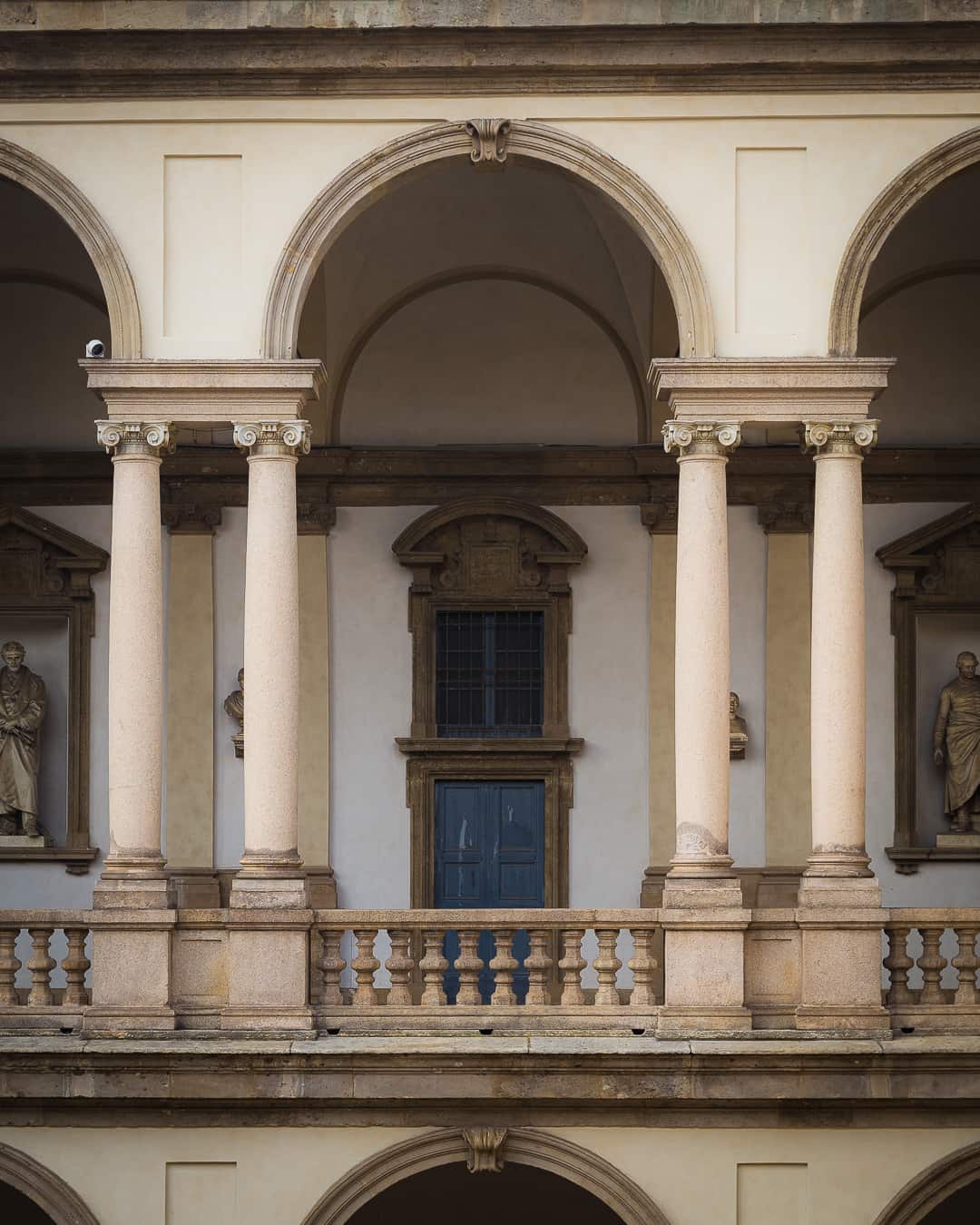
The Pinacoteca di Brera opened on 15 August 1809, Napoleon’s birthday, in the palazzo that Francesco Maria Richini had rebuilt in the seventeenth century.
The same building houses the Academy of Fine Arts, the Botanical Garden and the Biblioteca Braidense, founded in 1770 by Empress Maria Theresa of Austria.
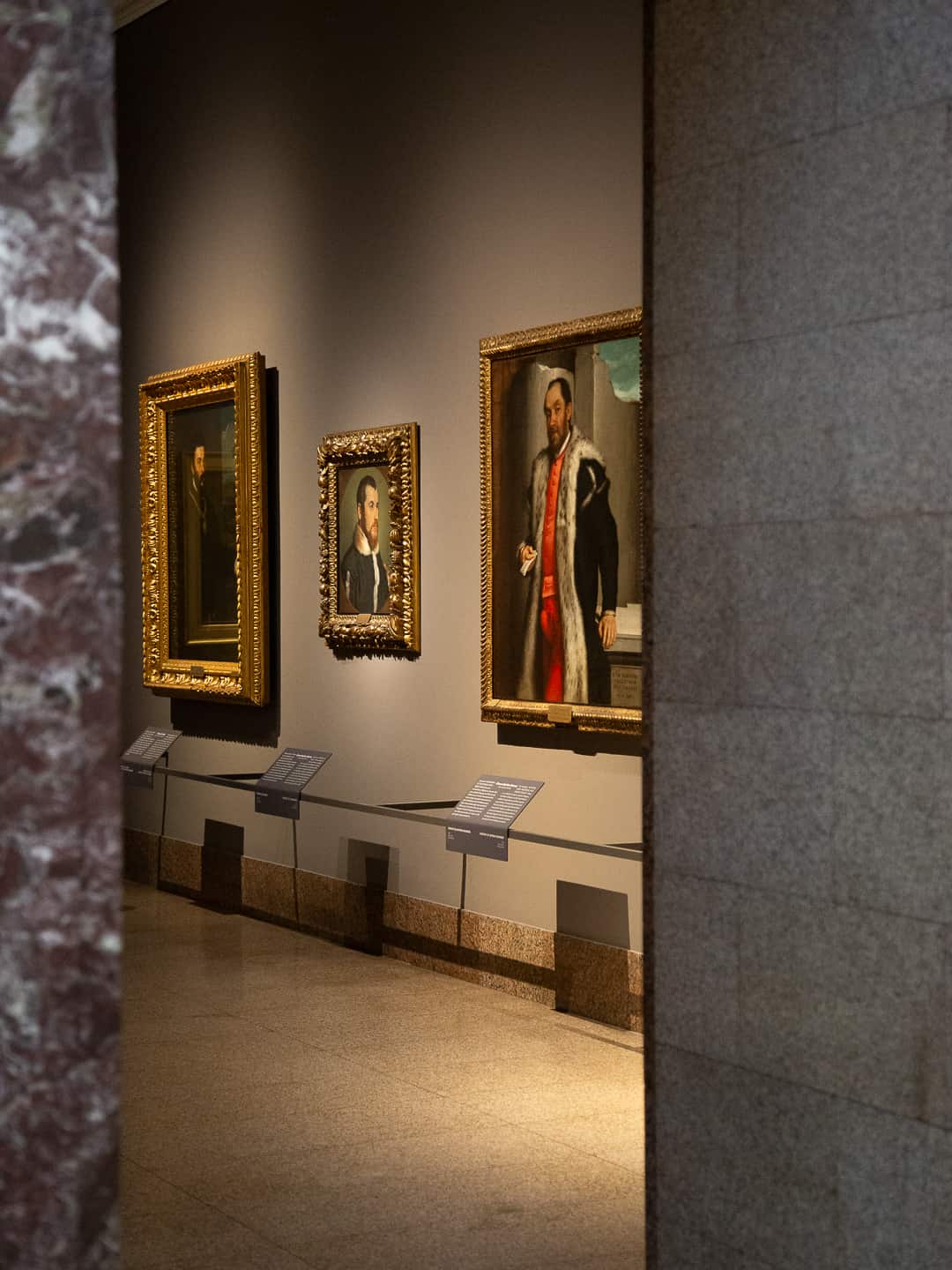
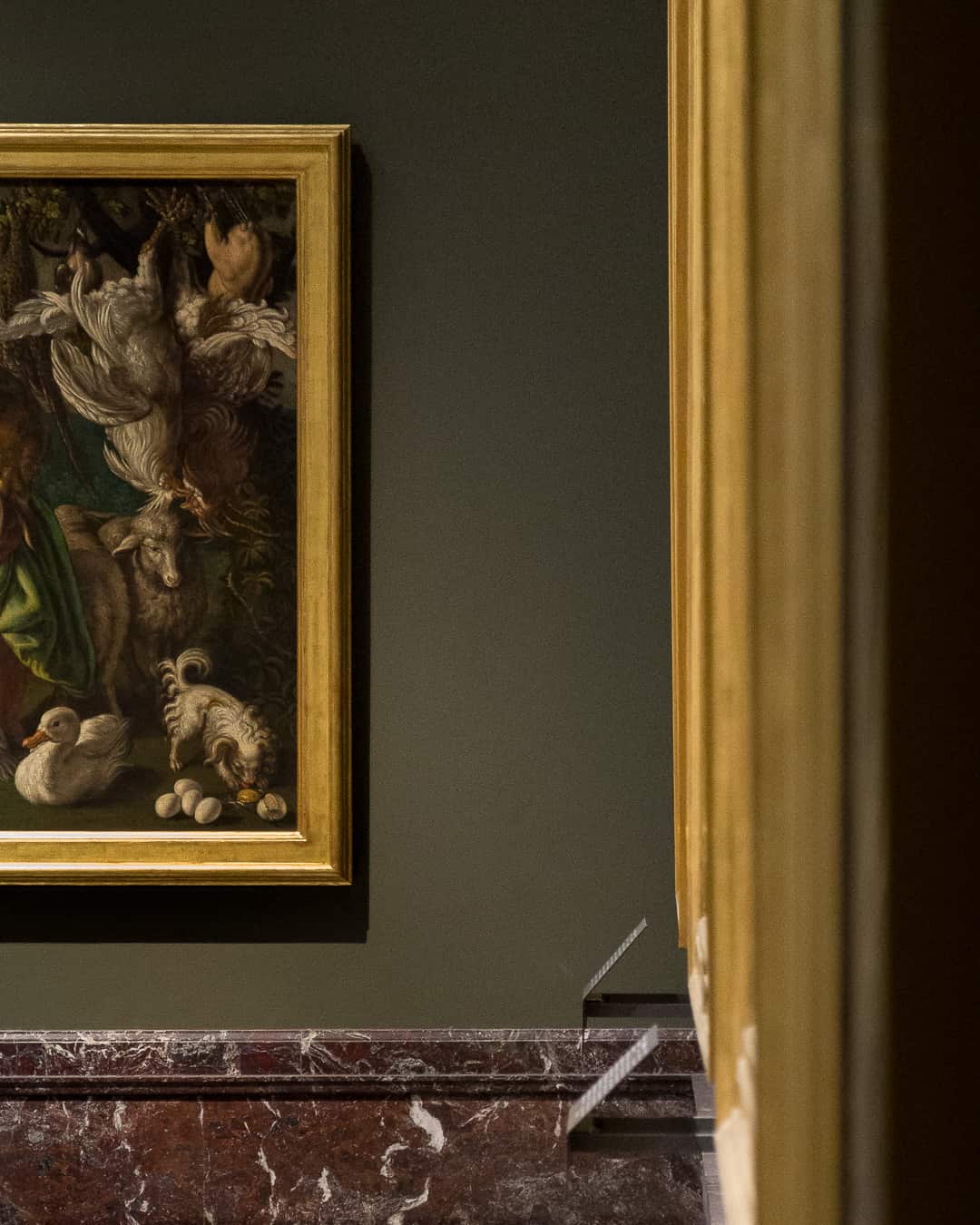
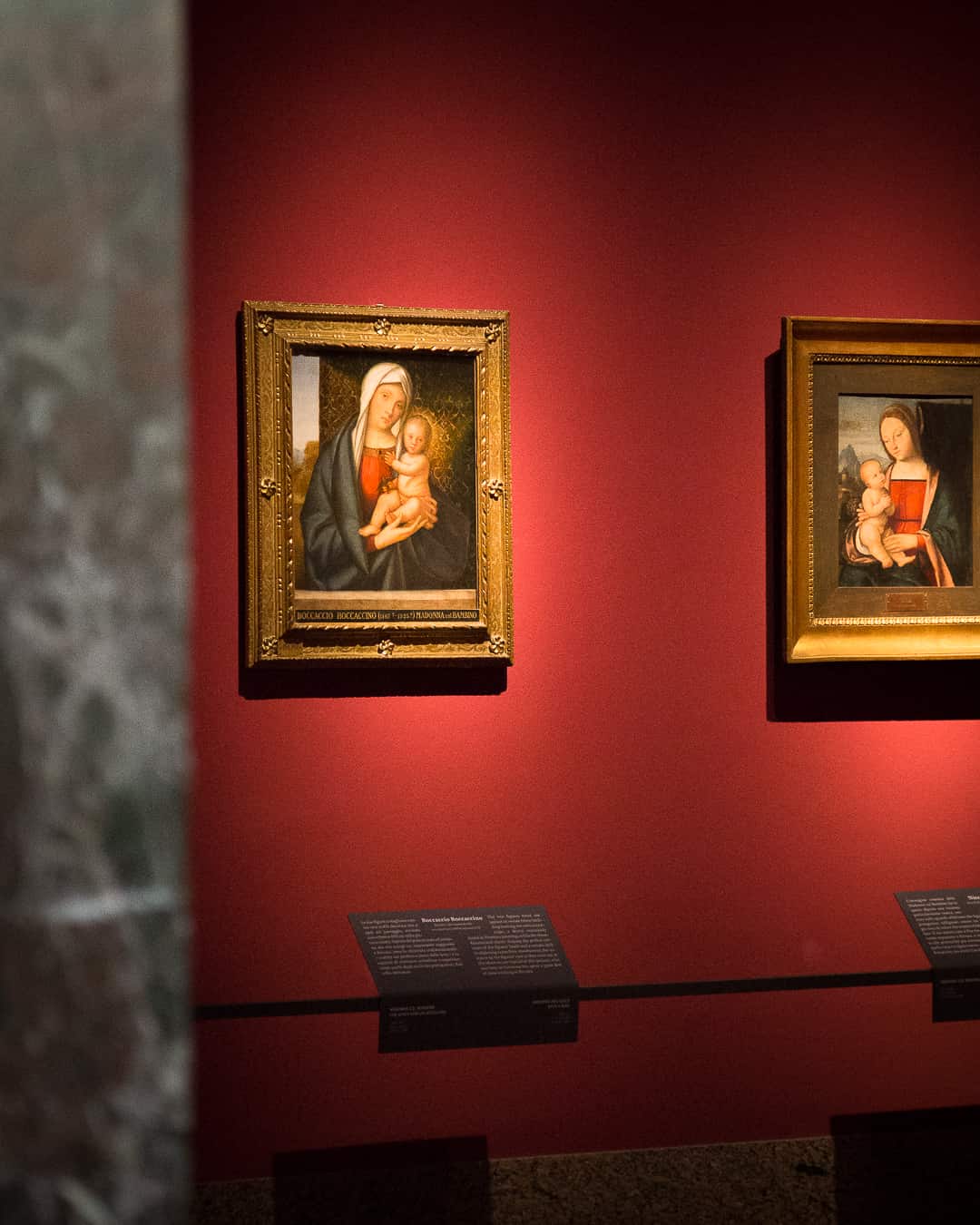
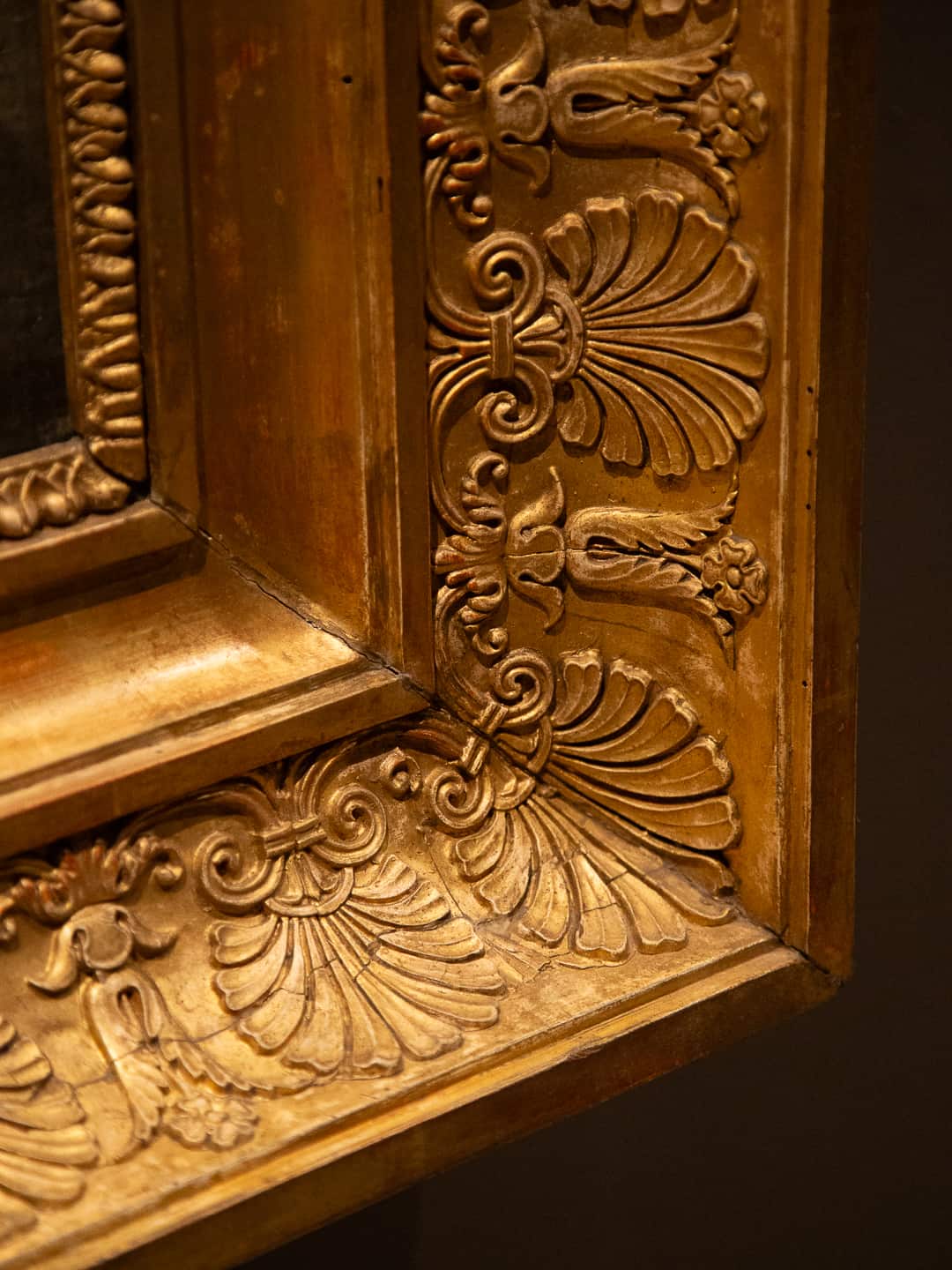
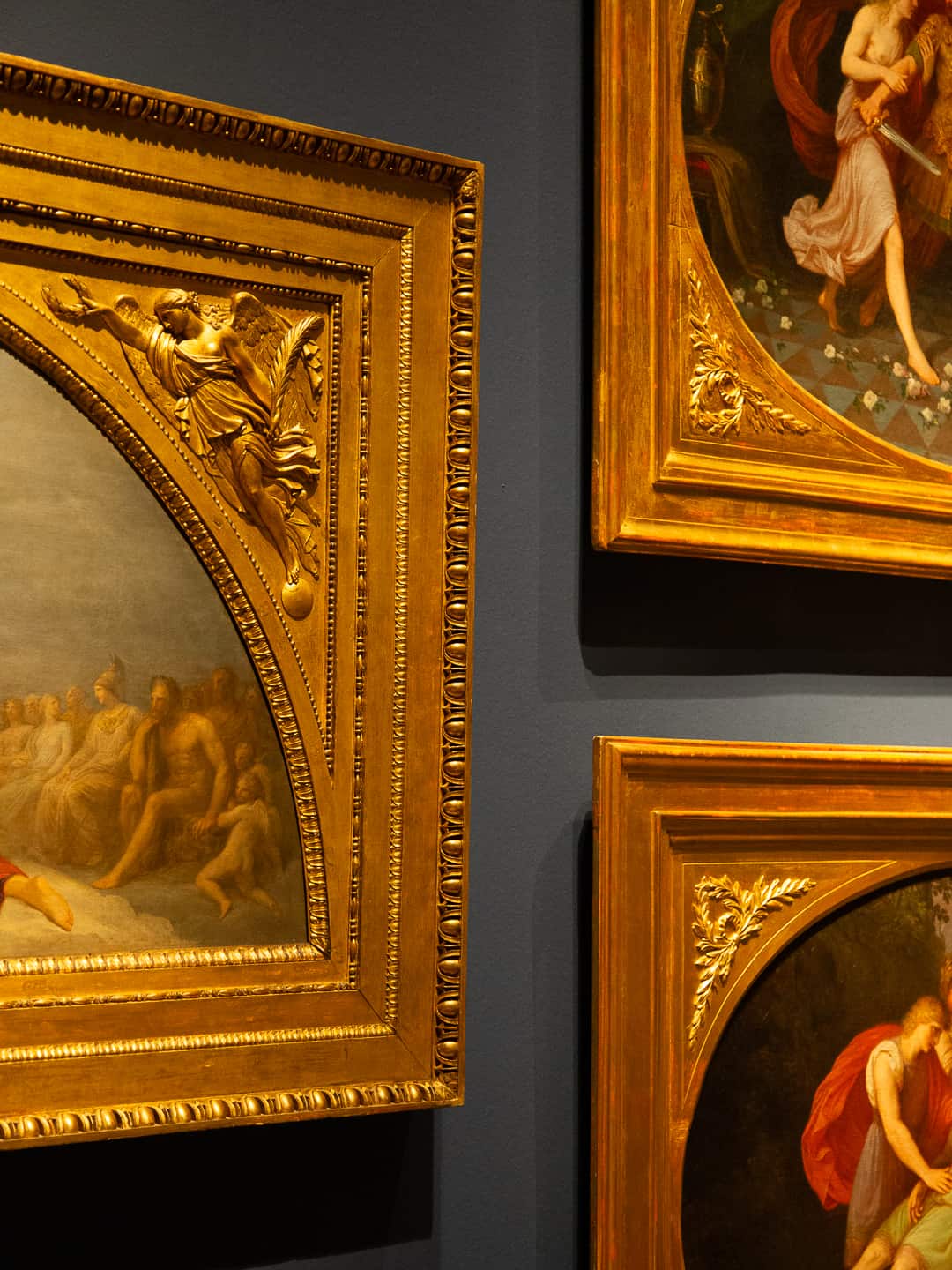
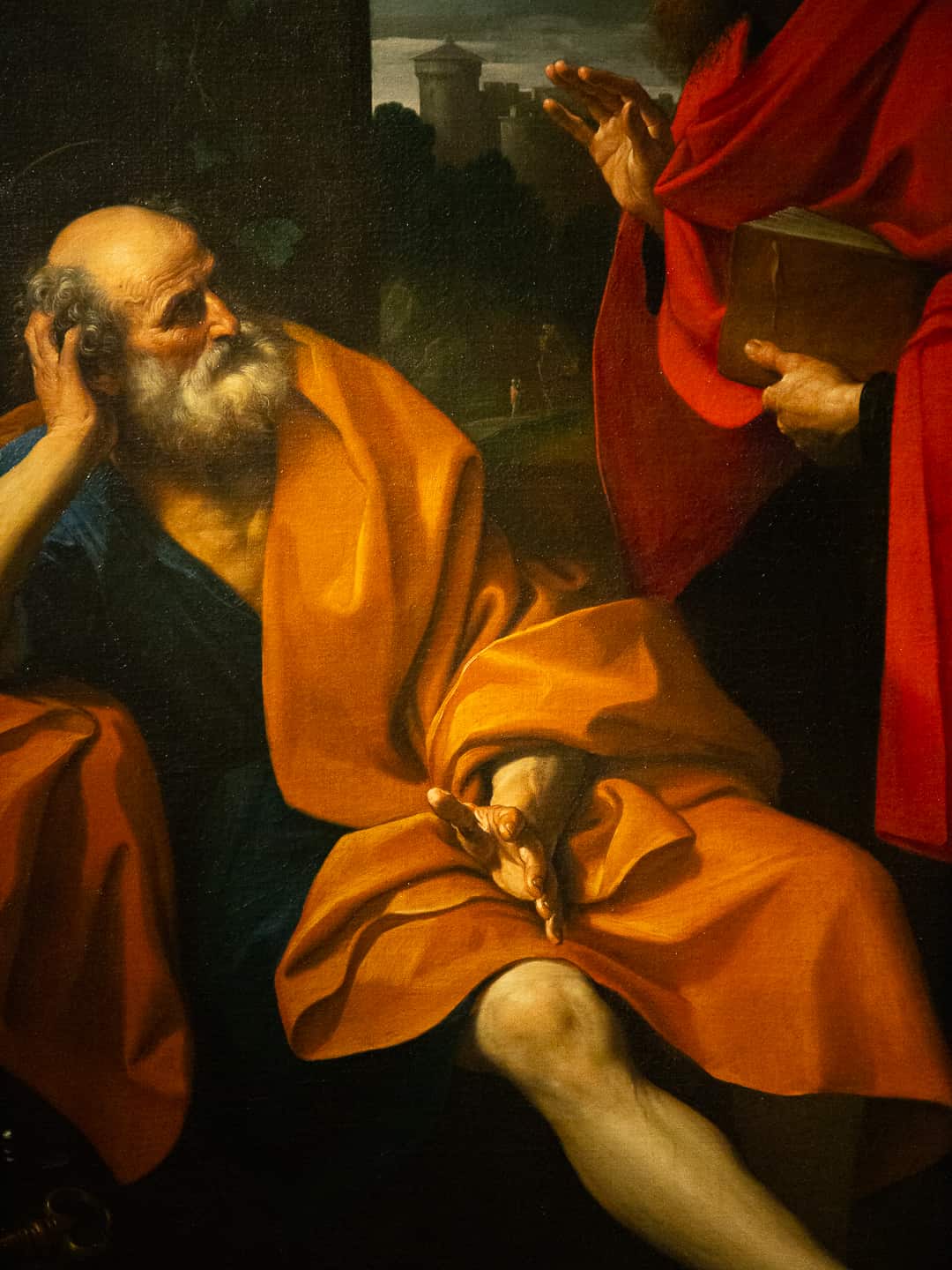
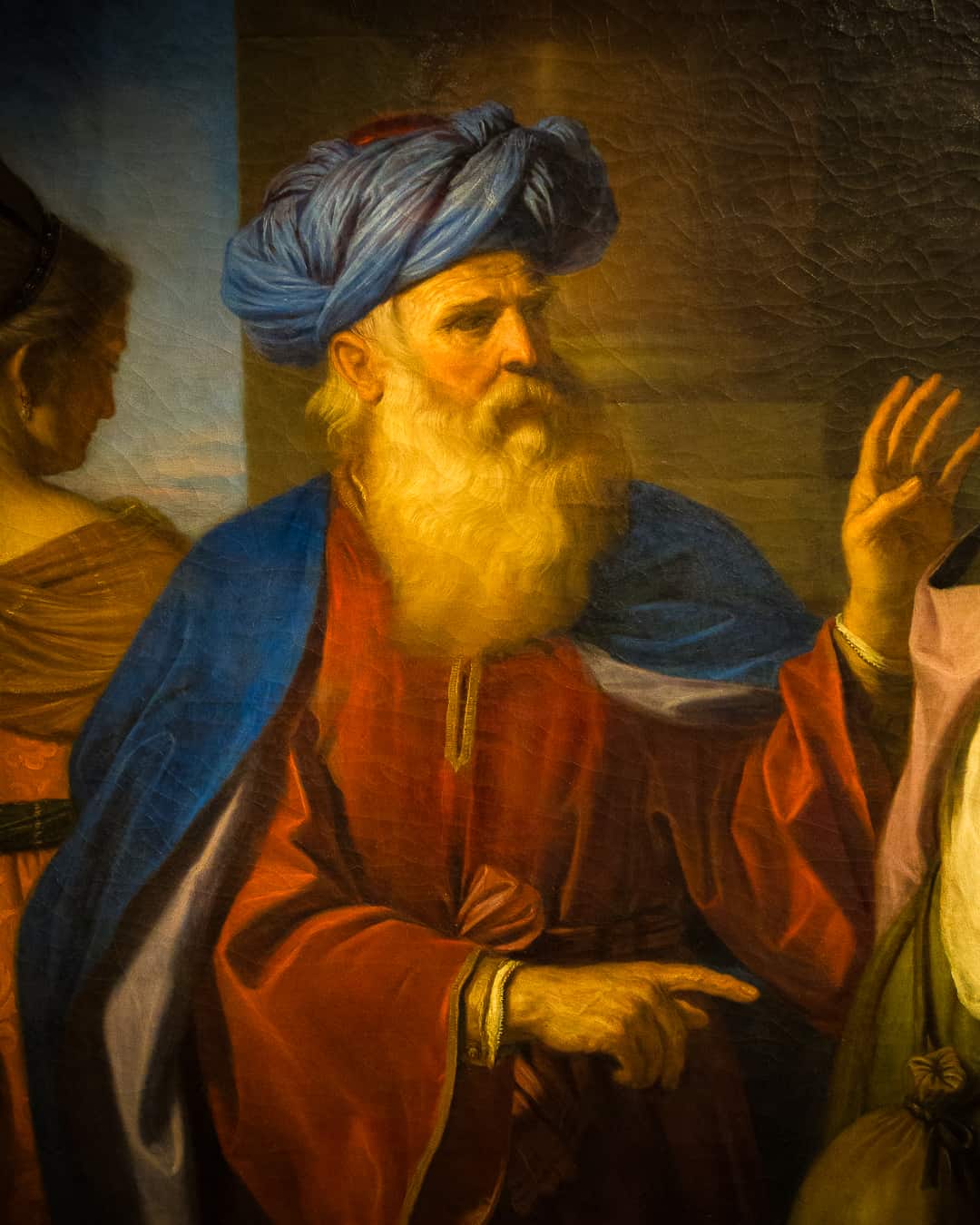
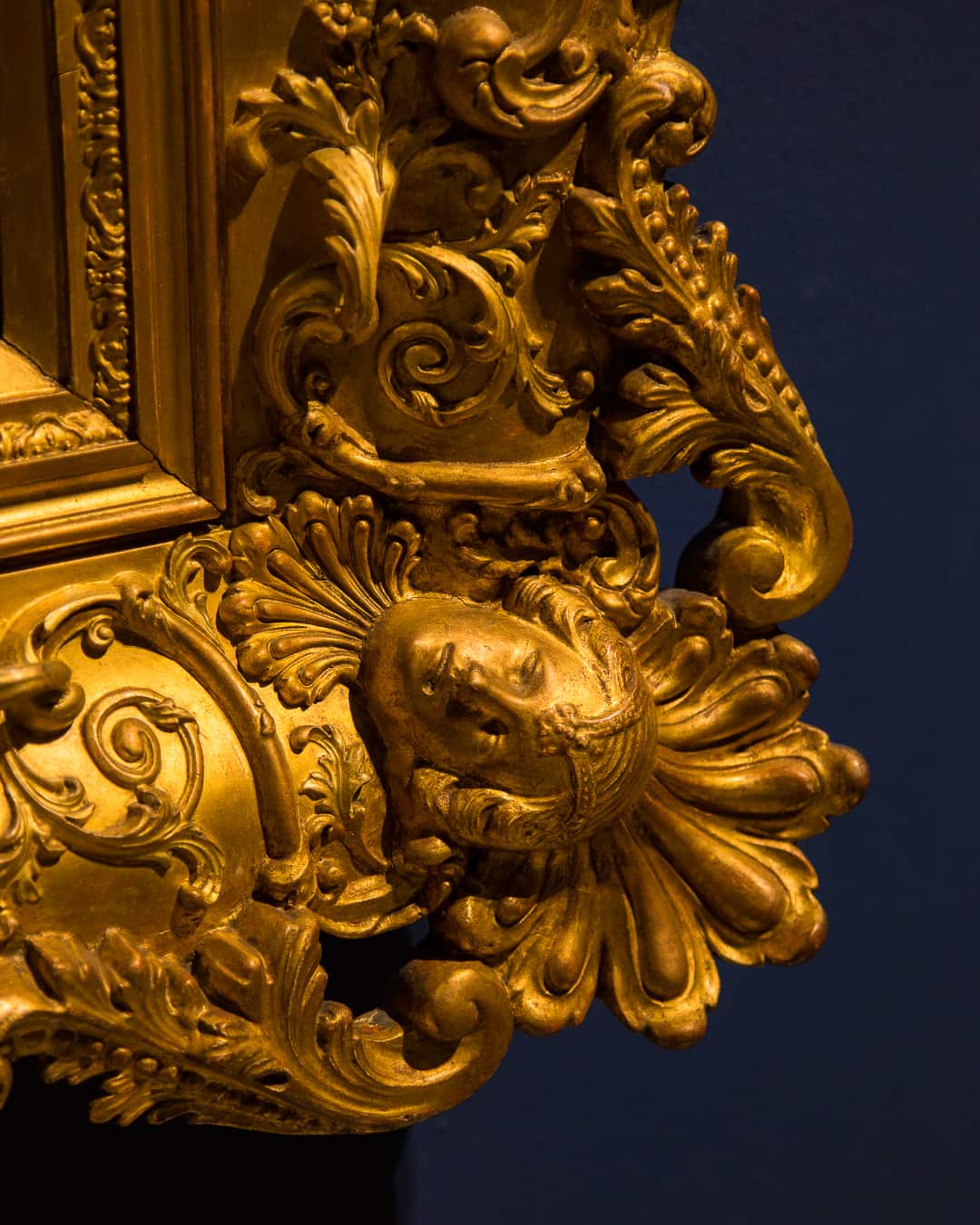
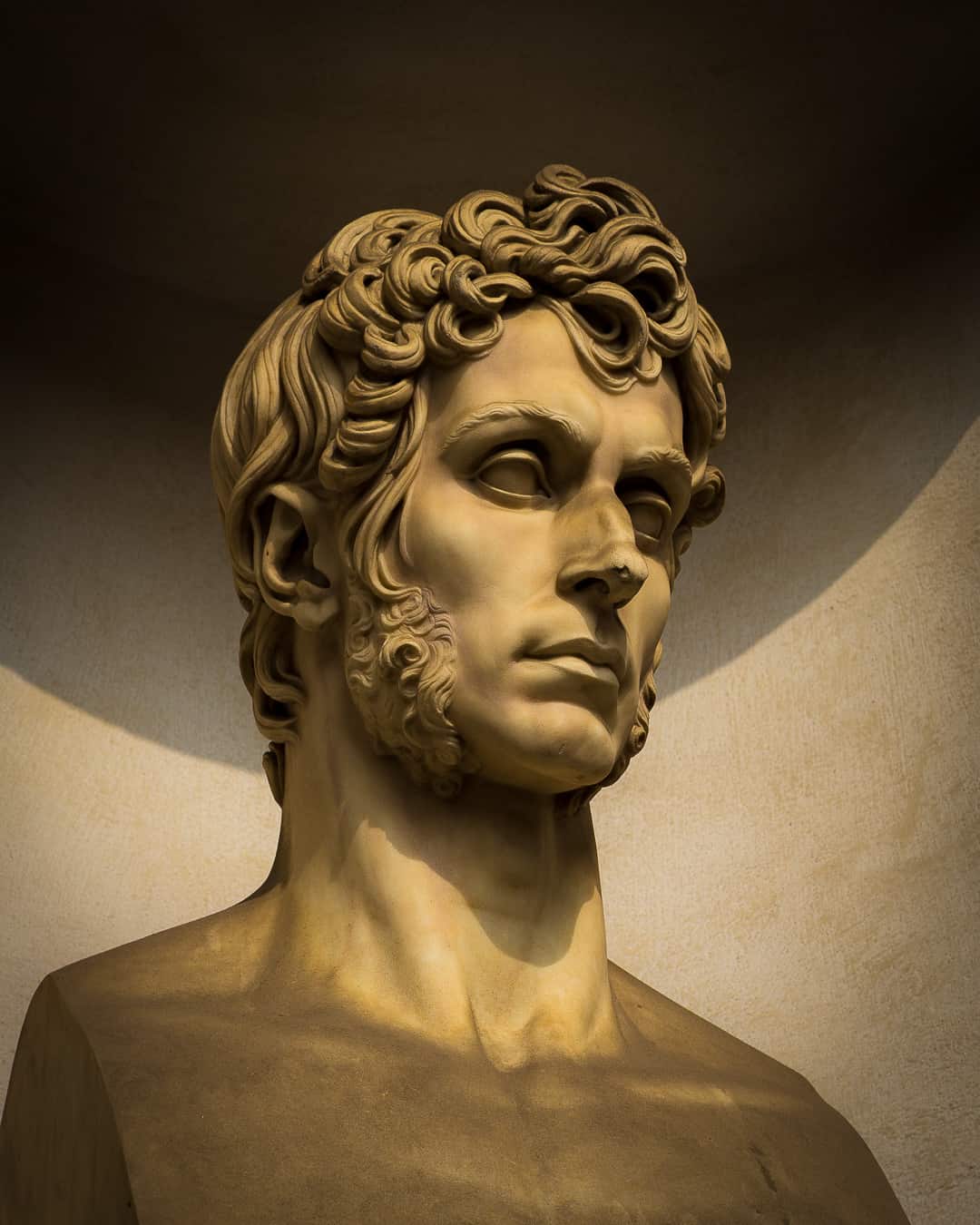
In its rooms hang the great names: Piero della Francesca, Raphael, Bramante, Mantegna. And sometimes the frames alone are worth the trip.
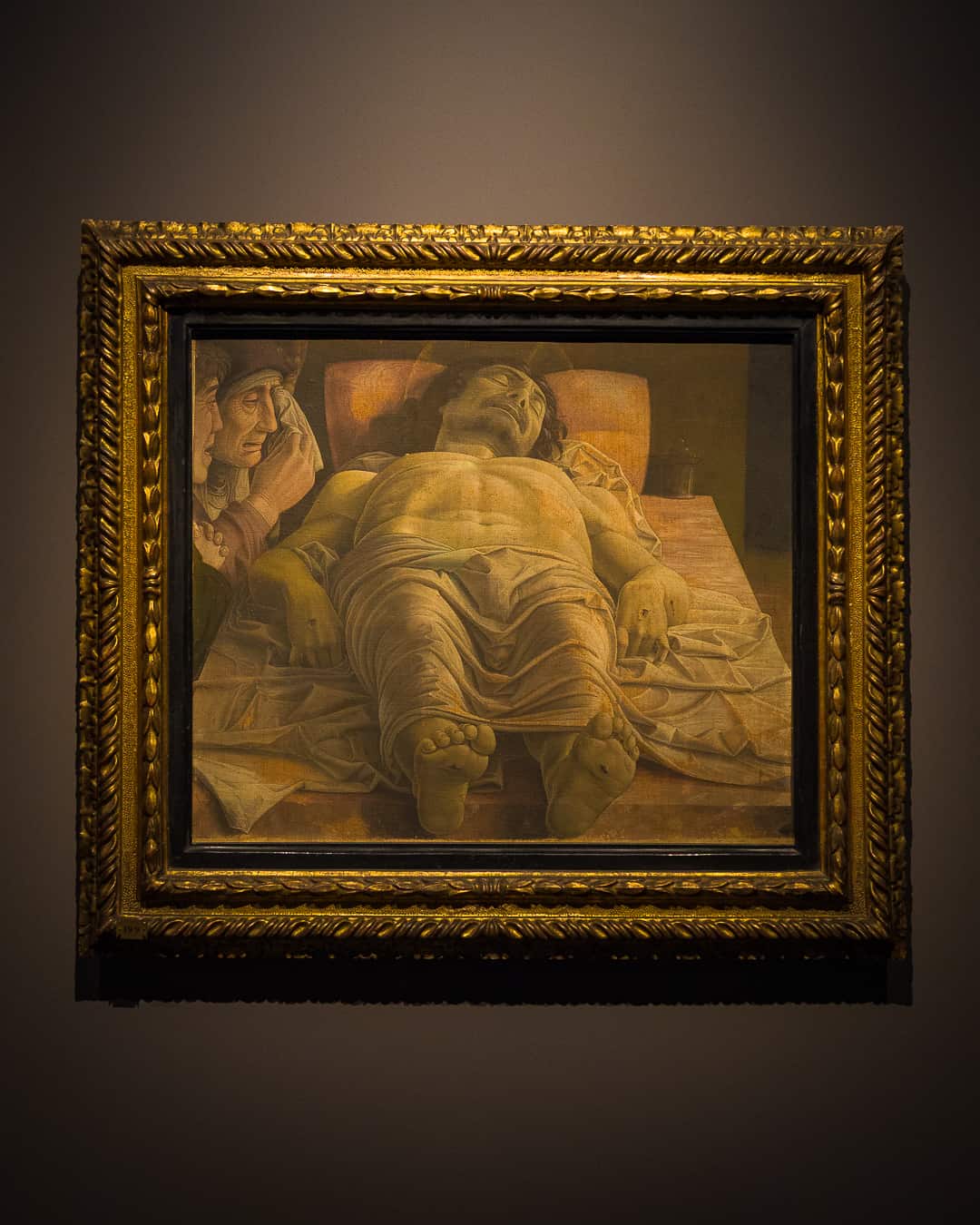
The Dead Christ
A dark room, low light, the body of Christ seen from the feet. Andrea Mantegna’s Dead Christ came to Brera in 1824, bought from the heirs of the painter Giuseppe Bossi: a foreshortening so daring it places the viewer at the foot of the bed.
Gold
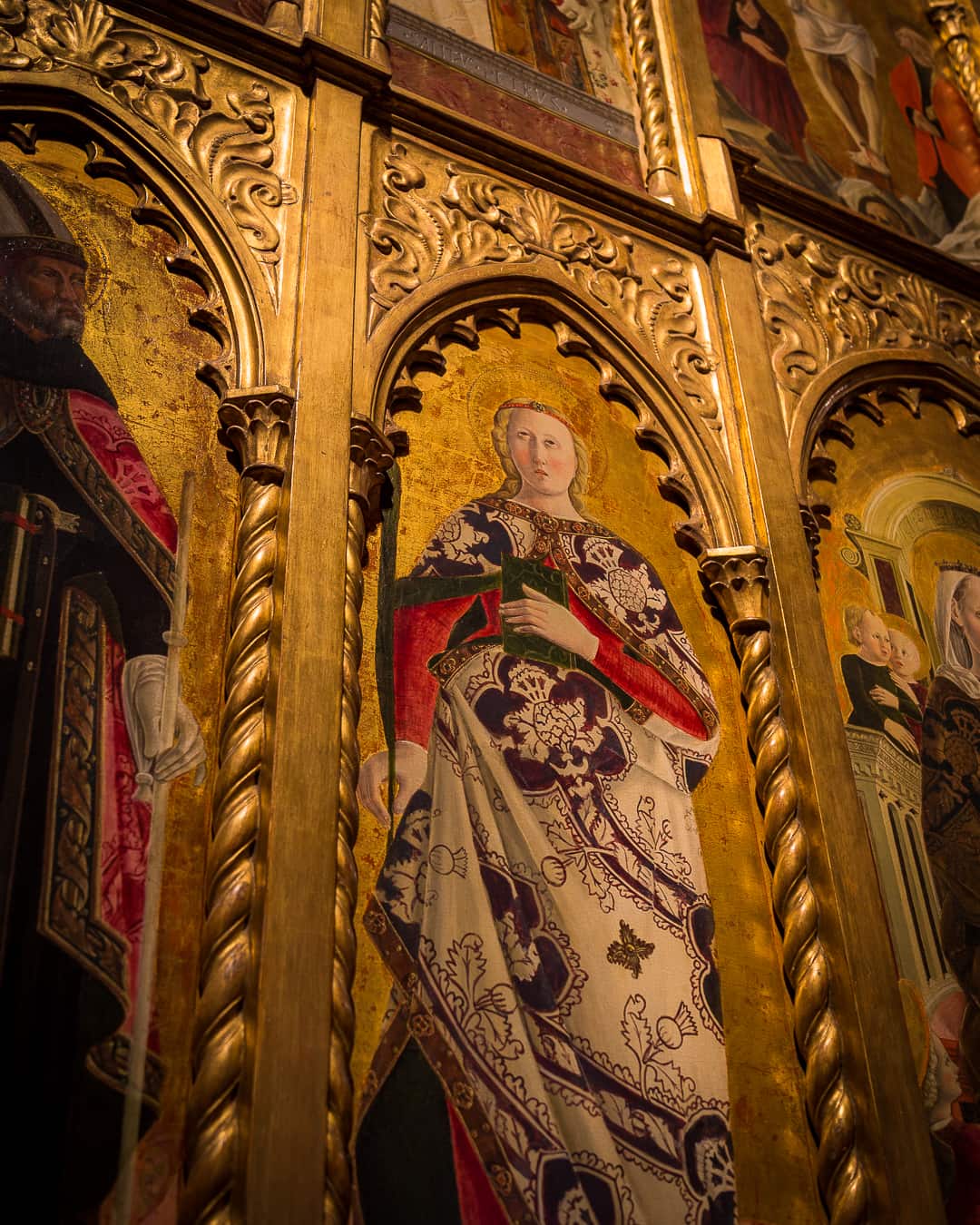
Gilded arches, twisted colonnettes, a saint in her brocade cloak. In old polyptychs gold is no ornament: it is the light of heaven.
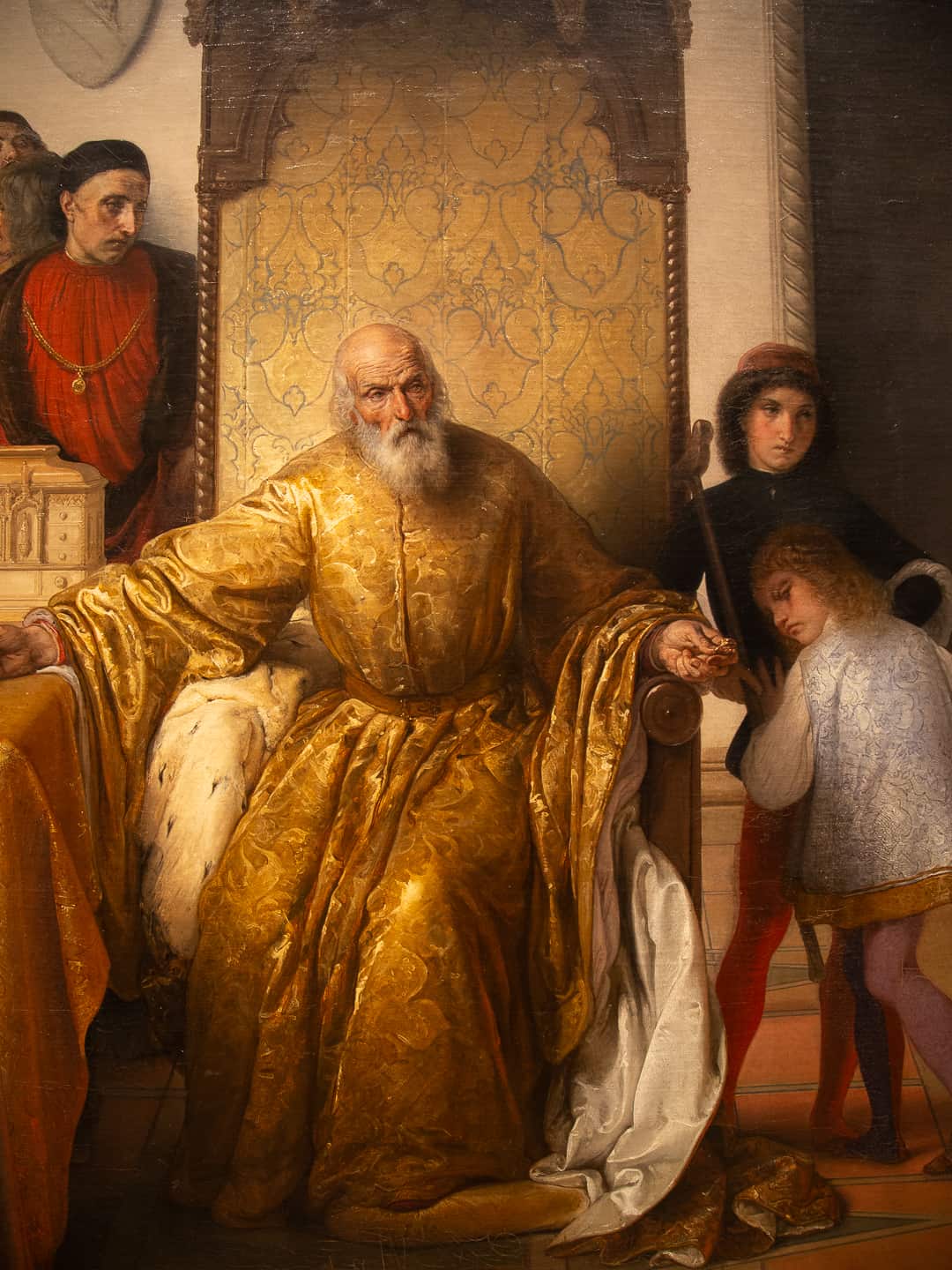
The old man in gold
An old man in a golden cloak, figures around him, a stone wall. In front of some paintings you understand where cinema came from: lighting, costumes, a whole story in one scene.
The library
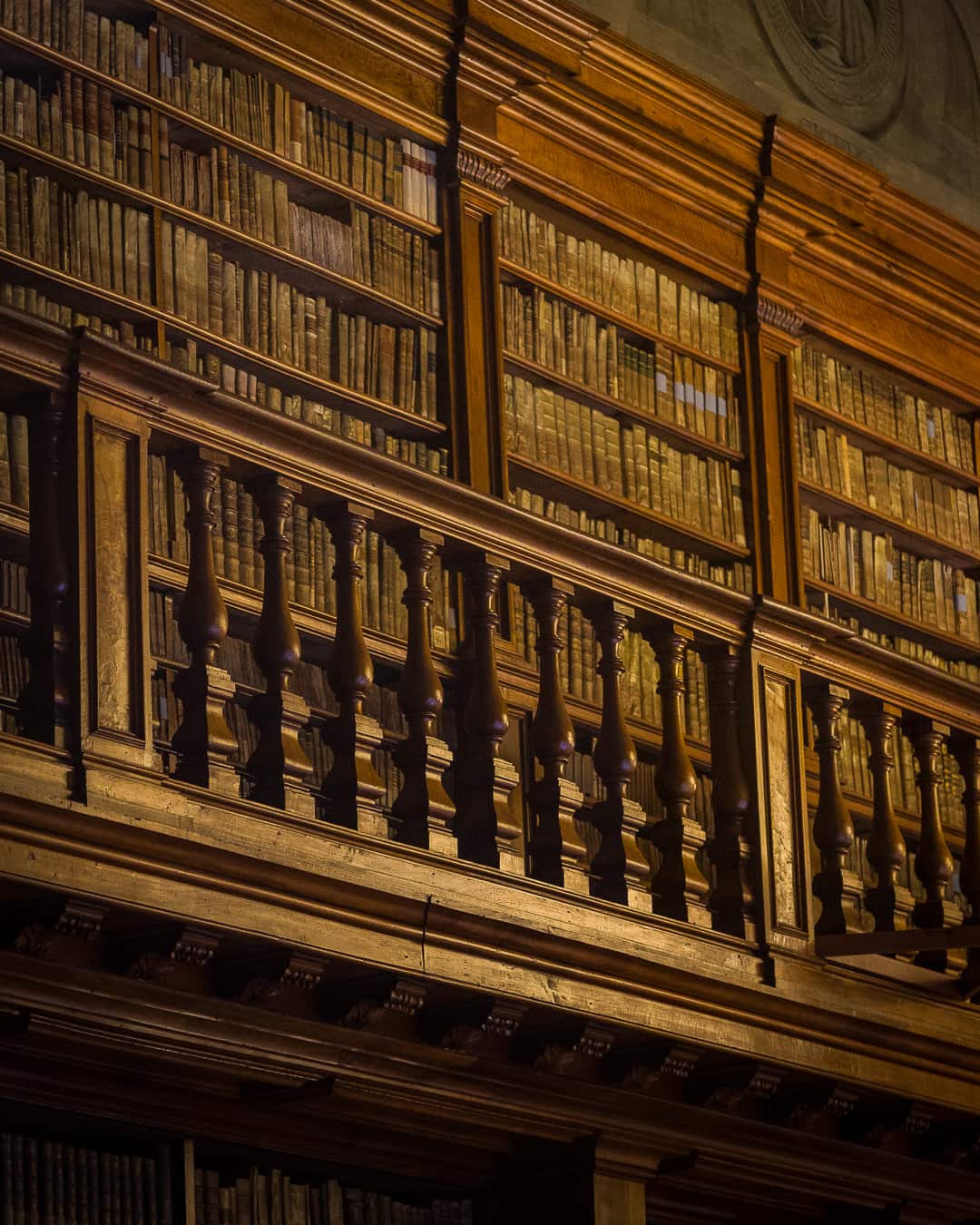
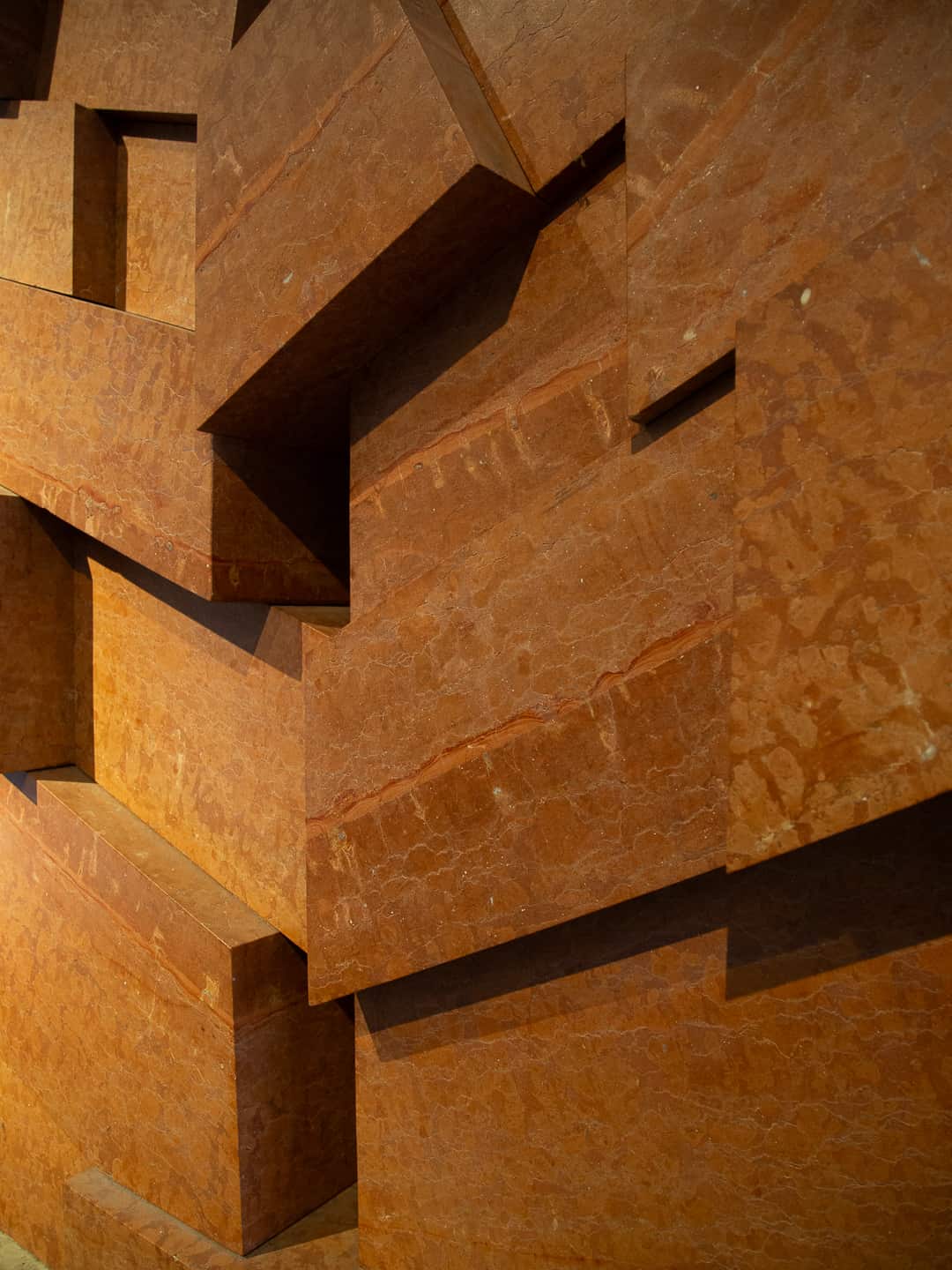
Wooden shelves on two levels, a balustrade, thousands of spines. In the Brera palazzo, the Biblioteca Braidense has been open to the public since 1786.
II
The centre
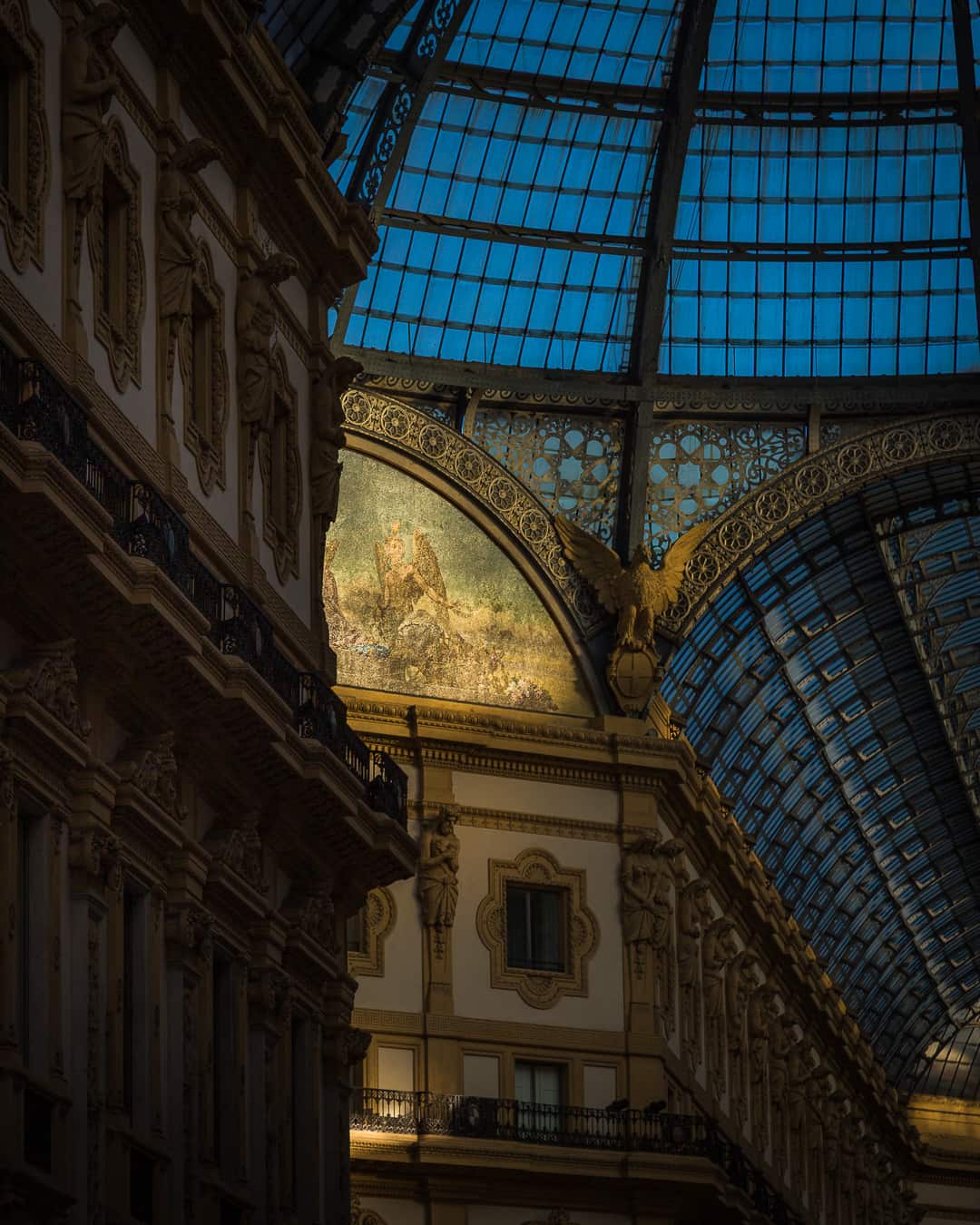
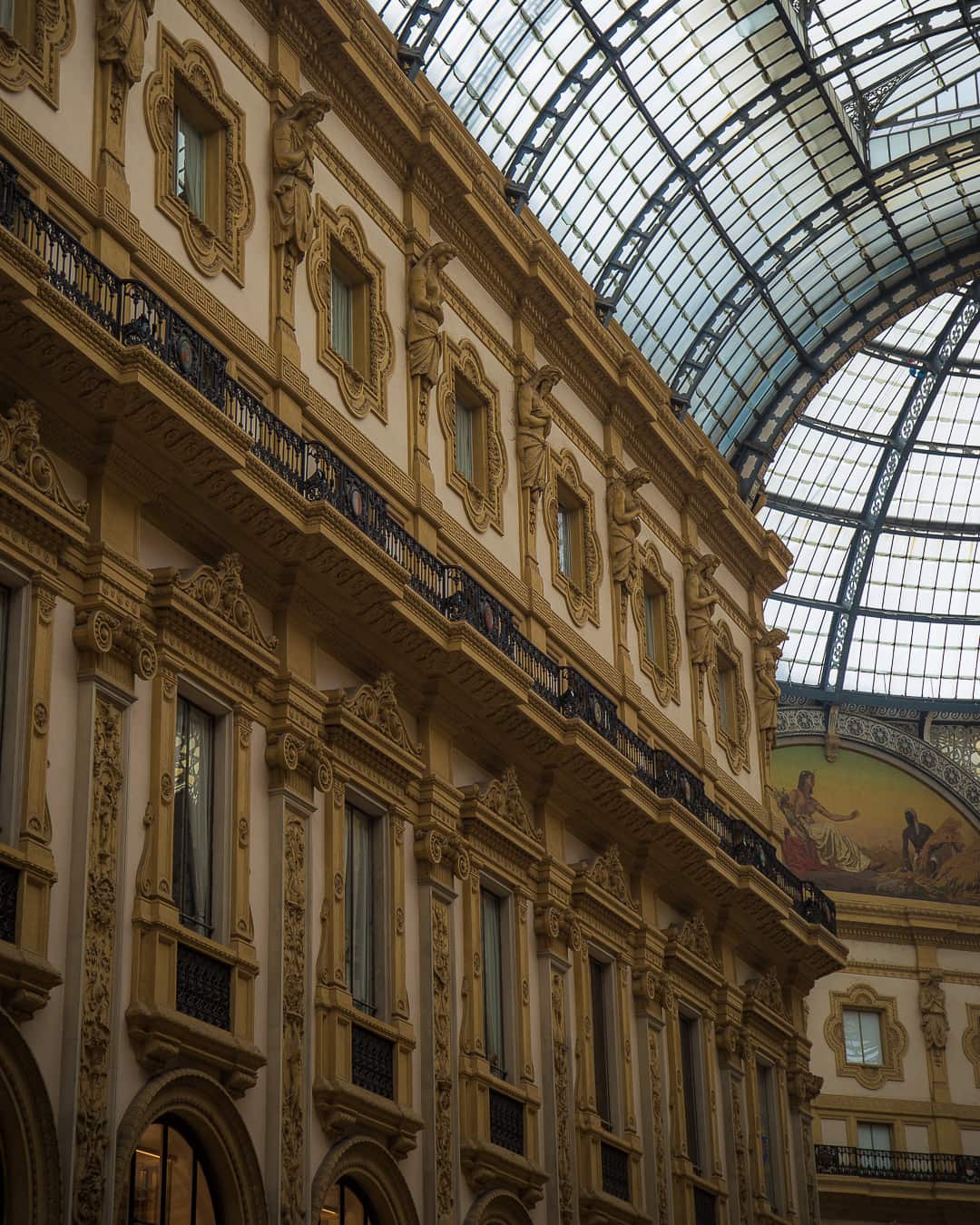
Between the Duomo and La Scala, the Galleria Vittorio Emanuele II is the Milanese living room. Designed by Giuseppe Mengoni, it was built between 1865 and 1877: two streets crossing beneath a vault of iron and glass.
Around it lie the cathedral square, the nineteenth-century palazzi, the luxury streets; and further out, the skyscrapers of today’s Milan.
Marble and street lamps
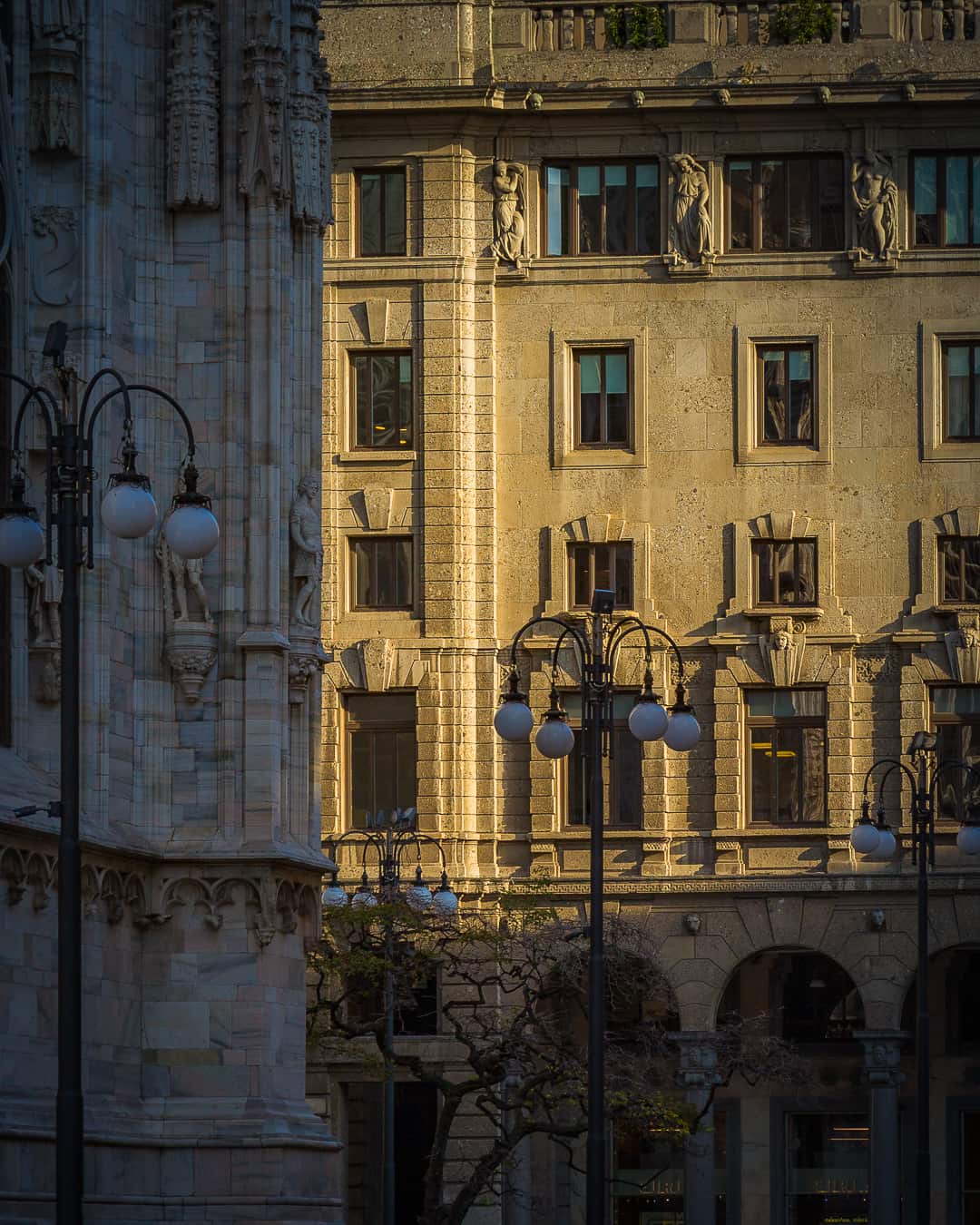
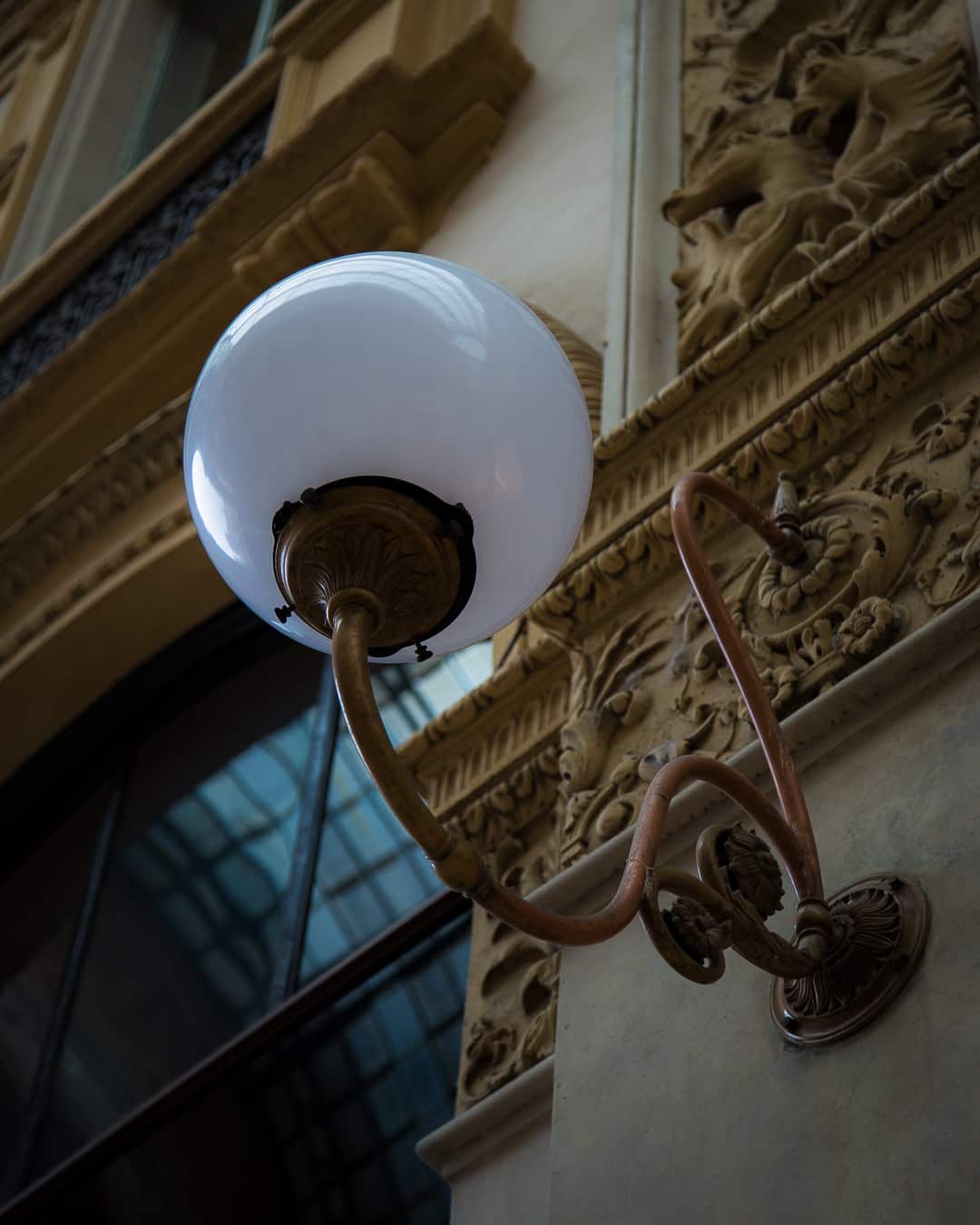
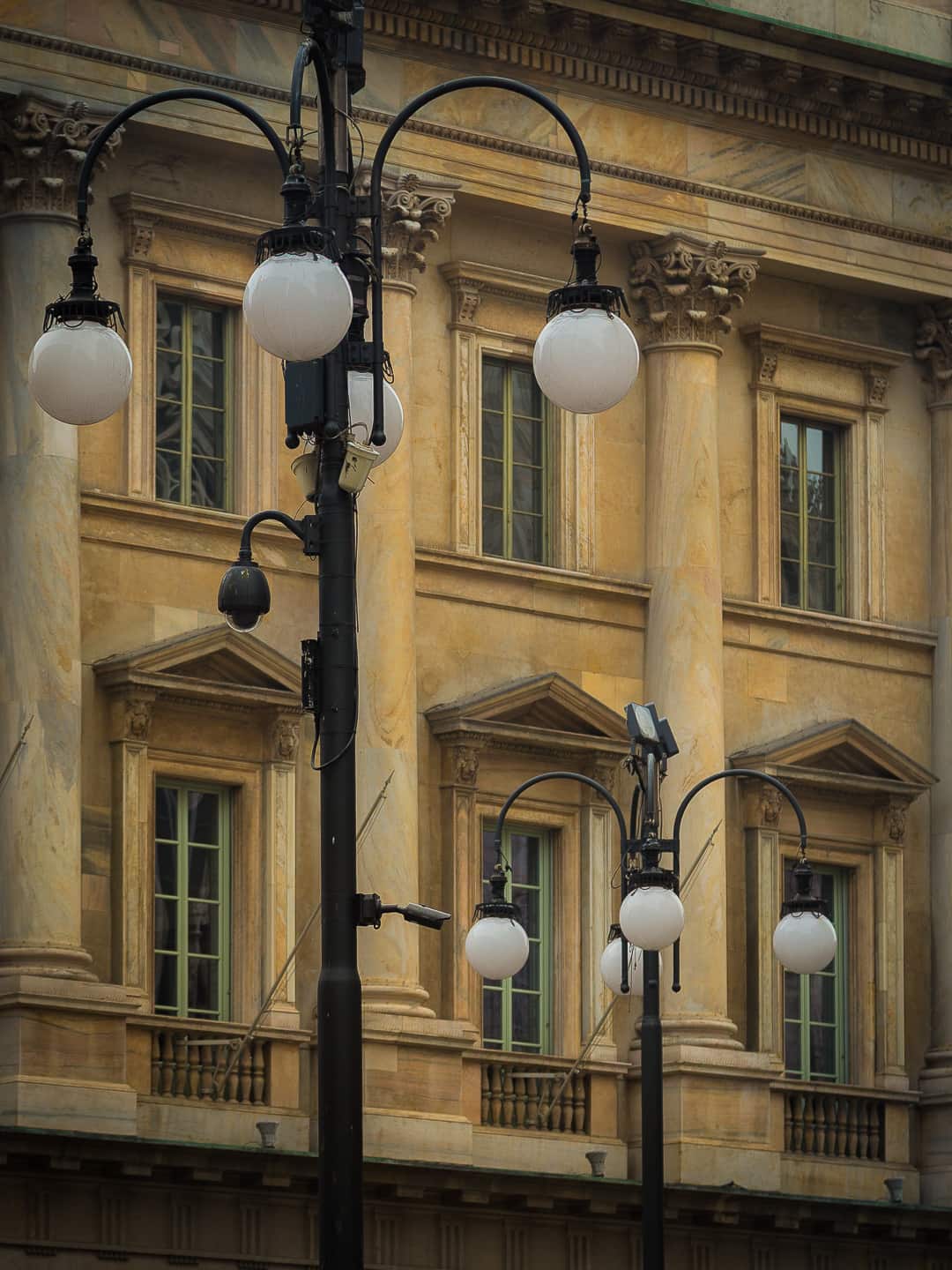
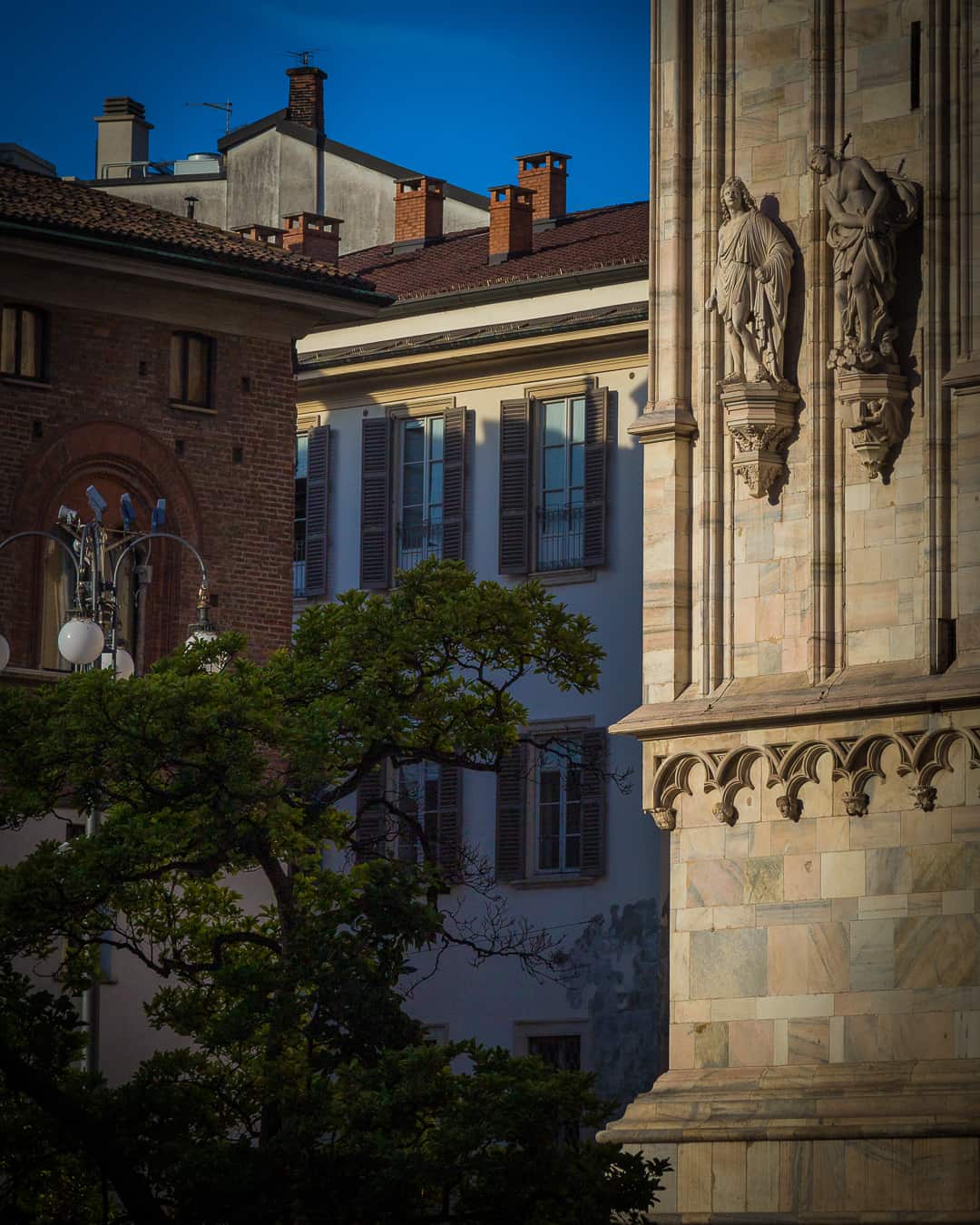
Marble statues, clustered street lamps, a nineteenth-century façade. In the centre of Milan the centuries mix: Gothic, Neoclassical, eclectic, all in one glance.
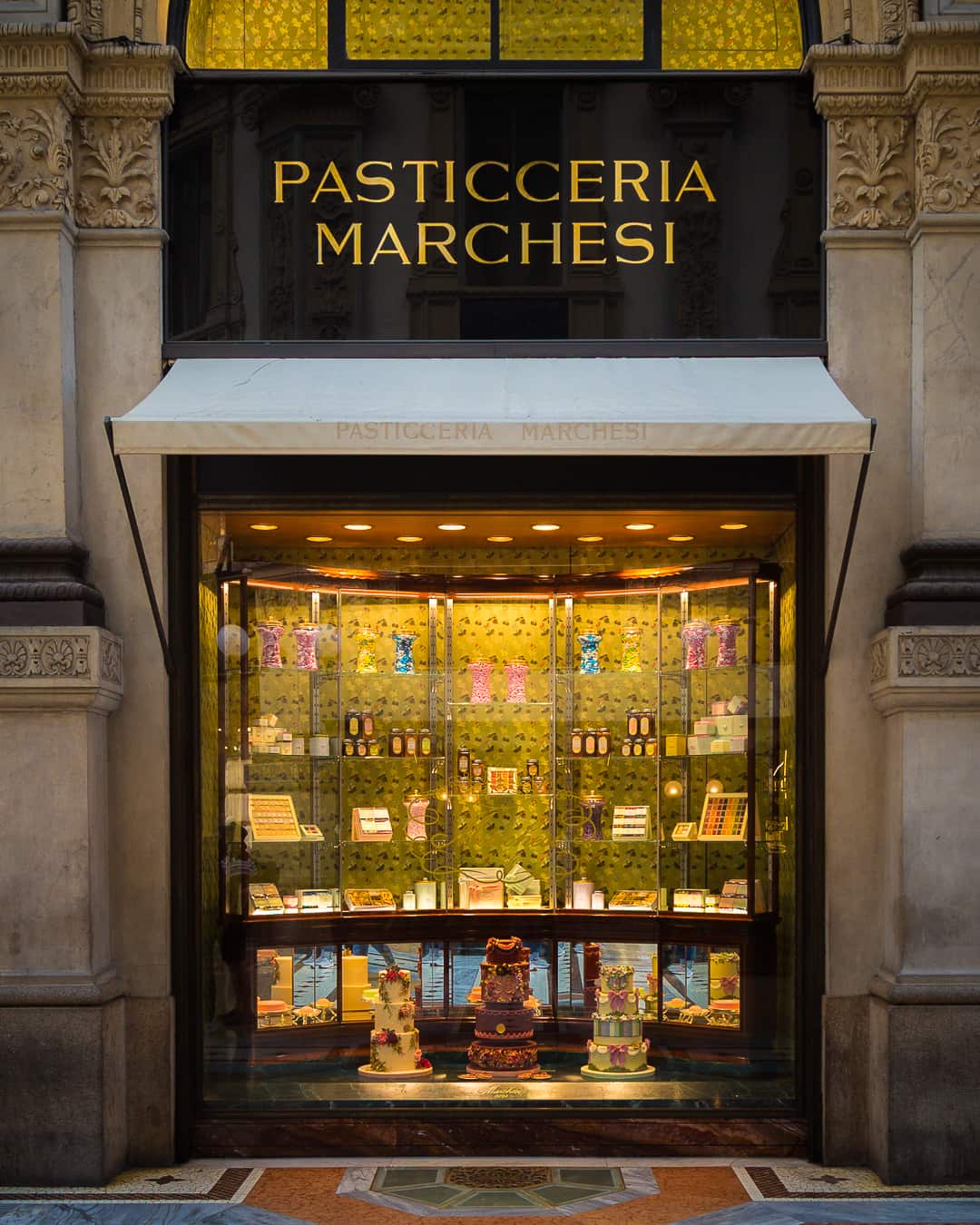
Marchesi
A lit window beneath the sign of the Pasticceria Marchesi. The pastry shop opened in 1824 in Via Santa Maria alla Porta; today it also has shops in the Galleria and in Via Monte Napoleone.
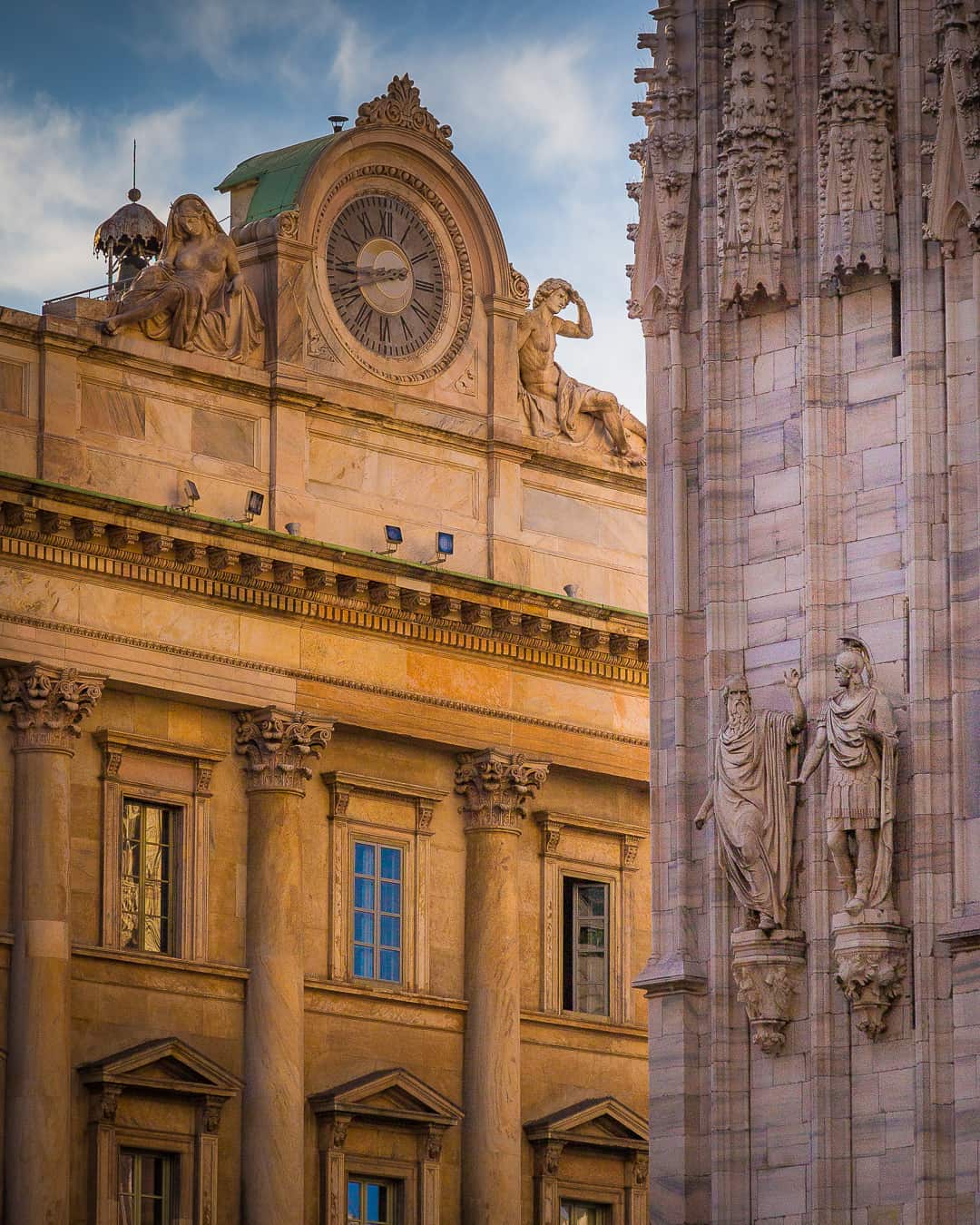
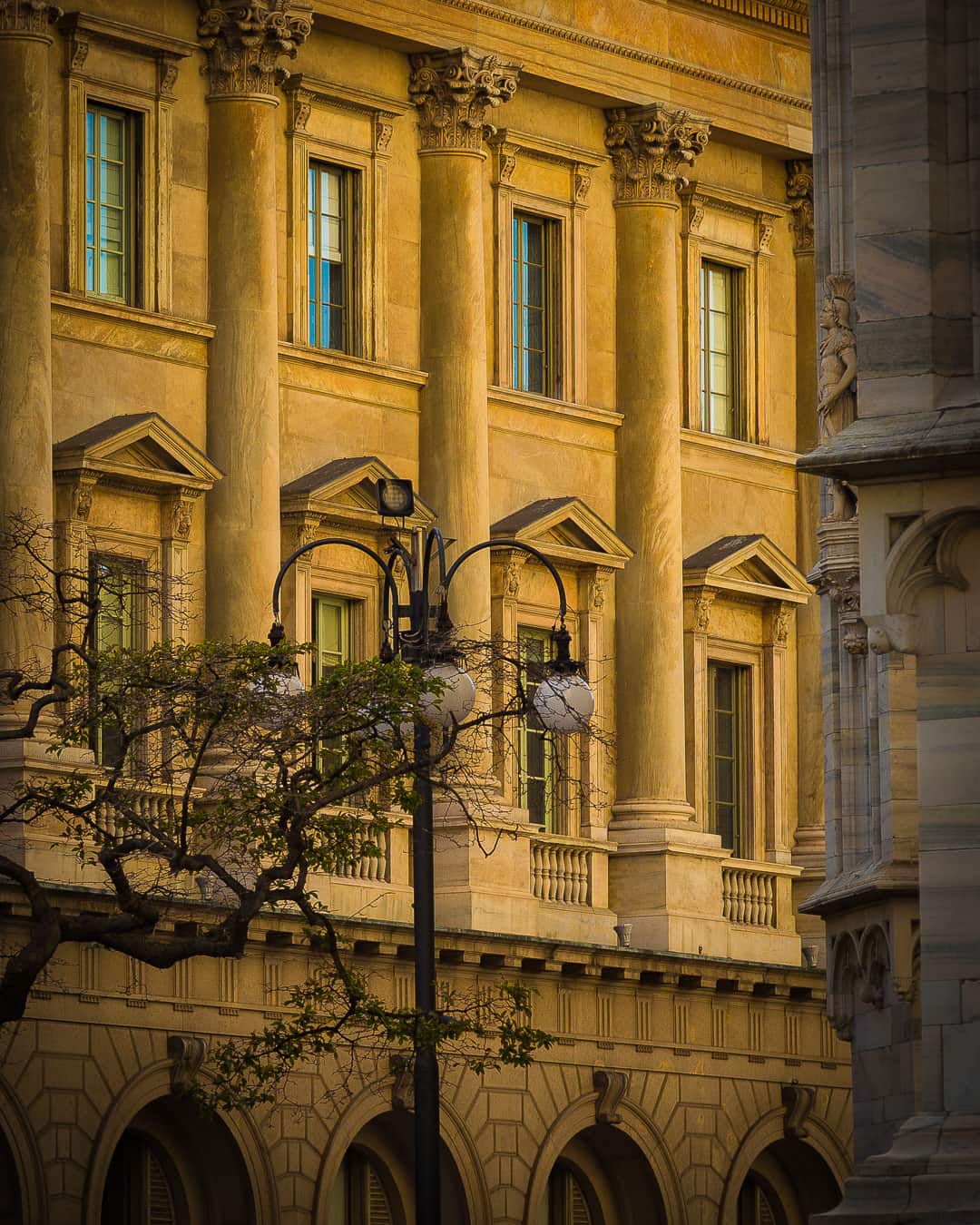
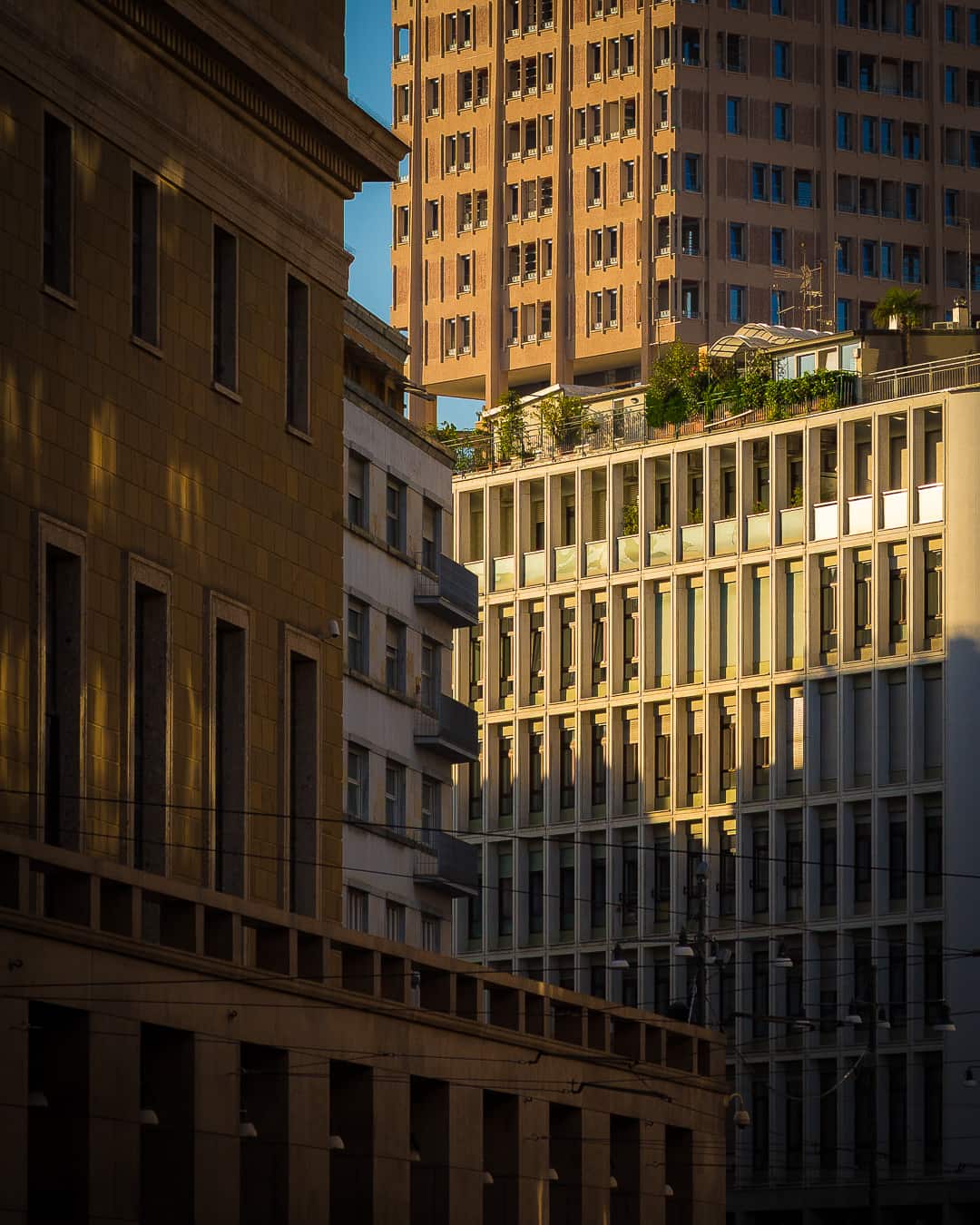
The tower
A modern tower above the old palazzi. In Milan the twentieth century was not afraid to build upwards: towers and skyscrapers live alongside eighteenth-century courtyards.
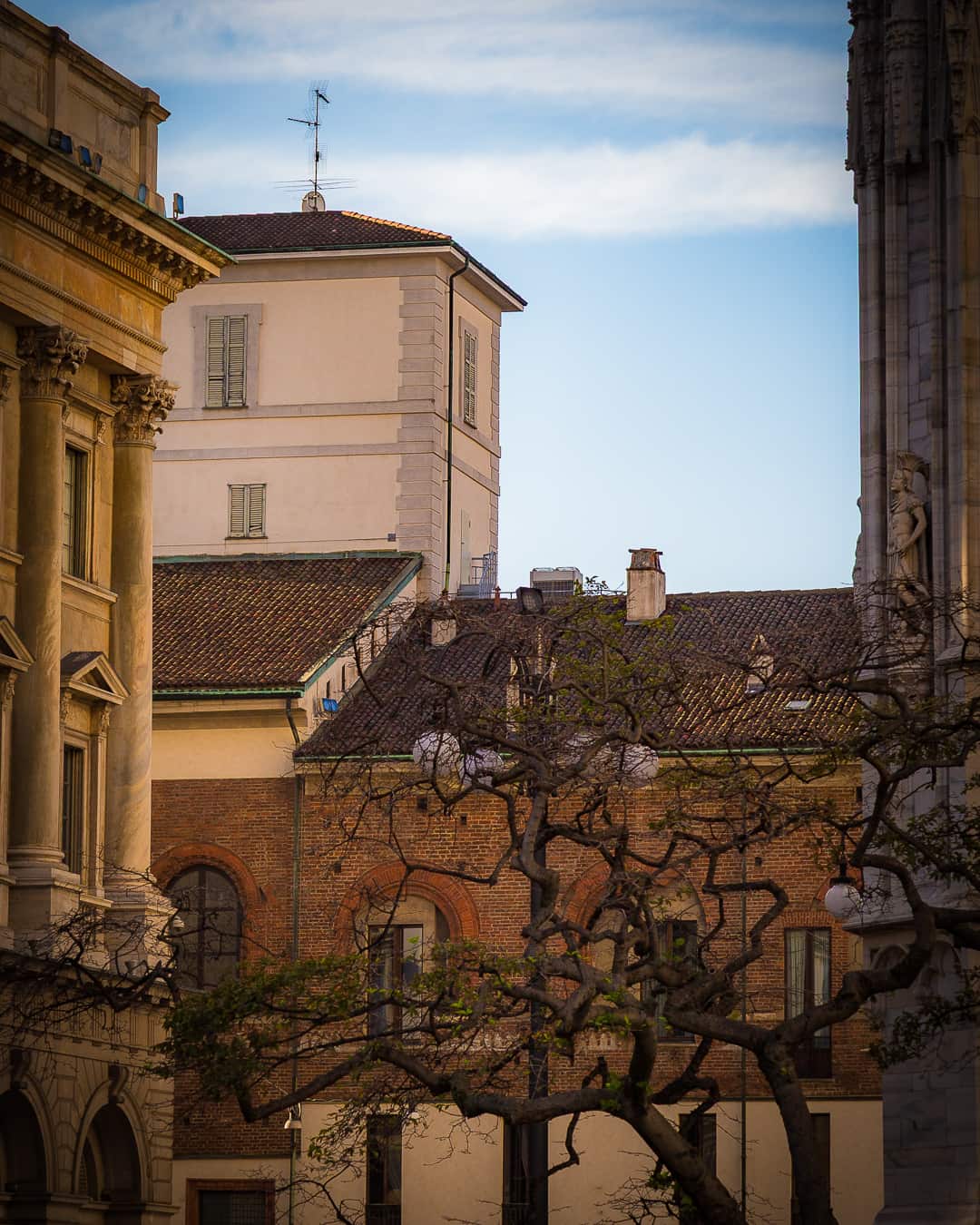
Night
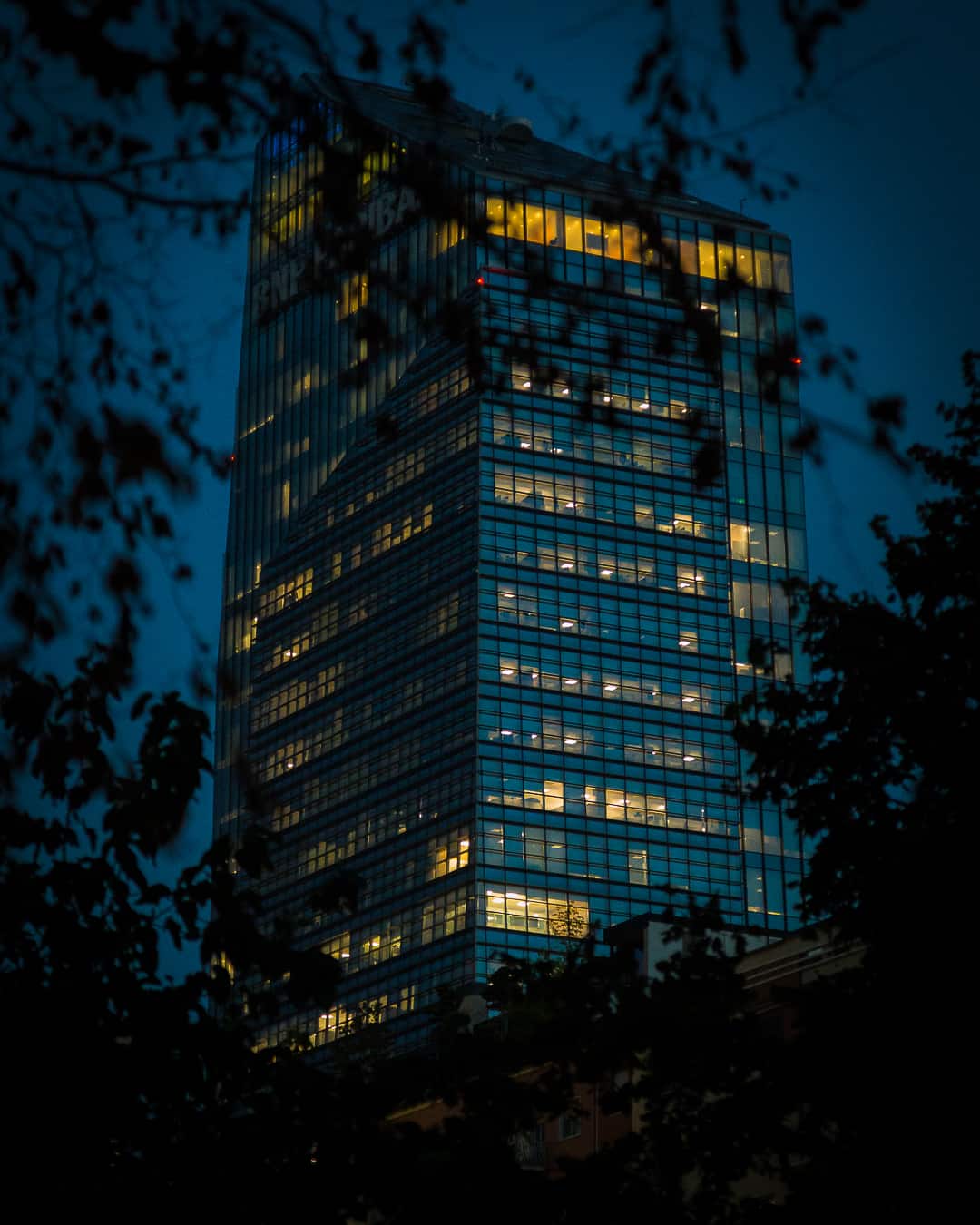
A glass skyscraper lit up in the blue evening. Today’s Milan grows upwards, yet at night, through its lit windows, it still looks like a city of homes.
III
Yellow
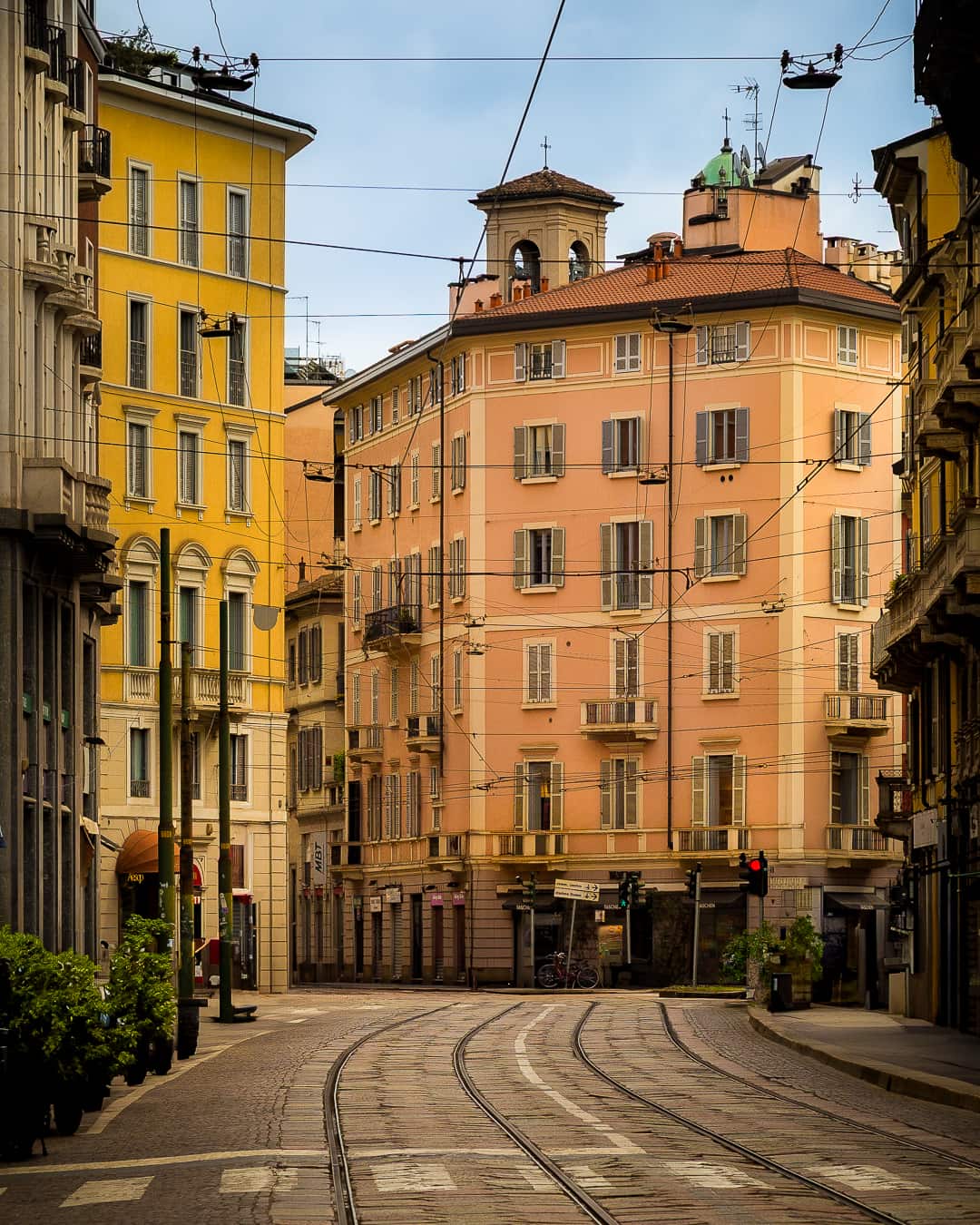
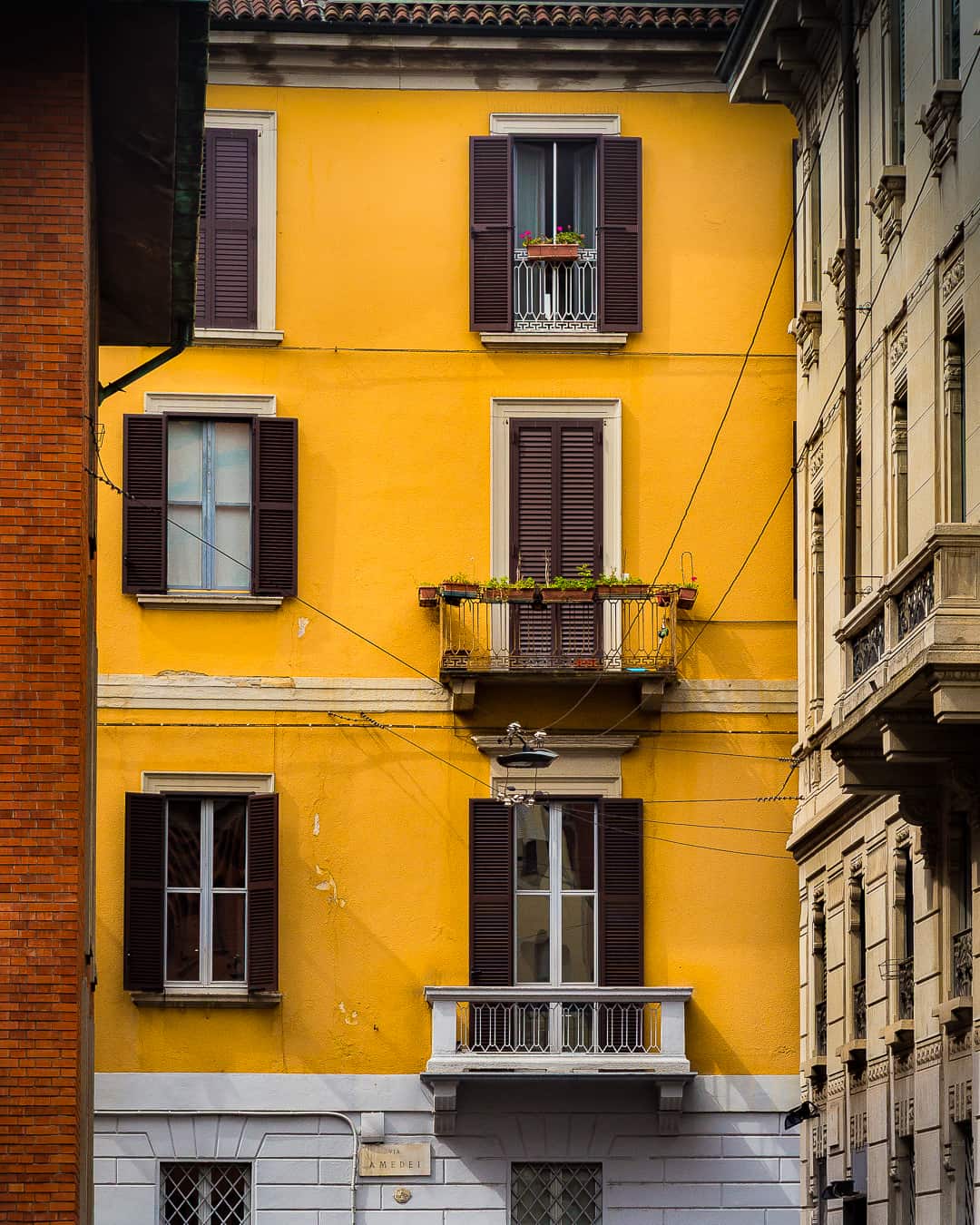
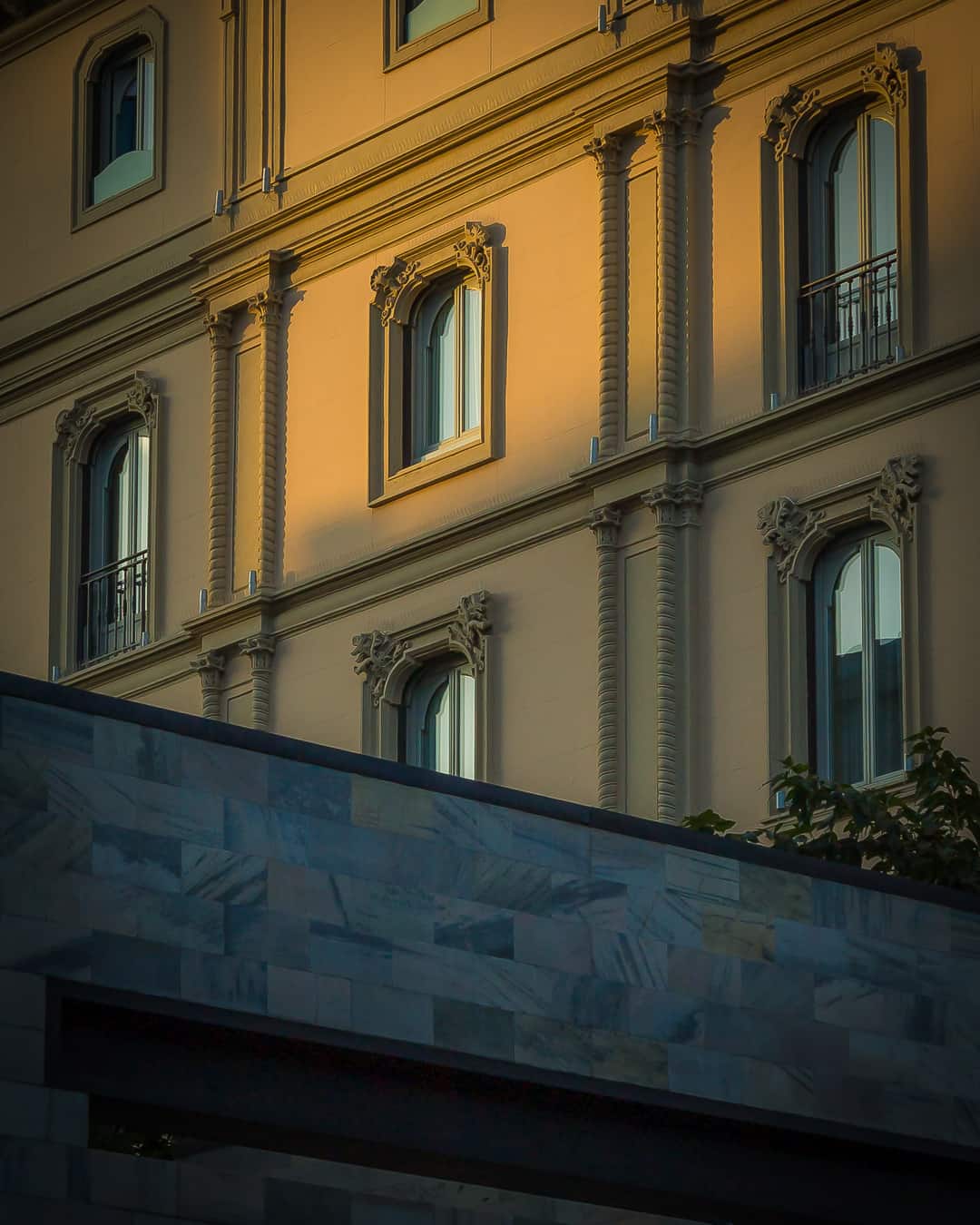
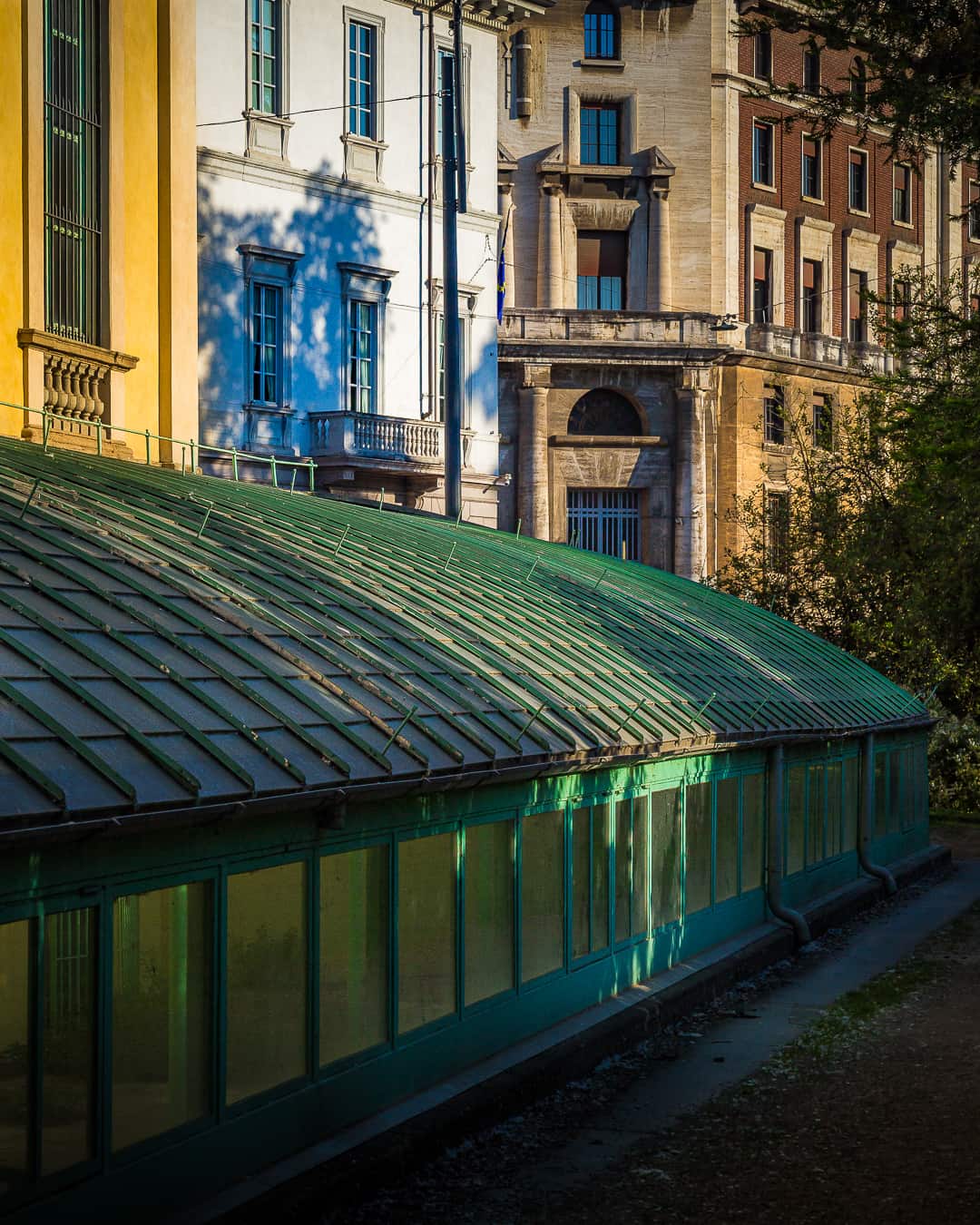
Milan has a colour: yellow. On the façades, on the historic trams, and for years on the taxis.
Tradition calls it Maria Theresa yellow and says the Austrian empress wanted it on the houses. True or not, the story stuck: it is the colour that stays with you.
Shutters
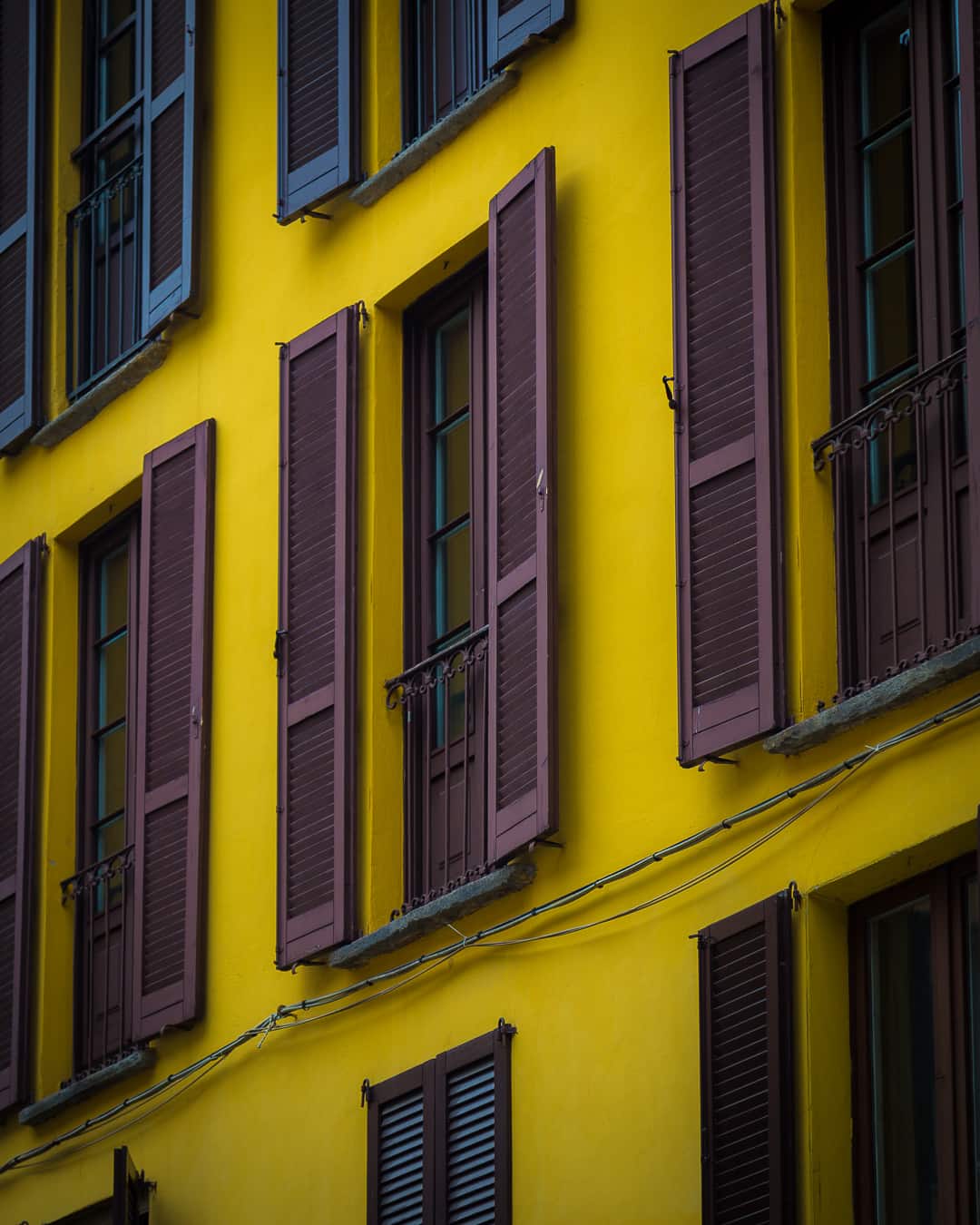
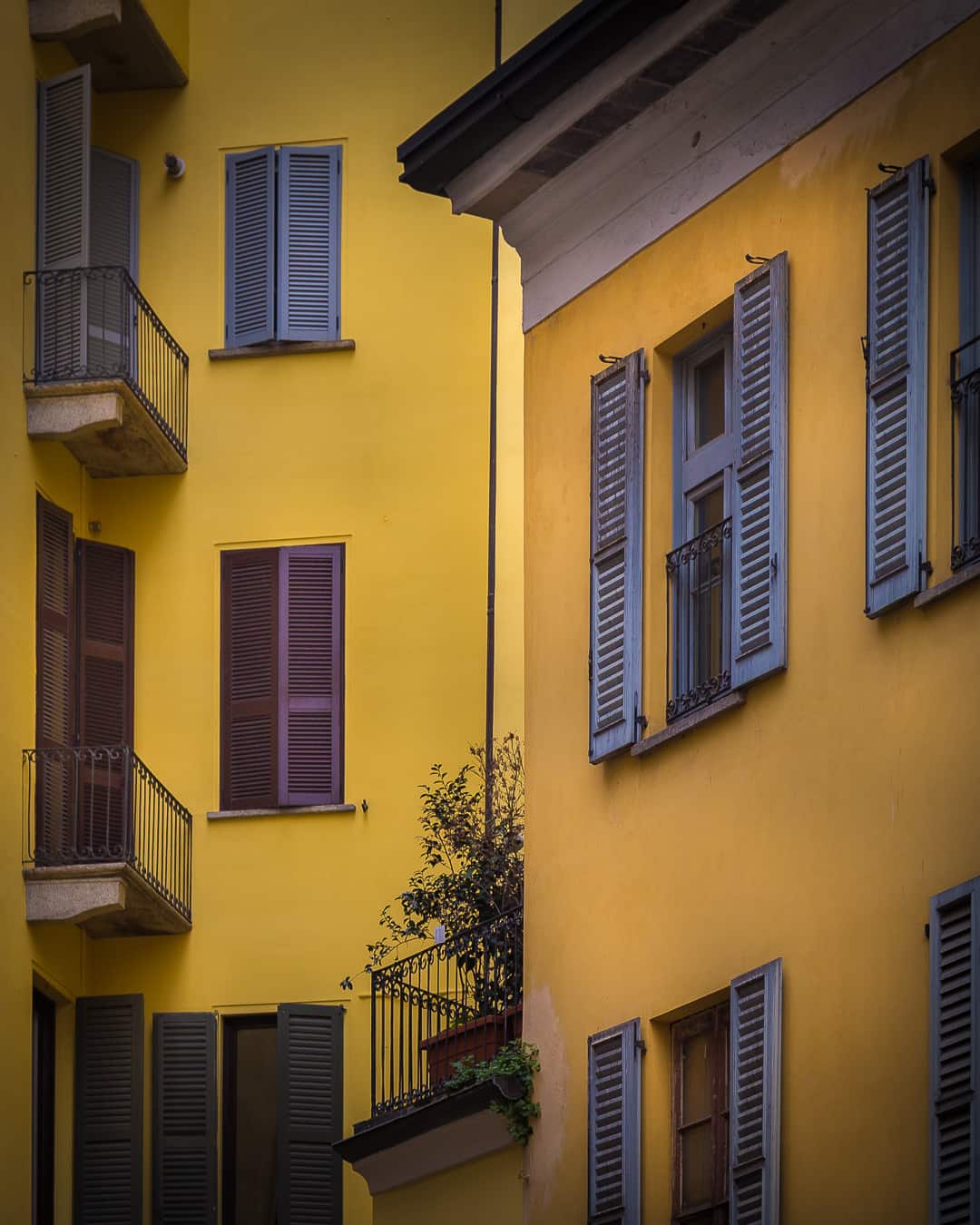
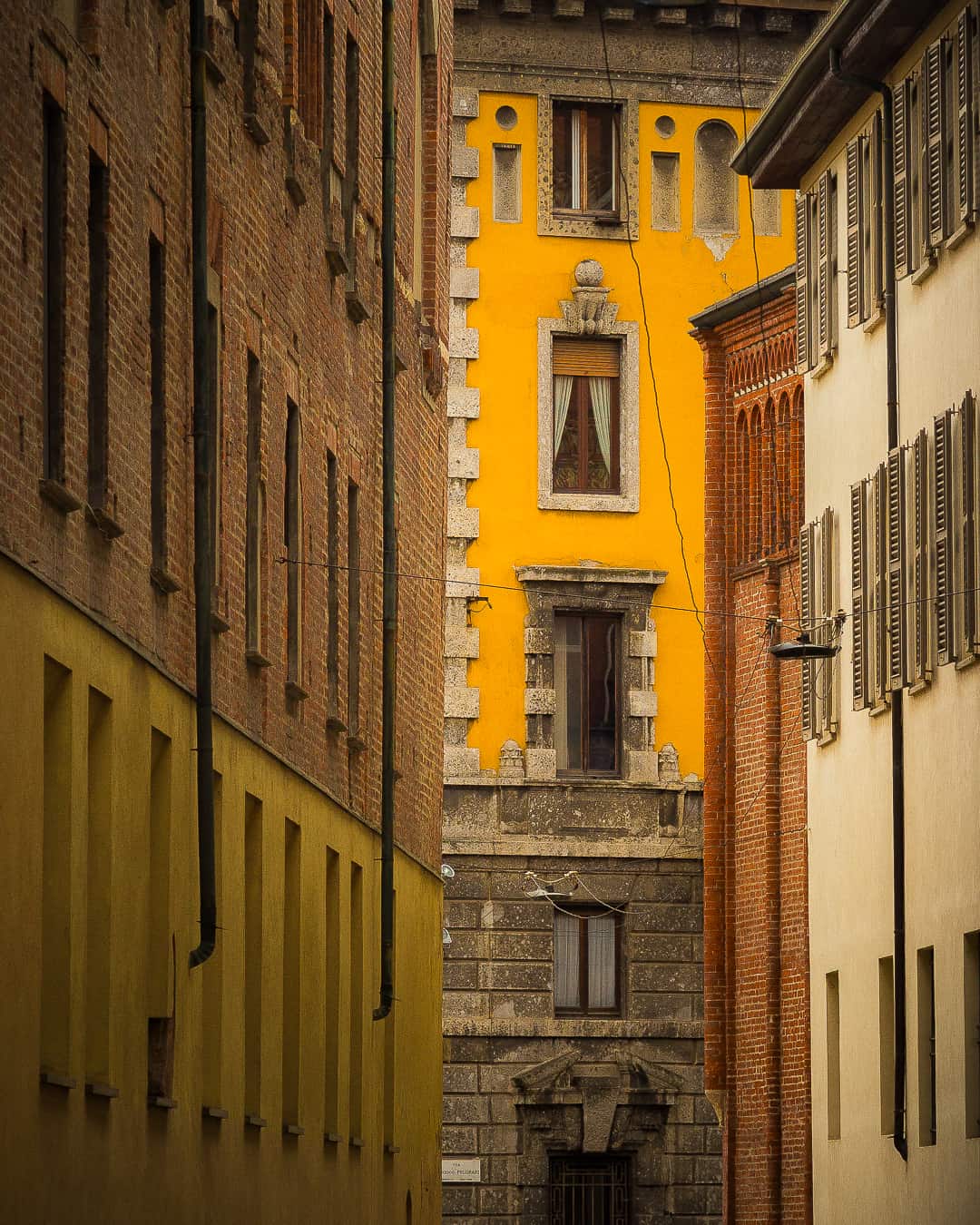
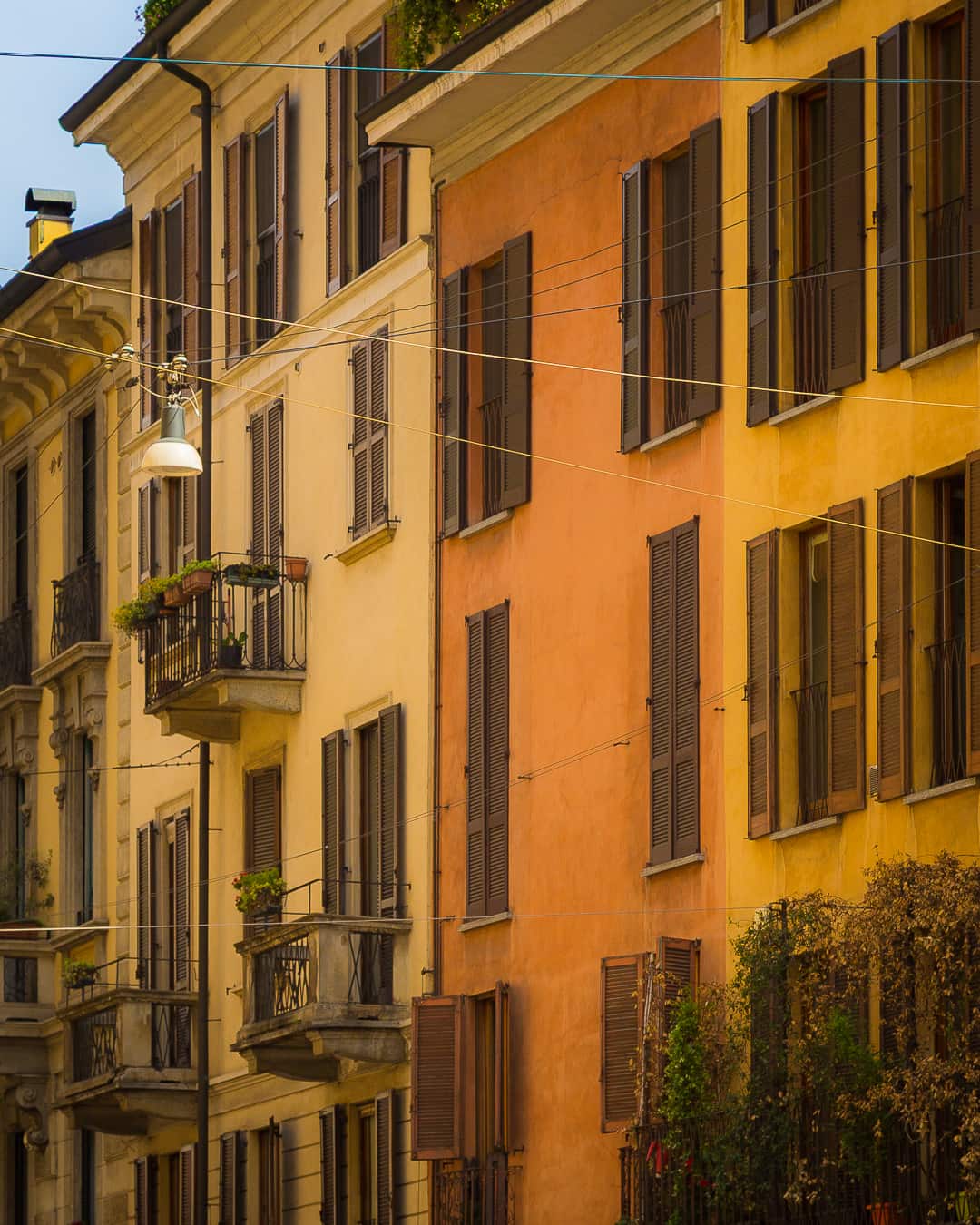
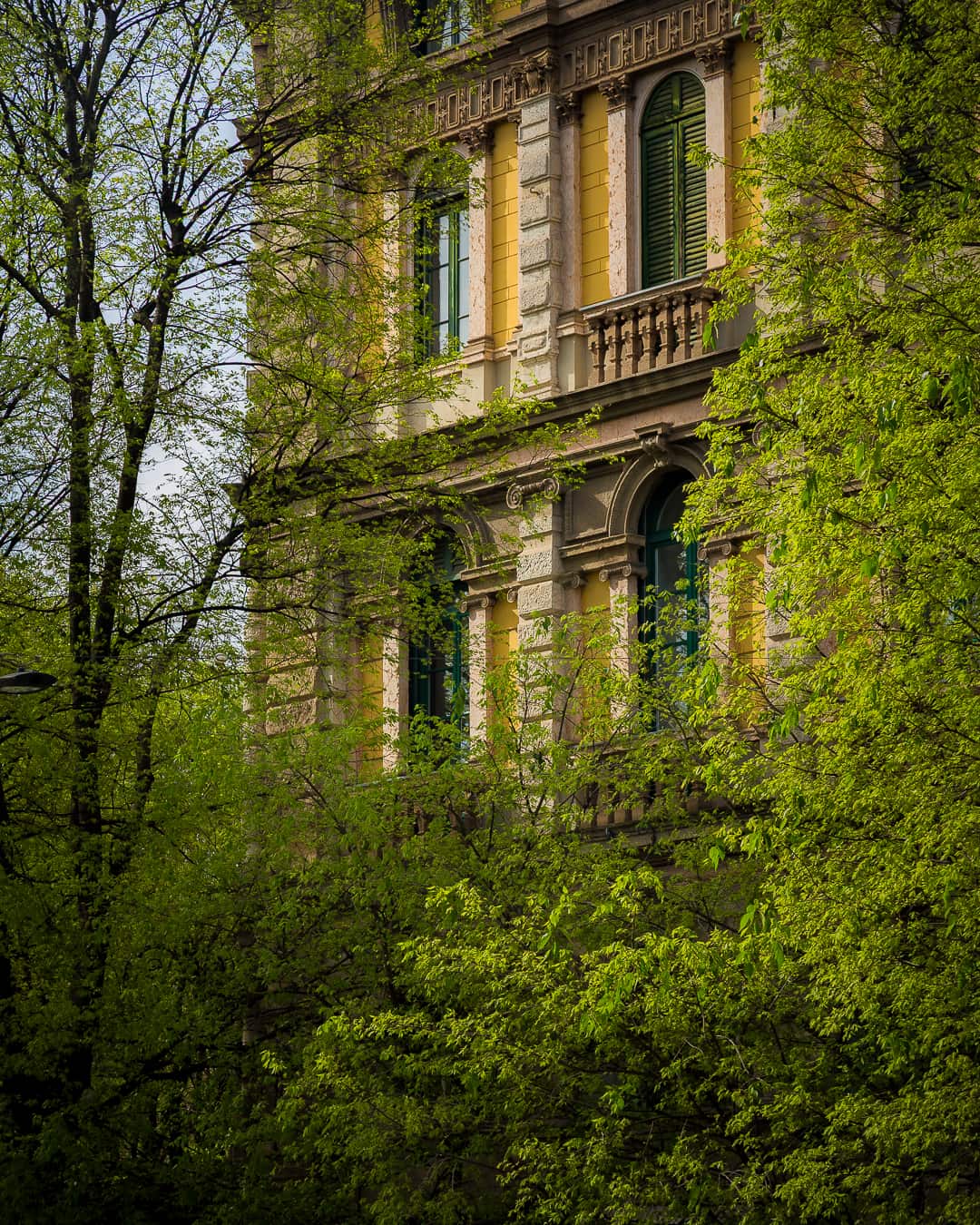
A yellow façade, aubergine shutters, slender railings. Milan’s yellow is never the same twice: ochre, gold, lemon, depending on the hour and the sky.
The barber
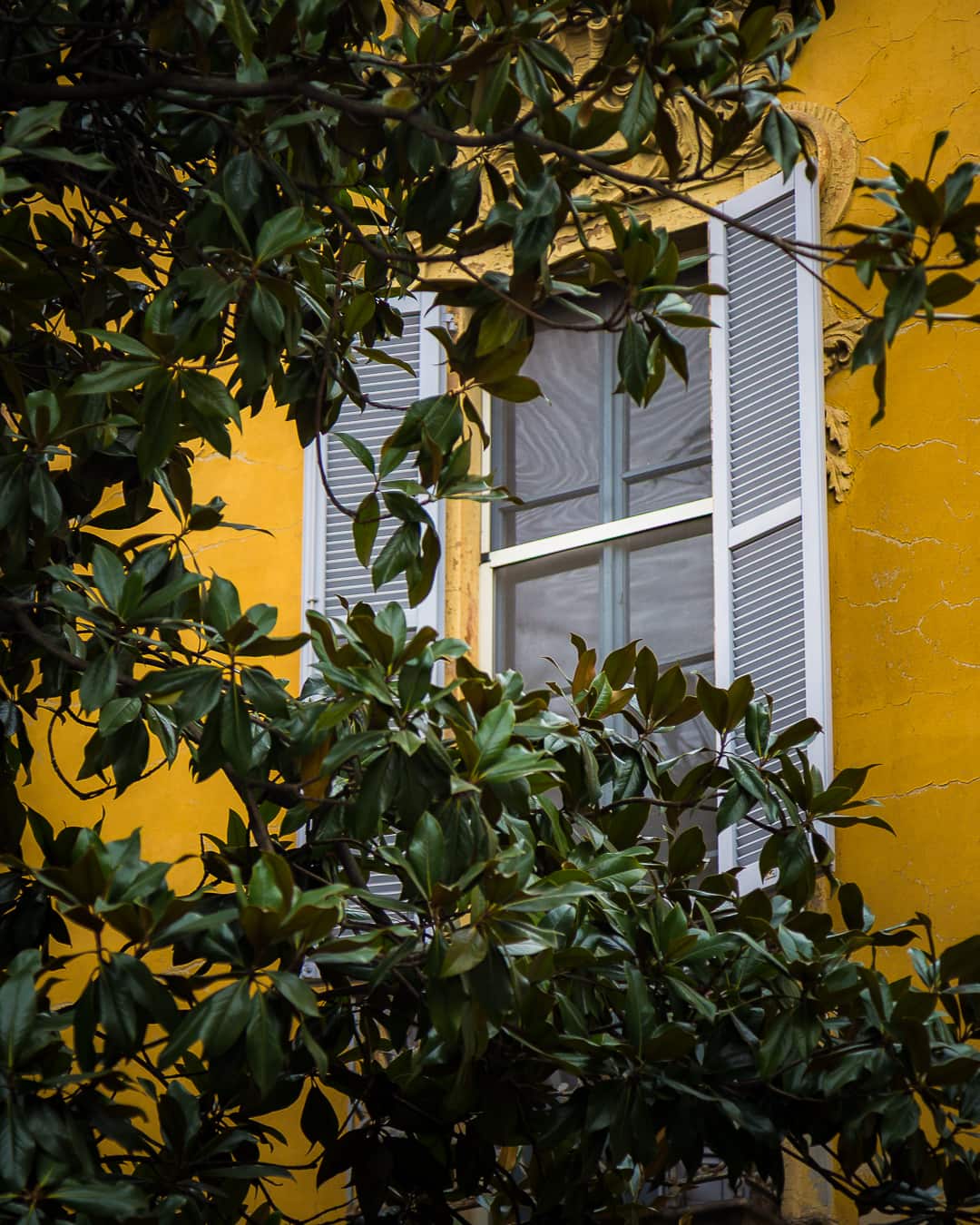
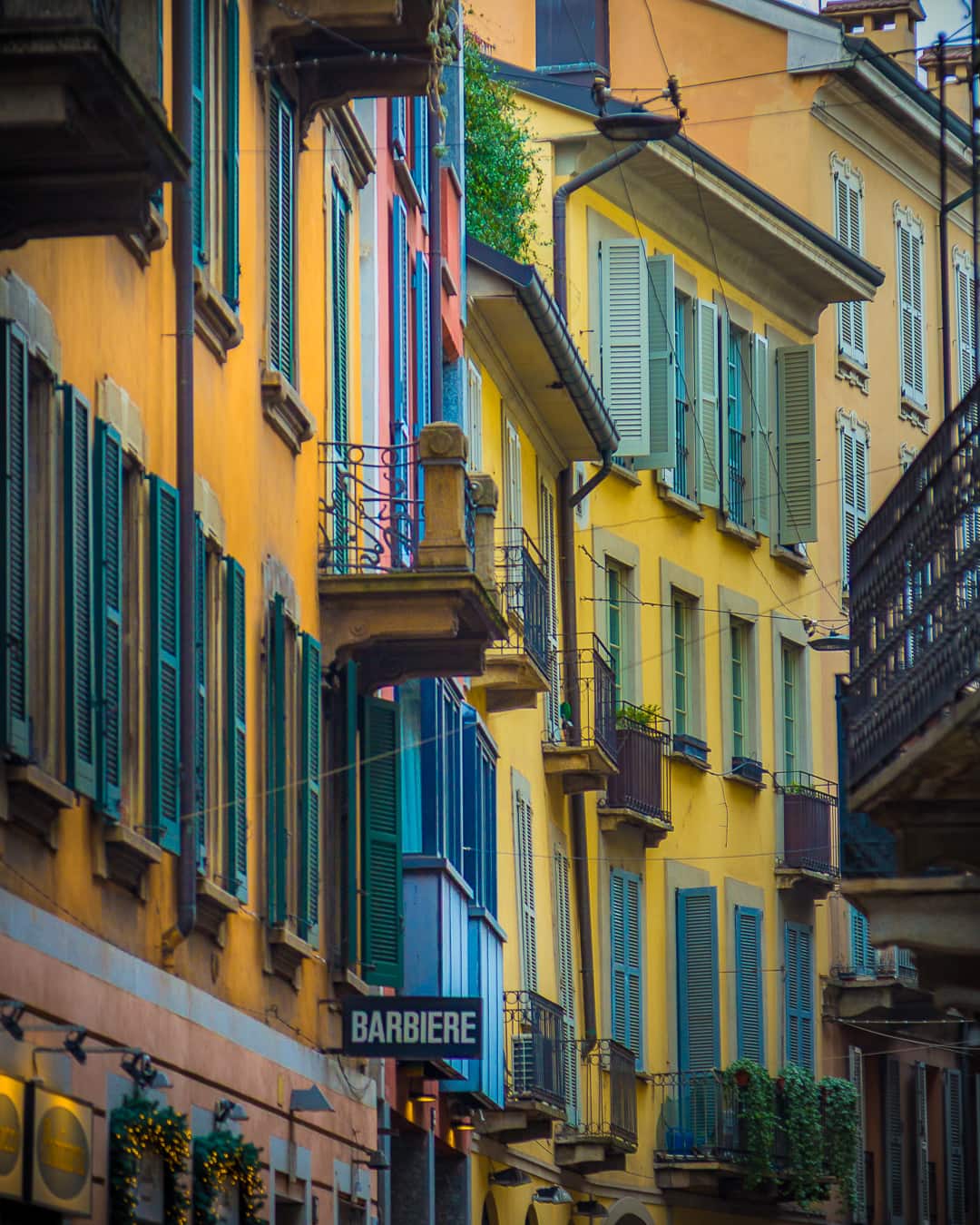
Yellow and green façades, blue shutters, a barber’s sign. In the streets of the old centre, neighbourhood shops hold out beside the smartest windows.
Flags
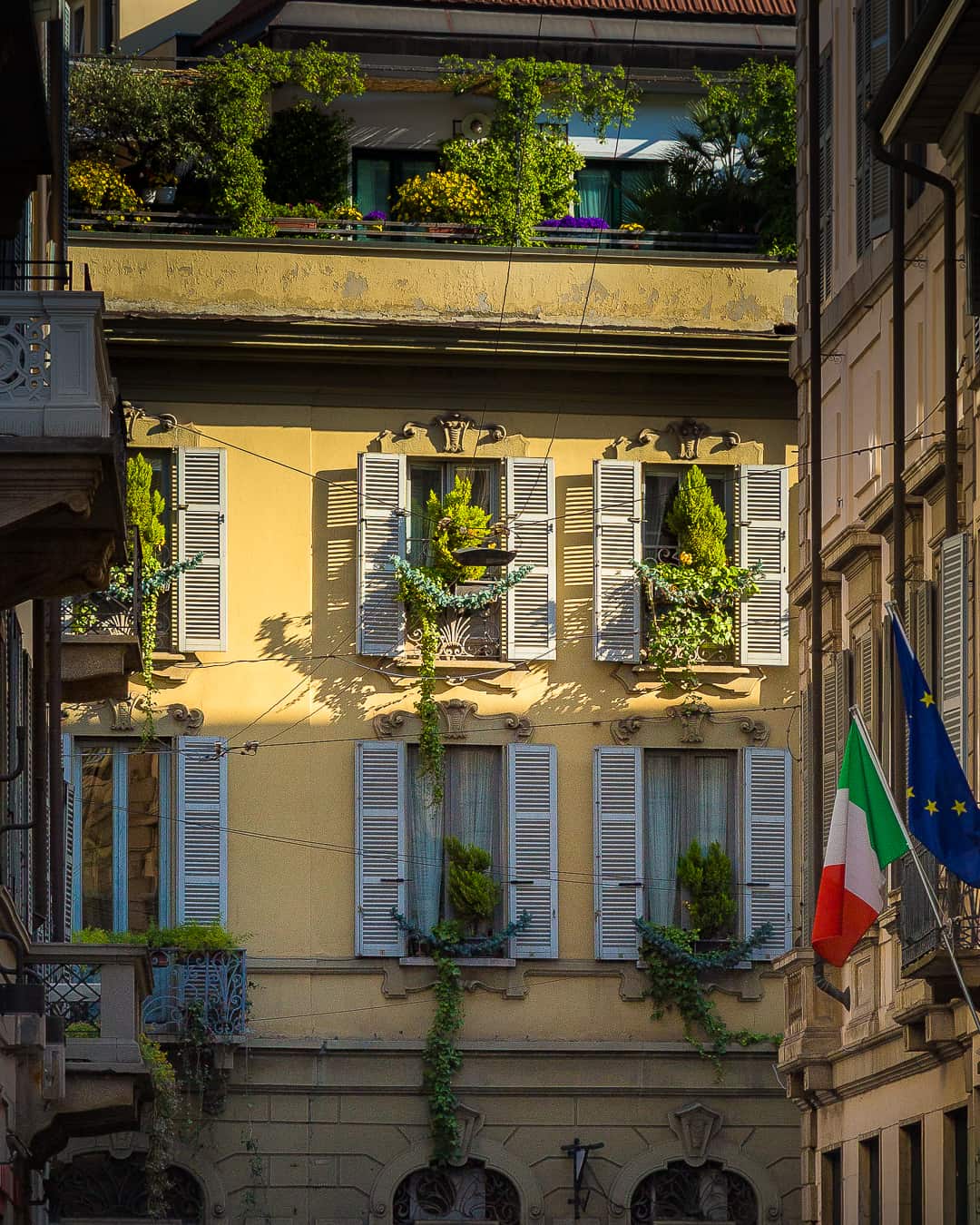
A yellow façade, pale shutters, plants on the balconies, two flags. The flags mark a public office; the flowers on the balconies remind you that someone lives up there.
The church between houses
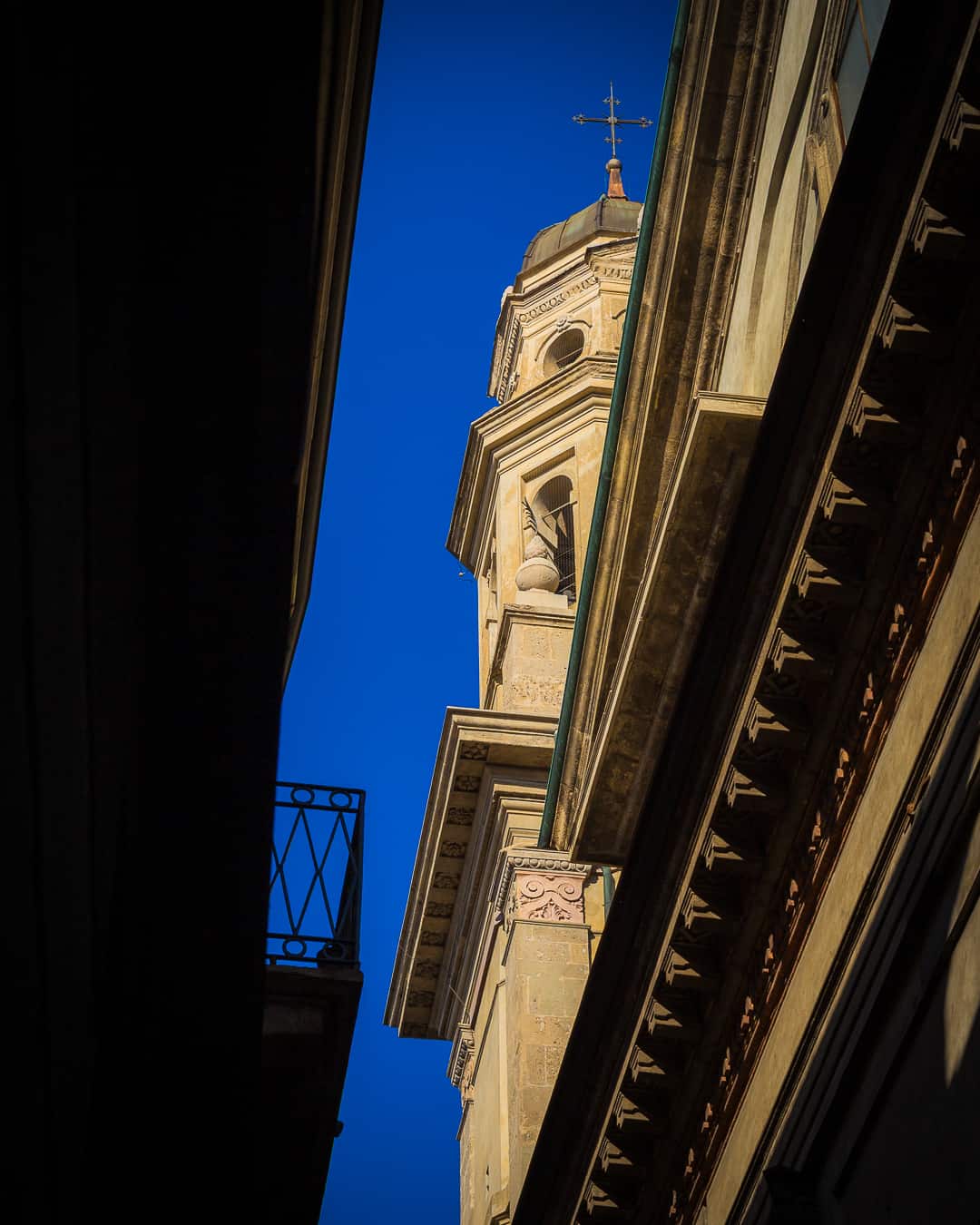
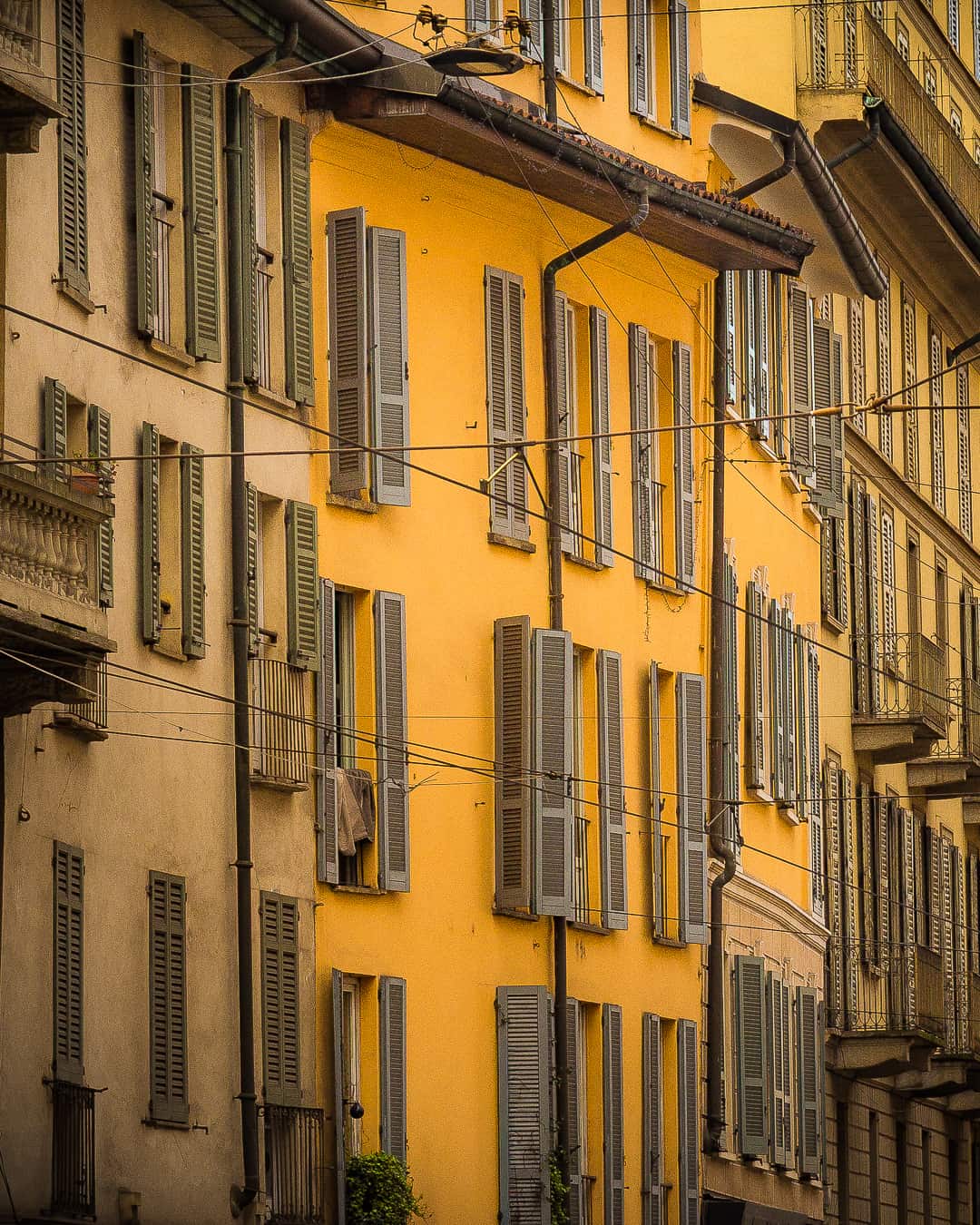
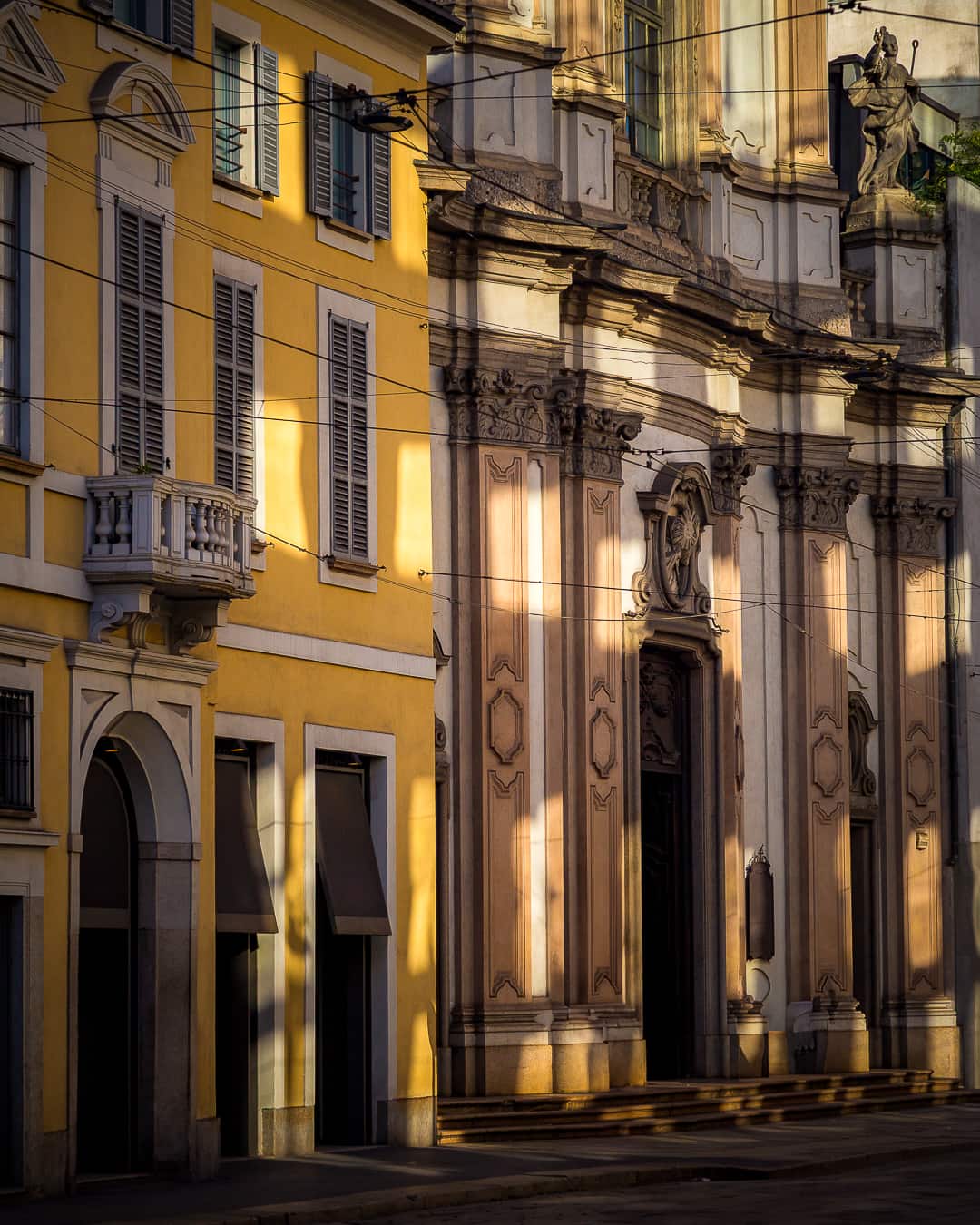
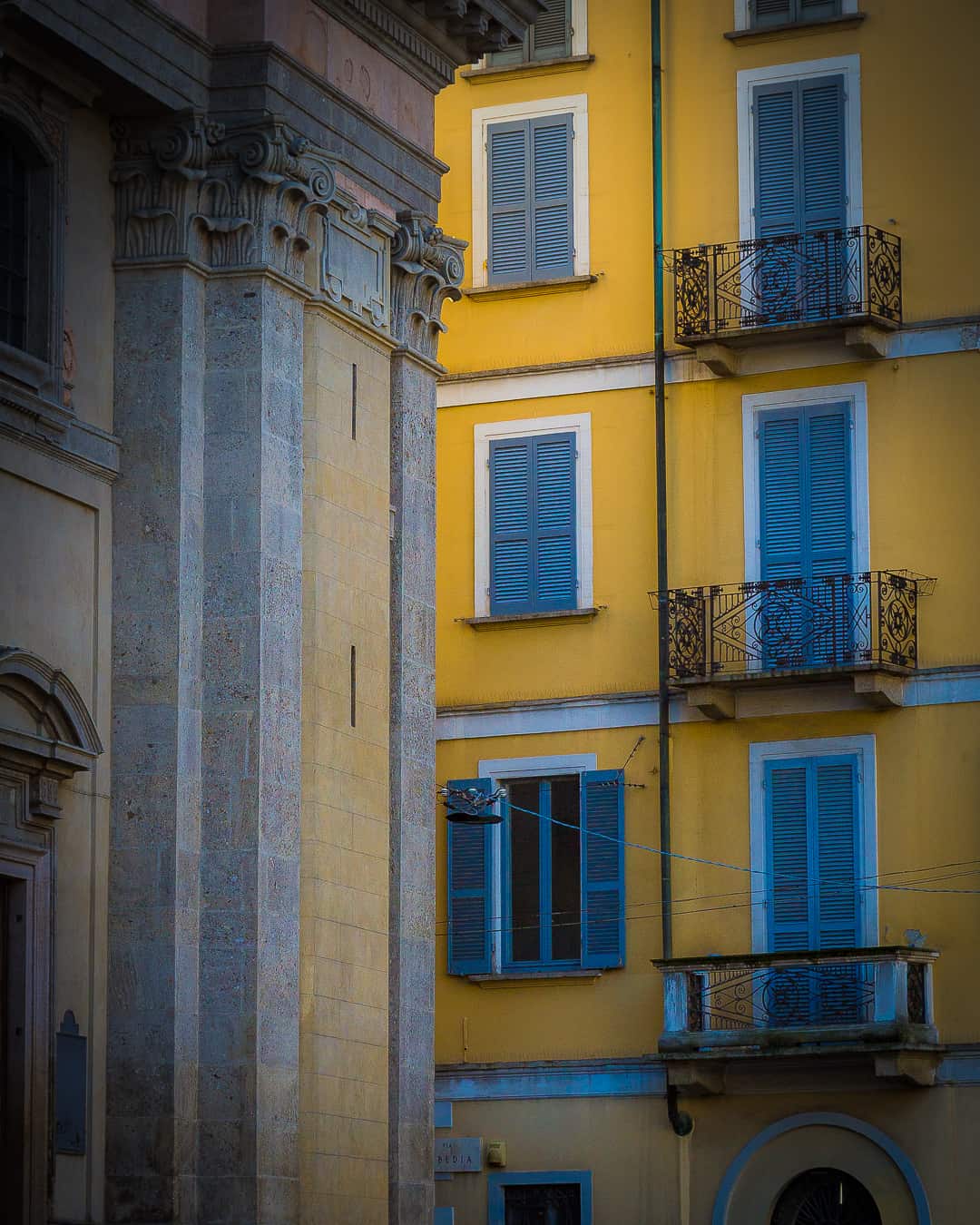
Yellow façades opening onto a Baroque church. In Milan churches do not always stand on a square: you often come across them halfway down a street, between two houses.
IV
The streets
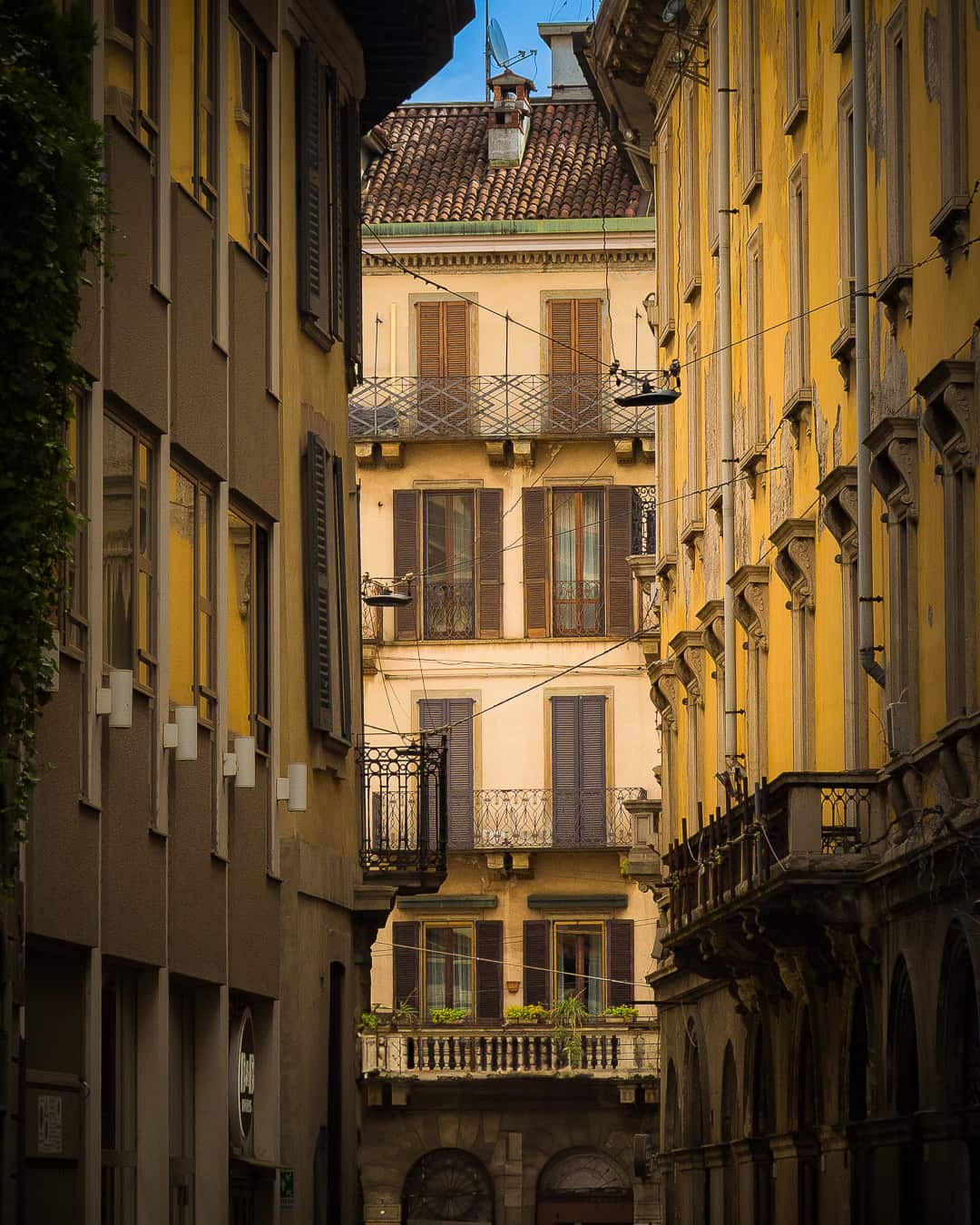
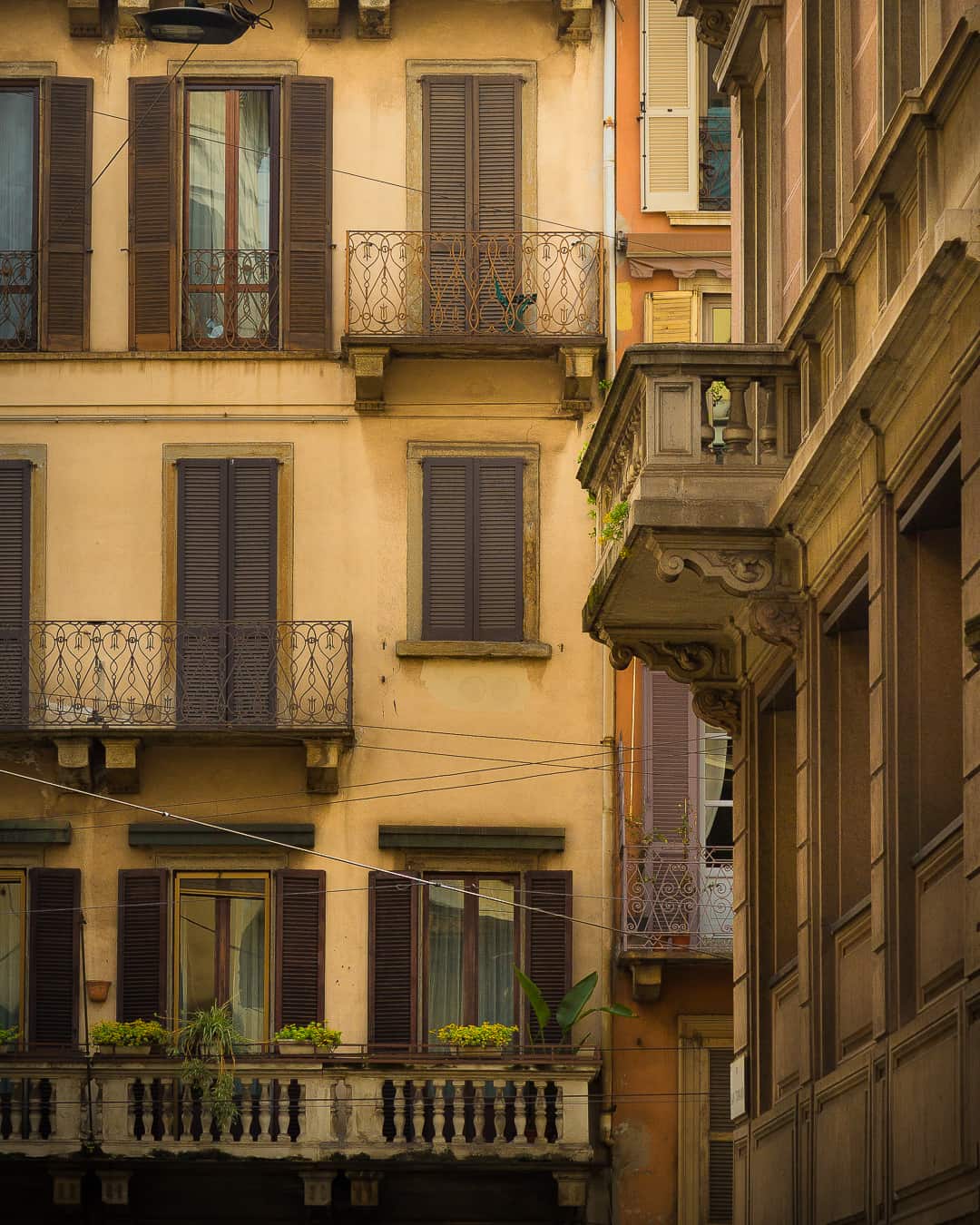
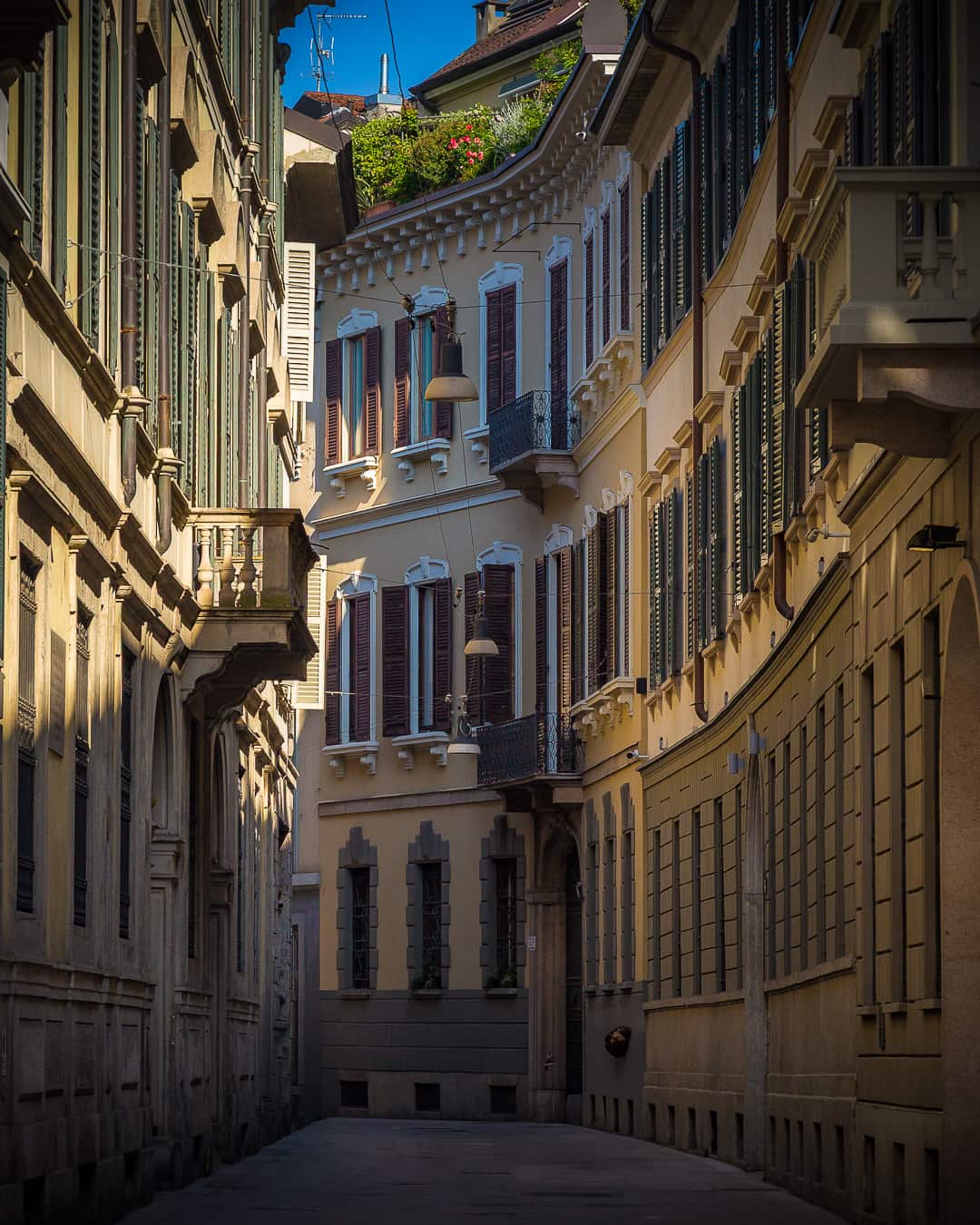
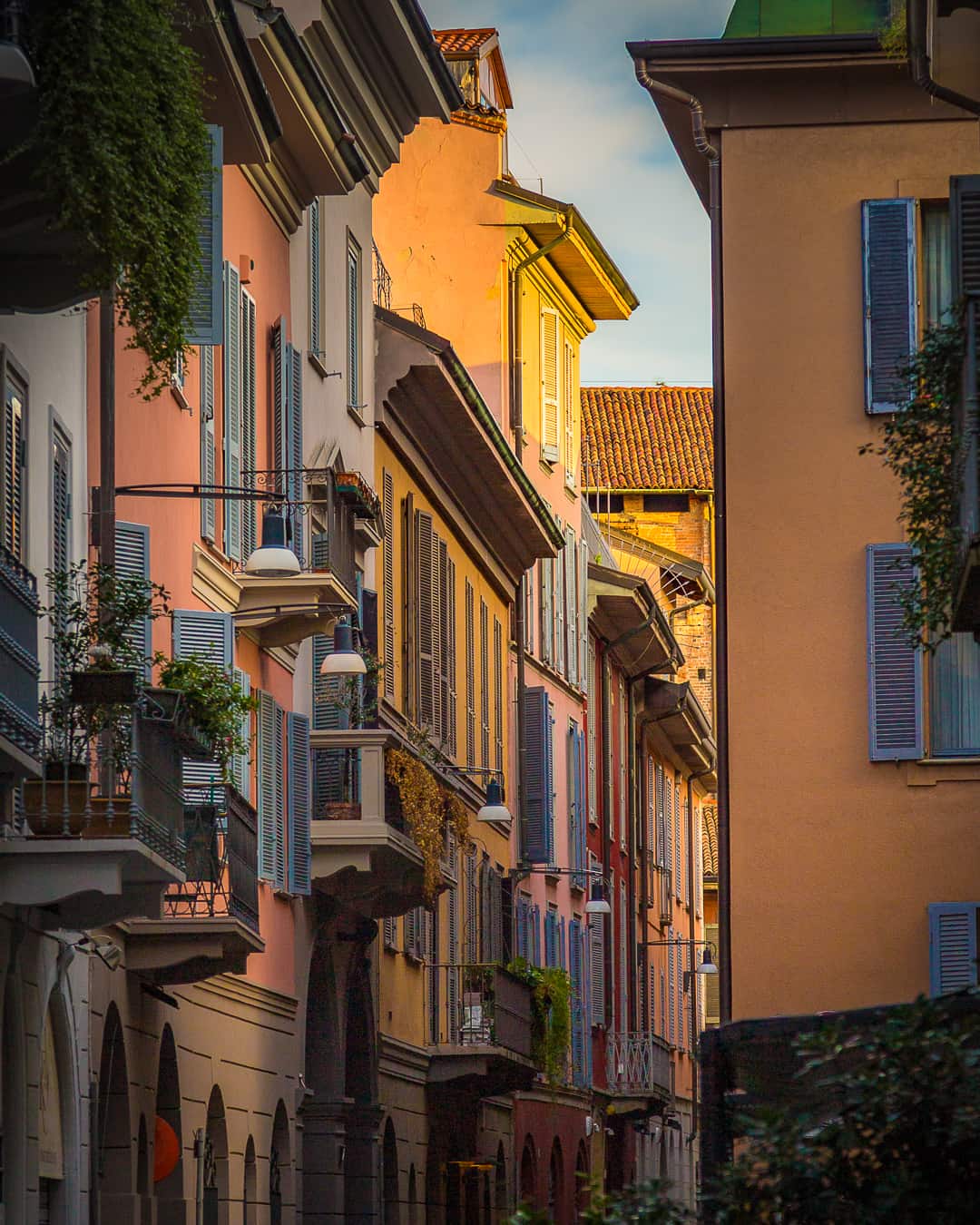
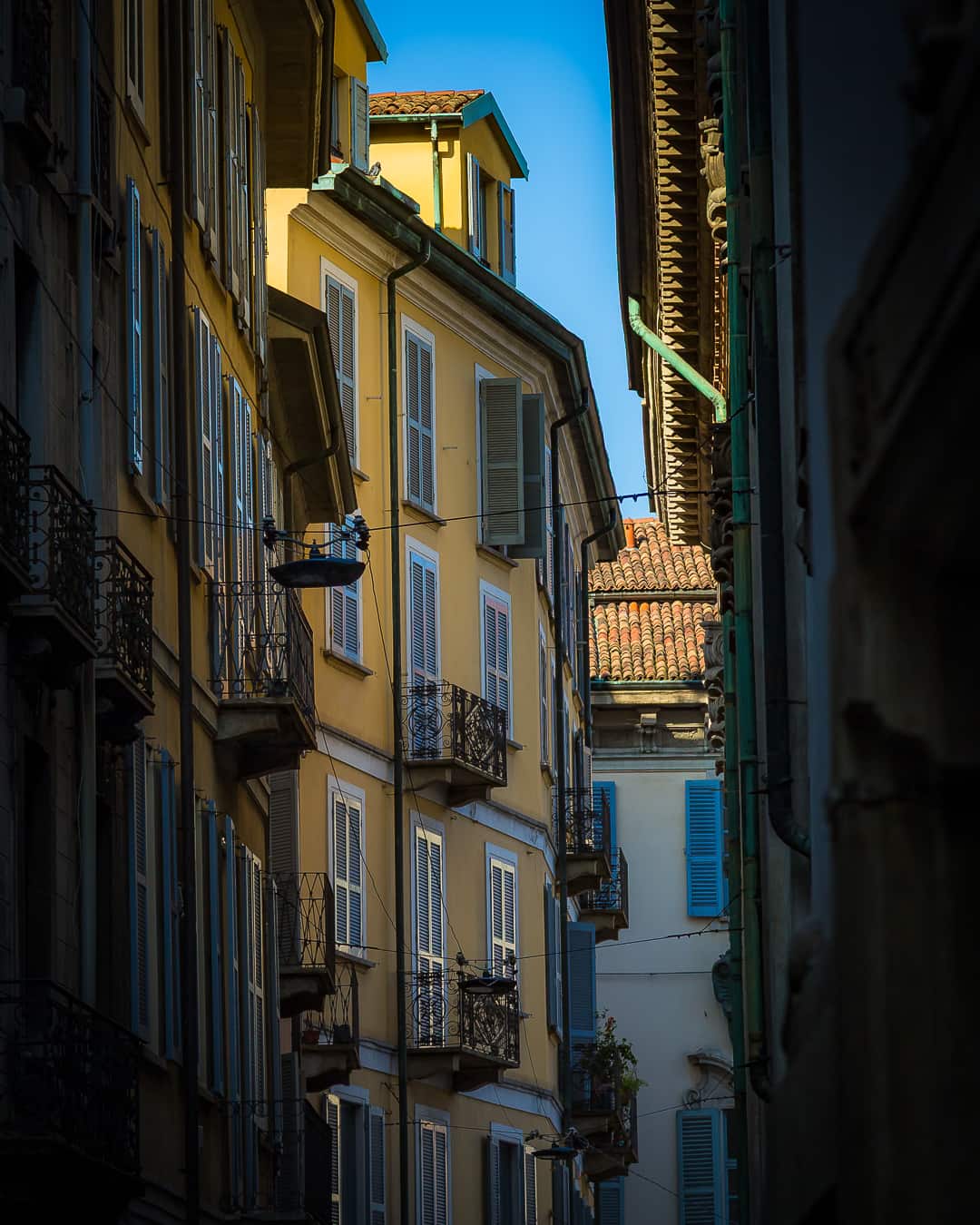
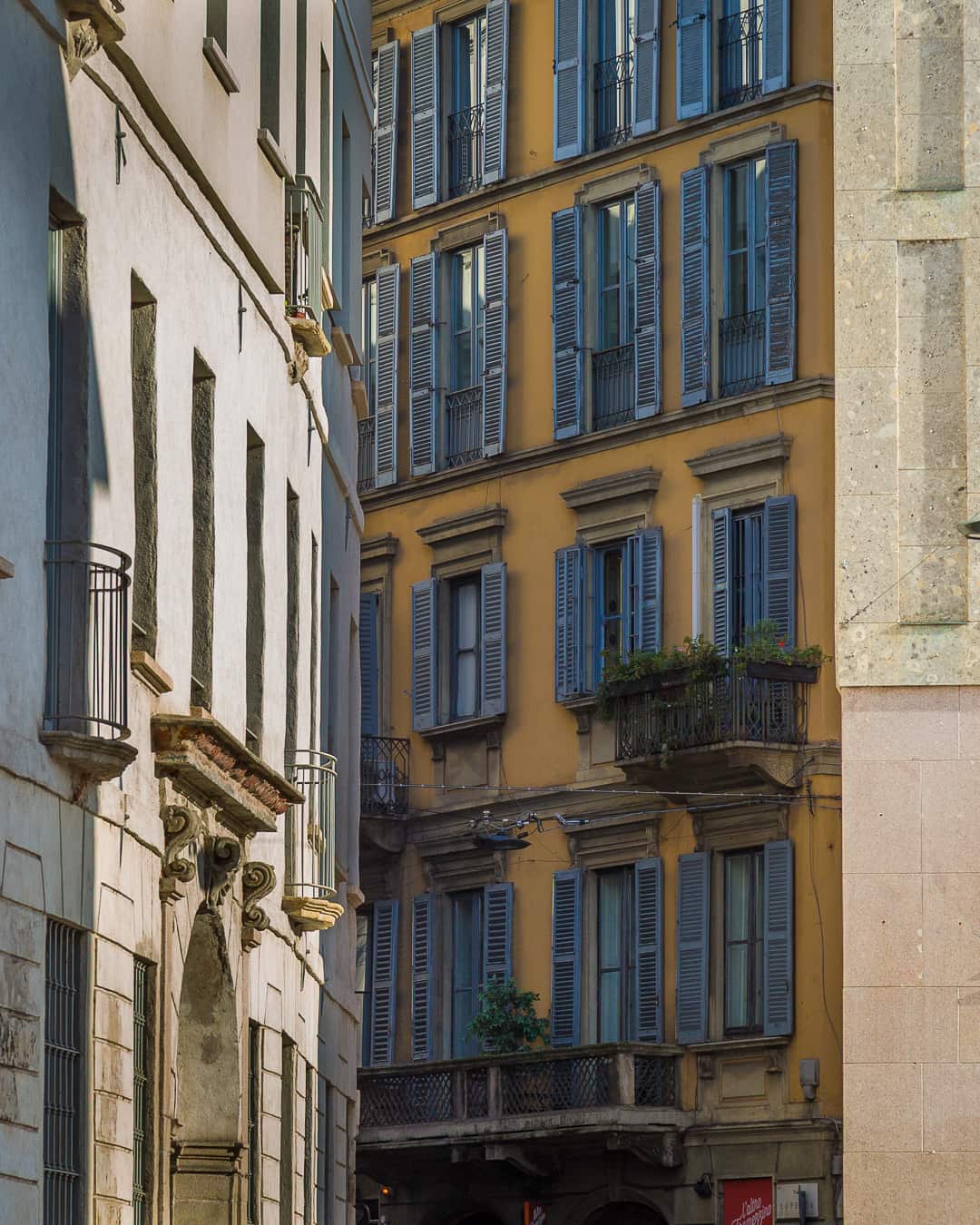
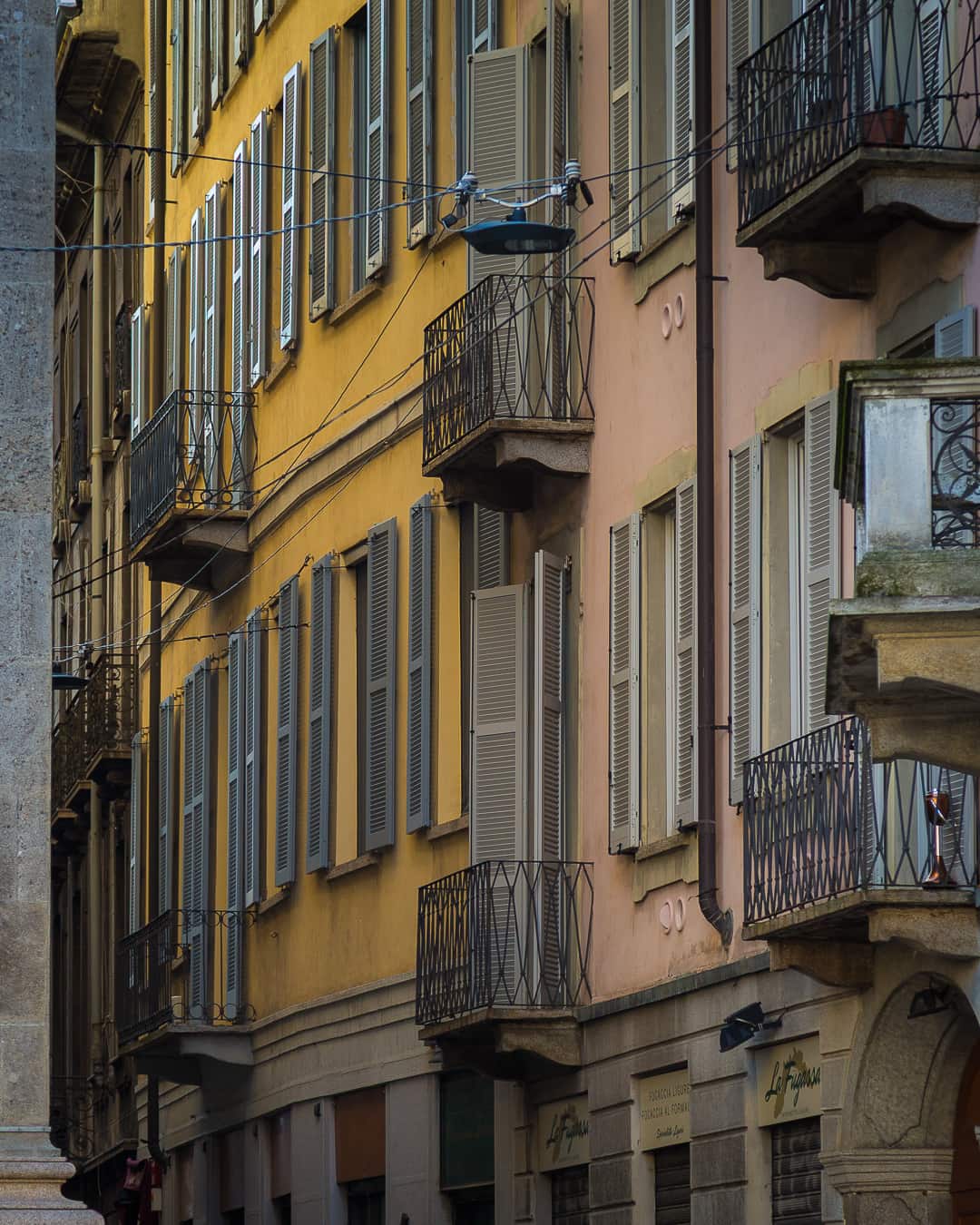
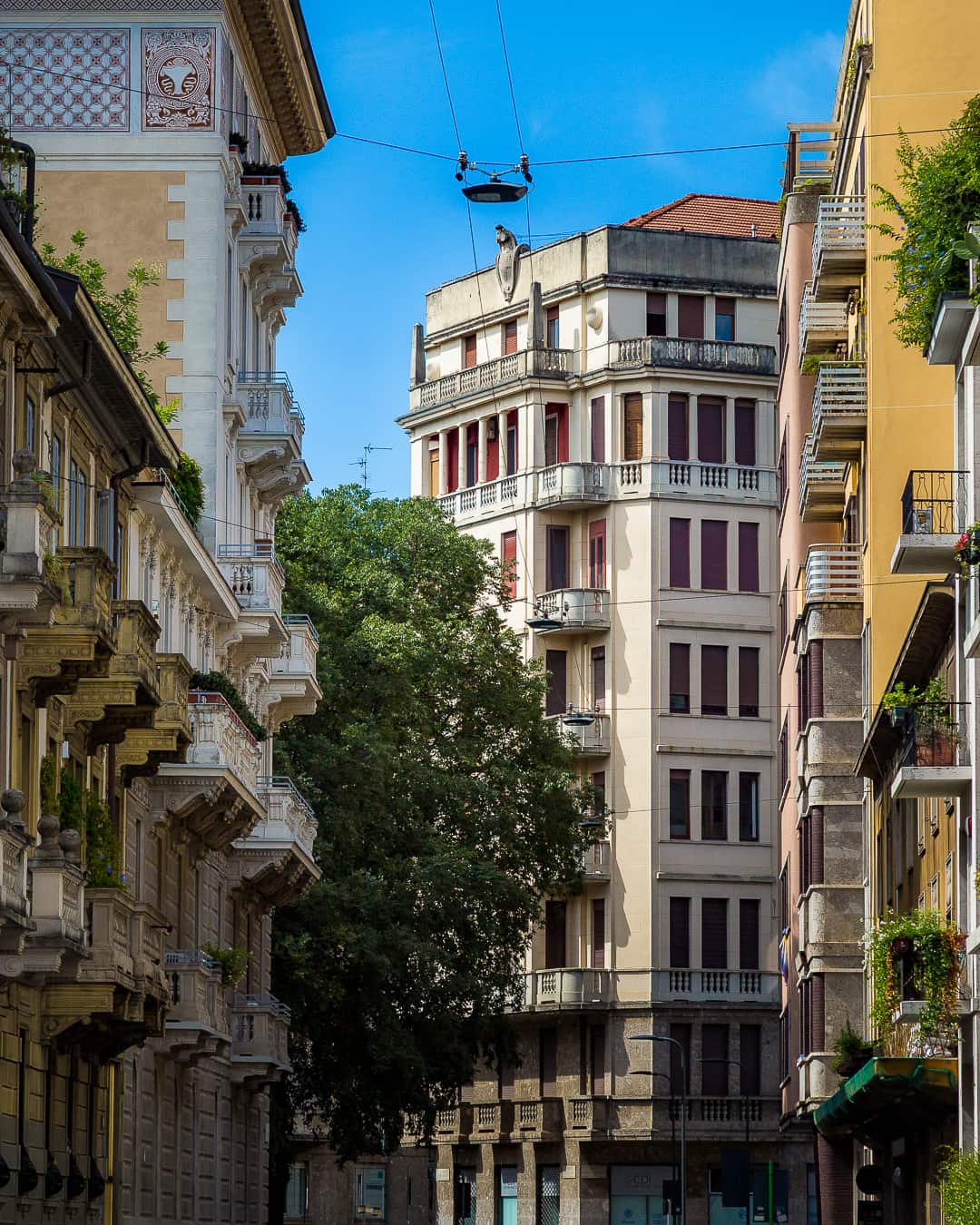
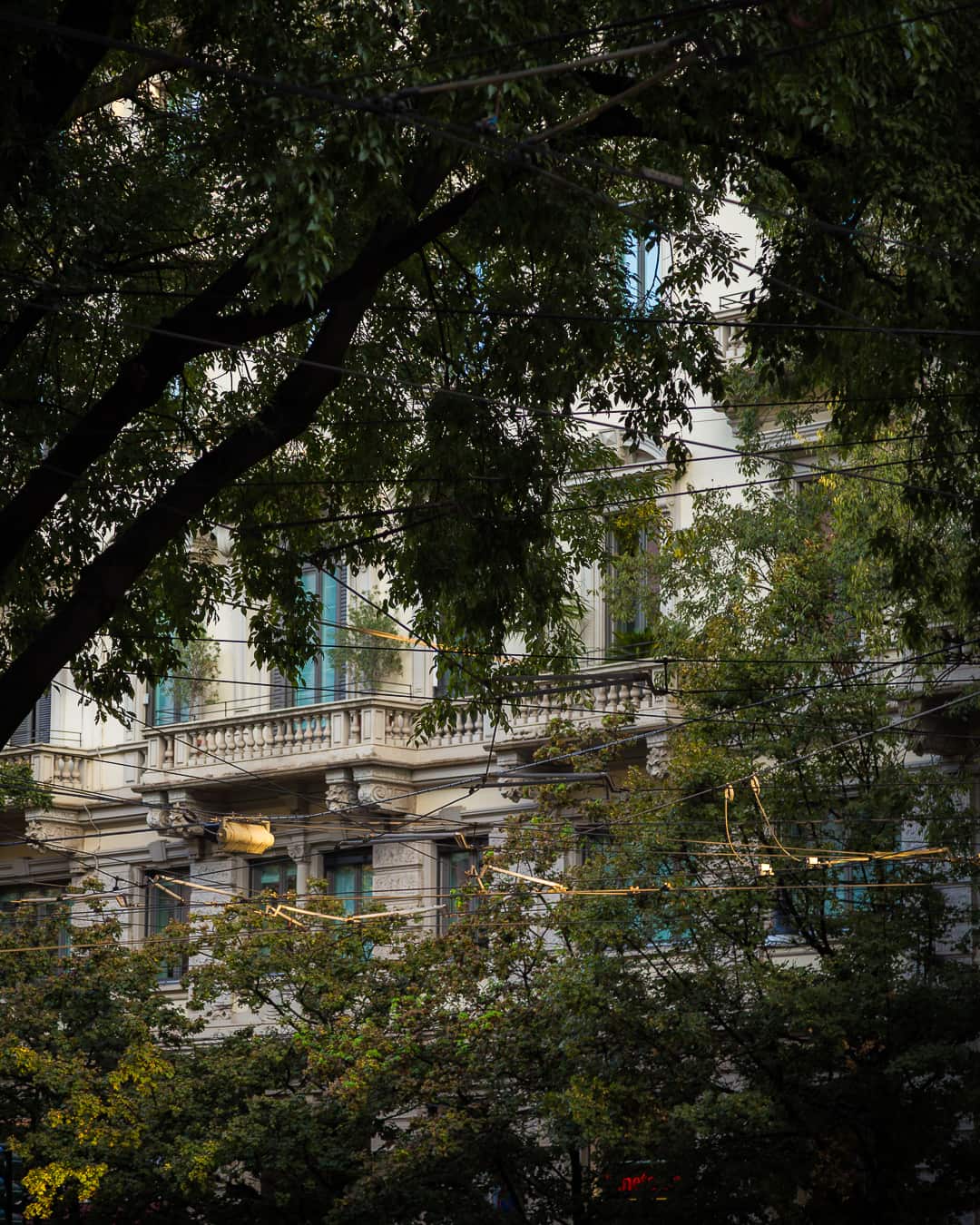
Away from the big avenues, Milan is made of narrow, quiet streets, of palazzi that face each other at close range, of tram wires strung above the road.
The historic trams, the “Ventotto”, in service since 1928, still run: their rattle is one of the sounds of the city.
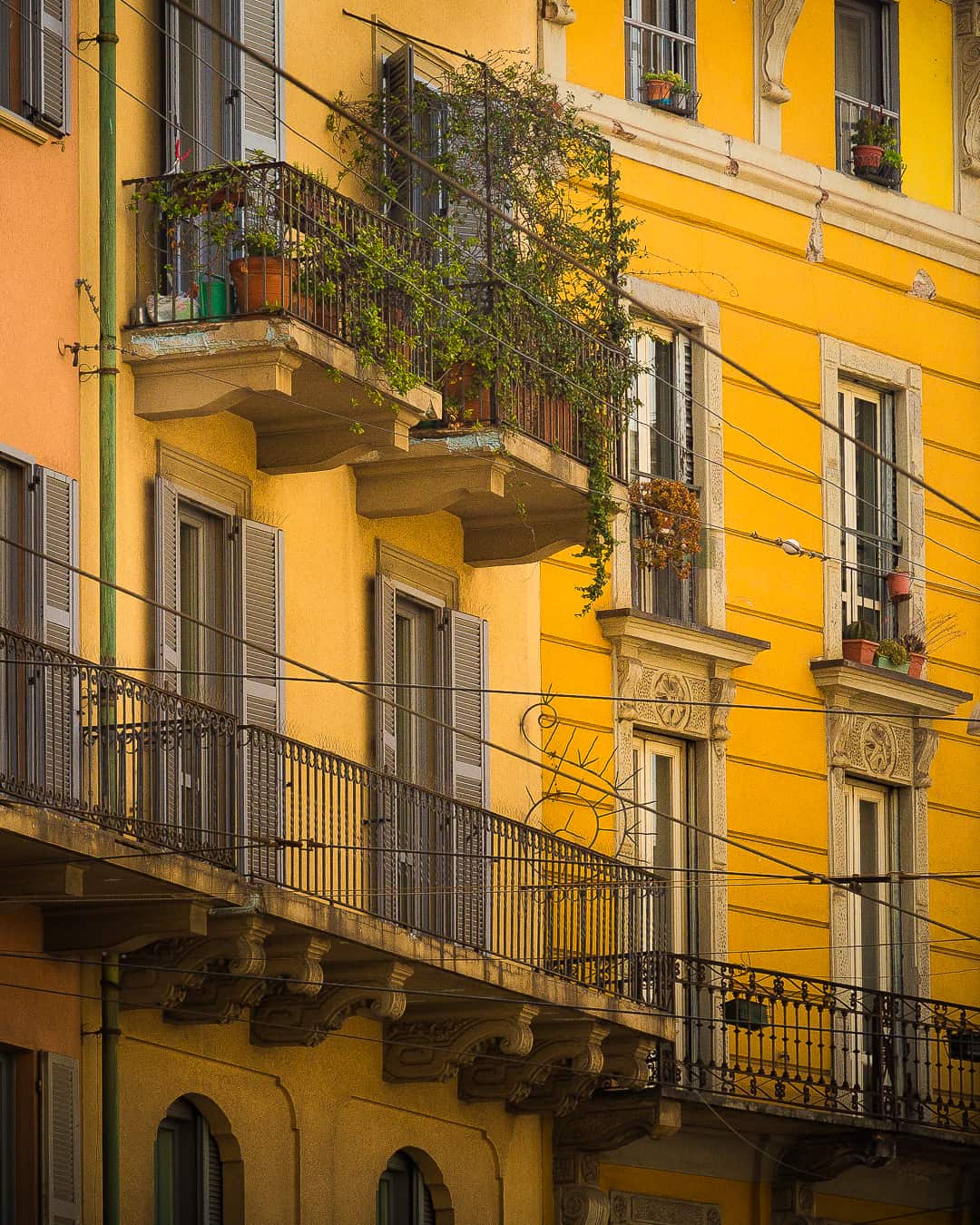
Balconies
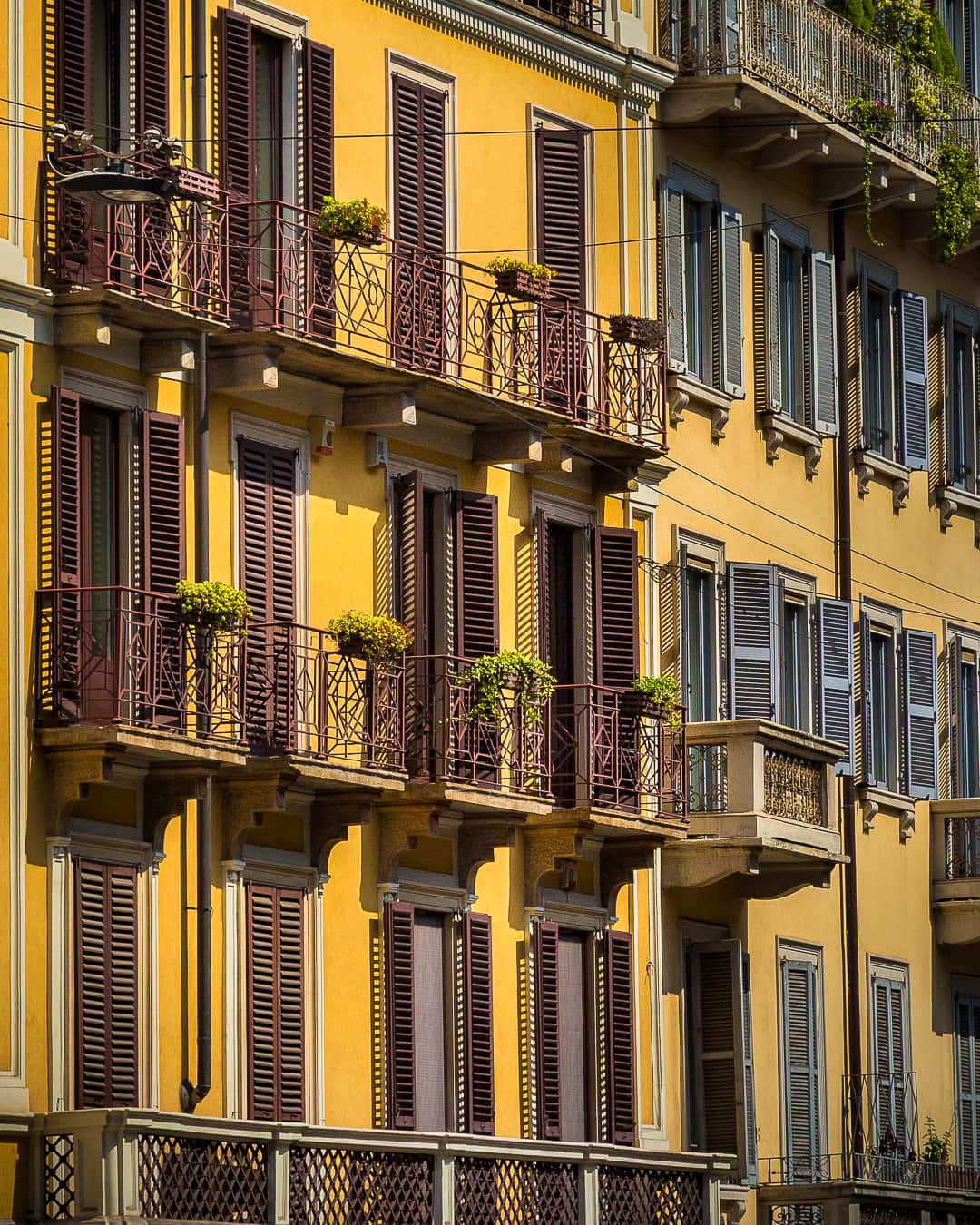
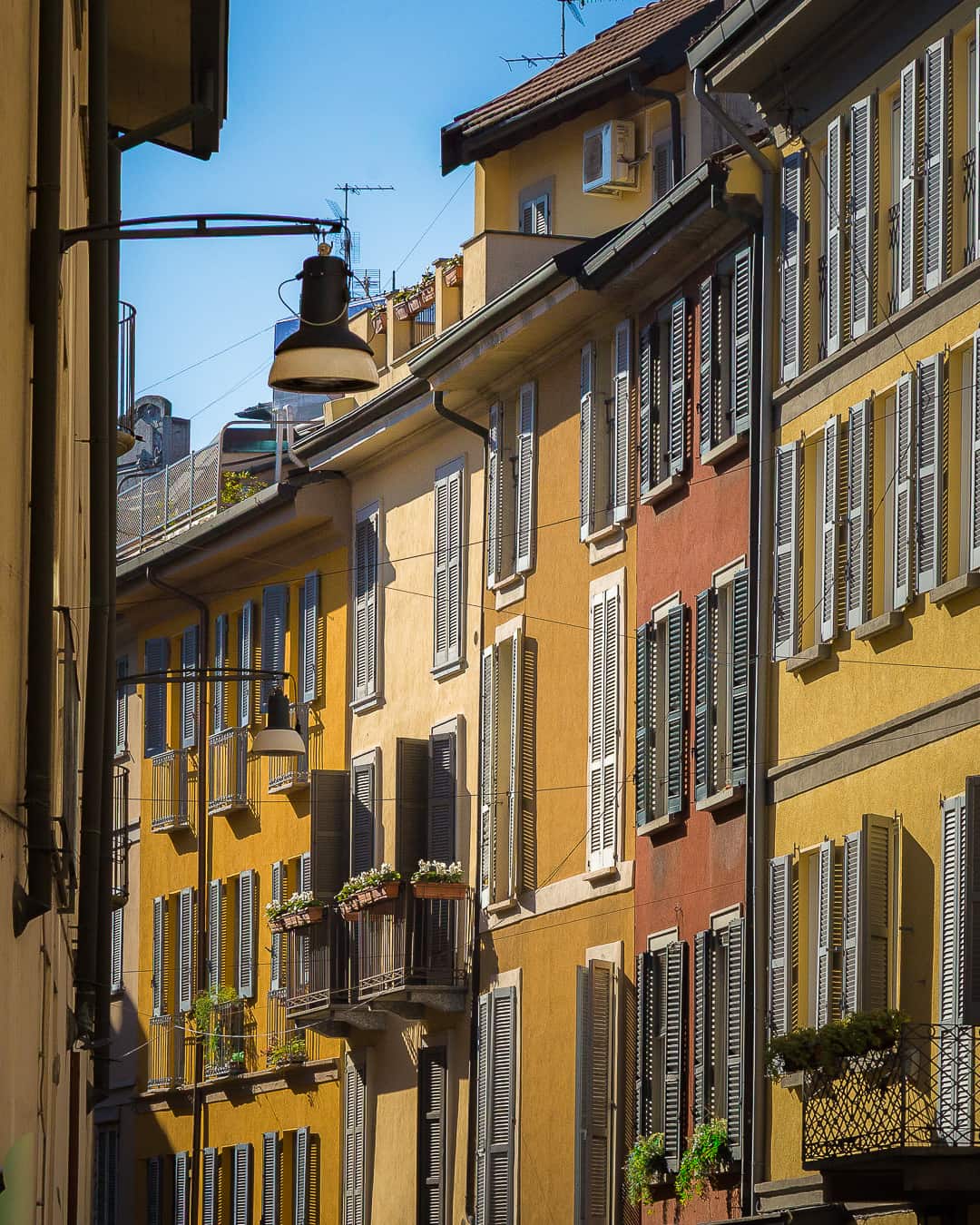
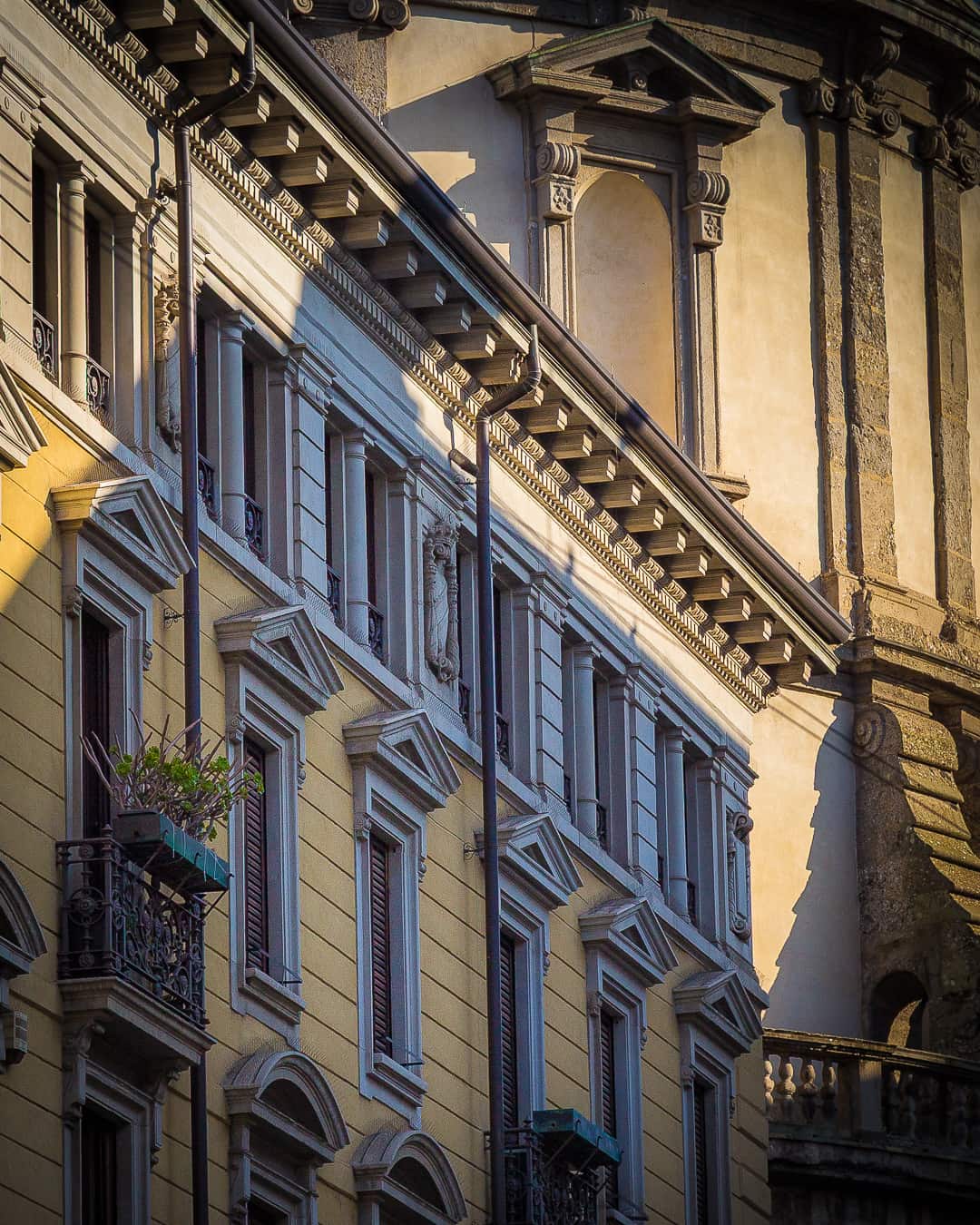
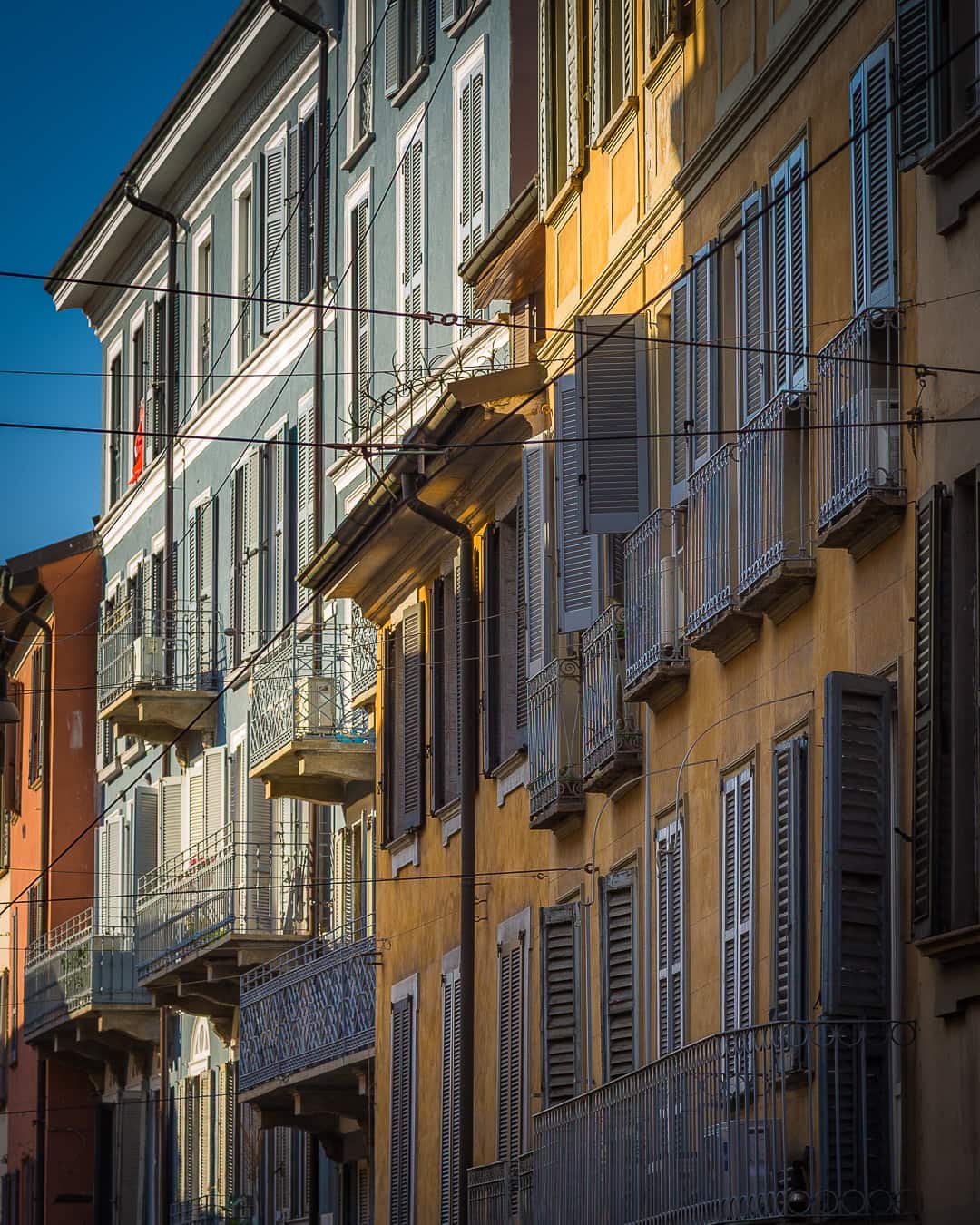
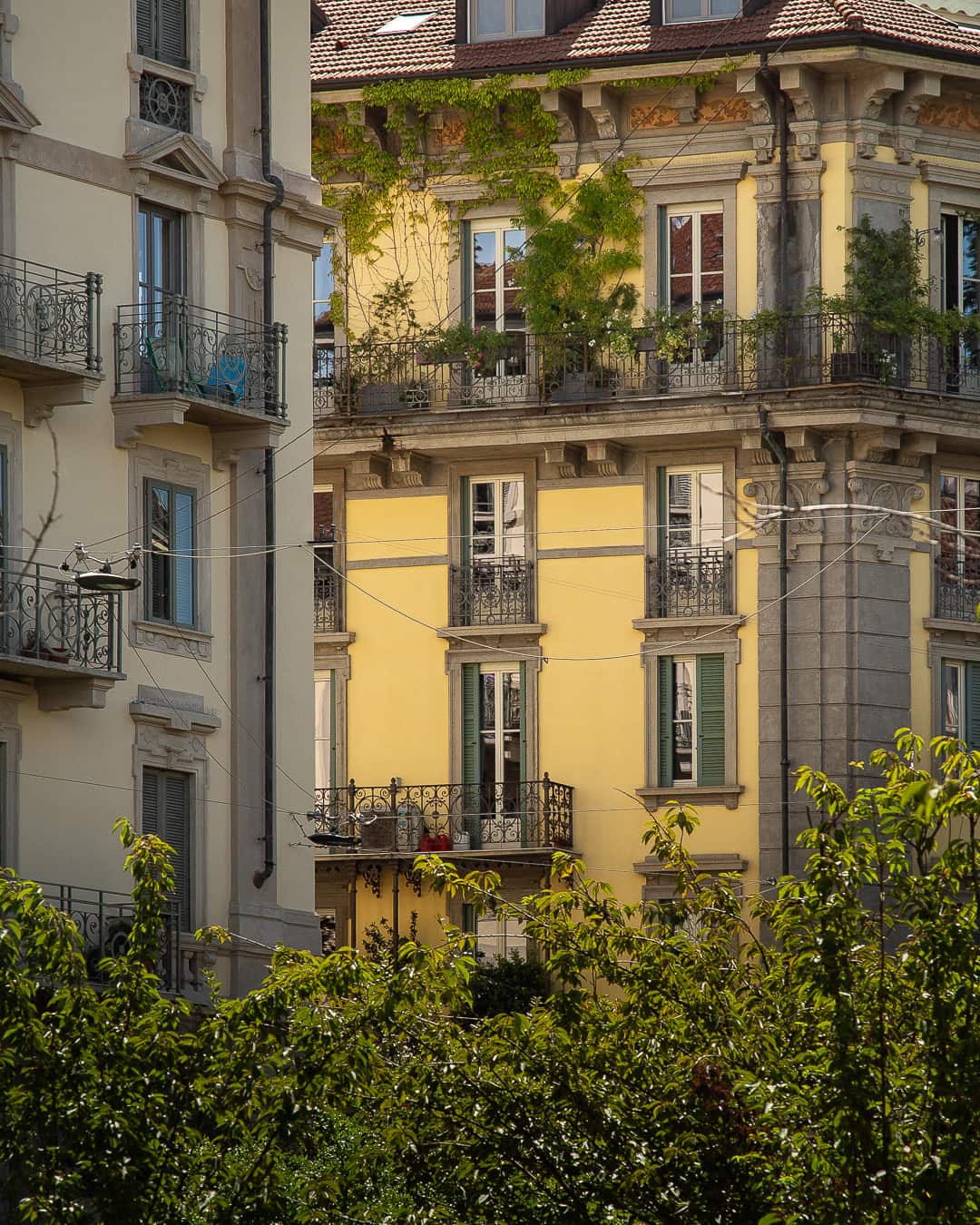
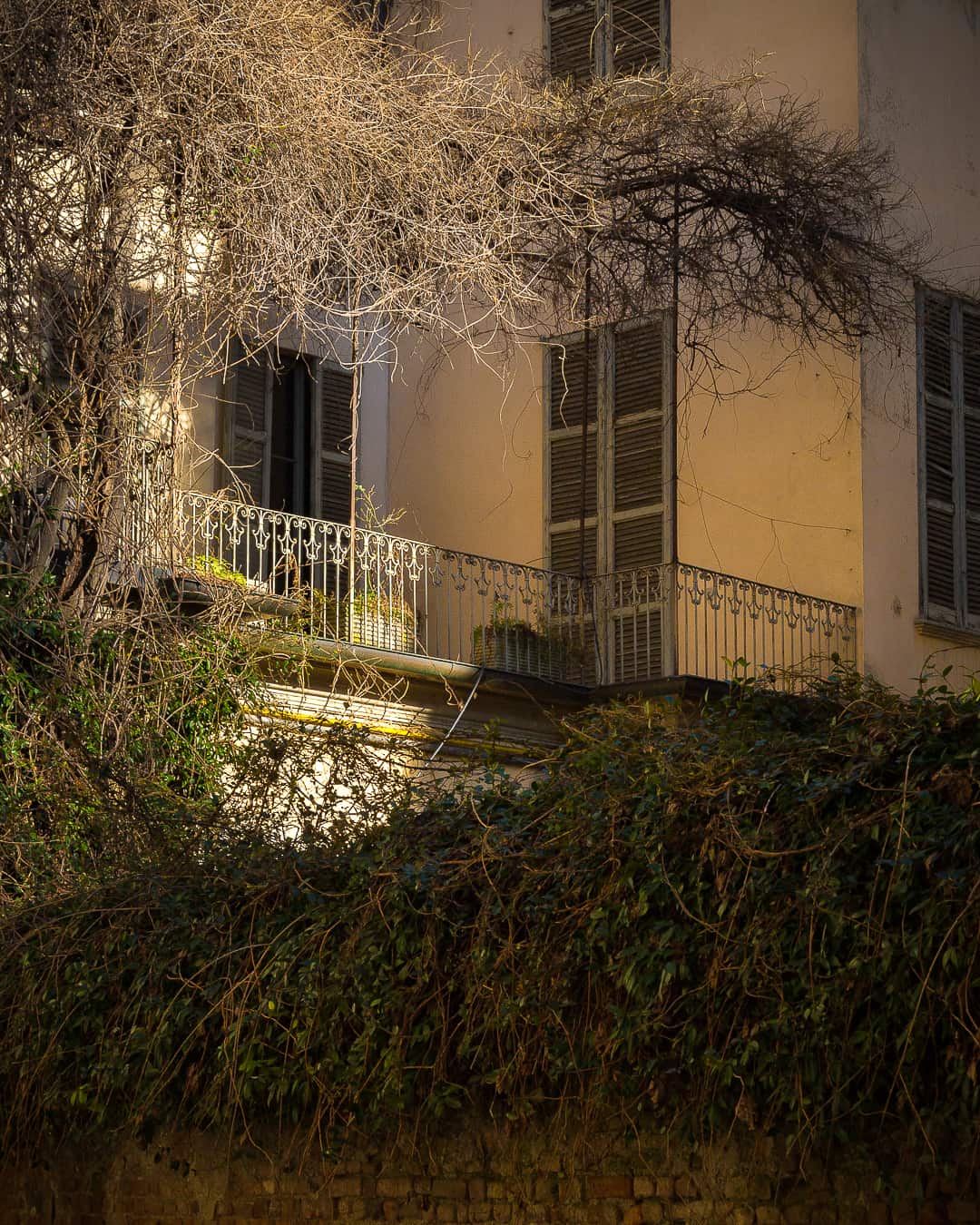
Iron railings, plants, a yellow façade in the sun. Many Milanese houses hide a courtyard ringed with walkways: the case di ringhiera, where life looks onto the courtyard.
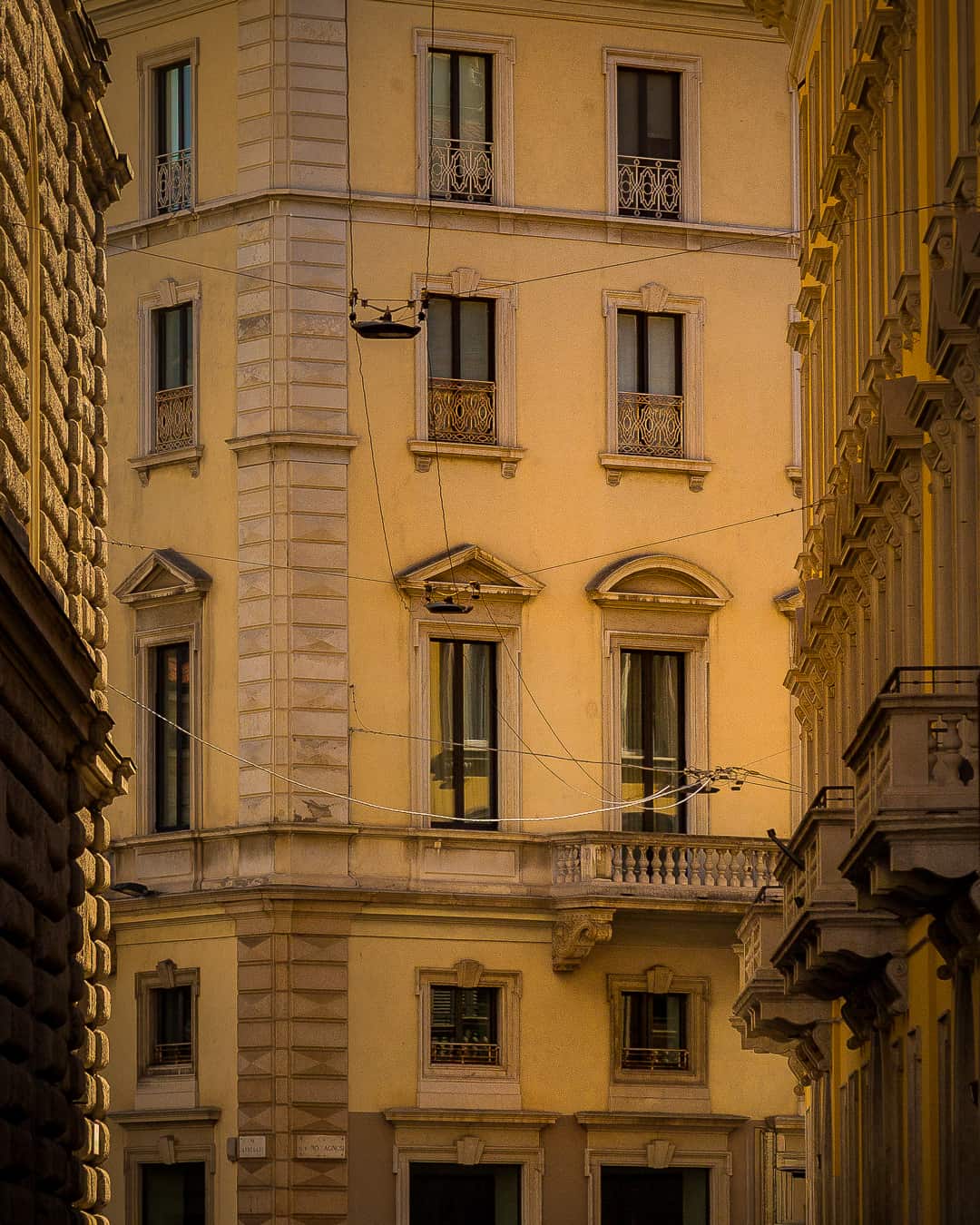
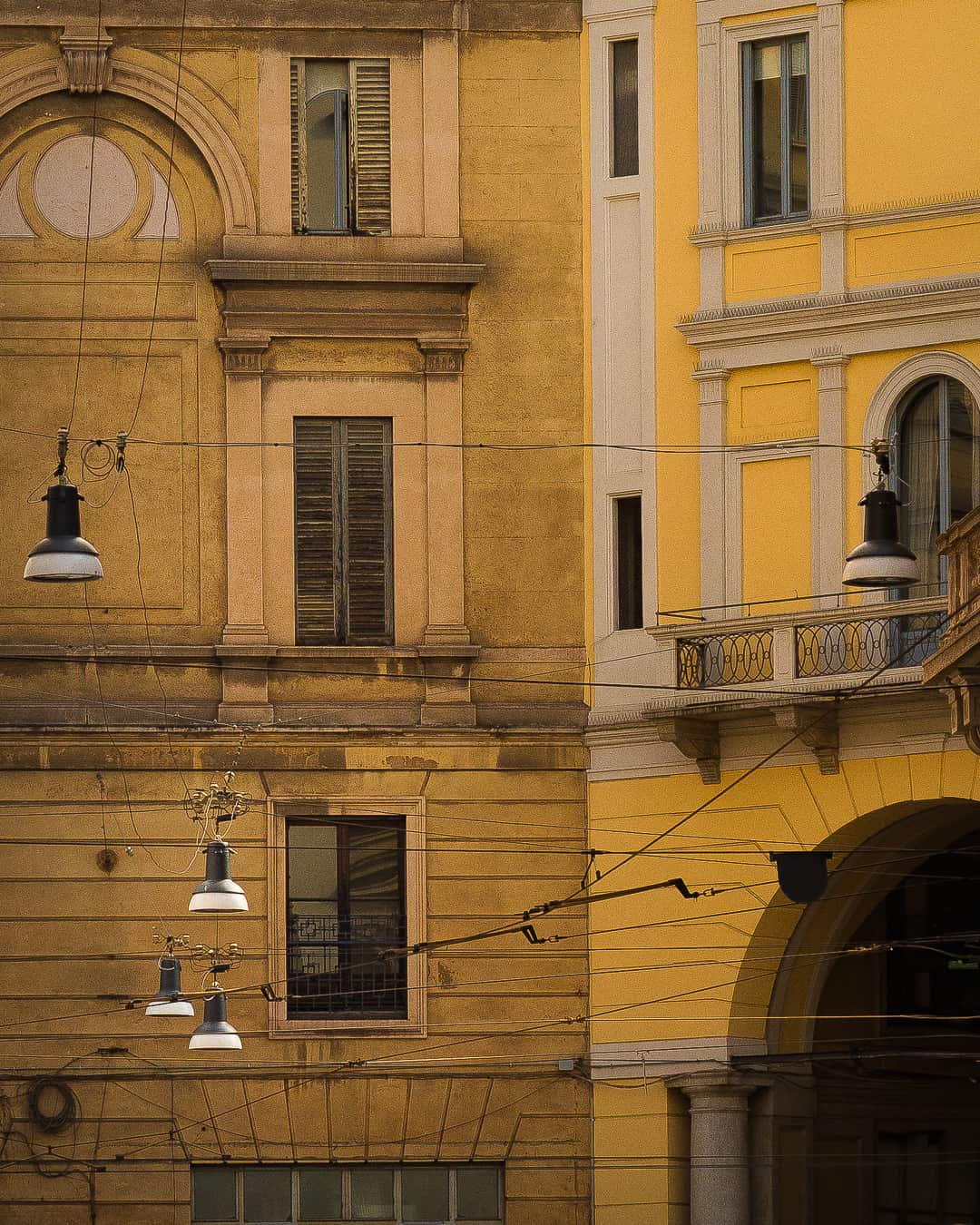
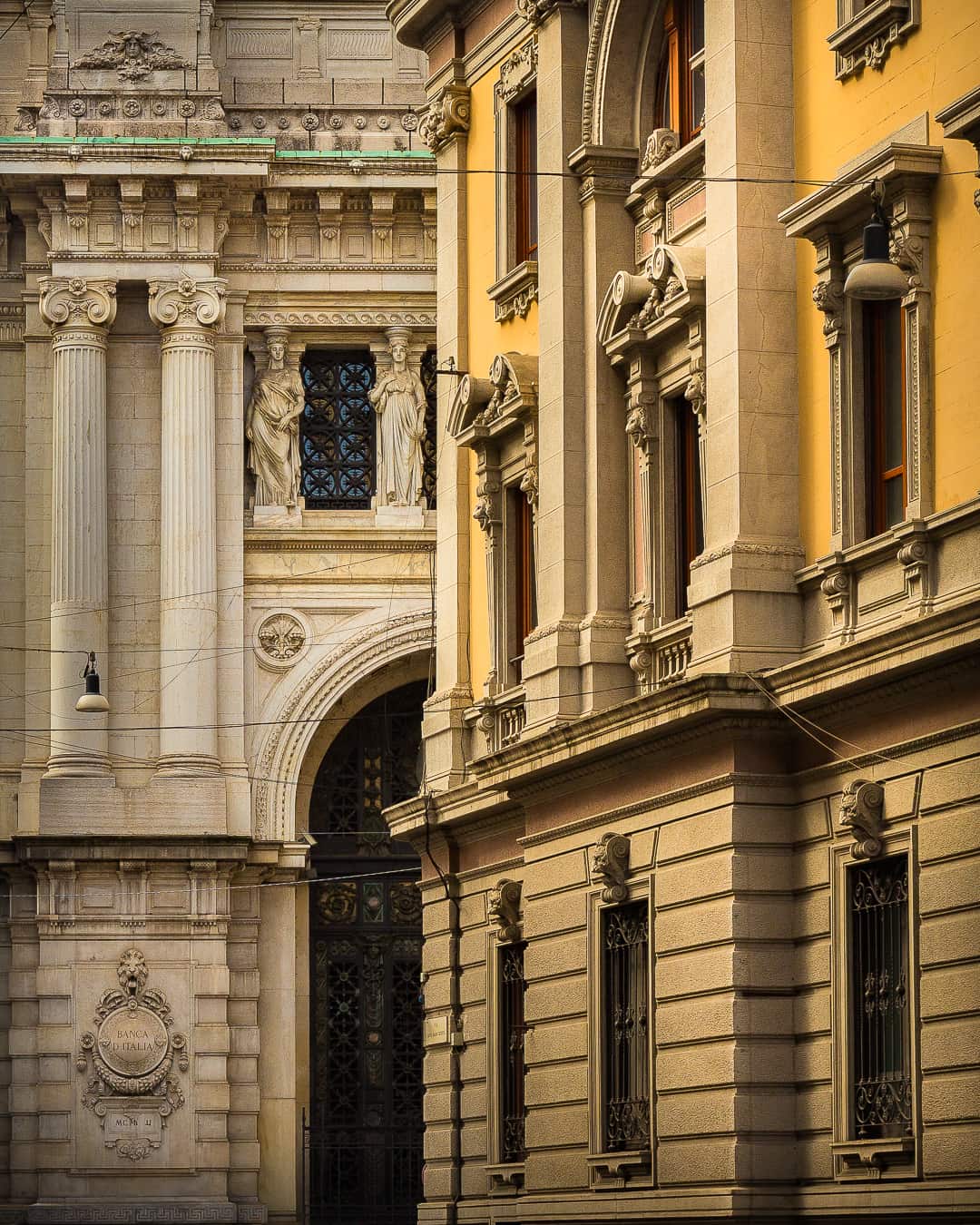
Open shutters
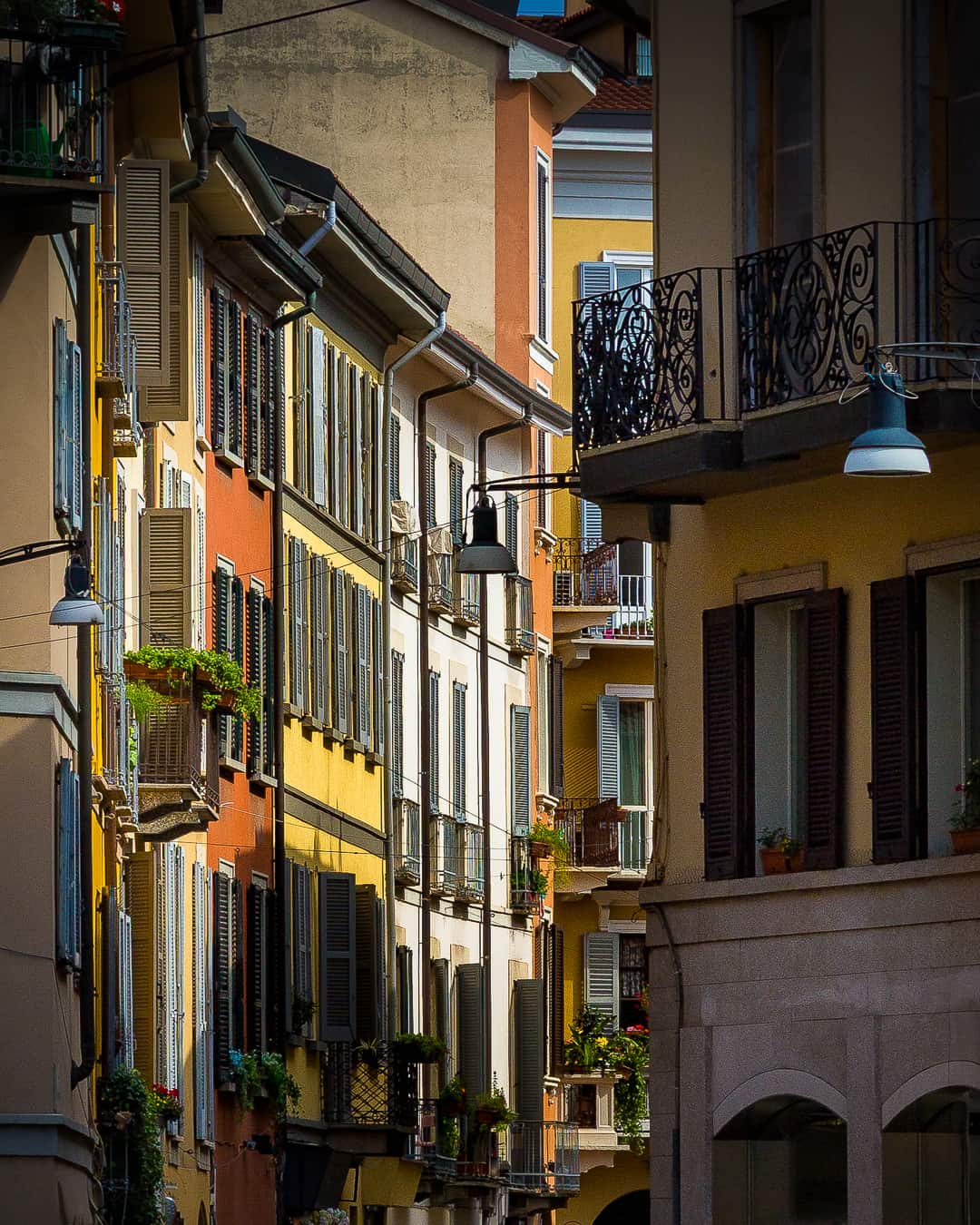
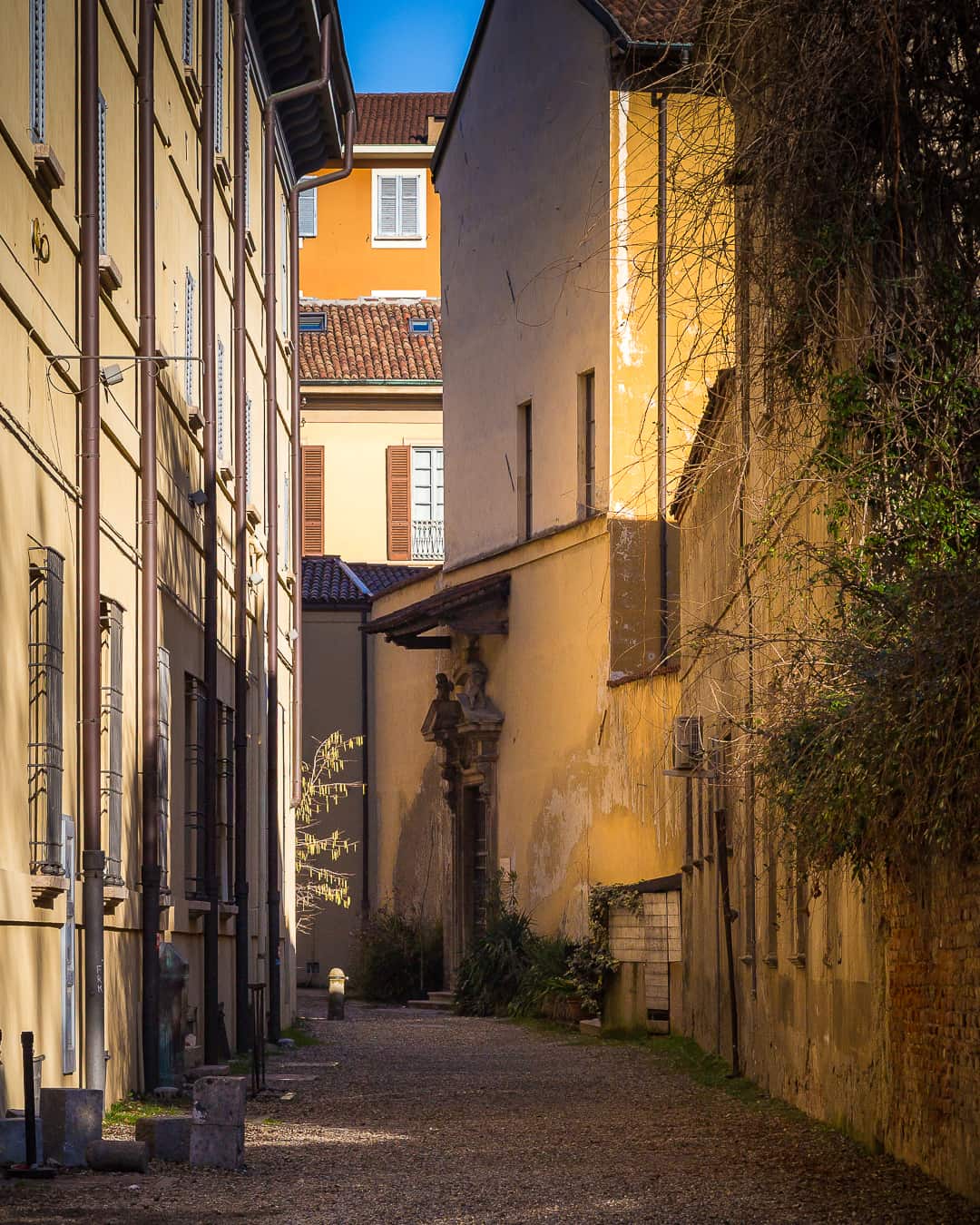
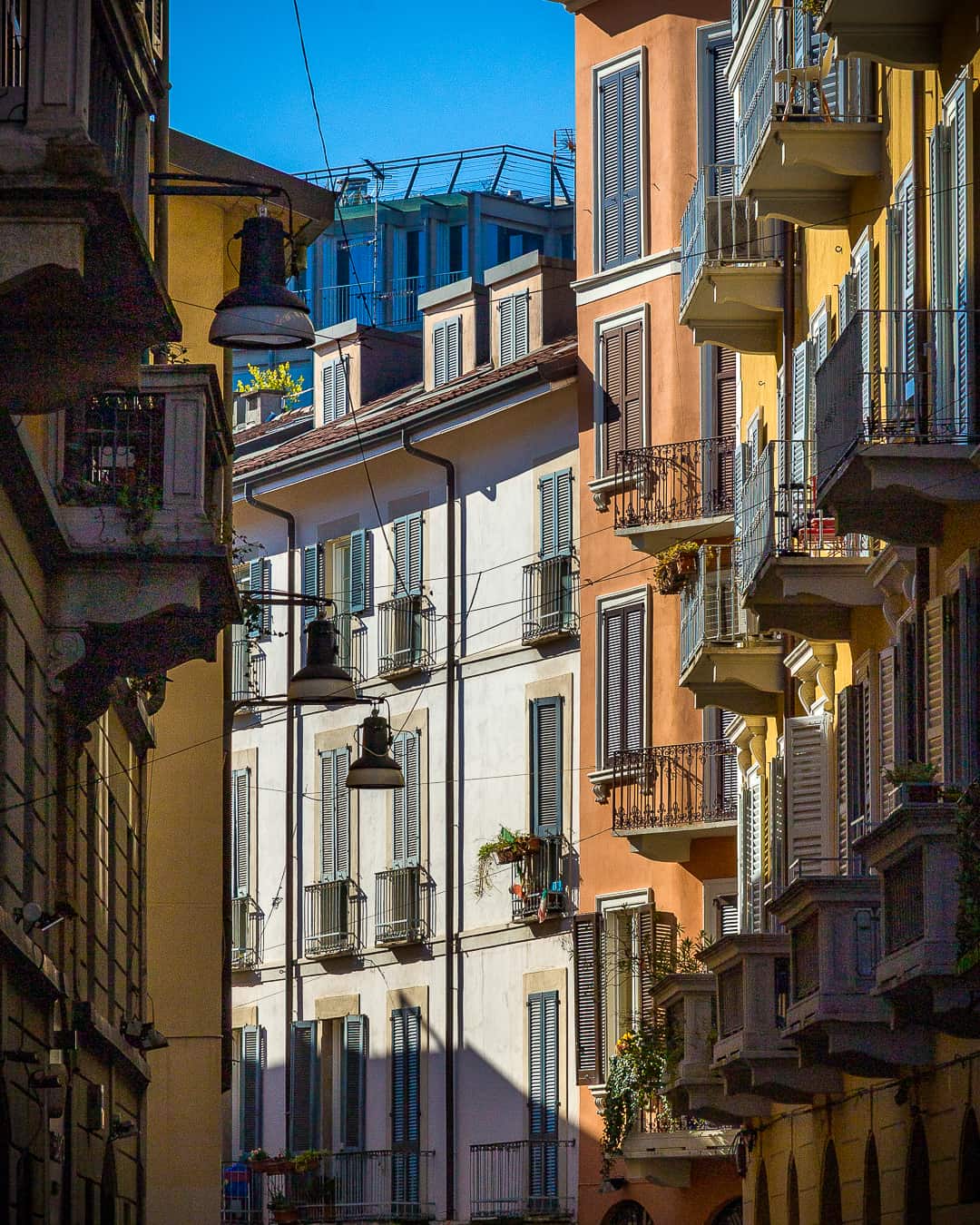
Open shutters, pots on the sills, a red maple below. In a narrow street the light arrives late and leaves early: so when it comes, every window opens.
Plaster
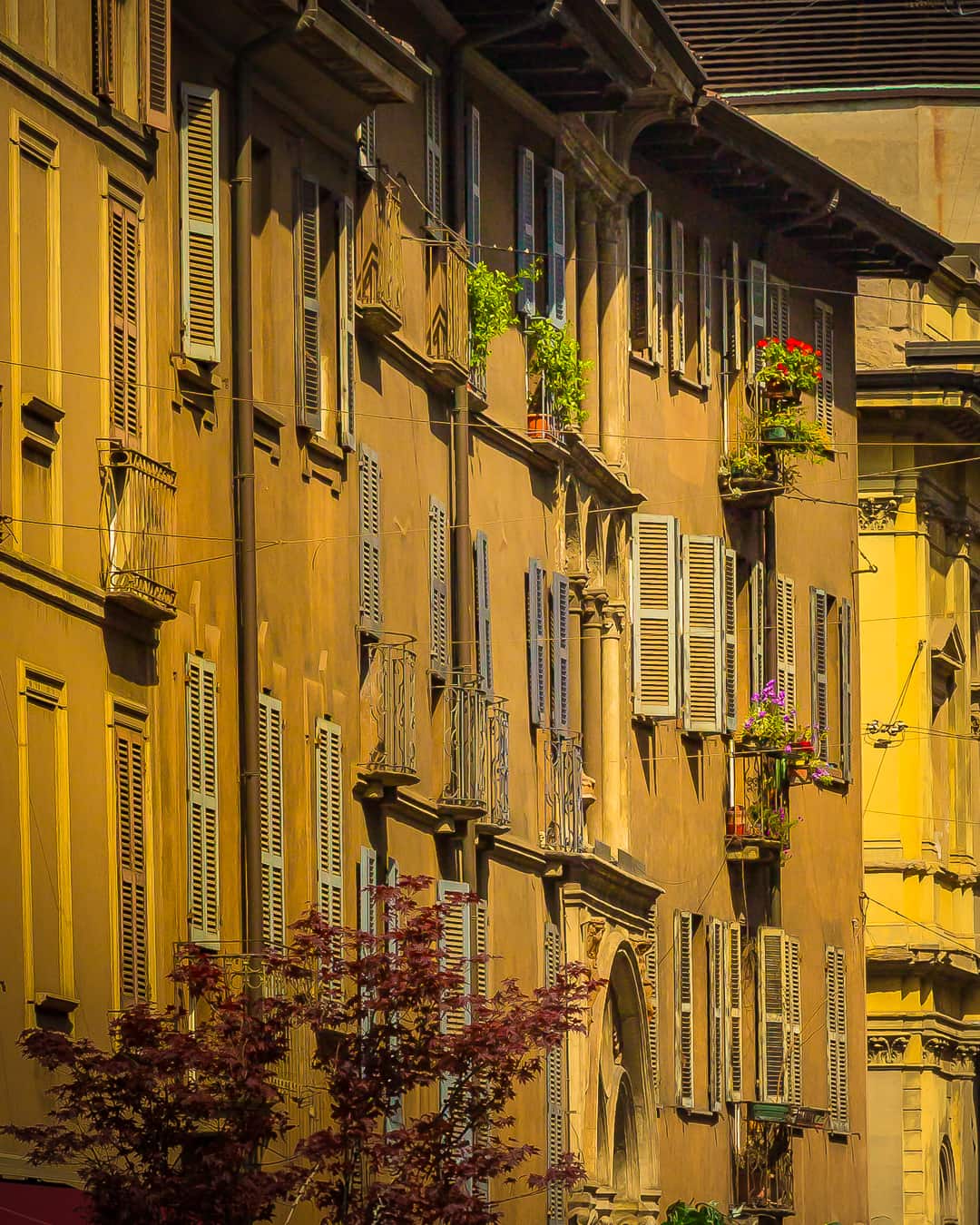
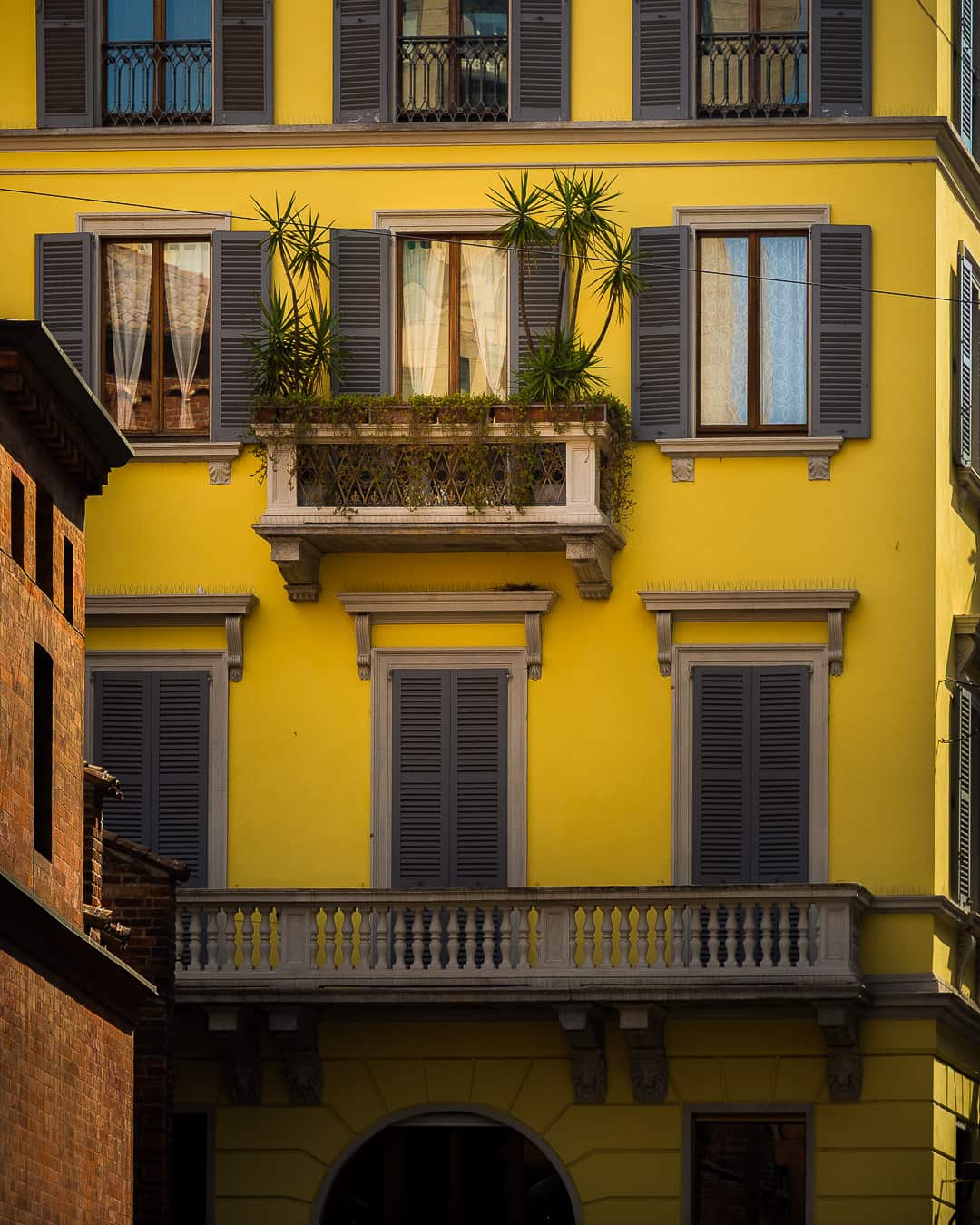
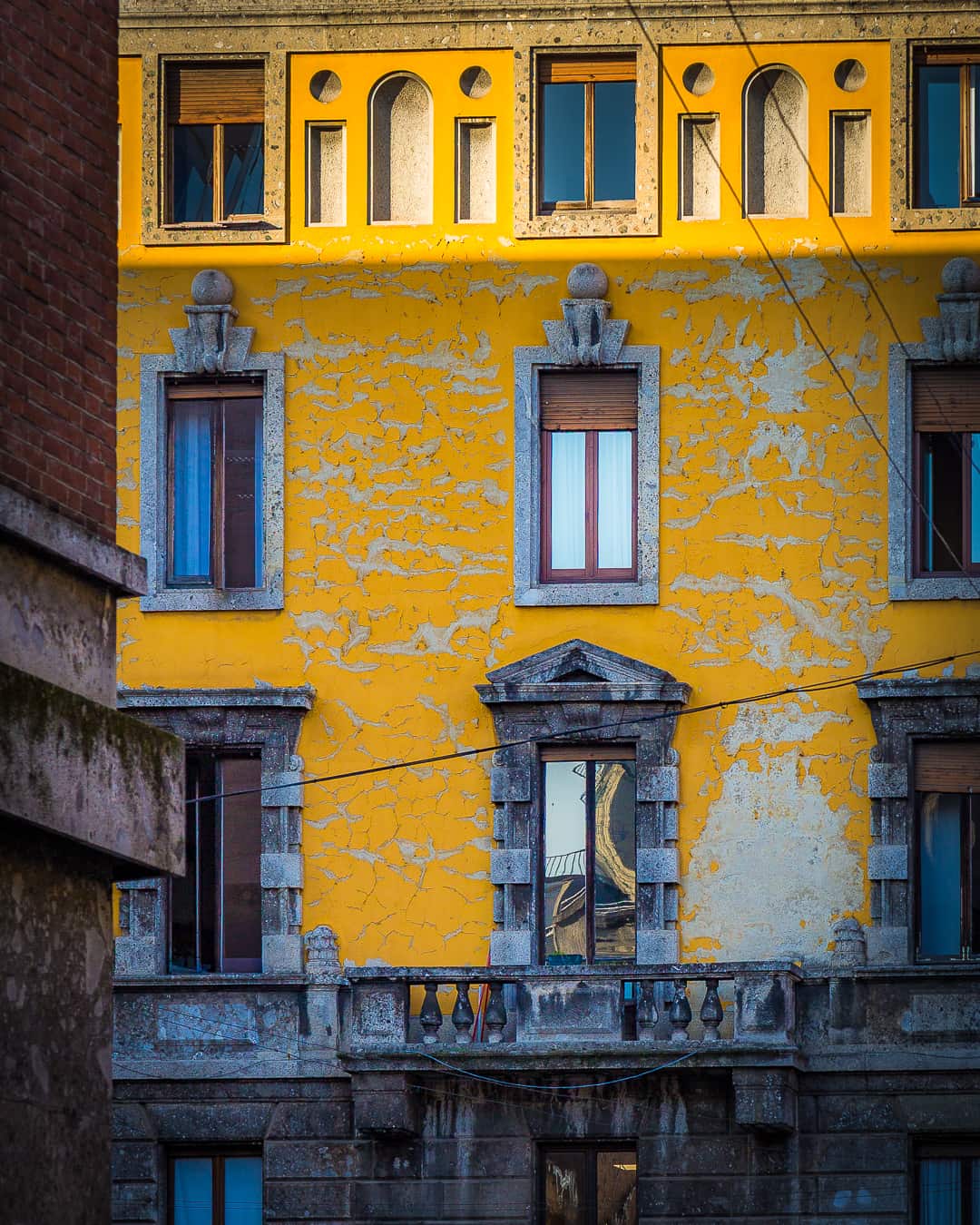
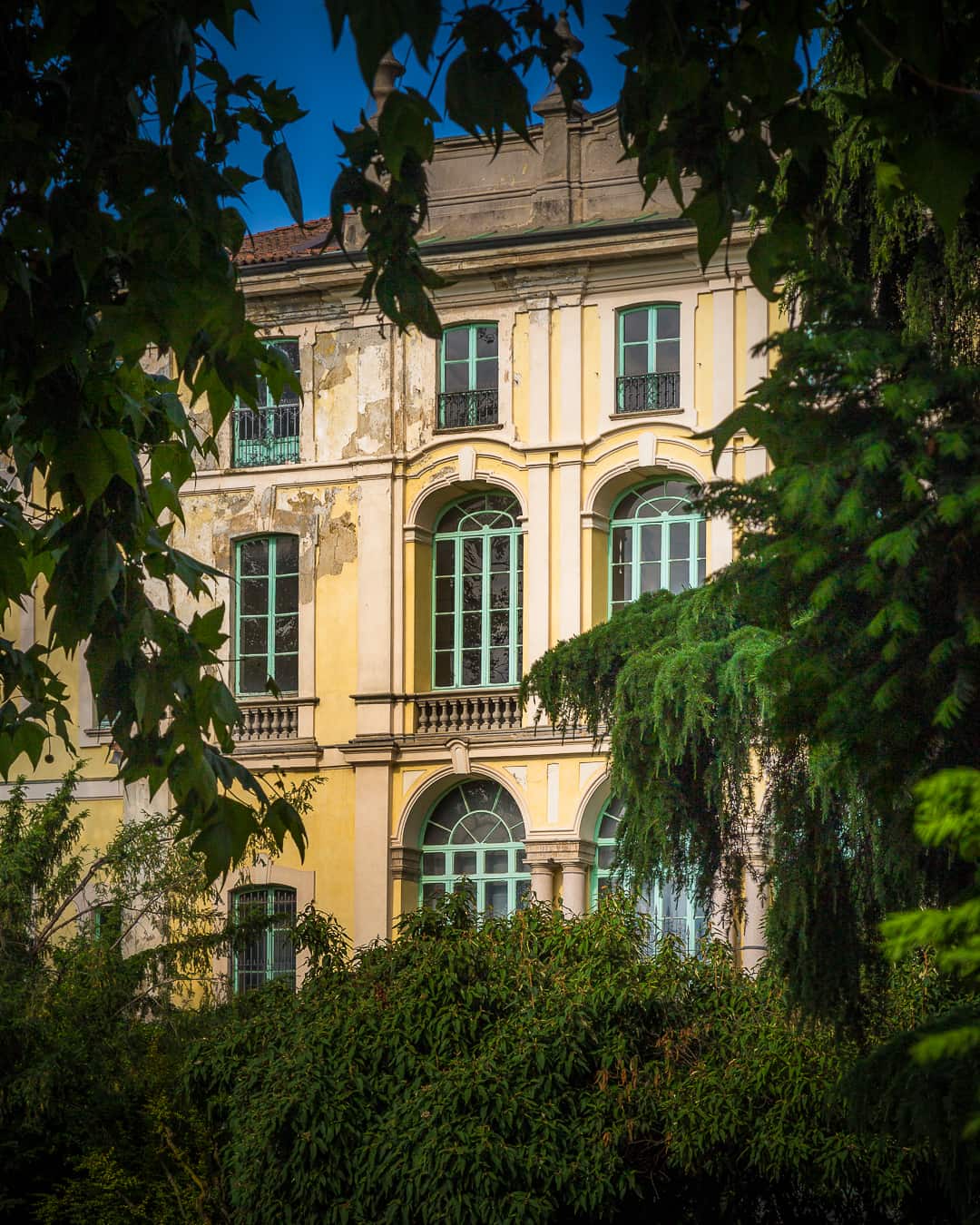
Peeling yellow, stone surrounds, a blue window. Here you read time on the façades: layers of colour, restorations, small wounds.
Signs
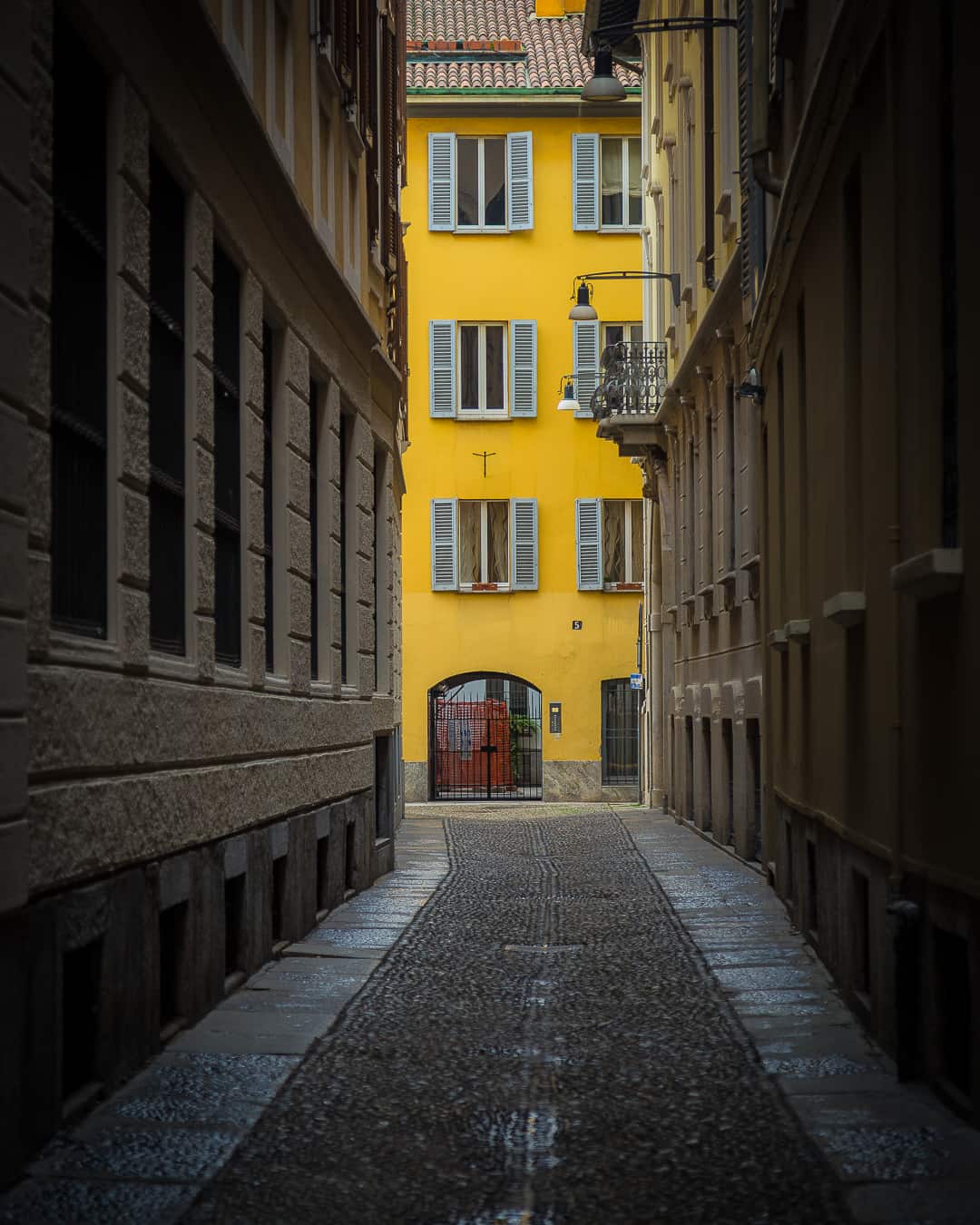
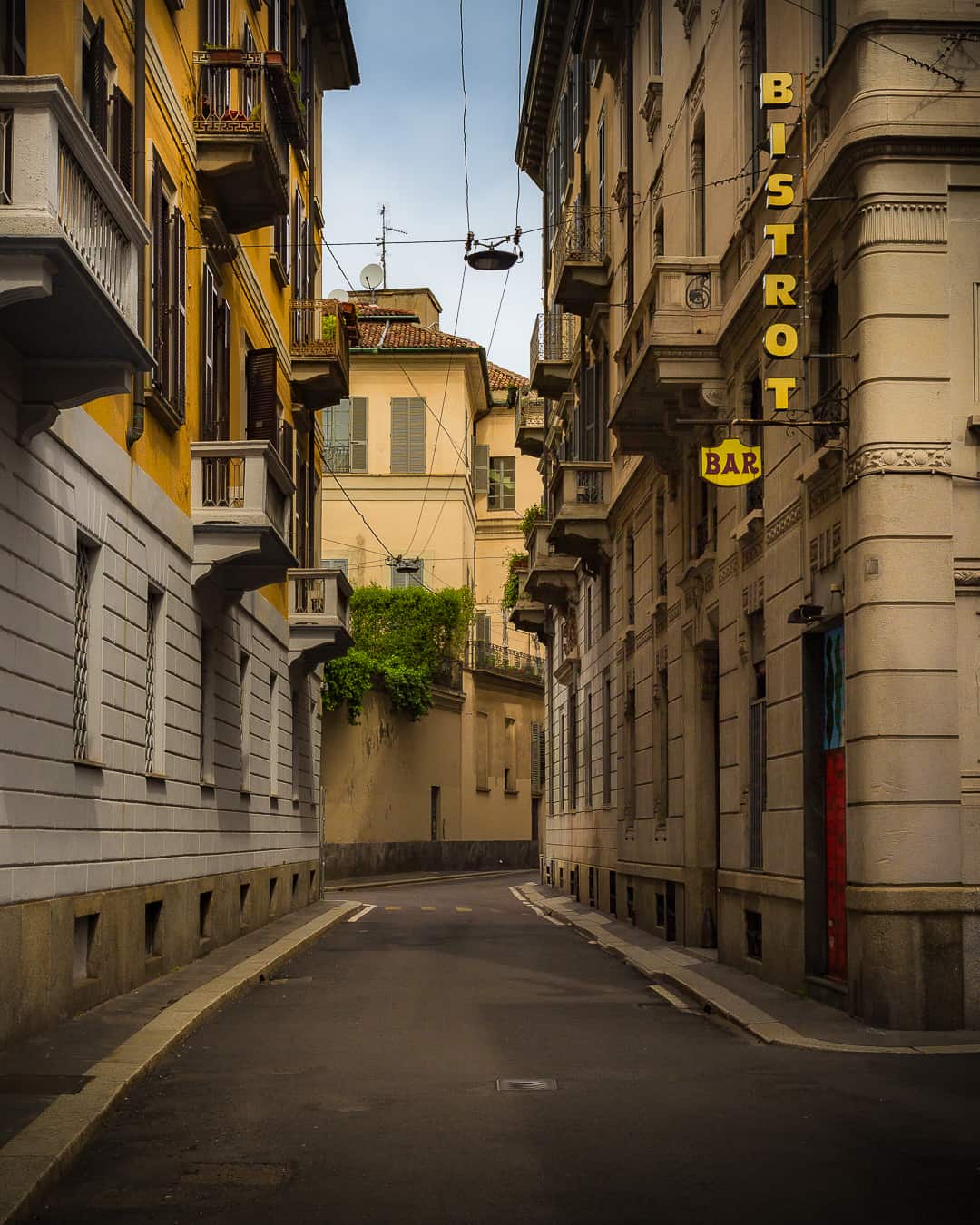
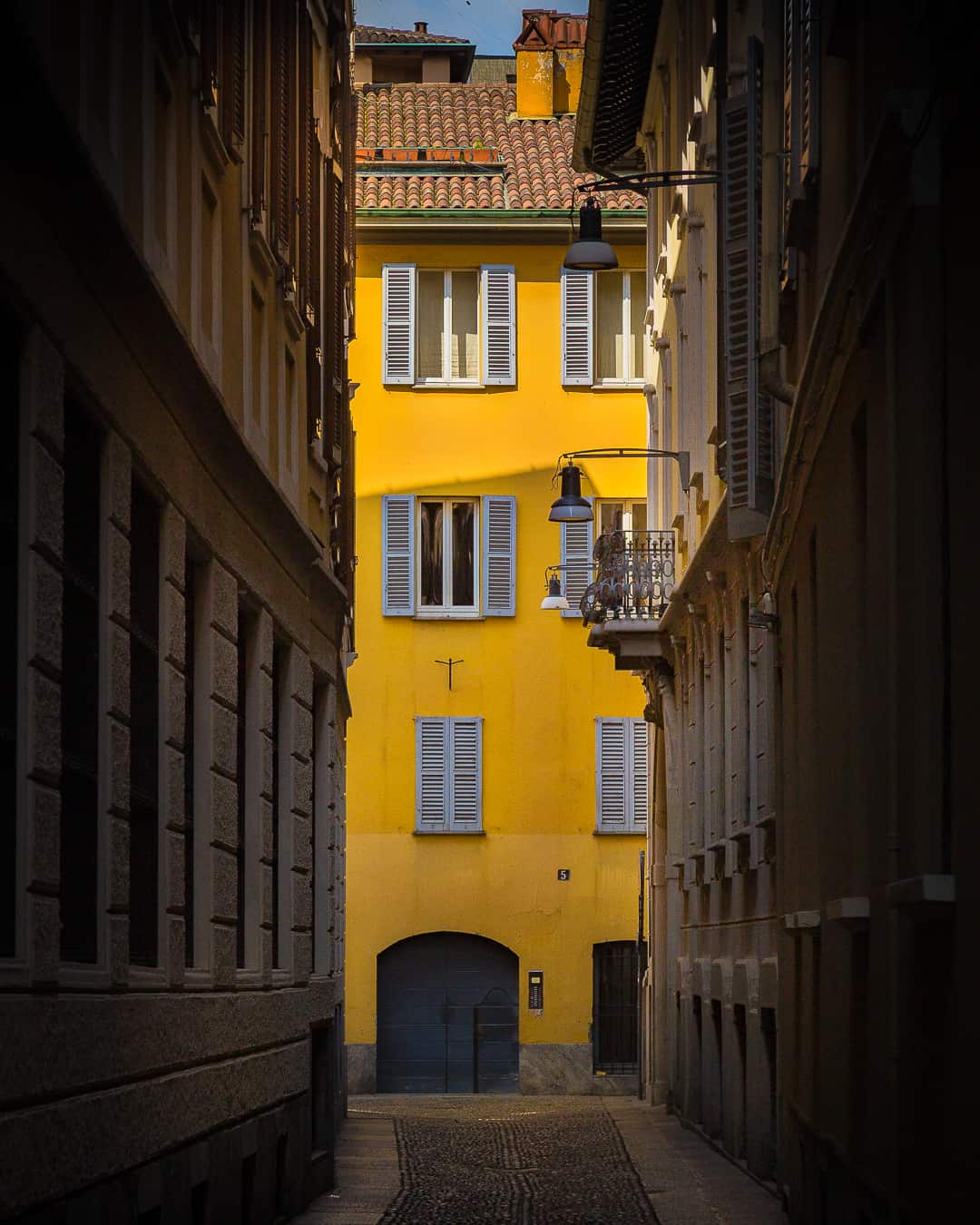
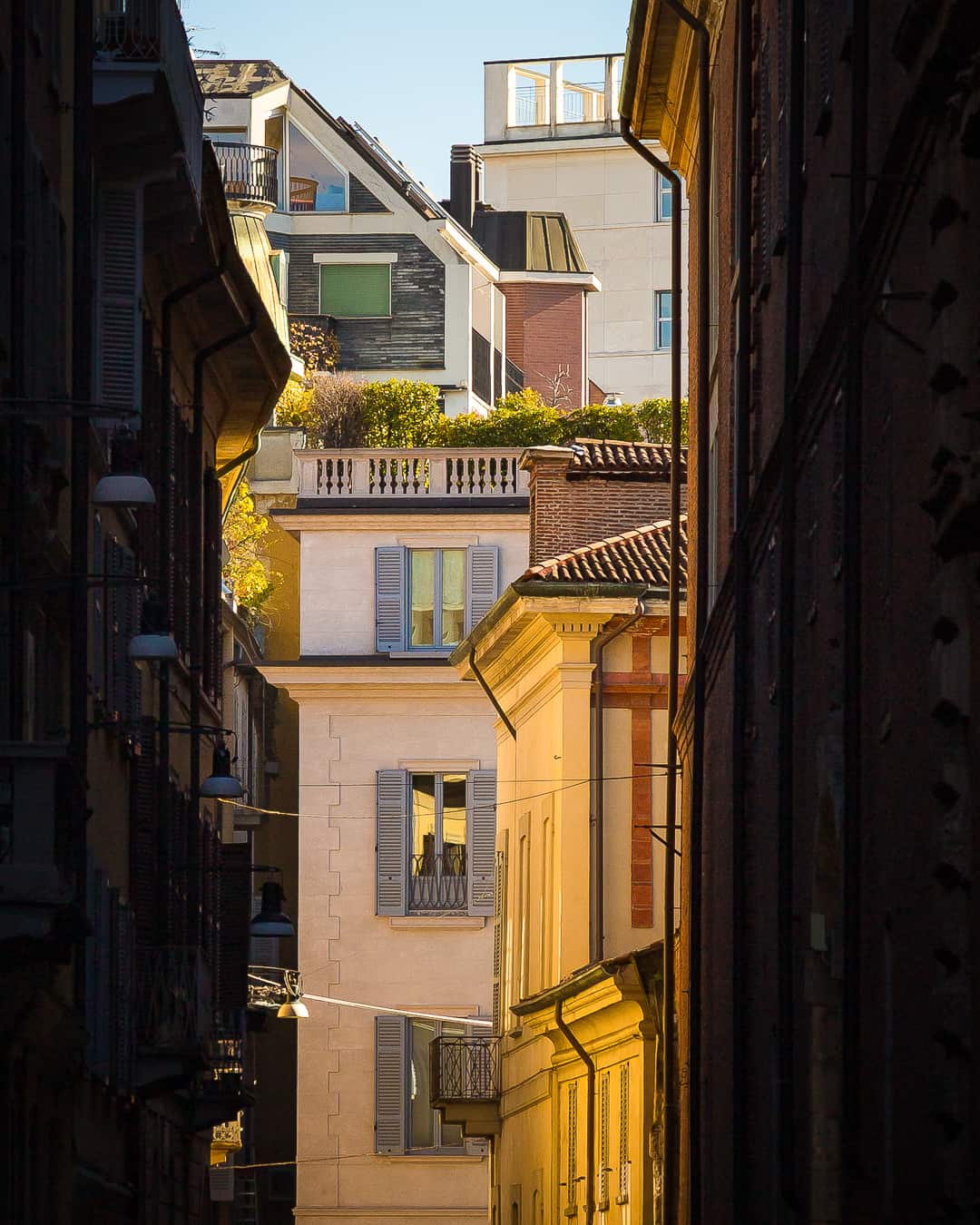
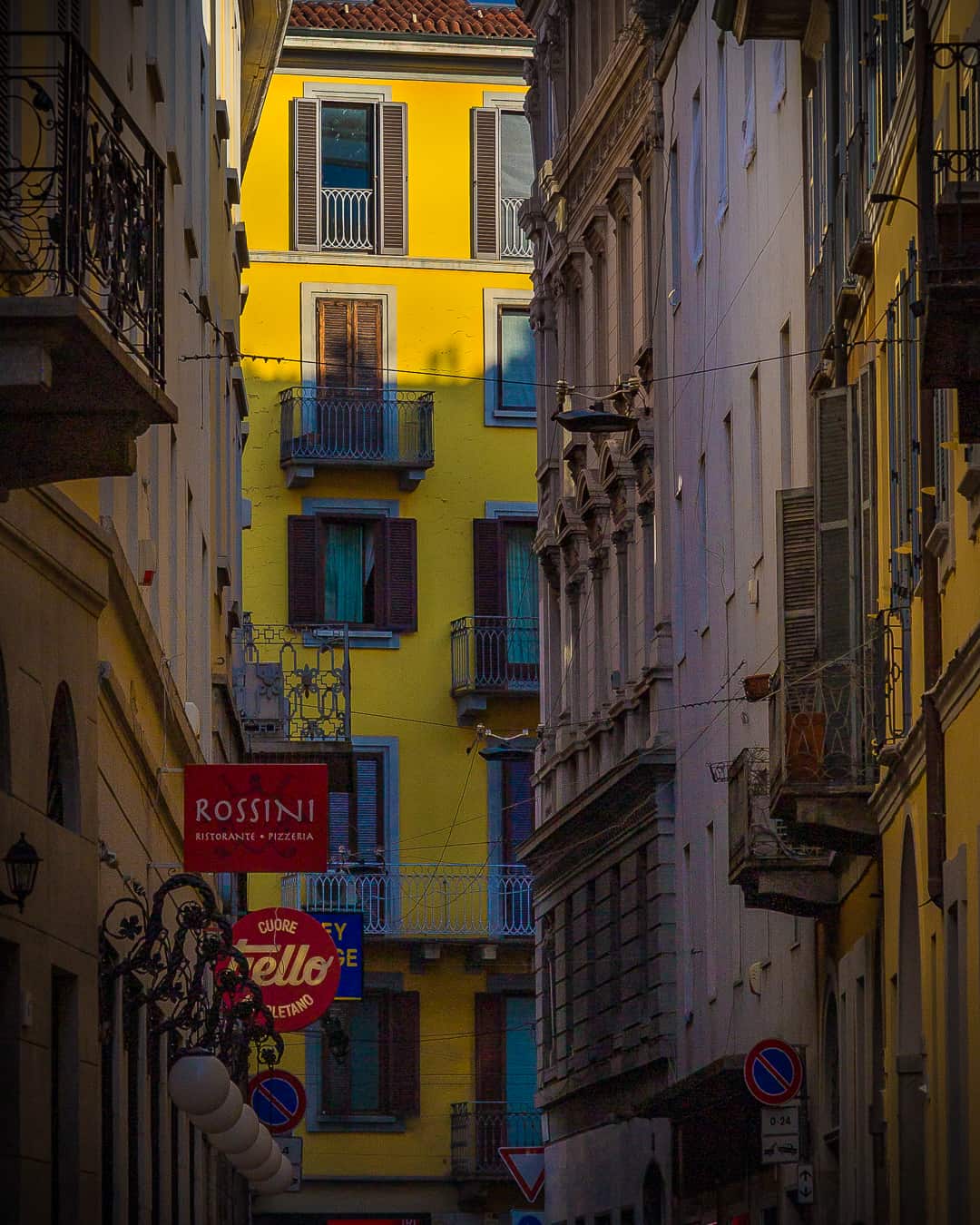
A narrow lane, a yellow house at the end, a bar’s red signs. The narrowest streets of the centre are where people meet: a coffee, a few words, and off again.
V
Doors and courtyards
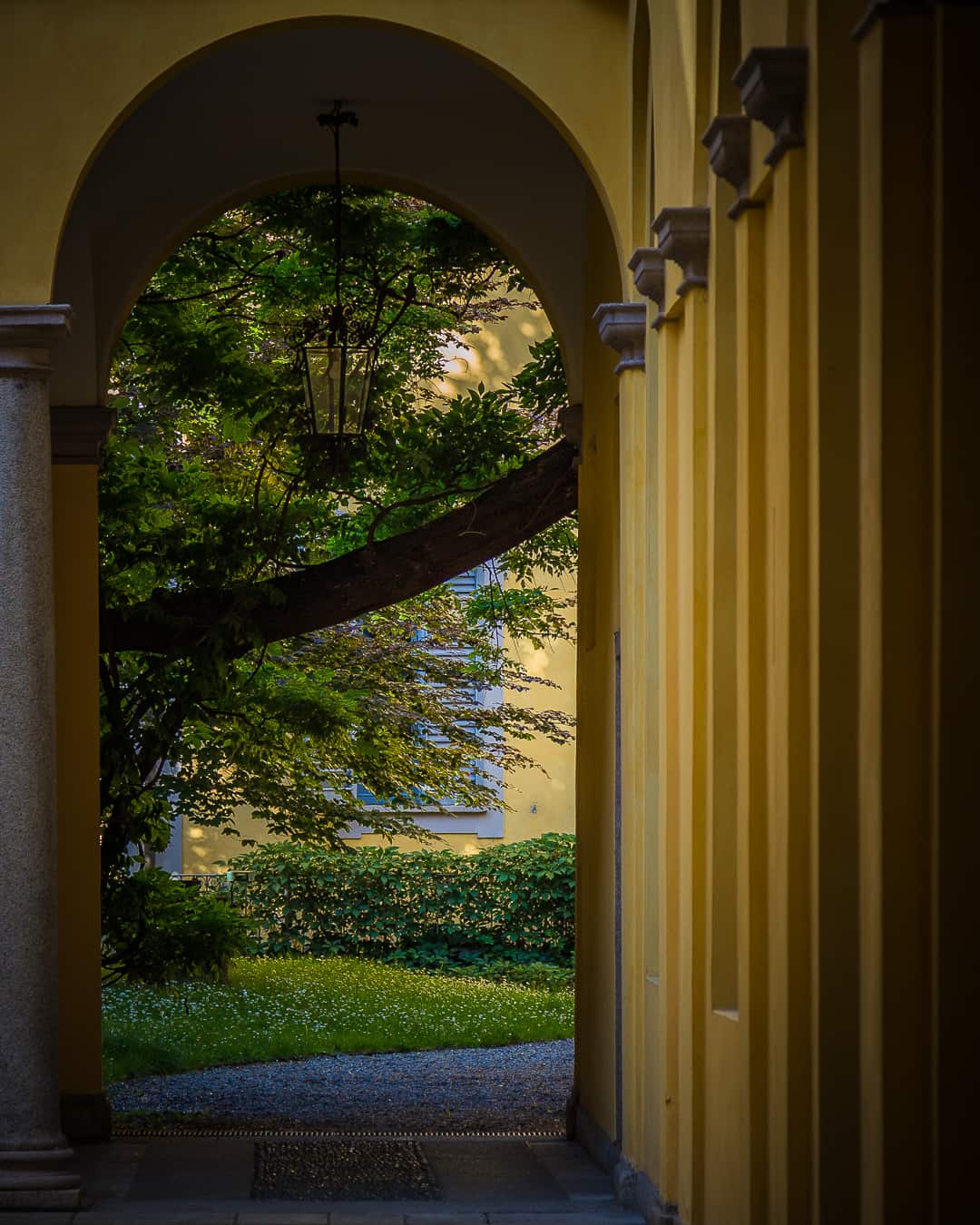
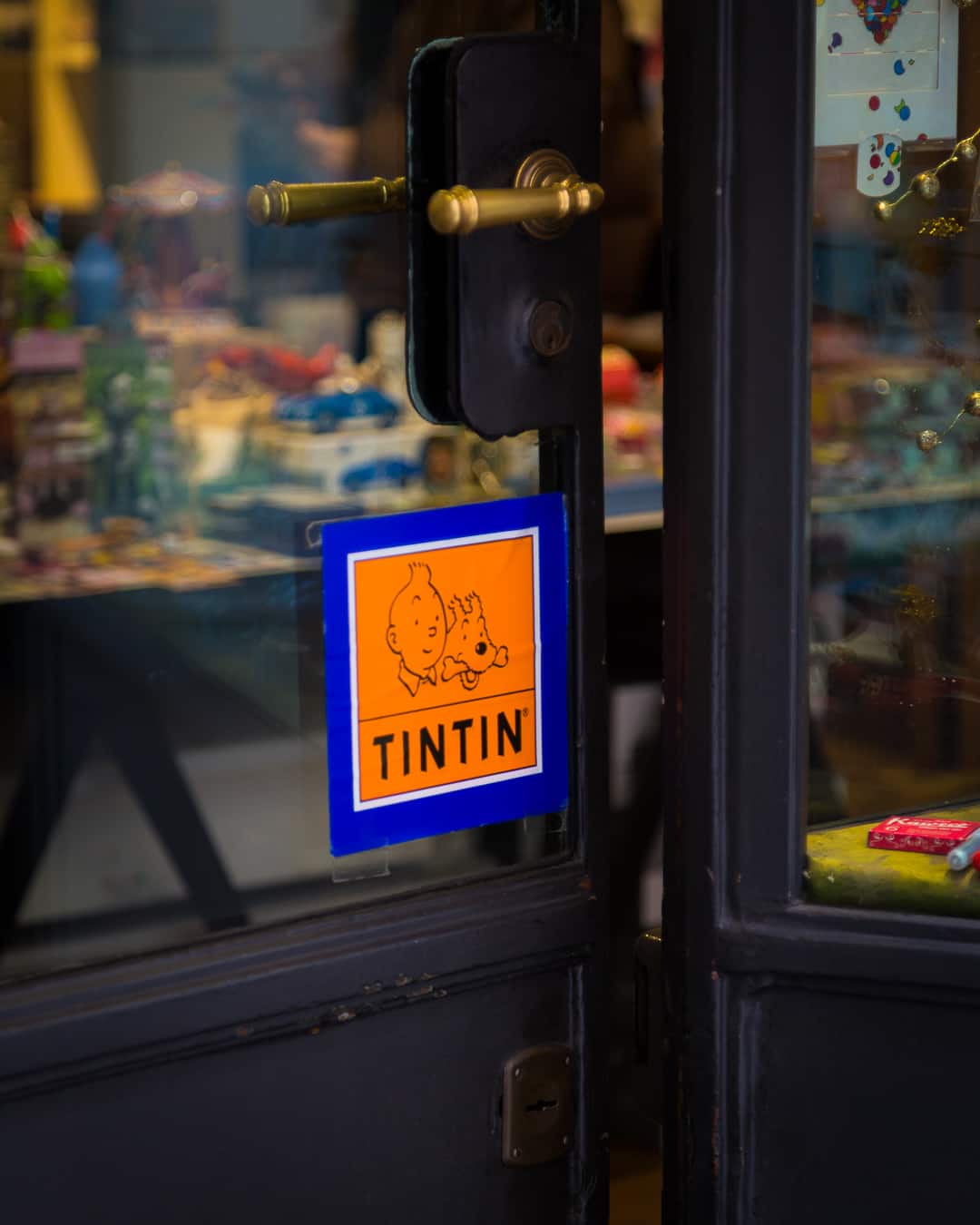
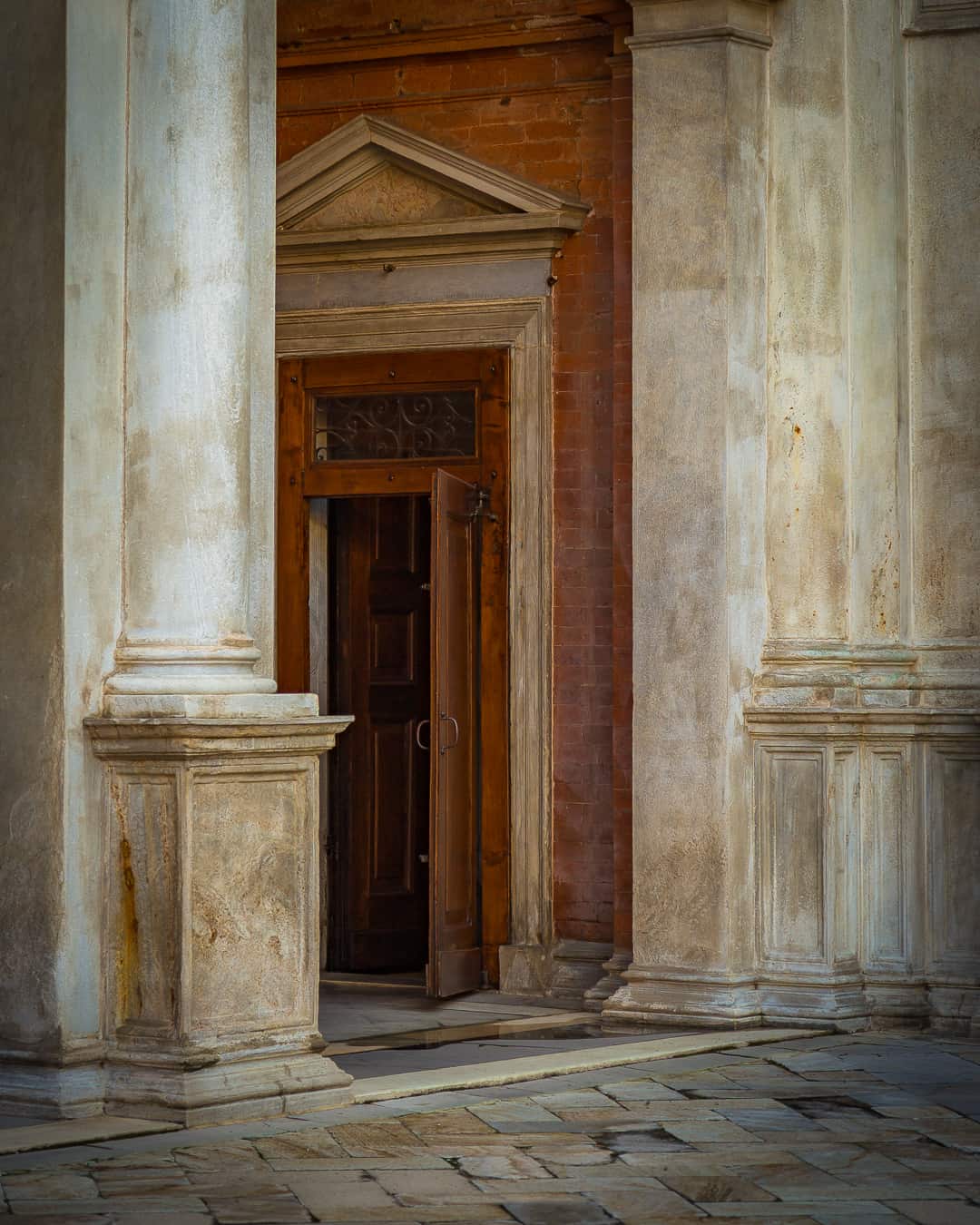
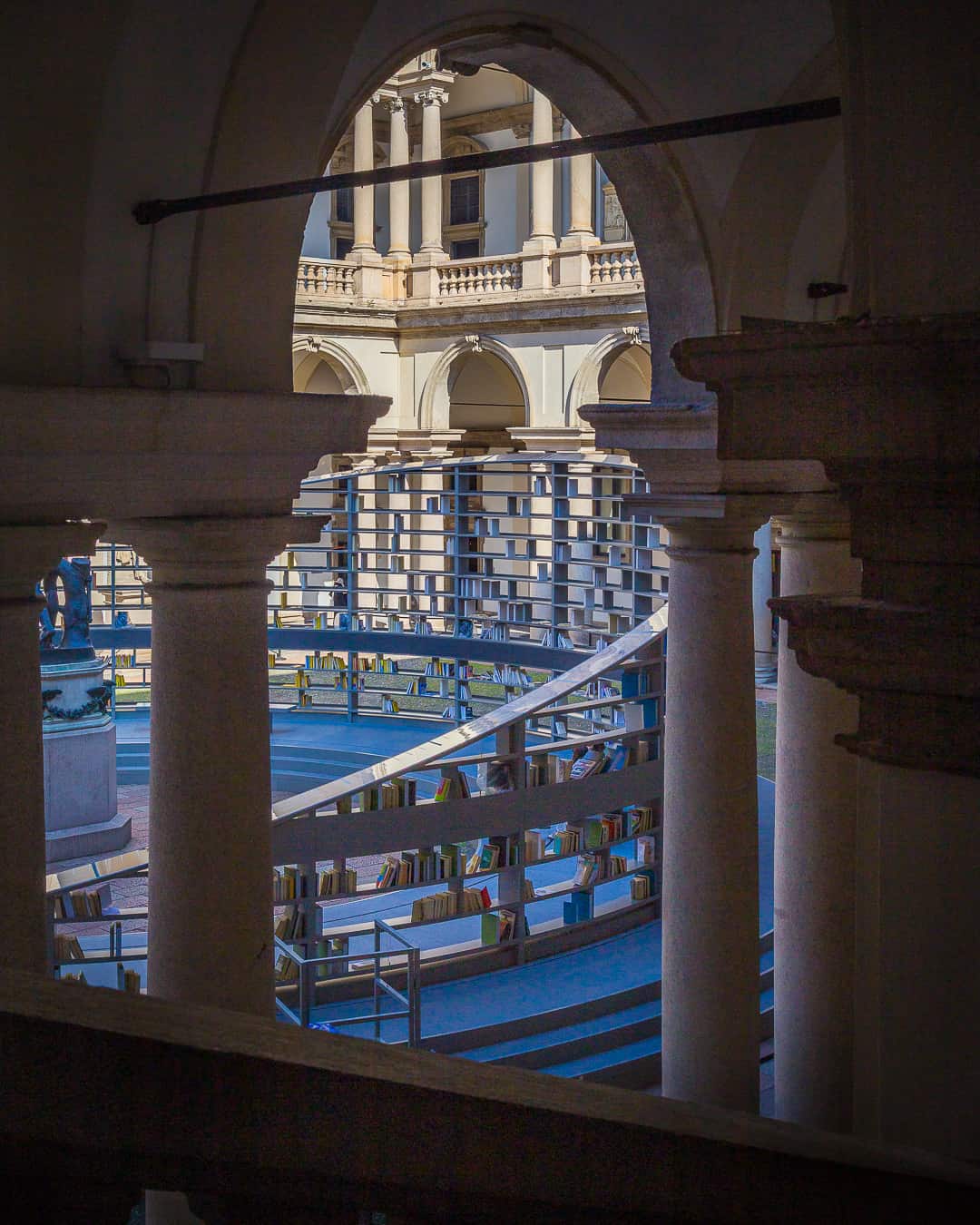
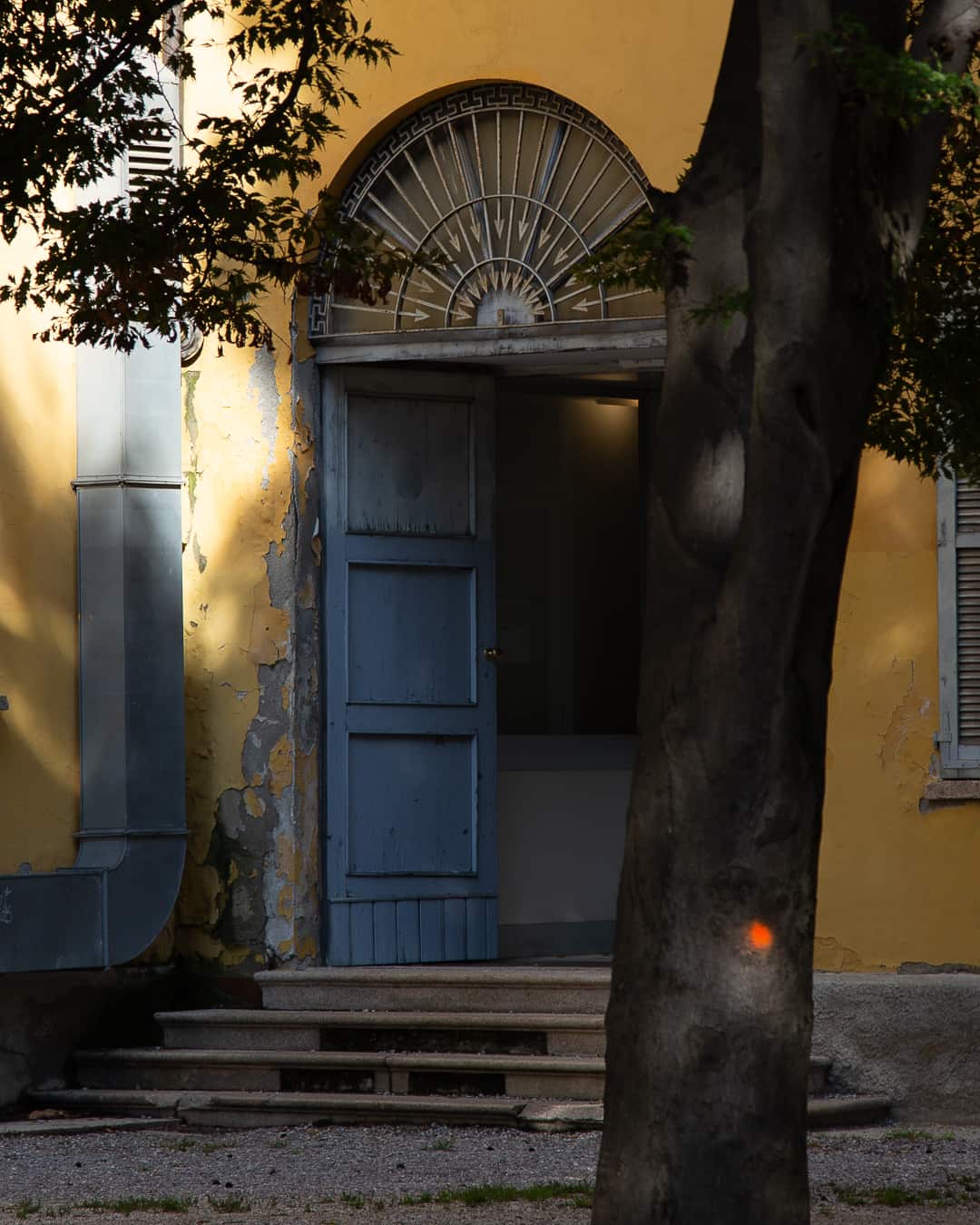
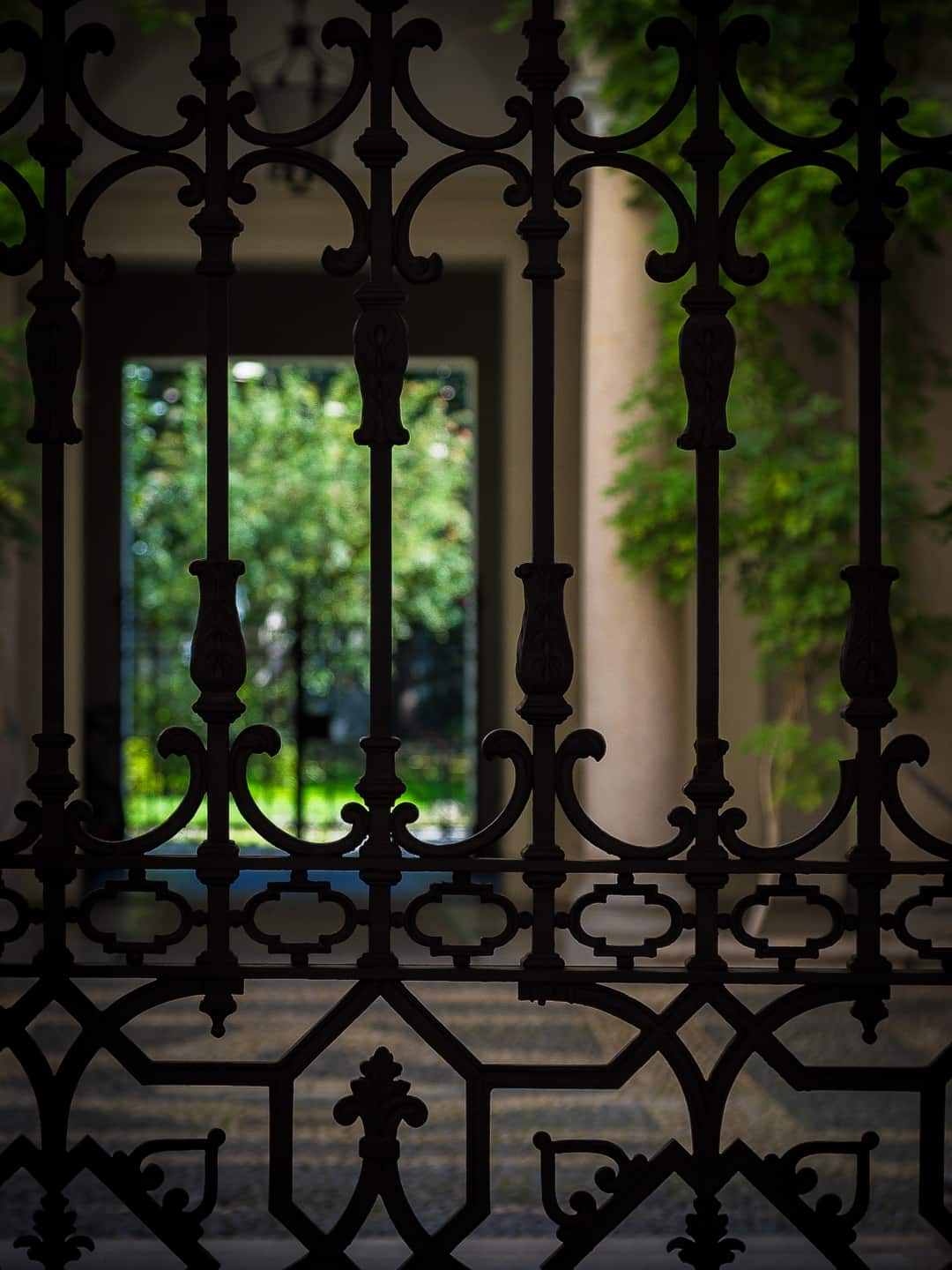
Milan does not show itself: it hides behind its doors. One left open is enough to glimpse courtyards, gardens, grand staircases, fountains.
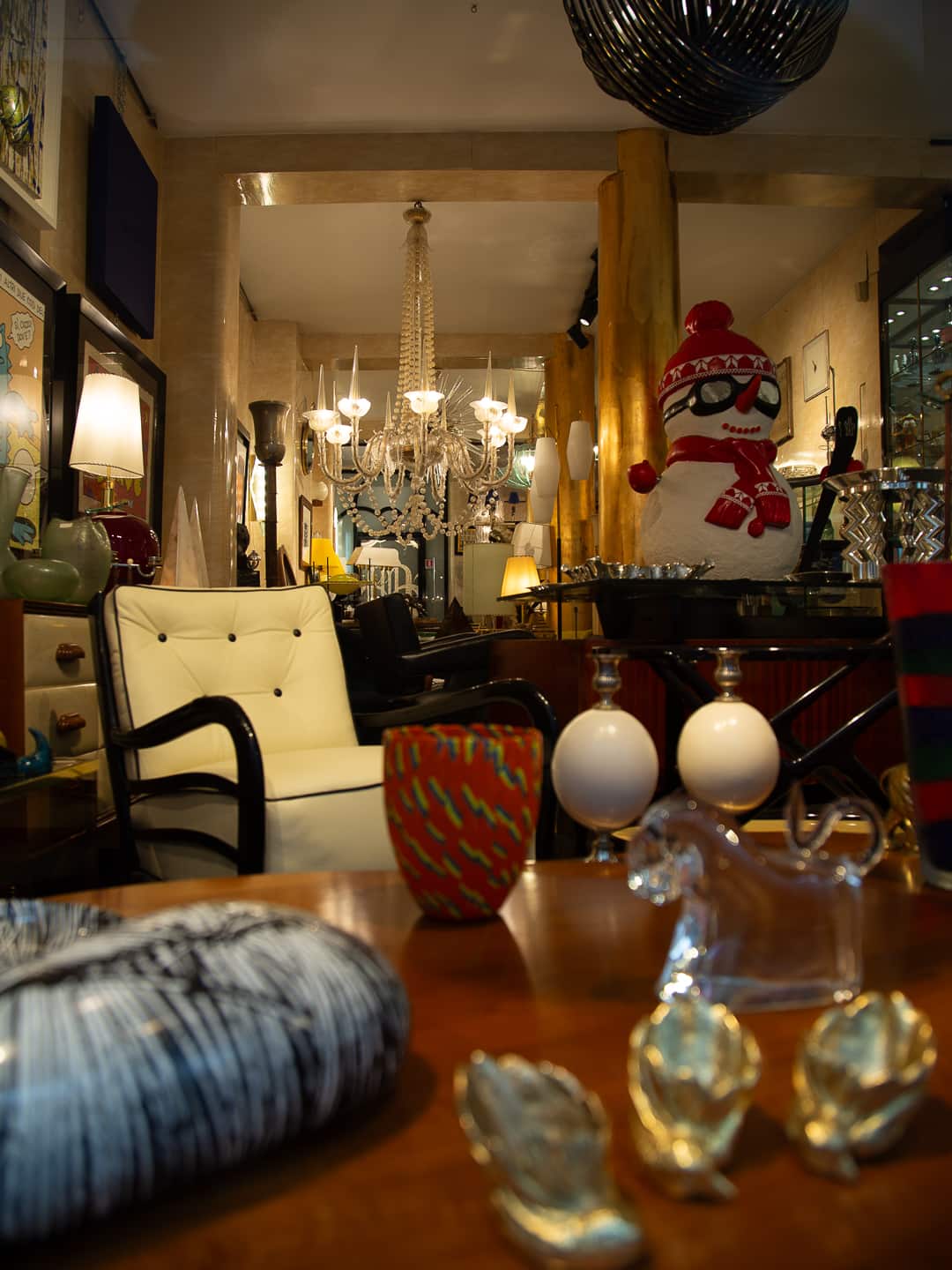
Behind the shop windows, the same game: antique dealers, design shops, bookshops, workshops.
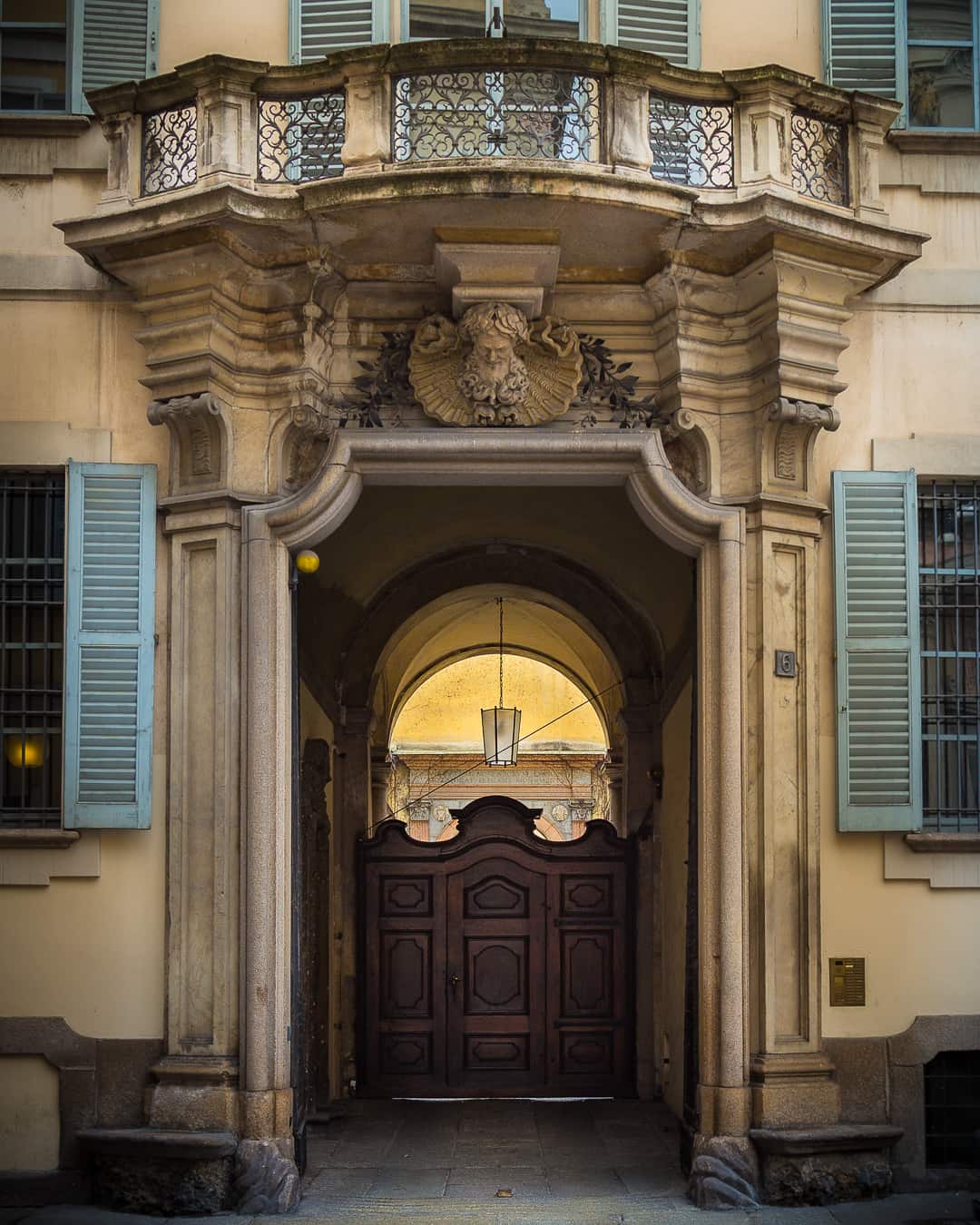
The doorway
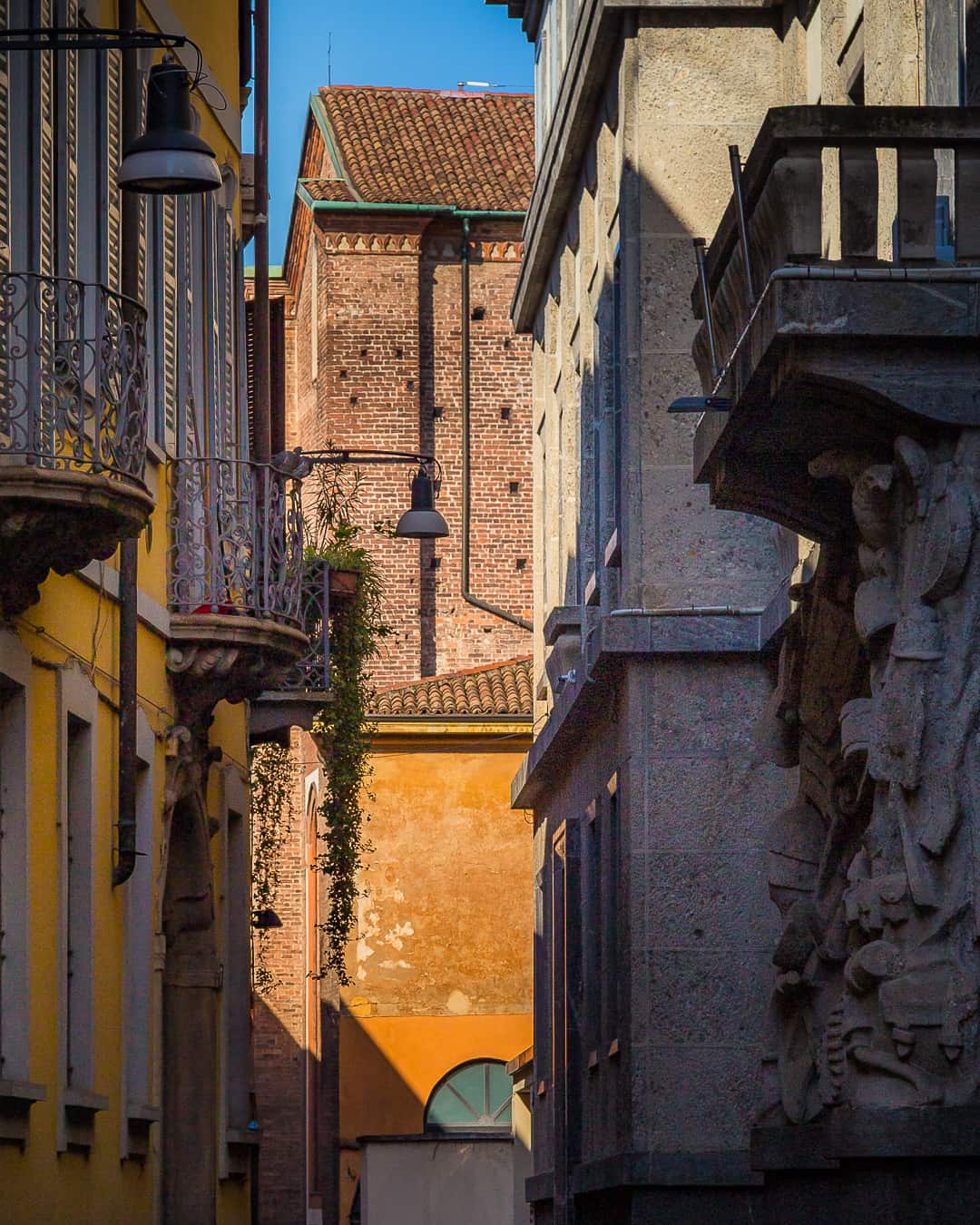
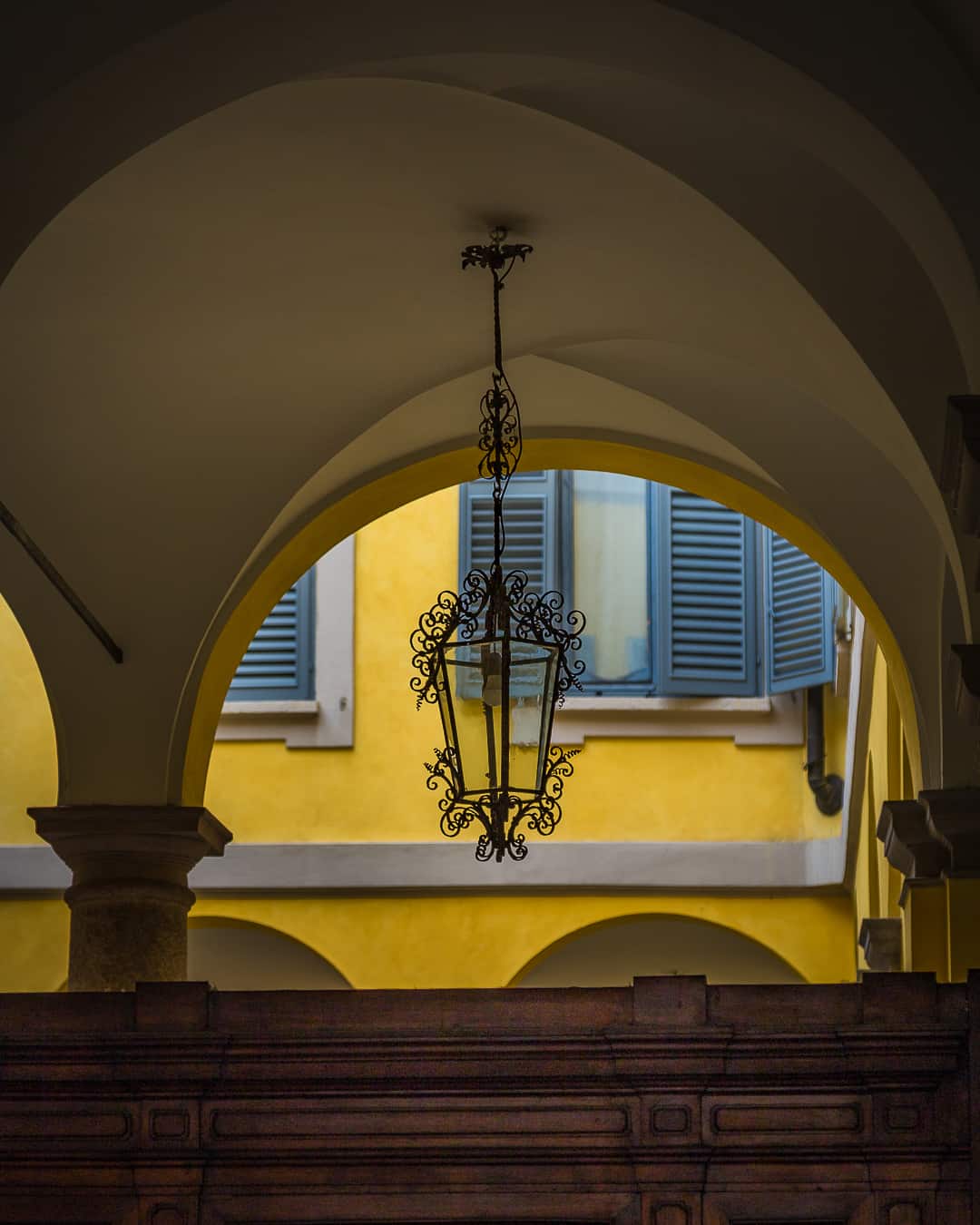
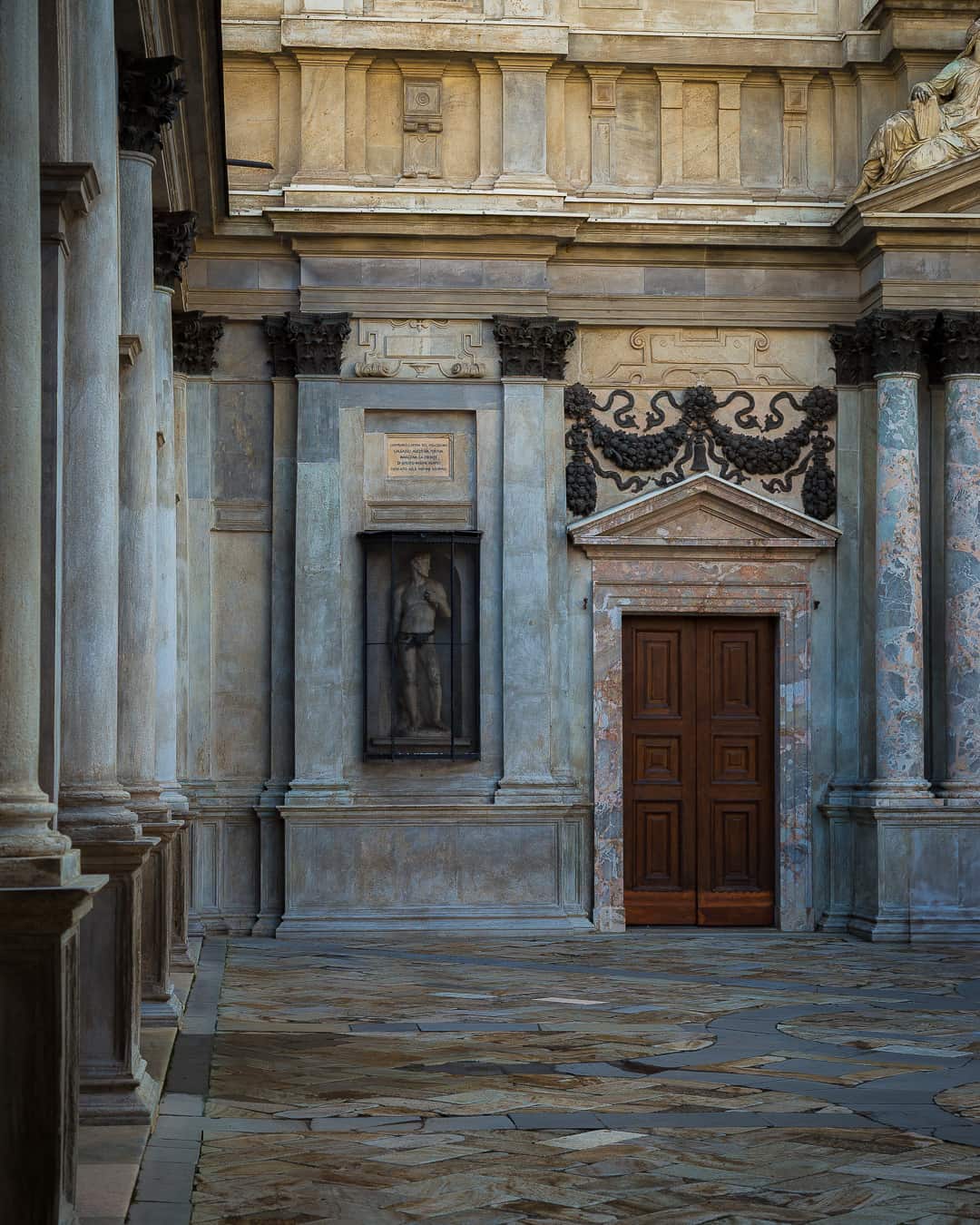
A carved stone doorway, a balcony, and another door beyond. Milan is built like nesting boxes: behind every door a courtyard, behind every courtyard another door.
The antique dealer
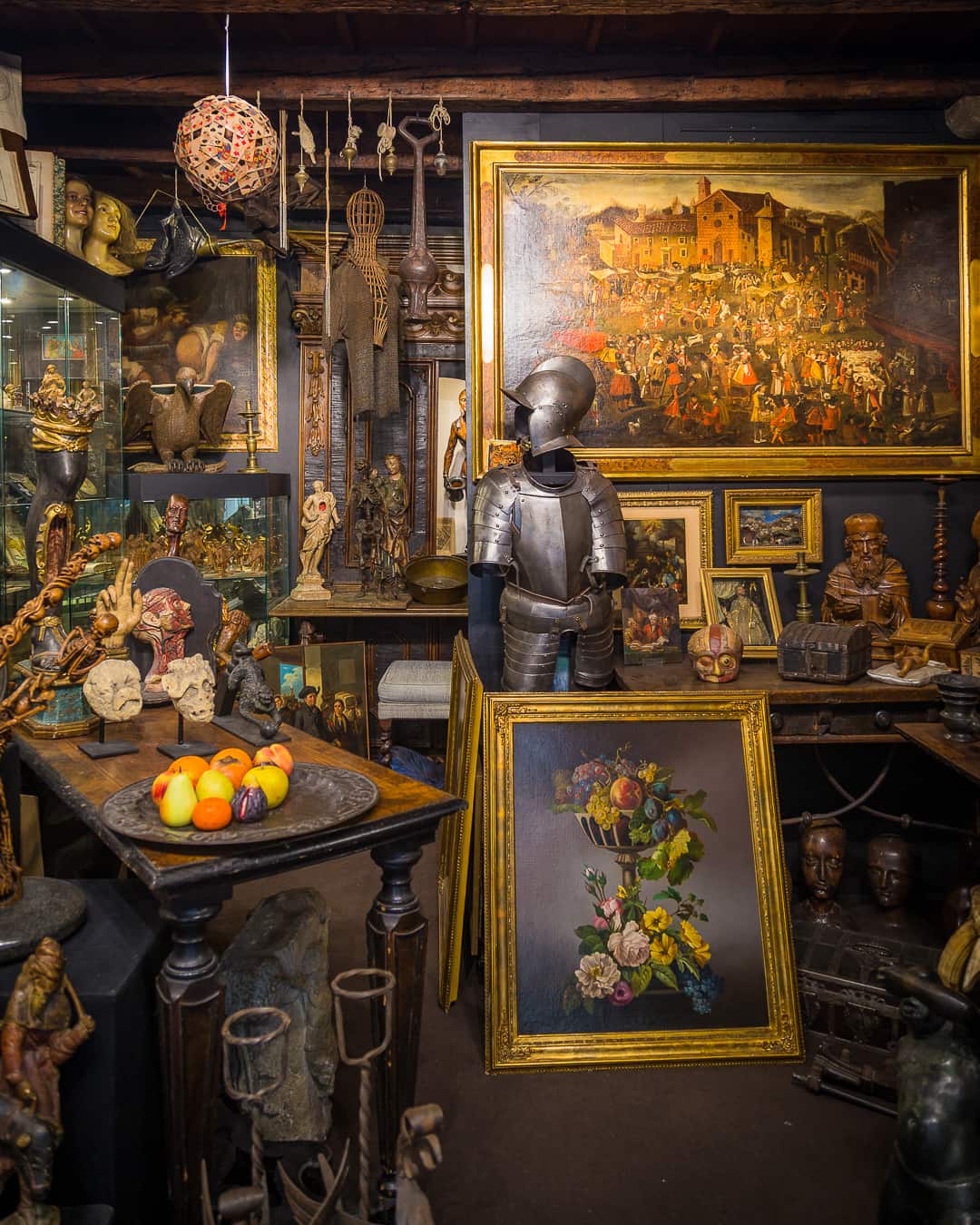
A suit of armour, paintings, porcelain, marble fruit: a shop as crammed as a cabinet of curiosities. Every antique shop is a small museum you can leave with something in your hand.
The gate
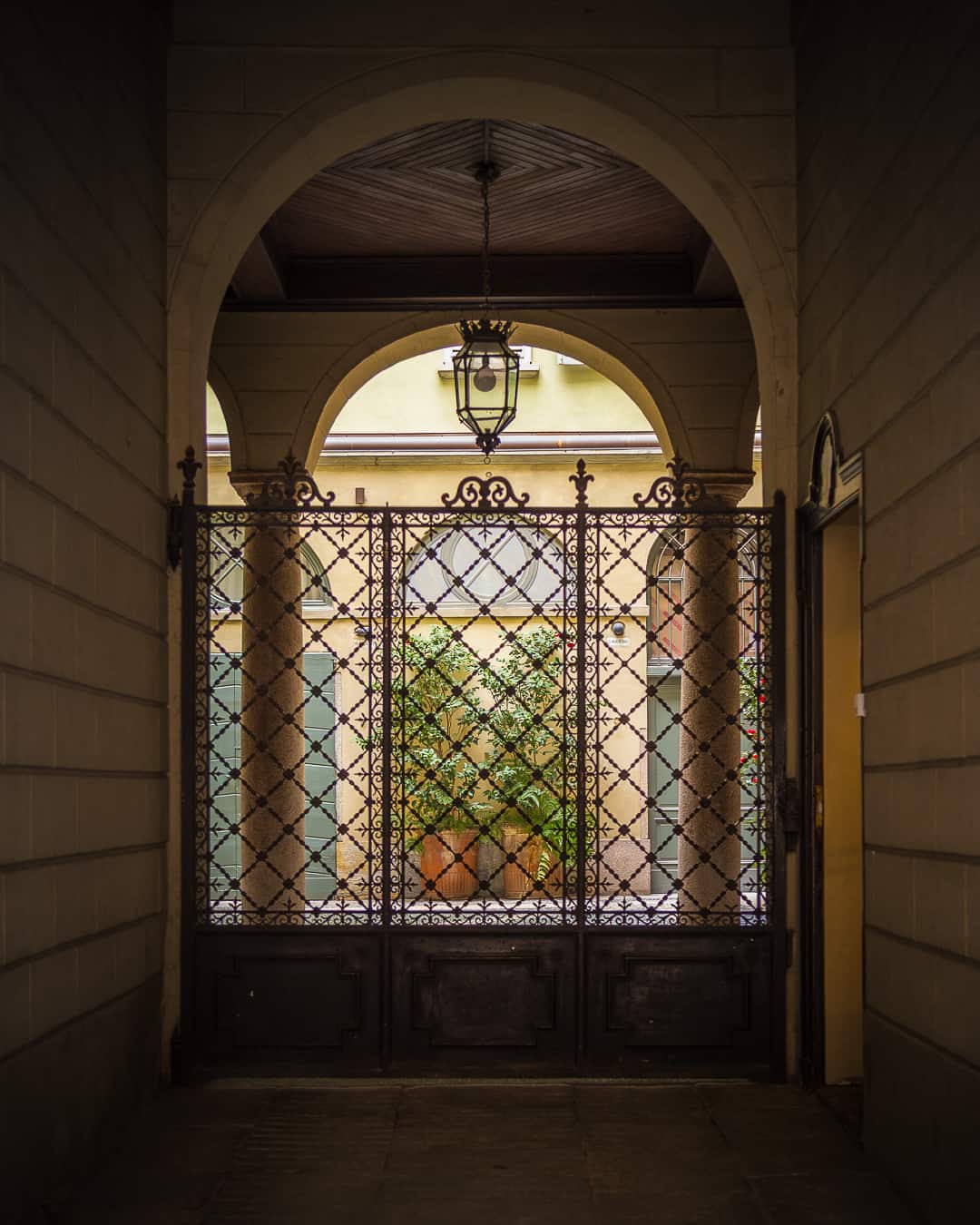
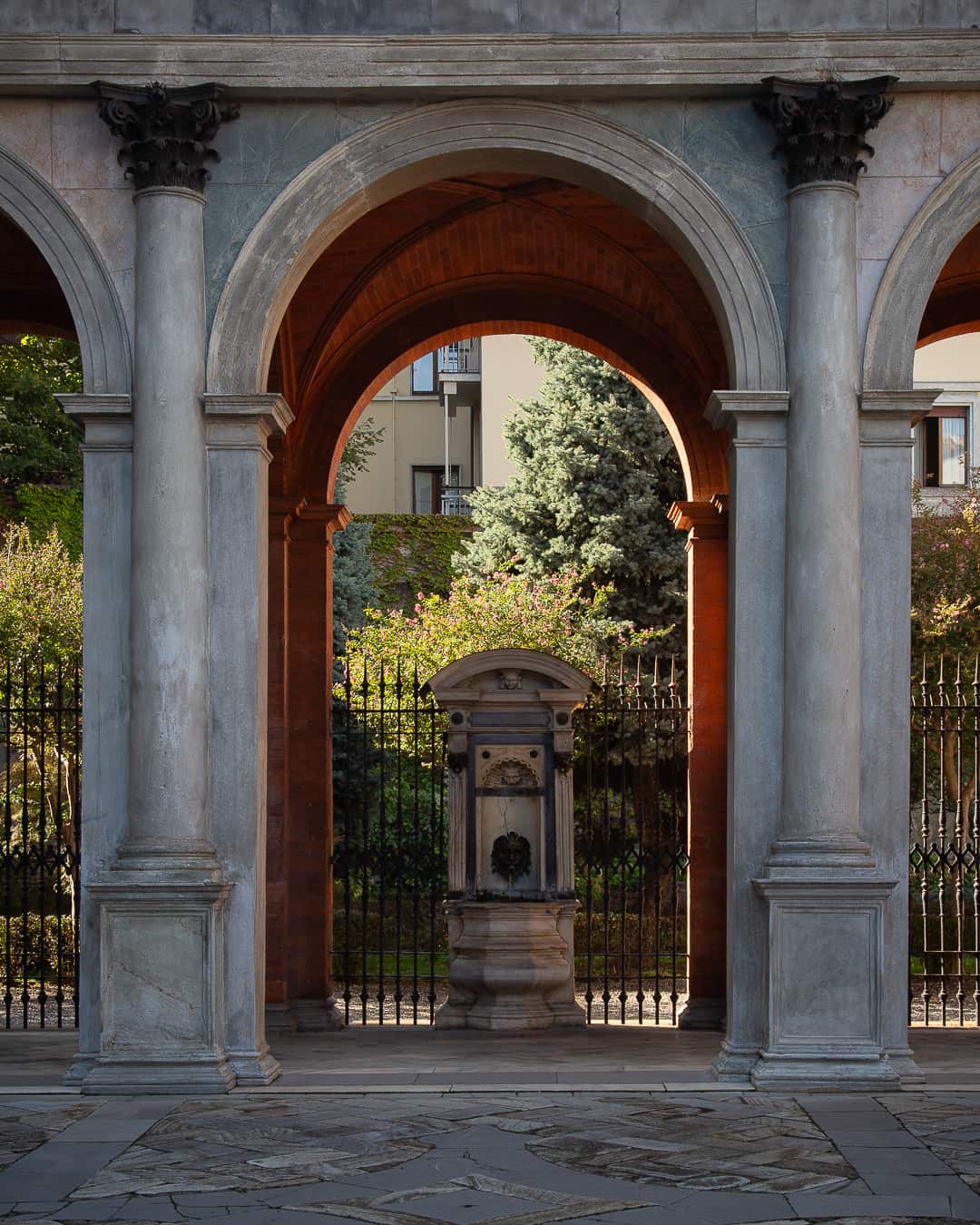
Stone and brick arches, a gate, a small fountain in the garden. In Milan you often only glimpse the green: a gate, an arch, and a garden beyond.
The terrace
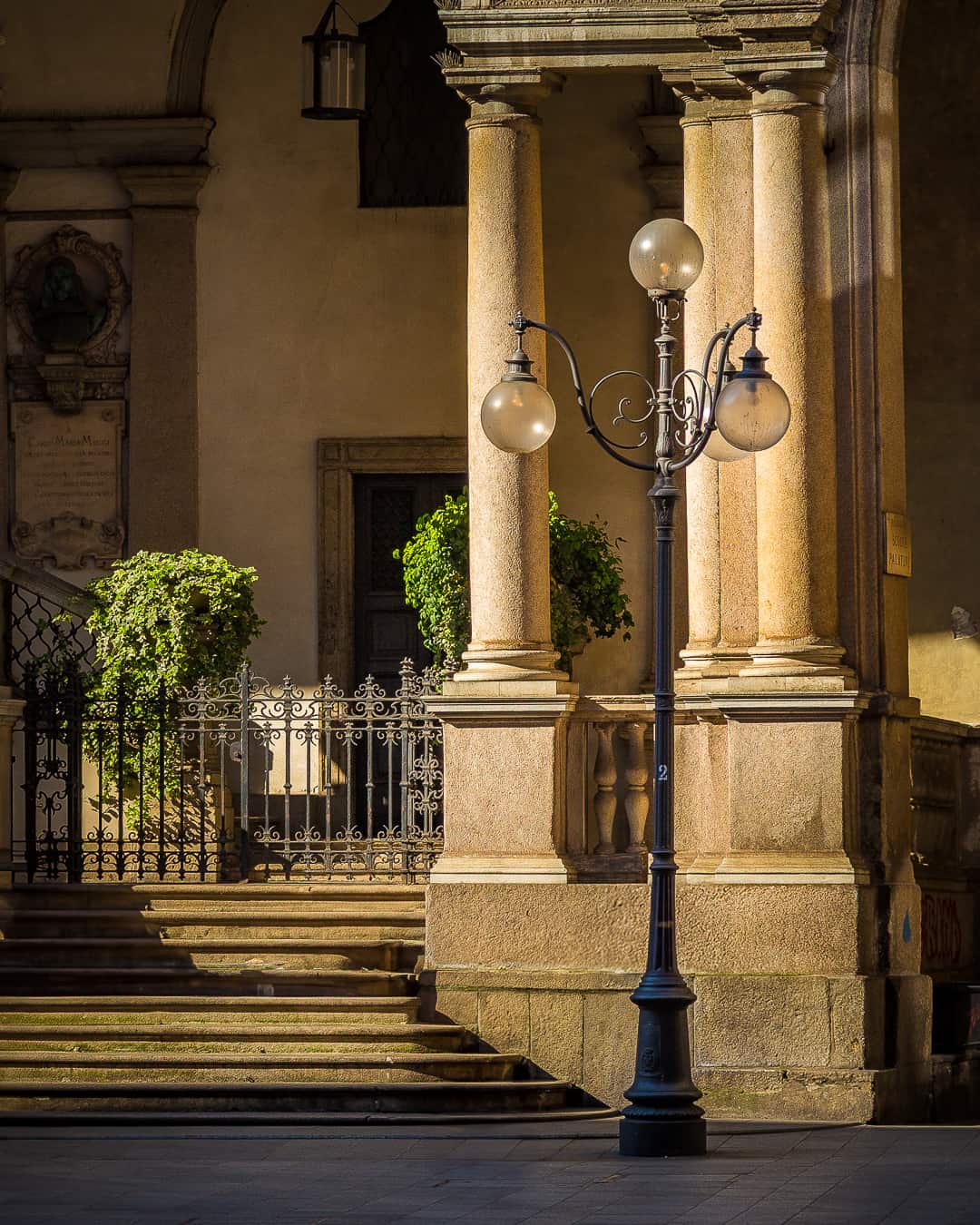
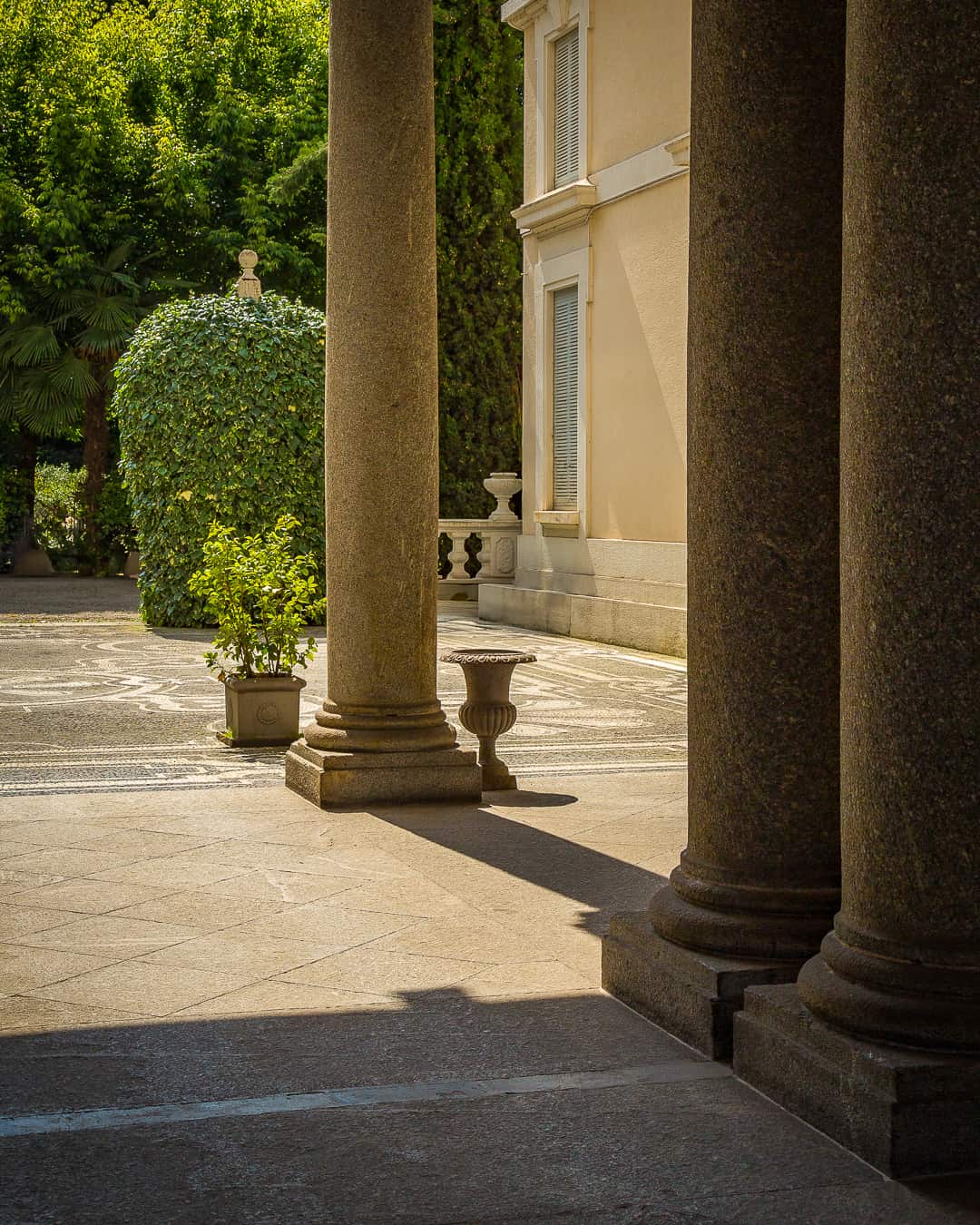
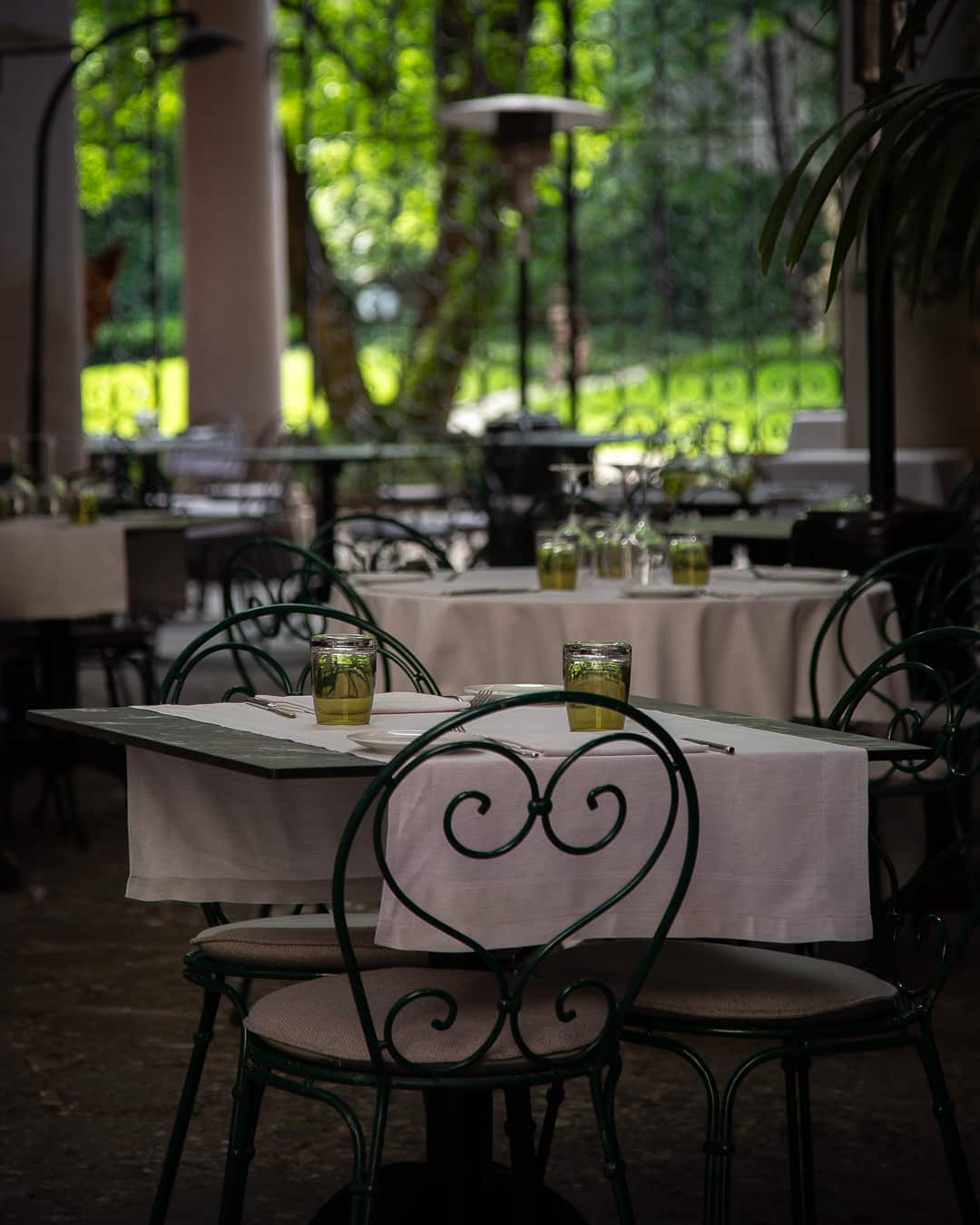
Laid tables, iron chairs, a veranda overlooking green. At lunchtime in the centre, the shade of a courtyard is worth more than a view.

VI
The façades
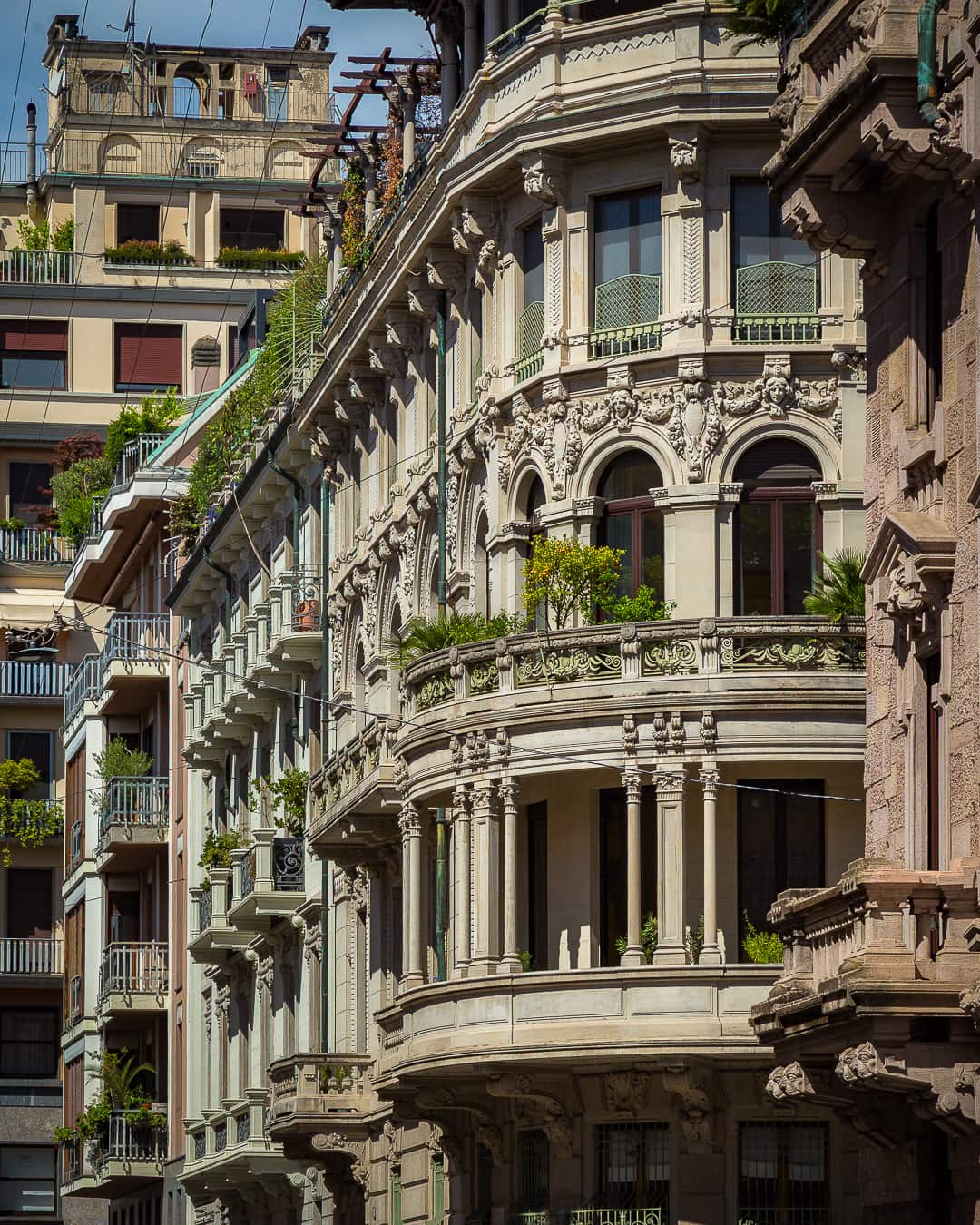
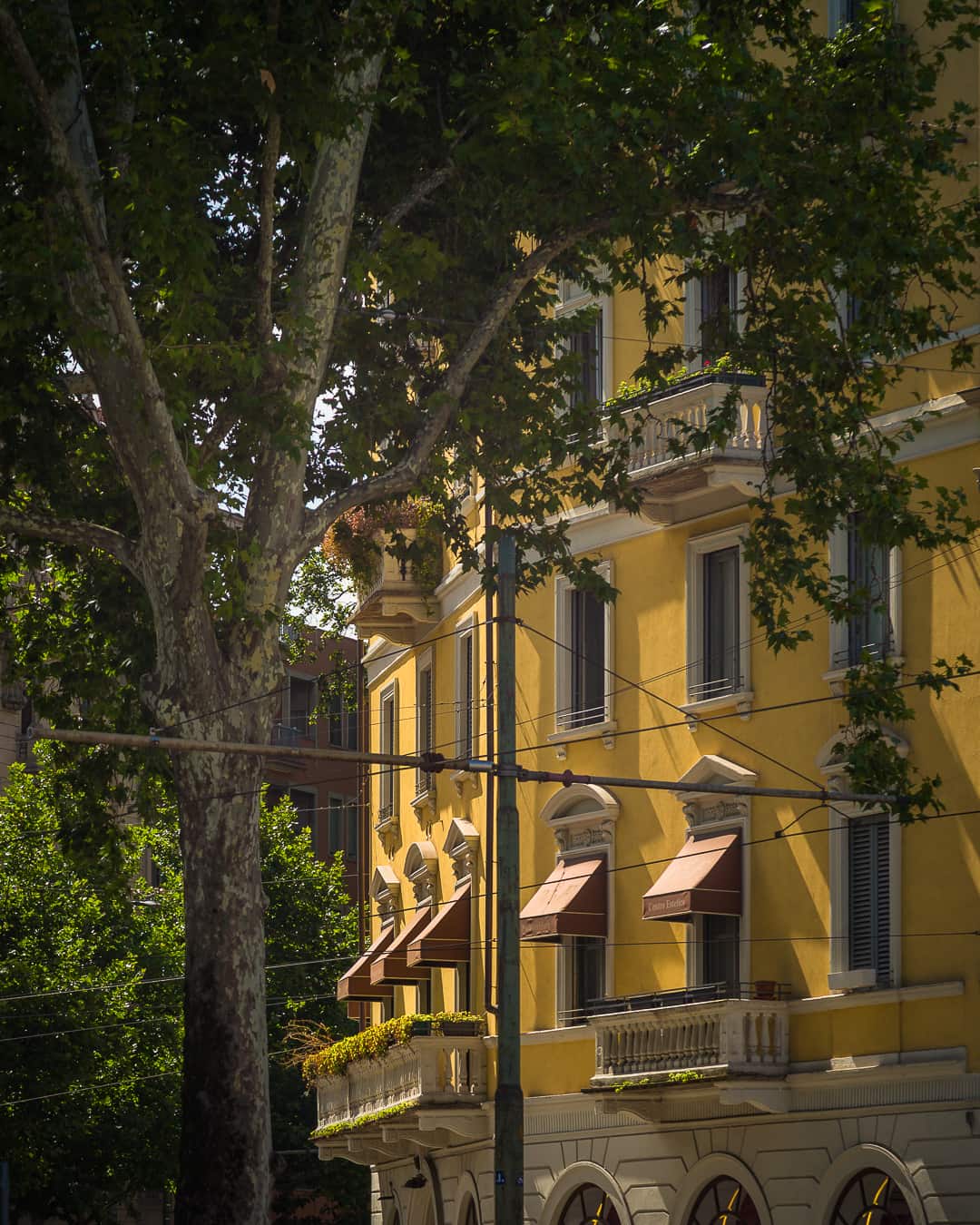
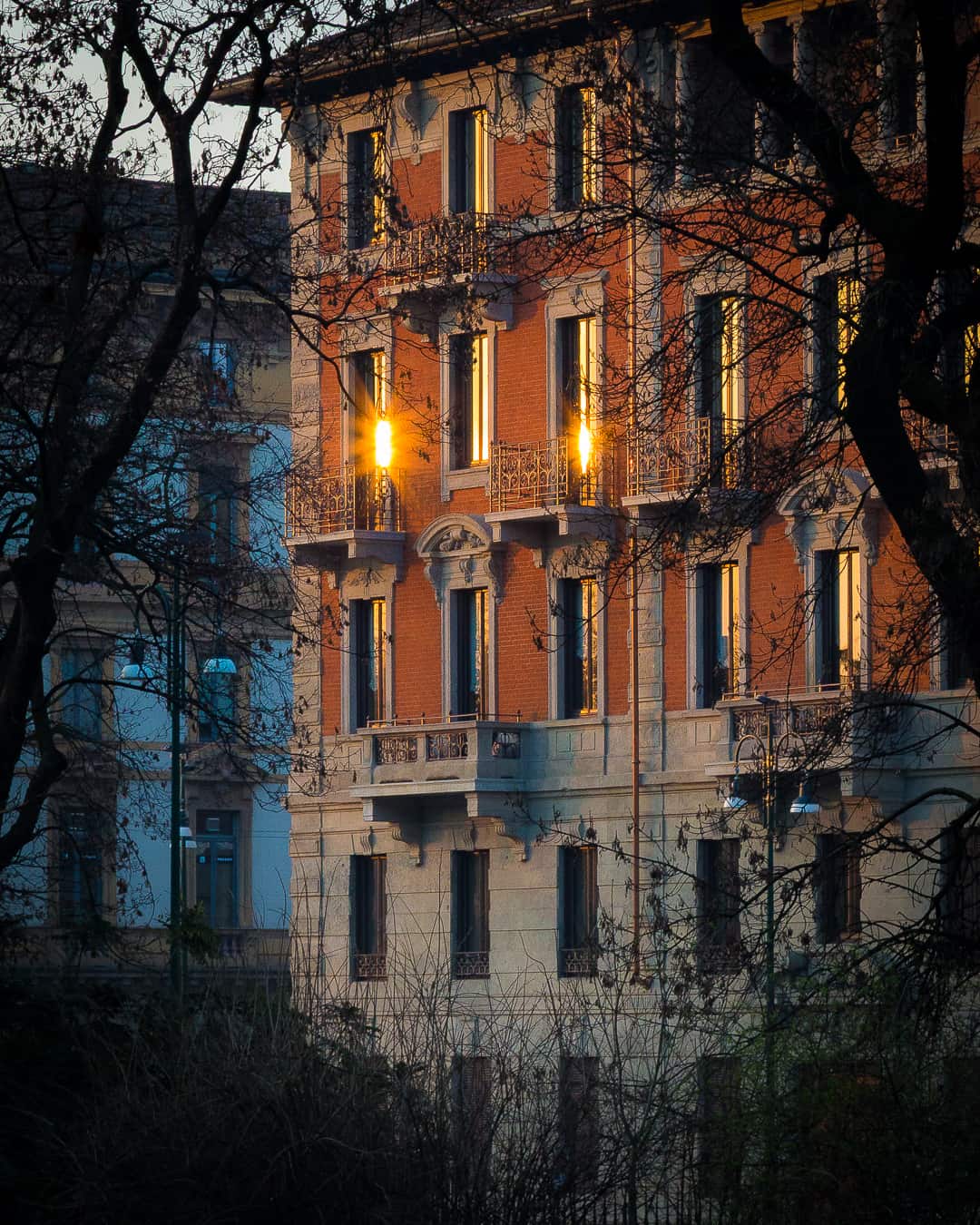
At the start of the twentieth century Milan discovered Liberty, the Italian Art Nouveau. Corso Venezia and Porta Venezia were its cradle, and Giuseppe Sommaruga’s Palazzo Castiglioni (1901–1904) is its manifesto.
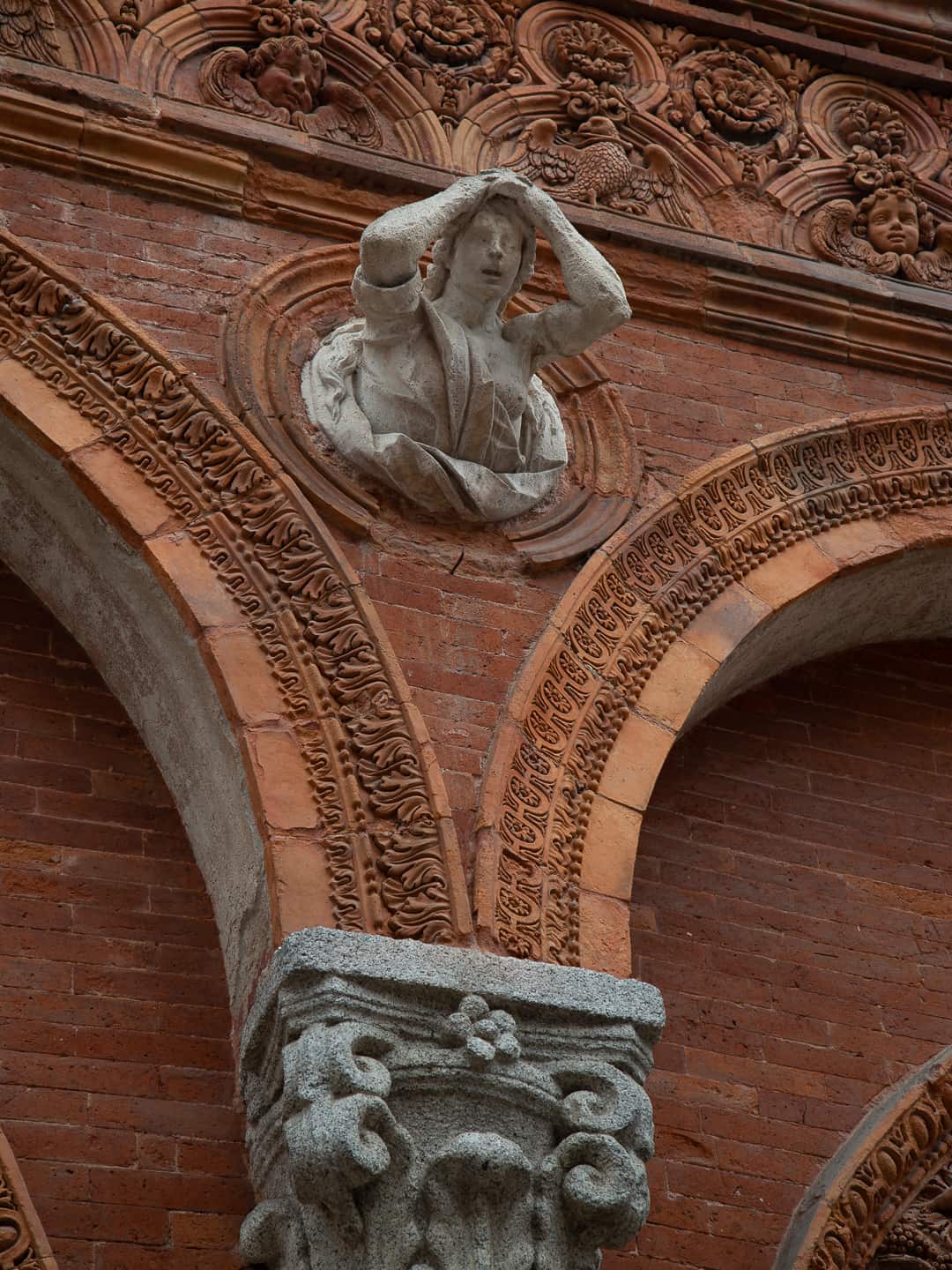
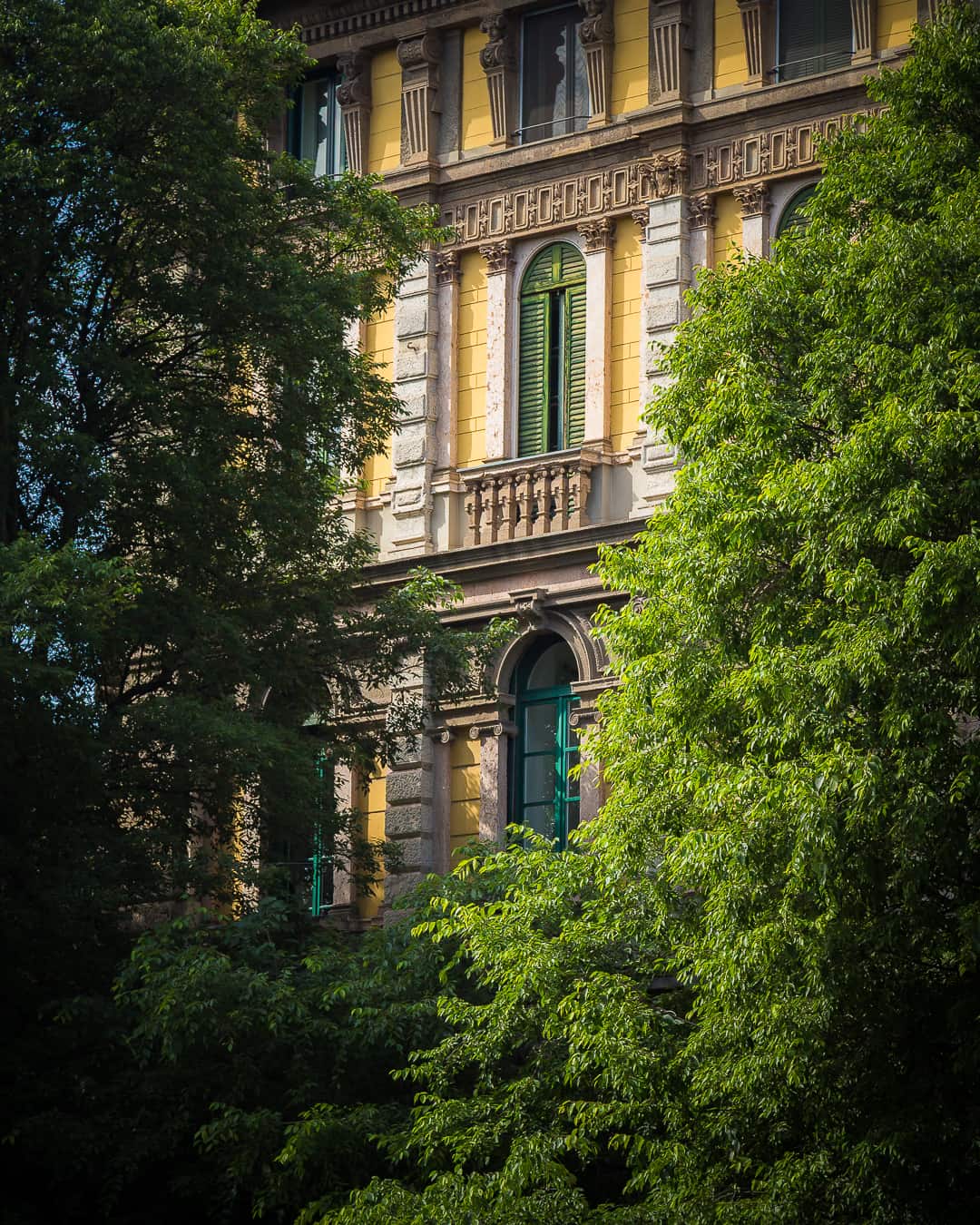
Wrought iron, cement moulded into flowers, tiles, sculpted figures: middle-class houses became stories to read with your head tilted back.
Figures
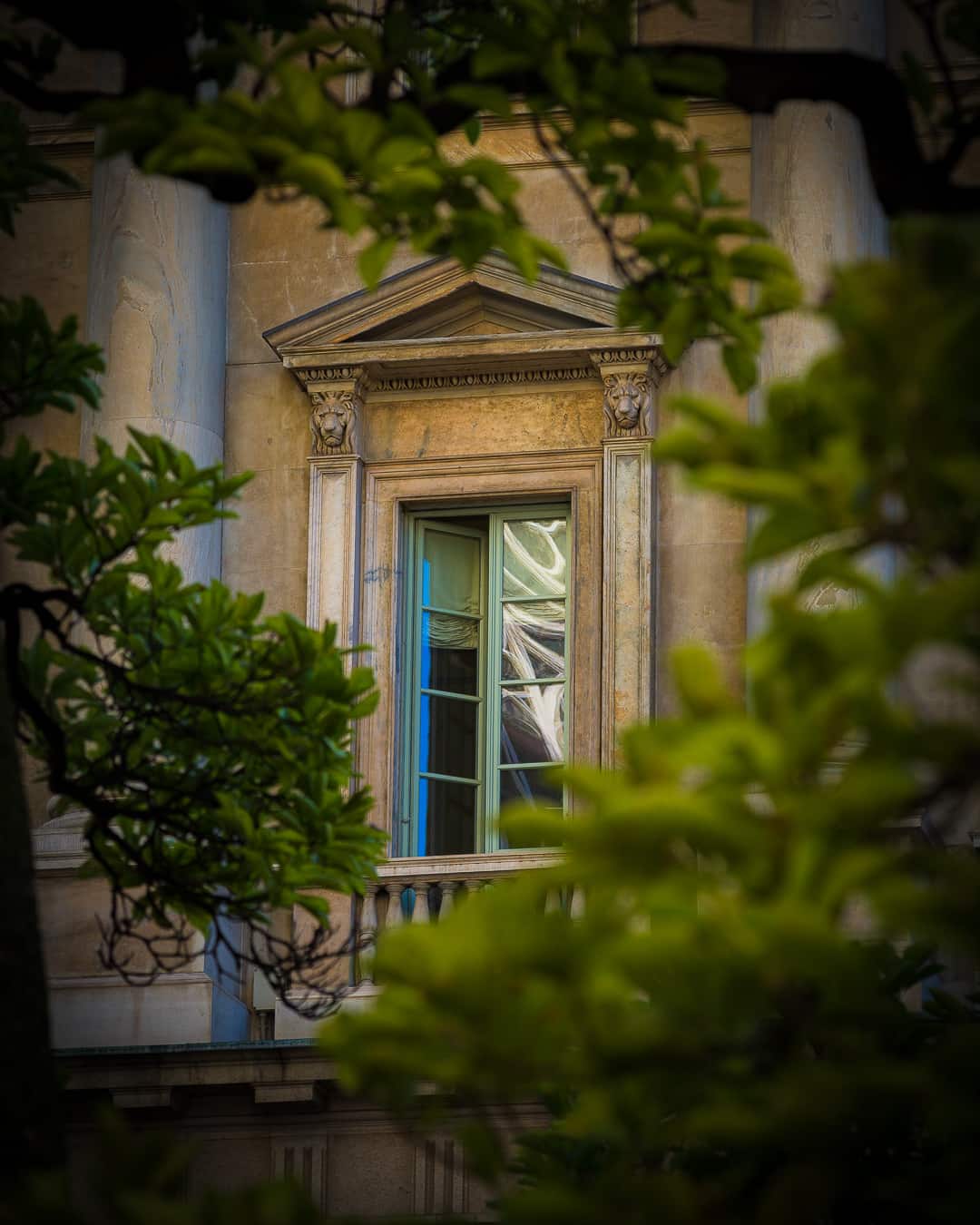
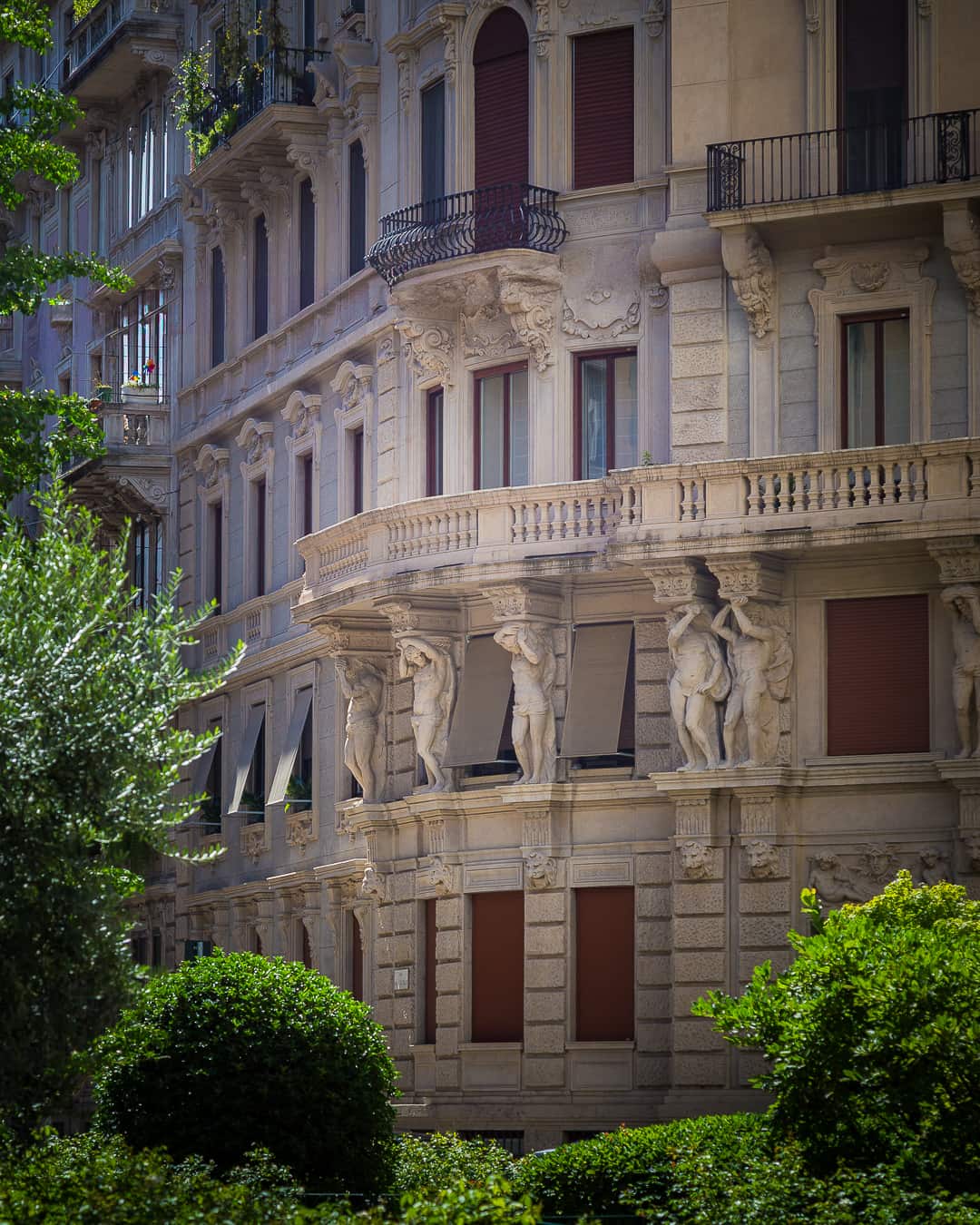
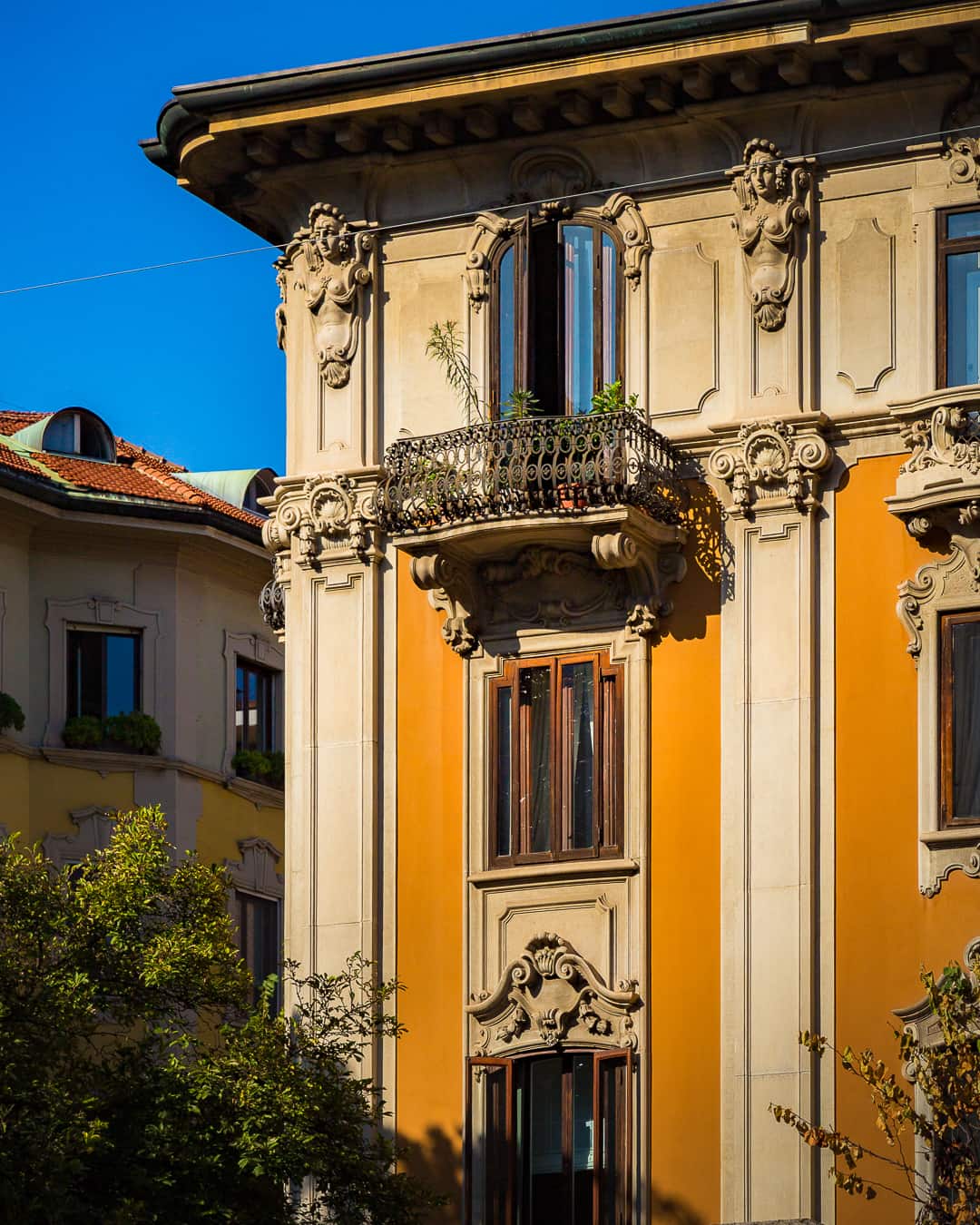
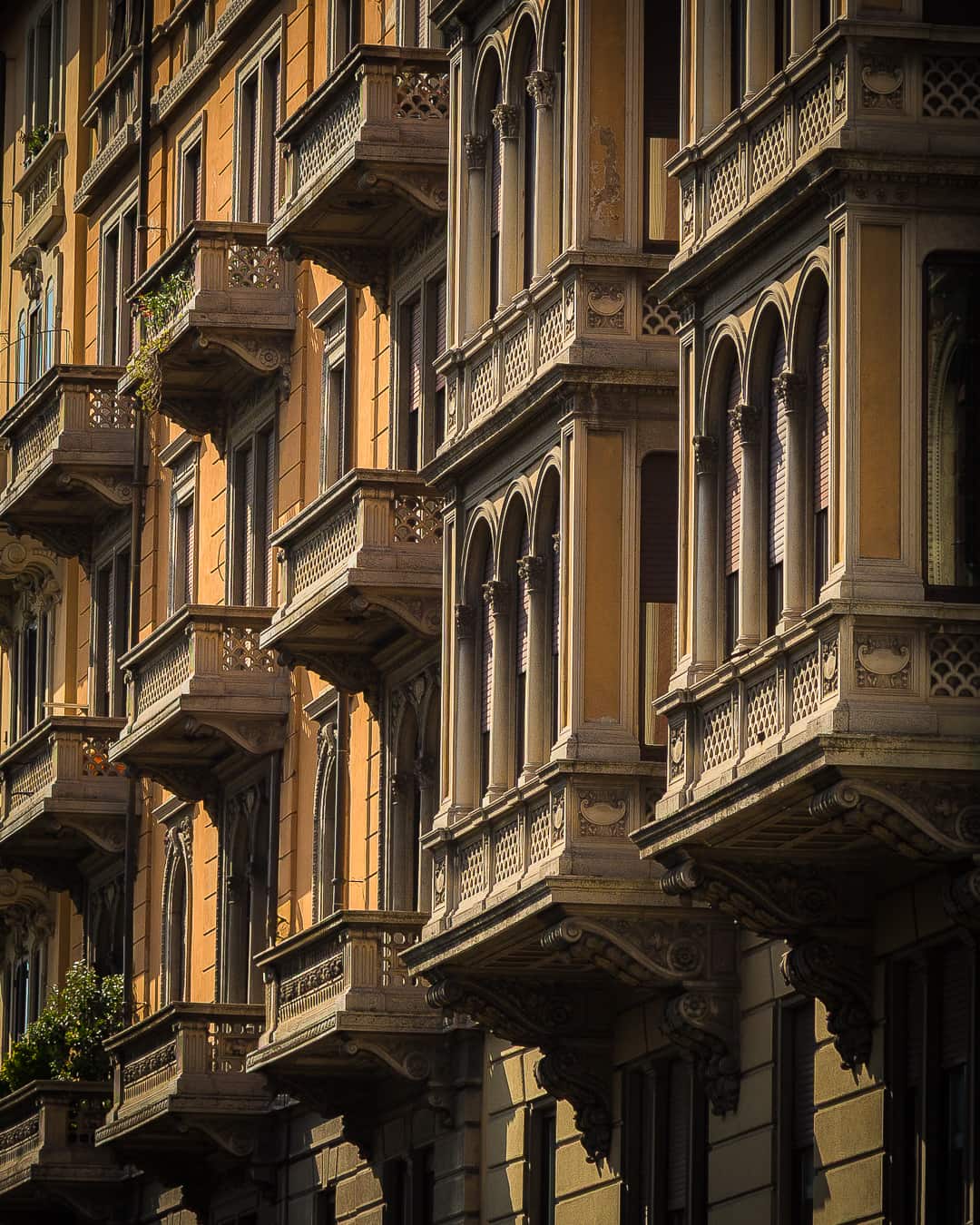
Sculpted figures hold up the balconies, arched windows, trees in front. Early twentieth-century façades are full of presences: faces, bodies, flowers, animals.
The corner
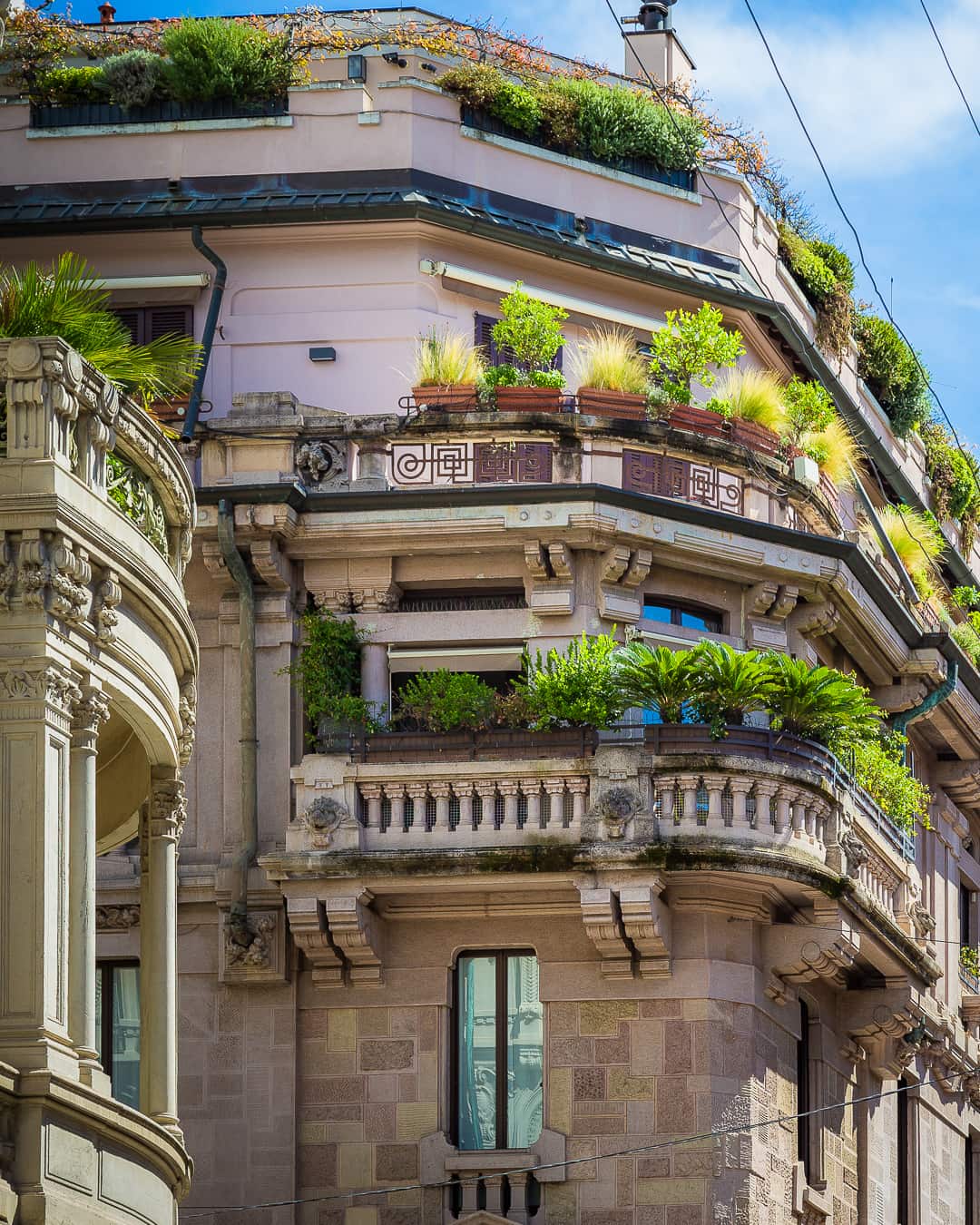
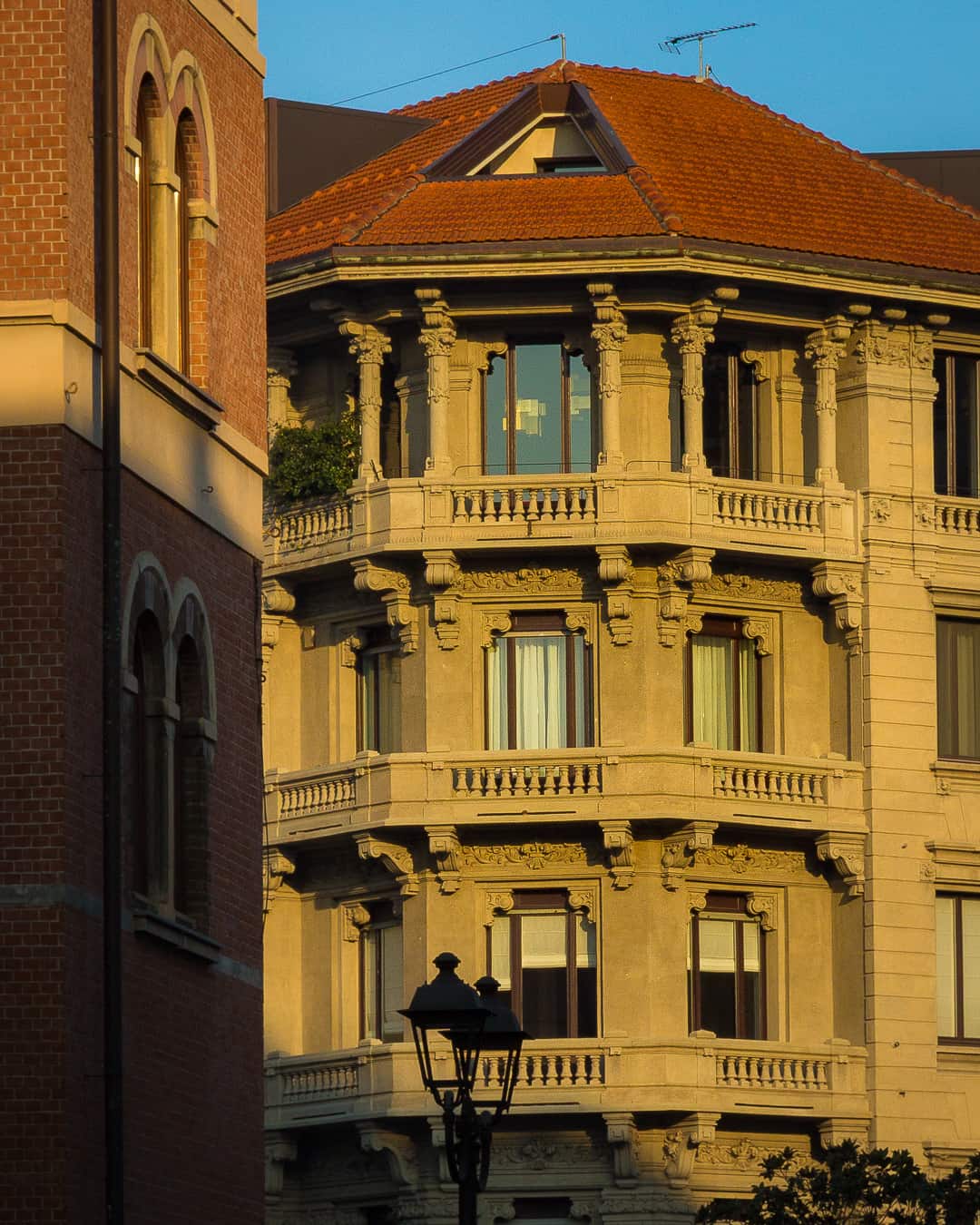
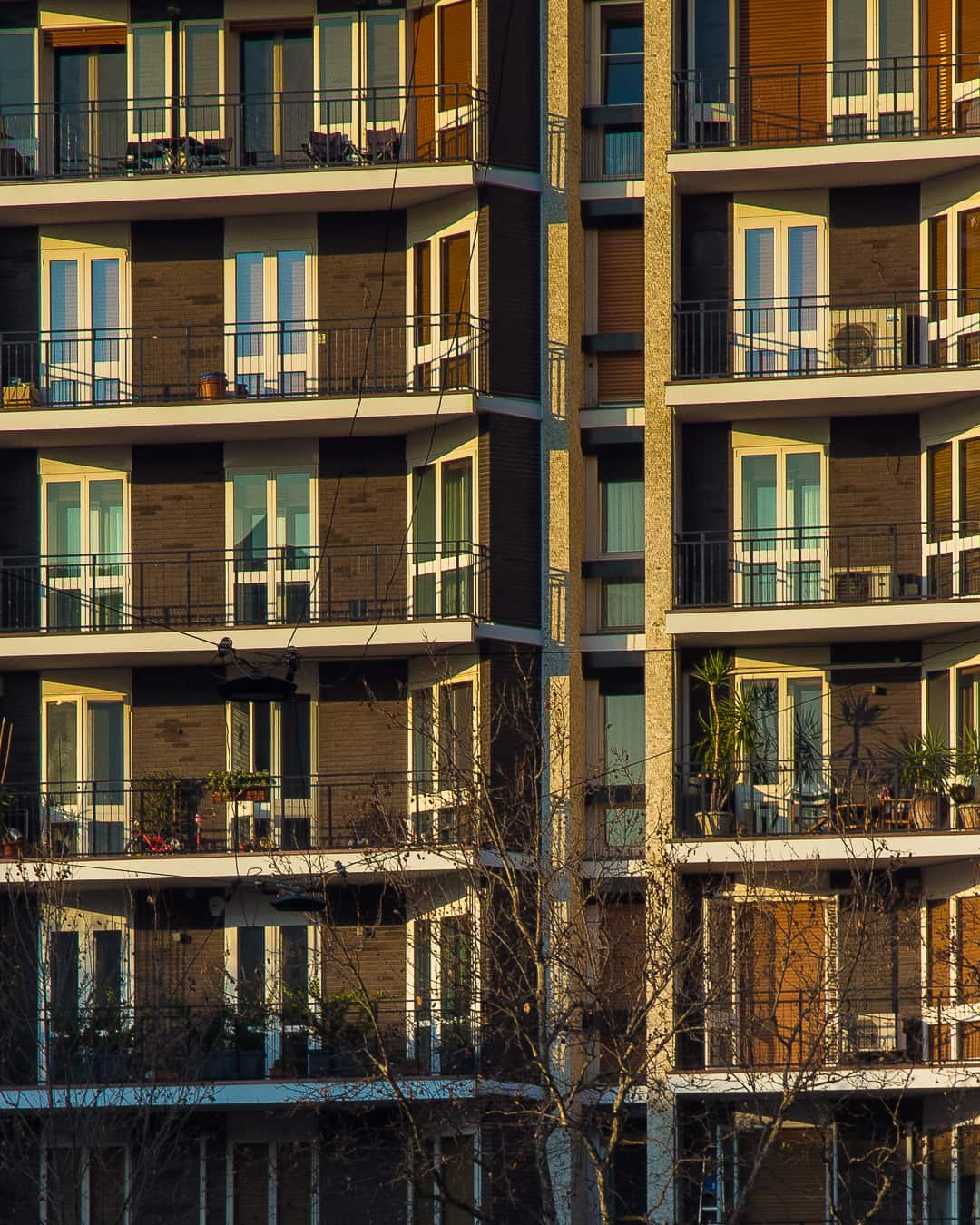
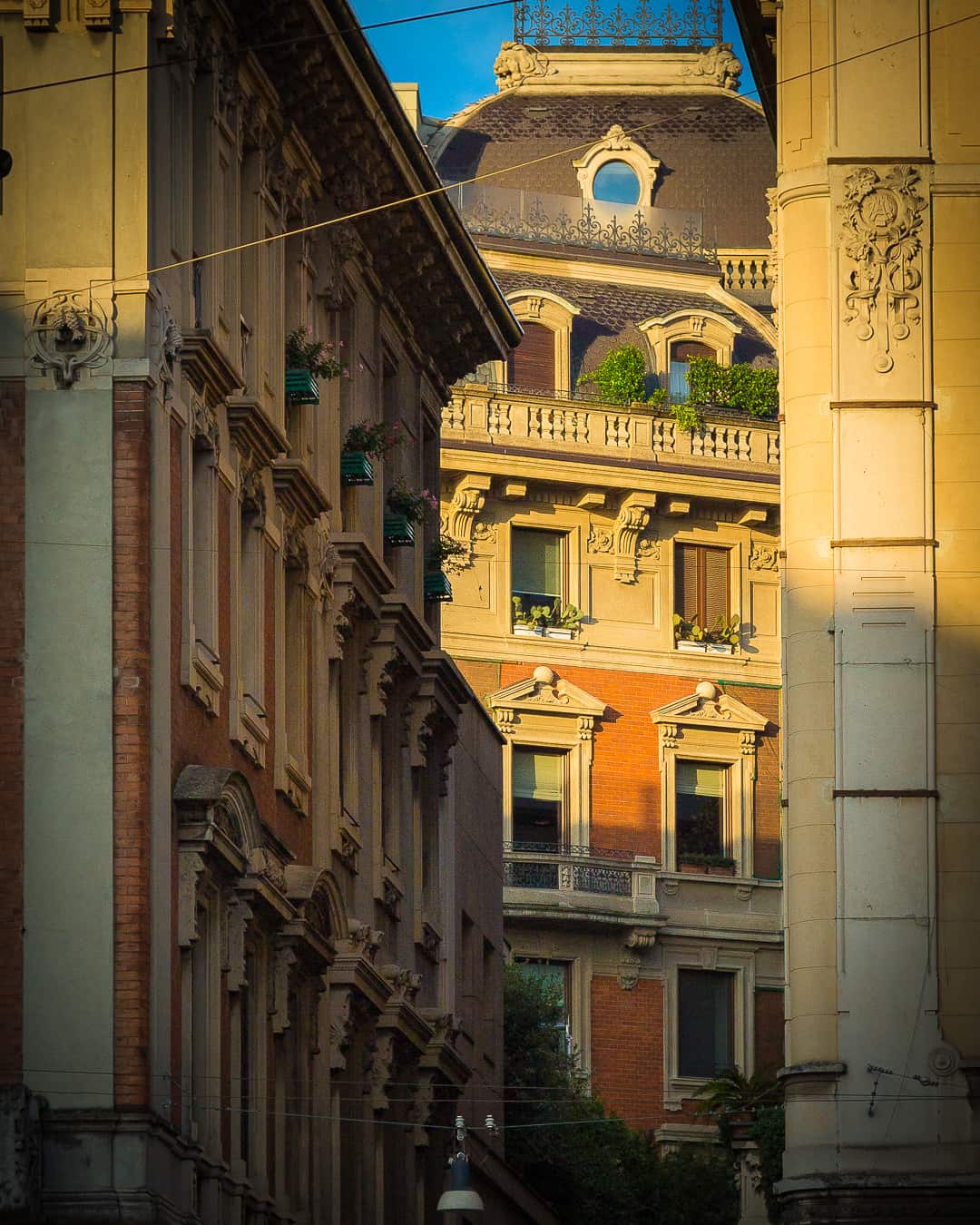
A corner building with rounded balconies, columns and terraces full of plants. On Milan’s rooftops the terraces are hanging gardens, visible only to those who look up.
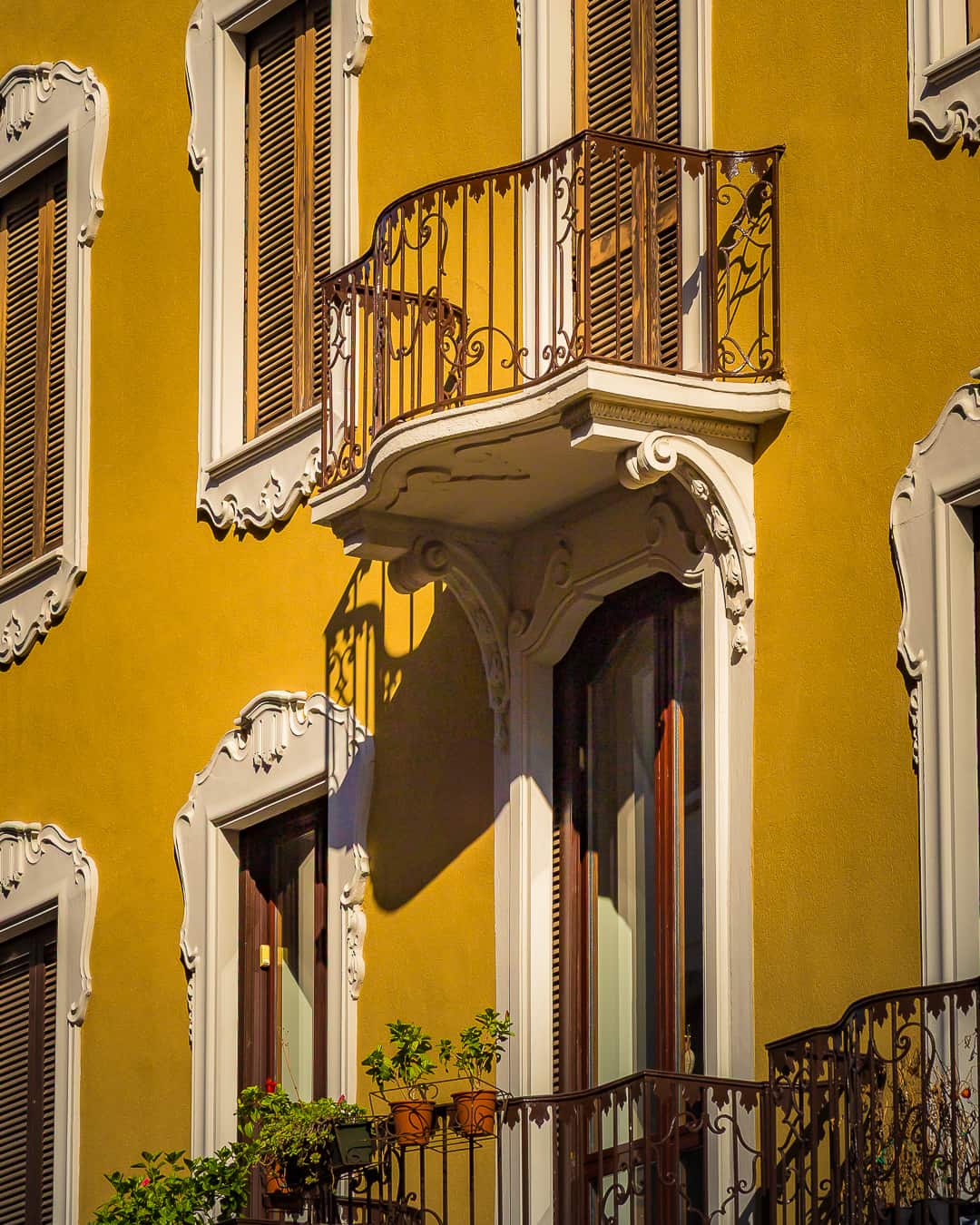
Iron
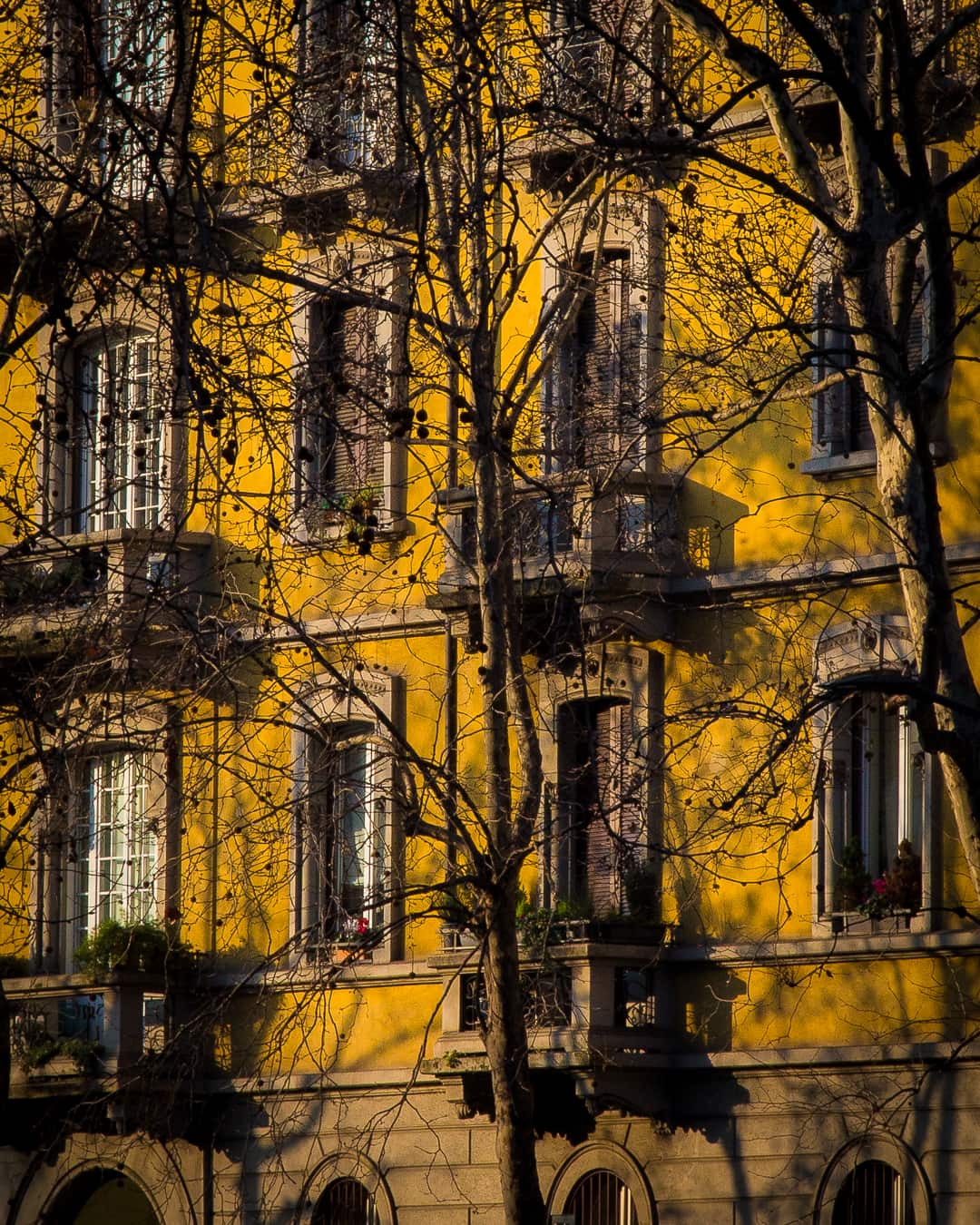
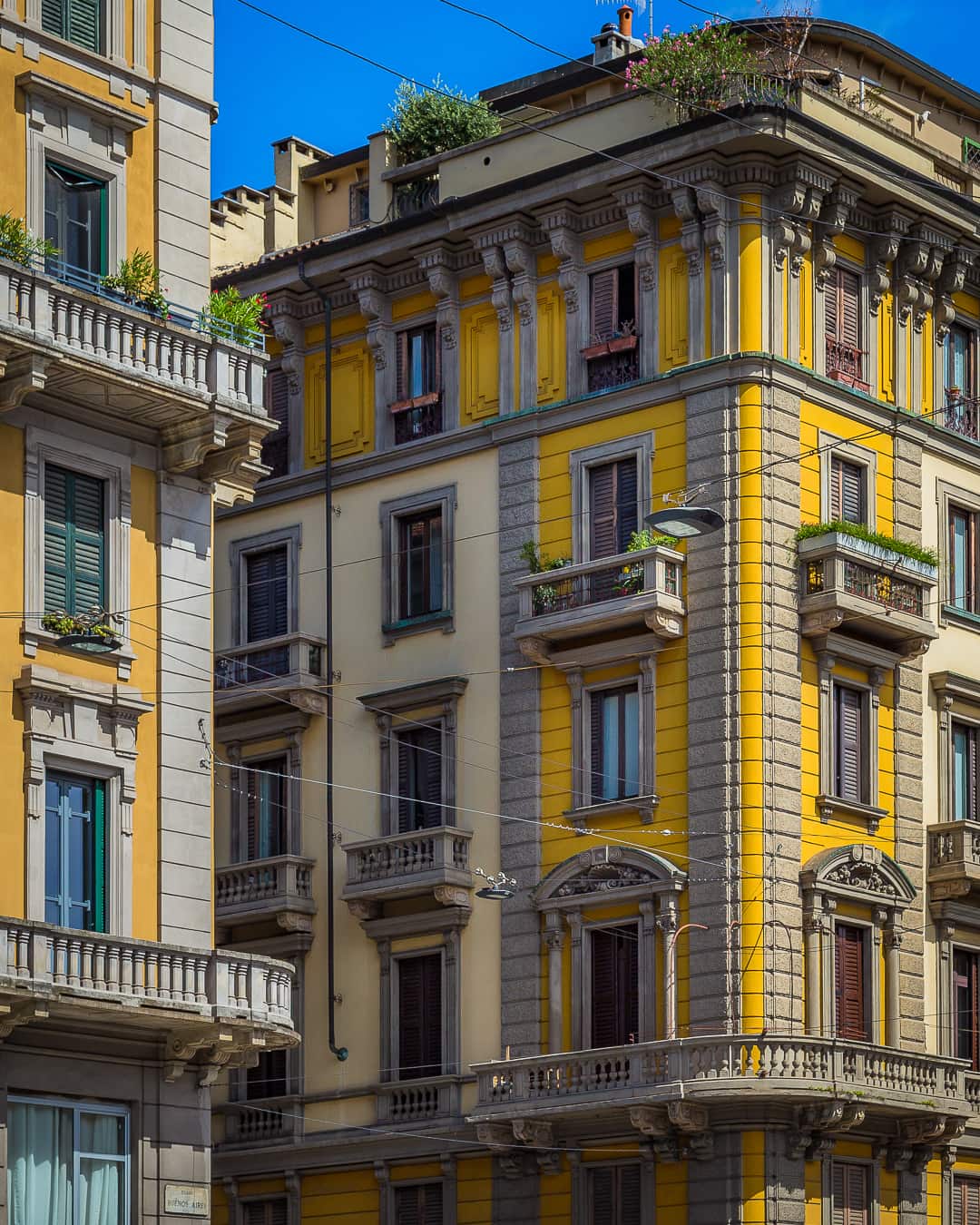
A yellow façade, white surrounds, a wrought-iron balcony. In those years wrought iron became an art: in Milan its master was Alessandro Mazzucotelli.
VII
Palaces and churches
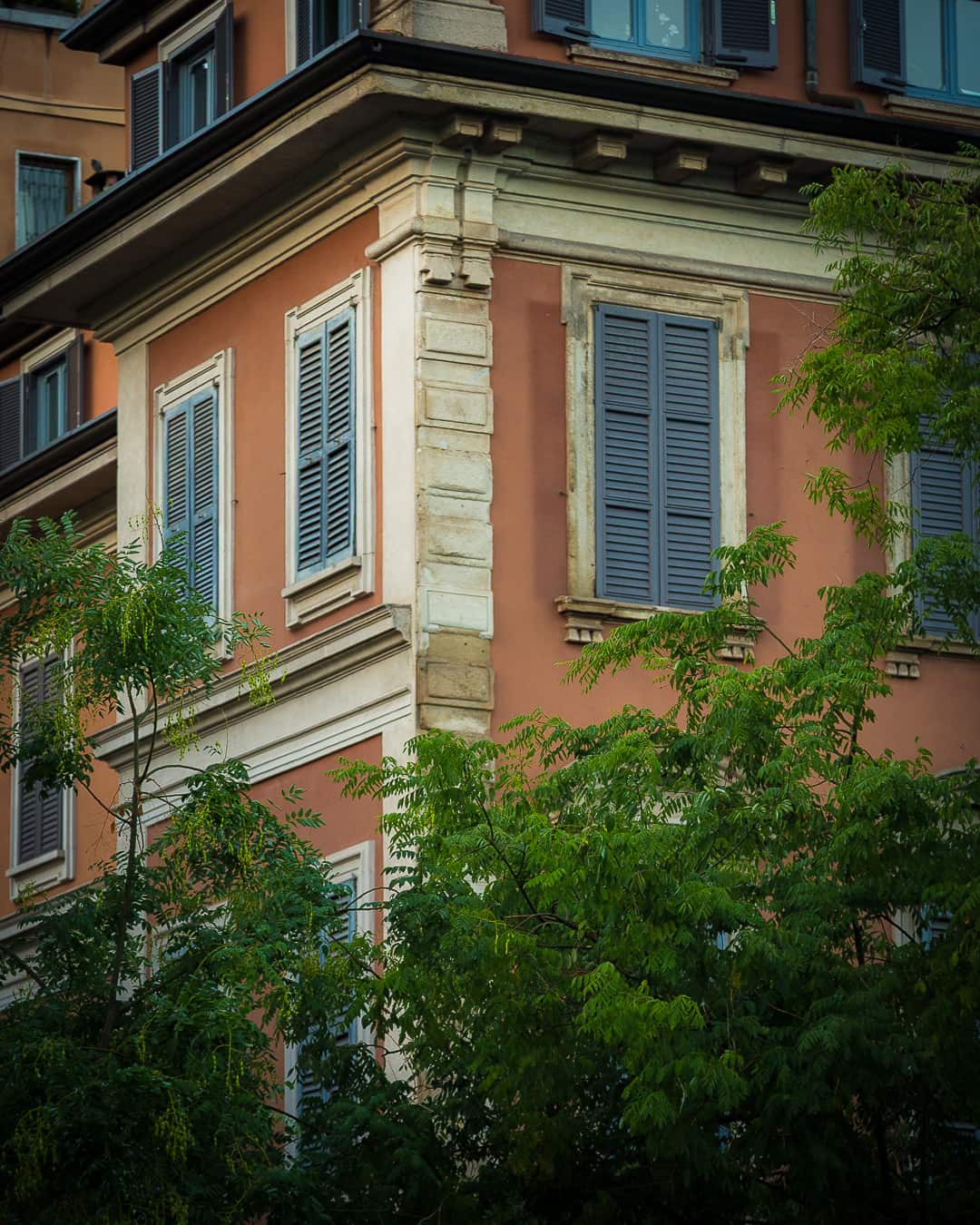
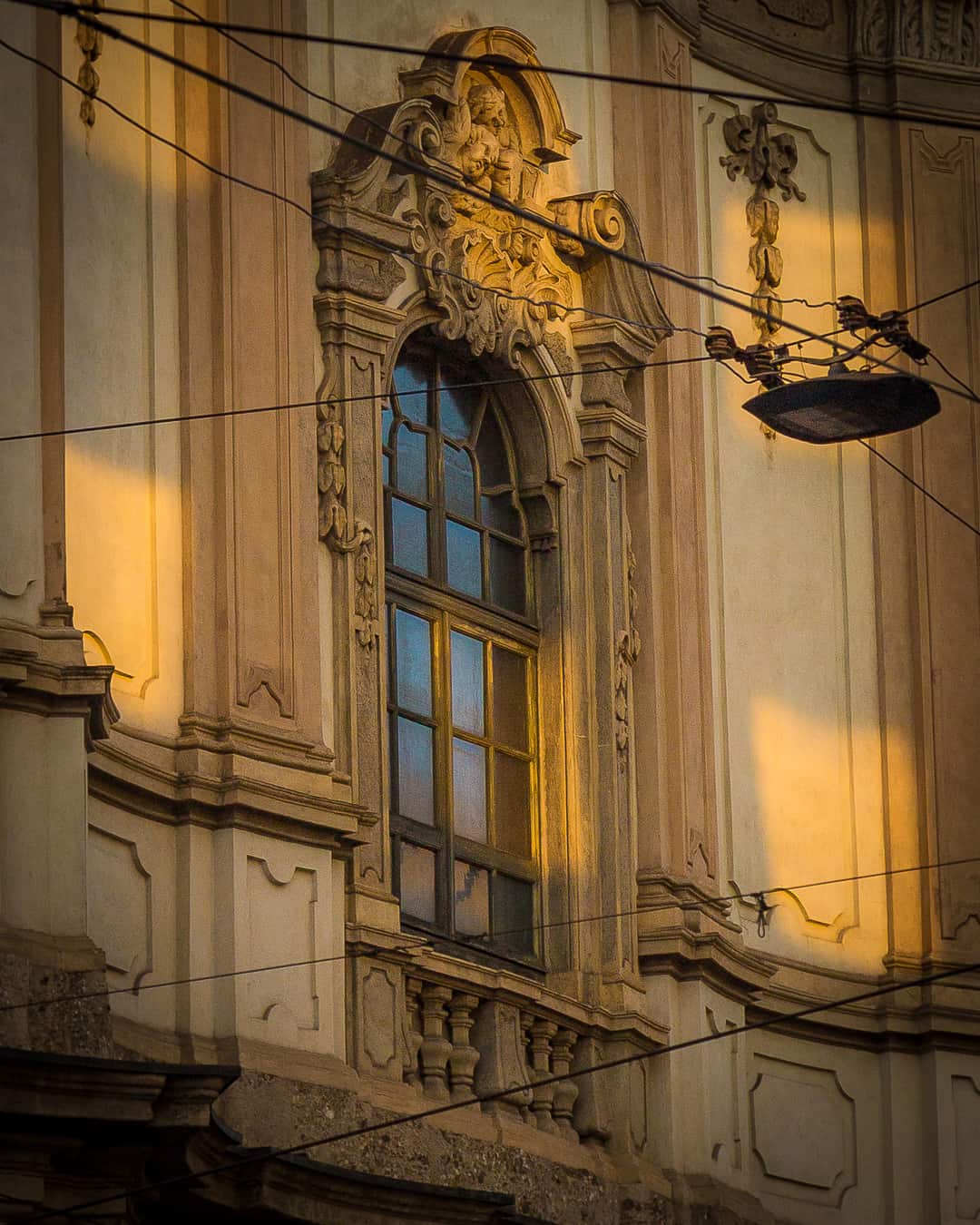
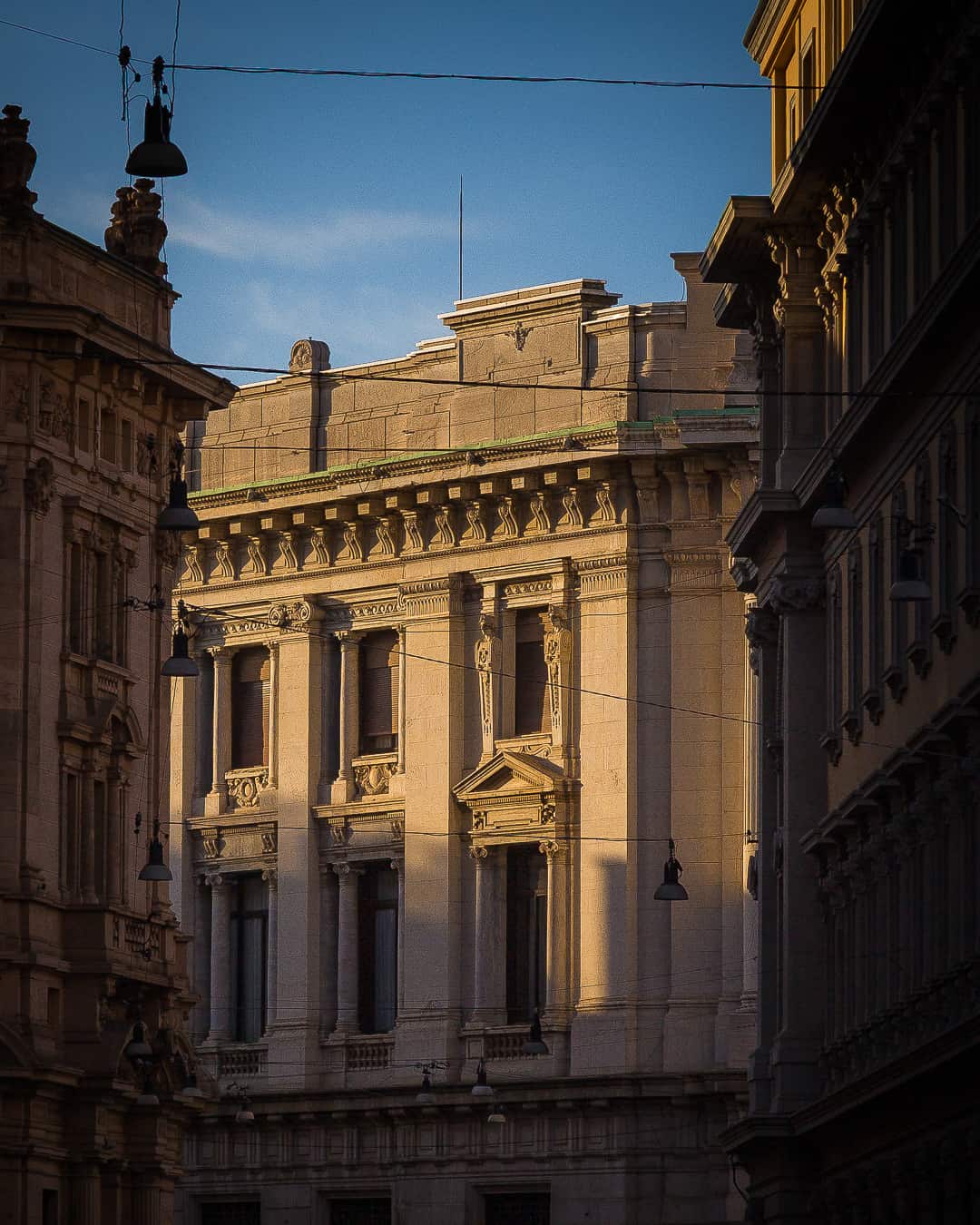
Milan has brick churches and marble churches, Renaissance palazzi and nineteenth-century palazzi, often in the same block.
You recognise them by their colour: the red of terracotta, the pink and white of stone, the yellow of plaster.
The portal
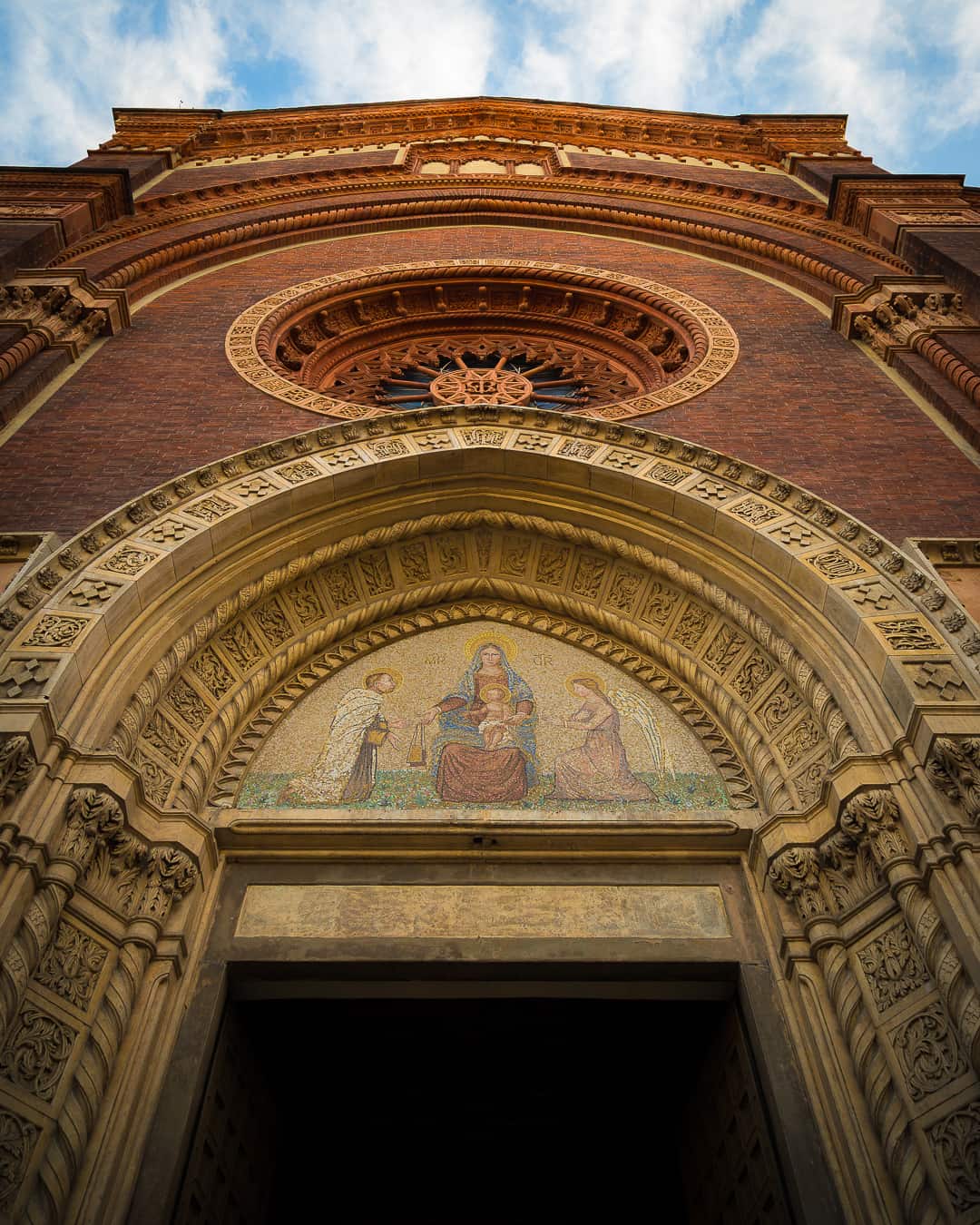
A rose window, a mosaic lunette, a deep portal of stone and terracotta. Church façades are read from top to bottom, like a page.
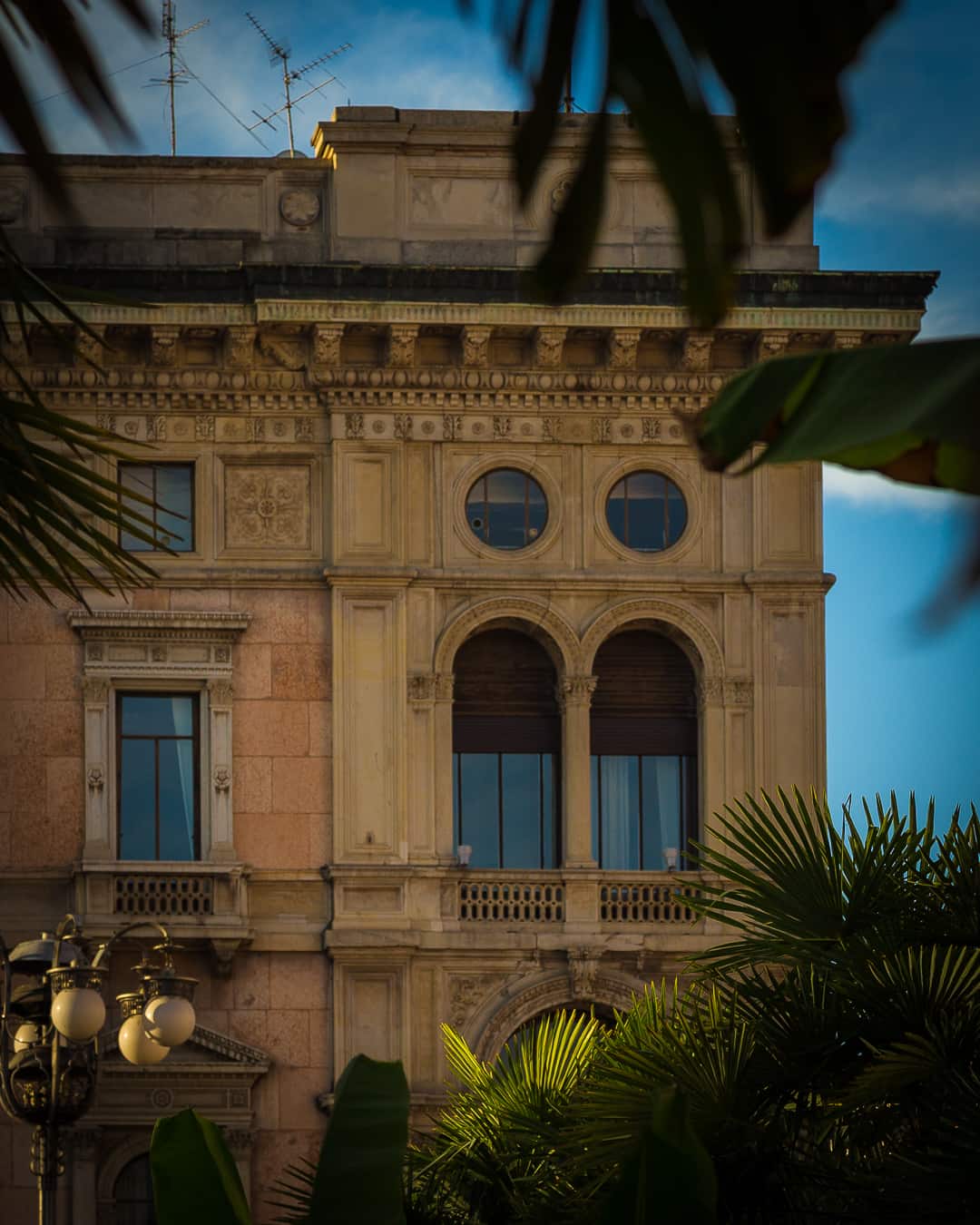
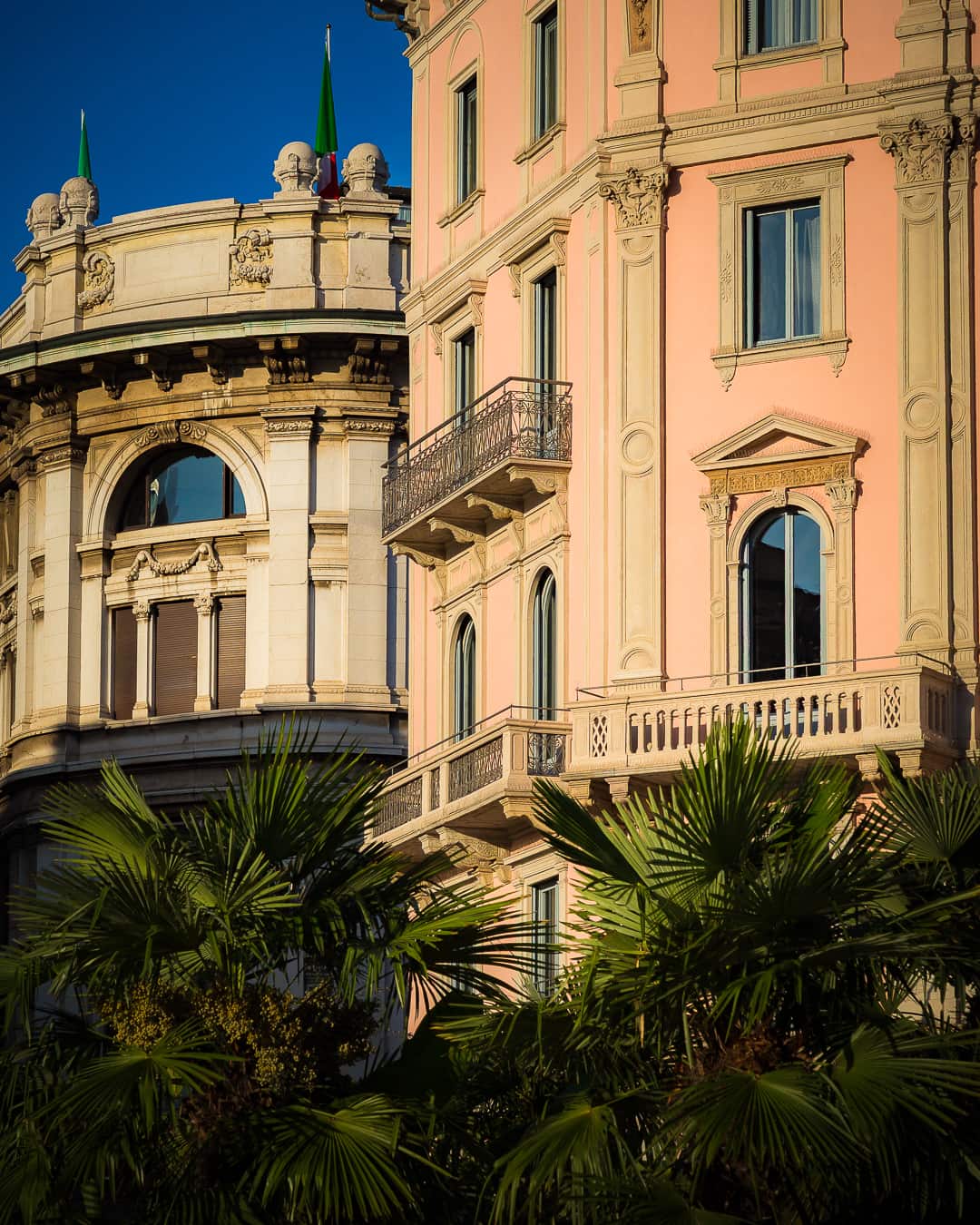
Palazzo and palms
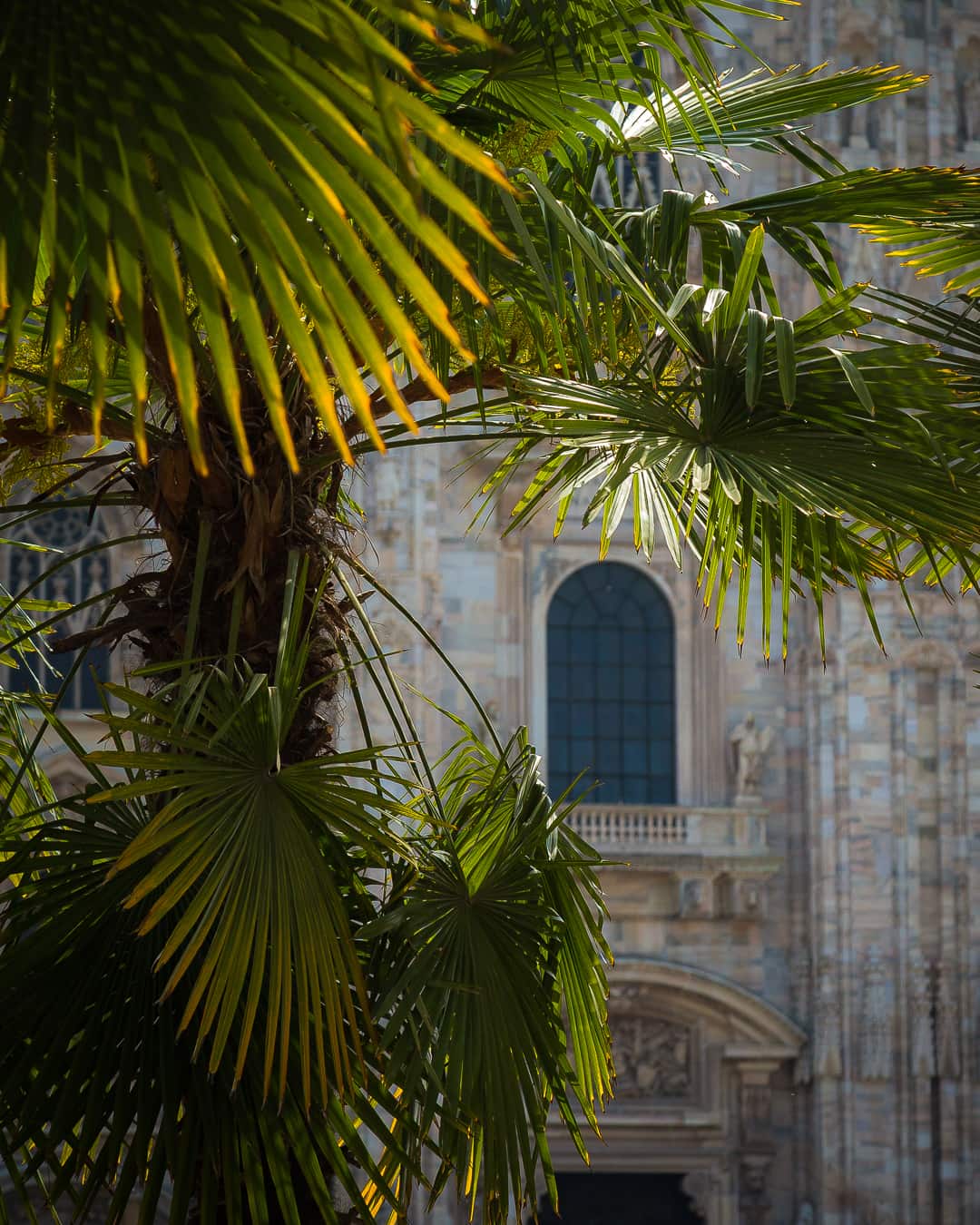
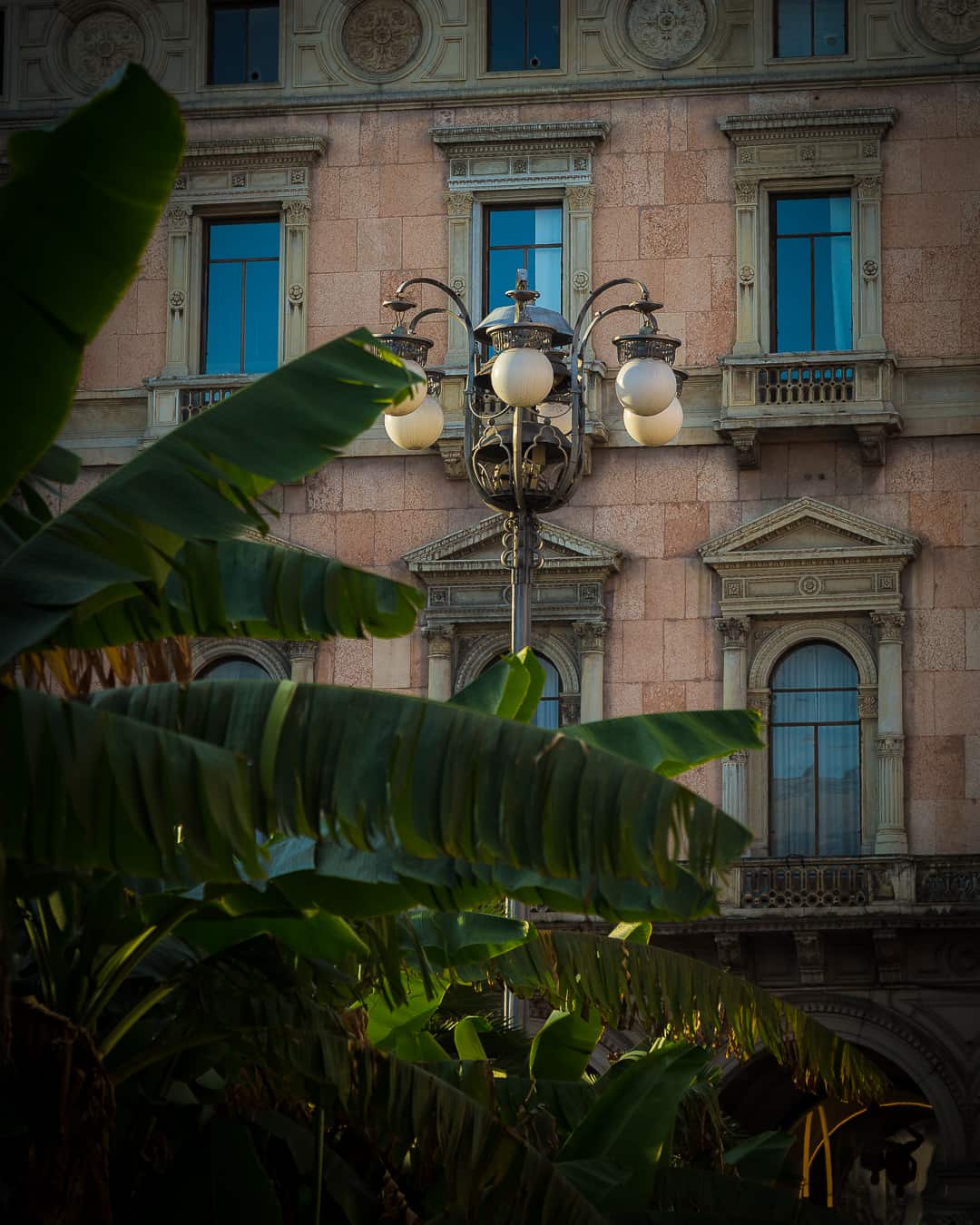
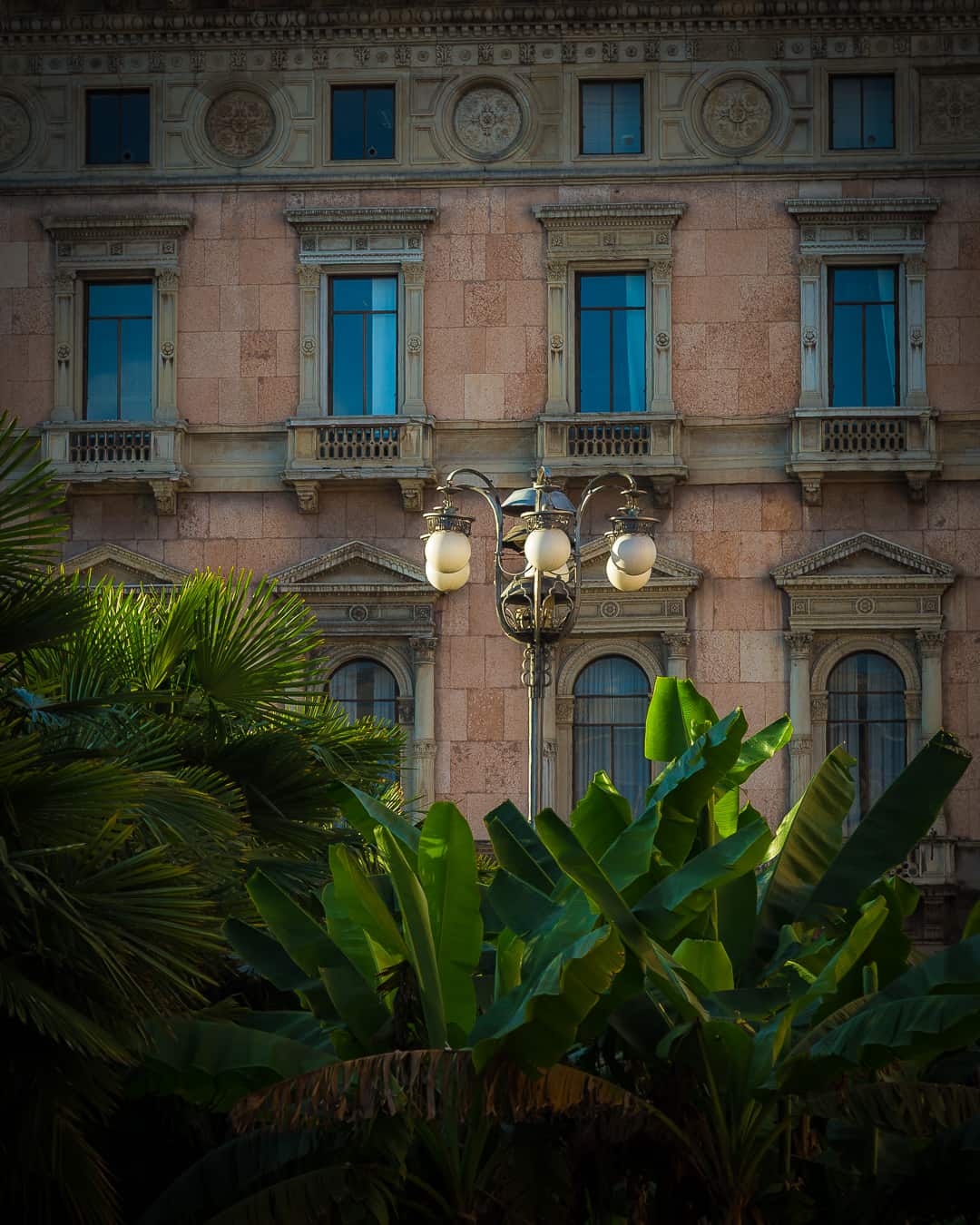
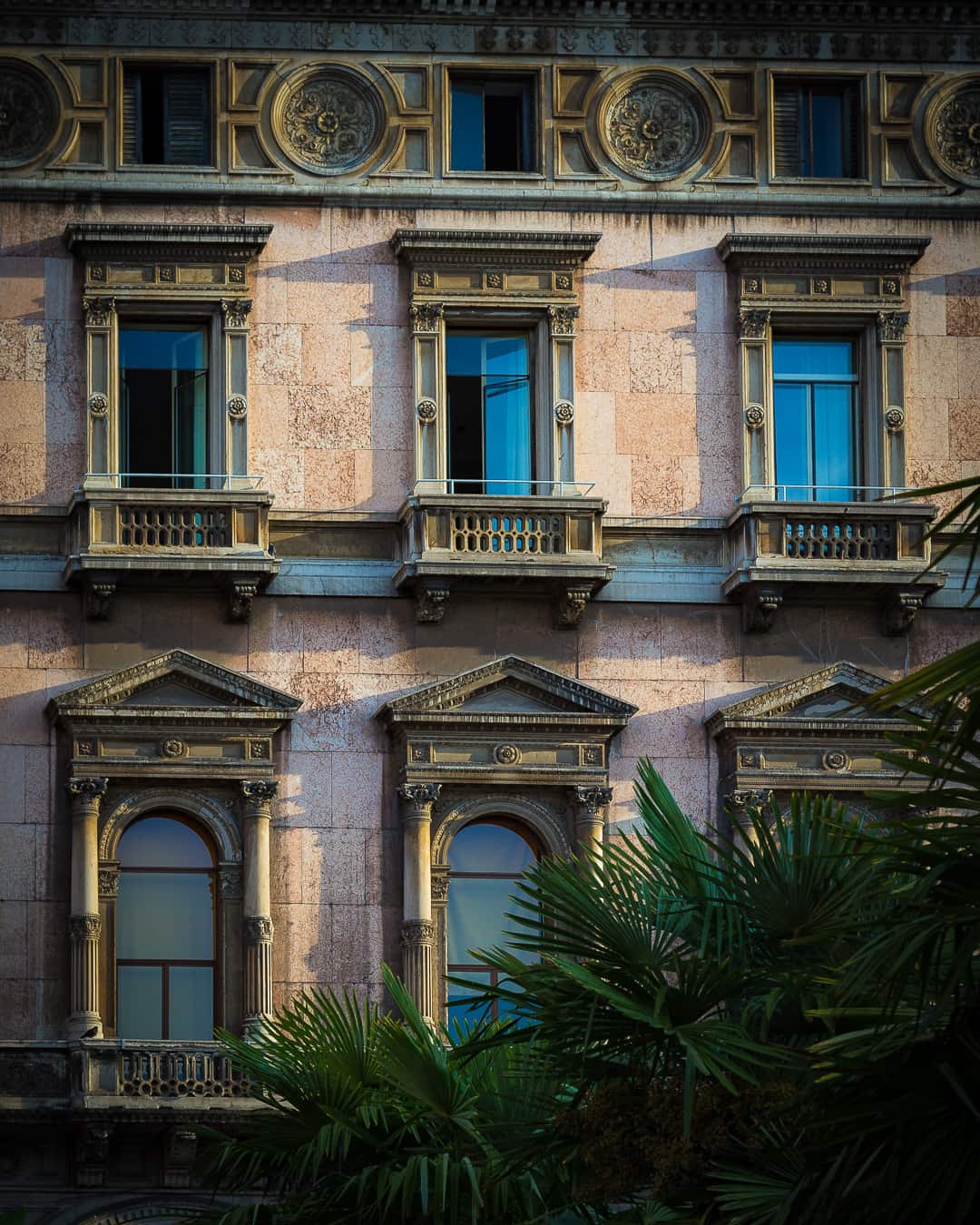
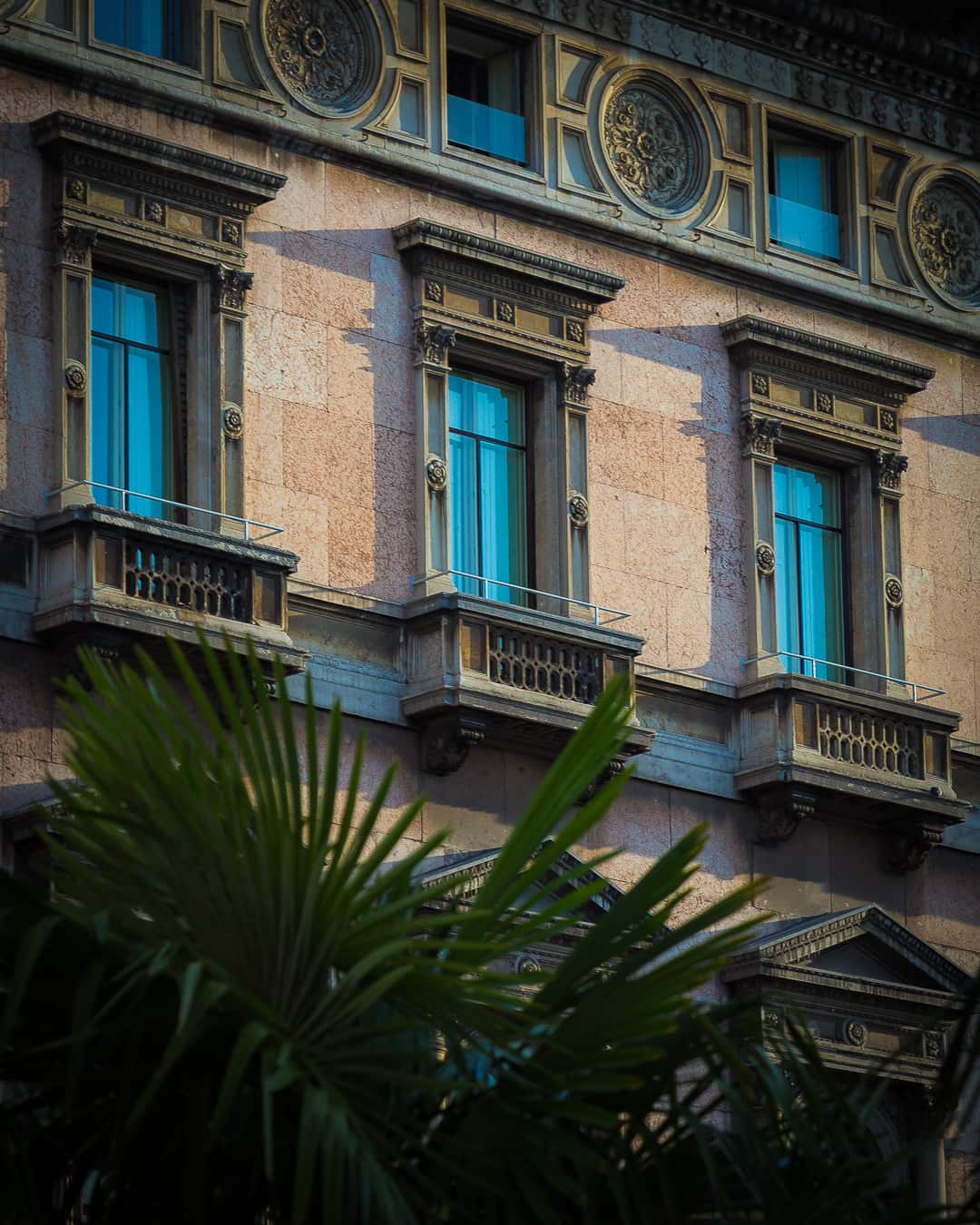
A pink façade with clustered street lamps, palms and banana plants in the foreground. This is not the Riviera: it is a garden in the middle of the city.
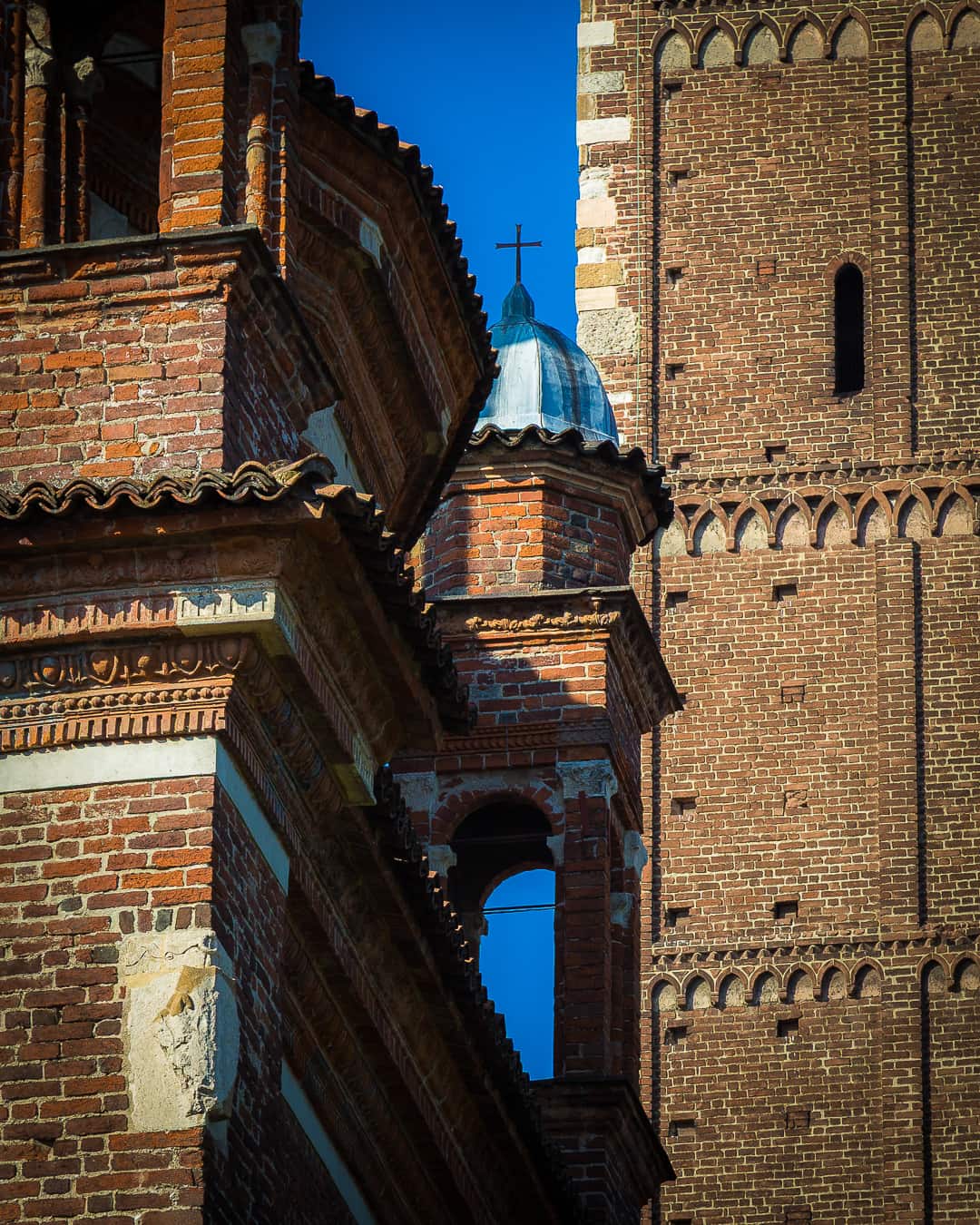
Bell towers
Red brick, a dome, a bell tower. Terracotta is the material of the Lombard plain: clay, fire and centuries of patience.
VIII
The park and the castle
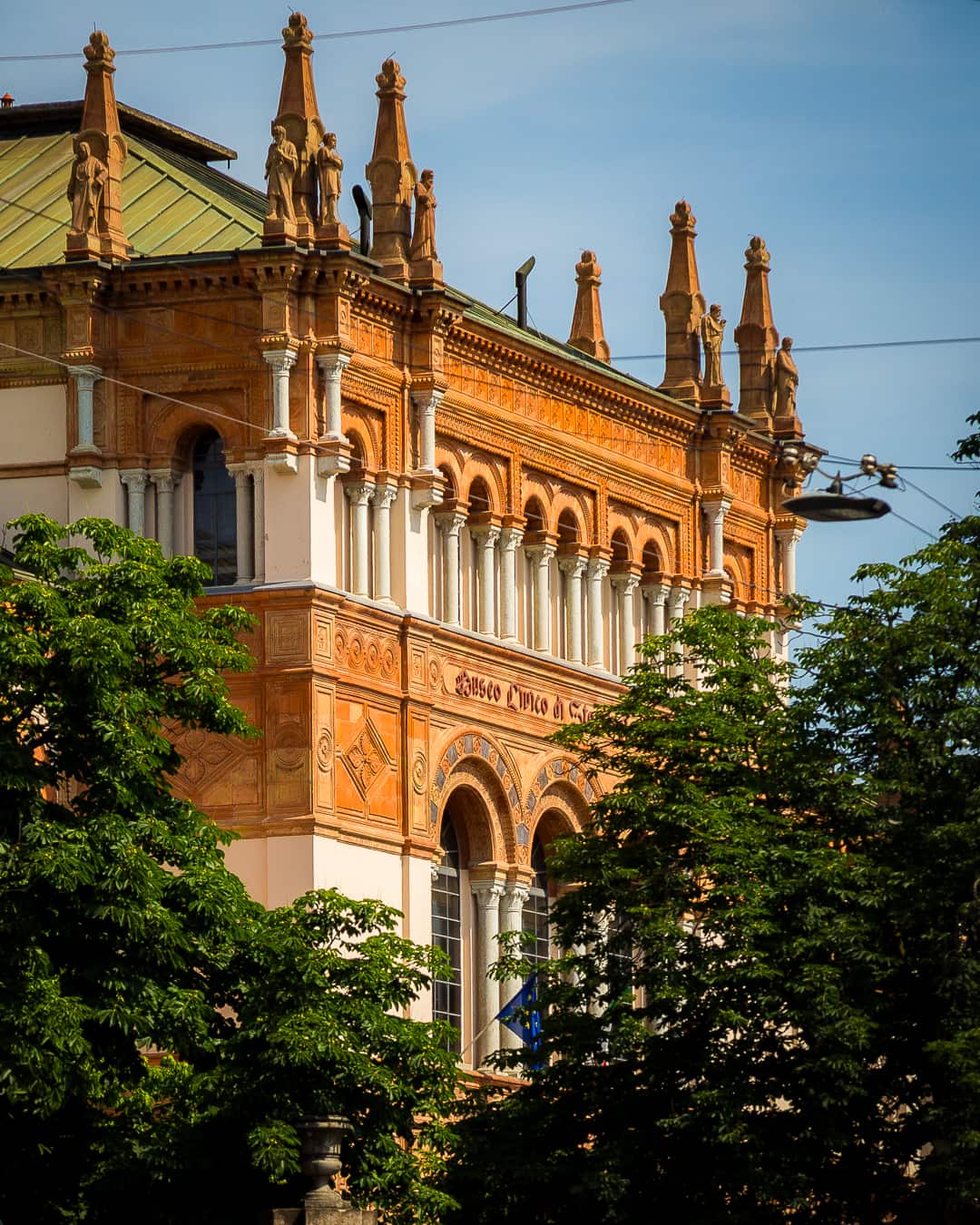
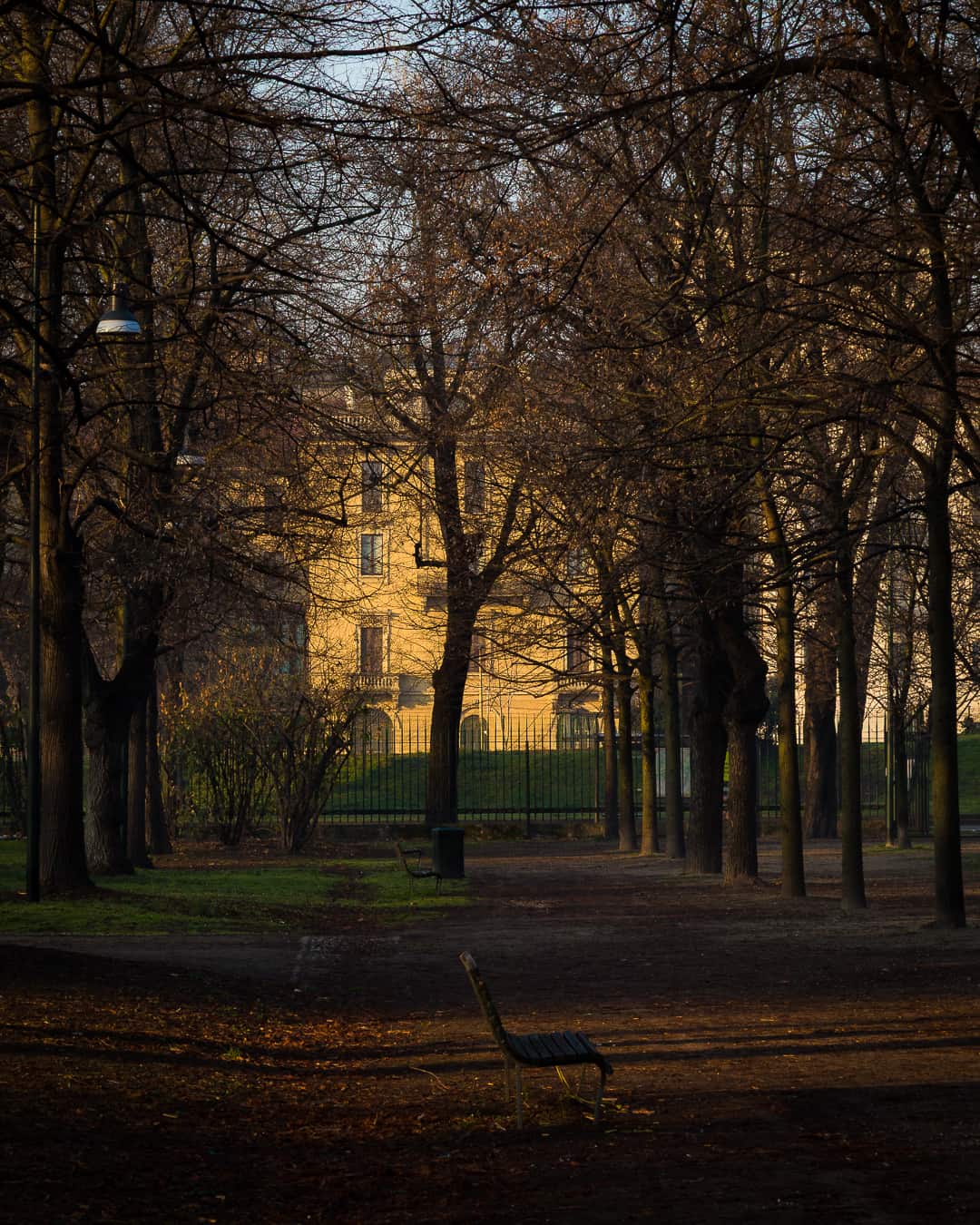
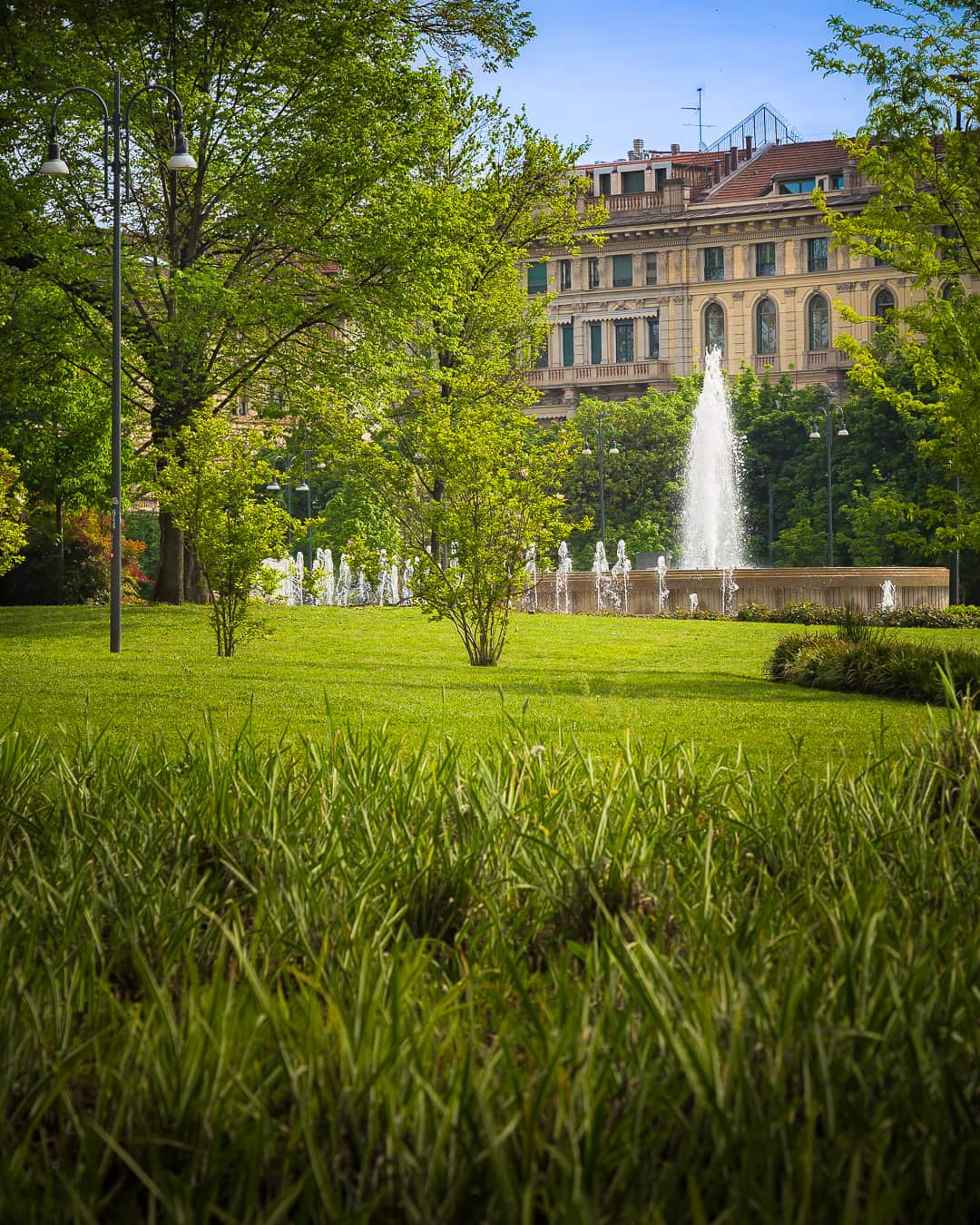
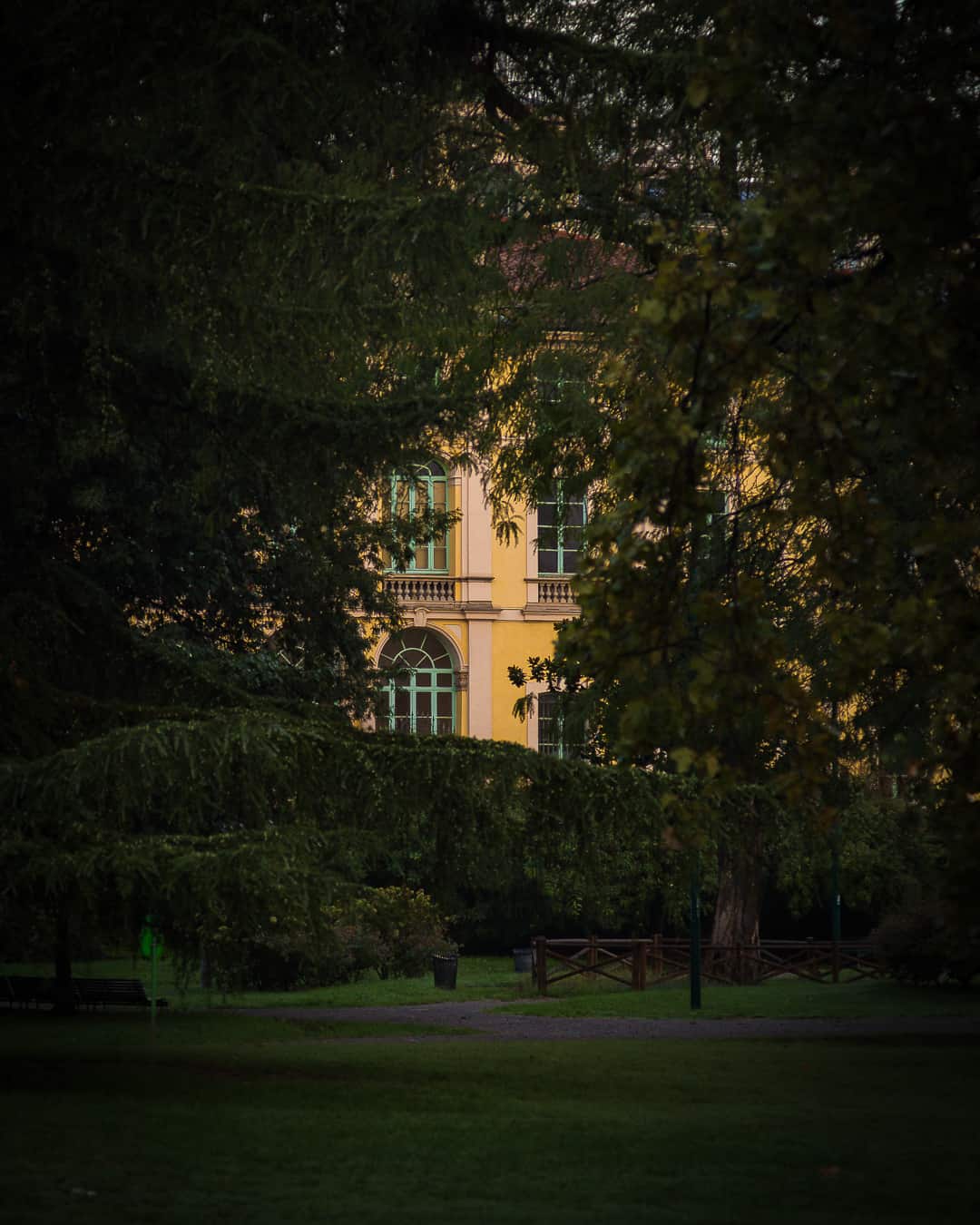
Behind the Castello Sforzesco lies Parco Sempione, the great park of the centre. It still holds the Acquario Civico, the only surviving building from the 1906 Exhibition.
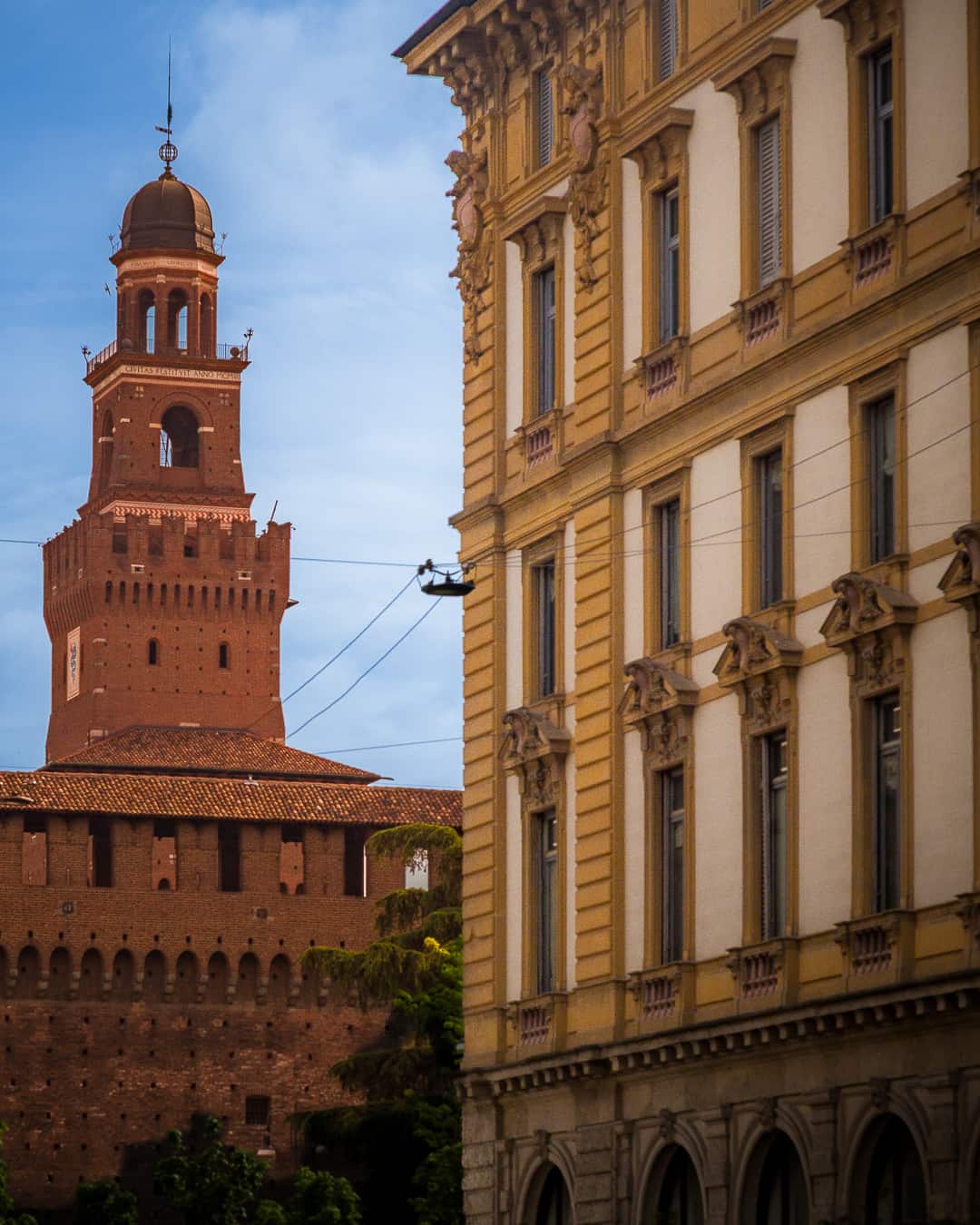
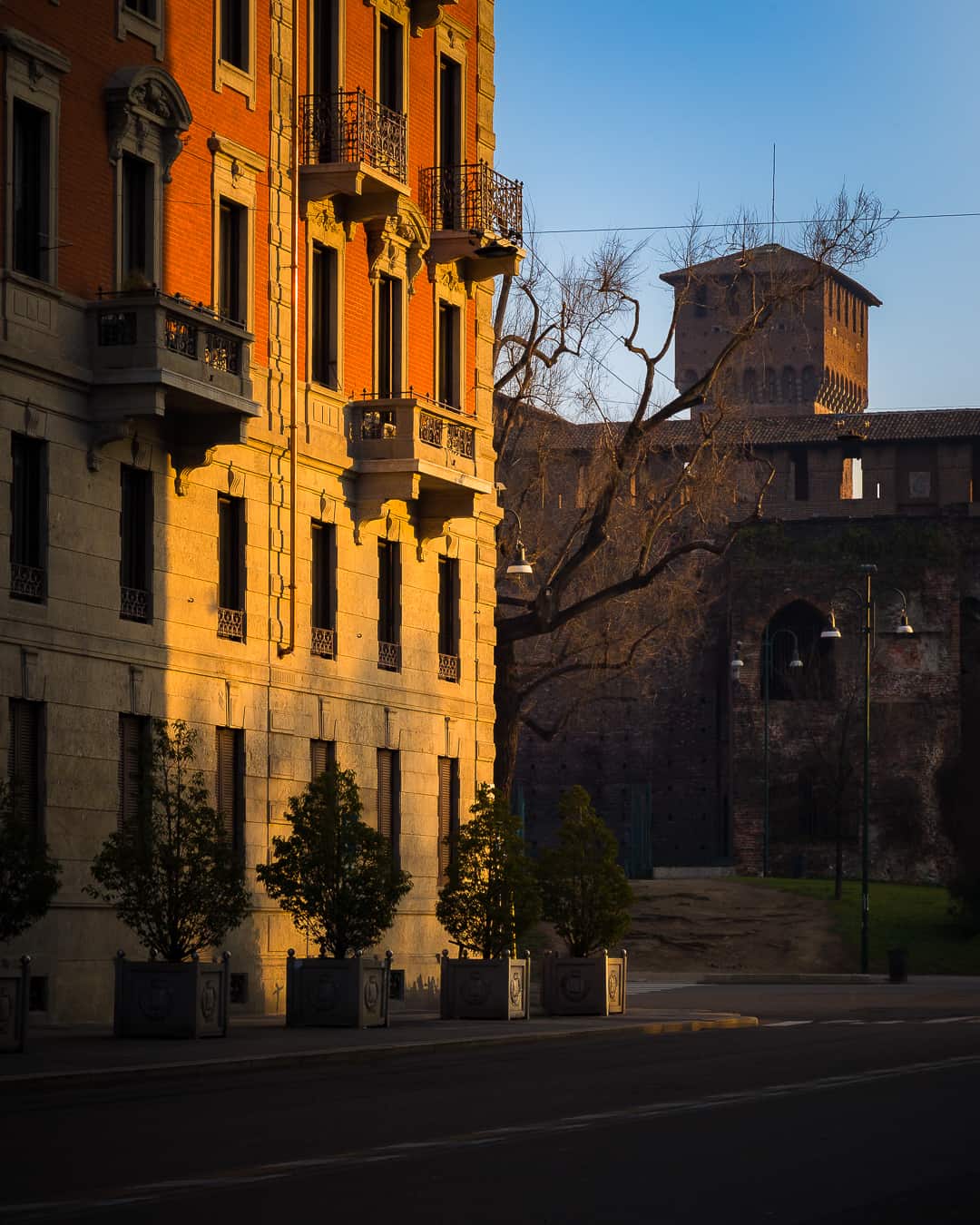
The tower in the middle of the castle’s façade, the Torre del Filarete, is a reconstruction: the original, begun in 1452, blew up in 1521; Luca Beltrami rebuilt it in the early twentieth century, working from old images.
The tower
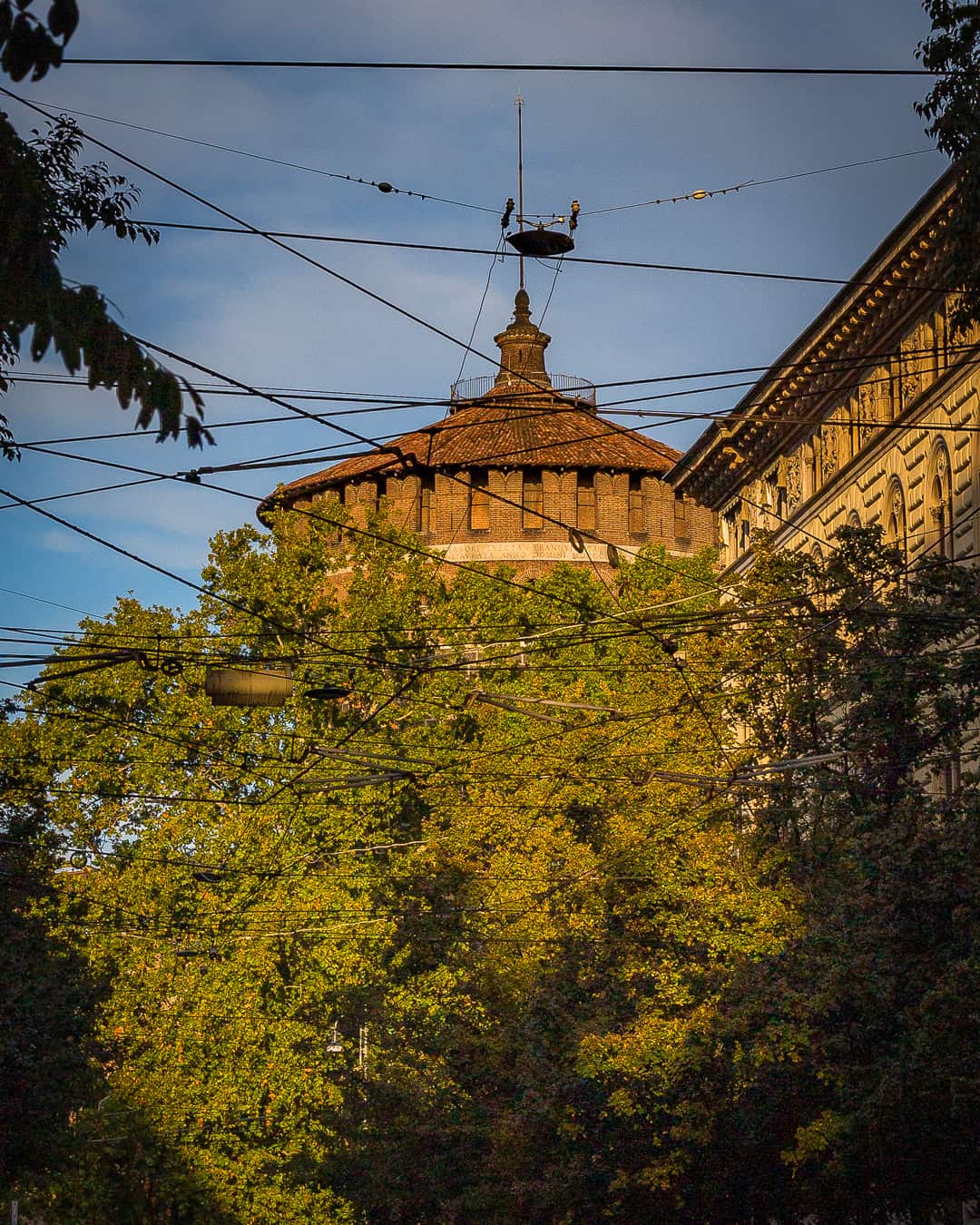
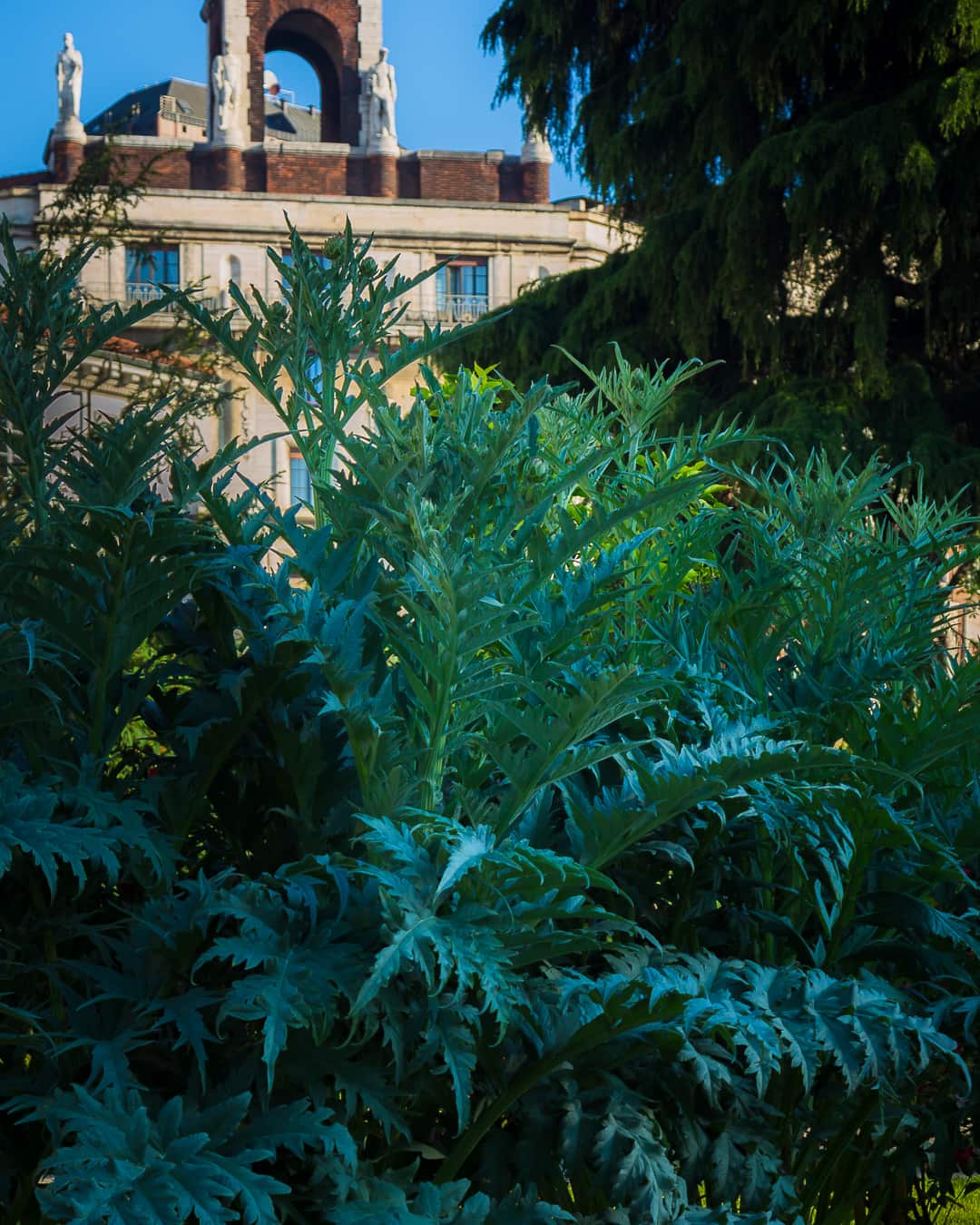
The castle’s brick tower and its clock, beside a nineteenth-century palazzo. What we see is the tower rebuilt in the early twentieth century, following old images of the castle.
Tree in blossom
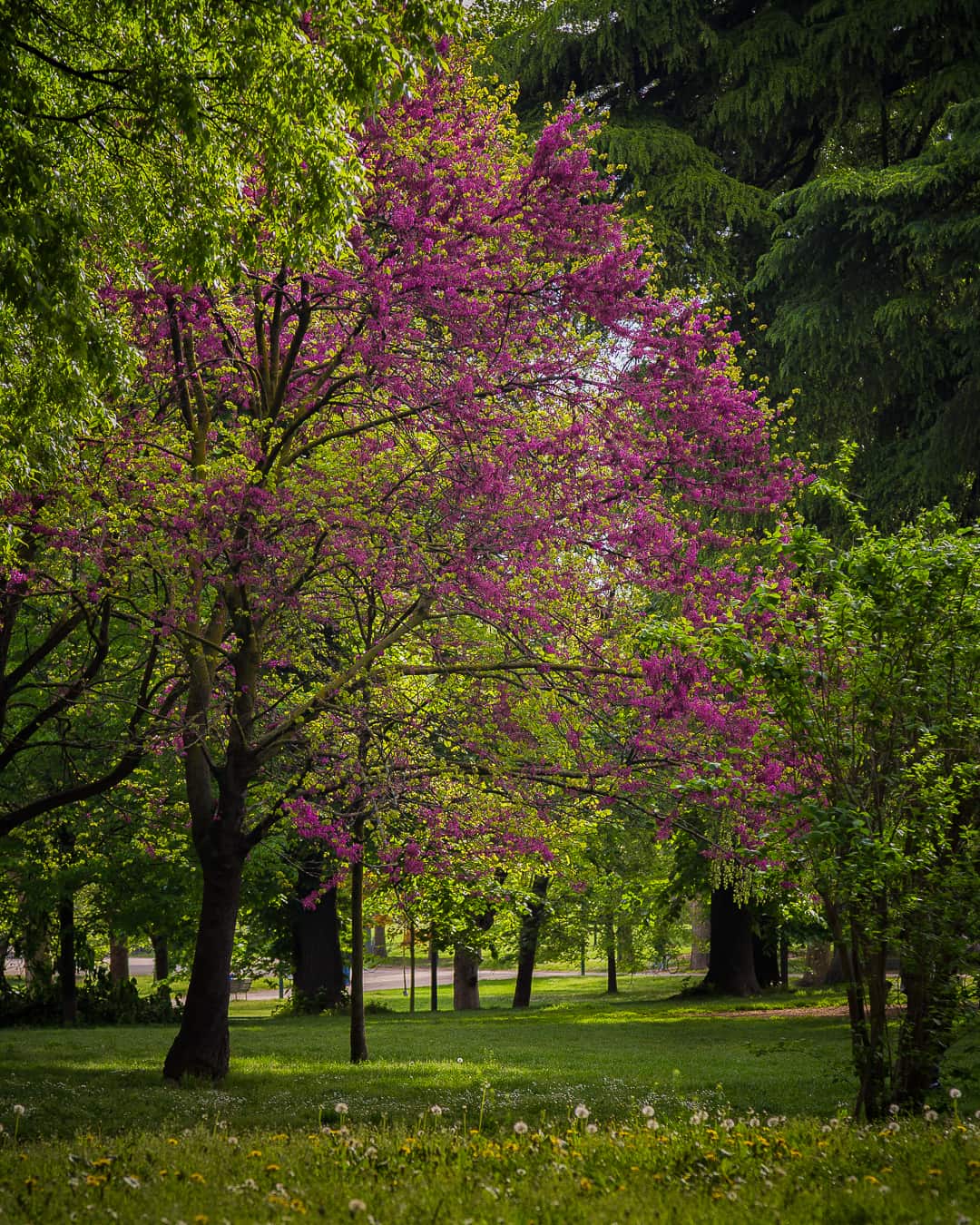
A tree in bright pink blossom on a green lawn. In spring Milan’s parks light up all at once, and for a few days the city changes colour.
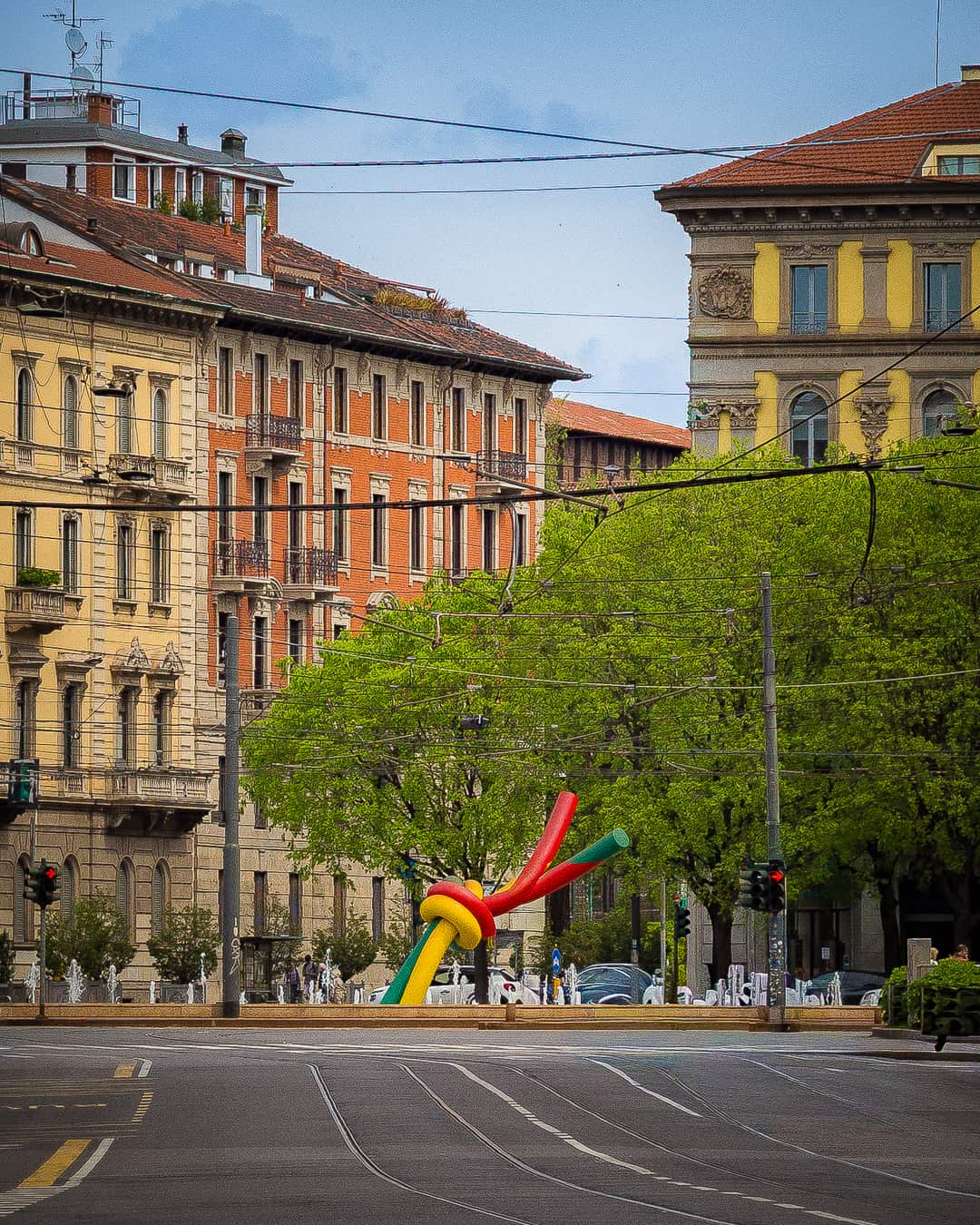
Ago, filo e nodo
In Piazzale Cadorna a giant needle, threaded with coloured yarn, rises from the paving. It is the work of Claes Oldenburg and Coosje van Bruggen, unveiled in 2000: a tribute to fashion-capital Milan and to its metro lines.
Getting there
- Where
- Milan, the capital of Lombardy.
- Brera
- Pinacoteca, Biblioteca Braidense and Botanical Garden in the same palazzo, in Via Brera. Times and tickets change, so check them on the Pinacoteca website.
- By tram
- Ride a historic “Ventotto” tram: the slowest, and loveliest, way to see the city.
- Liberty style
- Between Corso Venezia, Porta Venezia and Via Malpighi: Palazzo Castiglioni, Casa Galimberti, Casa Guazzoni.
- Our advice
- Walk with your head up, and look into the doorways left open: the courtyards are Milan’s best-kept secret.
Information checked on 21 November 2026.
Sources
- Pinacoteca di Brera — Wikipedia
- Pinacoteca di Brera — Ministero della Cultura
- Pinacoteca di Brera, profilo storico — Biblioteche, Ministero della Cultura
- Palazzo Brera e Biblioteca Braidense — Pinacoteca di Brera
- Galleria Vittorio Emanuele II — Wikipedia
- La Galleria Vittorio Emanuele II a Milano — Politecnico di Milano
- Torre del Filarete — Lombardia Beni Culturali
- Castello Sforzesco — Wikipedia
- Milano Liberty: 5 cose da fare e vedere — Italia.it
- Palazzo Castiglioni — Italia.it
- Ago, filo e nodo — Luoghi del Contemporaneo, Ministero della Cultura
- Storia — Pasticceria Marchesi 1824
- Il futuro è nel passato: il tram “Ventotto” — Quotidiano.net
- Tram storico Carrelli — Il Giorno
- La mia Milano di colore giallo, oro e polvere — Il Giorno
Note
Photographs by William, also published on Instagram as @guglielmo.foto.
Texts and layout: WIDE Edizioni, Rho. Historical and practical information is checked against the sources on the previous page.
© 2026 WIDE Edizioni
A book for your place
We photograph villas, museums, villages and landscapes in natural light, and turn them into images ready for your website, print and social media. Or into pages to leaf through, like these.