WIDE Edizioni
Villa Della Porta Bozzolo
Casalzuigno, Varese
Photographs by William
A villa born of love
At Casalzuigno, in the Valcuvia, between Varese and Lake Maggiore, a villa climbs the hillside in terraces. In the sixteenth century it was a country house, built by the notary Giroldino de Portu, founder of the Della Porta family.
In the eighteenth century Gian Angelo III Della Porta turned it into a stately residence in honour of his wife, the Milanese countess Isabella Giulini. In 1884, after the Della Porta family’s decline, it was bought by Camillo Bozzolo, a senator and physician; in 1989 his heirs donated it to FAI.
These pages explore it from bottom to top: the villa, the rooms, country life, the terraces, the flowers and the lookout.
I
The villa
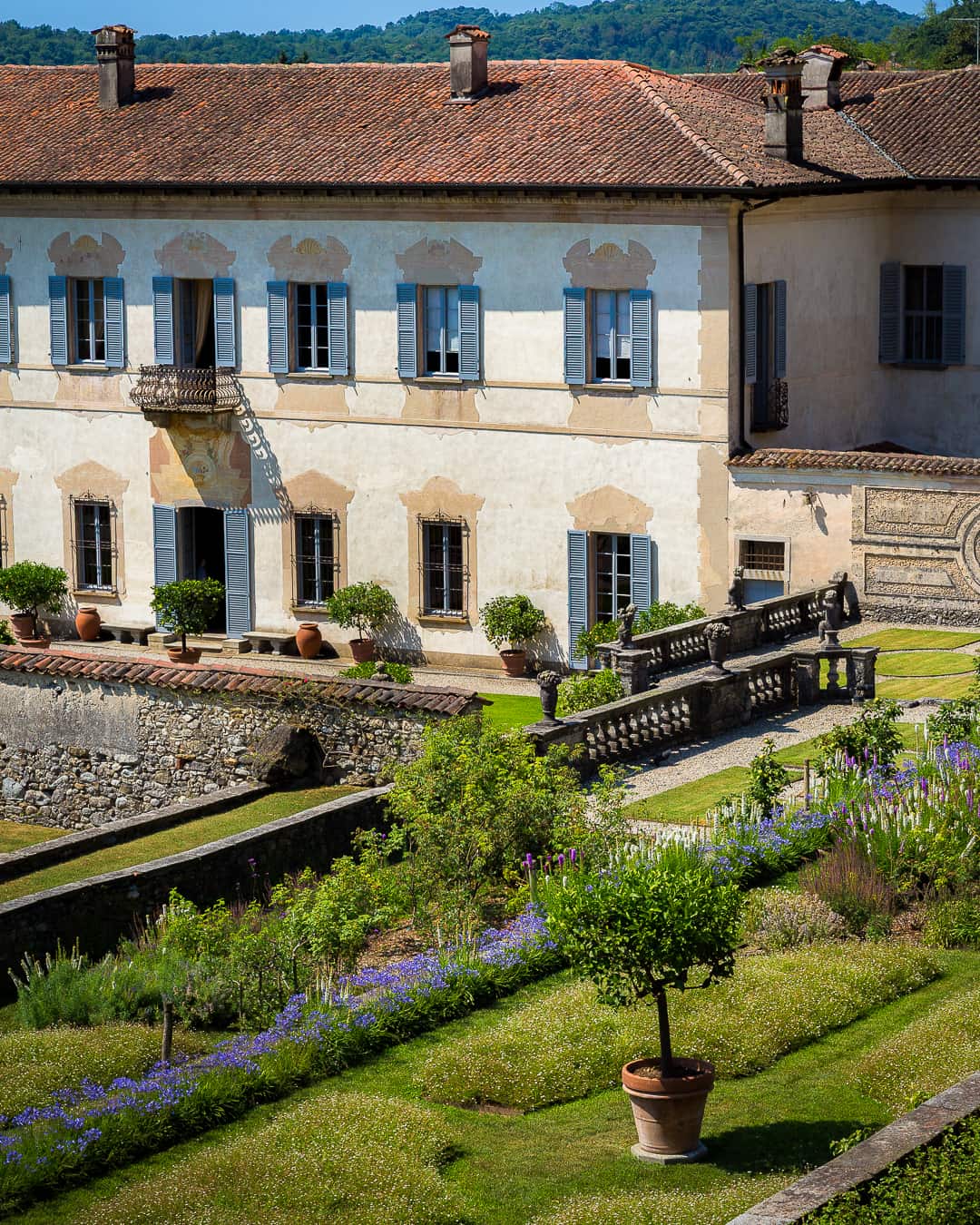
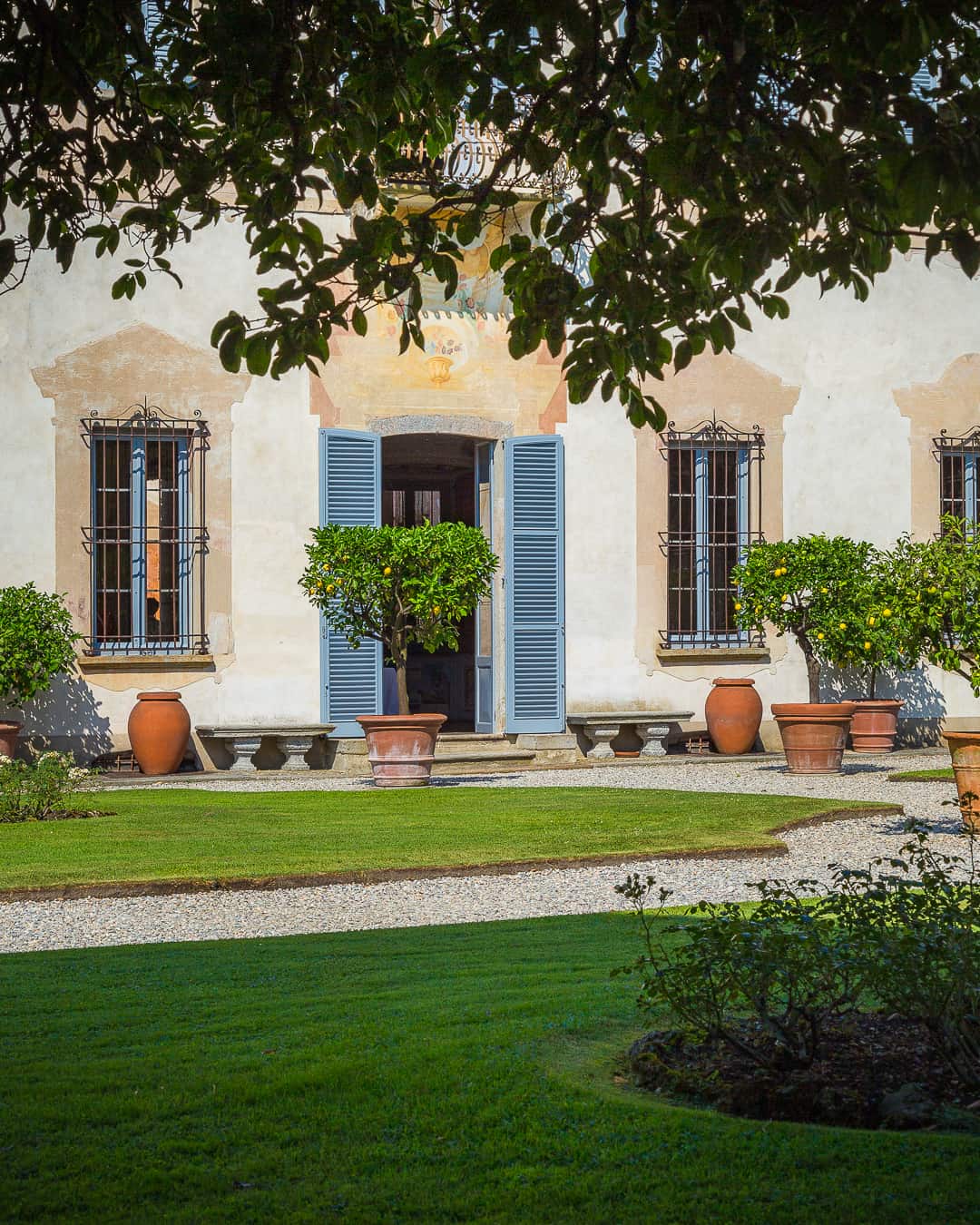
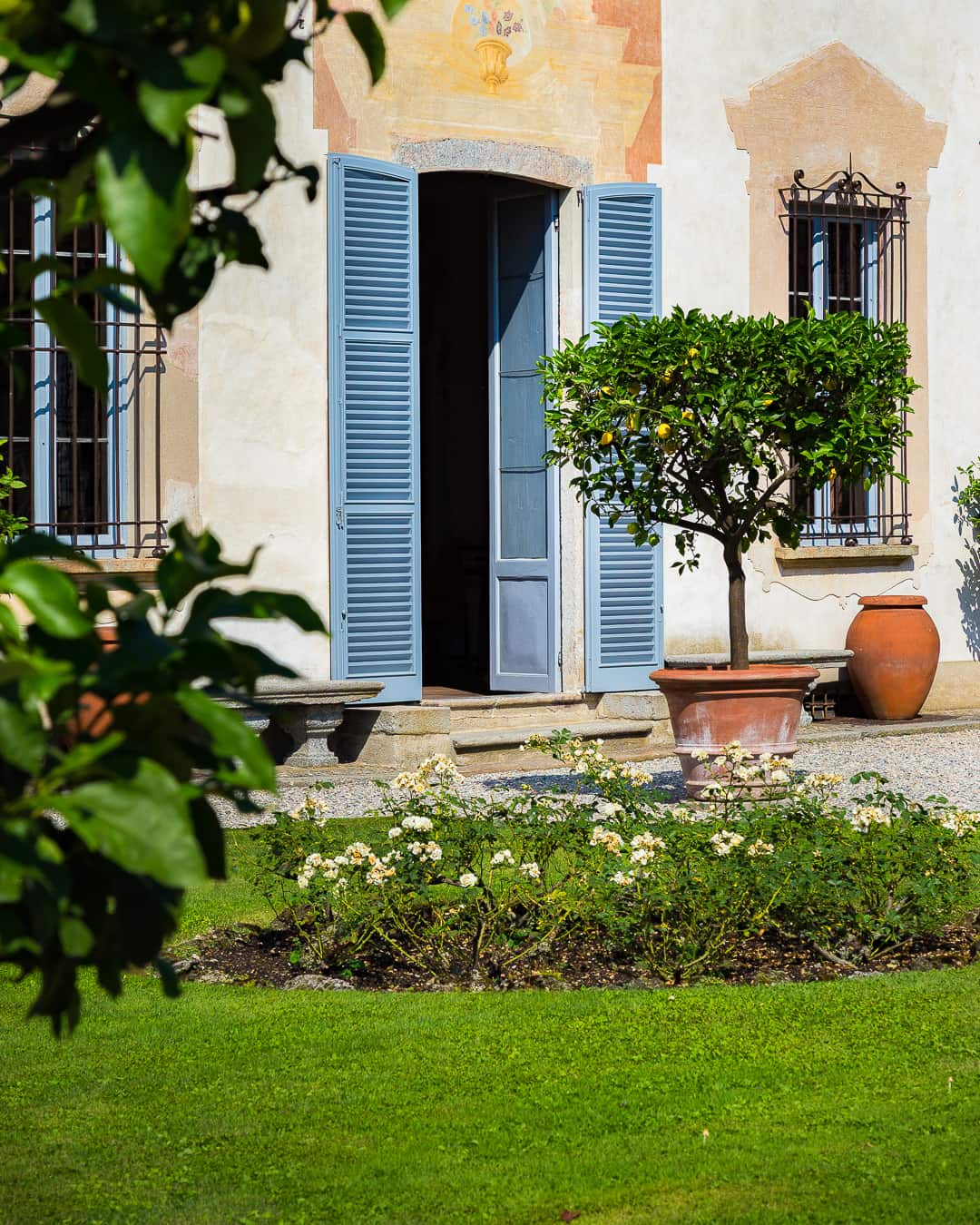
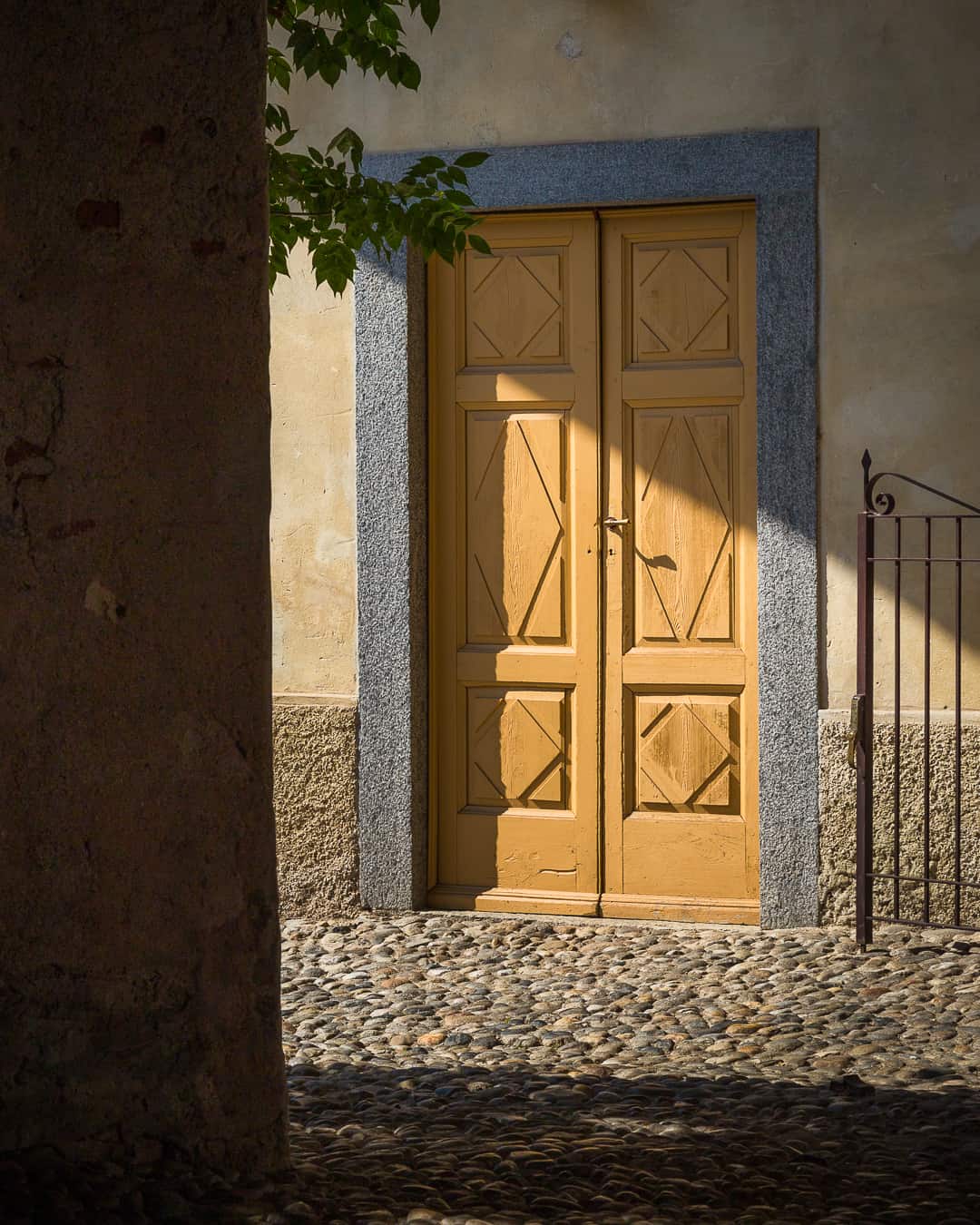
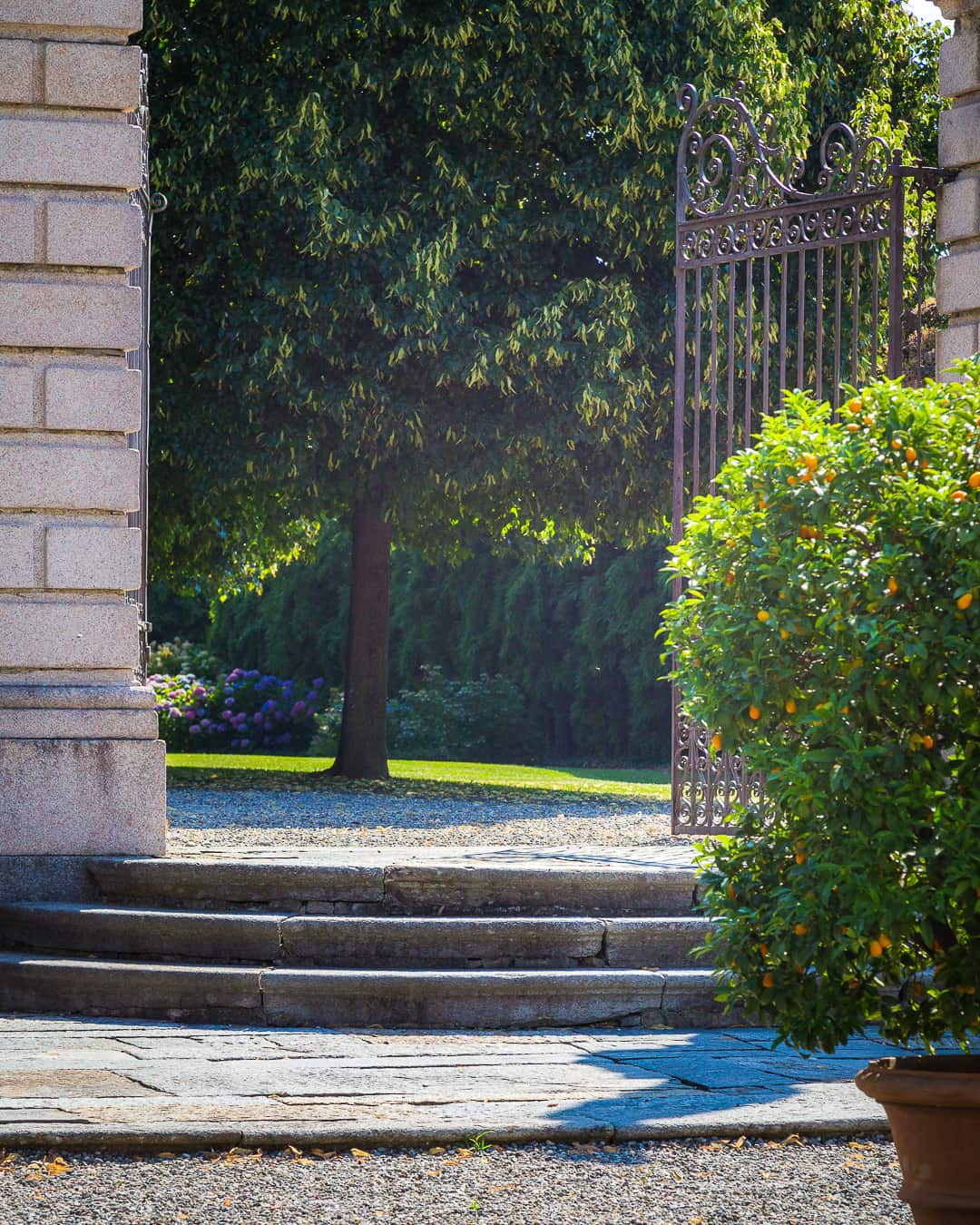
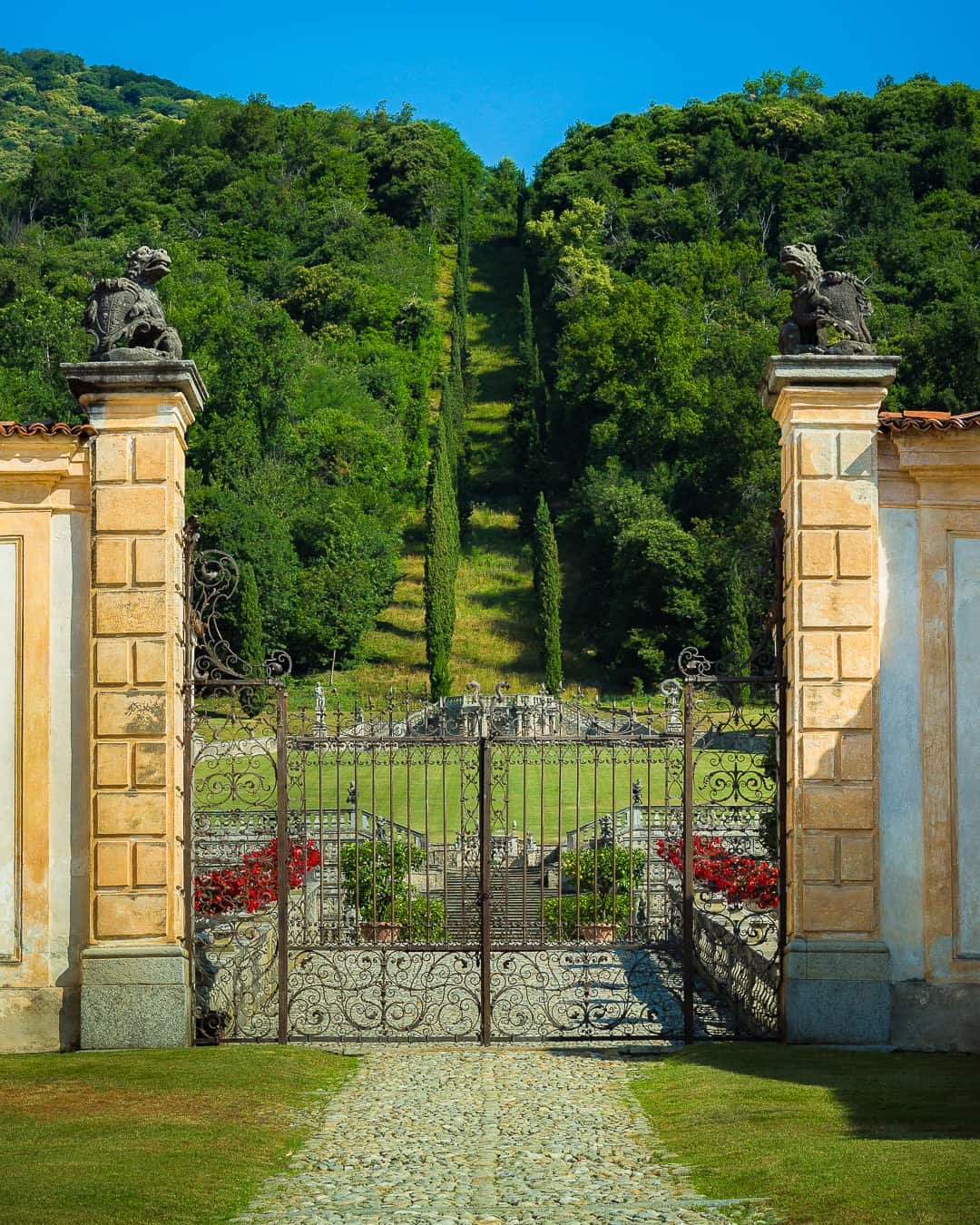
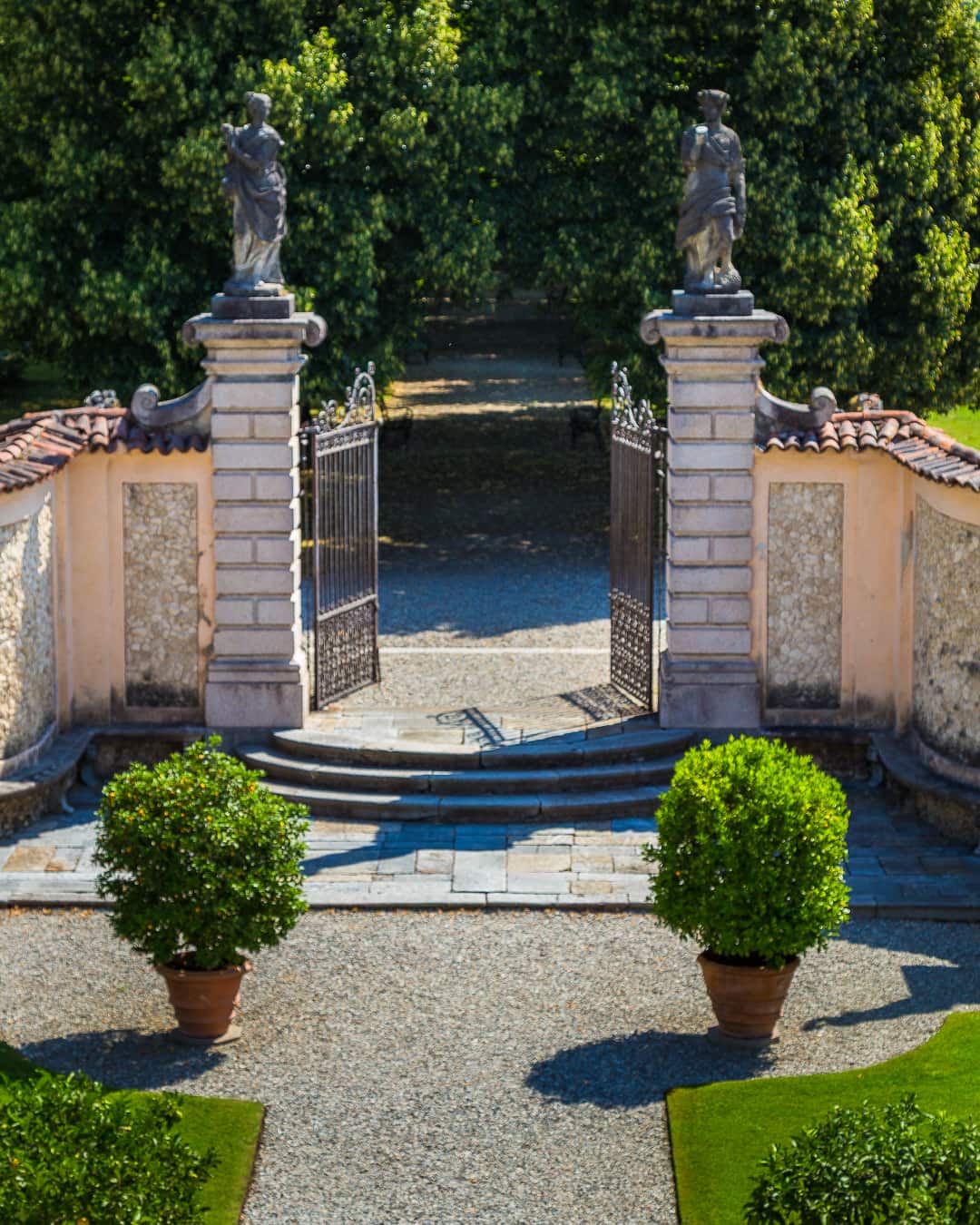
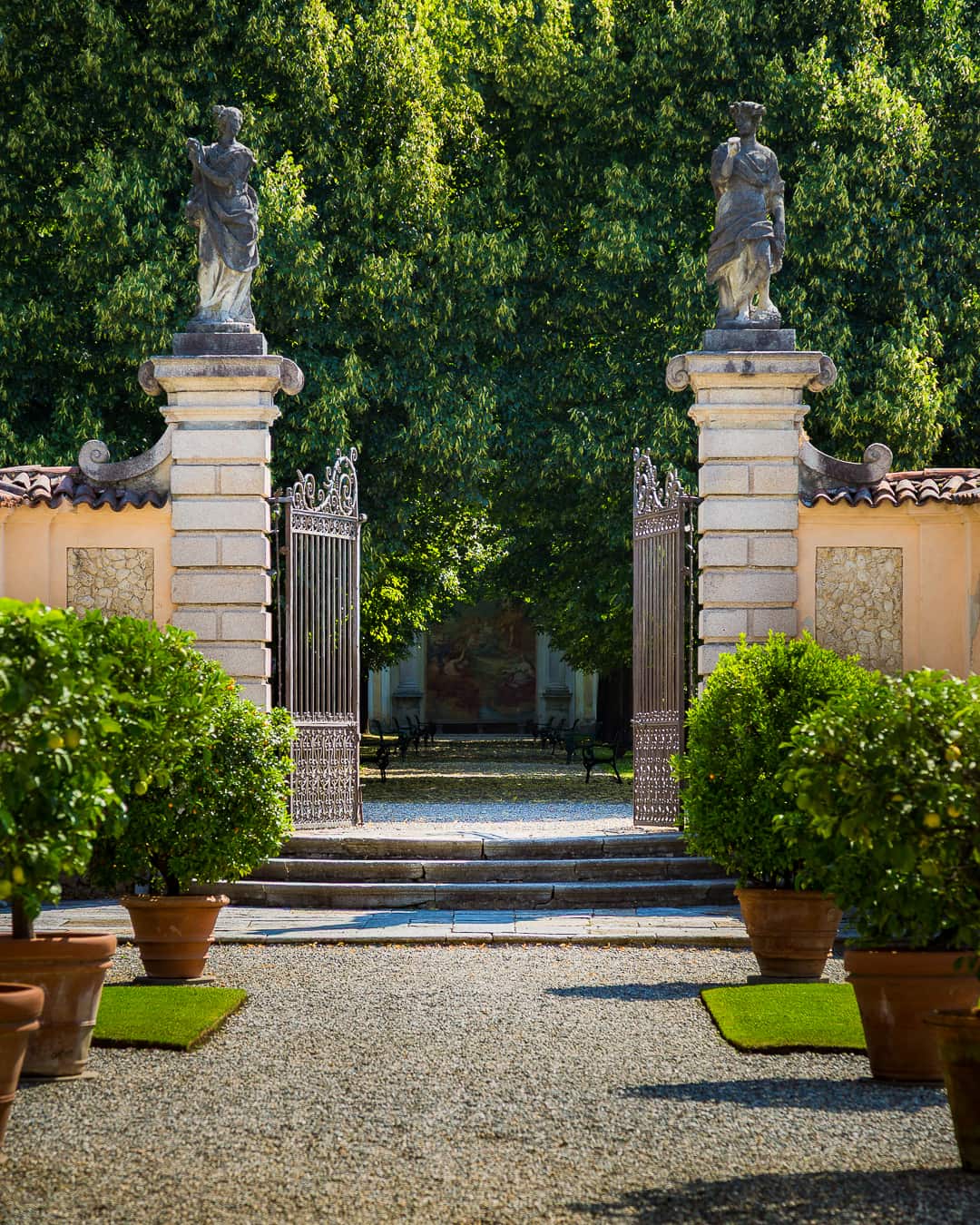
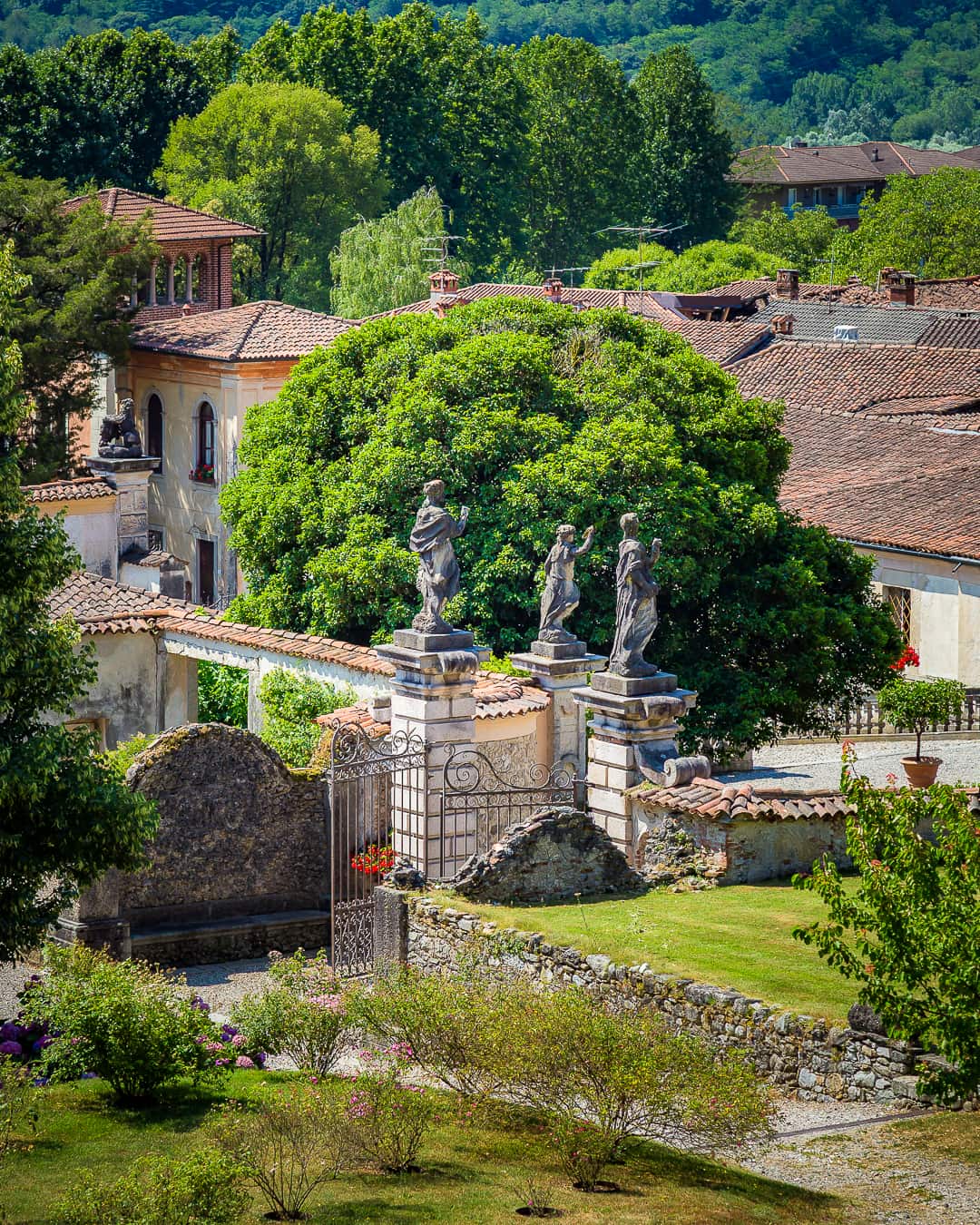
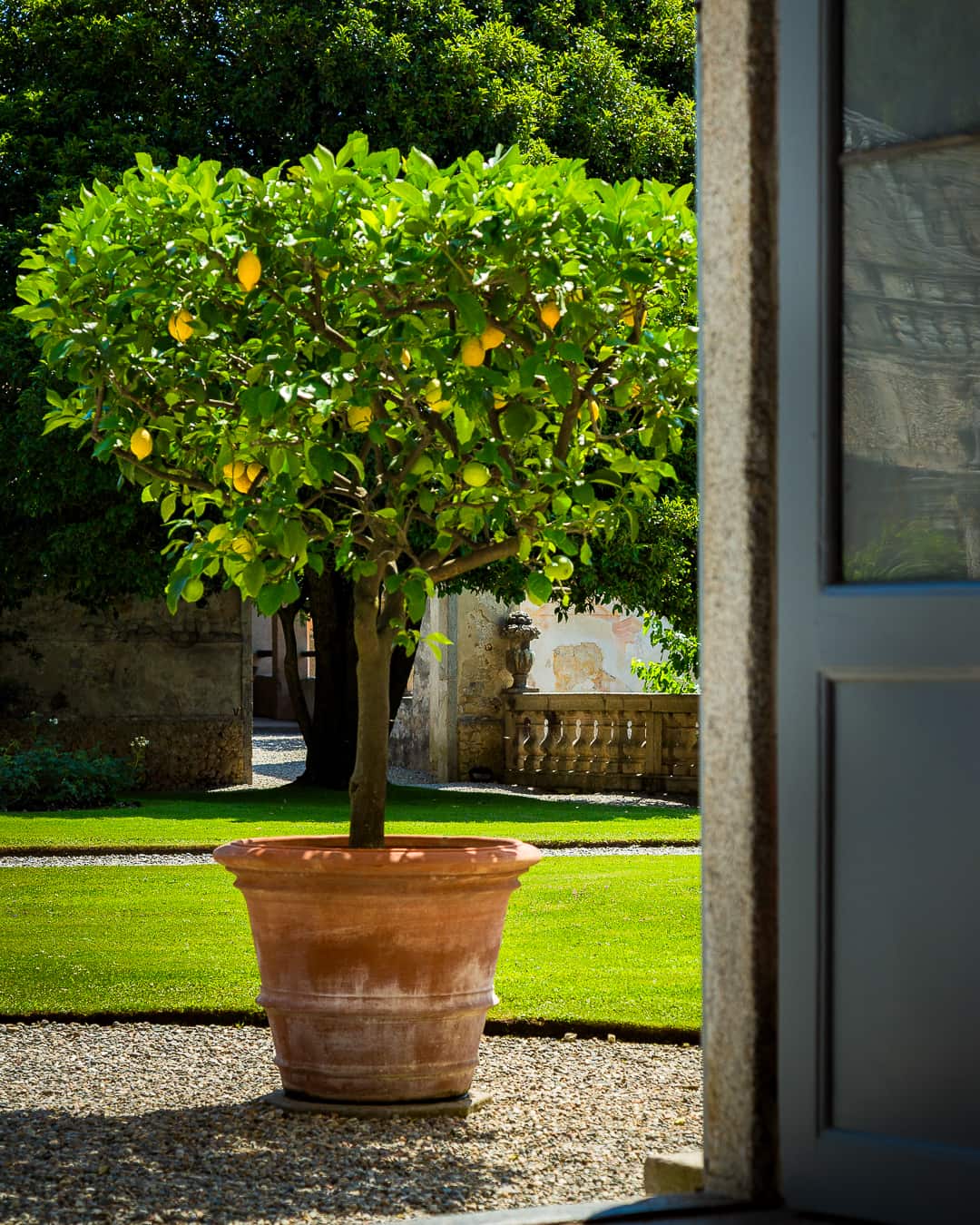
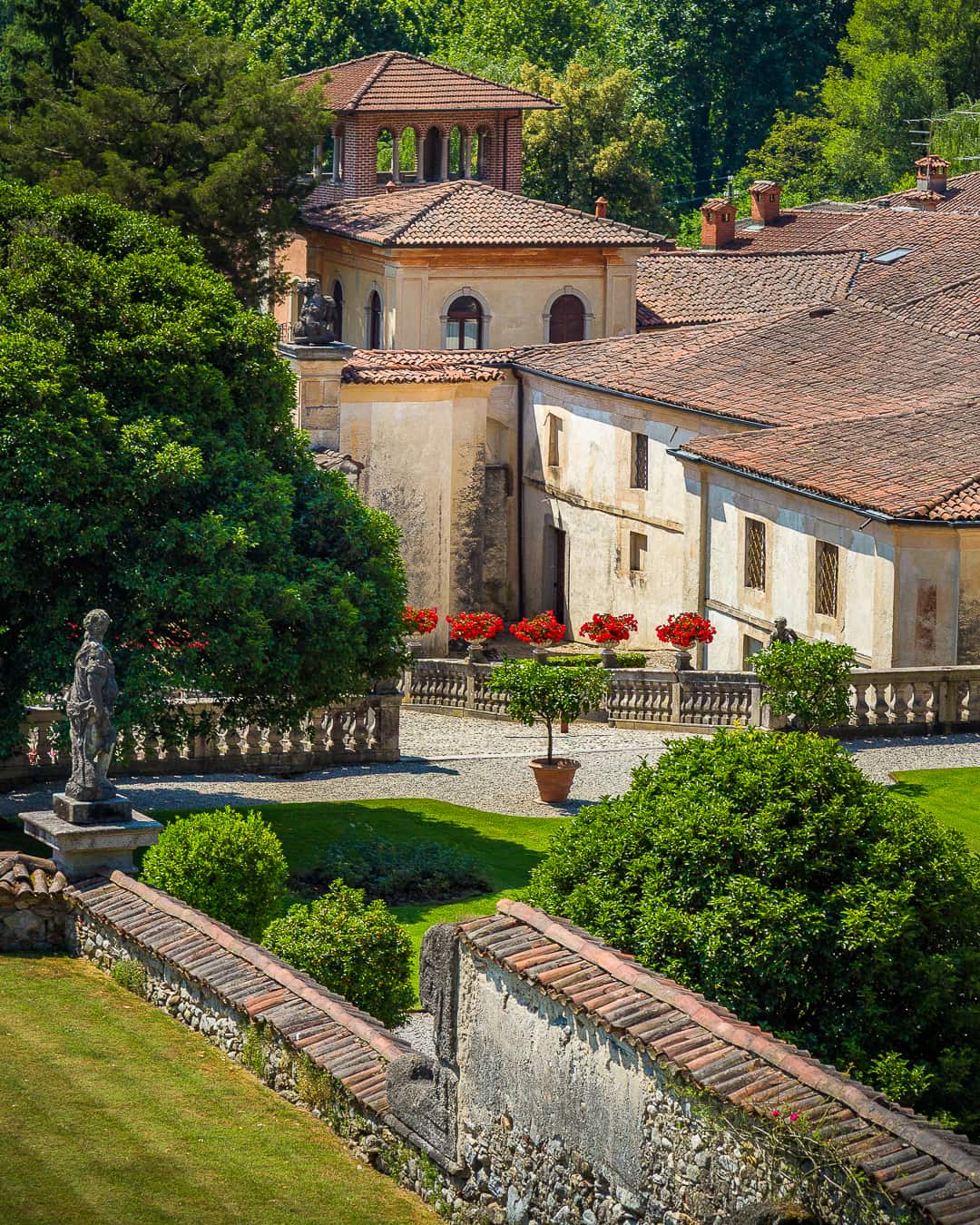
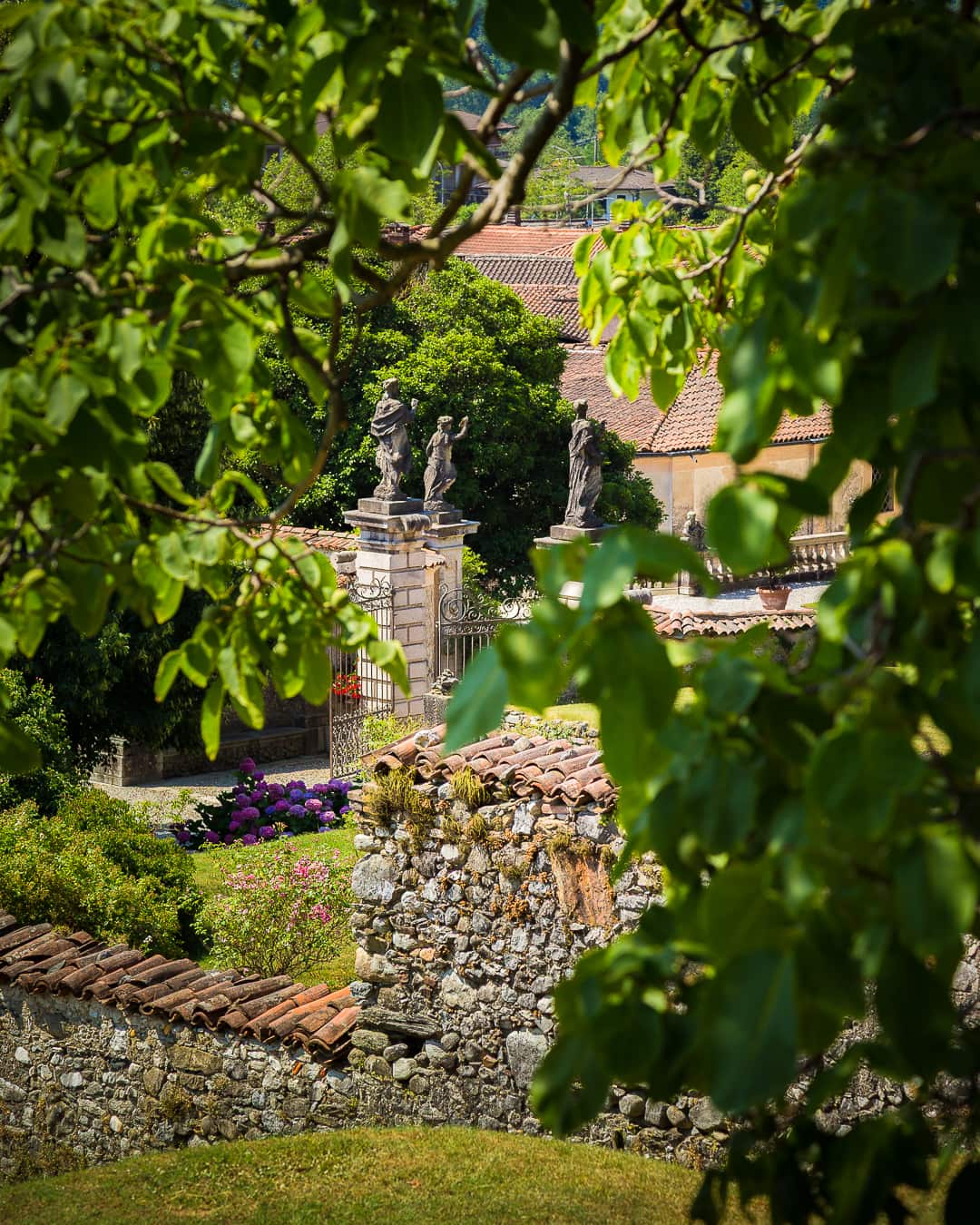
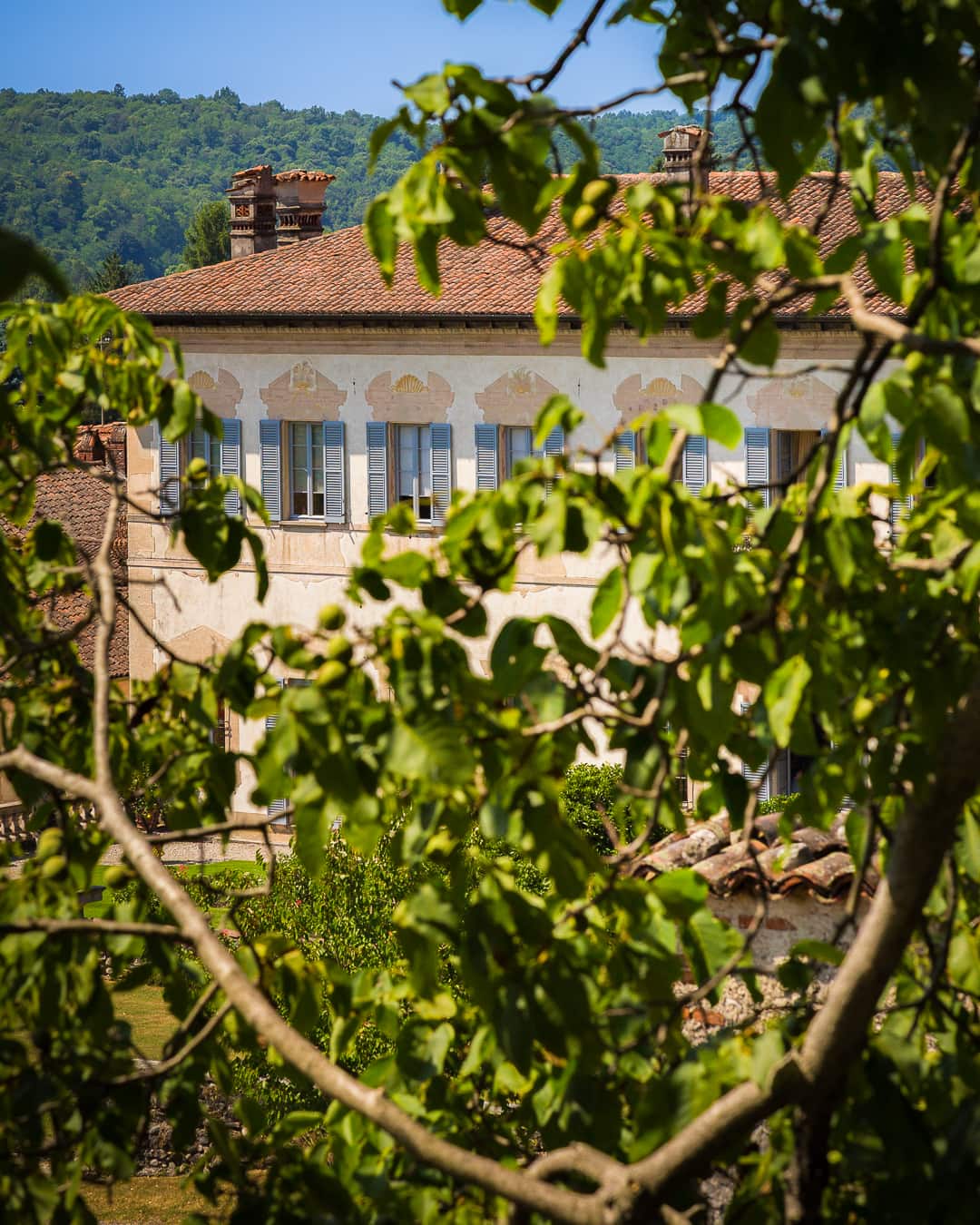
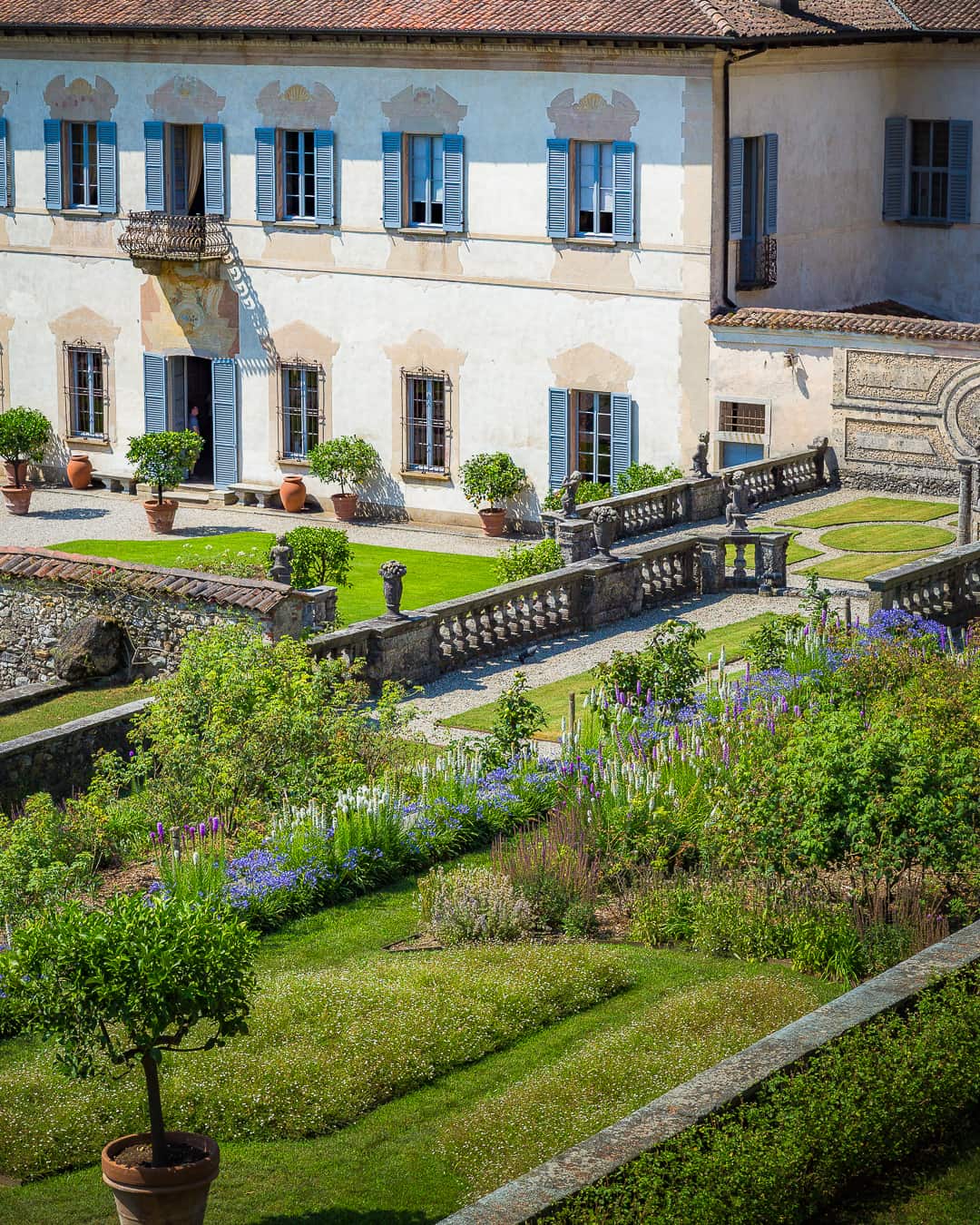
You enter through a gate between two piers, and there is the house: pale plaster, sky-blue shutters, statues on the walls, lemon trees in pots.
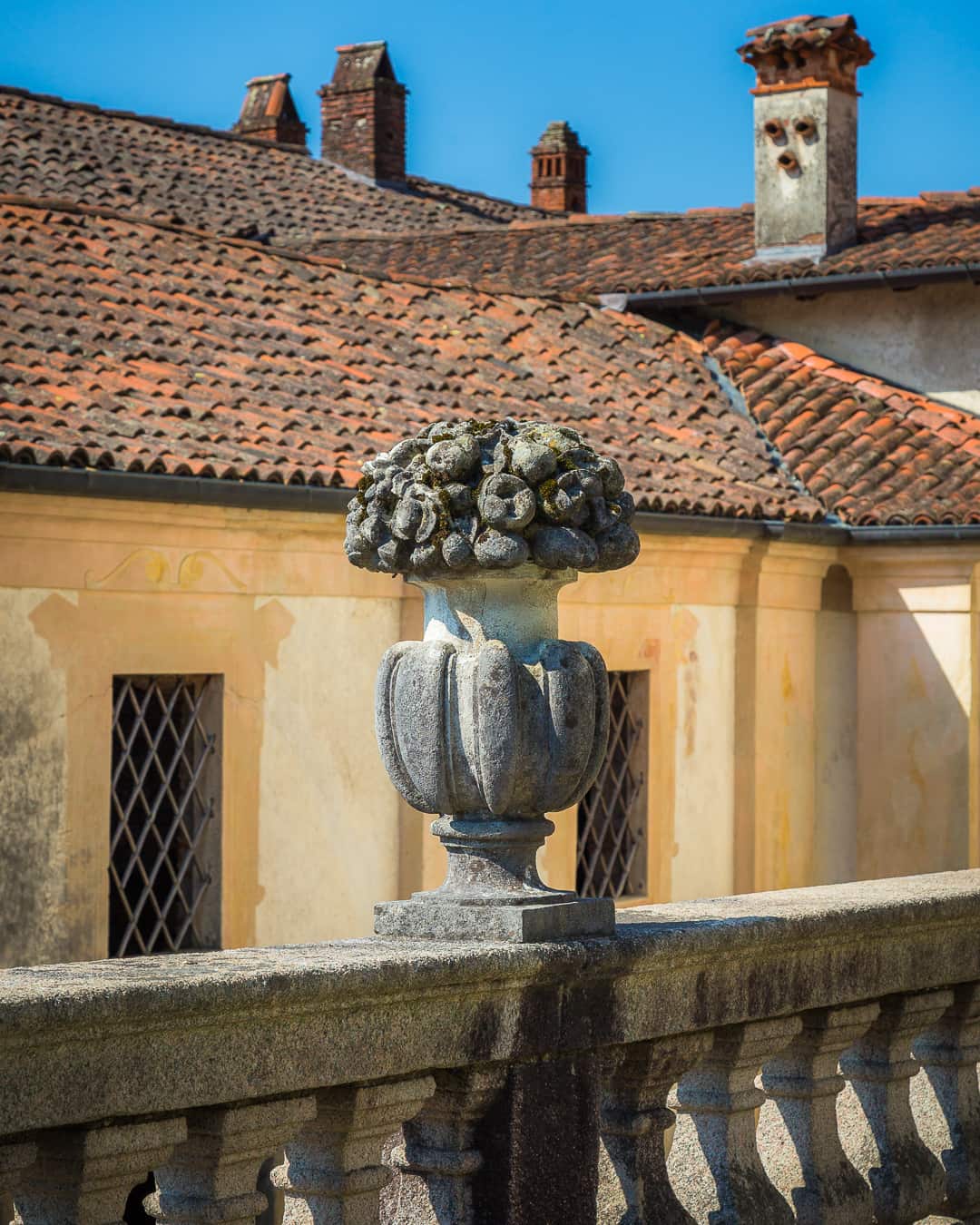
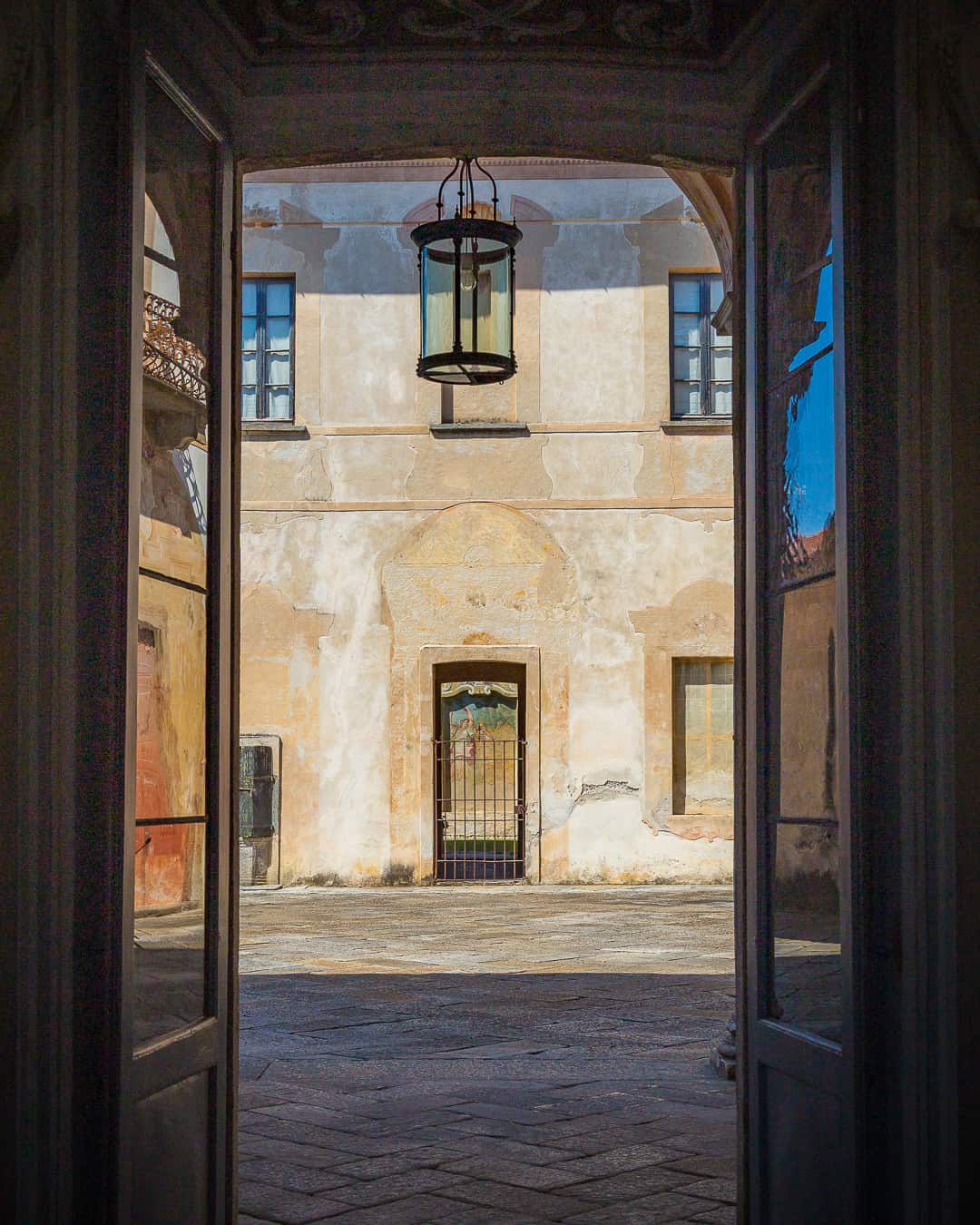
The core is sixteenth-century, a sober house with loggias and a courtyard. The eighteenth century added the stagecraft: balustrades, stone urns, vistas.
All around are the village of Casalzuigno and the woods of the Valcuvia. The villa does not dominate the village: it is part of it.
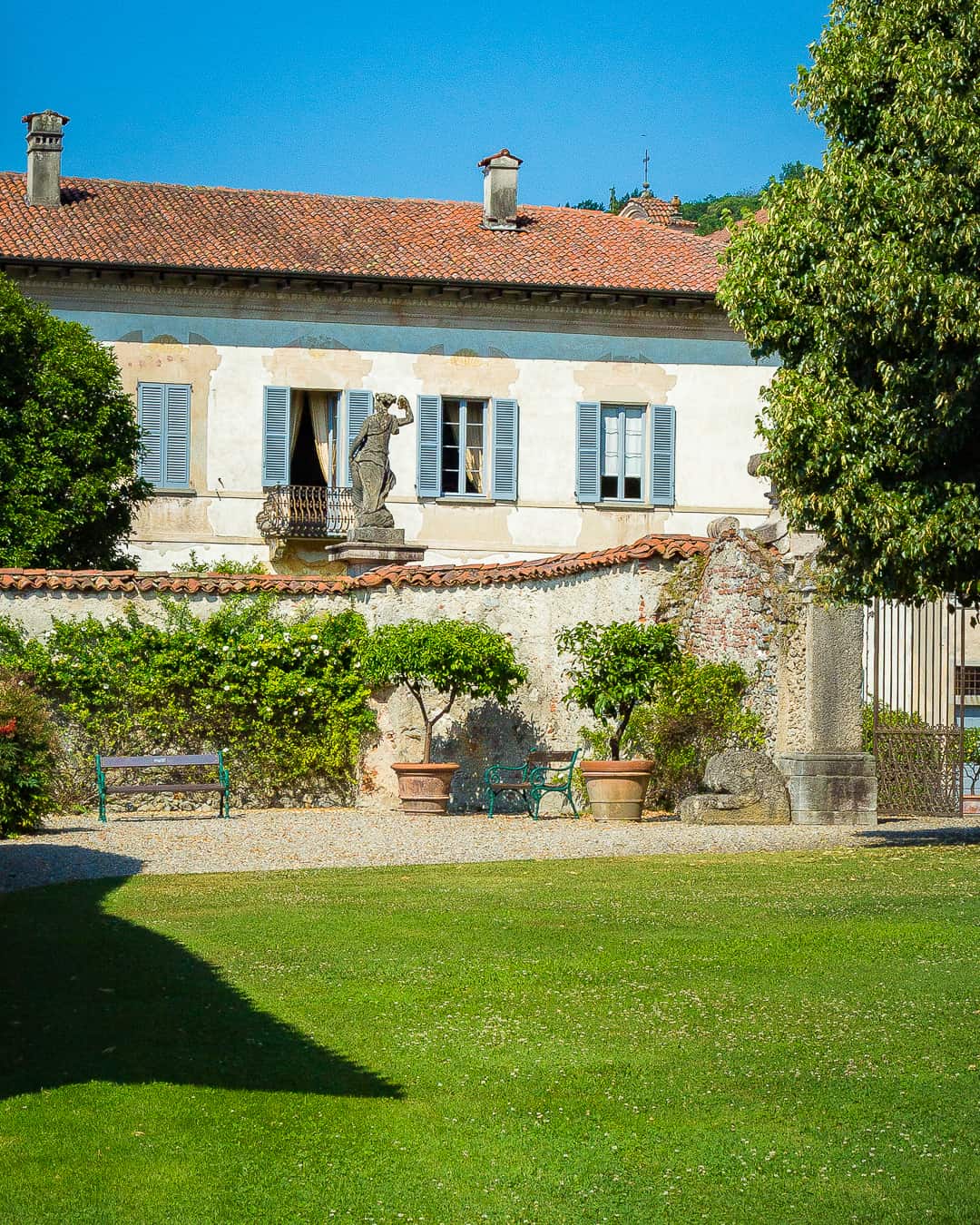
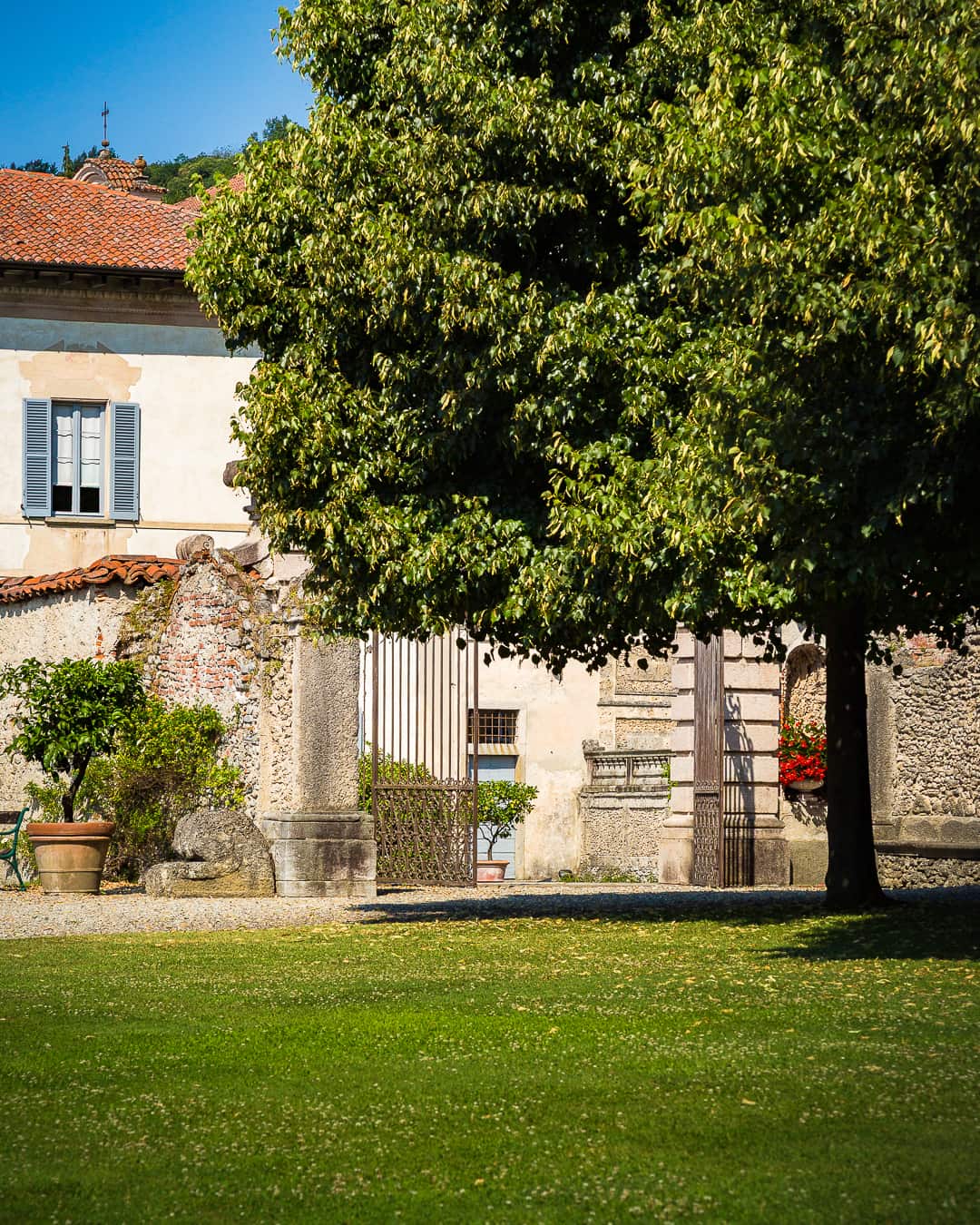
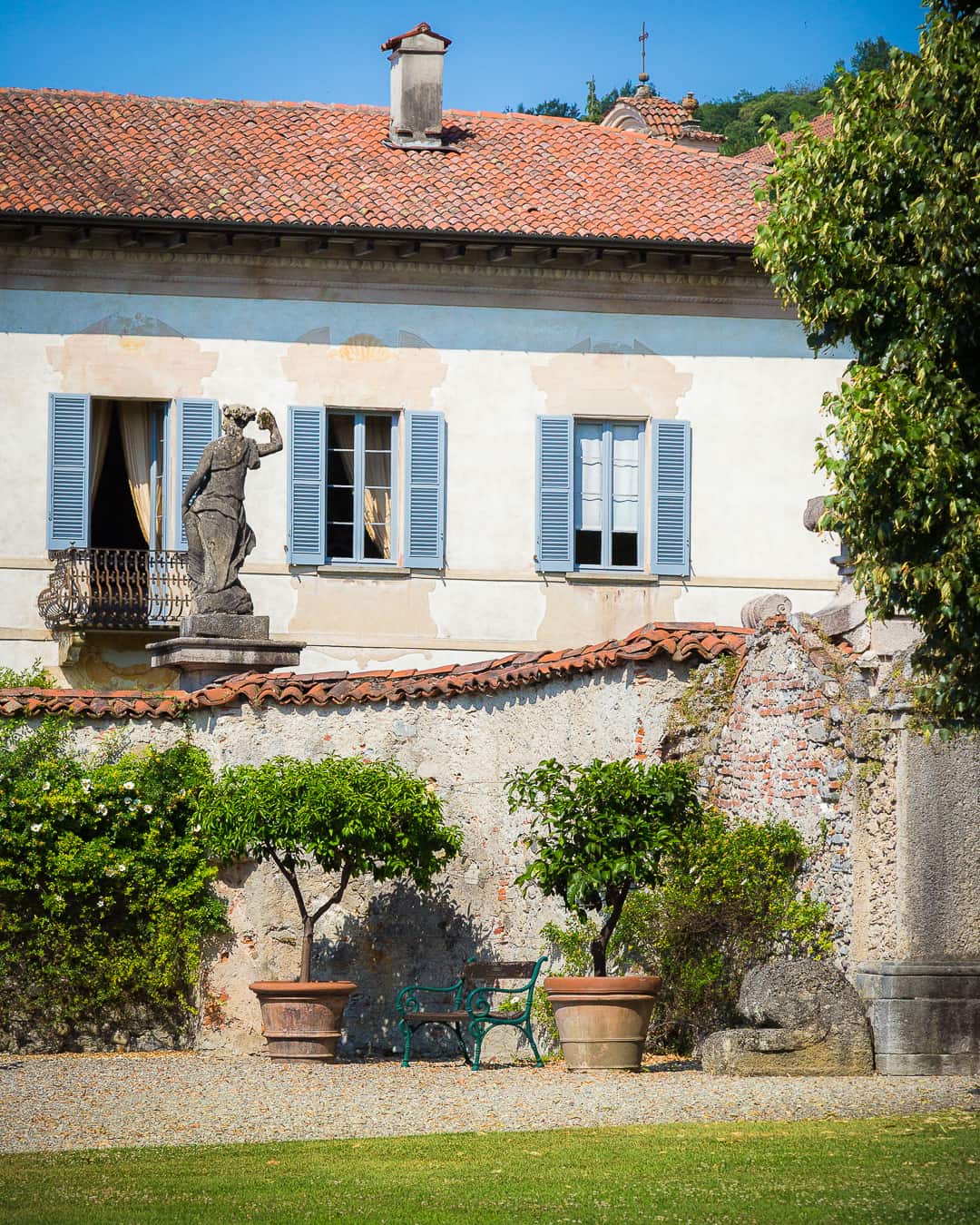
The statue on the wall
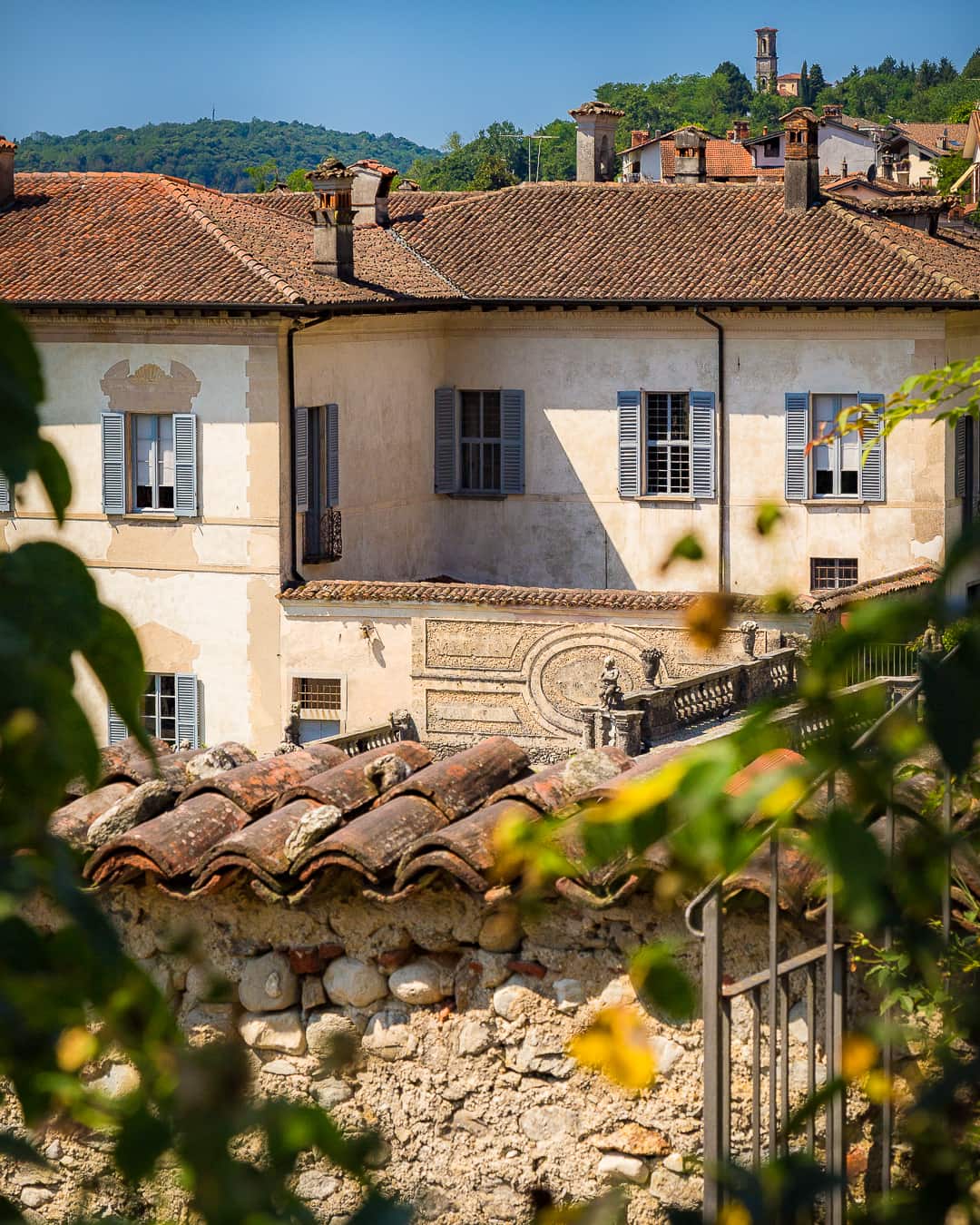
Sky-blue shutters, pale plaster, a statue watching from the boundary wall. In the sixteenth century there was a country house here, built by the notary Giroldino de Portu. Generation after generation, his descendants made it ever larger, until it became a pleasure villa.
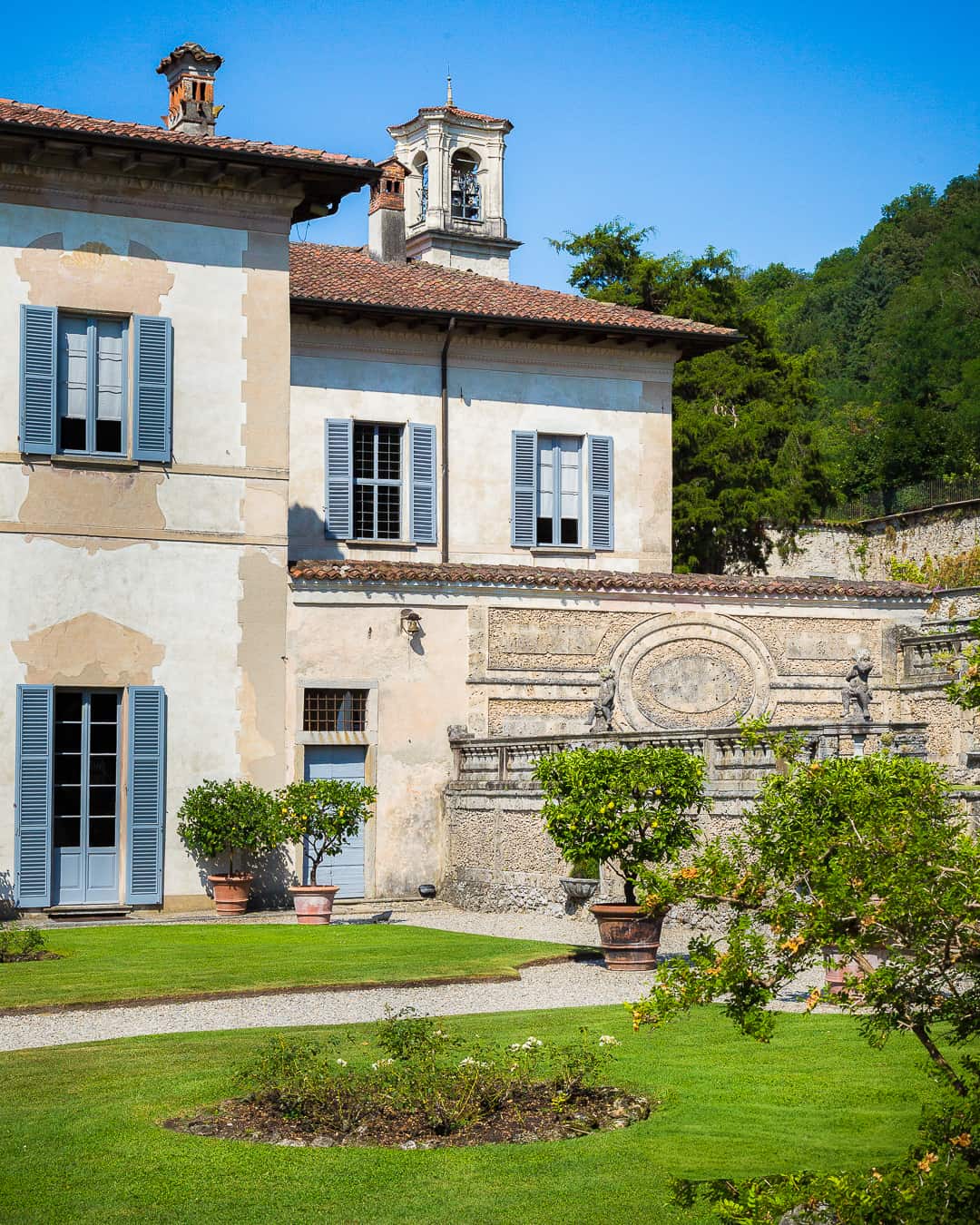
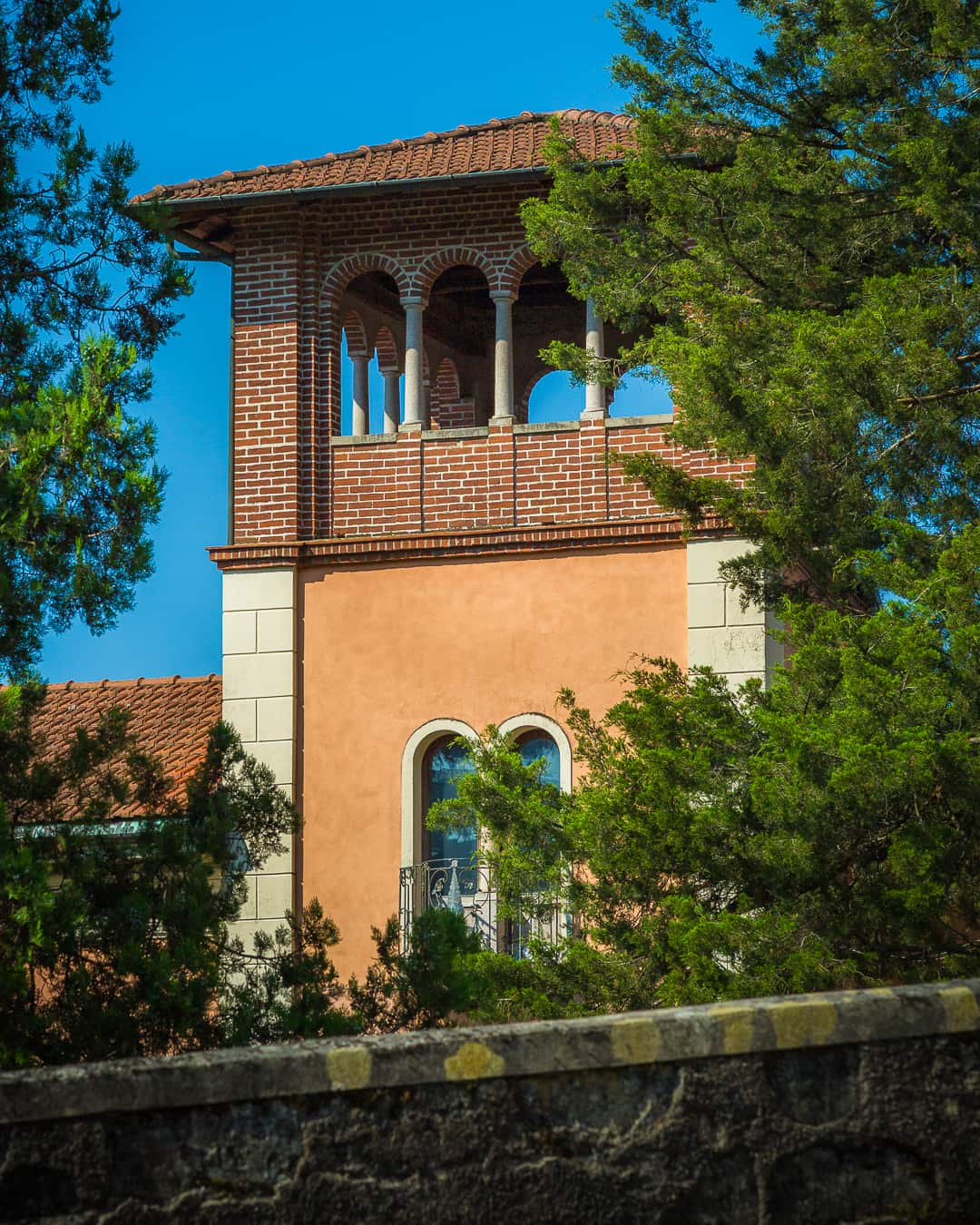
The bell tower
The villa and, behind it, the village bell tower. Casalzuigno lies at the foot of the hills that run from Laveno along the Valcuvia, the valley climbing from the Lombard shore of Lake Maggiore towards Switzerland. It is a landscape of woods and stone, off the busiest routes.
II
The rooms
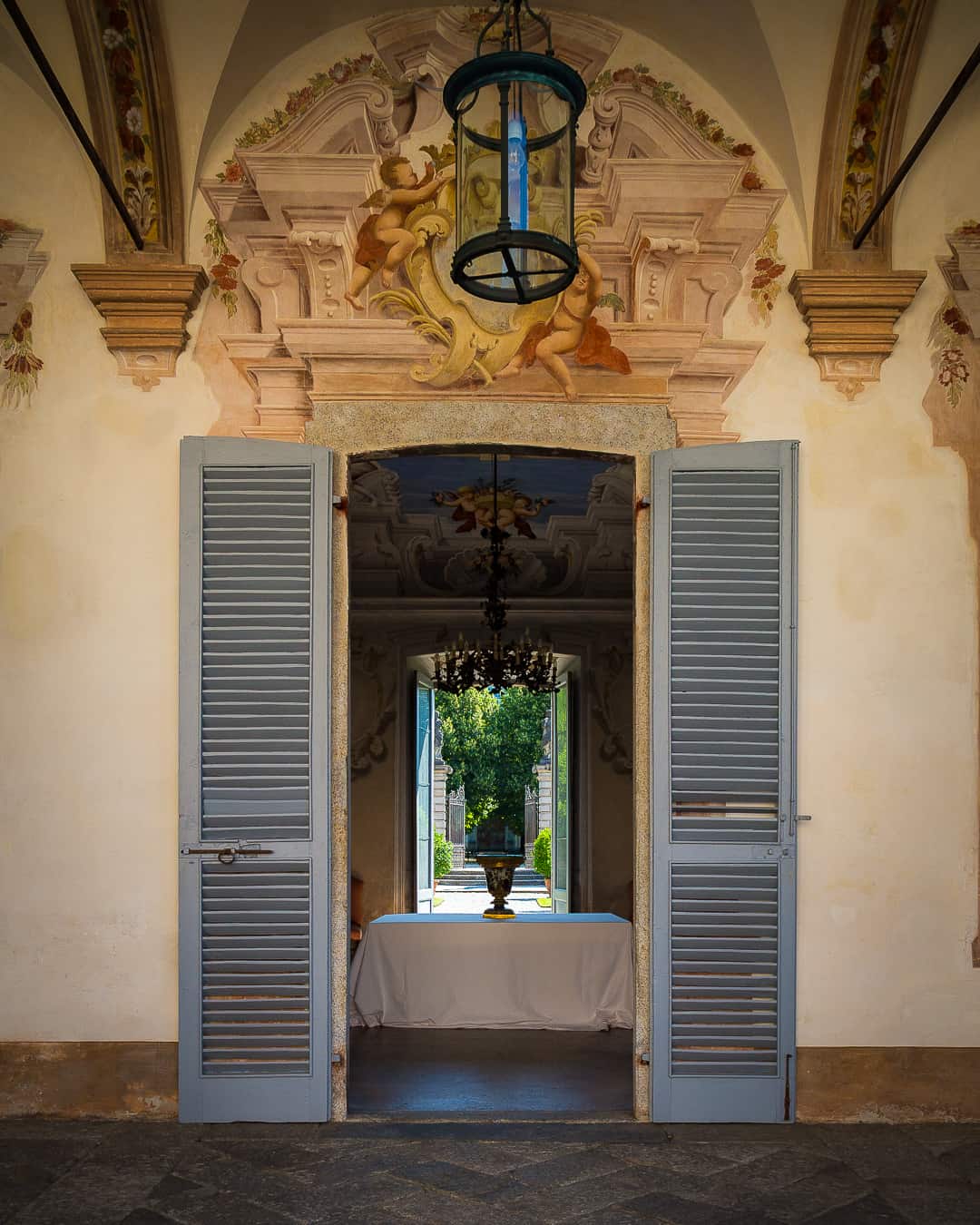
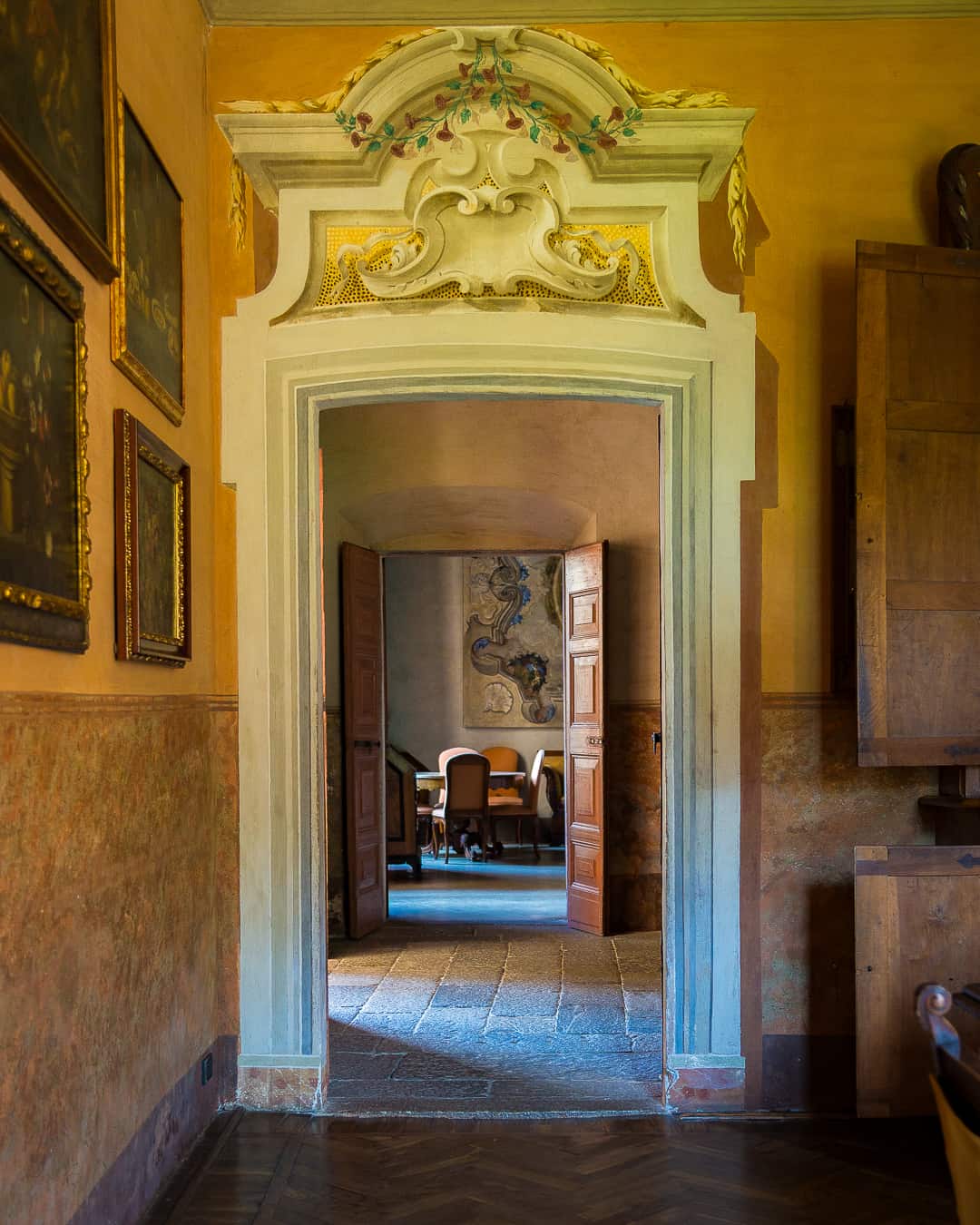
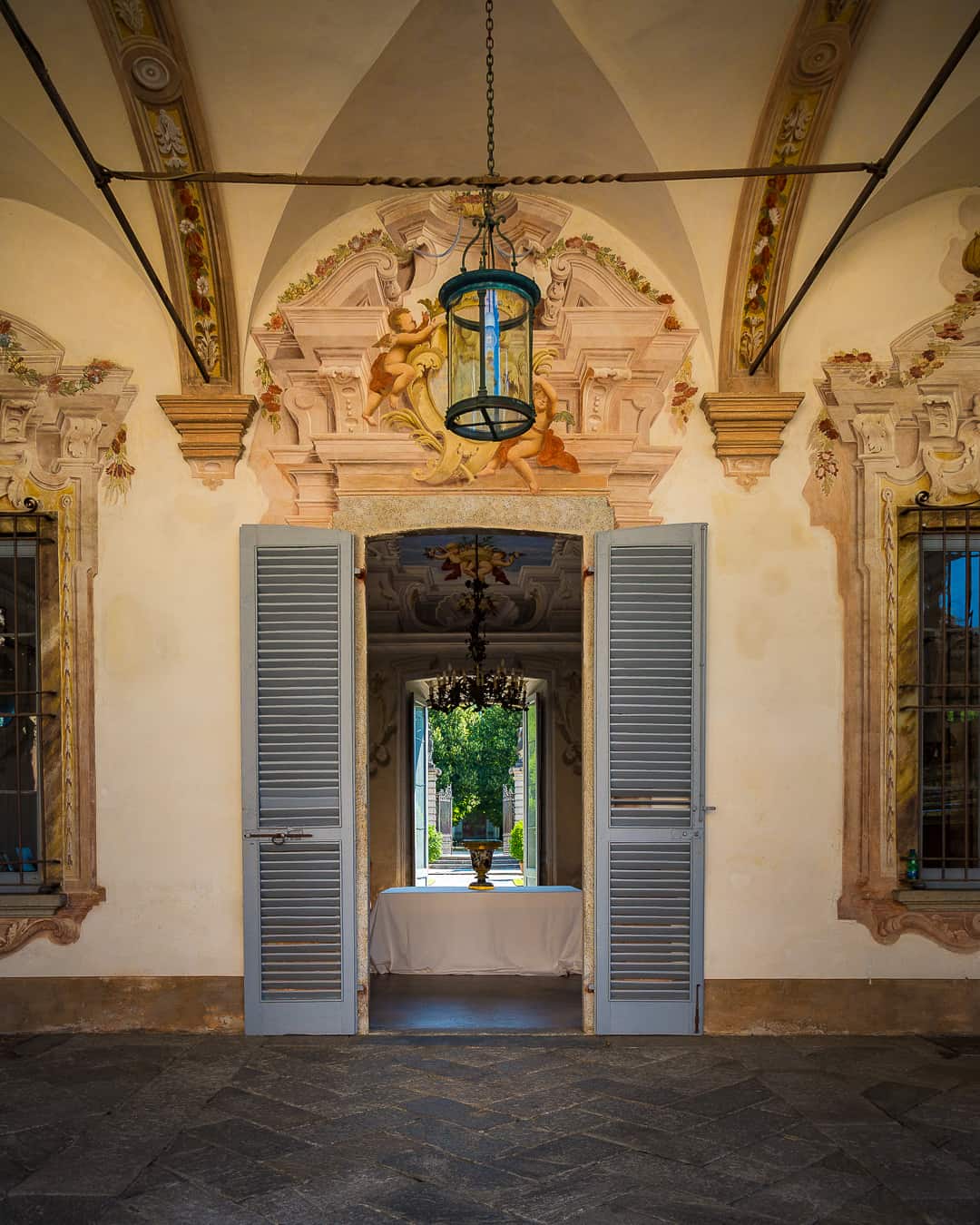
Inside, the halls are frescoed in the Rococo style: painted frames, garlands, soft colours. Doors open one after another, and at the end there is almost always the garden.
Some furniture belongs to the villa, such as the study cabinets made for the family archive; the rest comes from other donations to FAI and recreates the feel of an eighteenth-century home.
The villa also holds a ceramics collection: veilleuses, apothecary jars, table services.
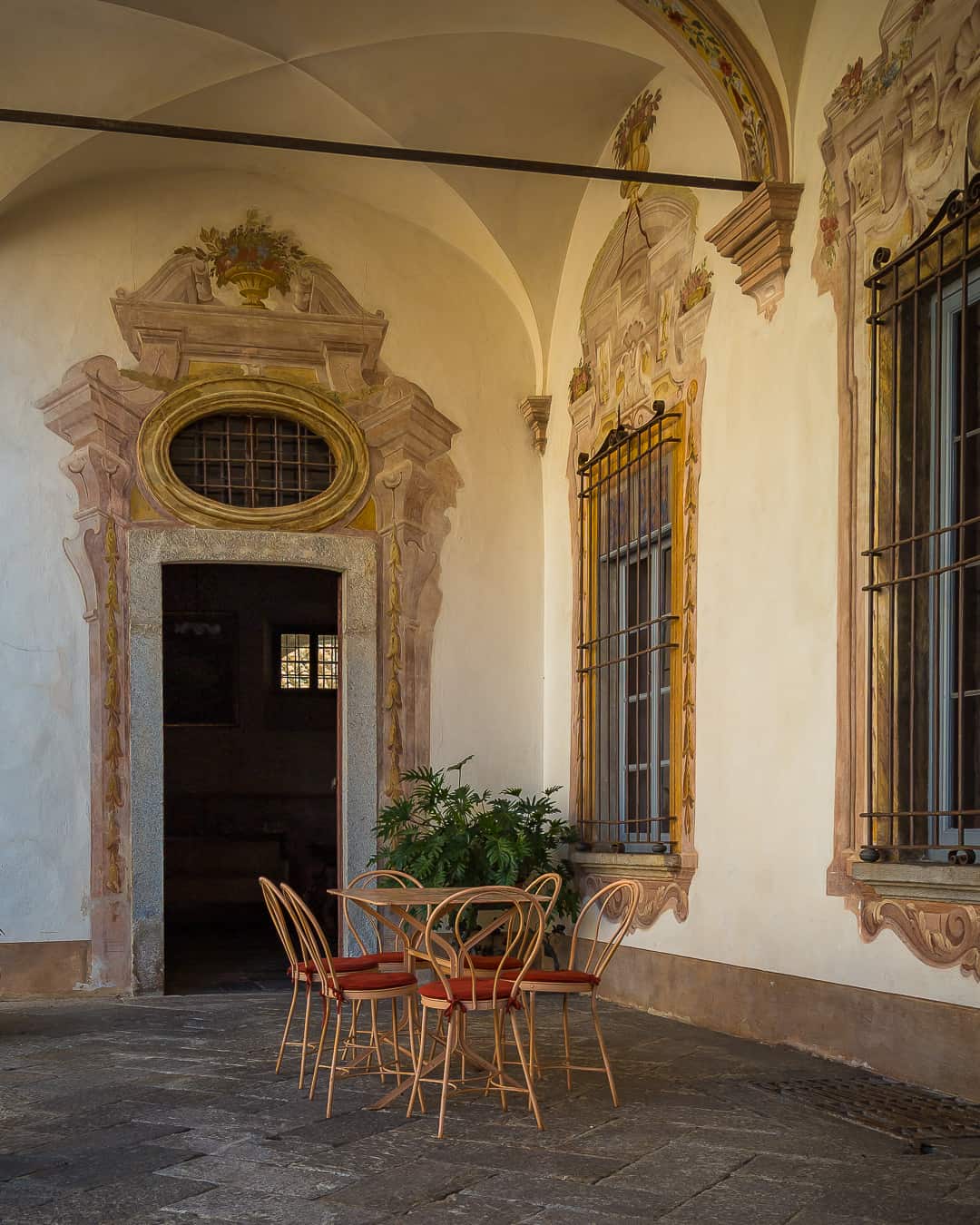
The Rococo door
A stucco frame of scrolls and shells, painted walls, and beyond the threshold another room, another door. The villa’s Rococo frescoes are the mark of the eighteenth century, when the Della Porta wanted a house worthy of their new rank.
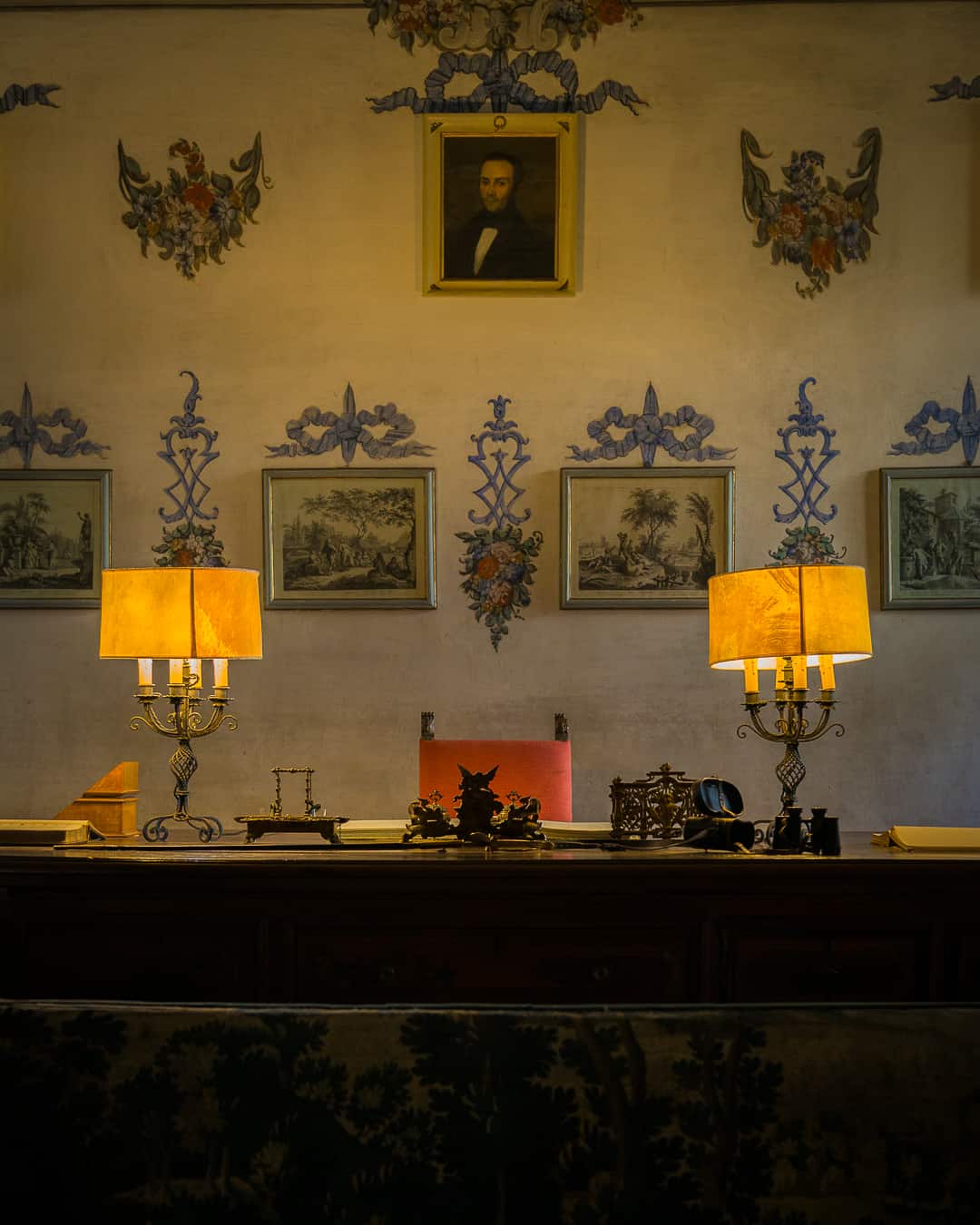
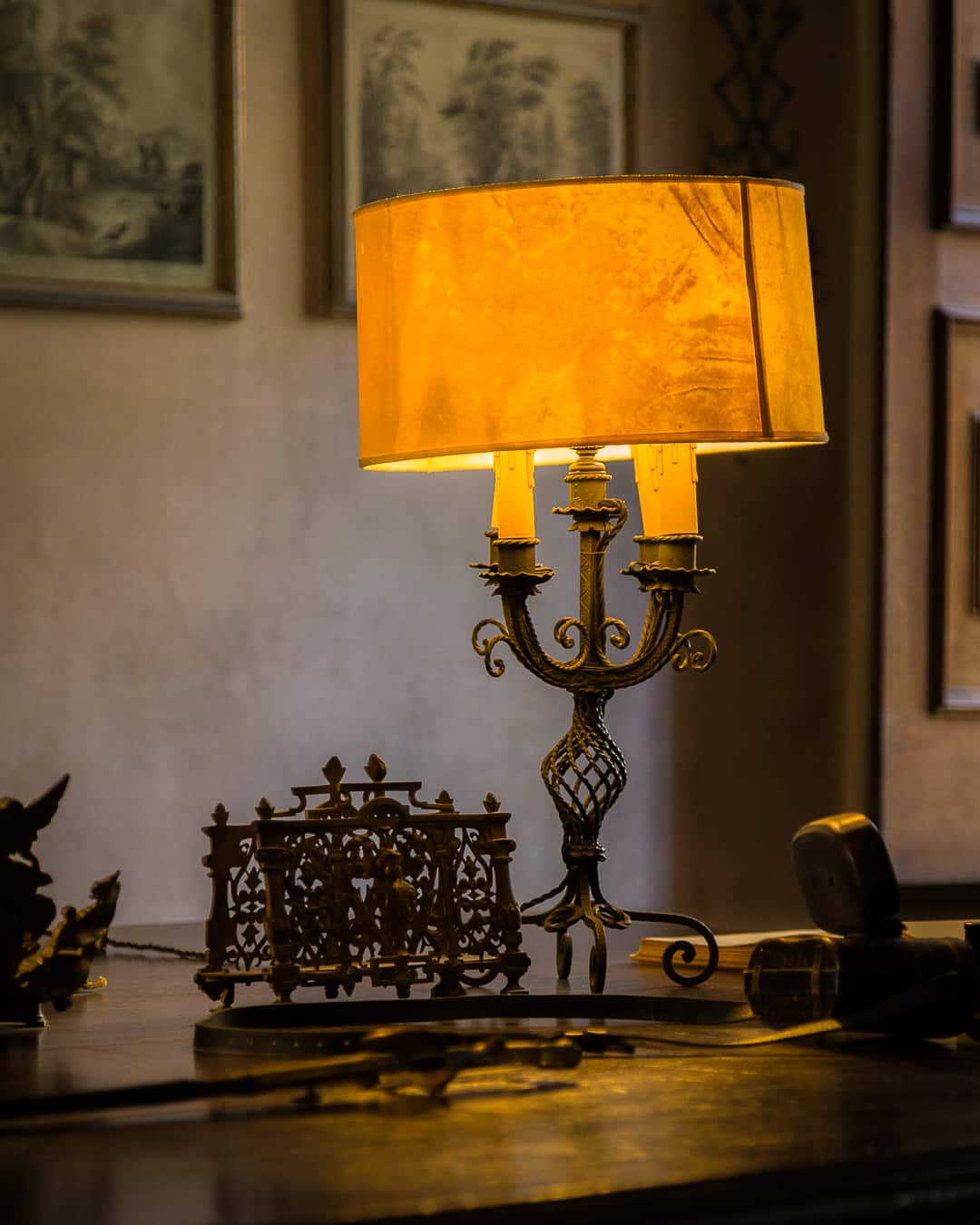
The study
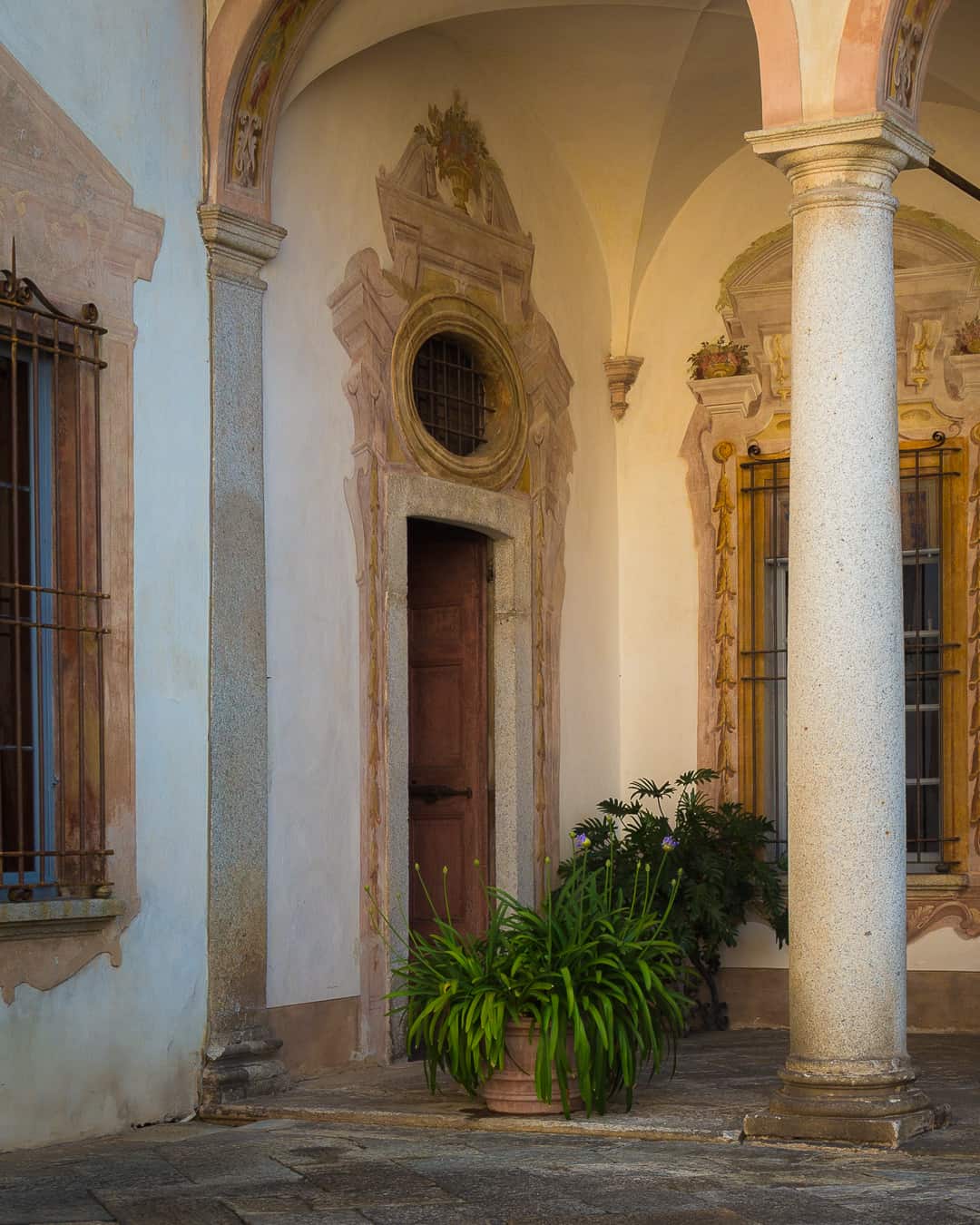
A portrait, framed prints, painted decoration on the wall and two lit lamps. The study cabinets held the family archive: contracts, letters, accounts. These papers are how the history of the villa, and of those who lived in it, is pieced together today.
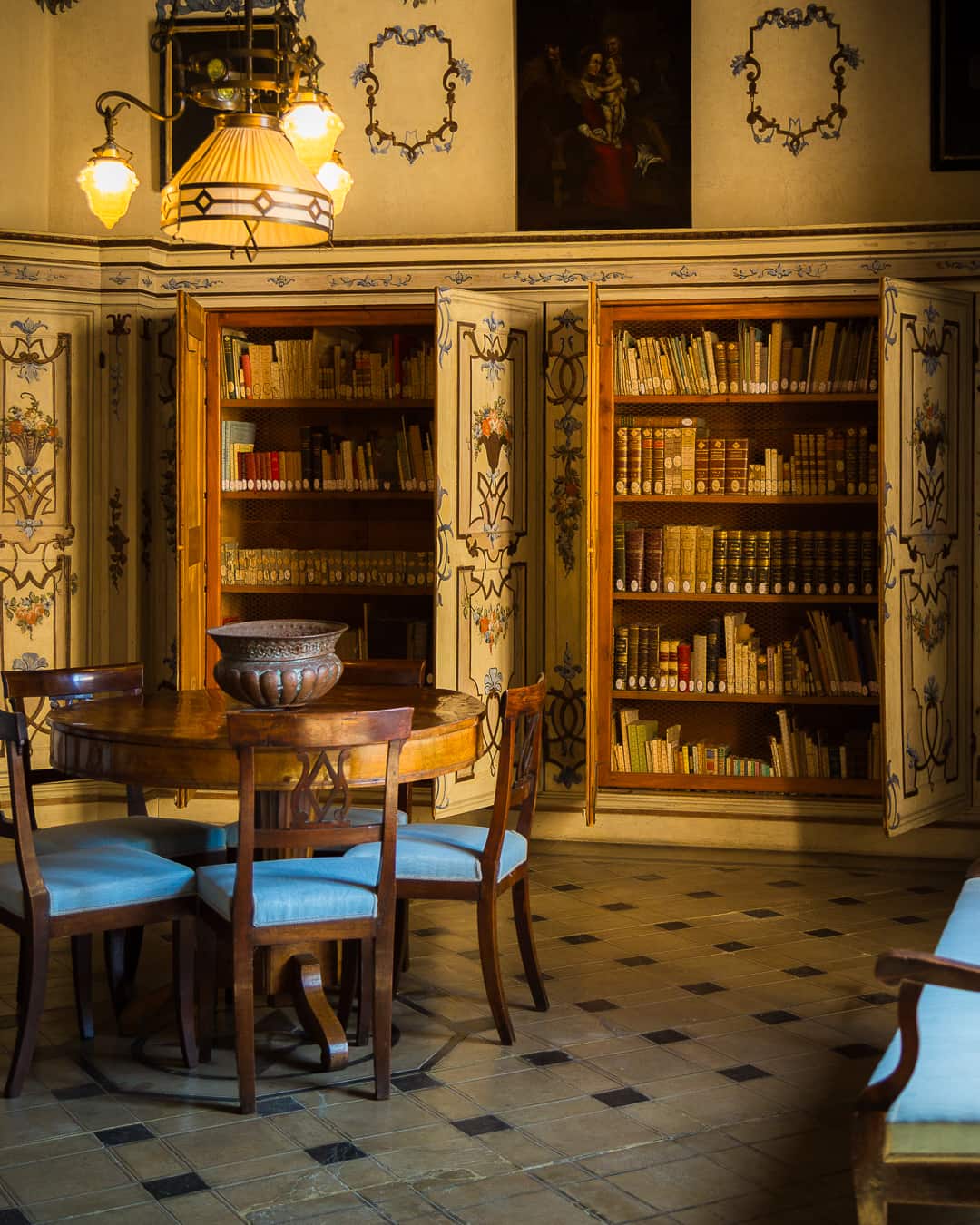
The library
Painted cabinets full of books, a round table, blue chairs. In 1884 the Della Porta, in financial trouble, sold the villa to Camillo Bozzolo, a senator and physician. He rescued it from decline and left behind family mementoes and a rich library.
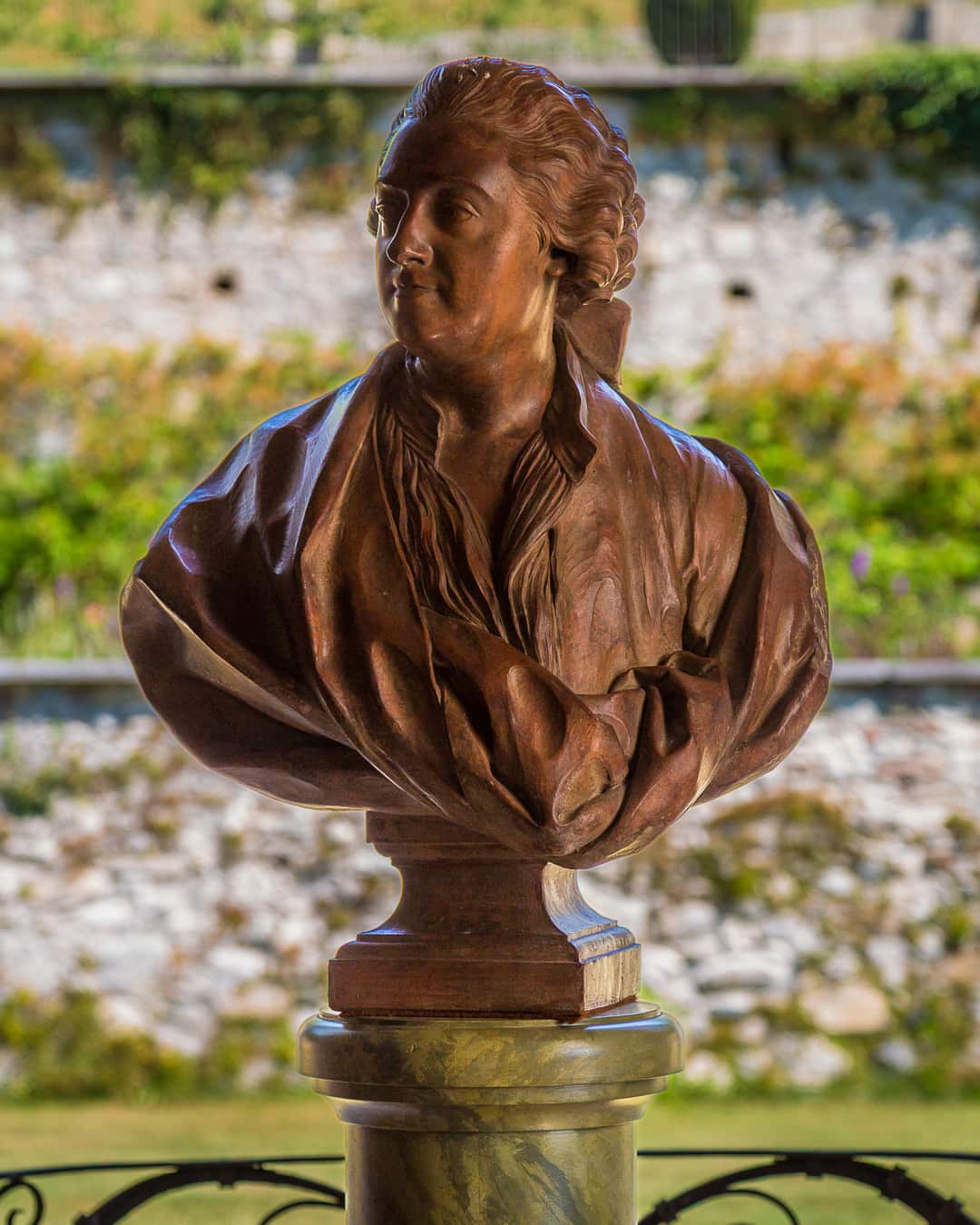
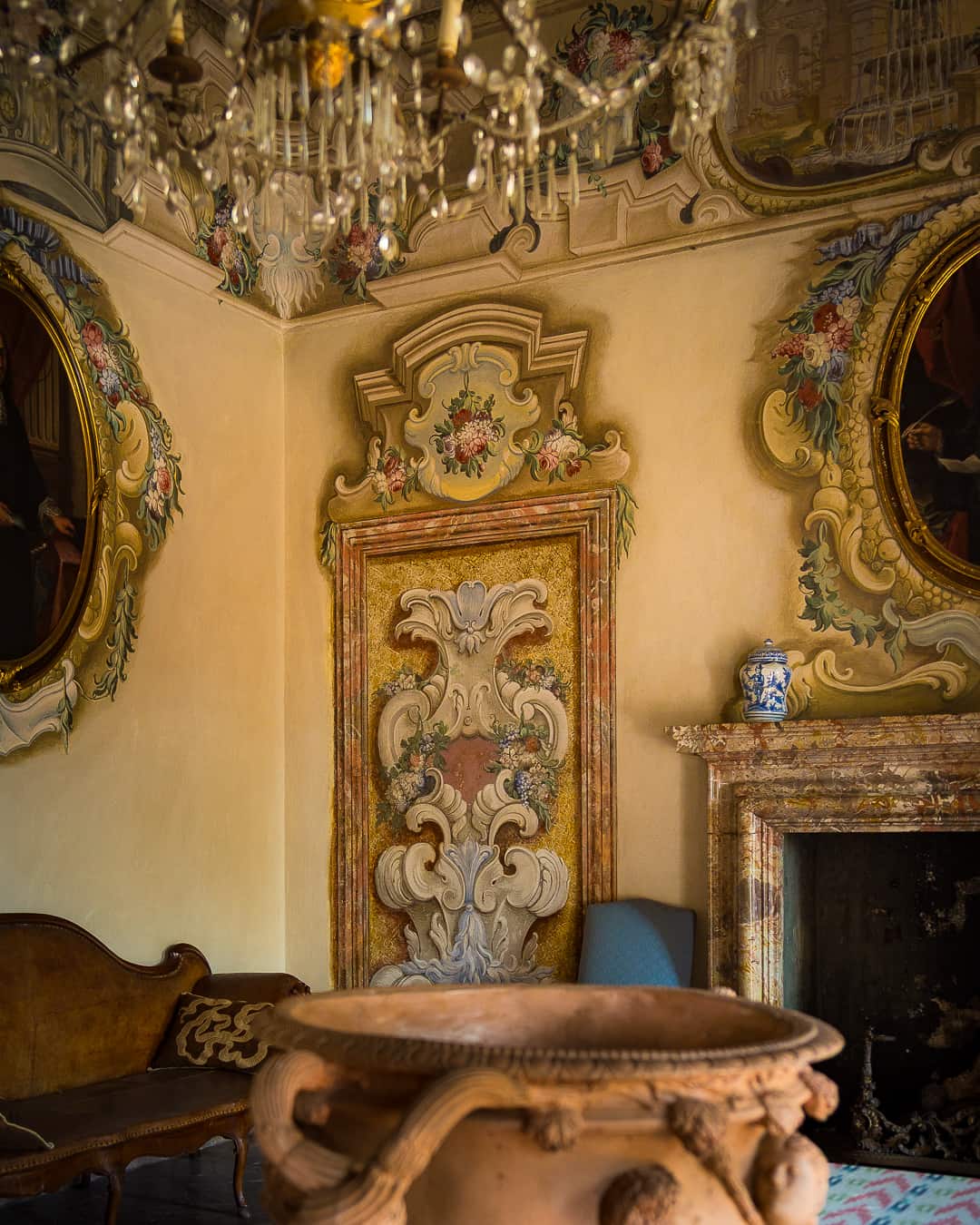
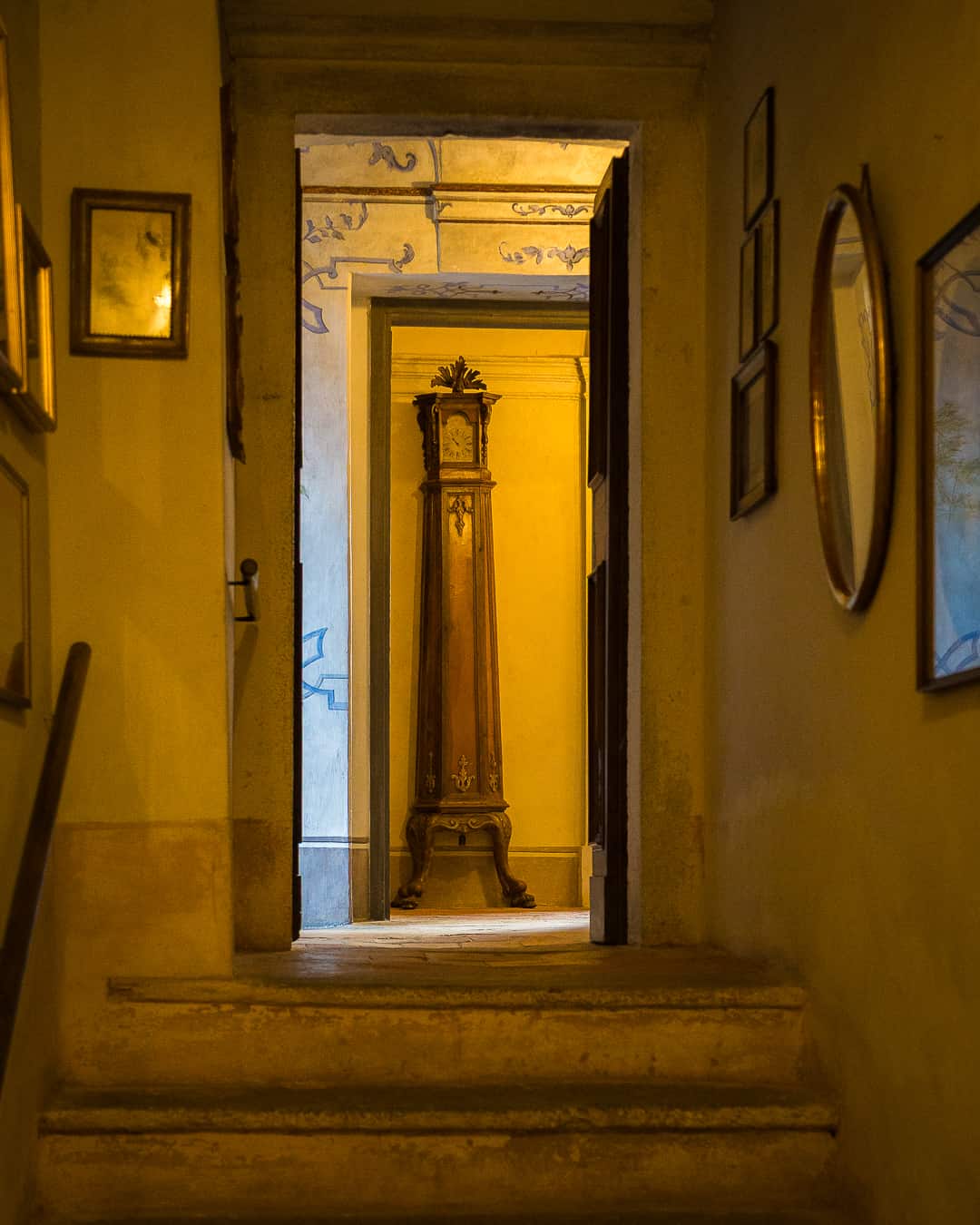
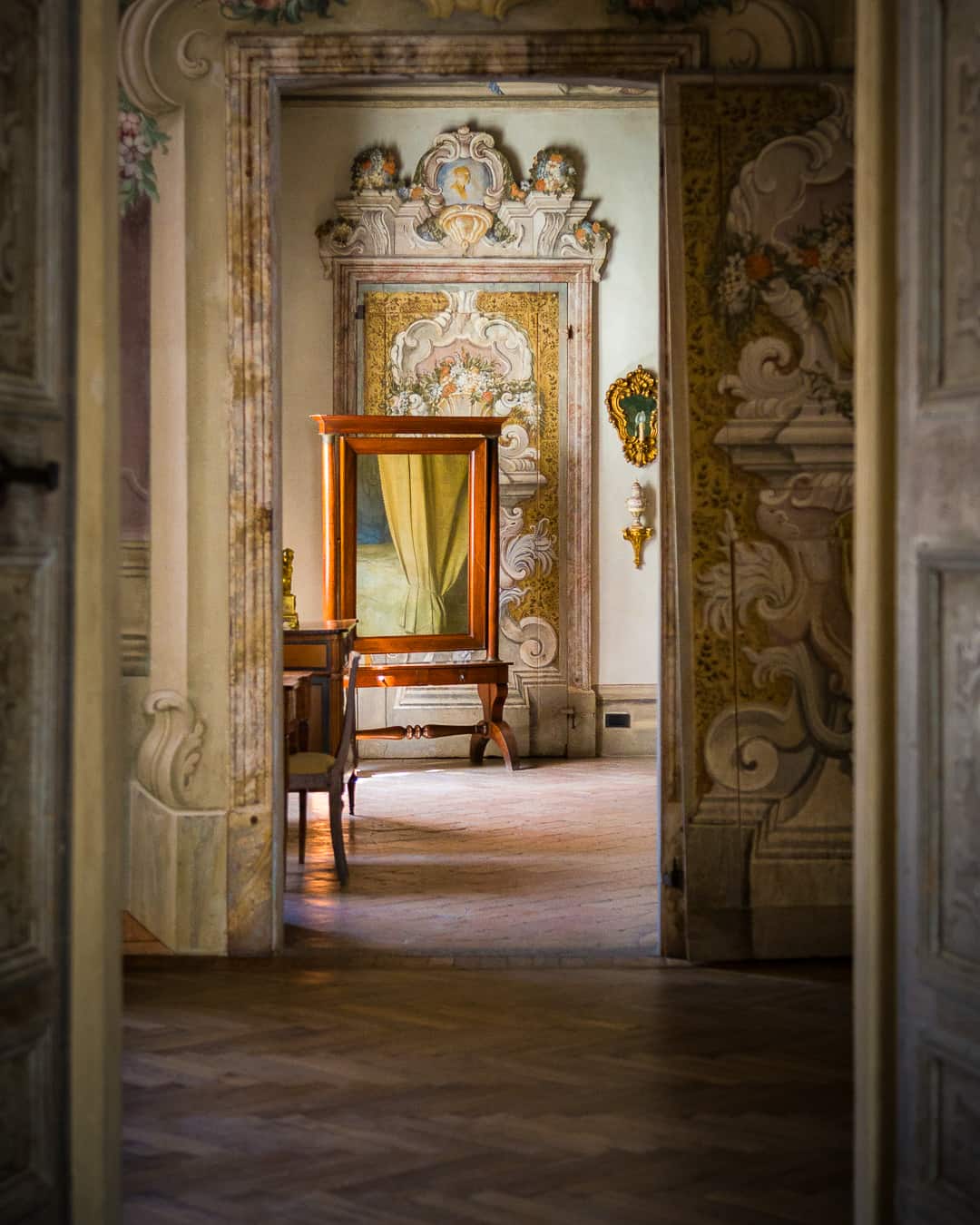
The enfilade
Doors open one after another, stucco frames, and a yellow curtain at the end. The villa we see was born of a love story: in the eighteenth century Gian Angelo III Della Porta renewed it in honour of his wife, the Milanese countess Isabella Giulini, redesigning house and garden.
Crystal and bronze
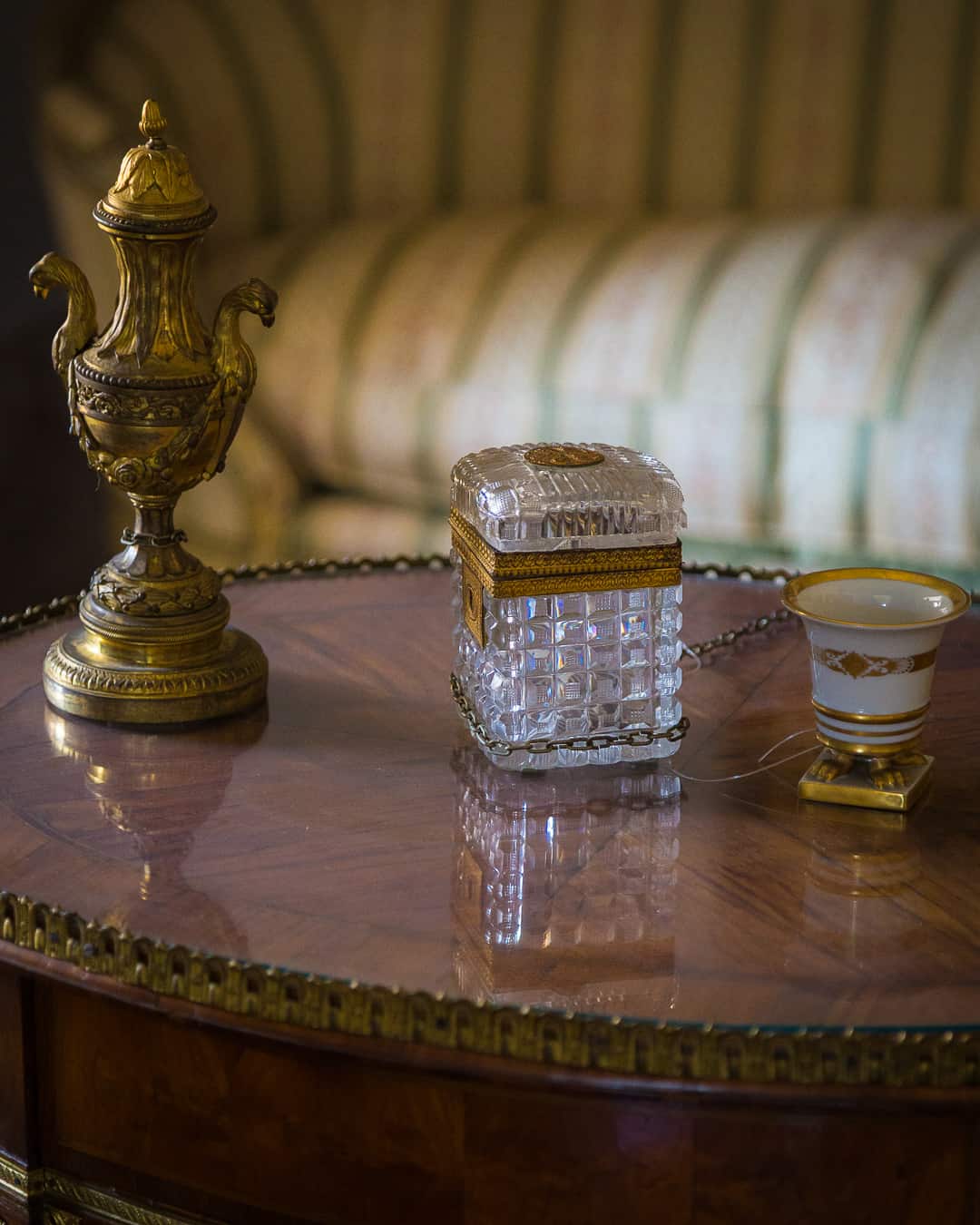
A gilded ewer, a crystal box, a cup, the gleam of polished wood. Not everything comes from this house: many furnishings arrived with other donations to FAI, chosen to recreate the feel of an eighteenth-century home. It is an honest way of bringing the rooms back to life.
III
Country life
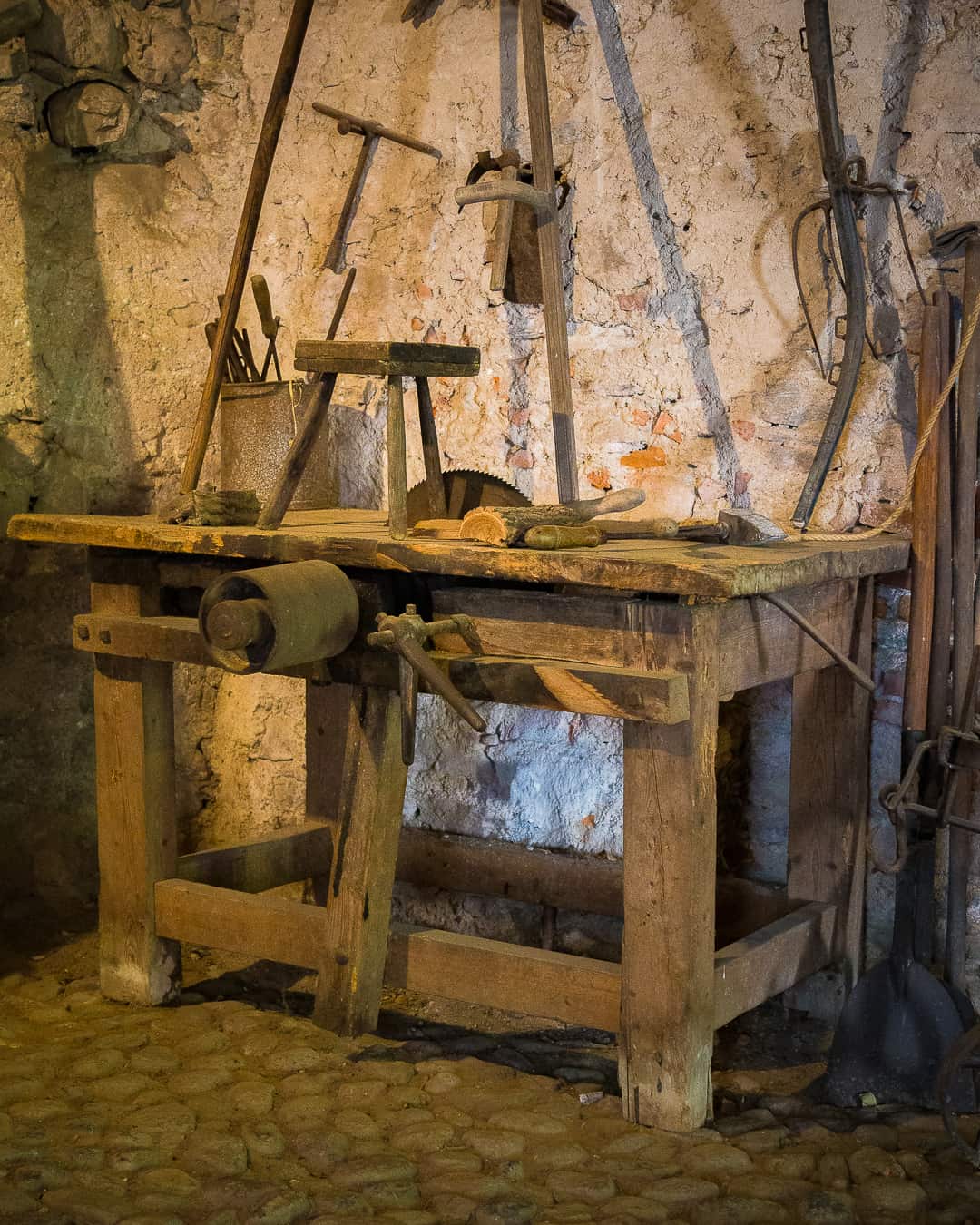
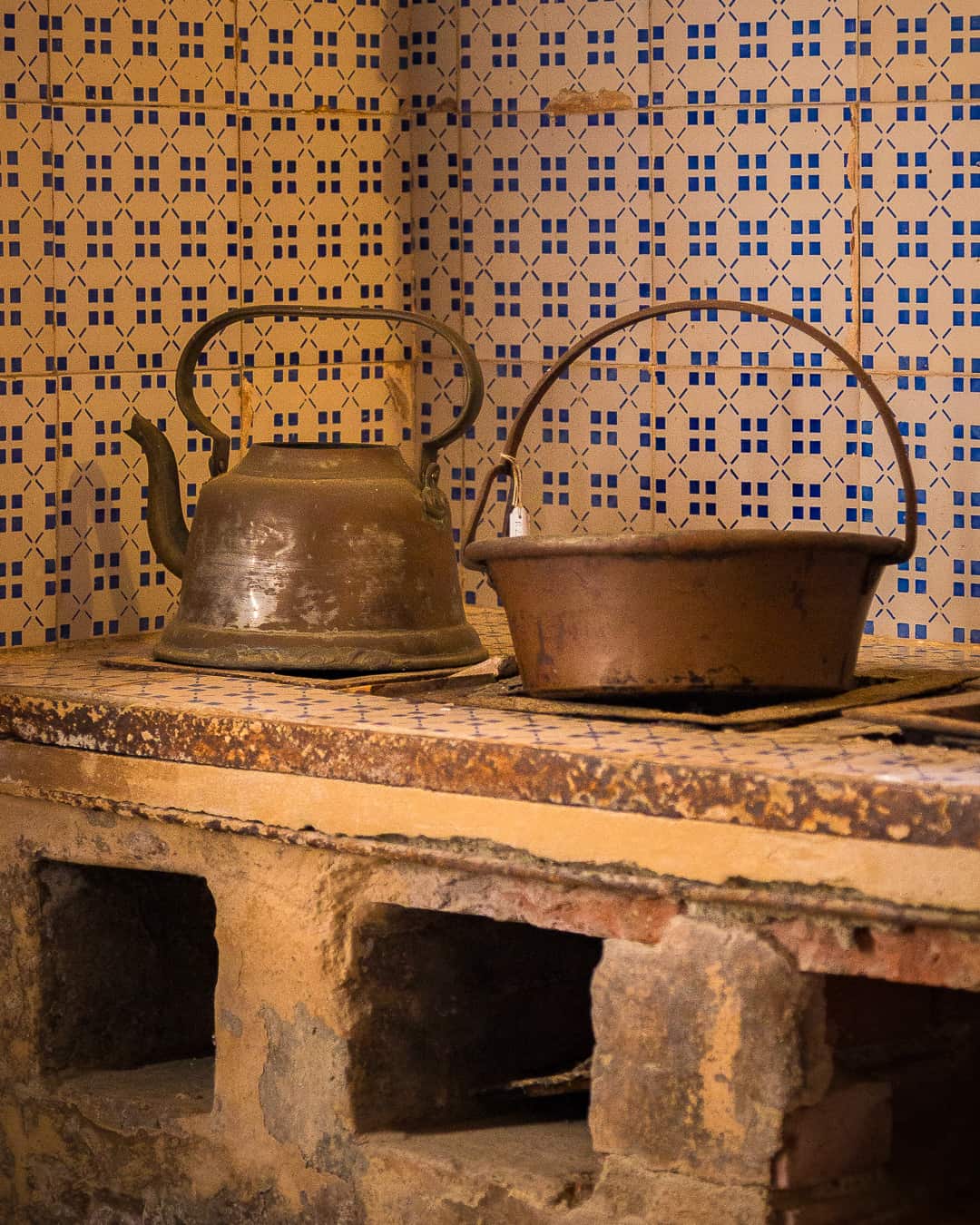
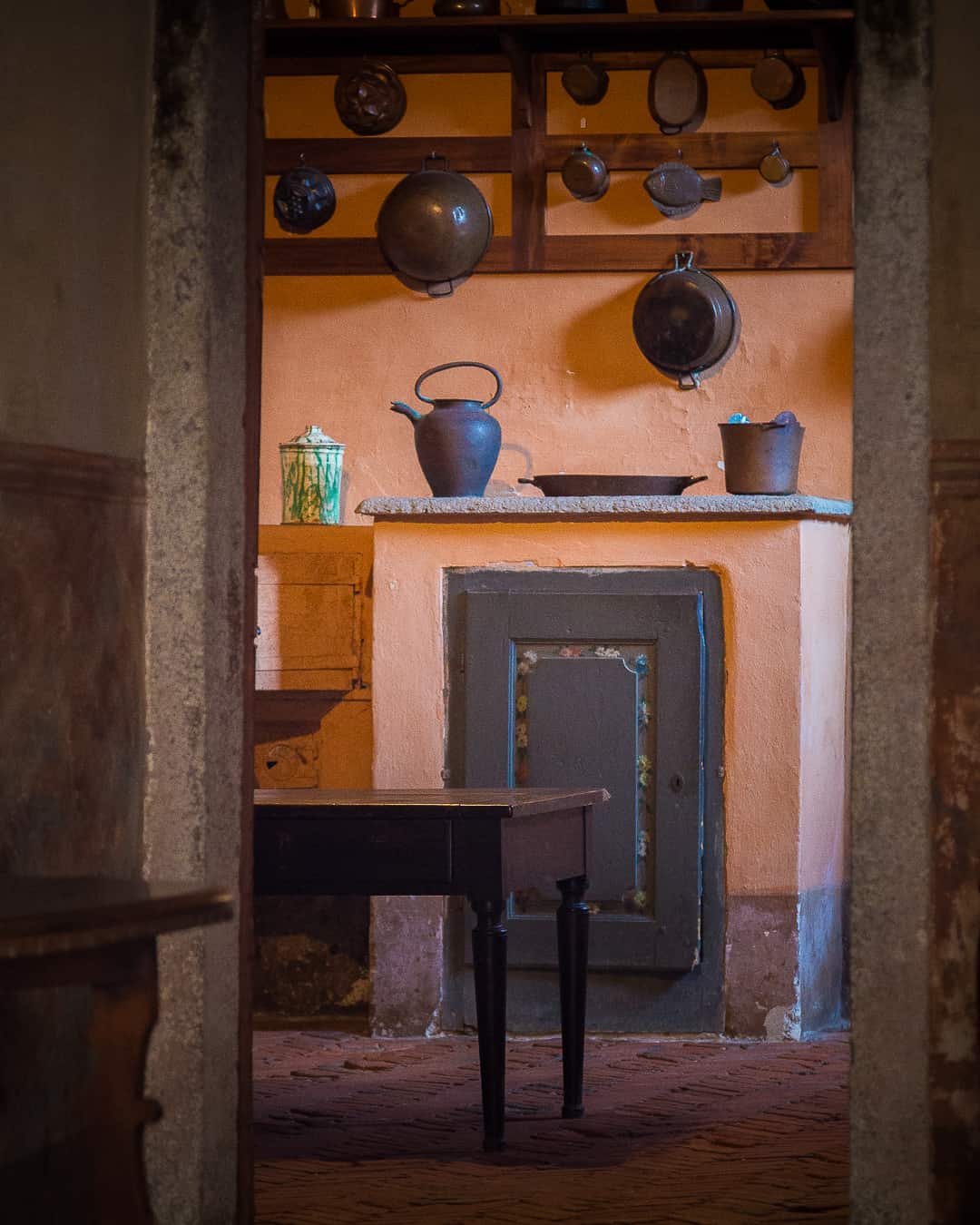
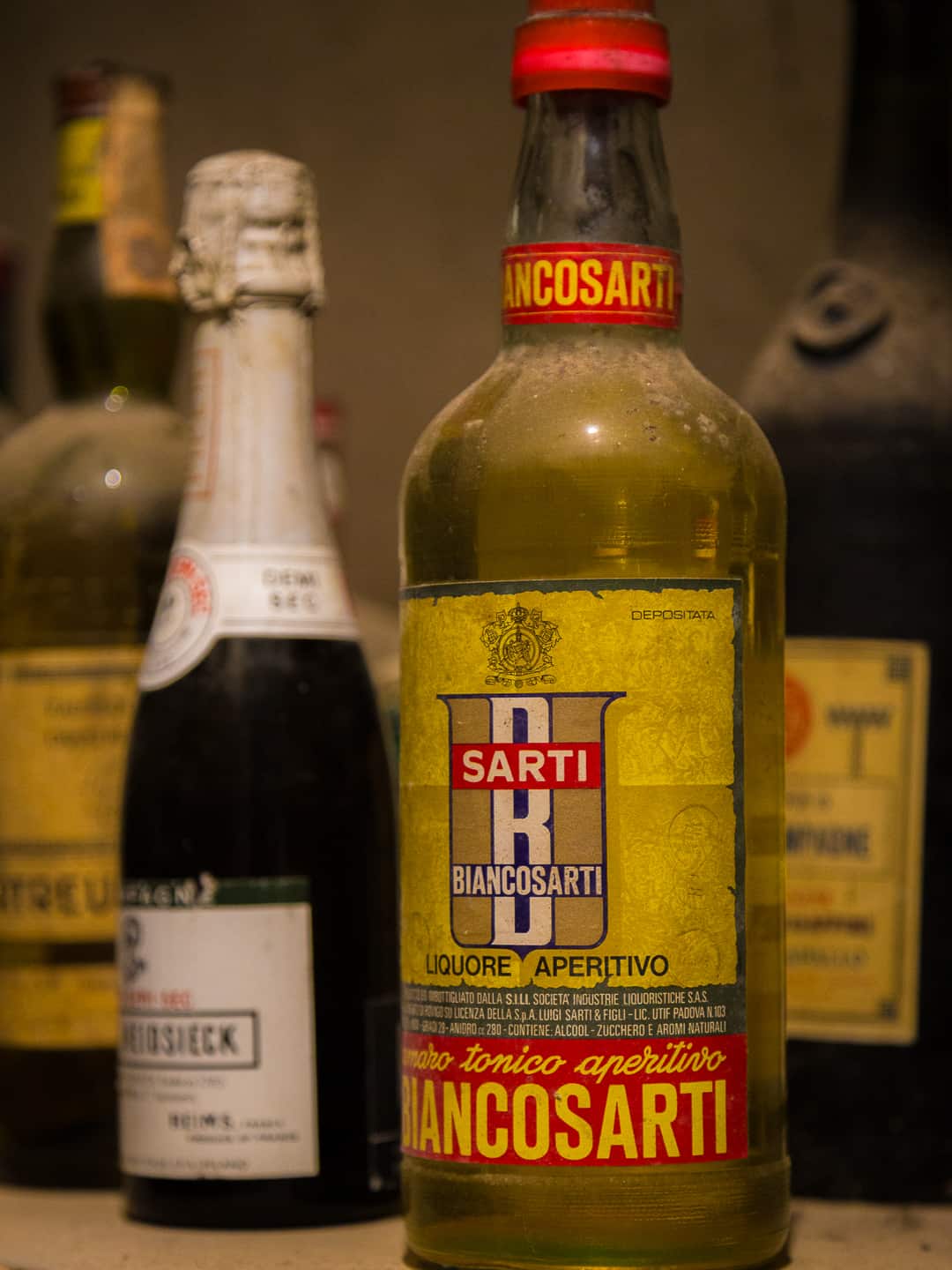
A pleasure villa was also a working farm. The old cellars, the wine press, the ice house and the silk mill still survive.
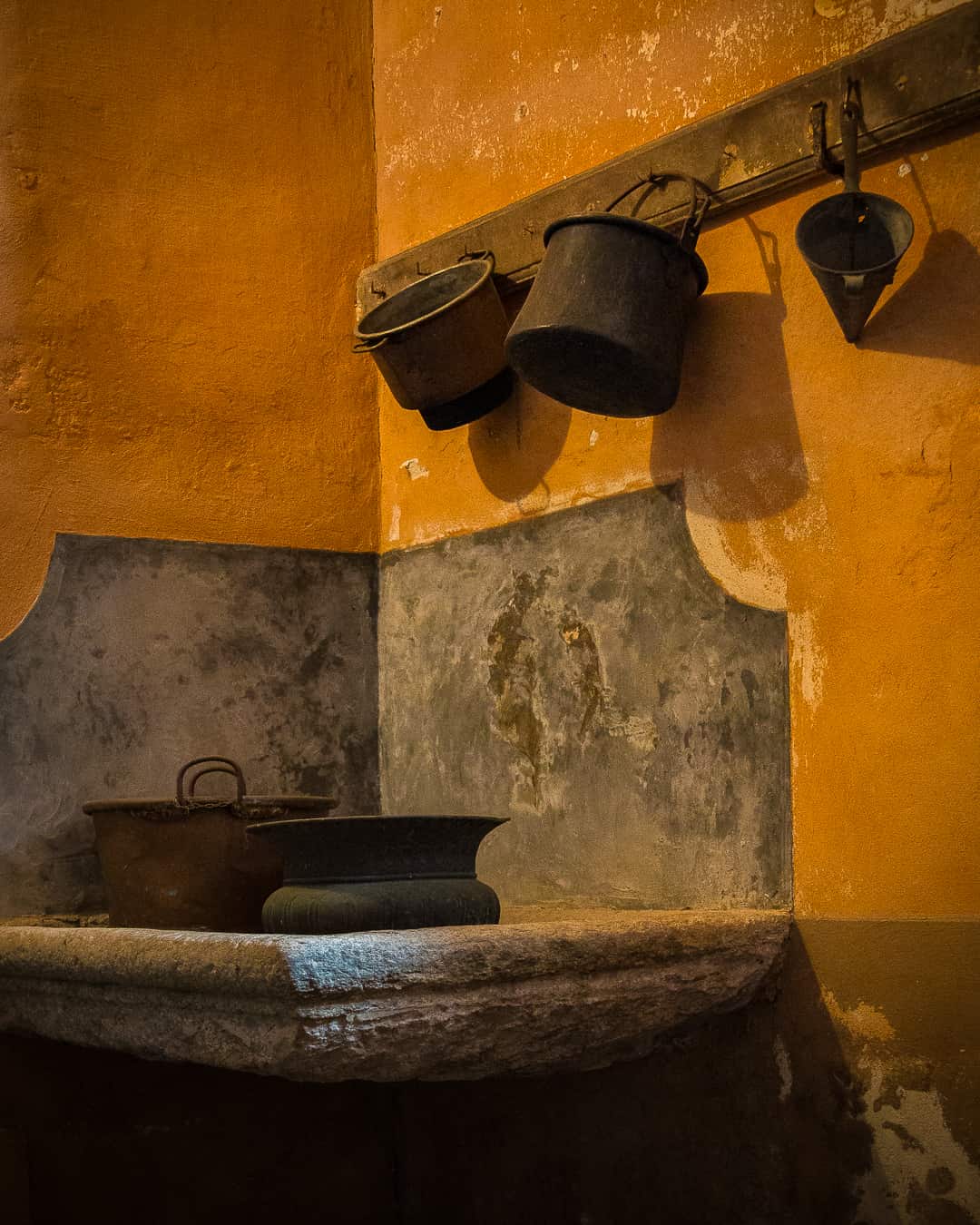
In the kitchens, hanging copper pans and blue and white tiles; in the outbuildings, work tools and old bottles.
It is the quietest part of the house, and perhaps the truest.
Under the portico
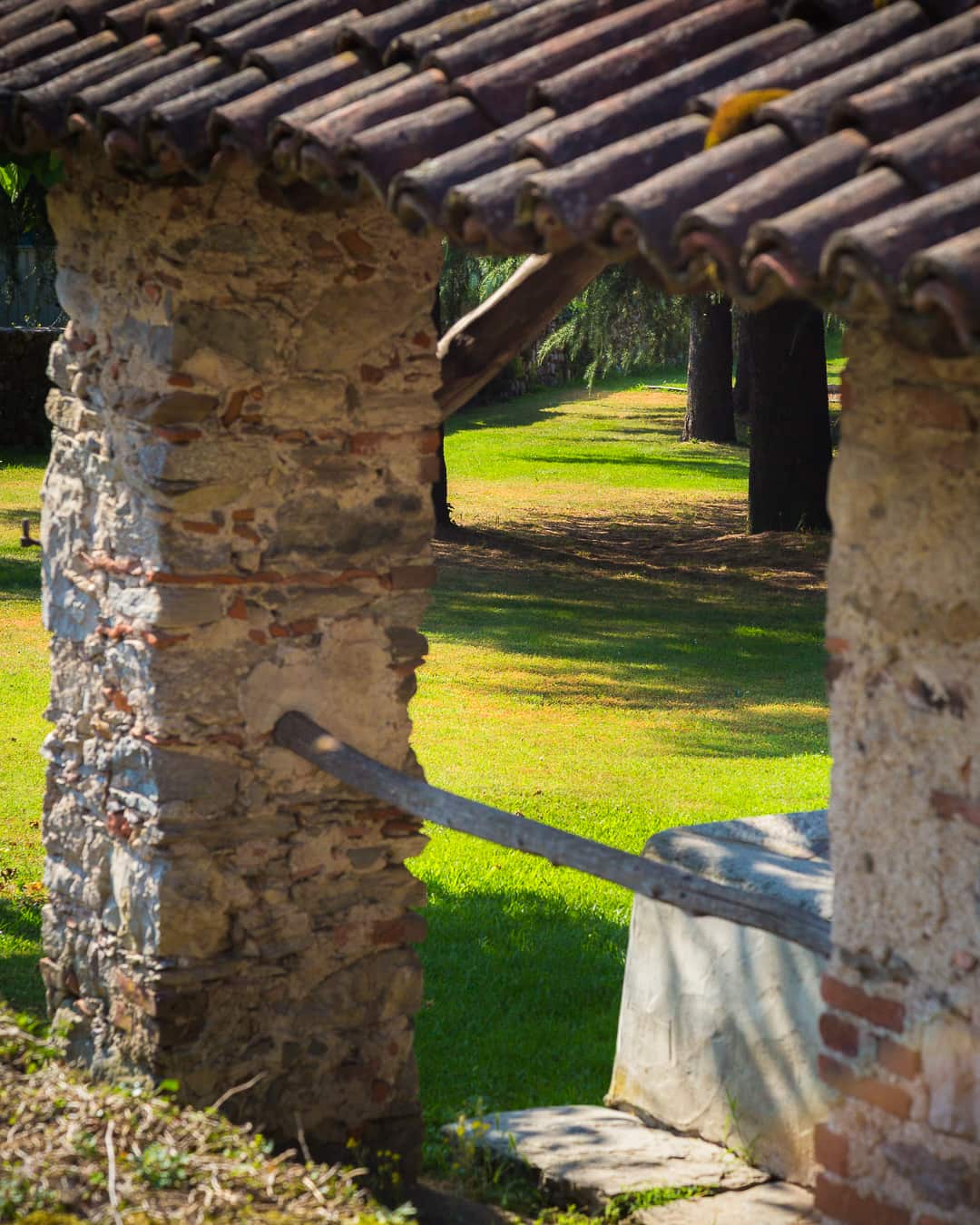
A large stone block, a wooden beam, the piers of the portico. Alongside the frescoed halls, the villa keeps its places of work: the old cellars, the wine press, the ice house, the silk mill. Wine, ice and silk were all produced here.
Water
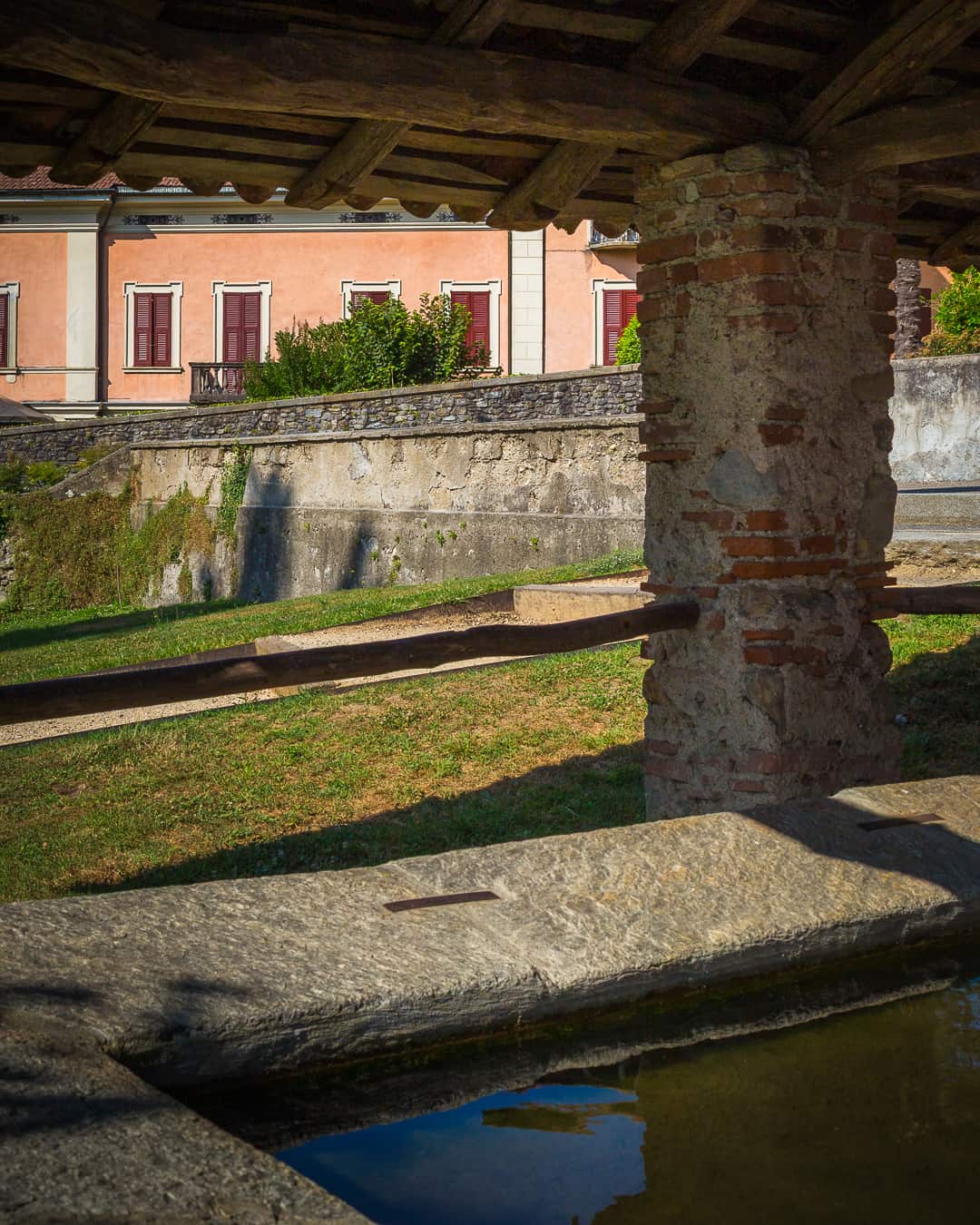
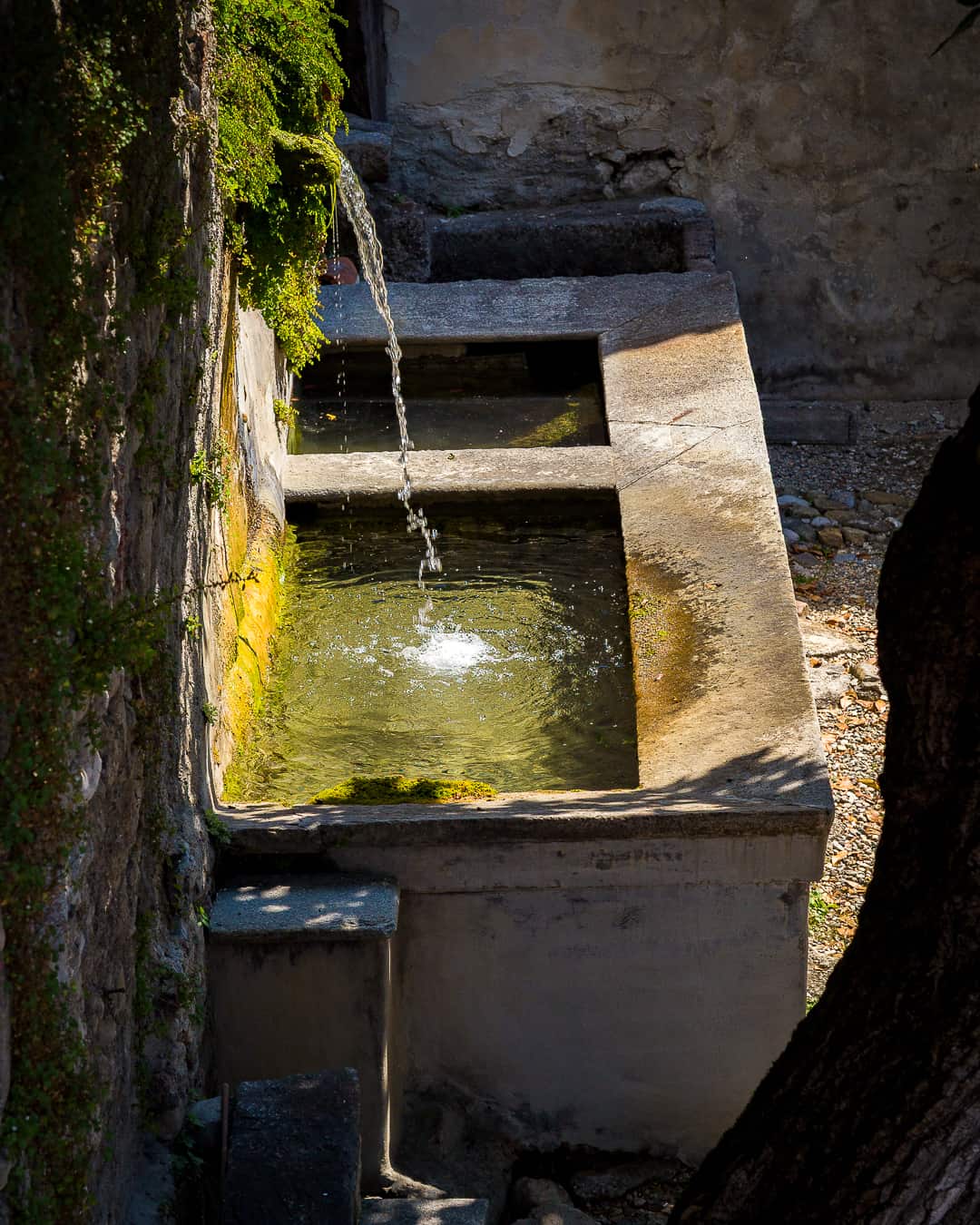
A thread of water falling into a stone basin. Water is the villa’s silent protagonist: it served the fields, the silk mill and the garden fountains. Without it there would have been neither the pleasure villa nor the farmland around it.
IV
The terraces
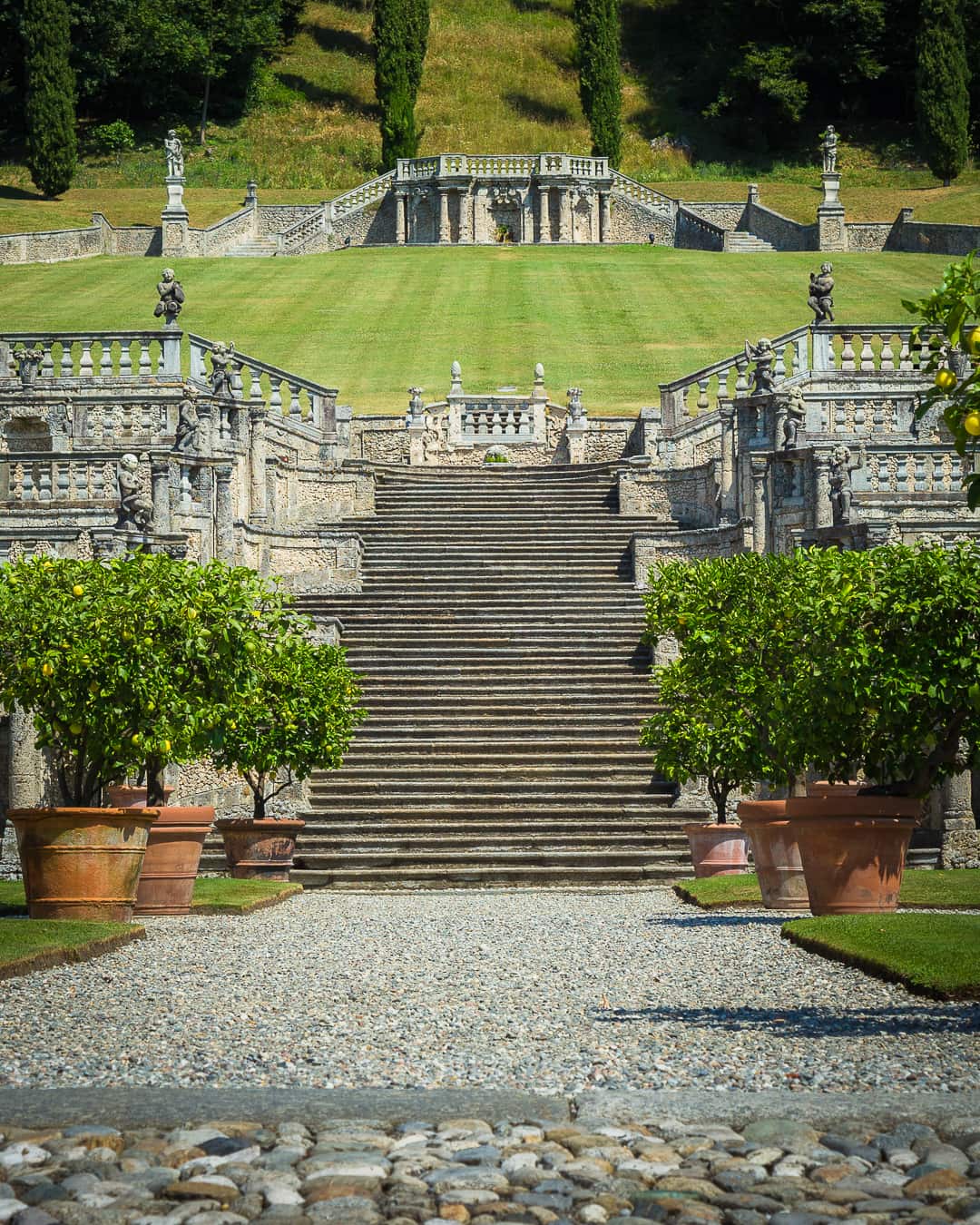
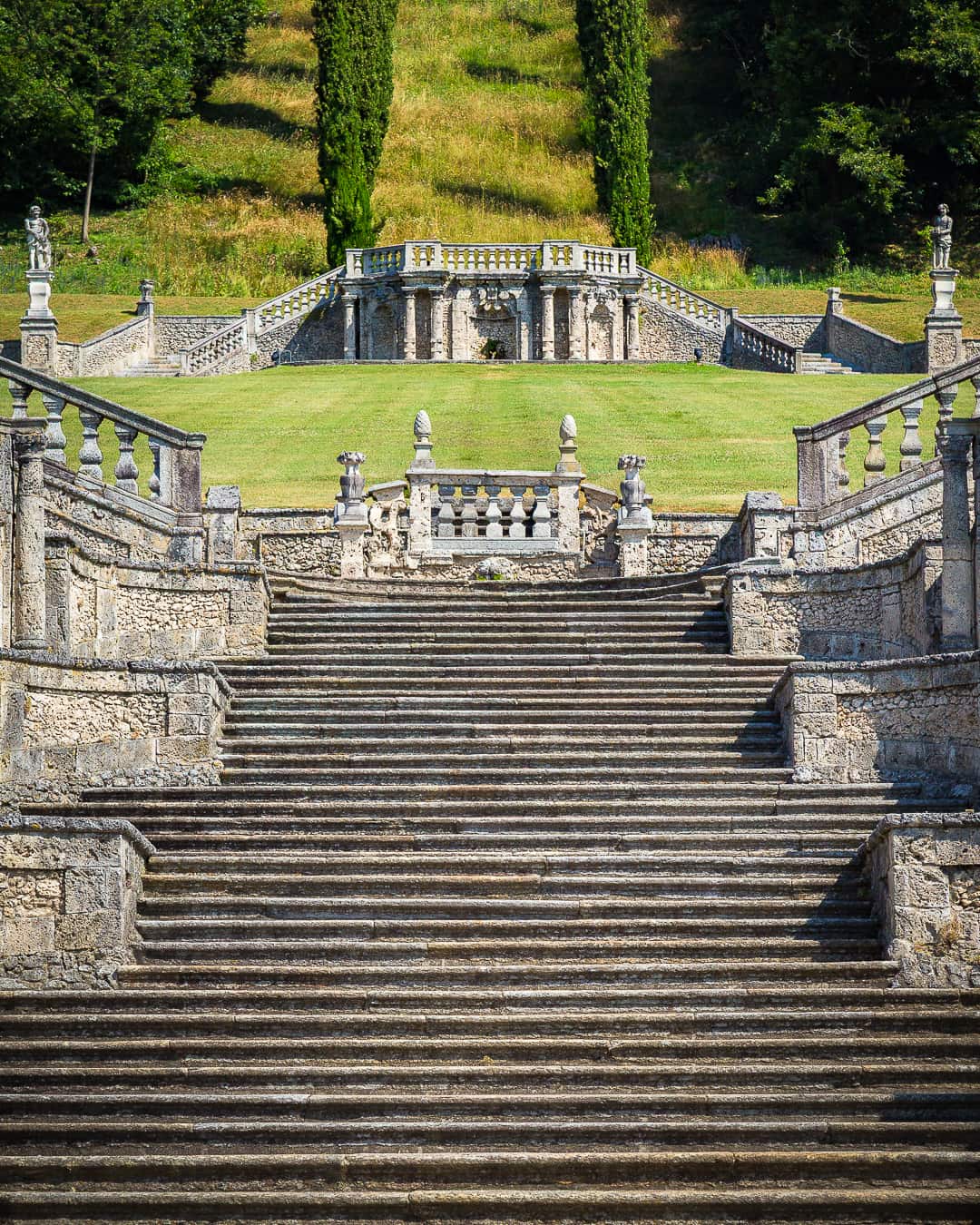
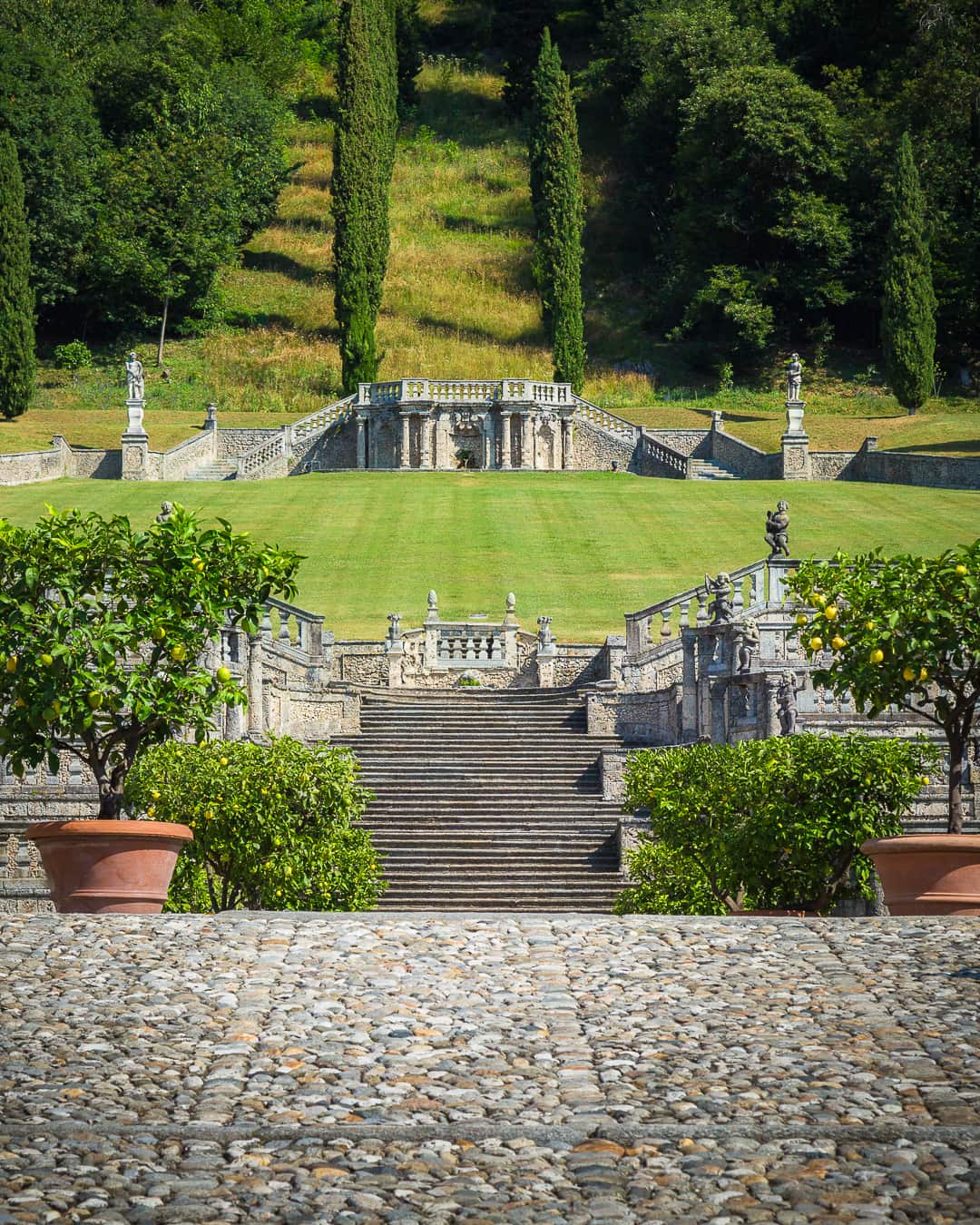
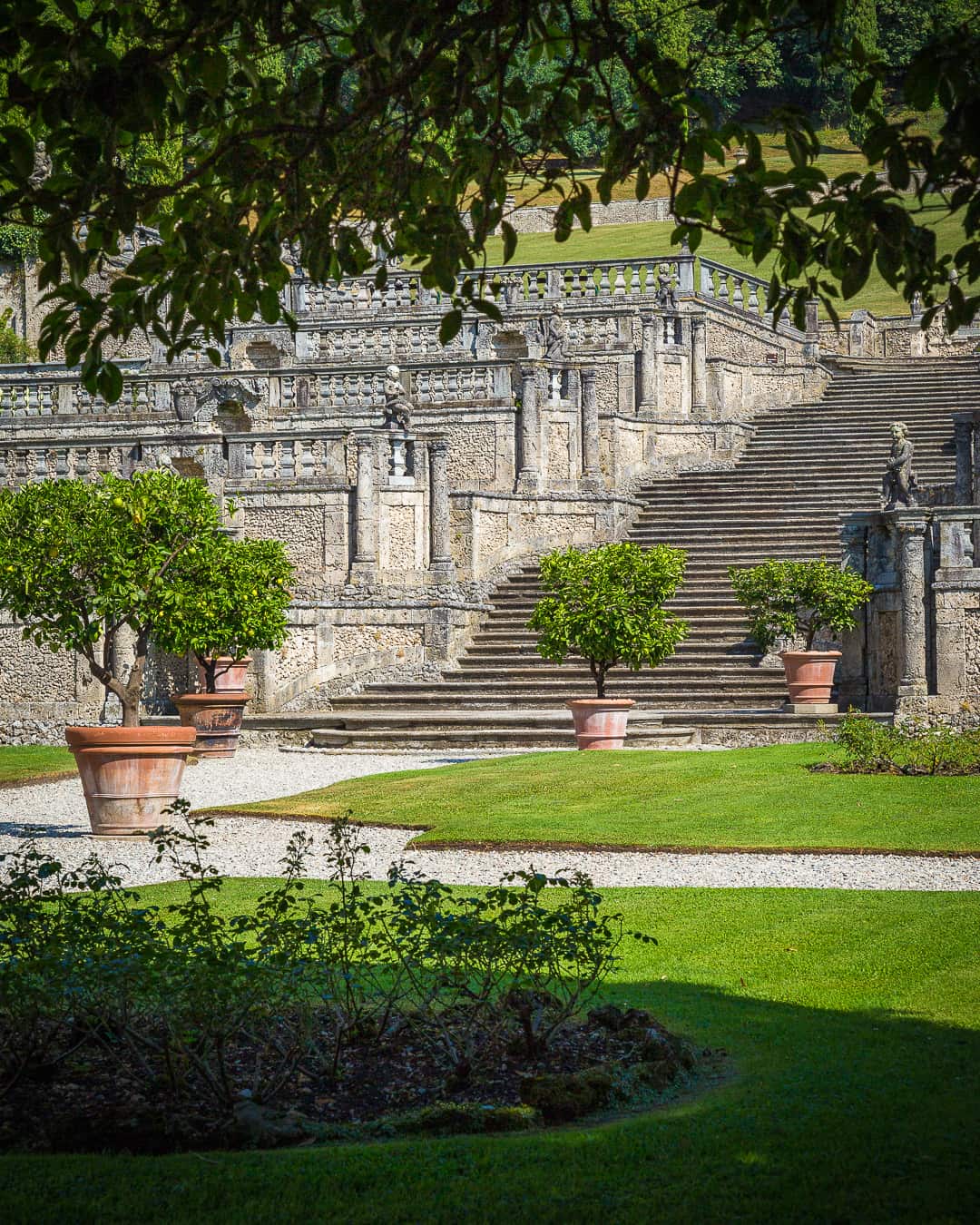
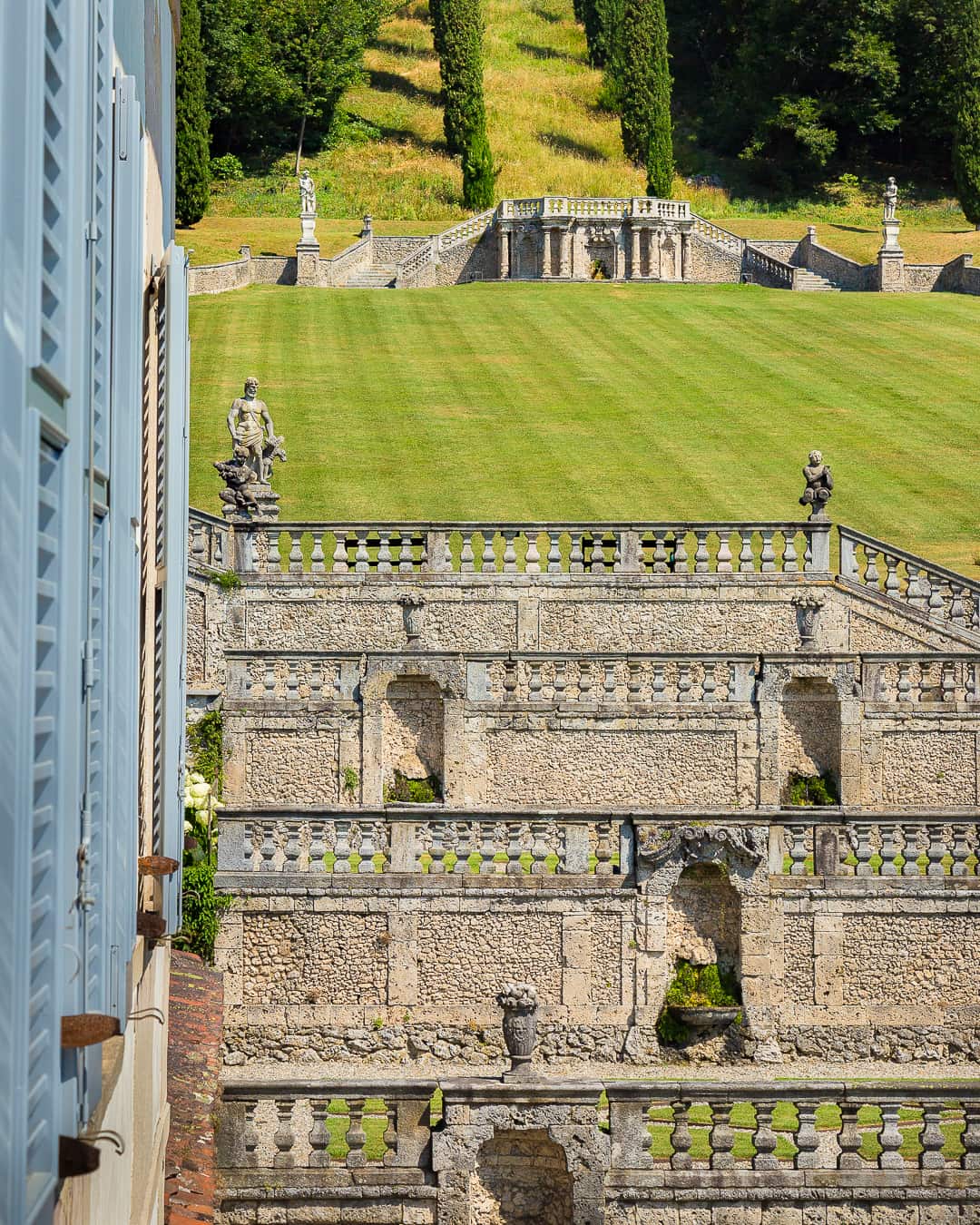
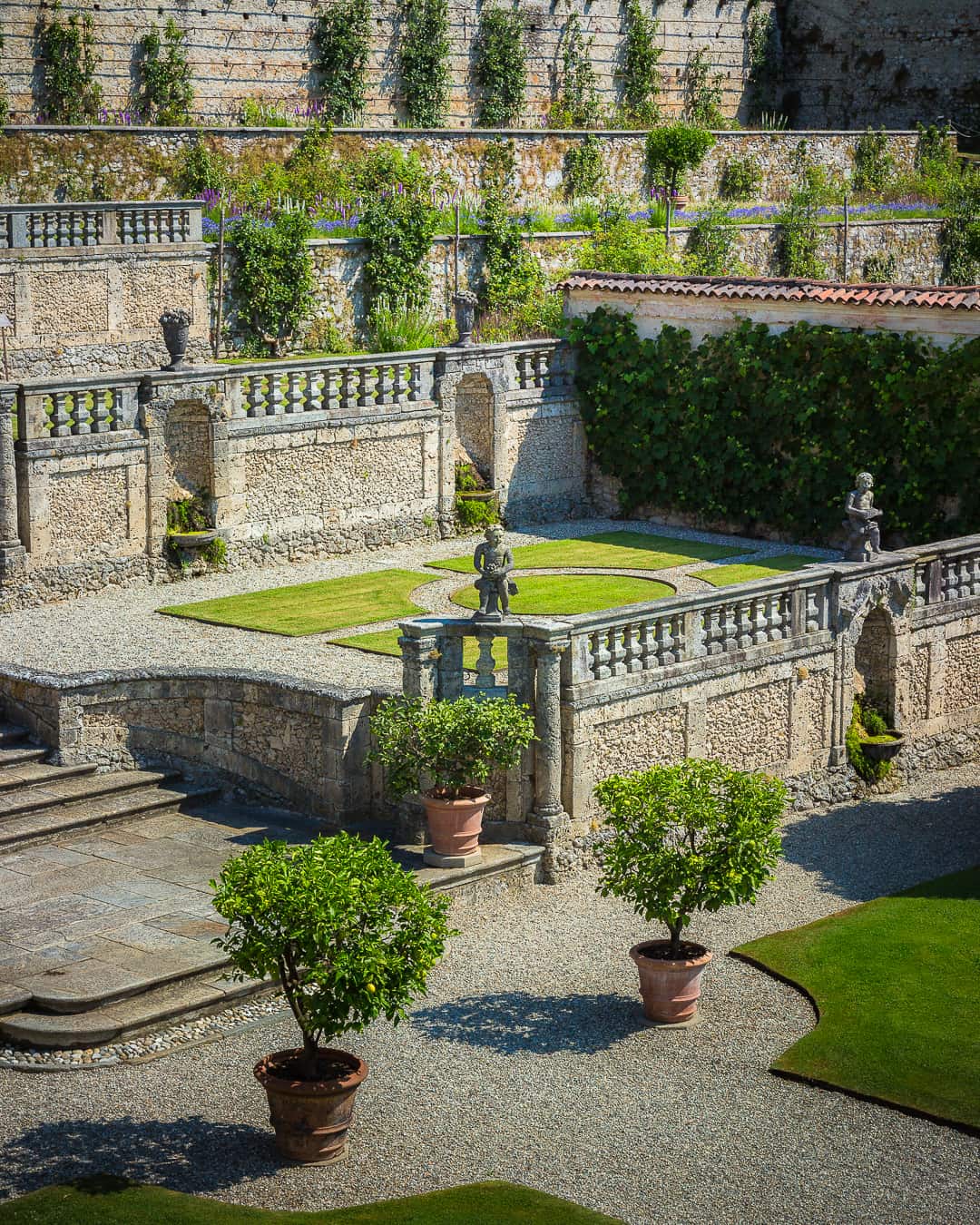
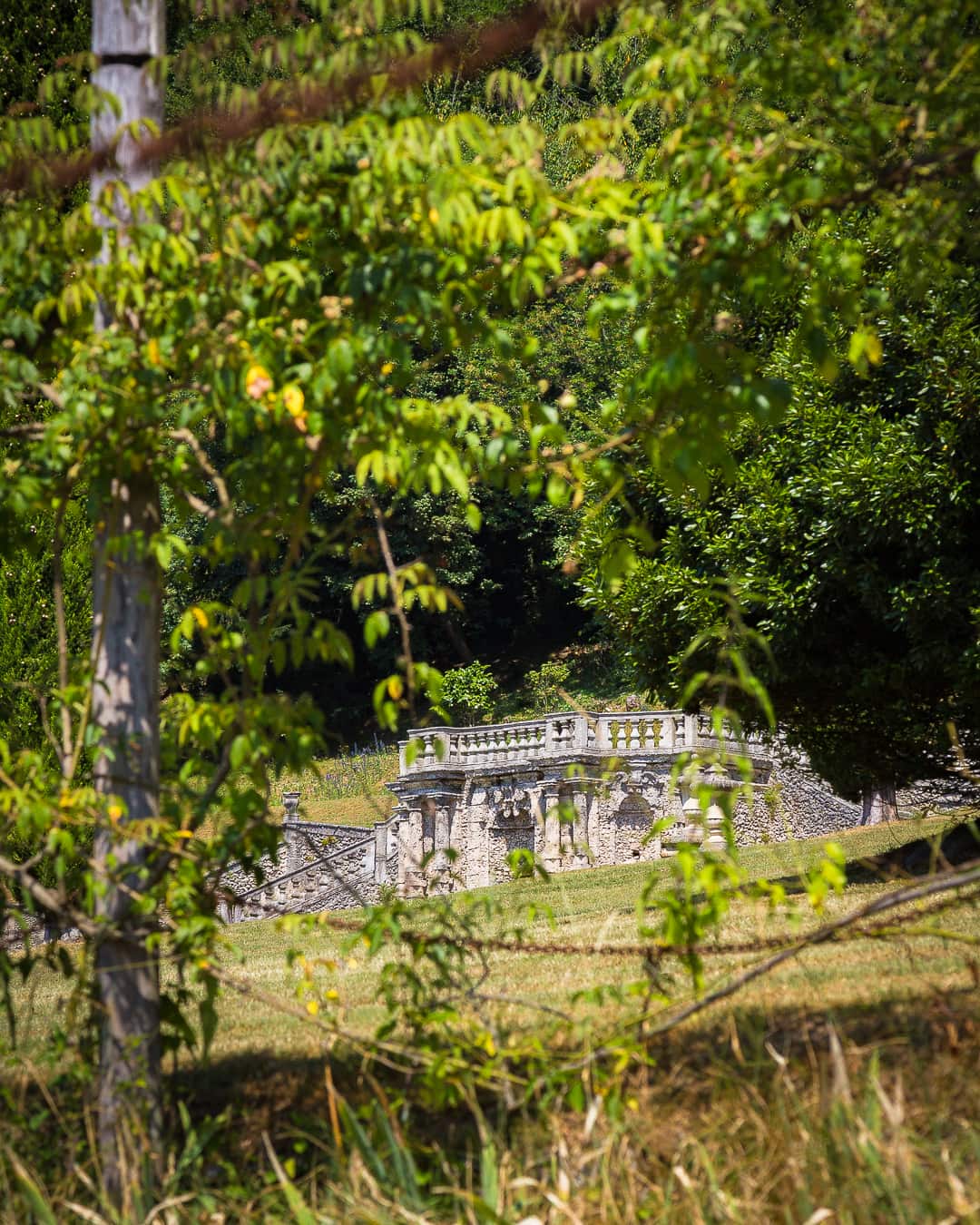
Behind the villa the garden rises over four terraces, linked by a grand staircase with balustrades, statues and fountains. It is one of the most theatrical Italian gardens in Lombardy.
The route ends at the “Theatre”, a lawn framed by a fishpond of 1723, with striking perspective effects. Higher still, a steep path leads to the lookout.
Every step changes the view: the villa drops away, the statues line up, the landscape opens out.
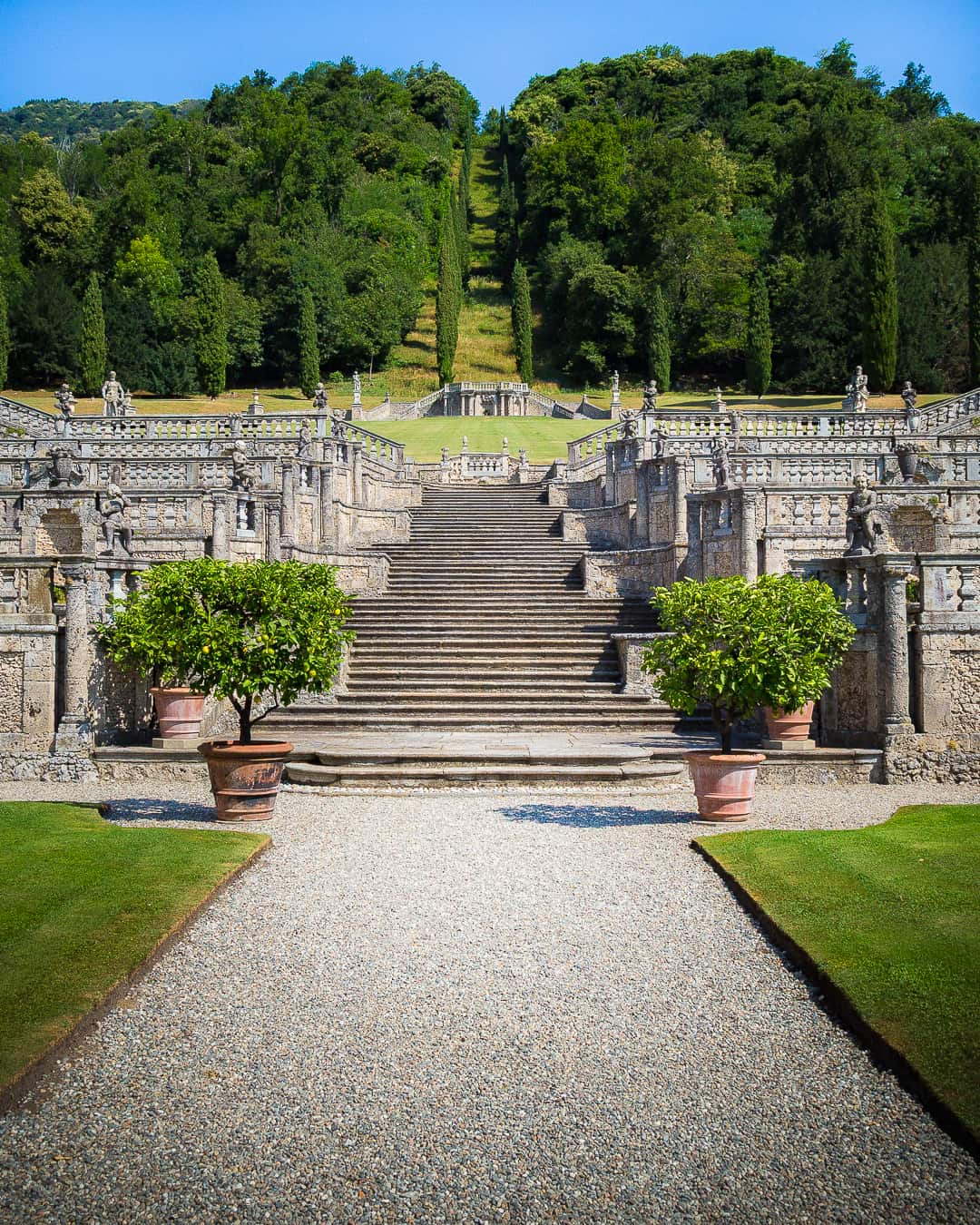
The axis
A gravel path, two potted lemon trees, and the staircase rising ahead. The whole garden is built on an axis: from the villa the eye runs up the terraces to the lawn at the top. It is a piece of stagecraft designed to amaze guests the moment they stepped outside.
The wall fountain
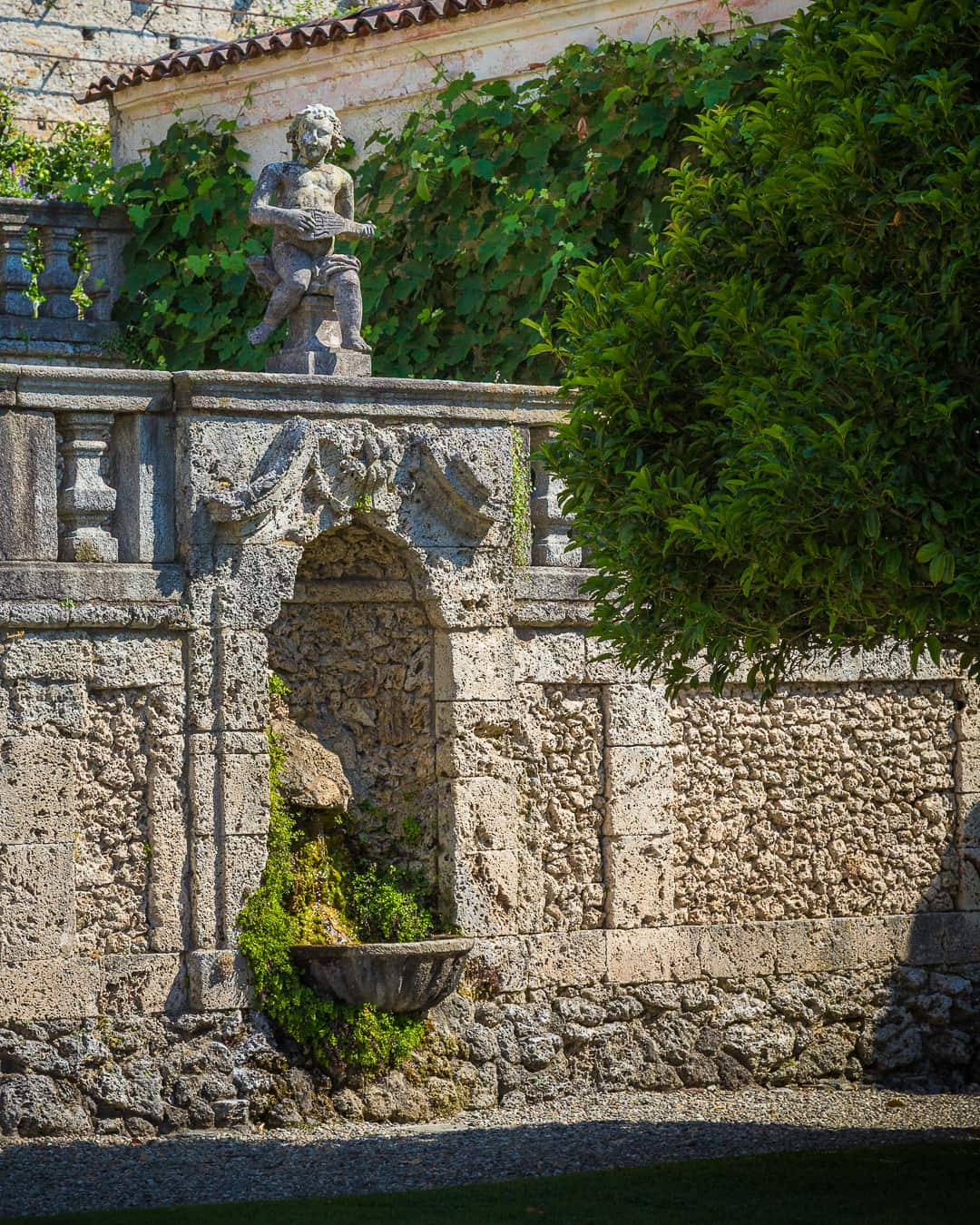
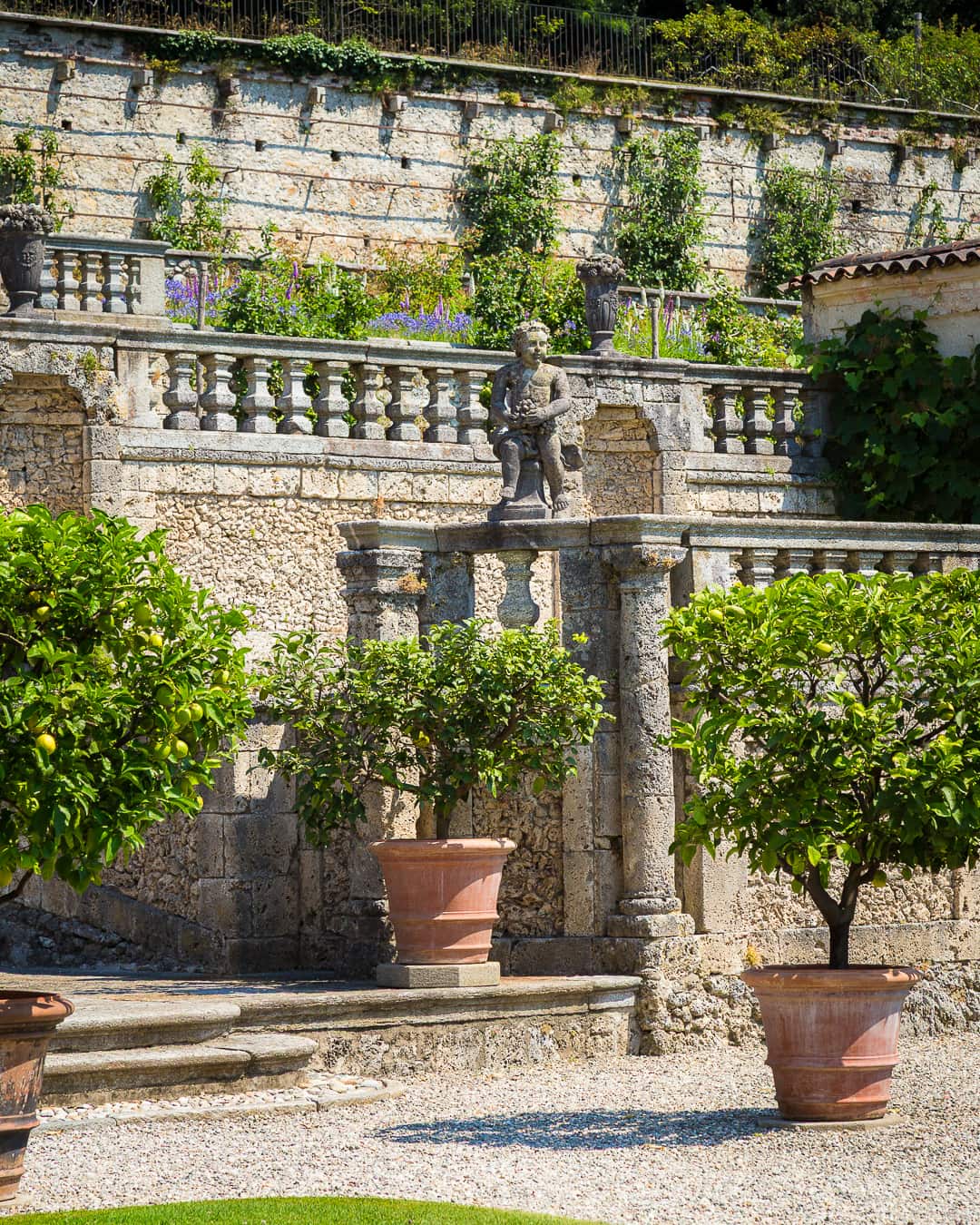
Rustic stone, a niche, a trickle of water and a putto keeping watch above. The terraces are held up by walls like this one, and every wall becomes an opportunity: a fountain, a statue, an urn. Nothing is left bare.
The urn on the lawn
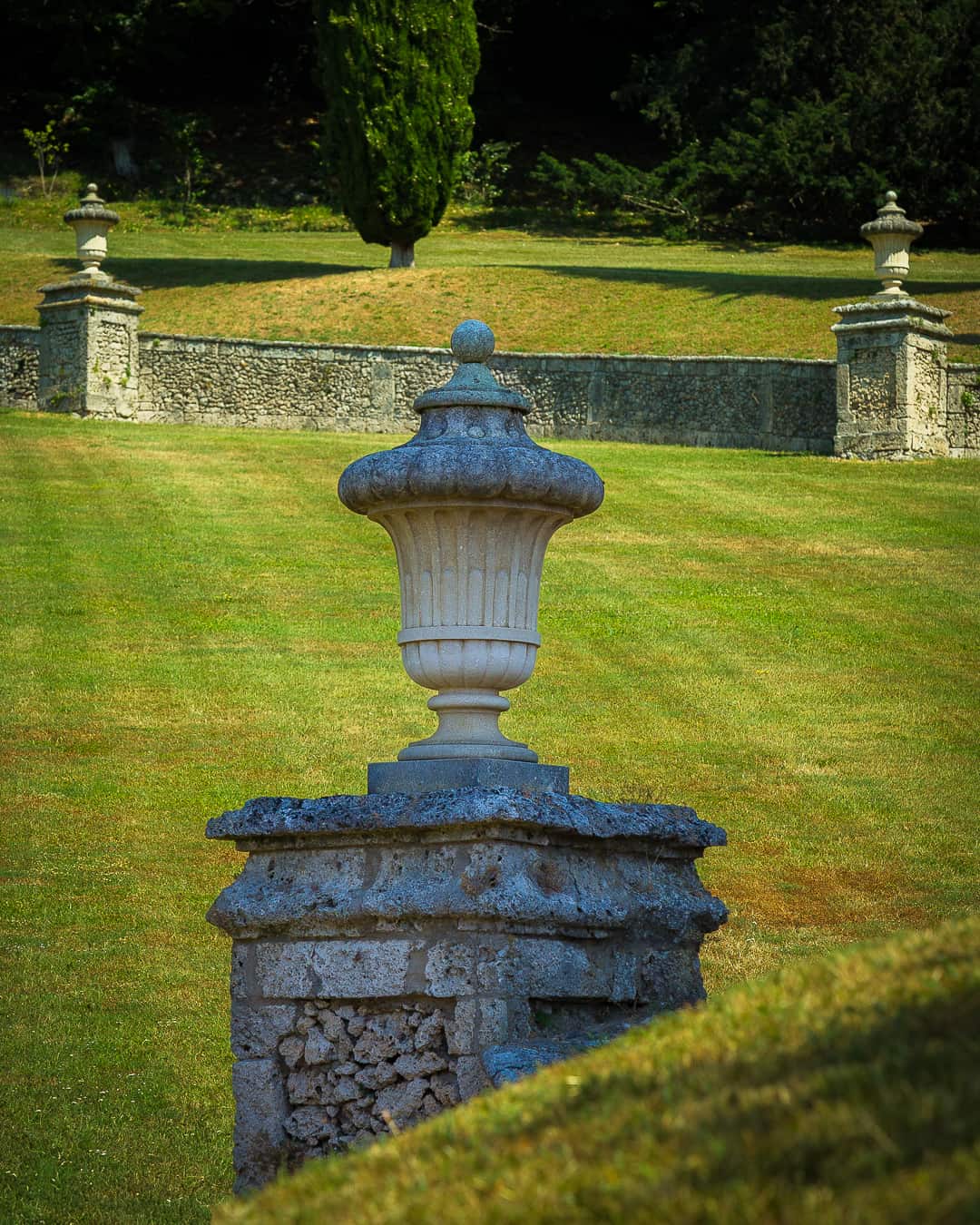
A stone urn on its pedestal, green lawn, walls and cypresses. Higher up, the route reaches the “Theatre”: a broad lawn framed by a fishpond of 1723, where perspective plays with distance and makes it seem longer.
Statue and lemons
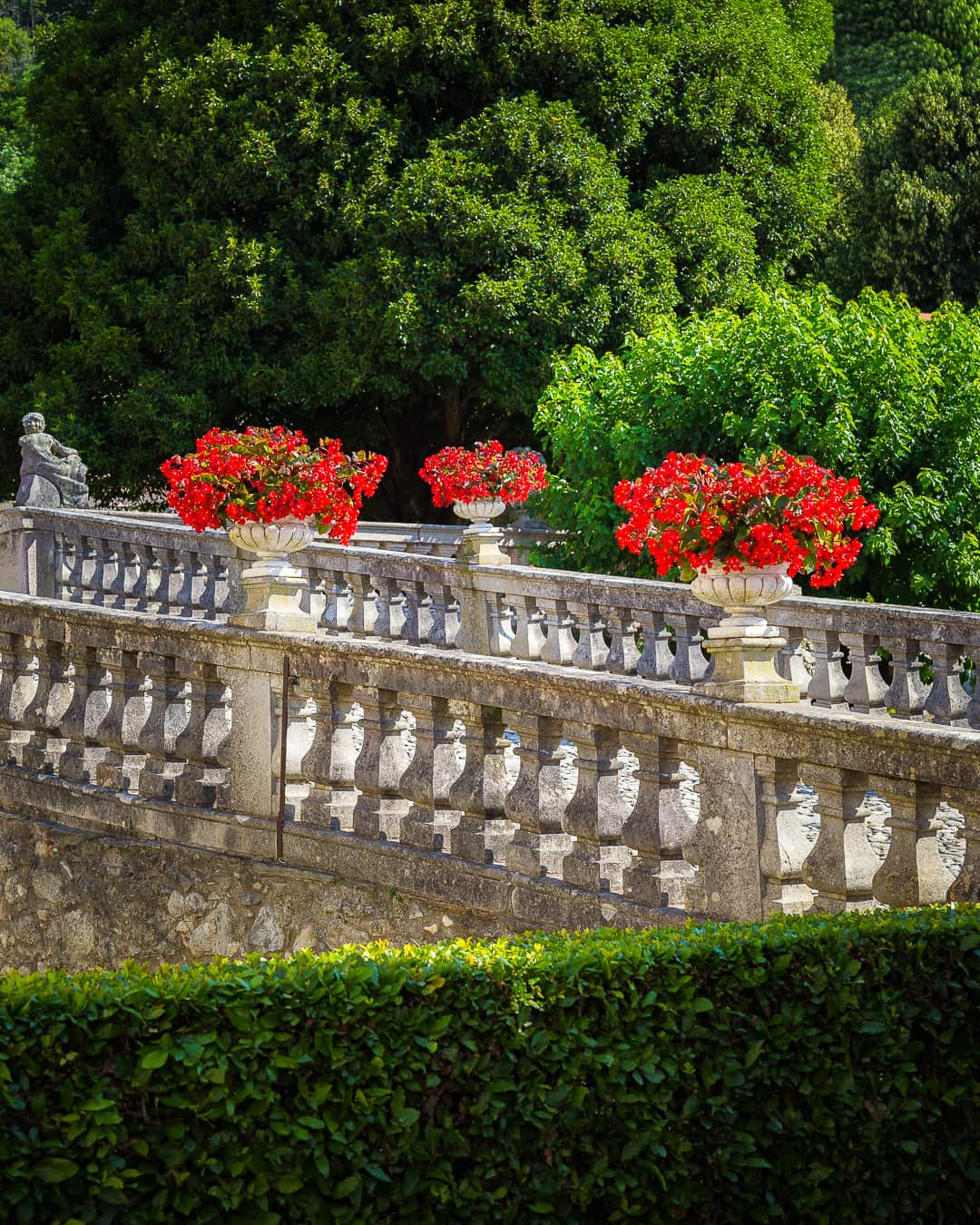
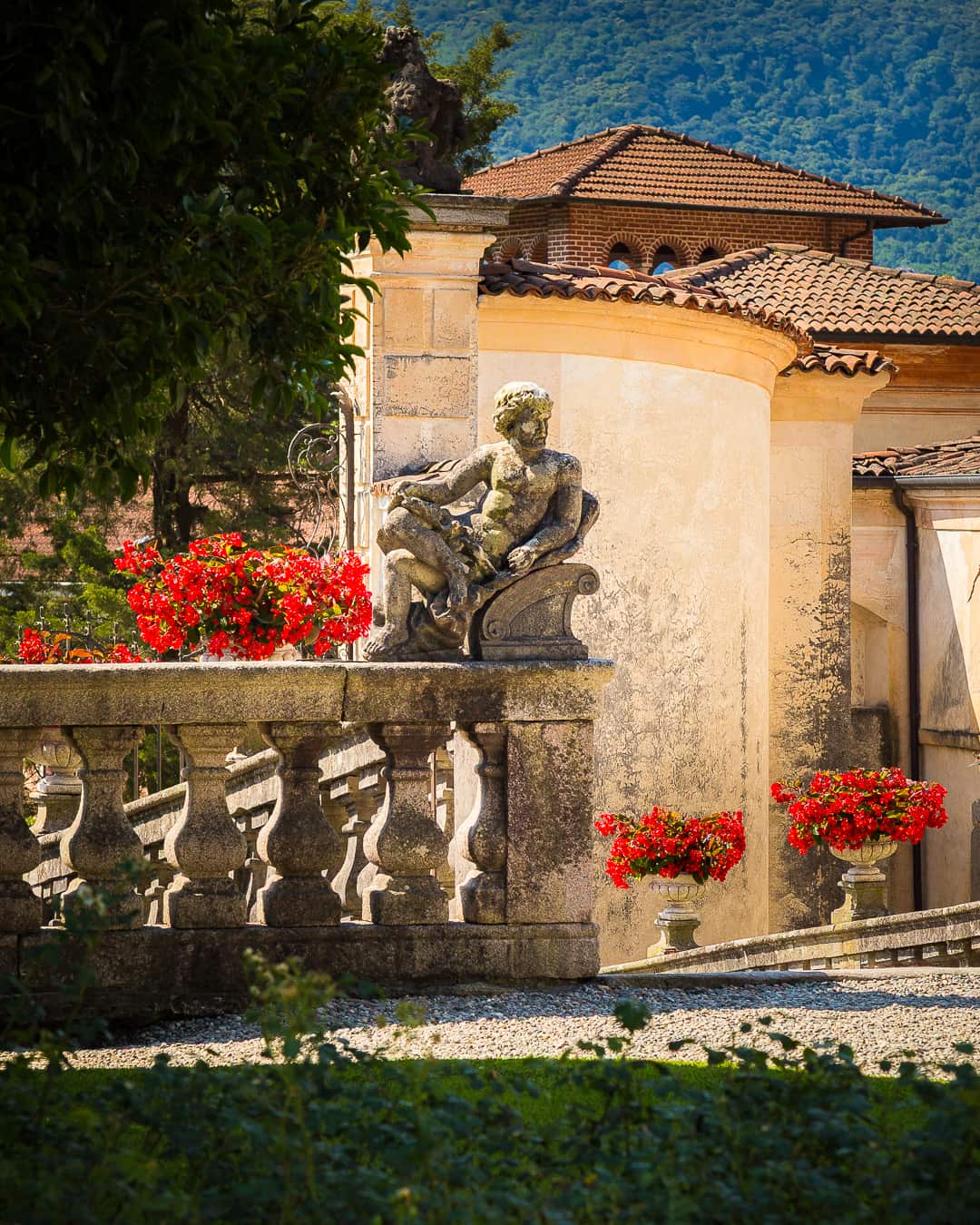
A statue on the balustrade, potted lemon trees, grey stone. The garden of Villa Della Porta Bozzolo is also a sculpture garden: mythological figures, putti and urns accompany visitors from one terrace to the next, like a procession.
V
Flowers and lookout
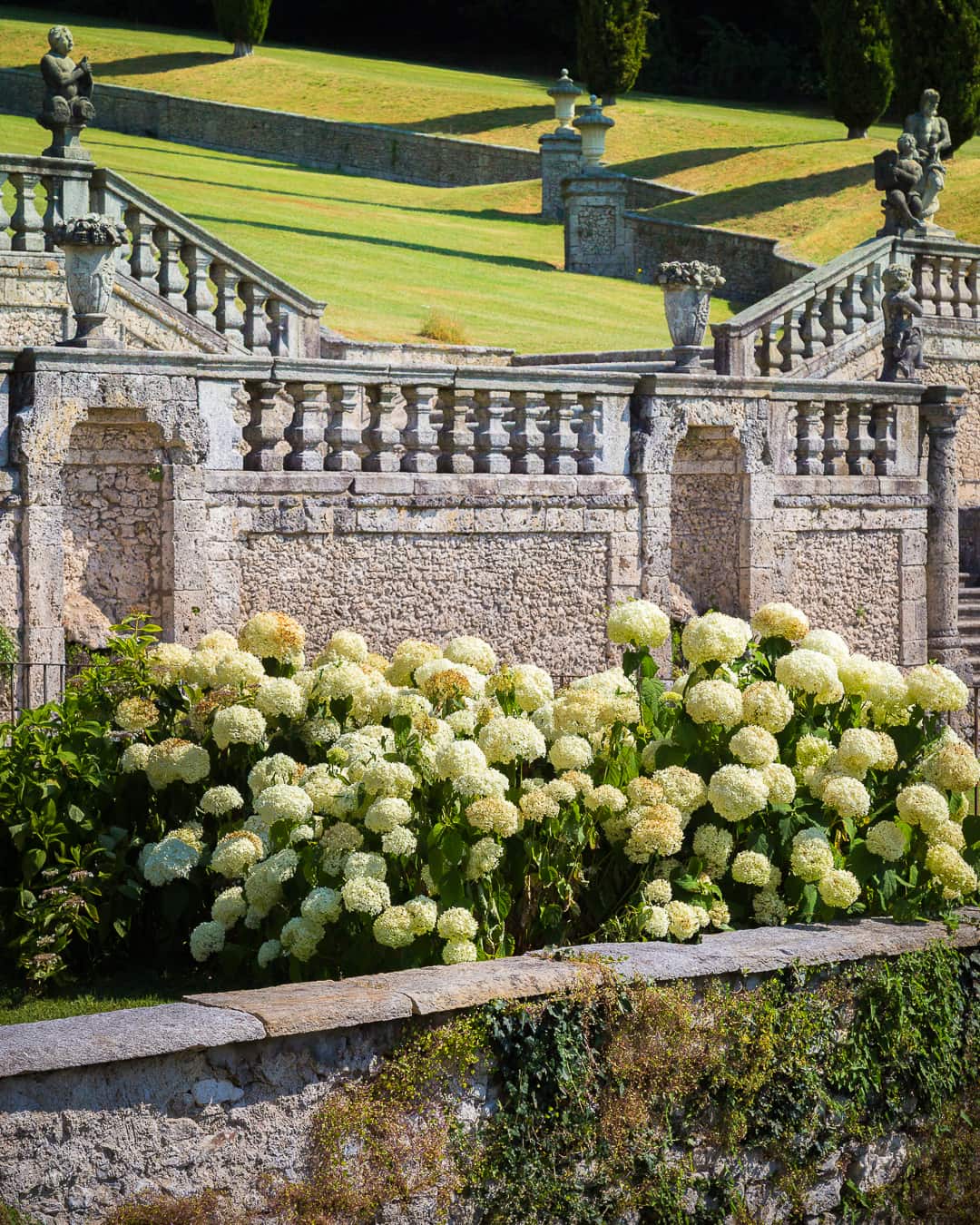
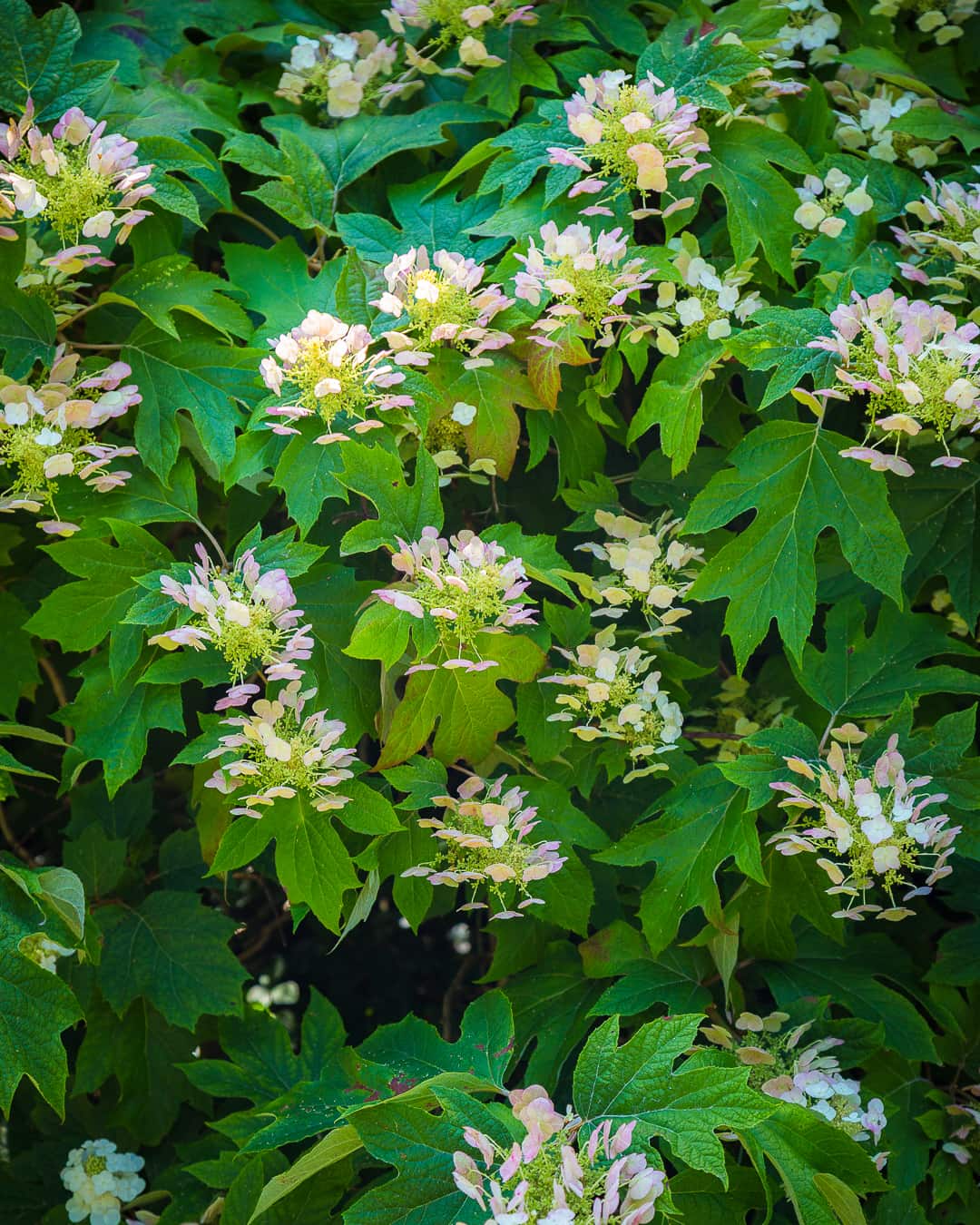
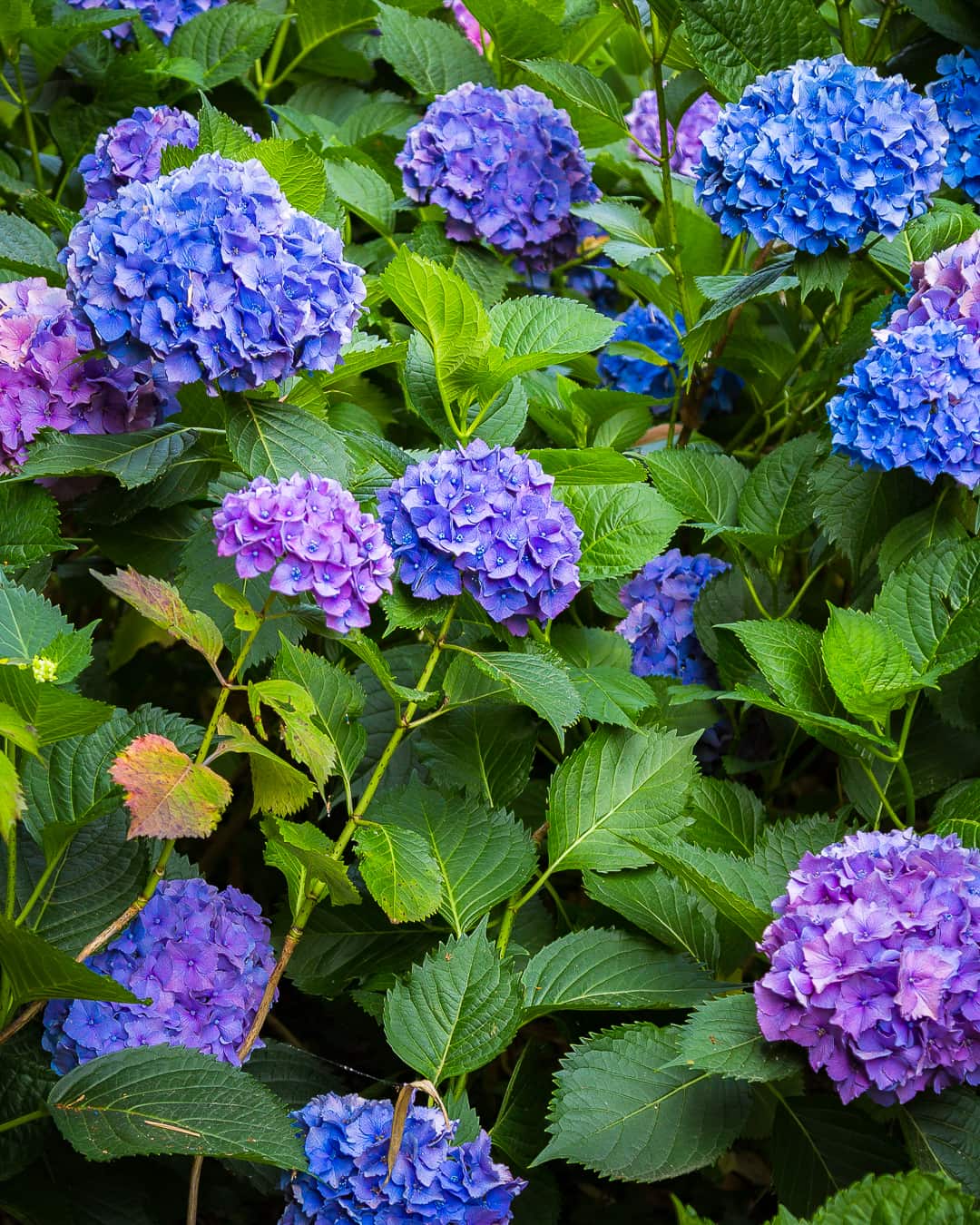
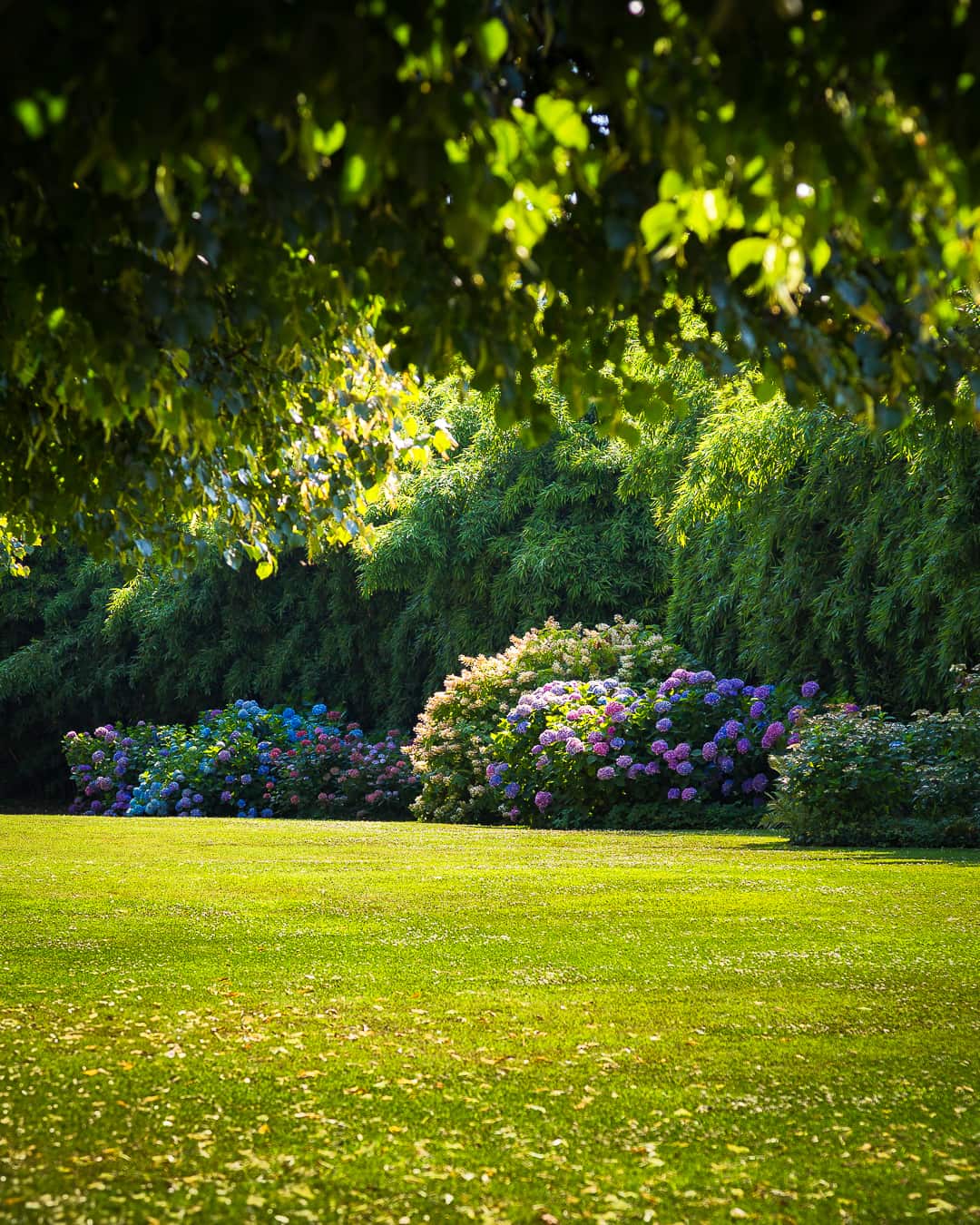
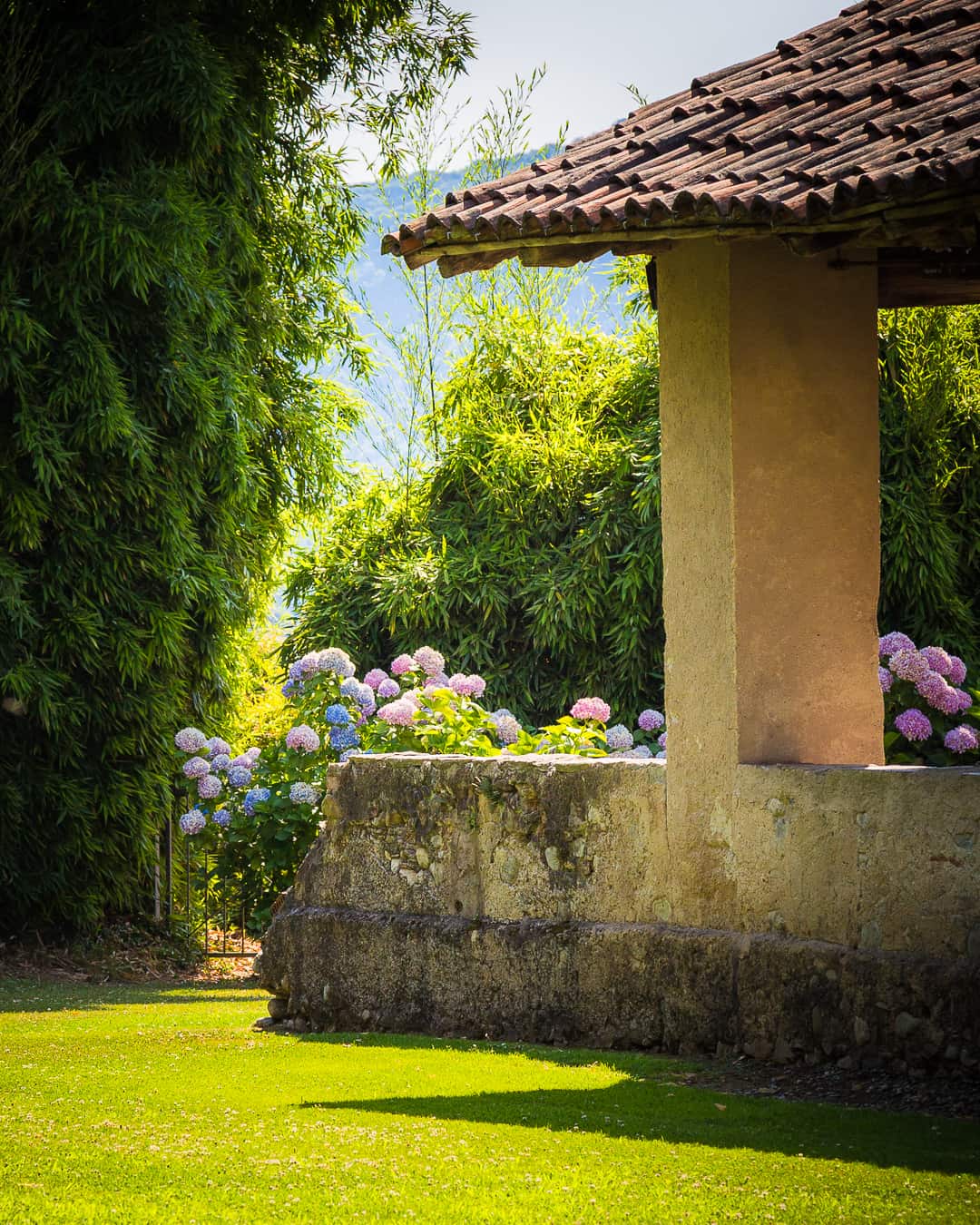
Among the stones the garden blooms: hydrangeas, borders of perennials and a rose collection of more than 500 species.
In the villa’s hives, bees make a honey that you can buy in the FAI shop.
From the top, the eye takes in the villa, the village and the hills. Only from here does the garden’s design truly make sense.
Hydrangeas
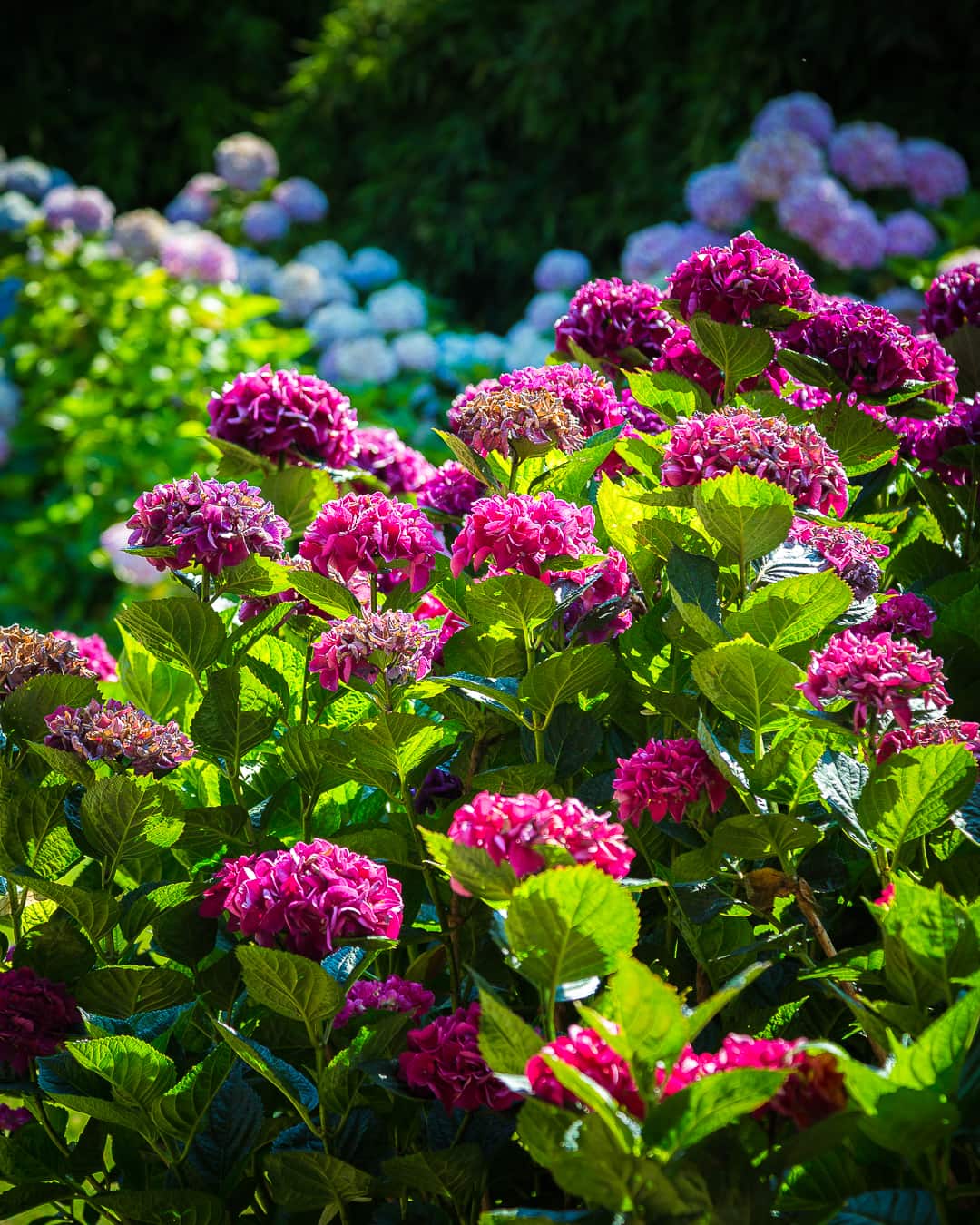
Fuchsia hydrangeas, dense, in high summer. Yet the villa’s real botanical treasure is its roses: the collection numbers more than 500 species. In spring the garden changes colour every week, and anyone returning a month later finds a different place.
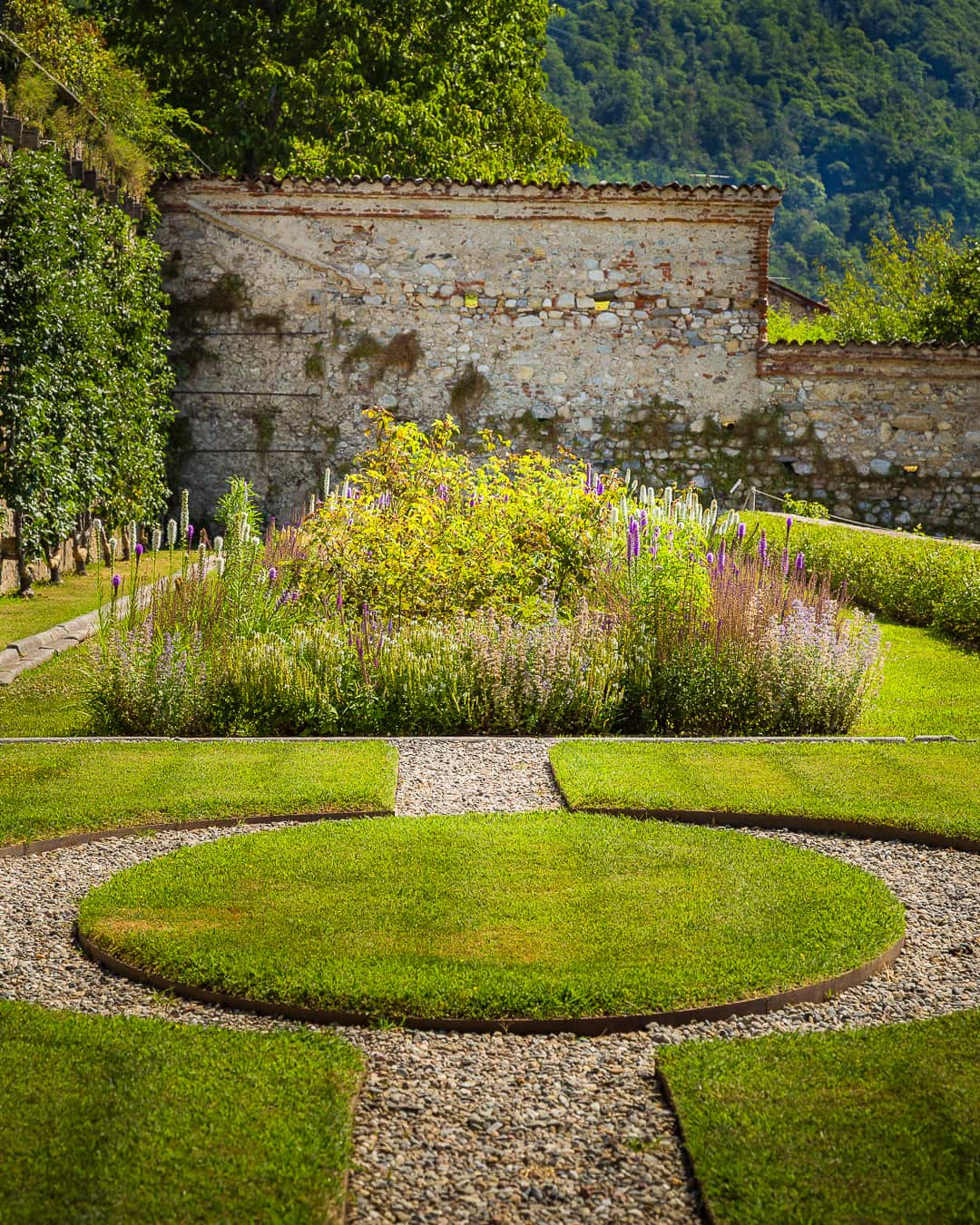
The border
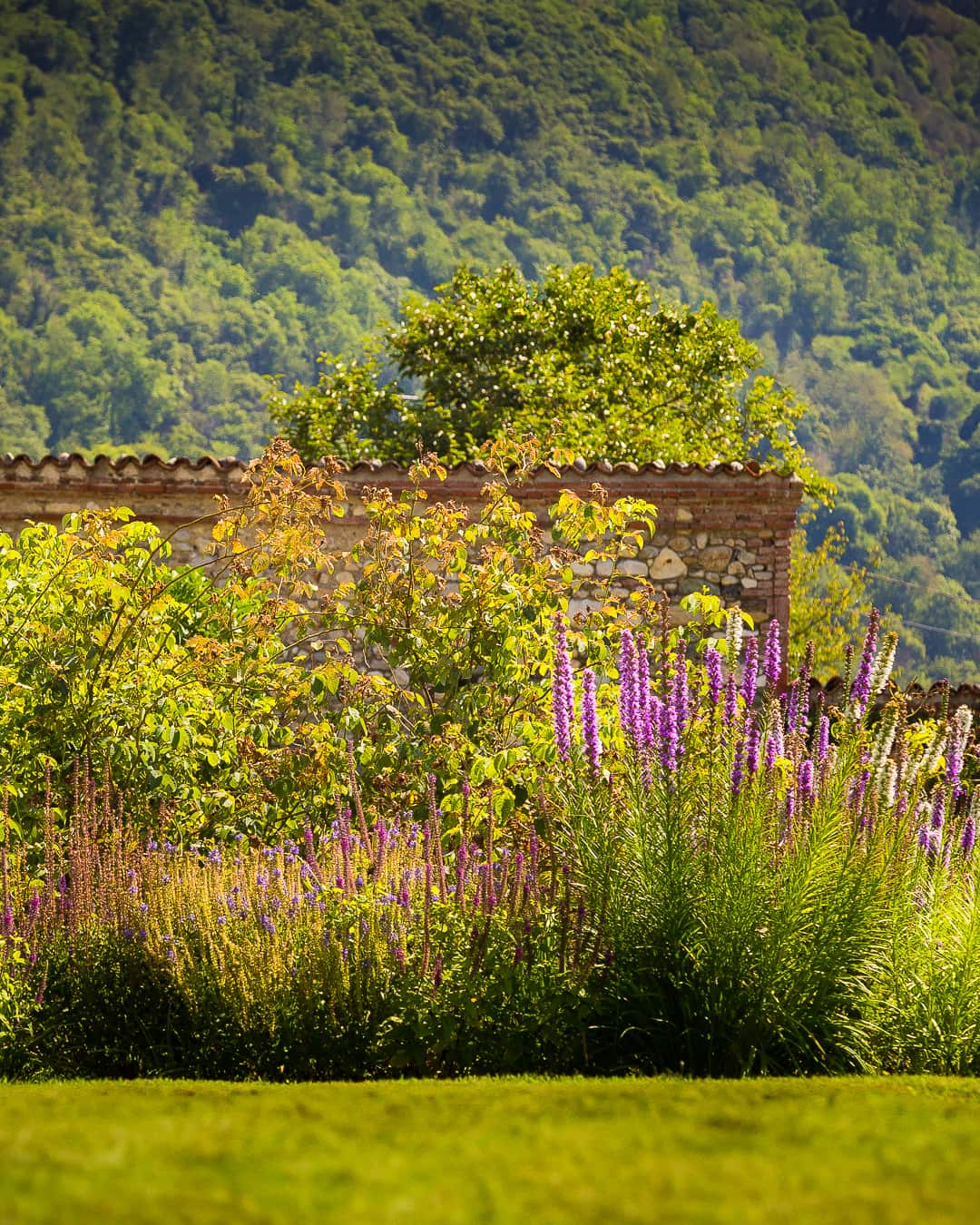
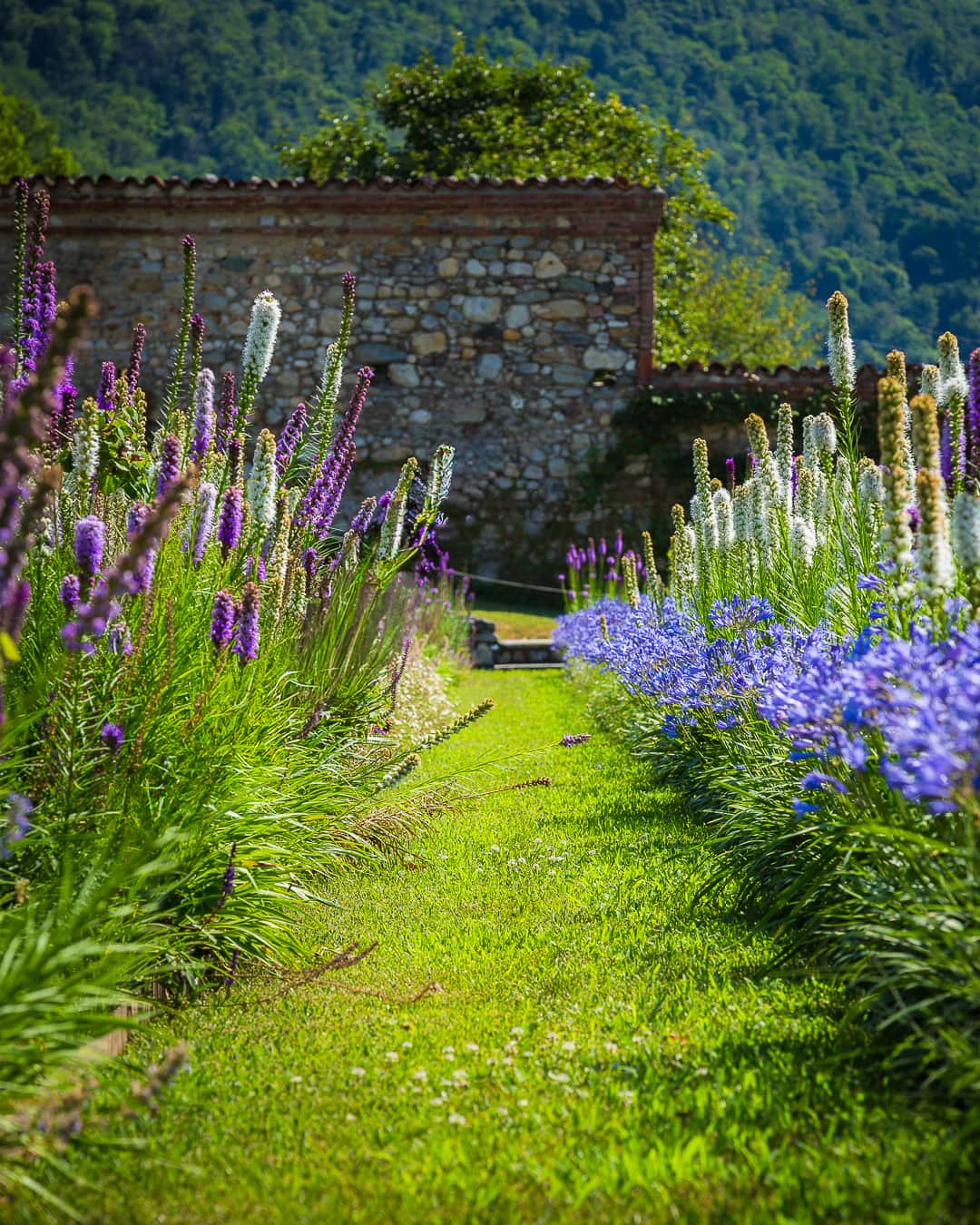
A grass path between purple, blue and white flowers, against the stone wall. Bees are at work in these borders too: the villa has its own hives, and the honey made here is sold in the FAI shop.
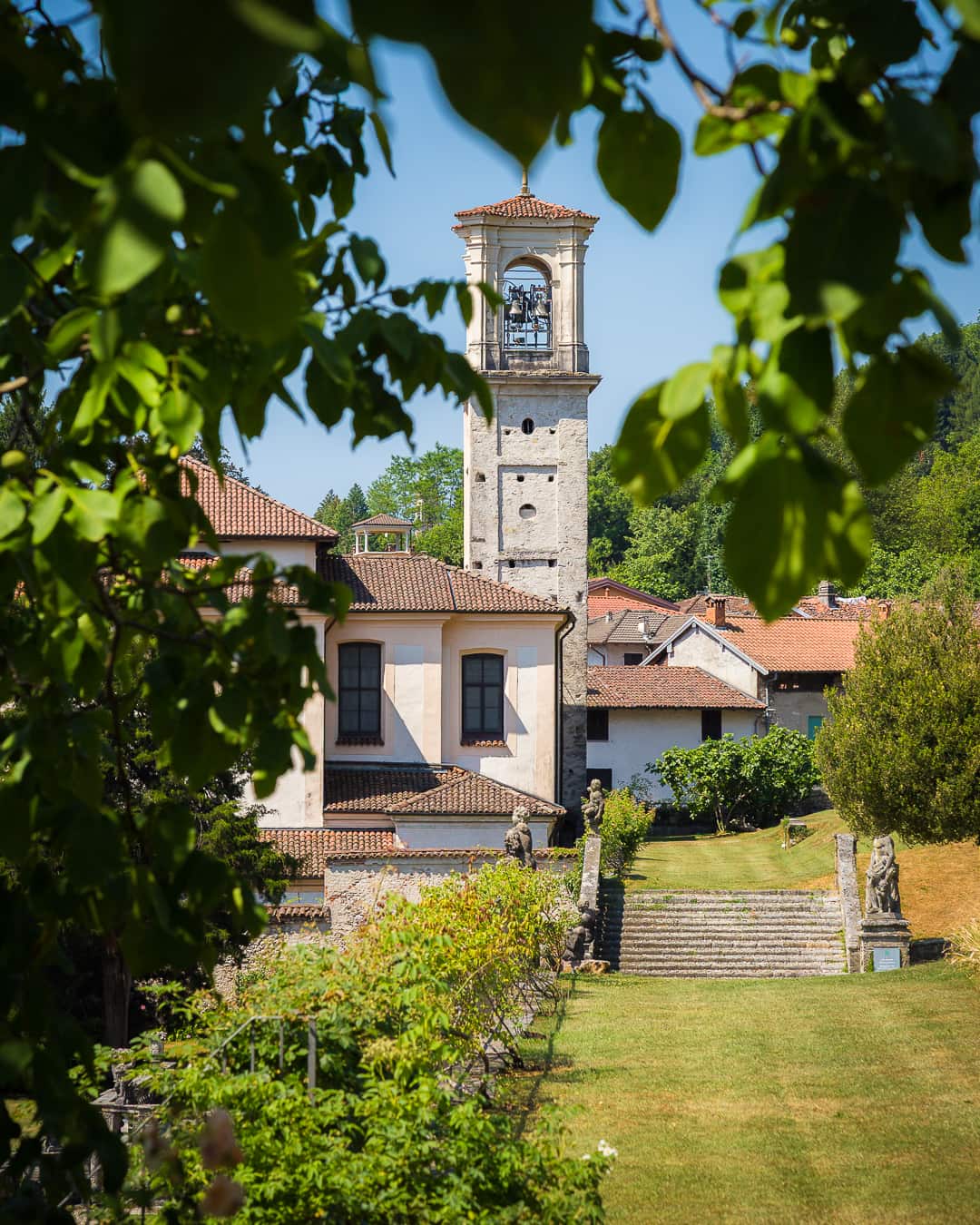
The bell tower through leaves
The village bell tower, framed by leaves, at the end of the lawn. From the villa, the village does not hide: it becomes part of the garden’s vistas. Between Casalzuigno and the villa there is no sharp border, just a long life side by side.
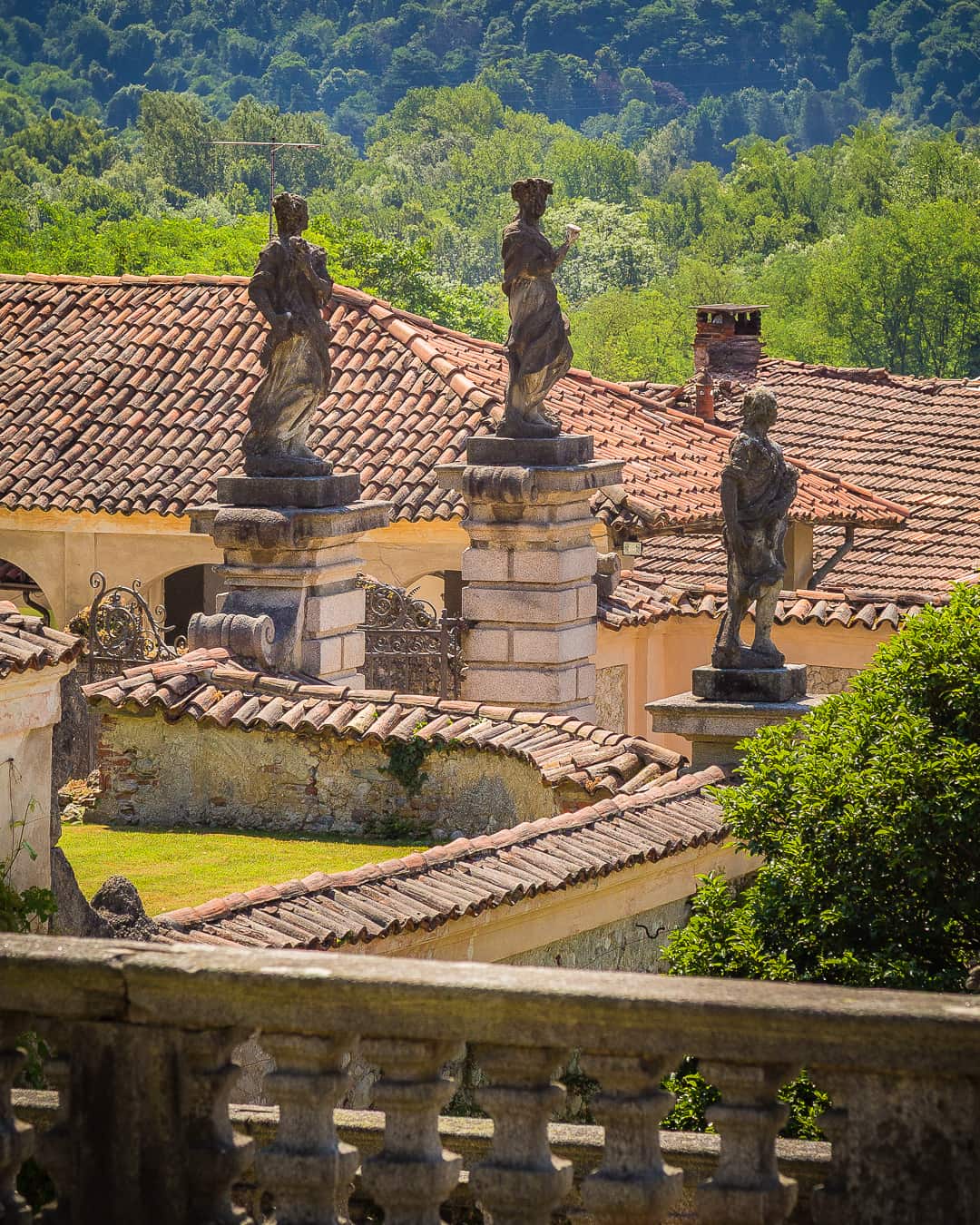
The lookout
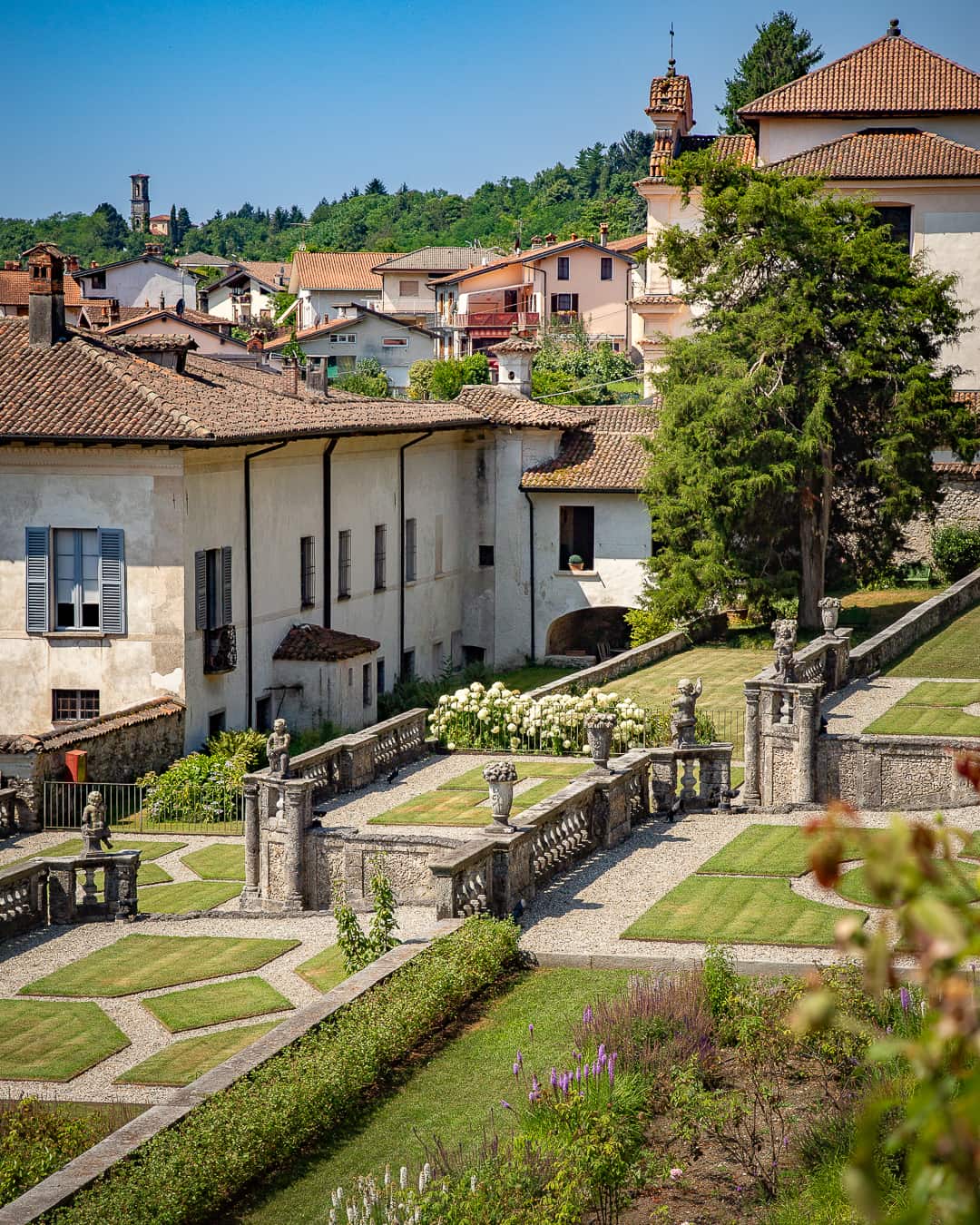
The village, the villa, the terraces with their statues: from above everything falls into place. A steep path leads up here, to the lookout at the top of the garden. It is the reward for the climb, and the point from which the eighteenth-century design can be read in full.
Getting there
- Where
- Viale Camillo Bozzolo 5, Casalzuigno (Varese), in the Valcuvia.
- By train
- Trenord Laveno–Varese–Saronno–Milan line, Cittiglio stop.
- When
- From March to mid-December, usually Wednesday to Sunday. Opening times change with the seasons, so check them on the FAI website.
- Nearby
- Arcumeggia, the painted village, with frescoes on the façades of its houses.
- Our advice
- Climb to the lookout before going into the rooms: from above you grasp the design, and then you find it again through the windows.
Information checked on 21 November 2026.
Sources
- Villa Della Porta Bozzolo — FAI Fondo per l’Ambiente Italiano
- Villa Della Porta Bozzolo, informazioni per la visita — FAI
- Narcisi, rose, spiree: le fioriture nei Beni FAI — FAI
- Storia della filanda di Villa Della Porta Bozzolo — FAI, 2024
- Dal mulino alla Villa — FAI
- Il giardino settecentesco — FAI, 2026
- Unicità italiana: la Bottega Costantini — FAI
- Il Borgo di Arcumeggia — FAI, 2026
- Caccia al tesoro botanico, come arrivare — FAI
- Villa Della Porta Bozzolo, scheda — Lombardia Beni Culturali
- Villa Della Porta Bozzolo — Università di Bologna
- Villa Della Porta Bozzolo, la casa di delizia nata per amore — VareseNews, 2020
- Villa Della Porta Bozzolo — HIMETOP
- Un weekend alla scoperta dei giardini FAI — VareseNews, 2021
- Villa della Porta Bozzolo — Associazione Parchi e Giardini d’Italia
Note
Photographs by William, also published on Instagram as @guglielmo.foto.
Texts and layout: WIDE Edizioni, Rho. Historical and practical information is checked against the sources on the previous page.
© 2026 WIDE Edizioni
A book for your place
We photograph villas, museums, villages and landscapes in natural light, and turn them into images ready for your website, print and social media. Or into pages to leaf through, like these.