WIDE Edizioni
Villa Panza
Varese
Photographs by William
A hanging garden
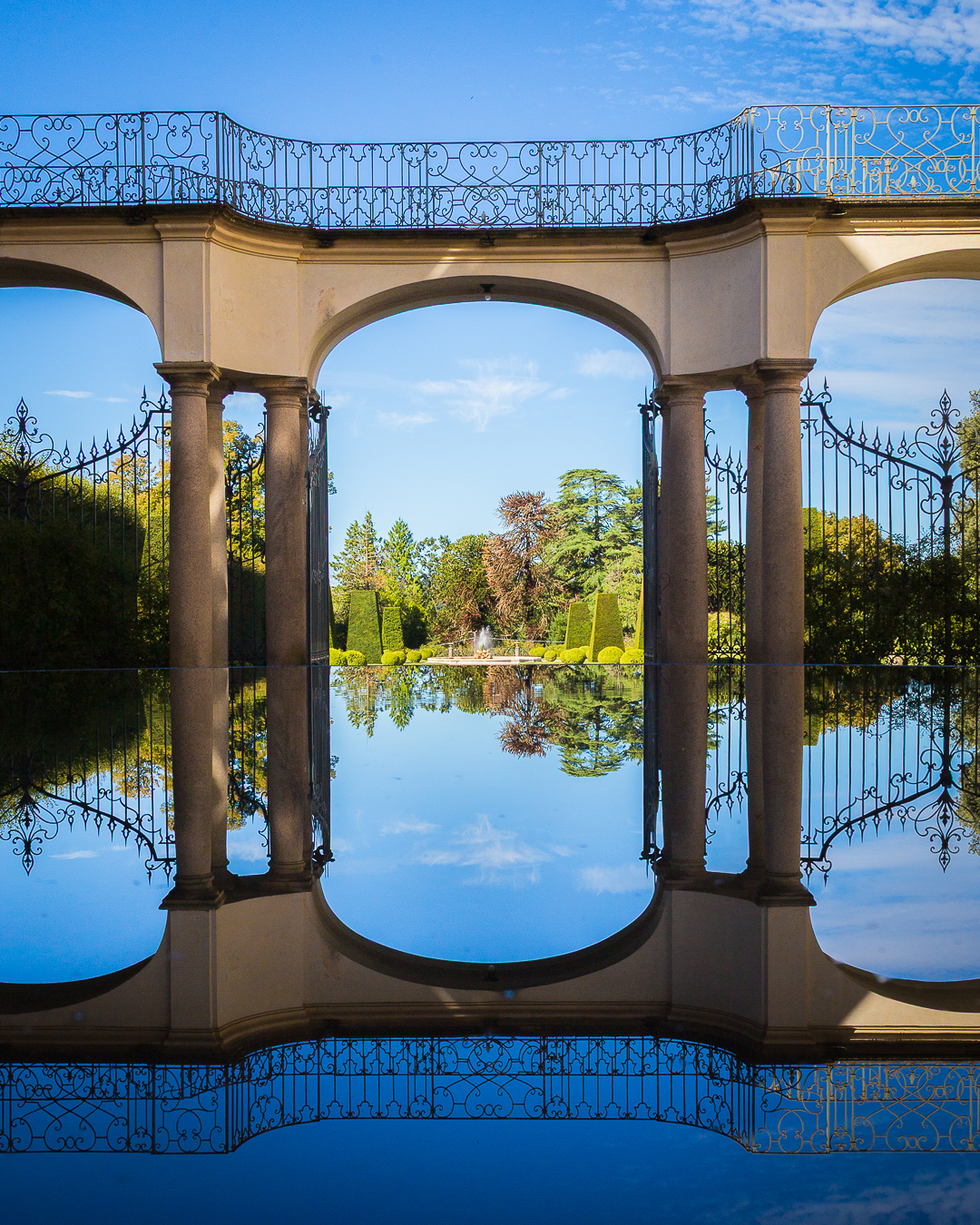
On Biumo hill, above Varese, a villa looks out over the town from a garden that almost seems to float. In the mid-eighteenth century the Marquis Paolo Antonio Menafoglio had great walls raised and filled with earth, creating a terrace on which to set house and garden.
Then came the Litta family, the architect Luigi Canonica and, in 1935, the Panza family. From 1955 Giuseppe Panza made it one of the best-known homes of contemporary art in the world; in 1996 he and his wife Giovanna donated it to FAI.
These pages explore it like a walk: the villa, the garden, the park, the rooms, the light.
I
On the hill
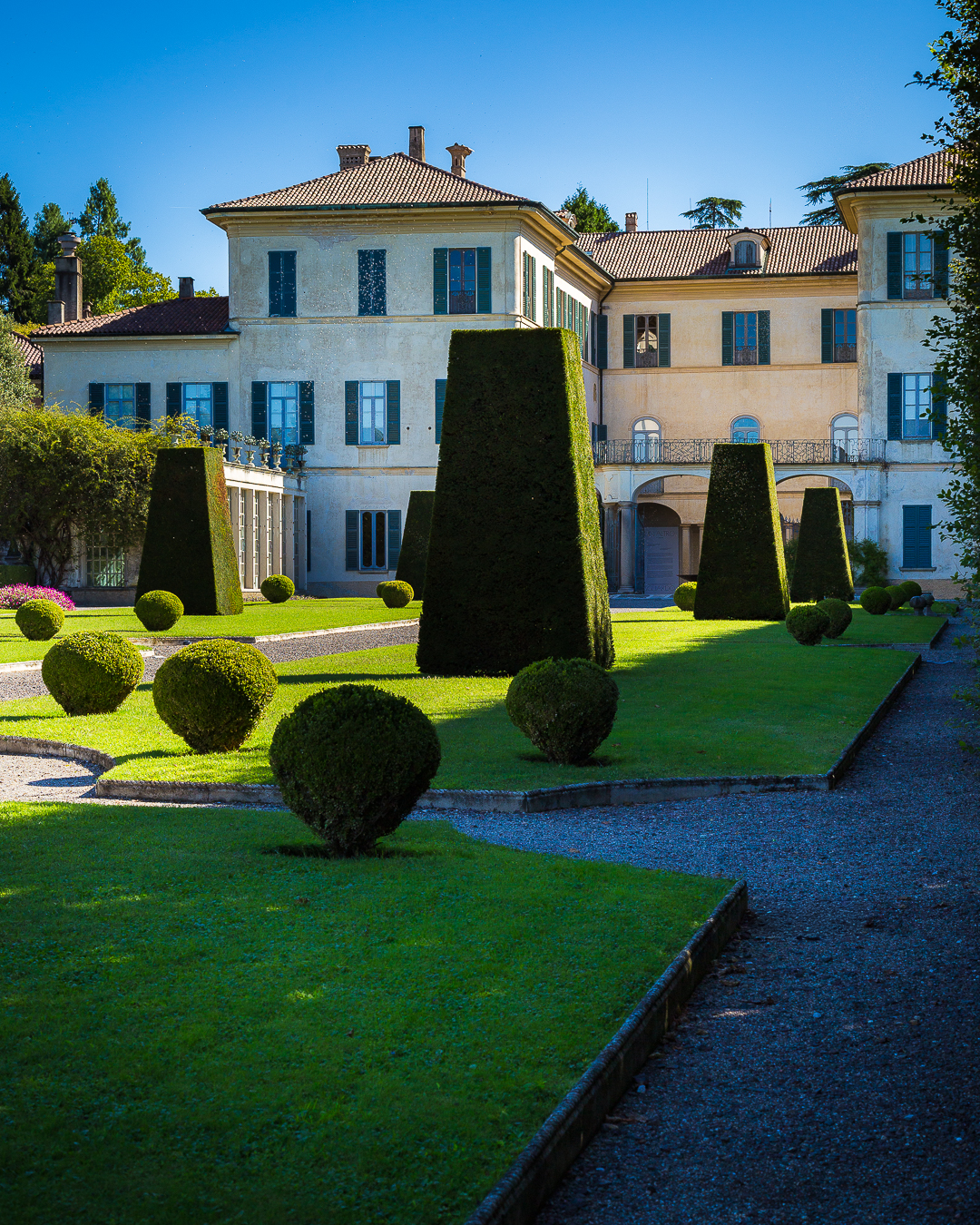
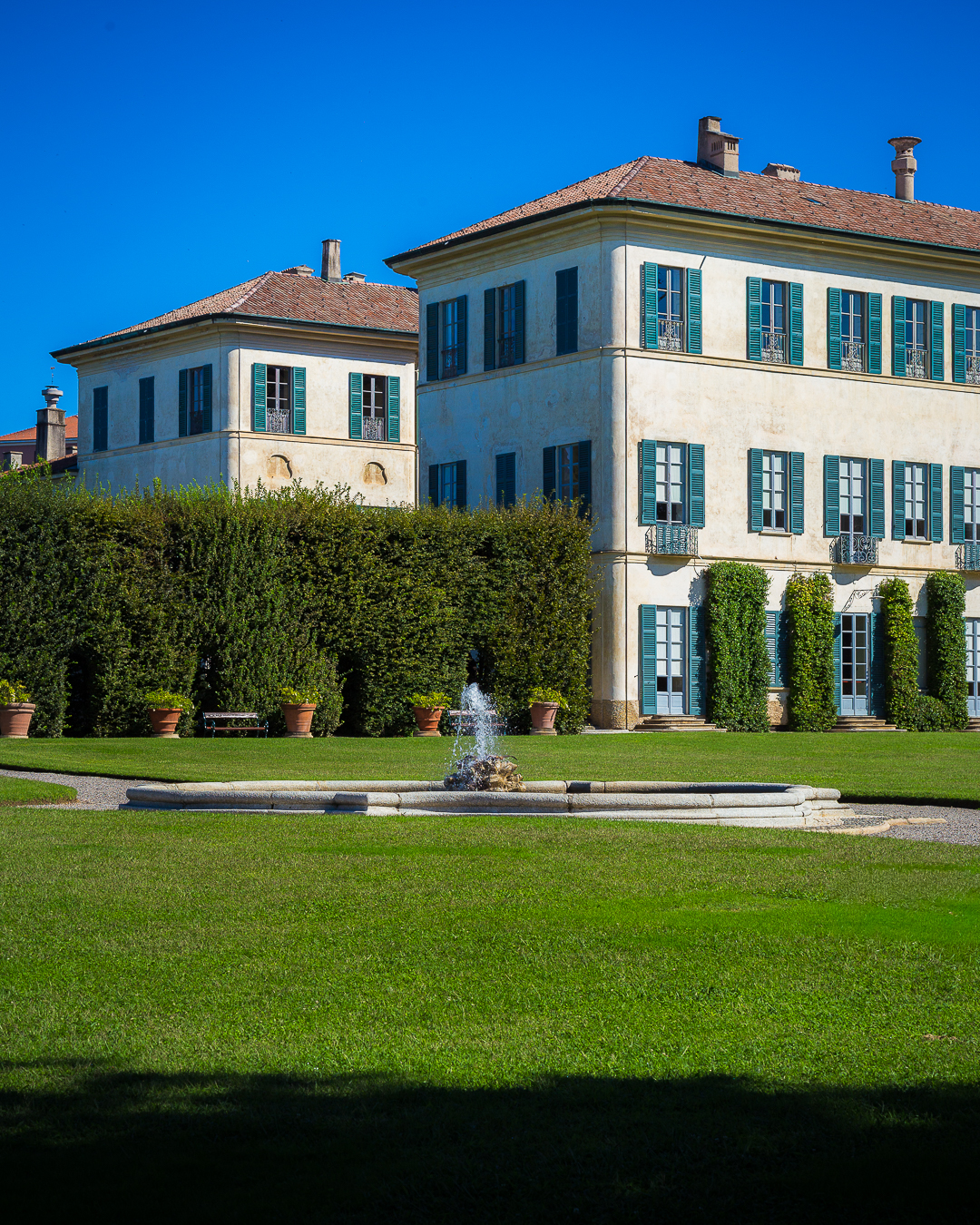
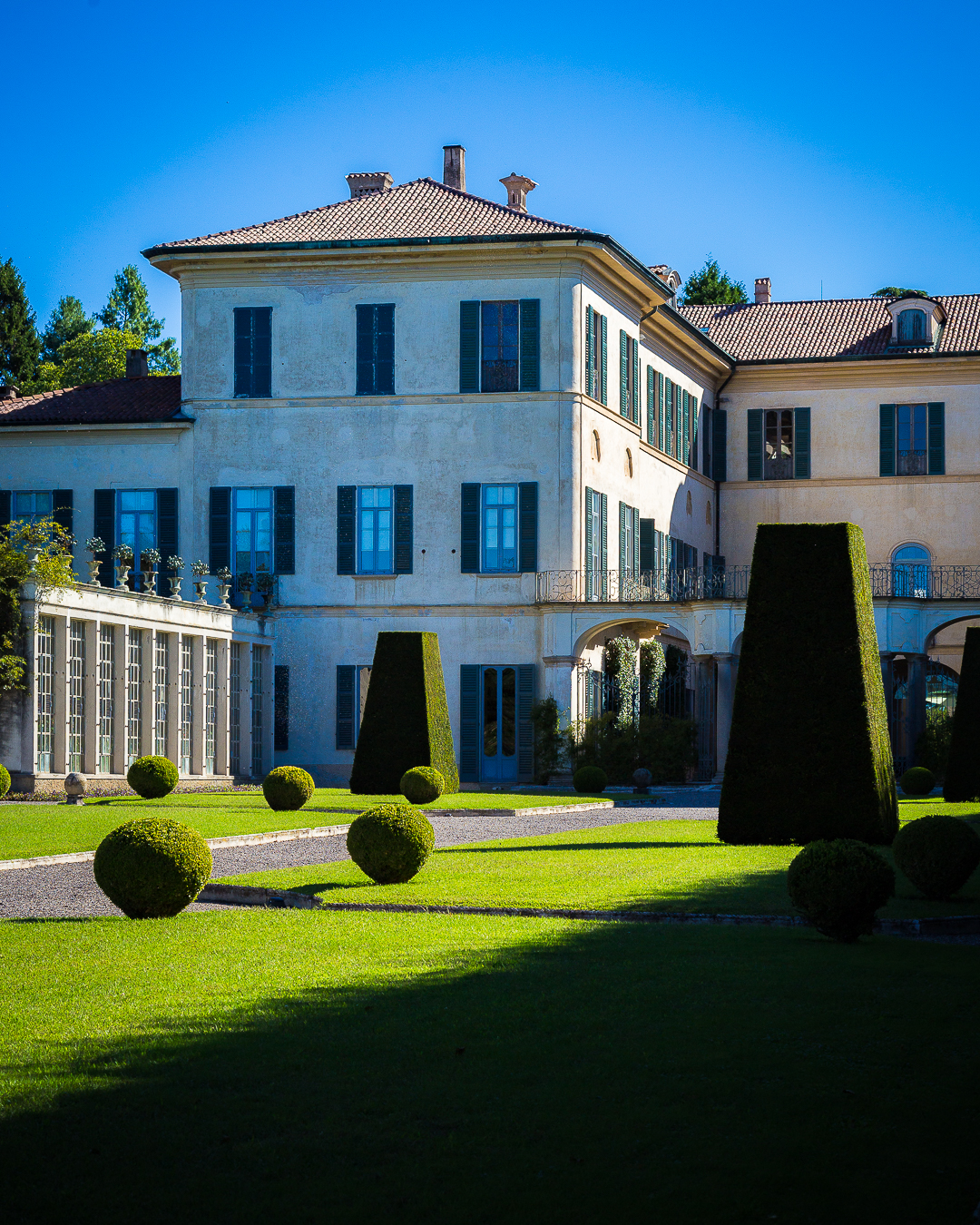
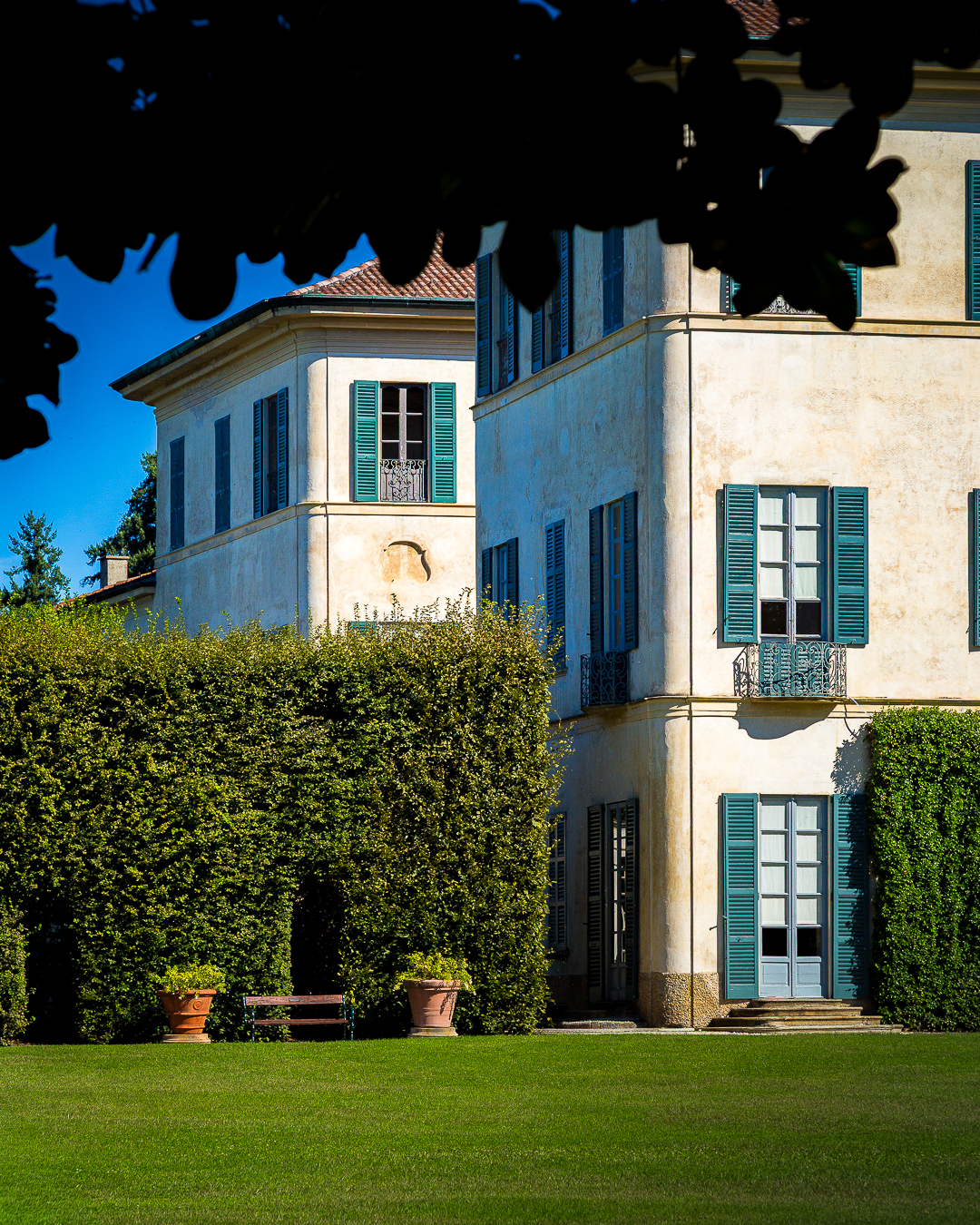
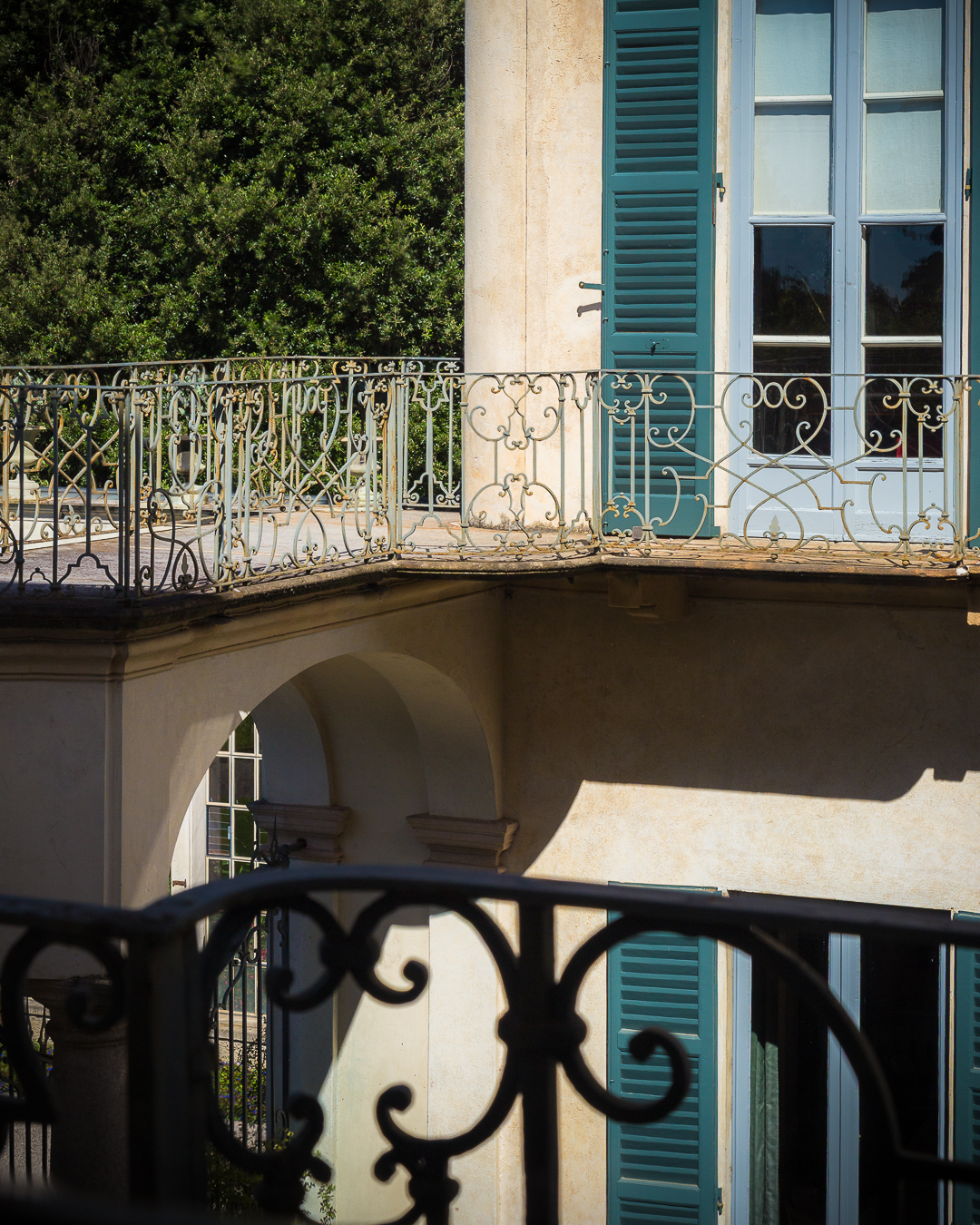
The villa is U-shaped, open towards the garden: three storeys, pale plaster, green shutters.
In 1823 it was bought by Duke Pompeo Litta Visconti Arese, who entrusted the renovation of house and park to Luigi Canonica, a pupil of Piermarini and an architect of the Napoleonic era.
In 1935 Ernesto Panza arrived and called in Piero Portaluppi: the same architect who was building Villa Necchi in Milan in those very years. Since then the house has changed little outside, and a great deal inside.
On the terrace
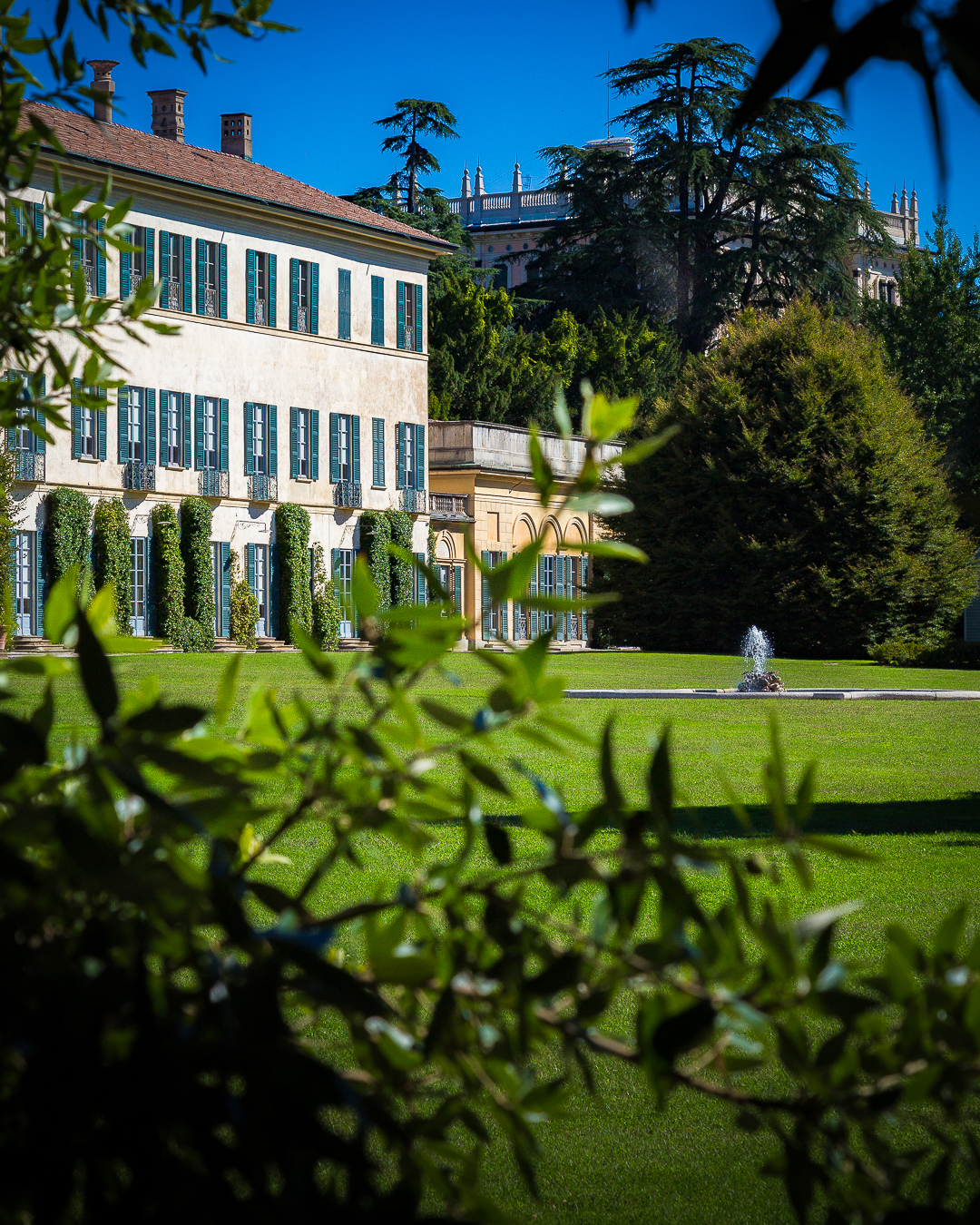
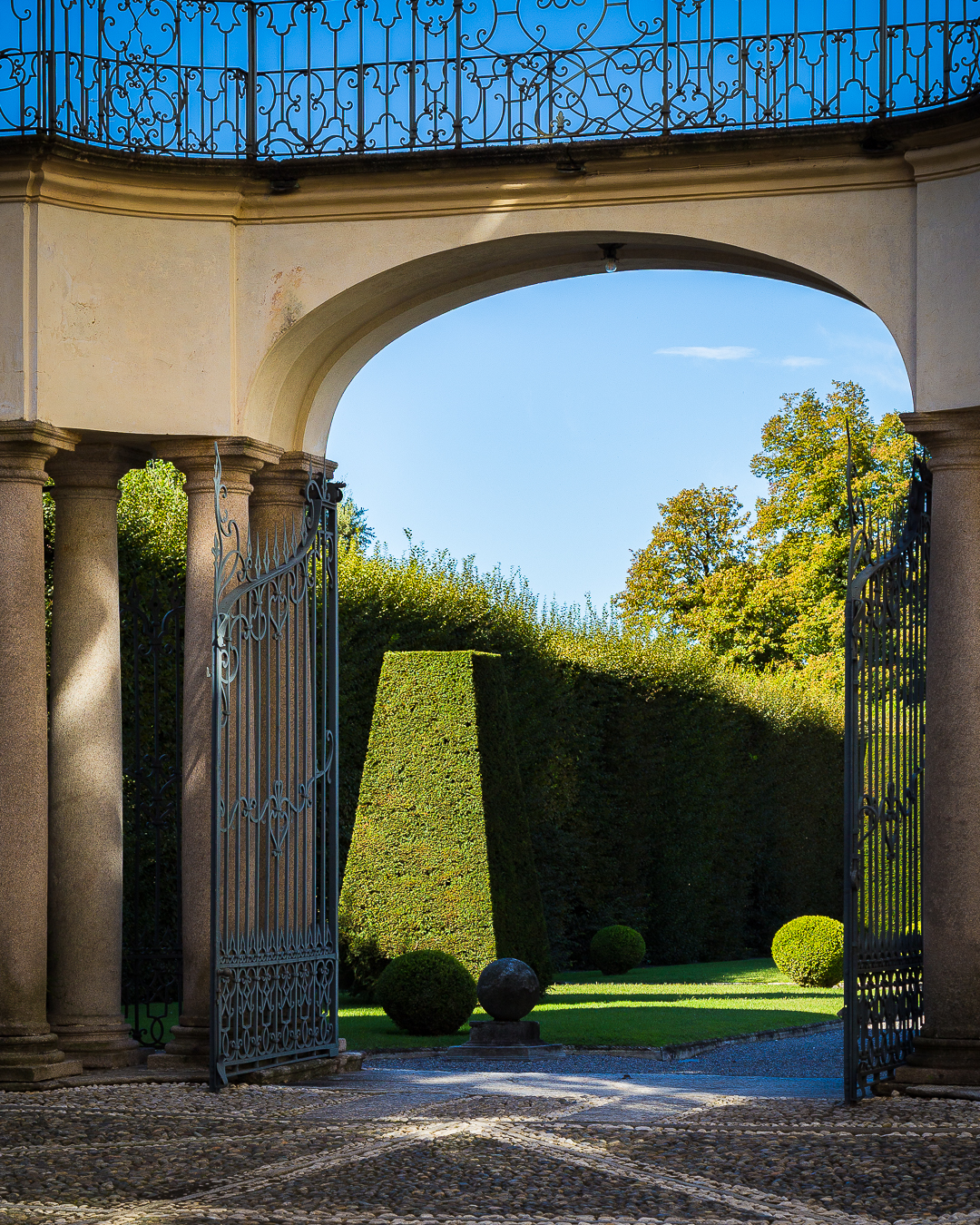
The pale façade, the green shutters, the lawn in front: it looks like a villa on the plain. In fact everything rests on a man-made terrace. In the eighteenth century the Marquis Menafoglio had boundary walls raised and filled with earth: the garden has stayed that way, suspended above Varese.
The paving
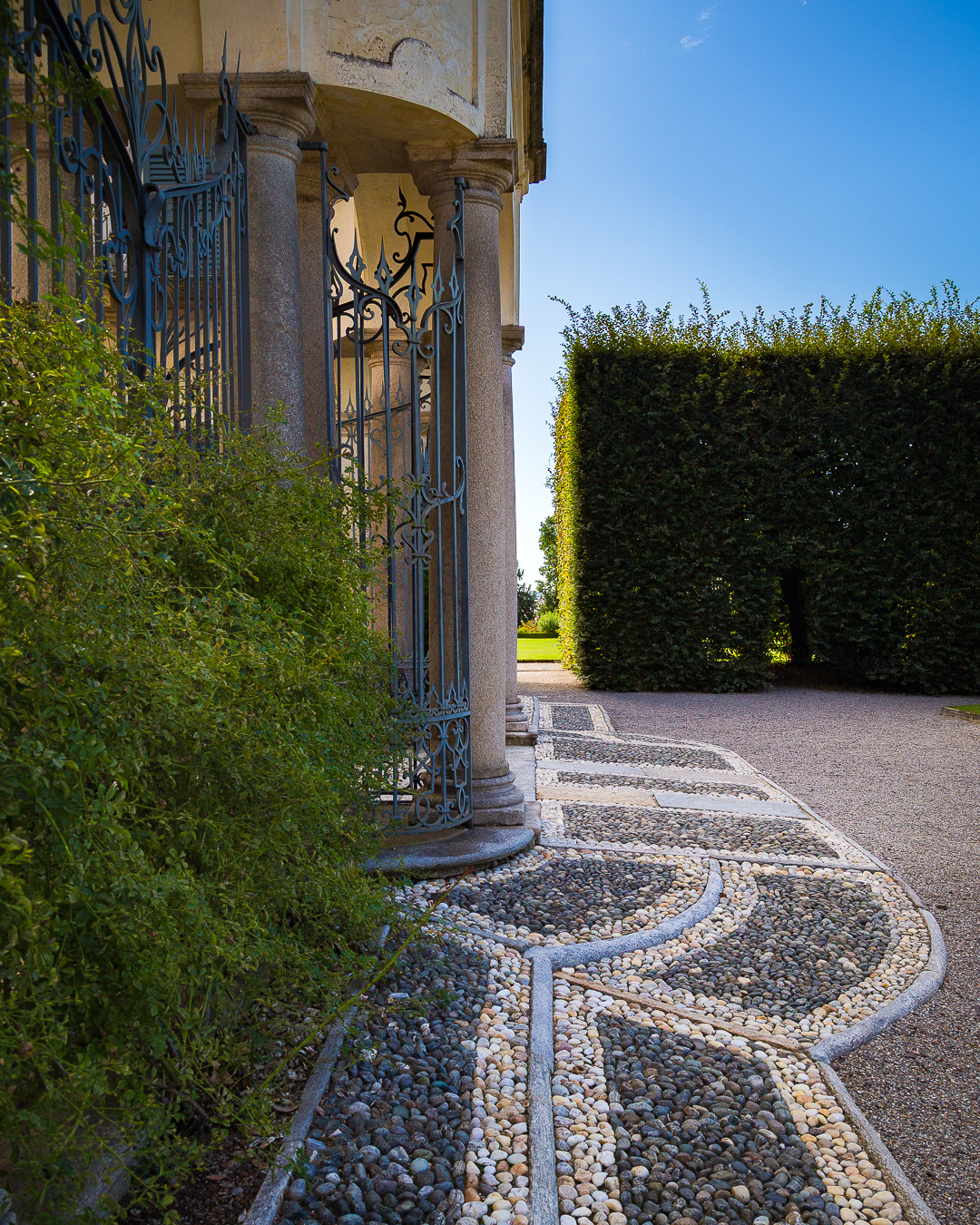
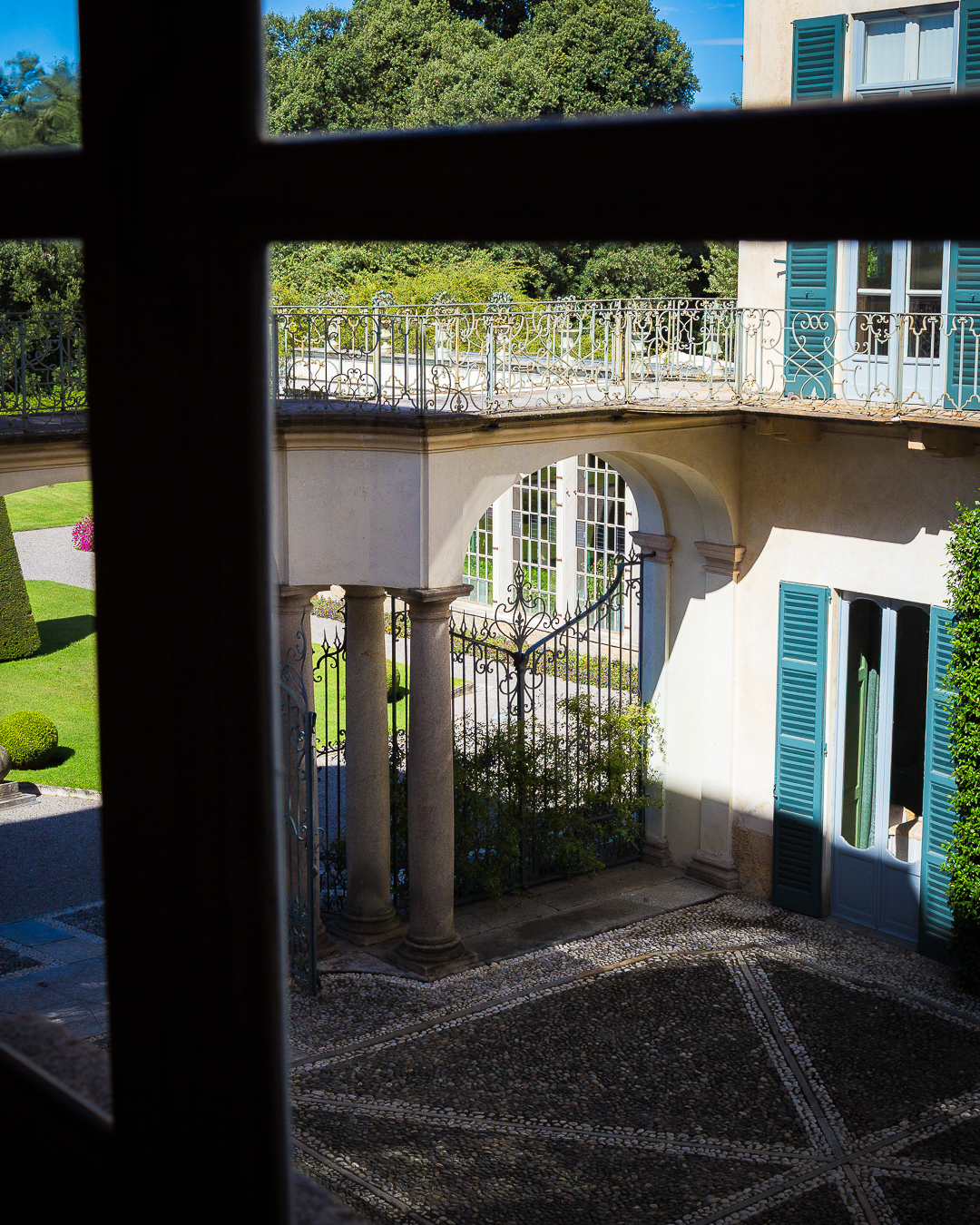
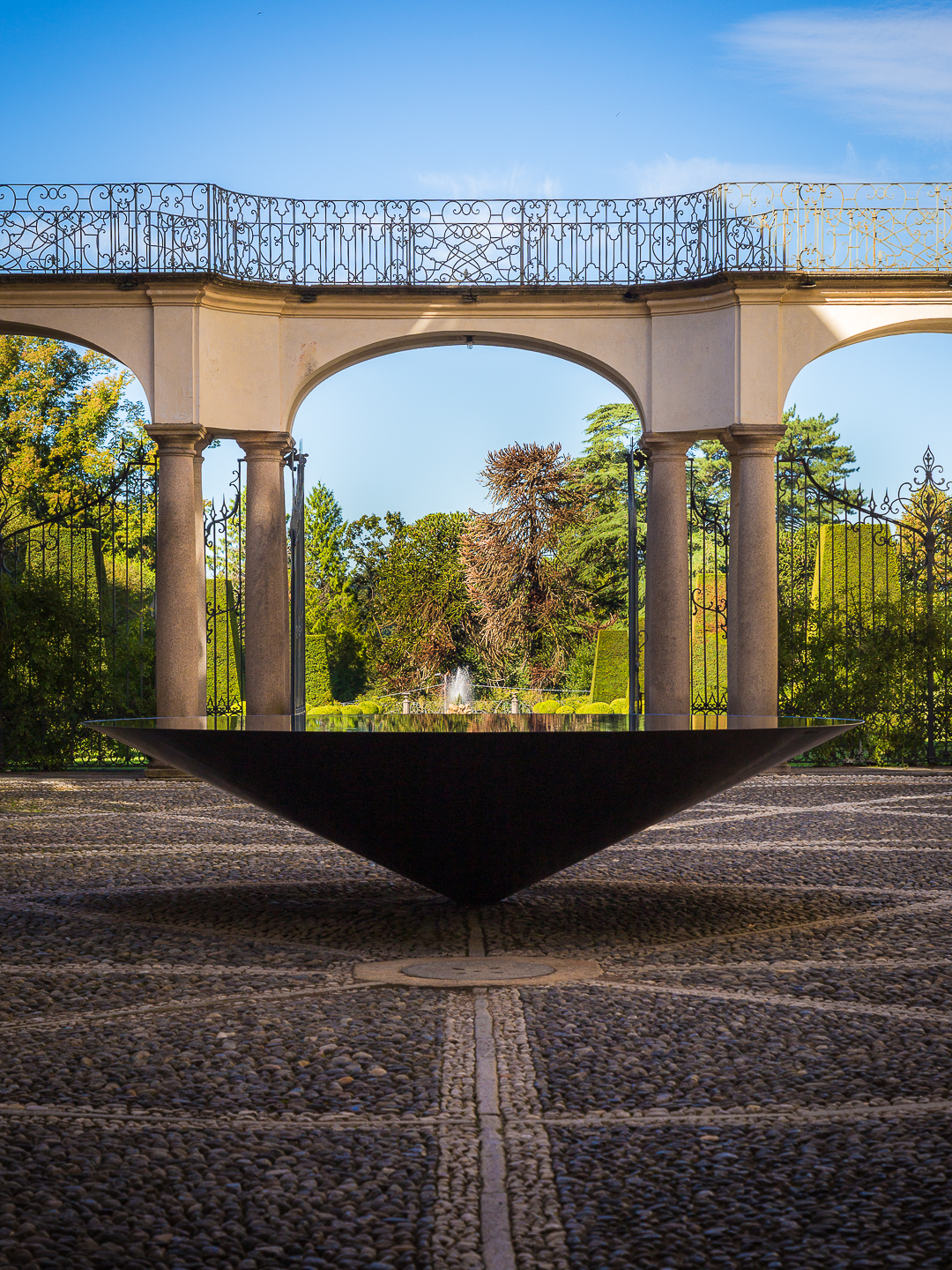
White and grey pebbles draw curves on the paving in front of a wrought-iron gate. In a house like this, even the ground outside is a drawing: you walk over it without seeing it, and only understand it when you look down from the first-floor windows.
Red iron
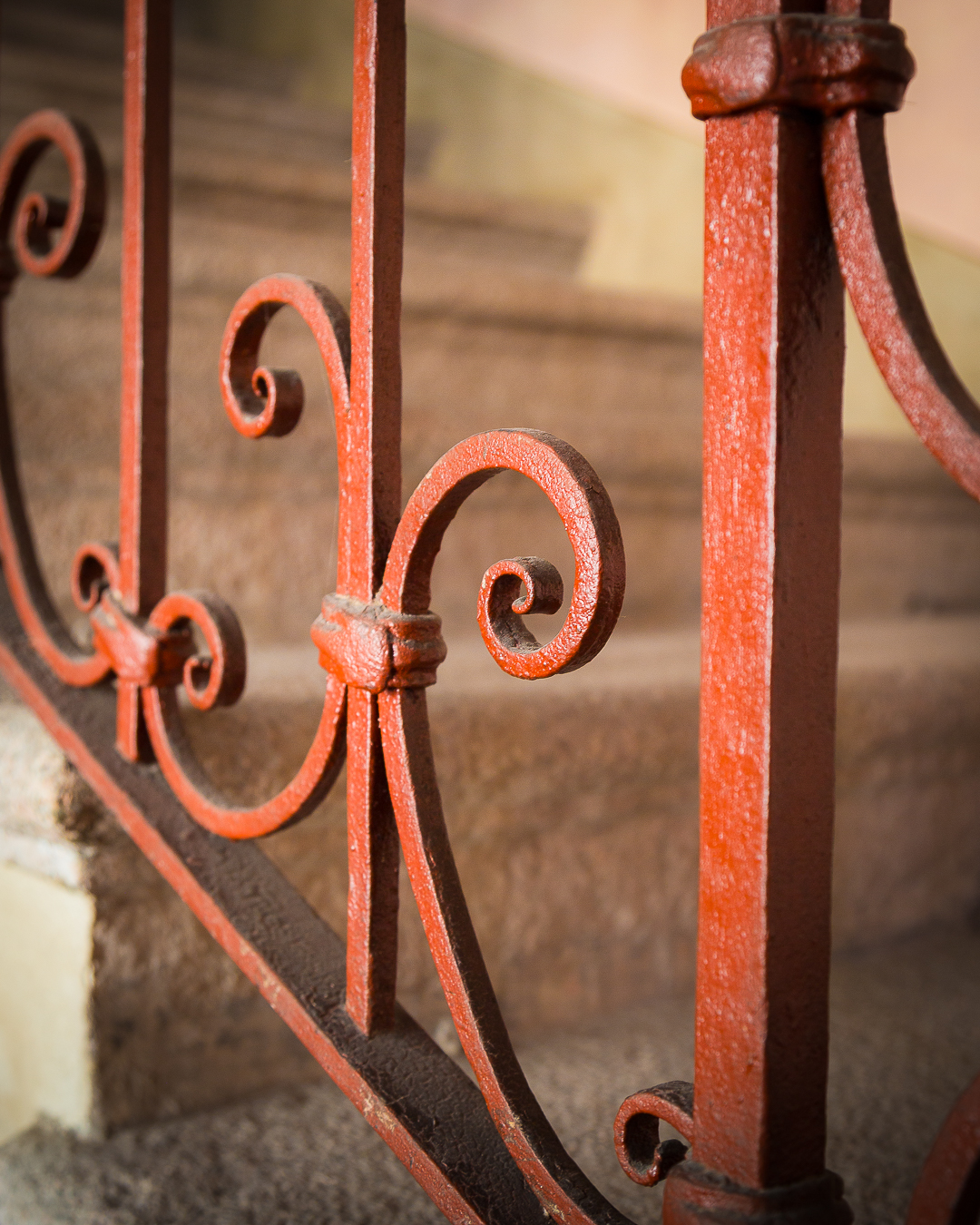
Wrought-iron scrolls, red paint faded by time, a low sun. Villa Panza is famous worldwide for contemporary art, but the house is more than two centuries old, and its craftsmanship holds its own beside the artworks. You only have to look closely.
II
The garden
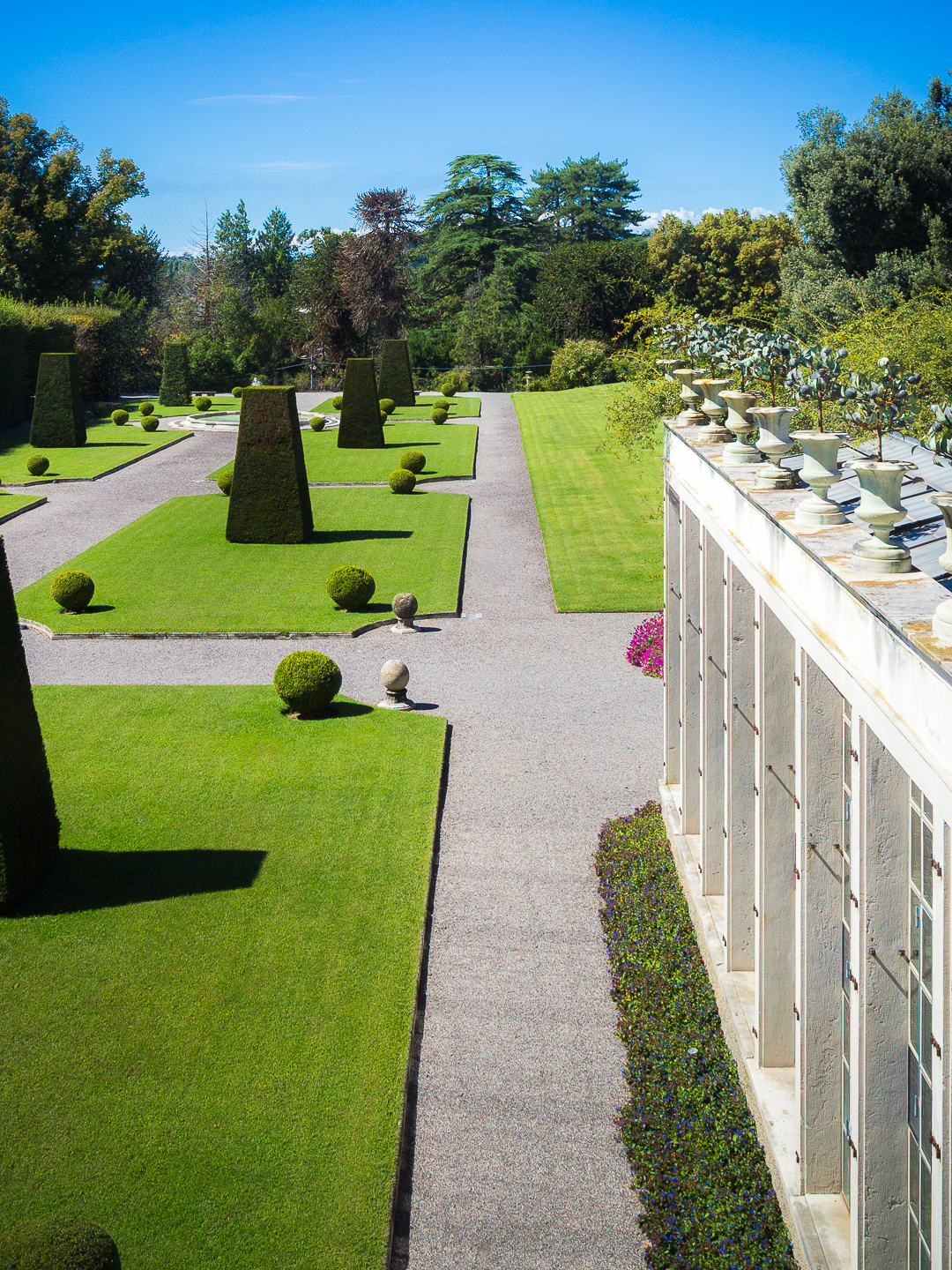
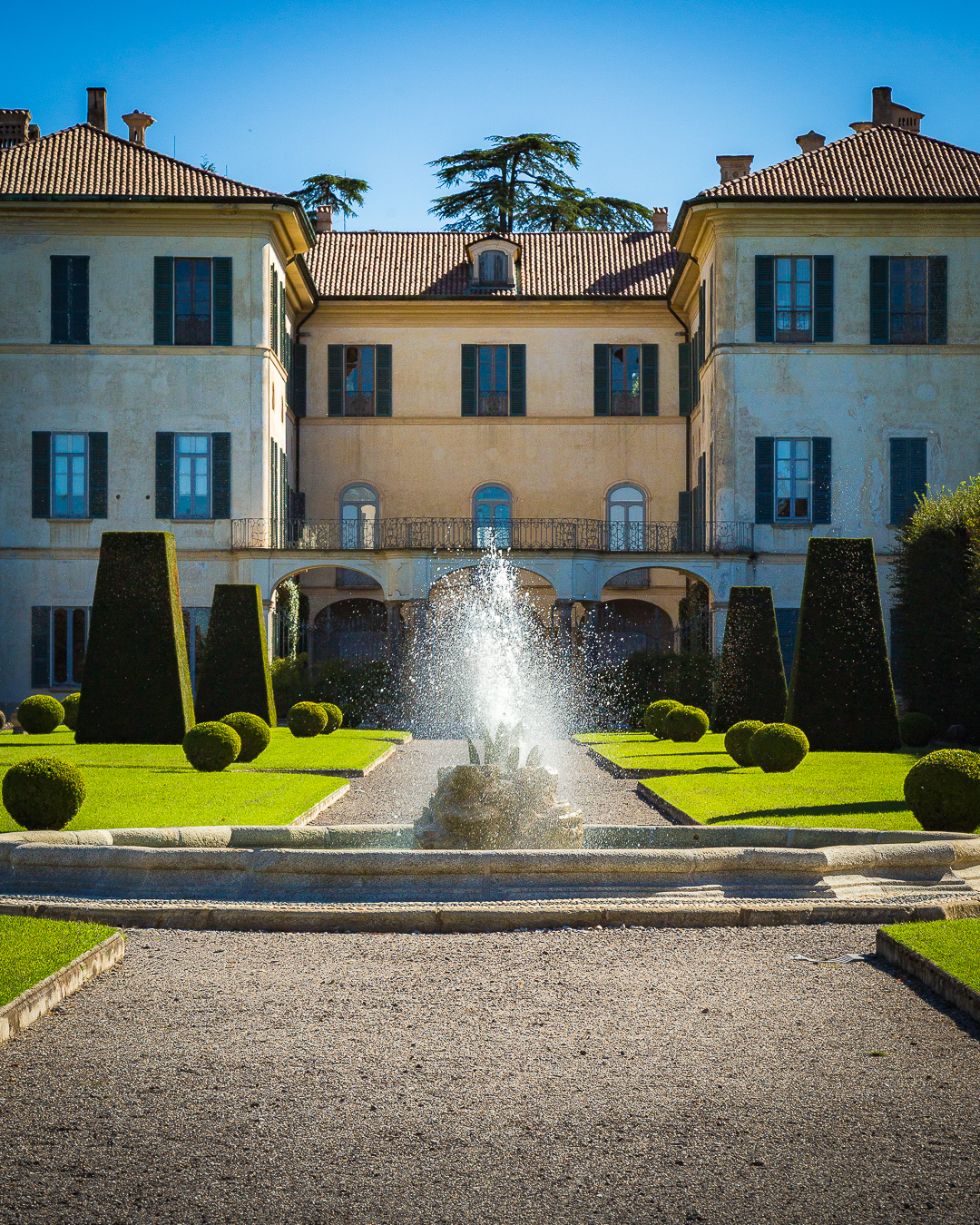
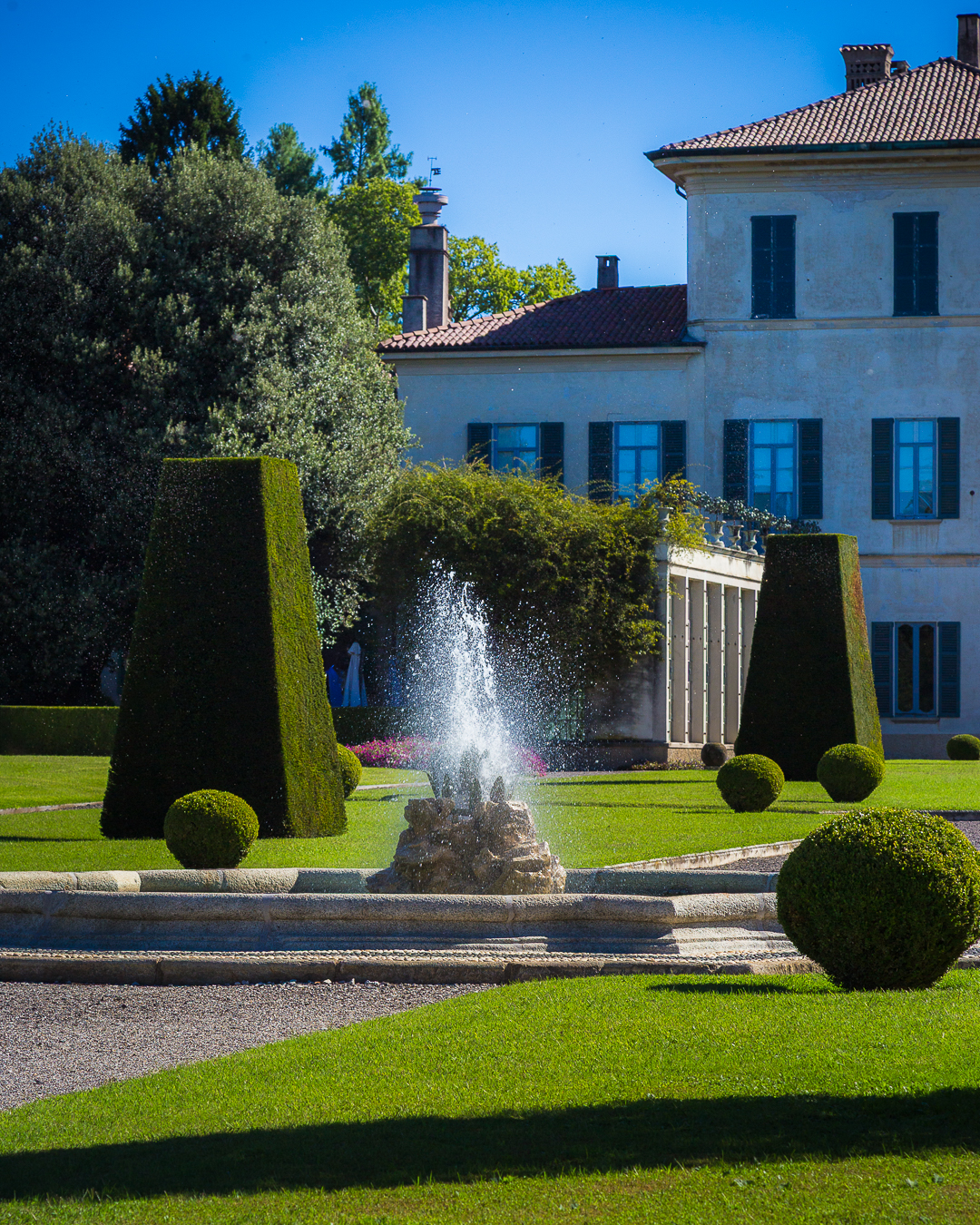
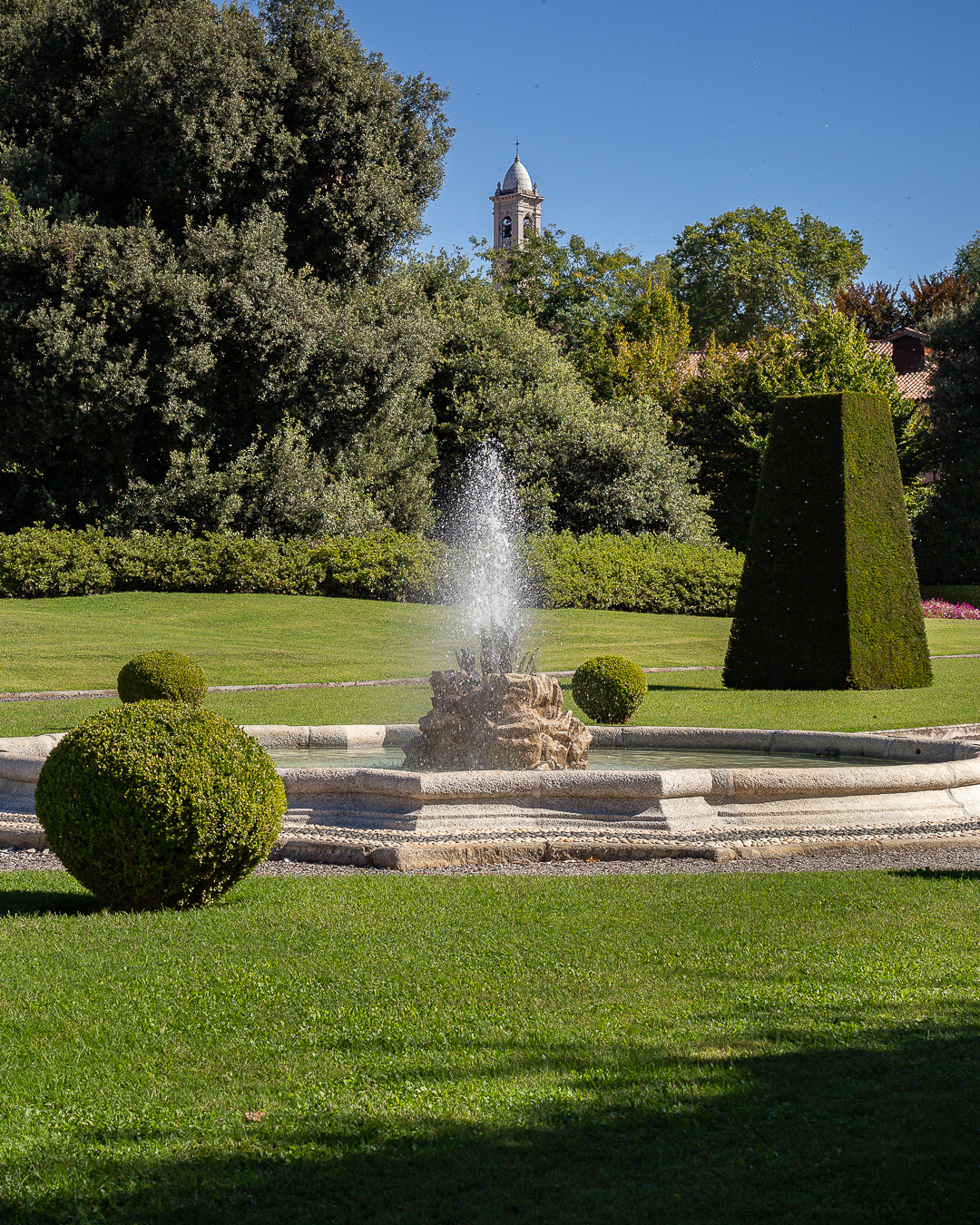
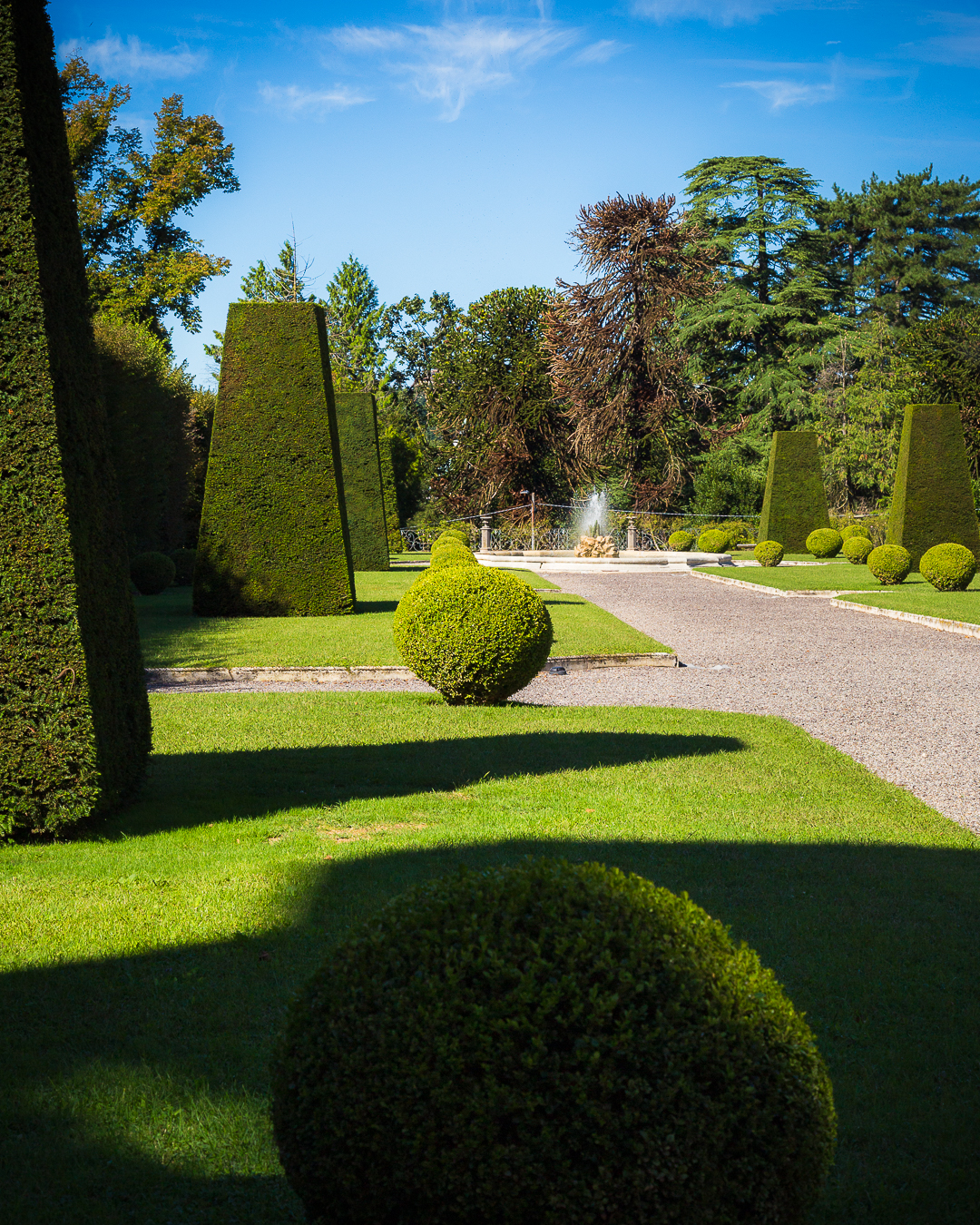
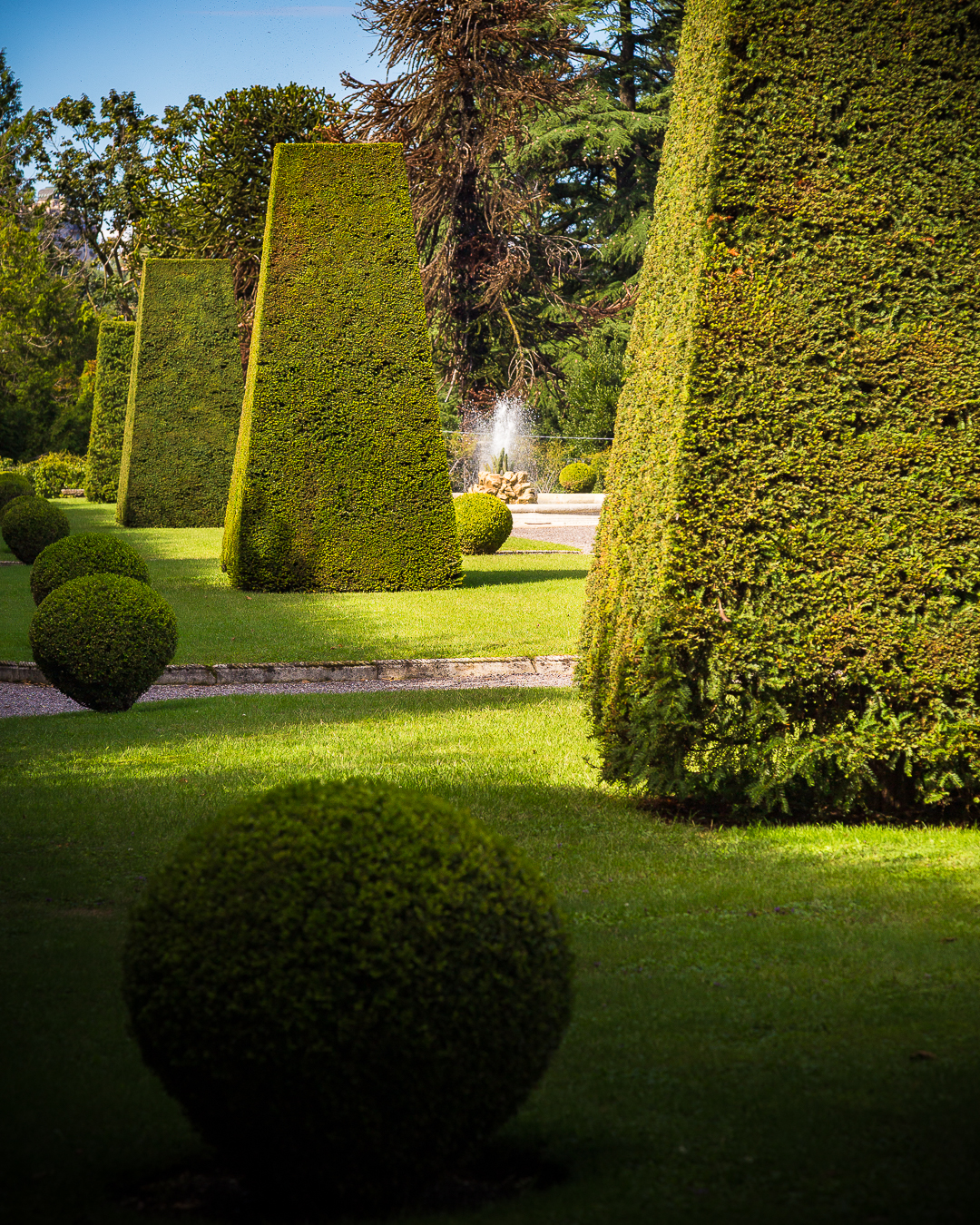
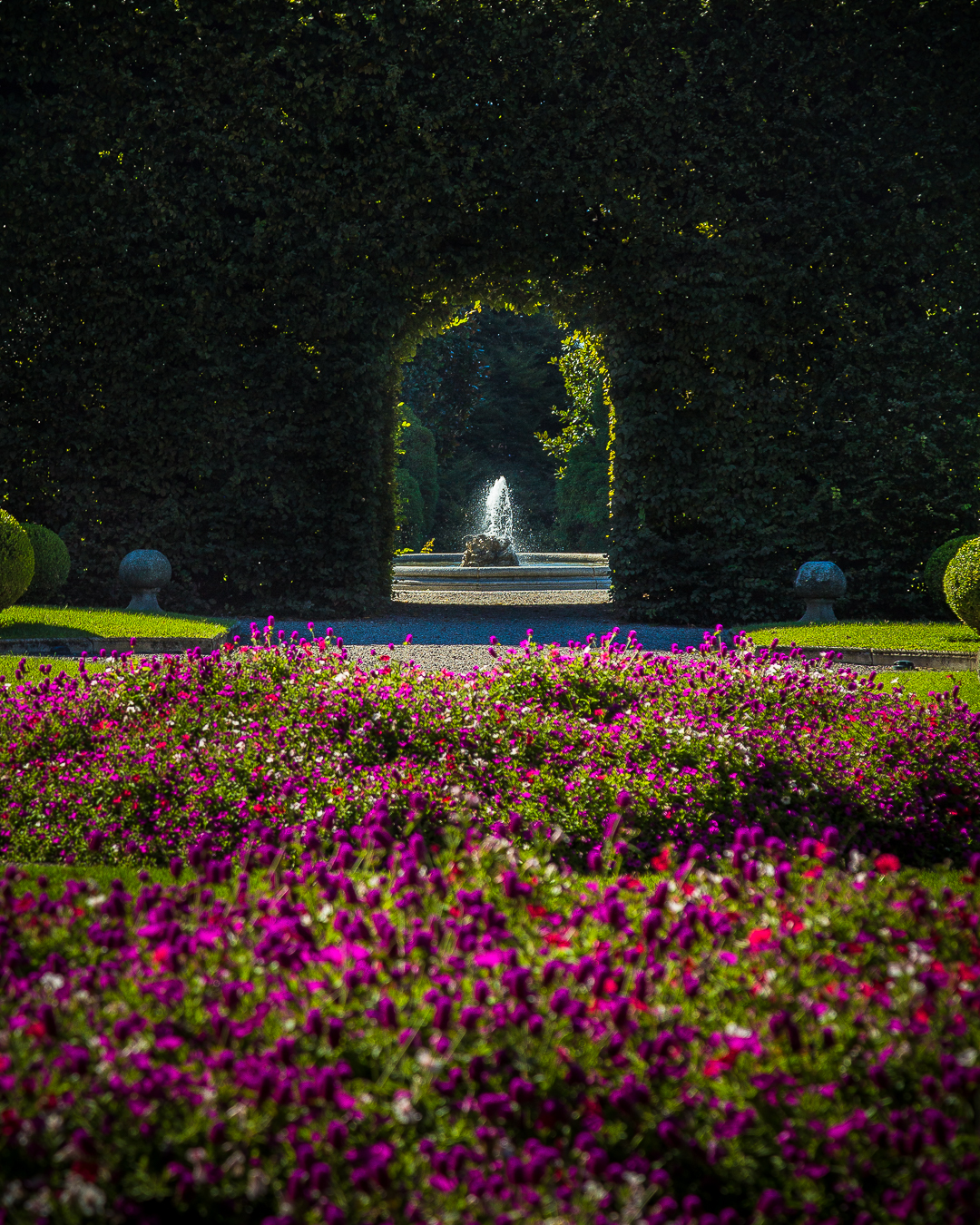
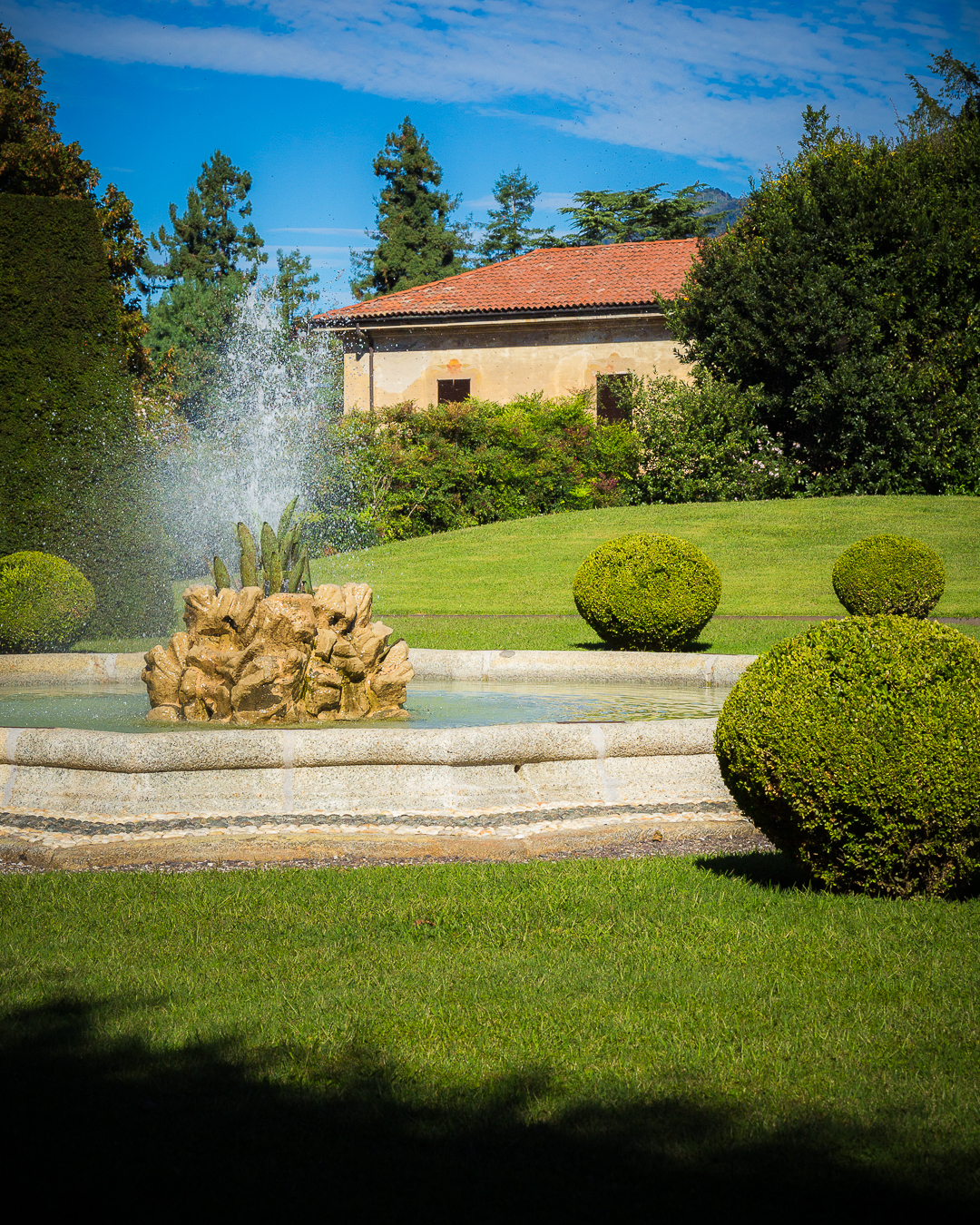
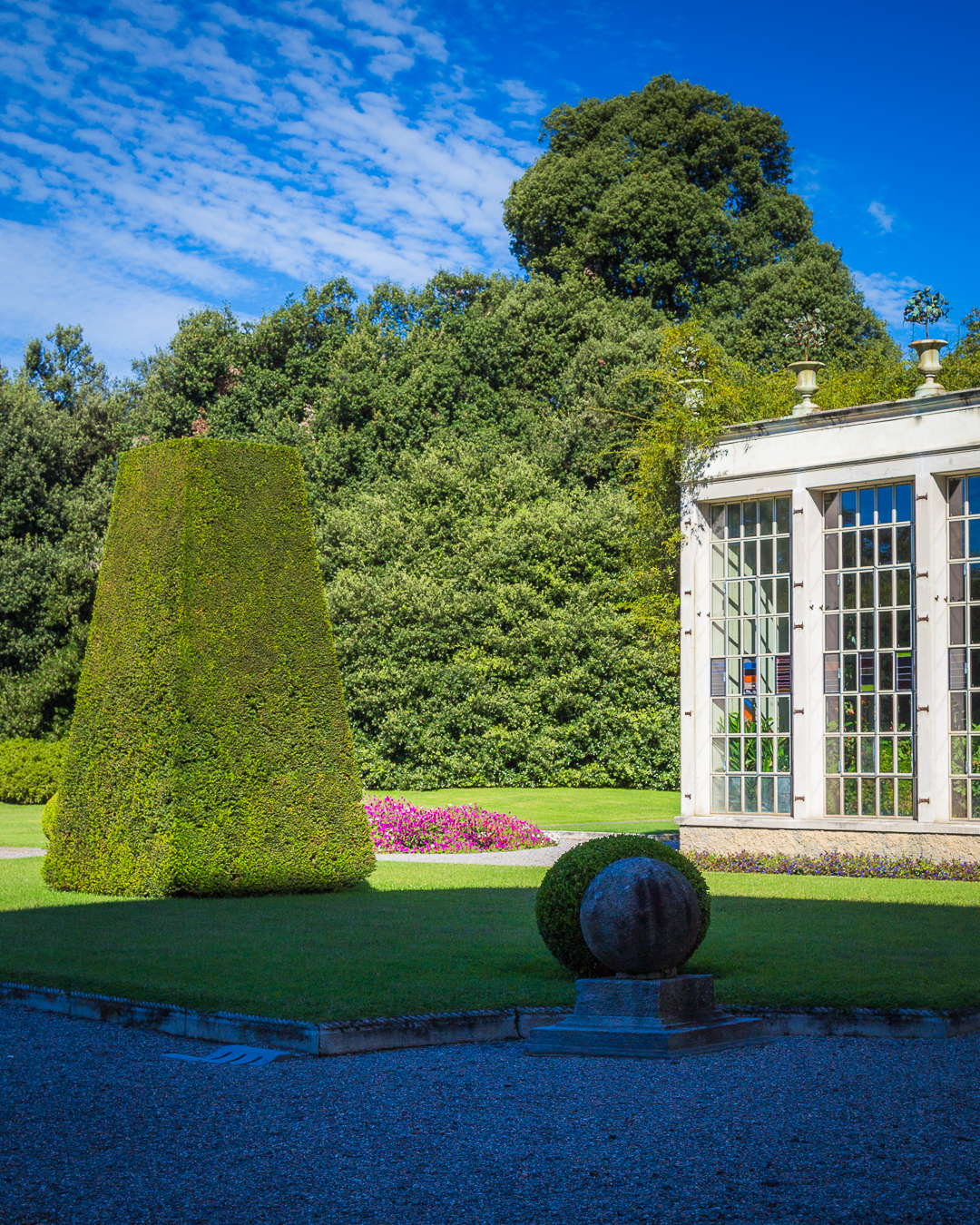
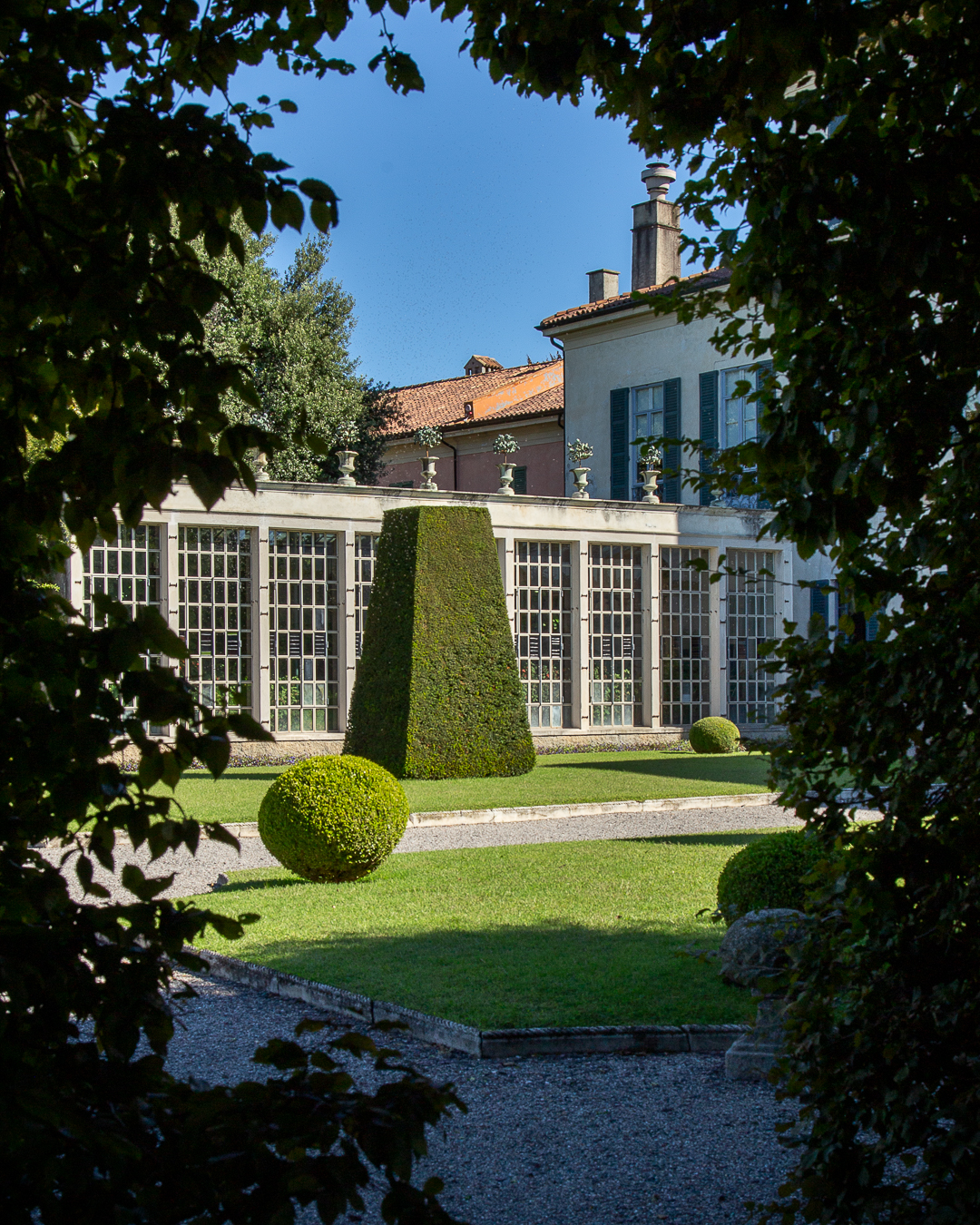
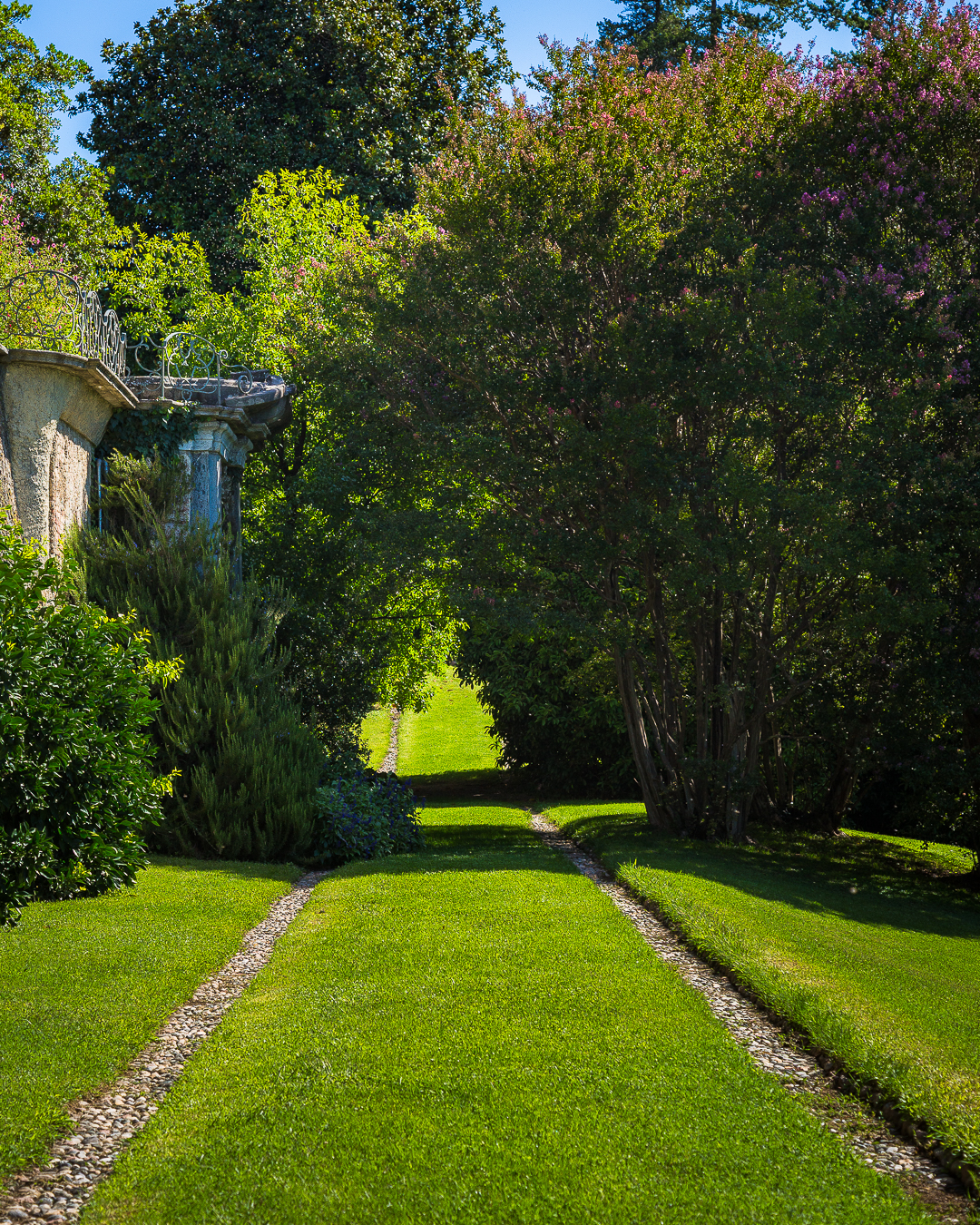
In front of the villa, green turns into geometry: mown lawns, hedges clipped into cones, rows of spheres, fountains, gravel paths. The whole park covers 33,000 square metres.
From the first-floor windows you can read the whole design as if on a plan: the axes, the crossings, the points where the eye comes to rest.
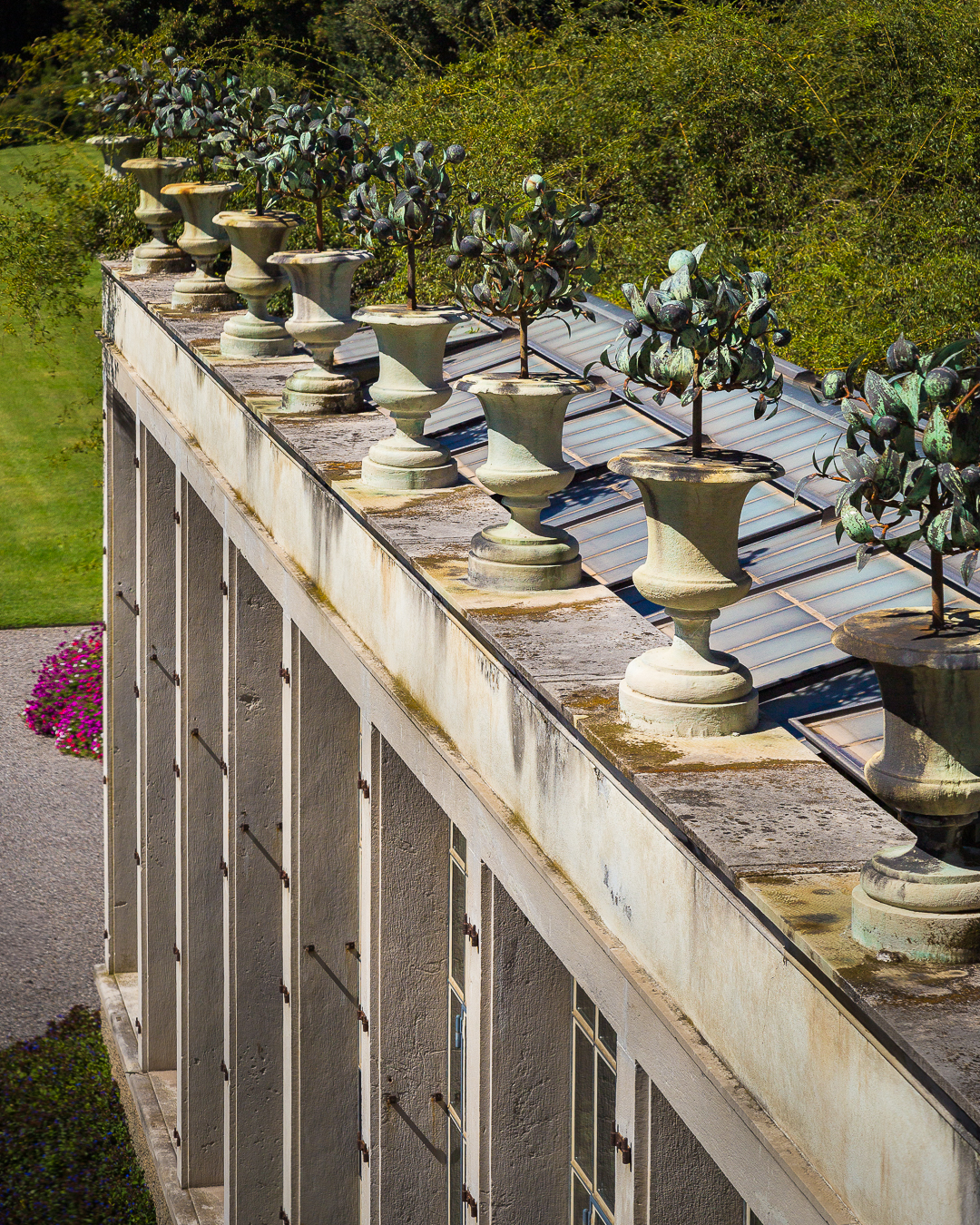
To one side, the greenhouse lines up its stone urns along the roof. In summer the water of the fountains is the only sound.
The stone urn
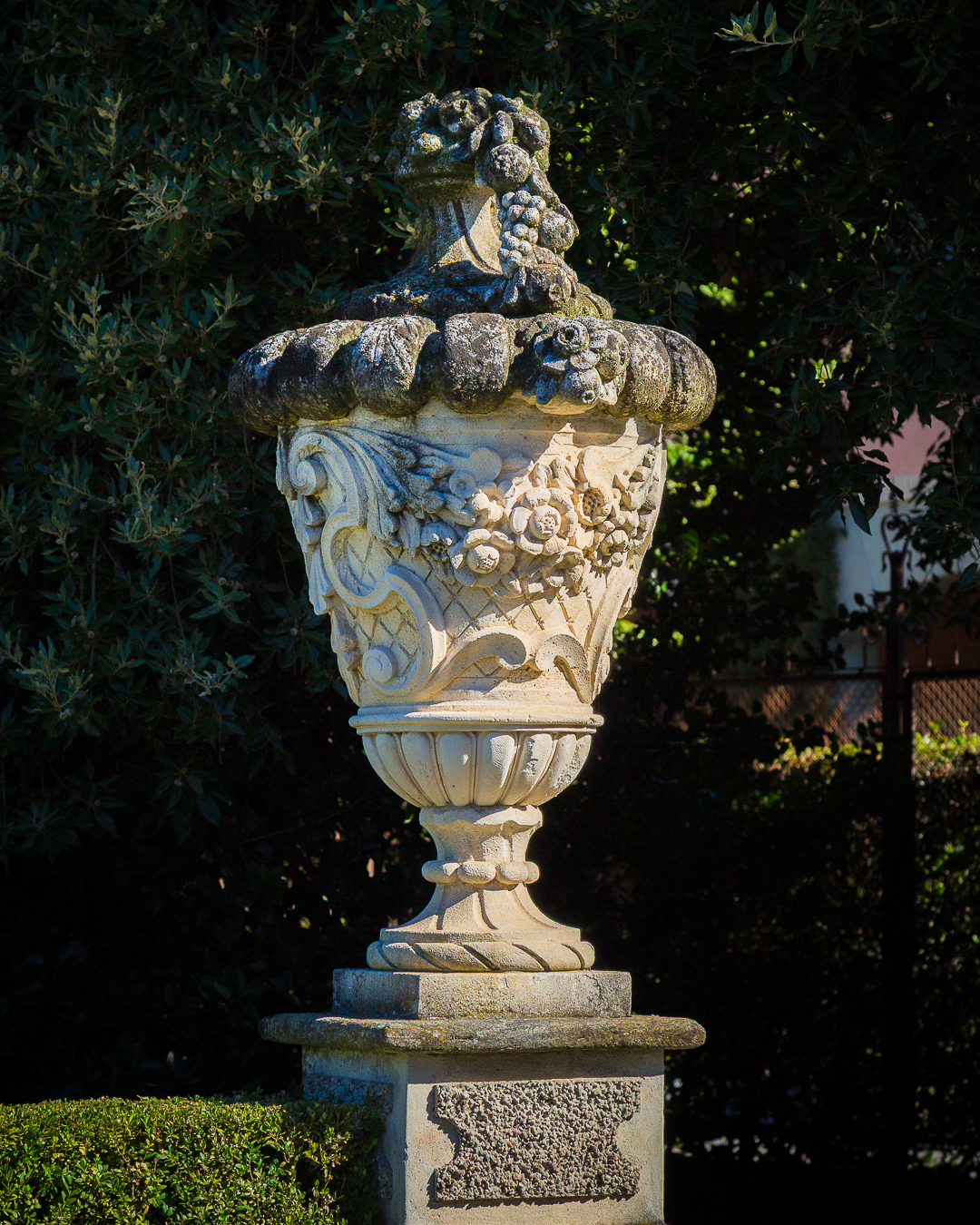
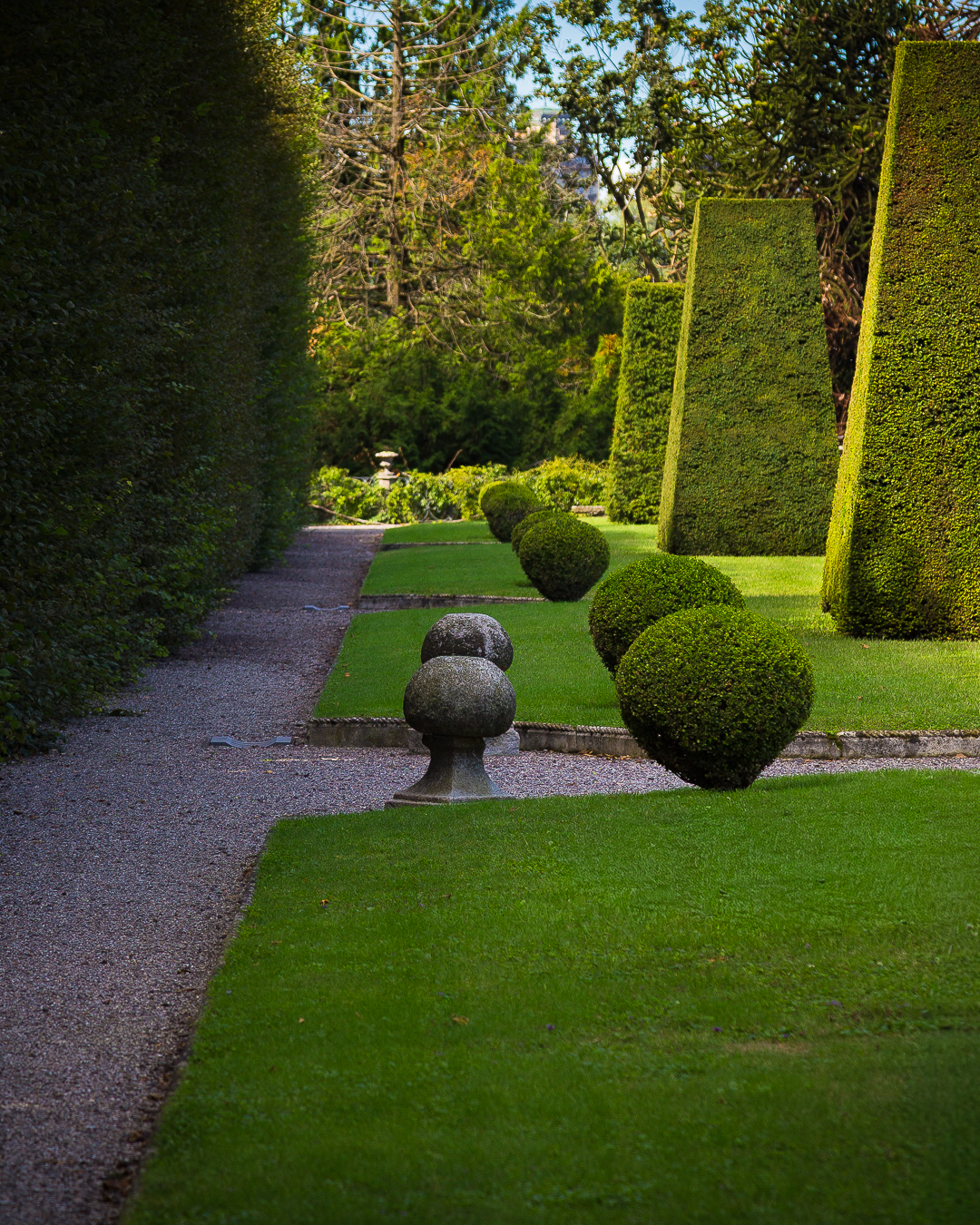
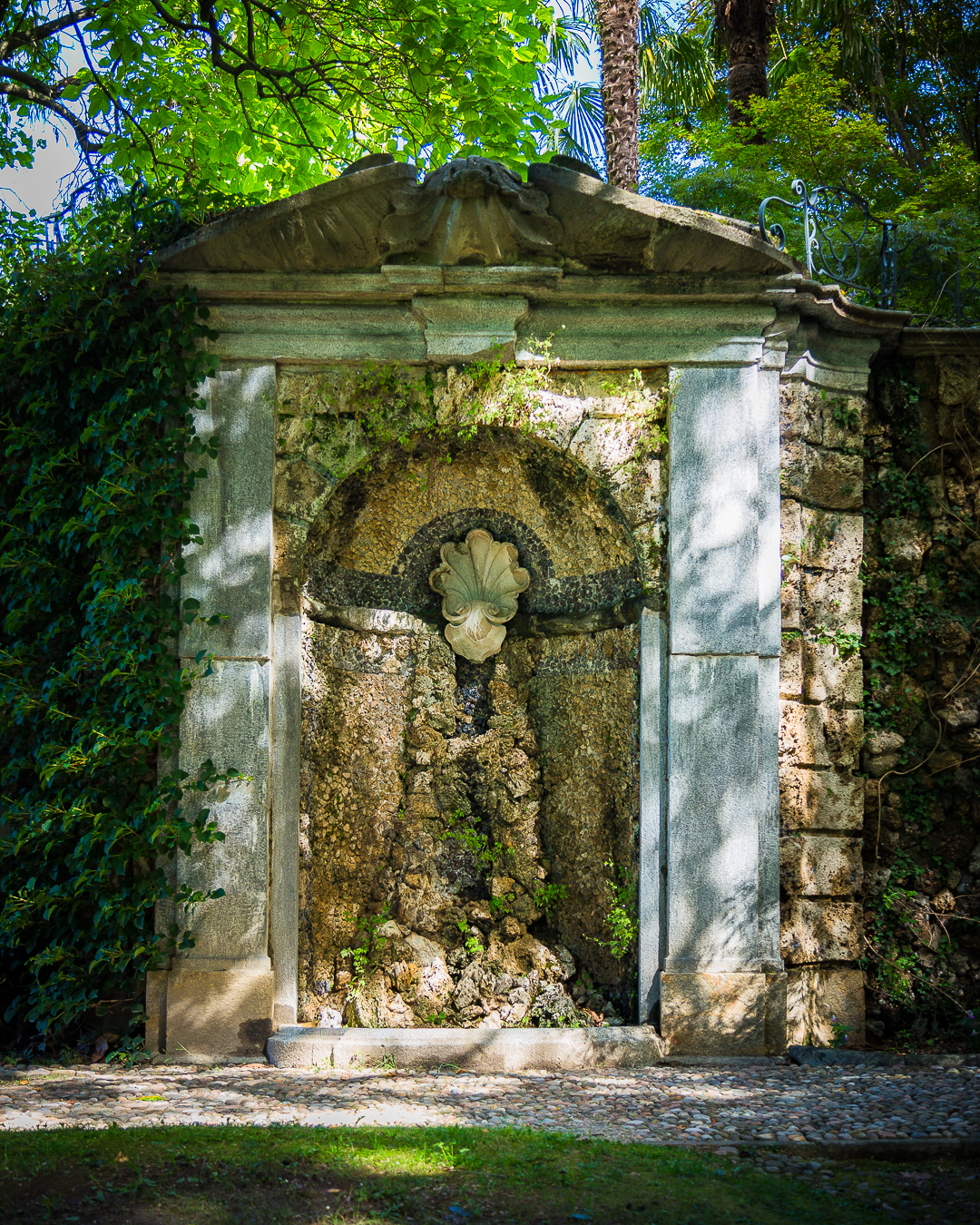
A stone urn carved with flowers and fruit, on a pedestal, against the dark green of the hedge. The garden is full of these ornaments, marking crossings and vistas. They guide the eye: you walk from one urn to the next, from one fountain to another, without getting lost.
The hedge avenue
Hedges clipped into cones, green spheres in a row, a gravel path running into the distance. This geometry needs constant care: every shape must be trimmed regularly to stay so sharp. The result is a garden that looks as if it were drawn with a ruler.
The greenhouse
From above, the greenhouse roof is a row of stone urns with their plants. Below, the glass shelters the most delicate species in winter. The collection’s works, after all, are not only in the rooms: they are also spread across the greenhouses and the garden.
III
The park
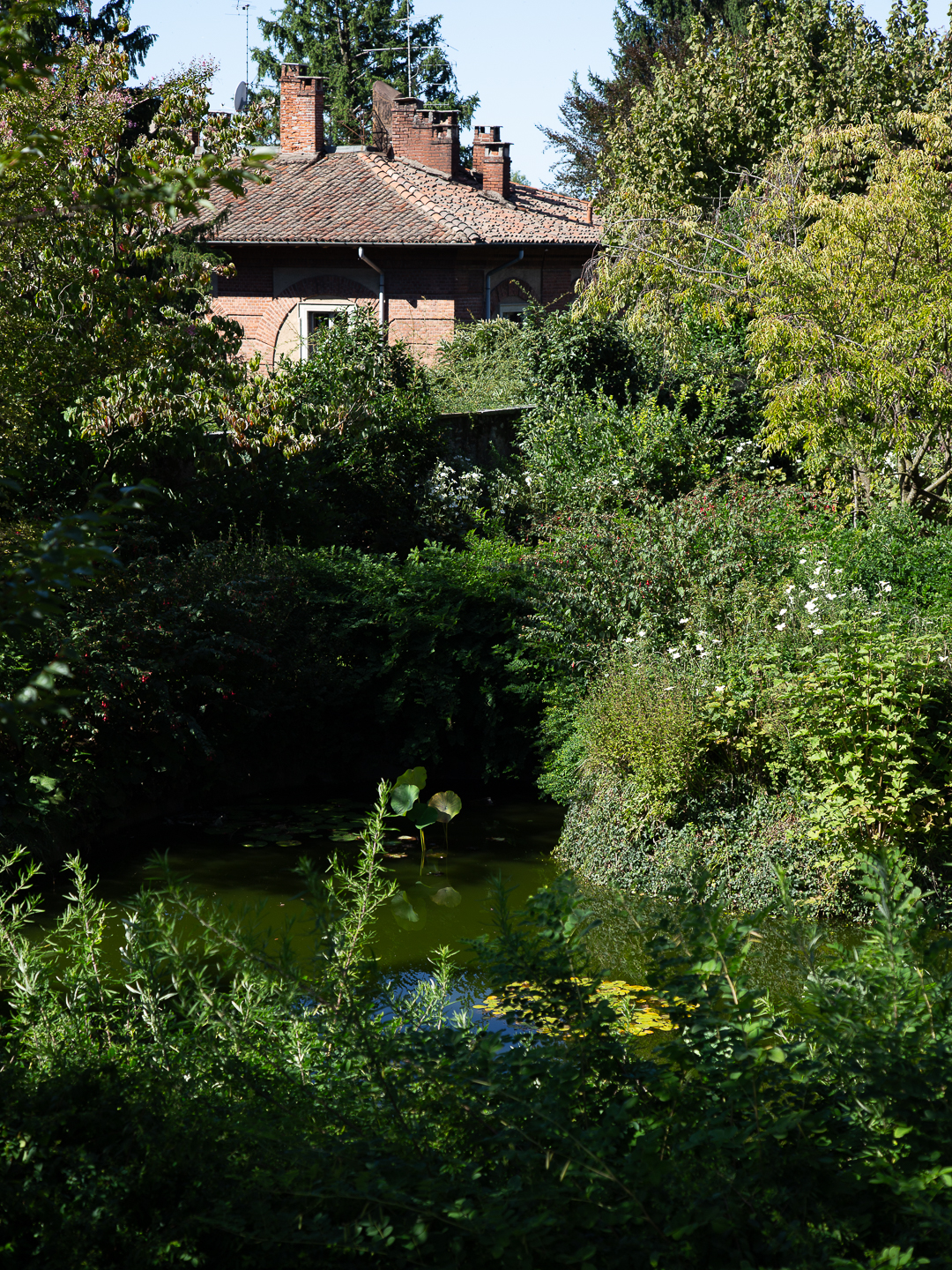
Further on, the garden loosens. In the nineteenth century the park was redesigned in the English style: wide lawns, single trees and romantic corners, such as the pond and the mound with the ice-house grotto, topped by a little temple.
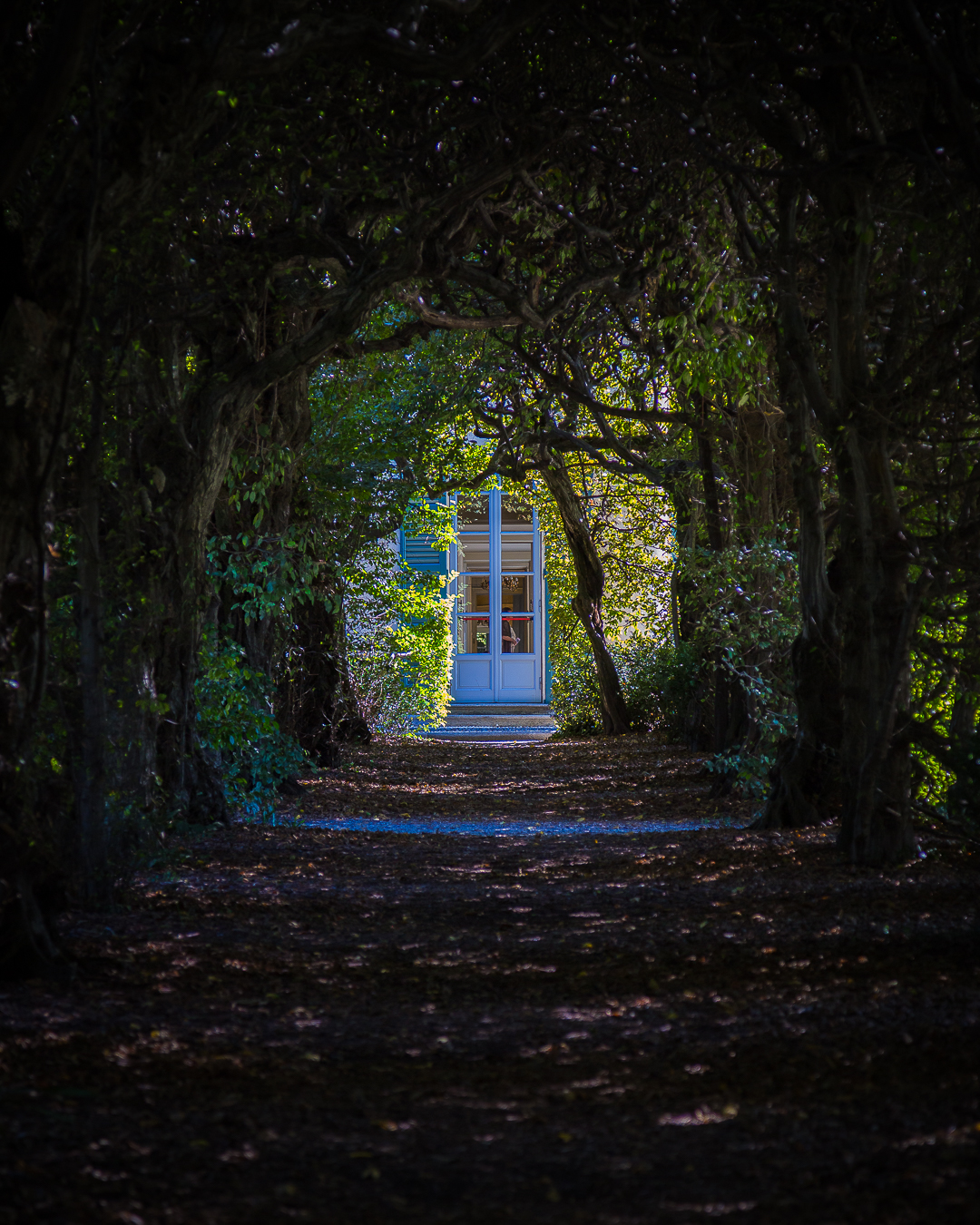
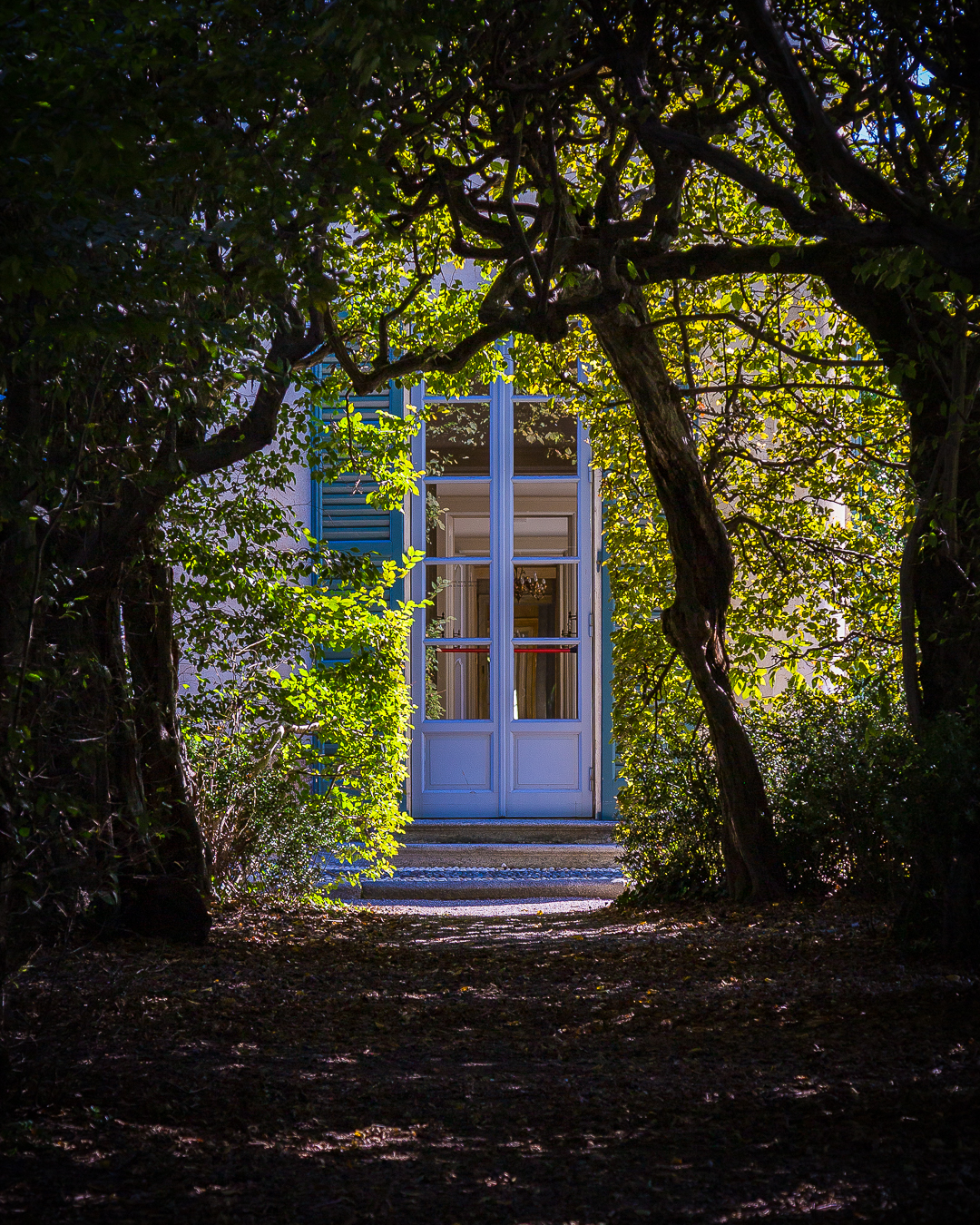
You walk between shade and light, under dark pergolas that open onto a door, and the villa appears and disappears among the leaves.
There is art out here too: the collection’s works are spread across the stables, the greenhouses and the garden.
The pond
Still water, leaves, a brick house among the trees. After the geometry of the garden in front of the villa, nature seems to be left free here. It is only an impression: in an English-style park even disorder is designed, and every romantic corner is meant to surprise the walker.
Inside the greenhouse
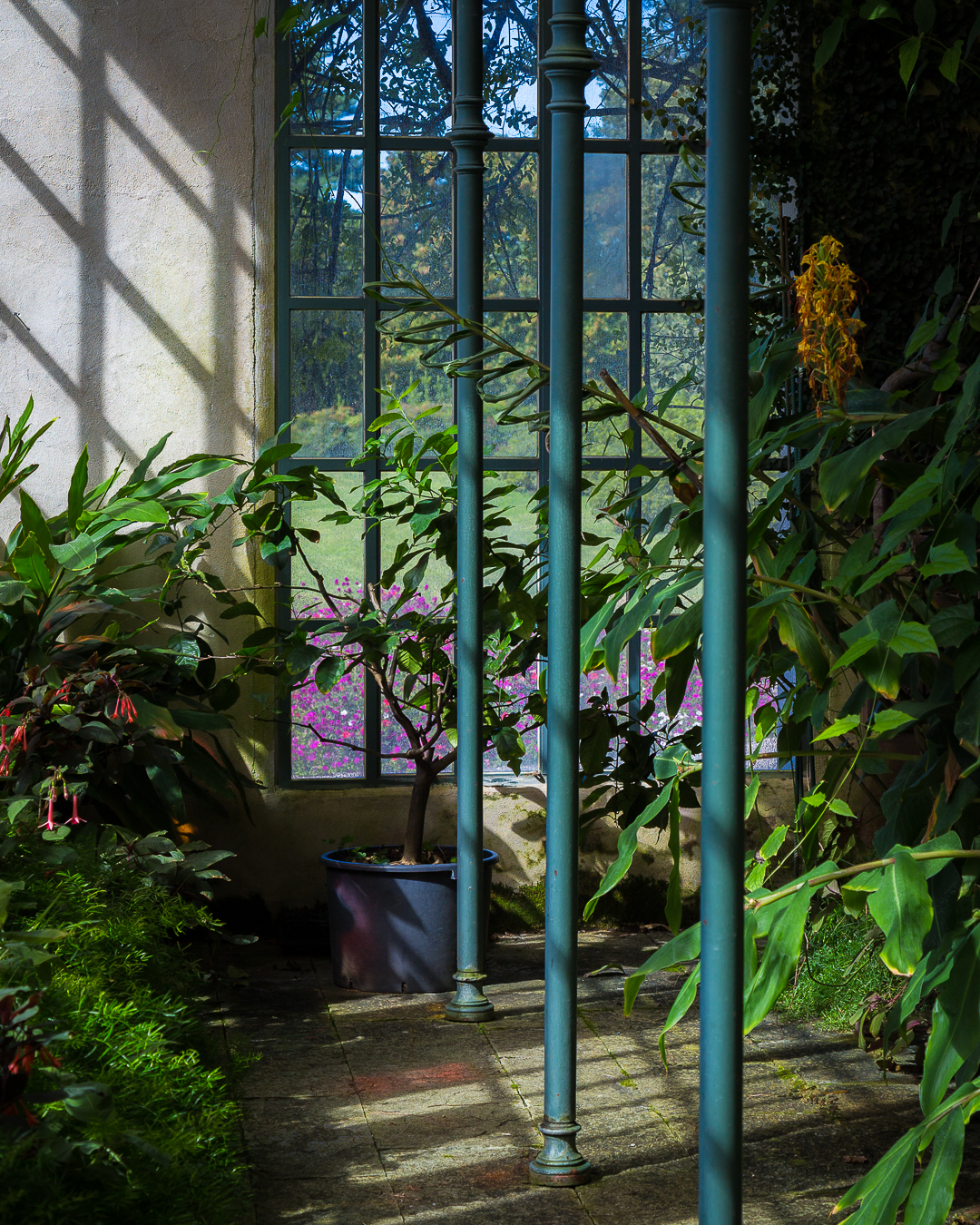
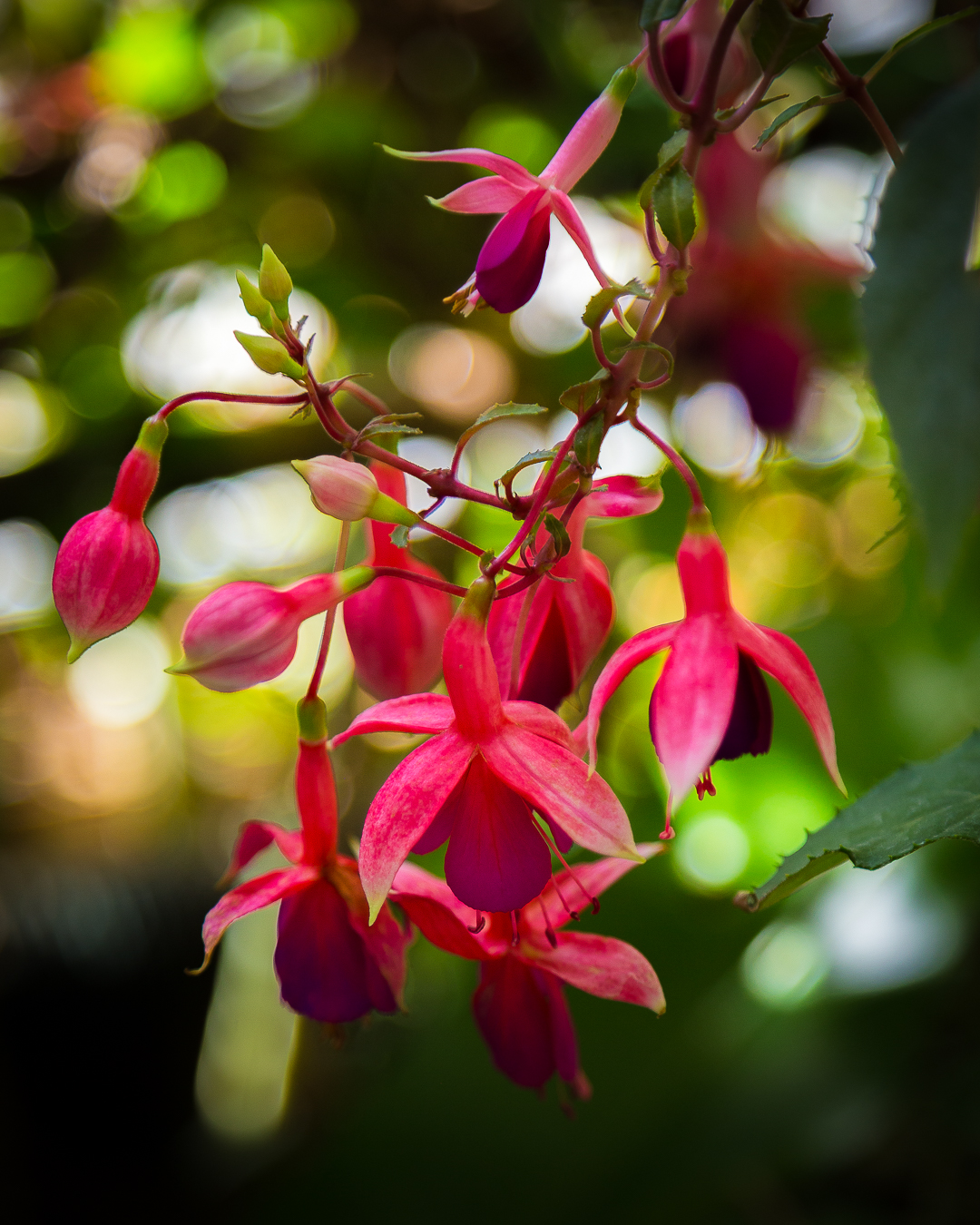
Slim iron columns painted green, glass, large leaves and flowers. Inside the greenhouse the air is warmer and the light comes from every side. This is where the plants spend the winter, and where the garden carries on when it is cold outside.
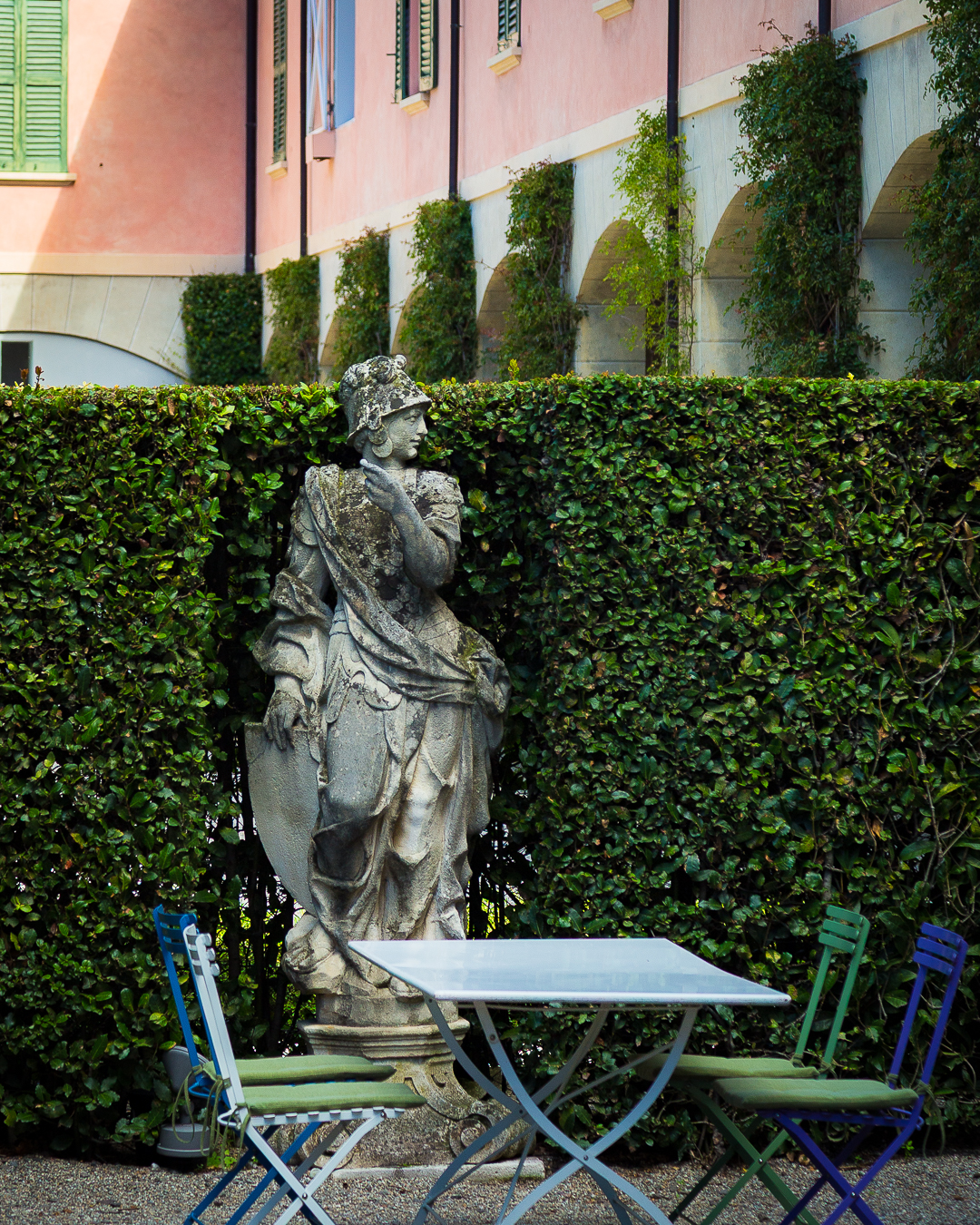
Statue and table
A helmeted stone statue, a small metal table, coloured chairs. At Villa Panza history and everyday life sit side by side. The villa also has a restaurant, Luce: you can stop there after your visit, a few steps from the artworks.
IV
The rooms
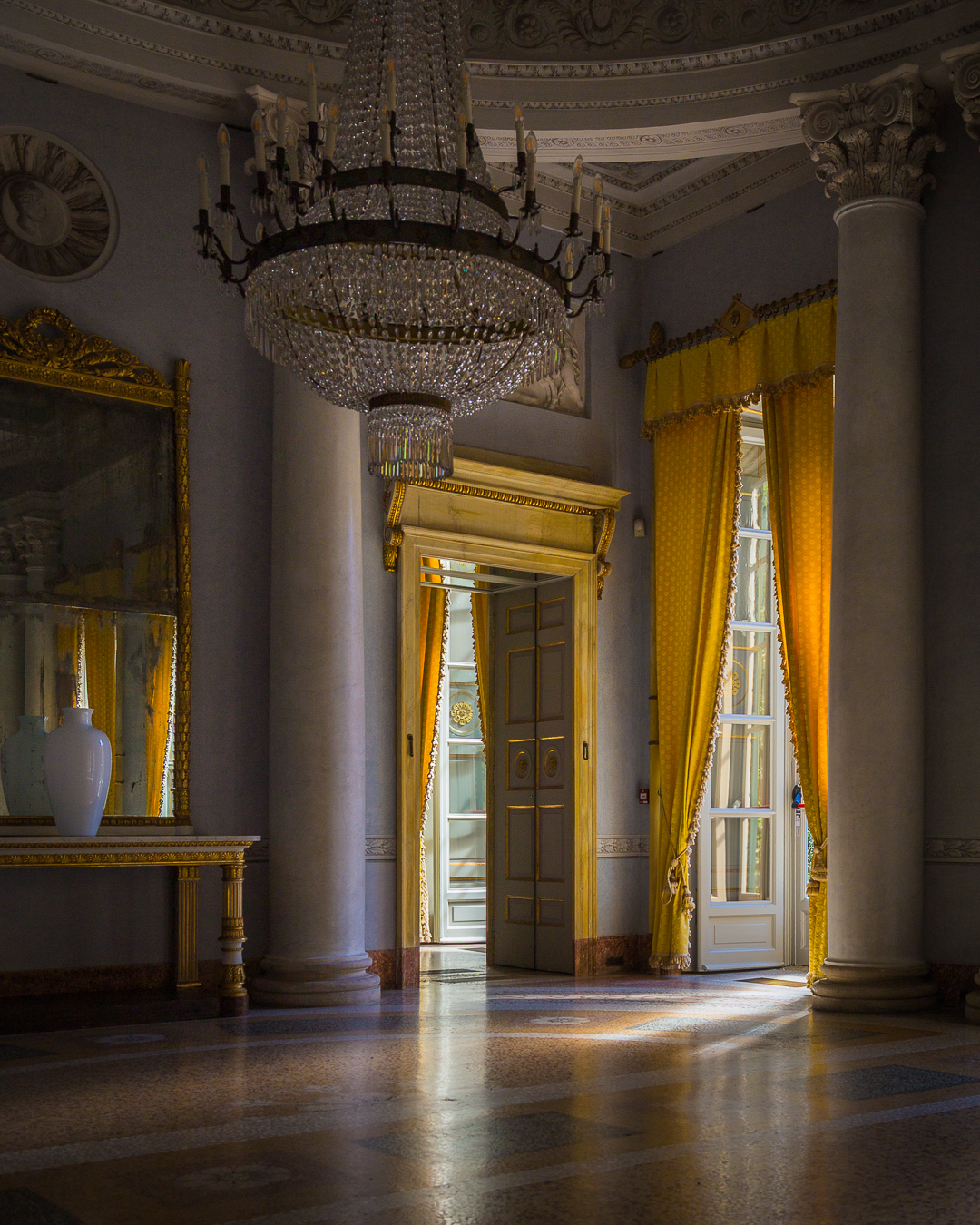
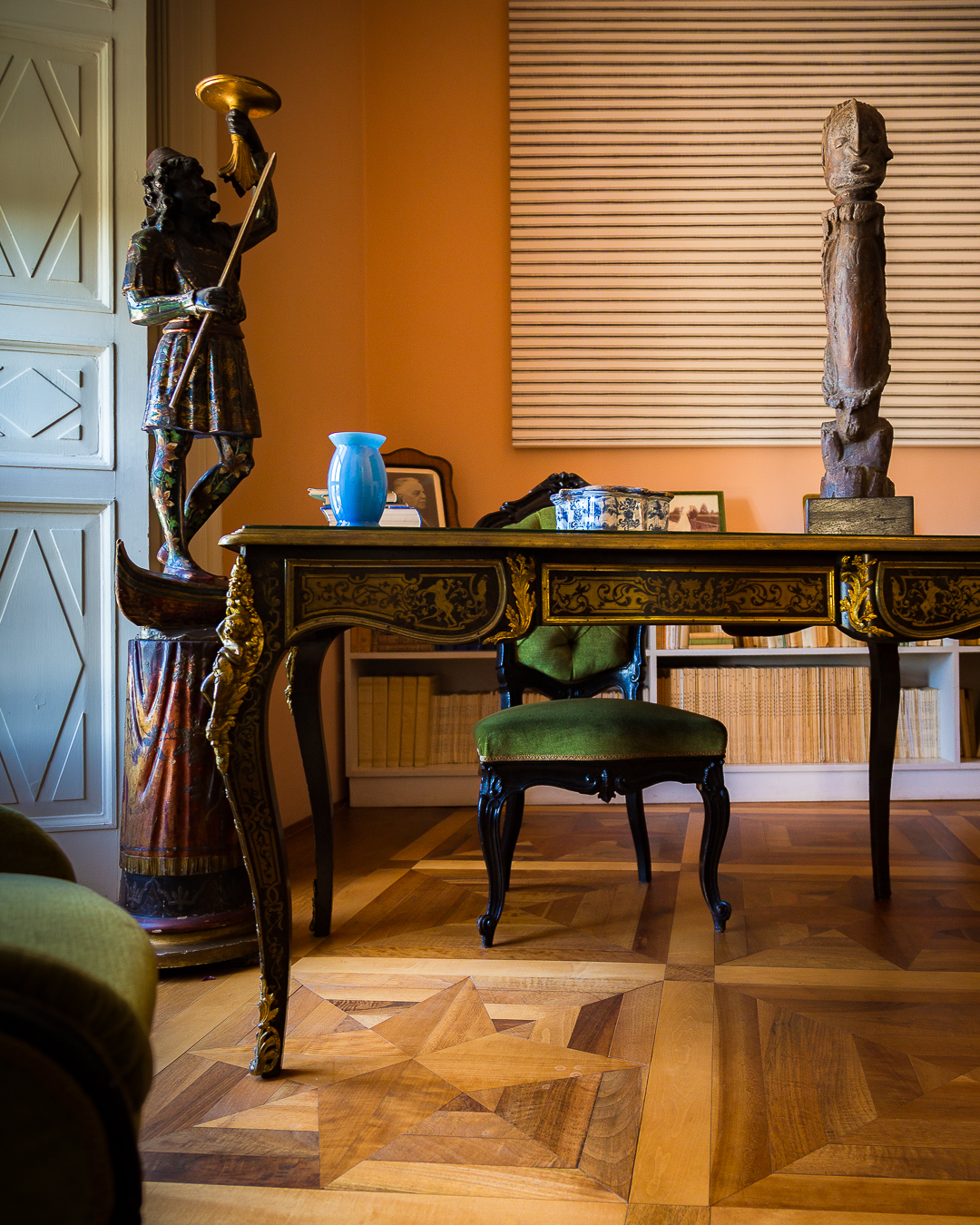
Inside, the villa keeps its neoclassical halls, crystal chandeliers and gilded stucco. Giuseppe Panza set beside them works about light and colour: from 1955 until his death in 2010 he gathered more than 2,500 works of European and American contemporary art, and about 150 are on show here.
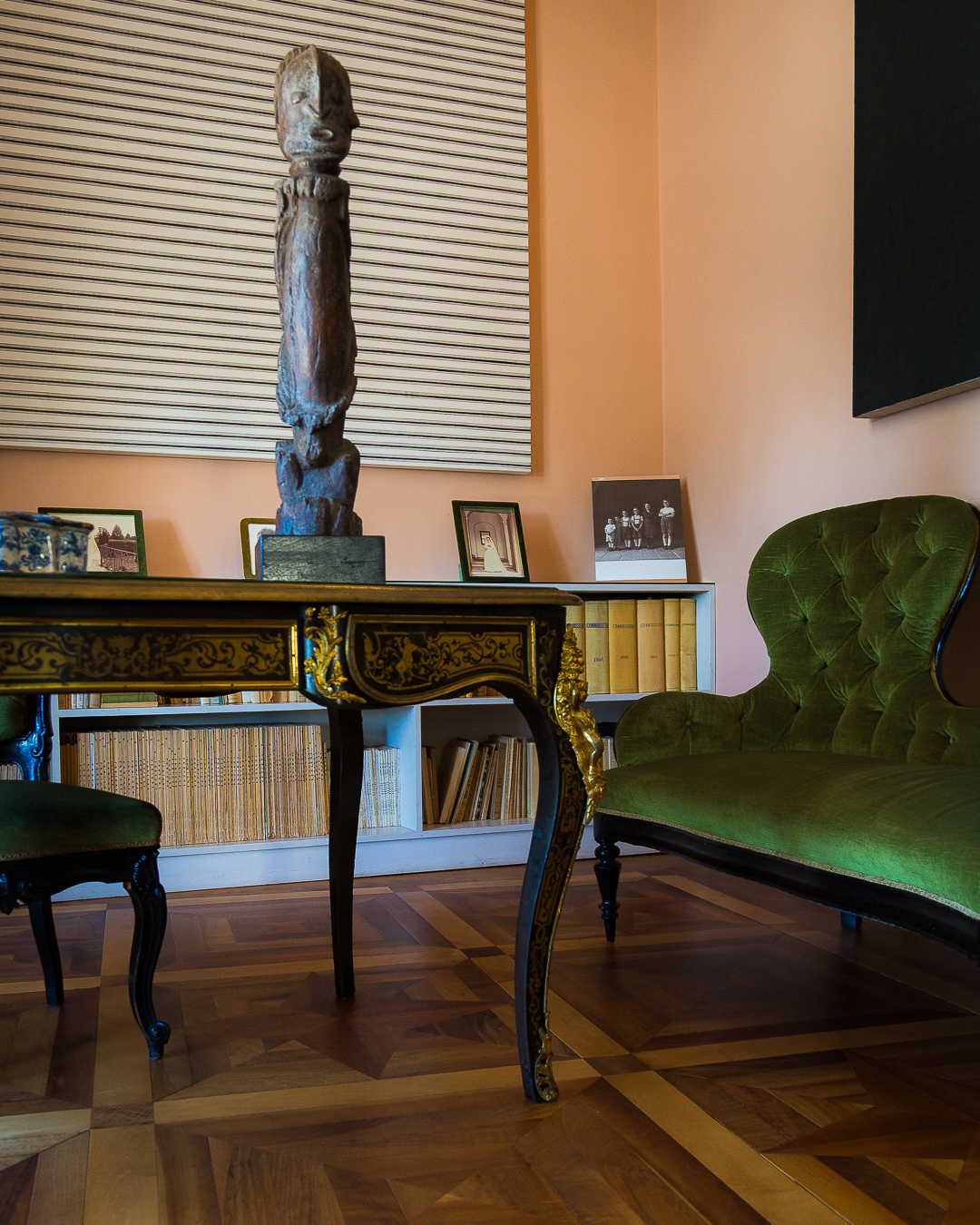
Alongside the monochrome paintings there is also a collection of traditional “primary art”. Contrast is the strength of the house: dark canvases and gilded consoles, wooden sculptures and velvet sofas.
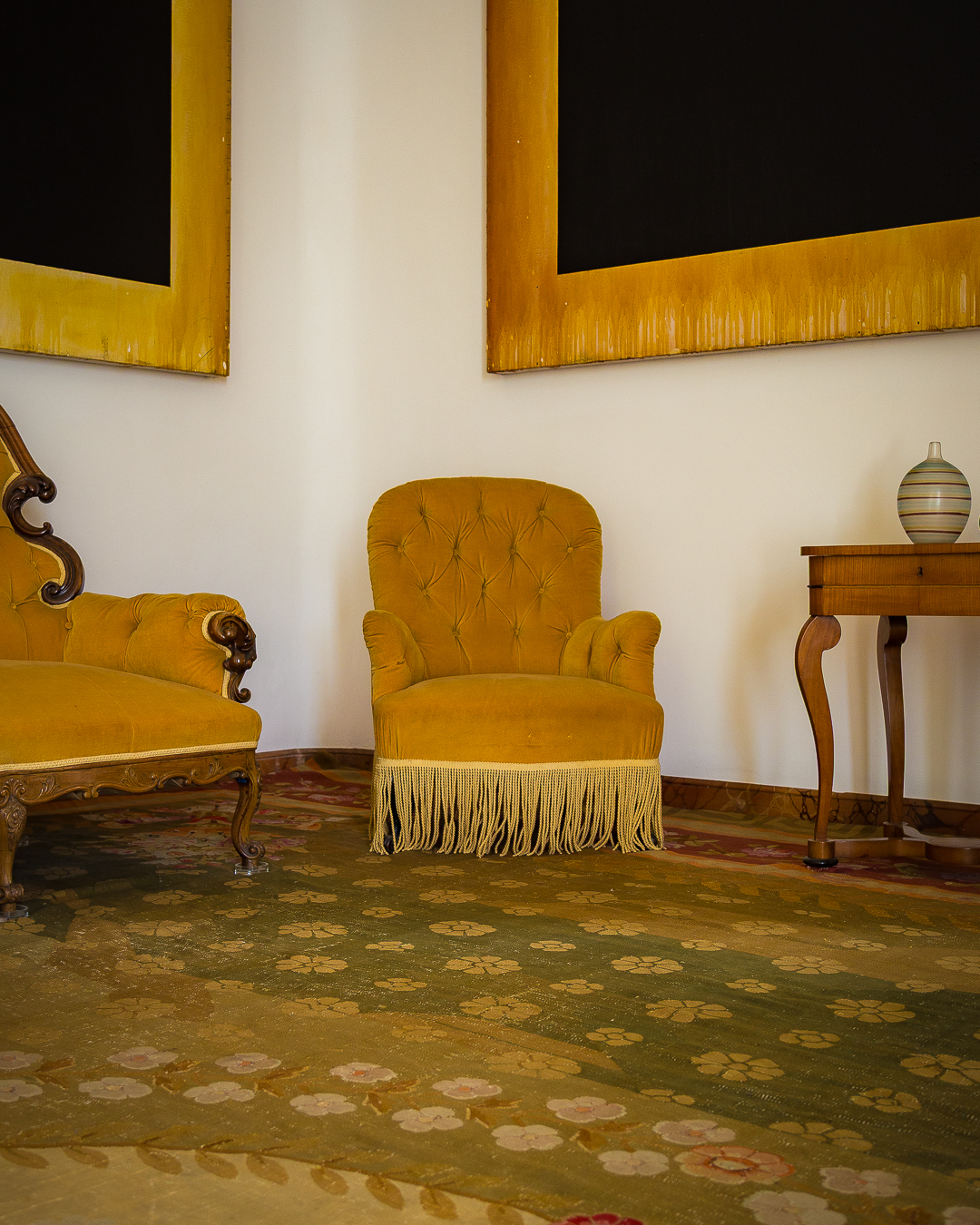
The yellow armchairs
Two fringed yellow velvet armchairs, a flowered rug and, above, two dark canvases in gilded frames. This was Giuseppe Panza’s idea: place contemporary art in historic rooms and let them talk. The collection is also known for its monochrome paintings, surfaces of a single colour that reward a long look.
The enfilade
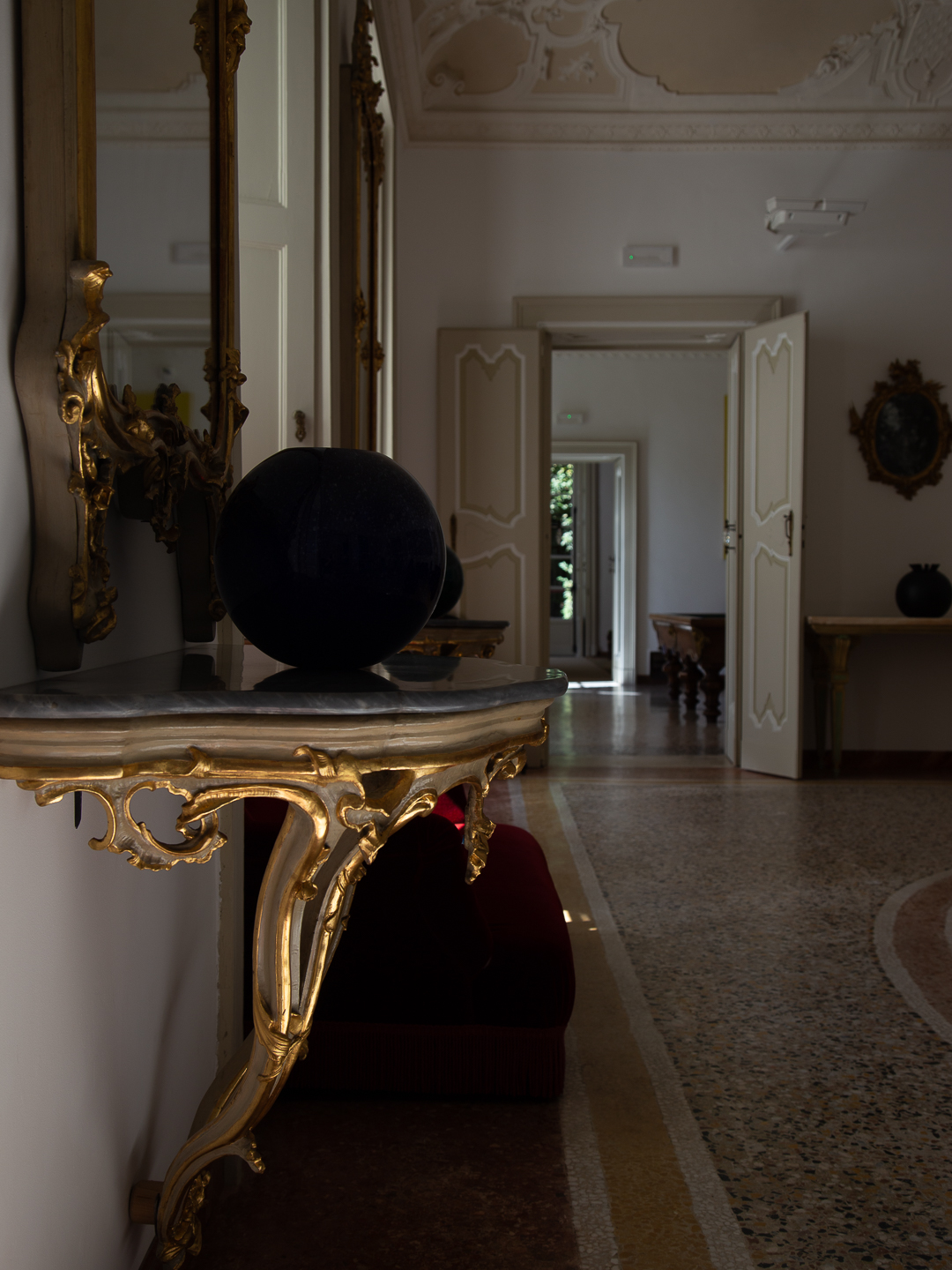
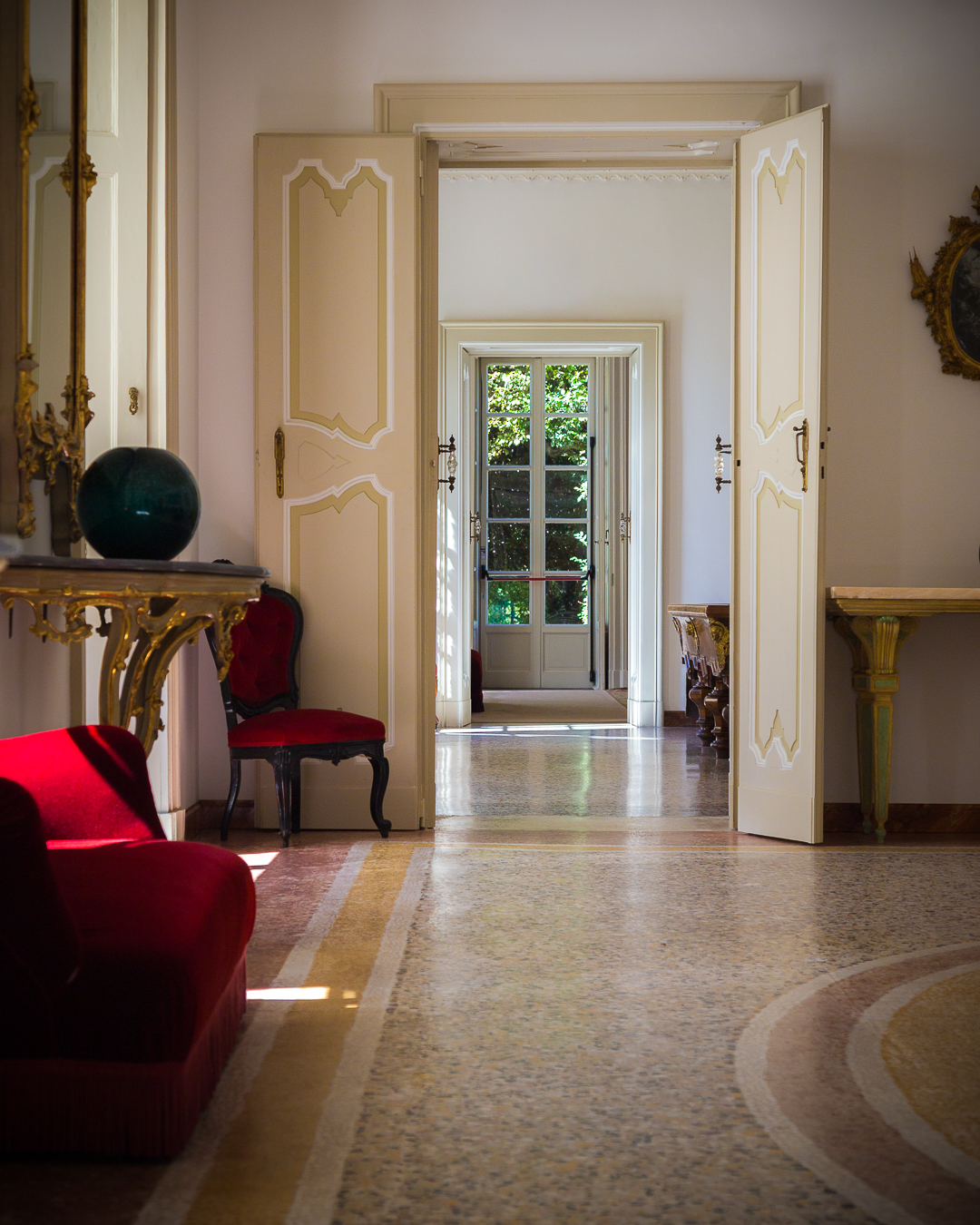
White doors open one after another, a red sofa, a gilded console, a dark sphere. The villa’s rooms are lined up in a row, and the eye runs through all of them to the garden. The objects are placed with precision, like an exhibition that never ends.
The polished vase
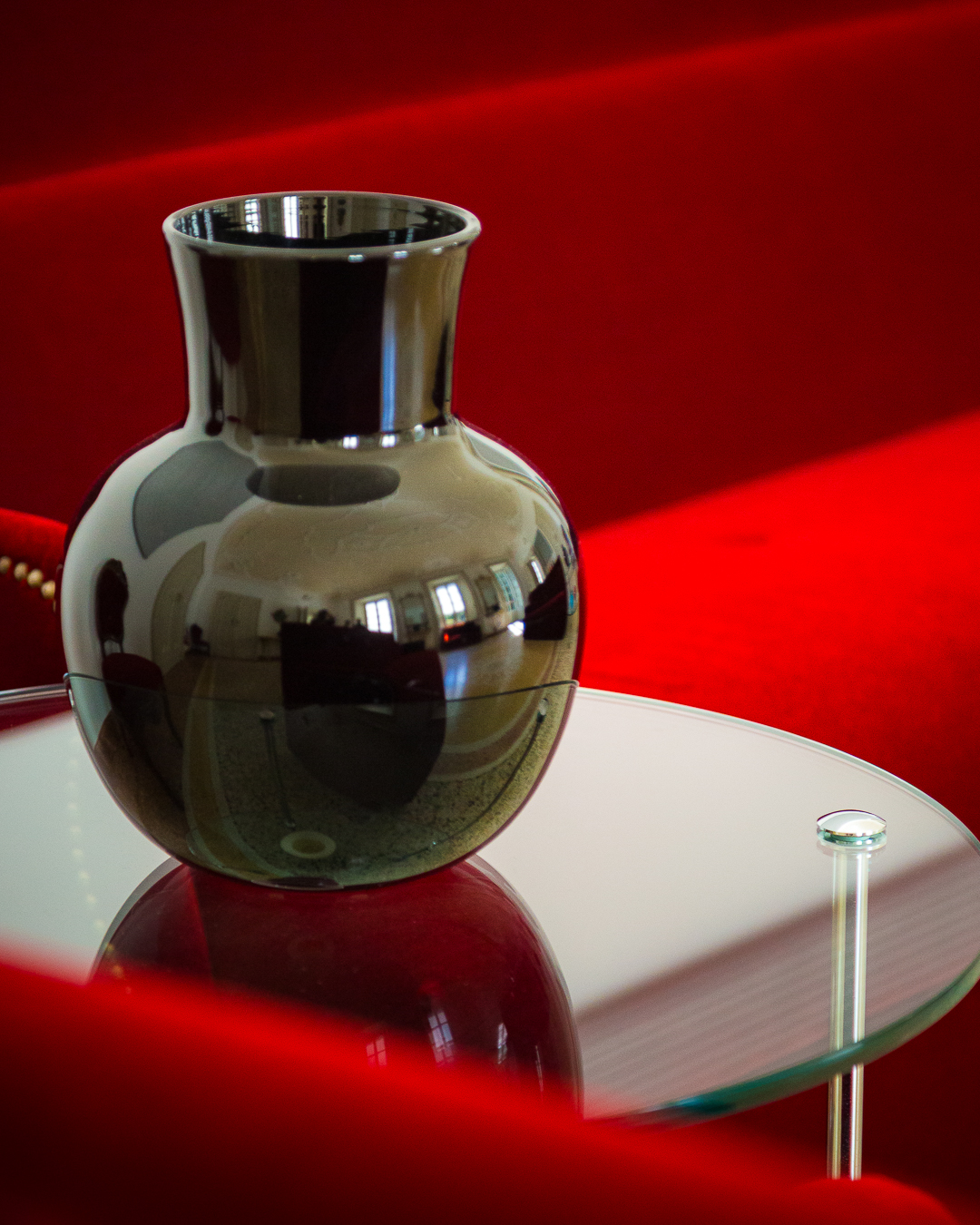
A polished metal vase on a glass table, with the red of the sofa reflected on its surface. Even the objects here seem chosen for the way they catch the light. It is a detail, but it sums up the house: reflections, colour and the pleasure of looking carefully.
V
The light
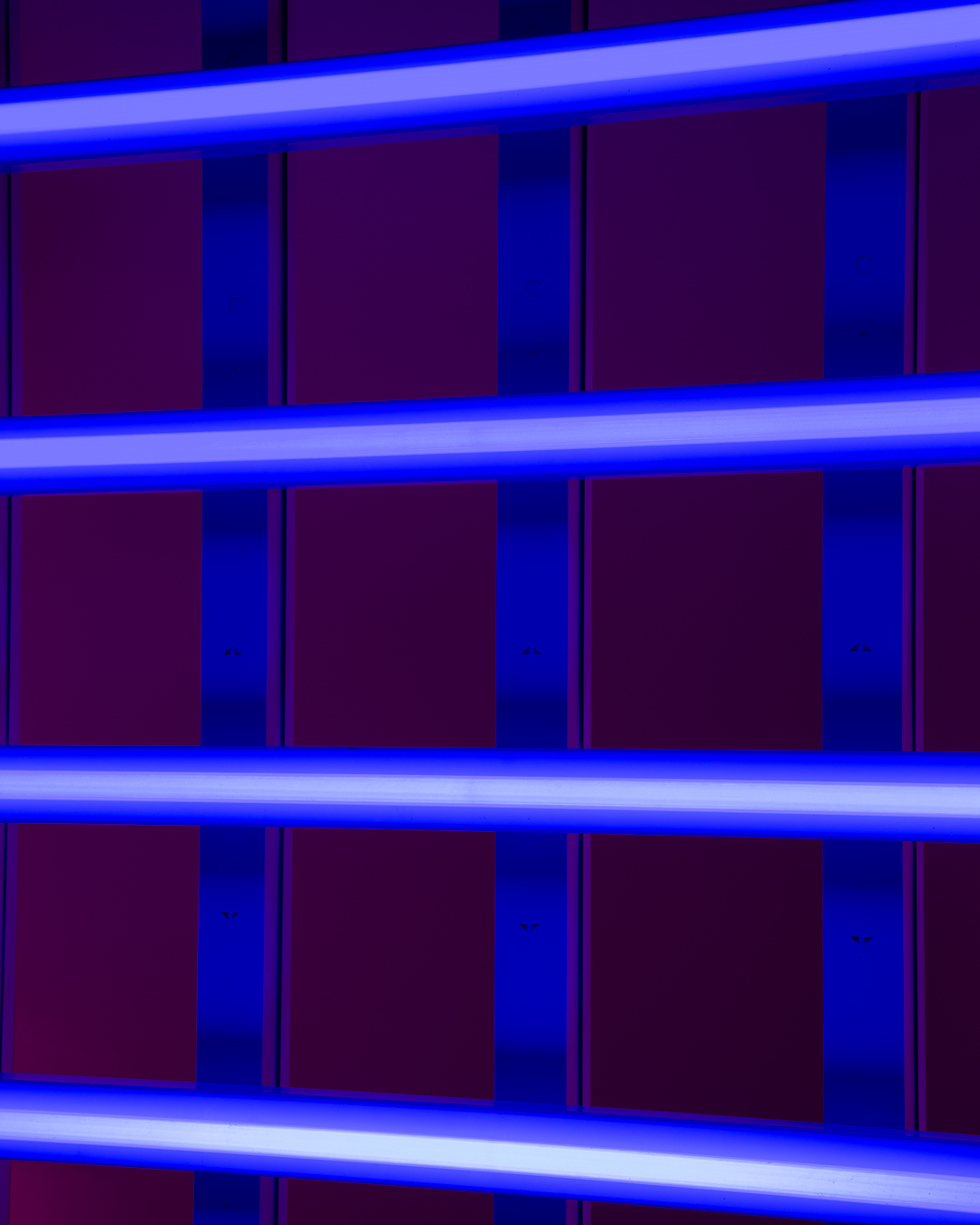
The heart of the collection lies in the Rustici, the villa’s former stables and coach houses. Here Dan Flavin, James Turrell and Robert Irwin created works designed for these spaces.
Villa Panza holds the largest concentration of Flavin’s fluorescent-light works on permanent display; it is also the only museum in Italy with three site-specific works by Turrell, whom Panza met in the 1970s and invited to Varese.
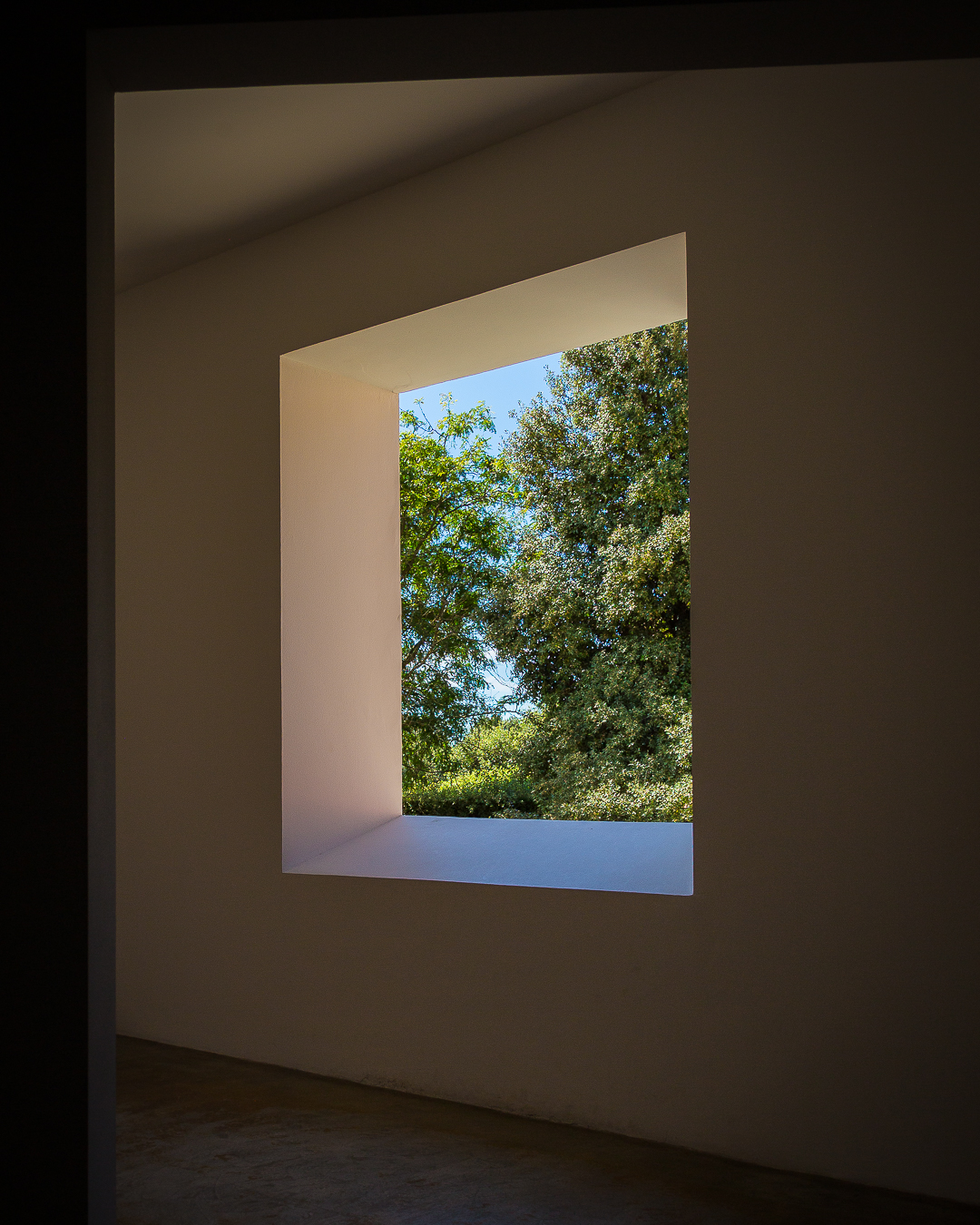
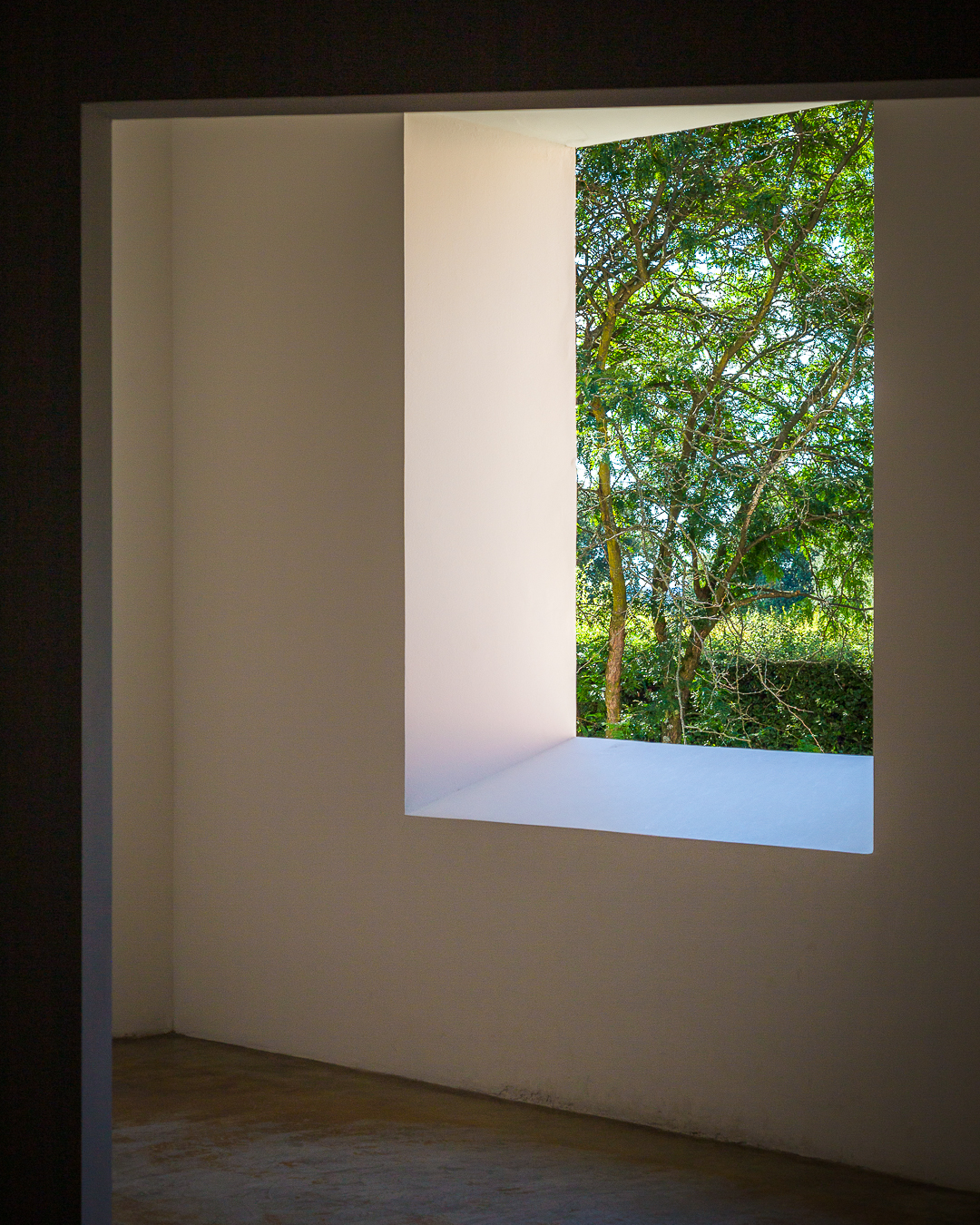
You step into white rooms where light, natural or artificial, is the work itself.
Orange light
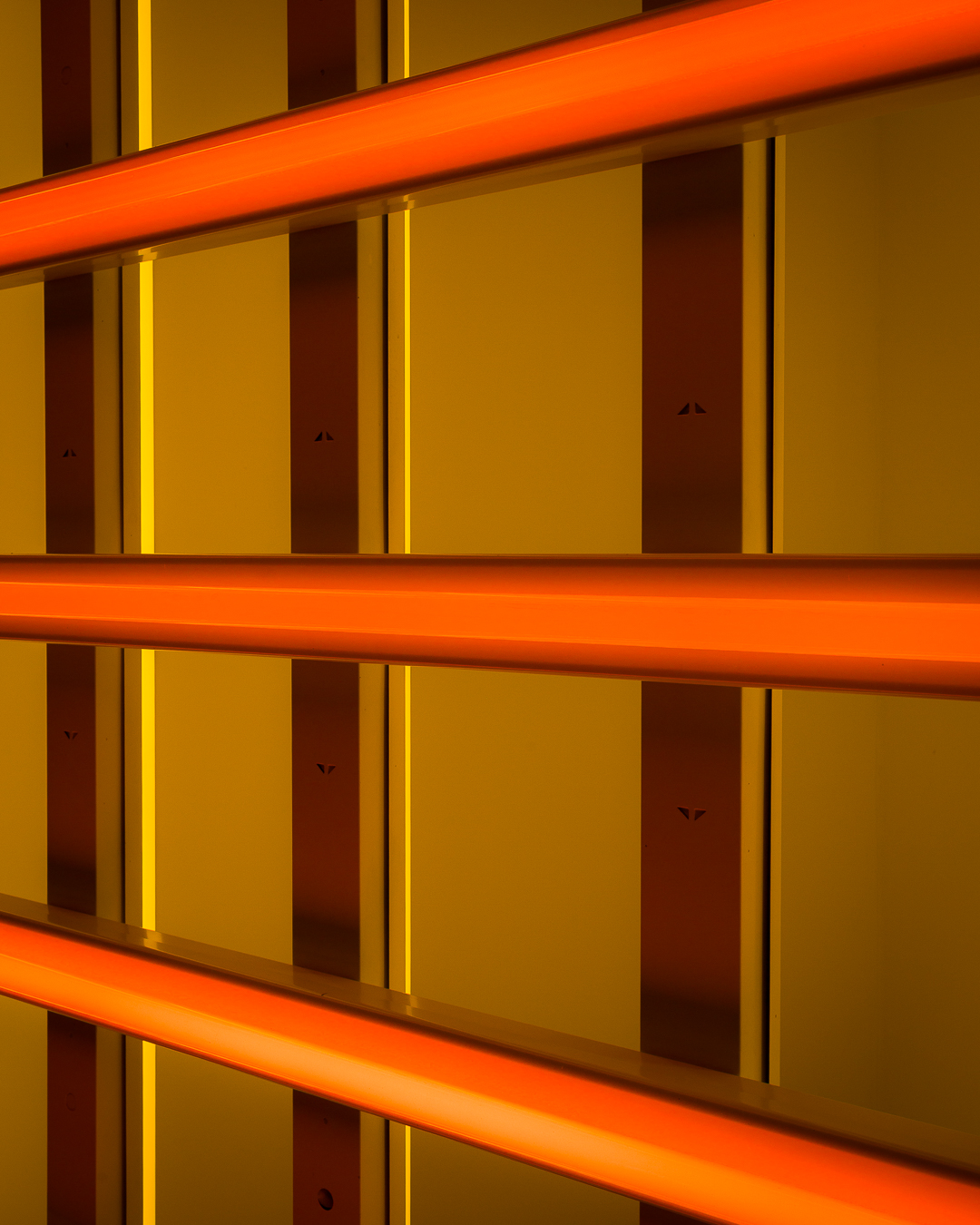
Fluorescent tubes, orange and yellow, filling the space with colour. In the Rustici the light does not illuminate the works: it is the work. You walk inside the colour, and the colour changes with where you stand. No photograph quite captures it.
Coloured stones
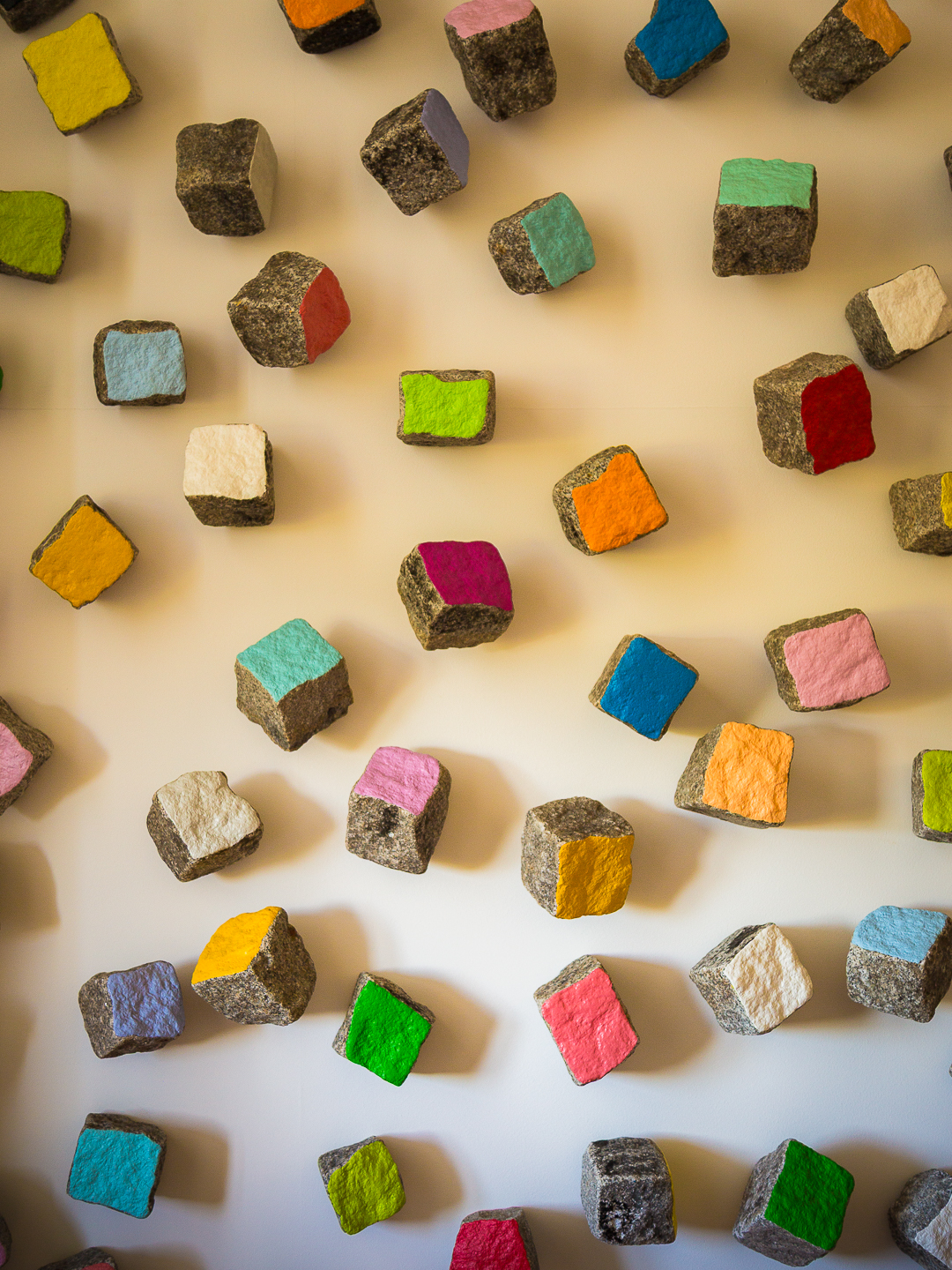
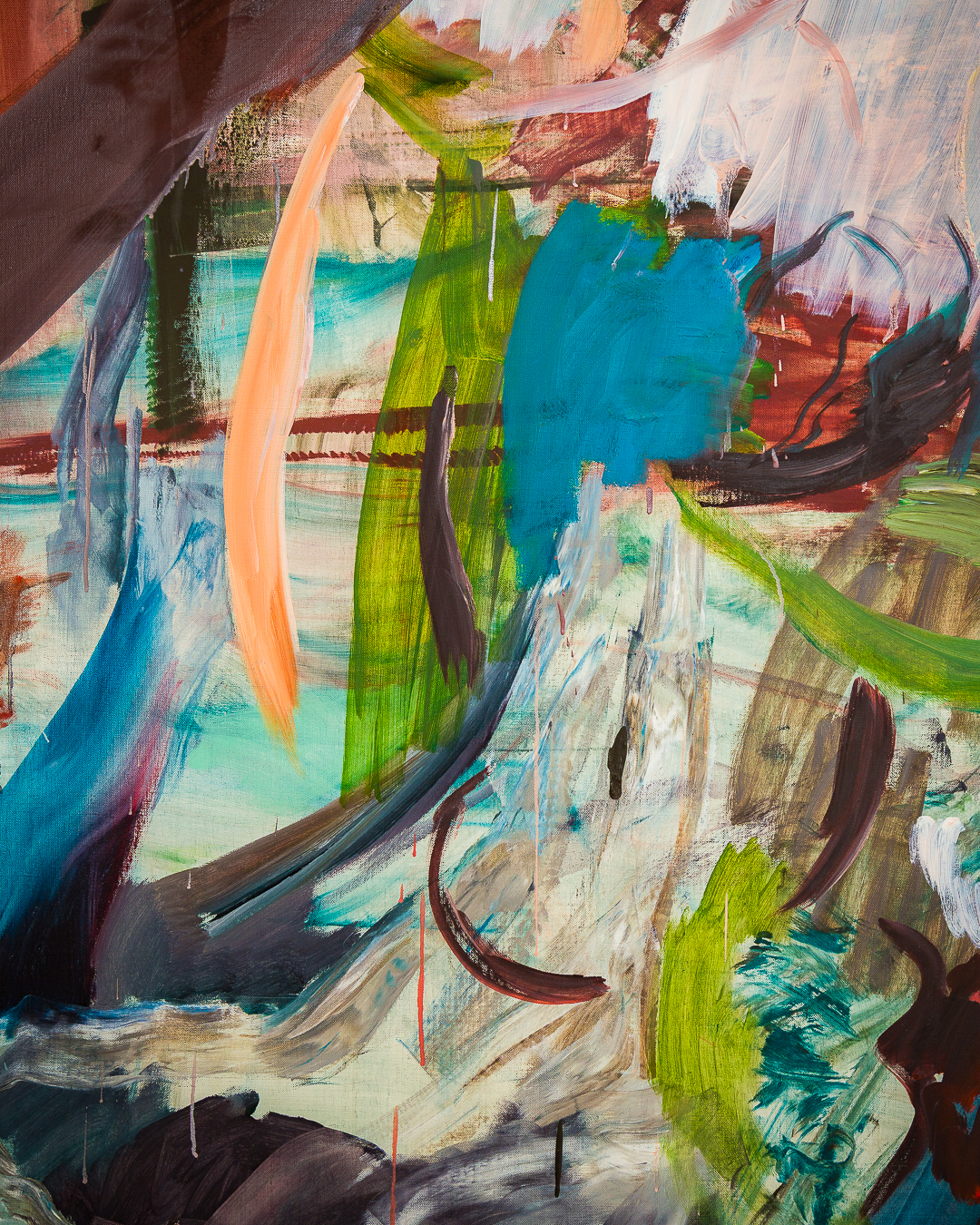
Small painted stones, each a different colour, scattered across a white wall like a constellation. The collection is not standing still: FAI keeps welcoming new works, and since February 2026 a new display has celebrated ten years of arrivals.
Getting there
- Where
- Piazza Litta 1, Varese, on the hill of Biumo Superiore.
- By bus
- From Varese station, bus A to the Biumo Superiore terminus: about ten minutes.
- When
- Tuesday to Sunday, 10 am to 6 pm.
- A break
- The villa has its own restaurant, Luce.
- Our advice
- Save the Rustici for last and go straight out into the garden: eyes used to coloured light see the greens differently.
Information checked on 21 November 2026.
Sources
- Villa e Collezione Panza — FAI Fondo per l’Ambiente Italiano
- Villa e Collezione Panza, English version — FAI
- Villa e Collezione Panza, la villa e il parco — FAI
- Info e orari, Ristorante Luce — FAI
- A James Turrell il Praemium Imperiale — FAI, 2021
- 2015–2025, dieci anni, dieci nuove opere a Villa Panza — FAI
- Villa Menafoglio Litta Panza di Biumo — Associazione Parchi e Giardini d’Italia
- Villa Menafoglio Litta Panza — MuseiOnline
- Villa Litta Panza — Italian Botanical Heritage
- Esplorando Villa Panza — Meer
Note
Photographs by William, also published on Instagram as @guglielmo.foto.
Texts and layout: WIDE Edizioni, Rho. Historical and practical information is checked against the sources on the previous page.
© 2026 WIDE Edizioni
A book for your place
We photograph villas, museums, villages and landscapes in natural light, and turn them into images ready for your website, print and social media. Or into pages to leaf through, like these.