WIDE Edizioni
Lake Maggiore
Lombardy and Piedmont
Photographs by William
Once it was the Verbano
Before it was “Maggiore”, it was the Verbano: that is what Pliny, Polybius and Strabo called it. Today’s name appears in the twelfth century, simply to say it was the largest lake between Lombardy and Piedmont.
It still is: about 212 square kilometres, some sixty kilometres from Magadino to Sesto Calende, and up to 372 metres deep. A fifth lies in Switzerland; the rest divides the Lombard shore from the Piedmontese one.
These pages travel it the way you discover it: the shores in summer, the harbours in spring, the sunsets, the high pastures, the lanes of a lakeside town.
I
The shores in summer
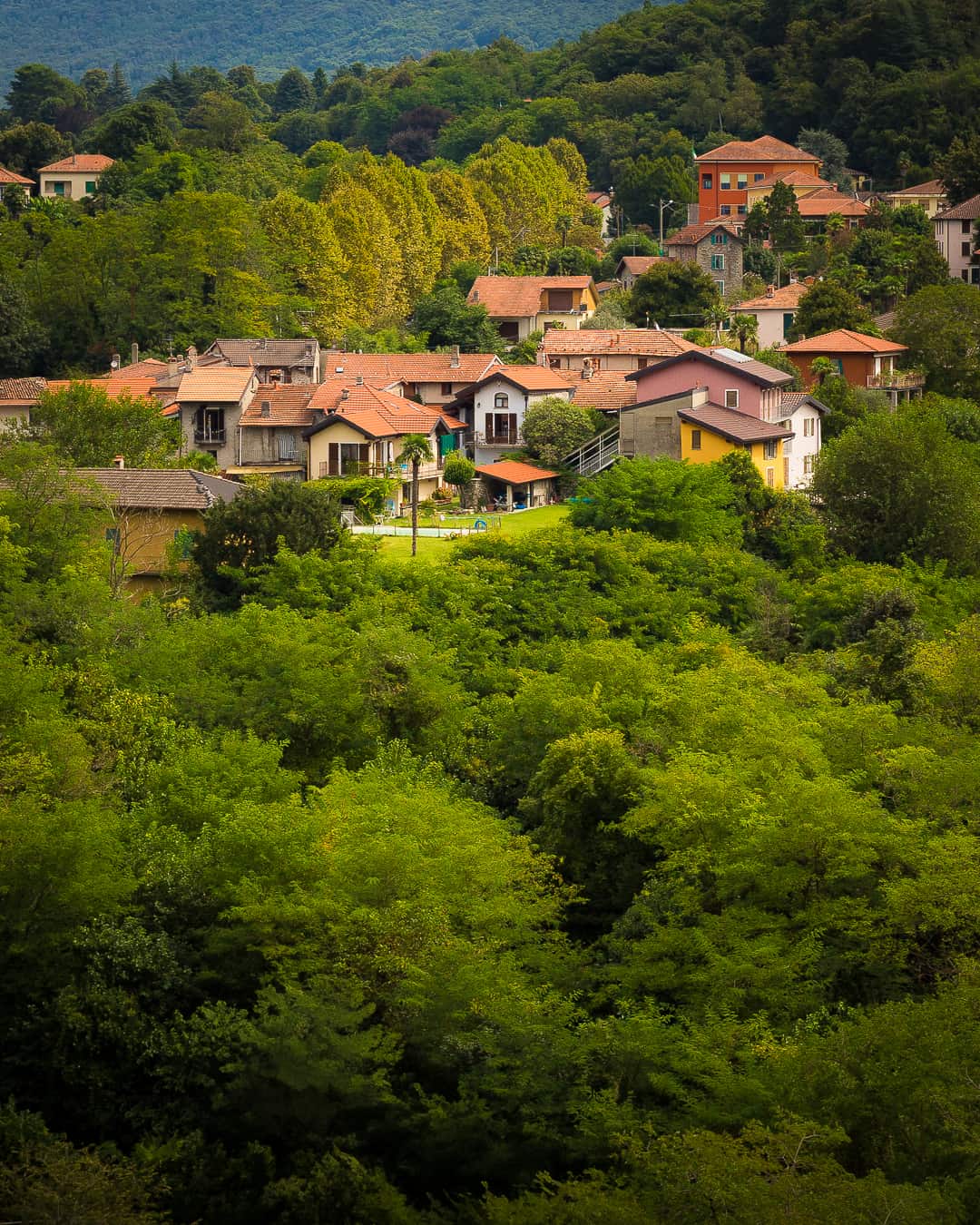
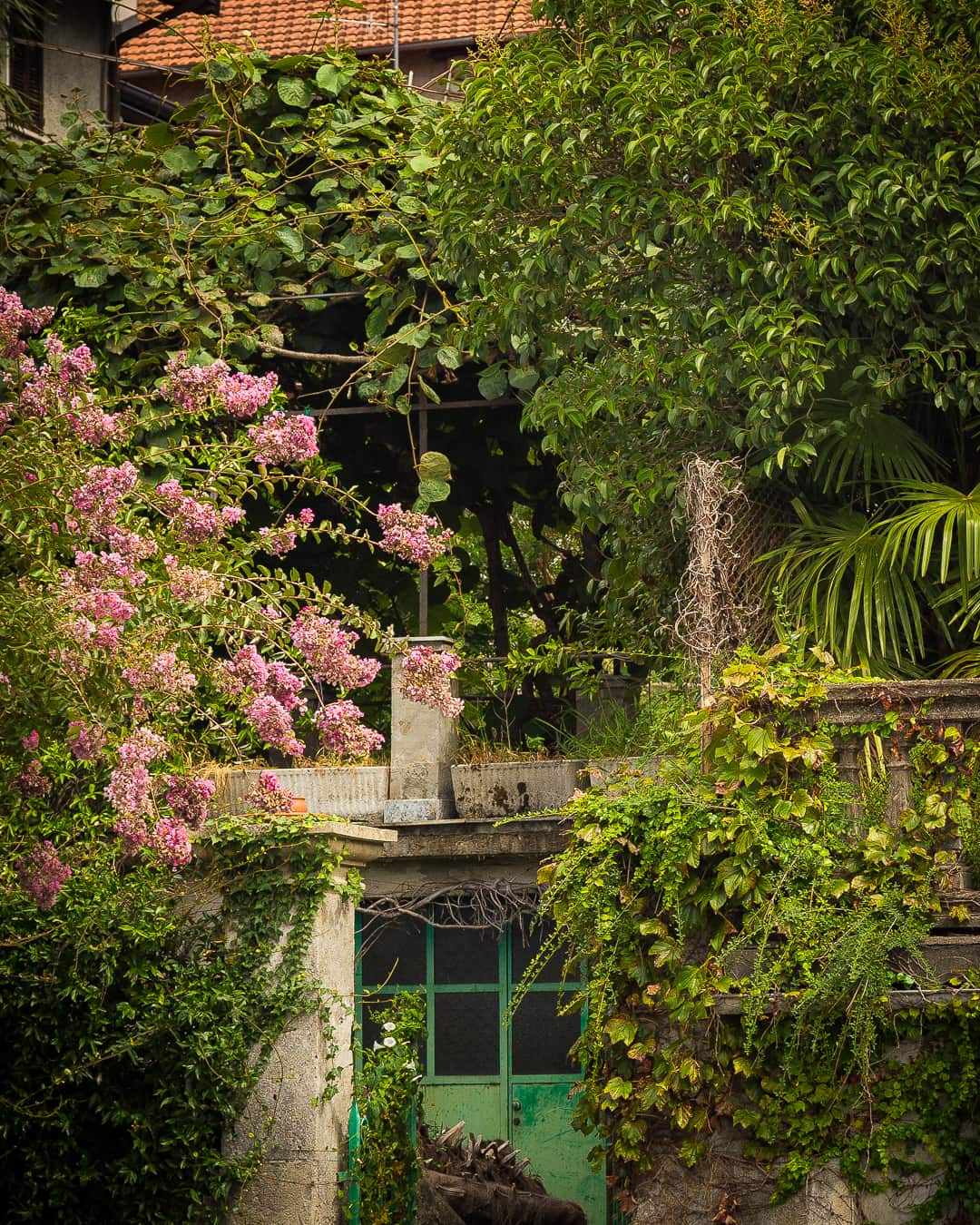
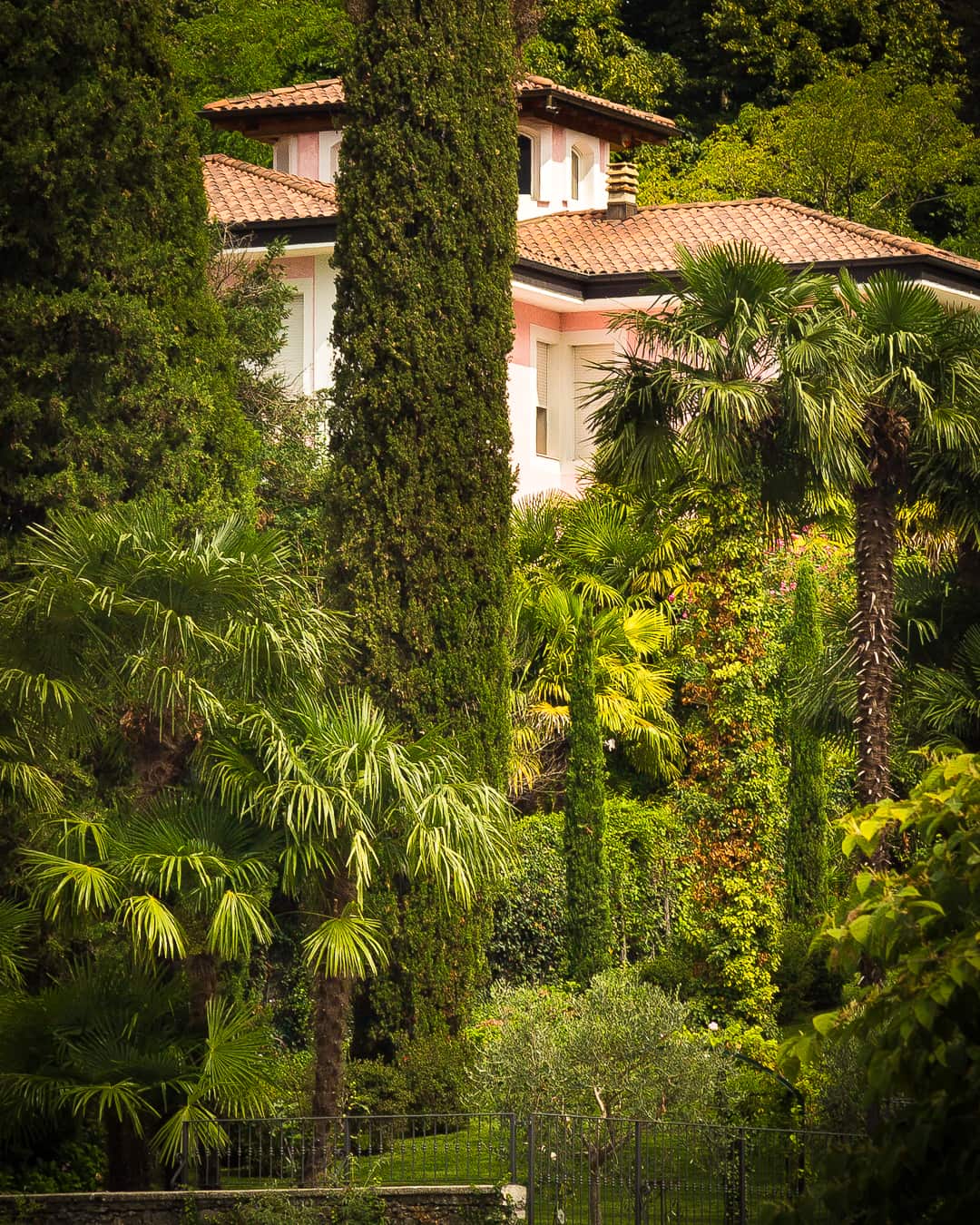
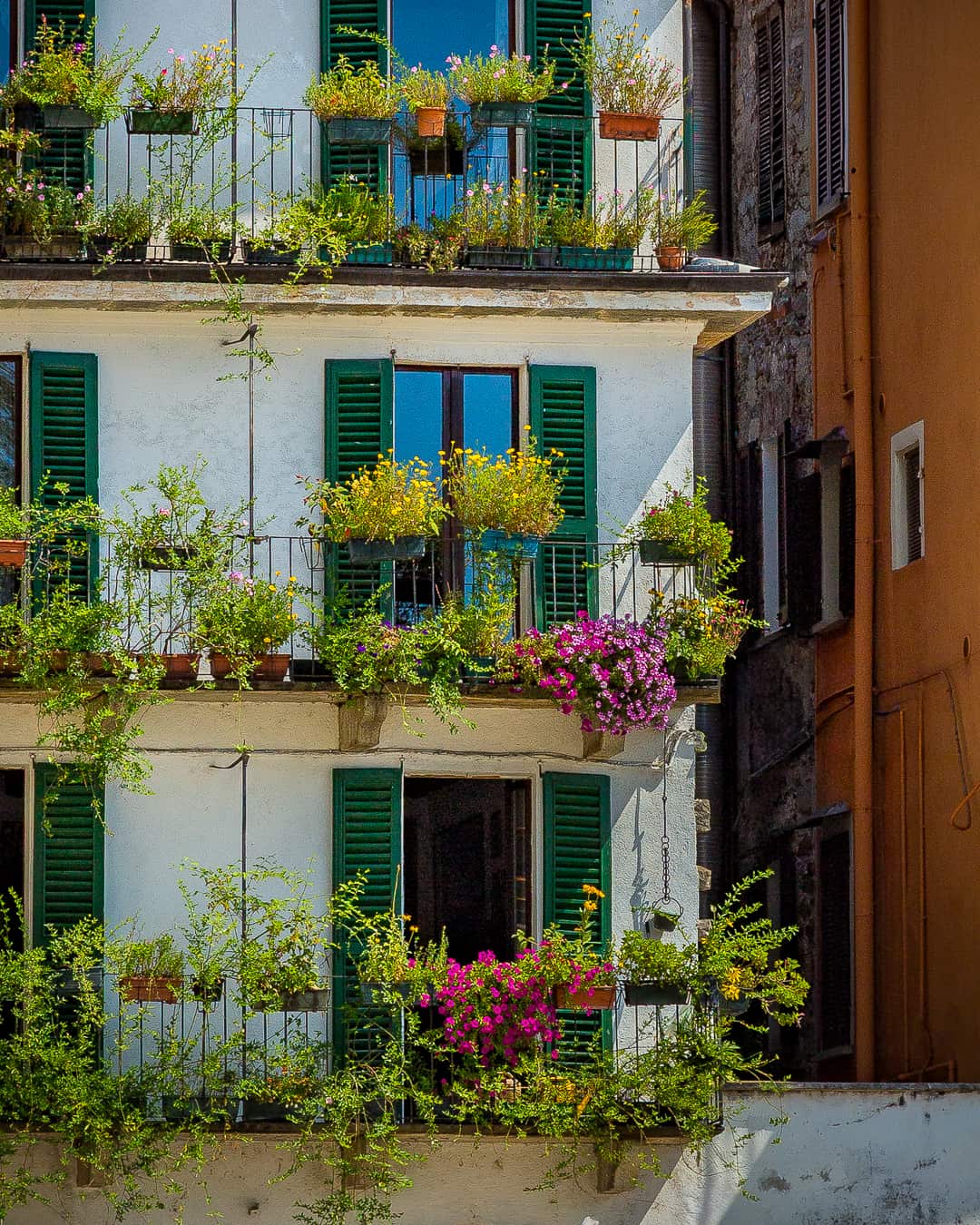
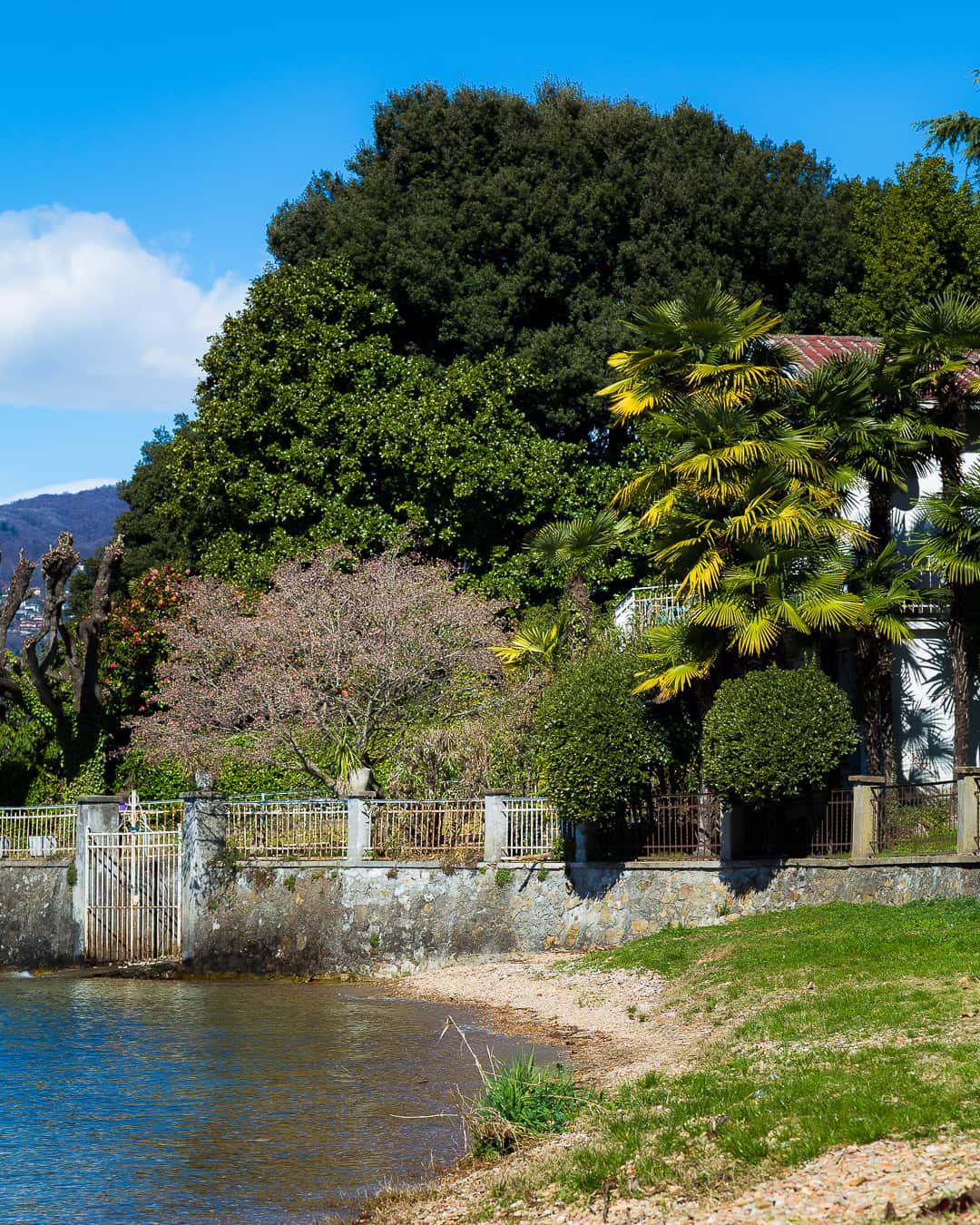
In summer the lake hides behind the green. You walk between stone walls, gates, climbing plants and hydrangeas, and the water only shows in glimpses, between two houses or at the end of a lane.
It is a landscape built with patience. Since the nineteenth century the lake has drawn travellers from all over Europe, and its shores filled with grand hotels and villas with parks and gardens. A mild climate, steady humidity and acid soils did the rest: camellias have been at home here ever since.
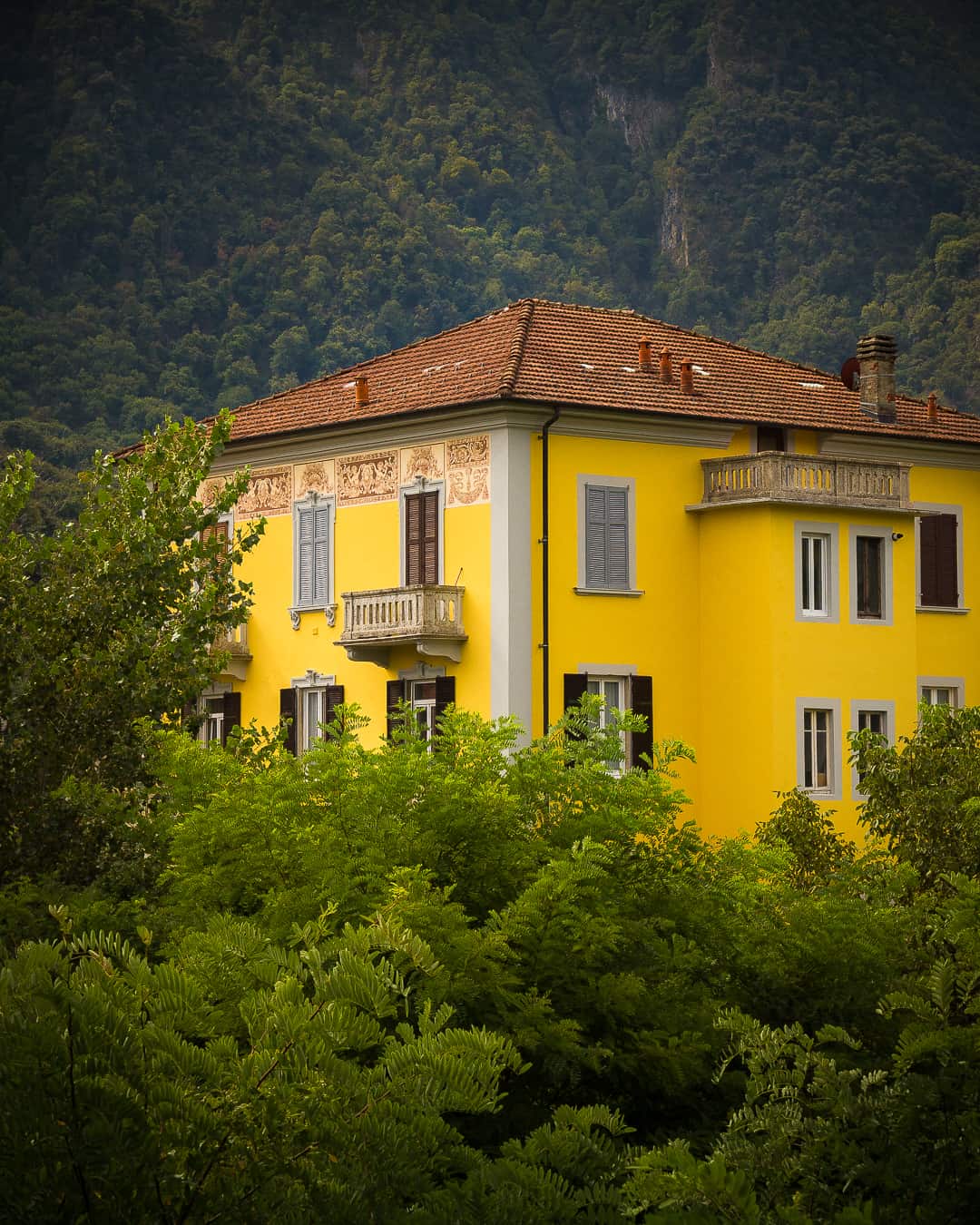
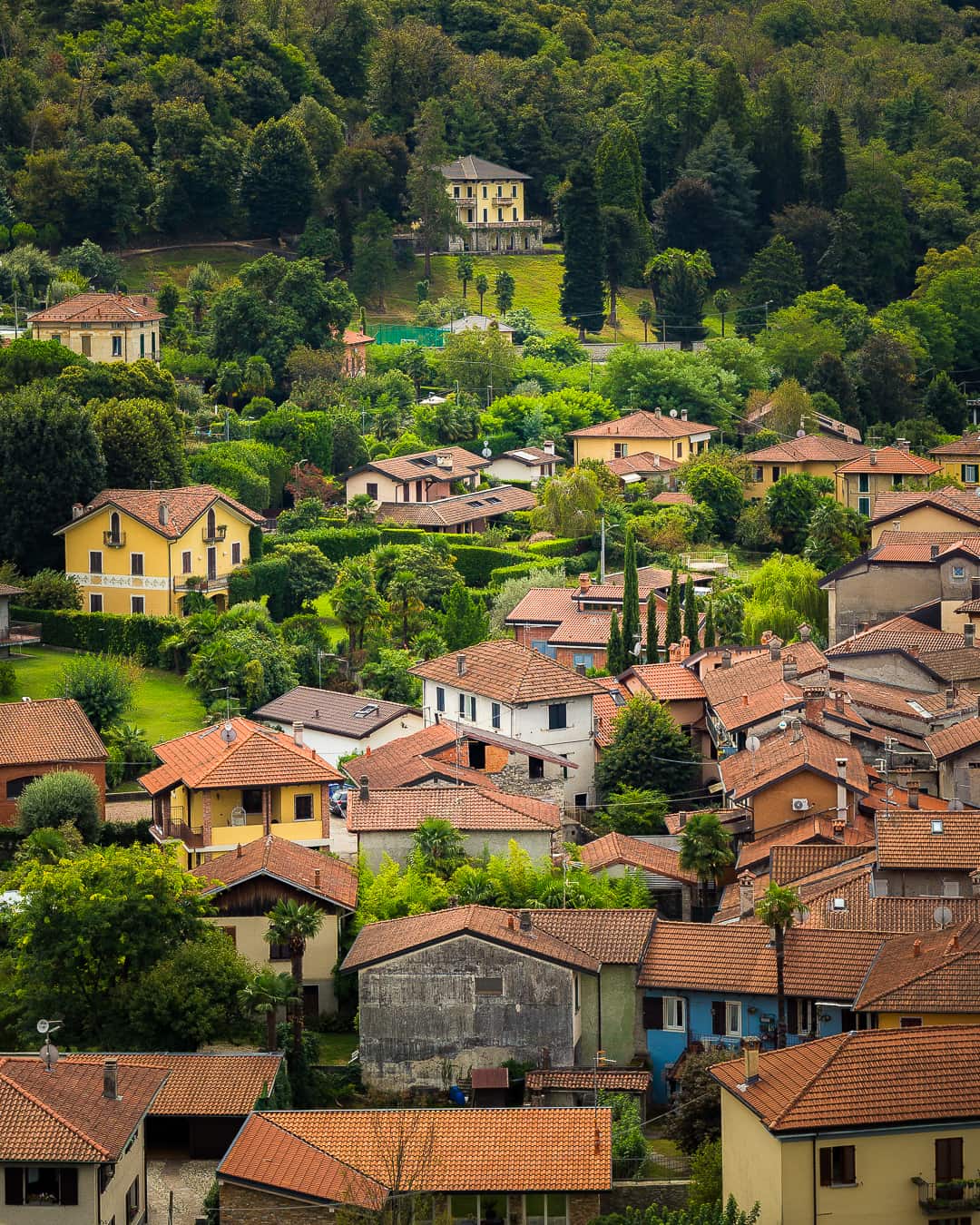
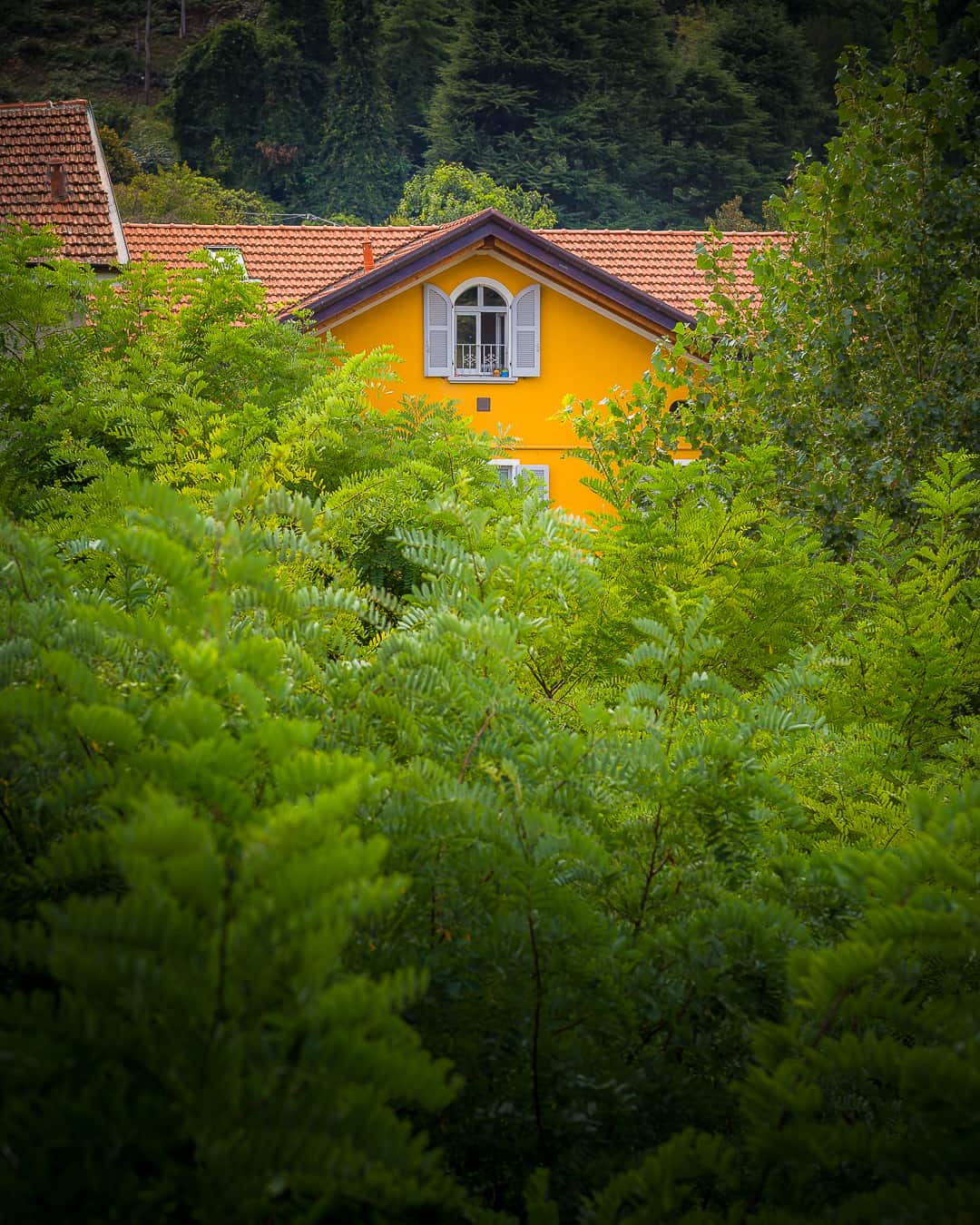
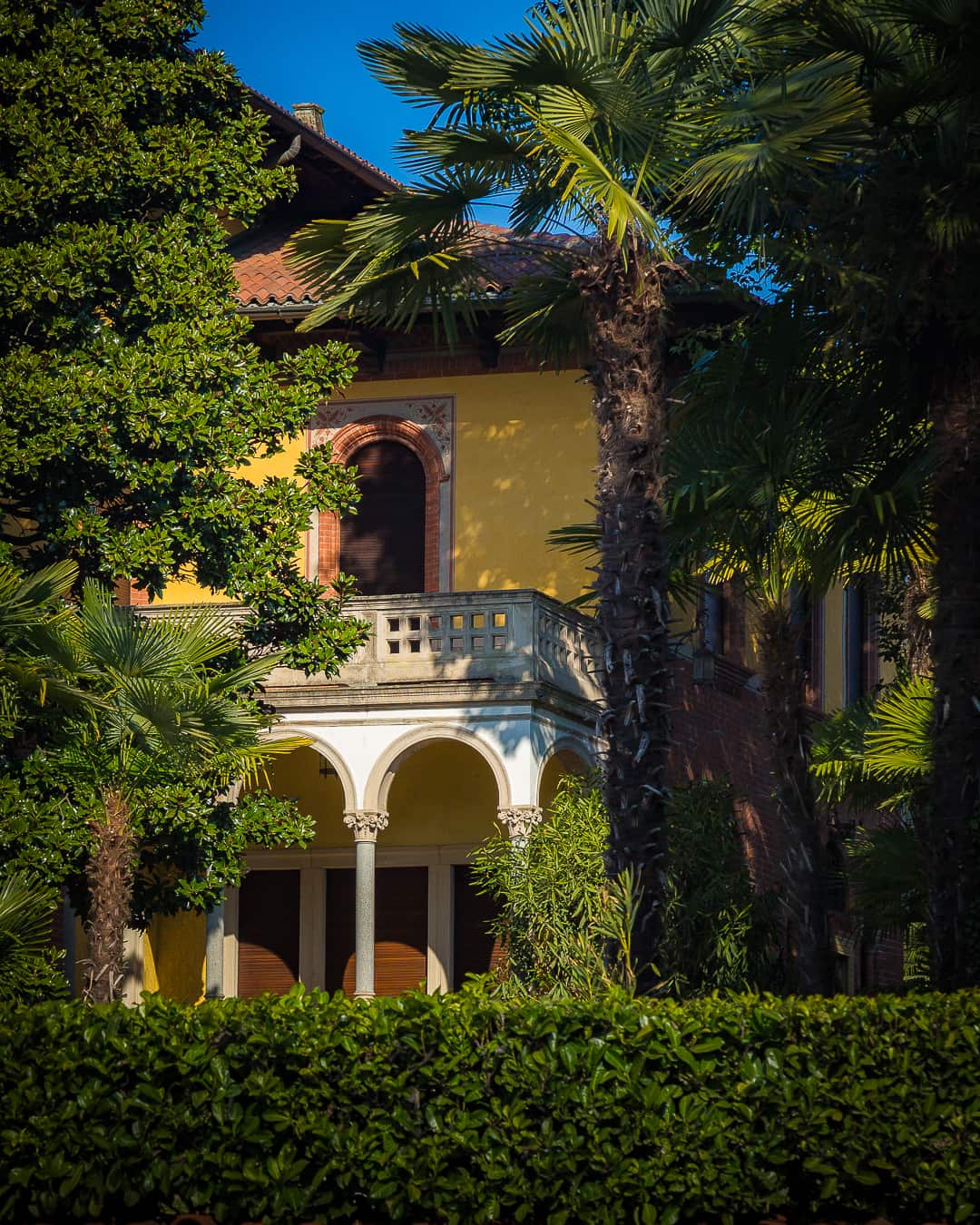
Every villa has its colour, often a warm yellow, and its green shutters.
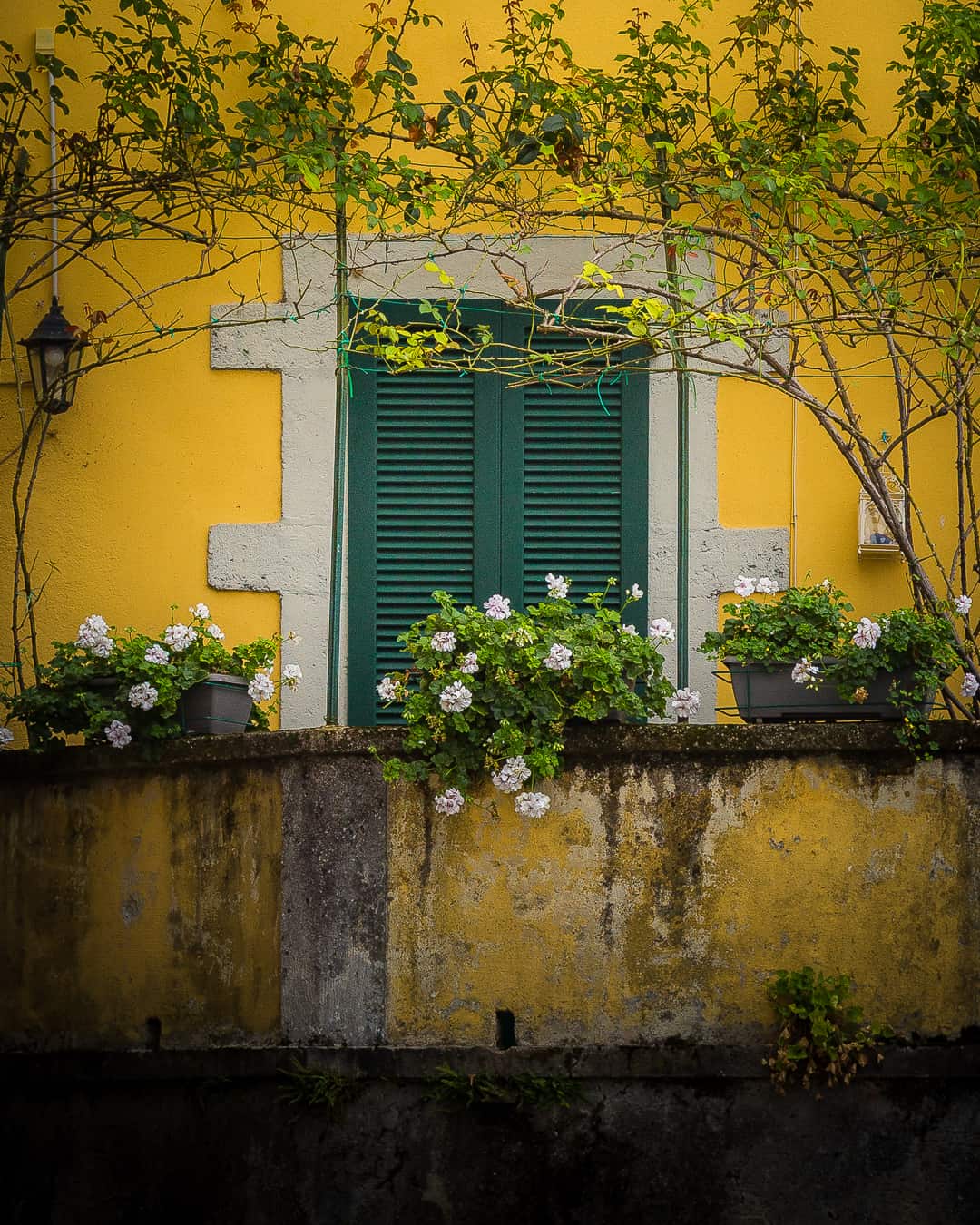
Yellow and green
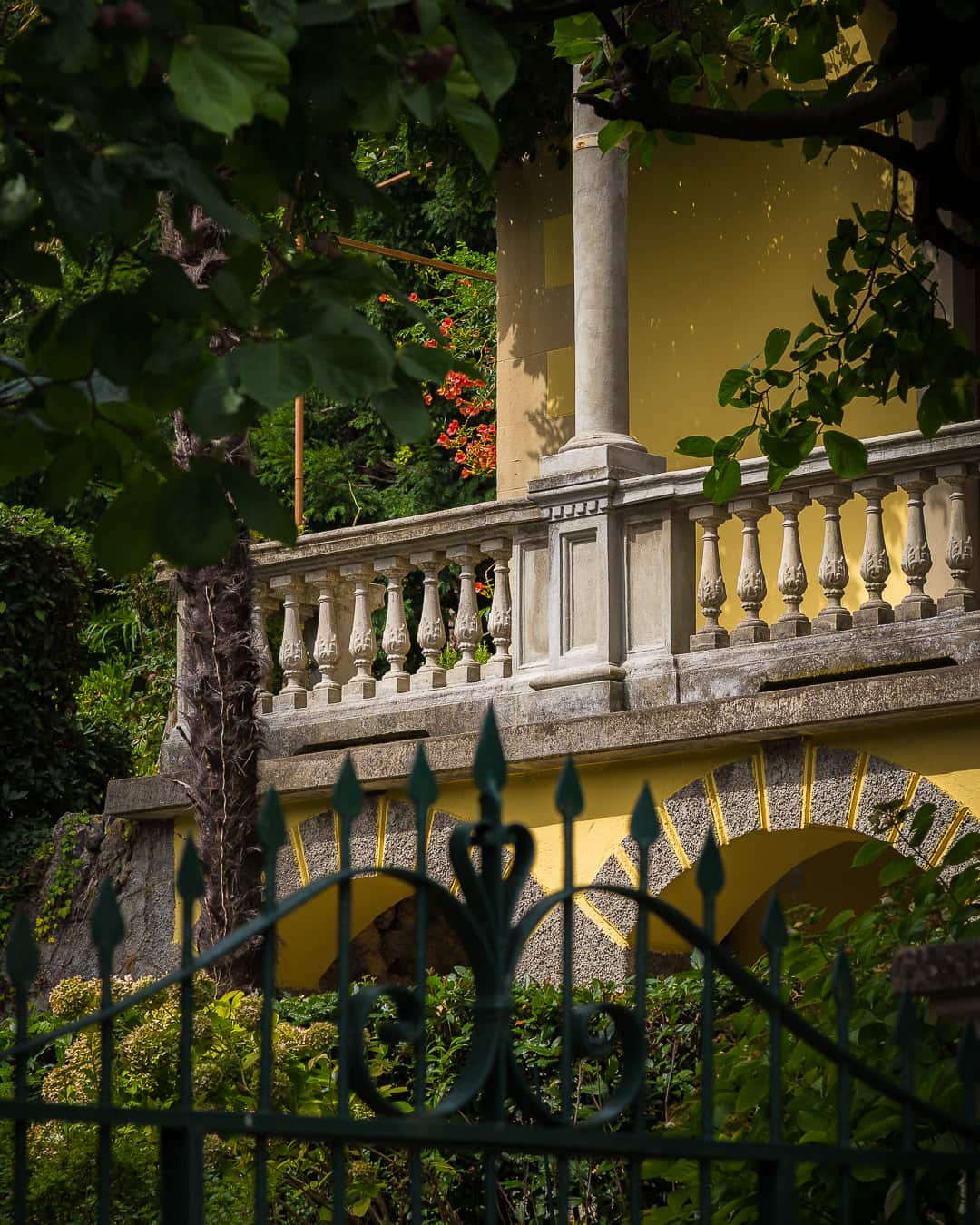
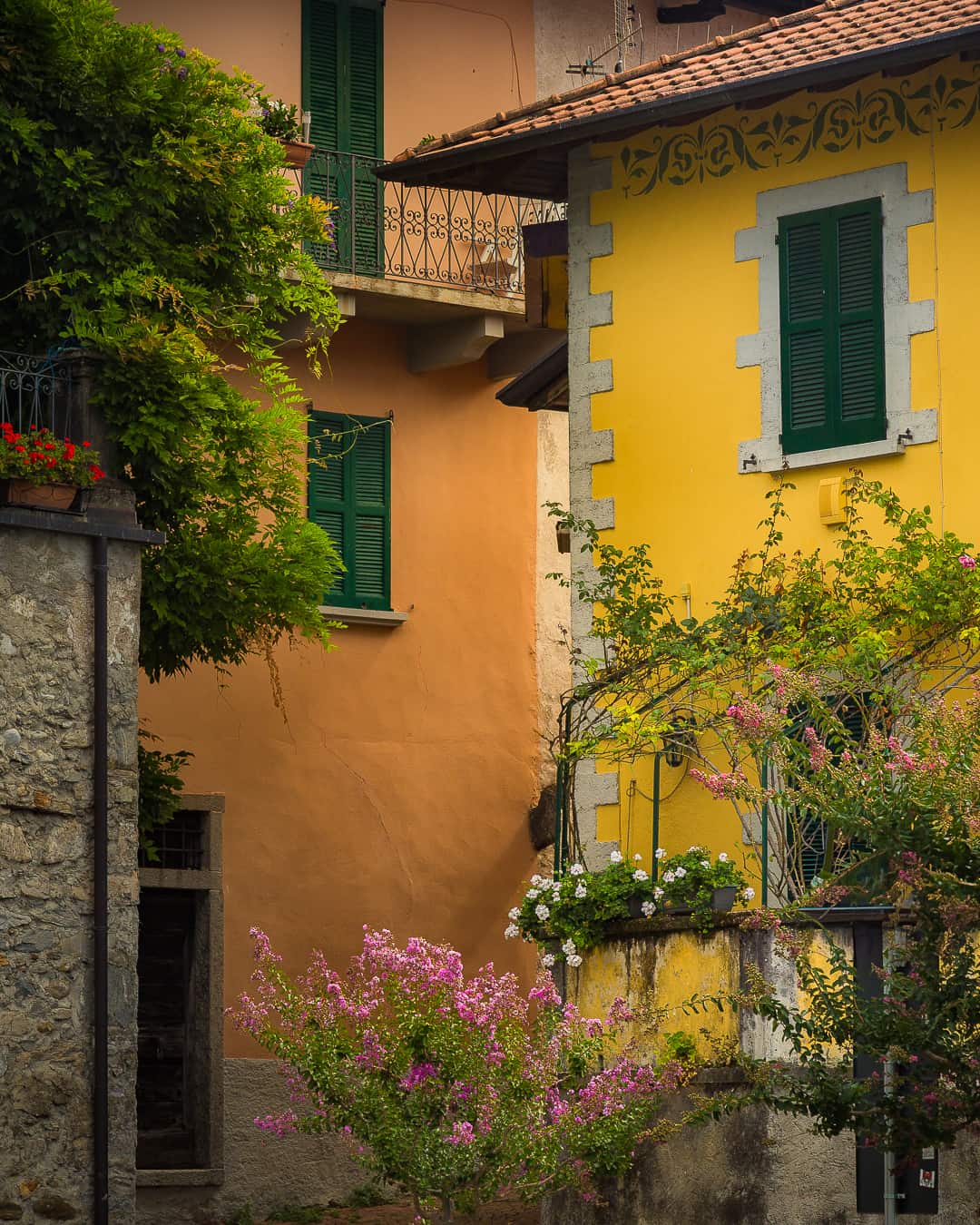
A yellow wall, green shutters, white geraniums lined up on the sill: the whole palette of the lake’s villas is here. The yellow gathers the light off the water, the green holds on to it. Above, a climbing plant draws arches no architect could have bettered.
The blue cabin
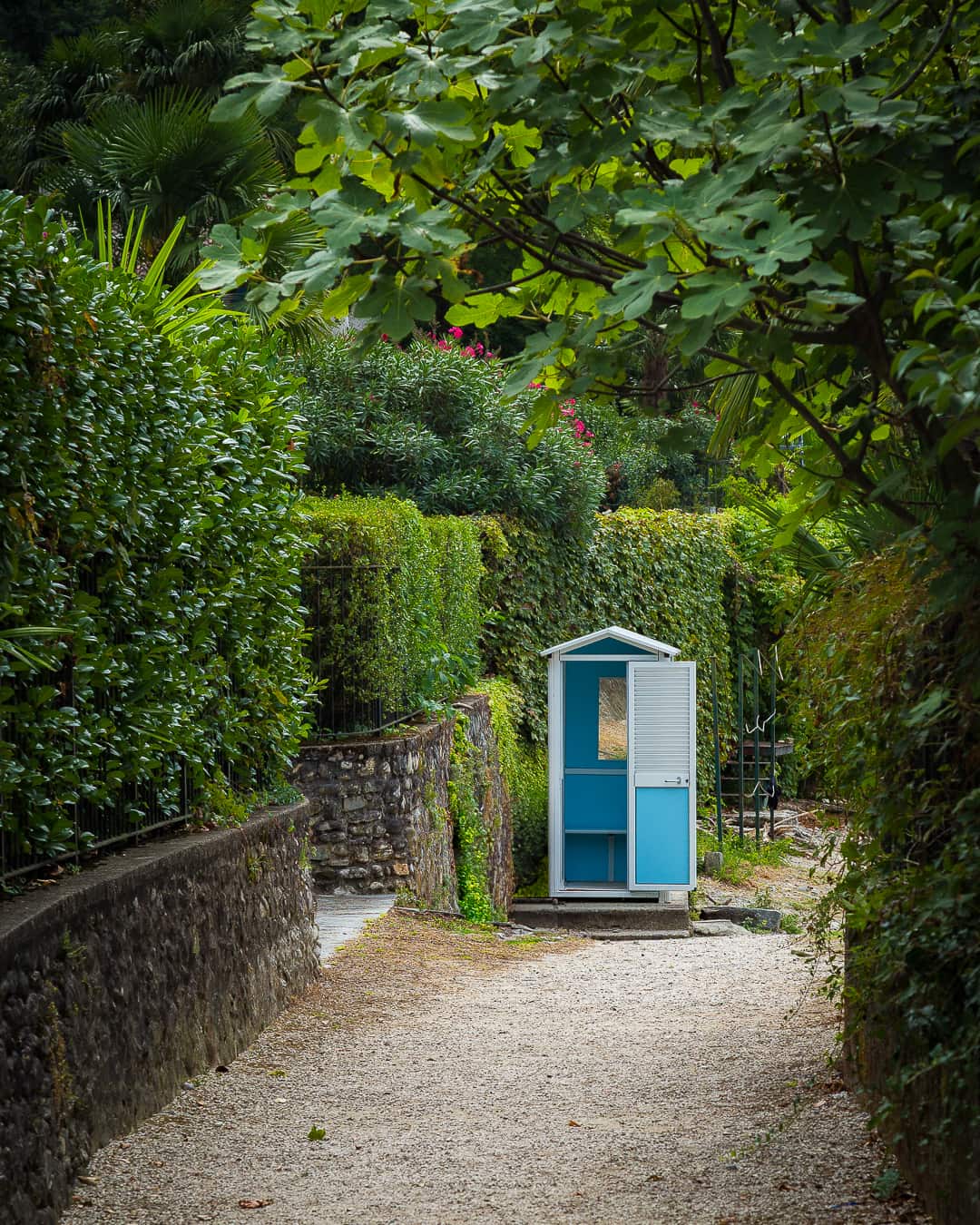
At the end of the lane, between the hedge and the stone wall, a pale blue cabin. For changing before a swim, you would guess, or for keeping oars and towels. It is one of those details no guidebook mentions that make the lake what it is: small, colourful, as if it had always been there.
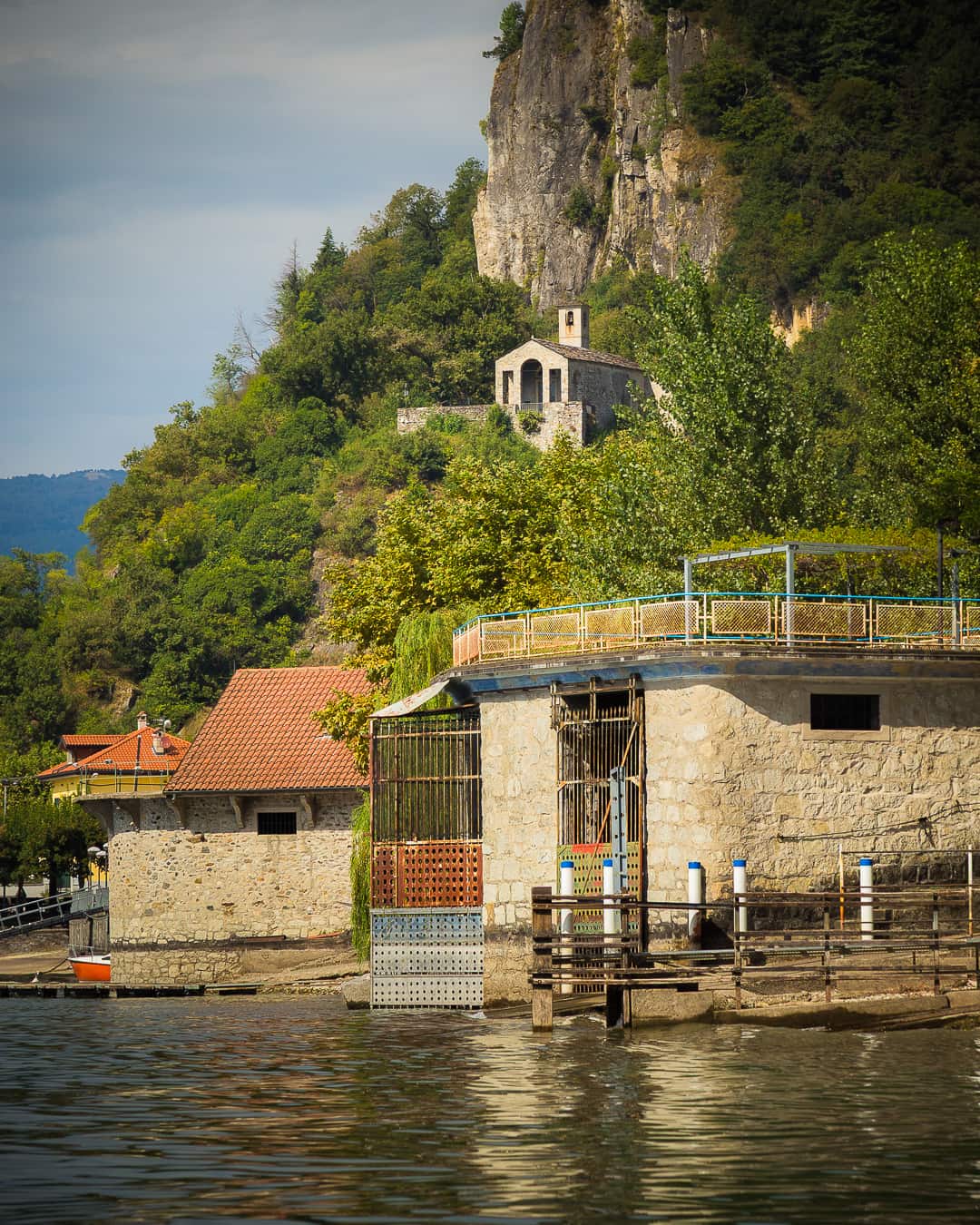
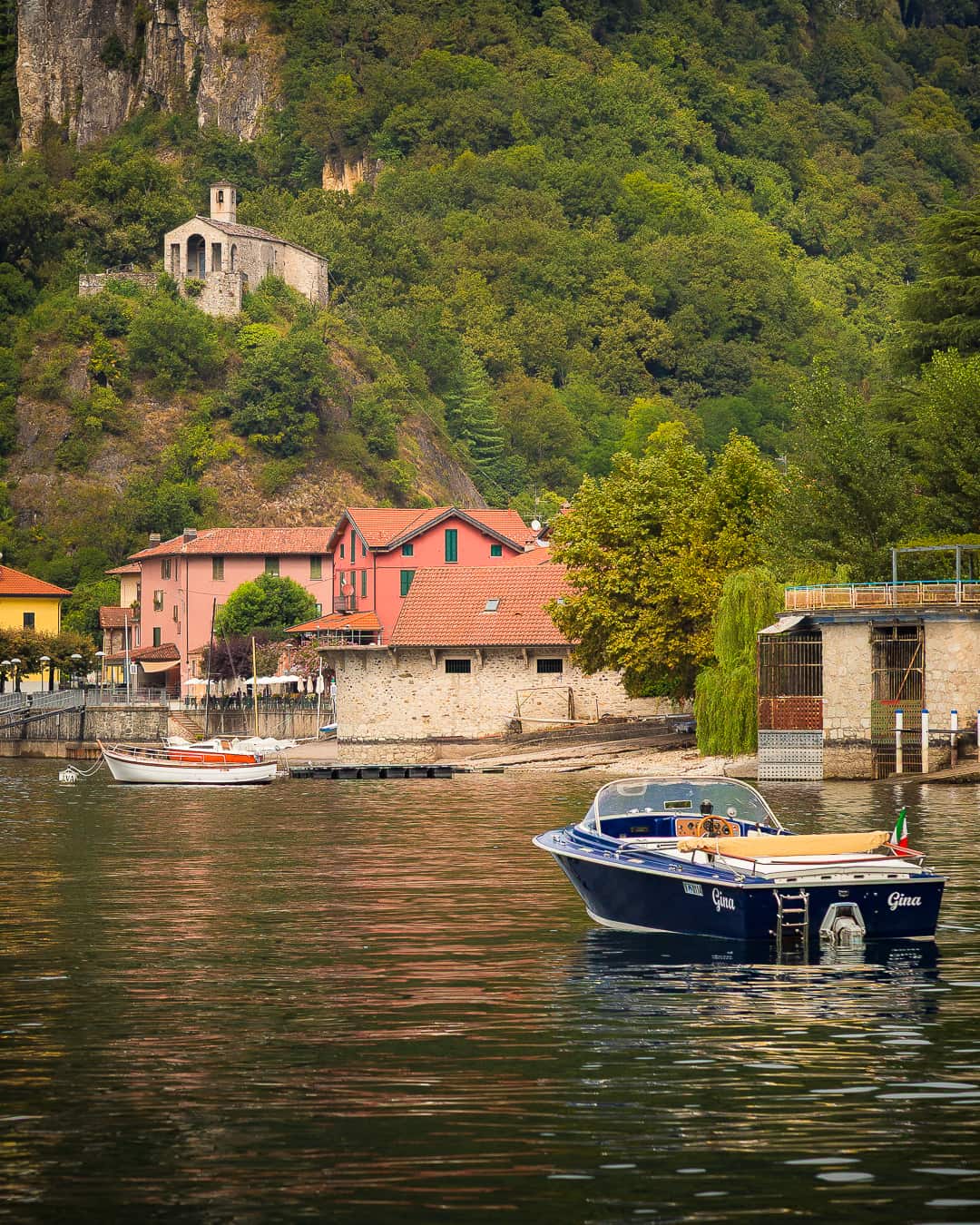
Boathouse and chapel
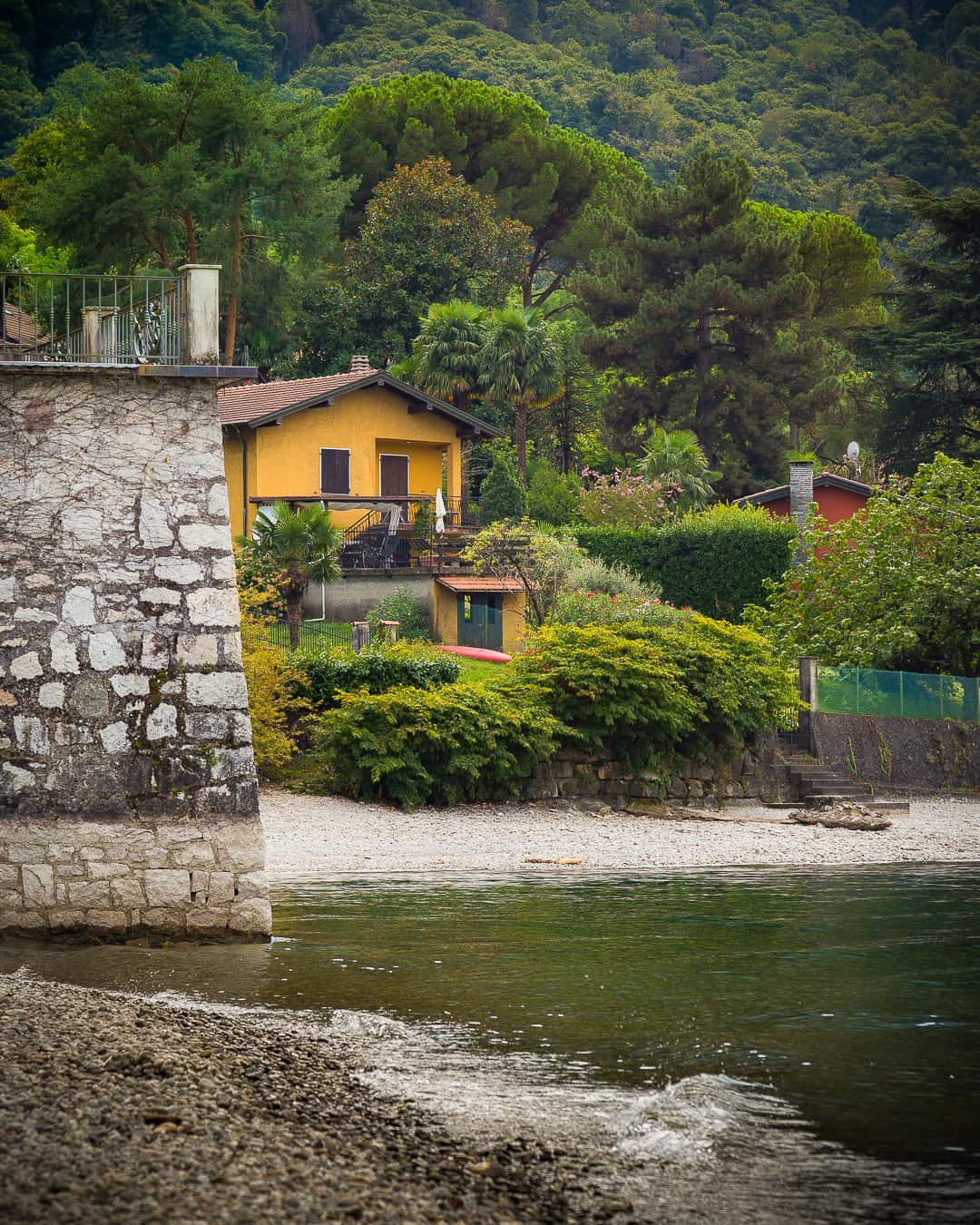
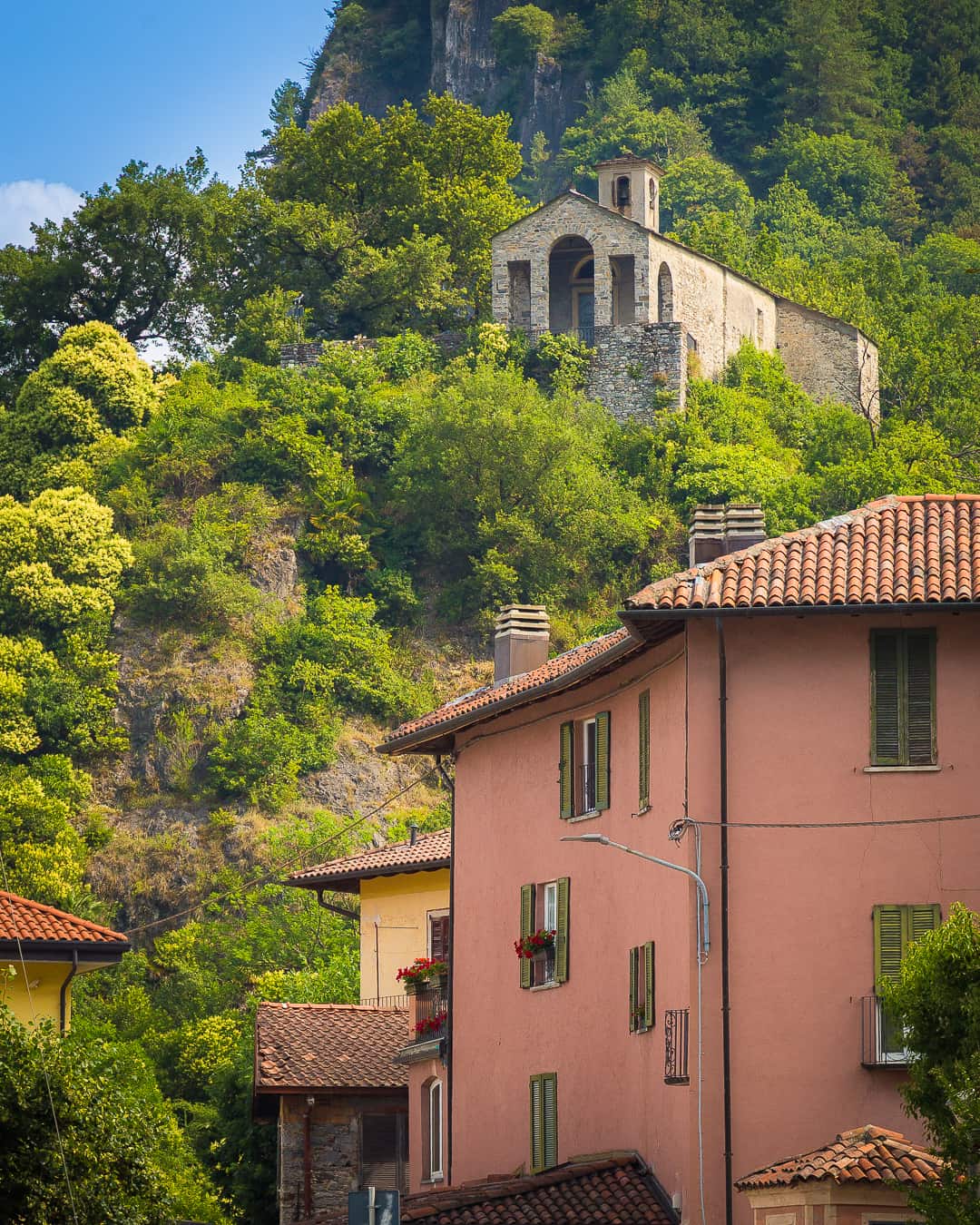
Below, a boathouse with its feet in the water; above, on the rock, a small chapel. The lake has always held the two together: everyday work and a glance upwards. In between, the green climbing the cliff.
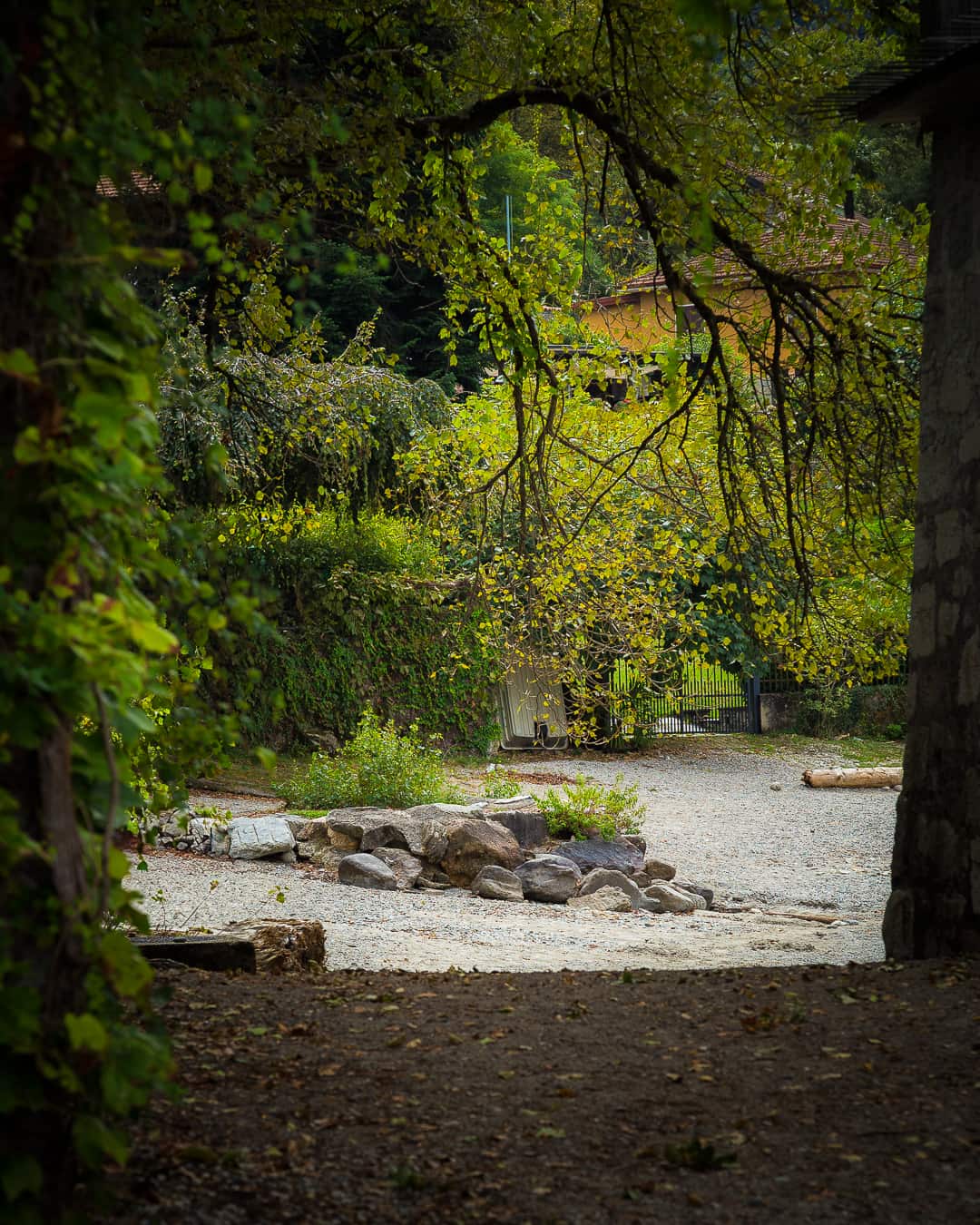
The hydrangea drive
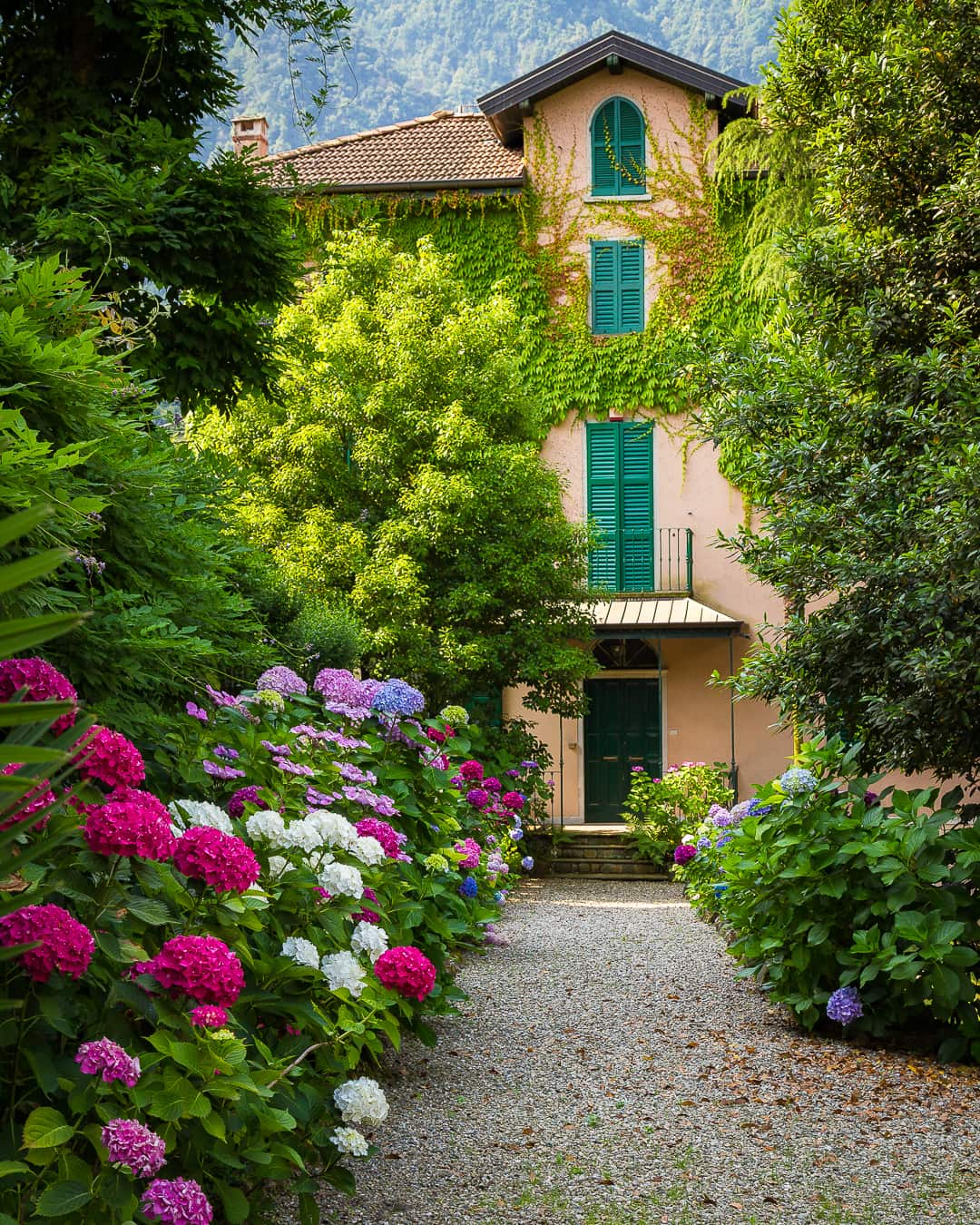
Pink, white and purple hydrangeas along a gravel drive leading to an ivy-covered villa. Their colour depends on the soil: the more acid it is, like the soil that makes the lake’s camellias thrive, the bluer the flowers turn.
II
Harbours in spring
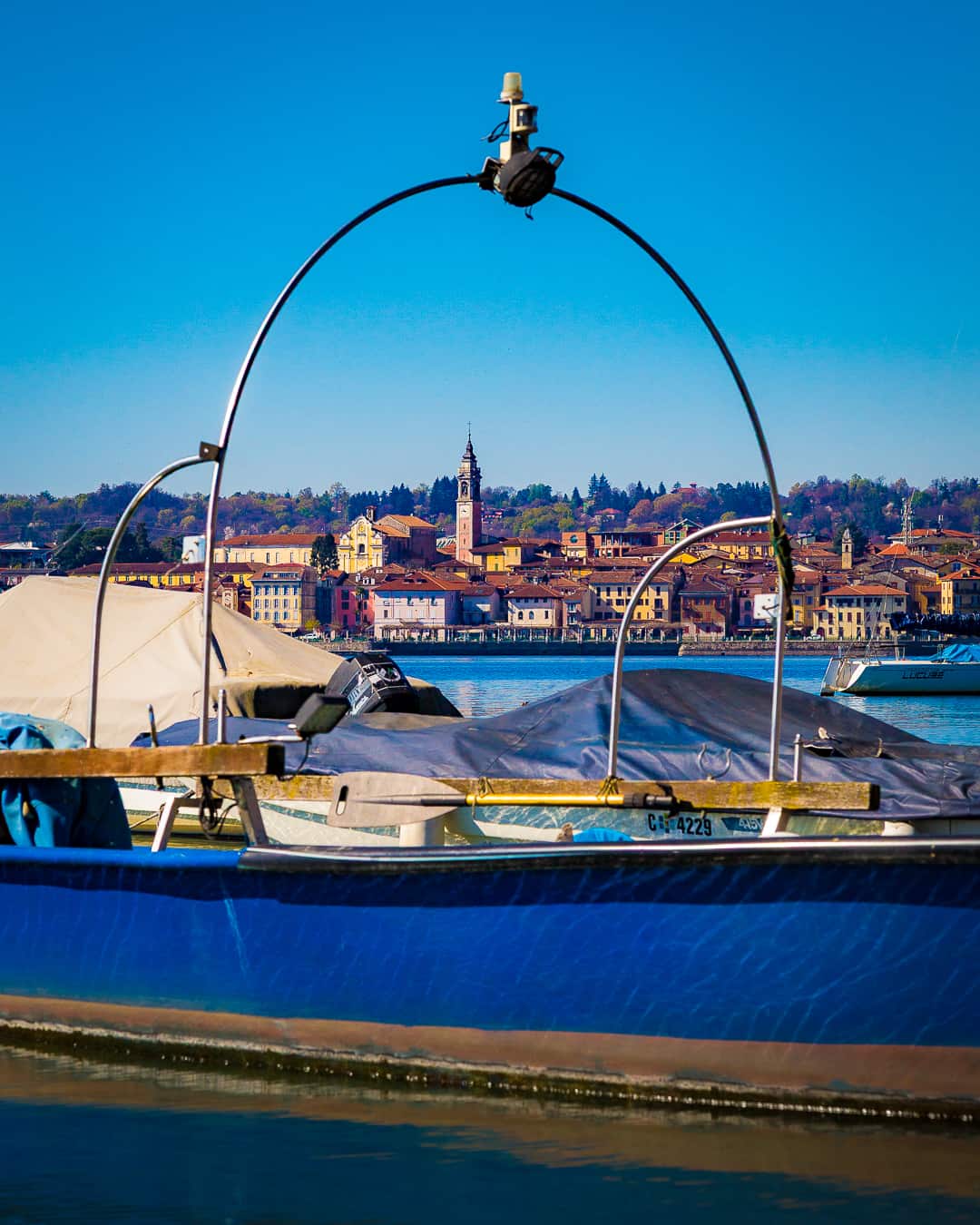
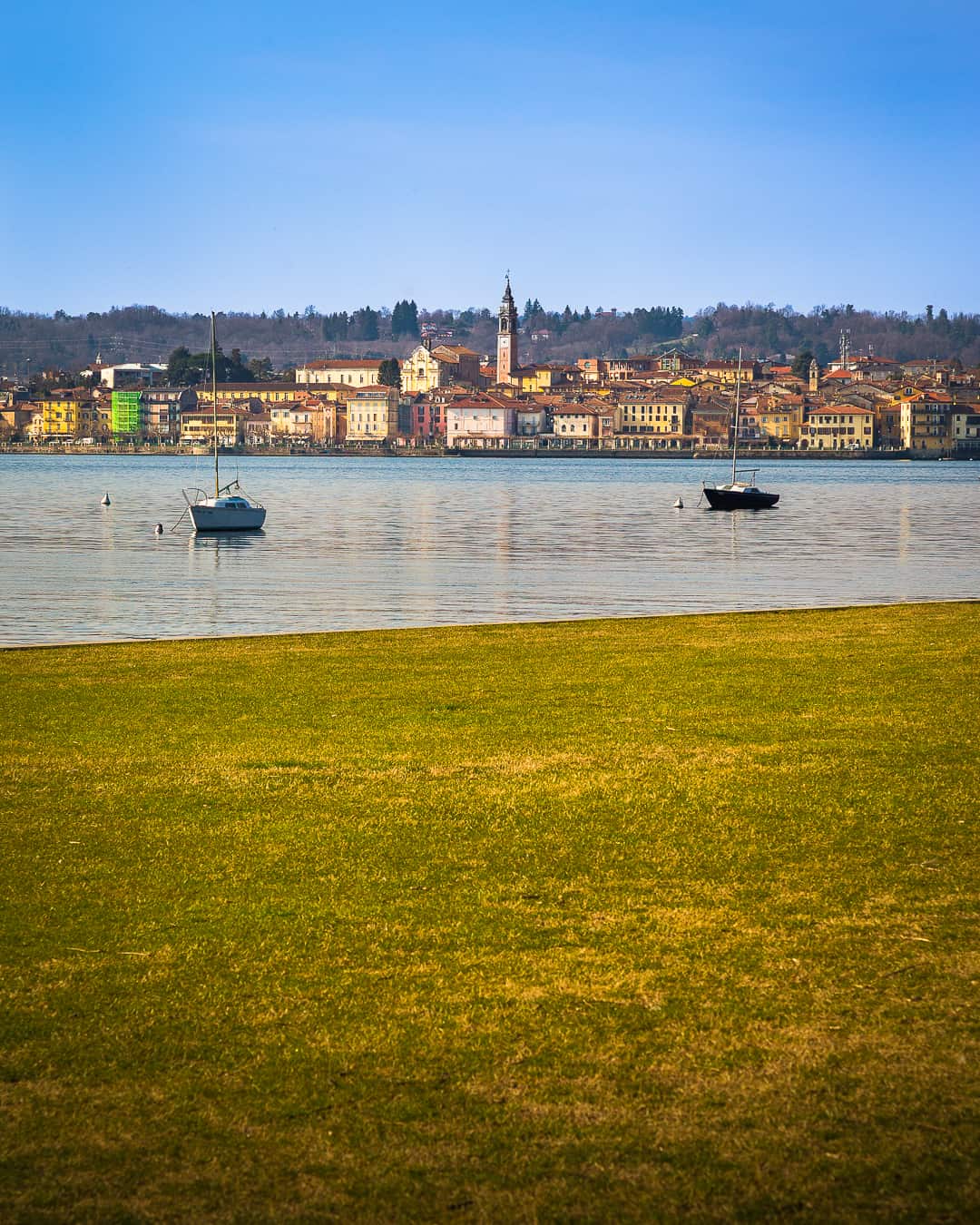
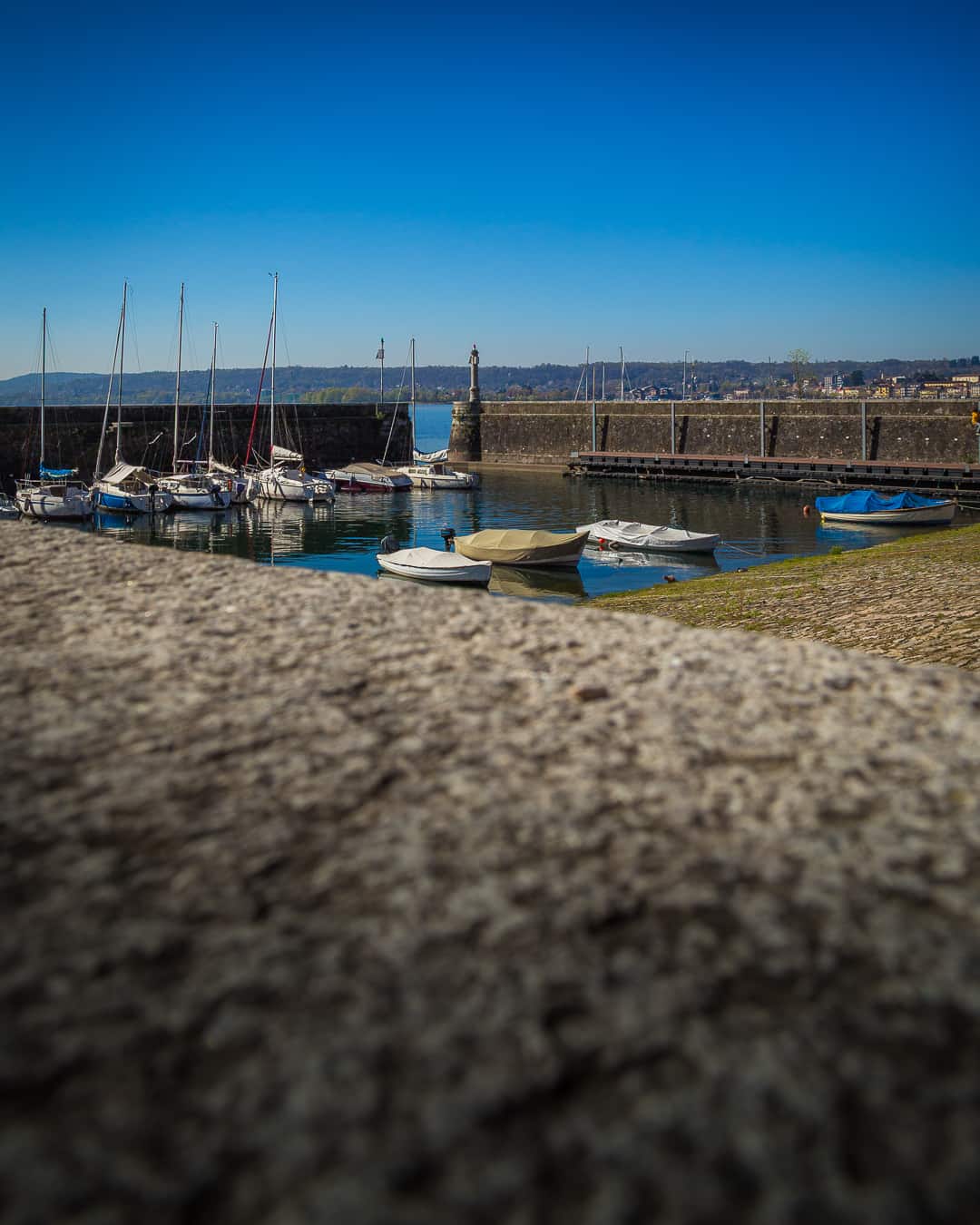
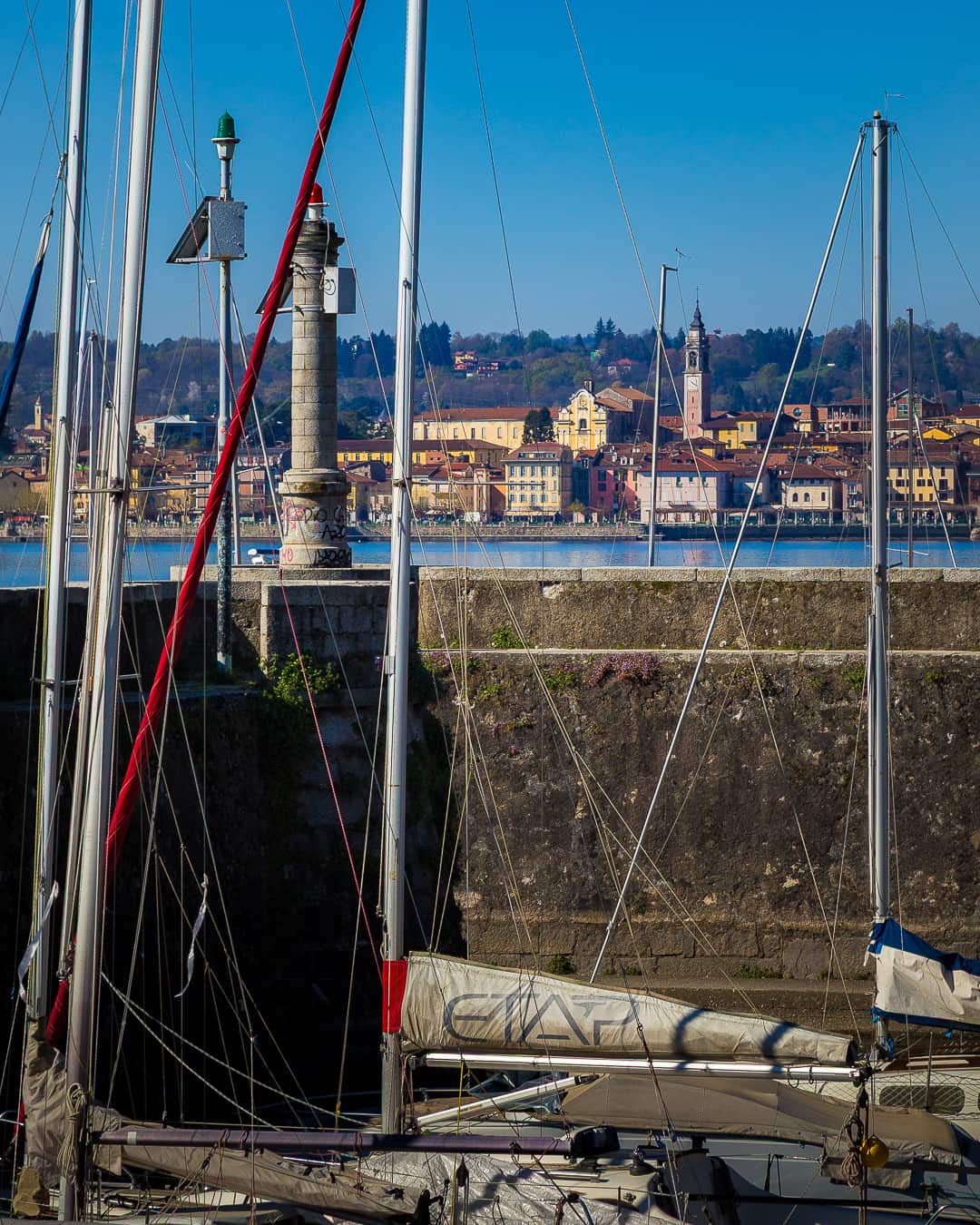
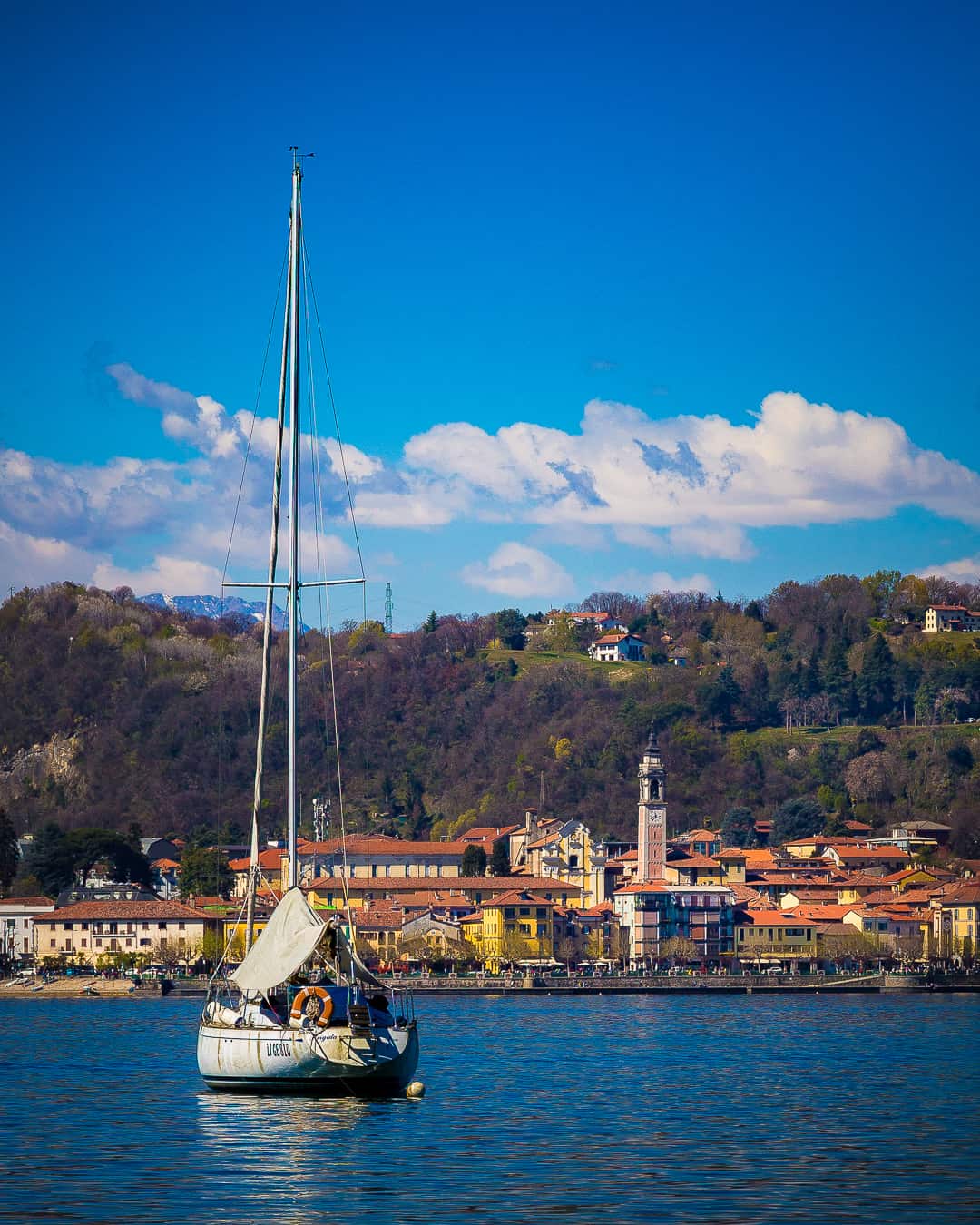
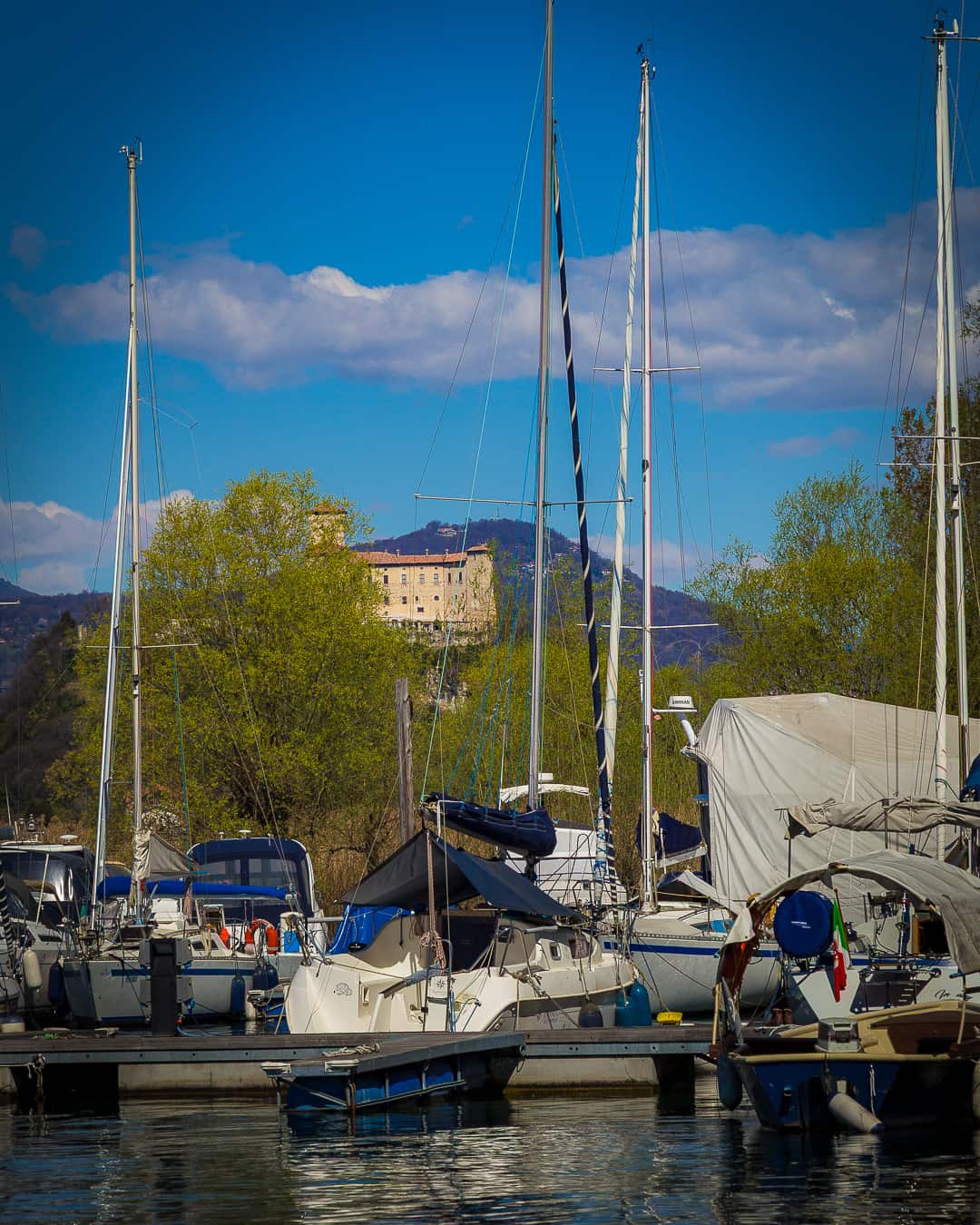
In spring the lake changes its voice. The sky turns deep blue, the trees are still bare, and in the harbours the boats wait for the season with their sails furled.
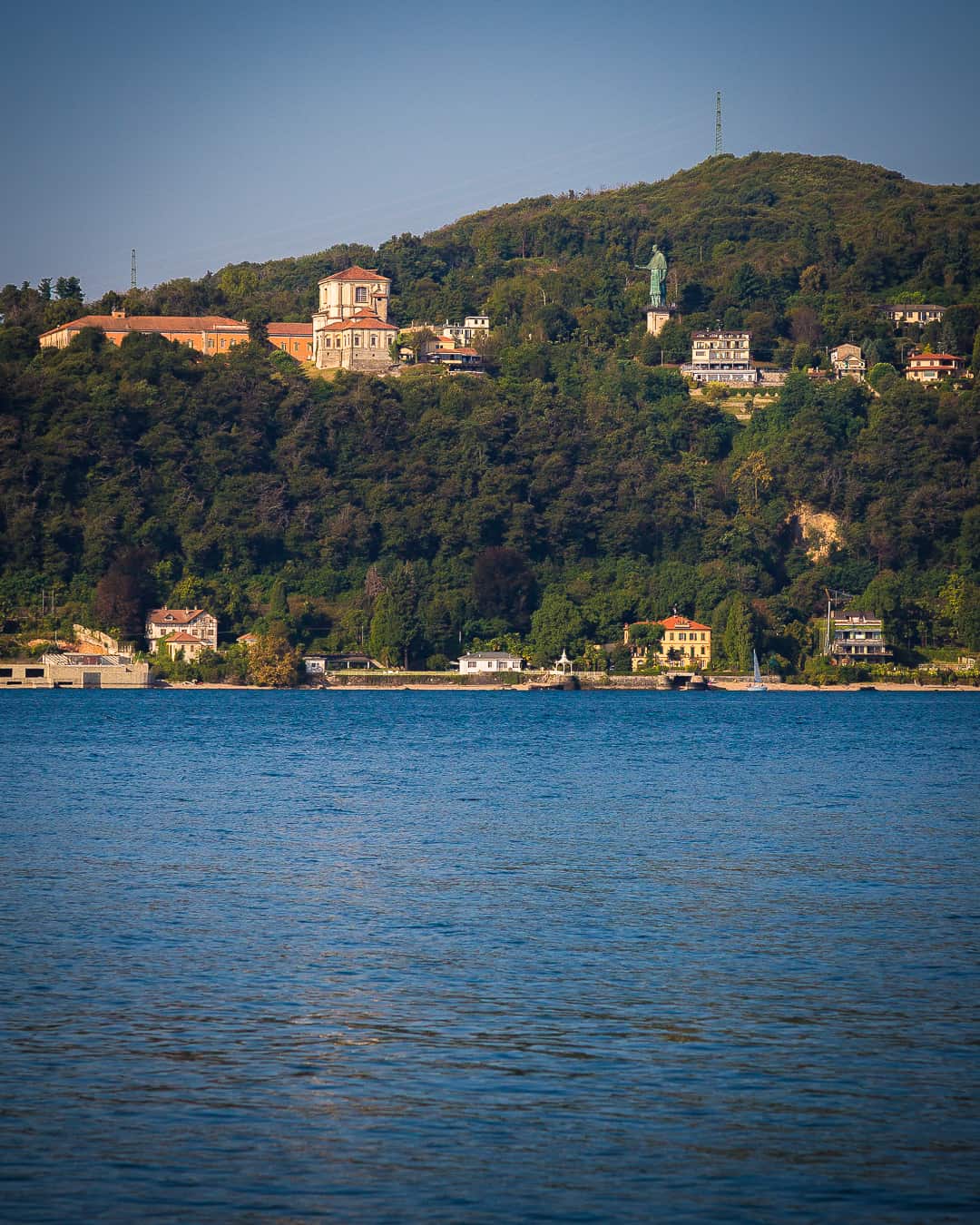
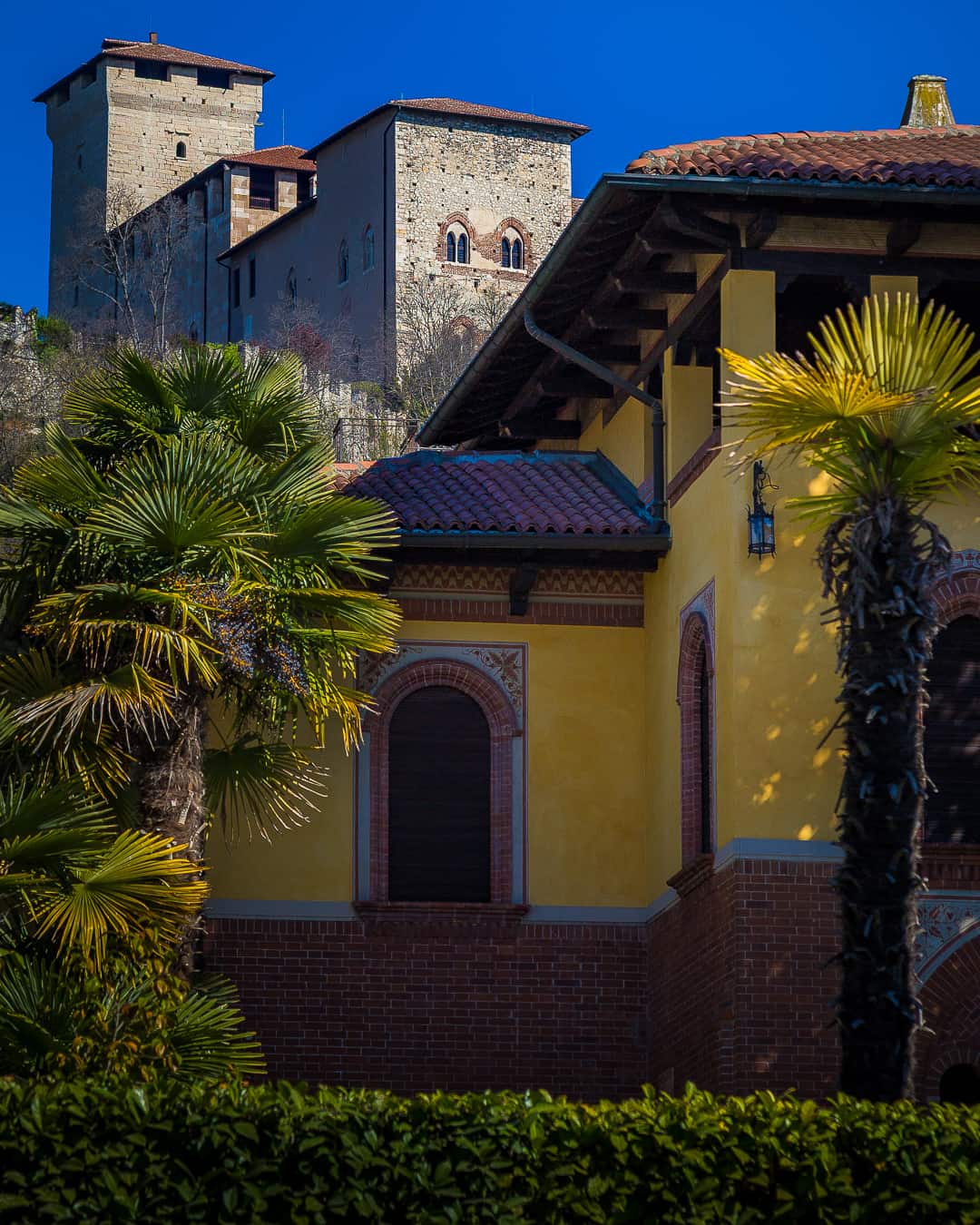
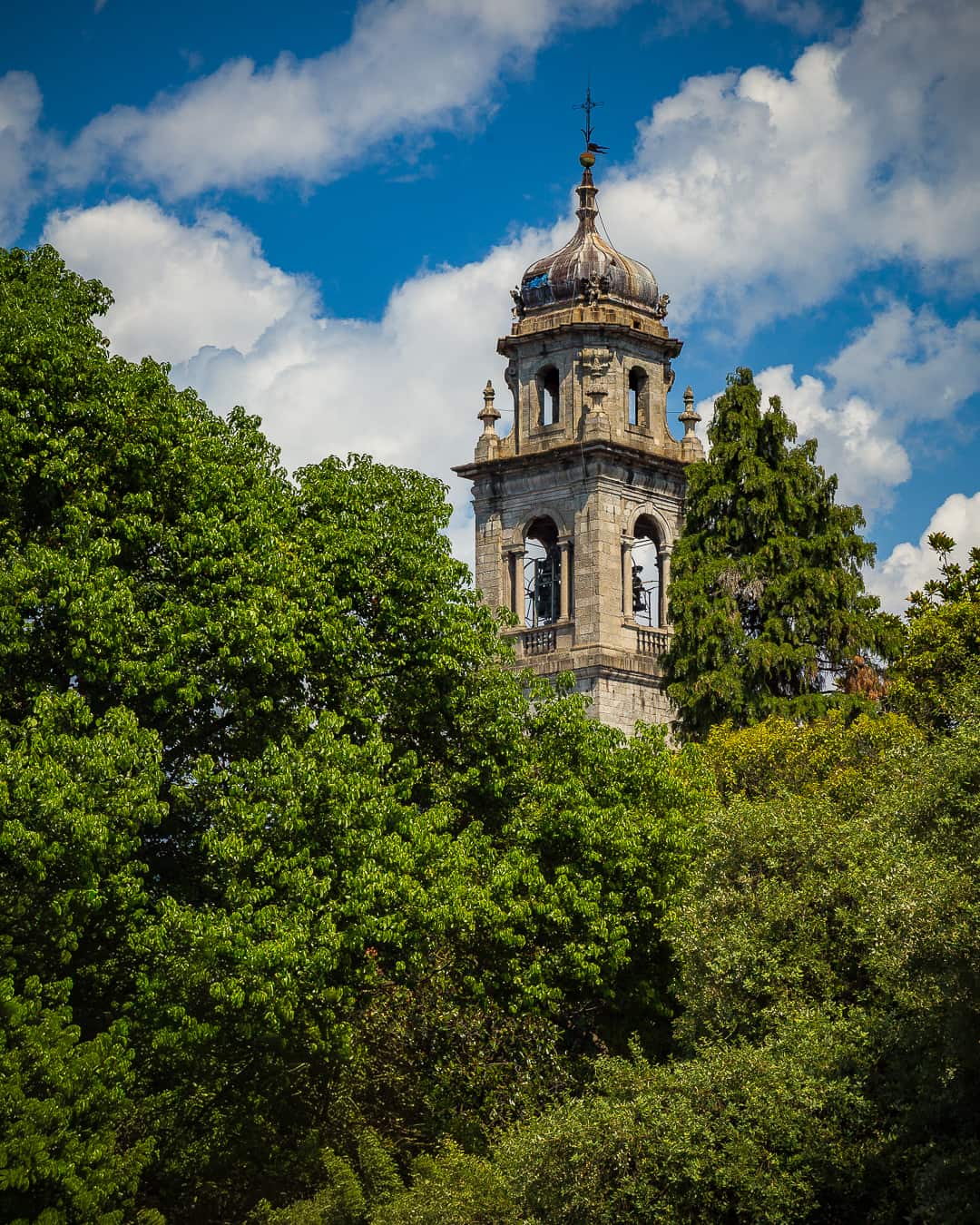
On the shores, towers and fortresses recall that the water was a route to be watched. On the Lombard side, the Rocca di Angera has belonged to the Borromeo family since 1449, and you can make it out from far away across the lake.
Sailing here has a long history: 2026 marks two hundred years of navigation on Lake Maggiore, and the Piemonte, a steamer built in 1904, is still in service.
Coloured glass
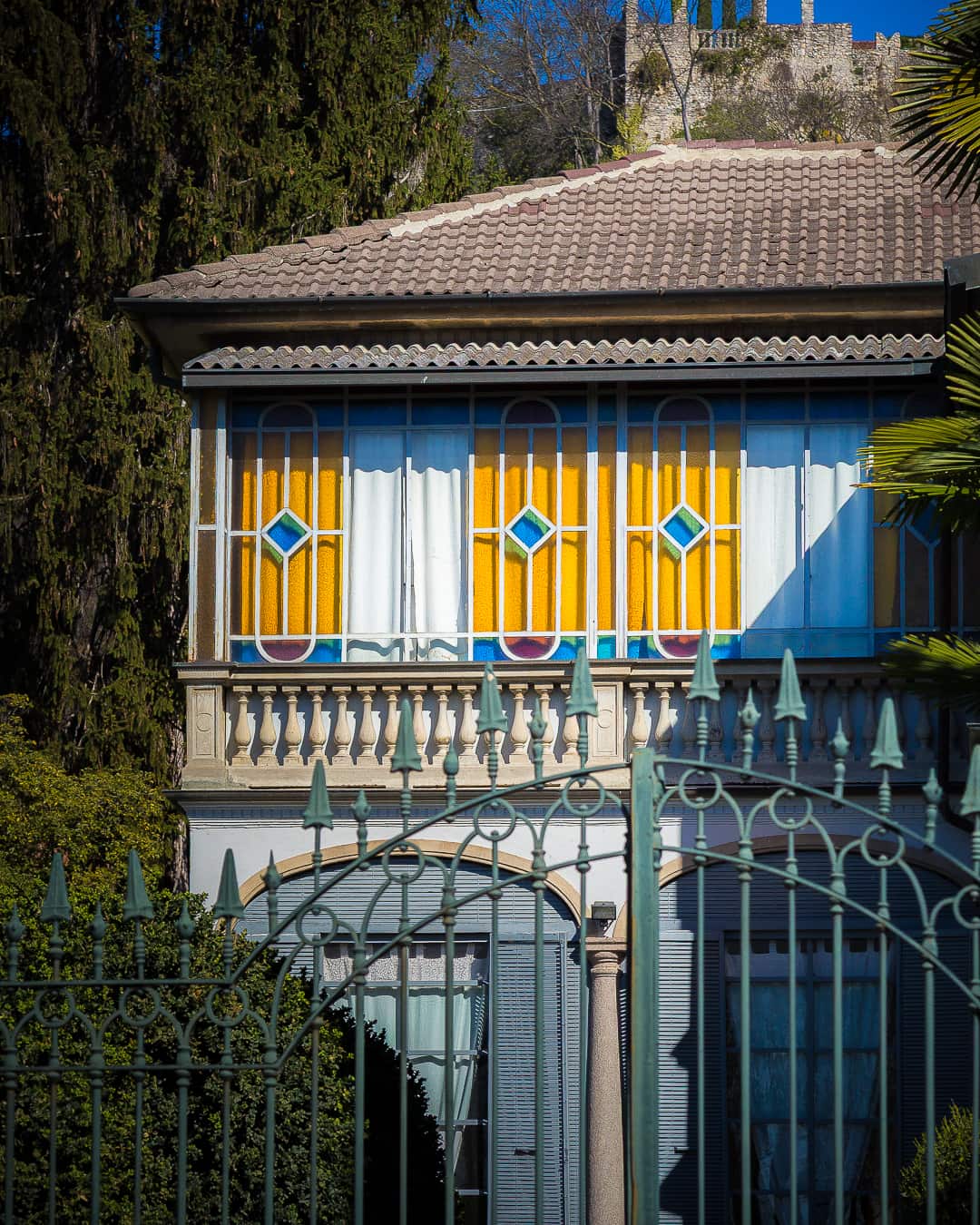
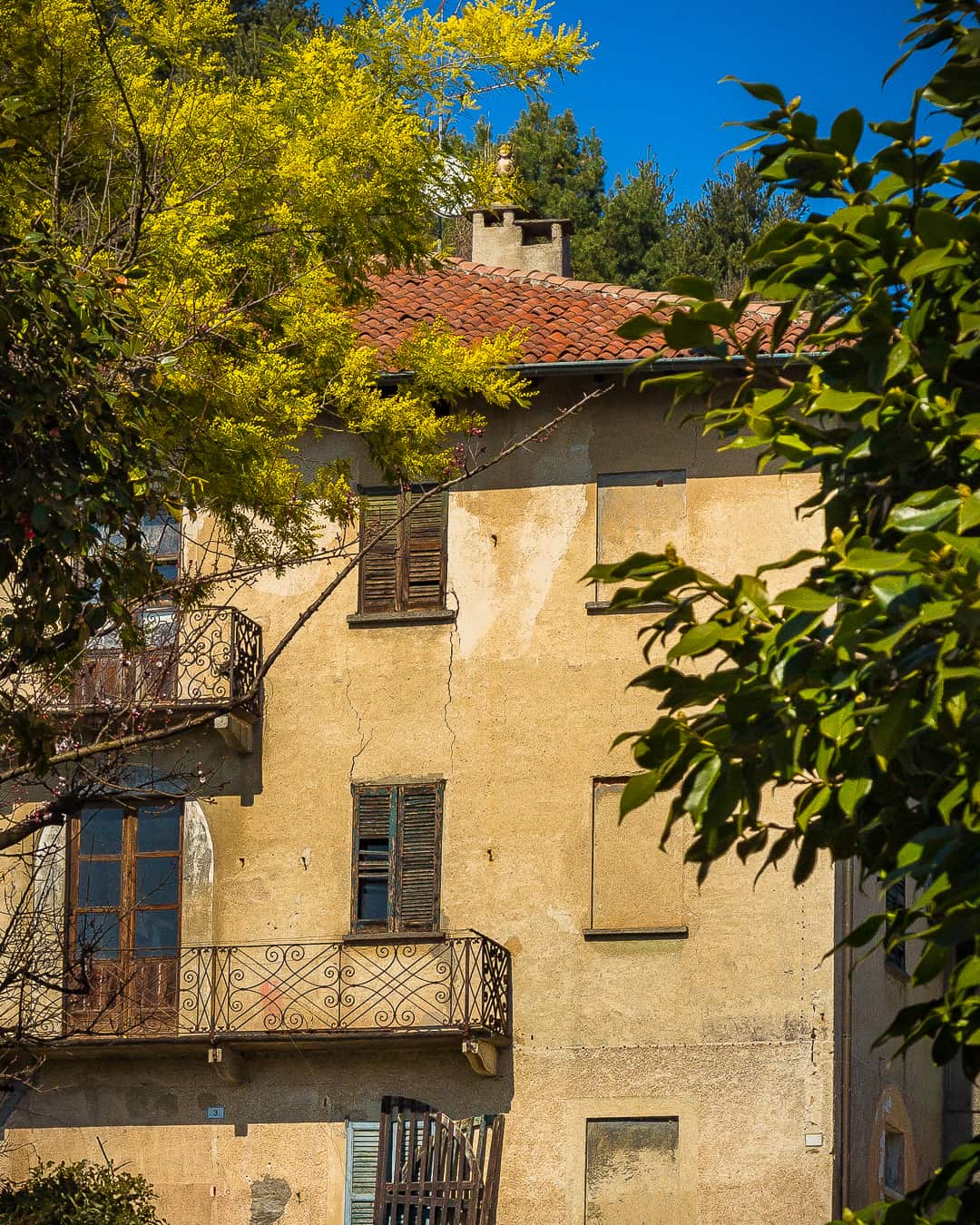
A loggia with yellow and blue diamond panes, a wrought-iron gate with gilded spikes: holidaymaking left light architecture on the lake, built for the fine season. Just looking at it from the outside is a small journey back in time.
The path
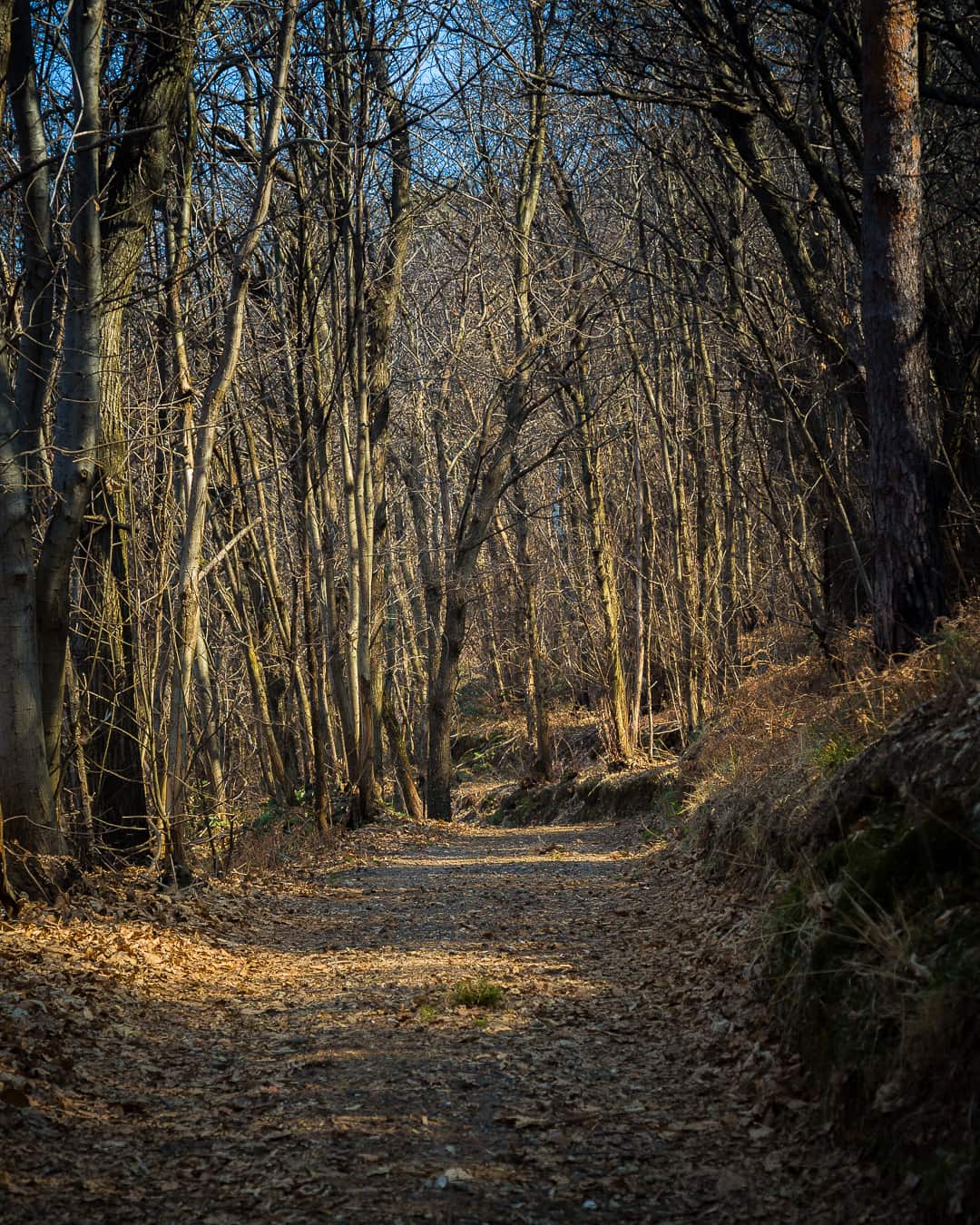
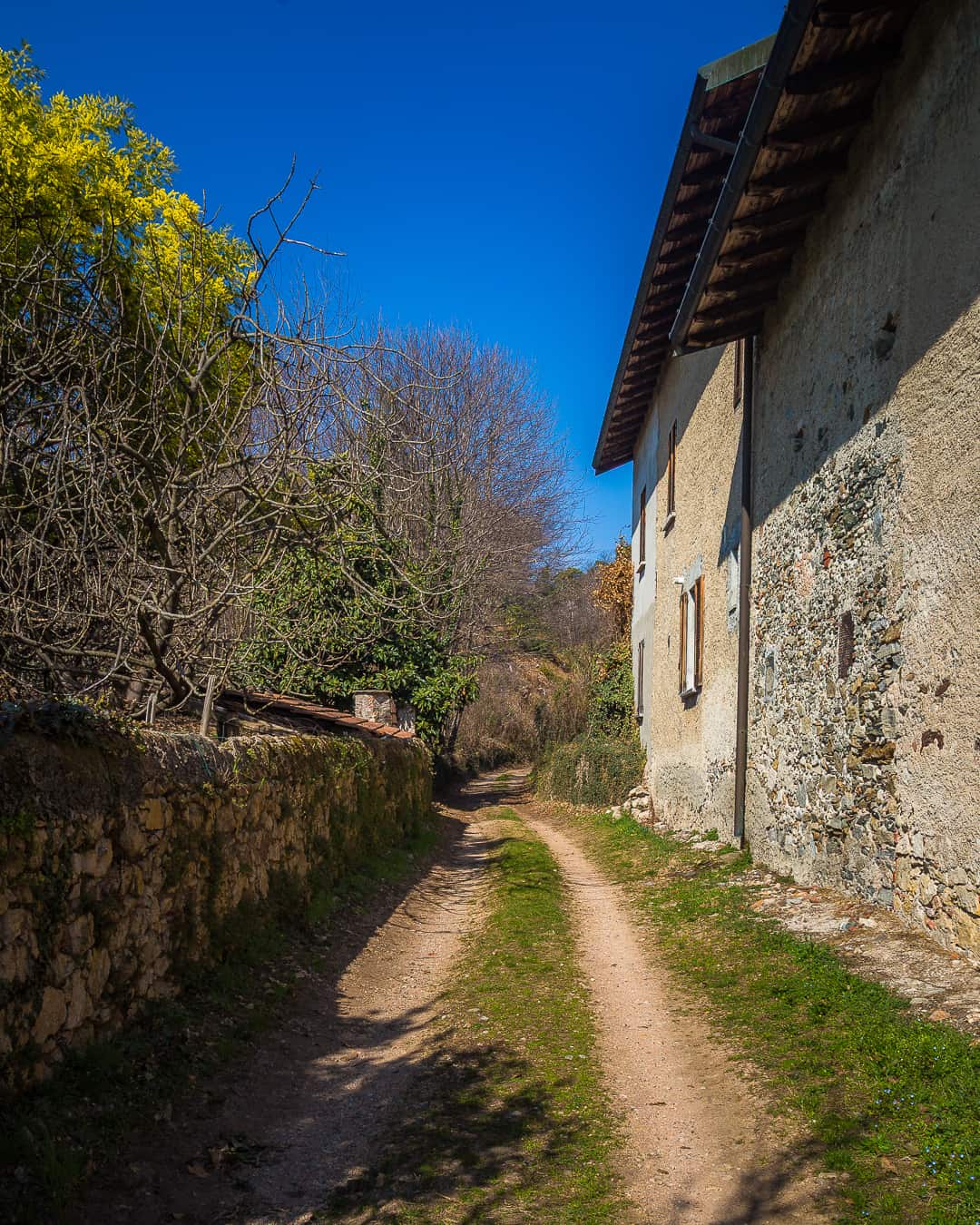
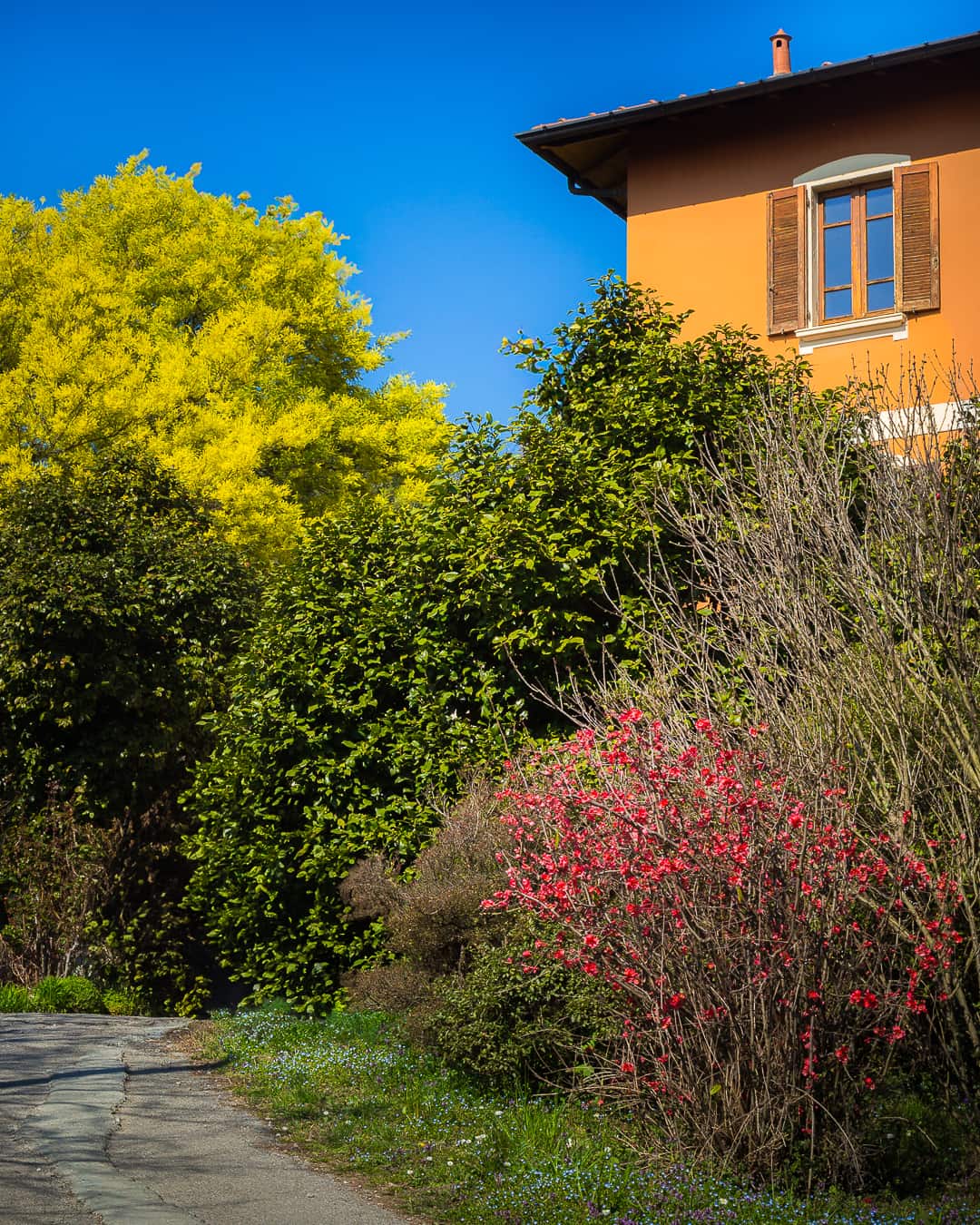
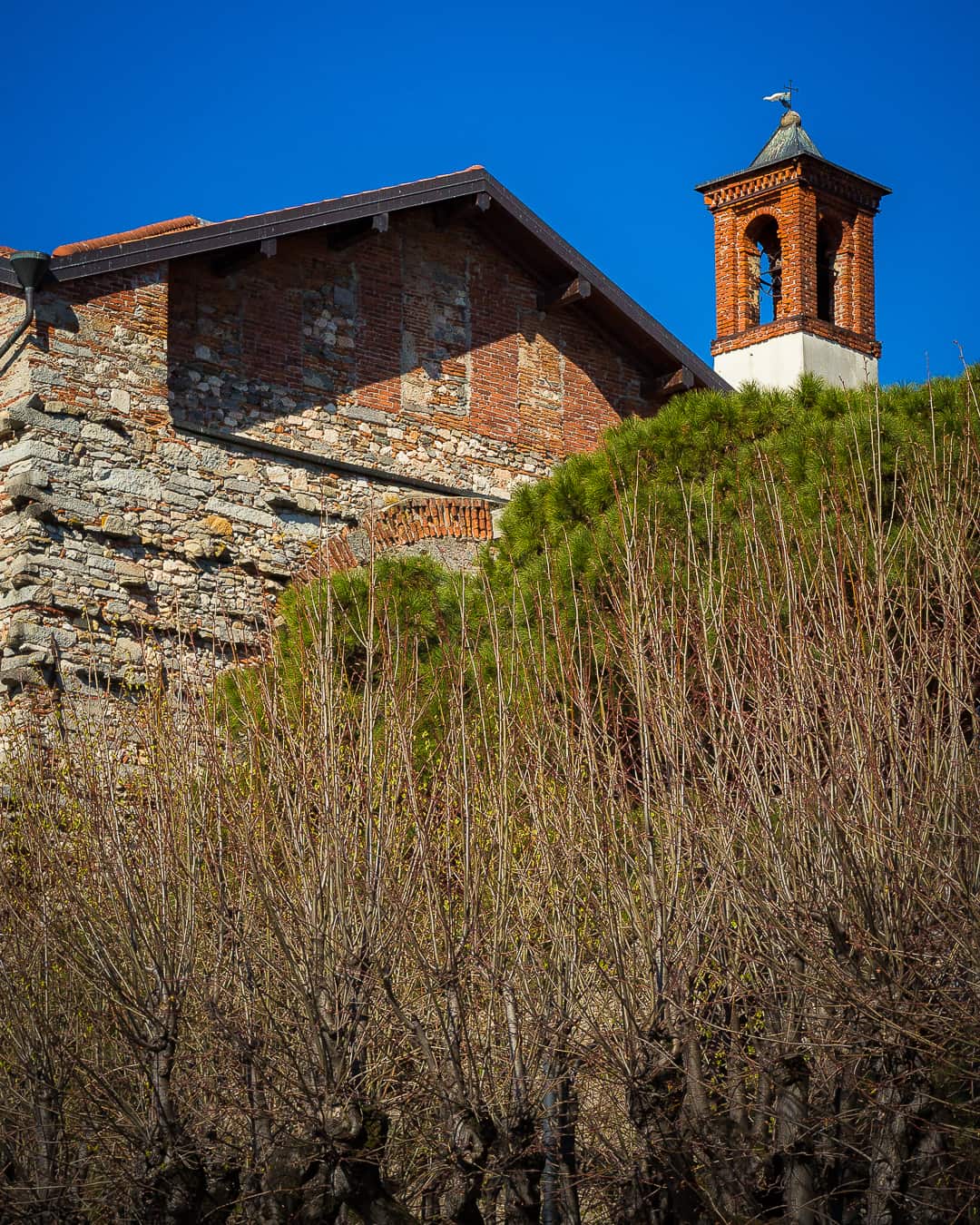
A mule track between a stone wall and a rustic house, a blue sky, trees still bare. Before tarmac roads, the villages above the lake were reached like this, on foot. These paths are the slowest, and the most beautiful, way to climb above the water.
Reeds and sand
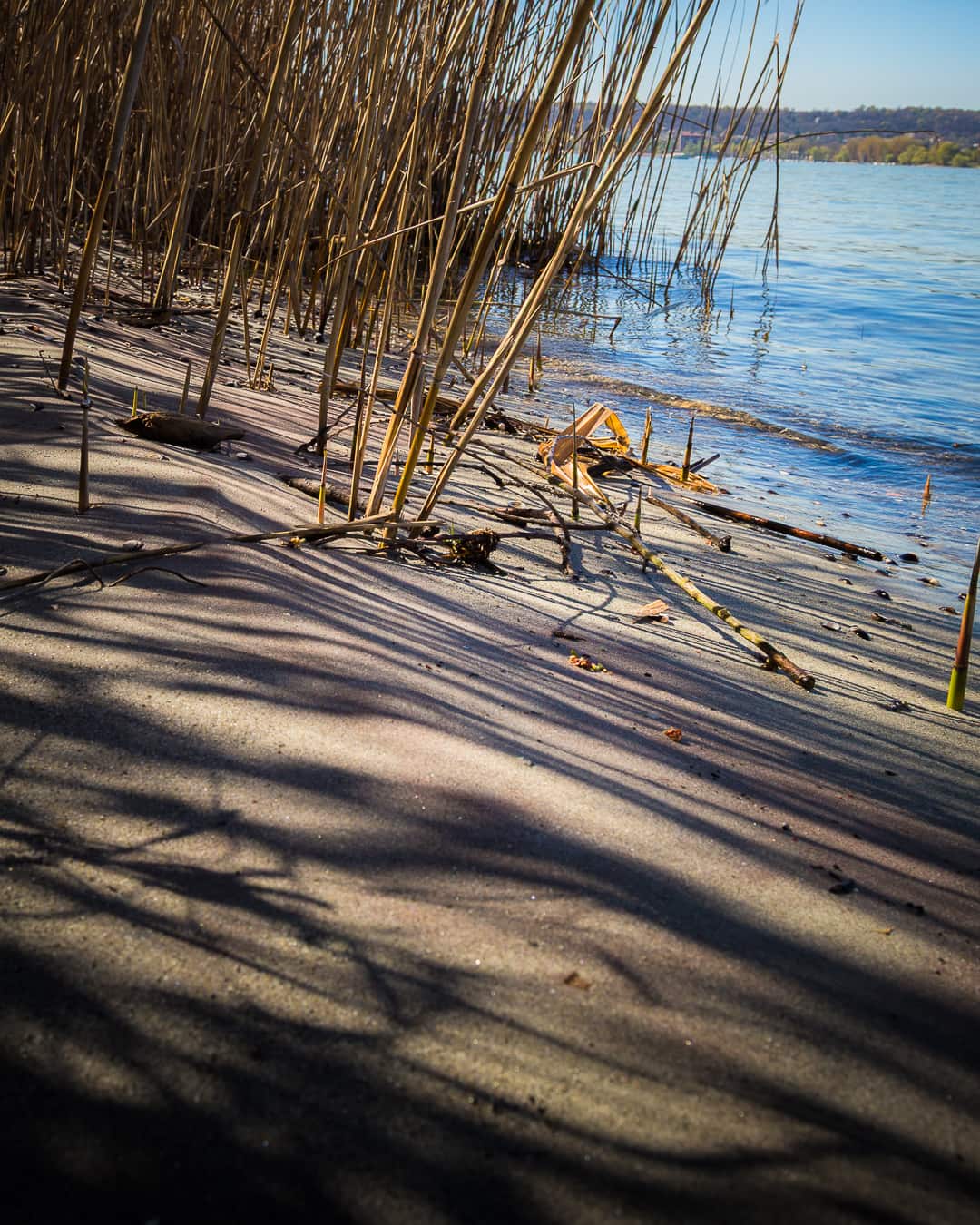
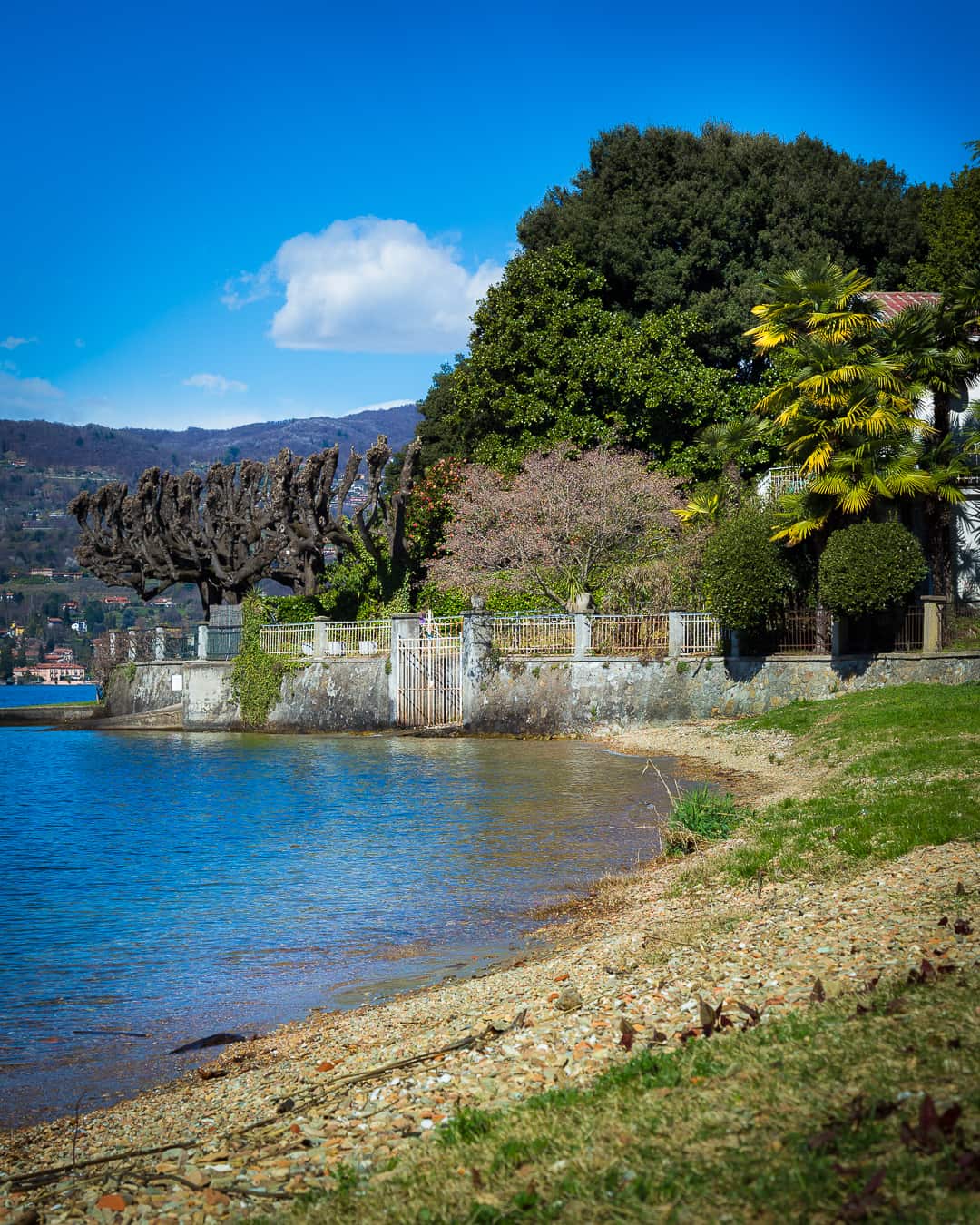
A low shore, dry reeds, branch shadows on the sand: in early spring the lake has something of the North Sea about it. Few visitors, clear water, silence. It is the season when it lets you look at it slowly.
III
Evening
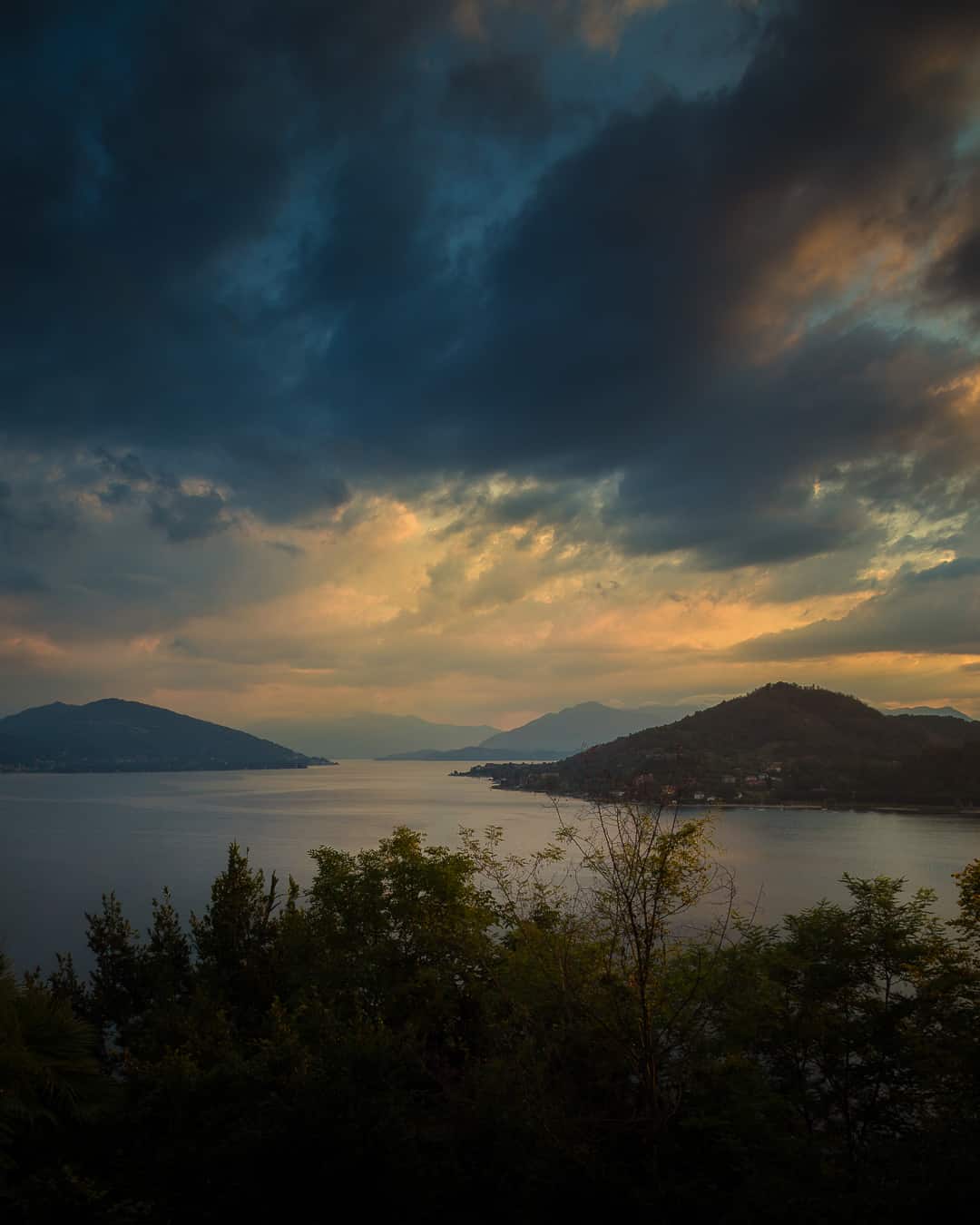
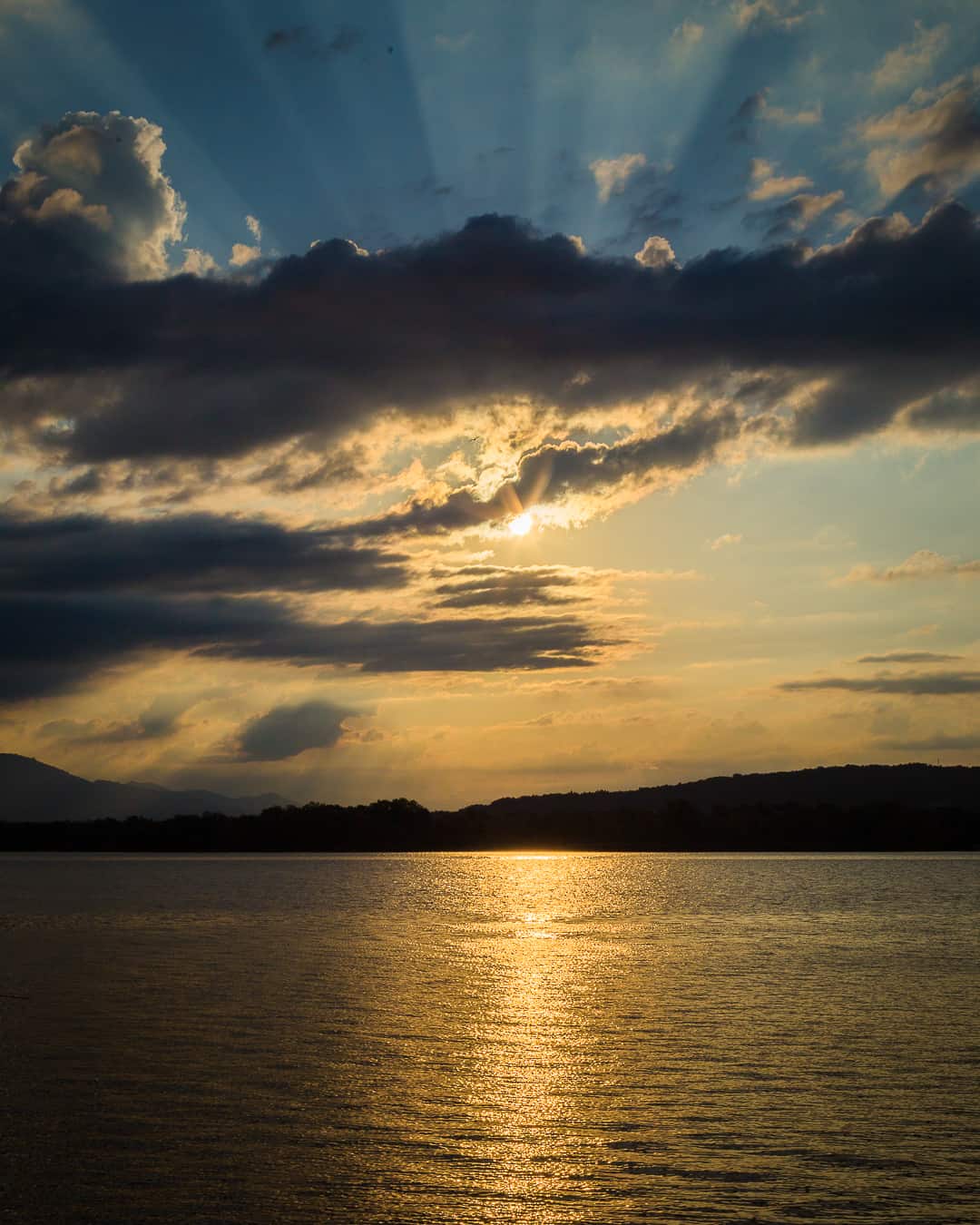
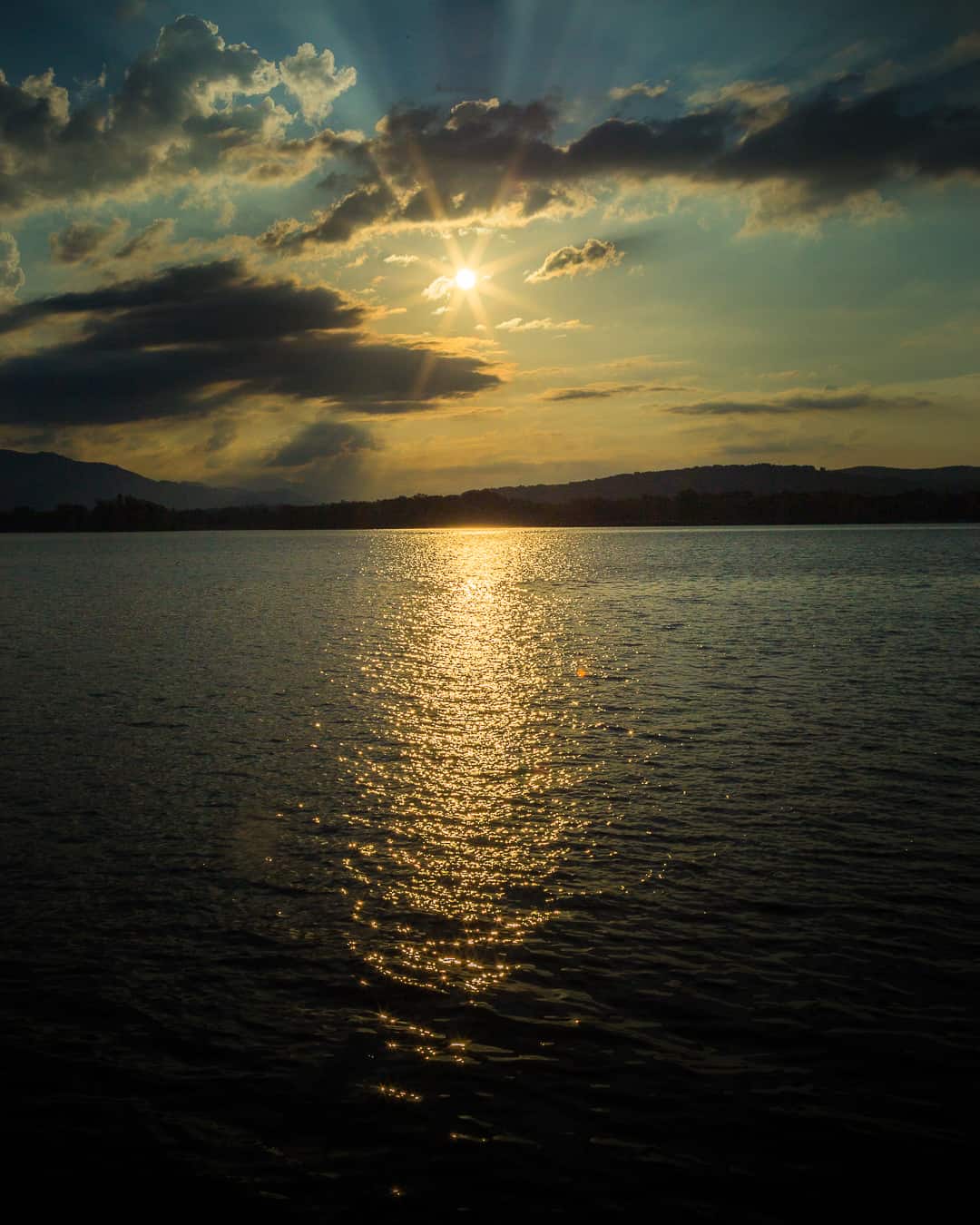
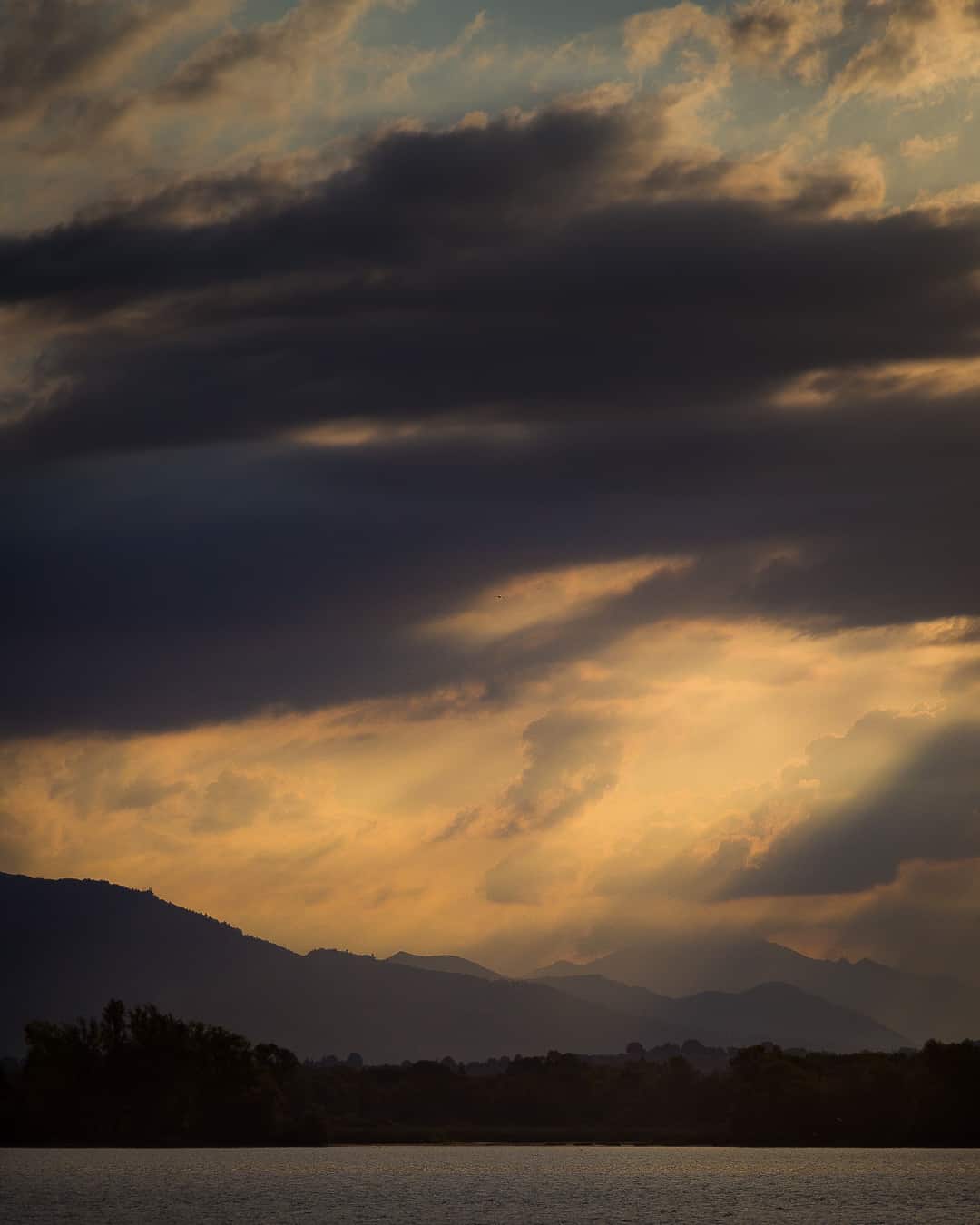
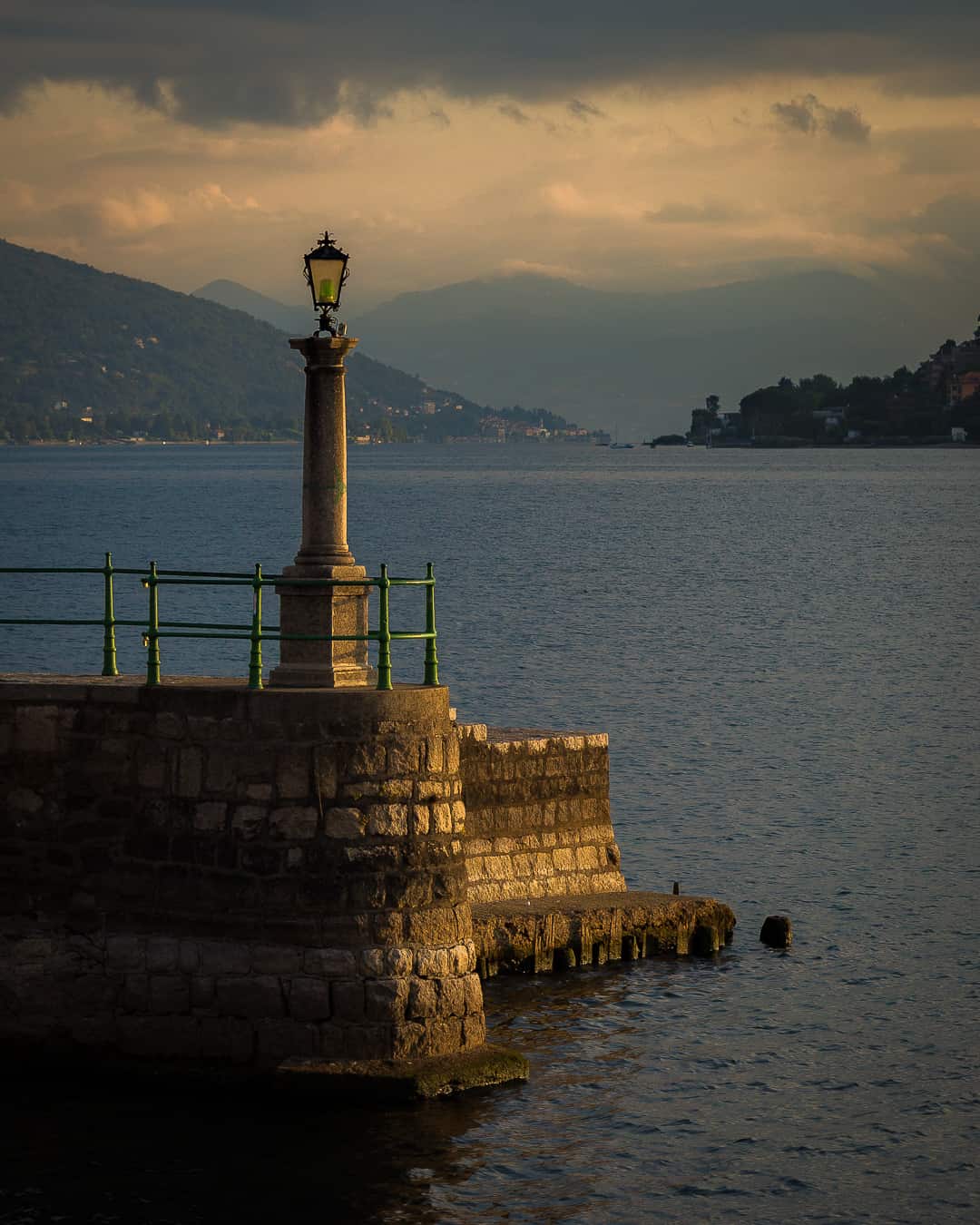
At sunset the lake becomes another place. The mountains stack up against the light, the water holds on to the last glow, and the jetties look drawn in Indian ink.
The lake lies at the foot of the Alps, less than two hundred metres above sea level: between the plain and the mountains the sky changes fast, and it is never the same two evenings running.
All you need is a bench on the promenade and a little patience.
The fortress at dusk
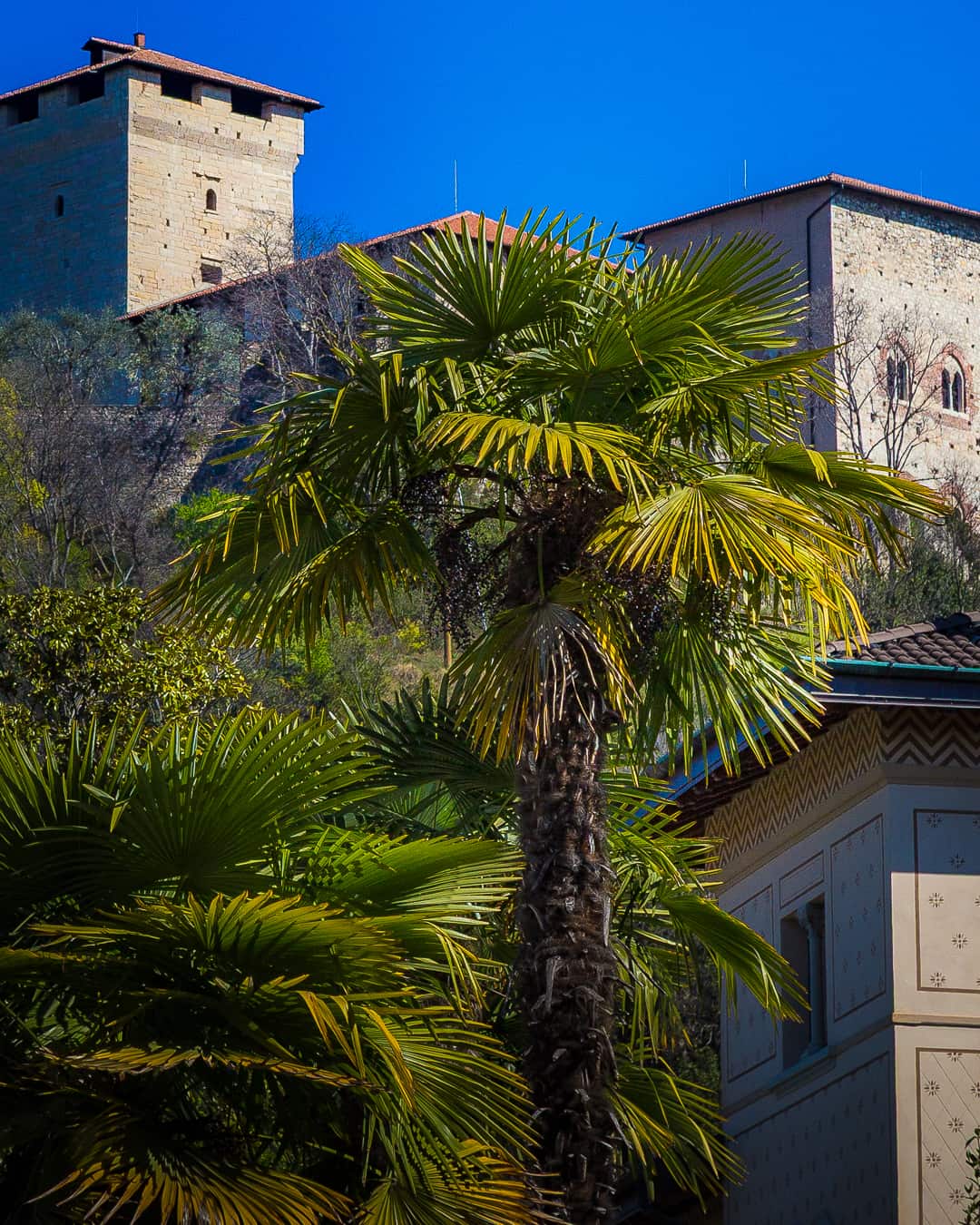
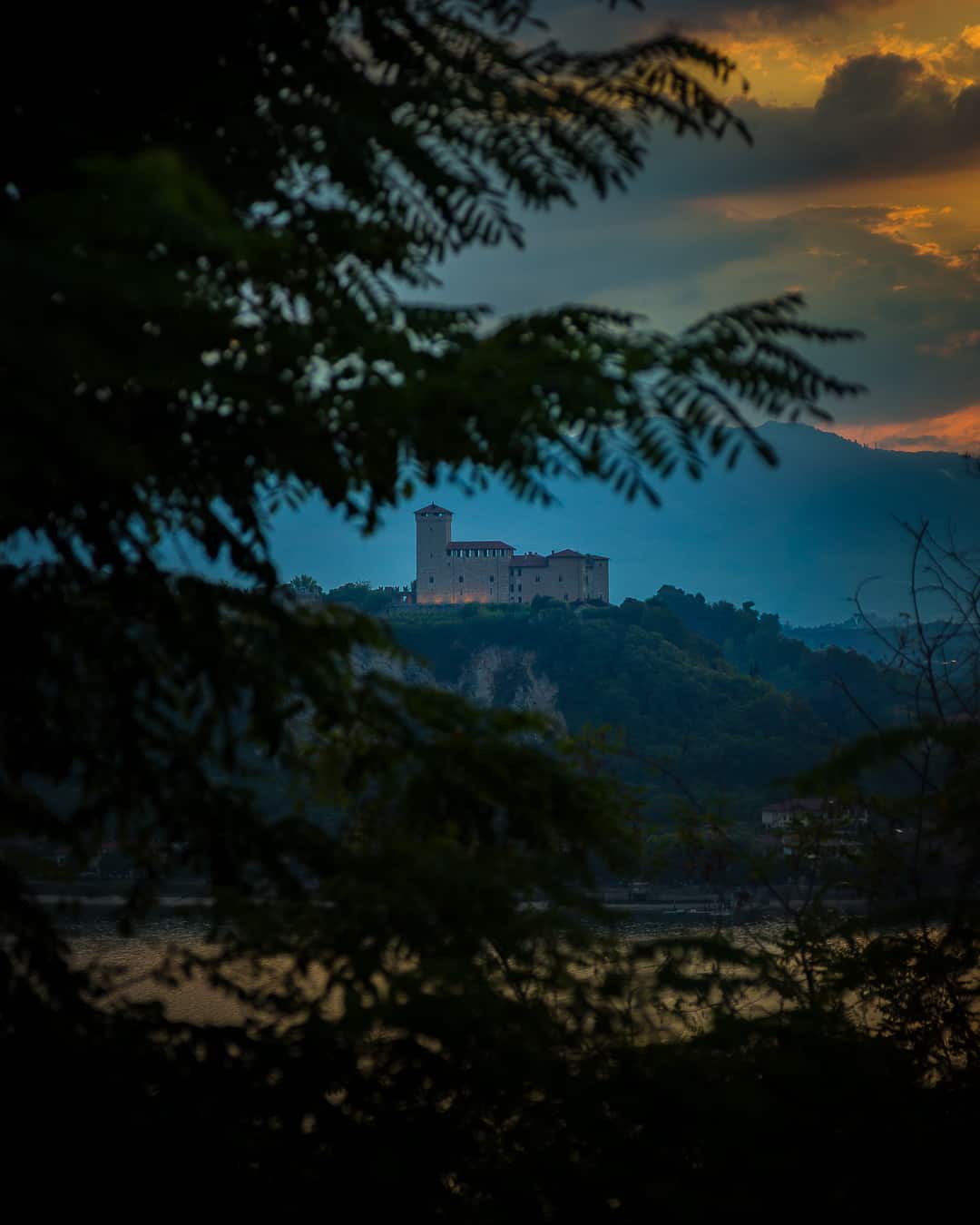
Through the leaves, a fortress on the hill, the last light on its walls. On the lake, fortresses were built to control navigation; today they mostly keep watch over the sunsets. To photograph them, just wait for the sun to drop behind the mountains.
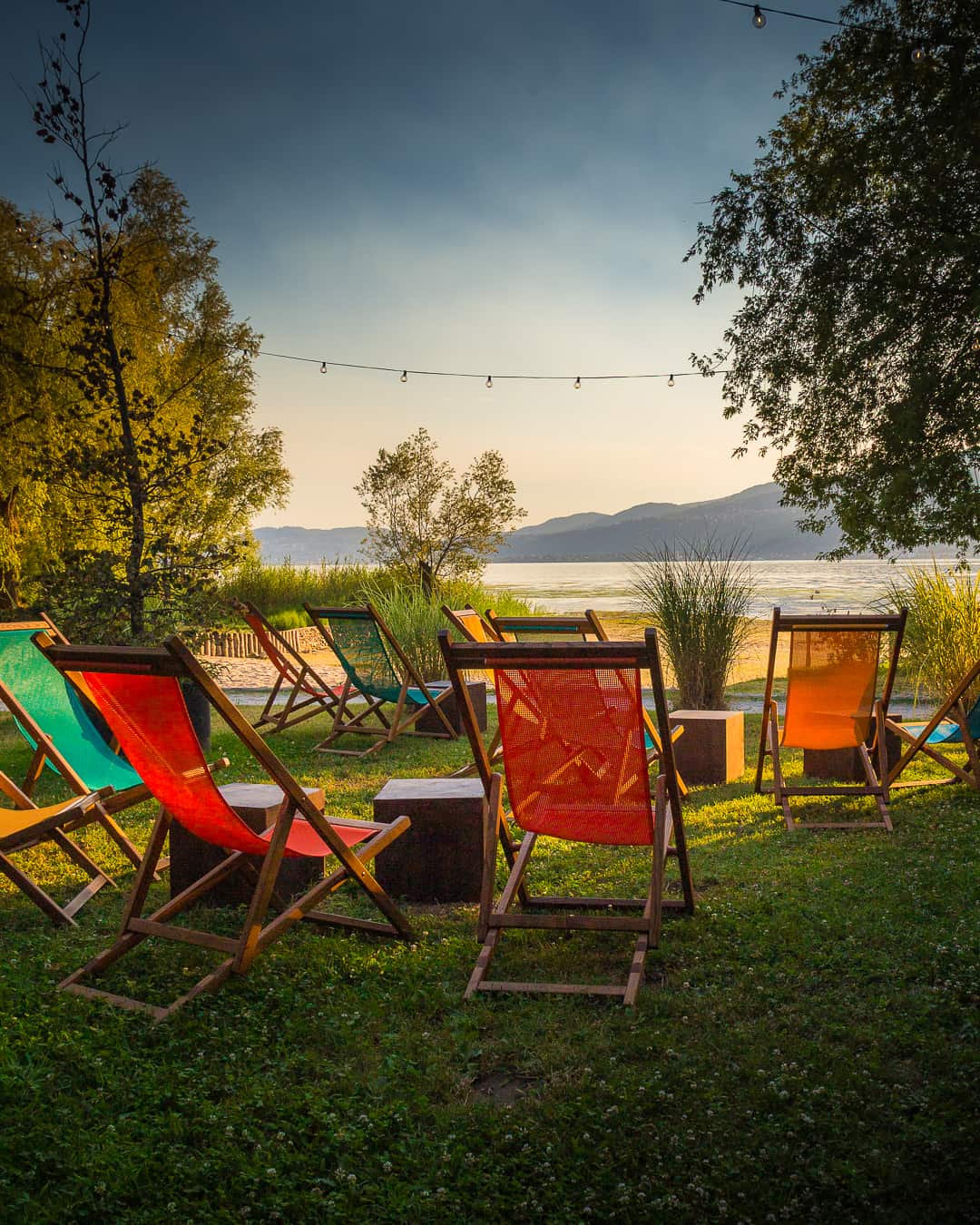
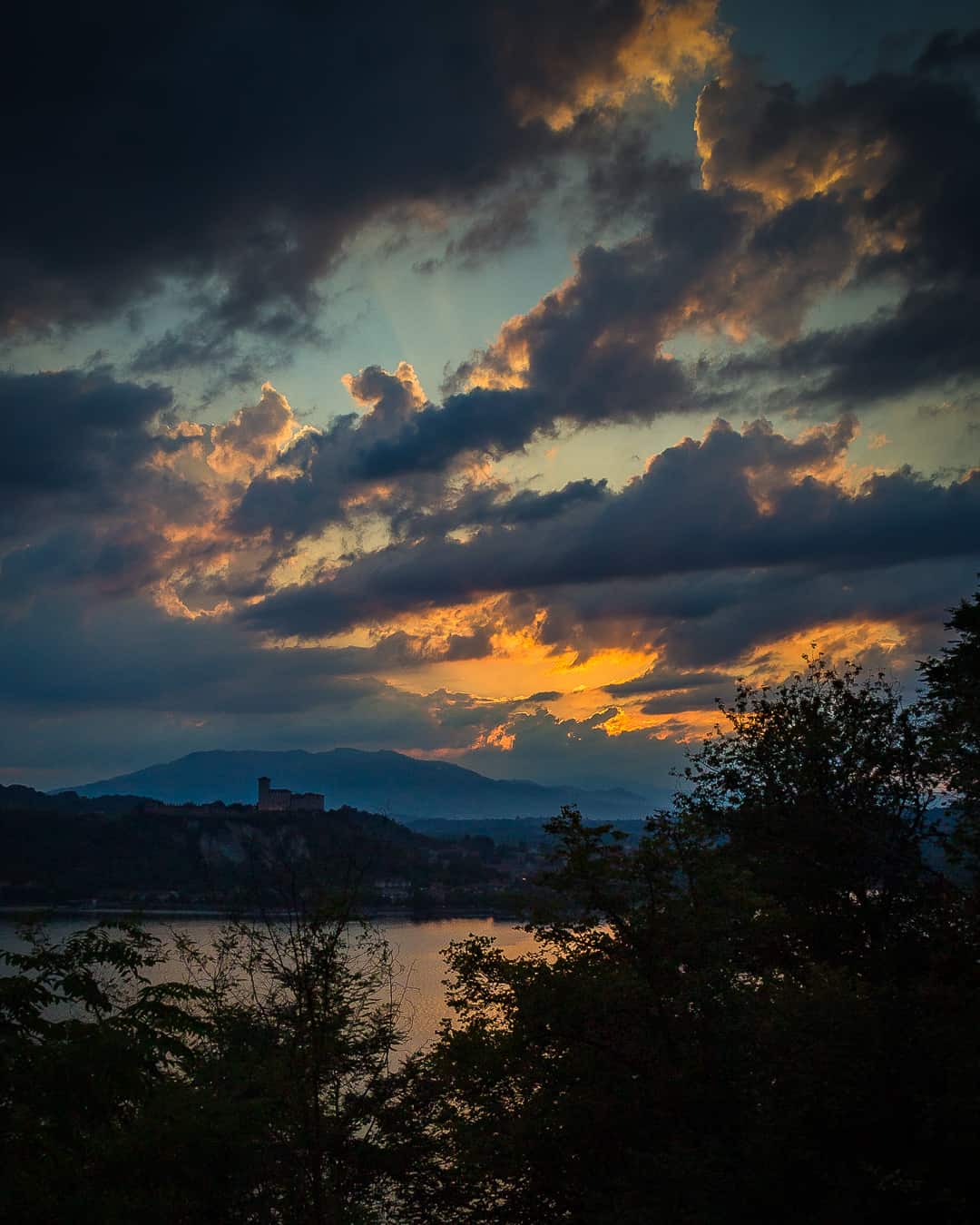
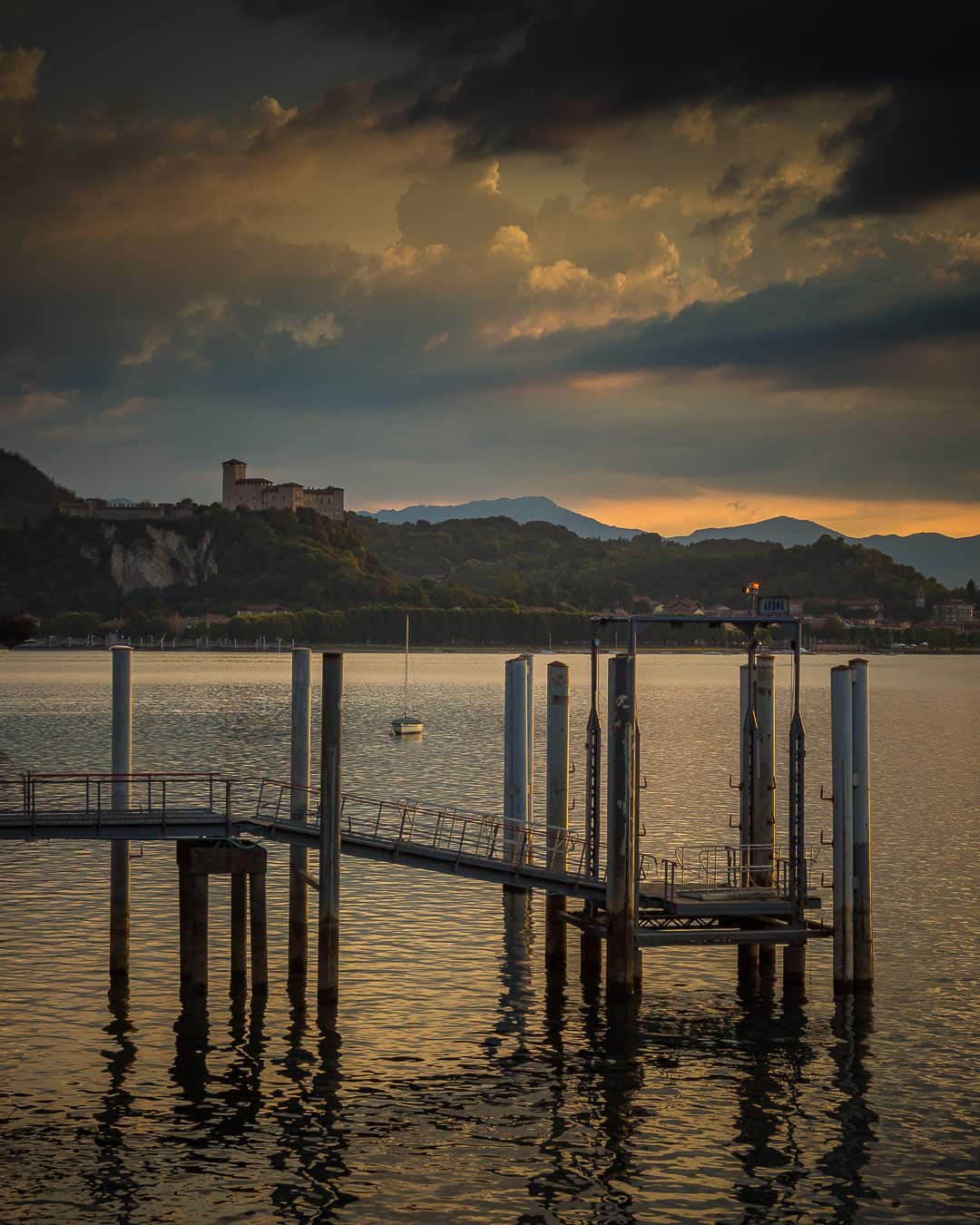
The jetty
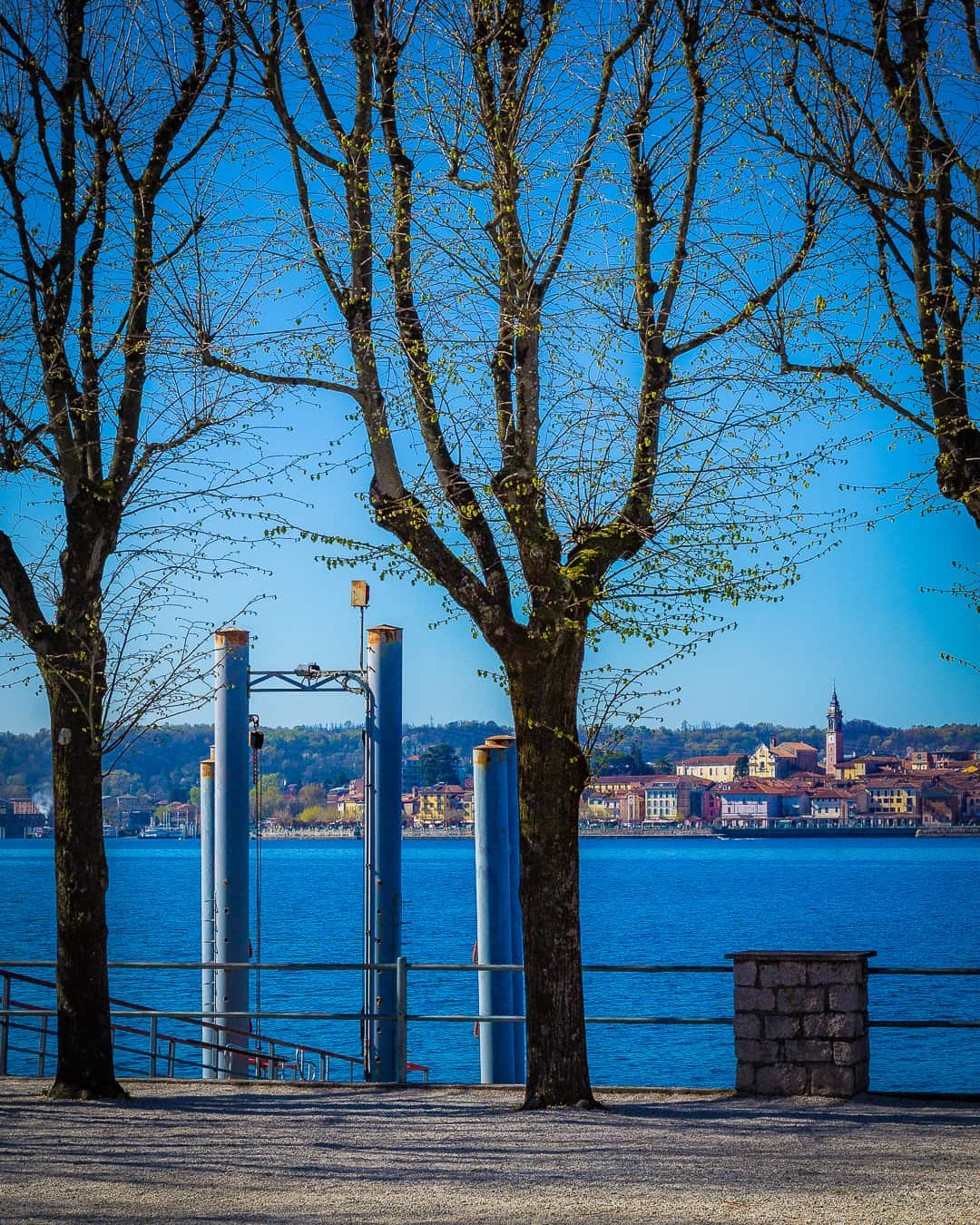
Wooden piles, a walkway, a jetty reaching into the dark water. By day it serves the boats; by evening it becomes a sculpture. In the background, on the hill, the outline of a fortress glows orange for a few minutes, then fades with the sky.
The lookout
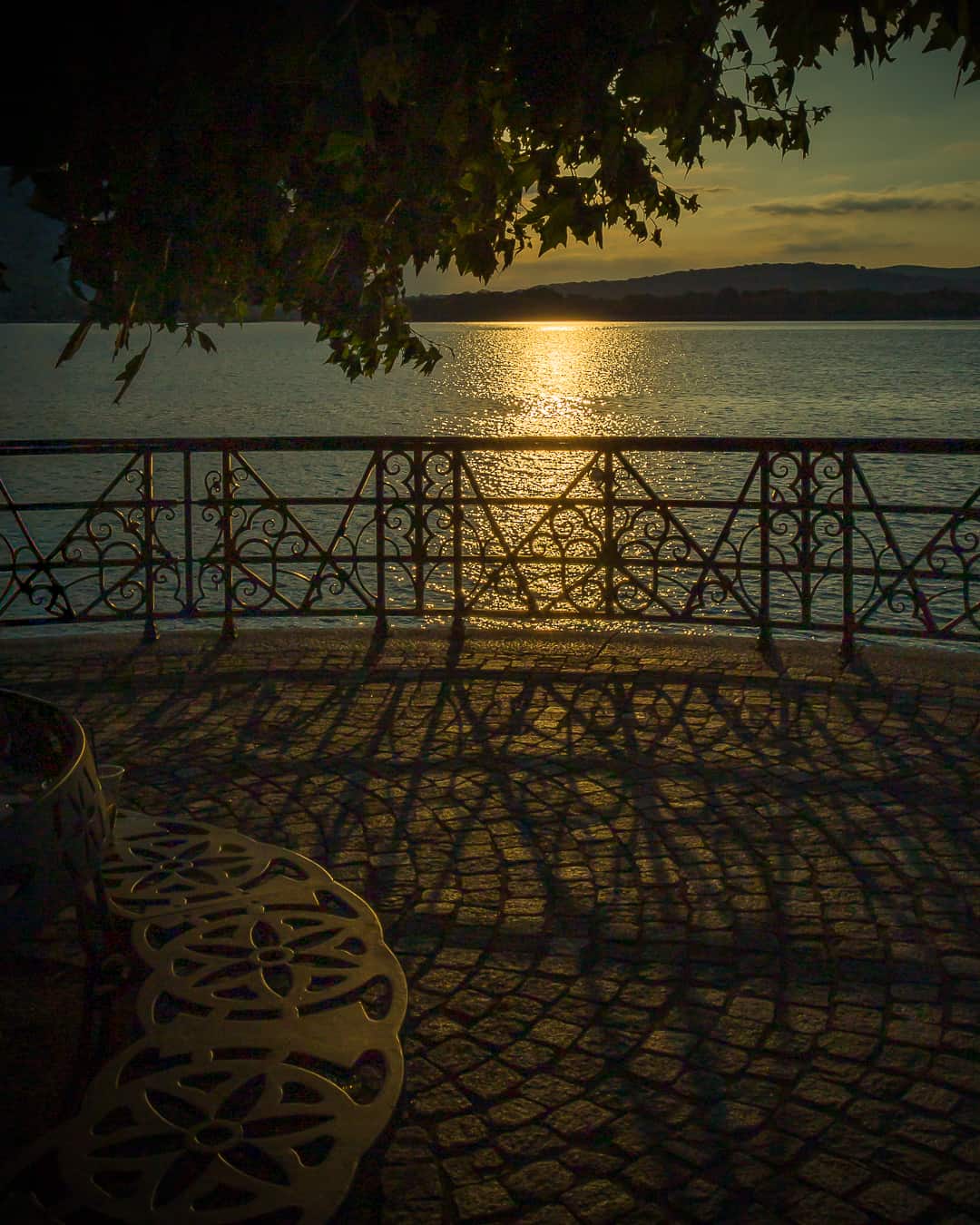
An iron railing, a cobbled floor, a cast-iron chair: someone watched this sunset before us. That is what the lake’s lookouts are for, sitting and doing nothing while the sun lays a strip of gold on the water all the way to the shore.
IV
Up high
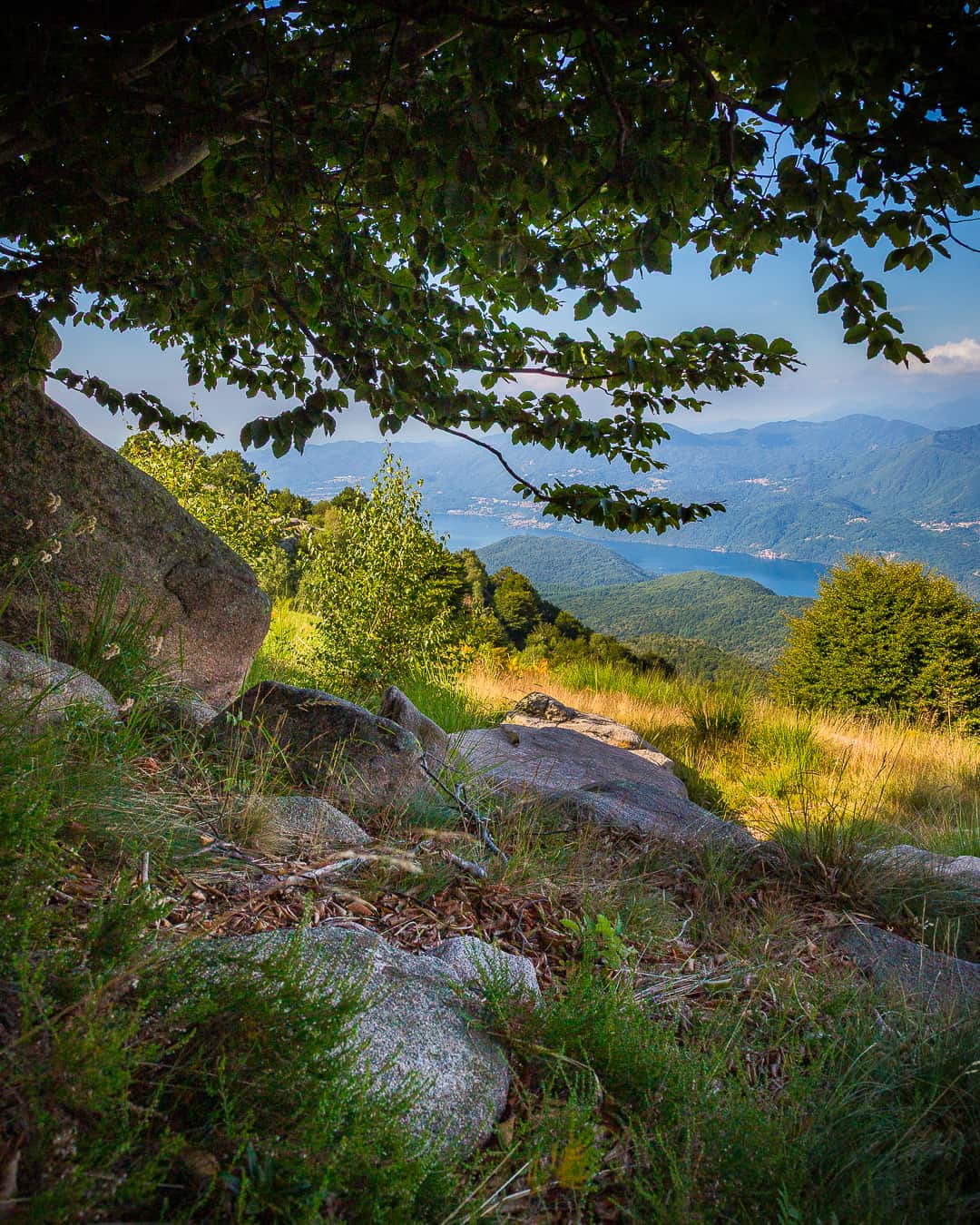
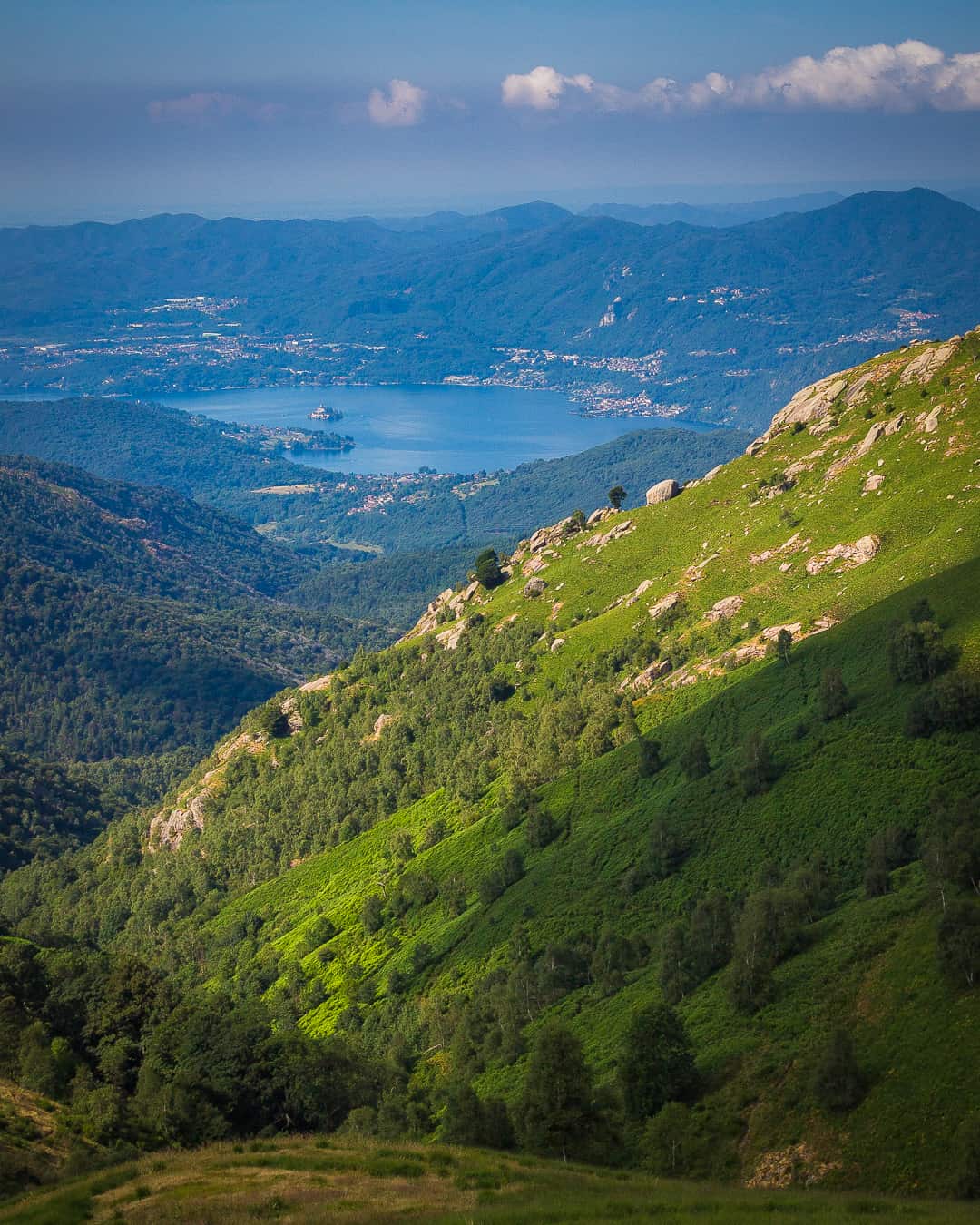
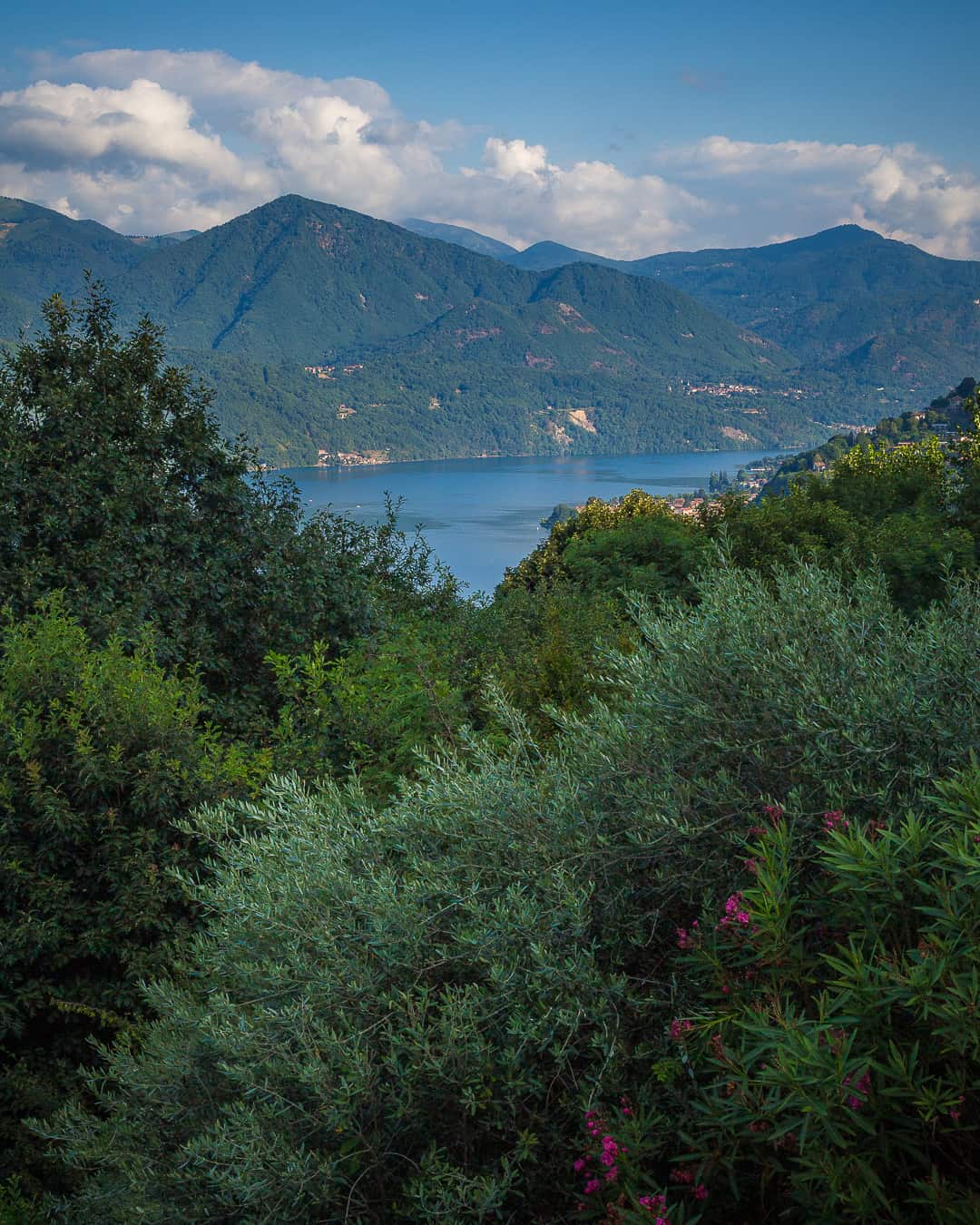
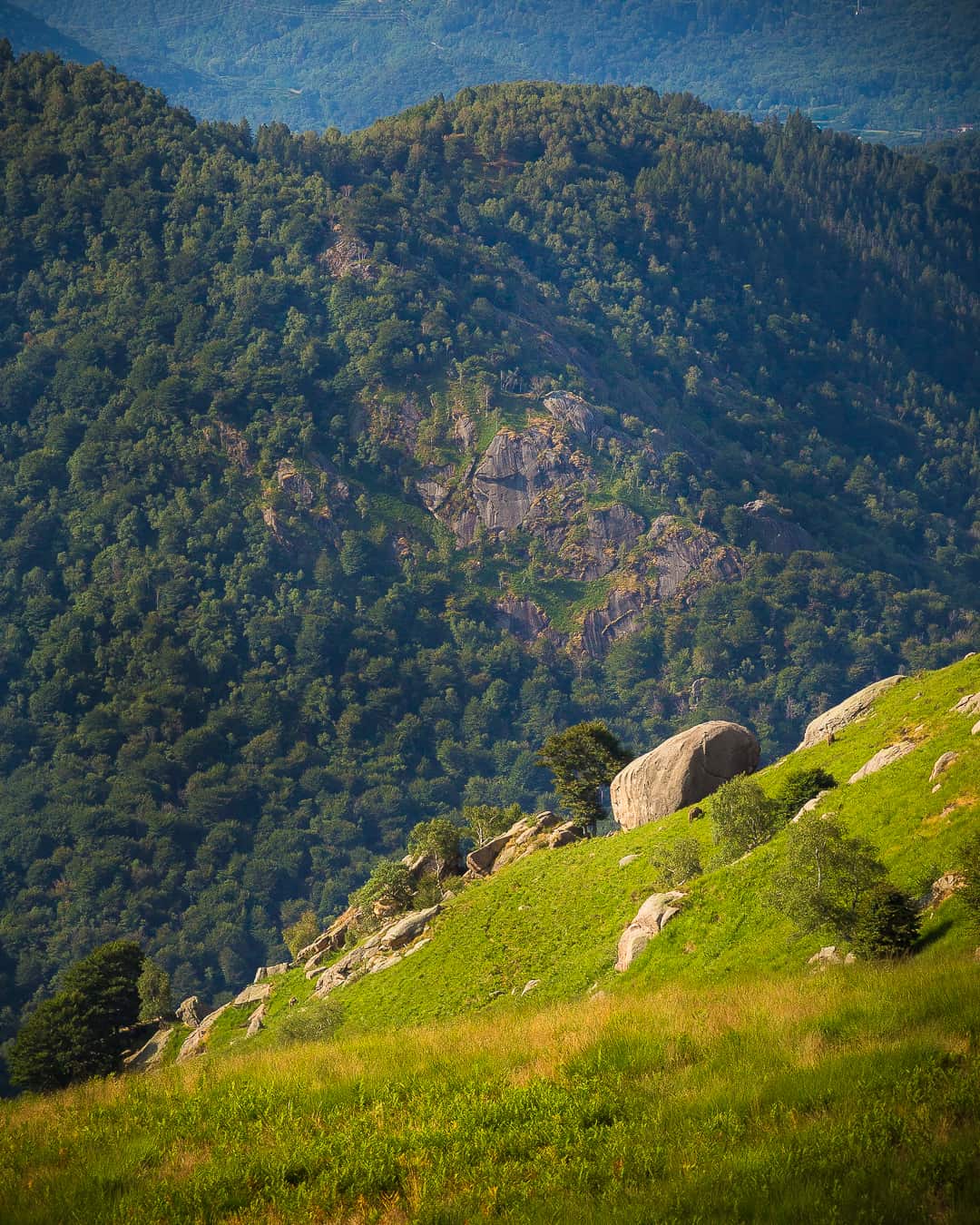
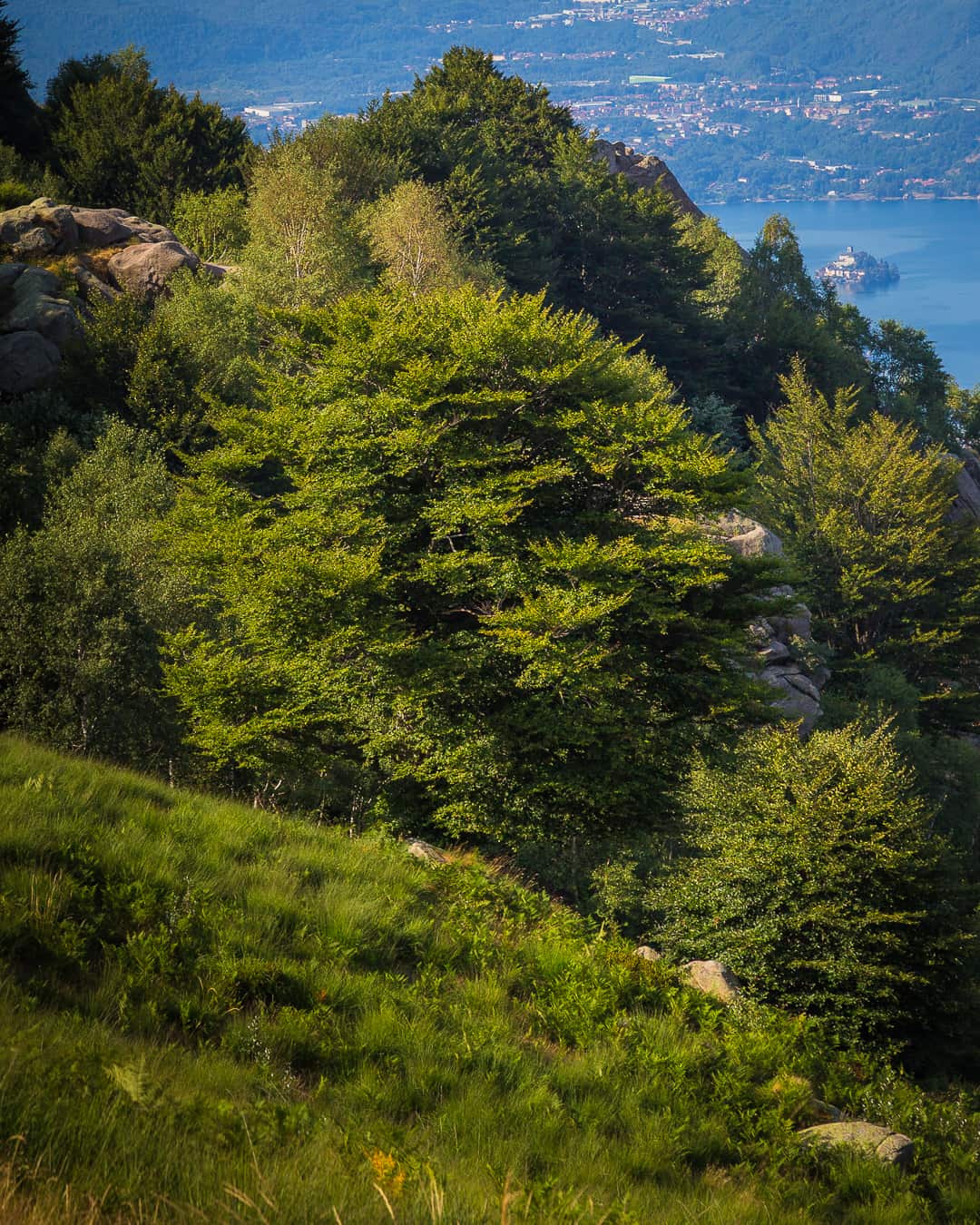
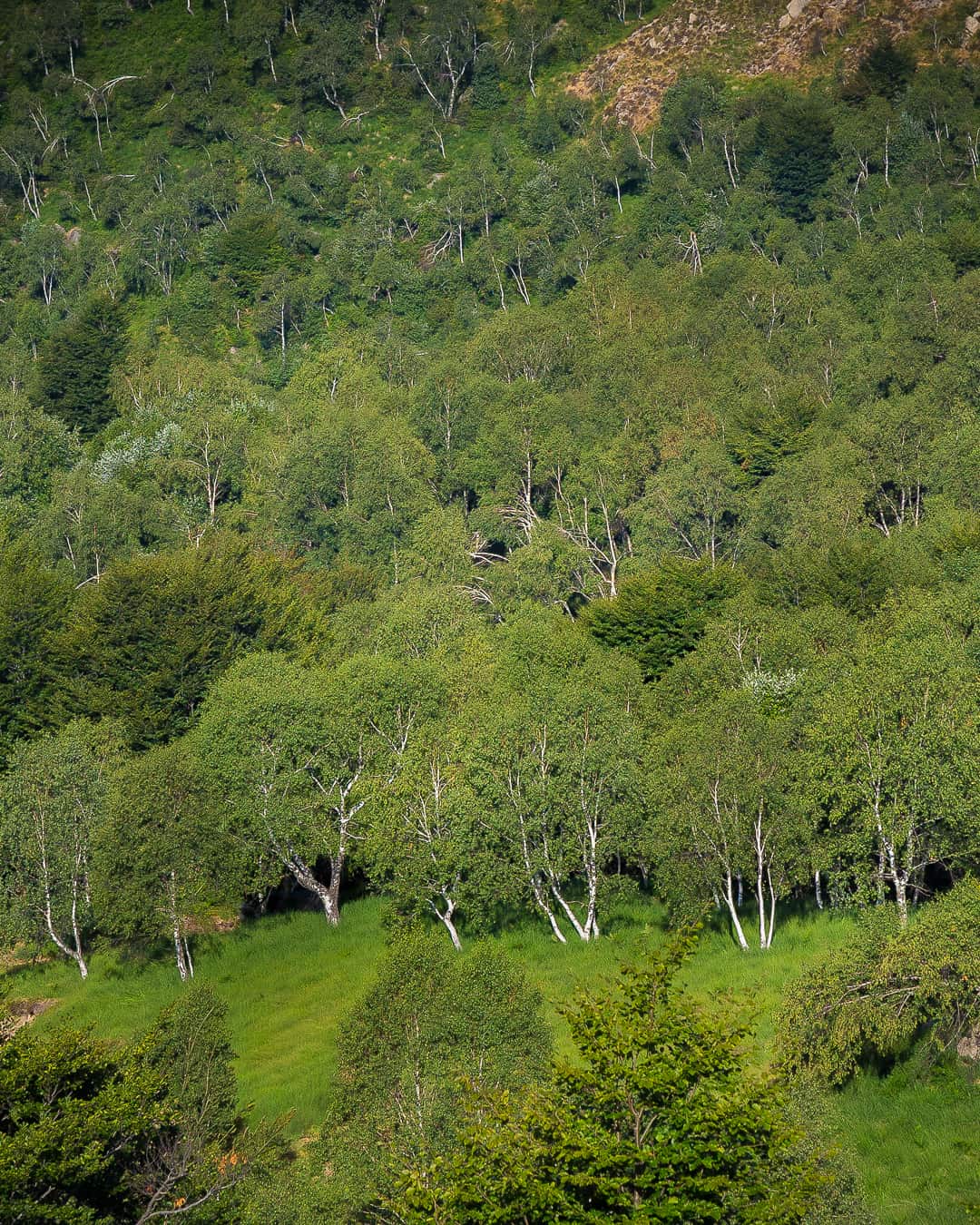
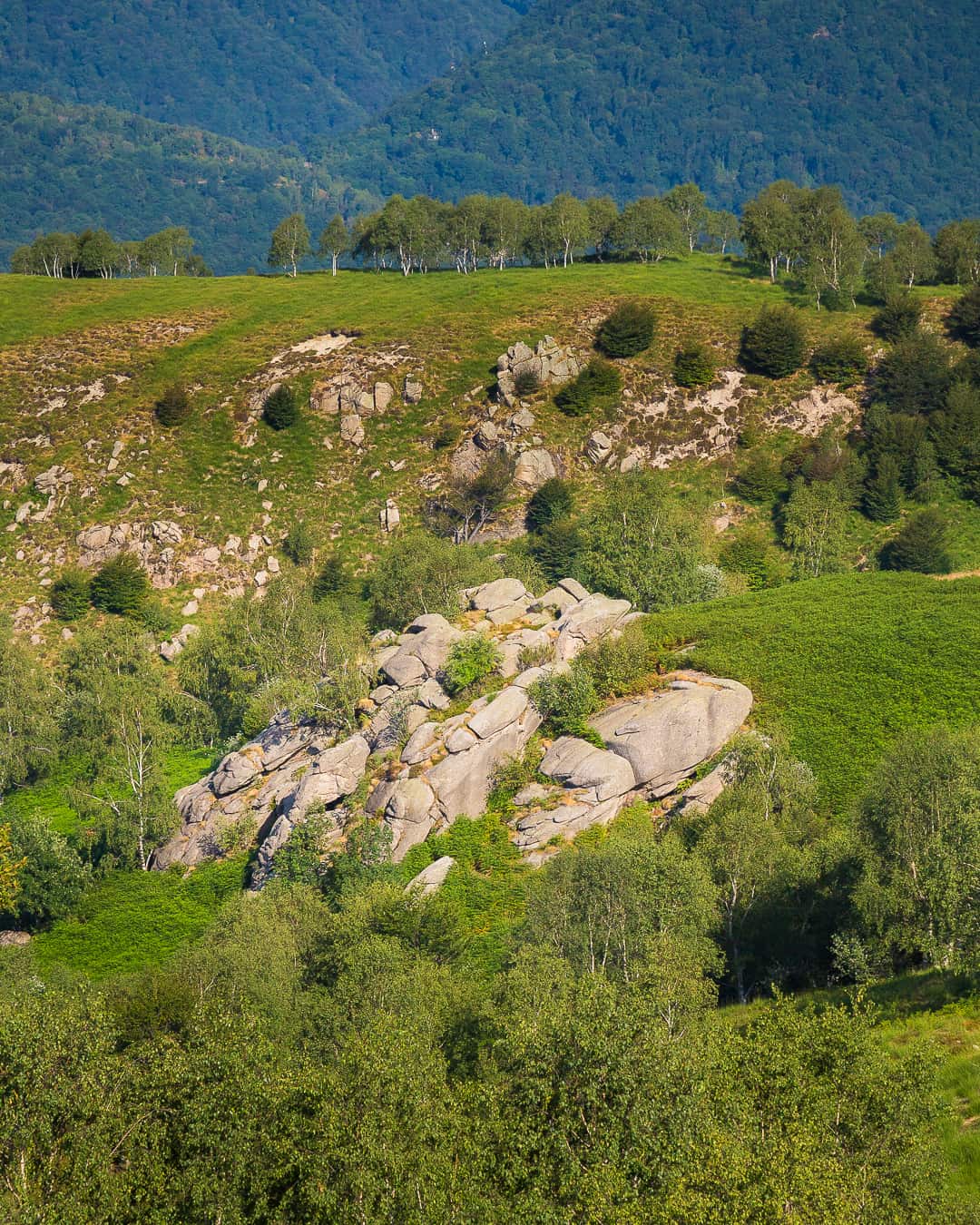
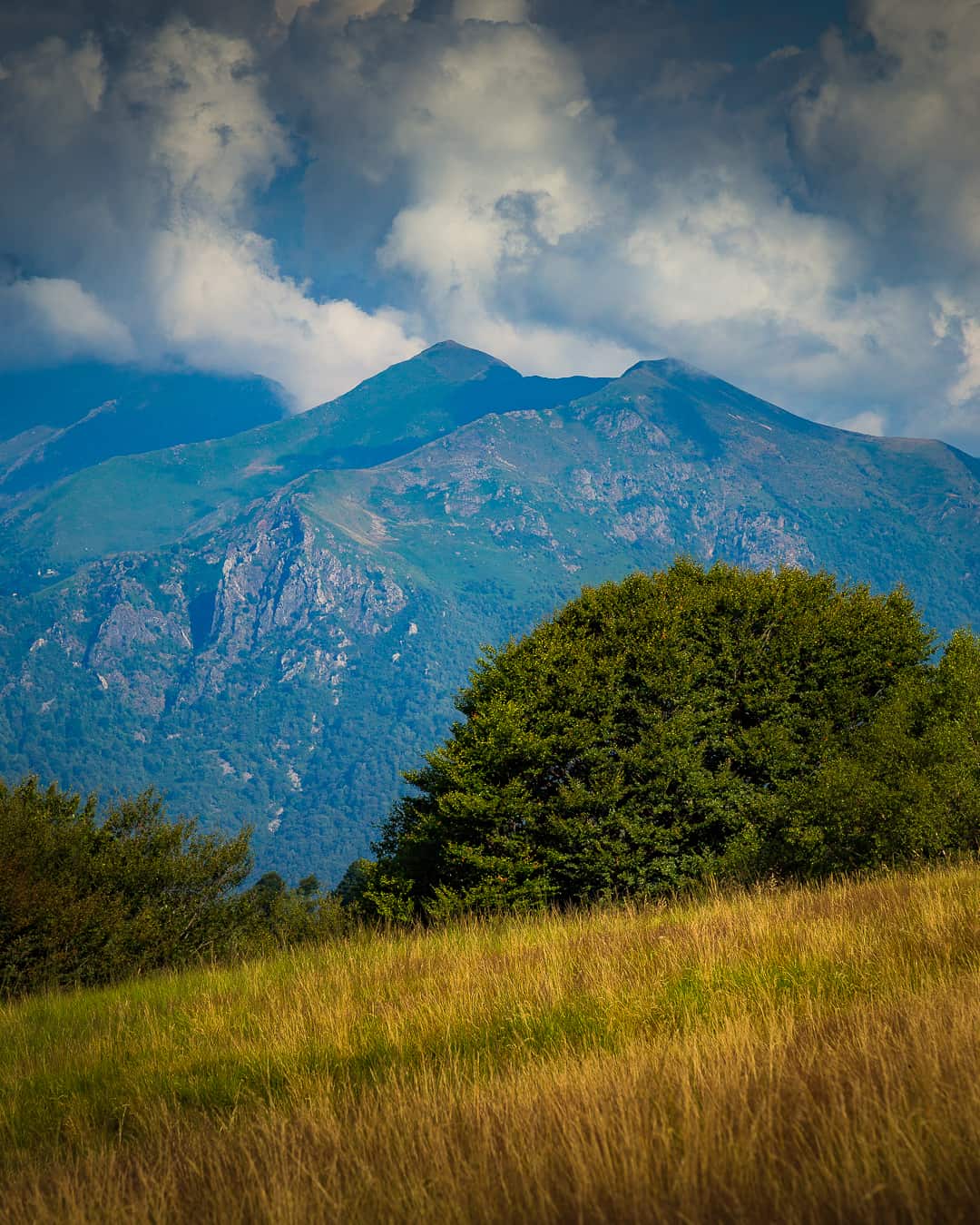
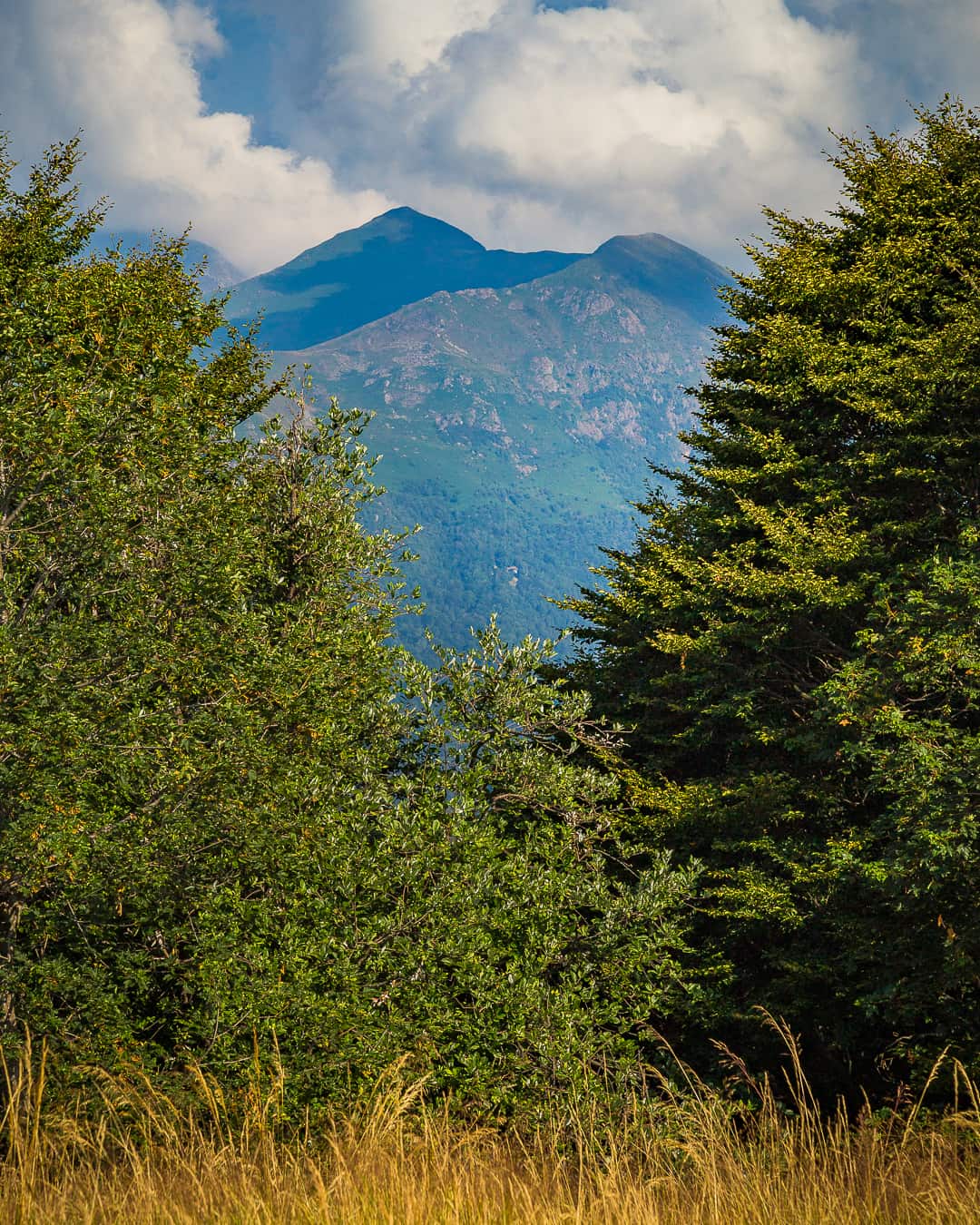
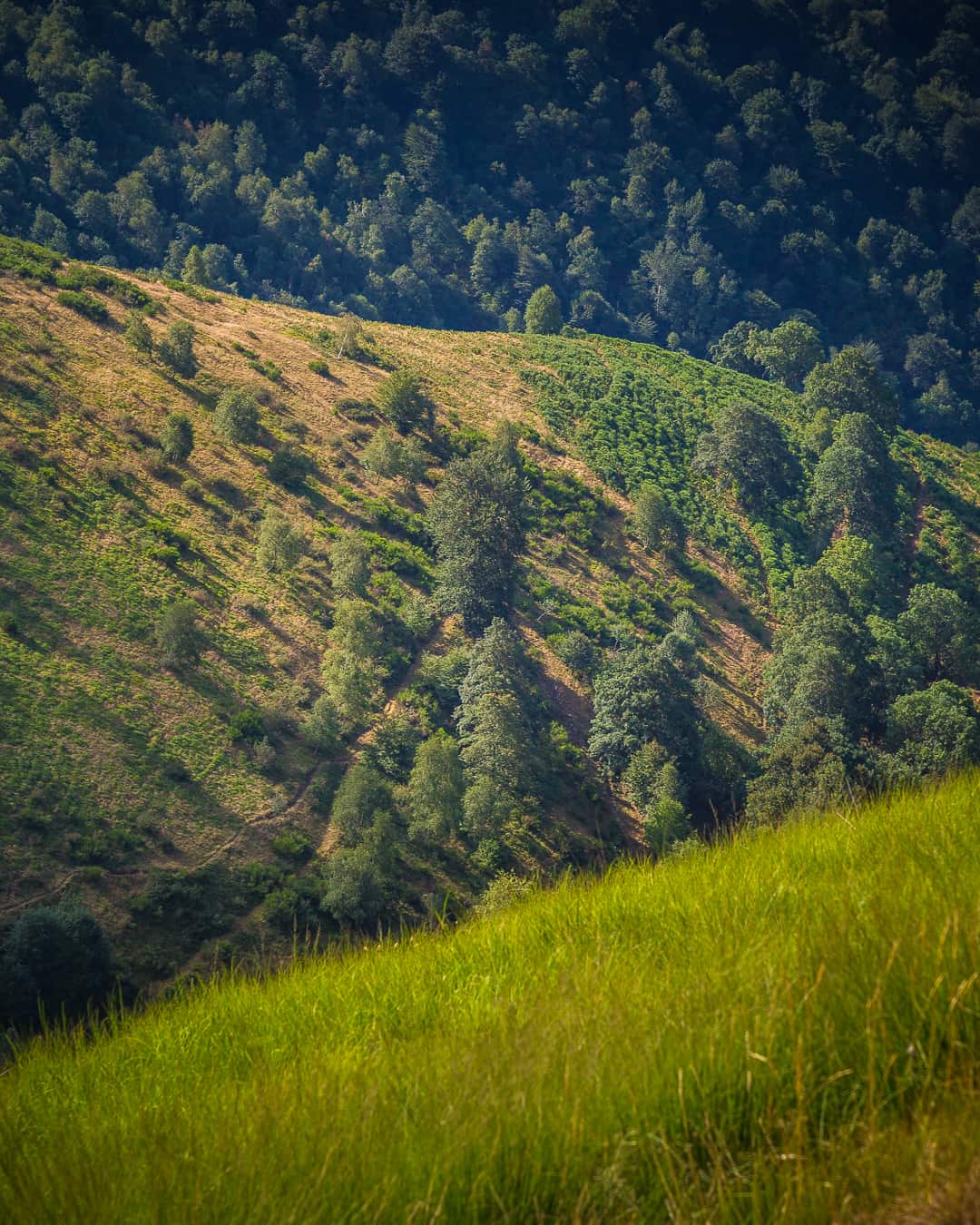
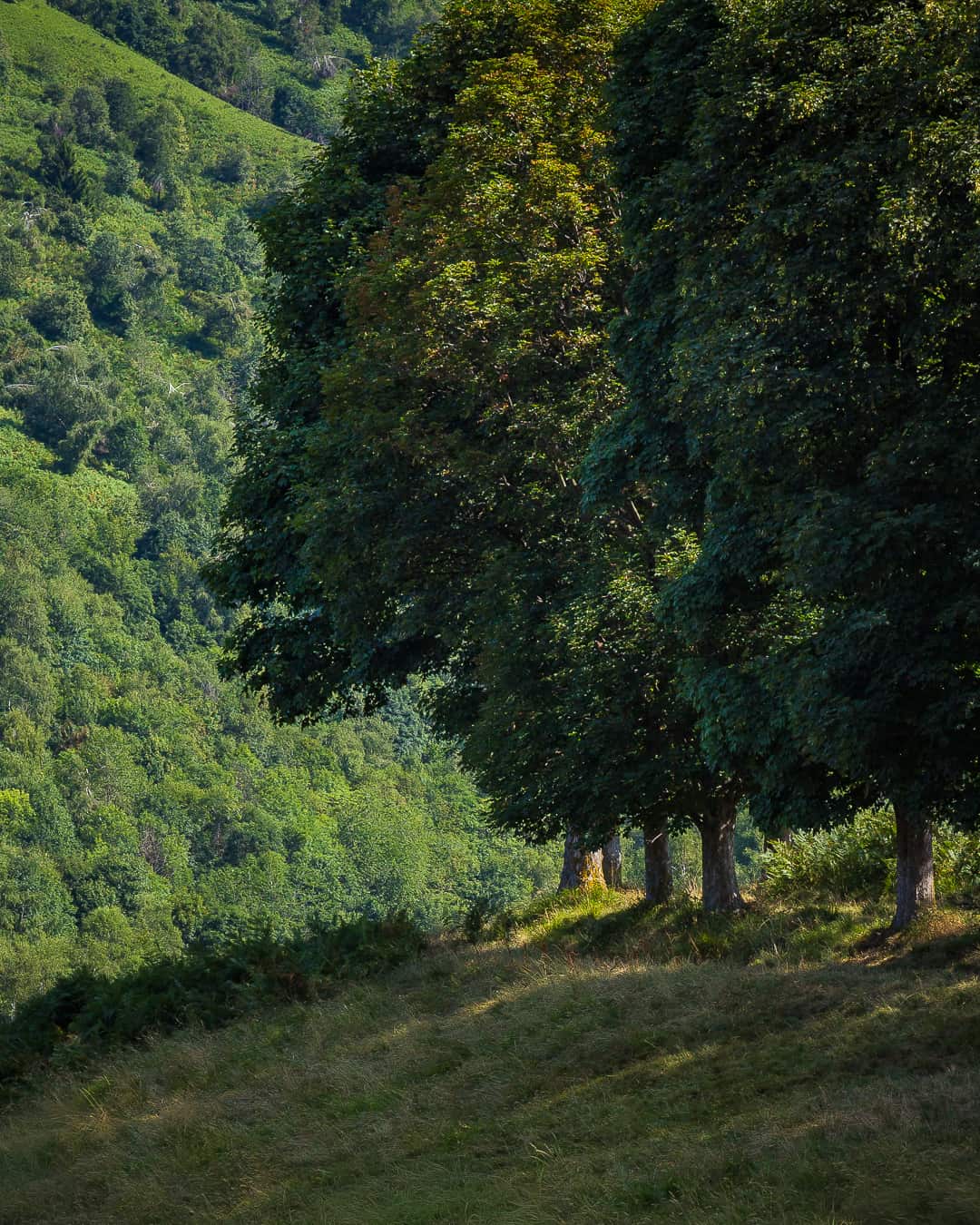
Above the lake are the mountains, and from up there everything changes scale. Beech and birch woods, pastures, great boulders, and far below the water opening between the valleys.
Between Lake Maggiore and Lake Orta rises the Mottarone, almost 1,500 metres high: on clear days you can count seven lakes from the top, from Maggiore to Orta, from Mergozzo to Varese, Comabbio, Monate and Biandronno.
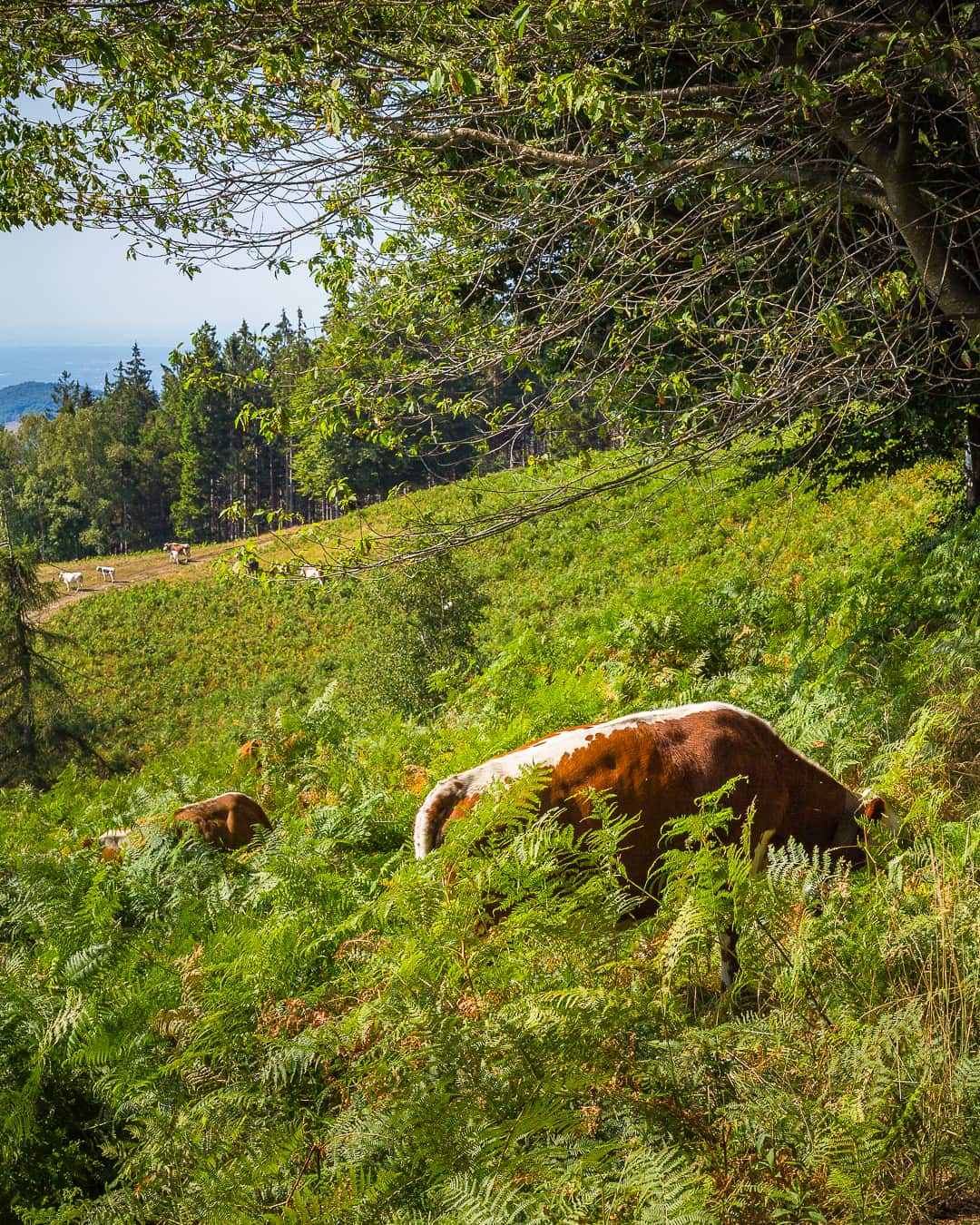
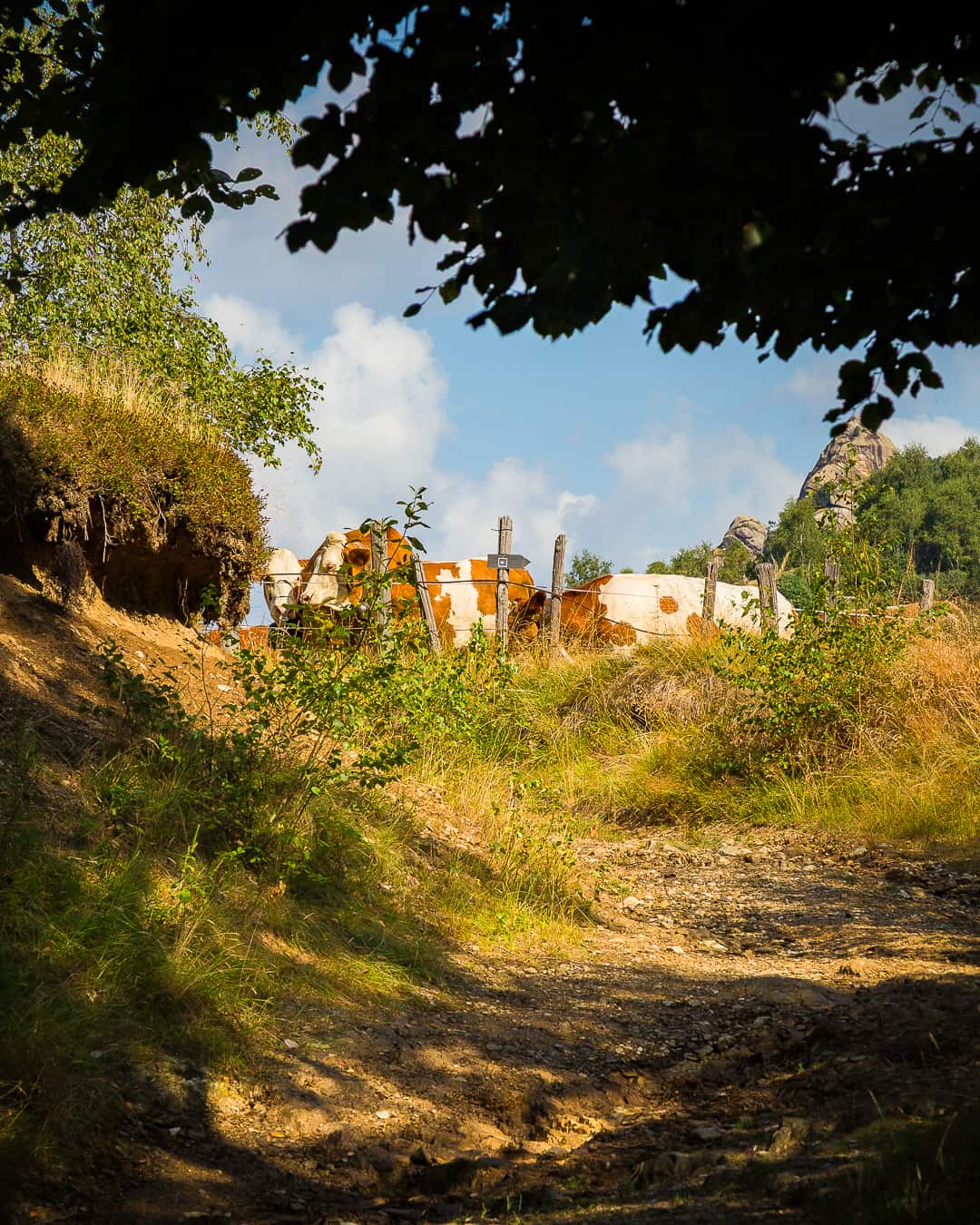
Up there you meet more cows than people. It is the lake seen from above, like a map.
The birch
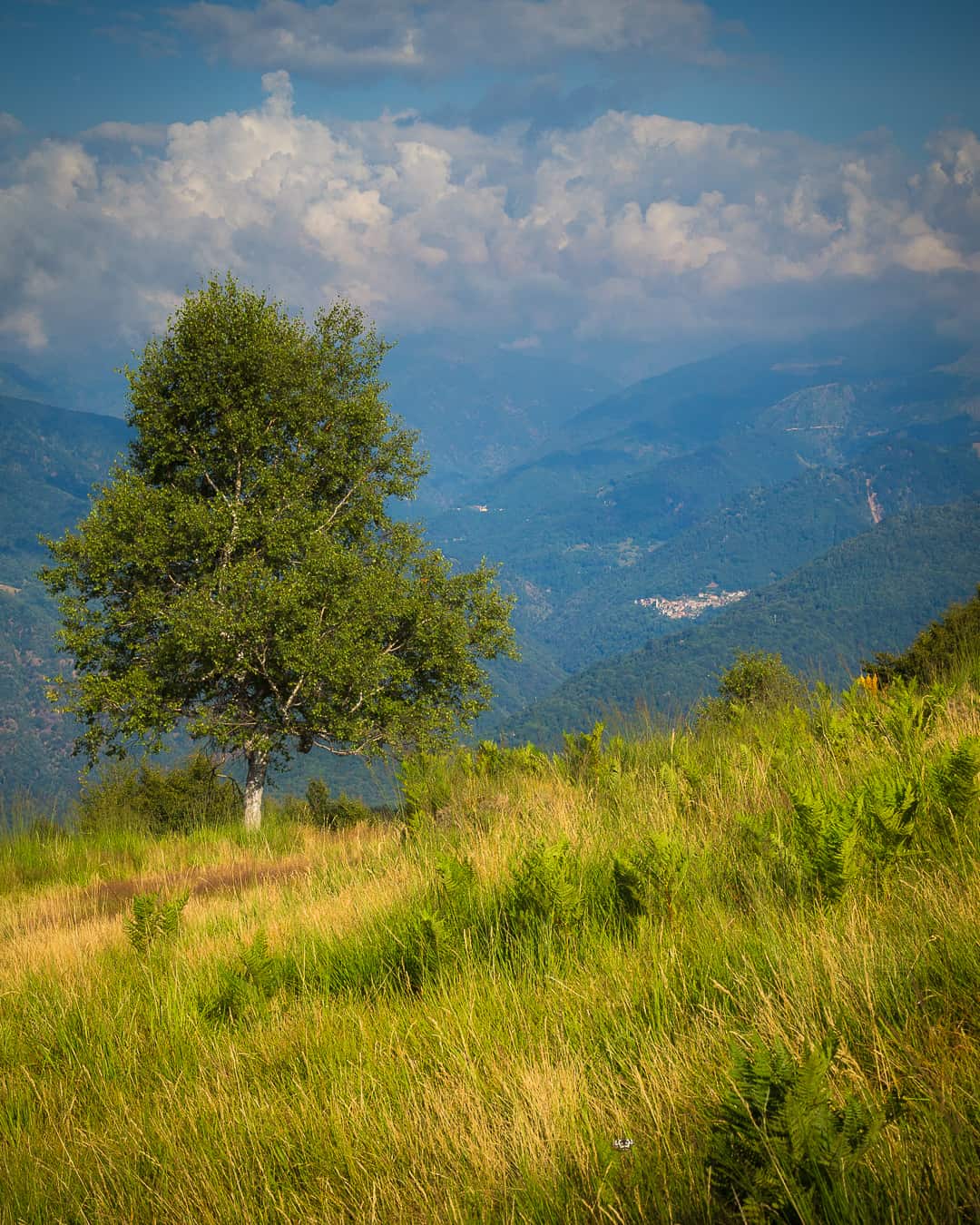
A lone birch on a sloping meadow, the valleys opening behind it. Up high, the lake vanishes and reappears at every bend of the path. It is another landscape, more alpine than lakeside, not far from the palms on the shore.
The locals
Up here, they are the locals. One cow grazes among the ferns, another can be glimpsed further on, and time seems measured by their pace. The lake, down below, is just a gleam between the trees.
V
The town
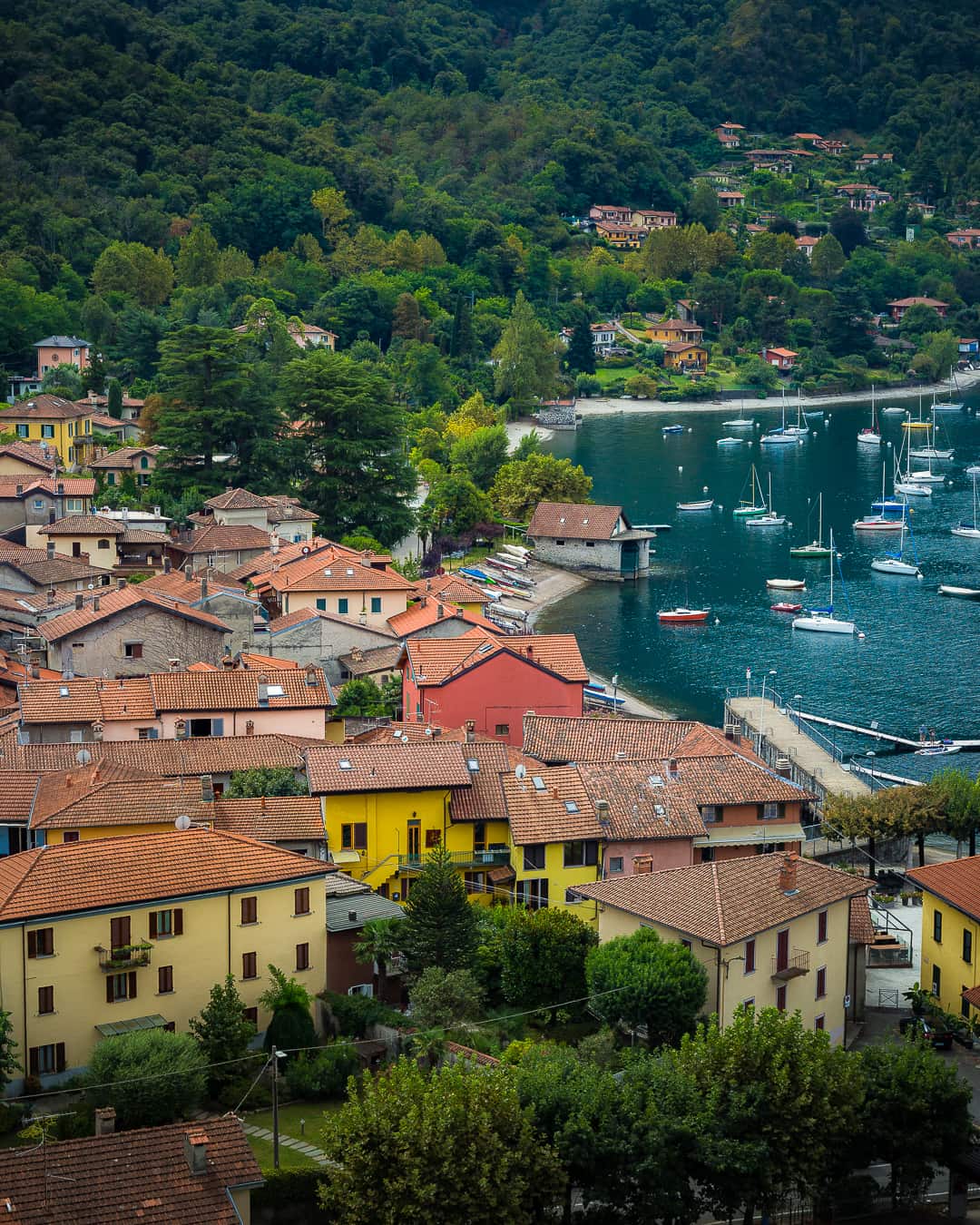
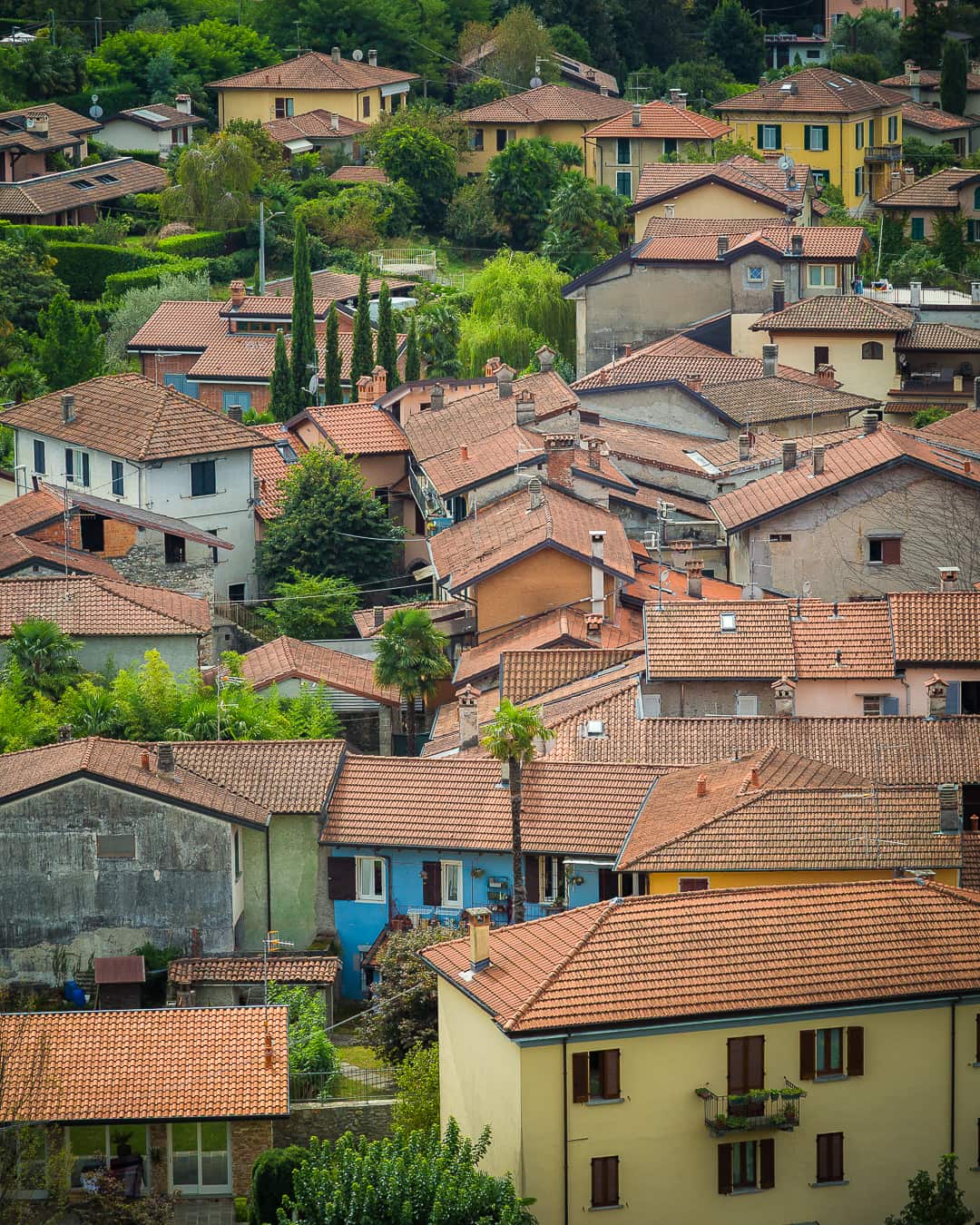
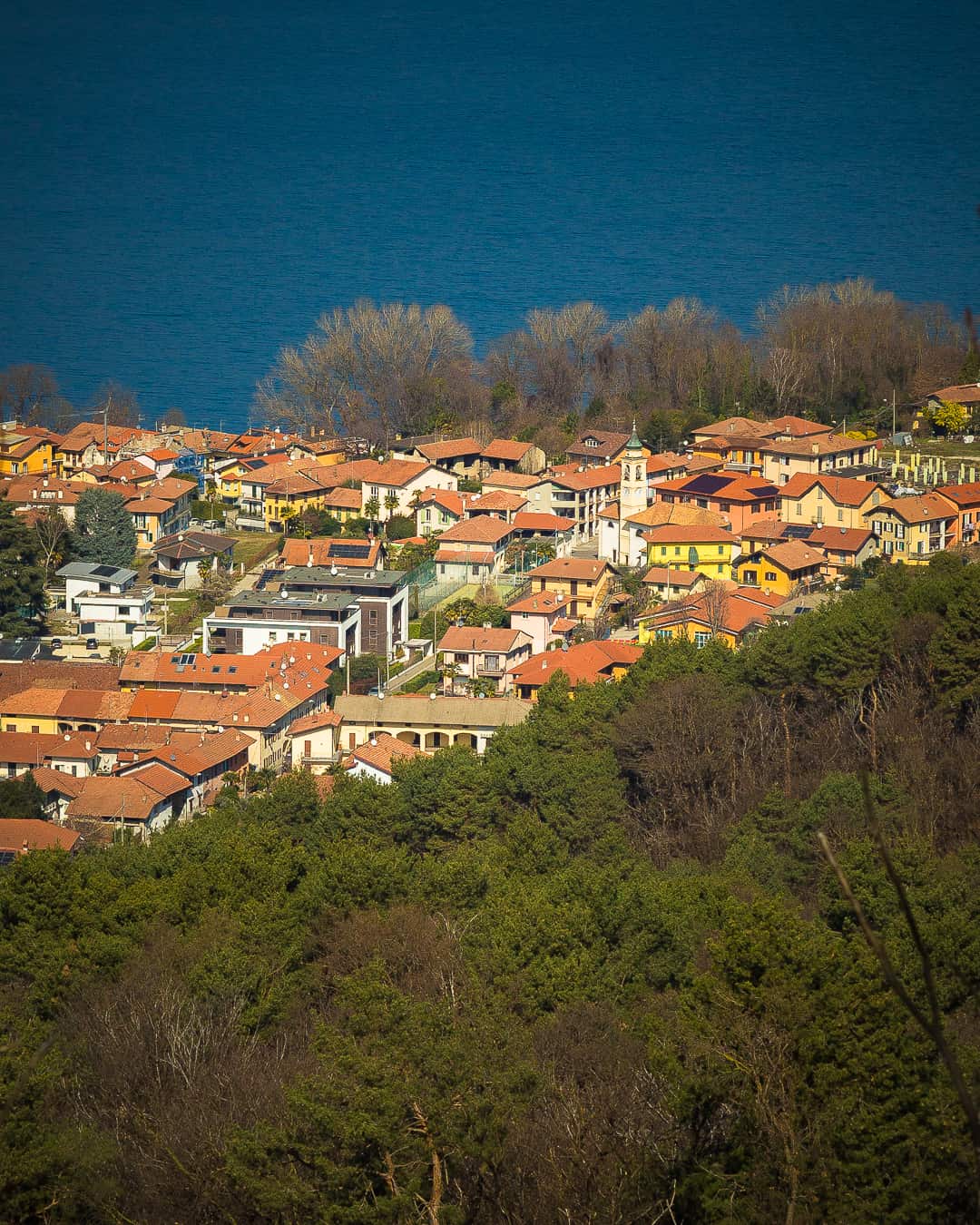
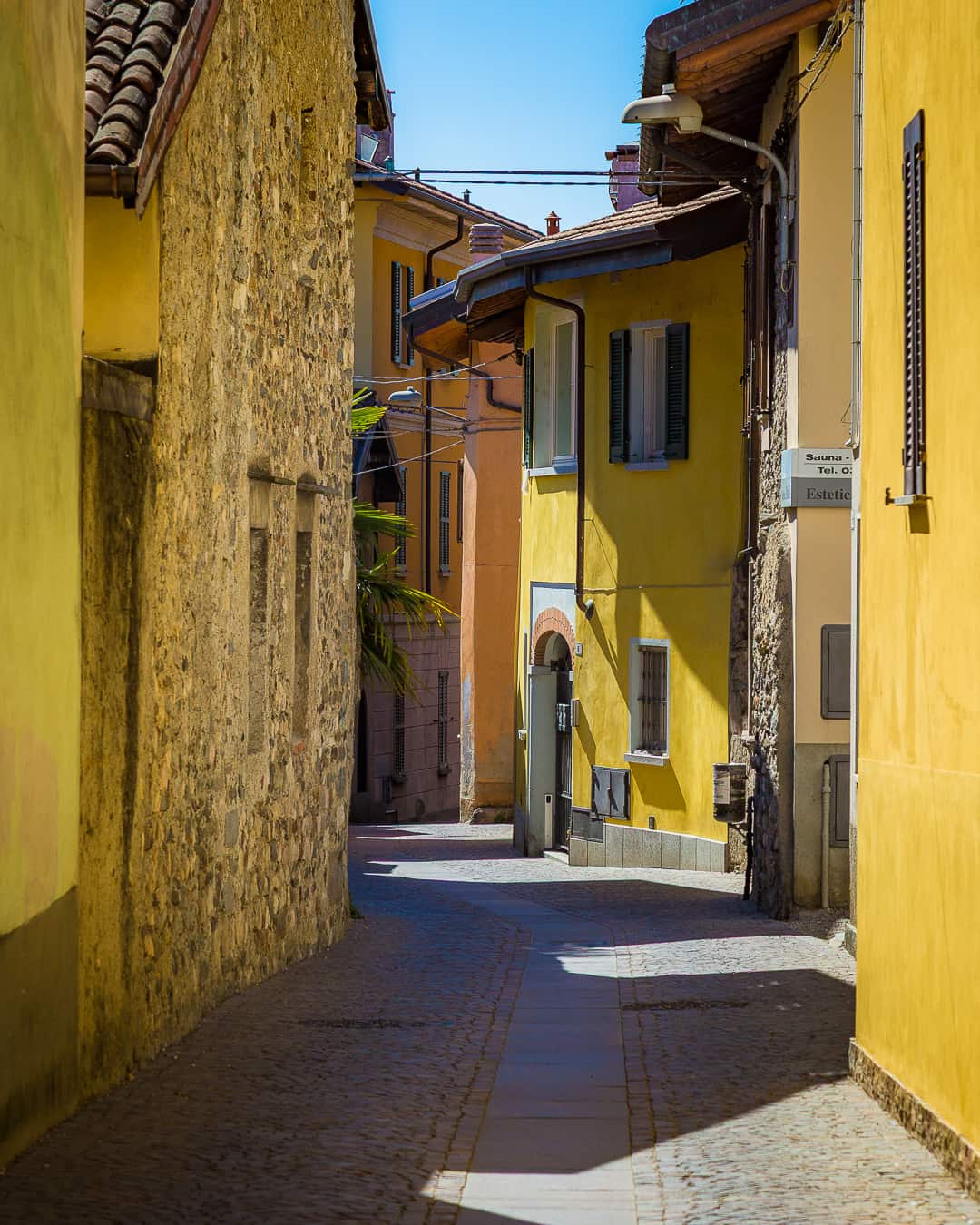
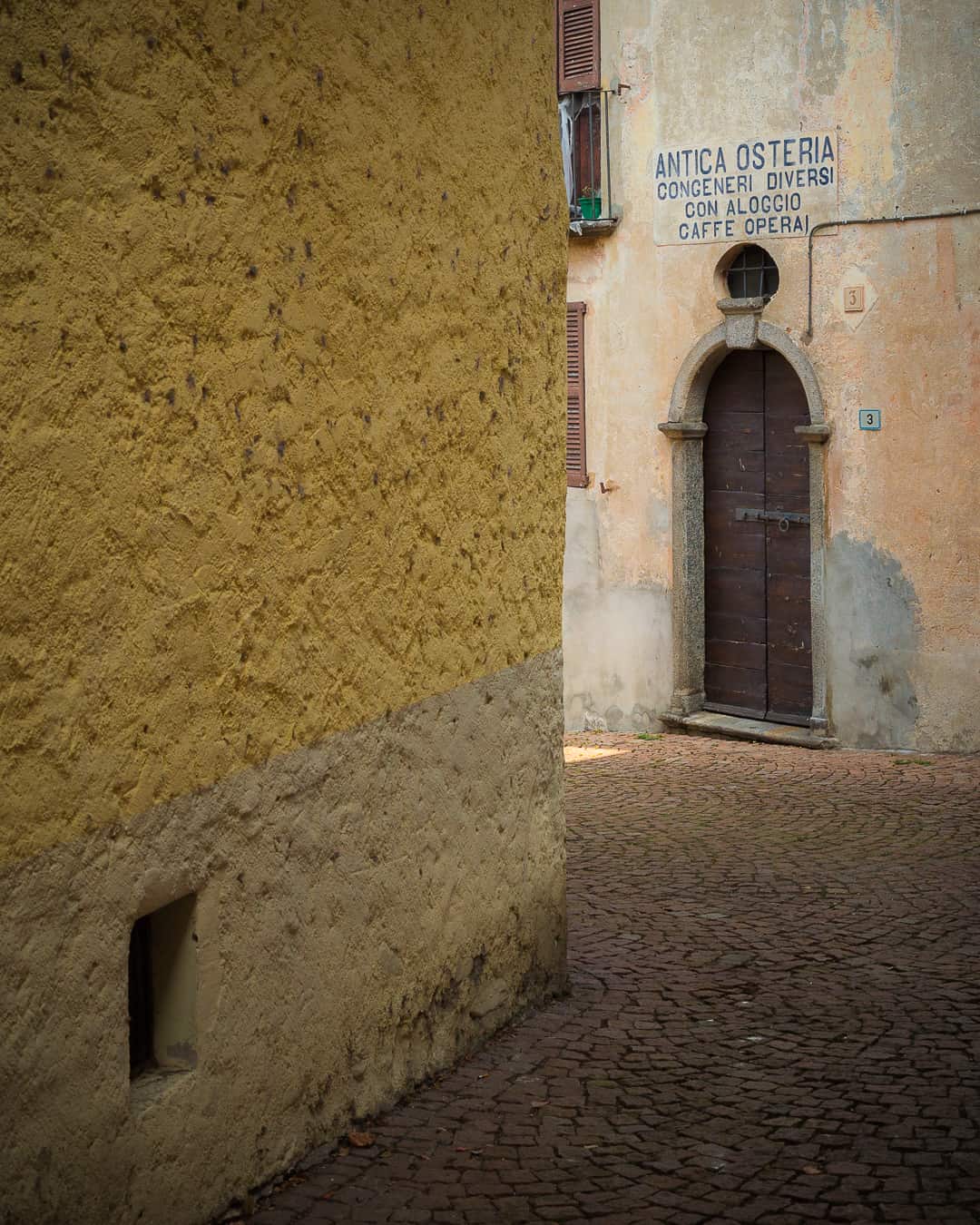
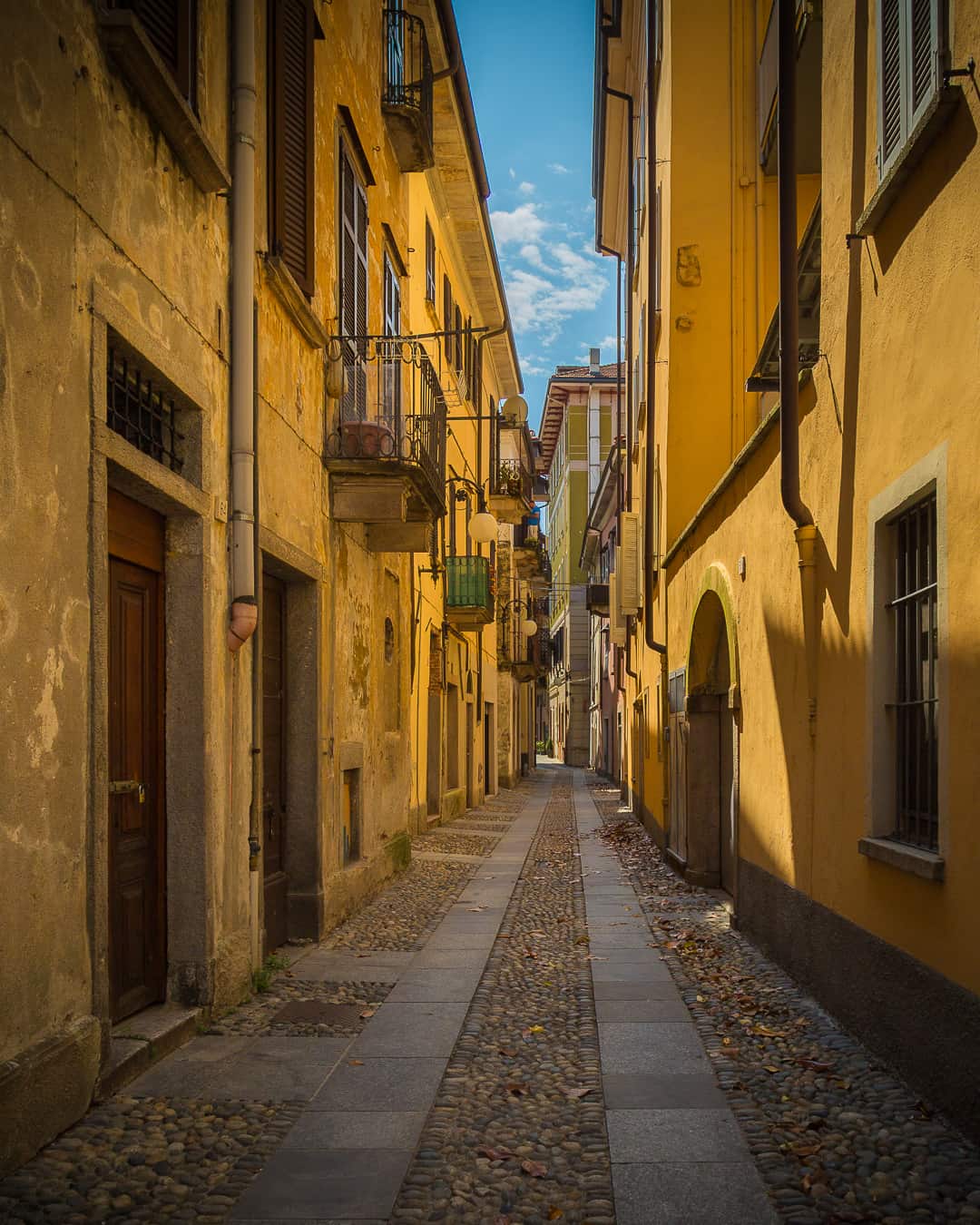
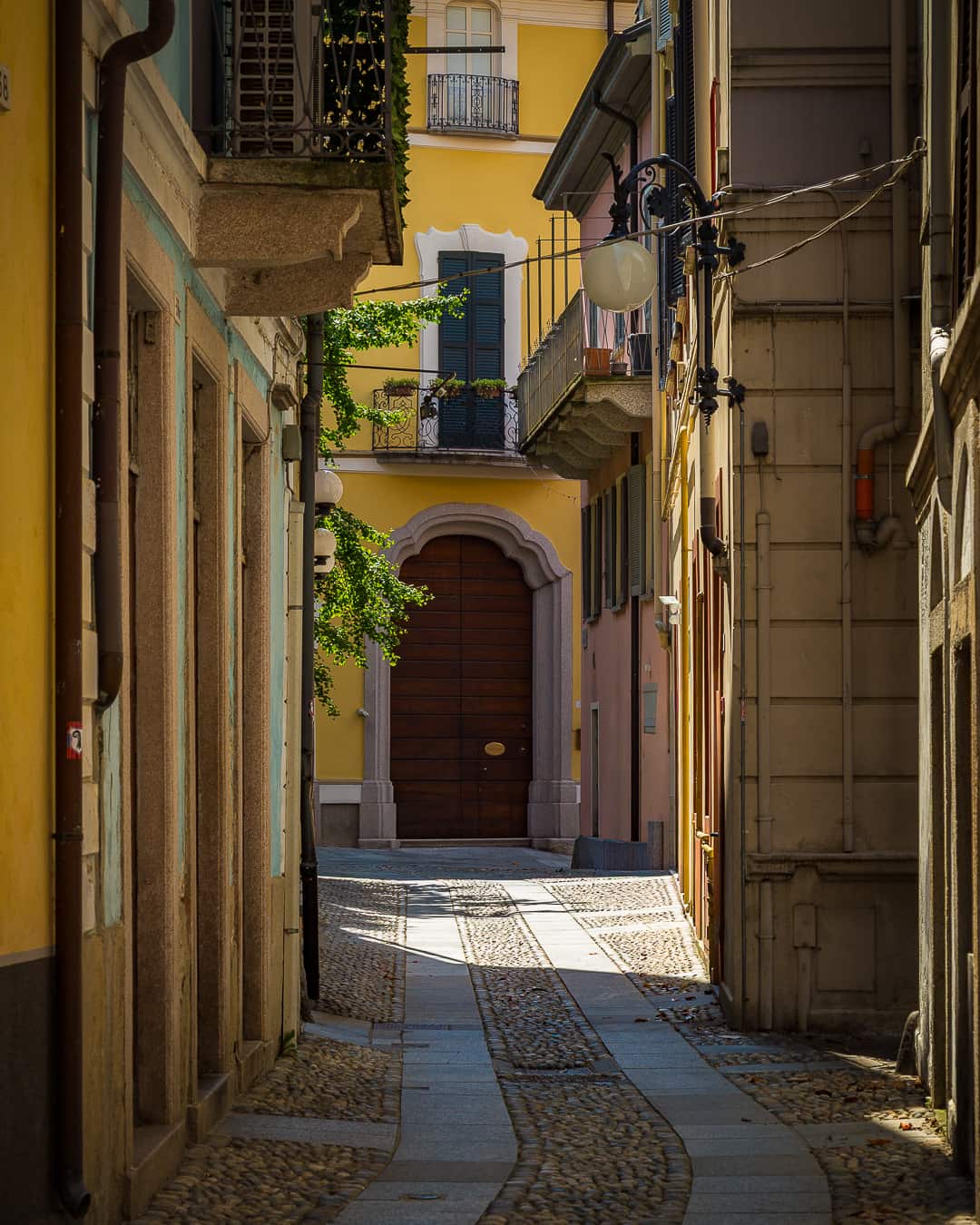
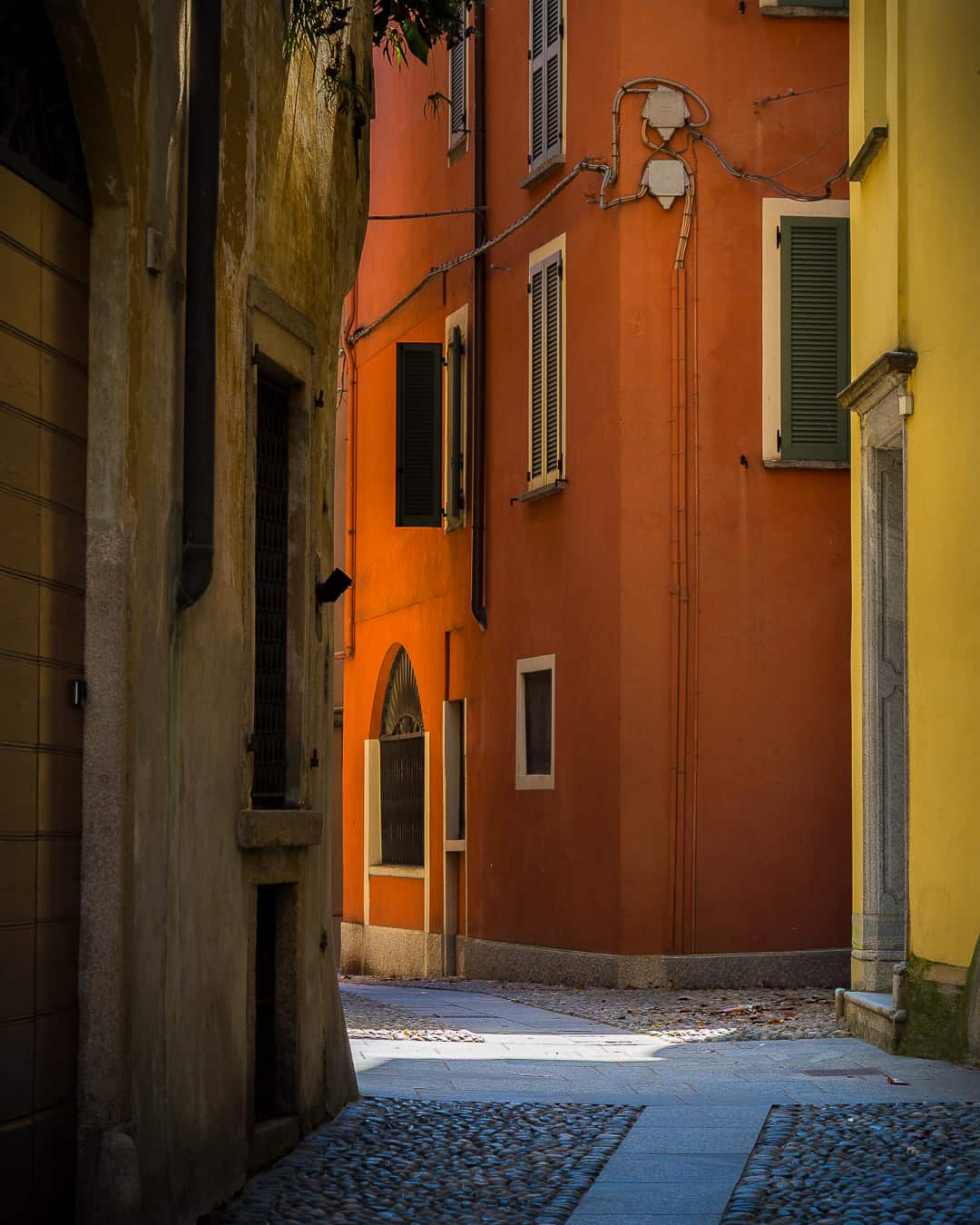
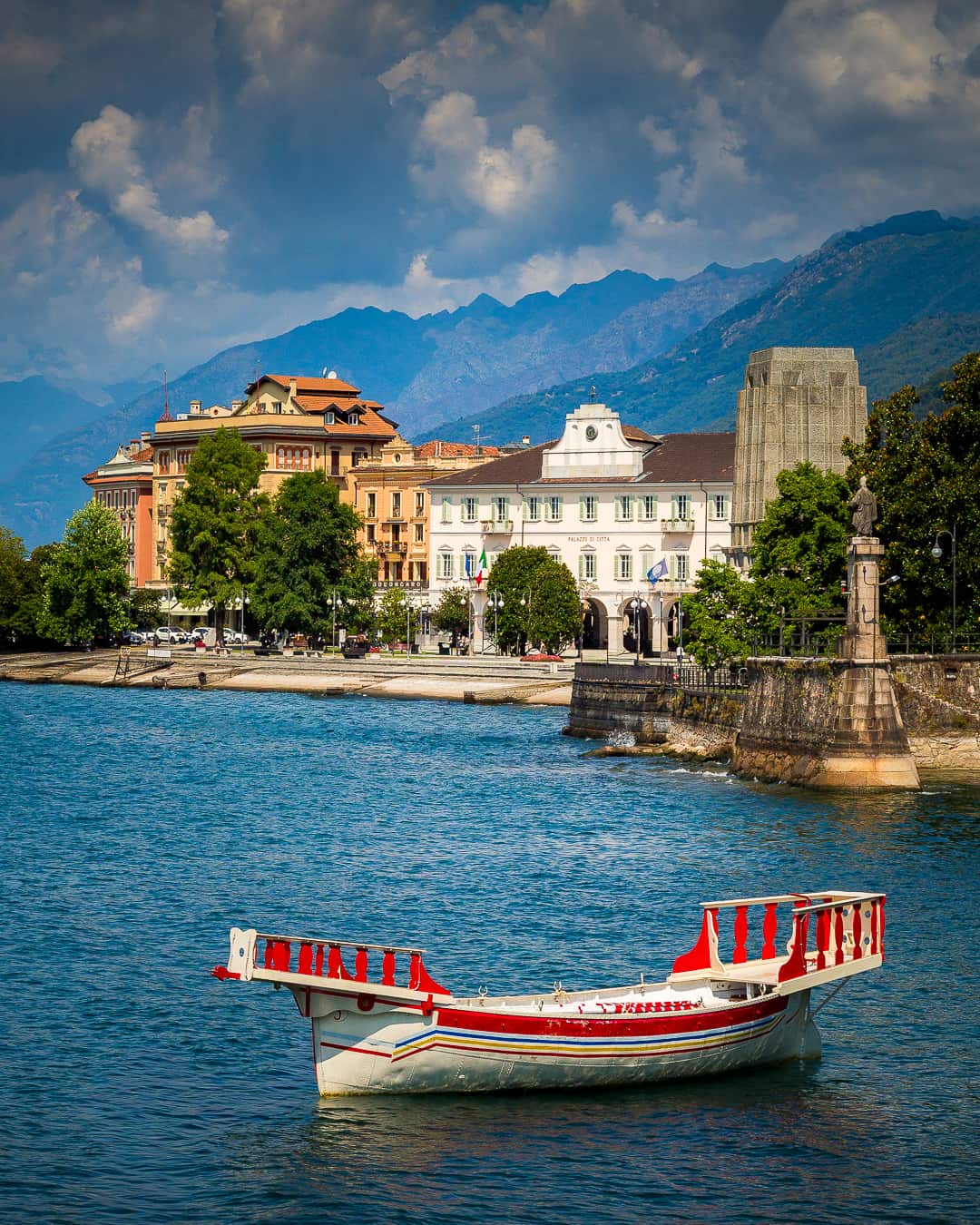
The book ends where the boat lands: in a town on the water. Cobbled lanes, yellow and orange façades, iron lanterns, wooden doors.
Life on the lake still runs through its piers. Boats and ferries link the two shores, and between Intra and Laveno the ferry carries cars too, from Piedmont to Lombardy.
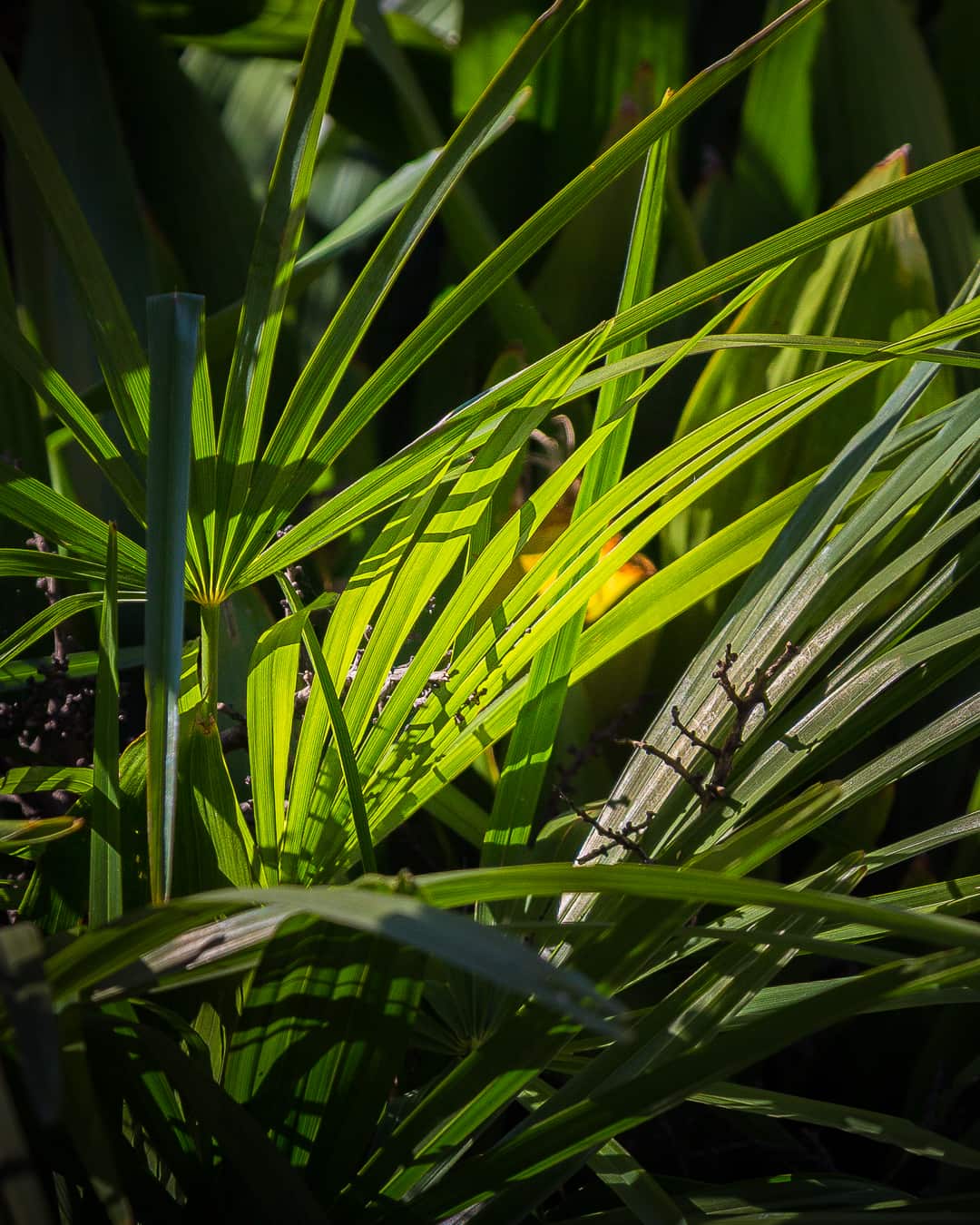
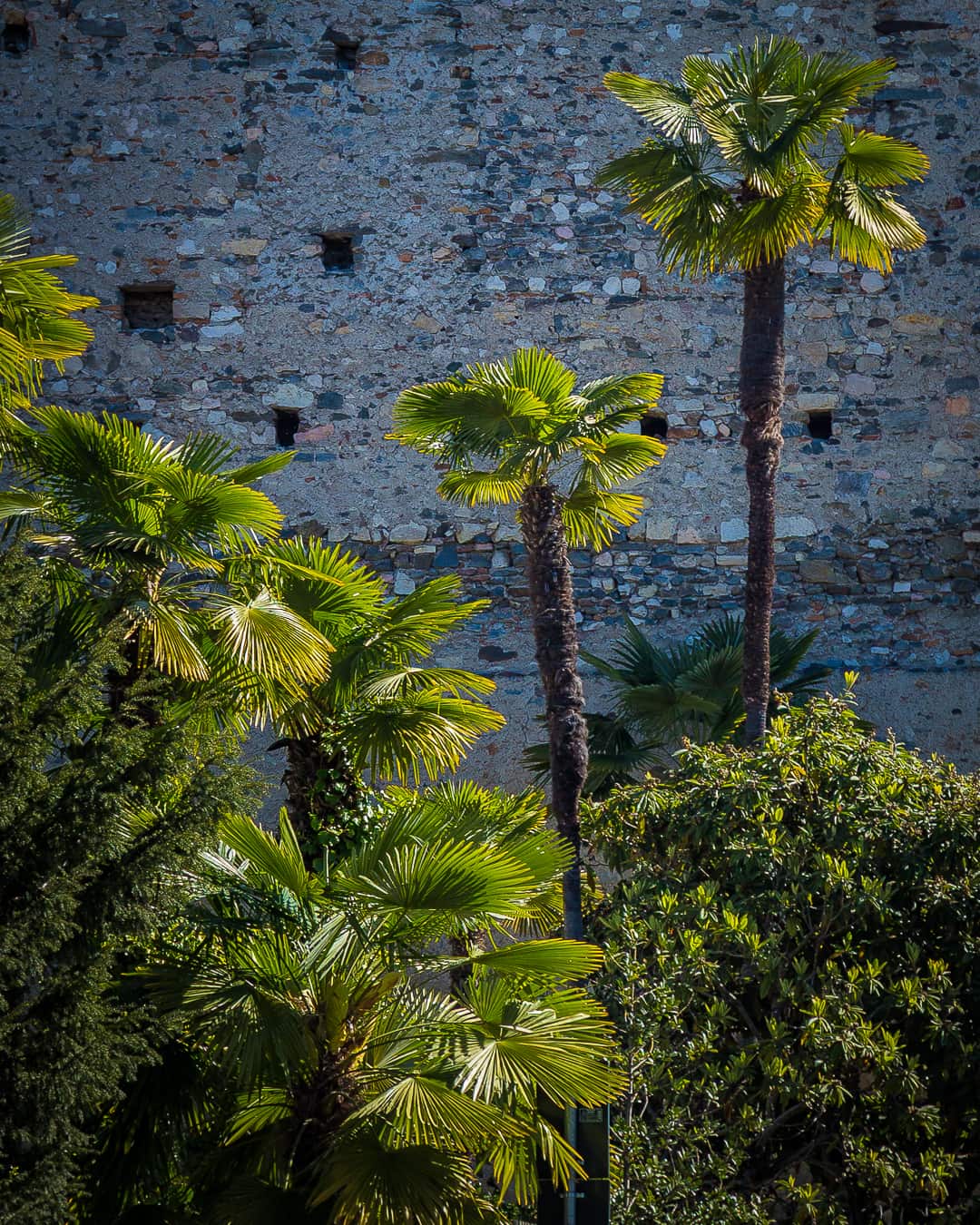
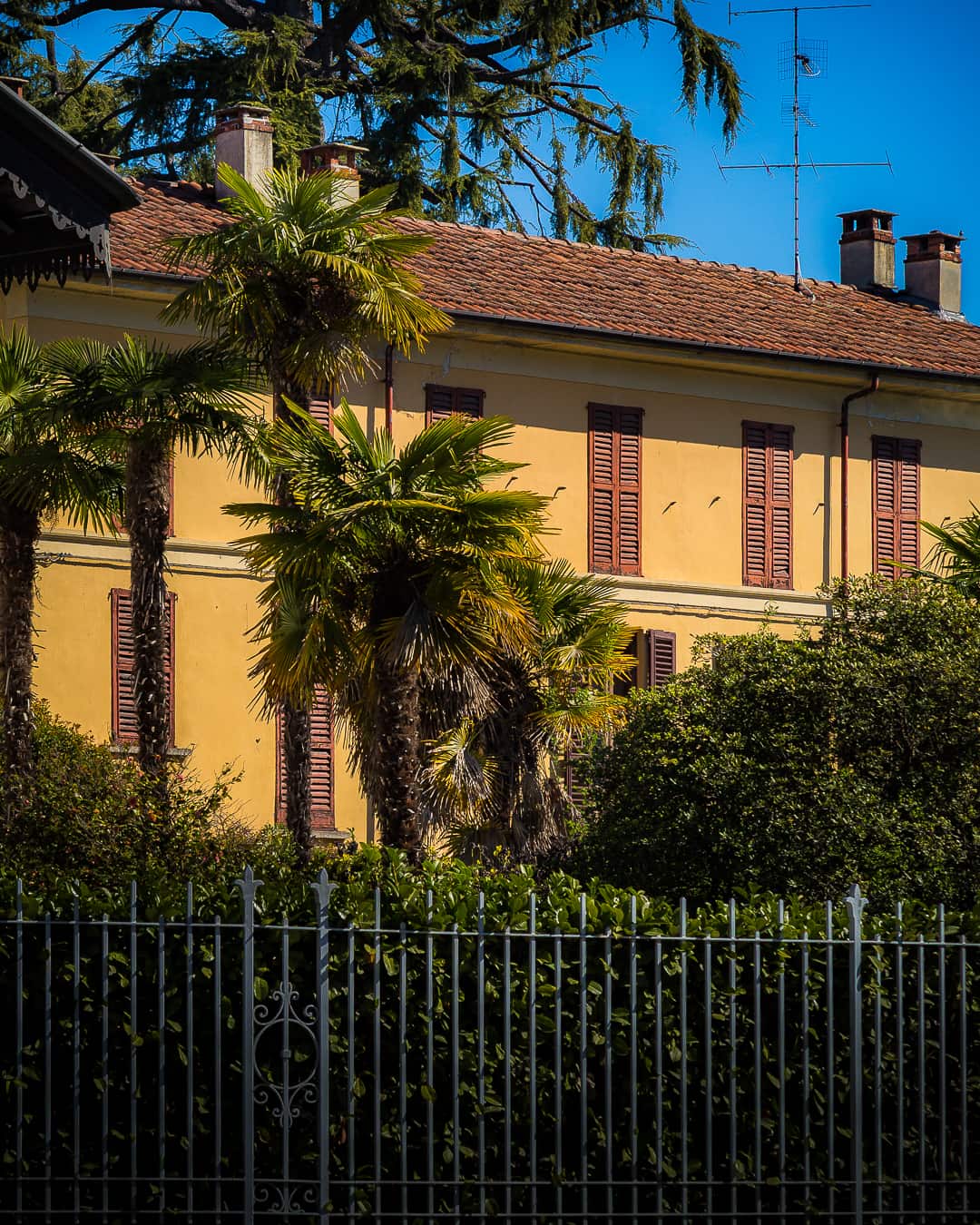
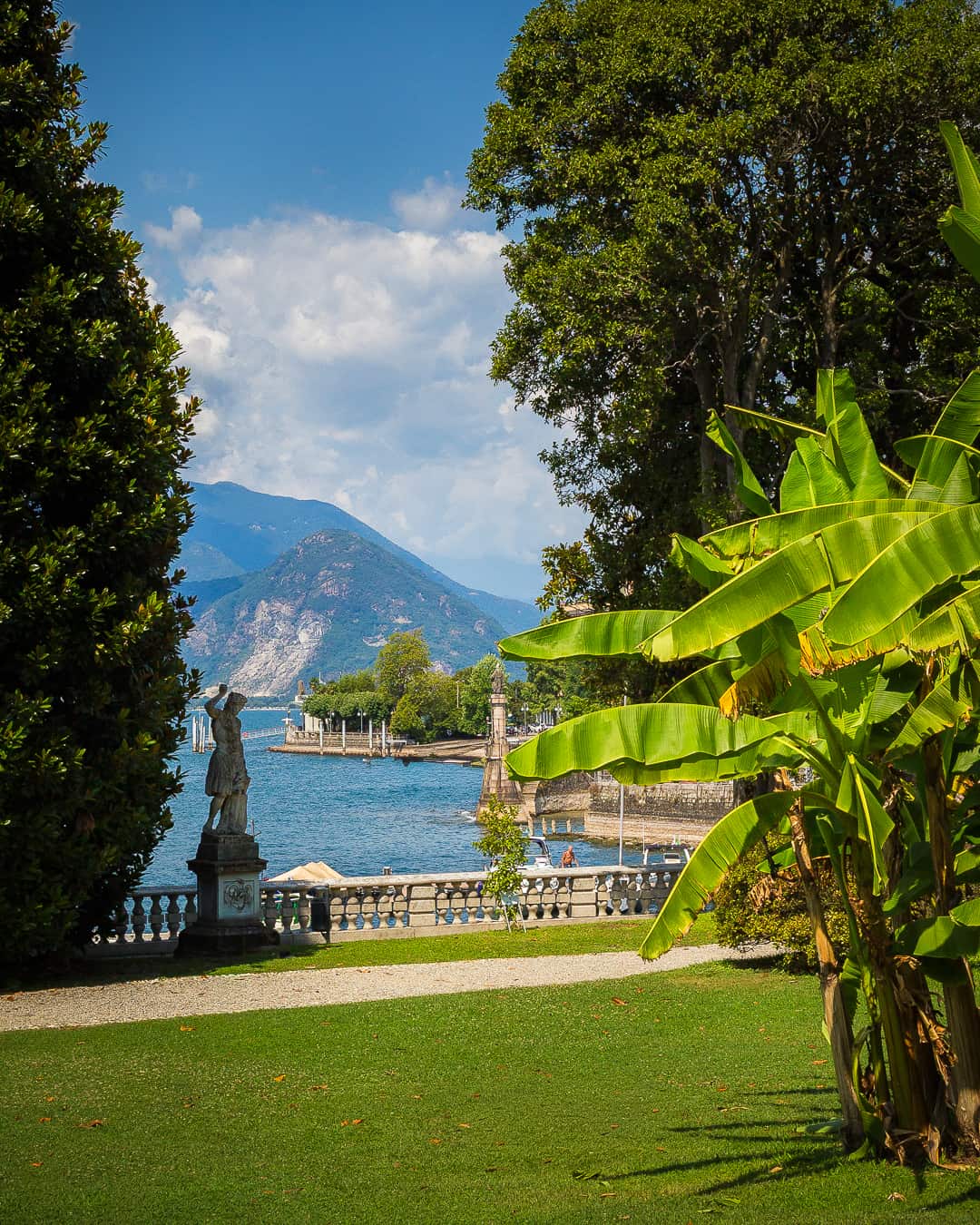
On the promenade, palms and banana plants: for a few hours, Lake Maggiore can be a little south.
The lantern
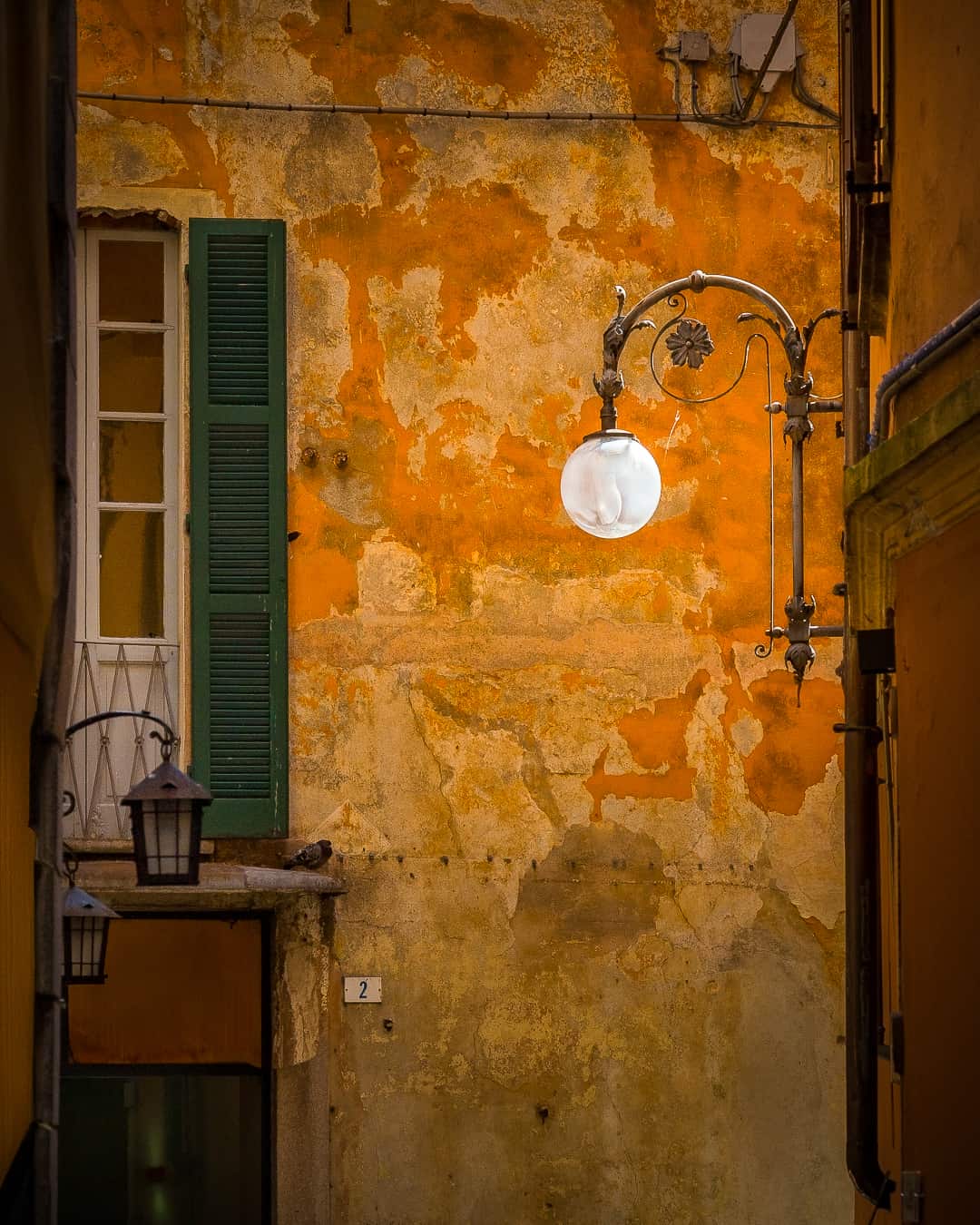
A peeling orange wall, a green shutter, a globe lantern on its wrought-iron arm. The lakeside towns do not hide their age: they leave it on the walls, in layers of colour. That patina is what makes them so photogenic.
The arcaded square
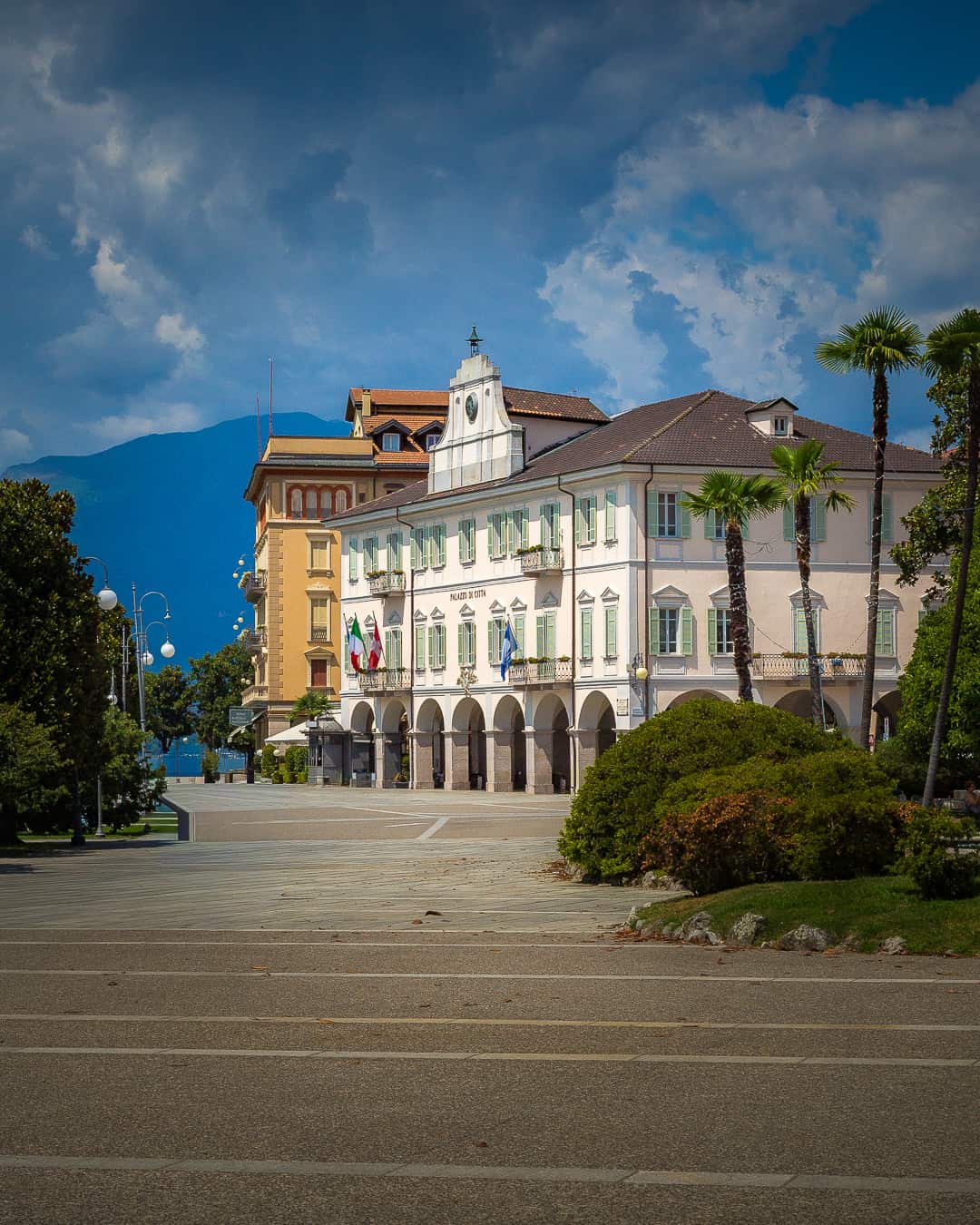
A broad square, an arcaded white palazzo, palms on either side and, behind, the mountains. On the lake even the squares face the water: you step off the boat, cross the promenade, and the town begins here.
Getting there
- By train
- From anywhere in Lombardy, Trenord trains run to Laveno Mombello on the Lombard shore; from there, boats sail to Intra, Pallanza, Baveno and the islands.
- By boat
- Navigazione Lago Maggiore links the two shores; between Intra and Laveno the ferry also carries cars. Timetables change with the seasons, so check them on the Navigazione Laghi website.
- In spring
- It is camellia season: in Verbania Pallanza, Villa Giulia hosts the Mostra della Camelia.
- Up high
- From the Mottarone, between Lake Maggiore and Lake Orta, you can see seven lakes on a clear day.
- Our advice
- For sunsets, choose the Lombard shore: it faces west, and the sun goes down behind the Piedmontese mountains.
Information checked on 21 November 2026.
Sources
- Maggiore, lago — Dizionario storico della Svizzera
- Pannello di controllo del Lago Maggiore 2023 — CIPAIS
- Camelia, il fiore che conquistò l’Europa — RSI
- Mostra della camelia invernale a Verbania — VerbanoNews, 2019
- Il Lago Maggiore fiorisce di splendide camelie — SiViaggia
- Rocca di Angera — Italia.it
- La Rocca Borromeo di Angera — SportOutdoor24
- 200 anni di navigazione sul Lago Maggiore — Navigazione Laghi
- Il piroscafo Piemonte (1904) — Navigazione Laghi
- Traghetto Intra–Laveno, orari — Navigazione Laghi
- Il Mottarone e i sette laghi — GuidaTorino
- In viaggio con Camilla: il Mottarone — Moto.it
- Sul Mottarone, la terrazza dei sette laghi — GreenMe, 2026
- Laveno e il Maggiore, treno + battello — Trenord
Note
Photographs by William, also published on Instagram as @guglielmo.foto.
Texts and layout: WIDE Edizioni, Rho. Historical and practical information is checked against the sources on the previous page.
© 2026 WIDE Edizioni
A book for your place
We photograph villas, museums, villages and landscapes in natural light, and turn them into images ready for your website, print and social media. Or into pages to leaf through, like these.