WIDE Edizioni
Gulf of Poets
La Spezia, Liguria
Photographs by William
The most beautiful in the universe
Between Portovenere and Lerici, with La Spezia at its centre, opens a gulf nine kilometres wide and thirteen deep. Napoleon called it “the most beautiful in the universe”.
The name we know it by is more recent: in 1910 the playwright Sem Benelli called it the Gulf of Poets in his funeral oration for the scientist Paolo Mantegazza, who died at San Terenzo. He was thinking of Byron, of Shelley, of all the writers who had found inspiration on these shores.
These pages travel it to its western tip: the city, the harbour, a village on the bay, Portovenere at sunset.
I
The city
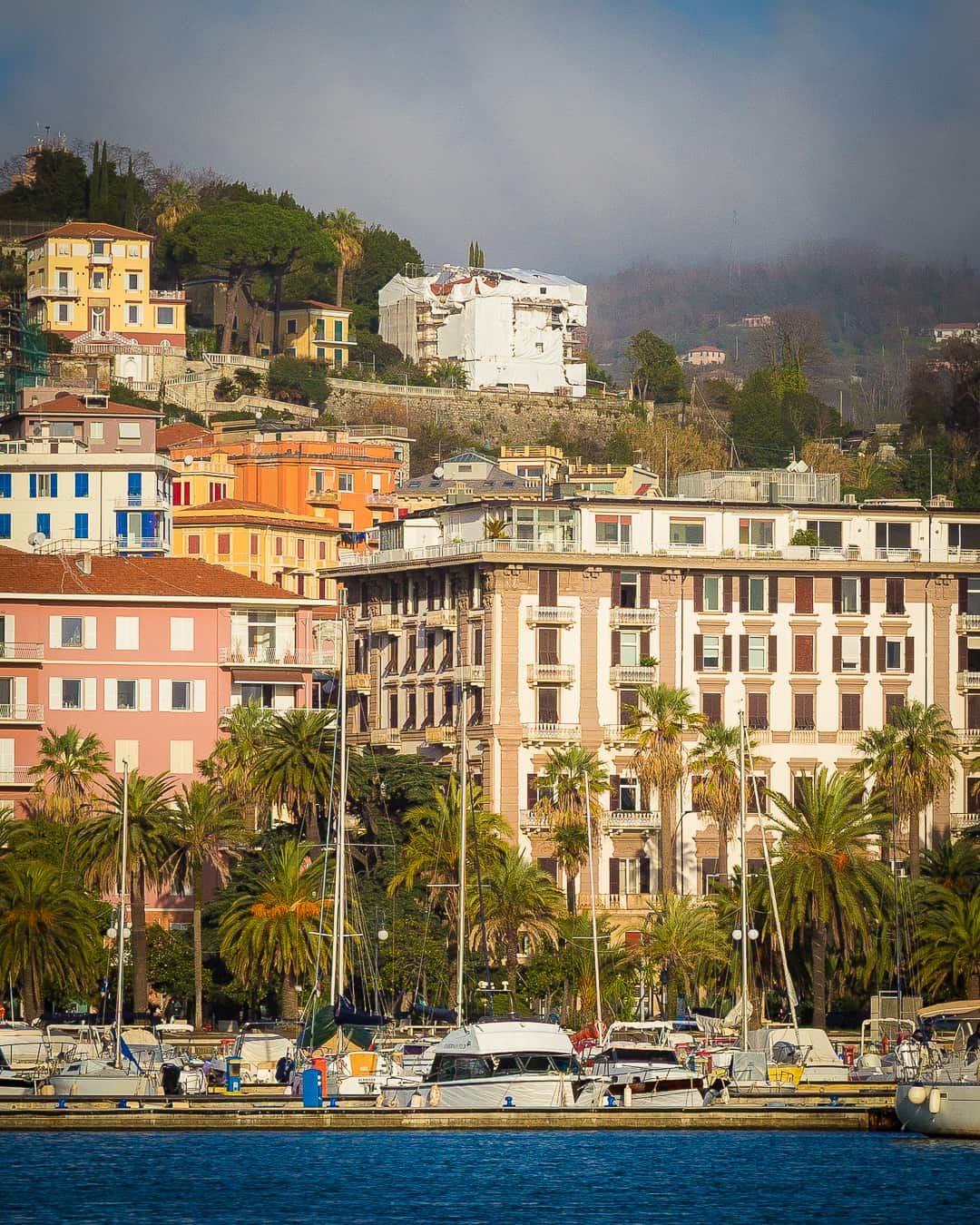
La Spezia was once a small walled town. In 1853 Cavour moved the Kingdom of Sardinia’s naval arsenal here from Genoa; opened in 1869, the Arsenal made the city grow fast, with new streets and new districts.
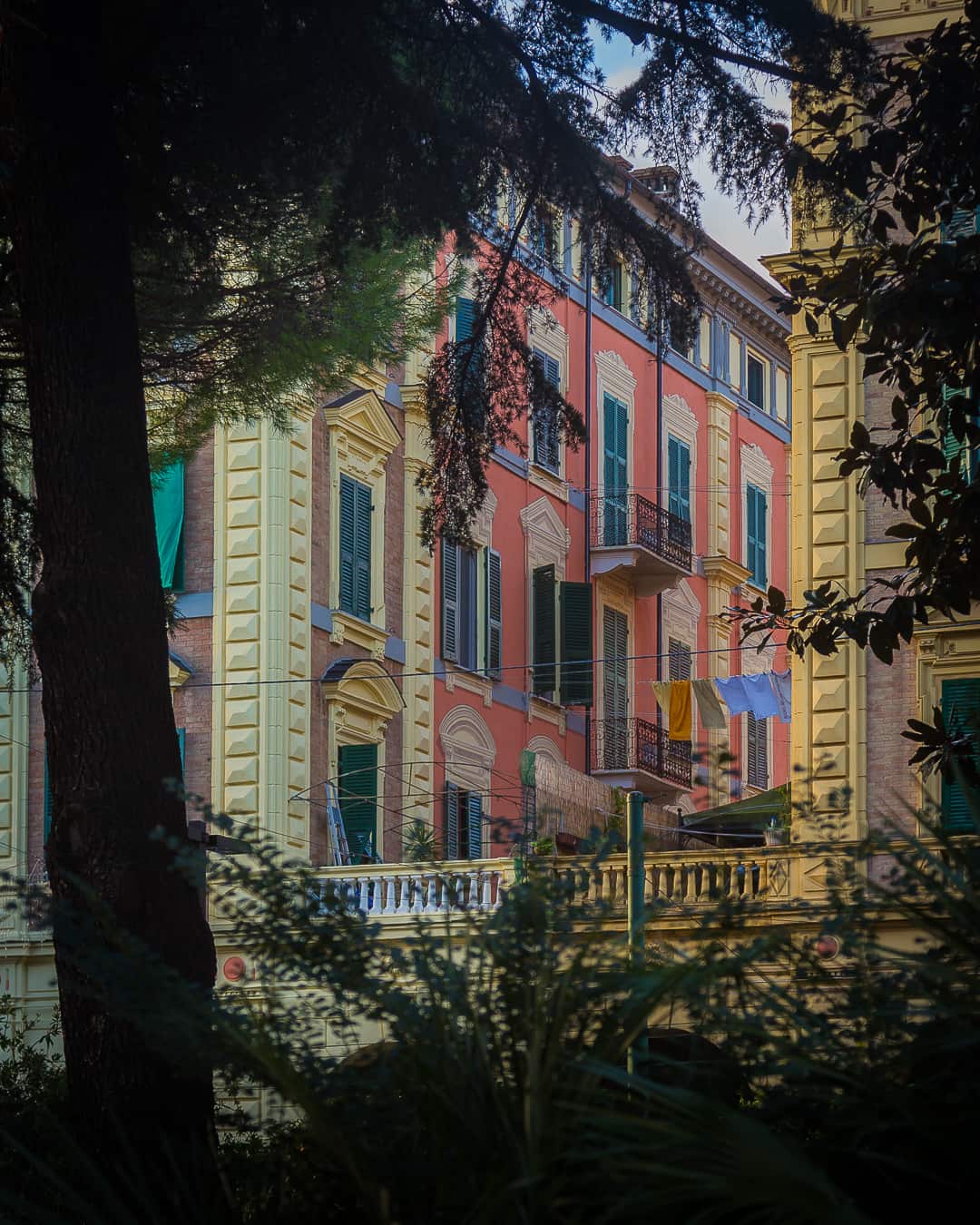
What remains are the pastel nineteenth-century buildings climbing towards the hills.
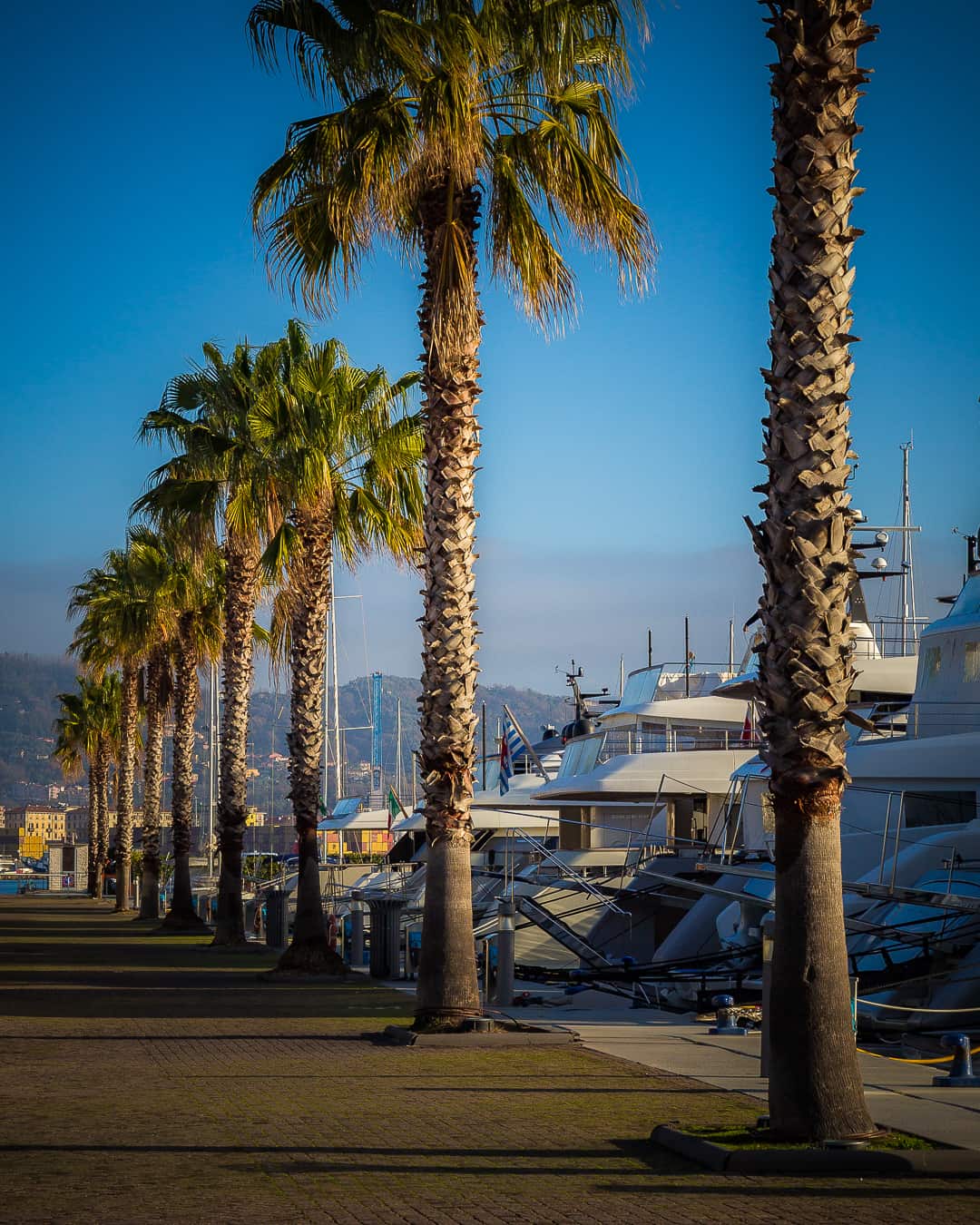
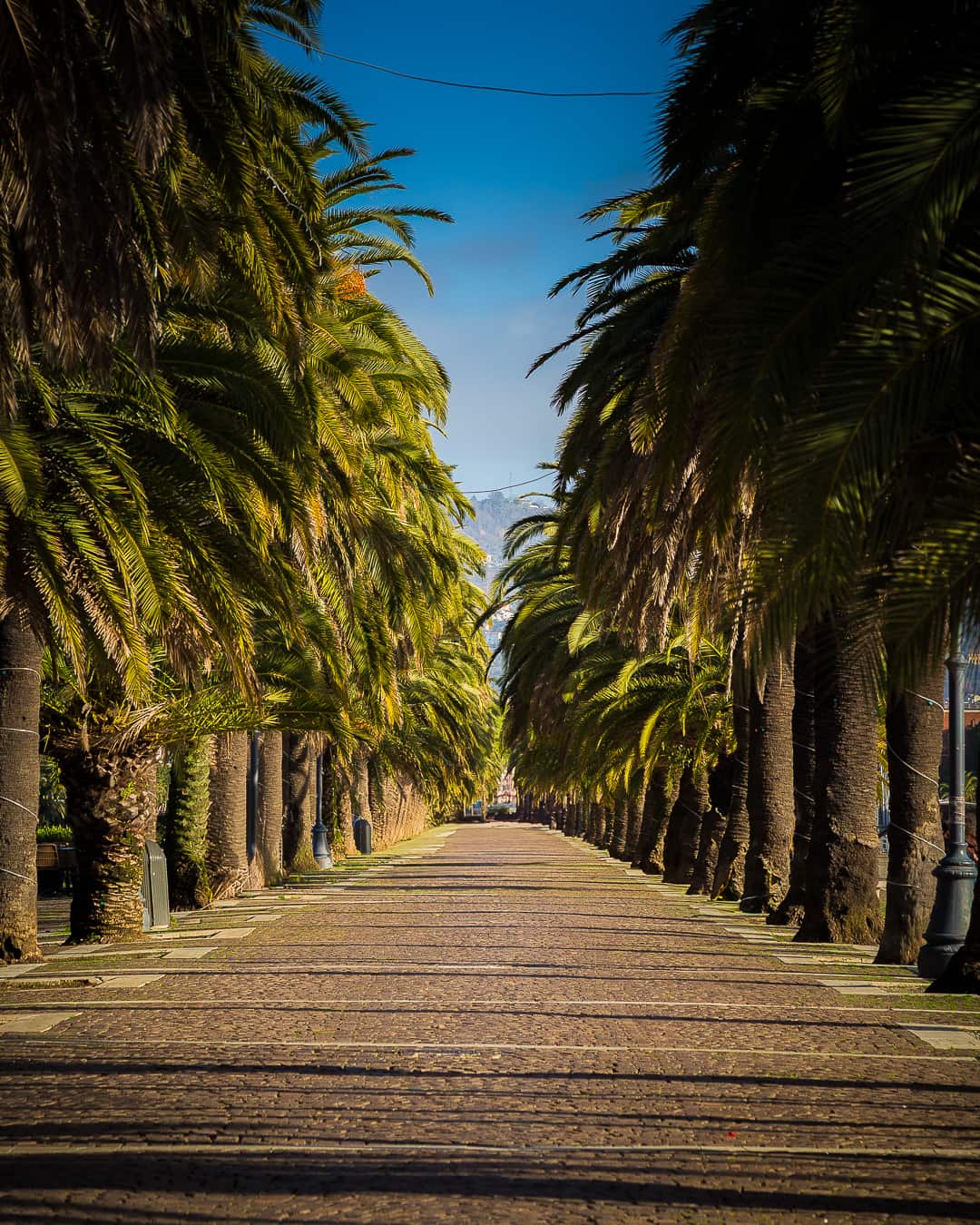
Along the sea runs the Passeggiata Morin, lined with palms, pines and oleanders, facing the gulf and, on clear days, the Apuan Alps.
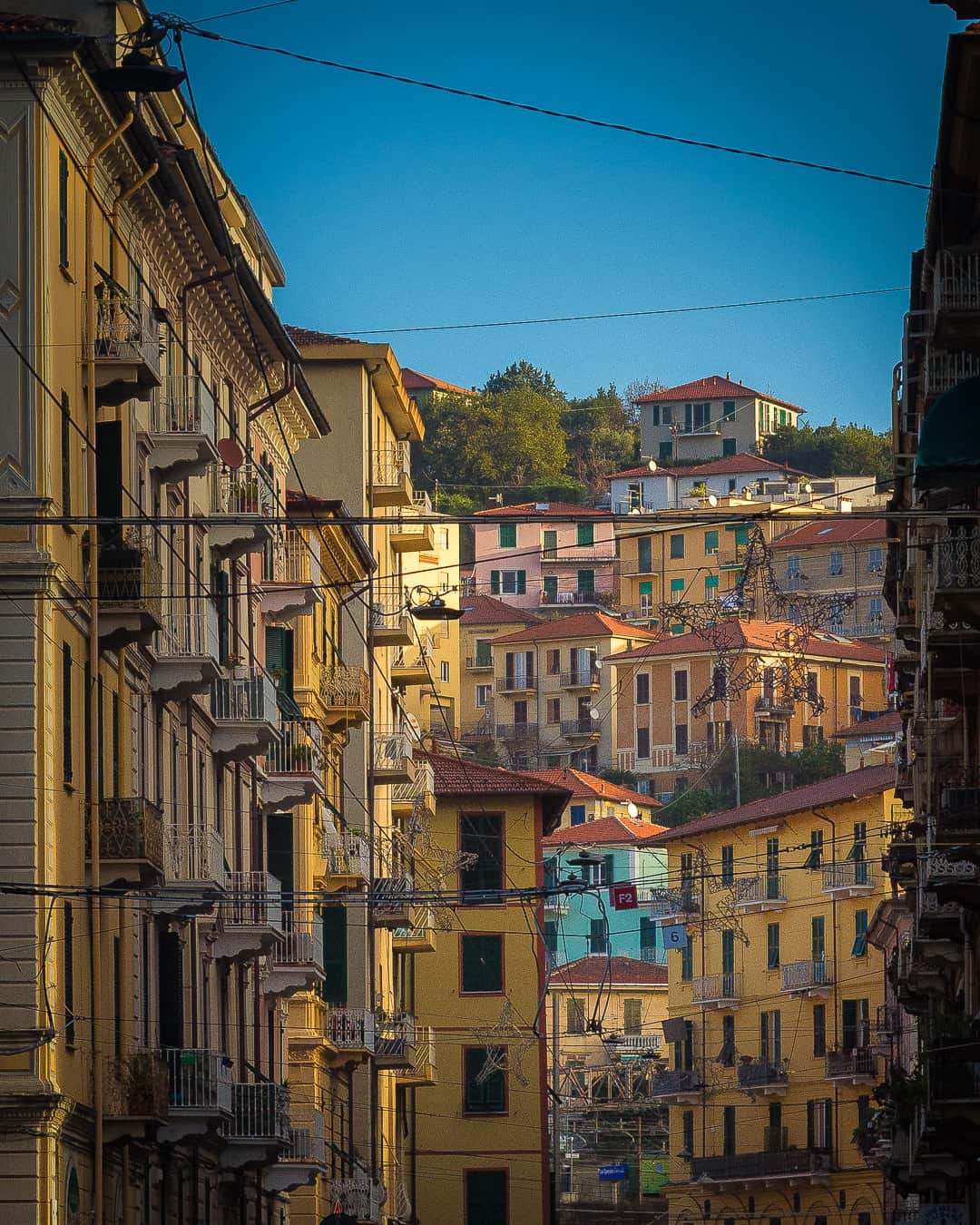
The climbing city
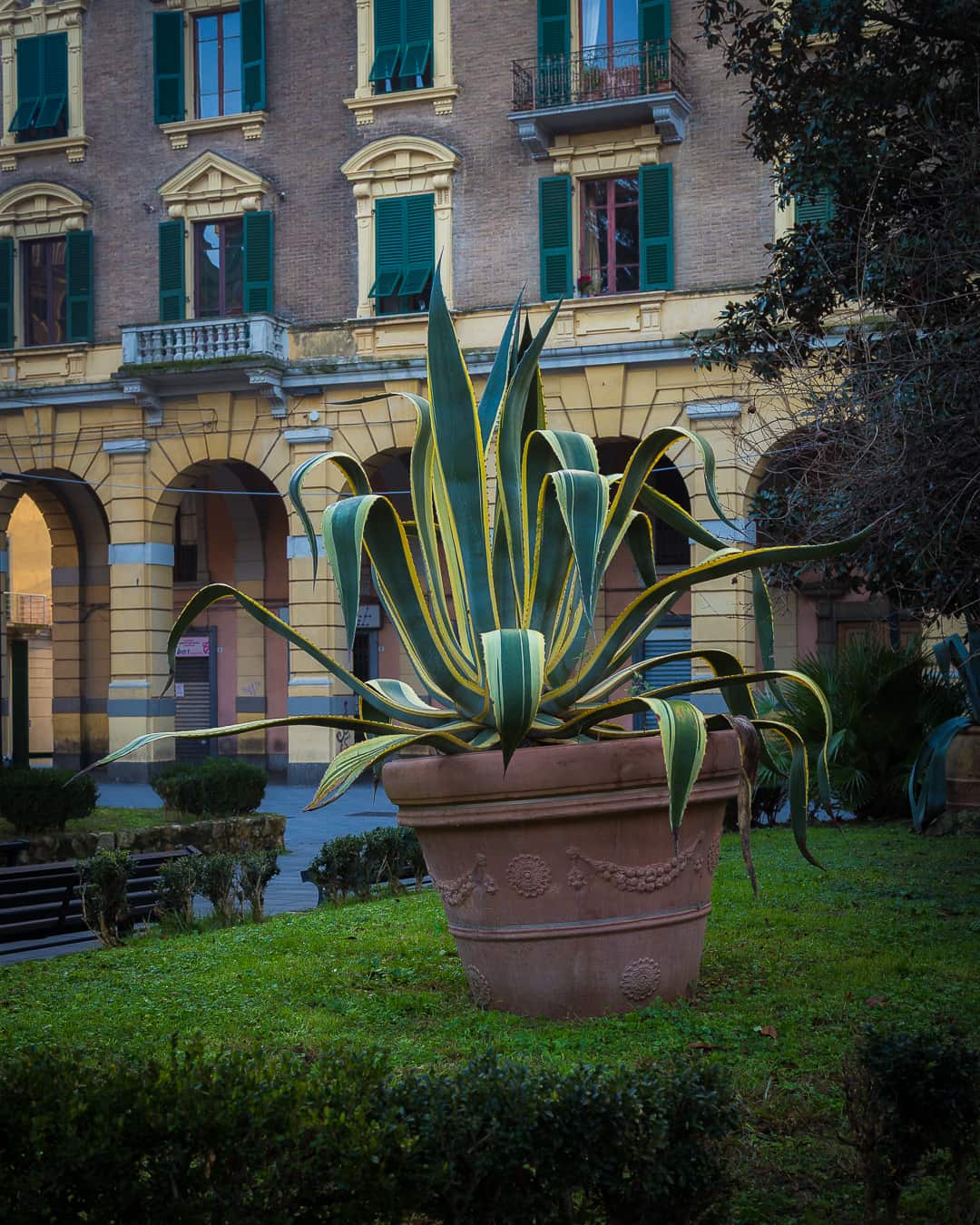
Nineteenth-century buildings, washing hung out and, behind, houses upon houses up to the hills. La Spezia grew fast after the Arsenal opened in 1869: streets and districts were needed for the people who worked there. That growth can still be read in the colours, stacked one above another.
The palm avenue
Two rows of towering palms and a straight, shaded avenue. In La Spezia palms go with the sea: the Passeggiata Morin, the city’s seafront, is lined with palms, pines and oleanders. It is the place for the evening stroll, where people stop to chat facing the gulf.
II
The harbour
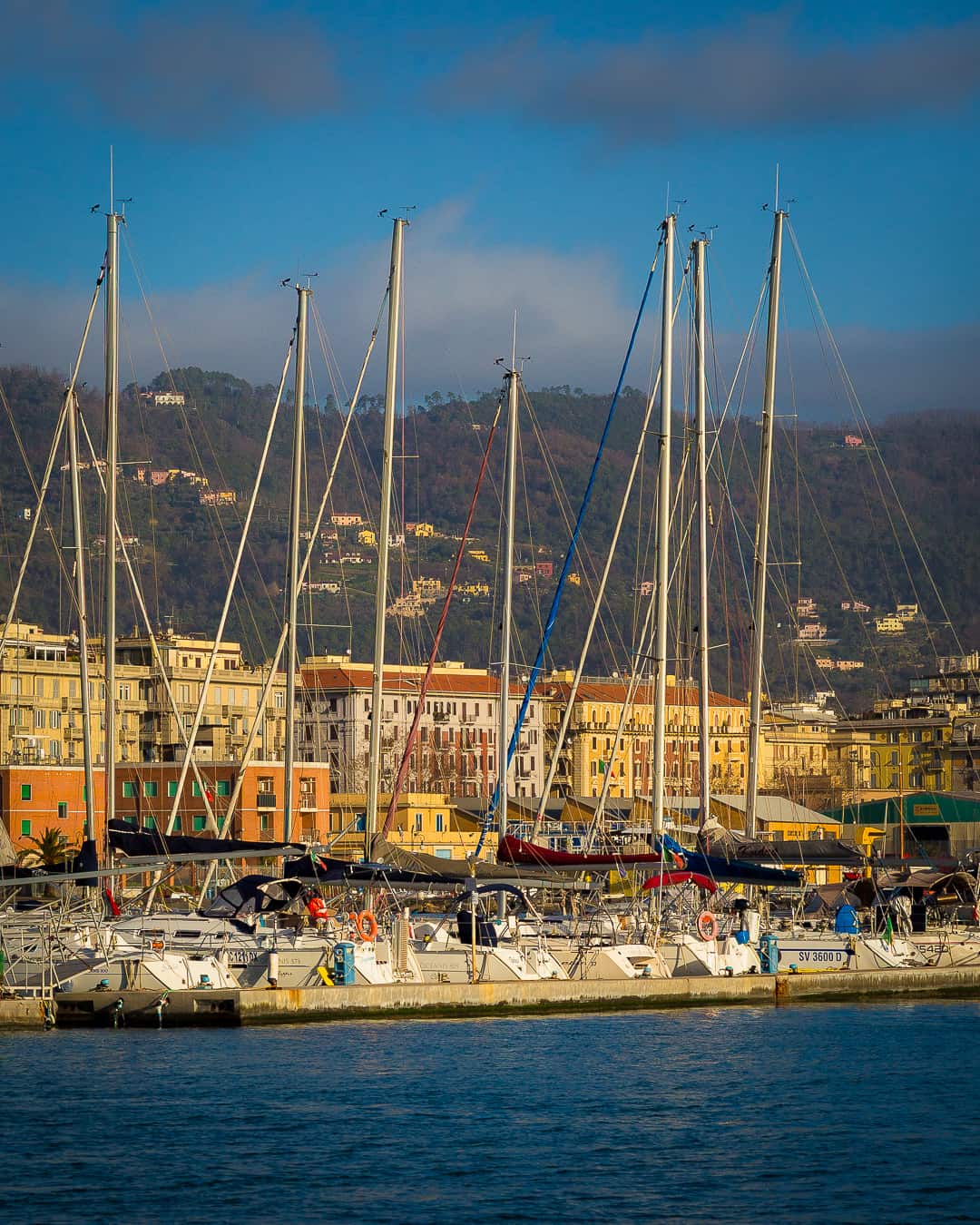
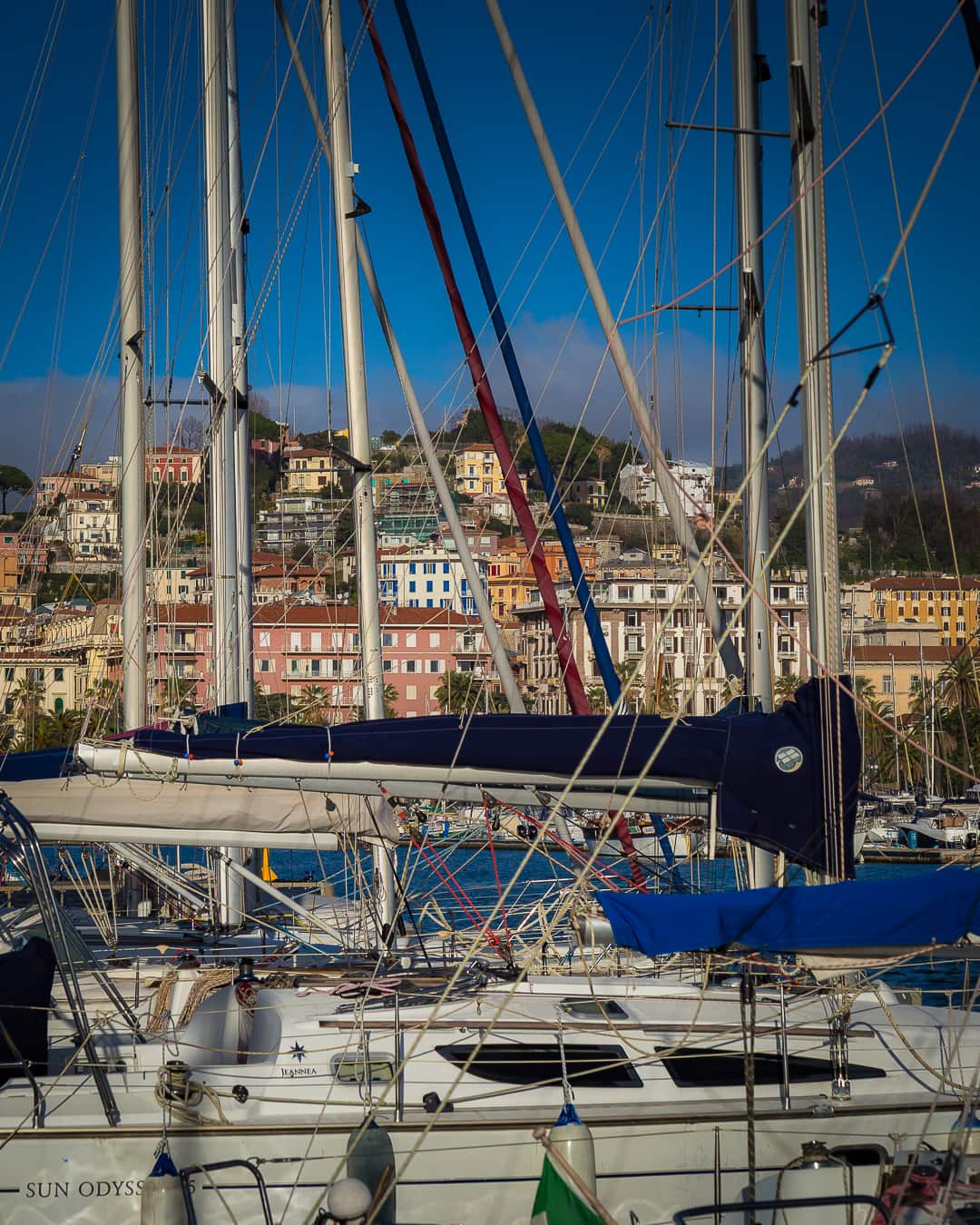
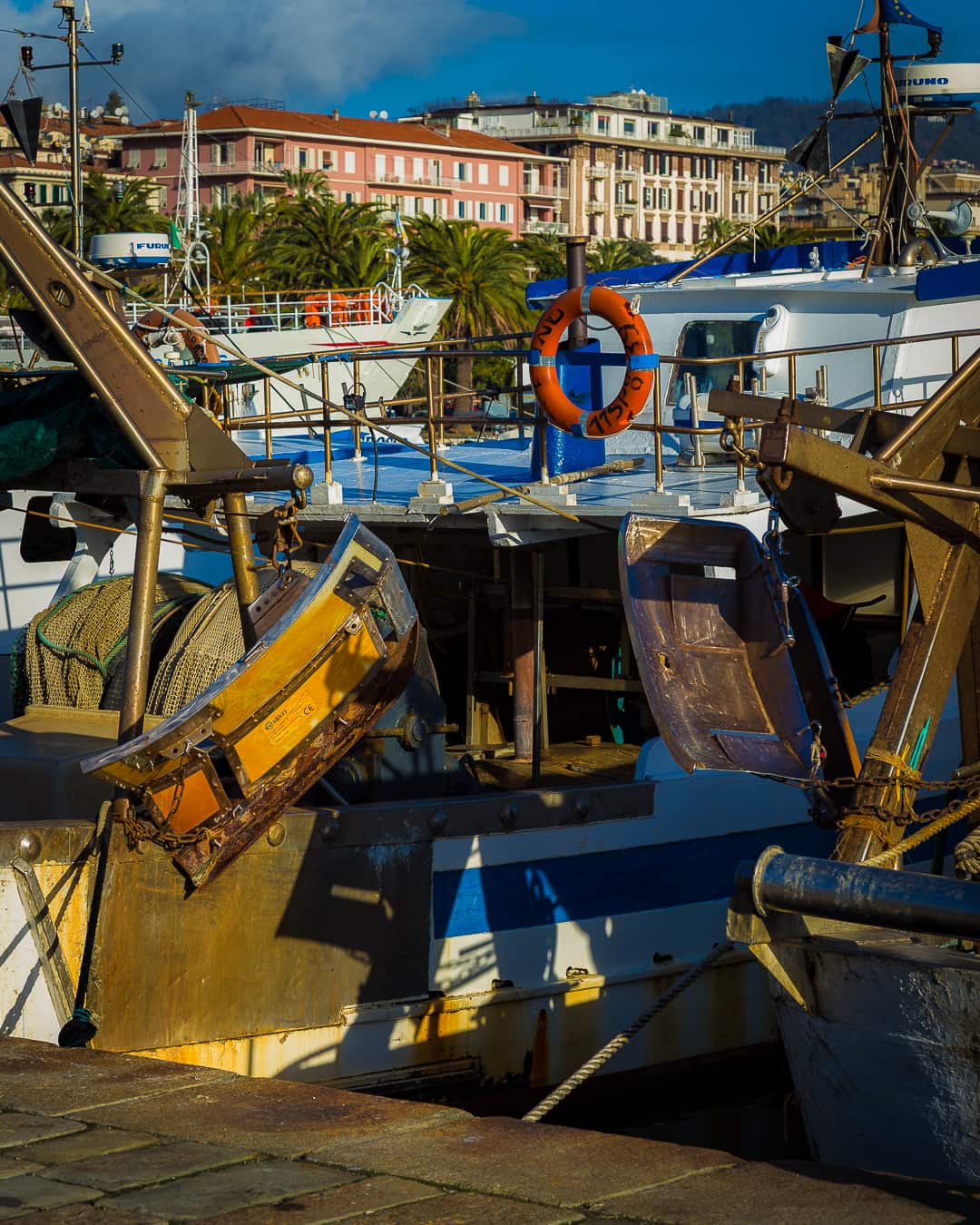
This is a working port: the coast inside the breakwater is almost entirely taken up by the Navy and maritime industry.
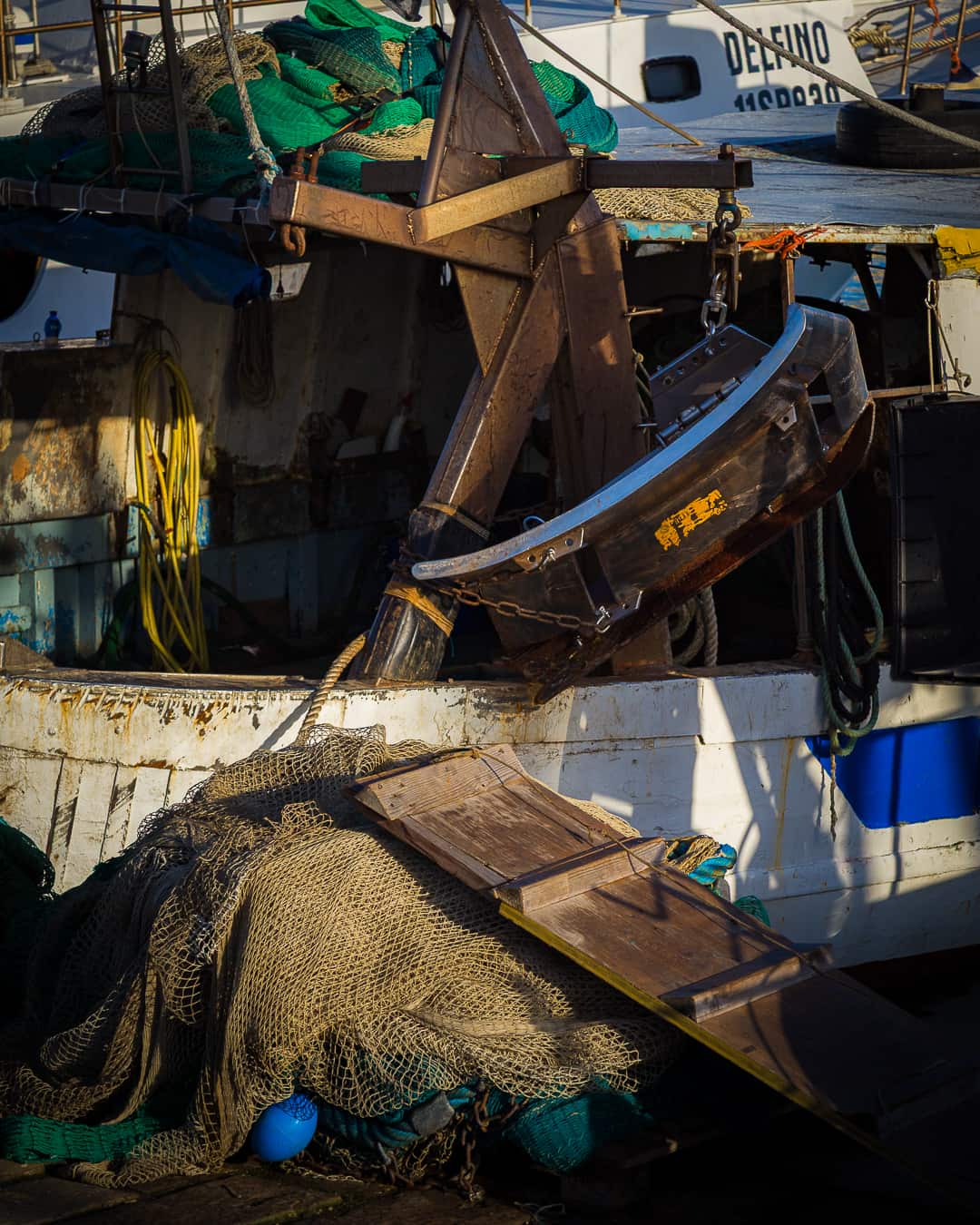
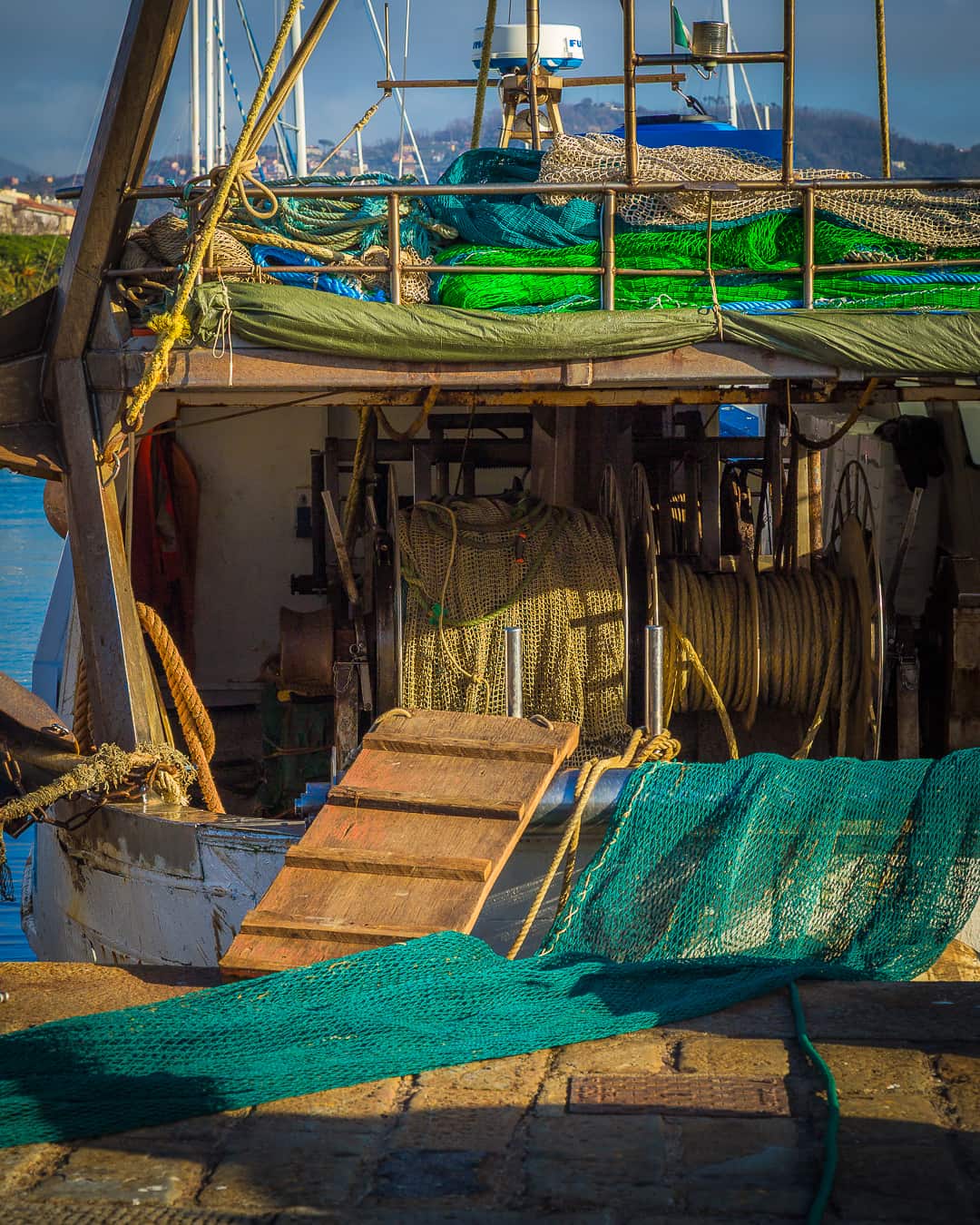
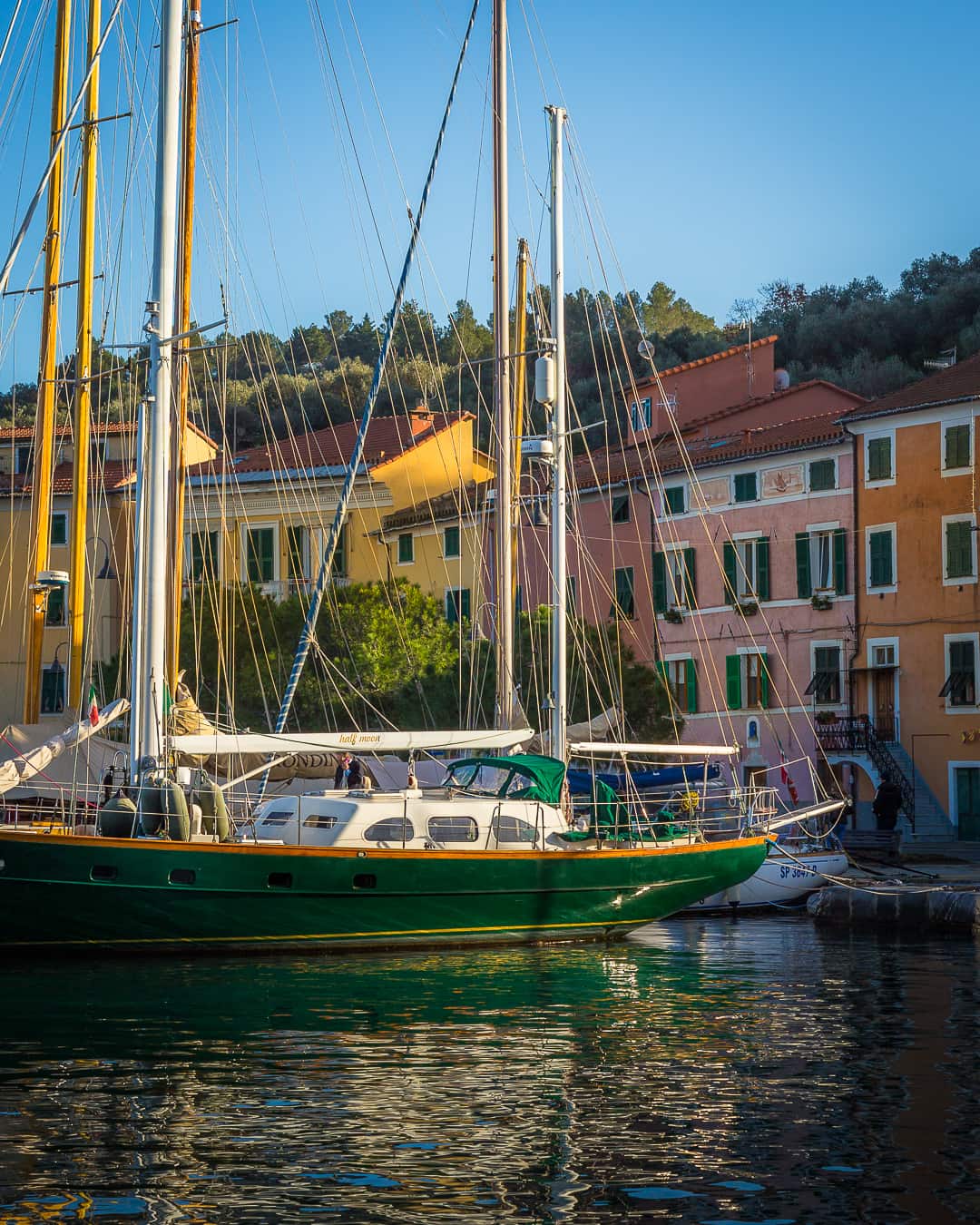
Beside the yachts, the fishing boats still keep their green nets, winches and crates.
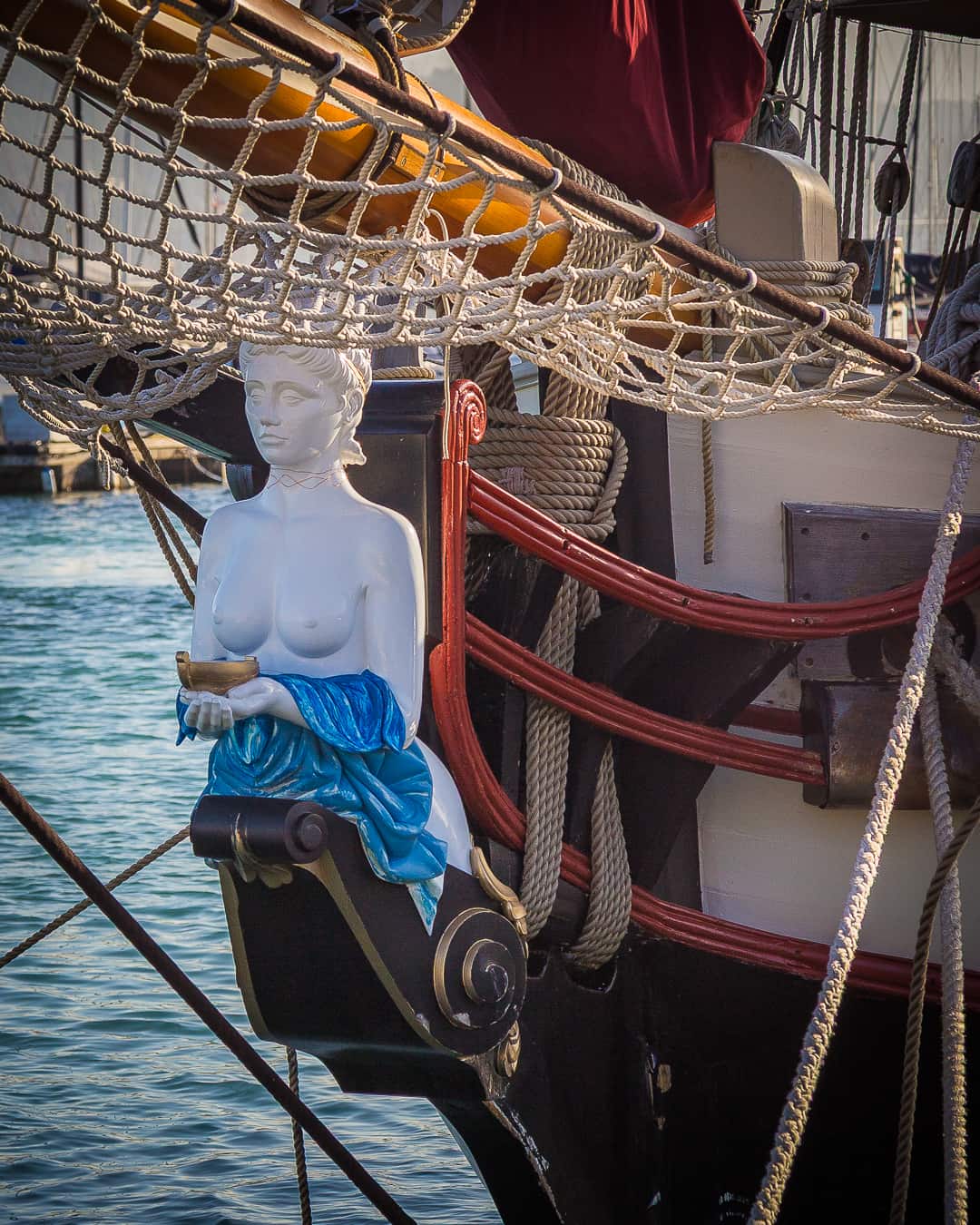
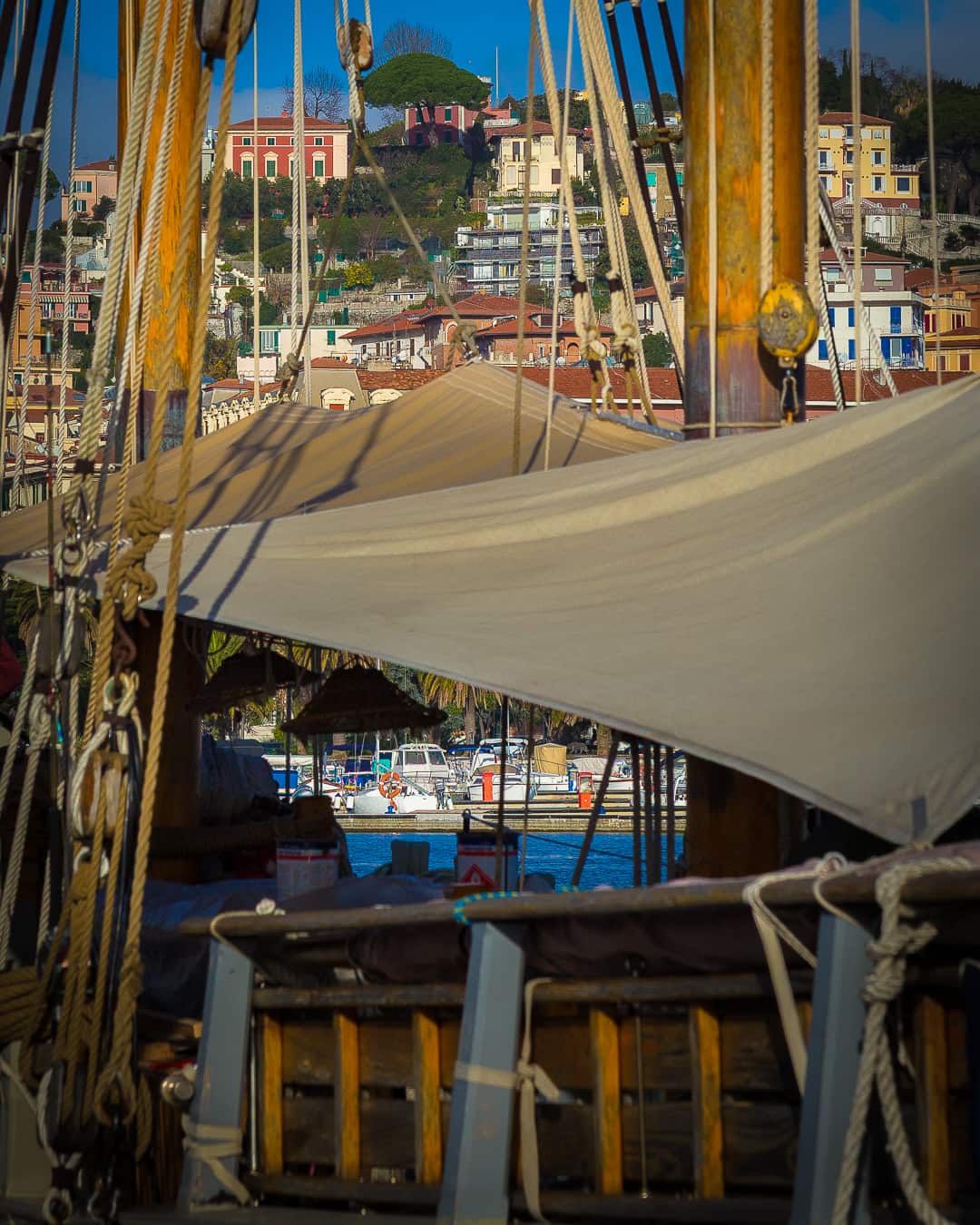
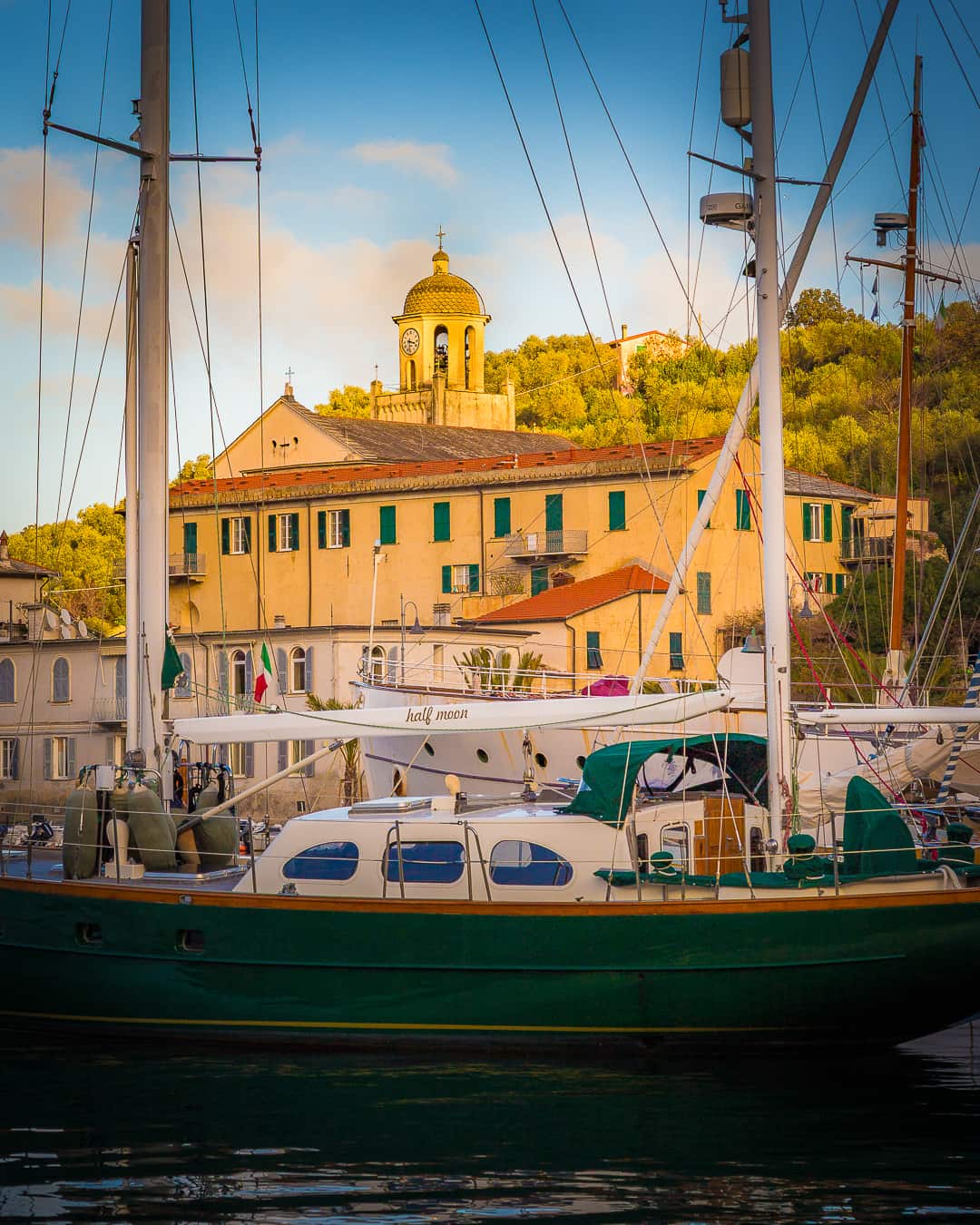
Further on, wooden boats, furled sails, and even a figurehead on the bow of a sailing ship.
The figurehead
A carved and painted female figure below a sailing ship’s bowsprit. Figureheads adorned the bows of ships and served as their emblem. Coming across one in port, among yachts and fishing boats, is like meeting another age of the sea.
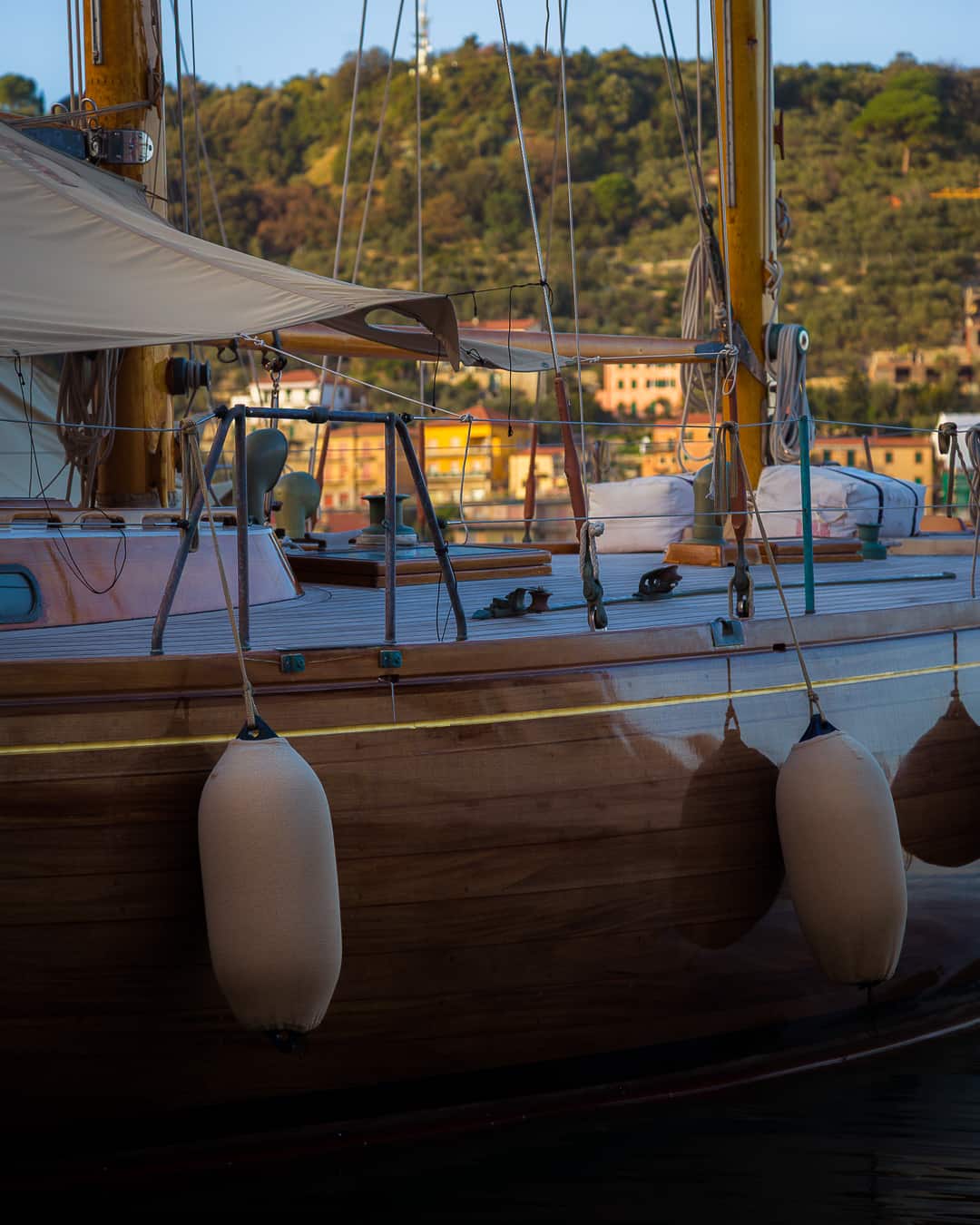
The wooden deck
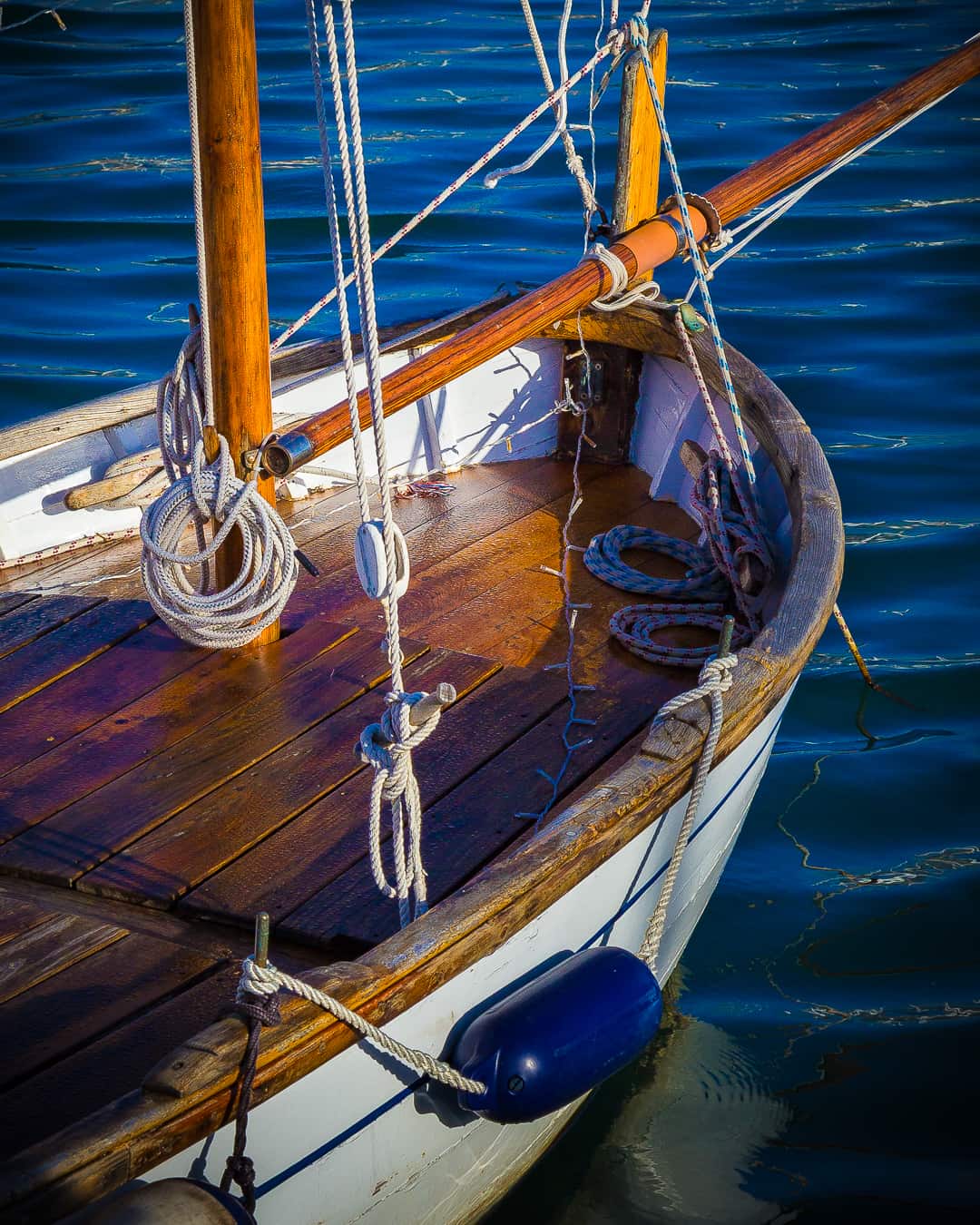
Varnished planks, coiled ropes, a blue fender. On a boat like this every detail is handmade and needs care every season. Sailing is still at home in the gulf: just count the masts lined up in the little harbours.
III
The village on the bay
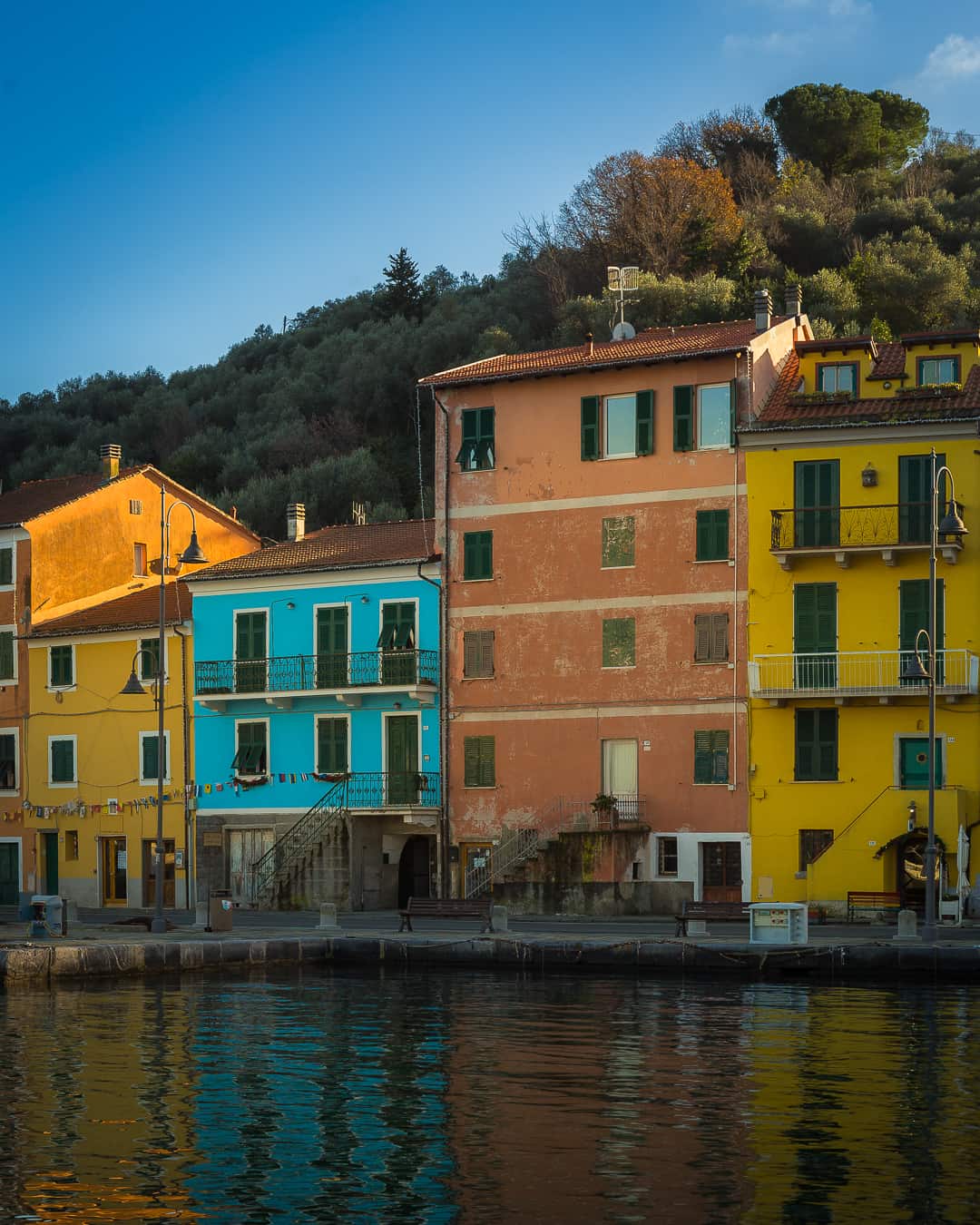
Towards the west the gulf breaks into small bays. Along this coast follow Cadimare, Fezzano, Le Grazie and finally Portovenere.
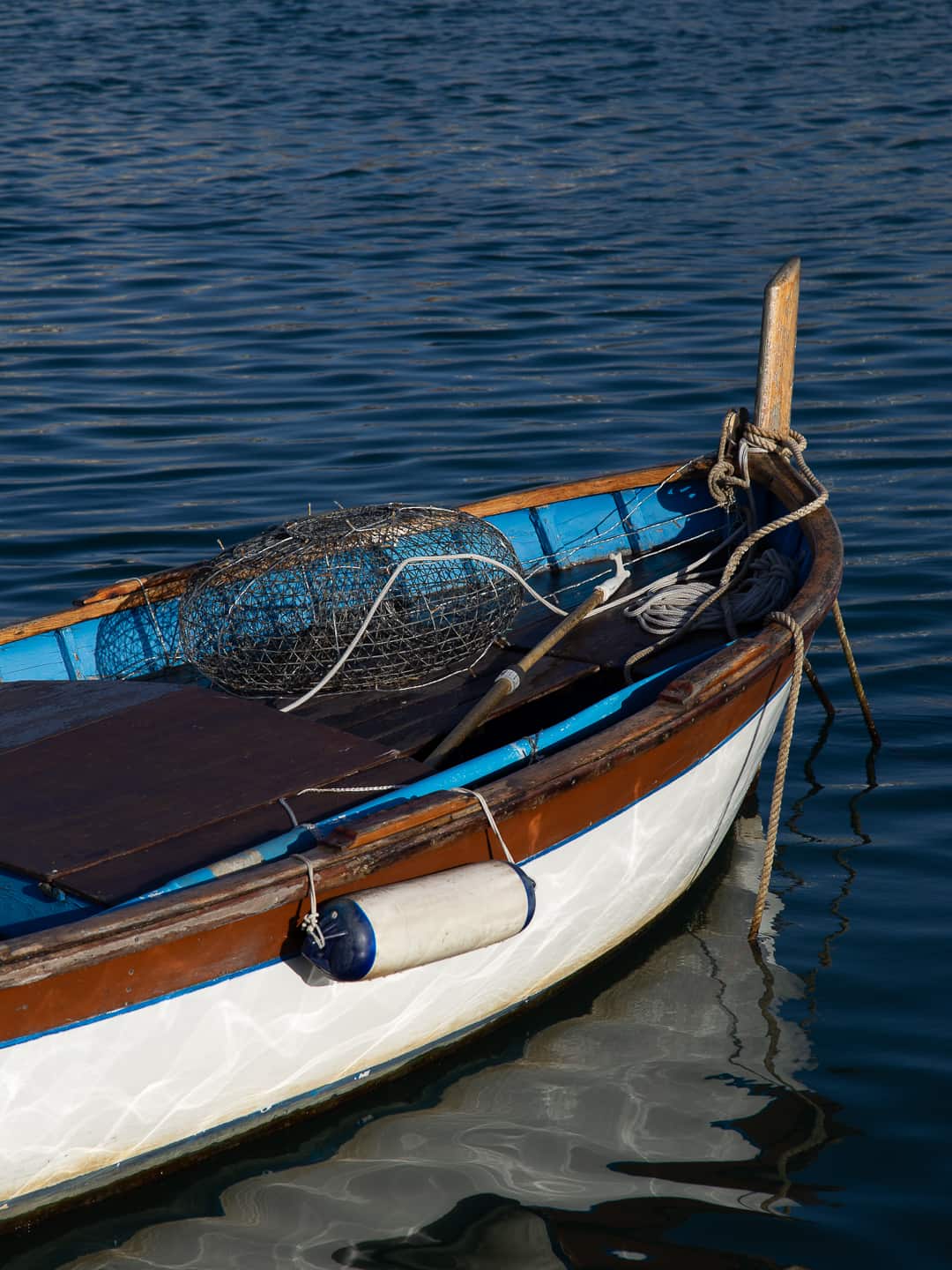
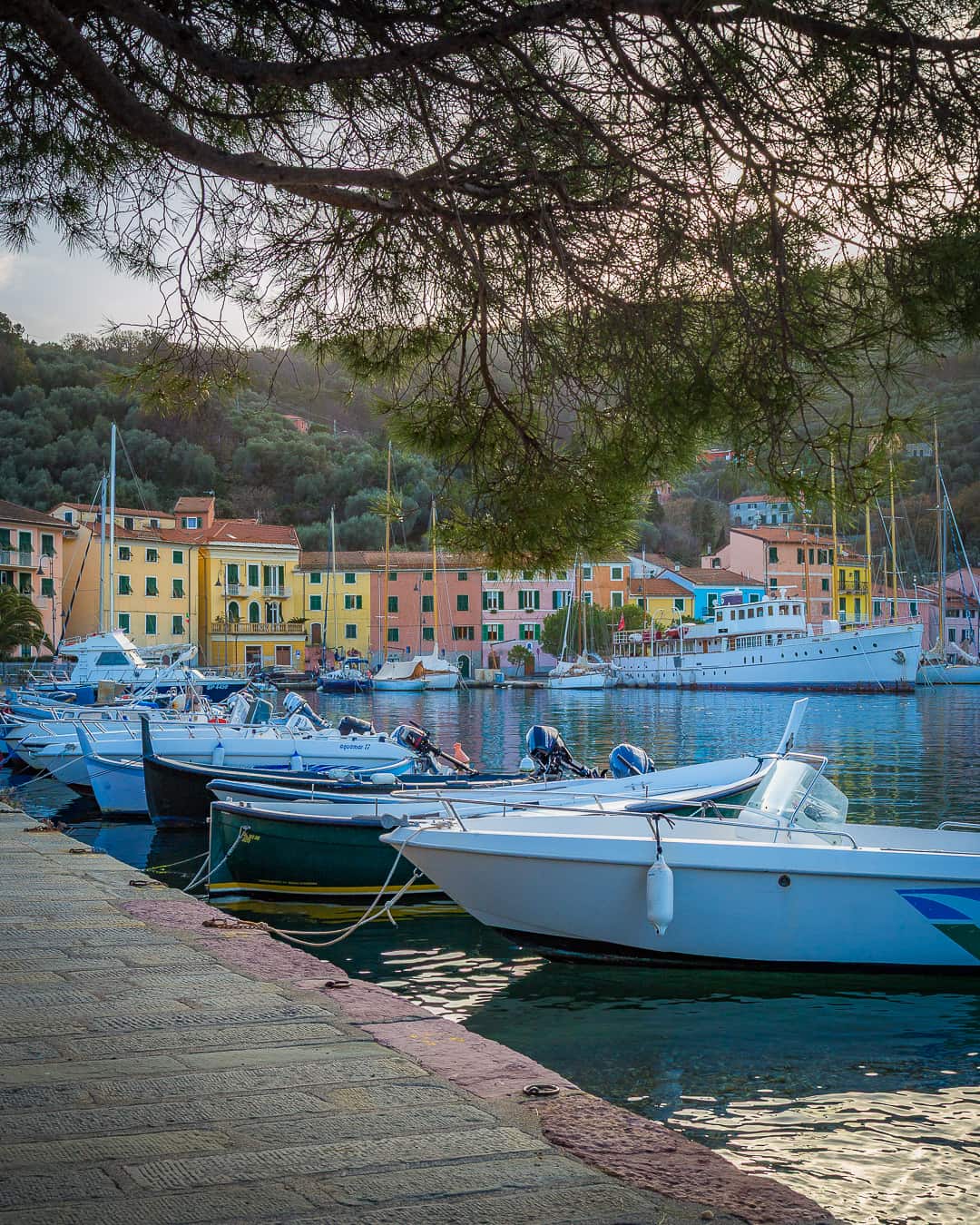
In one of these bays, yellow, blue and pink houses are mirrored in still water, among sailing boats and fishing skiffs.
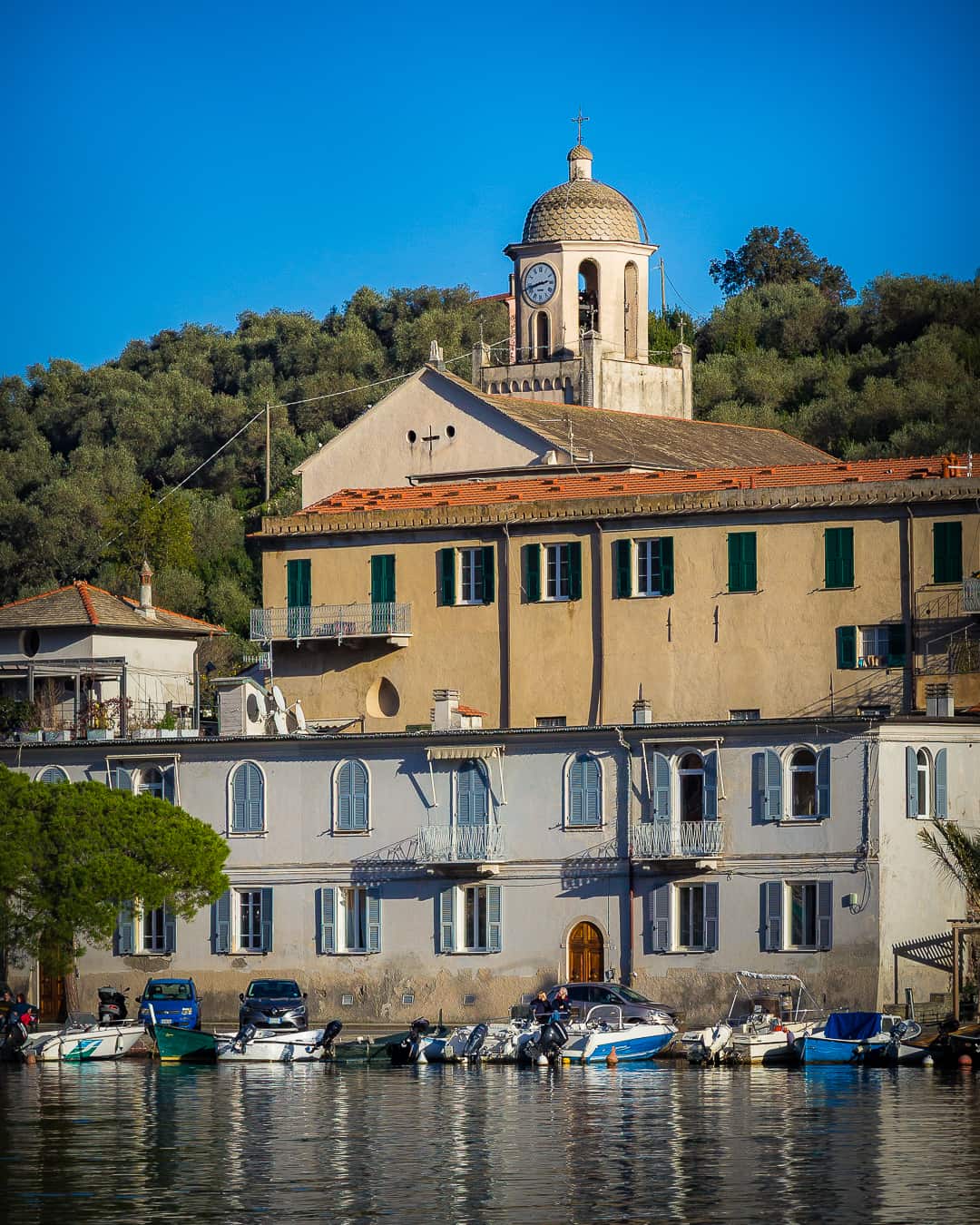
Each village has its church on the harbour, its bell tower, its promenade.
The harbour church
A church with a dome and bell tower, pale houses, moored boats. On the western shore of the gulf the villages cluster around their harbours, each with its church facing the water. You move from one to the next in minutes, yet each has its own character.
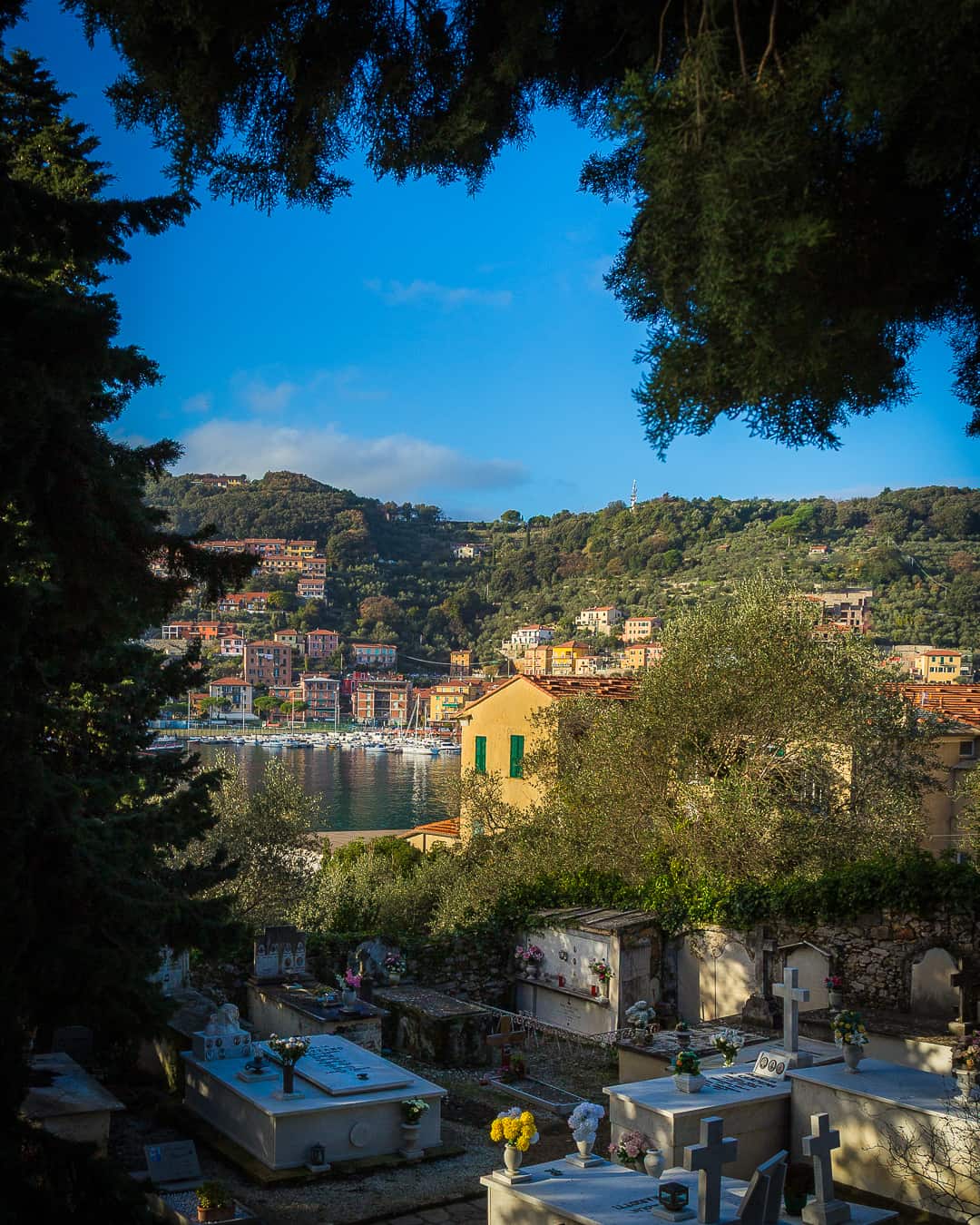
The gulf from above
White tombstones among the pines and, beyond the trees, the gulf. From up here you grasp its shape: a great inlet of sea sheltered by hills, which Napoleon already pictured as a naval port and which Cavour, half a century later, chose for the fleet.
IV
Portovenere
Portovenere closes the gulf to the west. Since 1997 it has been a UNESCO World Heritage Site, together with the islands of Palmaria, Tino and Tinetto and the Cinque Terre.
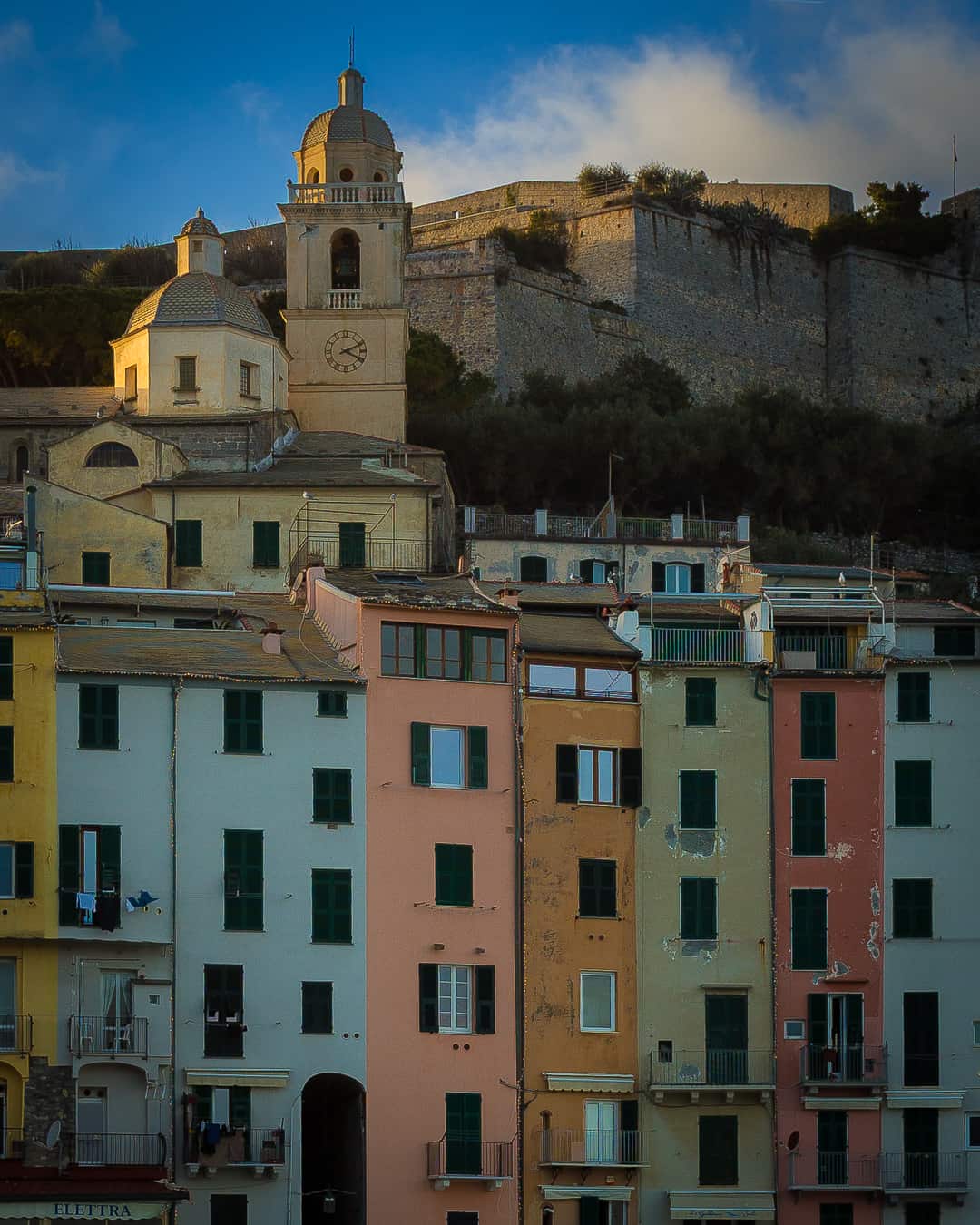
In the twelfth century the Republic of Genoa fortified it against Pisa. Along the harbour stand the tall, colourful houses of the palazzata; above them rises Castello Doria.
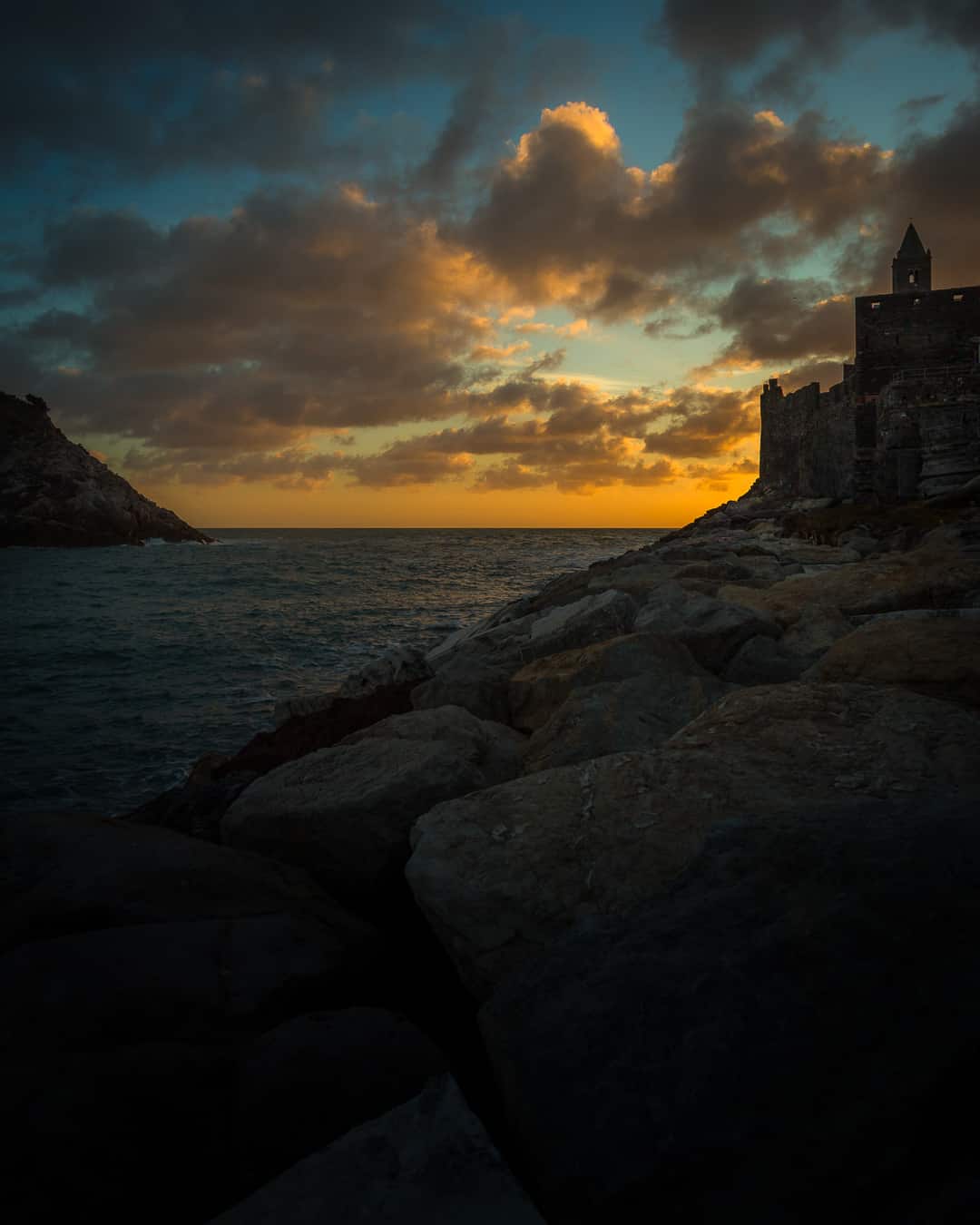
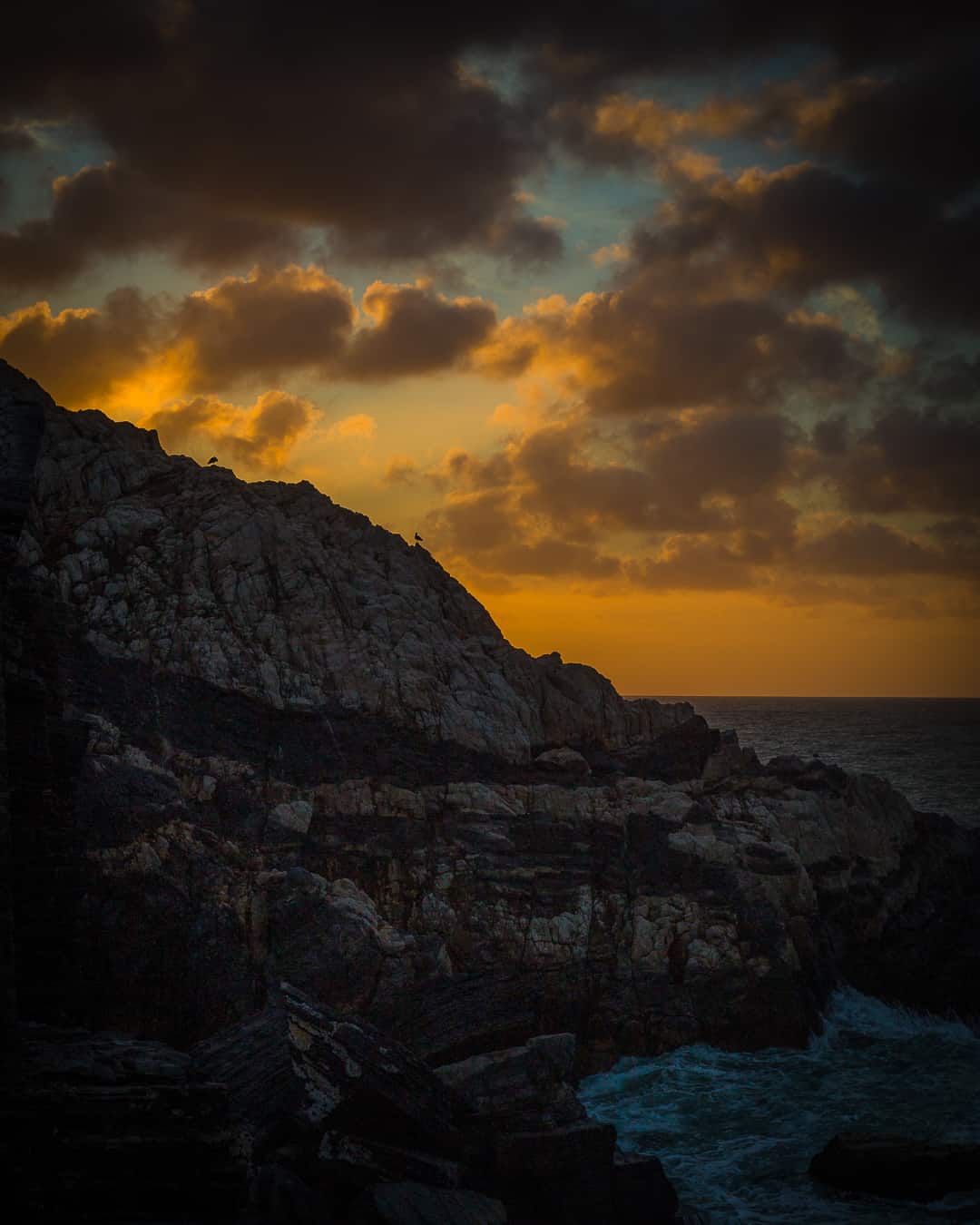
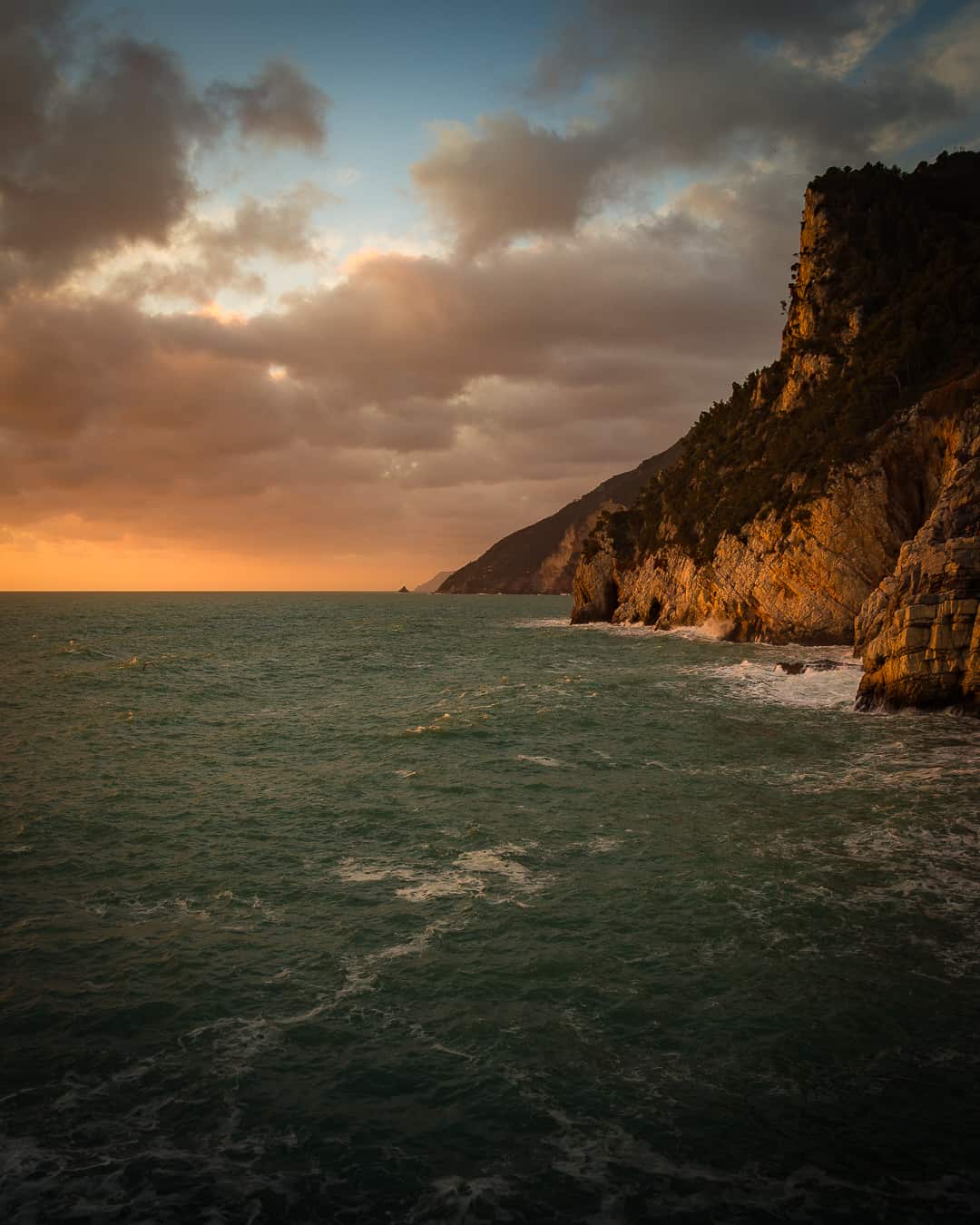
At sunset the sun drops behind the cliffs, and the arches of the church on the point become black silhouettes against the sky.
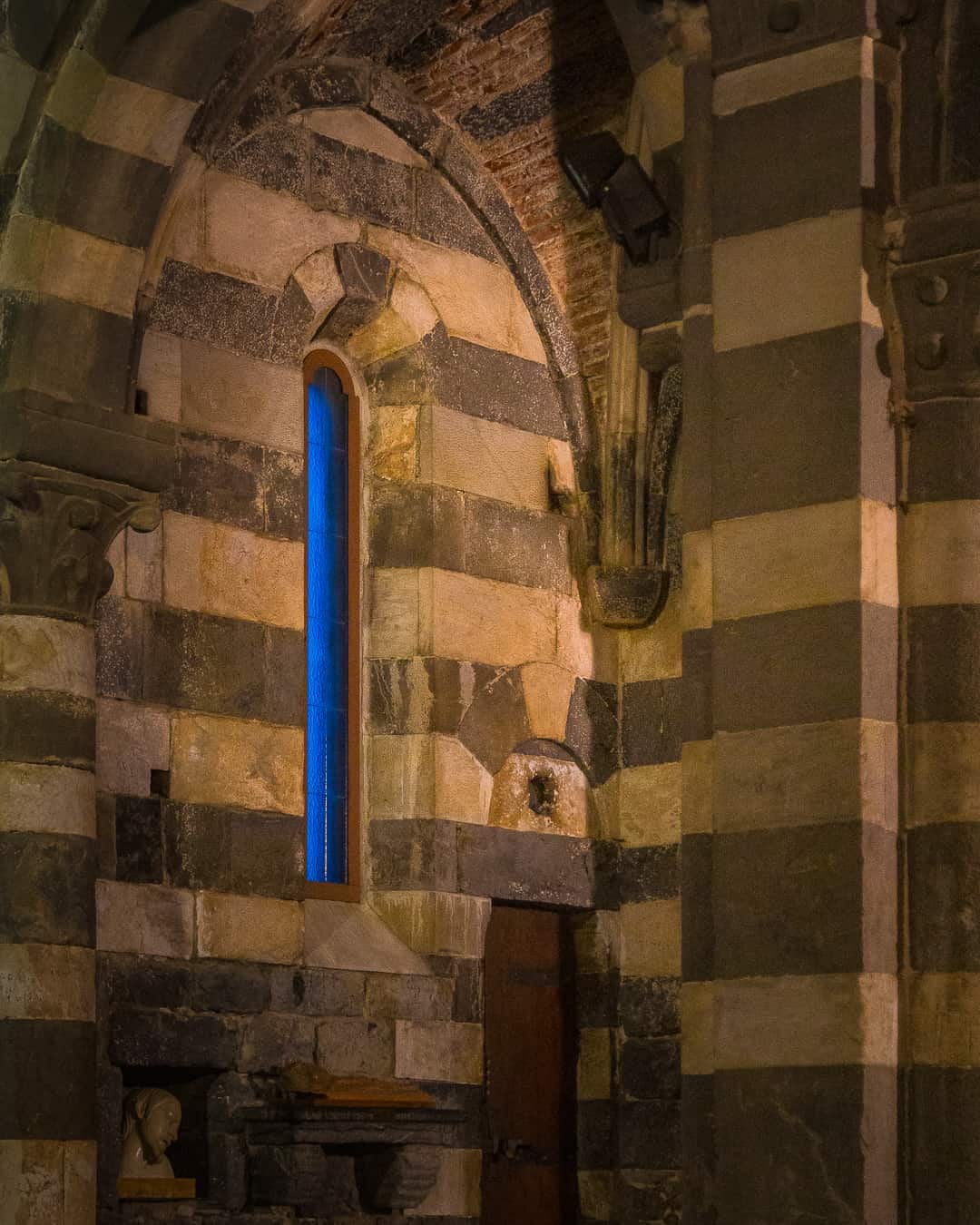
Banded stone
Bands of light and dark stone, a narrow window, a door. This is the two-tone masonry of Ligurian medieval churches, made with local stone. In Portovenere stone is everywhere: in the walls, the stairs, the lanes climbing to the castle.
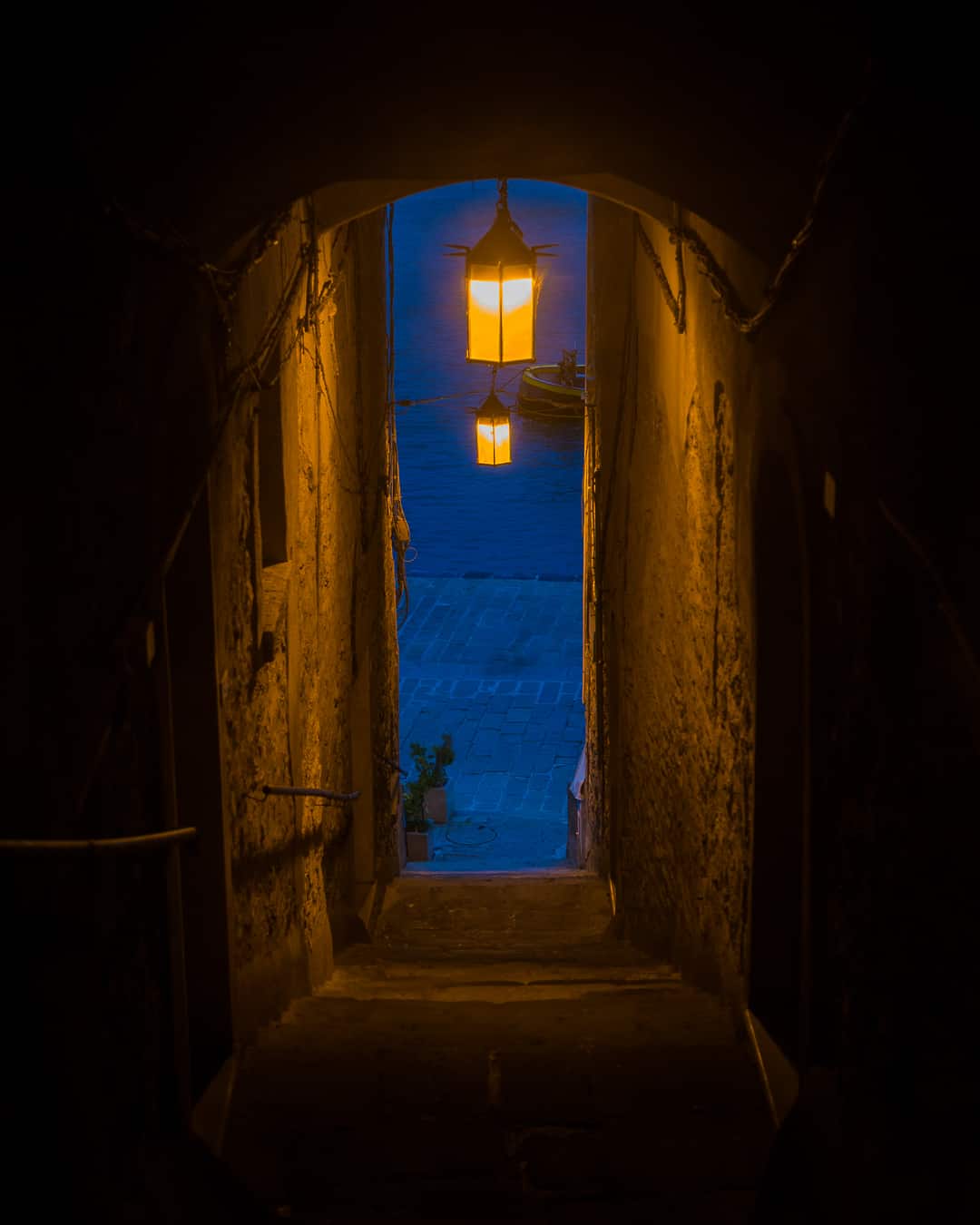
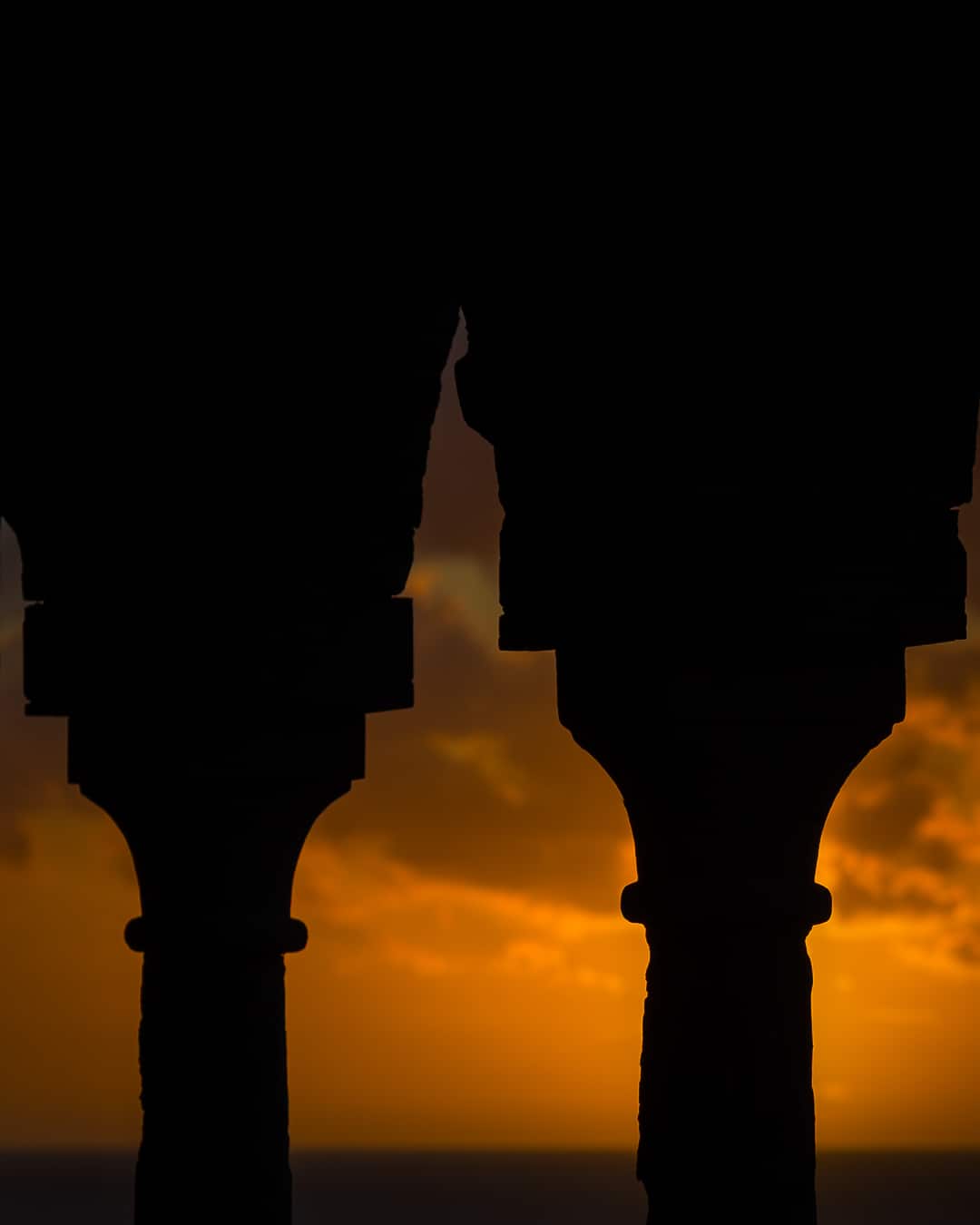
The arches
Two stone arches against an orange sky, the sun already down. On the point of Portovenere, at dusk, the church becomes a black frame around the sky. From here, legend has it, Byron swam across to join his friend Shelley at Lerici, on the far side of the gulf.
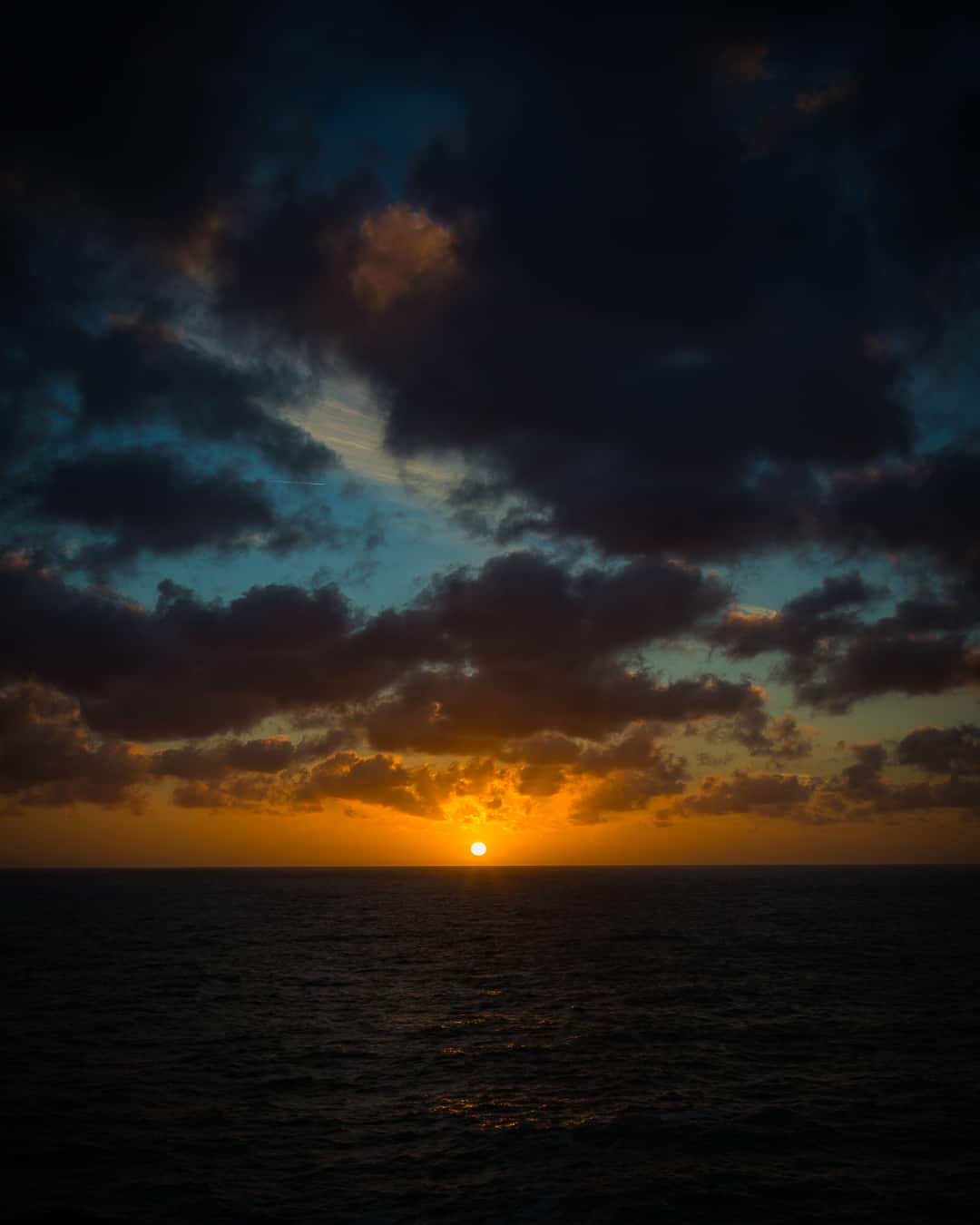
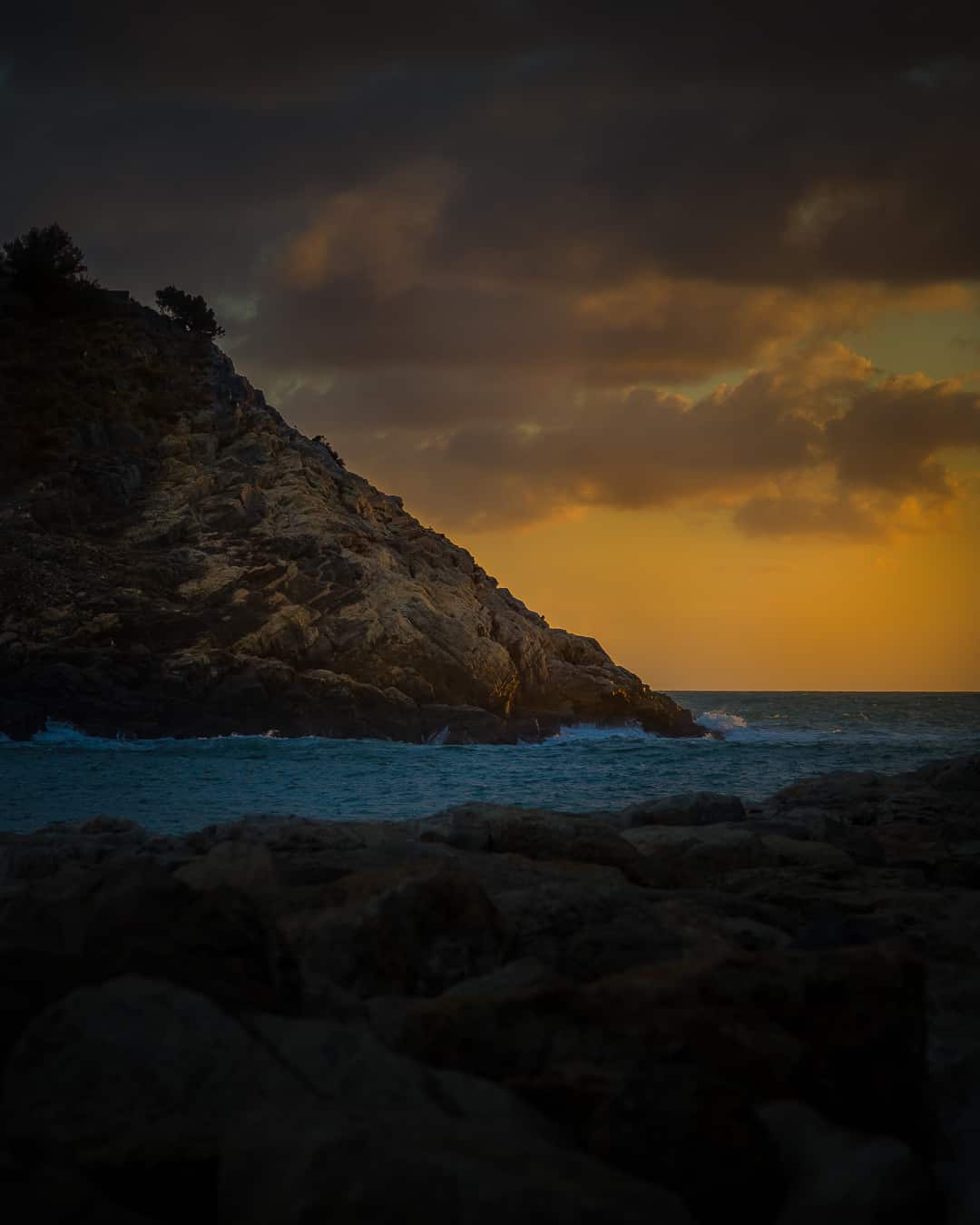
The sun on the horizon
Dark clouds, a strip of fire, the sun touching the water. Off Portovenere lie three islands: Palmaria, the largest in Liguria, Tino and Tinetto. By day you reach them by boat; in the evening only their outlines remain.
Getting there
- By train
- Travel to La Spezia; from there buses and boats reach the villages of the gulf.
- By boat
- Boats to Palmaria leave from La Spezia and Portovenere.
- In Portovenere
- Castello Doria and Byron’s Grotto, a natural cave opening onto the sea.
- Nearby
- Tellaro, on the Lerici side, and the legend of the octopus that rang the church bells to warn the village of a pirate attack.
- Our advice
- Stay in Portovenere until sunset: the sun drops behind the cliffs, and that is when the gulf earns its name.
Information checked on 21 November 2026.
Sources
- Liguria, l’incanto del Golfo dei Poeti — Quotidiano.net
- Il Golfo dei Poeti — lecinqueterre.org
- Itinerario letterario nel Golfo dei Poeti — Lerici Coast
- Il Golfo dei Poeti, dove Byron e Montale cercavano ispirazione — Libreriamo
- Lungo il golfo dei poeti — Internazionale, 2022
- La Spezia — Italia.it
- Alla scoperta della Spezia, centro marittimo — Italia.it
- Passeggiata Morin — Italia.it
- La Spezia — lecinqueterre.org
- I borghi da visitare nel Golfo dei Poeti — Italia.it
- Cosa vedere nel Golfo dei Poeti — TheWom Travel, 2026
- Golfo dei Poeti, 10 luoghi da non perdere — Finestre sull’Arte
- La chiesa di San Giorgio nel borgo di Tellaro — FAI
Note
Photographs by William, also published on Instagram as @guglielmo.foto.
Texts and layout: WIDE Edizioni, Rho. Historical and practical information is checked against the sources on the previous page.
© 2026 WIDE Edizioni
A book for your place
We photograph villas, museums, villages and landscapes in natural light, and turn them into images ready for your website, print and social media. Or into pages to leaf through, like these.