WIDE Edizioni
Camogli
Liguria
Photographs by William
The town of a thousand ships
Camogli looks out over the Golfo Paradiso from the western side of the Portofino promontory, some twenty kilometres from Genoa. In dialect it is called Camoggi.
In the nineteenth century it was a town of shipowners and sailors, and its fleet numbered hundreds of sailing ships: hence its enduring nickname, “the town of a thousand white sailing ships”.
These pages explore it on a day of clouds and low light: the harbour, the façades, the climbing town, the sea.
I
The harbour
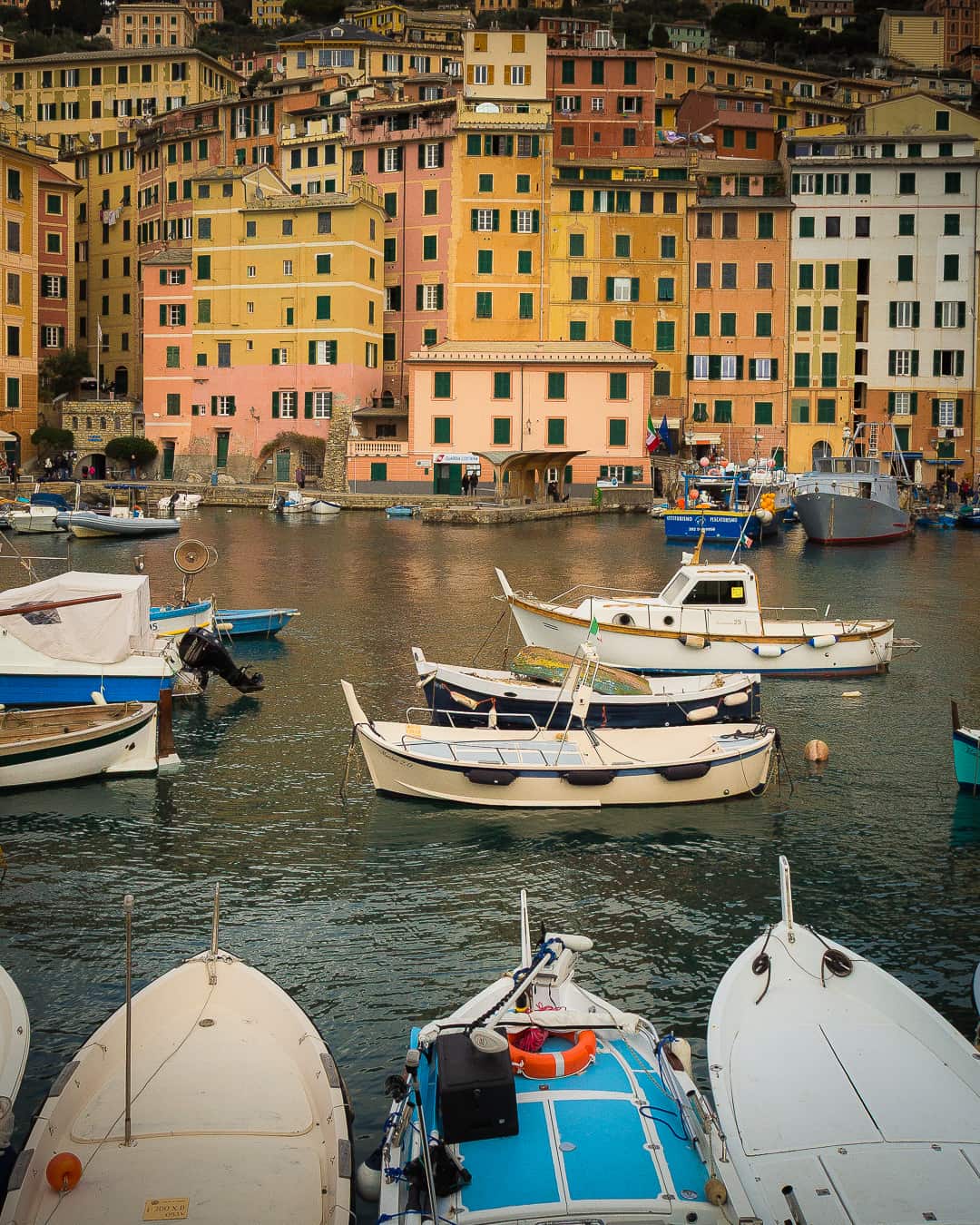
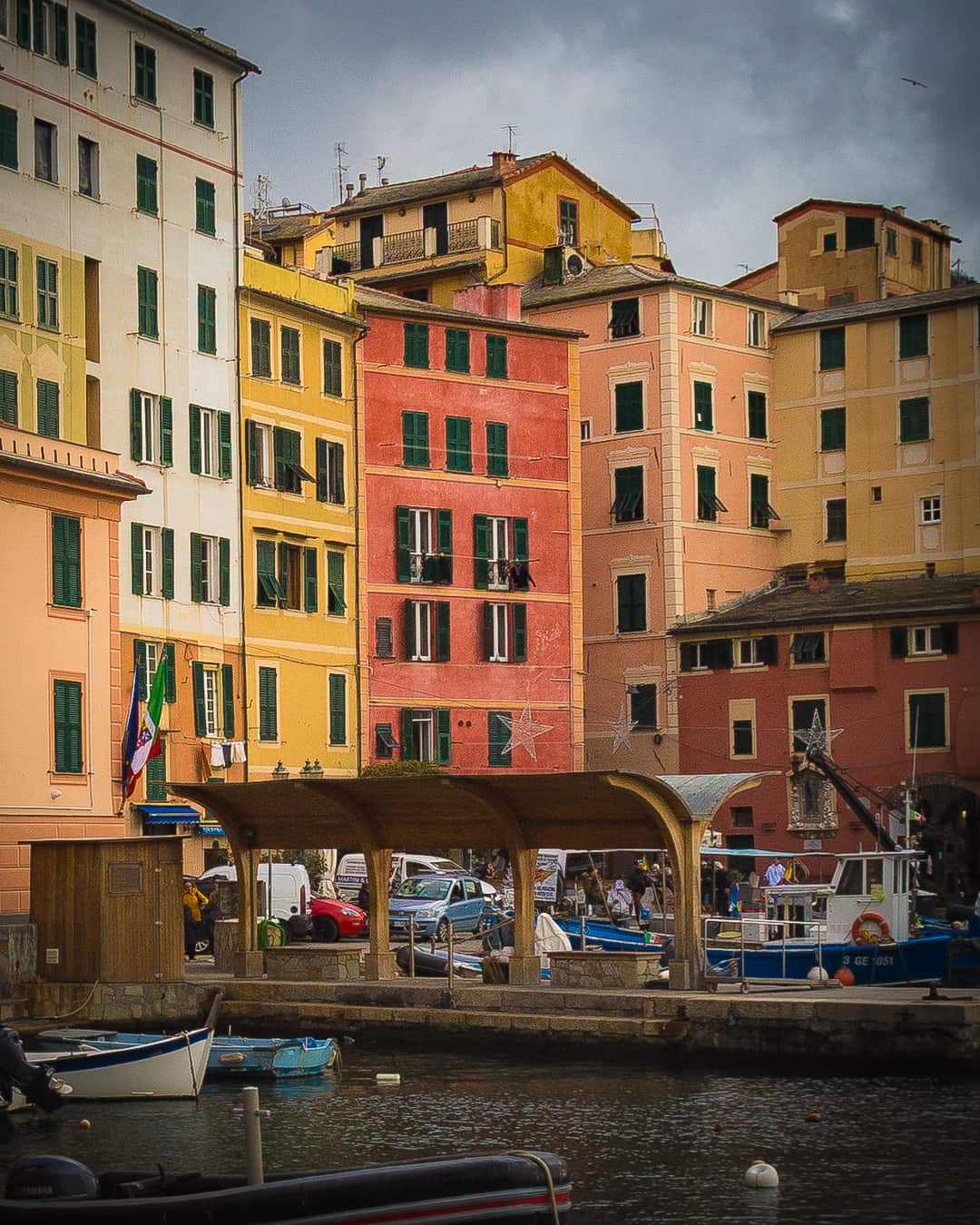
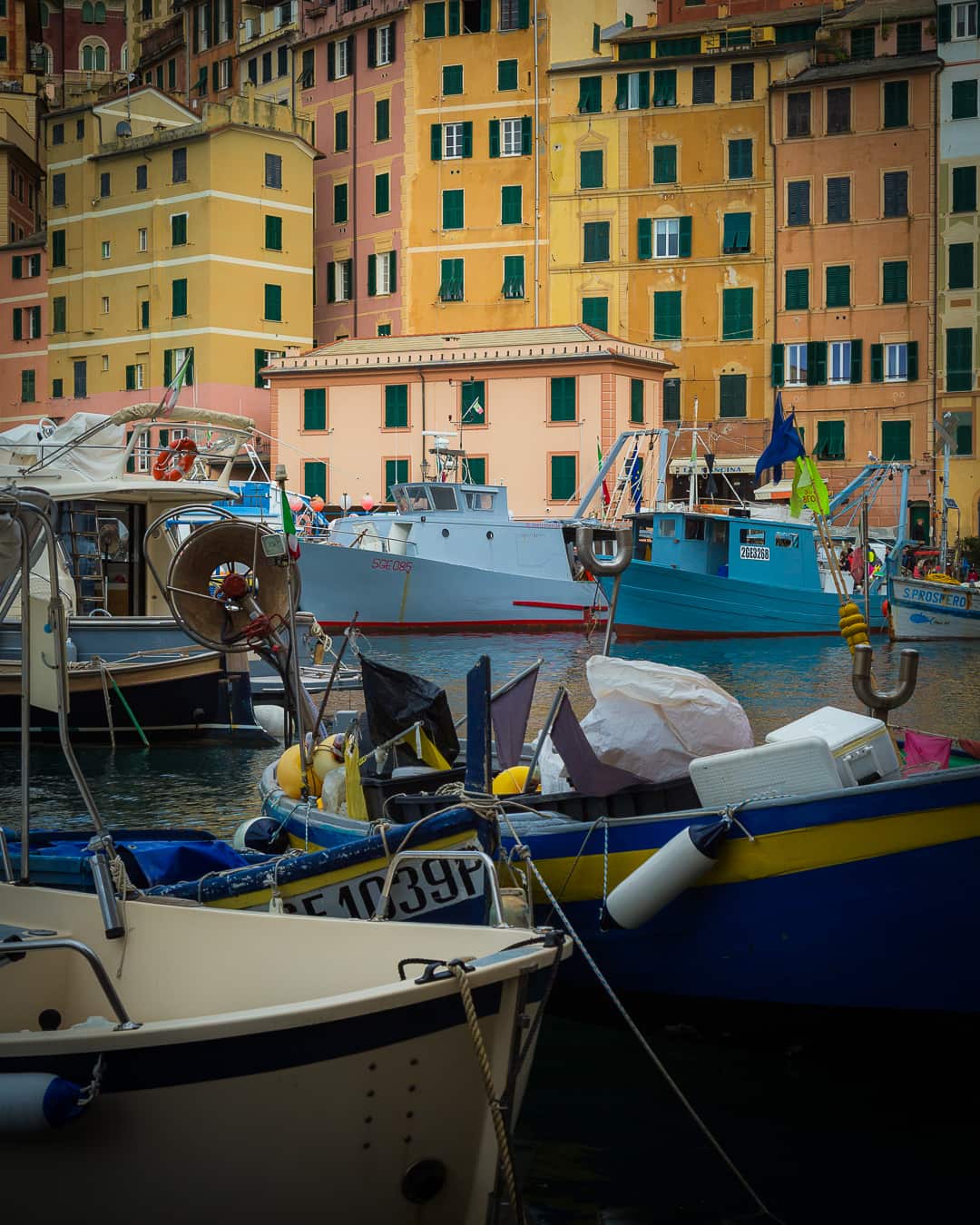
The little harbour is Camogli’s everyday heart: fishing boats, nets, crates, yellow floats, and towering façades that seem to drop straight into the water.
From here, boats leave for Punta Chiappa and for San Fruttuoso, which can only be reached on foot or by sea.
The seafaring tradition is still alive: on the second Sunday of May, since 1952, the Sagra del Pesce fries and gives away tonnes of fish from a gigantic pan.
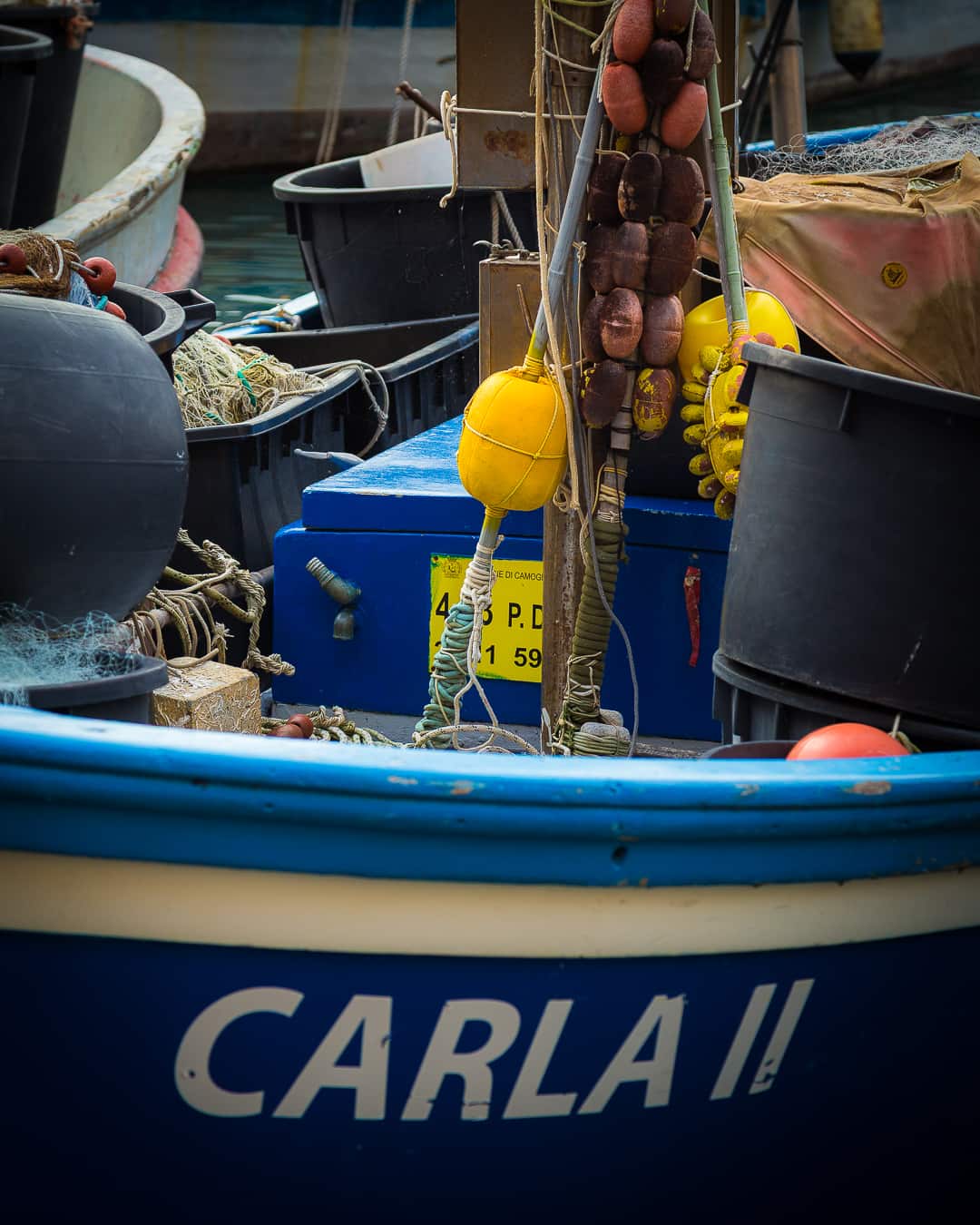
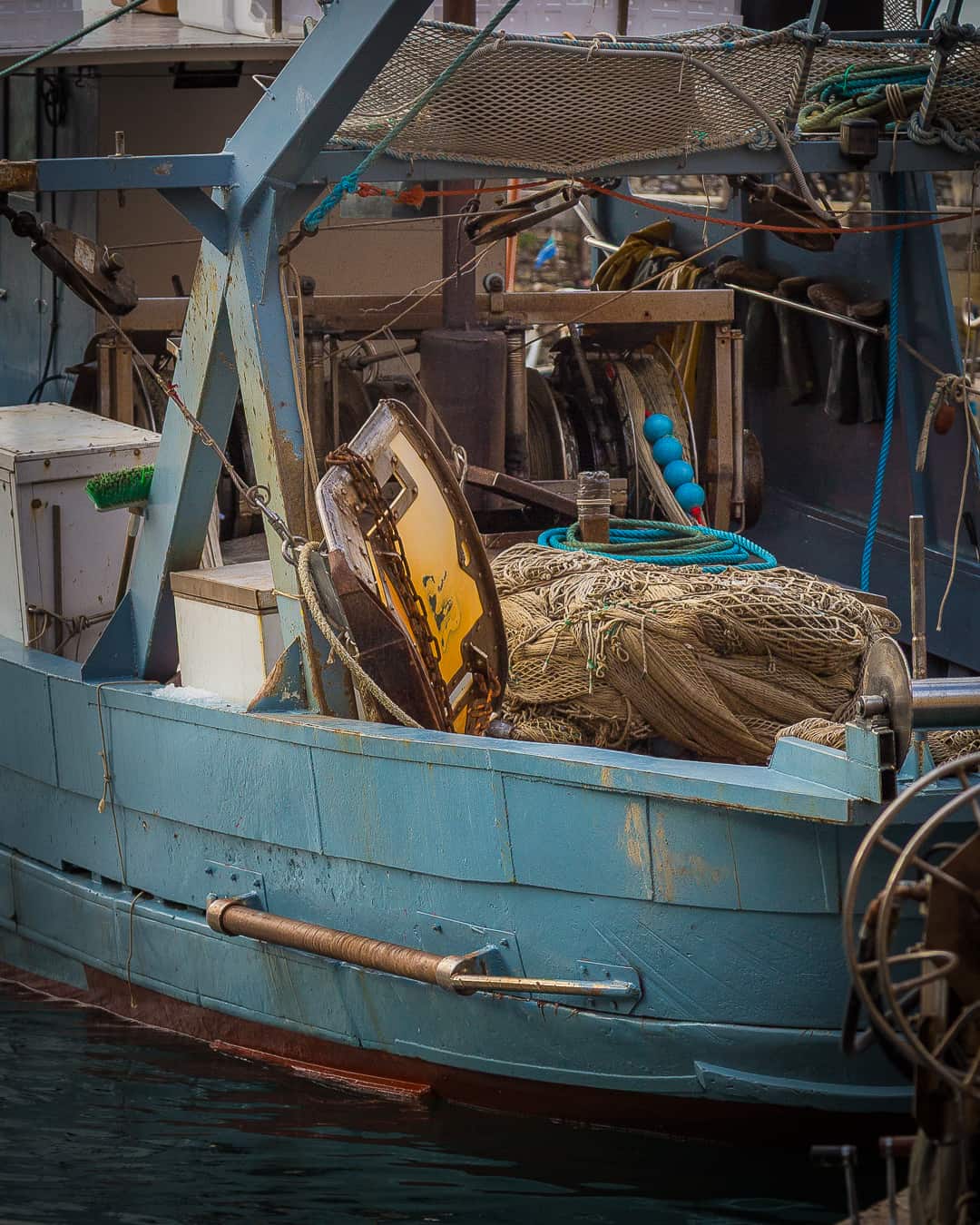
Carla II
A blue fishing boat, its name painted in white on the bow, yellow floats, nets. For centuries Camogli was a town of shipowners and fishermen, and the harbour still shows it: here the boats work, they are not just for looking at.
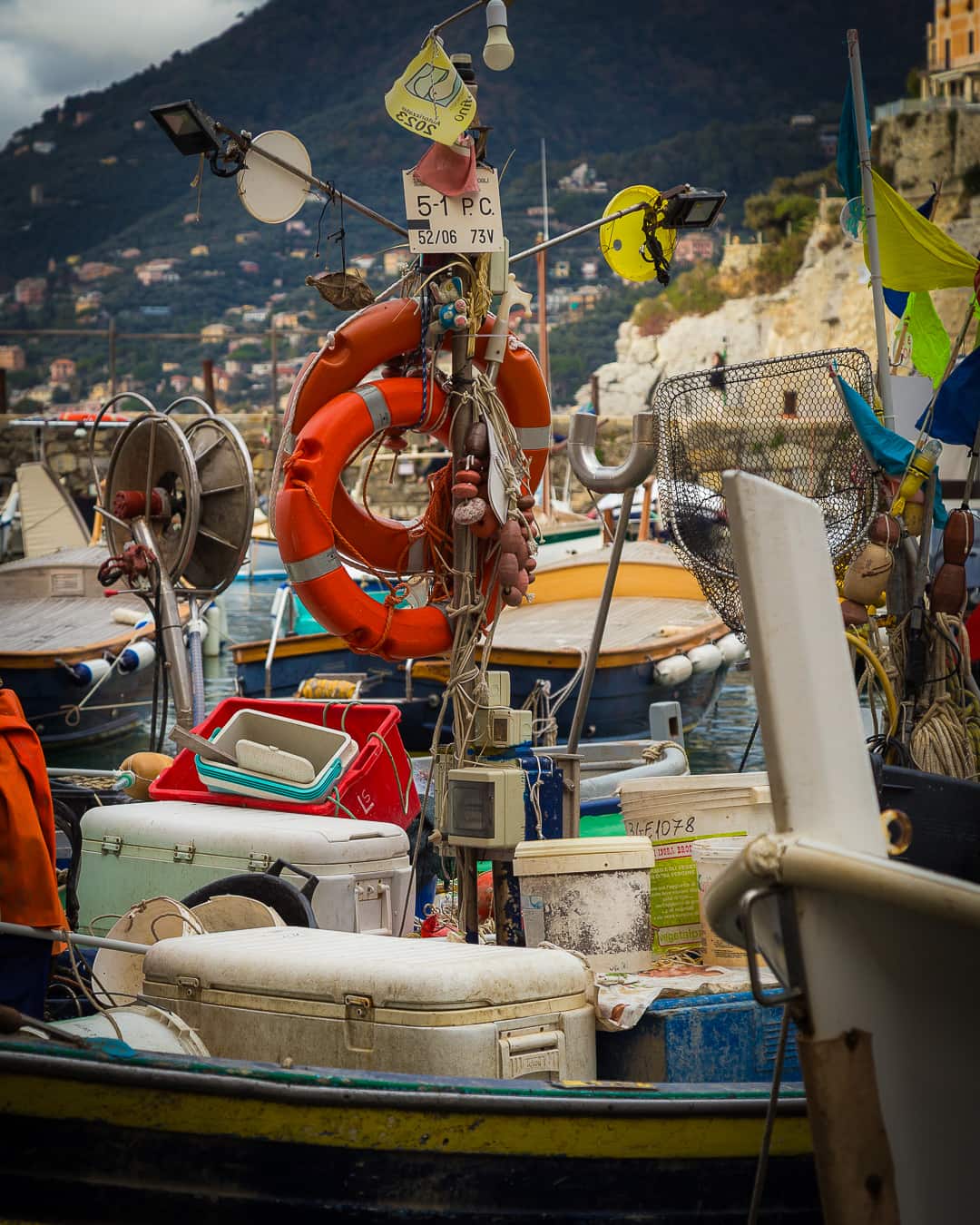
On board
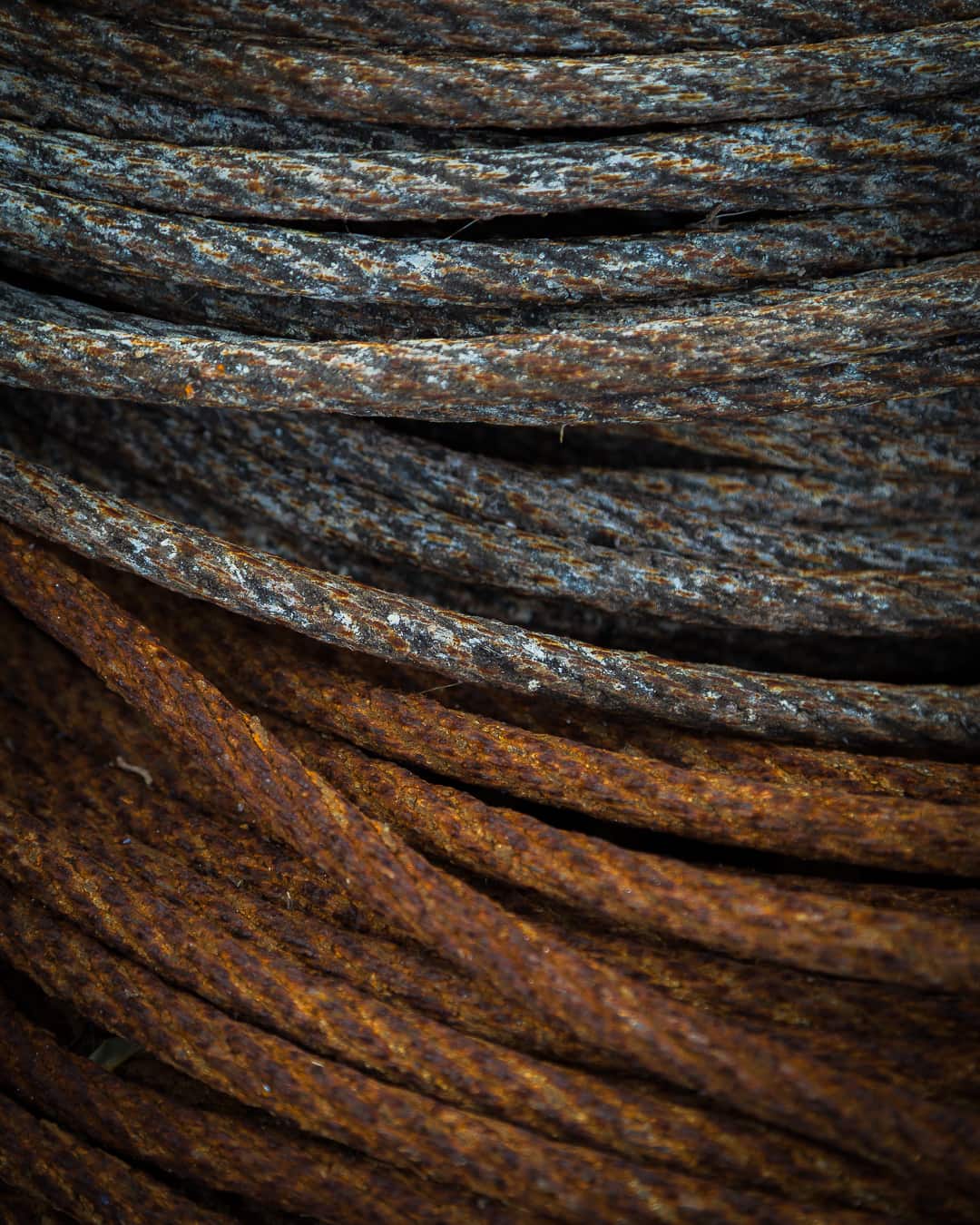
An orange lifebuoy, crates, winches, pennants: a fishing boat’s deck is an orderly muddle. Behind it, the promontory and the climbing houses. The Museo Marinaro Gio Bono Ferrari keeps the memory of this world: model sailing ships, nautical charts, ship’s instruments.
II
The façades
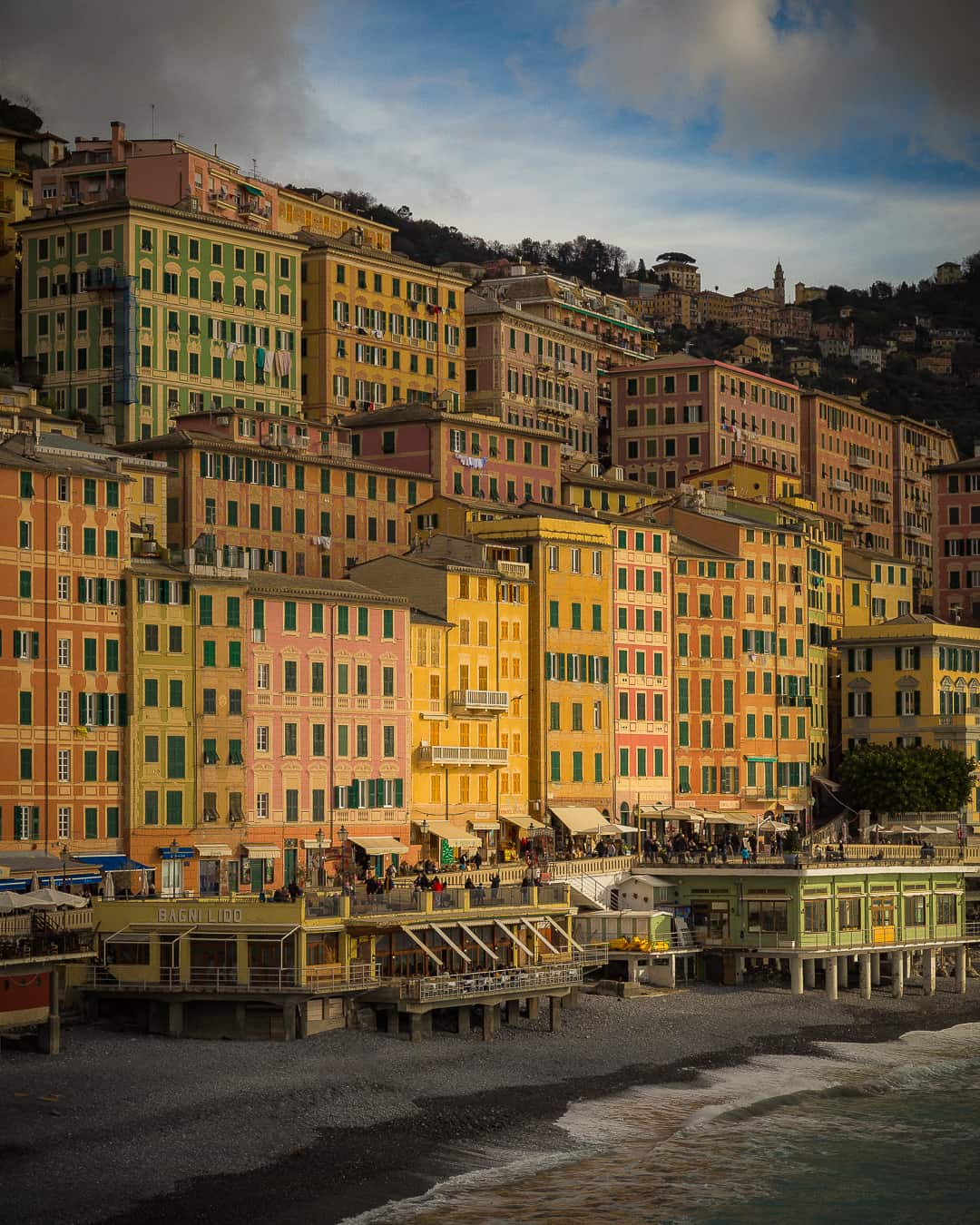
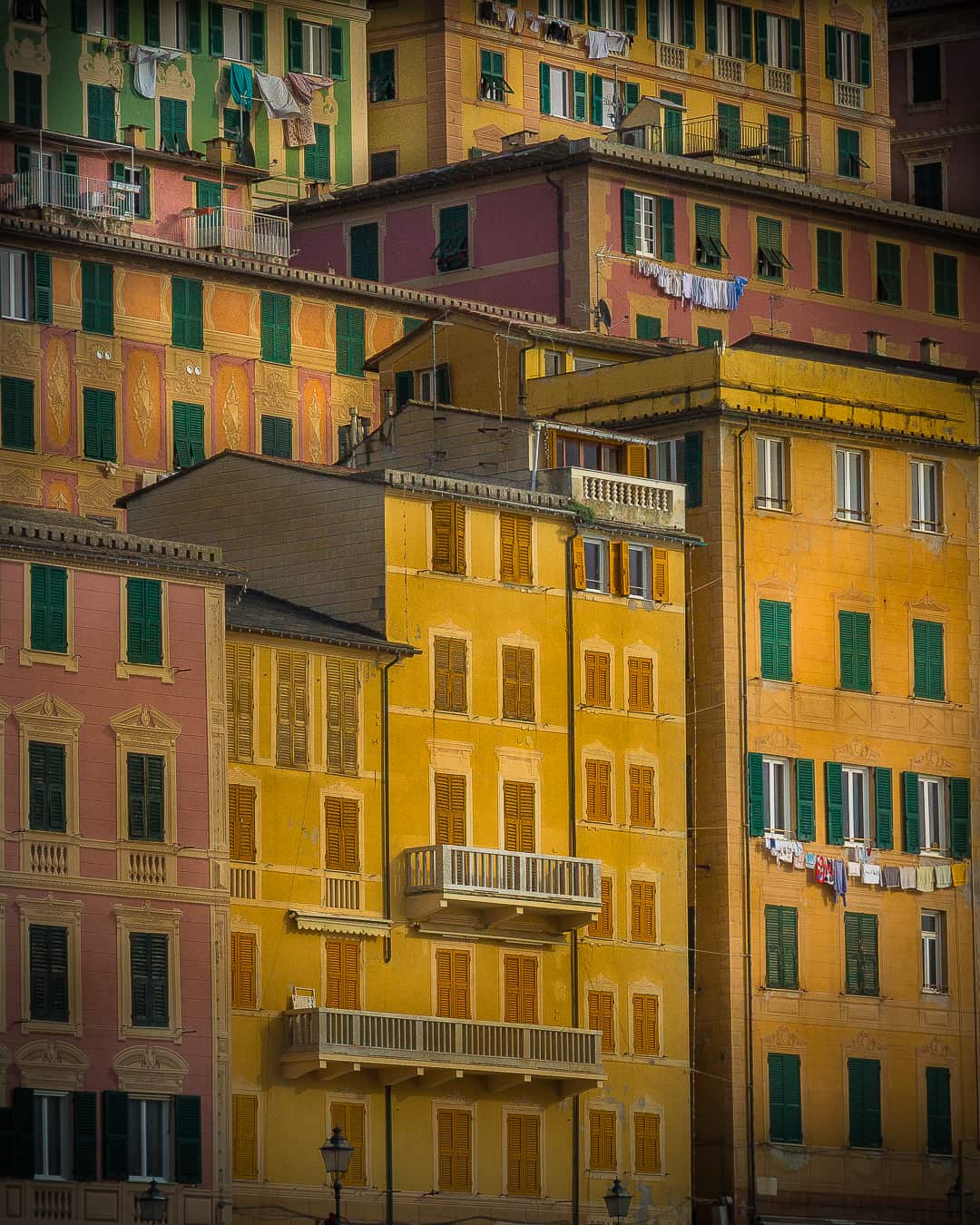
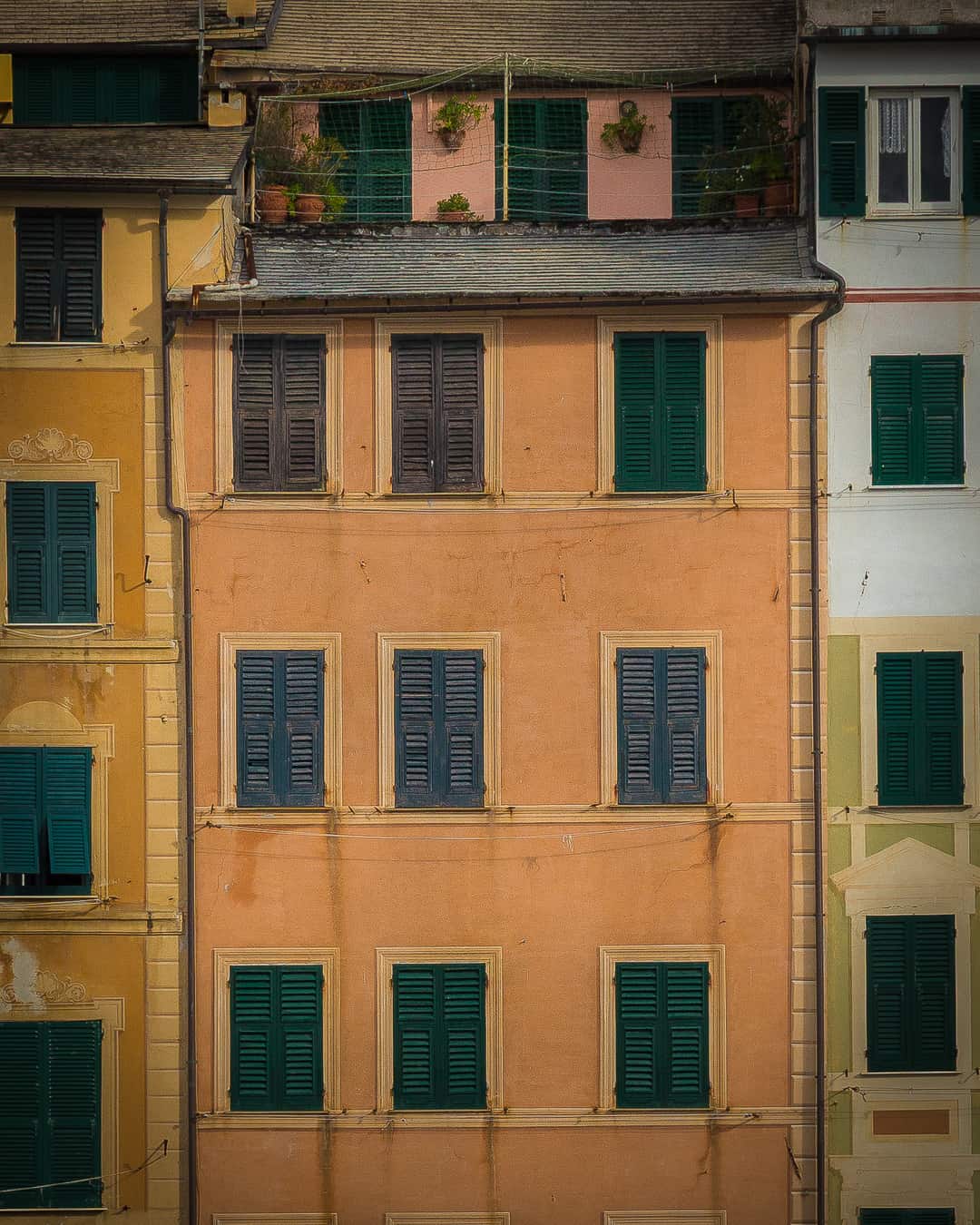
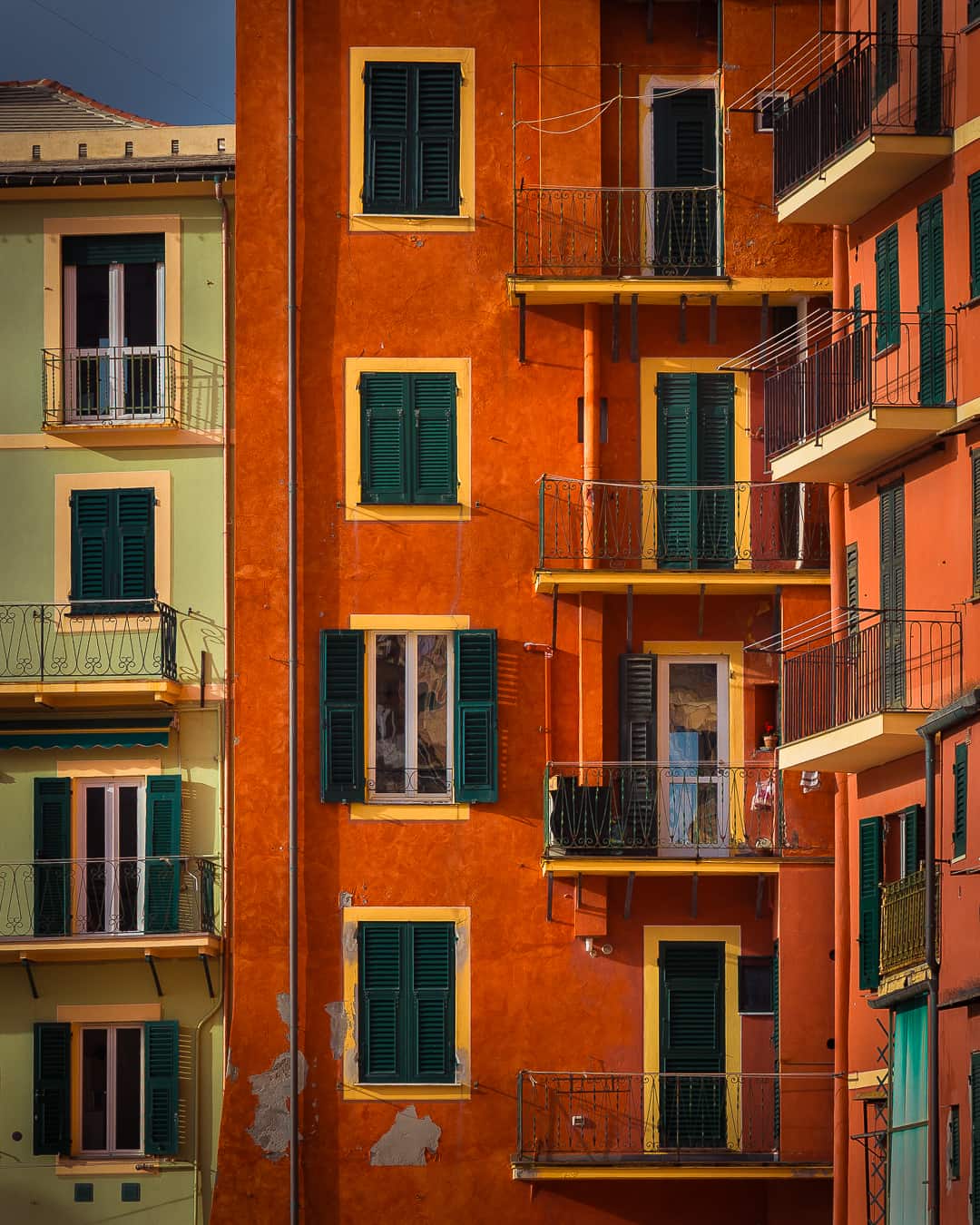
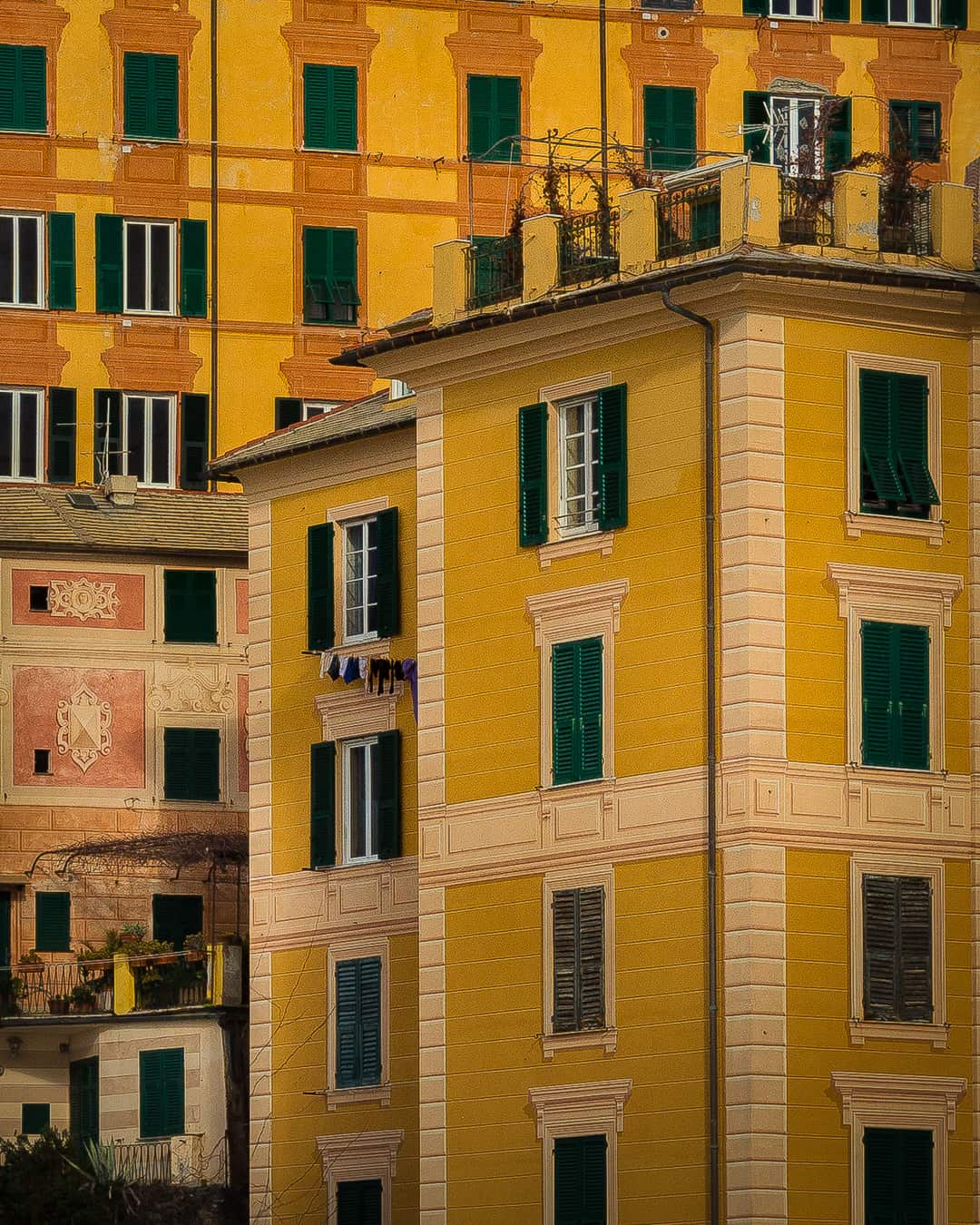
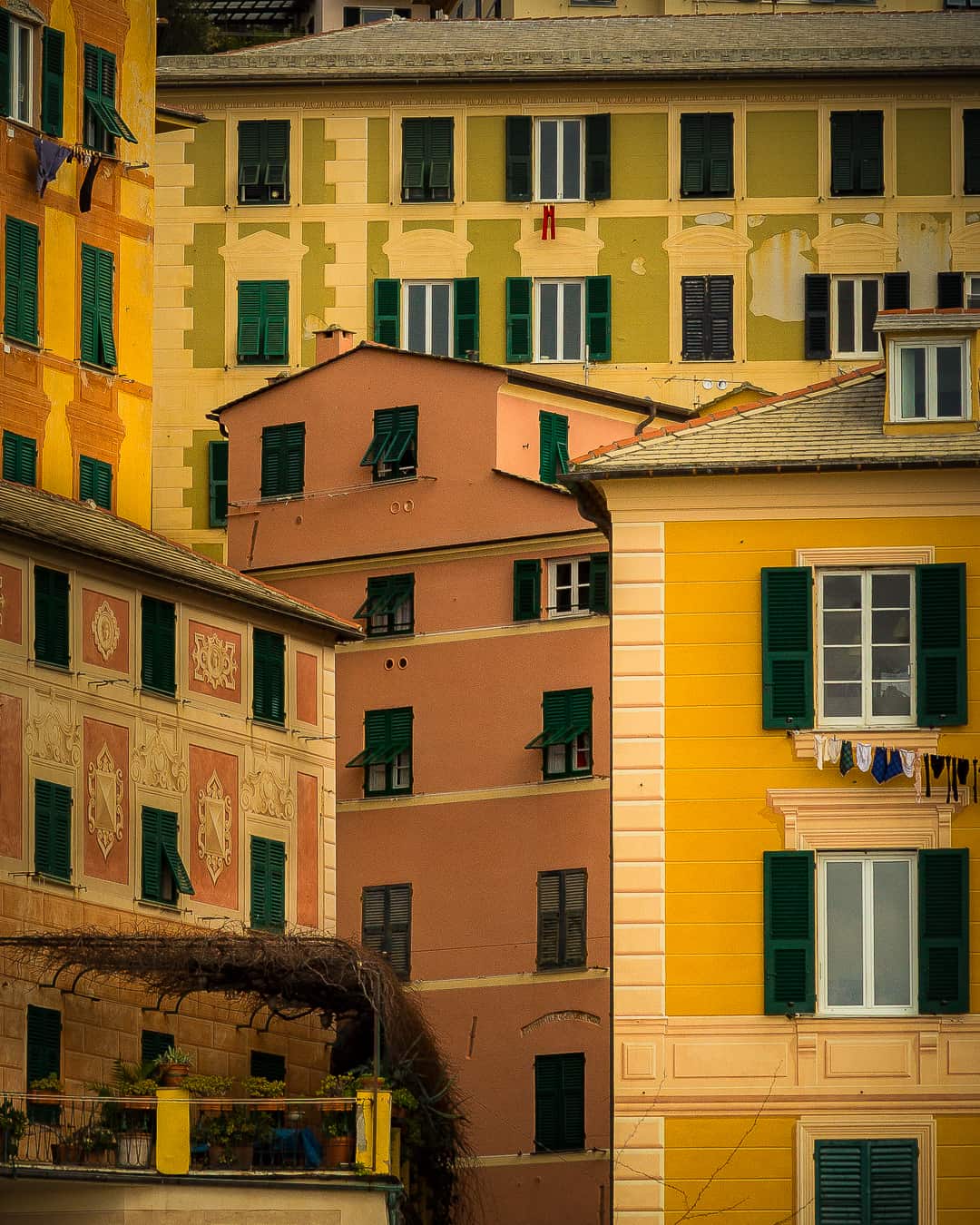
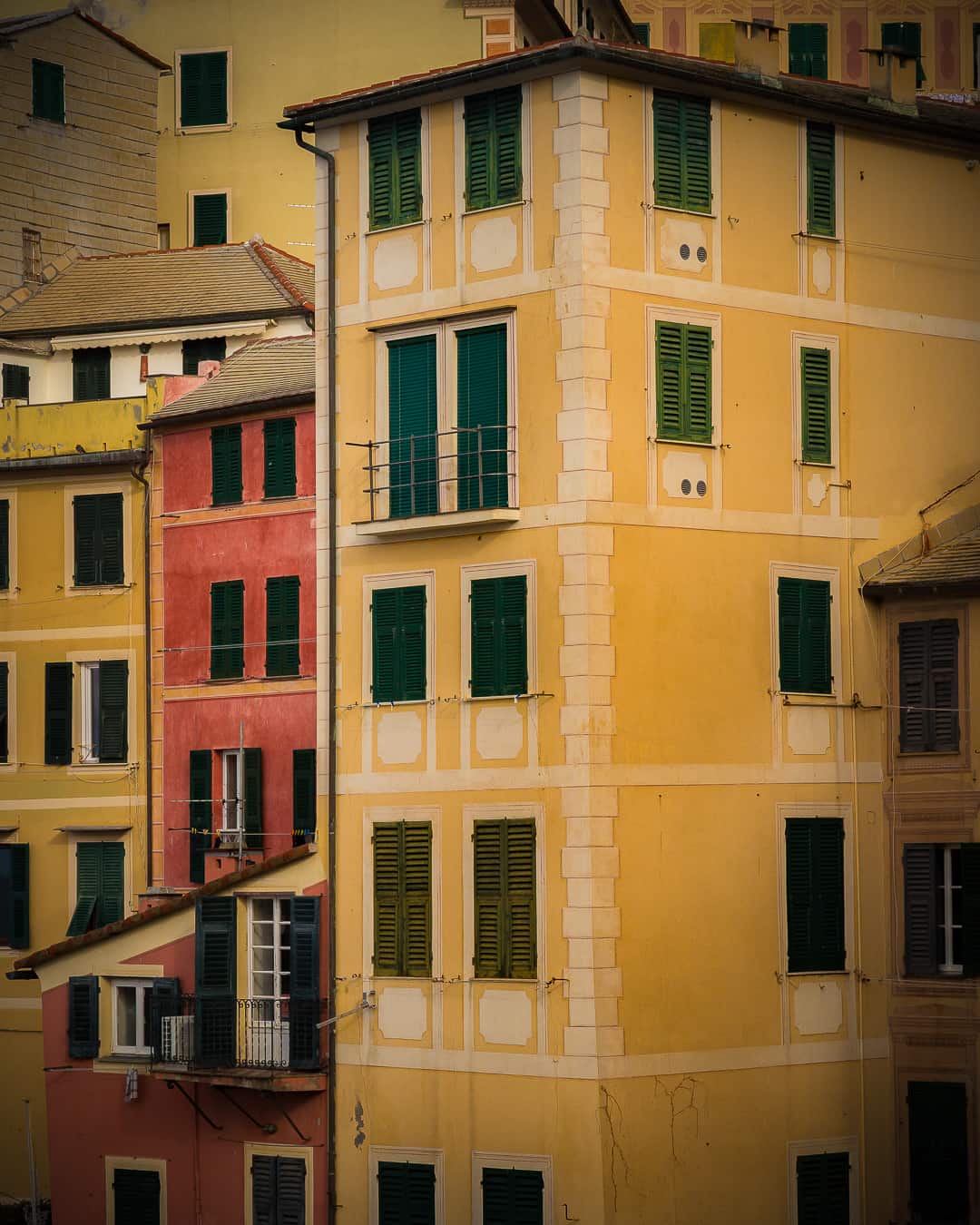
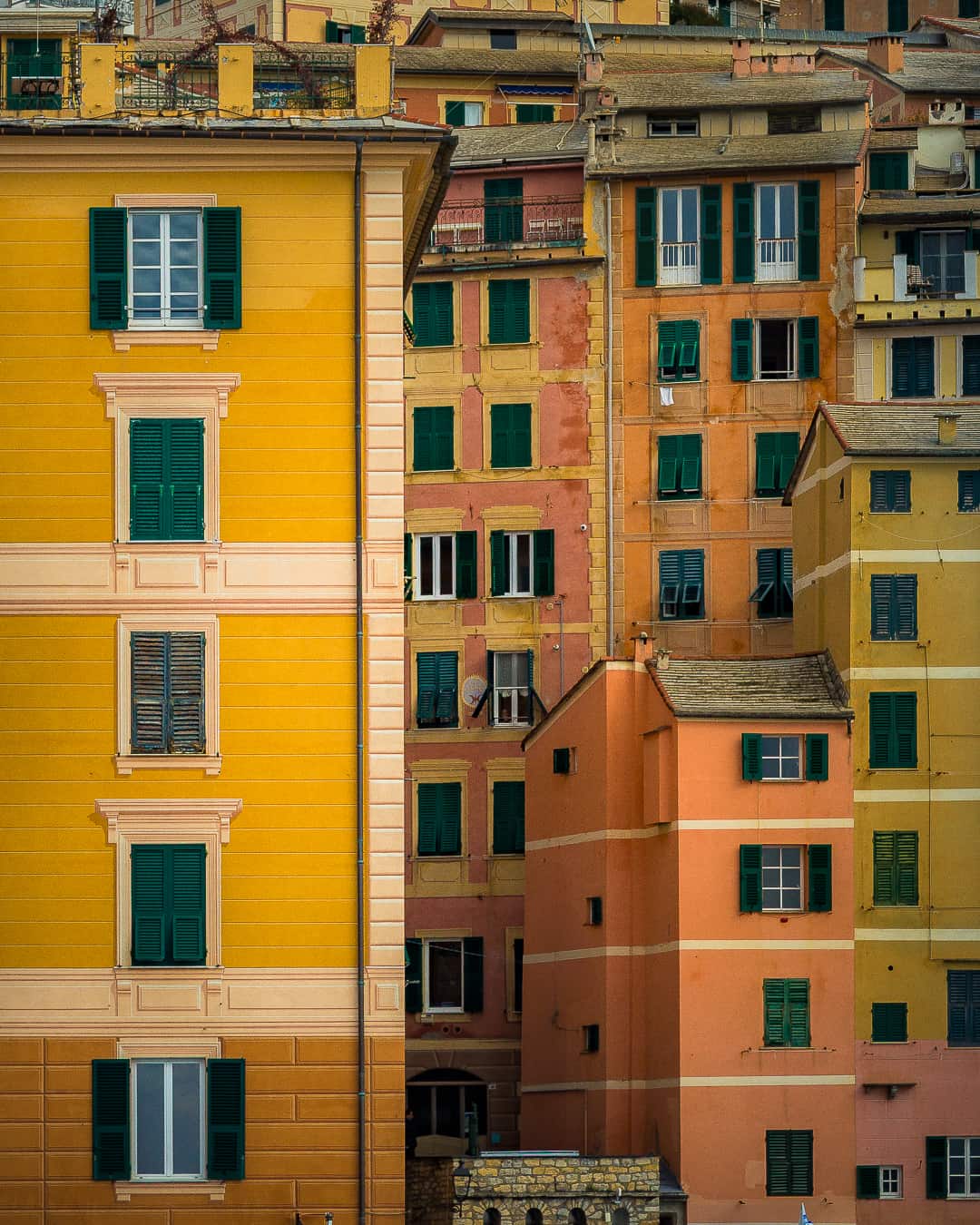
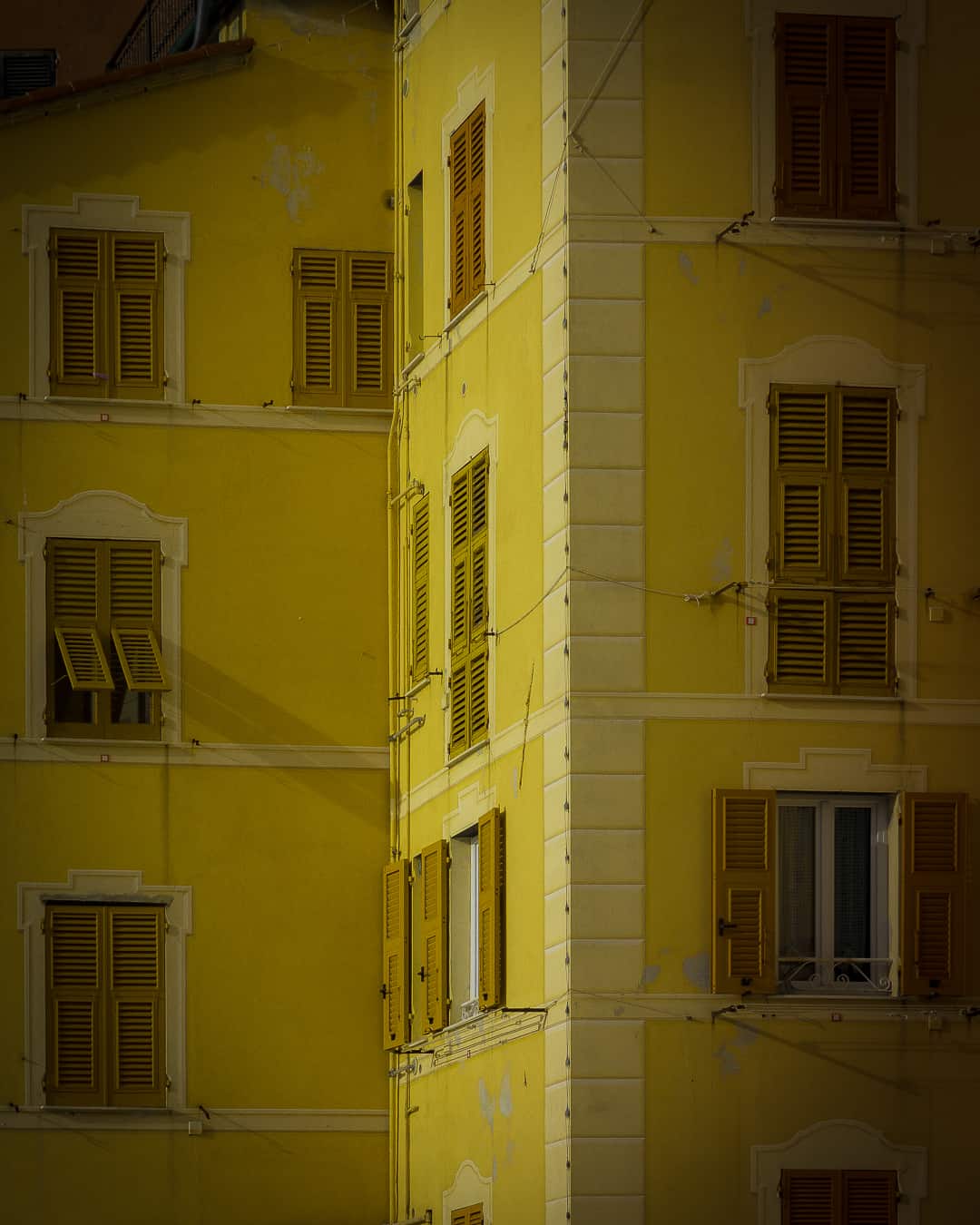
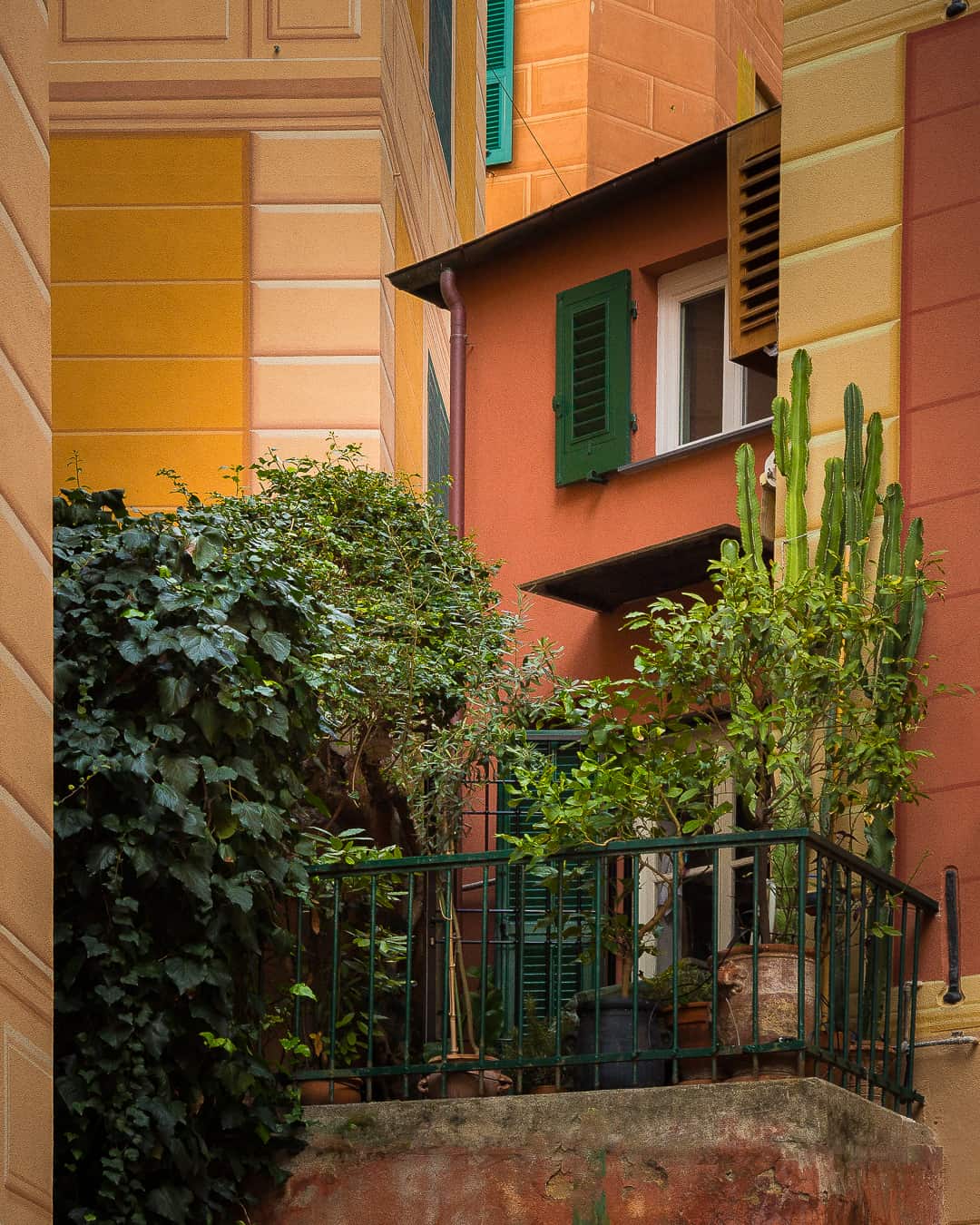
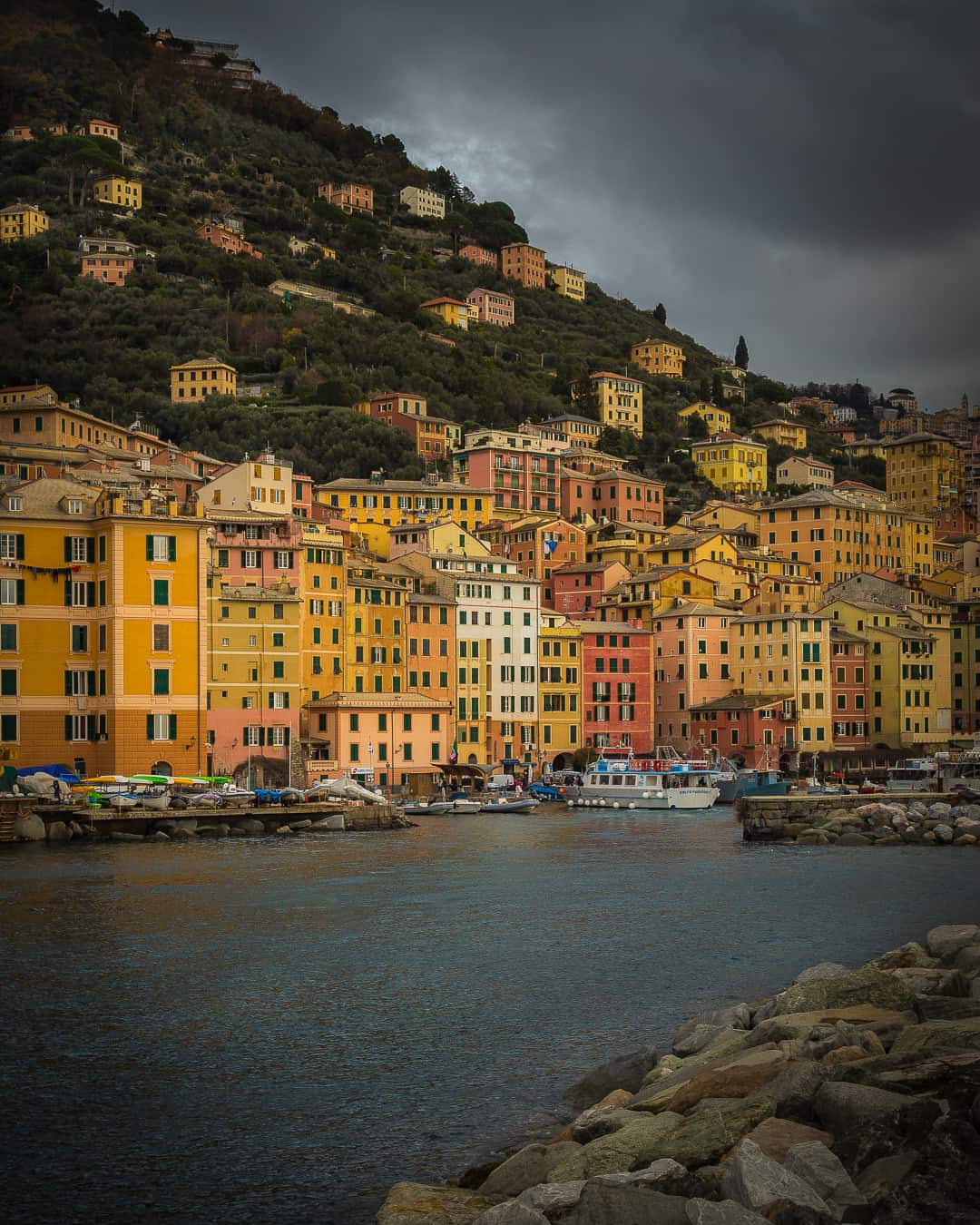
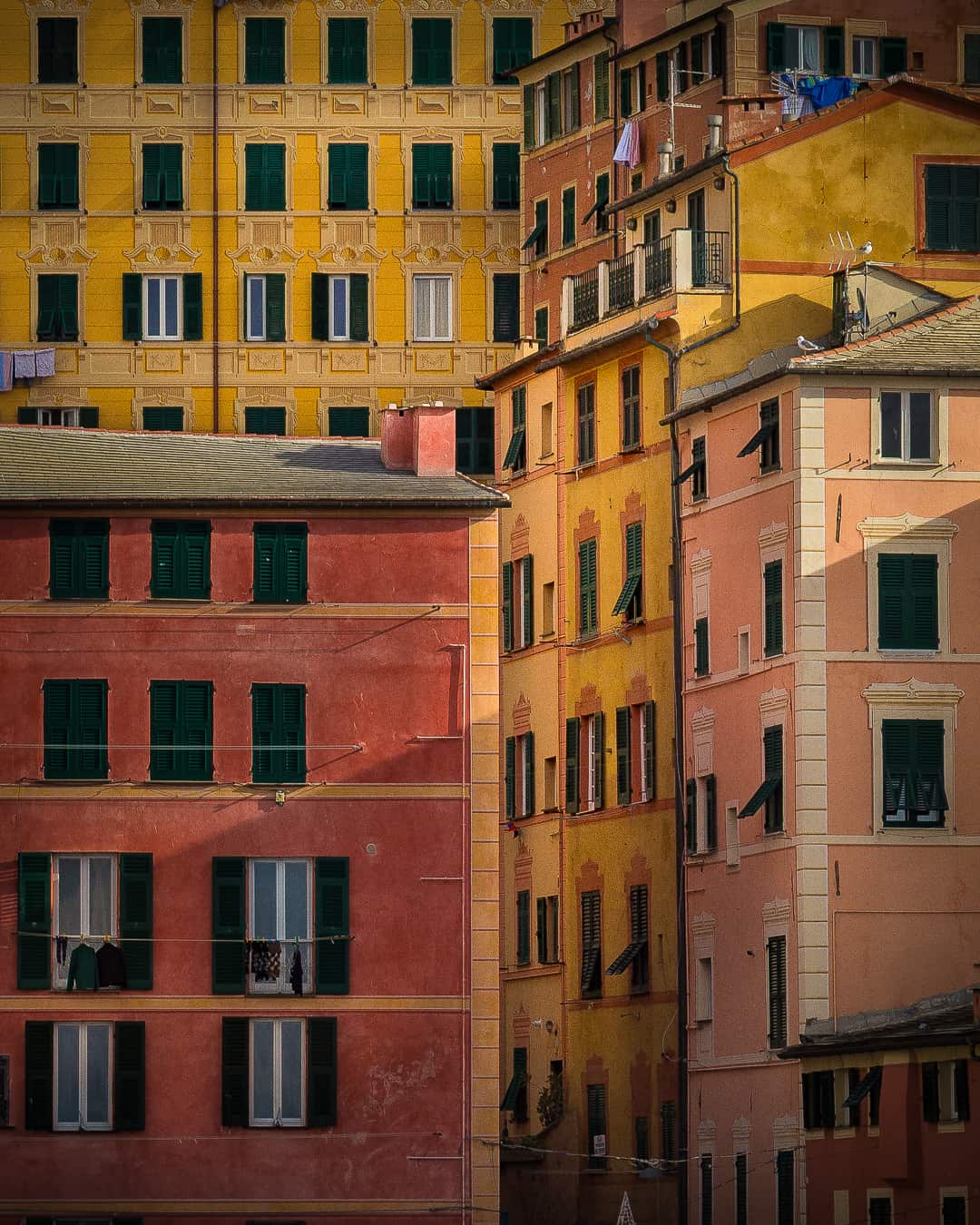
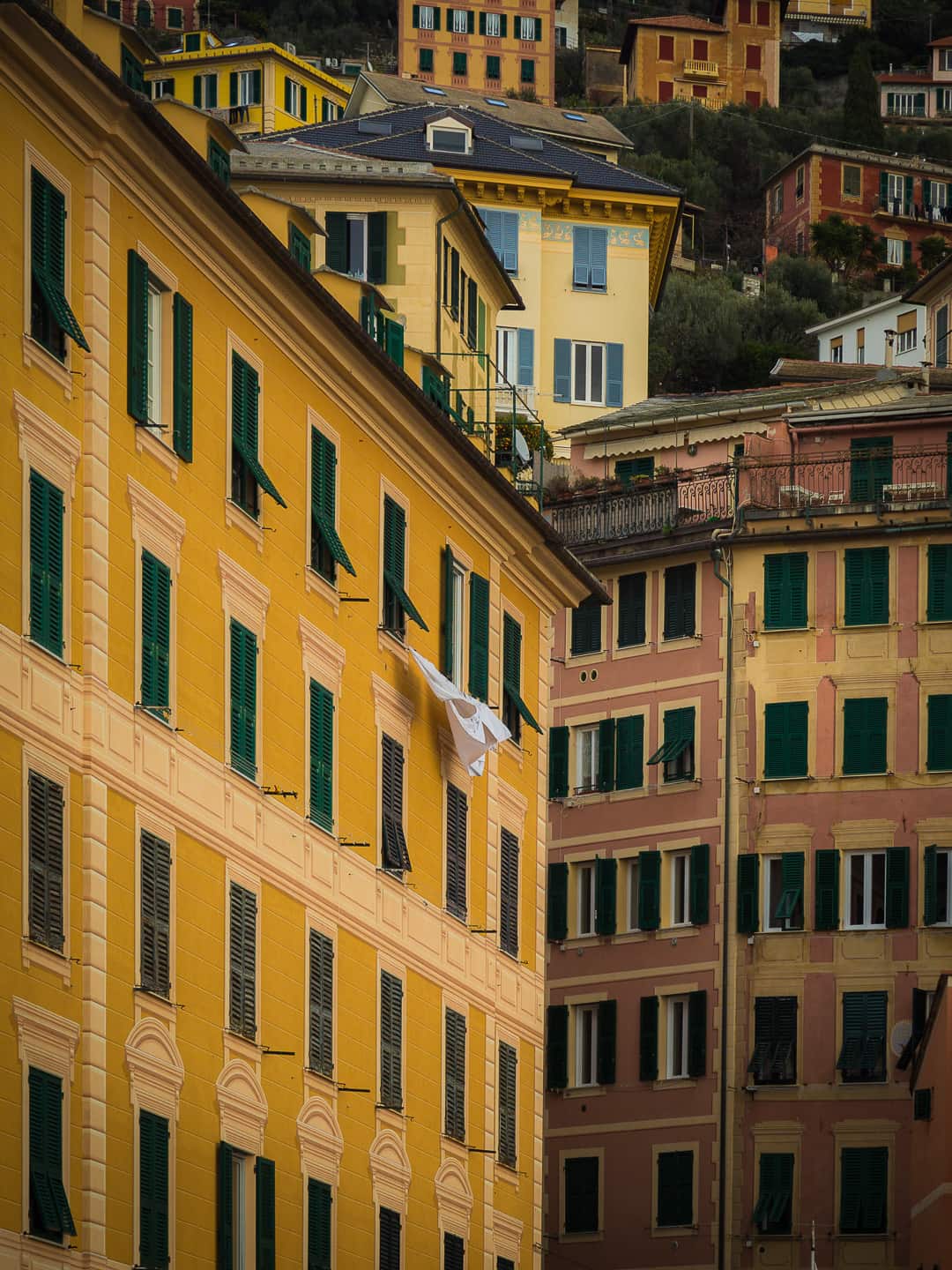
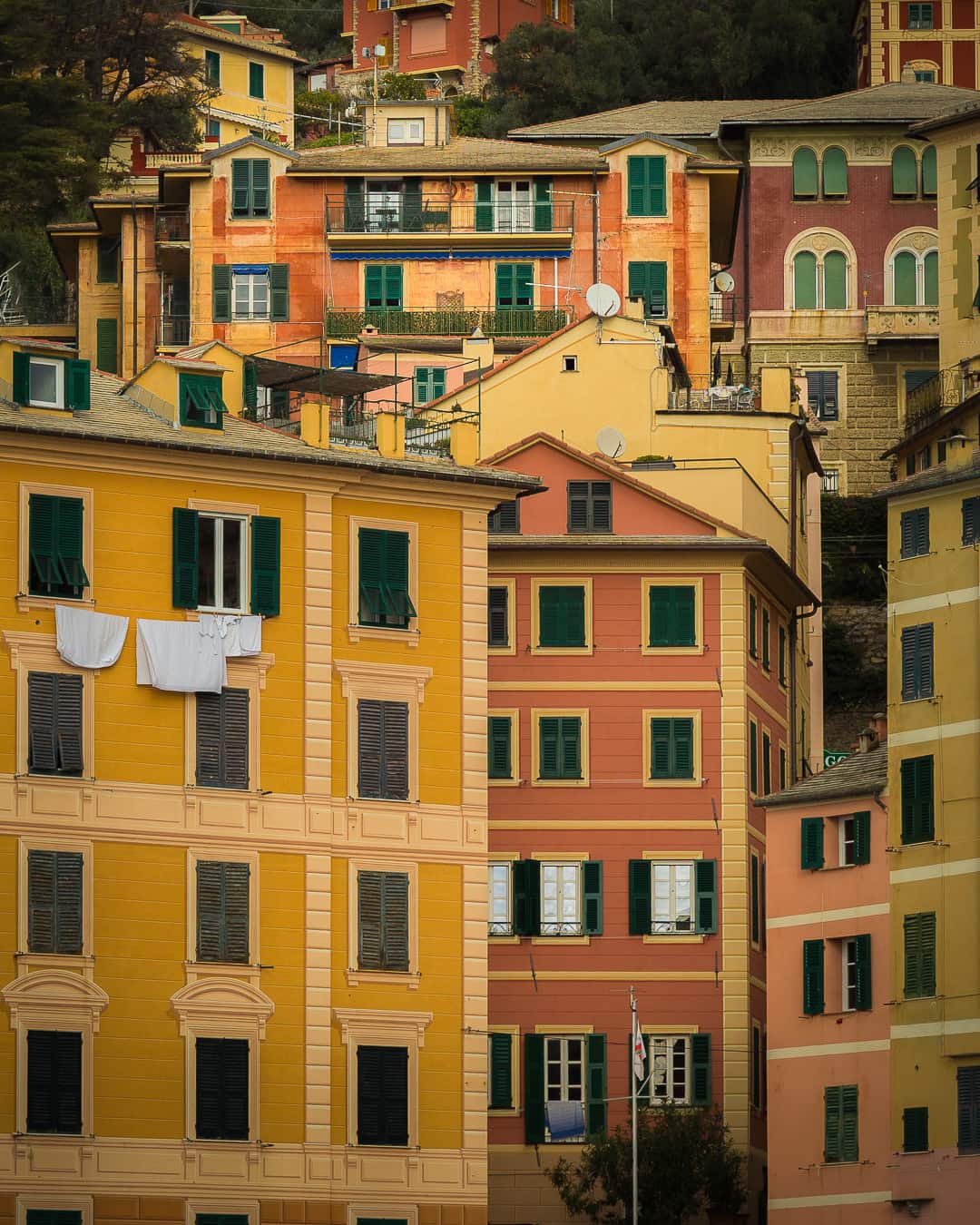
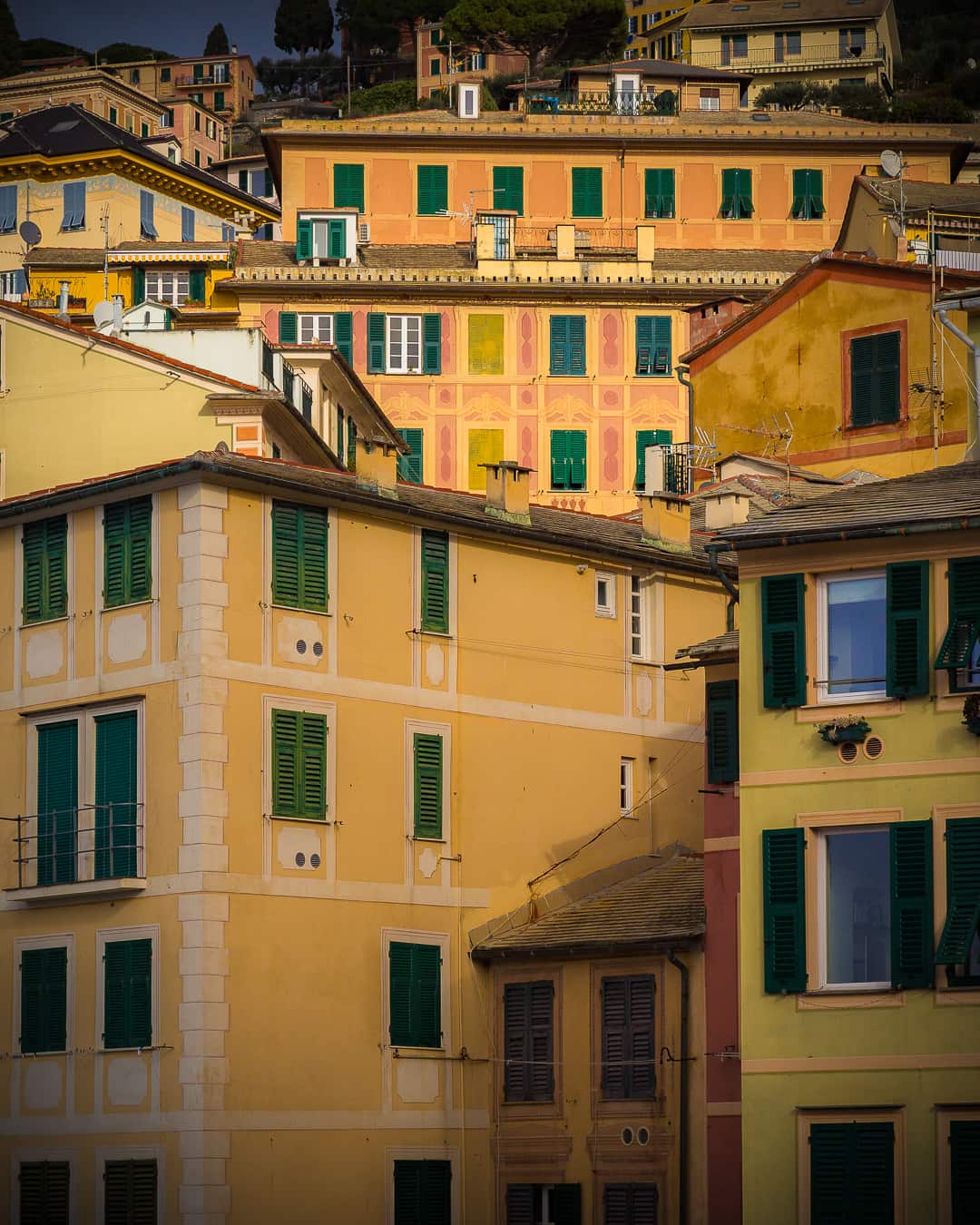
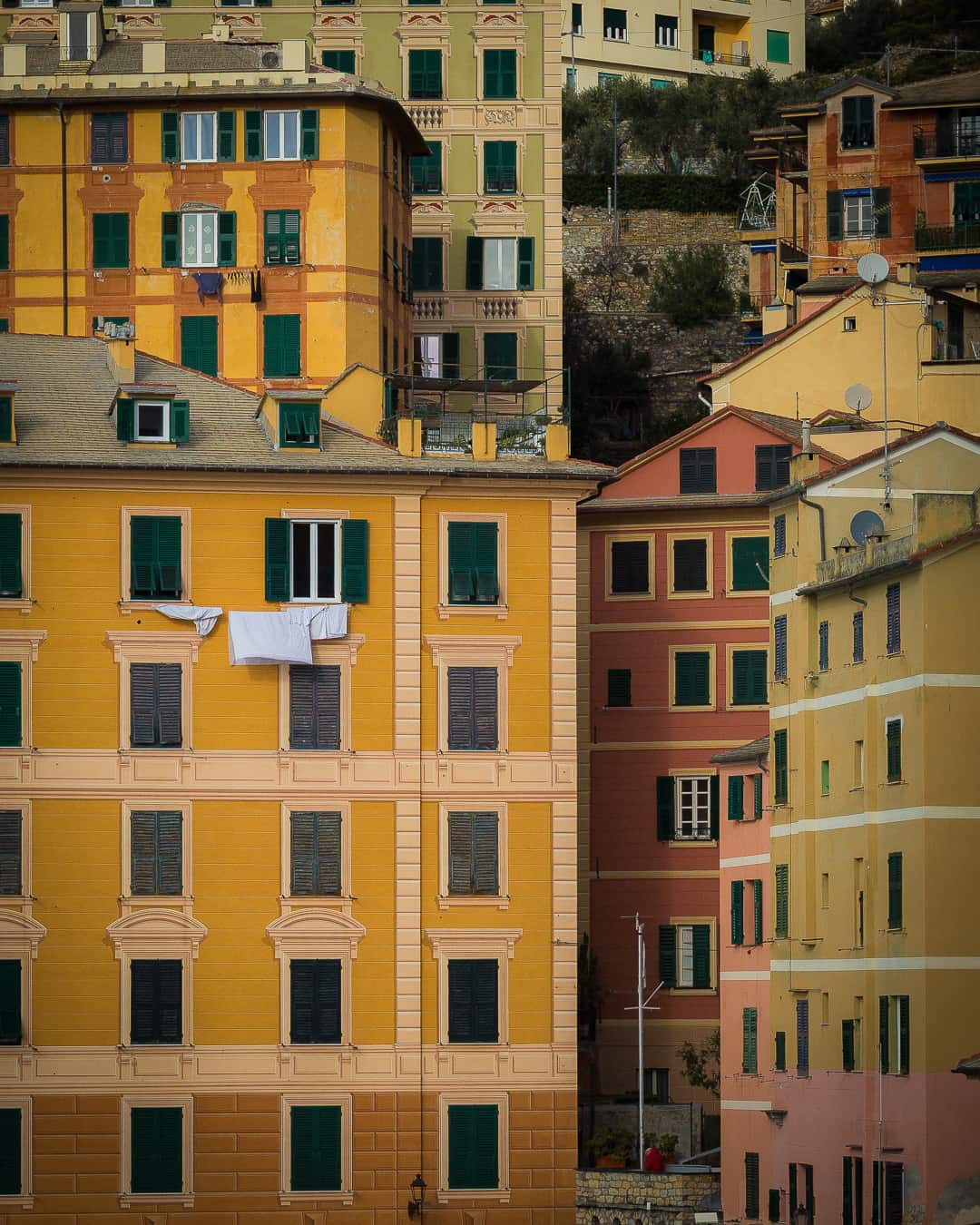
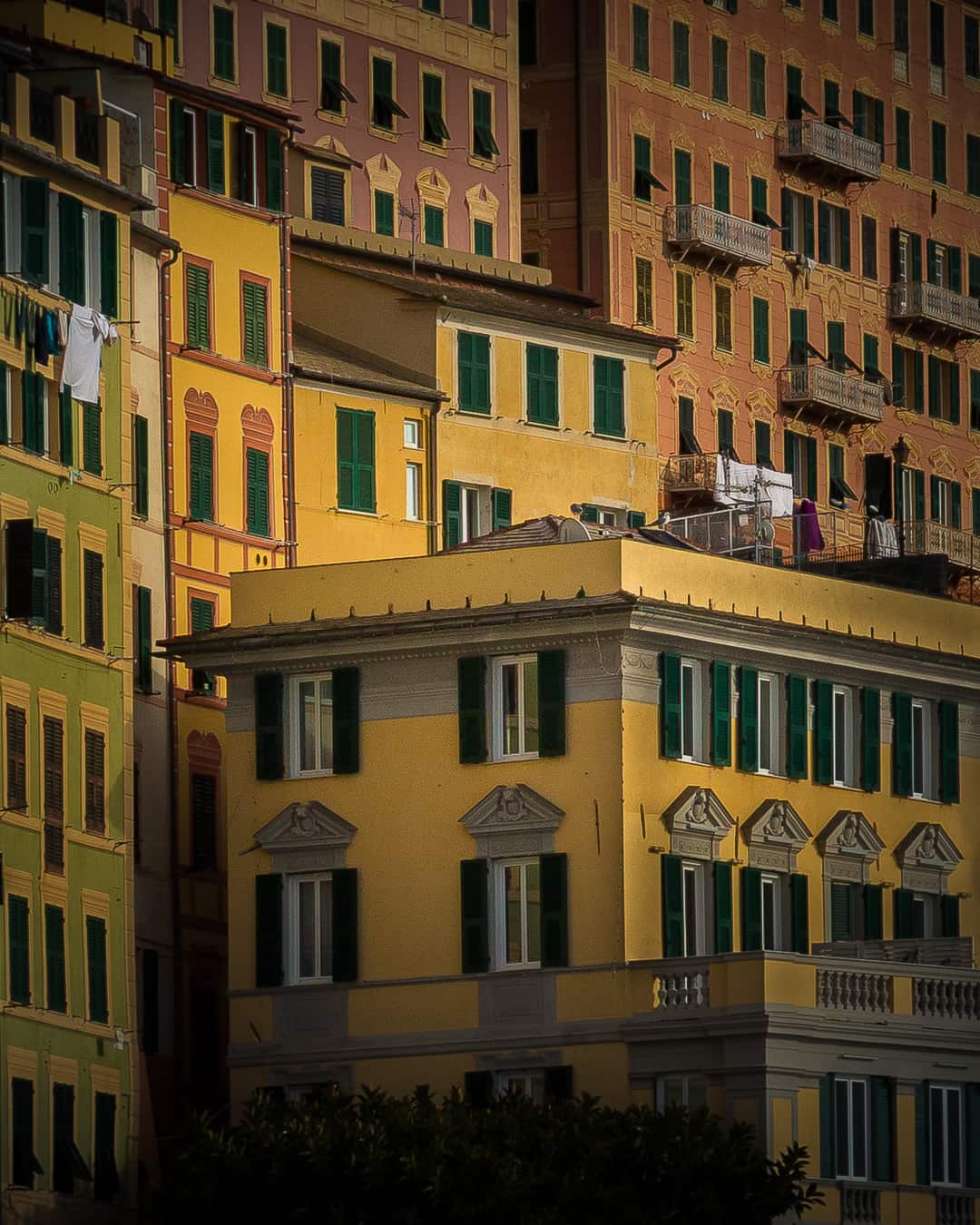
Camogli’s houses are painted: yellow, pink, orange, sage green, with green shutters.
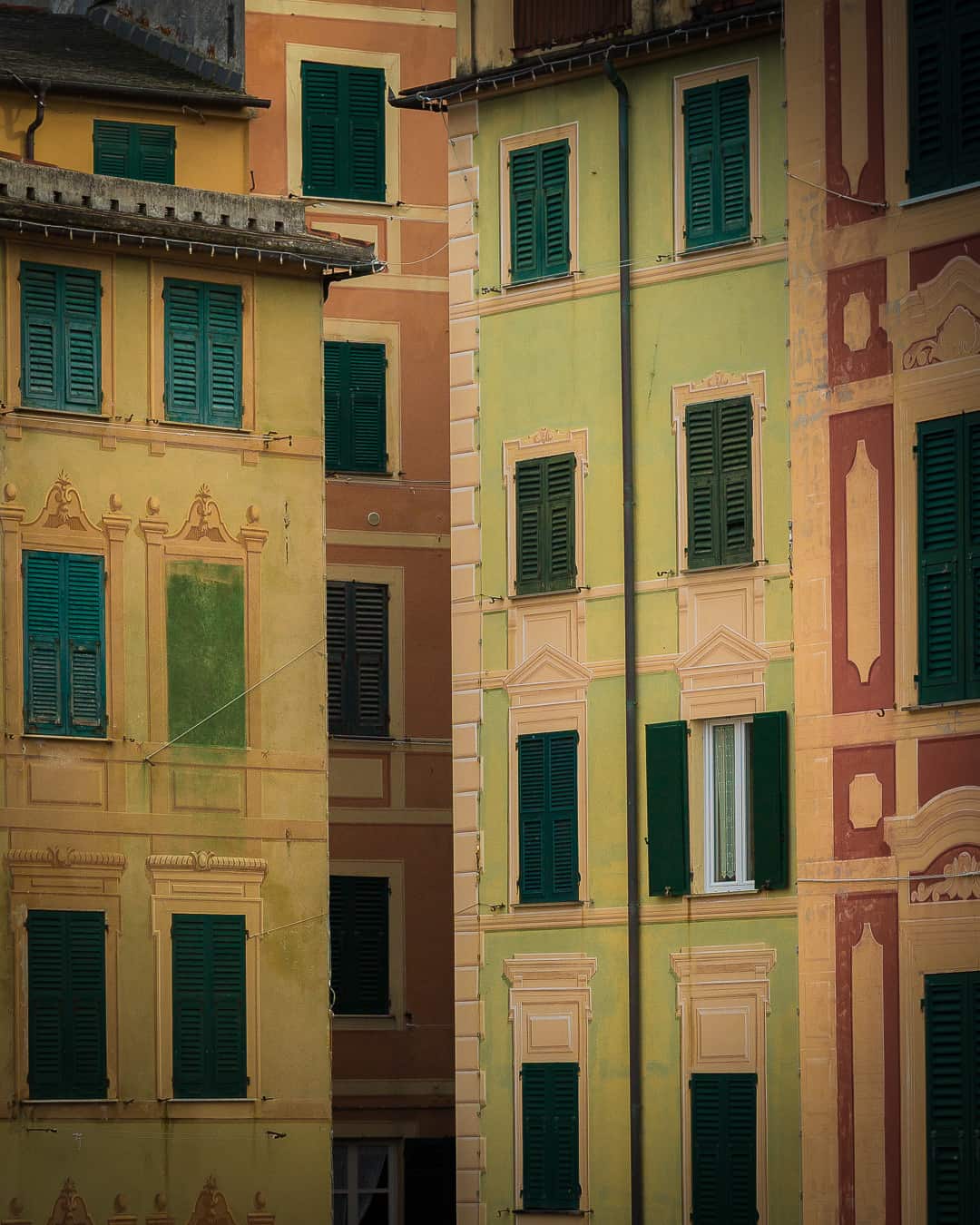
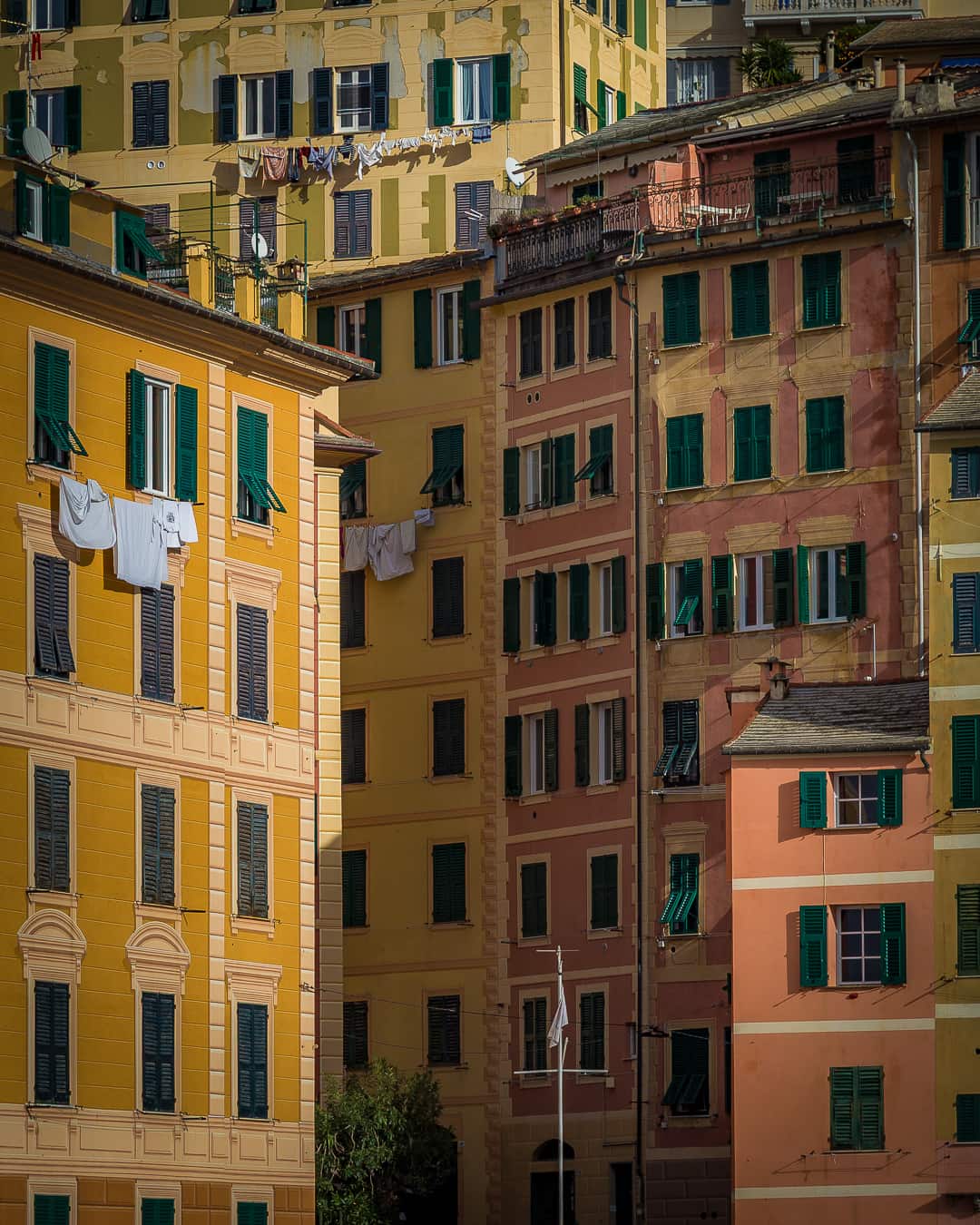
Many façades are decorated in trompe-l’oeil: frames, balconies, plinths and shutters that do not exist, painted onto the wall. It is the Ligurian way of making space bigger with colour.
You have to look closely to tell what is real from what is only painted.
Fake frames
Pink frames around real windows and, next to them, painted frames around windows that do not exist. This is Ligurian trompe-l’oeil: plinths, cornices, balconies and shutters drawn on the wall. An elegant illusion that gives narrow façades a richness the architecture alone would lack.
Orange
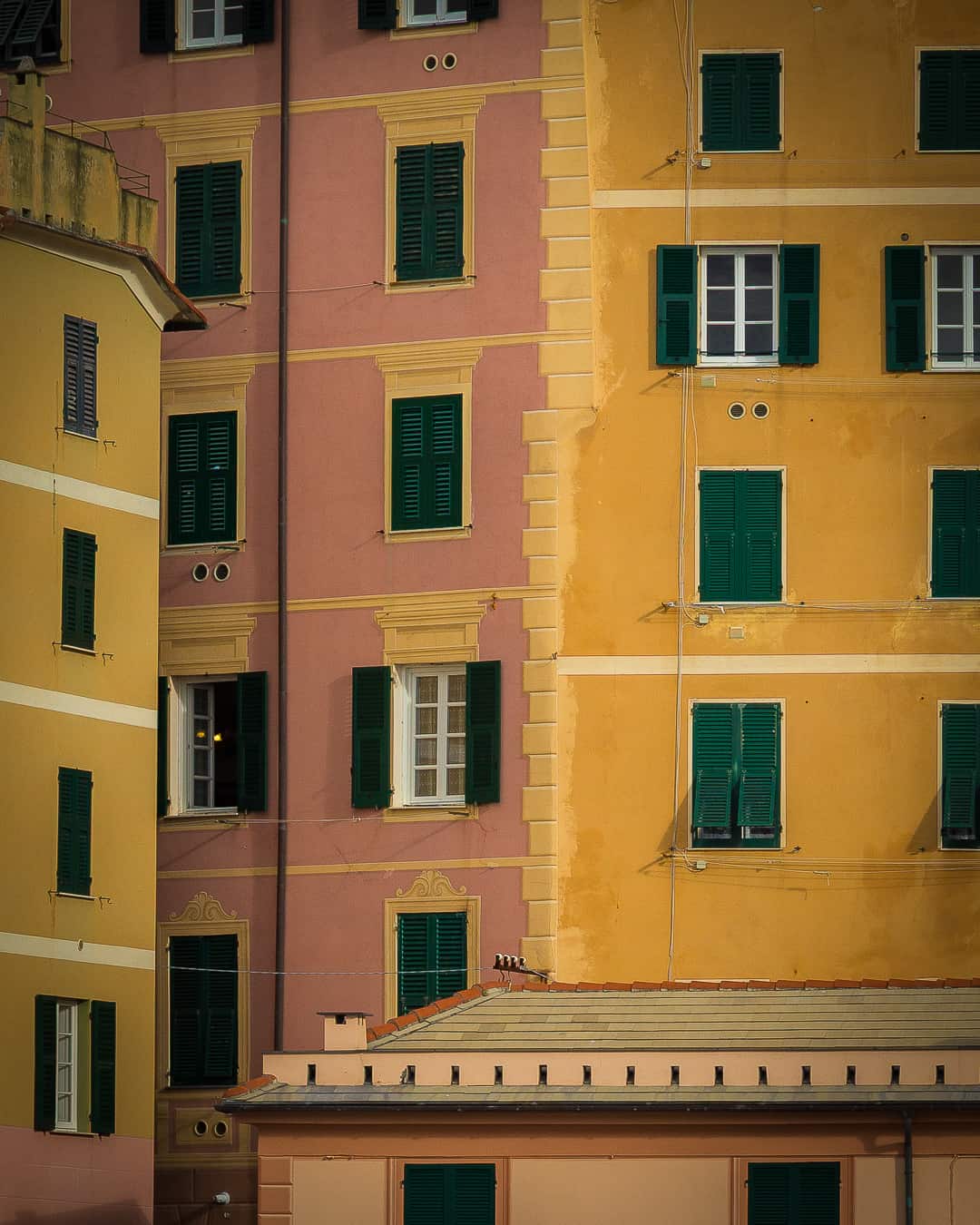
A full orange, almost red, green shutters, iron balconies. In Camogli the colours are warm: apricot, ochre, amber, pink. Side by side, they form a wall of colour along the coast that you can recognise from far away.
III
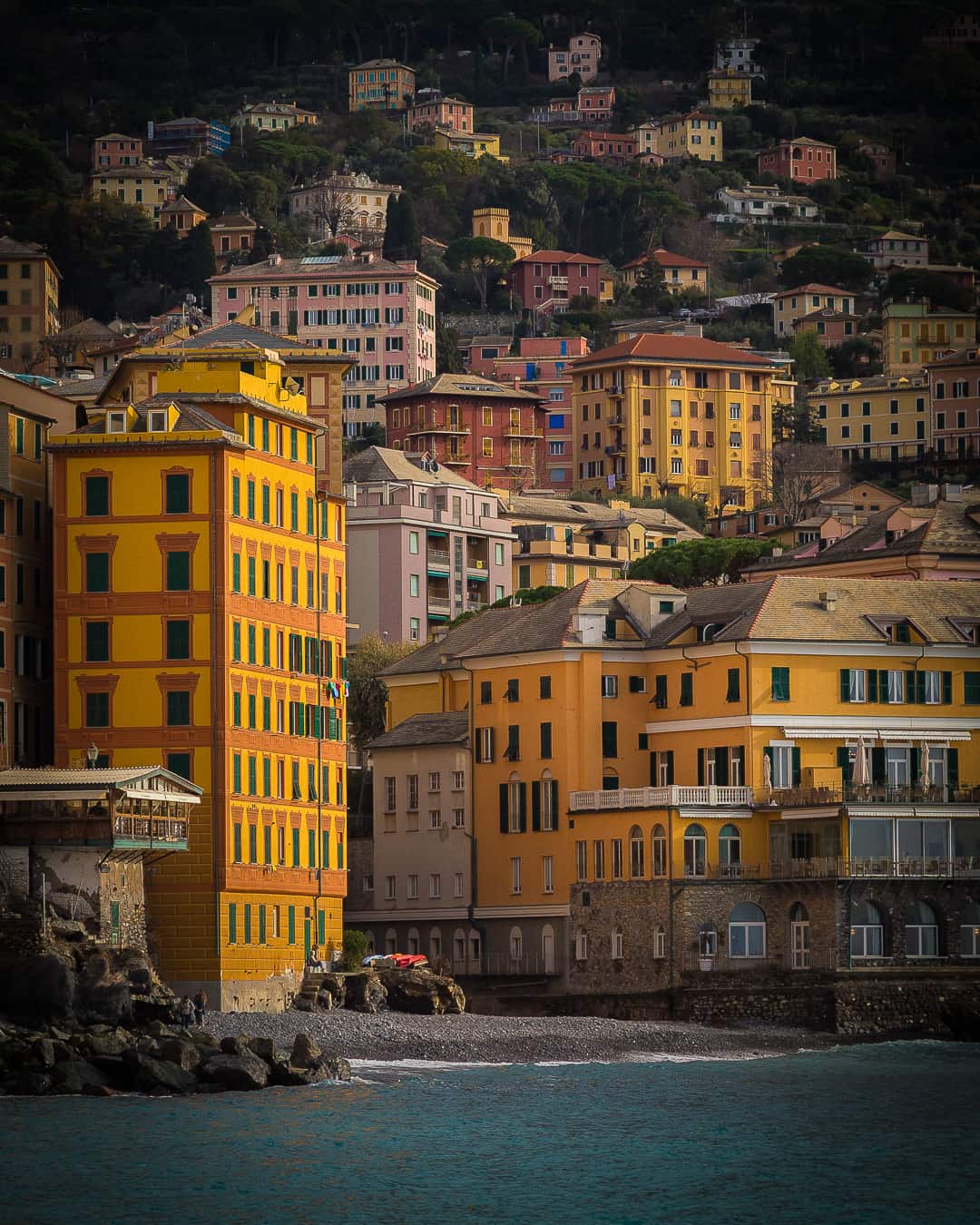
A vertical town
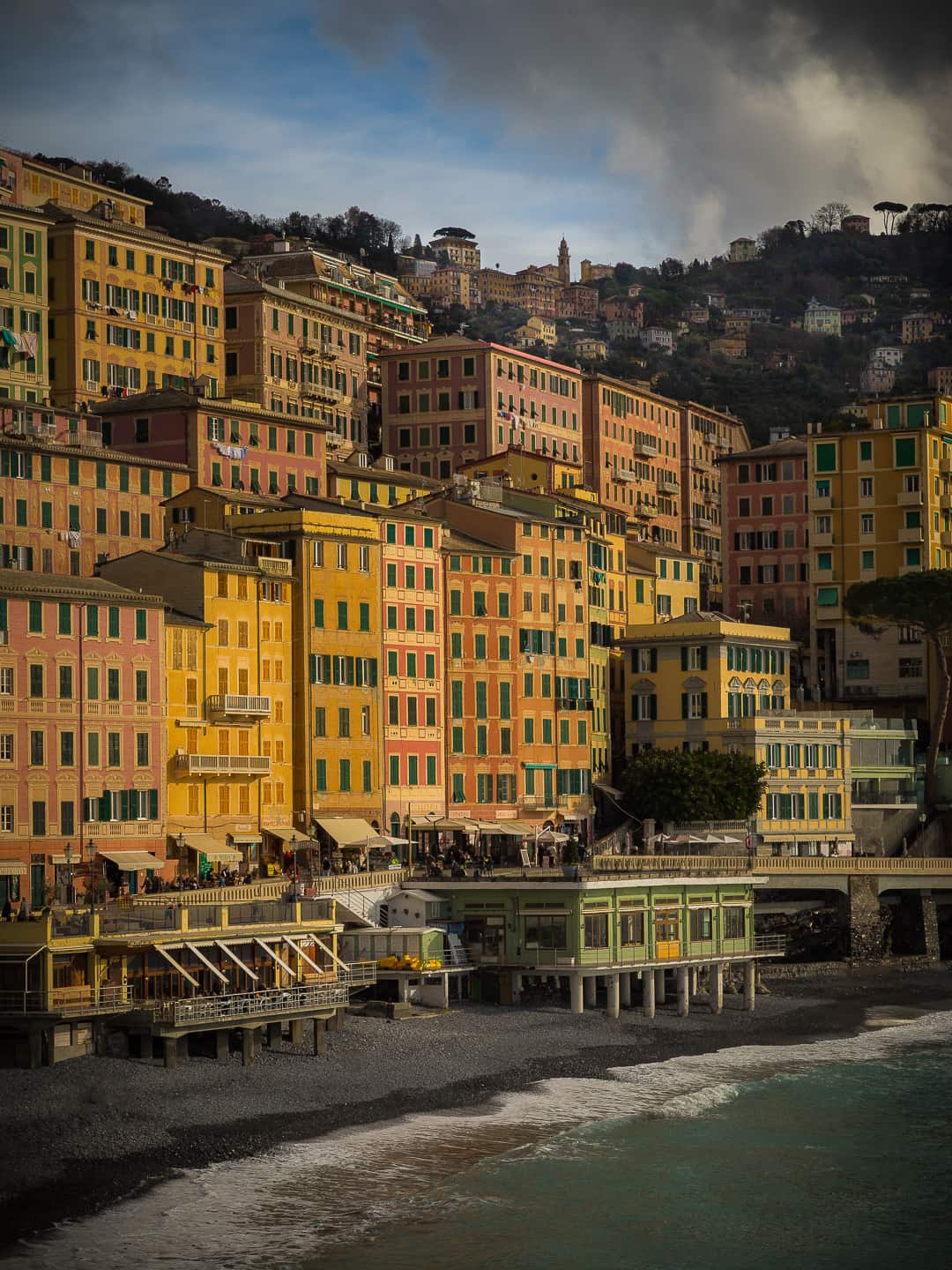
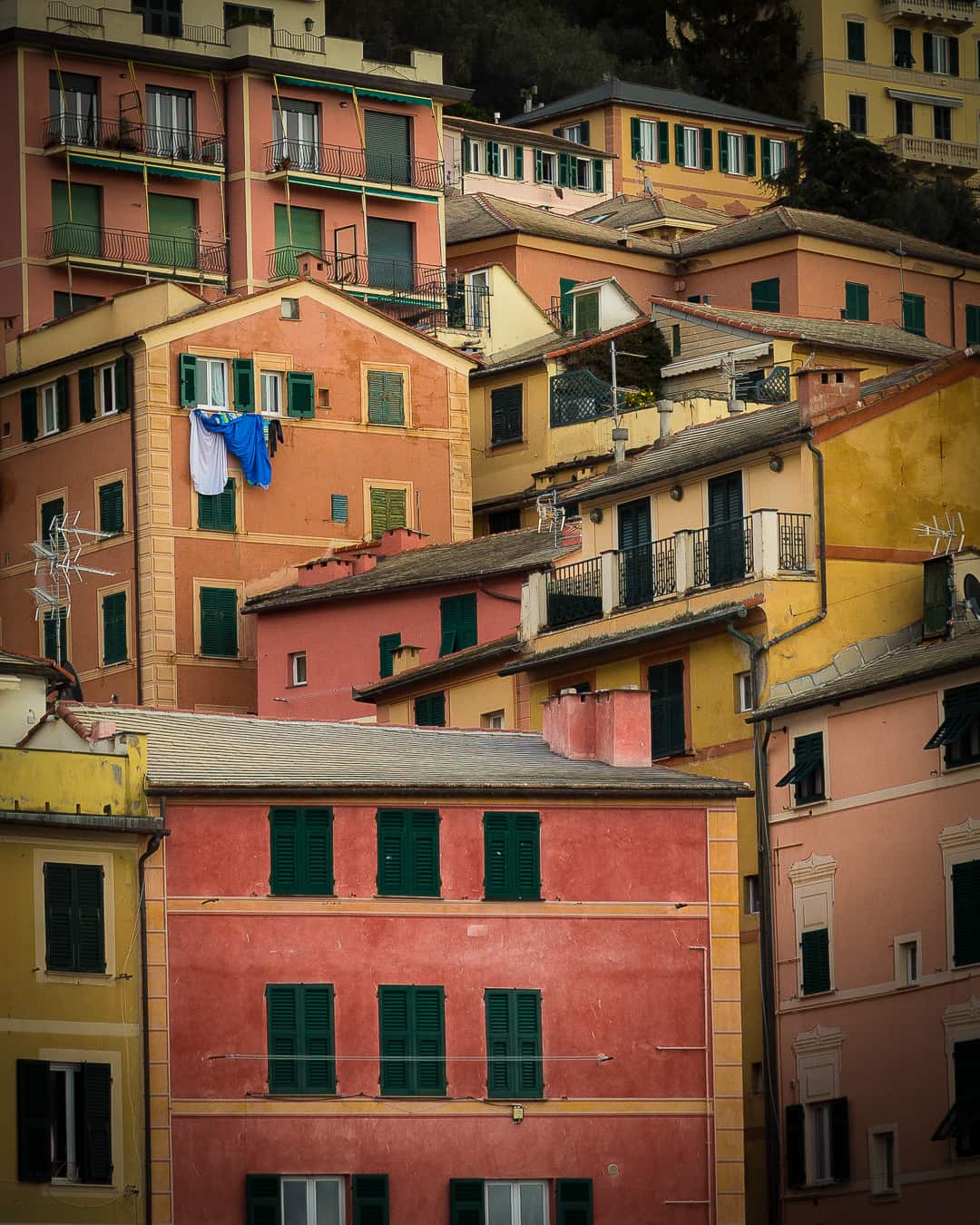
Between the sea and the hill there was little space, so people built upwards, up to six storeys. The houses squeeze against one another, lanes run under buildings, stairs climb towards the woods.
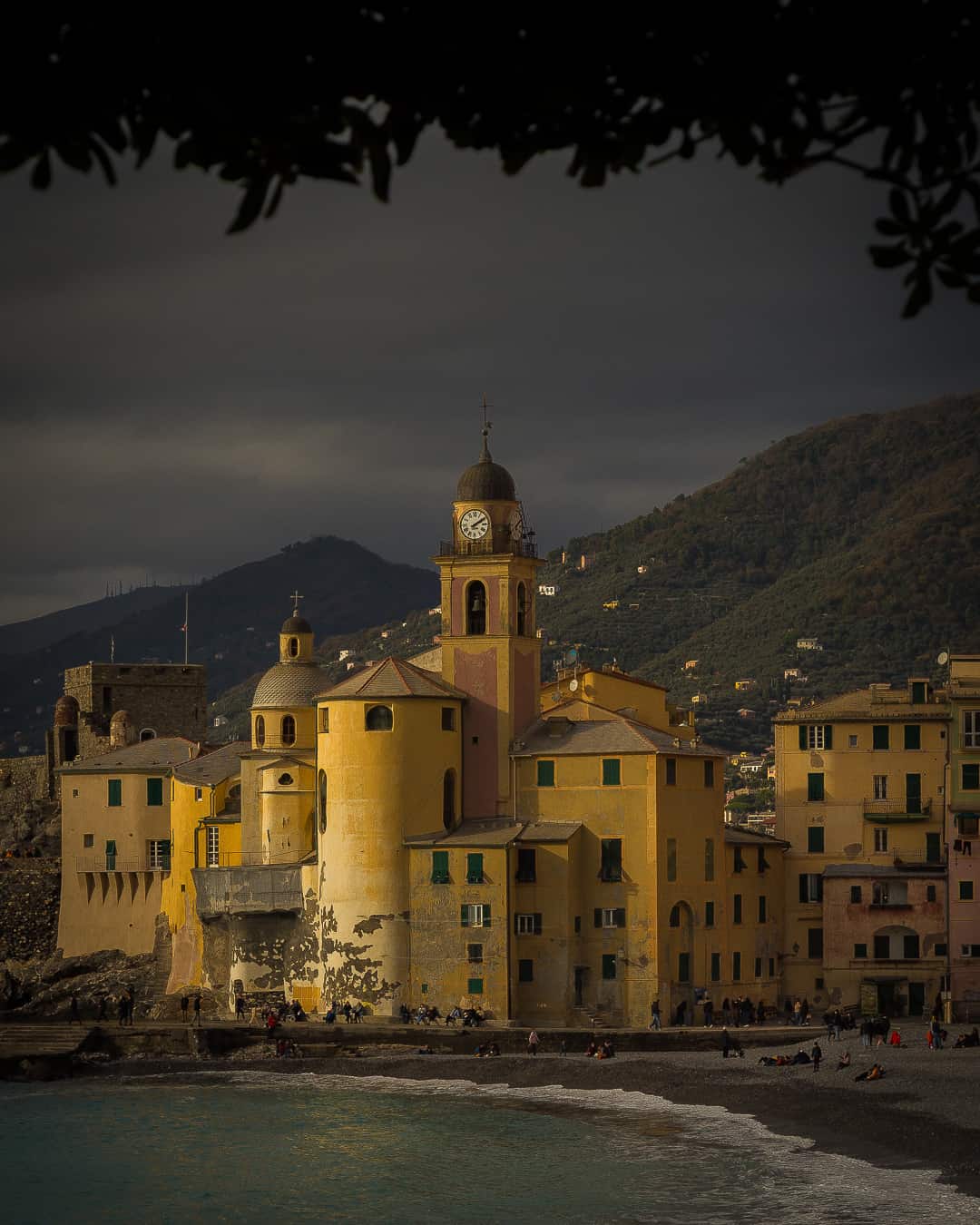
At the end of the seafront, on what was once a rocky island, stand the twelfth-century basilica of Santa Maria Assunta and the small medieval Castello della Dragonara, built to defend the town from raids by sea.
On the seafront
Tall, narrow houses, one behind another, and below them the pebble beach. The Via Garibaldi promenade is the town’s backbone: façades on one side, the sea on the other. The beach runs for about 400 metres, up to the promontory.
The passage
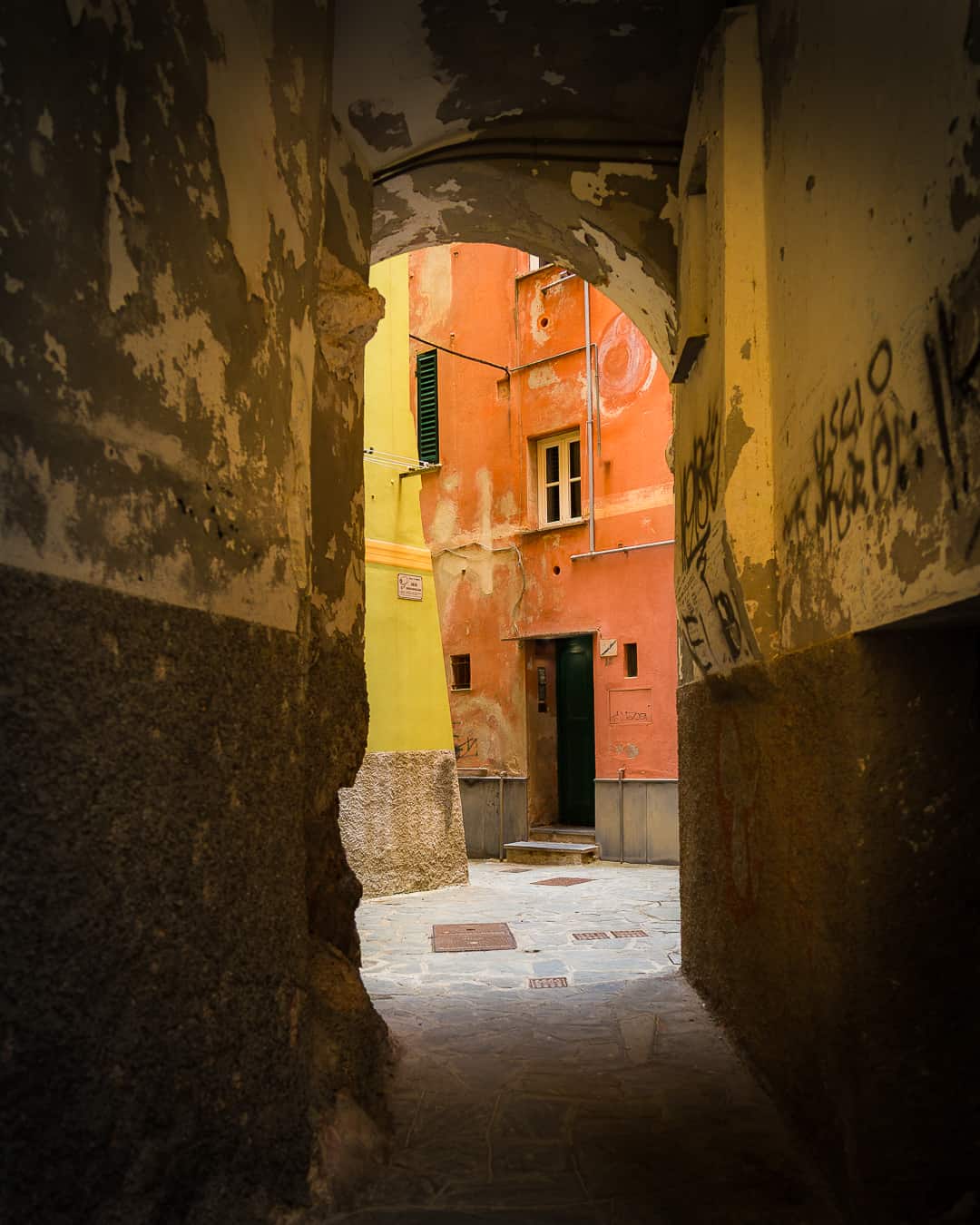
A dark passage under the houses, worn walls and, at the end, an orange façade in full light. Camogli is made of these cuts: lanes, stairs and passages that link the sea to the hill. Step inside and the crowds of the seafront are left behind.
A church among the houses
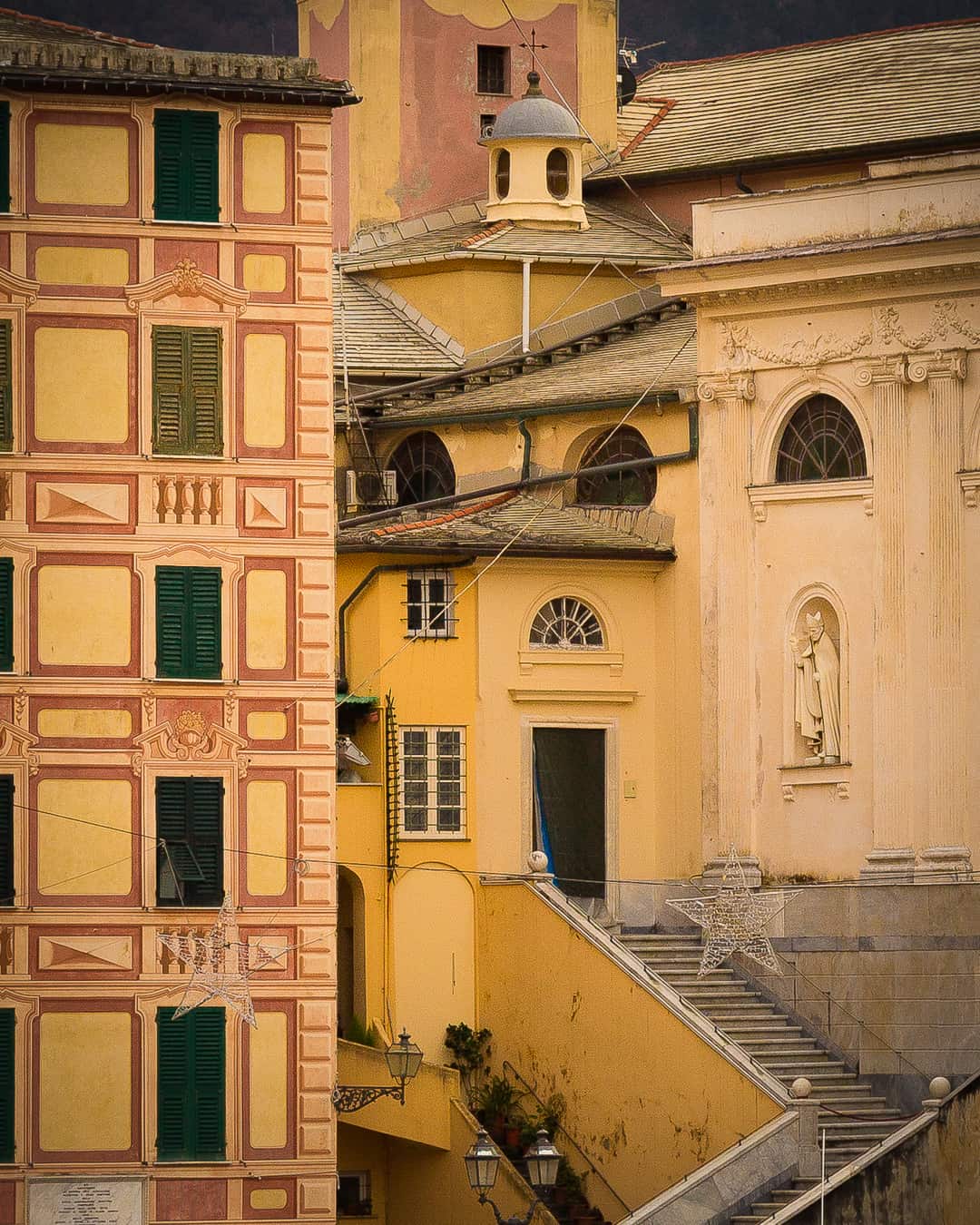
A façade with pink stripes, stone steps, a yellow church. Camogli’s most famous church is the basilica of Santa Maria Assunta, built in the twelfth century on the “Isola”, the promontory once cut off from the mainland. In front of it, the churchyard is a carpet of black and white pebbles.
Houses on the rocks
An orange building on the rocks, a tiny beach and, behind, houses upon houses up to the hill. Camogli is a vertical town: every extra storey was space won between the sea and the mountain.
IV
The sea
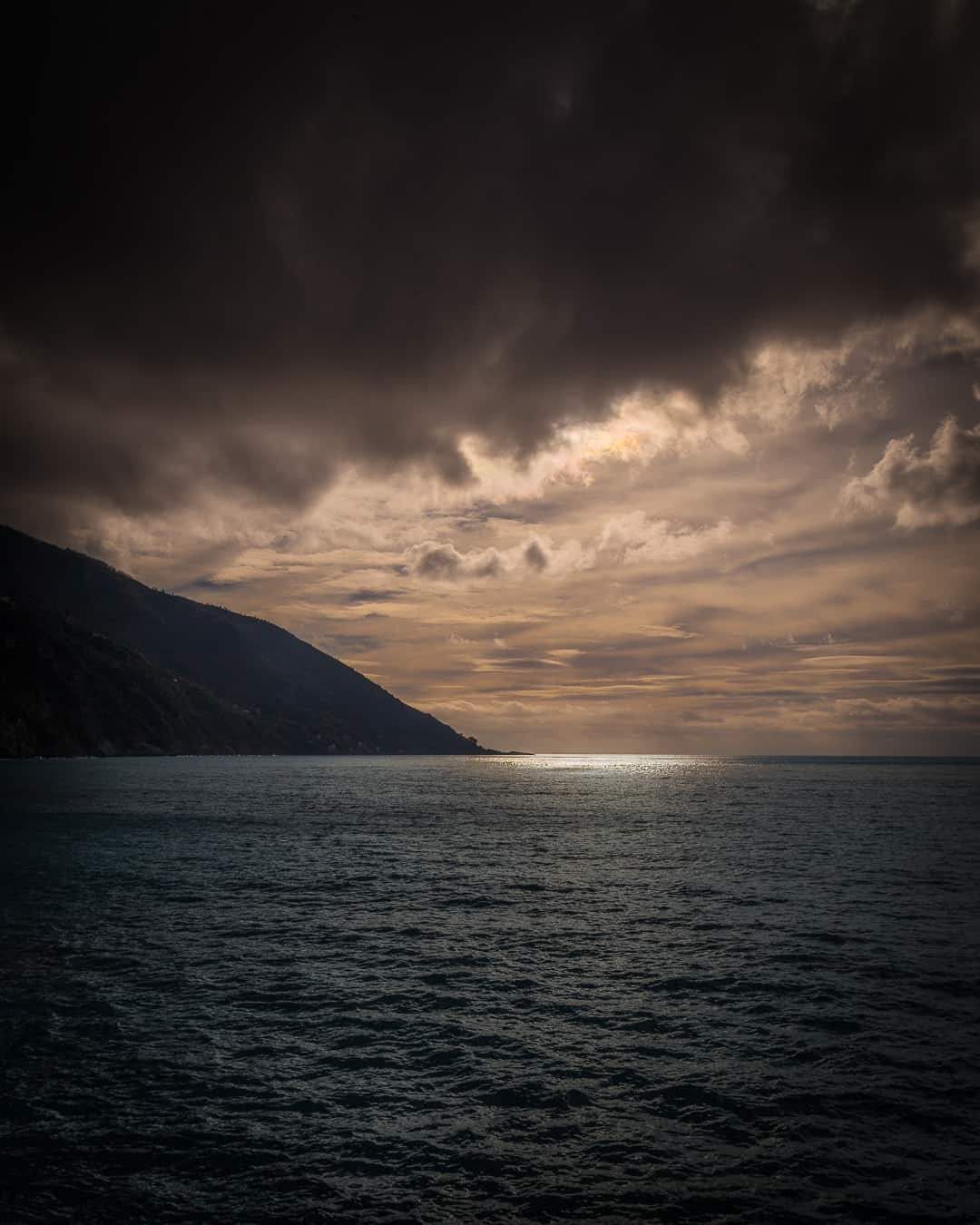
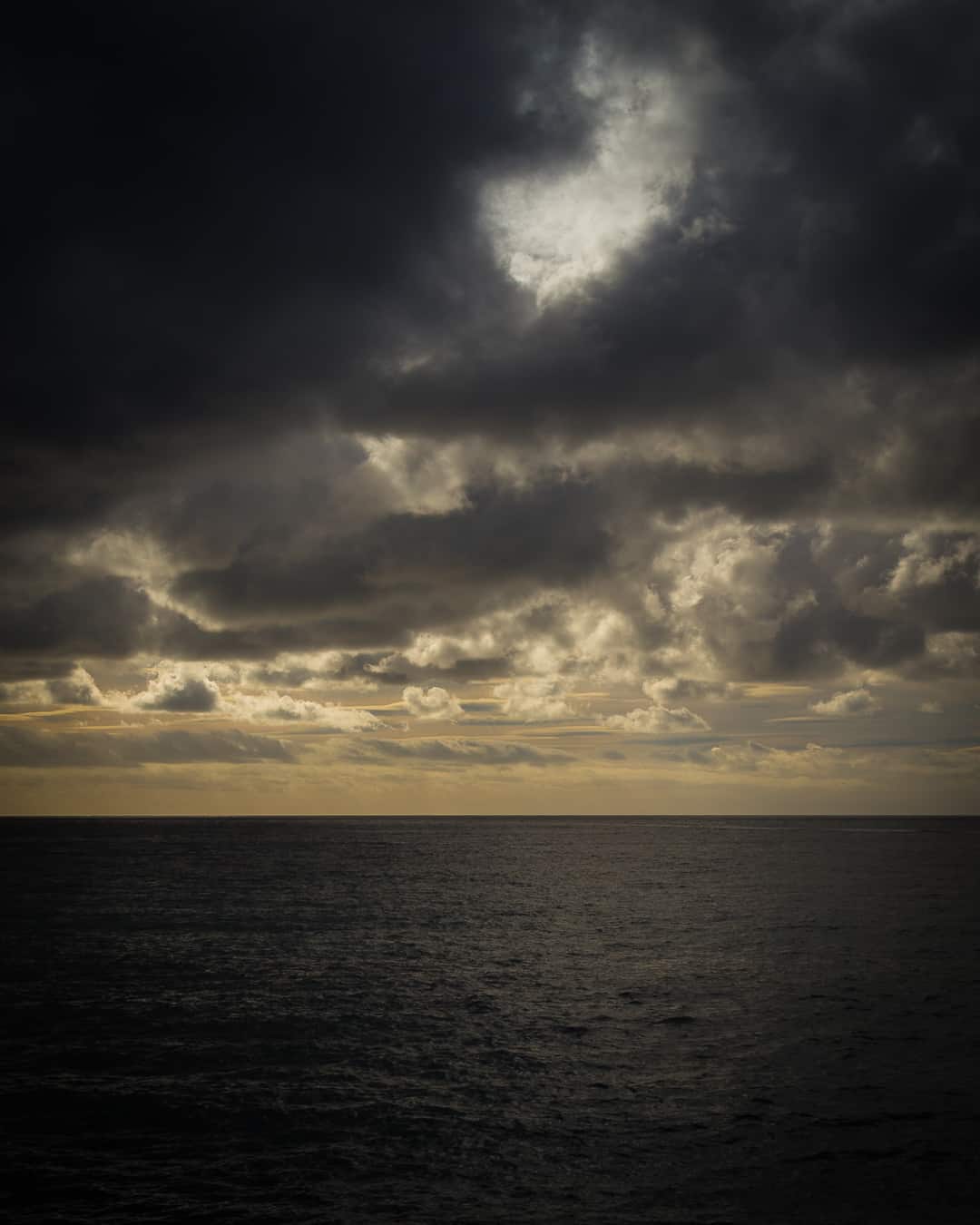
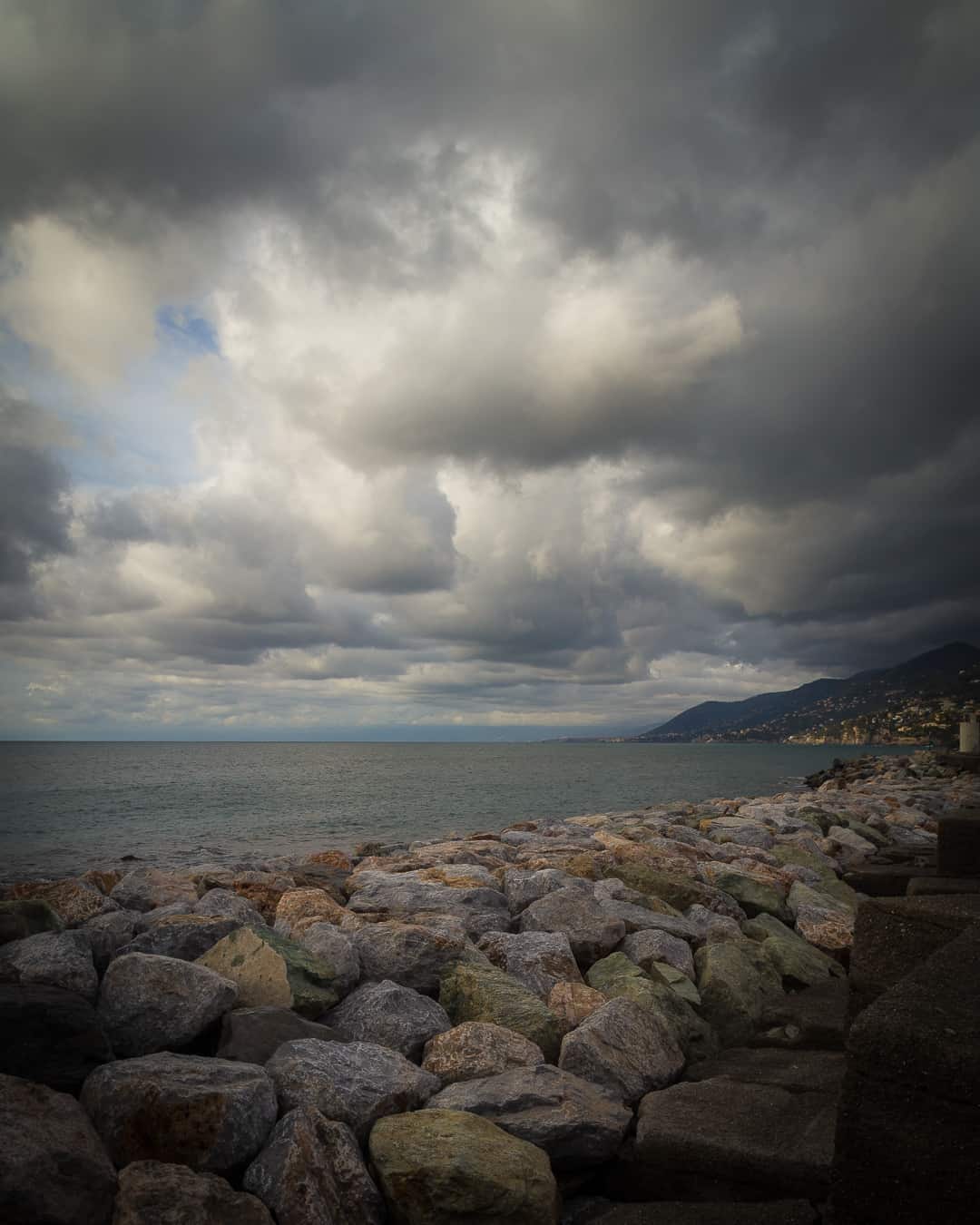
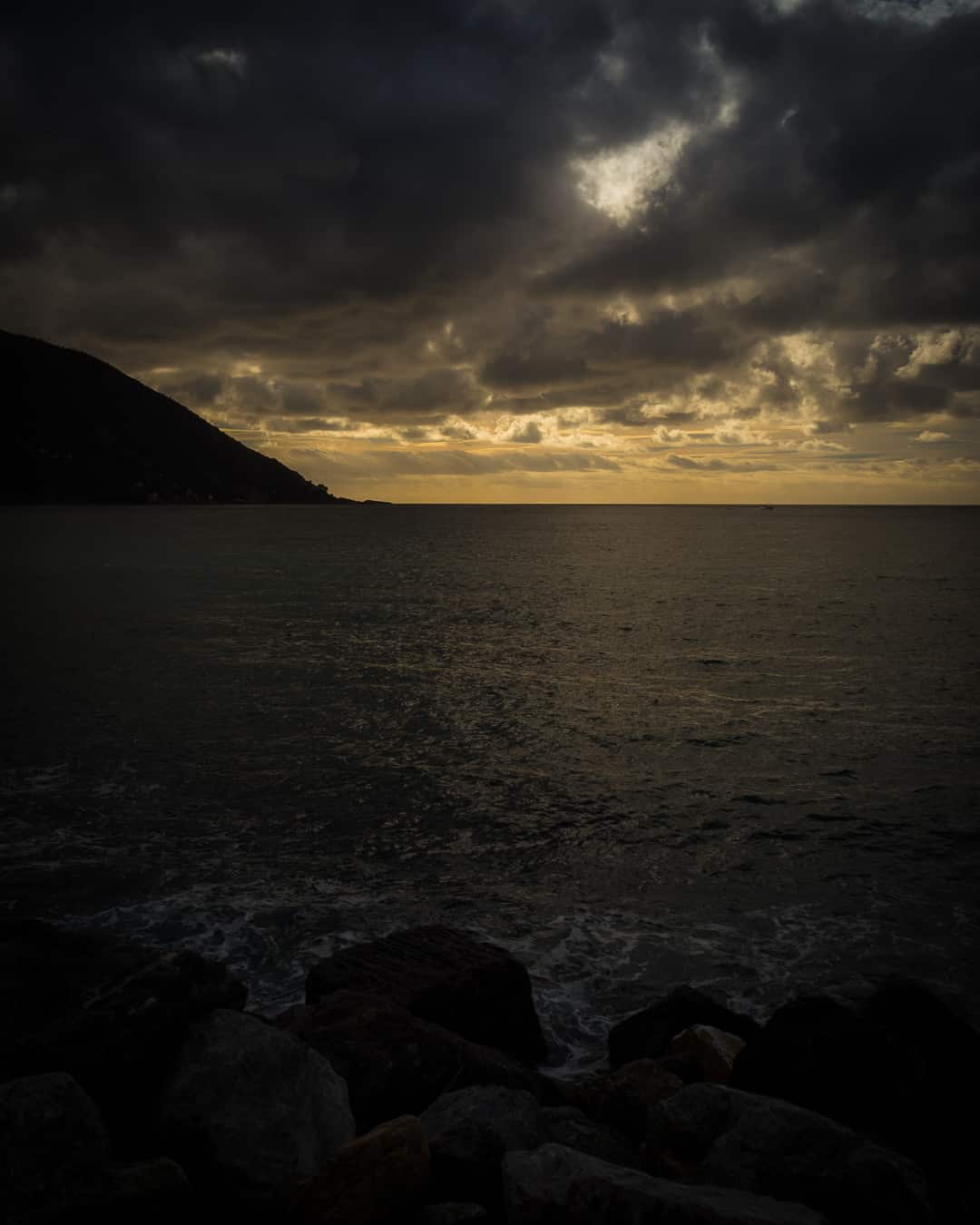
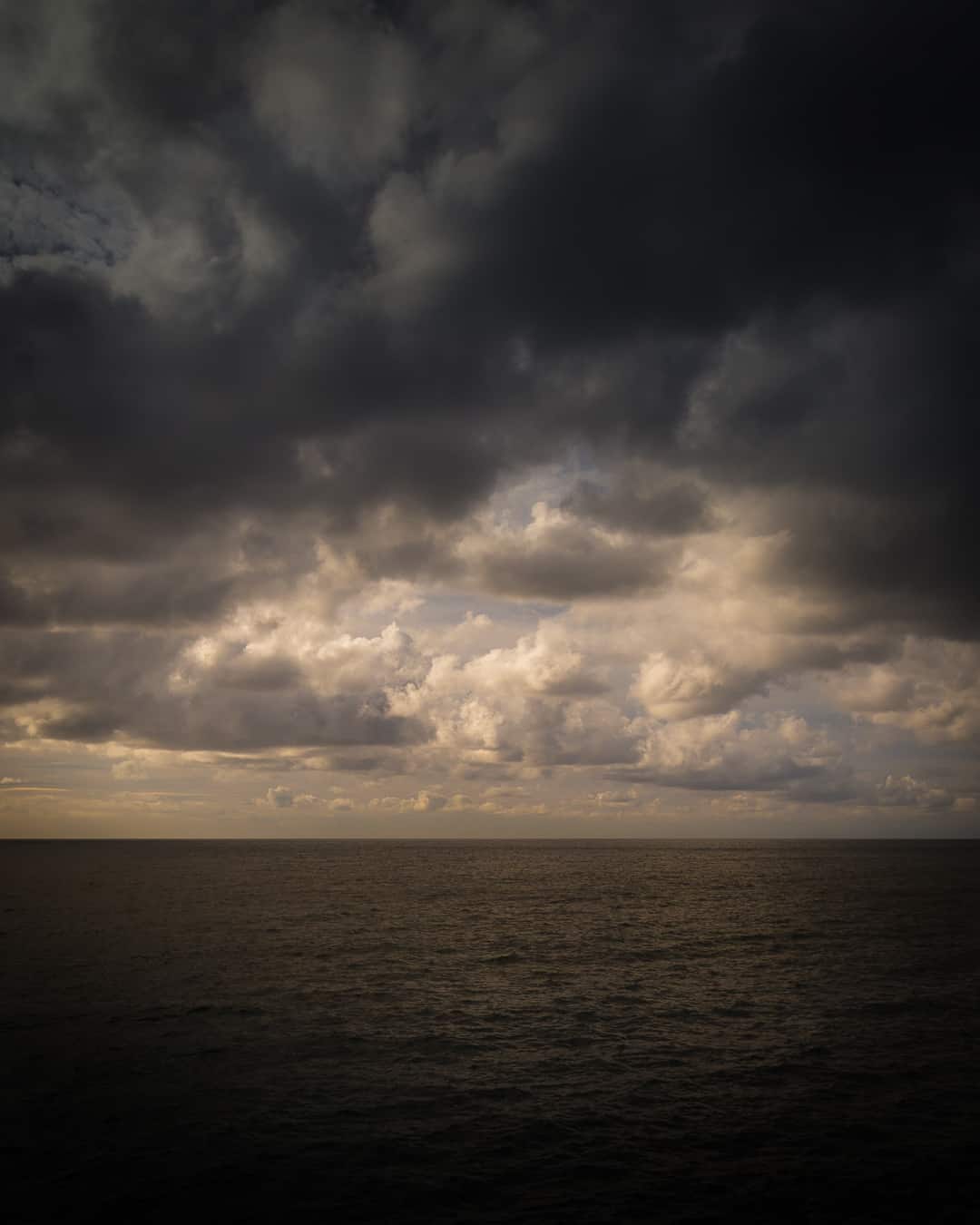
When the sky closes in, Camogli changes colour. The façades warm up, the sea turns slate-grey, the promontory vanishes into the haze.
Out of season the town is quieter and the climate stays mild: this is the time for walks in the low light.
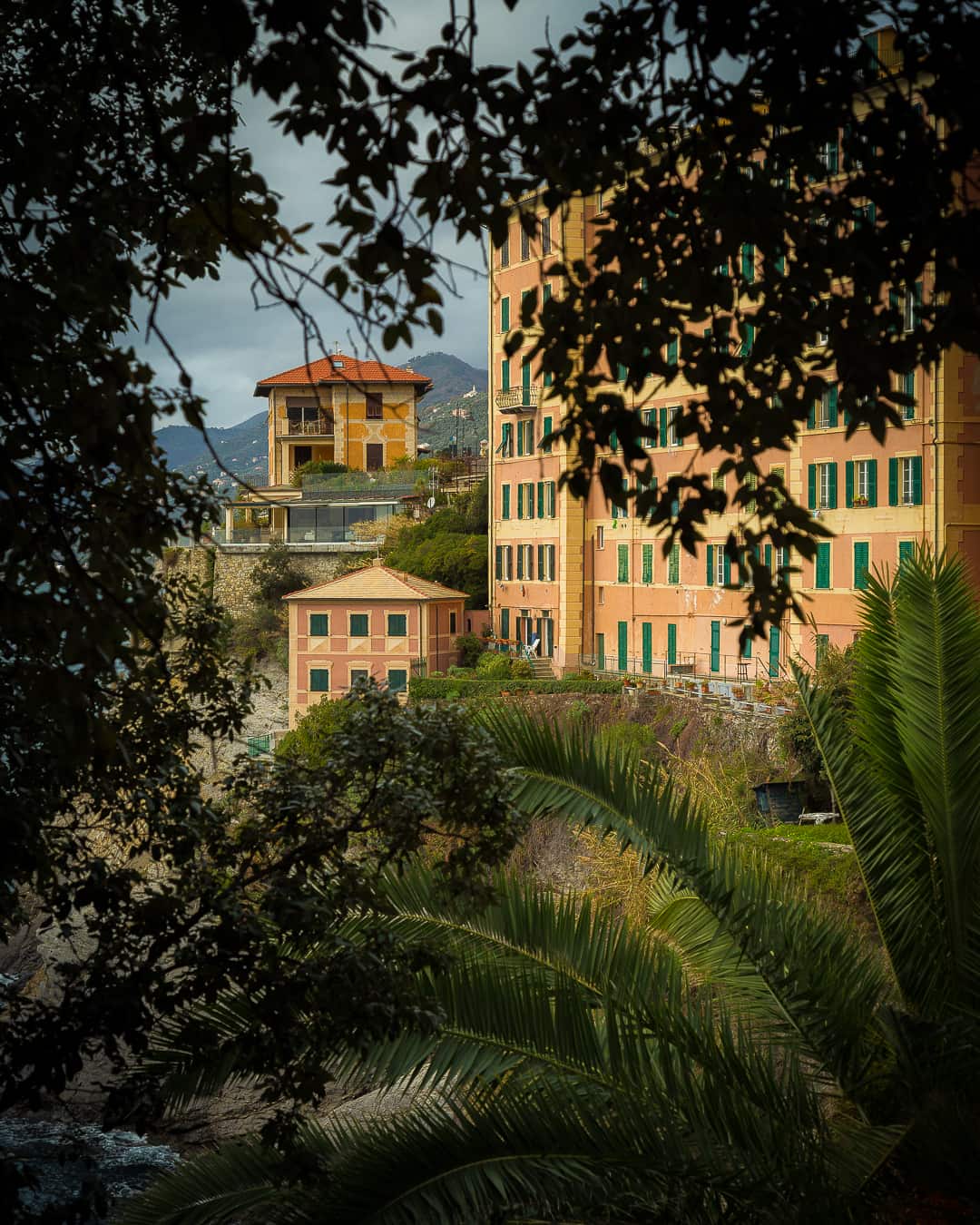
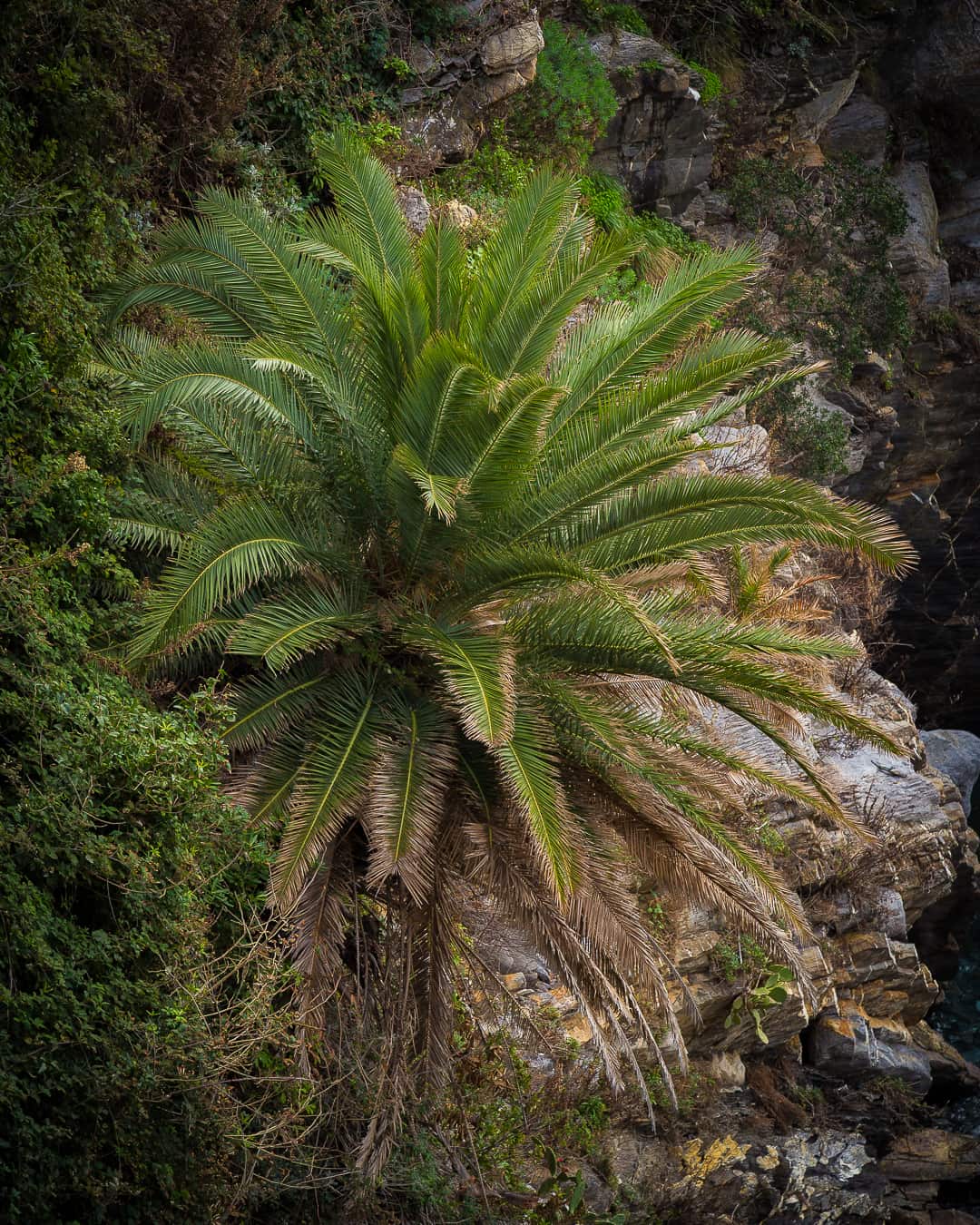
Among the rocks grow palms, which seem quite at home here.
Before the rain
Low clouds, a break of light, dark sea. Out of season Camogli is another place: the seafront empties, the fishing boats stay in port, and the sky puts on the show.
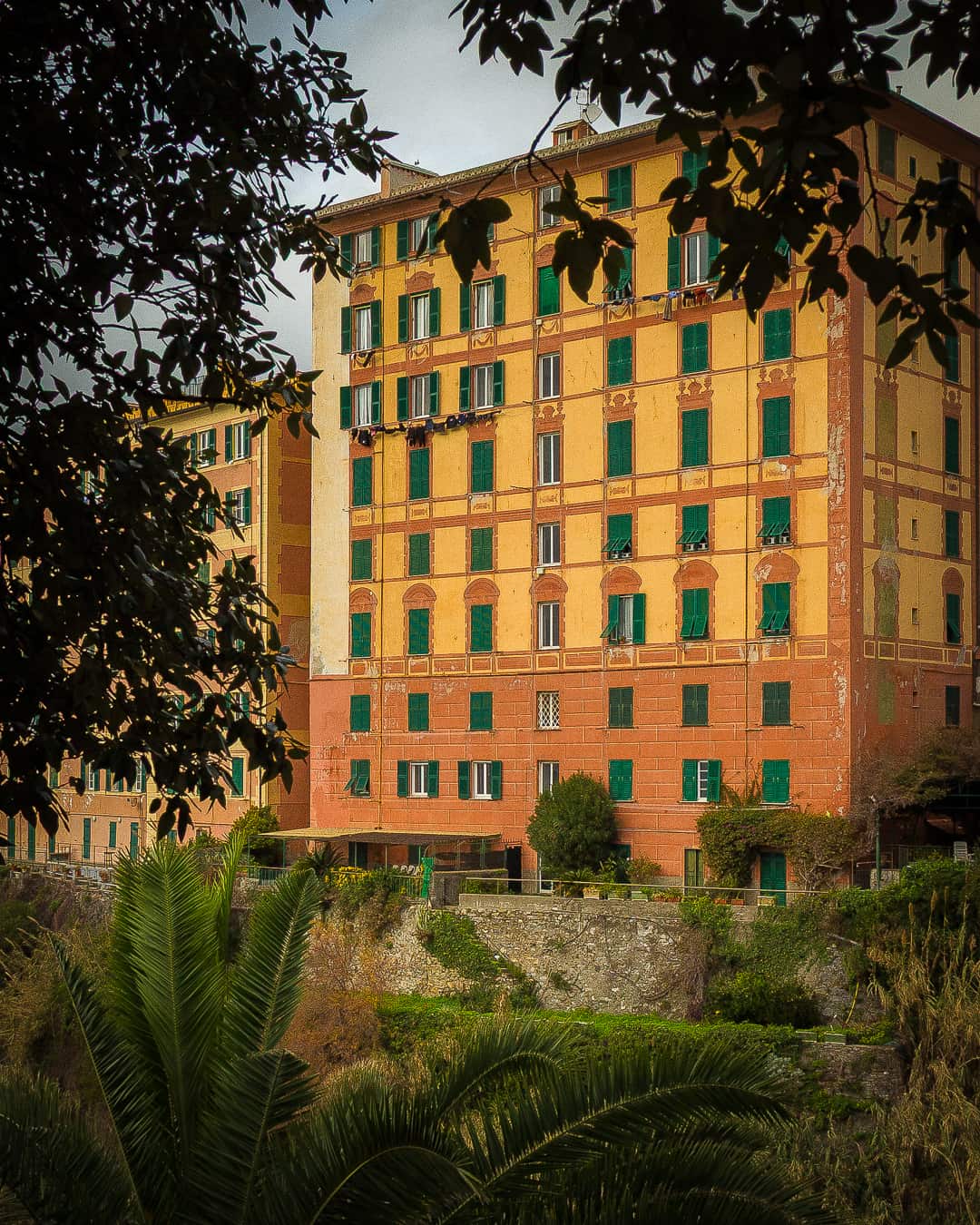
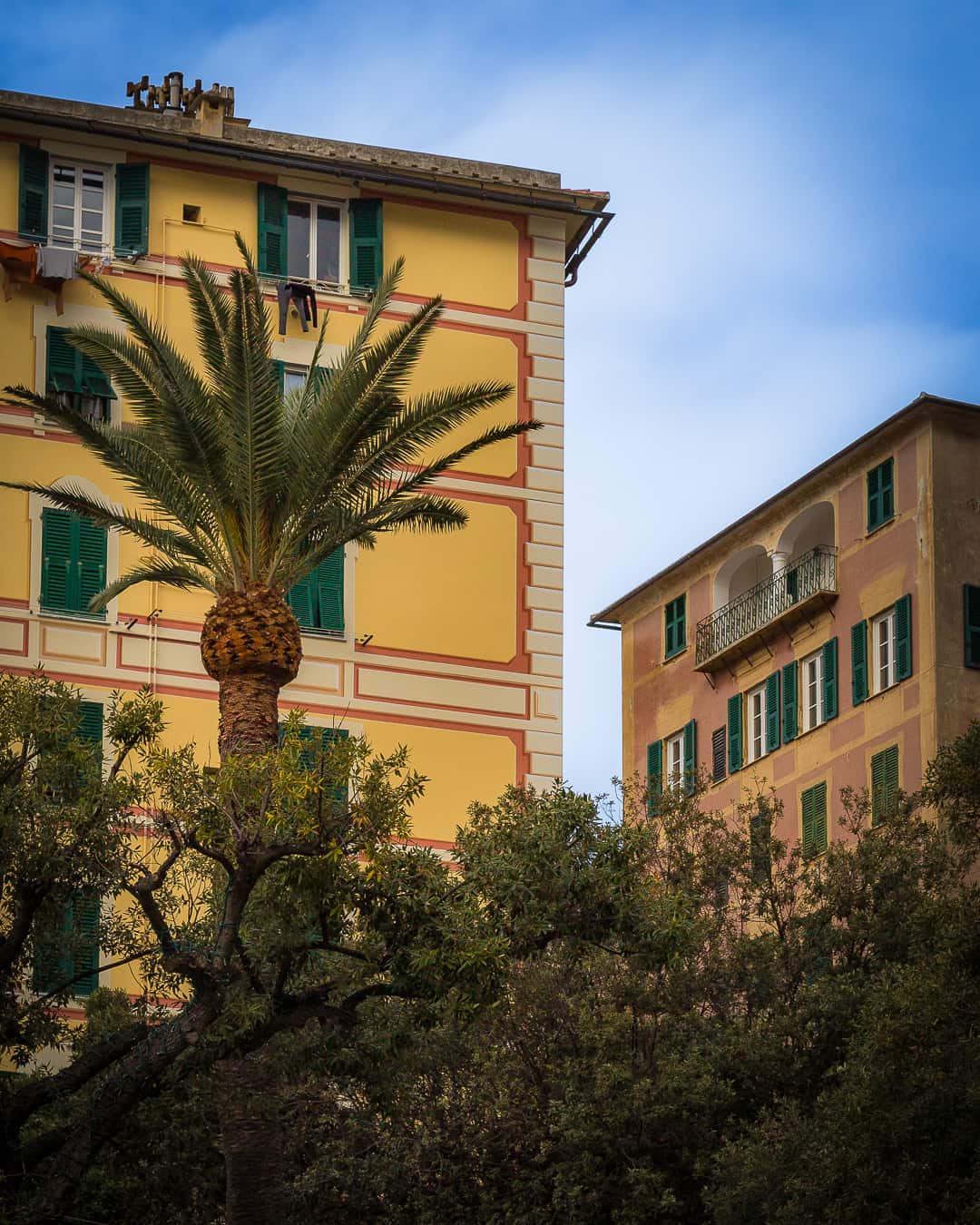
The building among palms
A large orange building with green shutters, framed by palms and branches. The Riviera’s mild climate lets palms grow even on the rocks. From a distance, the colours of the façades and the dark green of the leaves answer one another.
Getting there
- By train
- Camogli–San Fruttuoso station is a few minutes’ walk from the sea.
- By boat
- Boats leave the harbour for San Fruttuoso, stopping at Punta Chiappa: about half an hour. Trenitalia also sells a combined train + boat ticket.
- In May
- On the second Sunday of the month, it is the Sagra del Pesce.
- Worth seeing
- The Museo Marinaro Gio Bono Ferrari, with model sailing ships and ship’s instruments.
- Our advice
- Come out of season, on a cloudy day: the façades take on a warm light and the town is all yours.
Information checked on 21 November 2026.
Sources
- Camogli, cosa fare — Italia.it
- Camogli — Italia.it
- Camogli — lecinqueterre.org
- Camogli, la città dei mille velieri — TheWom Travel, 2026
- Camogli in un giorno — TheWom Travel
- Camogli, itinerario — TheWom Travel, 2026
- Camogli in 24 ore — TheWom Travel
- Camogli e il Golfo Paradiso — Quotidiano.net
- San Fruttuoso Link, treno + battello — Trenitalia
- Case colorate e castelli sul mare — PianetaMamma, 2026
Note
Photographs by William, also published on Instagram as @guglielmo.foto.
Texts and layout: WIDE Edizioni, Rho. Historical and practical information is checked against the sources on the previous page.
© 2026 WIDE Edizioni
A book for your place
We photograph villas, museums, villages and landscapes in natural light, and turn them into images ready for your website, print and social media. Or into pages to leaf through, like these.