WIDE Edizioni
Baia del Silenzio
Sestri Levante, Liguria
Photographs by William
Silence has an author
The name comes not from a nautical chart but from a poet. In 1919 Giovanni Descalzo, who was born and lived in Sestri Levante, called this cove “Baia del Silenzio”, the Bay of Silence, for the quiet he found there.
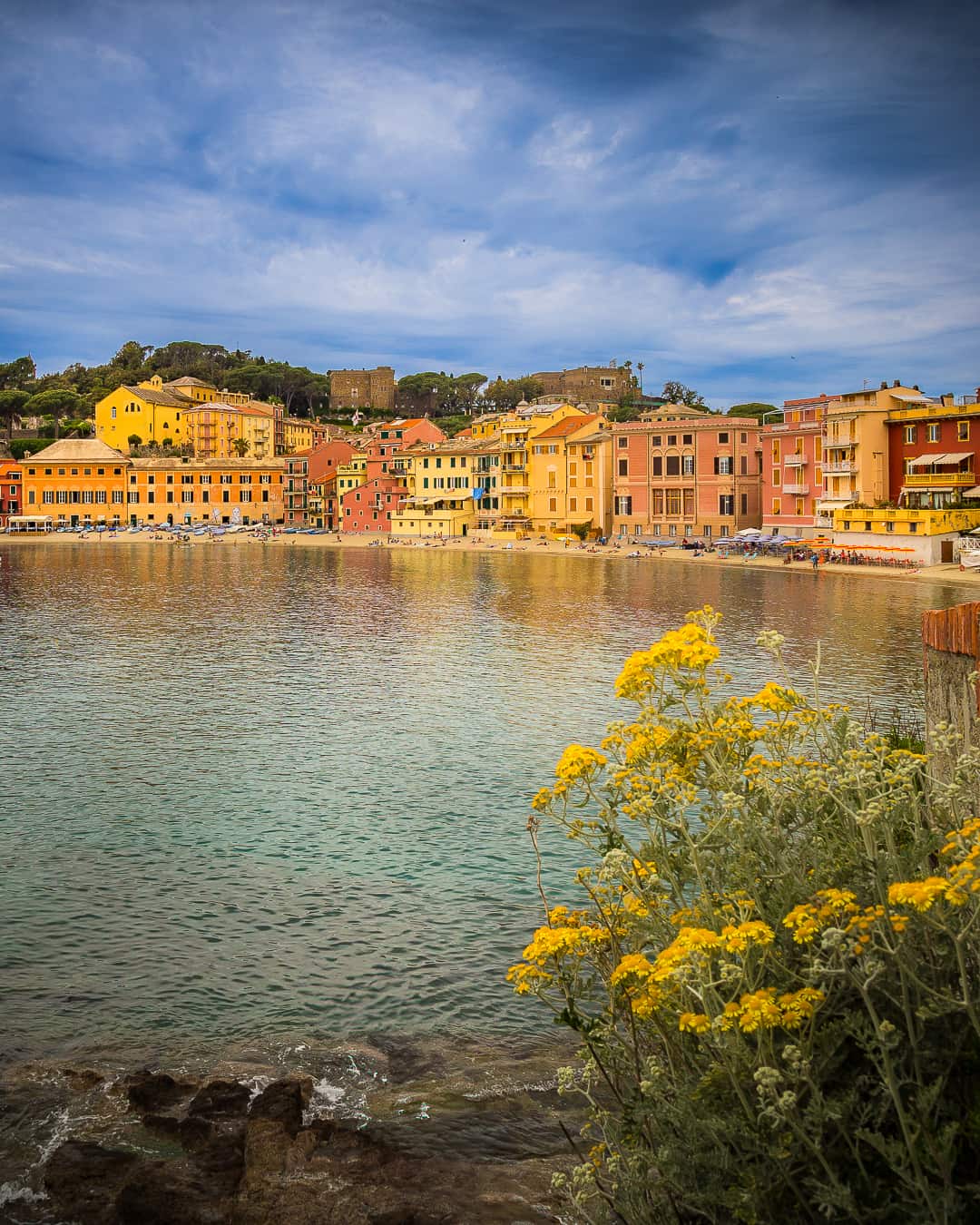
It is small: about three hundred metres of sand, almost all of it a free beach, tucked between colourful houses and sheltered offshore by a breakwater that keeps the water calm. The beach itself is called Portobello. On the other side of town lies the Baia delle Favole, which is why Sestri is known as “the town of two seas”.
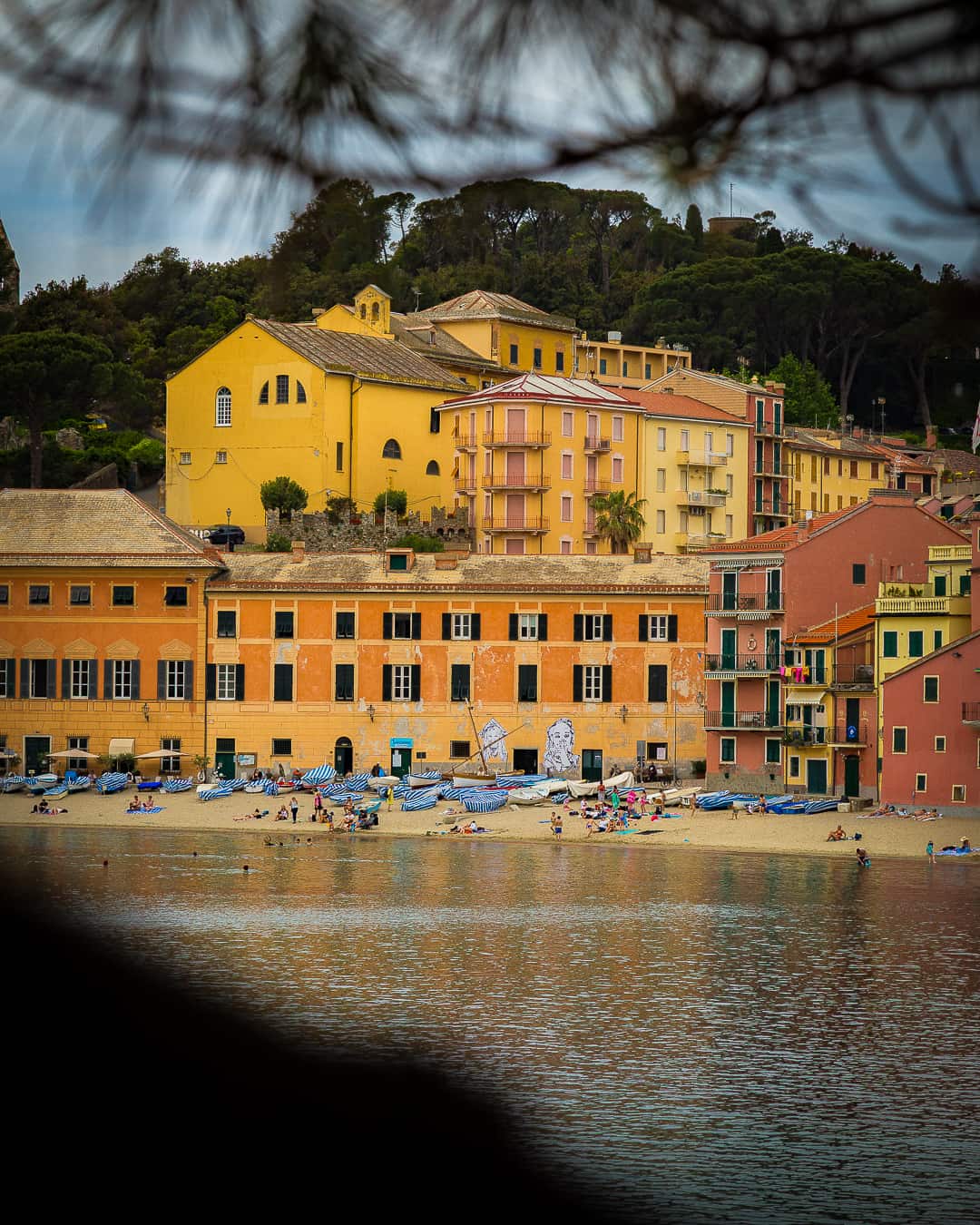
These pages tell it the way you discover it on foot: from above, through the pines; then past the façades, along the caruggio, among the boats pulled up on the sand.
I
The island that no longer is
Sestri Levante was born on an island. A sandy isthmus slowly joined it to the coast and, according to a geomorphological study, the peninsula was only fully formed in the eighteenth century. The name stuck: everyone here still calls it “the Isola”, the island.
You climb it through pines and gardens, past San Nicolò, a Romanesque church of 1151, up to the “castles” built for the industrialist Riccardo Gualino, now a hotel. In its park stands the Marconi Tower: in 1934, right here in Sestri, Guglielmo Marconi steered his yacht Elettra between two buoys using radio signals alone, with the blinds of the chart room drawn.
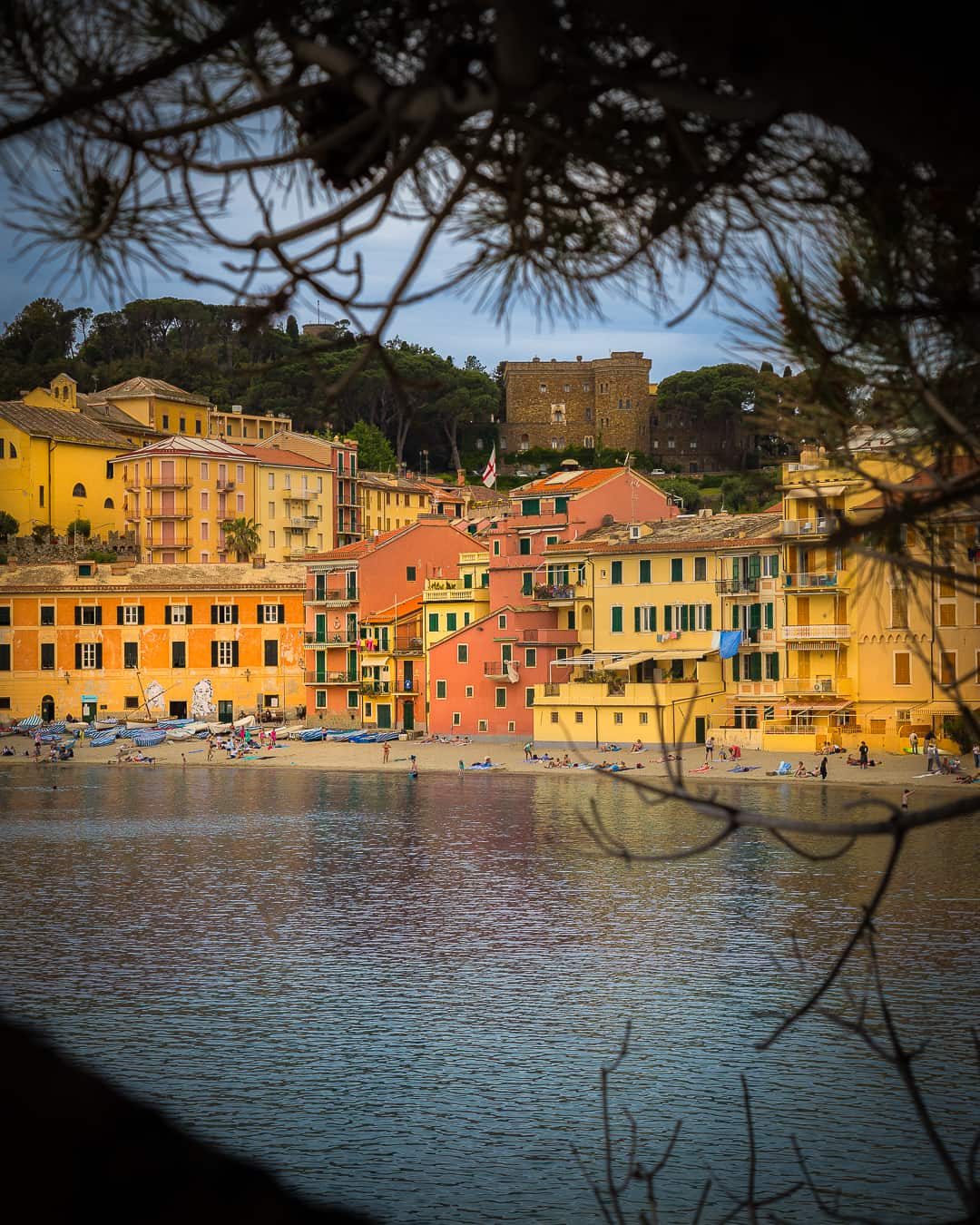
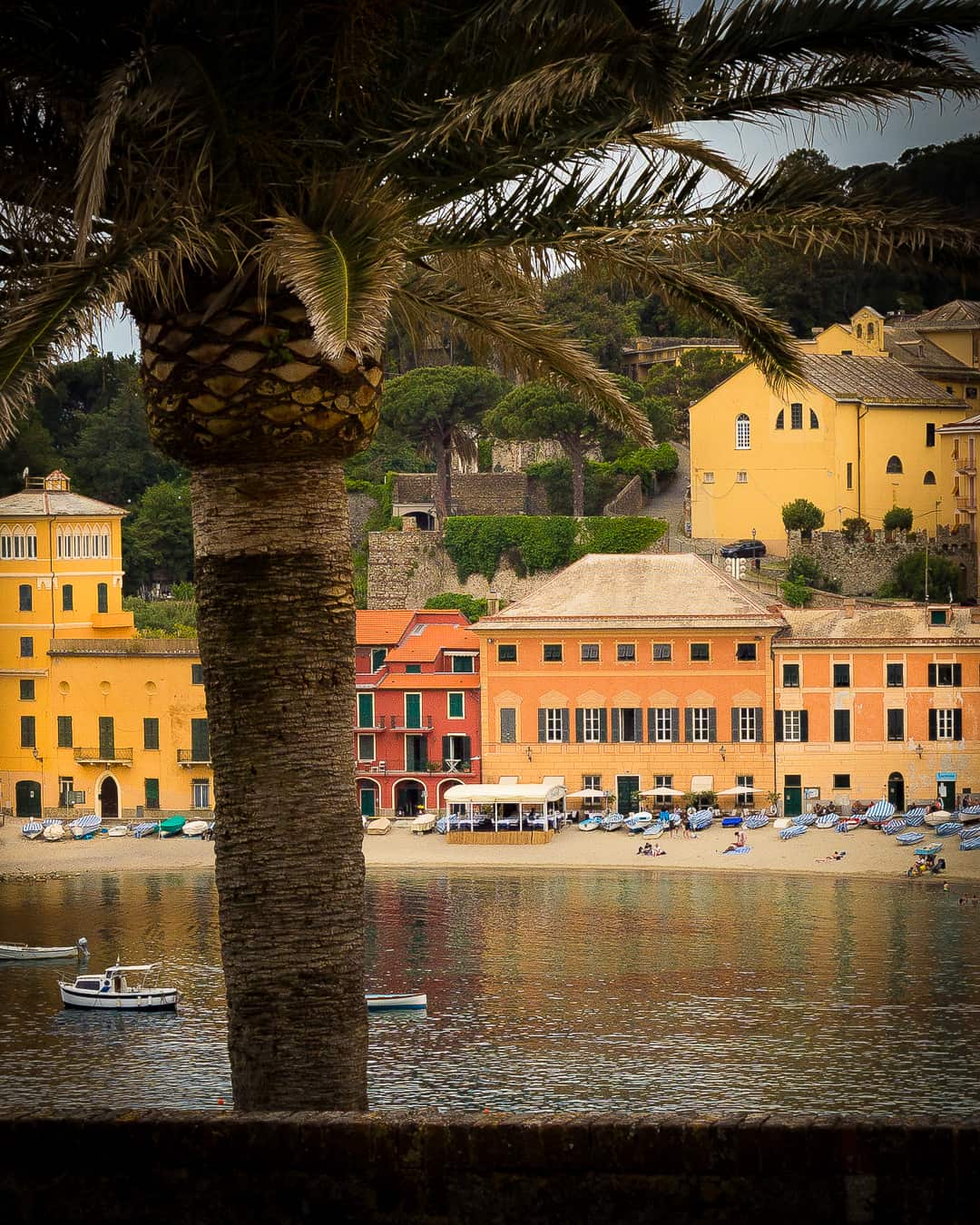
From up there, through the branches, the bay looks as it does in these pages.
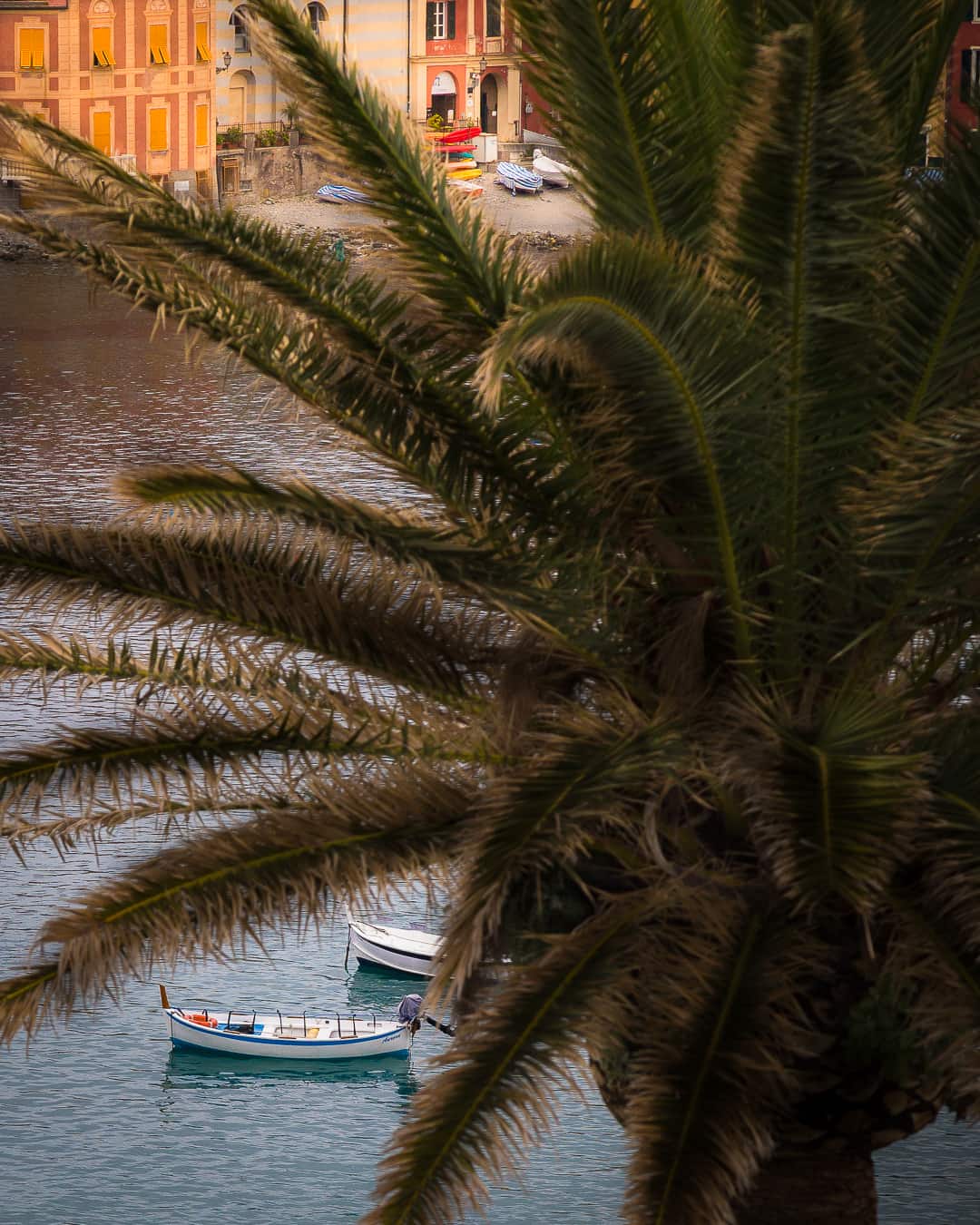
Look for the frame
The best way to look at the bay is not to look at all of it. As you climb the Isola, the pines act as a mount: one branch above, another to the side, and the view composes itself like an old print. It is this book’s first piece of advice: slow down, look for the frame, wait for two boats to drift into the right place.
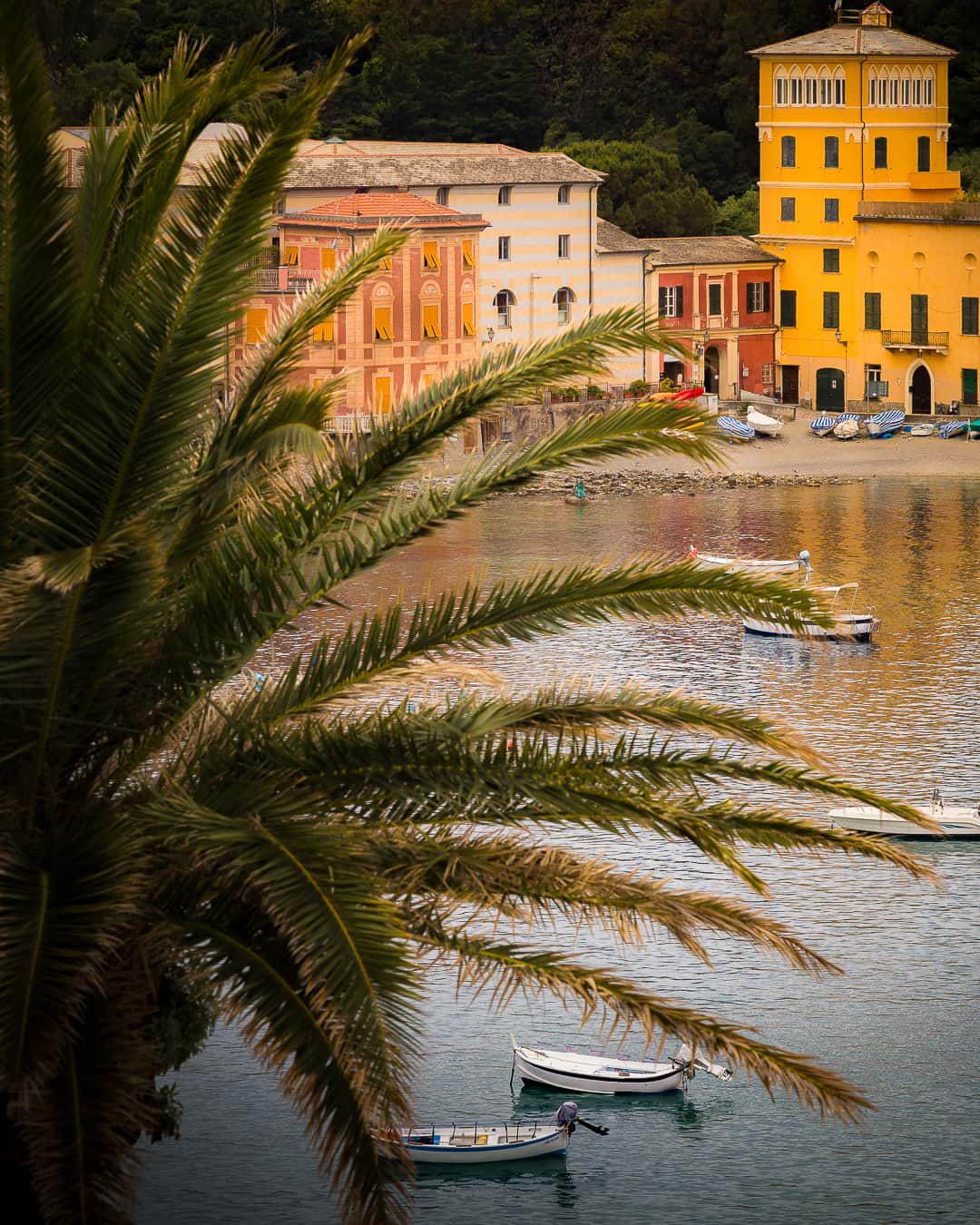
Count the windows
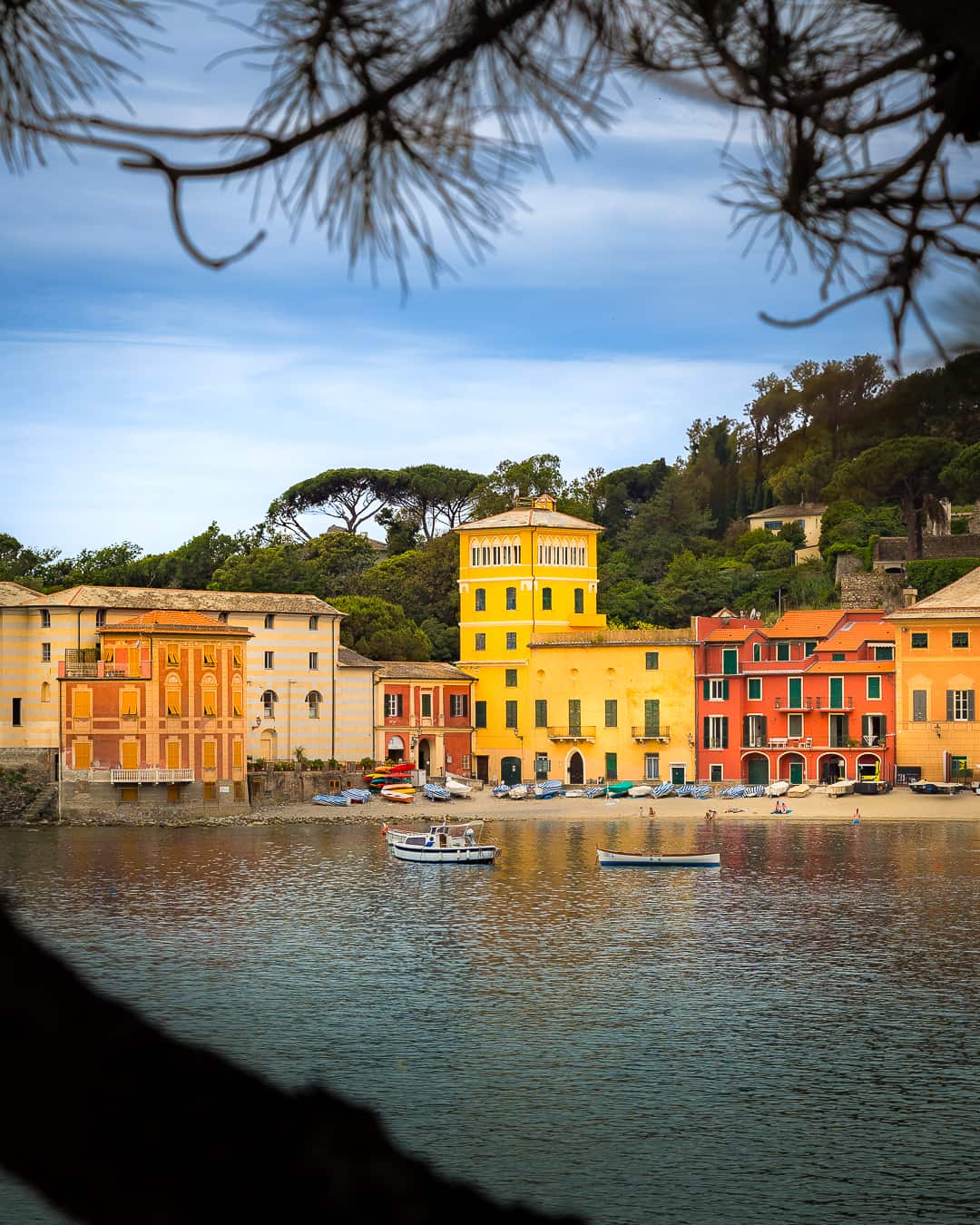
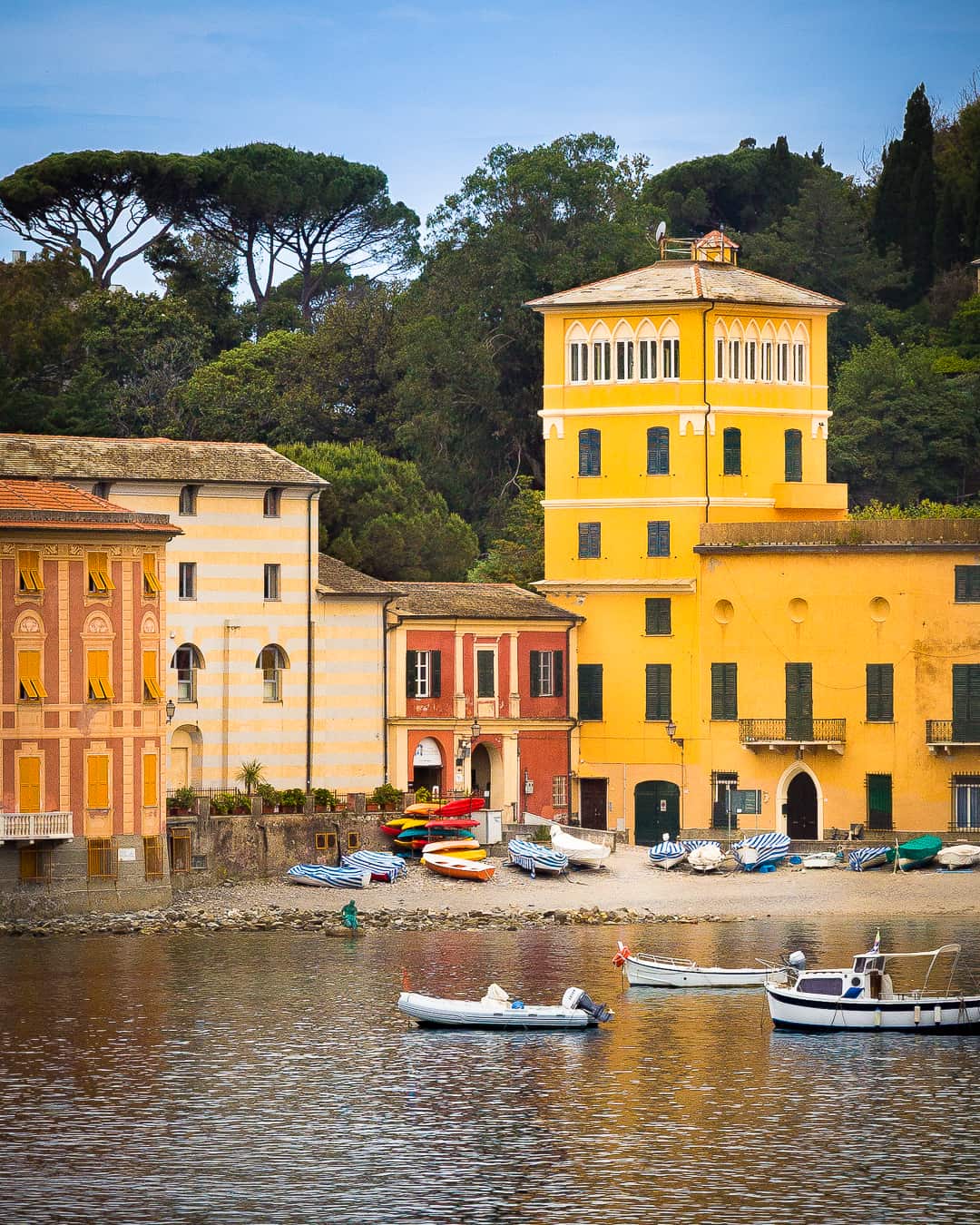
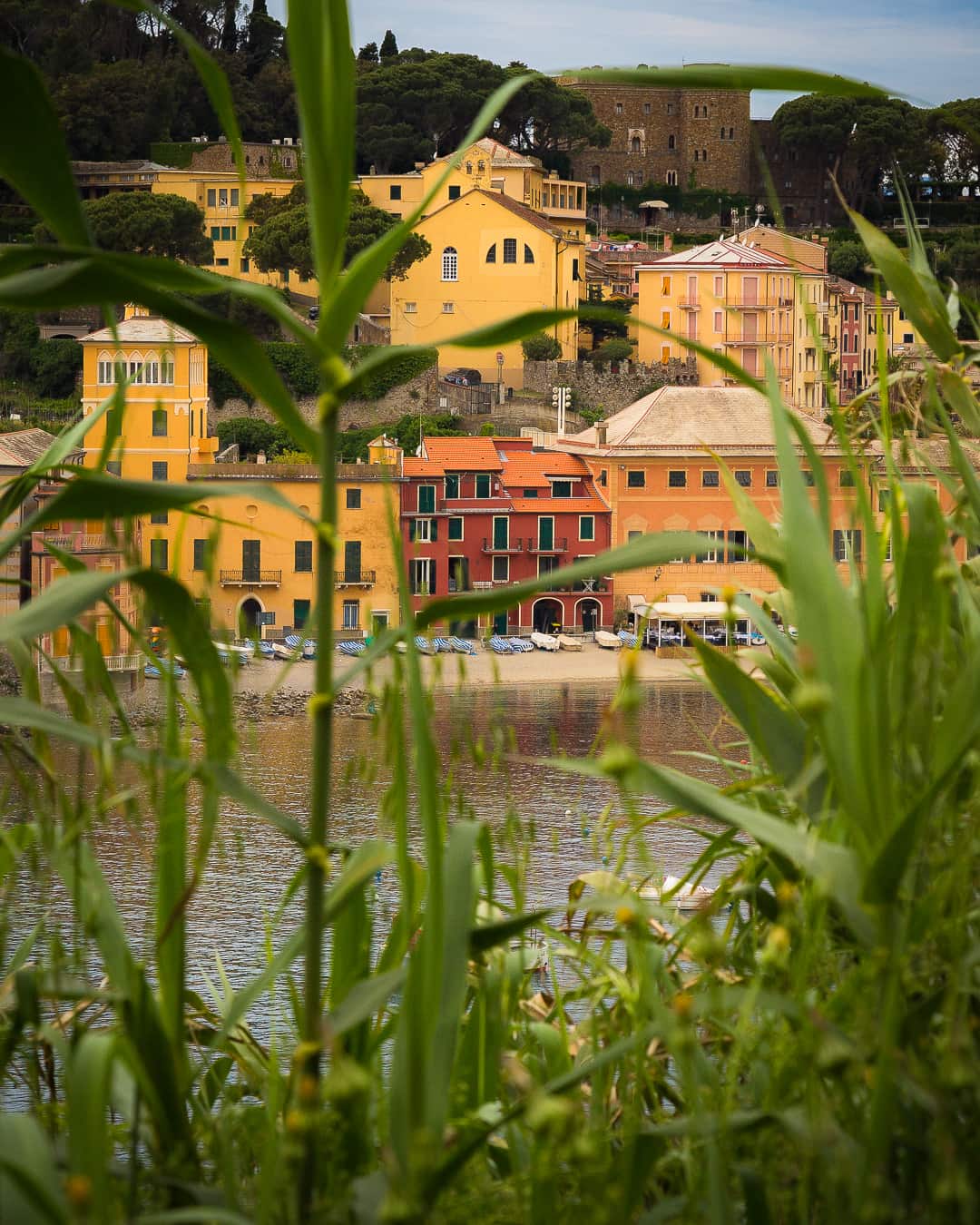
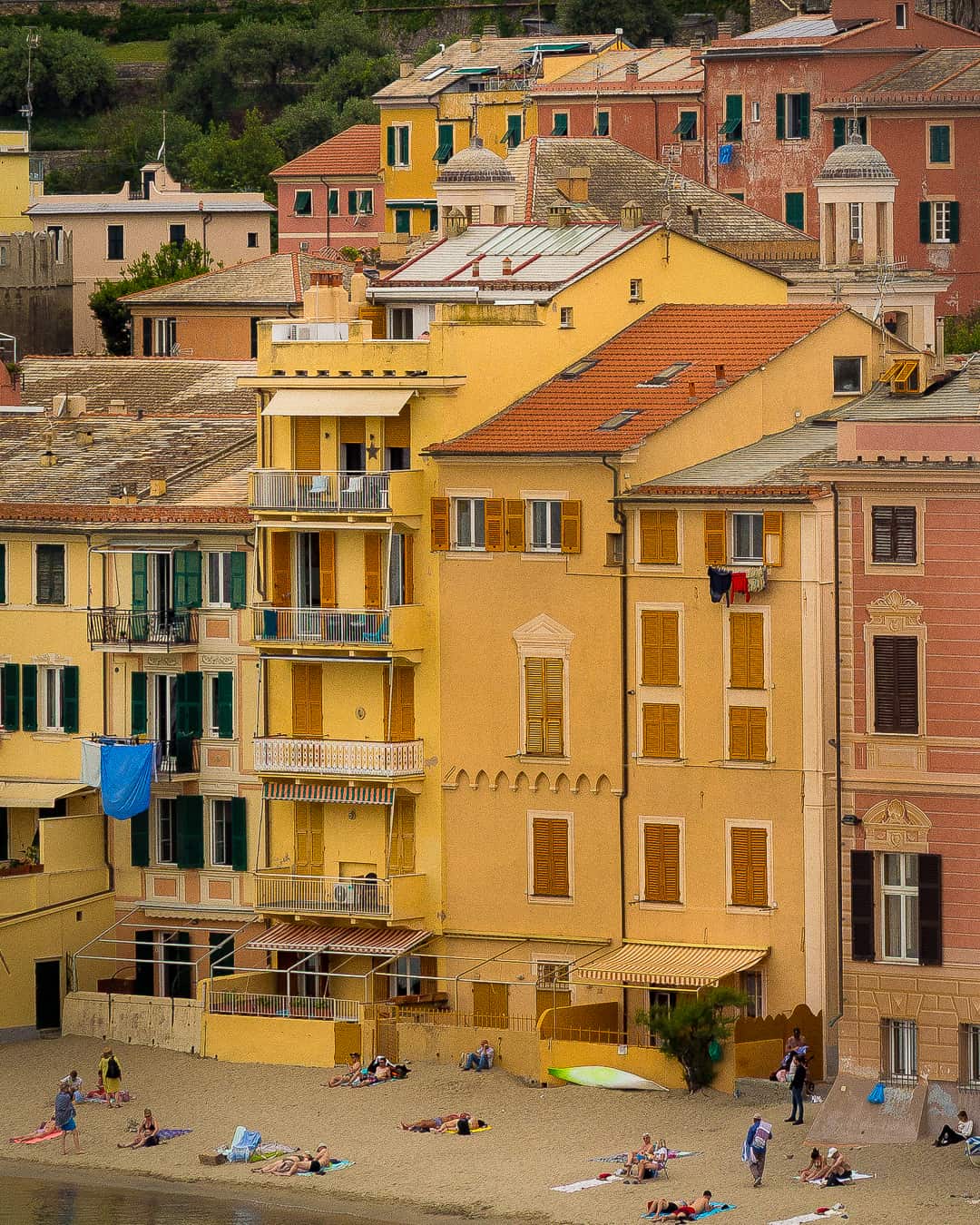
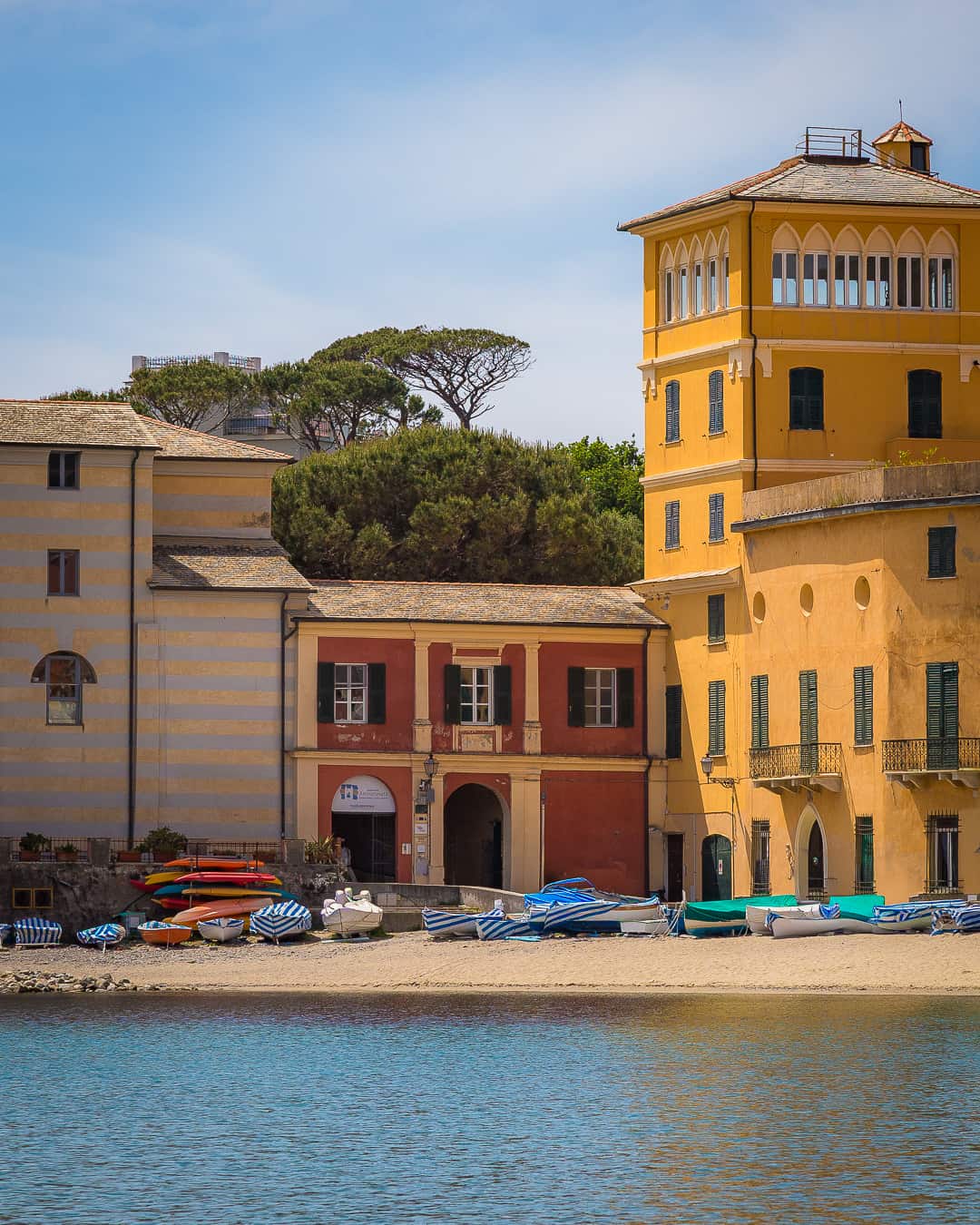
Try counting them: windows upon windows, up to the loggia at the top, where the house turns into a tower. From here it seems to stand guard over the beach, like a lighthouse that never lights up. At its feet the boats wait in line, bows to the water. In this bay, yellow is not just a colour: it is a landmark.
A theatre on the water
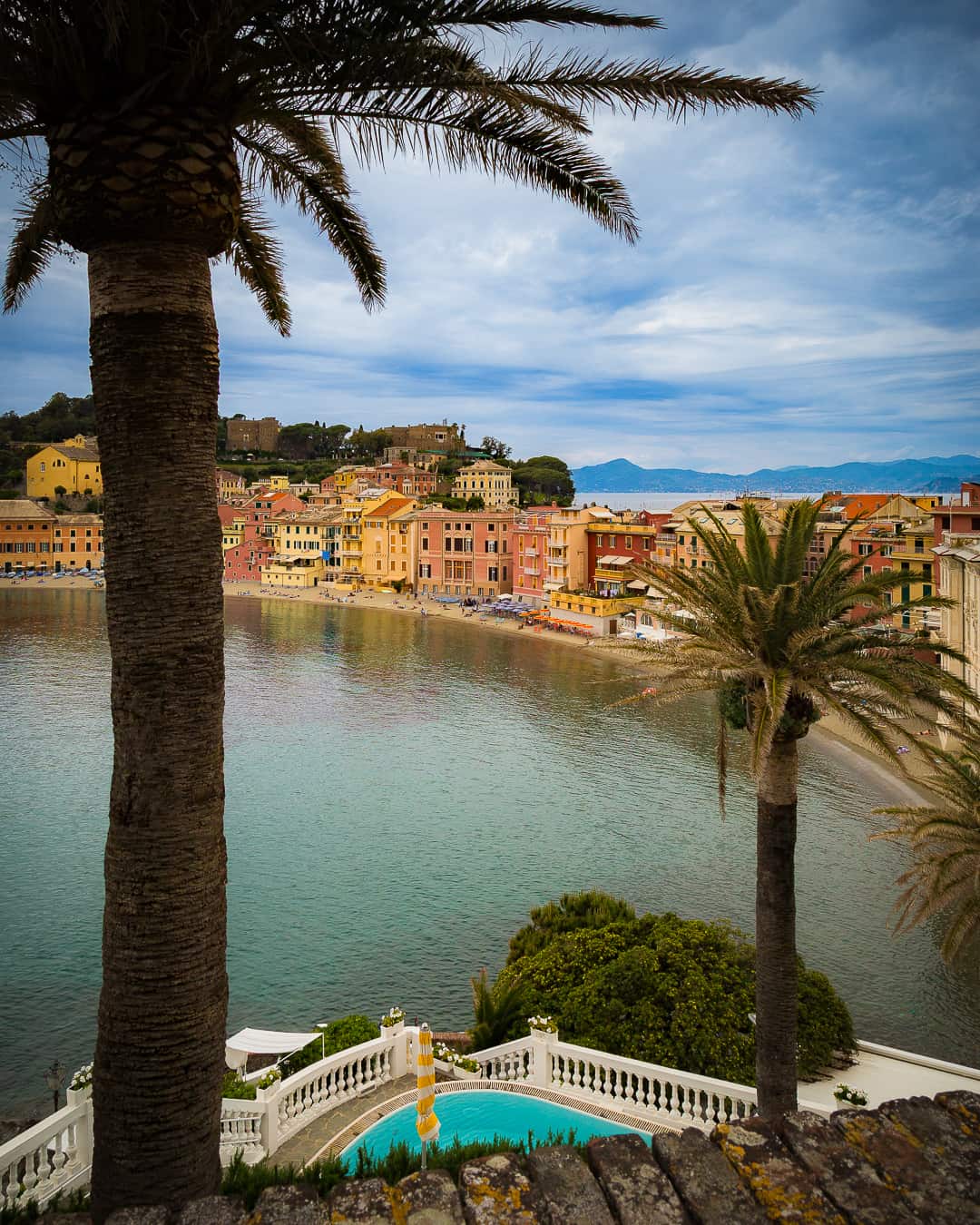
From up here the name makes sense. The bay is a closed arc, almost a theatre: the houses are the tiers, the water is the stage, and the breakwater offshore keeps the waves out. Three hundred metres of sand, and nothing too much. No wonder a poet, in 1919, named it with a single word: silence.
Get down low
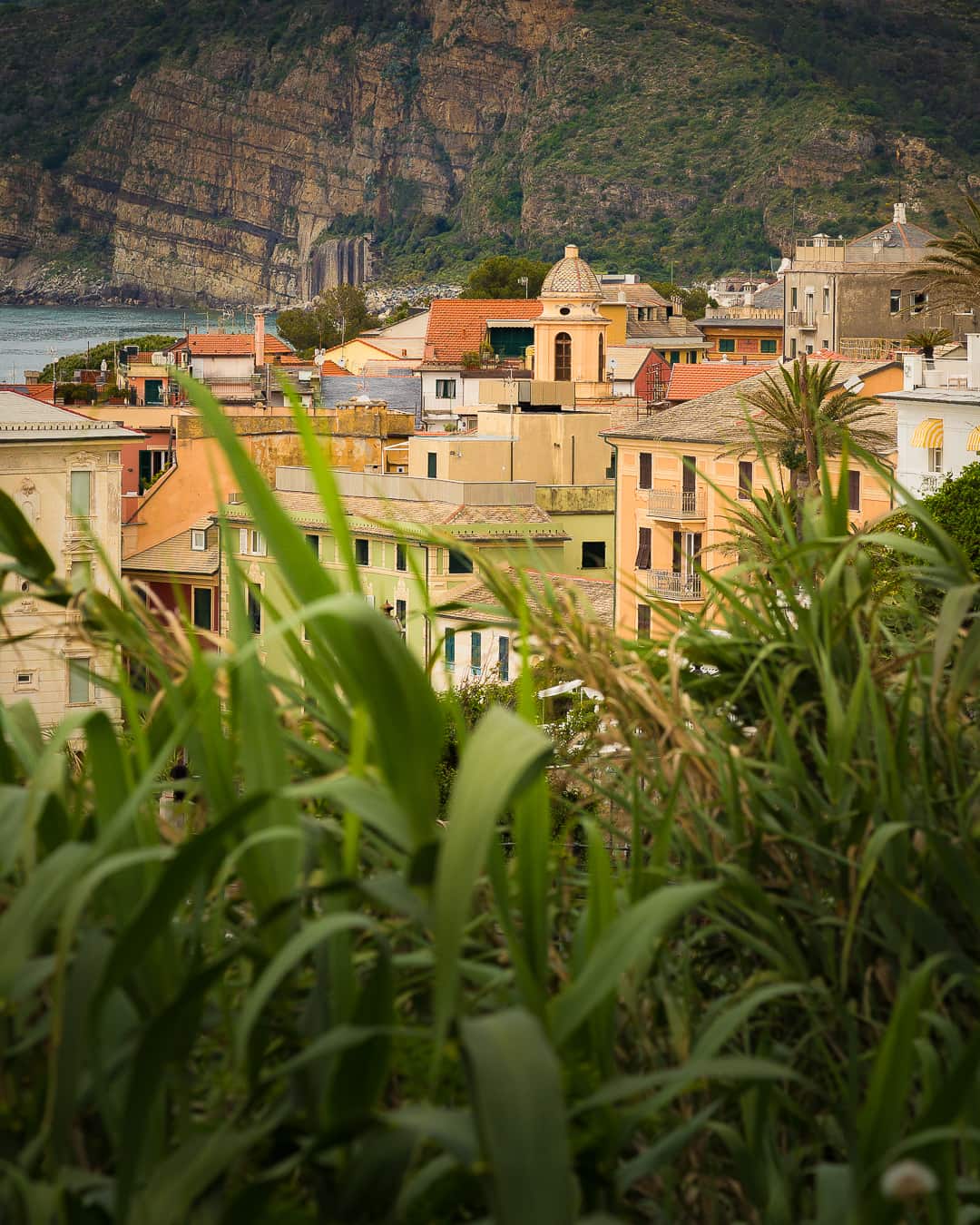
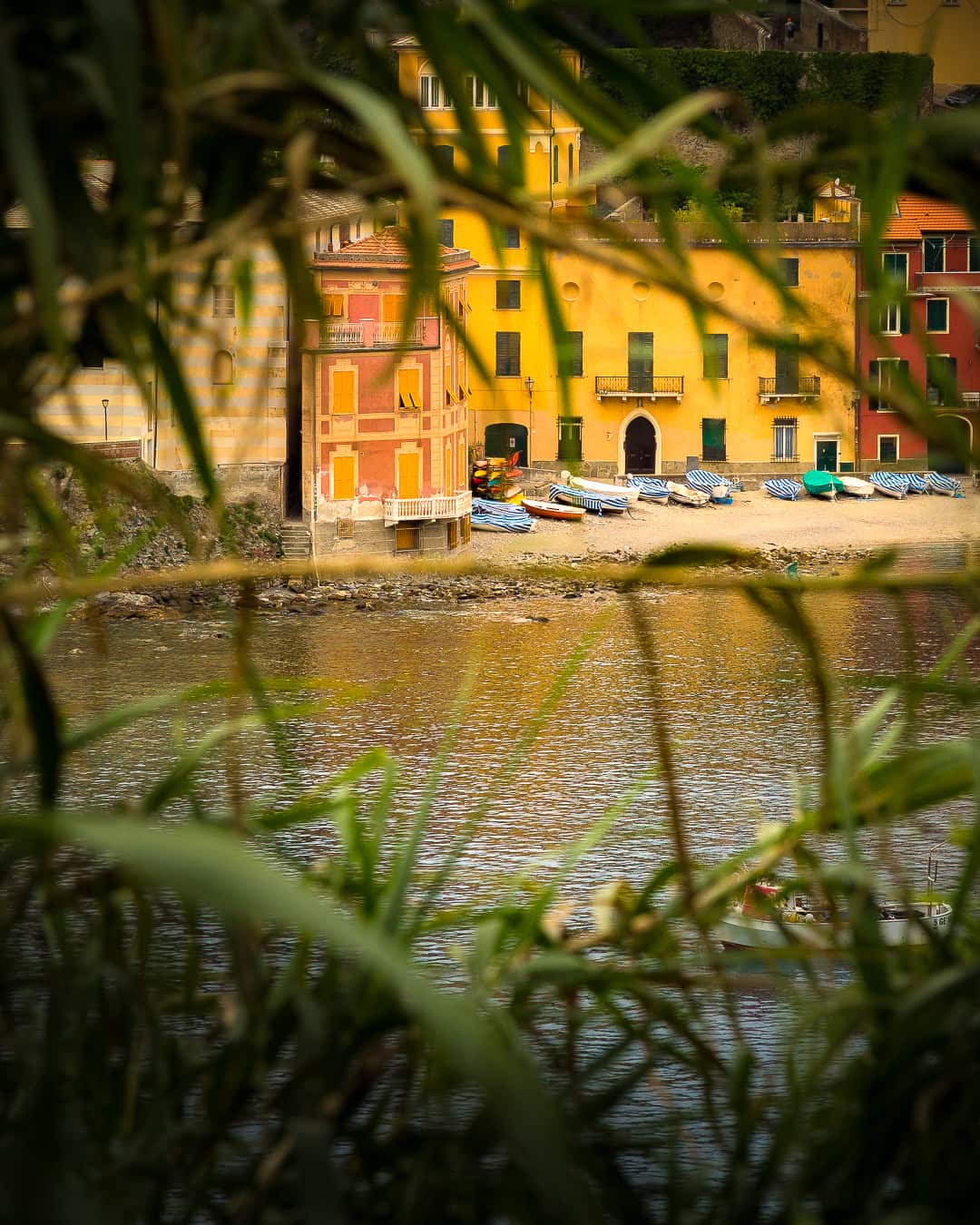
A photographer’s trick that works even without a camera: crouch down. A metre above the ground, tall grass becomes stage scenery and the bay behind it grows smaller and more precious, as if seen through a keyhole. The landscape stays the same; what changes is the way you step into it.
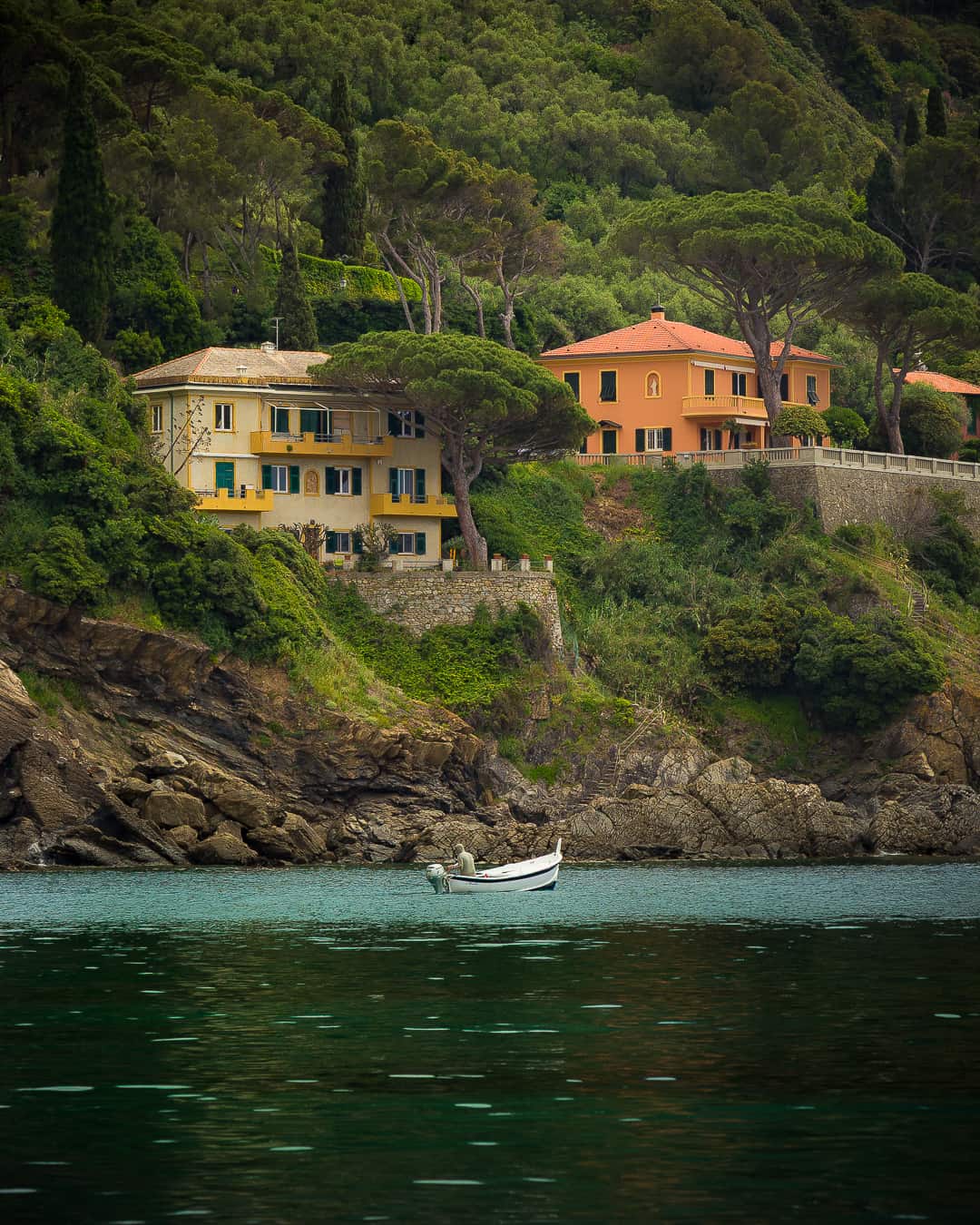
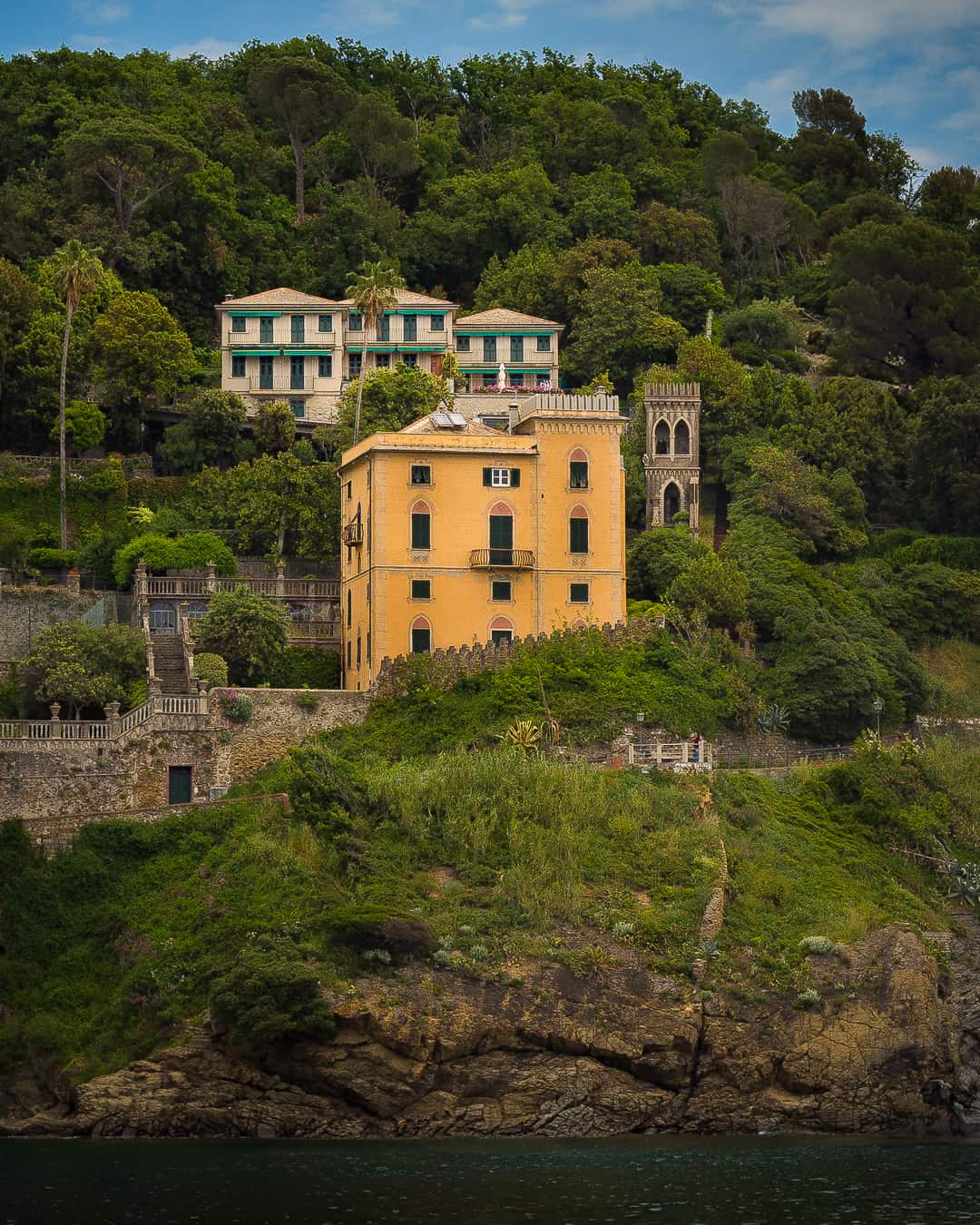
The villa and the tower
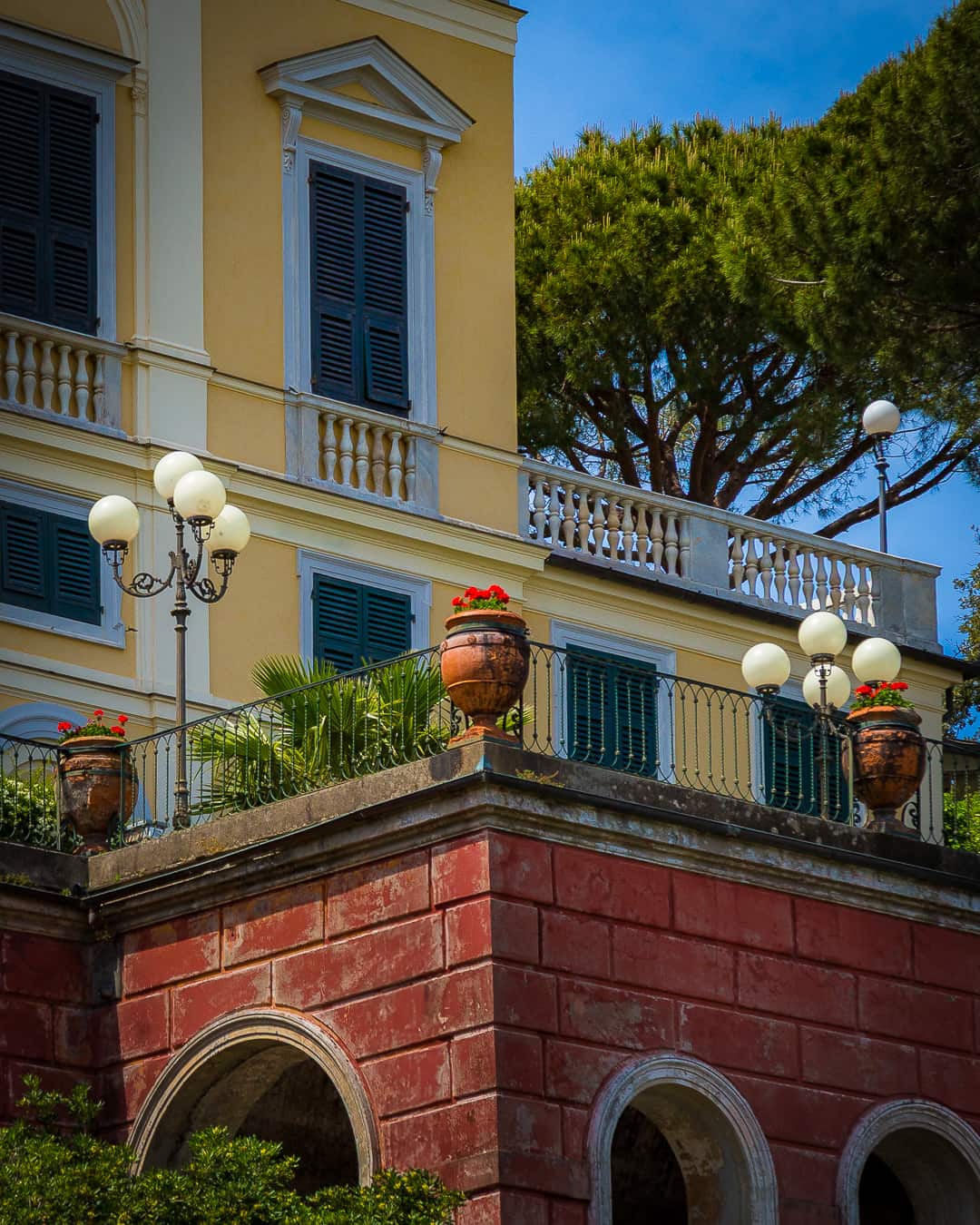
Many Ligurian headlands seem to have their own villa with a tower, built to look at the sea, or perhaps to be looked at. This one rises from the green like a ship at anchor, its windows trained on the water. We do not know who lives there; we can only imagine the view from its rooms. That is one of Sestri’s pleasures: inventing a story for every house.
II
The trick of the façades
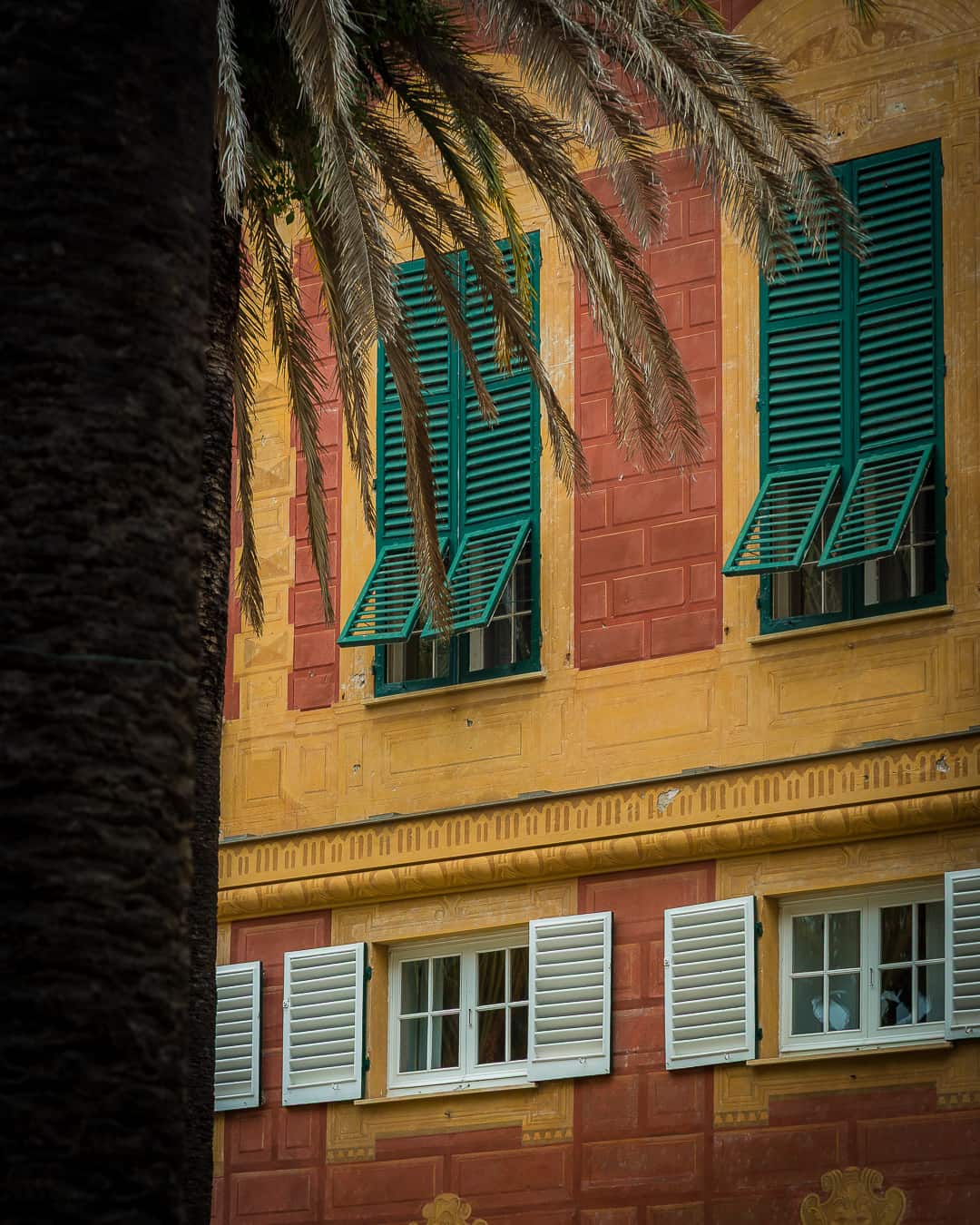
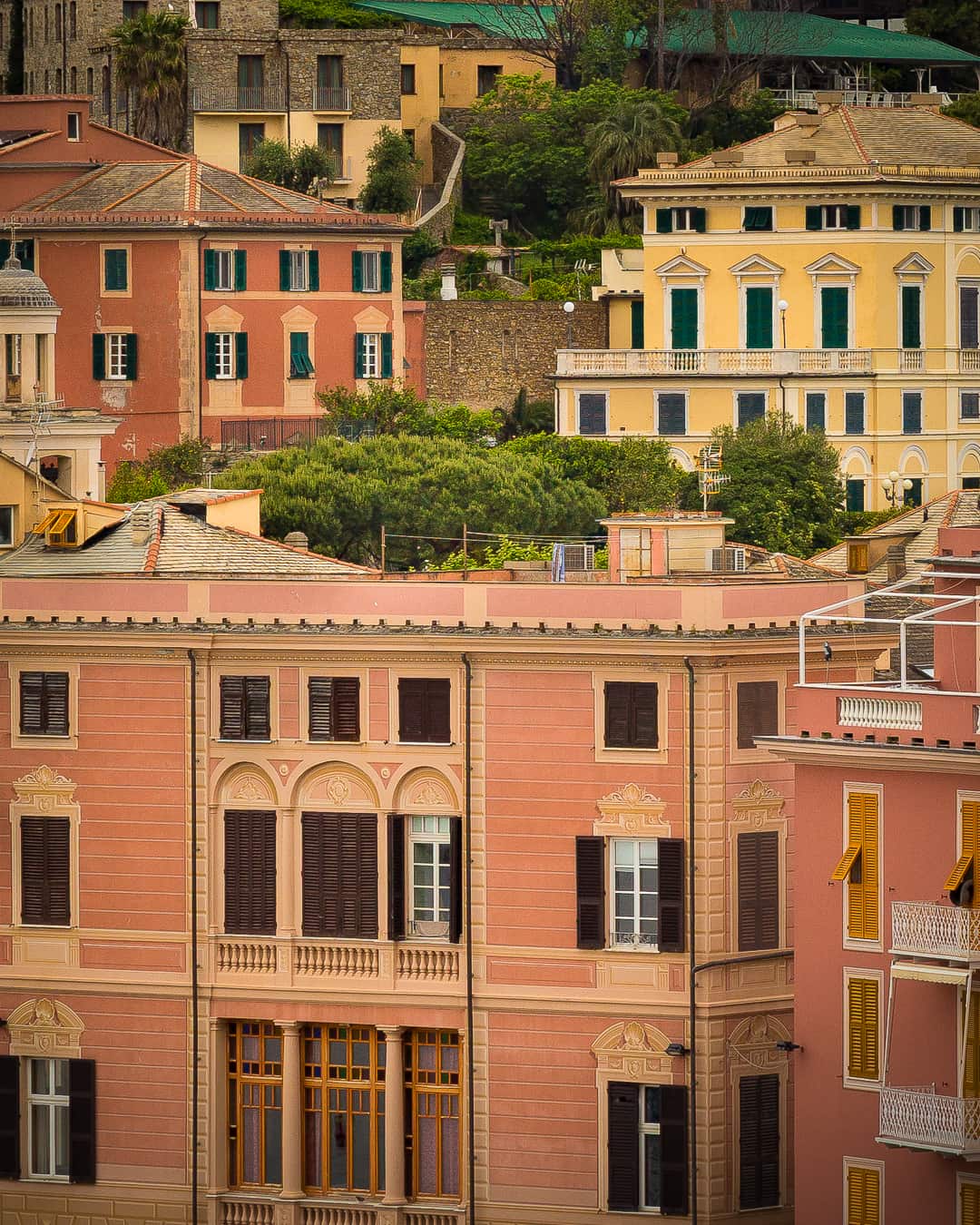
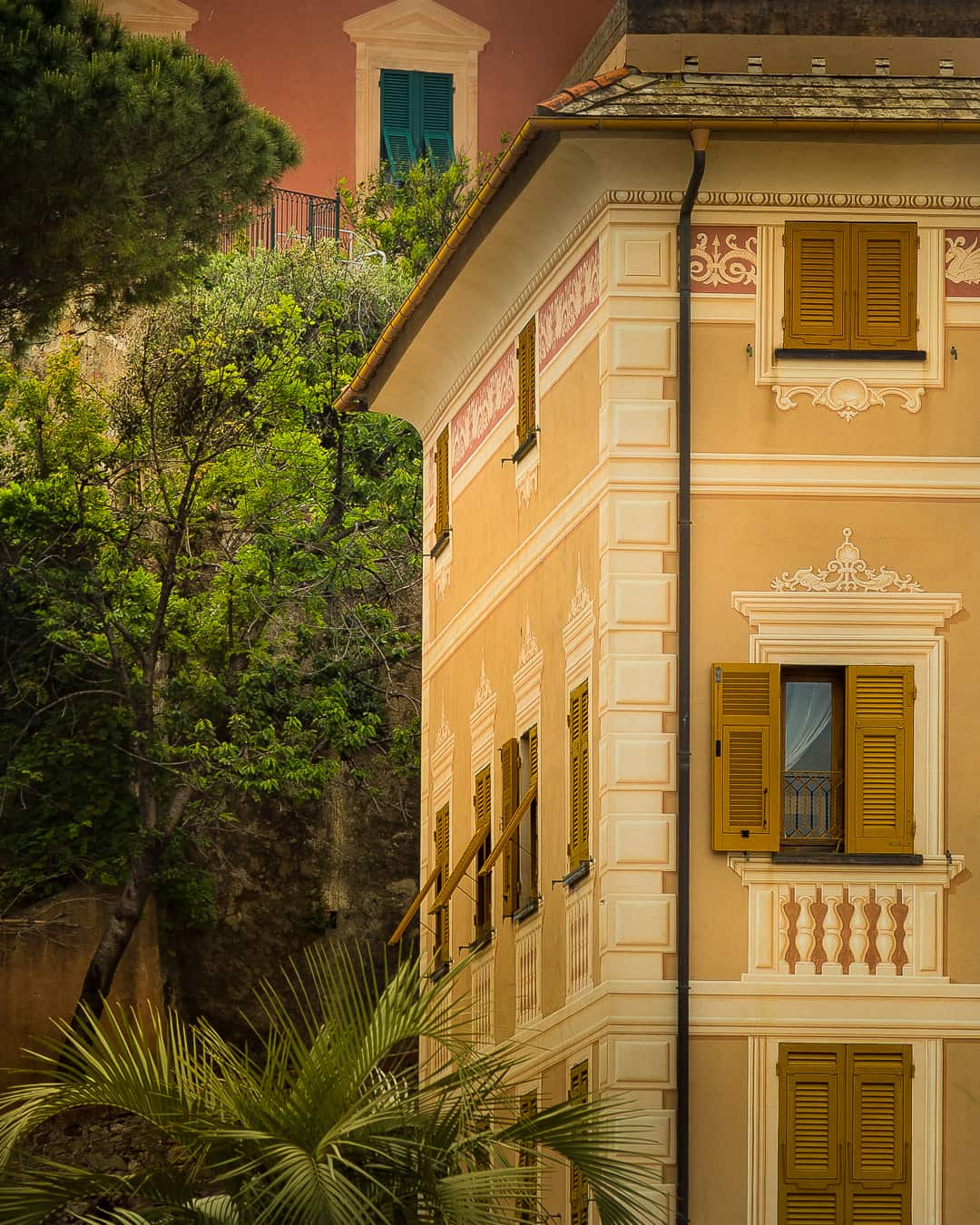
In Liguria, façades read like pages. Cornices, pilasters, pediments, sometimes whole windows with half-open shutters: much of what looks carved is painted. This is trompe-l’œil, “deceive the eye”, found all along the coast.
Why paint instead of build? The most common explanation is thrift: a brush cost less than marble and stucco. There is also a story about a window tax in the days of the Republic of Genoa, which supposedly led people to wall some windows up and paint them back on: a popular tradition rather than an established fact.
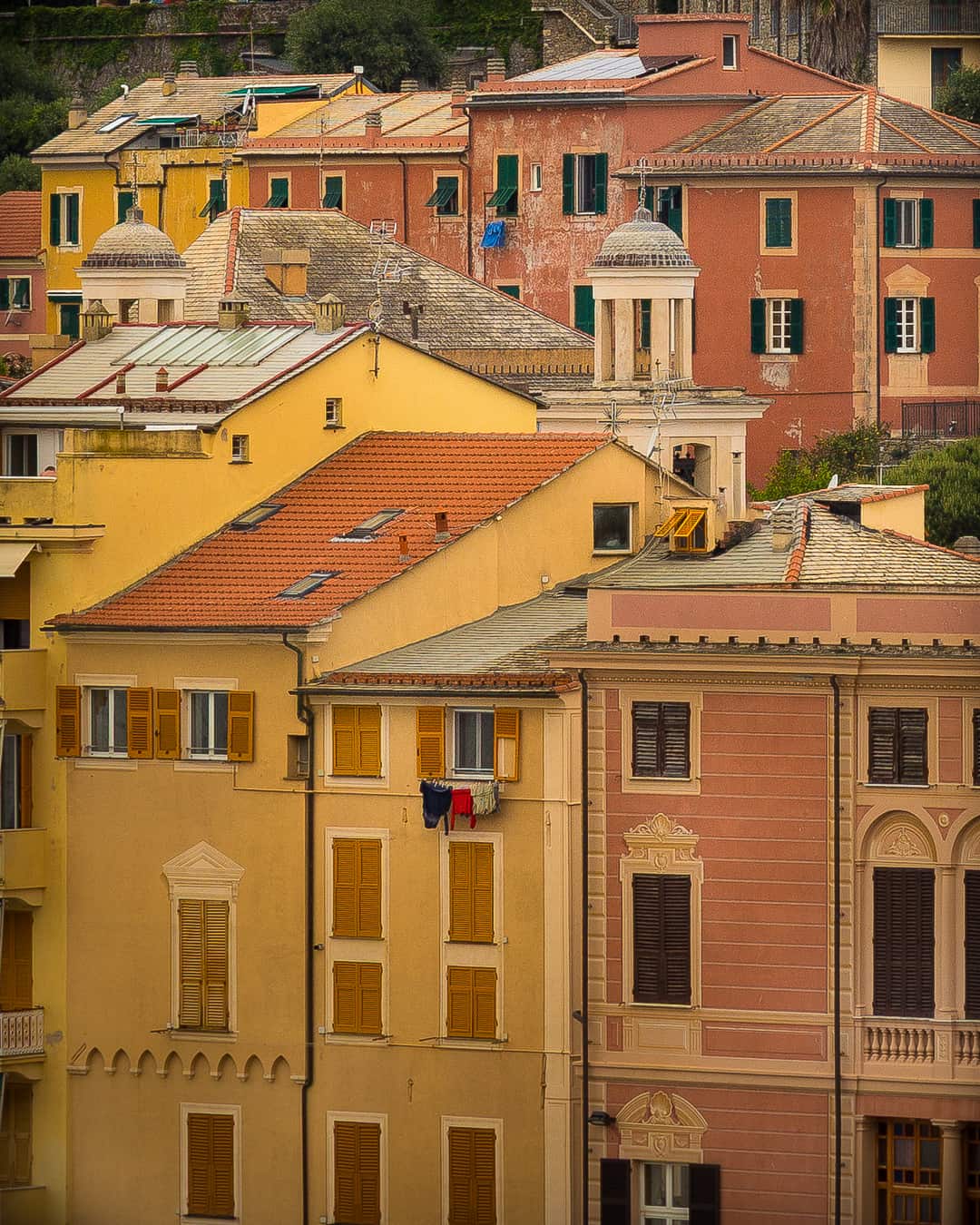
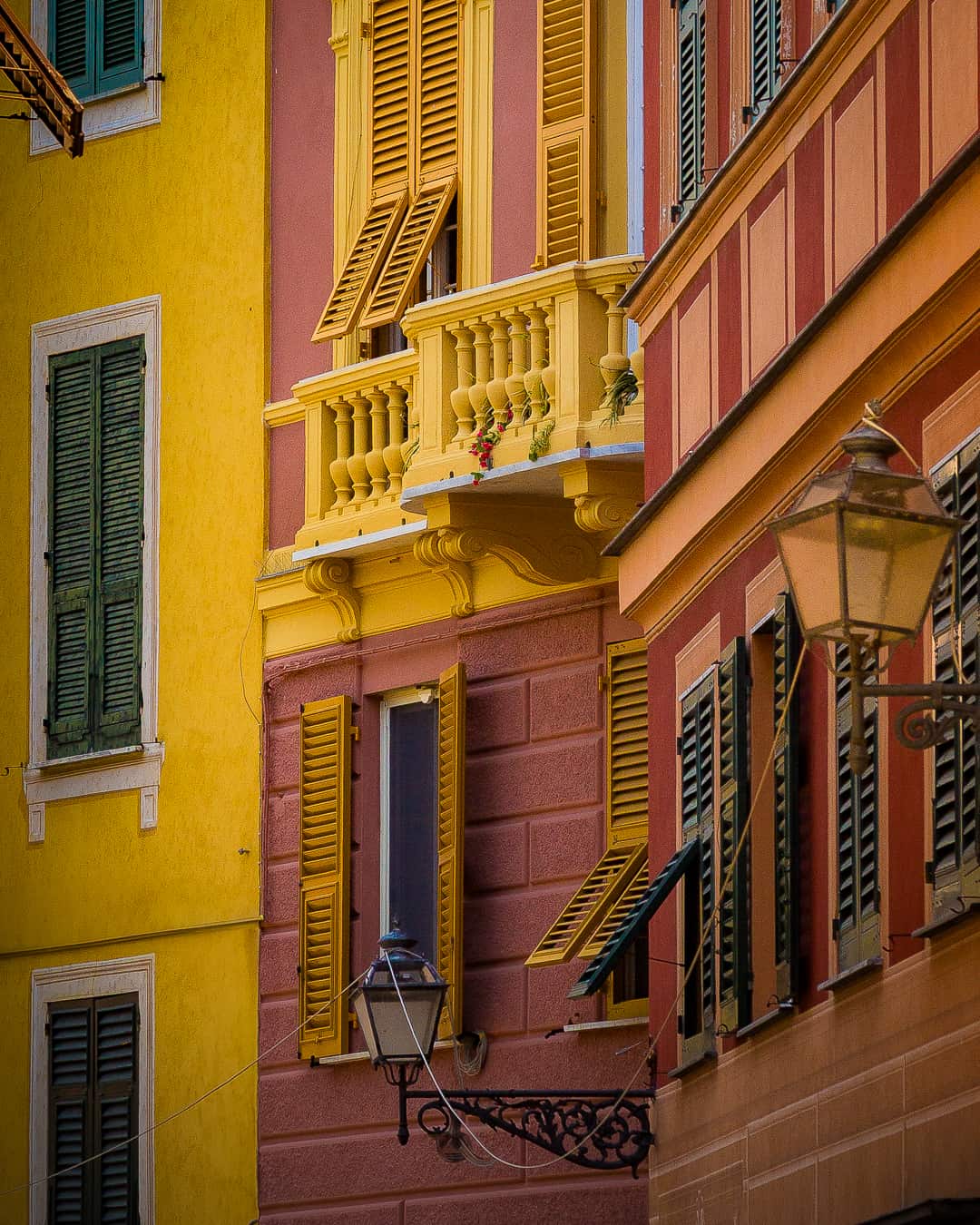
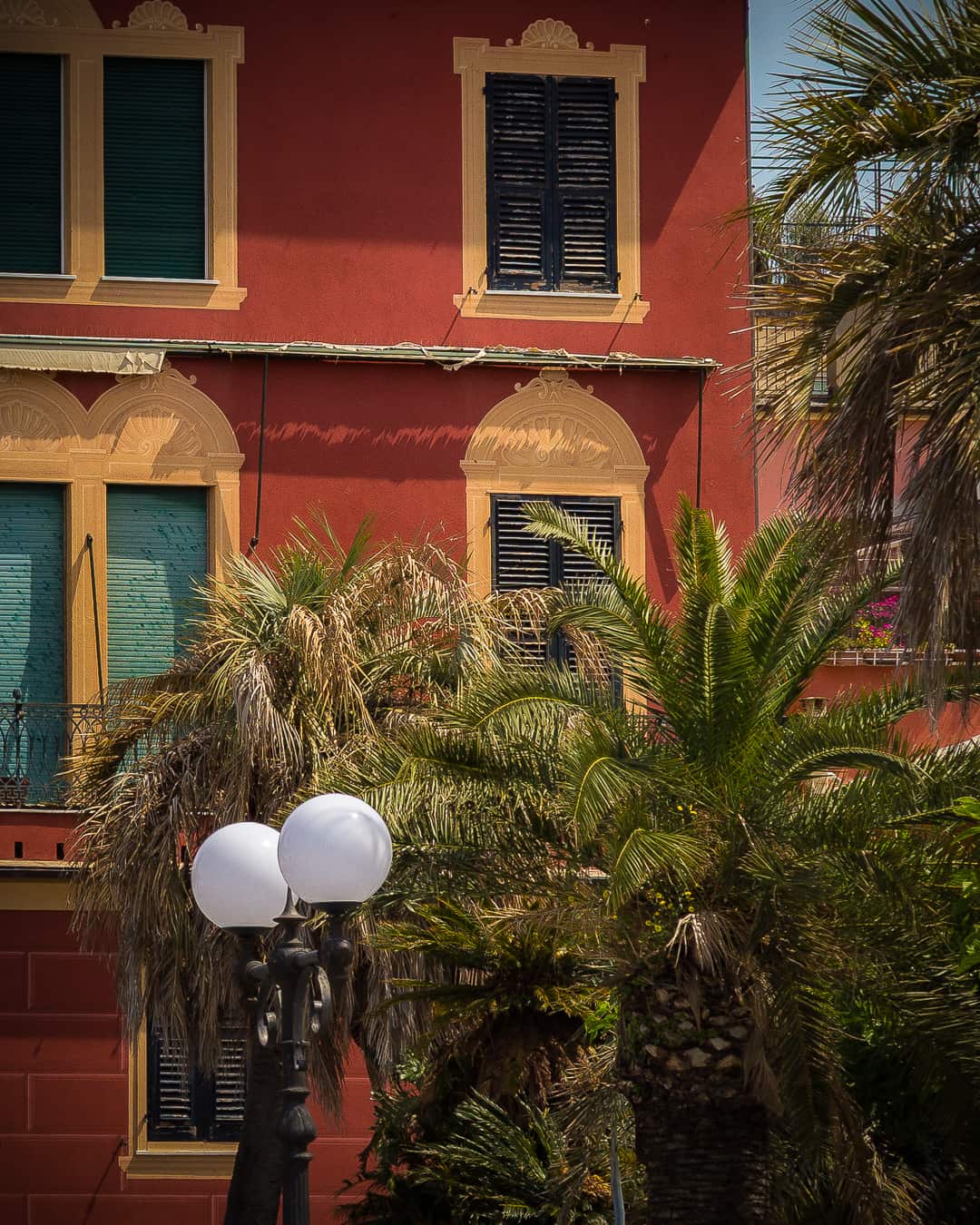
In Sestri the colours run from yellow to pink, from ochre to brick red; green shutters do the rest. You only have to look up.
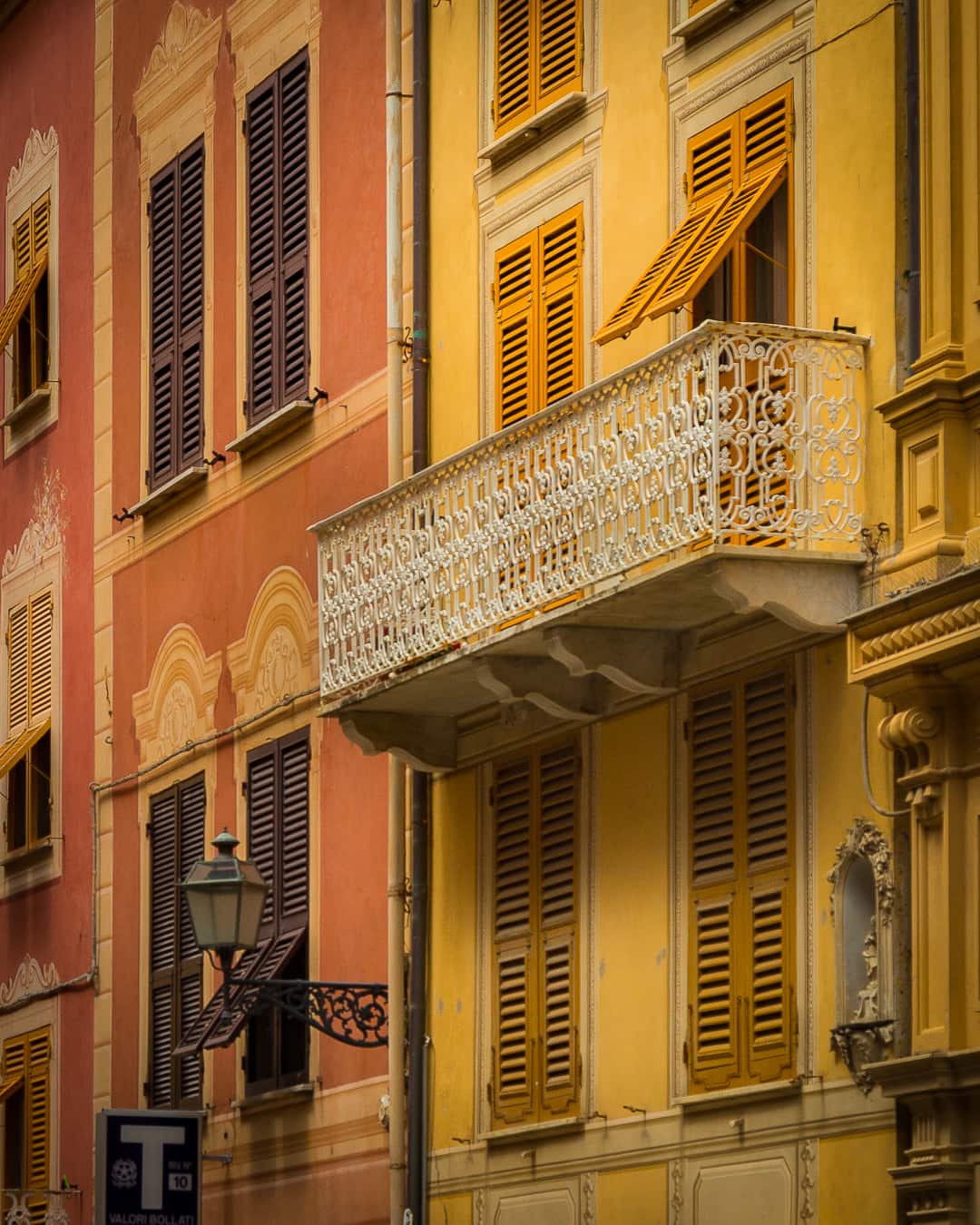
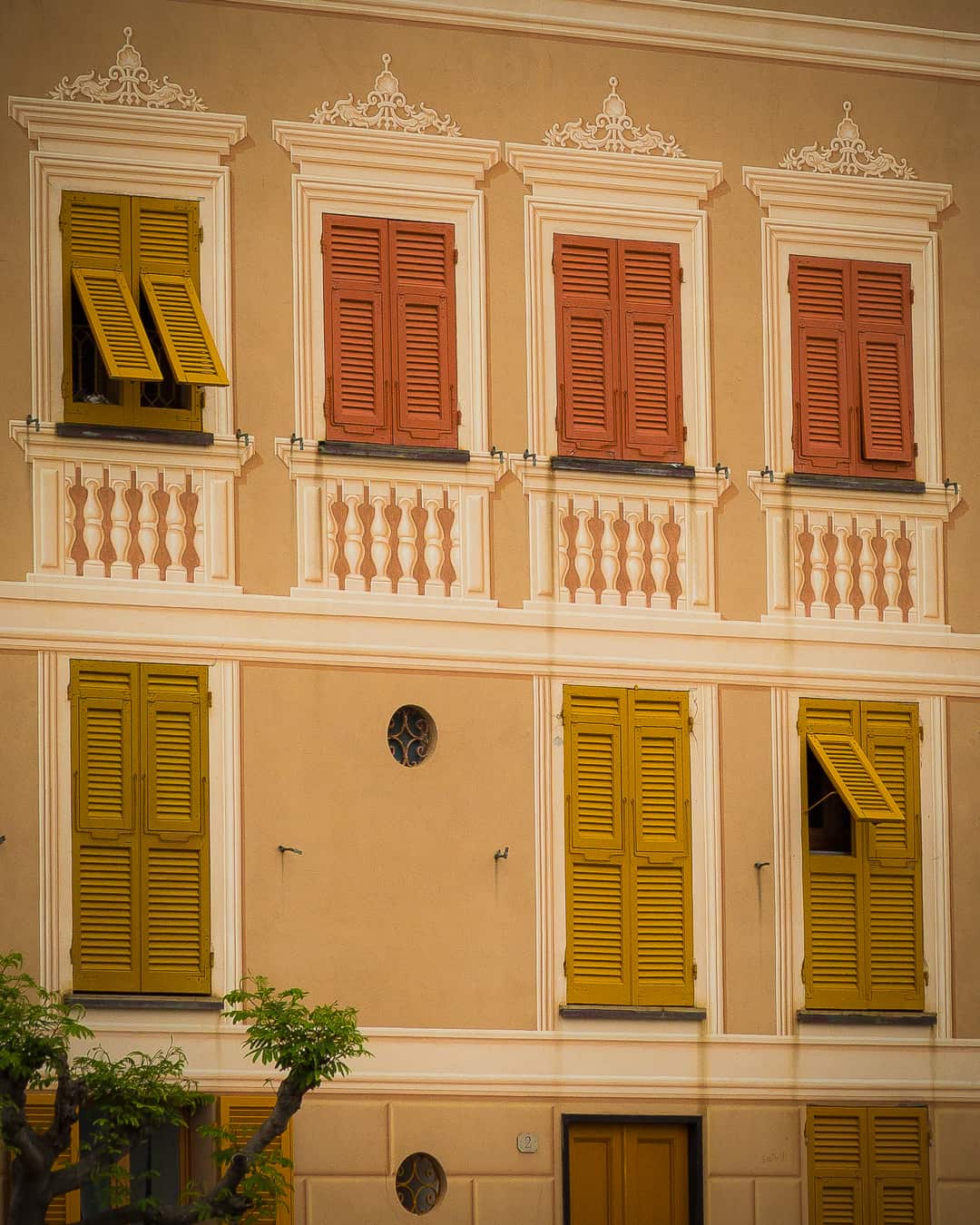
Real or painted?
A game for anyone strolling by: walk up to a façade and look for the trick. A cornice that casts no shadow, a frieze that is too regular, a shutter that will never close: that is where the painter worked. From a distance no one notices the difference, which was exactly the point. Up close, trompe-l’œil becomes a treasure hunt.
Two styles, one wall
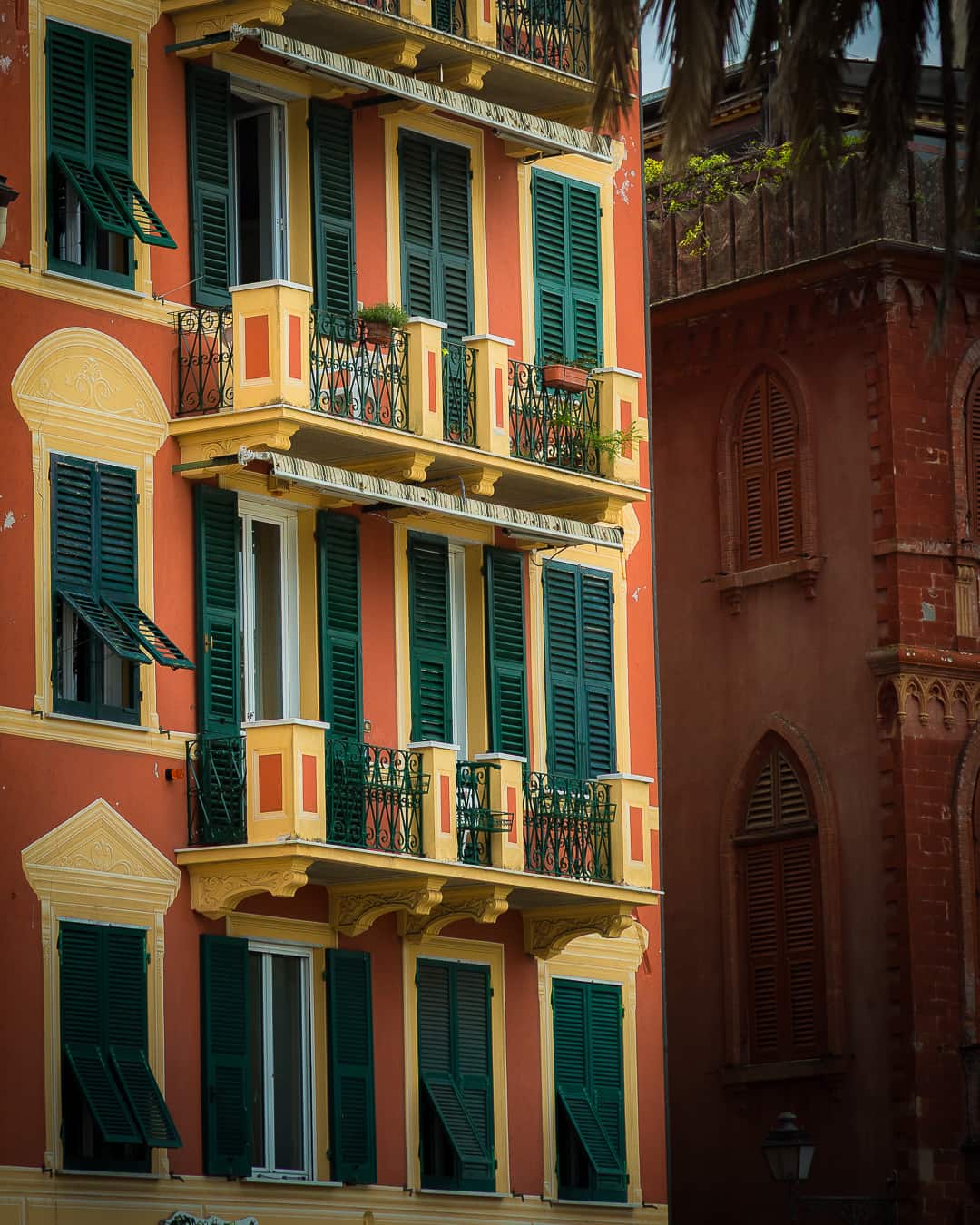
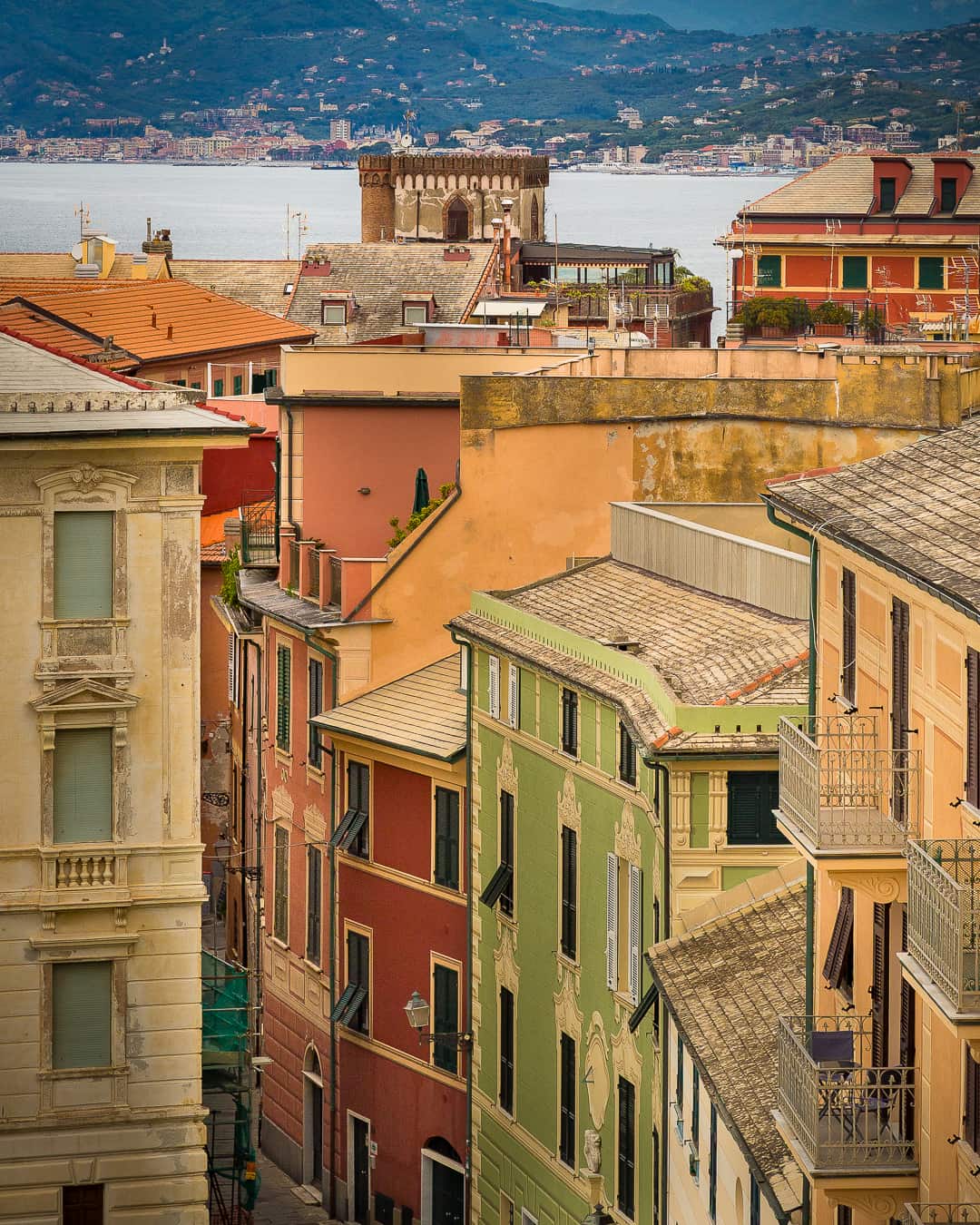
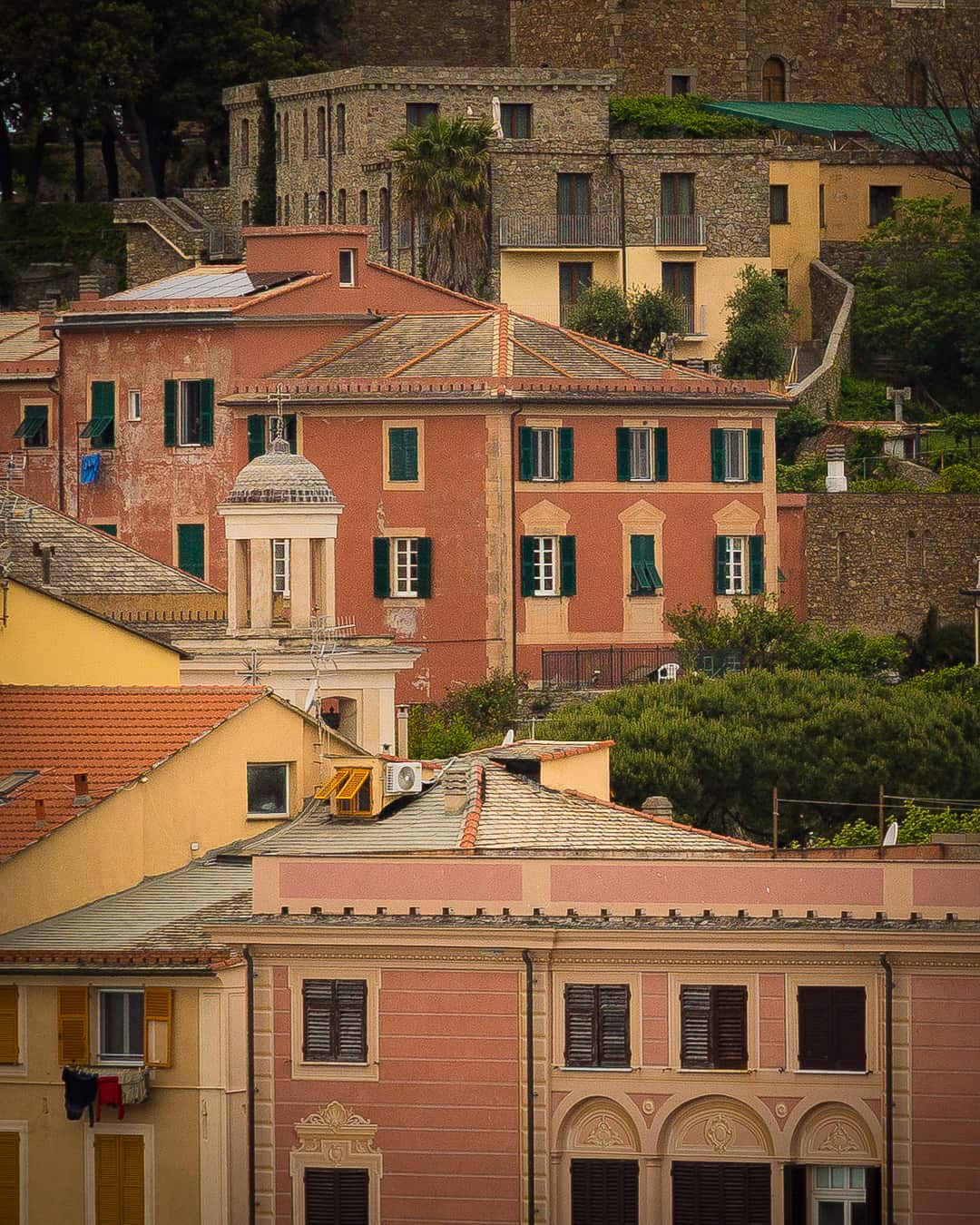
On the right, a dark red wall with arched windows; on the left, a row of balconies and green shutters. Two styles touch without asking permission. It happens a lot in Liguria: people build beside, above, inside what was already there. The result is not a mess but a conversation between houses that has gone on for centuries.
Read from the bottom up
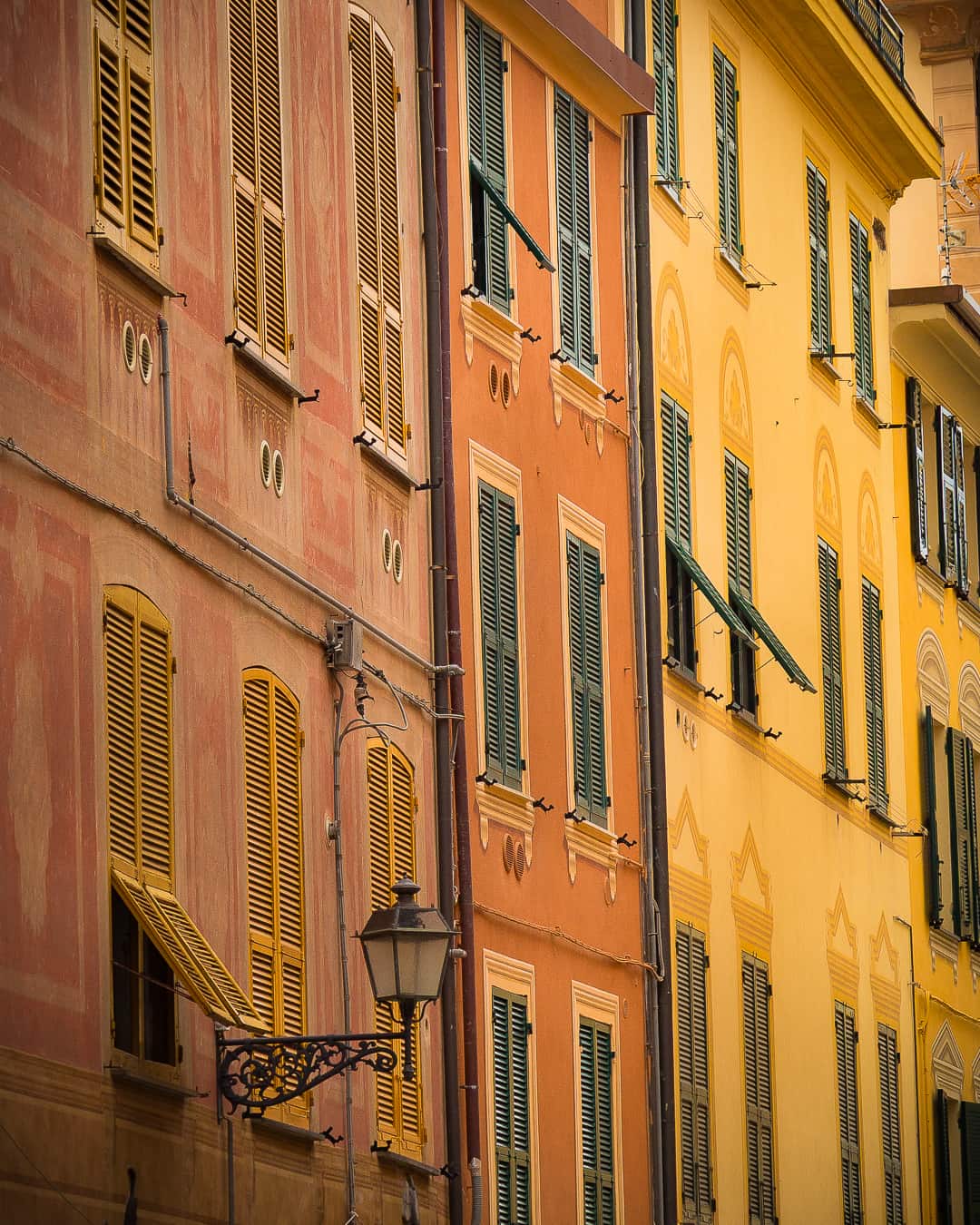
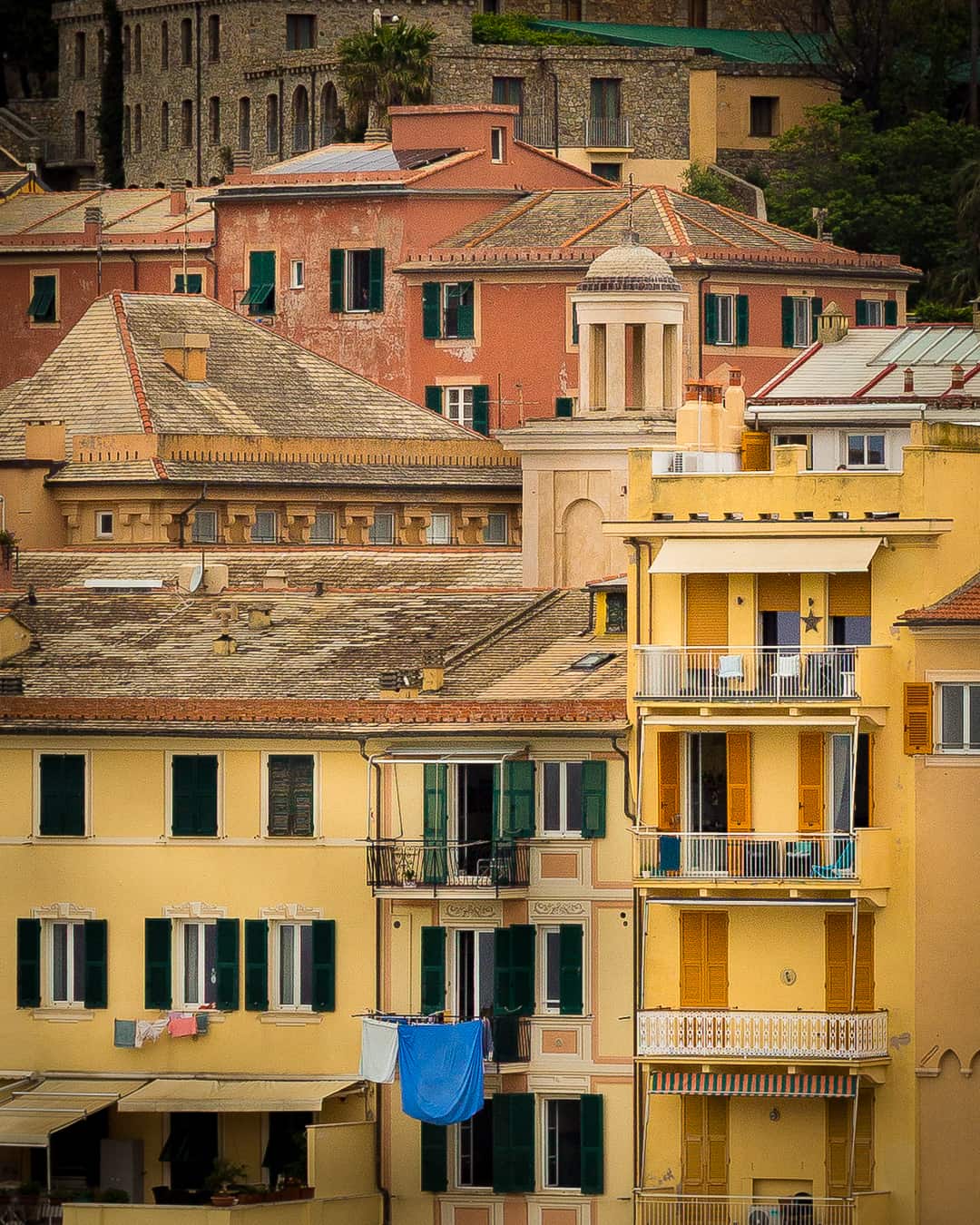
As publishers, we can’t help reading them this way: each façade a page, each row of windows a line, the shutters as punctuation. They climb the hill in order, pink above yellow, like chapters. Sestri reads from the bottom up, and at the end of every page there is green.
Right downstairs
Here the beach is not out of town: it is right downstairs. The façades come down to the sand, the washing faces the beach towels, and you can check from the window whether the sea is calm before heading down. A simple luxury that costs a fortune elsewhere and here costs a flight of stairs.
Green and yellow
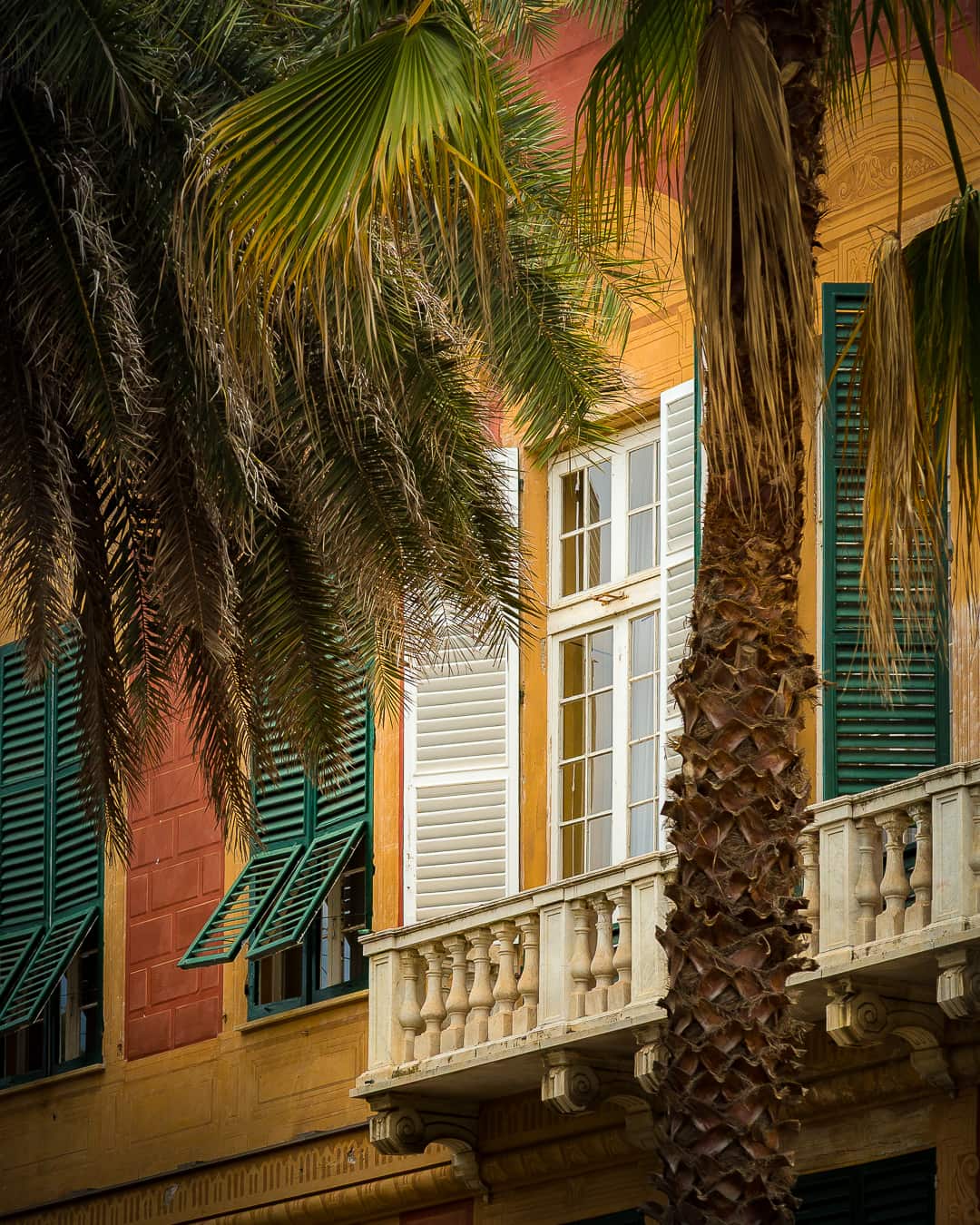
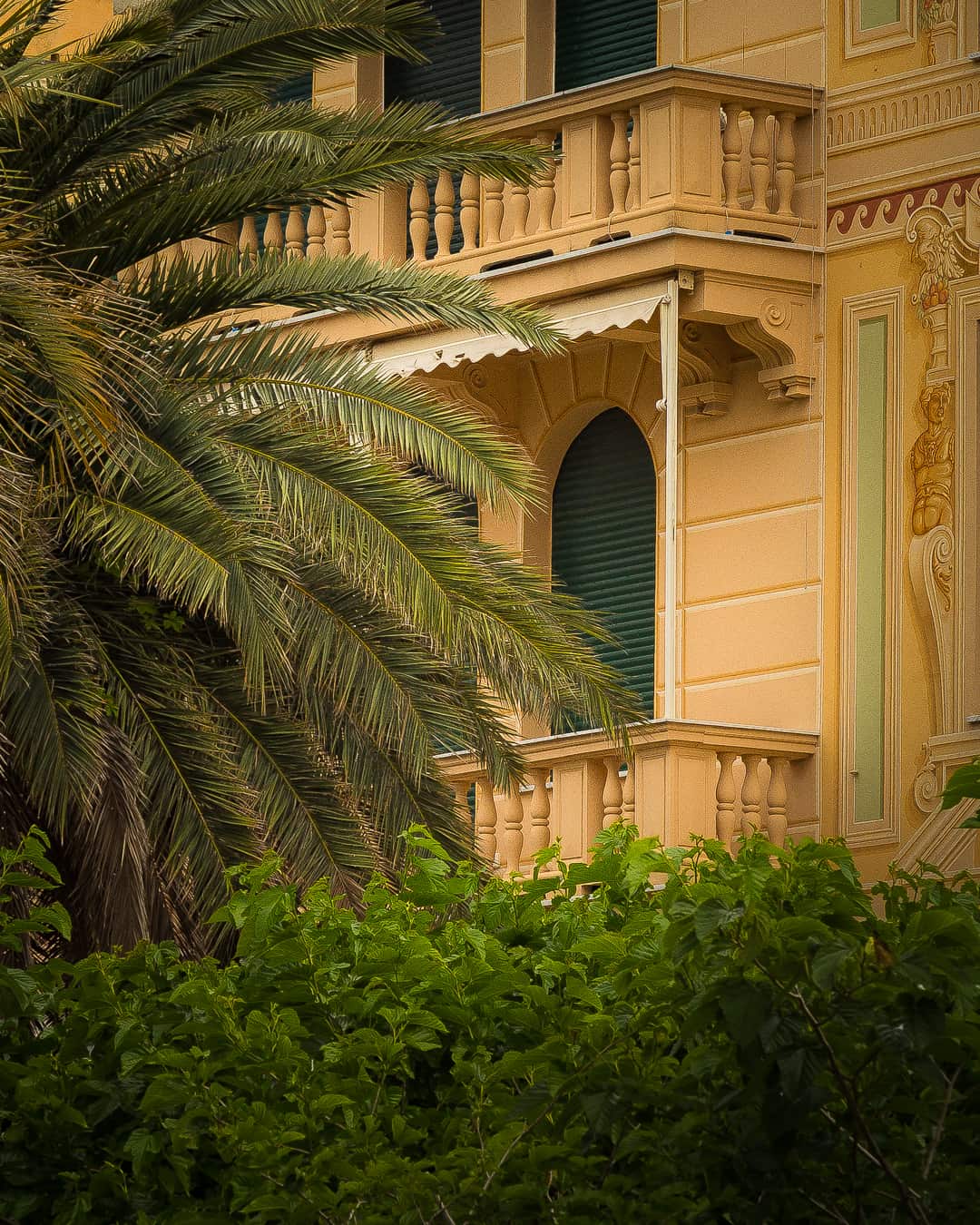
If the Riviera had a flag, it would be green and yellow: the green of palms and shutters, the yellow of plaster that the sun turns to gold. Here a palm hides half the loggia, and that is just as well: without it, the façade would merely be beautiful. With it, it tells a story.
The tower out of time
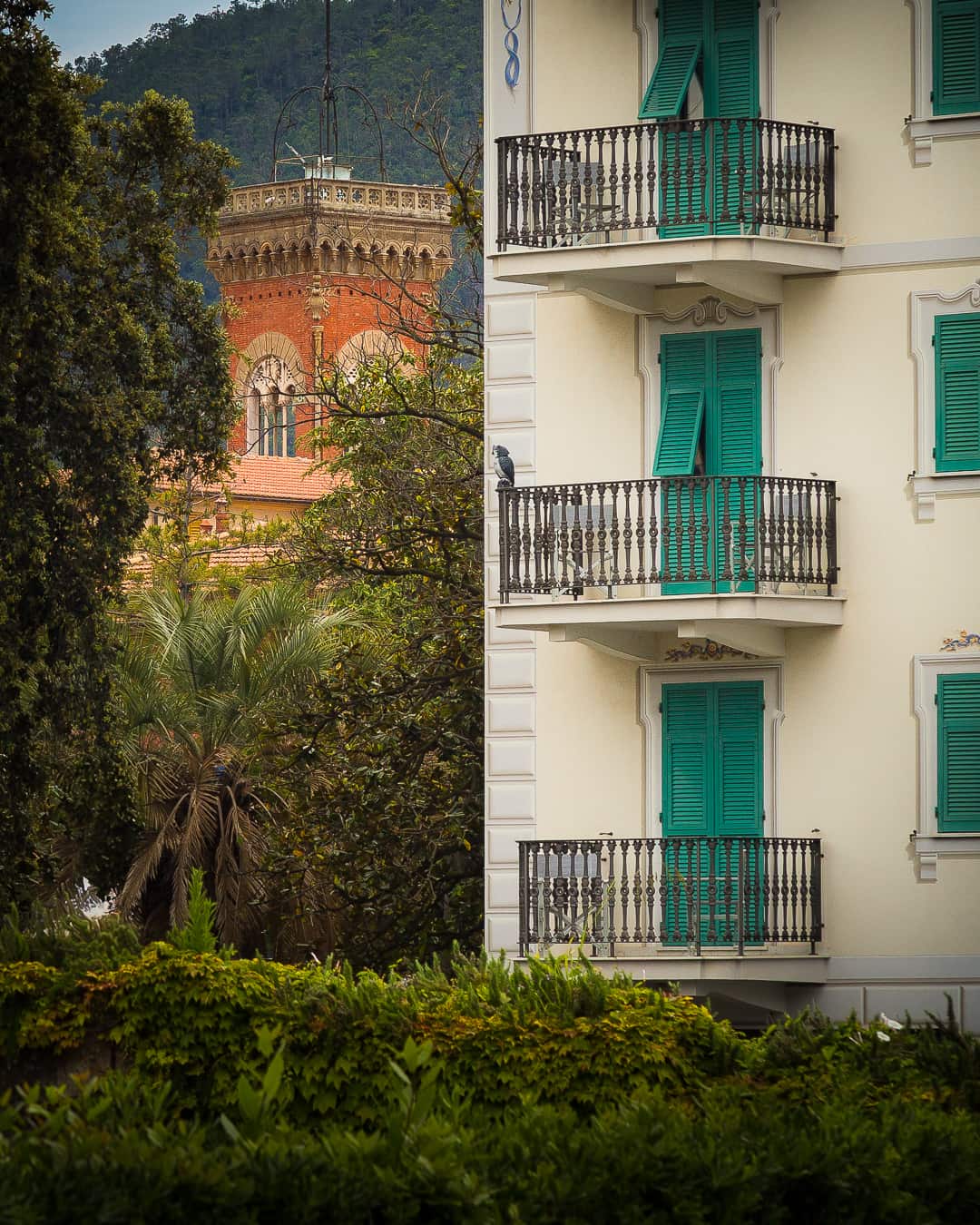
On the Riviera, towers pop up where you least expect them: behind an apartment block, above a garden, between two pines. This one, with its red battlements, looks as if it came from another age, and perhaps it means to. Next to it, the white and green of a seaside house. In a single frame: the castle and the summer holiday.
III
The caruggio
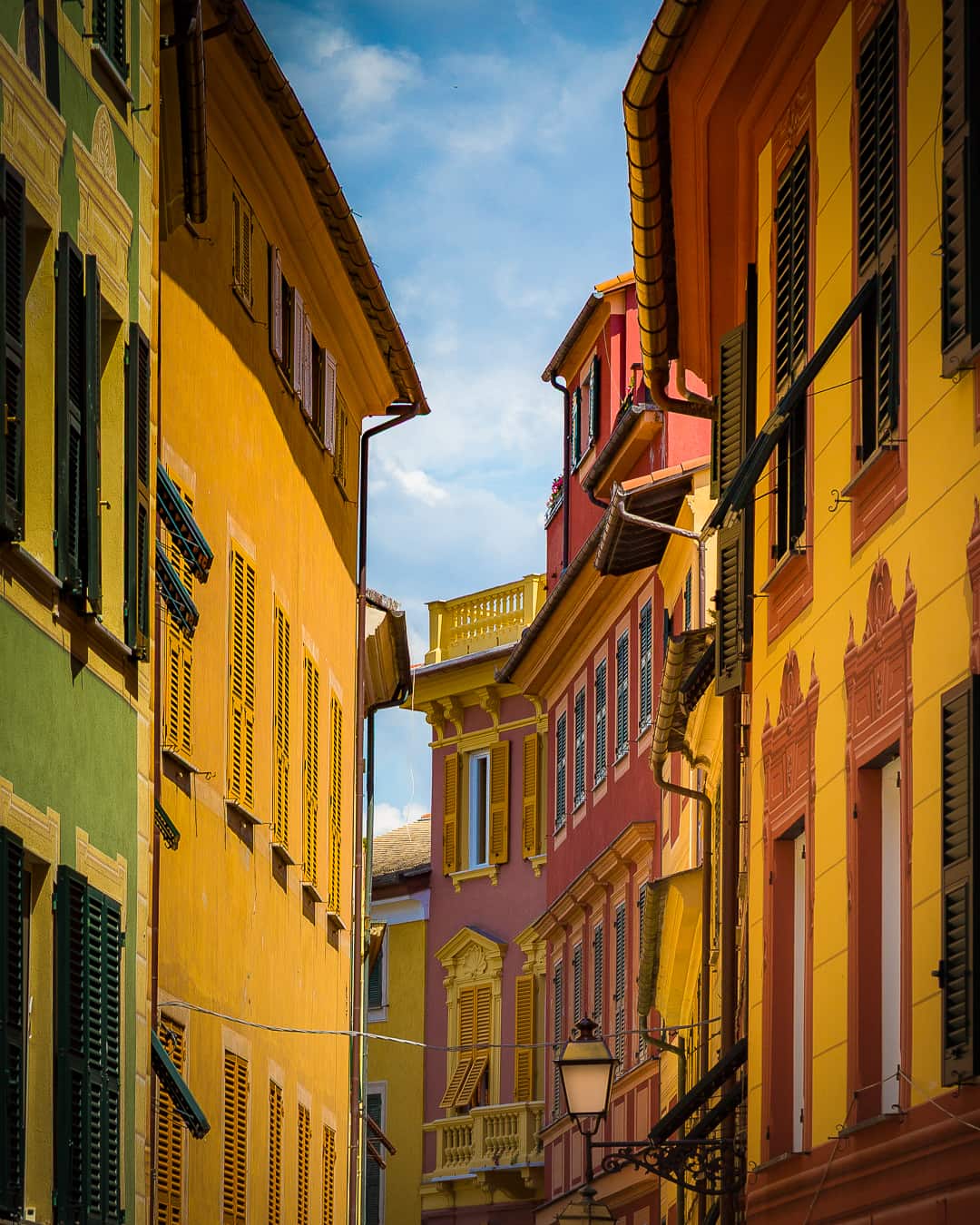
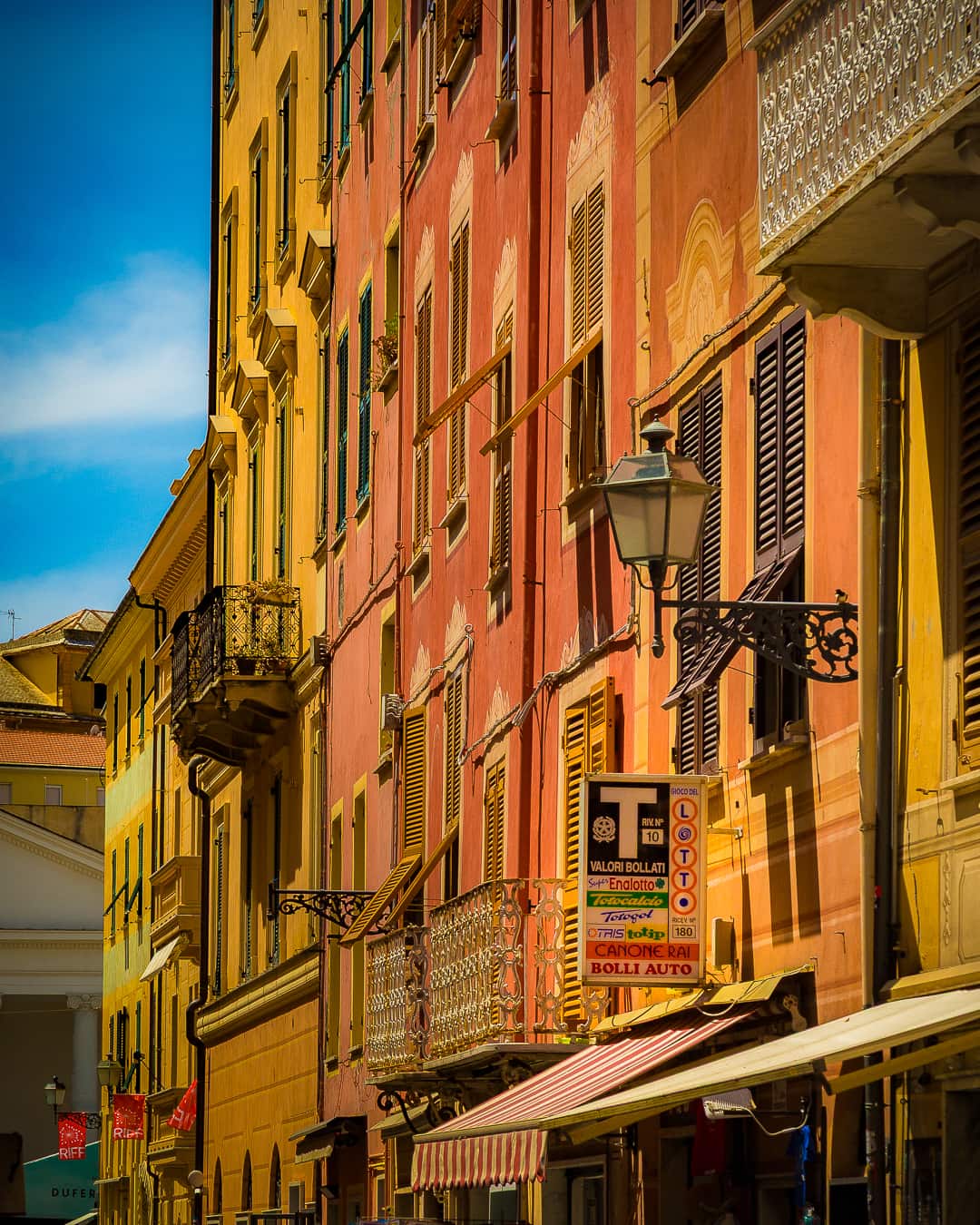
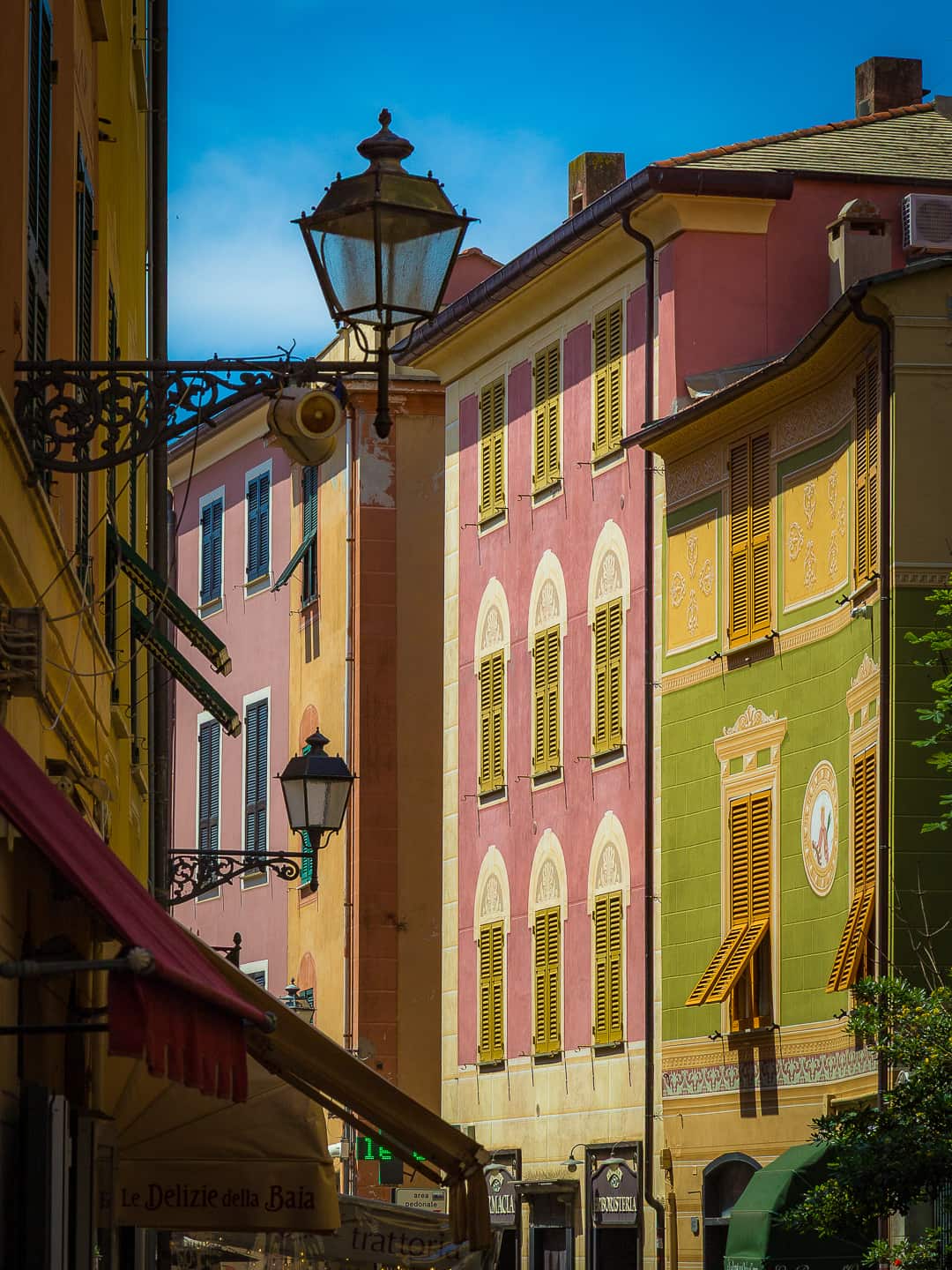
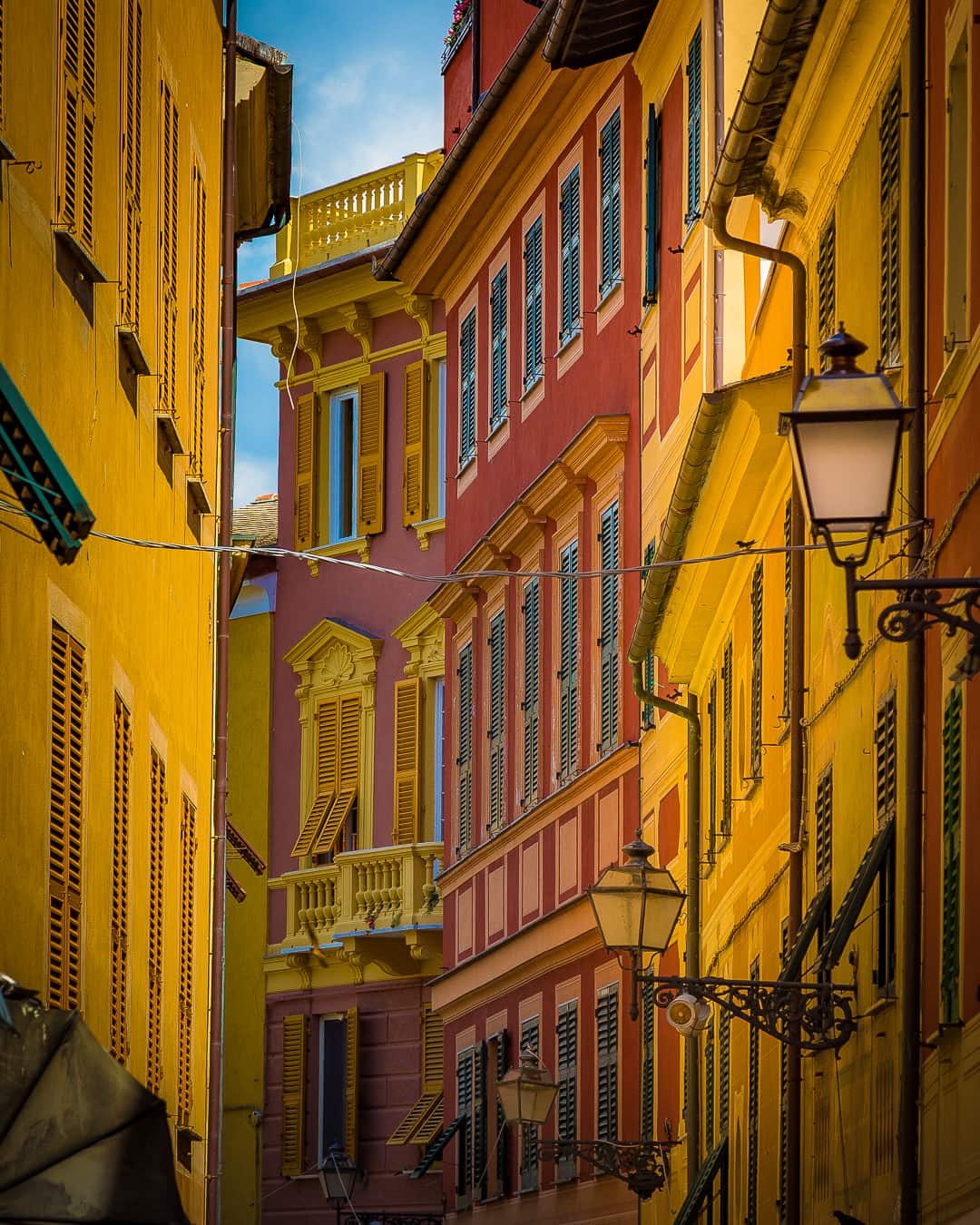
In Liguria the narrow lanes between tall houses are called caruggi. Sestri’s main one is Via XXV Aprile, which crosses the centre with its painted façades and slate doorways, the grey stone of this region.
It is the street of shops. At number 70 stands the first Rossignotti shop, where in 1840 one of Liguria’s oldest pastry makers got its start. Iron lanterns, signs, awnings; the street is narrow and the sky is just a blue strip, high above.
From the station to the bay is about a kilometre, a quarter of an hour on foot, and the way leads right through here.
The shopping street
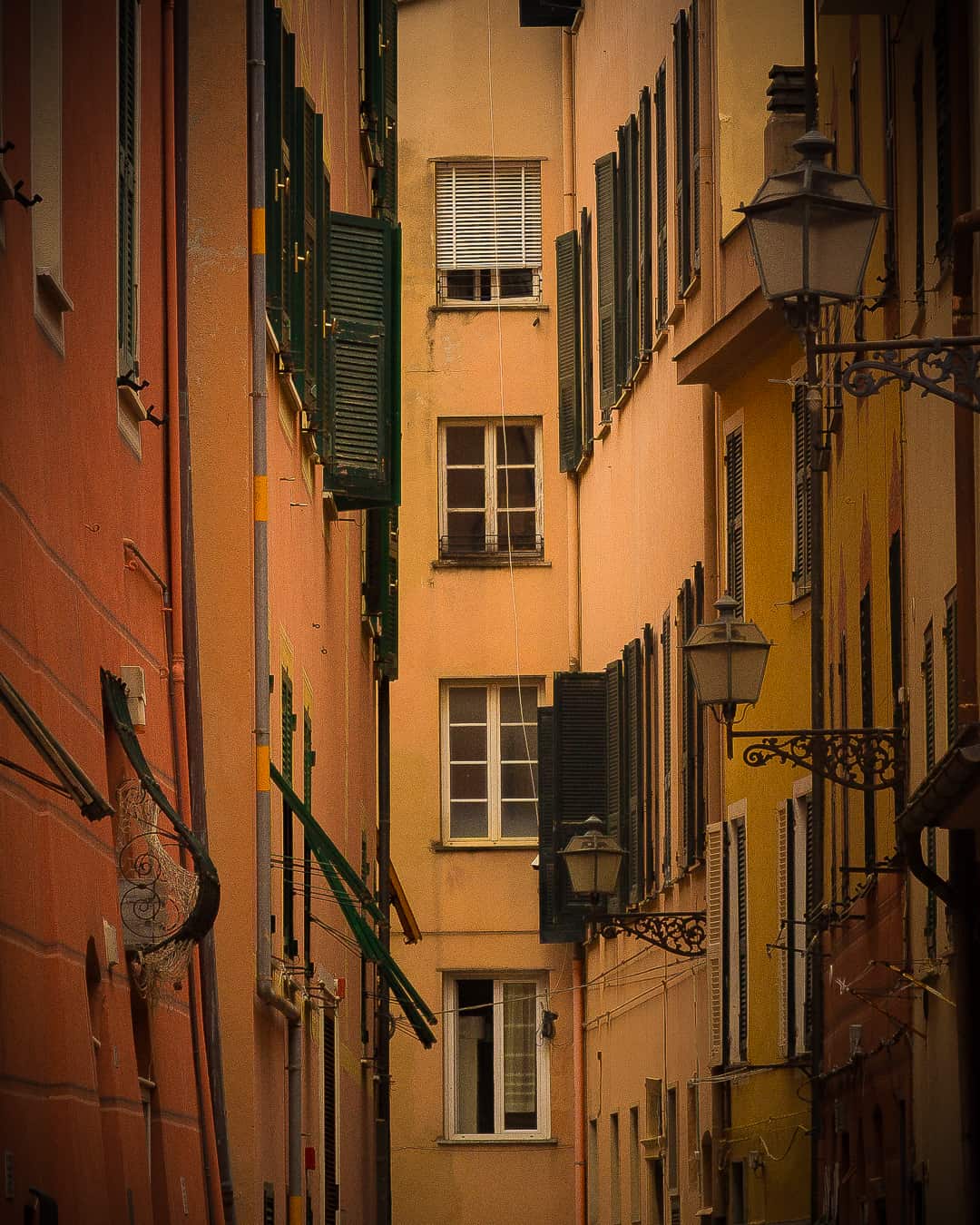
A tobacconist’s T, a striped awning, an iron balcony: the caruggio is first and foremost a street for shopping. Shops on the ground floor, family life upstairs, and the two talk to each other through the window. Walking here means looking up and down at the same time.
A strip of sky
In the caruggi you walk with your head tilted back. The houses stand so close that the sky becomes a strip, and light bounces down from wall to wall, turning yellow, then pink. At noon, down here, it already feels like afternoon. The iron lanterns wait for evening: their turn will come.
IV
Boats ashore
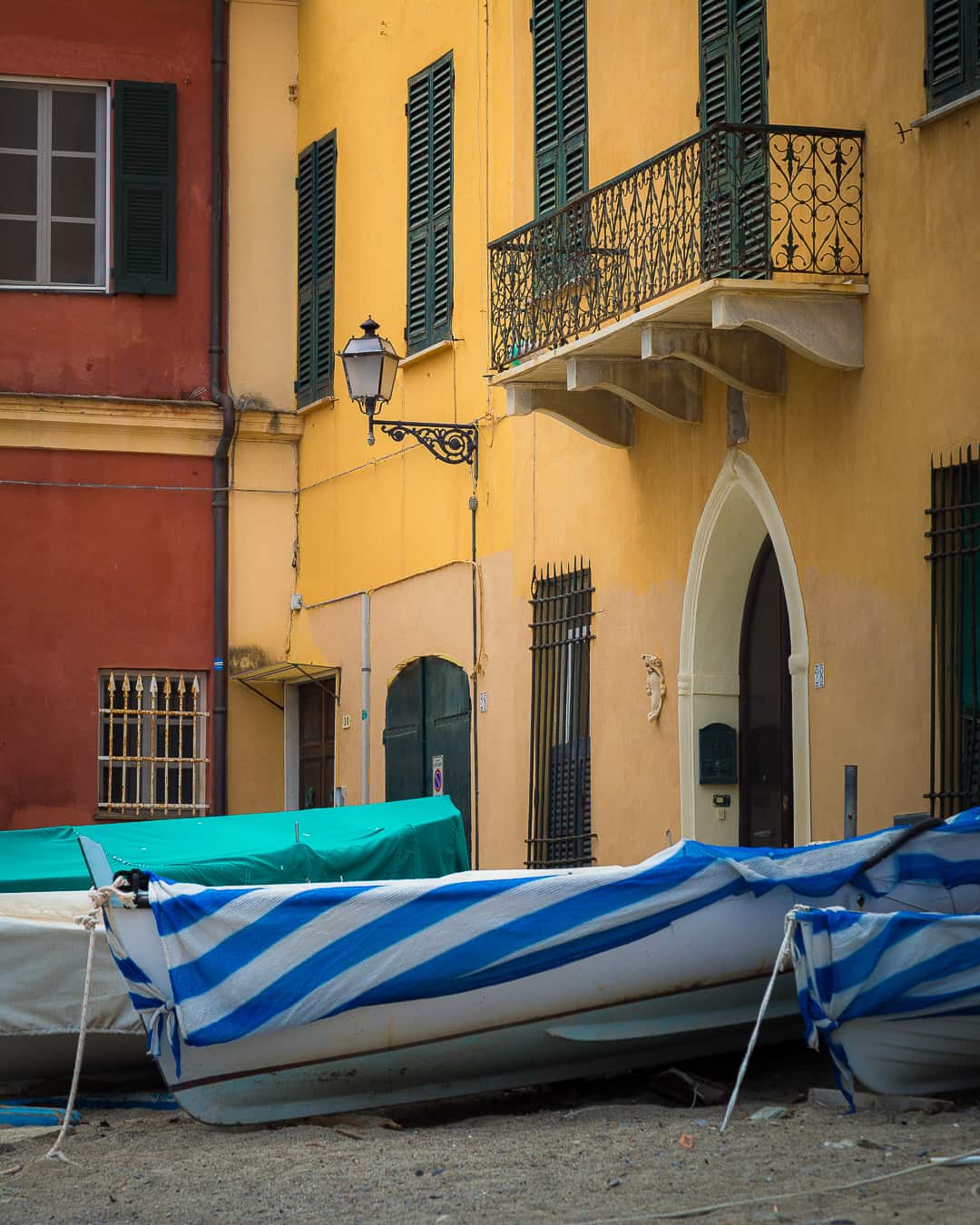
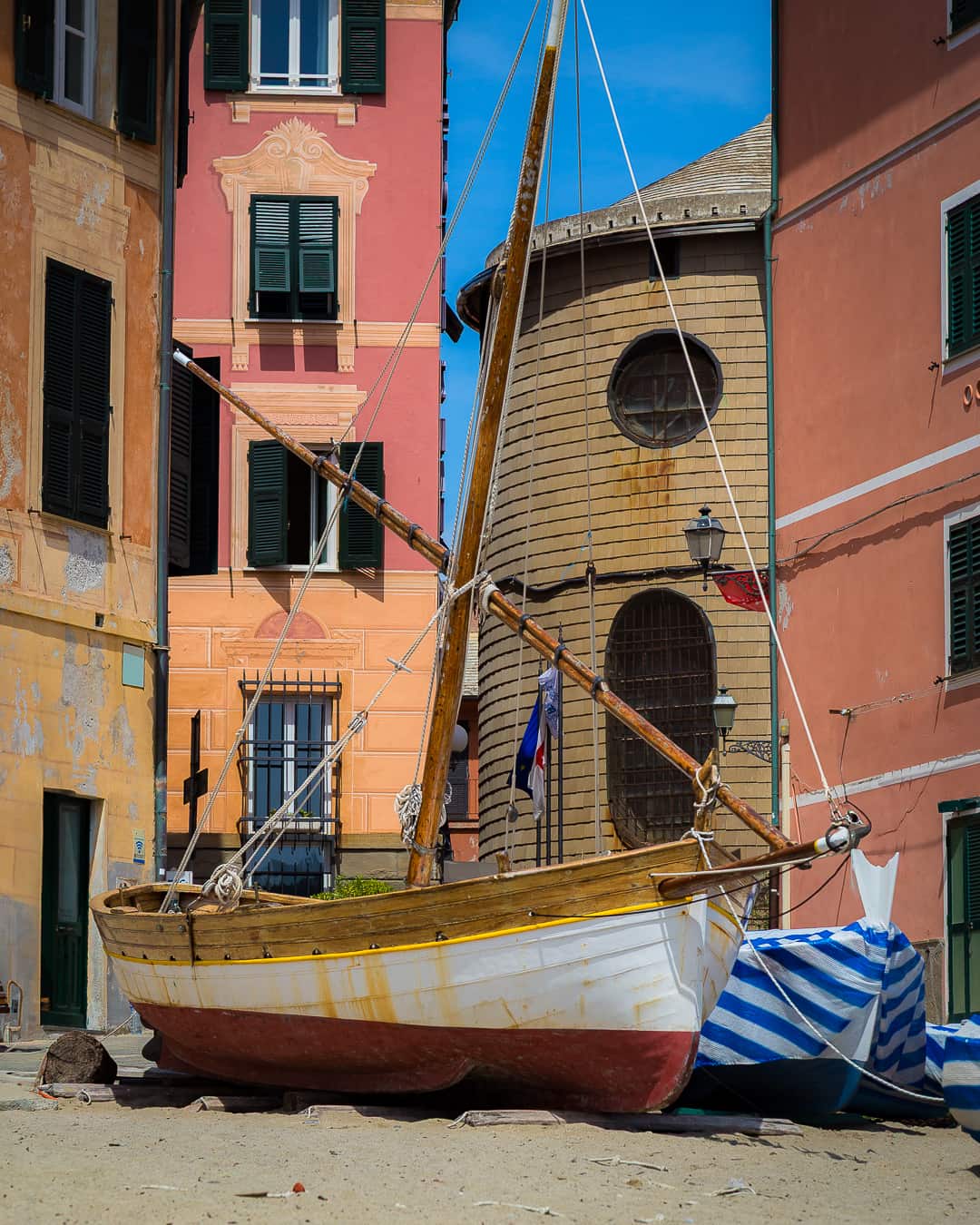
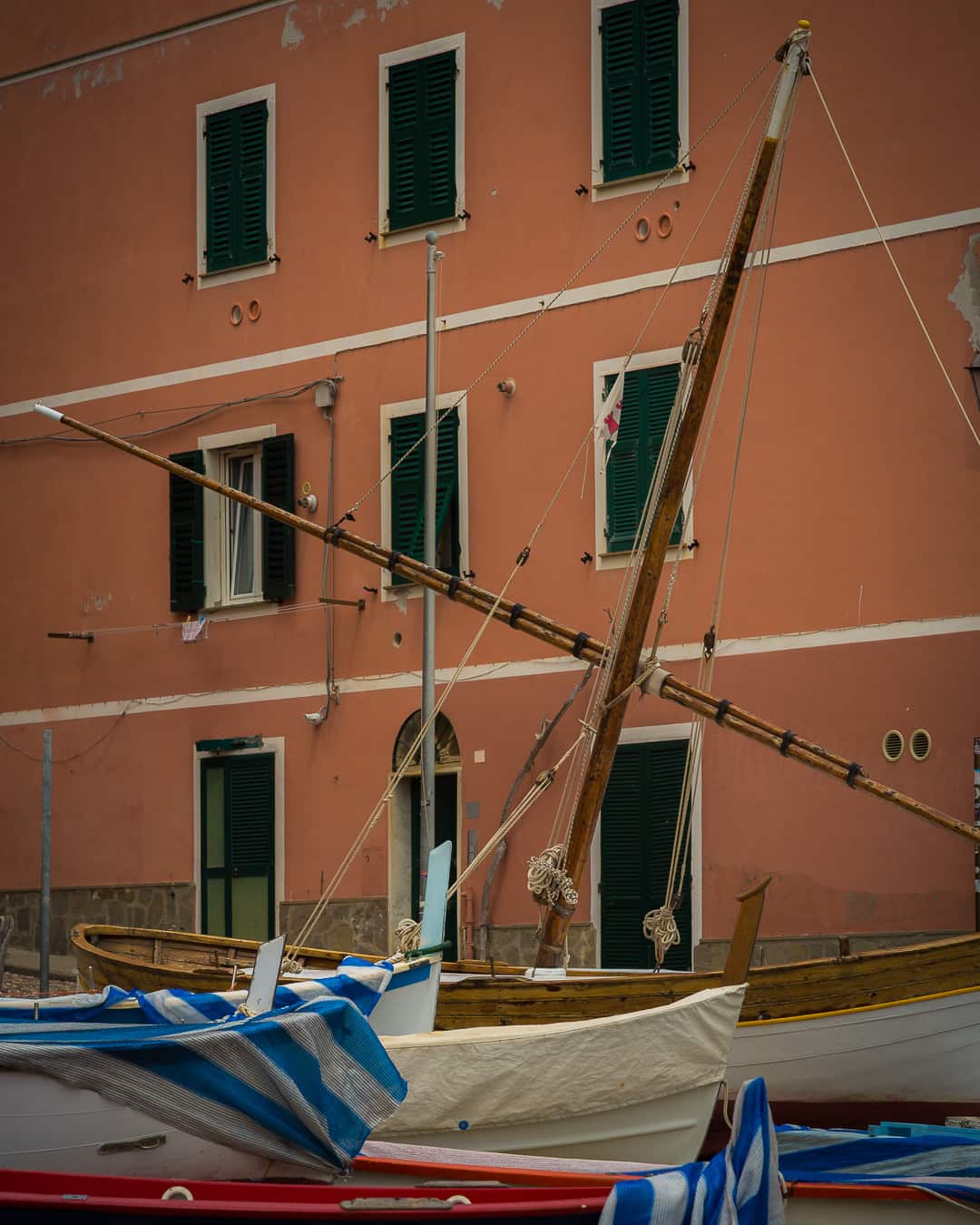
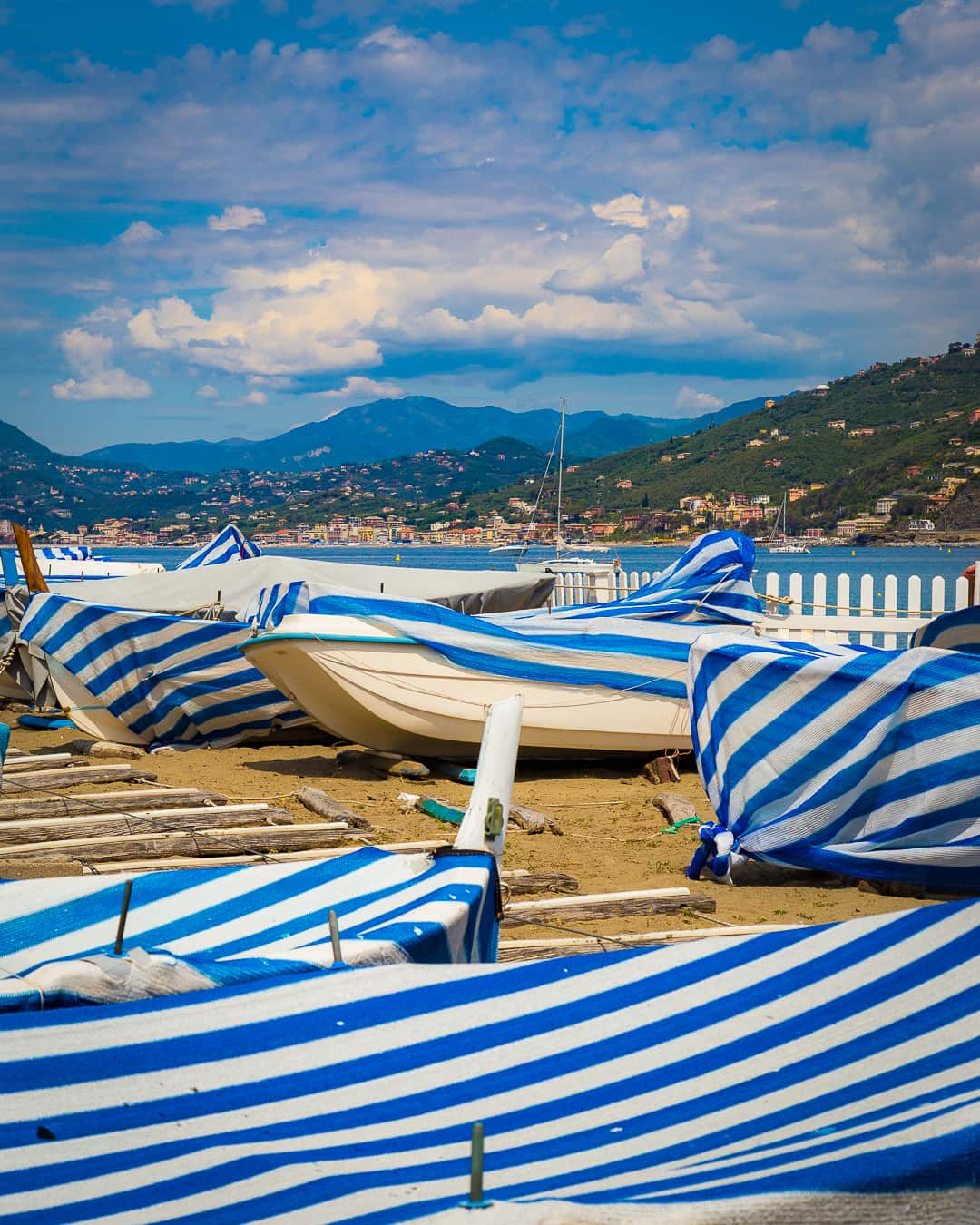
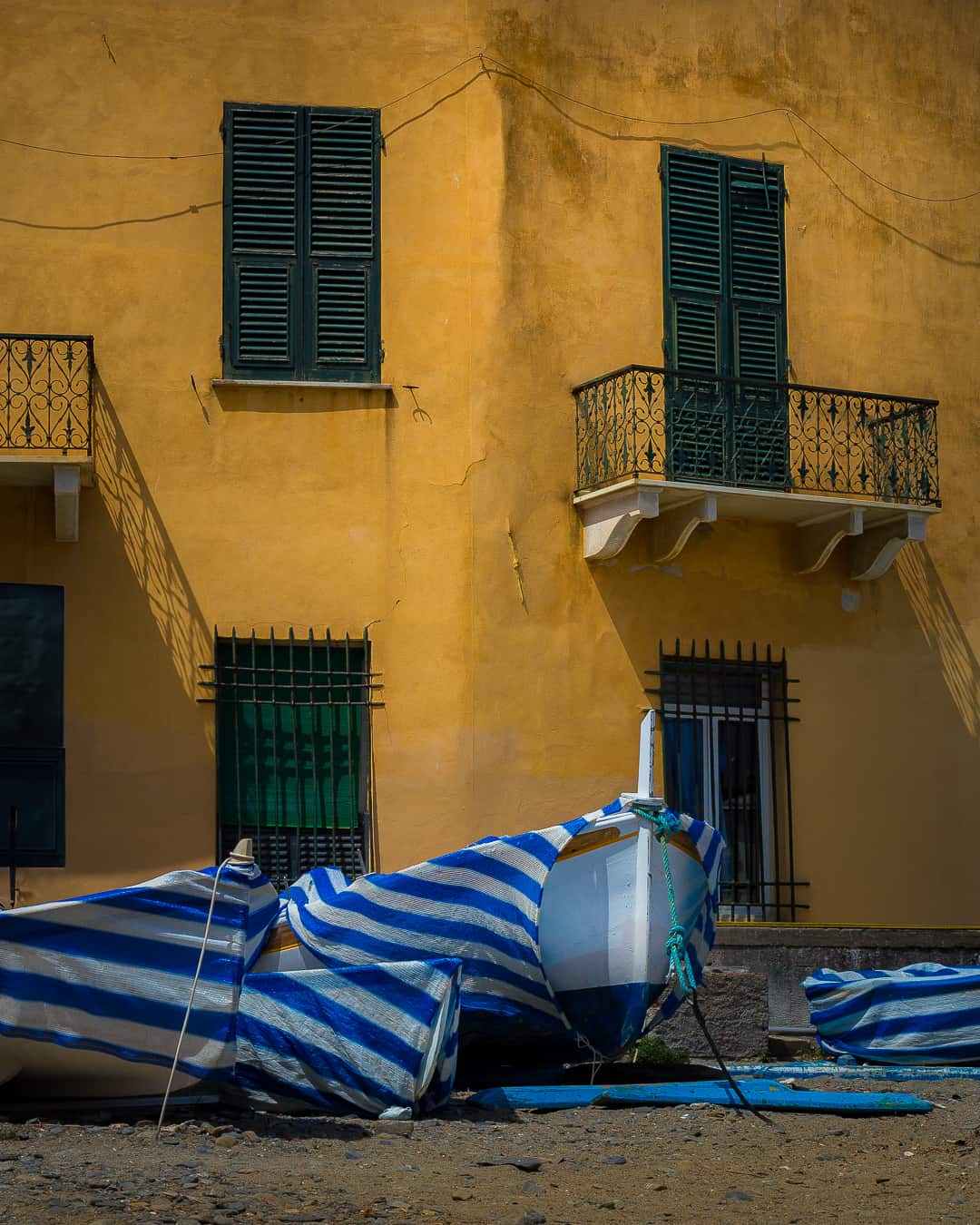
On the sand of the bay the boats rest side by side. Many are wooden, like the gozzi of the Ligurian tradition, and blue-and-white striped covers keep them dry; from a distance they look like a painted pattern.
In 1833 a twenty-eight-year-old Dane, not yet famous, stayed at an inn overlooking this bay: Hans Christian Andersen. He is said to have found inspiration here for some of his tales; more than a century later Sestri’s other bay was named “of the Fables” in his honour.
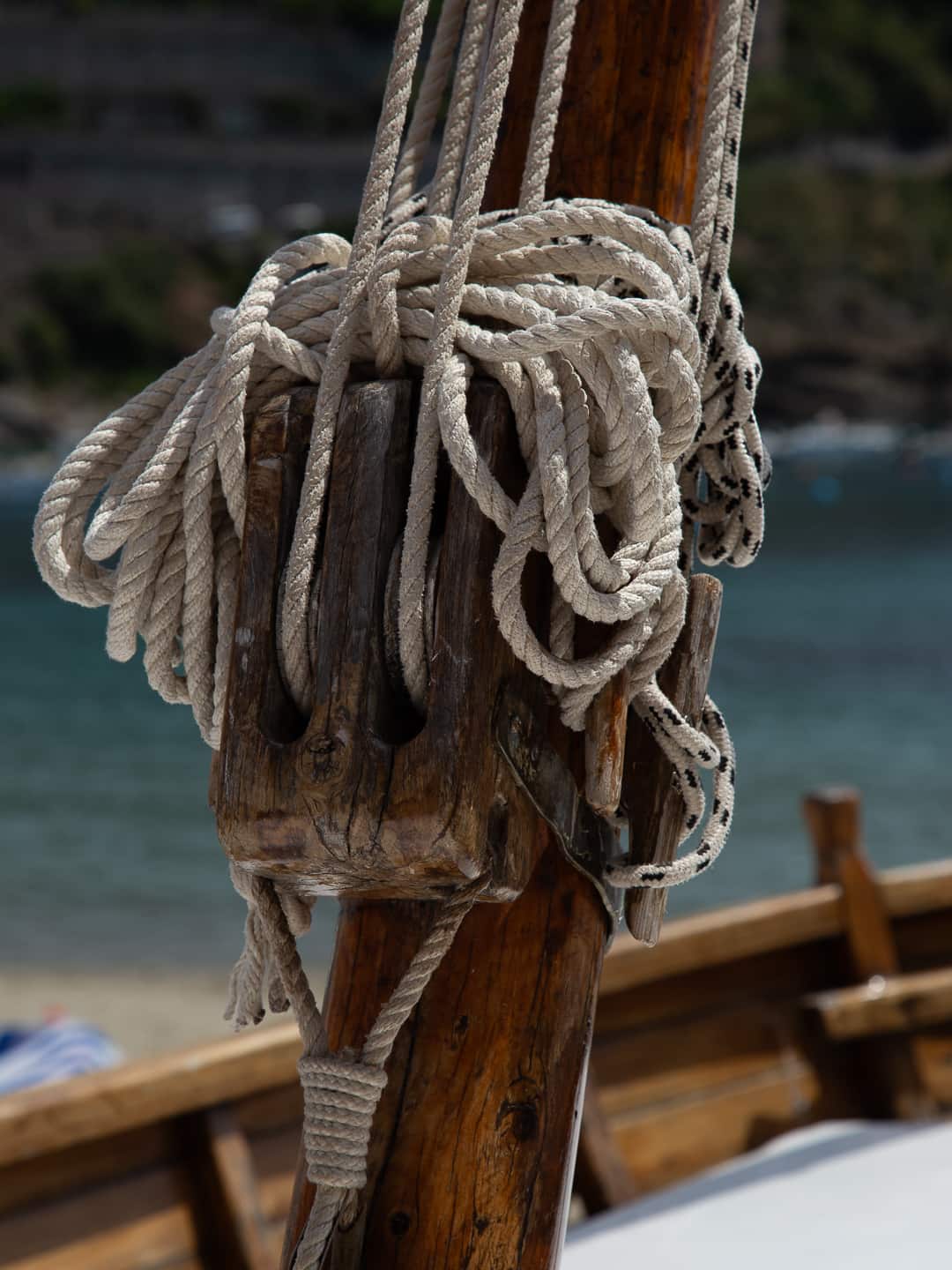
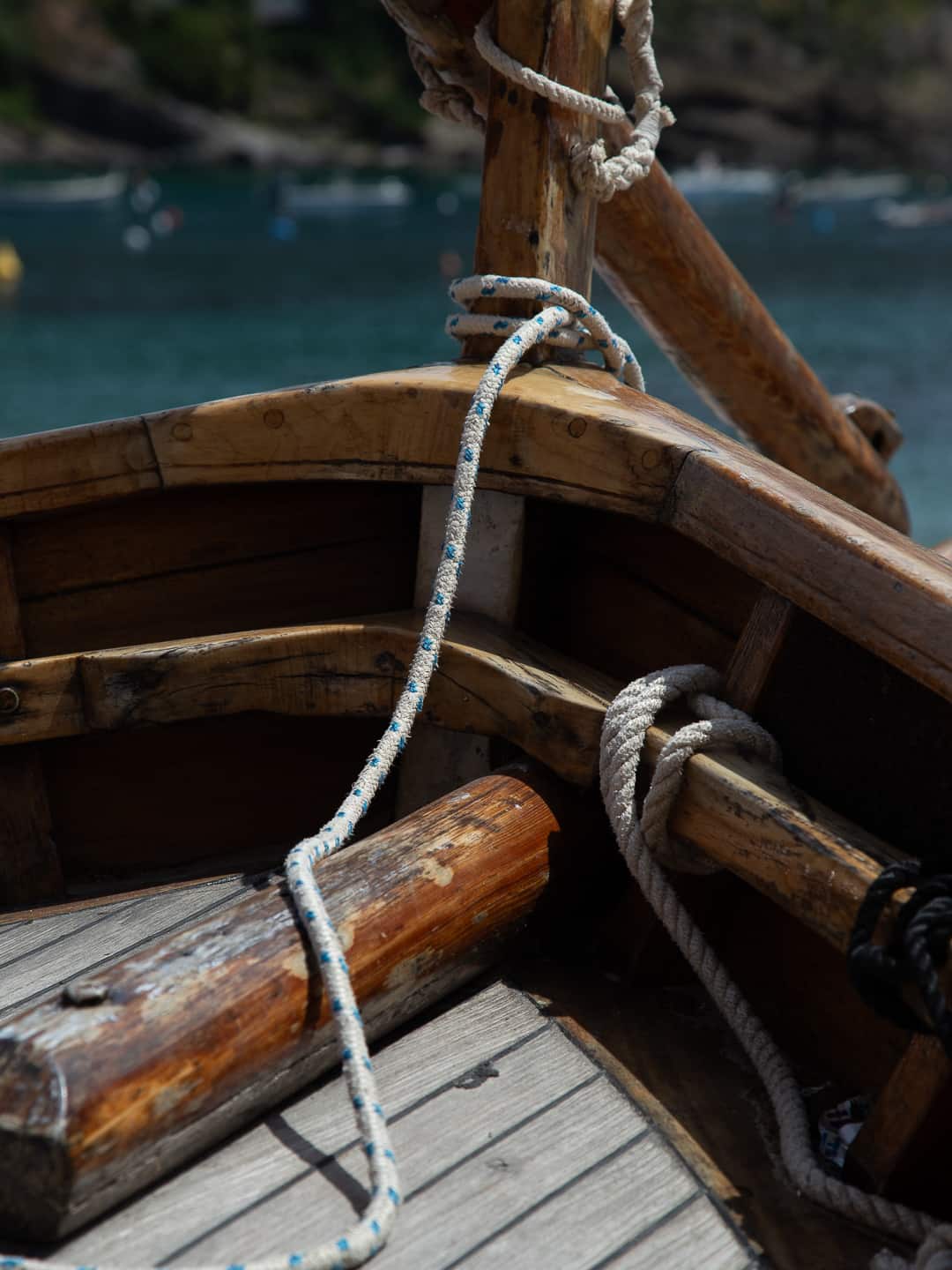
Oars, ropes, worn wood: up close, every boat tells of its trade.
The same colour
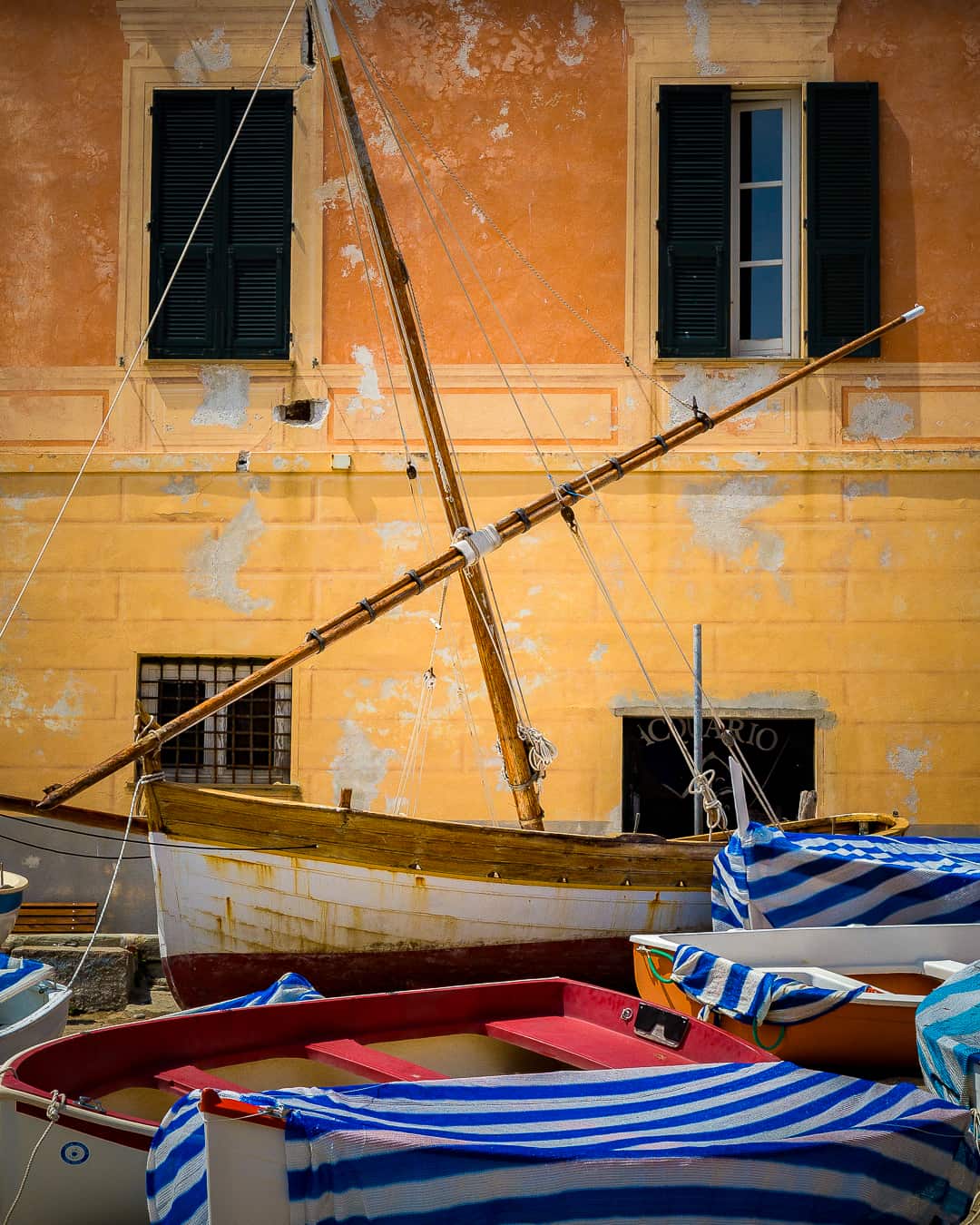
Look closely: the wood of the boat and the plaster of the house behind it are the same colour, an orange warmed by the years. Sun and salt work on everything alike, hulls and walls. In Sestri, living side by side, even things end up looking like each other.
Sailor stripes
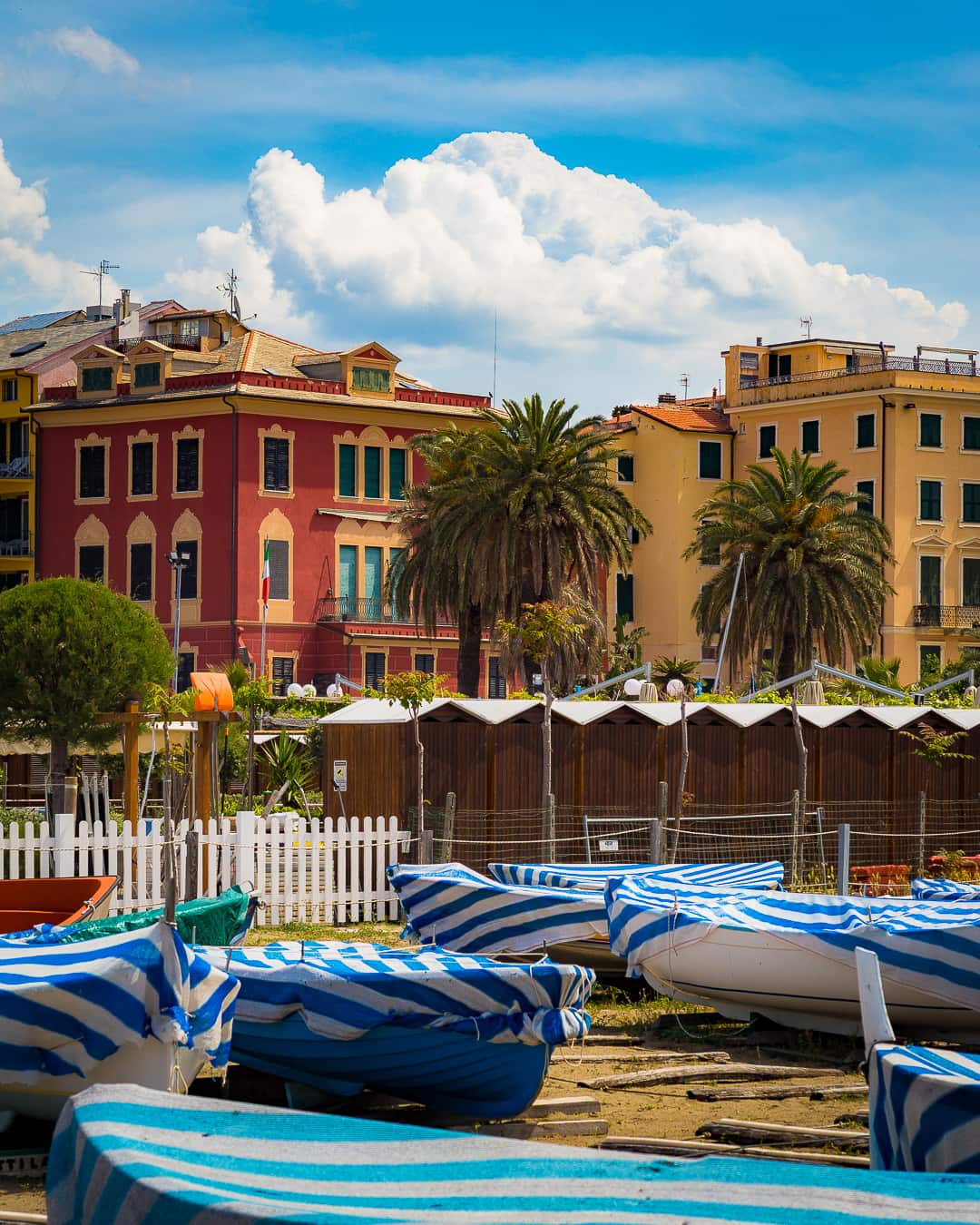
The blue and white stripes of the covers recall a sailor’s shirt, and it is easy to see why photographers love them. The boats lie upturned, at rest, yet all face the same way: out to sea. On the horizon, the mountains; above, the clouds are setting up their show.
Hands you cannot see
There is no one in this photograph, yet you can see hands: the ones that coiled the rope, wore down the wood, gripped the oar for years. Boats on the beach speak of the sea even when nobody goes out. Just get close enough to smell the wood in the sun.
Out of season
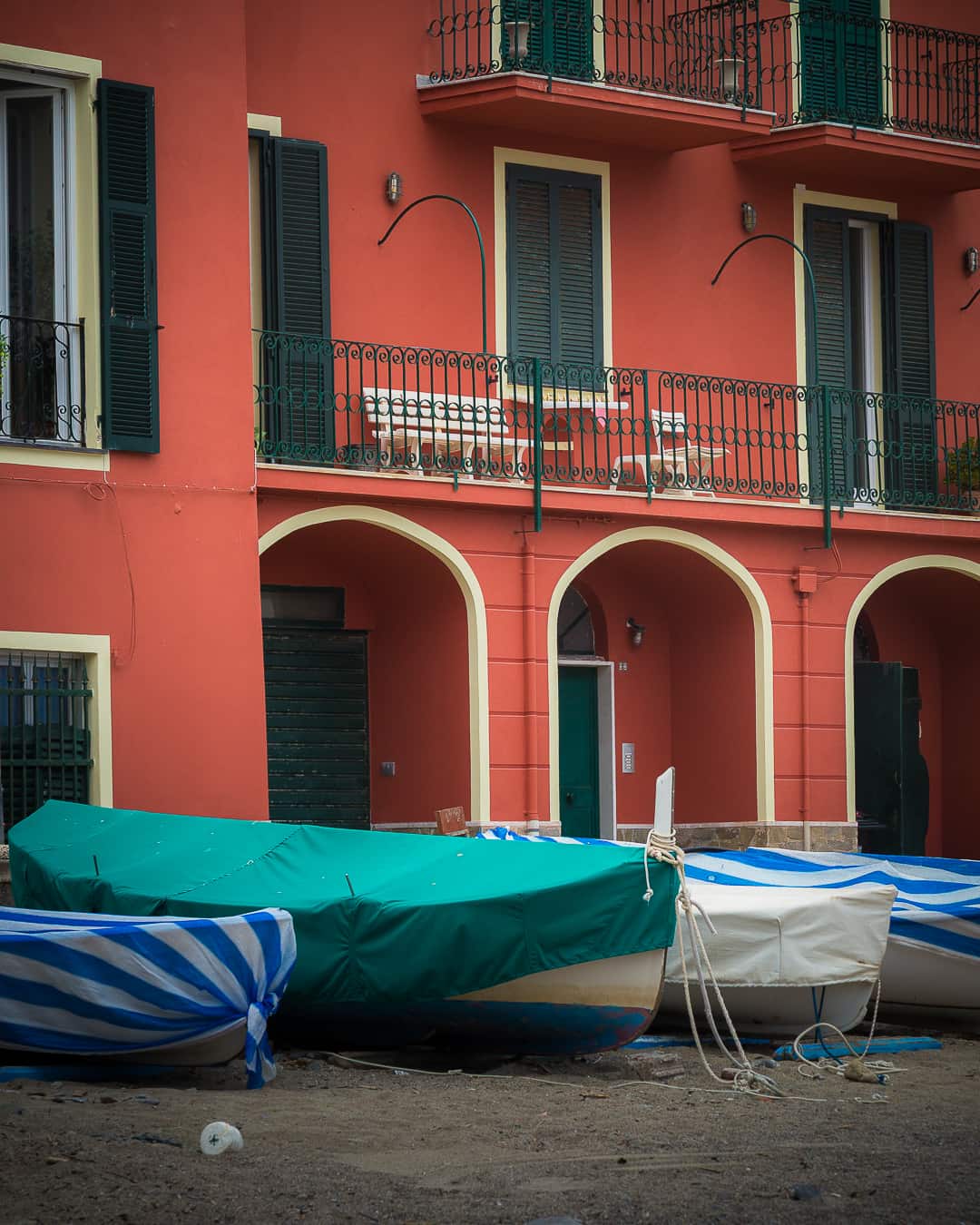
When they are not at sea, the boats rest here, in front of the arcades of a red house, covered like the furniture of a villa closed for the winter. Green covers, striped covers, knotted ropes: the beach becomes a courtyard. Take the covers off, and the sea will start again.
V
The other light
When the sun is high Sestri changes colour: yellow turns to gold, the sea goes from grey to turquoise, palm trees cast sharp shadows on the walls.
The town faces two seas. To the south-east, the sheltered Baia del Silenzio; to the north-west, the Baia delle Favole, about a kilometre long, named in the late 1950s by the TV presenter Enzo Tortora during an episode of “Campanile Sera”, as a tribute to Andersen. Between them, villas with gardens and terraces, wrought-iron gates, globe lamps: the Riviera of summer holidays.
The last pages come from a clear day, when the mountains show behind the houses.
A real postcard
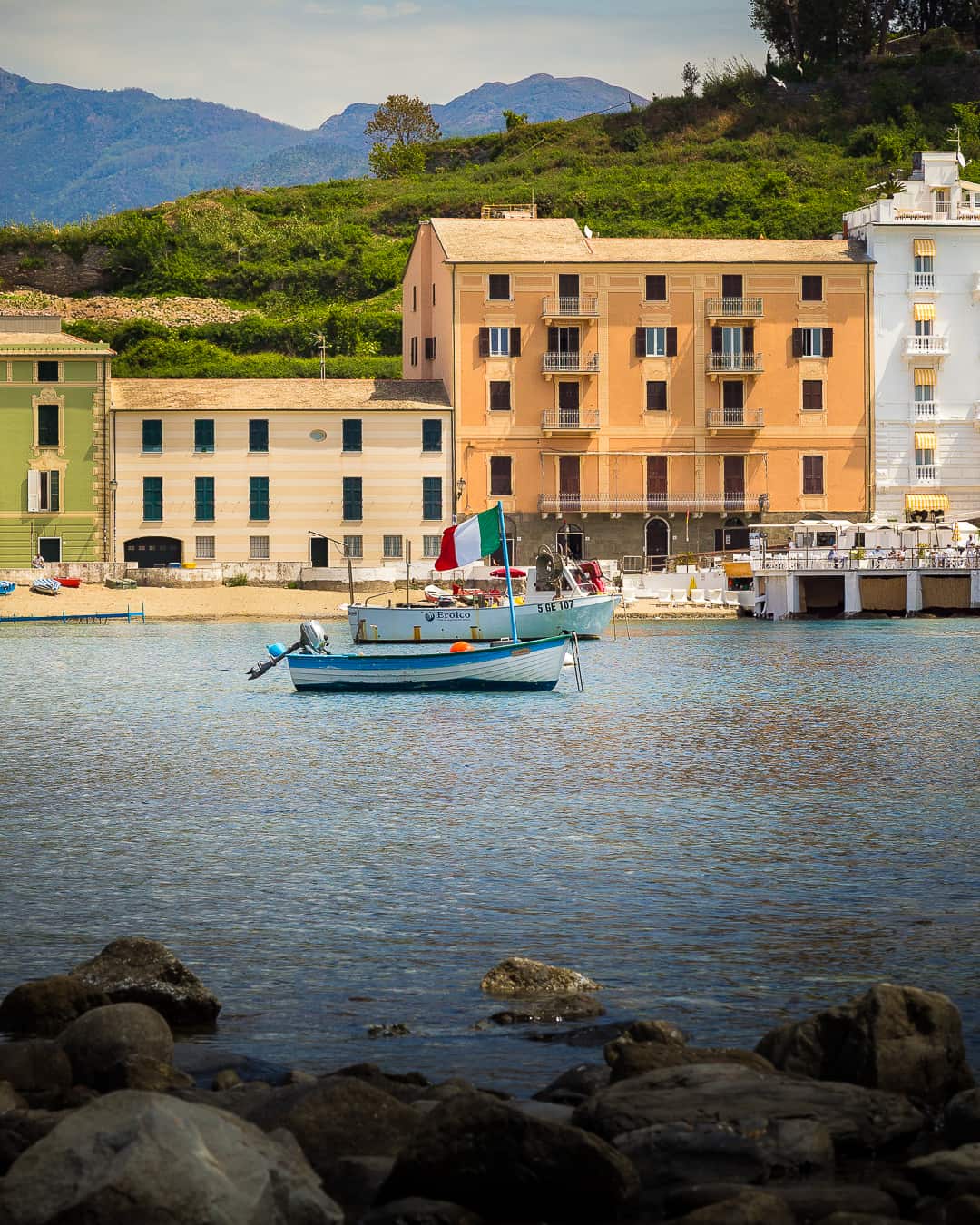
A small flag on the boat is enough to tell you where you are, no signs needed. Behind, the buildings on the water alternate ochre, white and pink; in front, the rocks draw the line between shore and sea. It is the postcard everyone is looking for, and we may as well admit it: here, the postcard is real.
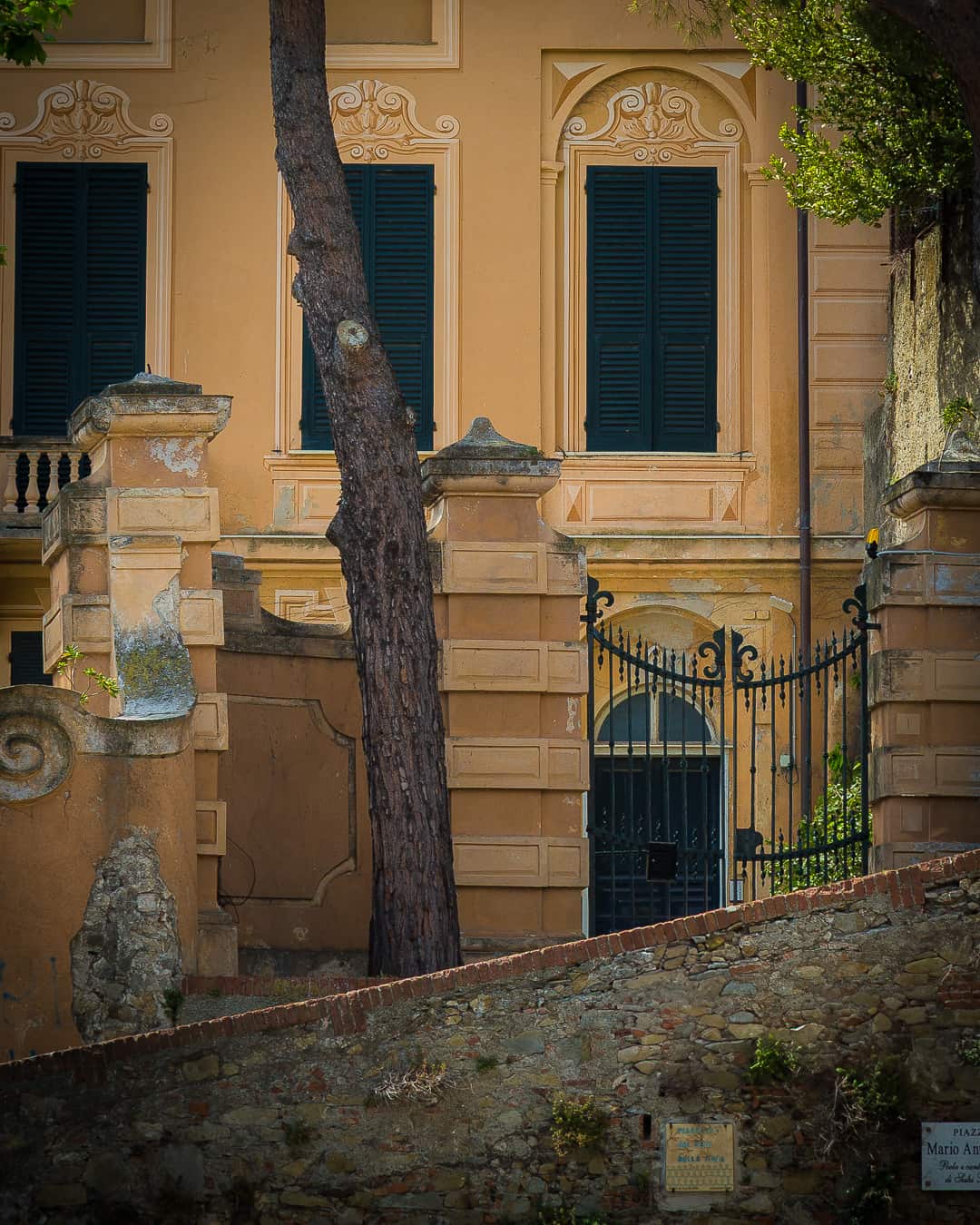
Behind the gate
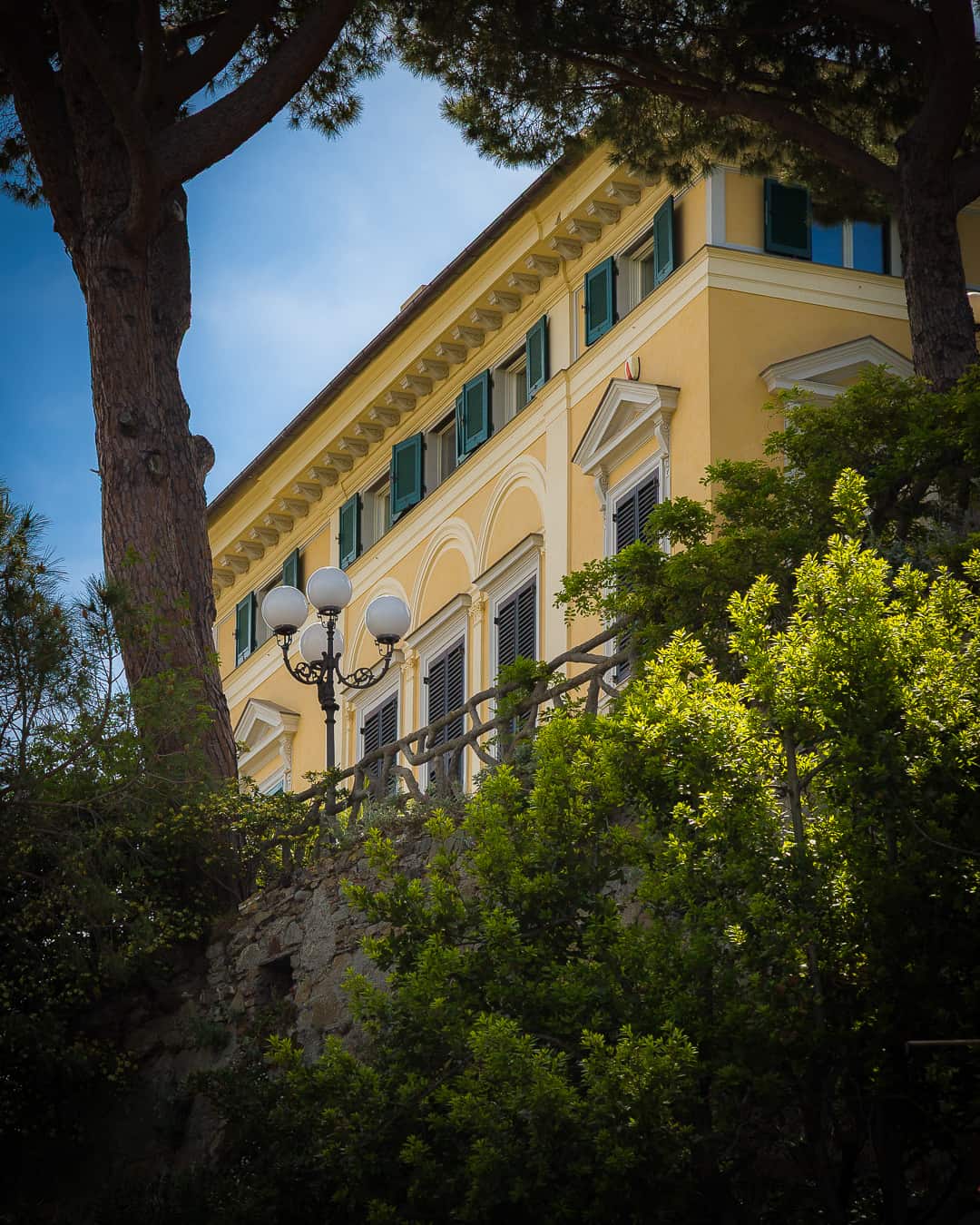
Many Riviera villas are seen this way: from outside, through a wrought-iron gate. The stone wall guards the garden, the pine shades the drive, the façade hints at tall, cool rooms. That is the charm of private places: you do not go in, you imagine. And imagining is sometimes the best way to visit.
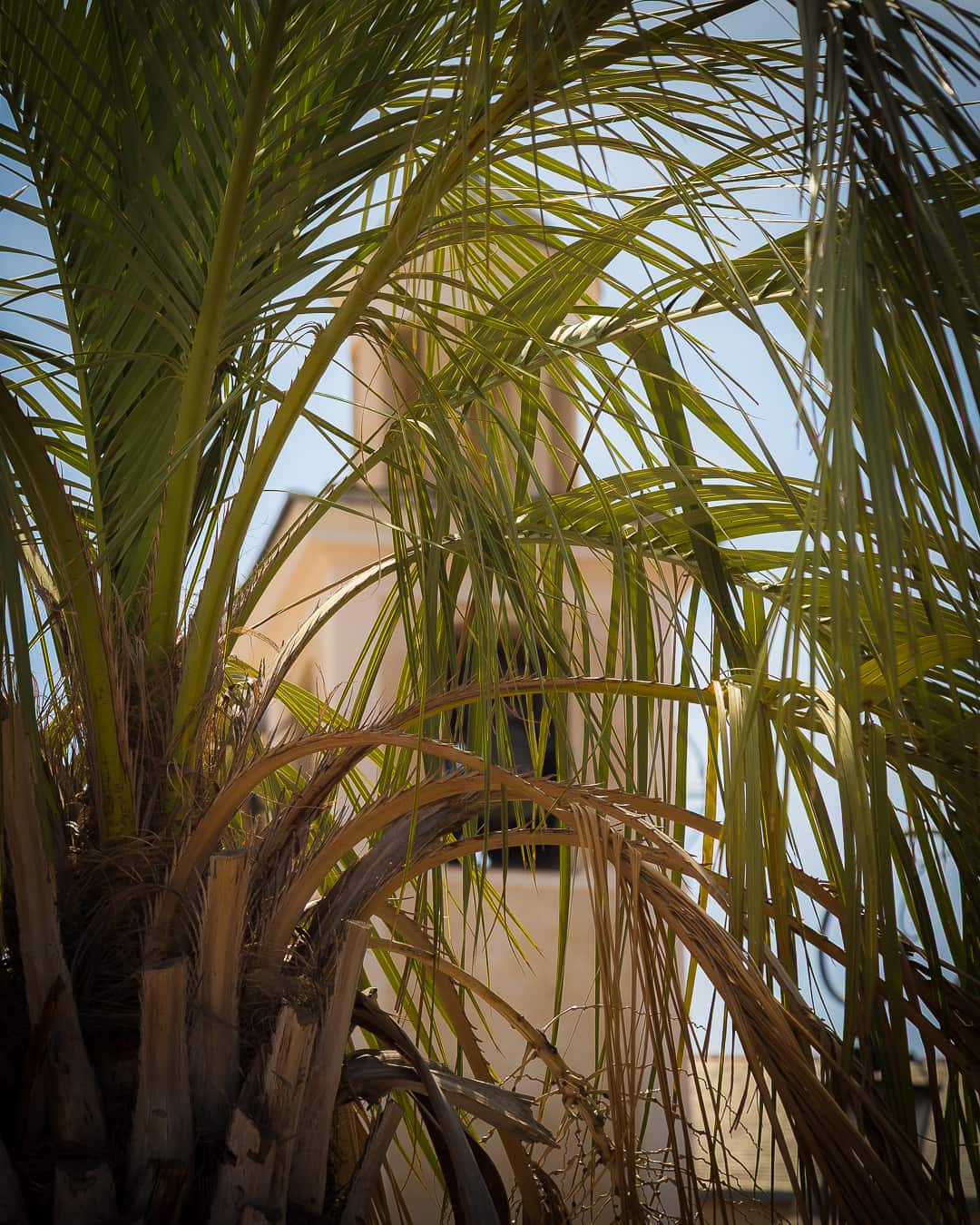
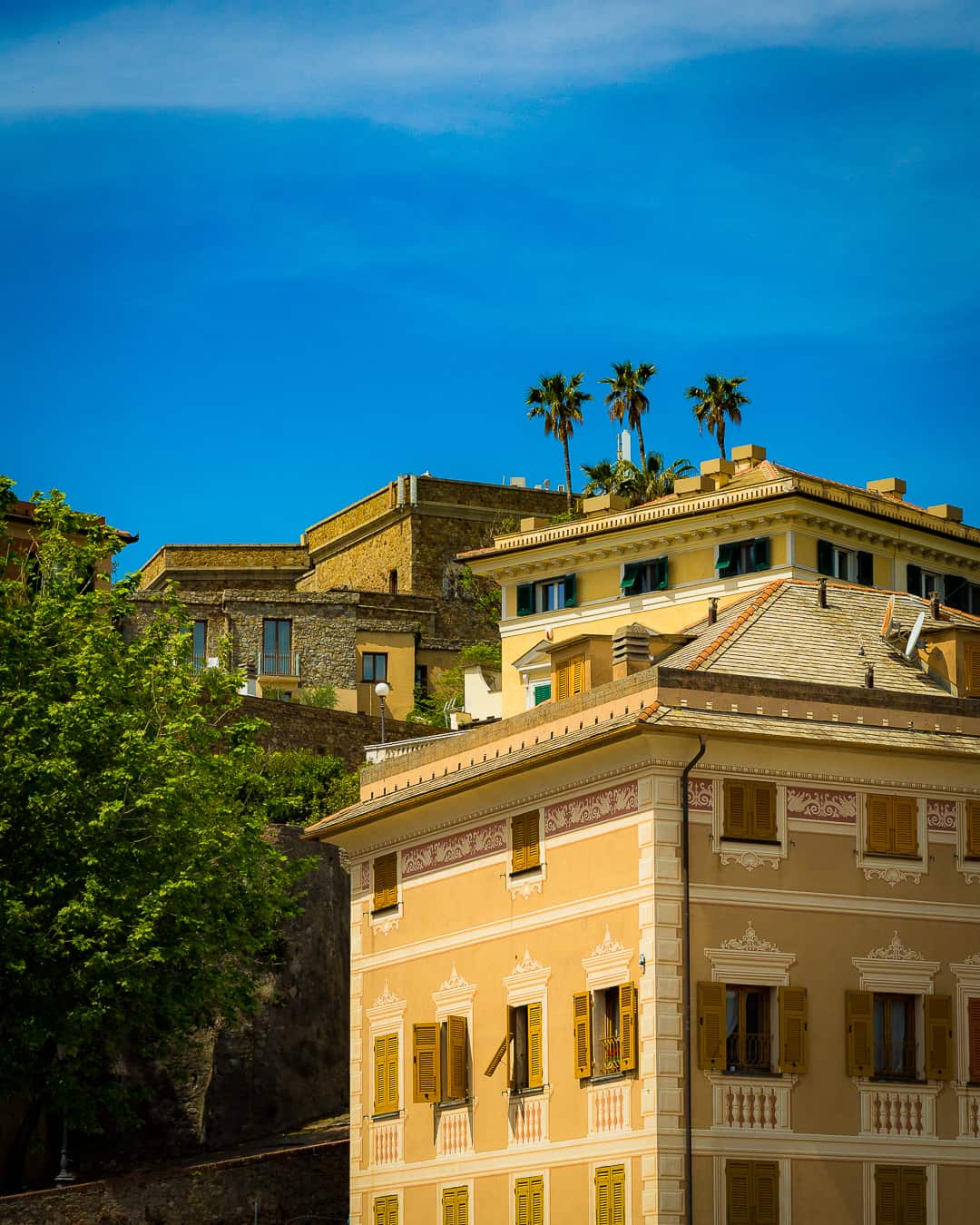
Three exclamation marks
Three palms in a row on the roof of a villa, like three exclamation marks against the sky. The blue is so intense it looks painted too. When the sun is high in Sestri, colours stop being pastel and turn bold, almost poster-bright. It is the bay’s other face: the one that does not whisper, but sings.
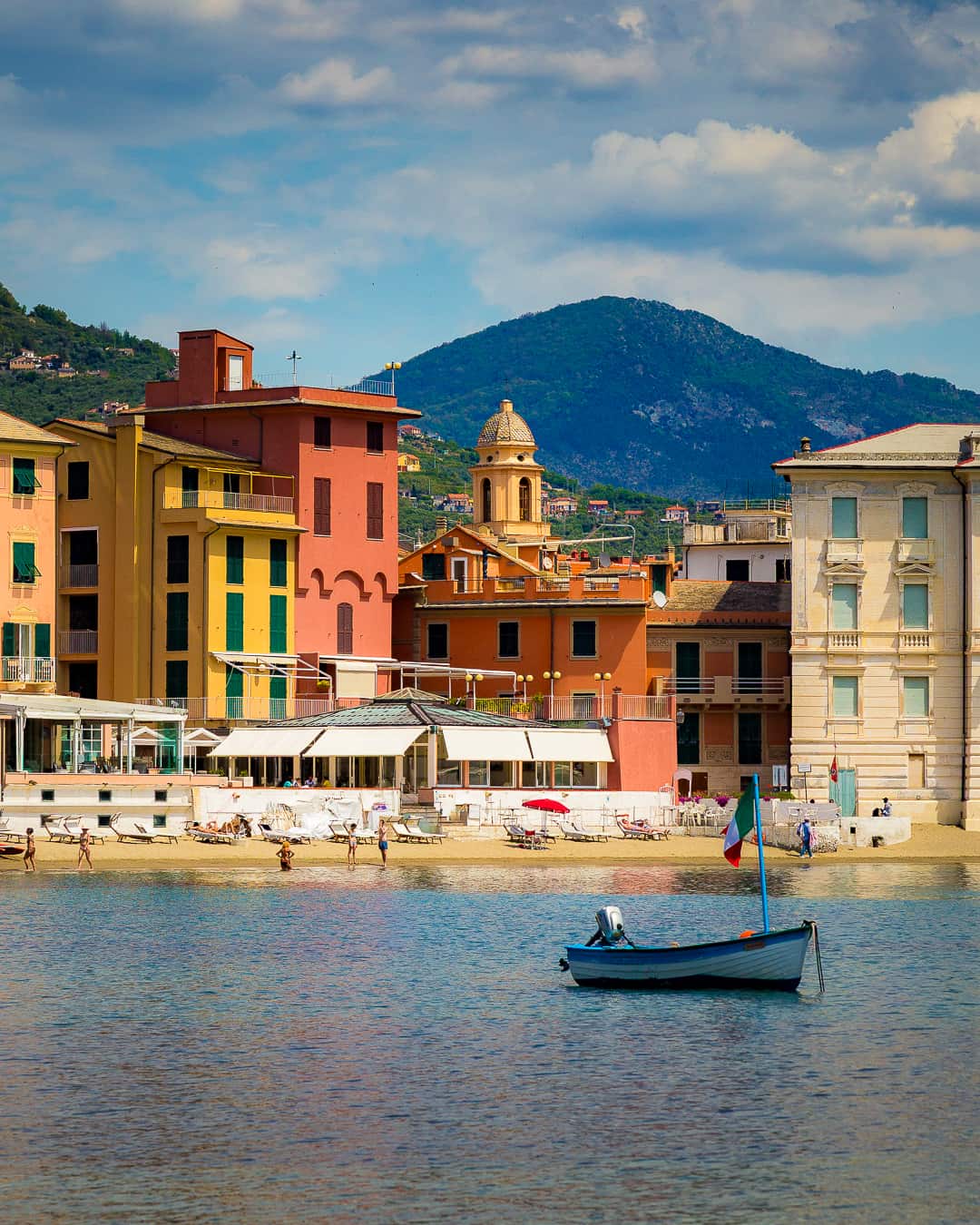
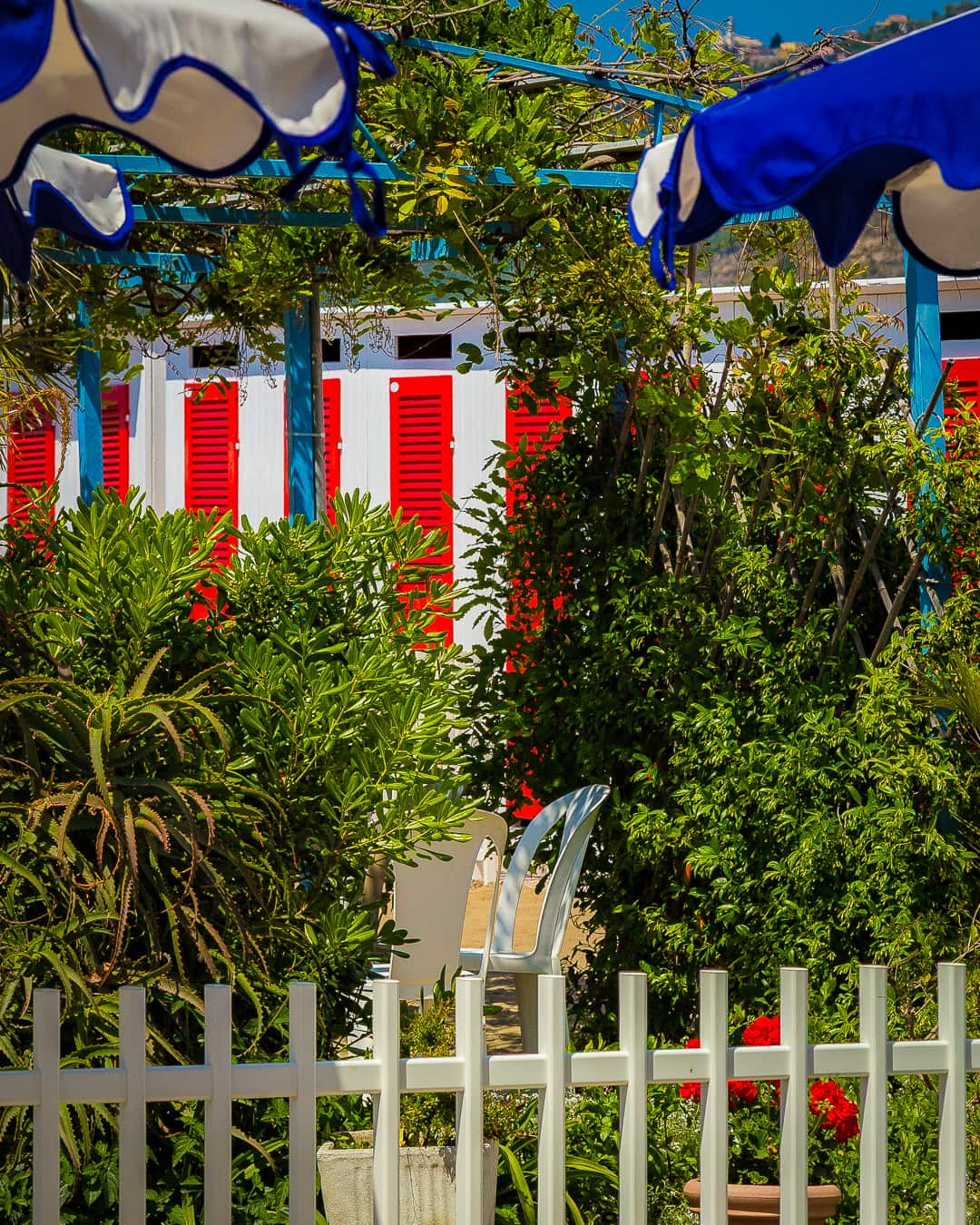
Feet in the water
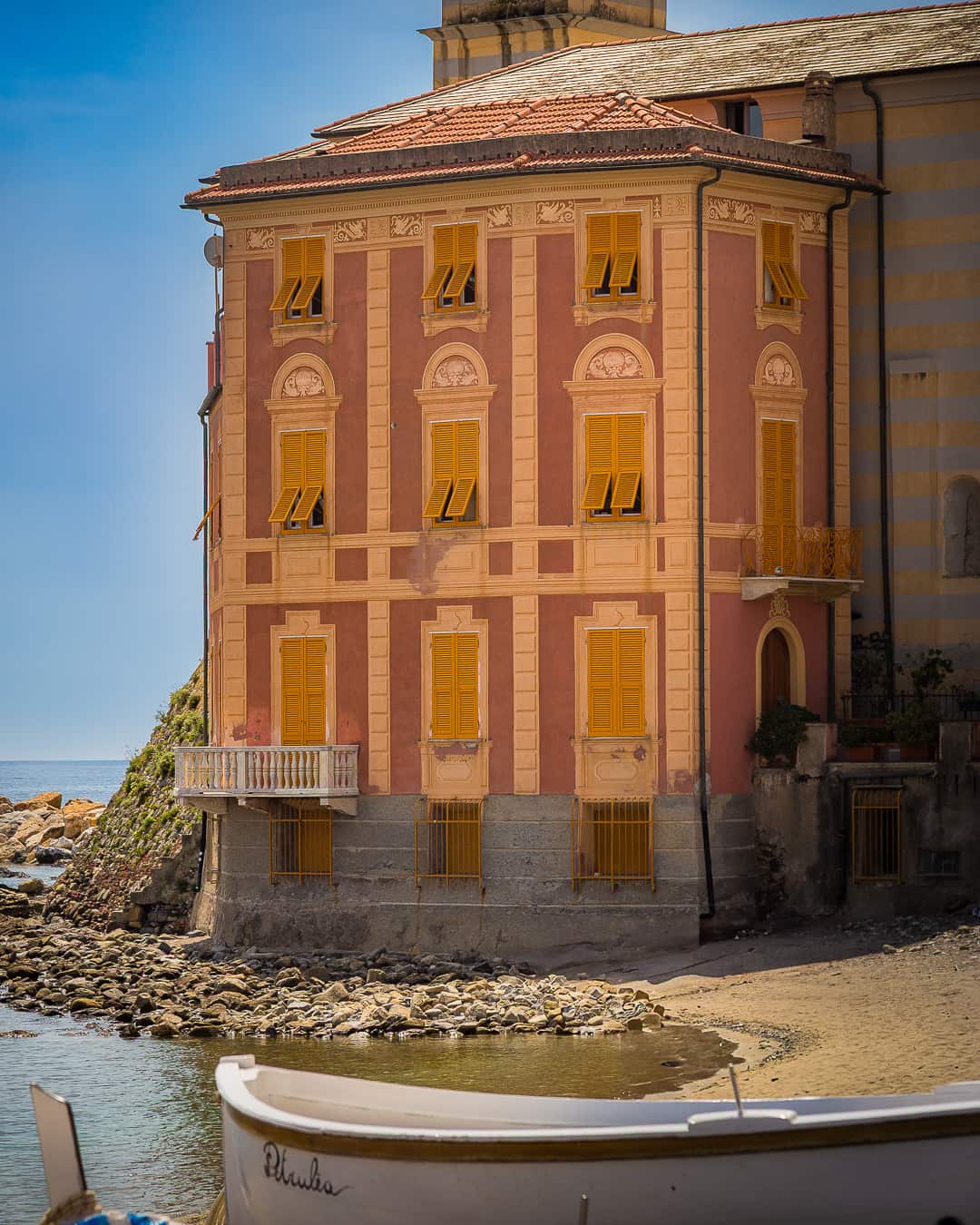
A pink building planted on the rocks, as if it had grown there with the stone. In Liguria space is scarce and the sea is everywhere: you build where you can, even where it seems impossible. The result is houses with their feet in the water and their windows on the world. In front, a wooden boat waits its turn.
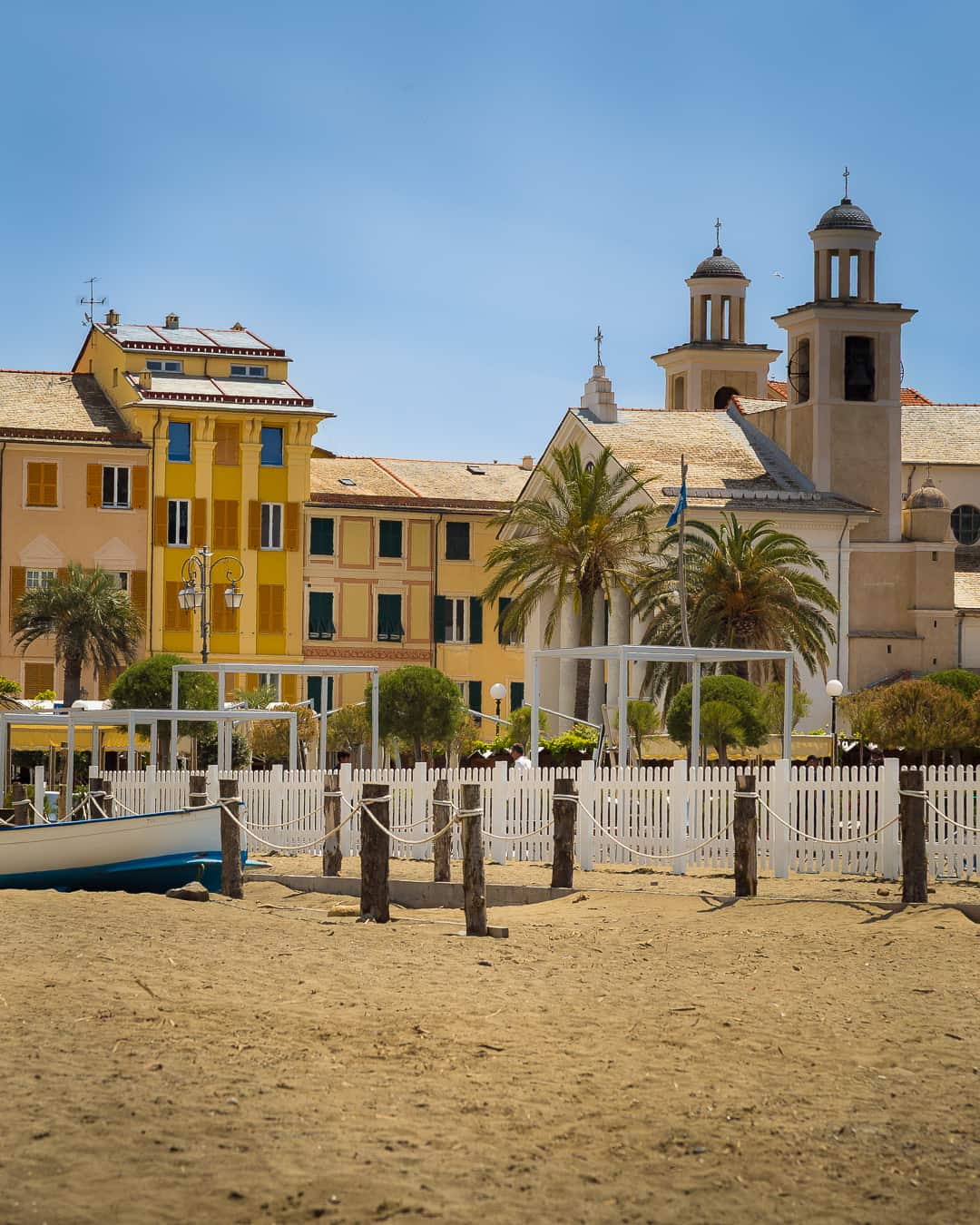
Bells and beach umbrellas
A church with two bell towers looks out over the beach, beyond a white fence. The sacred and the seaside live together without embarrassment: bells on Sunday, beach umbrellas the rest of the week. It is one of the most Italian pictures there is, and here it composes itself. Just stop and wait for the right light.
The last steps
The book ends the way the visit began: on foot. A wooden boardwalk crosses the sand, between the covered boats, up to the palms. It is the last page of this book and could be the first of your trip: the rest of Sestri, you will discover for yourself.
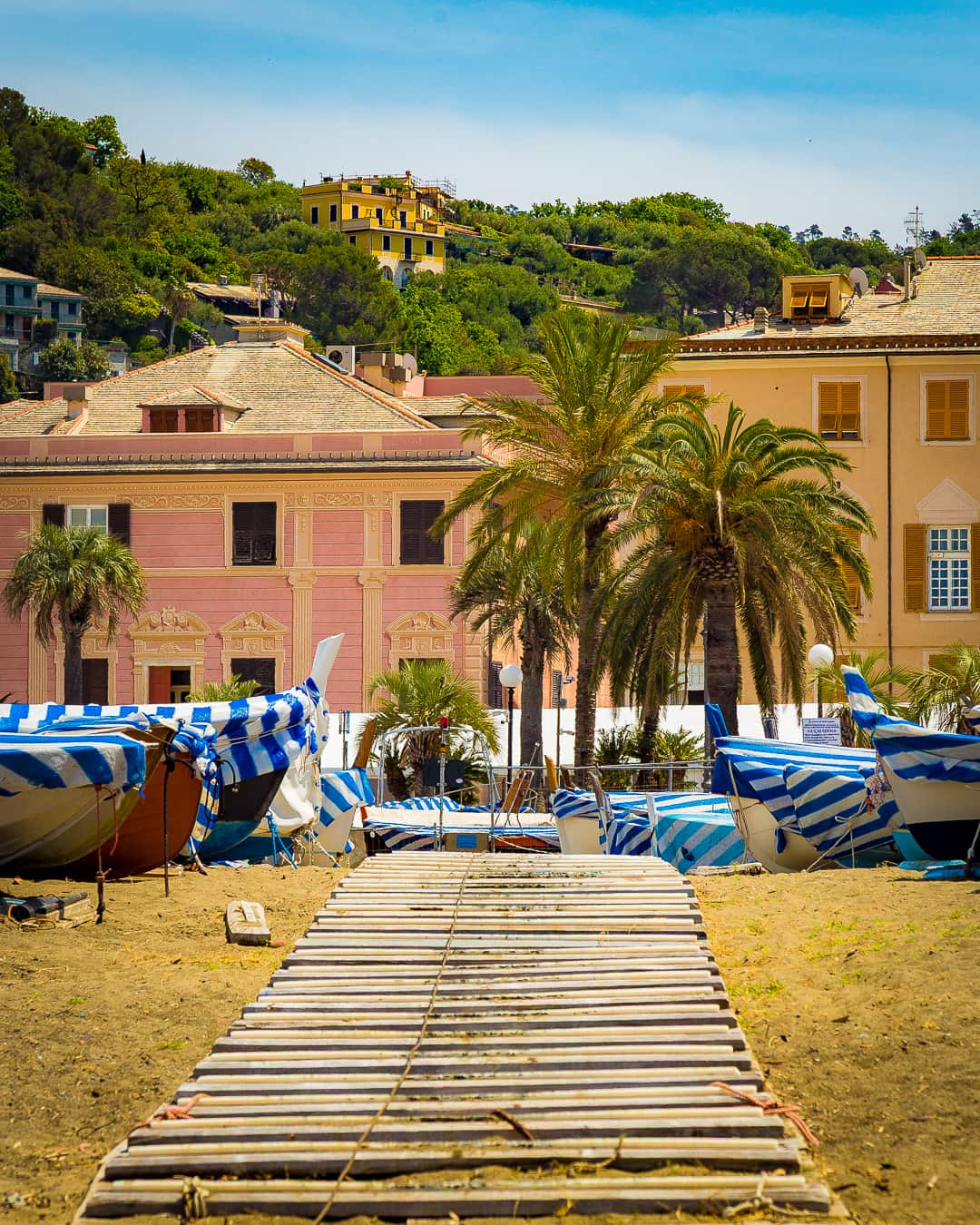
Getting there
- By train
- Sestri Levante is on the Genoa–La Spezia line. From the station to the Baia del Silenzio is about a kilometre, a quarter of an hour on foot via Via Eraldo Fico and Via XXV Aprile.
- By car
- About forty minutes from Genoa.
- In summer
- From 1 July to 31 August 2026 beach access was capped, with controlled entrances: no booking and no ticket. The rules can change every year, so check the town council’s ordinance before you go.
- Our advice
- Out of season, the bay lives up to its name. For the sunset, choose the Baia delle Favole, which faces north-west.
- Nearby
- San Nicolò dell’Isola (1151), the caruggio of Via XXV Aprile, and the Baia delle Favole on the other side of town.
Information checked on 21 November 2026.
Sources
- Le spiagge di Sestri Levante — lecinqueterre.org
- History of Sestri Levante — sestri-levante.net
- Sestri Levante — Wikipedia
- La penisola di Sestri Levante dal secolo XVIII — Geografia Fisica e Dinamica Quaternaria, 1987
- Chiesa di San Nicolò dell’Isola — St Nicholas Center
- Torre Marconi — FAI, Fondo per l’Ambiente Italiano
- “Marconi invention” — Evening Star, 31 luglio 1934 (Papers Past)
- Percorrendo le chiese e i palazzi — sestri-levante.net
- Botteghe storiche — sestri-levante.net
- The illusion of colour — Portofino Coast
- Perché in Liguria alcune finestre sono dipinte — Immobiliare.it, 2025
- Baia delle Favole — Spiagge.it, 2026
- Baia del Silenzio — ADAC Maps
- Estate 2026, Baia del Silenzio a numero chiuso — Mentelocale, 1° luglio 2026
- Sestri Levante, cosa vedere — Travel365
- Una delle spiagge più belle d’Europa, a un’ora da Genova — Money.it
Note
Photographs by William, also published on Instagram as @guglielmo.foto.
Texts and layout: WIDE Edizioni, Rho. Historical and practical information is checked against the sources on the previous page.
© 2026 WIDE Edizioni
A book for your place
We photograph villas, museums, villages and landscapes in natural light, and turn them into images ready for your website, print and social media. Or into pages to leaf through, like these.